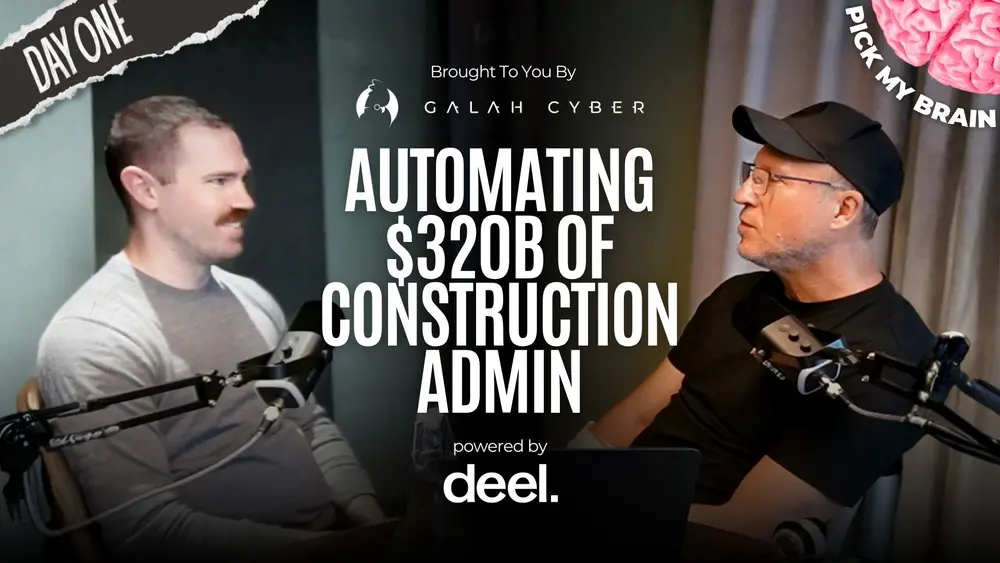
Transcript Synced · select any line to jump ▾ 0:01 Speaker: Founders scale faster on Deel. Set up payroll for any country in minutes, hire anyone anywhere, get visas handled fast, and get back to building. Visit deel.com/dayone. That's D-E-E-L.com/dayone. My experience as a product manager working at small startups, it's always, Who's running the community? We have one, but no one's put their hand up and it's just a matter of people diving in at random times answering questions, which really leads to a very disjointed experience for a lot of people running community, which is where we come in with the AI Concierge. 0:44 Alan Jones: What's the plan for the customer acquisition channel at the moment? 0:49 James Davie: Our biggest challenge at the moment, which is getting in front of decision makers and figuring out distribution. 0:56 Alan Jones: I designed a t-shirt a while ago that says, So I thought we were building a tech product, but I'm gradually learning this is mostly about sales and marketing. Welcome to Pick My Brain, the podcast where we help startup founders improve their pitches to better connect with customers, co-founders, and investors. My name is Allan Jones, and I'm an ex-startup founder myself, but now I'm an angel investor with decades of experience, basically, helping new startups find their footing and achieve their goals. But first, I'd like to acknowledge that this podcast is being recorded On Gadigal land, land that was never ceded. I pay my respects to their innovators and leaders, past, present, and emerging. Always was, always will be Indigenous land. On Pick My Brain, you'll hear the real story straight from founders as they pitch their startups, tackle the challenges we all face, and try to make their ideas into a successful company. Each episode, we'll see if I can help these founders take their startups another step forward with advice, ideas, and maybe a little constructive criticism. Thanks for joining me. Let's get started. 2:02 Speaker: You're listening to a Day One FM show. 2:06 Speaker: As a startup founder, you're juggling multiple priorities from the expected, like finding product market fit, to the unexpected, like customer requests for SOC 2 or ISO 27001 certification. But achieving compliance is time-consuming, and time spent on that is time away from the needs of your business. That's where Vanta comes in. Vanta is the all-in-one solution for startups to become compliant quickly and build a security foundation with ease. With a combination of automation, an extensive partner network, and a security marketplace, Vanta provides the necessary tools and expertise for startups to achieve compliance seamlessly, no matter how urgent your needs are and at every phase of growth. Over 10,000 leading companies, including Cipherstash, Handle, and Indetted, trust Vanta to automate compliance so they can focus on growing their business. Startup customers like you get $1,000 off Vanta at dayone.fm/vanta. /vanta, that's vanta, V-A-N-T-A, at dayone.fm/vanta/brain. Today I'm joined by James Davey. He's the founder and CEO of Miyagi. And welcome to the show, James. Thanks very much for coming on. 3:23 James Davie: Thanks so much for having me, Alan. It's good to be here. Looking forward to diving in. 3:27 Alan Jones: Looking forward to learning more about Miyagi and your journey to here and the kinds of challenges you face. But first I thought maybe we'd warm up with something a little different. And I thought I might ask, you know, when you were a kid, what did you think you wanted to do when you grow up? 3:42 James Davie: That's a funny one. My Nana always said I wanted to be an entrepreneur, but about 5 years ago, up until 5 years ago, I didn't believe her. I was like, I don't recall ever having that dream or saying that. You might have misheard me. Uh, but funnily enough, here I am now, uh, now a startup founder. So maybe she was right after, after all. 4:05 Alan Jones: Wow. That's interesting. Did you ever like go to unpack why she thought that? 4:12 James Davie: Uh, she thought that I had said it like a number of times. Um, I think at that point I probably need to re-up her on this, but at that point I was just adamant that I'd never said that. And really my journey has only been, you know, less than 2 years long. So up until a couple of years ago, I really didn't want to start my own thing or build a business. I was kind of happy doing what I was as a product manager. So that's something I'll have to re-up with her. 4:38 Alan Jones: All right. So you weren't out there on the street corner selling down her secondhand clothes and kitchen implements. 4:45 James Davie: No, no, exactly. And that was always my picture of what an entrepreneur was like, super scrappy, doing something always. Always trying to find a way to make some money. And I'd never really felt like that until now. So I don't know, something she saw in me or maybe something I said led her to being right after all. 5:04 Alan Jones: Very cool. Yeah, a few years later, maybe many years later, you went on to start a career. Where did you start your career? What were you doing before you became a startup founder? You mentioned a second ago you were a product manager. What was that about? 5:18 James Davie: My very first out of uni job was a data scientist. I was working at then a small startup called Max Kelsen. We were doing data consulting in the ML, AI space. I was doing that for a year. Some software is built out of a problem and we had been providing a service to multiple customers and decided why not build a product out of it. So it was very new. No one really knew much about building software or products. I had done some reading around what a product manager does. And kind of just put my hand up for that role and suggested I was the best person to take it. I was doing two roles at that point, so they really needed someone on the ground talking to customers in Sydney. And I was like, hey, product managers also talk to customers a lot. And that's, that closes, that closes the loop. So I was doing two jobs initially, a product manager and also key account success. For a product that spun out of Max Callison that was called Otso. And that was all about sifting through unstructured text data and enriching it with ML models, all that, all that fun stuff. So that started my career into product management. That was probably around 8 years ago or so. And then past that, I started at Ignition where I really got an opportunity to hone my product management skills and really find a lot of love for the role, something that is both equally challenging, rewarding, puts you in front of a lot of people, and means you can have an impact in what you build. 6:59 Alan Jones: So— 6:59 James Davie: Cool. Haven't really looked back since then. I still do a lot of product management in my day-to-day as a founder too. 7:06 Alan Jones: Cool, cool. I used to be a product manager myself, and I think a very important part of being a good product manager is actually enjoying talking to customers. 7:16 James Davie: Definitely. 7:17 Alan Jones: Listening to them, asking them directed questions to try and reveal, you know, the important truth behind it. The rest of the company can go and hide from customers, but product managers have to hang out with them and earn their trust, right? 7:30 James Davie: There's no really avoiding it, hey? That's what makes a good product manager. Talk to your customers. 7:36 Alan Jones: Very cool. At Mate Ventures, part of the due diligence process we have is we ask the startup that we're considering investing in, give us a customer list and their contact details. We want to run some customer interviews. I use a tool tool called GreatQuestion. That's a fantastic product, Aussie startup, check it out. If you need to professionally manage a whole bunch of online customer interviews with people, it's a really helpful tool. Check out GreatQuestion when you get a chance. 8:02 James Davie: Awesome. I'll have to do that. 8:04 Alan Jones: Thank you. Tell us more about Miyagi. What is it and who's it for? 8:08 James Davie: Yeah. So Miyagi is an online community software platform. So if you think similarly to like a mix of Slack and maybe Discourse or Circle, if you've heard of those platforms. But we really help focus on tech companies building support communities and our unique differentiator is our, uh, AI community concierge. So Slack-like messaging platform run or at the helm of our community concierge. You can think of the community concierge kind of like a hotel concierge, you know, over in Mexico, checking into a hotel. The hotel concierge is kind of like, welcome, here's your margarita, the pool's this way, do you want me to book in a restaurant booking for you? We try to provide that same experience just for your online community space. 9:03 Alan Jones: That sounds like a great hotel, I want to stay there. Particularly the margarita when I arrive, that's going to work for me. 9:10 James Davie: Totally right, it's definitely a 5-star concierge. So we think about the concierge as a series of capabilities really that help you run your community. So in the same way that companies would hire a community manager, community concierge will be able to take some of those tasks off the community manager's hands and really to help drive and grow and manage your community. 9:34 Alan Jones: Cool. So you mentioned there a couple of times the word we, you know, we're doing this, we're doing that. Who is we? Or is it a Royal we when we're Talking about ourselves. 9:45 James Davie: I've got two co-founders, so there's three of us. So we've got Gavin, he is our head of design and also very much AI leveraged engineer, does a lot of our front-end coding now with the help of AI tools like Kursell. And Mark, who is the smarts behind the AI, he's our CTO, our chief engineer. He's worked at cool companies like Atlassian and did a master's in Oxford and, and that kind of cool stuff. Gavin's also a previous founder of a design agency, so very happy to be working alongside two ex— very experienced colleagues. 10:24 Alan Jones: How'd you find each other? 10:25 James Davie: We all worked together at a company called Mborder. So very, uh, short-lived experience for me, but the silver lining was I got to meet Mark and Gavin and we worked together for a bit, really got along quite well. Um, and ever since I left, um, we caught up. About once a week for maybe a year before we started building something. So we get along quite well, always were toiling away with ideas and then finally decide to make the leap to build something together. 10:57 Alan Jones: So are you out in market now? 10:59 James Davie: Yeah, we are. We just launched, or soft launched our products mid-April. So we've been building this iteration since November and we've got a pilot program available for people. So we're looking for a tight net group of people to help us refine the product before we take it to what we're calling a general availability date. So the pilot program really is like founder-led support, getting you up and running with your community. And what we get in return is a lot of feedback on, on the early product and how to make it better before we can take it to the wider public and say, this is something you can spin up independently and get value from. with hopefully a little assistance from us, but you know, as founders, we're always, always available. So yeah, if anyone is interested, we do have a product in market. 11:53 Alan Jones: Cool. And, and tell me a little bit about who's already using the product. 11:58 James Davie: Yeah, we're working with tech companies based in, mostly based in Sydney, Australia. One is B2B SaaS, works with kind of accountants and marketing agencies, professional services. I'm not sure if I can mention names, but I can kind of rattle off who they are. With the pilot program, we haven't agreed yet to publicly facing customer stories. 12:26 Alan Jones: All right. 12:27 James Davie: But we do have people using the platform. And I can talk a lot about their The problem really is that they've had communities set up for quite a while now, in some cases 8+ years. And one verbatim quote we spoke to a customer about is they kind of feel that their community is like a place where you can drudge their branding through the mud. But people still come to community to talk and ask questions, and there are some positive aspects of it, but it's a real problem for them in a channel that they need to manage and they're struggling to do so. So they're looking for ways to be able to improve how that, how their brand is represented through their community. And the biggest problem for them really is just managing it. I think is the, the through line for a lot of the customers that we work with. And that is we think community is great, but we didn't realize how much time investment was required to make it great. And even in my experience as a product manager working at small startups, it's always Who's running the community? We have one, but no one's put their hand up and it's just a matter of people diving in at random times, answering questions, which really leads to a very disjointed experience for, for a lot of people running community, which is where we come in with it, with the AI Concierge. So at this stage, yeah, a few, few companies in our, in our pilot program, mostly Sydney-based, but, uh, probably leads into our biggest challenge at the moment, which, um, is is getting in front of decision makers and figuring out distribution. You probably picked up none of us have any sales or marketing experience. 14:14 Alan Jones: Right. I designed a t-shirt a while ago that says, I thought we were building a tech product, but I'm gradually learning this is mostly about sales and marketing. 14:23 James Davie: Totally right. 14:24 Alan Jones: Common learning opportunity for many of us with a technical background, right? Sooner or later have to get out there and persuade people to get on board before we go viral. 14:36 James Davie: Mm-hmm. Mm-hmm. 14:38 Alan Jones: So what's the plan for the customer acquisition channel at the moment? 14:46 James Davie: Yeah, we've been hammering outreach at the moment and it's difficult trying to position ourselves. So I think we come from like one internally a position of having no experience in marketing and sales. So figuring out what founder-led sales means. I think we have somewhat of a grasp of a couple channels we should go after. So direct outreach and also building credibility through LinkedIn as a way to build future inbound. So those are the two kind of channels that we're focused on right now. But what I mentioned is credibility. So we're coming also from a place of lack of credibility, which is being, you think, I think you have to build up as a founder to be able to get in front of people and let them, you know, decide to give you the time of day before they even look into, look into your product. And that's a, that's a tough, tough journey. We started with getting in front of people we know, which is always helpful. Not in the sense of, hey, you're my friend, please buy our software, but hey, you're my friend, you work at a legit company, can you intro me to the purchaser, who in our case might be head of customer experience, VP marketing, those, those types of roles. And can we demo our software and see if it's a fit for you? So starting with close network, but now we're up to the stage of, okay, exhausted people we know, we need to go further. How do we get in, in front of people? So my day-to-day really looks like a lot of LinkedIn Messaging, figuring out what messaging works for what type of persona, refining our persona, even running demo calls and trying to figure out how to ask people for money, which is probably, probably has been the most daunting aspect for me as a career product manager, someone who's never sold a thing in their life. That come to the end of the demo call and it's like, do you want to, do you want to pay? Is that the best thing I should be saying? Is there a better way to word that? So going through that journey of figuring out, you know, getting in front of people and then trying to convert them is interesting and a challenge, and that it's like a big learning. The act of doing that is never, never as easy as it sounds. 17:15 Alan Jones: All right, cool. 17:21 James Davie: Adam here from Day One. Just a quick message from one of our sponsors. Standard Ledger is your trusted partner for end-to-end financial support. They provide core accounting services plus expert financial guidance when you're ready to scale. Whether you need help with bookkeeping, payroll, R&D, or even fractional CFO services, their team supports founders across Australia to manage finances, raise capital, and grow their businesses. Visit dayone.fm/standard today to book your free chat. 17:53 Alan Jones: So it sounds like you're doing a lot of smart things already. So, so congratulations. One of the challenges that we all face is, is imposter syndrome, right? You know, I, I have no business selling this software and none of the customers I'm approaching here have ever heard of my company before or me before. And so, you know, they're probably not even aware that they have a problem until I show it to them. And they certainly aren't ready to think about the fact that AI might actually help them solve that problem in a new way, right? So— 18:29 James Davie: Definitely. 18:30 Alan Jones: It can be a real struggle for those of us that didn't set out to be number one vice president of sales to get through that. But you're already taking some of the really smart steps, right? So if I feel like people feel like I'm an authority on a topic, it makes it a little bit easier for me to reach out and do cold founder outreach, right? Marketing channels like LinkedIn do present an opportunity to get started doing that kind of thing. Part of probably what you're doing is you're probably coming up, you know, opinion pieces, expert advice, maybe case studies or examples that people can use and go away with. The challenge, of course, is that— 19:10 James Davie: Yeah. 19:10 Alan Jones: Everybody else on LinkedIn is using LinkedIn for the same purpose, right? And what we publish is going into a feed and an algorithm is going through that feed and displaying content according to how well it's already successfully performing. So until we have reach, until we have an audience, until we have people who want to see more of our stuff, the algorithm's not really helping us all that much. And so we can get into a negative feedback loop as much as we can a positive feedback loop. 19:40 James Davie: Exactly. The LinkedIn algorithm is nothing like TikTok. And as you said, you've got to get through the noise, build some credibility, try to target your audience. And getting started is very difficult on that front while you still even figure out who those people are. 19:57 Alan Jones: So I think LinkedIn and other algorithm-driven newsfeed platforms, such as say Substack, can work well for us when Paired with other marketing channels that are also maybe, you know, one-to-many, but not one guy writing a post to millions and millions and millions of users, more like, uh, one guy, um, communicating to a group of 10 or 20 or 30 people at a time. 20:24 James Davie: Mm-hmm. 20:25 Alan Jones: So, um, if, if we look for opportunities to go along to small industry meetups, you know, not necessarily. Big stages at, at big conferences, maybe not ready to take that step just yet and be that big, uh, subject matter expert. But in the near term, um, we can do a bit of research on, on relevant industry meetups. Um, have you had a chance to take a look at, at some of those? 20:51 James Davie: Yeah. Um, there's a few community folk around that seem to be popping up that I've been getting in touch with. Good woman called Paz runs a community collective. Great, great resource. Been talking Exactly. 21:05 Alan Jones: Yeah. 21:06 James Davie: Yeah. Been talking to her. She knows a lot of community managers and kind of the, the realm of community in, in Australia and even more globally. So great. It's been, been help— very helpful on, on that front. 21:16 Alan Jones: Great. And, and, um, do you go on to in-person events? 21:21 James Davie: We're still figuring out which in-person community events there are, but I do a lot of just separately, uh, like product or tech type of events like I'm doing at, um, if you've heard of Lenny's podcast, there's a meetup next week, mainly for product people. Um, but just trying to figure out the, the landscape here. That is also another really big challenge and shift moving from an individual contributor at a company to a founder. It's like networking is a, is a real thing and having that realization and what that means day to day. generally just talking, introducing yourself, going to events and places. And that probably another thing aside from entrepreneurship that I didn't think was real or had much really respect for until I started myself, which is becoming a really powerful tool. So leaning into that is important. I love the, yeah, I love the idea of going to smaller events and meeting people. We need to do more of that. 22:21 Alan Jones: So that's a useful early step, but it's only a step along the journey, right? Because I know from my own experience, it's easy for me to go along and attend event, an event while at the same time maintaining a fairly low profile, you know? 22:35 James Davie: Right. 22:35 Alan Jones: I'll go and stand in the queue for a coffee at the Sunrise Conference this weekend. And if nobody starts talking to me, I won't start talking to other people, you know? So I feel like I'm there. I feel like I'm ticking off, yes, you know, I went out and— 22:50 James Davie: First step. 22:50 Alan Jones: And right, but, but I'm not really achieving anything yet until, until there's communicating going on, right? 22:55 James Davie: Mm-hmm. 22:55 Alan Jones: If I go along to an event and you know, there's a talk and then, you know, there's mingling and you know, having a drink and stuff, I might have an opportunity to talk to 3 or 4 people at a, at a 2 or 3-hour meetup. 23:06 James Davie: Mm-hmm. 23:07 Alan Jones: And I'll think, and I think, okay, ticked off. Like I met these 3 or 4 people and I got the contact details of 2 of them who said, you know, I should follow up and set up a Zoom call. So that's another step forward, but really where that kind of marketing activity really pays off is where you cross the invisible line between the audience part of the room and the stage part of the room. 23:29 James Davie: Right. 23:30 Alan Jones: Do you see that possibility in yourself at some time in the future? 23:36 James Davie: Definitely. If someone wants to put me up on stage and— 23:39 Alan Jones: No, it never works that way. It almost, right? So by the time there are people who want to have you on, on your stage, you've already achieved, you've already won in this marketing channel, right? So for the time being, you have to approach them and say, here's a little précis of why I'll be an interesting participant on stage at your next meetup. The smaller the meetup is better, but like, you know, meet 3 or 4 people. If I attend a meetup, if I'm on stage, I get to speak to everybody in the room. 24:11 James Davie: Right, right. 24:13 Alan Jones: There's a couple of interim steps in between though that will make that journey a little bit less uncomfortable for you. So a couple of things that I've noticed over the years is that first thing is that everybody on stage has some of the magic rub off on them, right? So everybody who's speaking to the audience over time with repeated exposure, that person starts to get some of the, let's call it subject matter expert magic, right? So if you just go up on stage, say whatever you like, go up on stage, say whatever you like, you may not be the most insightful or experienced or interesting person on that stage, but it has, it will accrue over time. You know, you'll get better at it and the general perception of people in the sector that you're focusing on, they all start to unconsciously feel like, oh yeah, yeah, I've seen James talk before, you know. I've seen James talk before, you know, and, and it just kind of adds up over time. Another thing which is really interesting is, is that everybody on that stage gets some of the expert magic, including the person who's just introducing the people on stage. 25:23 James Davie: Mm-hmm. 25:24 Alan Jones: So I've seen a number of people pull together a new community for the first time with the purpose of setting themselves up as an industry expert, but for the, for the first a year or two maybe. They're just the person who organizes it, sets up the event registration page, books the venue, and then when everybody arrives, welcomes them and then sends a follow-up email afterwards. And during the meetup itself, they're the person who just introduces the guest speaker or introduces the panel, right? 25:52 James Davie: Mm-hmm. 25:52 Alan Jones: And then, so between being like the organizer and being, you know, the celebrity guest, there's another interim step, which is panelist. 26:01 James Davie: Mm. 26:01 Alan Jones: You know, so when you share a panel with 3 or 4 other people, you get only a proportion of the actual speaking time, but that's great because if the Q&A goes to places where you feel a little bit shaky, you can wait for the other panelists to take the lead on this, you know? And then when the microphone comes around to you, you can be saying, you know, I just wanna, you know, reinforce what my panelist here just said because, you know, that's absolutely what we should all be doing, you know? 26:30 James Davie: Mm-hmm. 26:30 Alan Jones: Even when you're just doing that, even when you're just making the other panelists look great, I'm sure they'd love that. Yeah. And, but also it's in the audience's mind, your industry perception is gradually accruing expert magic. 26:43 James Davie: All right. Yeah. 26:44 Alan Jones: So start with attending meetups, but then start approaching organizers of meetups and saying, hey, you know, here's an idea for a panel and here's two other people that I could probably be on a panel with. Or if you need to take a break, you know, if you're going away and the regular meetup, you know, you need somebody to stand in as facilitator. I'll put my hand up, you know, I'll give it a go. I won't be the best, but I want to practice this, you know, let me give it a shot. 27:12 James Davie: Awesome. 27:13 Alan Jones: Do some panels, right? And you'll start to learn over time, you know, across the broad set of custom community management, there'll be your hot topics, the areas where you work best and you can actually start going, okay, approaching particular meetup organizers and saying, here's, you know, the 3 topics that meetup organizers tell me I'm best at. Audiences love it when I talk about these 3 things. Can I come and talk at your meetup on these 3 things? I love that. And then divide industries. You want product managers, you want CTOs, you want customer experience heads. So you ought to better find meetups on those areas and approach each of them like, here's my one-pager. I really want to come and talk at your thing. 27:58 James Davie: That is the fun and challenging part about community. So many functions in a company. Touch community. So it's like, get in front of all of them. They'll probably have somewhat influence over the, over the buying decision. 28:11 Alan Jones: And then there's nothing to prevent you creating your own meetup. 28:16 James Davie: Mm. 28:16 Alan Jones: Right. So, so especially if you find that there's nothing that really nails exactly the audience you need or, or the subject area that you need, just go ahead and create your own, you know? So, so the, the Brainmates product meetup, um, this has been going, I guess, probably for about 20 years now. And it just started at a coffee shop in Surry Hills. 28:35 James Davie: I've been to Brainmates. 28:37 Alan Jones: That's good. There you go. There you go. So, like, you know, don't be afraid to, you know, from little baby steps, big things grow. Not every attempt at creating a new meetup works, you know, or lasts. The smaller it is, the less likely it is that anybody will remember that you tried to create something and it failed. 28:57 James Davie: Yeah, it's smart and sounds really fun engaging in events. Um, it, to me, it sounds like coming back to the idea of credibility. And I see a trend of building credibility in a founder's name, at least in the early stages, more so than, than the brand. And that kind of is an association of, ah, this guy works at Miyagi Communities. He's, he's the founder there. What do Miyagi Communities do? Is that, is that kind of what you're seeing as, as a trend in first building credibility in a, in a founder's name? 29:27 Alan Jones: Yeah, that's right. So every person in a sales-facing role will perform better, will close more of their leads if there is word of mouth and marketing collateral and paid search ads and instances where the person you're selling to has seen someone from your company speak on stage or has seen your company logo on a conference brochure or something like that. So each one of those little touchpoints builds familiarity with the person that you're selling to and builds confidence in you that you're not starting from scratch. This is a person who's never heard of you or your company or what you do, you know, right? So in each of these areas, you know, when we struggle with imposter syndrome as a salesperson, when sales isn't really something that we really want to do, but we recognize the value of doing founder-led sales in the early days, look for opportunities to kind of soften that really, really awkward part of, at the beginning of the sales process where we're just starting cold and they never heard of you. So look for opportunities to speak at meetups. Um, and then maybe word of mouth spreads as somebody pilots your product and, and starts to recommend it to their friends. 30:41 James Davie: Those are really smart, smart ideas. I appreciate that. I'm gonna look for events that I can attend right now. 30:47 Alan Jones: I want to hear about them when they're ready and I want to come along and see what happens. 30:51 James Davie: Perfect. Perfect. Maybe I'll be speaking, you know, you never know. 30:54 Alan Jones: I mean, you know, never forget the, you know, the legend, which is nevertheless based on a true story, that the way that Atlassian got their first few hundred customers was just by going along to other people's meetups and putting Atlassian stickers on a case of beer and handing them out to the people who attend. 31:11 James Davie: So cool. I love that. We'll need some stickers. 31:15 Alan Jones: James, thank you very much for coming on Pick My Brain today. Is there one more thing that we can cover off before we go? 31:23 James Davie: Uh, yeah, totally. I think the, the number one I'm, I'm focused on is like community folk. Um, so if you know of like very influential top community managers, um, in, in Australia, it's probably very helpful. Um, that's probably like a first place where I can start looking to for, for events to, to go to. Um, that'd be, that'd be super helpful to, to know. Um, maybe if you know of any community managers I should follow or people of influence would be super helpful. 31:54 Alan Jones: Great, well, let's do this. Let's make sure that for all the people involved in startup community management listening to Pick My Brain today, reach out to us, the Day One Network, reach out to me and all the places that you see Alan Jones, the nice one, online and let us know about your favorite places, online communities and in-person communities where people involved in startup community management hang out. Let's build a bit of a top 10 list and share that with the Pick My Brain audience. And of course, James, I'll get that across to you when we get those entries. How do you do that? Well, you can email pickmybrain@startupfoundercoach.com. That email address comes straight to me, unfortunately. So give that a try. If you've got a favorite startup community resource that you think people should go, send that to me so I can share that with all of you. And of course, with James and the Miyagi team. 32:55 James Davie: Perfect. 32:55 Alan Jones: James, thanks so much for coming on the show. I'm really looking forward to attending a meetup and seeing you speak soon. Where can people find Miyagi if they want to learn more? 33:06 James Davie: Oh yeah, sure. First, first up is our website. So just heymiyagi.ai. But also if you're interested, reach out to me on LinkedIn. I'm just James Davey. Search for Miyagi Communities. You'll be able to find me pretty easily. Very active. So send me a message, connection request, and and we can get chatting. 33:24 Alan Jones: That's awesome. That's James Davey from heymiyagi.ai, H-E-Y-M-I-Y-A-G-I dot A-I. James, thanks for joining me, and audience, thank you too for joining me on this and every episode of Pick My Brains, the advice podcast for every startup founder. 33:43 James Davie: Thanks so much, Alan. That was great. 33:47 Alan Jones: Thanks for joining me for this and every episode of Pick My Brains, the advice podcast for every startup founder. Never mind the "don't forget to like and subscribe" bullshit that every podcast host goes on about. Instead, please take a moment to think about someone you know who could use some of the advice I've shared and tell them that they should listen to it. I don't know, maybe they'll choose to like and subscribe. Anyway, I'm not a lawyer or an accountant, and what you've heard today is not intended as financial or legal advice. You should always seek that from a qualified professional before making making the big decisions. And I'm not a superhero either, so don't forget that sometimes I'm fallible, and very occasionally I might even be wrong. Please let me know when you think I might be so I can get better at this too. Just reach out to me on any of our social channels or email the show at pickmybrain@startupfoundercoach.com. Speaking of startupfoundercoach.com, that's where you might sometimes find show notes, transcripts, and bonus bloopers if I have the time. The Pick My Brain podcast is produced, edited, and beamed directly to your ears by the hardworking and understaffed team at Day One, the podcast network for founders, operators, and investors. Find out more at dayone.fm. Thanks for listening.




 ▶
▶  ▶
▶  ▶
▶  ▶
▶  ▶
▶  ▶
▶  ▶
▶ ▶
▶ ▶
▶