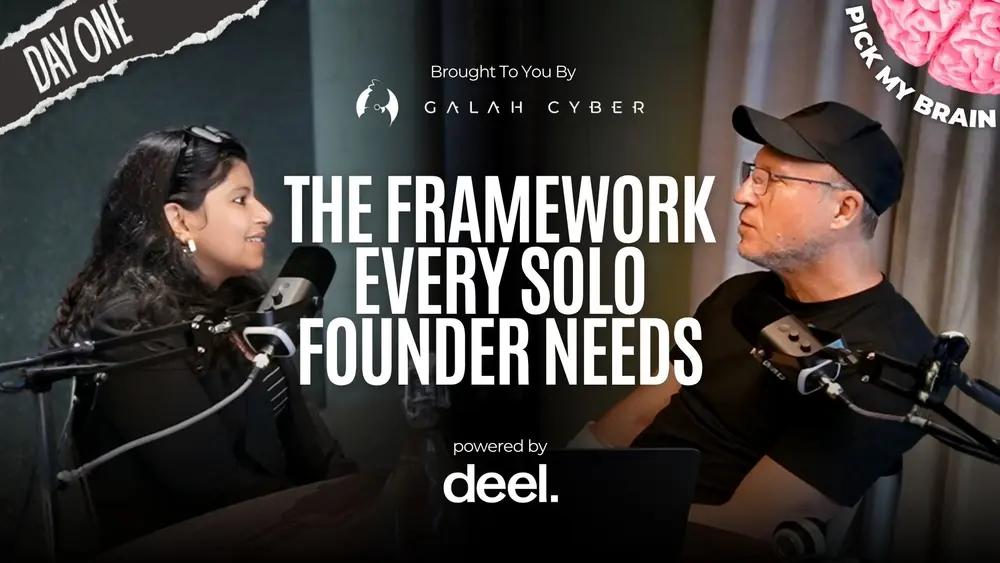
Transcript Synced · select any line to jump ▾ 0:00 Chris Fresle: Her ex-partner ended up being extremely malicious, and they broke up, and she sent— he sent all her intimate private photos. One of the most brutal backlashes from that possible. She was fired, she was, you know, ostracized, and unfortunately she tried to take her own life. 0:19 Alan Jones: Oh wow. 0:20 Chris Fresle: Yeah, and I looked at that and it really resonated with me. I was going through a bit of depression myself, and I'm like, If I can fix this or at least prevent it in some way, this will be my thing. And I'll stop people feeling like I'm, like, you know, kind of feeling right now. And I wasn't really the best kid growing up. After being in trouble for so many years around the age of 20, you know, I wanted to do something good with my life. You know, something actually that helped people. We want to change the definition of private messaging. When you say the words private messaging, you're not gonna think of WhatsApp or Signal. 0:52 Speaker: Right. Hi, my name's Allan Jones. Welcome to the Melbourne edition, the Melbourne Pick My Brain edition of the Pick My Brain show. If you're watching and listening, this is the show where I sit down with the founder, we learn a bit about their startup, and we talk a bit about the challenges, the problems, the opportunities that all of us face. Maybe we'll talk about something today that can help you. Maybe we'll talk about something so that you feel less alone, that there are other people, other startup founders out there faced with the same challenges that you have. 1:26 Speaker: You're listening to a Day One.fm show. 1:32 Speaker: Founders scale faster on Deel. Set up payroll for any country in minutes, hire anyone anywhere, get visas handled fast, and get back to building. Visit deel.com/dayone. That's D-E-E-L.com/dayone. 1:53 Speaker: Today I'm joined by Chris Fresel. I was gonna say Fresley, but it's pronounced Fresel. And Chris's startup is called Just Us dot, dash, oh, I knew I'd stuff this up. 2:07 Speaker: Go try it out. Yeah, it's Just Us Private Messenger, but our website is justus-app.com.au. But on the App Store, we're Just Us. 2:14 Alan Jones: Just Us Private Messenger. Just Us Private Messenger on the App Store. 2:18 Chris Fresle: On the App Store, yeah. 2:19 Alan Jones: So mate, you're in the App Store already. 2:21 Chris Fresle: Yeah, yeah, we're in the App Store, yeah. You're in the App Store right now. 2:22 Alan Jones: Well, speedrun me me through the journey from where you started to getting in the App Store? So— 3 minutes. 2:30 Chris Fresle: You want to go real— 2:31 Alan Jones: So stopwatch. 2:32 Chris Fresle: I come up on the time. Um, so I come from a very, uh, like poor background and no tech experience whatsoever, and I wasn't really the best kid growing up. So, you know, year 9 dropout, a lot of trouble, all that type of thing. After being in trouble for so many years, around the age of 20 you know, I wanted to do something good with my life, you know, something actually that helped people. Yeah. So, um, a couple years later, I was just watching a, um, news segment with, uh, John Oliver. Um, John Oliver's like some— yeah, the satirical news guy. Yeah, it's usually, you know, just all fun and games and things, but he had this, uh, segment on a lady from Columbia University. She was extremely prestigious, top of you know, one of the head teachers. 3:20 Alan Jones: She was at Columbia. 3:21 Chris Fresle: Yeah, yeah, yeah. You can't— 3:23 Alan Jones: she can't be a bum. What did she say to John Oliver? 3:25 Chris Fresle: Her ex-partner ended up being extremely malicious and they broke up and she sent— he sent all her intimate private photos to her students, her colleagues, her principal, her students' parents. She faced one of the most brutal backlashes from that possible. She was fired, she was, you know, ostracized. She was basically a pariah in the community for something that she didn't do. And unfortunately, she tried to take her own life. Oh wow. 3:59 Speaker: Yeah. 3:59 Chris Fresle: And I looked at that and it really resonated with me. I was going through a bit of depression myself. I'm like, if I can fix this, or at least prevent it in some way, this will be my thing. I mean, I'll stop people feeling like I'm like, you know, kind of feeling it right now. And that's where it started. Like, I had looked at what causes this— screenshots, forwarding, just showing someone can be enough. You know, let's say if you're in a work environment or university and, you know, they show everyone in class the new Rock Up, that's, that's horrible. 4:31 Alan Jones: Yeah. 4:32 Chris Fresle: And then the really sneaky people get another phone or camera and take a picture of the screen. 4:36 Alan Jones: Yep. 4:37 Chris Fresle: So my app stops all of that. 4:39 Alan Jones: Okay. 4:39 Chris Fresle: Yeah. 4:41 Alan Jones: Seems impossible, but, uh, high level, how does that work? 4:44 Chris Fresle: Uh, so we use, uh, continuous facial recognition through the front-facing camera for this stuff. The receiver's face has to constantly be looking at the screen, and if another face comes into frame, it will shut off. Or if that person's face turns away, it shuts off completely. So they can't show it, they can't move it around. And then we also run continuous object recognition through that front-facing camera as well. If they get another phone or camera and stick it in front of the screen, it will see it and it will shut off the screen. Well, that's all in our test phase right now. Like, it's all available. What we're working on now is because we're just, you know, testing it out, getting people to, you know, tell us what they like and don't like. But we're in the process now of doing a digital privacy screen. 5:25 Alan Jones: Okay. 5:26 Chris Fresle: So even what that front-facing camera can't see, uh, the sender can put it over whatever they like, you know. And, you know, if someone's over here at an angle and trying to, you know, take a photo or have a view something they shouldn't be, they won't be able to see either. 5:40 Alan Jones: Wow. 5:40 Chris Fresle: I think, yeah. 5:41 Alan Jones: I'm not even sure how that's technically possible, but we live in an age of wonders. 5:45 Chris Fresle: Yeah, I'll give you a little demo. I've got it on my phone. I'll give you a little demo and everything. 5:49 Alan Jones: Okay, for now, let's assume this is working, 'cause we live in an age of wonders and anything is possible. You've mentioned a couple of times, you've referred to we. Is that like the royal we or is there a team? 6:02 Chris Fresle: There's a team. So I've worked very closely with my team up in Vietnam for, the last couple of years doing research and development because they just said this is, it's a big task. Like, it was super, super complicated. 6:13 Alan Jones: How did you find this tank? 6:15 Chris Fresle: They found me, which was super— 6:17 Alan Jones: Were you looking? 6:18 Chris Fresle: Oh yeah. 6:19 Alan Jones: You were? 6:19 Chris Fresle: Okay. Yeah, I was looking. All right. 6:22 Alan Jones: So how did they find you? What was it about the way you were looking that meant— 6:25 Chris Fresle: I was just on LinkedIn and I was, you know, I had, you know, looking for hiring on my thing. So a lot of people reached out and, you know, the same thing I get is like, this is impossible, this is impossible, this is impossible. And then, uh, CMC reached out to me in Vietnam and they're like, I will hear you out. And, uh, explained exactly, you know, for continuous facial recognition. And it clicked. They're like, oh, this is gonna work. 6:49 Alan Jones: Okay. 6:50 Chris Fresle: I'm like, oh, thank you. That's, that's, that's a huge, uh, that's a huge plus. Especially, you know, I'm a non-technical founder and having these people that are extremely proficient being like, no, this is legit. Let's do this. Um, but it's gonna be hard. There's gonna be calibration. There's gonna be research and development. There's gonna be a whole bunch of things. And so we worked. Extremely close together for years. Sometimes we would run out of funding, so I would have to stop for months until I had to go around asking whoever I could, give me a bit more money to keep it going. Like, this is the day— this is before Claude. 7:23 Alan Jones: Yeah. 7:23 Chris Fresle: And all those types of things. So we didn't have any help. 7:26 Alan Jones: All right. 7:27 Chris Fresle: Yeah, we got to a certain point, and then— 7:29 Alan Jones: At what point in that relationship did you start to really feel like you could— first of all, that you could trust them, and then second of all, that you'd chosen the right team? Oh yeah. Because they might also be other great teams? 7:42 Chris Fresle: Oh yeah, 100%. I trusted them from day one just because of their resume. They worked with— 7:48 Alan Jones: Is that because you're a trusting person? 7:50 Chris Fresle: No, no, no. 7:50 Alan Jones: Okay, sorry, you were about to tell me that. 7:51 Chris Fresle: No, no, yeah, yeah. 7:51 Alan Jones: They've had some other great clients. 7:52 Chris Fresle: Yeah, yeah, yeah, yeah. So they had other, had competitive clients, right? And they've got great reviews from each one of them. So they had, for example, I'm not sure if these are the actual ones, like Samsung and Apple, right? And developing stuff in their, obviously not Samsung and Apple, but that type of relationship. And they were doing research and development for both, and both of them are like, yeah, these guys are completely confidential, you're your own, you know, locked out thing and everything. I'm like, oh, okay. 8:19 Alan Jones: Yeah. 8:19 Chris Fresle: Um, but when I knew that they were the right ones is when I saw that, oh, this is okay, this is possible. 8:26 Alan Jones: Yeah. 8:26 Chris Fresle: Because there's a vibe you get when, when you're talking to someone that gets it. Sometimes I don't get it immediately, but when they actually get it and they're like, hold it, and then the smile comes and the excitement comes and And then they start talking about, this would be good for this and this and this and this and this. That's when I know I really, really like someone and we can work together. 8:47 Alan Jones: So I have to do that at some point in an app. Yeah. Okay. 8:50 Chris Fresle: Yeah, after I show you, you're like, you sure? You gotta test it a million times, of course. 8:54 Alan Jones: I mean, an investor's job is not to do that. 8:56 Chris Fresle: Yeah. 8:57 Alan Jones: Right? You know, like we're meant to be either, if you're an angel investor, we're meant to be investing our own money dispassionately. If we're a VC person, we're meant to be investing our clients' money dispassionately. And the one thing we're not meant to do is we're not meant to fall in love. We're meant to remain in a skeptical mindset the whole time. 9:14 Chris Fresle: Yeah, yeah. 9:14 Alan Jones: I imagine you're probably up against that quite a bit. 9:17 Chris Fresle: Oh, all the time, all the time. That's, if there was any problems I'd have with the startup world is that the too much skepticism because, you know, obviously there, you know, you need to have your guard up. People are scamming, people doing a bunch of things, but they also need to be open to what is possible because like, especially like in Australia, it's, much worse than the US. In the US, you know, they're like, oh, you know, there's that excitement, you know, like, you know, that, you know, American dream, everything. And like, oh, if this actually works, so at least put that investigation in to see if it does work. But then, but in Australia, you've got more like a bit of more conservative stuff like, nah, like, yeah, we don't understand it now, so we're not even going to look at it. So that's what's been a huge struggle for me. But— In saying that, because now we're going through angels, when I can actually, and now I've found one of my top investors, his name's also Chris, and he's seen it and he's like, damn, this will, like he's thinking about different scenarios where it will be good in, stuff that I haven't even thought of. 10:24 Alan Jones: Okay. 10:25 Chris Fresle: And then I'm like, yeah. And so he's like, okay, but he was sceptical. 10:29 Alan Jones: Yeah. 10:30 Chris Fresle: He's like, okay, I'll give you the first check. Right. And instead of, you know, like a full check and being like, you could do everything, he's like, I'm a little bit skeptical. Do A and B for me, right? Do A instead of A, B, C, D, and, you know, everything else is just do A and B for me. If you can do that with this check, we'll see what happens. 10:47 Alan Jones: Who found who first? Did Chris find Chris or did Chris find Chris? 10:50 Chris Fresle: Chris found Chris. I was very lucky. He was— he's the uncle of a good friend of mine. Which I was extremely, extremely lucky. 11:01 Alan Jones: So he's a friends and family investor. 11:03 Chris Fresle: Yeah, yeah, yeah. Exactly. Type of thing. But put in a lot more money than the typical. 11:08 Alan Jones: Cool. So to find friends and family investors, you've got to tell friends and family what you're working on. 11:14 Chris Fresle: I never shut up about it. 11:15 Alan Jones: I never shut up about it. 11:15 Chris Fresle: That's the thing. 11:16 Alan Jones: They don't invite you to family events. 11:18 Chris Fresle: No, of course not. They're like, oh, this guy's going to be talking about this for ages. 11:23 Alan Jones: I think I preferred him when he was a What is a dropkick? Yeah. I think it's interesting. I think what you're describing there is Australians have typically have a very evolved critical mindset. Oh yeah, yeah. Right? And what you're describing is you're describing people pivoting from starting out from a critical frame and then moving into an opportunity frame. —where they go, "Hang on, like, let's set aside whether or not this is technically possible. If it worked, I can see how big this can be." Exactly. Right? 12:01 Chris Fresle: Exactly, yeah. 12:02 Alan Jones: So sometimes when we're pitching something which is a bit hard for people to believe in, sometimes we can just like hop over that transition for them and say, "Look, I'll prove to you later that it works." Yeah, yeah, yeah, that's it. But have you considered if this worked, how much better a world this could be. And we can frame that according to whoever that person is, right? 12:23 Chris Fresle: 100%. Yeah, 100%. And— 12:25 Alan Jones: So if that person is female, we can go straight to— 12:28 Chris Fresle: Yeah, image-based abuse. 12:29 Alan Jones: This may never have to happen to you, to your sister, to your girlfriend. 12:34 Chris Fresle: Of course. 12:34 Alan Jones: Or to any other woman ever again. 12:36 Chris Fresle: Of course, ever again. Yeah, exactly. Yeah, exactly. And that's how we frame it. 12:40 Alan Jones: And then for the investor or distribution partner, it might be the commercial opportunity. 12:47 Chris Fresle: Oh yeah. Yeah, we're good. So can we talk a little bit, about that? 12:50 Alan Jones: Is the app up on the App Store? Are people— do people need to pay for it? 12:55 Chris Fresle: No, no, no. So it's completely free. 12:57 Alan Jones: Okay. 12:58 Chris Fresle: Our motto from the start is that we'll never charge for the privacy. All that stuff that we've talked about will always be free. We believe that, you know, the most vulnerable, you know, the ones that can't afford, you know, like premiums and things like that. The only thing we charge for is convenience and customization. So, for the free version, you can send the same private message to 2 people at a time. You can keep, you can send as many as you like during the day, but you gotta like send it, you know, back and forth, you know, like go back and send it again, back and send it again, which can be a pain in the butt. 13:30 Alan Jones: Yeah. 13:31 Chris Fresle: But it will still protect you. But for $5 Australian a month, you get the premium, which you can send as many multi-sends as you like, have group chats as big as you like. So, it's all about making it easier instead of like, you know, guarding the privacy, you know, standing there with a pitchfork and like, you know. 13:50 Alan Jones: All right, cool, cool. And it's a flat monthly subscription. You're not asking me to buy a pack of messages. 13:55 Chris Fresle: No. Oh, hell no. Yeah, no, we don't, no, we don't do that. Absolutely not. People have tried to get us to do that, that type of thing. We're like, no, like, well, on the free version, you will have like very small non-invasive ads, you know, like sponsored messages and little banner ones. But we know that a lot of, like, you know, this is a private messaging app and we know that there is a huge number of our users that don't want to give us any of their data, which we completely understand. So instead of going, the only way to do it is targeted advertising and, you know, so we get your shopping data and that's it, we give the user the choice. They can either do, you know, they can opt in for the, you know, targeted advertising and, you know, we all we see is the data for that and that's it. And there's a huge audience that don't mind. 14:43 Alan Jones: Yeah. 14:43 Chris Fresle: But the ones that do mind, they can fill out a survey. 14:46 Alan Jones: Okay. 14:47 Chris Fresle: And they're like, these are the ads I want to see. 14:49 Alan Jones: Yeah. 14:49 Chris Fresle: These are the most relevant to me. You know, takes a couple of minutes and then never have to do that again. And they will be the targeted ads you see instead of, you know, instead of us getting your data, which we don't really want. Like we want to keep this transaction as clean as possible. 15:05 Alan Jones: So you'd rather be building business in monthly subscription revenue than advertising revenue. 15:11 Chris Fresle: Yeah, yeah, yeah. Well, we can still make a little bit from advertising, you know, like, you know, but yeah, I'd much rather, yes, the subscription service be our, be our main bread and butter. But right now everything's free in the trial. You don't pay for anything. So. 15:29 Speaker: Founderscale Faster On Deal. Set up payroll for any country in minutes. Hire anyone anywhere, and get visas handled fast so you stay focused on scaling. Deel takes care of onboarding, HR, IT, EOR, benefits, and compliance so your team can grow without borders. It's why more than 40,000 fast-growing companies trust Deel to move fast. Visit deel.com/dayone. That's D-E-E-L dot com slash day one. 16:01 Alan Jones: When did you launch in the app stores and how many users do you have now? 16:10 Chris Fresle: About a month and a half ago. Pretty fresh. We're keeping it small because we're trying to keep that blast radius really, really small. 16:17 Alan Jones: Everybody starts small and many of us stay small. Very true. 16:21 Chris Fresle: Very true. Some of the reactions we get, like we've put a couple on our Instagram, people like, holy shit. This is like when I do the test and they're like, no, this is nuts. And in a month and a half, I think we've got like 500, 600 right now, but we keep— but we're not trying to go super big. My biggest priority is listening to the small amount that we have and getting the feedback. So right now, because it's a trial, all the privacy is always on. And the feedback that we've got is that we love it. It's awesome. But we want to stay on this. We don't want to like having to keep on switch— switching over when there's something super private we want to talk about. And so they're like, can you do, can you choose like just to send a normal message? And then, you know, like, because if you look at even the statistics for WhatsApp, when they've got like the one-time view, you know, you know, there's 3 billion people on WhatsApp, but it's about 10 to 20% of those messages is the one-time viewing. So it shows that people are cautious about, you know, someone seeing that message. So they just move as a one-time view. 17:29 Speaker: Yeah. 17:29 Chris Fresle: But it also gives us the data as like, okay, it's only like get 10 to 20% of these messages that need this. 17:35 Speaker: Yeah. 17:36 Chris Fresle: So right now what we're building before we go worldwide is all customizable. So the sender can choose to just toggle on and off and how much they want. They can preset it, give them full control of what they send. It can be a completely normal message and they can even change the privacy on that message later. 17:58 Alan Jones: Right. 17:59 Chris Fresle: As well. Right now, our goal isn't growing super big. It's listening to our customers, finding something that's really, really beautiful. You know, it works really well. And then we go, okay, cool. Then we've got, um, we've just teamed up with some really good marketing teams in the US, um, with awesome talent. And I didn't actually think we'd get a response when I messaged them, but they, um, really resonated with what we do. They're like, this is actually a Gen Z orientated one. Um, yeah, exactly. Yeah. And they're like, no, this is a huge problem. Um, we really like this. And they've worked with guys from, you know, like Tinder and Meta and Google, like huge companies. And I was like, oh, these guys aren't going to give us a message back. Okay. But we had a meeting the other day and we're like, would love to take you on. And I'm like, oh, so, um, very, very happy about that. Cool. Okay. 18:54 Alan Jones: Chris better warm up his checkbook. 18:56 Chris Fresle: Oh yeah, I think Chris has put in as much as he can. Oh, Chris is— Chris has given, uh, his mate his— if it wasn't for the other Chris, we would be screwed. I have no idea where I'd be. 19:11 Alan Jones: Okay. And yeah, look, uh, most messaging businesses have a, um, a long path to, uh, to, to break even, right? And it's challenging to keep the operating costs in line with, with the revenue and the margin you're charging. Um, I imagine $5 a month was just like a— 19:30 Chris Fresle: We didn't want something too expensive because if, yeah, I could charge like $20, $30, whatever it is. 19:37 Alan Jones: Right. 19:38 Chris Fresle: Right. But you know, if you look about the affordability, I'm gonna have, you know, way less people subscribing. 19:47 Speaker: Yeah. 19:48 Chris Fresle: Right? So, and I don't want it too, I don't want it a dollar, you know, because like, it's not going to do anything. But we looked at it, we're like, okay, $5 is affordable. 19:57 Alan Jones: And then we looked, so we looked at trends through, you know, like, uh, That's, sorry, the, what the price represents to the customer is one half of the equation too. Then on the other half, there's the operating cost. Exactly. 20:12 Chris Fresle: Business equation. Exactly. Yeah. 20:13 Alan Jones: So you've got to, out of that $5 take, The cost of acquisition, the cost of the excellent marketers in the US. 20:18 Chris Fresle: Exactly right. Yeah, exactly. 20:19 Alan Jones: The messaging costs, CMC in Vietnam and their time and effort. So is that lining up yet or? 20:28 Chris Fresle: Yeah, yeah, yeah. With our advertising strategy is lining up very well. We have a very ambitious goal and we chose— 20:36 Alan Jones: I've yet to meet a founder that says I don't have a very ambitious goal. 20:42 Chris Fresle: Yeah, we're all nuts. 20:44 Alan Jones: Yeah, I bet there's one out there somewhere. 20:46 Chris Fresle: There's one. 20:47 Alan Jones: Okay, what's your very ambitious goal? 20:49 Chris Fresle: We want to change the definition of private messaging. 20:54 Alan Jones: Right. 20:55 Chris Fresle: We, when 10 years, when you say the words private messaging, you're not going to think of WhatsApp or Signal. You're going to think of those encrypted messaging things. We've got encryption. Encryption's great. Sure. But they don't have what we have. And that's, that's real privacy. Like, if you and I are having a private conversation, you don't want me to tell anyone about it. You don't want anyone to listen. You know what, you don't worry, you're not worried about, you know, something in the air, at least like, well, could be, but that's what real privacy is. It's something, you know, that's why we named it Just Us. It's, it's— 21:34 Alan Jones: So that unique intellectual property is a valuable thing. For you, yeah. Have you thought thought about how to prevent one of the hardware manufacturers or another app developer from going, oh, that's a good idea, let's make an exact copy of that? 21:49 Chris Fresle: Yeah, yeah, we've got, so we've had our patent pending since 2022. We're in a really good stage right now. We've just launched our applications in, so we've got patent pending in Australia, New Zealand, US, Canada, all of Europe, and the UK. Yeah, yep, so yeah, we looked at it and we're like, like if we don't protect their asses, like we did that before much development even. Yeah. Like we knew it was gonna work and we didn't do a coding patent either. We didn't do like, this is, you know, like a specific thing. We did a method patent. So if, so, or a procedural one, it's method or people have called it different things. 22:31 Alan Jones: But it governs a concept. 22:32 Chris Fresle: Yeah, exactly. 22:34 Alan Jones: You're patenting the idea, right? So getting registered patents, gives us the ability to, or makes it more likely that we'll be successful if we take legal action against somebody who we feel is copying things. How do we fund that legal action? 22:53 Chris Fresle: Yeah, that was my major question. I'm working with really good lawyers. One of my first ever investor is a KC here in Australia, King's Counsel. 23:03 Alan Jones: They used to be QCs, now they're KCs. 23:04 Chris Fresle: They used to be QCs, now they're all KCs. Exactly. Yeah. And like, yeah, good. Because when I say KCs, people are like, I'm like QC. 23:11 Alan Jones: Oh, you mean KFC? 23:13 Chris Fresle: Yeah, KFC. We got Colonel Sanders on our team. He's awesome. Gives us— is how much did he invest? Like 12 buckets of chicken. But it's really good. And set us up with great lawyers. Like, he's actually in intellectual property. 23:28 Alan Jones: That's his— 23:29 Chris Fresle: Right. Yeah. And he's like, if it ever comes to like the big boys trying to— there are no— like, just like there's no win, no fees for you know, injury claims and stuff. They're same with patent law, like patents and things like that. So we're in good hands there with our intellectual property. And, um, that's— and that was another thing, like, when— because someone in that, someone in that high regard in that exact field that we're in, and he's like, oh, this is awesome. I was like, oh, okay. It's, it's validating as it goes on. So yeah. 24:03 Alan Jones: Cool. So, um, Protected intellectual property is one unfair advantage that helps protect you against competitors. Do you have any other unfair advantages or do you have plans to develop some? 24:18 Chris Fresle: Yeah, yeah, we're going hard. 24:20 Alan Jones: Okay. I understand what you mean because messaging platform adoption depends on widespread use. 24:26 Chris Fresle: Exactly, yeah. Exactly, yeah. 24:28 Alan Jones: You have to be really, really caring about the privacy of your comms to be the first, second, third, and fourth sort of in your messaging platform, 'cause you need trust. 24:40 Chris Fresle: Need trust, absolutely, yeah. 24:42 Alan Jones: And you need to remember that you downloaded and installed a new app and not just turned to the app they were using before. 24:48 Chris Fresle: Yeah, exactly, yeah, exactly. 24:49 Alan Jones: And then you go to the person on the other end of this interaction and say, hey, would you mind downloading this app? 24:54 Chris Fresle: Yeah, downloading this app, exactly, yeah. So I can go and tell a million people to do it and they're like, who the fuck is this guy? Like, you know, who cares? But that's why I reached out to these, you know, marketing teams and they've got great talent. Like, yeah, one of them that we're working with is called Adolescent Marketing and some of their talent pool is ridiculous. Like people like James Charles that worked with people like Megan Thee Stallion, like these huge, really, you know, popular names that actually have cultural relevance and trust to themselves. 25:26 Alan Jones: Yeah. 25:27 Chris Fresle: Because I can go out and talk about it and say, who the fuck is this? 25:29 Alan Jones: Like, but And I might think, who is Megan? But no, I know who you mean. I am not that old. I'm still relevant. Maybe. But look, there's another kind of influencer that you might want to involve and that maybe the US agency can't necessarily help you. And that is the subject matter expert. 25:49 Speaker: Oh yeah. Yeah. 25:50 Chris Fresle: That's okay. Yeah, we're actually going to be on the news in 2 weeks. 25:53 Alan Jones: I wasn't thinking of that kind of subject matter expert, but I think it's a good idea for you to start. Yeah. 25:57 Chris Fresle: Oh, but like they're bringing on an expert in, you know, like image-based abuse and things like that. 26:03 Alan Jones: Oh, cool, okay, okay. 26:03 Chris Fresle: And yeah, to talk about why it's needed. No, totally, cool. Yeah, exactly, yeah, yeah, yeah. All right, cool. 26:09 Alan Jones: So academics are great and they are also frustrating because they're often bound by what their employing institution will allow them to say and not say. So sometimes we might need to work with those people who have some sort of academic or professional background that's relevant, who are now trying to break out on their own as their own personal brand. Yes, yes. So somebody who's written a book or more books in this area. 26:33 Chris Fresle: Yeah, definitely. 26:34 Alan Jones: Hopefully somebody who's on their way towards becoming a bestselling author so that they're not already charging us bestselling author rates to be one of our hotbed experts. 26:44 Chris Fresle: 100%. Well, one thing that we really value, and this is 'cause we're not gonna work with Megan Thee Stallion and James, they're just some of the experience, some of the examples. But what they do have is they've got those, influencers with, you know, 500,000 to a million subscribers. Huge trust in that, in those numbers. And get like, you know, we have to be super careful with this, but there are influencers that have contacted us, be like, no, this is important, we will talk about what we went through. Survivors of image-based abuse. And they're, they're talking to their audience. And we're, you know, talking— we're not just getting any of them to do it. We're getting influencers is that, um, their main audience is in, you know, like the young adult market. And they're— and being like, this is what happened, this is how much it affected me. Like, I— like, some of them, some of the influencers that we talked to, they're like, we want to tell them that we're deleting every other messaging app. We don't feel safe on any other app. Just Us is the only thing that we're going to use. And that was awesome. I was like, I was like, oh shit. Yeah. And, um, So that's how— that's— and that's coming from the survivors, the victims of this, and from their recommendation. They're like, they're like, this is how we believe you should market this. 28:02 Alan Jones: Is— 28:02 Chris Fresle: And I'm like, absolutely. Like, they're the people that I'll always listen to. Like, I've seen it happen thousands of times. You know, I grew up in high school and, and you just— it would— you'd just be like, this is this is fucked. Like, this is the worst possible thing to happen to a young girl. 28:19 Alan Jones: Yeah. 28:19 Chris Fresle: Or one of them. And yeah, and there's nothing they can do, and it just keeps going. And like, you know, every room they walk into, everything. And a lot of them, you know, I, you know, ended up dropping out and getting into, you know, you know, going to the same type, you know, I was a, you know, little shit back in the day, and, you know, getting into trouble, and they were alongside me, you know, like, and, you know, not going to school and, you know, getting suspended and expelled. Like that, that just seeing it, like, I can never, you know, even fathom what it's like going through it, but it just gives you enough drive to be like, fuck, this is important. 28:57 Alan Jones: Well, full credit to you for being so very obviously passionate about trying to help people solve a problem that you didn't personally experience. You've observed it in people and you feel like they deserve a better solution they already have. So good on you for doing that. 29:12 Chris Fresle: Oh, thank you. It's just, it's more of like a feeling of helplessness. Like, someone that, you know, some people— some of them I knew, some of them I didn't, but it didn't matter. Like, these people obviously— 29:23 Alan Jones: Yeah. 29:23 Chris Fresle: You know, this fucking suffering. And after, like, my stint of being, you know, getting in trouble and stuff for all my teenage years, I wanted to do something good. It screwed them up that much that it stuck with me. And that was— I think that was one of the subconscious things when I saw the interview on John Oliver. Like, yeah, this is bad. Yeah. And so let's rock and roll. Let's do it. 29:46 Speaker: Great, Chris. Thank you. I think it's important for all of us to have an origin story, where we came from. And it helps if it's got passion and meaning and relatability in it. And you've got all those things in spades. 29:59 Chris Fresle: Oh, thank you. 30:00 Speaker: Chris Frizzle from Just Us. But thanks very much for coming on. It was my pleasure, man. It was really, really cool. Listeners and watchers, if you're thinking, oh, wow, Head on over to the app stores. Both app stores? 30:12 Chris Fresle: Both app stores. Both app stores. Yep. Free to use? Yep, free to use. A little bit jolty at the moment, so, um, you know, you have to bear with it. Um, don't send anything too crazy right now, but yeah, we're just getting all your guys' feedback. We— your guys— yeah, we adore what you guys say. Like, we take it super seriously and we're going to implement it, guaranteed. 30:31 Alan Jones: So yeah, thanks, mate. Thanks for coming. 30:33 Chris Fresle: No, thank you so much, Alan. Cheers. Oh yeah. 30:37 Speaker: Yes. 30:38 Chris Fresle: Yeah, that way. 30:41 Alan Jones: Thanks for joining me for this and every episode of Pick My Brains, the advice podcast for every startup founder. Never mind the don't forget to like and subscribe bullshit that every podcast host goes on about. Instead, please take a moment to think about someone you know who could use some of the advice I've shared and tell them that they should listen to it. I don't know, maybe they'll choose to like and subscribe. Anyway, I'm not a lawyer or an accountant, and what you've heard today is not intended as financial or legal advice. You should always seek that from a qualified professional before making the big decisions. And I'm not a superhero either, so don't forget that sometimes I'm fallible, and very occasionally I might even be wrong. Please let me know when you think I might be so I can get better at this too. Just reach out to me on any of our social channels or email the show at pickmybrain@startupfoundercoach.com. Speaking of startupfoundercoach.com, that's where you might sometimes find show notes, transcripts, and bonus bloopers if I have the time. The Pick My Brain podcast is produced, edited, and beamed directly to your ears by the hardworking and understaffed team at Day One, the podcast network for founders, operators, and investors. Find out more at dayone.fm. Thanks for listening.


 ▶
▶  ▶
▶  ▶
▶  ▶
▶  ▶
▶  ▶
▶  ▶
▶ ▶
▶ ▶
▶