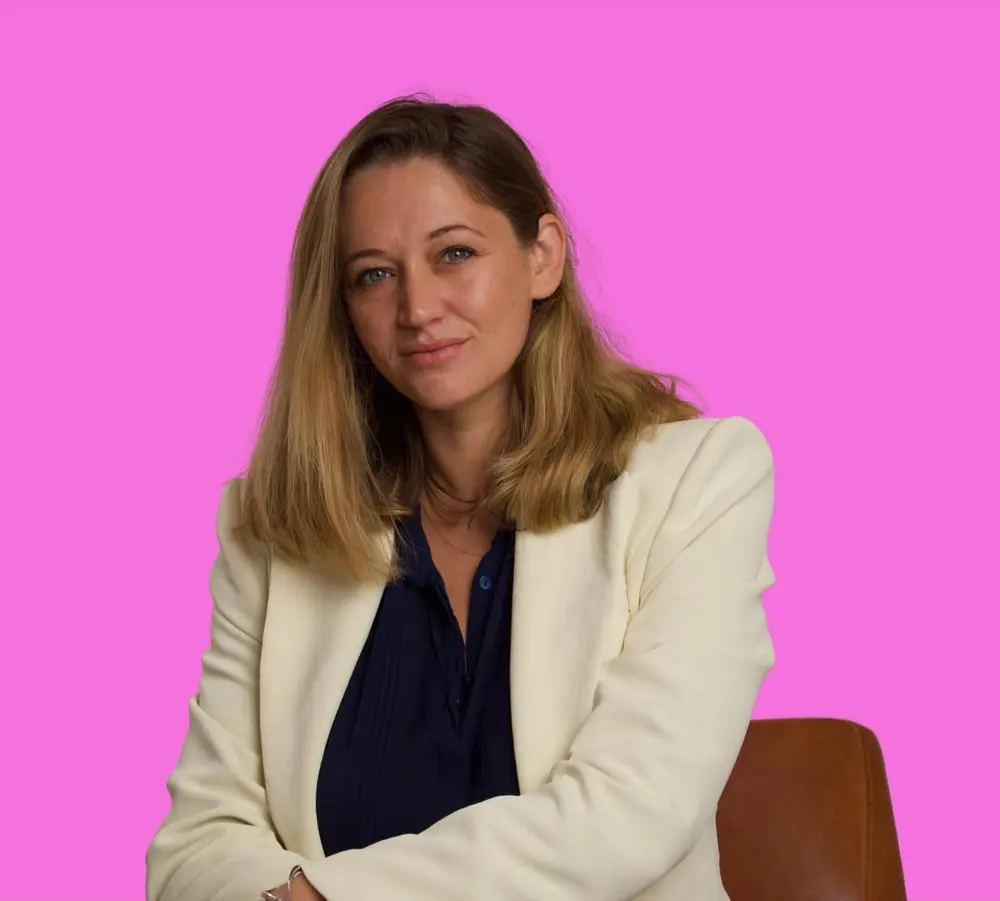
Transcript Synced · select any line to jump ▾ 0:02 Speaker: Founders scale faster on Deel. Set up payroll for any country in minutes. Hire anyone anywhere. Get visas handled fast and get back to building. Visit deel.com/dayone. That's d-e-e-l.com/dayone. Often I just ask, what did you hate about it? And most of the times the reply is, It was a complete waste of money. I did not get in the media at all. And often my question to them next is, but what did you do? 0:37 Alan Jones: How is it different to other SaaS platforms that might help me manage my PR? 0:43 Marie Dowling: And so the first thing about Newsary is that we're not an AI-only platform. We're a platform that is hybrid. We bring the best of AI and the best of what in our opinion makes a good story attention-worthy. Which is your human experience and expertise. And at no point do we let the AI write for you. 1:03 Speaker: Welcome to Pick My Brain, the podcast where we help startup founders improve their pitches to better connect with customers, co-founders, and investors. My name's Alan Jones, and I'm an ex-startup founder myself, believe it or not, decades ago now. Now I'm an angel investor with decades of experience helping new businesses find their footing and achieve their goals. I'd like to acknowledge that this podcast is being recorded on Gadigal land, land that was never ceded. I pay my respects to their innovators and leaders, past, present, and emerging. On Pick My Brain, you'll hear the real story straight from founders as they push their startups to tackle the challenges we all face to try and turn their ideas into a successful business. Each episode, we'll see if I can help. Maybe another step forward, maybe half a step backwards and begin again, but I'll try and share some advice, some ideas, and maybe a little bit of constructive criticism sometimes. Thanks for joining me. Let's get started. 1:54 Speaker: You're listening to a Day One FM show. 2:00 Ad: Ever sat through security training and thought, none of this helps me ship code? Well, Glass Cyber gets it. The Foundations of Application Security course is built for engineers who actually build things. 2 days, hands-on, and packed with lessons you can use the minute you're back at your desk. It's practical, it's relevant, and it'll make you better at your job, not just tick a box. Register your interest at galahcyber.com.au/learn for the 2026 intake. That's galahcyber.com.au/learn. 2:36 Alan Jones: Today we're joined by Marie Dowling, who's the founder and CEO of Newsery. Thanks for joining the show, Marie. How are you? 2:42 Marie Dowling: Good. Thank you for having me. 2:44 Alan Jones: Getting ready for a kid's Christmas party this afternoon. 2:47 Speaker: I am, I am being a founder and a mum means you've got to juggle a lot. 2:51 Alan Jones: But that is not a simple thing to do, Marie, not a simple thing to do. So if you've had a chance to listen to the show before, you'll know that I have two standard questions to let the audience get to know you a little bit better and to help us understand your origin story. Standard question number one is, when you were a kid, what did you think you wanted to do when you grew up? 3:11 Marie Dowling: So I love this question because The answer is absolutely not the one you'd expect. Very young, I, the first thing I wanted to do as a kid was to be an equestrian. Like, I wanted to dance on horses. But very soon I realized that vets also had to put down animals, which was terrorizing for me. And I was very good at defending and speaking on behalf of others. And so I very quickly started to want to become what I called was a defender. I wanted to just defend other people in front of others, which would be a lawyer or a lobbyist. And that's what I actually set out to become after. So that was a very, very young vocation, surprisingly. 3:55 Alan Jones: Very cool. Were you a little girl with a pony? Did you have a horse? 3:59 Marie Dowling: I did not have a horse. I dreamed of having one, but despite all the slides that I created for my parents, I did not manage to convince them. 4:08 Alan Jones: It's a big ambitious goal, isn't it? Absolutely. So my second standard question is, what were you doing before you became a startup founder? 4:20 Marie Dowling: I had just cut my maternity leave short to join a PR firm in Australia, and they had hired me for my previous role while I'm at leave. To do PR for their financial tech clients. And I realized if I was going to work every time of the day and every hours, because when you have young kids, that's what you end up doing, it needed to be on something I was really passionate about. And press release for brands who are already known was not something I'm passionate about. So I wanted to tell other people's stories. 4:59 Alan Jones: I've spent some time writing and distributing press releases too, and, and it can be difficult. You know, the client pays the invoices and you have to try and find a way to be excited about the client's work sometimes, don't you? 5:13 Marie Dowling: Yeah. Yeah. And especially when the bigger the clients, the less interesting the press release. Most of the time I find working with smaller businesses and startups way more exciting, and that's what I set out to do. 5:27 Alan Jones: The larger the organization, the, I guess the bigger the value of the brand behind the business and its reputation out there. And so as an organization gets older and older and bigger and bigger, hopefully it gets bigger and bigger, but as it gets older and older, there's more and more value tied up in the public reputation of the company and the correspondingly less risk appetite. You know, the organization doesn't want to say anything that might cause offense and it can be really hard to take position on something if it doesn't offend anybody, right? 6:00 Marie Dowling: 100%. And that's when you go from having stories to having product updates and having compliance or legal having a look at what you write as a creative, which there's no faster way of killing a story than to have a lawyer have a look at it. They follow me. 6:19 Alan Jones: They're kind of the kryptonite to good stories, aren't they? 6:23 Marie Dowling: Yeah. 6:25 Alan Jones: We can't say that. We can't say that. We have to say this. Marie, tell us about Newsory. 6:31 Marie Dowling: So Newsory is the future of brand storytelling for organizations, big and small. We started 3 years ago as a way for startup and small business to craft press releases and opinion articles and pitch to the media. And then after a year and a half, we pivoted and realized that solving the how to write a good story wasn't enough. We also need to empower people to understand what was a good story, know when they have one, and also prompt them to jump on a media opportunity. And so now that's what we do. 7:13 Alan Jones: Can you tell me about the motivation for making that pivot? What signals were you getting from from customers or from the market or from competitors allegedly deciding to make that change? 7:25 Marie Dowling: Internally to Newsaries, the main signal was the fact that we've got very solid signups. We had over 200 signups by the time we pivoted, but people were not using the platform and being a shell of a business was not really very exciting. And the other signals that we had from the market is that PR is becoming more and more important to get featured in generative AI mentions. So basically PR or earned media is a new SEO because that supports your ranking on search engines recommendation. And as more people use search engines to ask questions, find information as opposed to Google, it becomes more and more important that you're featured in the media to appear in those answers. And so on one hand, we had a very strong market for PR, And on the other hand, very few use of the platform. So the issue was us, not the market. So we changed. 8:23 Alan Jones: Okay, and what has changed as a result of that pivot? Has it been a successful pivot? 8:30 Marie Dowling: We do have 5 clients, paying customers, one enterprise customers, which is working, I'm working with a couple days a week as well to understand what they need from the inside out. And using Newsary as part of my role, which is really exciting, we making huge headways in our results by bringing what I called media intelligence. So instead of just telling people and serving people with knowledge of how to write a press release, how do I find the journalist I wanna pitch, what is a good story? Now we're able to cater to everyone who think PR might be for them. 9:09 Alan Jones: Yeah. Do you have permission from any of those clients to mention their name on a podcast? 9:16 Marie Dowling: Yeah, so Understanding Zoe is one of our most early clients. I adore her. We also work with Magig, who is a feature of a workplace solution, and they've just, we've just released their raise press release with very, very cool investors. 9:32 Alan Jones: I just saw that news the other day. 9:35 Marie Dowling: So that's sweet. And with Newsary. And after that, the platform where we're doing our tech is also a customer. So we've done a very great deal there where they use Newsary for a year and in exchange, they rebuilt our tech from scratch, which is amazing, which is Aviato Consulting, which I'm really excited about. There's a tech team behind Nevam as well. 9:55 Alan Jones: I believe, I believe we have Ben King coming up for an interview on the show sometime soon. Yeah. 10:03 Marie Dowling: Well, so it's really cool. So yeah, so I adore Ben King and what he does, which is really cool. 10:07 Alan Jones: Oh, great. I'm really pleased to hear that's working for you. Let's dig down a little bit more into how specifically Newsarea is going to work when the platform is fully migrated and you've caught up with a bit of the backlog. How is it different to other SaaS platforms that might help me manage my PR? 10:26 Marie Dowling: So I think there's two main differences. The one is that I had to rebuild my tech platform myself one maternity leave before I met Ben King. So I took a step down and write down every single thing a business owner did to do PR and then write down what can be automated, what should not be automated. And so the first thing about News Area is that we're not an AI-only platform, we're a platform that is hybrid. We bring the best of AI and the best of what, in our opinion, makes a good story attention-worthy, which is your human experience and expertise. And at no point do we let the AI write for you. 11:09 Alan Jones: Huh, I still have to do my own writing? 11:11 Marie Dowling: No, you just have to answer questions. 11:13 Alan Jones: Oh, okay. All right. Okay. 11:16 Marie Dowling: So it's a Q&A. 11:18 Alan Jones: All right, great, great. So it's a bit like being interviewed then. 11:22 Marie Dowling: It is very much like being interviewed. 11:25 Alan Jones: So the Newsory platform is interviewing really? 11:28 Marie Dowling: Yeah, it is very much like interviews, but because we integrate with where you work, so you can find us on email, you can log into our new SaaS, or you can talk to us on WhatsApp if you prefer voice notes. I'm a huge voice note person. I know people have opinions on this, but I'm a huge voice notes person. Um, and so we want to also create an integration with Slack. We want to work where people work so that you don't always have to answer questions. You just have to approve the information we have that we've gotten for you. And so the more you use us, the better we become. 12:02 Alan Jones: Cool, cool. I get it. Okay, great. Are you selling this on a monthly subscription sort of basis for a certain number of users at a time? Is that how you work? 12:12 Marie Dowling: So we have, we're on a subscription model. We're quarterly subscription model. So we have, we don't do monthly. We, you have to sign up for with us for a quarter. Otherwise, we don't want to work with you just because earned media takes time. And so if you try us over a month, we'll, you'll, you won't see any results. But our pricing really reflects the fact that we are an AI/hybrid platform. And so we are at $10,000 a year with a $2,500 onboarding fee. So we cost for a year what a PR agency, less than what a PR agency charge for one month. And we have better results. So, which is not from all PR agencies. We have better results than most PR agencies, which is really exciting. 12:54 Alan Jones: Yeah, I would say the typical cost of a tech PR agency in Australia would range from $5,000 to $10,000. And so that does seem really quite affordable. How do you find new customers or how do new customers find you? 13:10 Marie Dowling: Often they are people who've been disappointed by PR in the past and we've chatted Um, randomly at events, uh, through connections, and I've got a lot of, uh, word-of-mouth referral as well. And they sign up to Newsary and we often do, um, a small test. So we do also have a project offering. So if you wanna test us for 10 weeks, you can, and it's a cheaper price than the annual subscription. Um, and then if you like us, which most people do, you stay with us. So yeah. 13:41 Alan Jones: I chuckled there for a second cuz I imagined you going on to tech events and telling people that you're a PR person and then that person tells you how much they hate PR and then you are starting work on them to try and convince them to, to give it a, um, another try in a different way. 14:02 Marie Dowling: Um, I think the conversation starts exactly like that. And then often I just ask, what did you hate about it? And most of the times the reply is, it was a complete waste of money. I did not get in the media at all. Or they got me 2 coverages and then nothing. And often my question to them next is, but what did you do? Like, how involved were you? Did you write the press release? Did you, or did you share the information with them? Did you have regular contact with them? Did you tell them what you were doing?? And the answer is no. I didn't realize I had to understand what the media, what my media landscape is to then participate to the media. And so I guess that's also the third thing that Newsary does that no other SaaS platform do is we've merged media analysis and media monitoring. So that's what we call real-time media intelligence to give in real time to business owners a picture of where they stand in their industry from the media perspective. So we can tell them exactly what are journalists in your industry talking about, who are they talking about, so what's your share of voice versus your competitors on that topic, and if there are emerging trends, you should probably talk about them. So we, we, it's not just a reactive platform. I have a press release, I need to send it out to a list of media. It's a proactive platform. Perfect. Platform, which makes being in the news, it's a game changer for being in the news. Genuinely. 15:36 Alan Jones: There's a constraint around that go-to-market strategy that you have of attending events and reaching out to people, isn't there? Because you only have so many hours in the day and you're building a business and raising a family. And so you only have so many hours a month. To be doing sales. Do you have a plan for how to scale beyond your own capacity? 16:03 Marie Dowling: I do. So I'm actually, so I'm also a top voice on LinkedIn, so I'm very lucky to have been investing in this platform for the last 3 years now, sharing tips and advice. And I don't have a huge followership, but I've got enough people that it's, you know, it's 3,600 people I can directly reach. This is a huge part of my business model and I'm about to launch a PR calendar with them, which I built on Loveable. I've, I've coded on Loveable and the, it's one day, one activity and then some activities link you to a waitlist to be able to sign up to Newsary after trying part of it. So for example, you can try and Write your boilerplate, which is, for people who don't know what PR is, this little summary of what your business does that you add at the bottom of every press release, or you can use on social media, you can really use it. So we've got that done. We also have got another tool that we're going to make accessible, which is called a journalist backgrounder. So instead of having a media list, we tell you in real time which journalist is most likely to write about your news. And so we don't spam, we only target journalists that cares. Does that make sense? Which journalists loves. So we don't, yeah, just not having spam in their inbox. They tend to like it, as I'm sure you know. And so that's also something we'll make free and that opens us to a waitlist. We've got the 200 existing users that makes for a great waitlist because we know that businesses who want to do that PR. 17:40 Alan Jones: Mm-hmm. 17:41 Marie Dowling: And that are just sitting there waiting for the solution to improve, which is what we're doing. So our goals don't seem huge for the next 6 months because we want to reach 25 pilot customers and 2 enterprise clients. The existing enterprise client is FlixBus and we've just done an amazing campaign with them with over 300 pieces of coverage in Australia, which is mind-blowing. And it all becomes, yeah, it's all the more success we have with our existing clients, the more we can leverage this success as advertising or earned media on own media and get clients from there, basically. 18:25 Alan Jones: Have you considered motivating existing customers to refer Newsory to their connections by offering them a bit of a discount off their 3-monthly cost? 18:38 Marie Dowling: I had not, I had not actually. That's a great idea. The one thing we had considered which is similar is to obviously target what we called agencies type clients. So obviously PR agencies, but also VCs and other alternative funding type companies who work with huge portfolios of clients and having them work with us for their clients as a benefit basically. So pay by sit. Type of solutions. And then enterprise markets are also a great avenue for us because you earn one business like FlixBus and you're in 45 markets. So businesses that need support internationally. 19:20 Alan Jones: Cool. So a few times today you've talked about we, you know, we are doing this, we're doing that. And we've talked about Aviato who's helping you with the tech platform. Is there anyone else involved in Newsory? 19:37 Marie Dowling: So day to day, it's mainly me at the moment, but I still, two people have very, very large shares of the business because they were there from the start and they still own a couple percent each, which is my ex-CTO, Rachid Issar, who still supervise the tech, but has exited the day-to-day operations. And Stéphanie Palmer-Durian, who's ex-journalist at SmartCompany, she's still my media advisor and she still oversees every single IP or framework of knowledge, basically what the OAI agents use to write good content on your behalf. We use your words, we use real-time media intelligence, and we also use what good is from a journalist perspective. 20:22 Alan Jones: Correct. 20:23 Marie Dowling: As well as real-time journalist information. So she's involved in that, which guarantees that we're good quality-wise. 20:31 Alan Jones: She's very experienced and widely known. That's a huge asset to have. 20:36 Marie Dowling: Yeah, I adore Steph. 20:38 Alan Jones: Now I know you've also been active actually collaborating on hosting and creating industry events because I've been to one. But how did that go? I'm sure it was incredible cost in terms of your time and the time of the other organizers. Do you feel like, you know, that was a successful experiment in terms of how it helped your business forward? 21:04 Marie Dowling: I think it was amazing. I think I did it way too early in terms of business readiness in the sense that because we're pivoting, we're basically not to scratch, go back to market, but rethink of how we are pushing the market again. And last year's event was a huge success in what I wanted to achieve, which is raise awareness and storytelling. Megan and Liz, Megan Luttrell from AFC, Aussie Founders Club, and Liz Fanzial, who's now the head of community at Tractor Ventures, are doing a similar event but not on storytelling, just on founders in Melbourne next year, which is going to be incredible. I have too much on with now two kids. I was very pregnant last year for the event, so I had baby number 2 in between, um, and rebuilding Newsary, I decided this year I would just step away and then probably organize smaller in-person events in different cities surrounding the major events. So like when, you know, the next Sunrise or the next South Start, I might do something about PR surrounding those events, um, to benefit from their organization. and not having to pay people in. 22:22 Alan Jones: That, that, that could be great. That could be great. I was at a, um, uh, a dinner last night hosted by Day One Media, the, the producers of, of this podcast and many other great Australian startup, um, podcasts. And sometimes it's just great to be in the same room with other people who do something that you do. You know, for me to be with other podcast hosts, um, I can share with them what I think is working for me and what isn't, and they could, and they could do the same. And, and I think we all came away from that. With, you know, 3 or 4 things that we want to try or change about how we've been doing our show. I imagine the same would be true of storytellers of all kinds in the startup industry, those people who are journalists, those people who are founders, and those people who are PR professionals as well. 23:05 Marie Dowling: I think it is, and I think it's really rare for all of us to be in the same room. Often journalists don't mingle with founders, they don't want to be pitch live, which I understand, and PR persons retains that connection and that relationship between them. But when journalists hear the questions from founders and PR hears the questions from both sides, really good things happen. So it's definitely something I'd love to be doing more next year, but just needs to be in a bit more structured and in cost and time effective organic solution way. 23:39 Alan Jones: So when do you expect to be finished migrating the platform and coming out with this new version? 23:48 Marie Dowling: So the agents are already working and I've been manually connecting them depending on what tasks, but we've been testing them and the results are incredible. The platform will just give our users one place where they can access all their previous PR campaigns and chat history, and it gives our agents a better database and learning space so that they don't ask the same question several times, which can be annoying. Also for me, it means I won't have to be connecting to different agents all the time, which will save me a lot of time, which I'm really excited about because the black box model is great when you are a young founder, but it is extremely time-consuming and I'd like to spend that time marketing, doing other things that will serve the business better. And so we are, and when I say We are seeing Ben, Ben King's team, which has been absolutely amazing. They demoed me the first version of the platform yesterday, and I'm incredibly excited about this. So we should be ready to go before the end of December, and I will launch in January. So using the fresh start effect, people want to start new things in the new year, and PR is definitely on this list. Yeah. 25:06 Alan Jones: Yeah, yeah. This is a very seasonal industry, the startup industry. We all decide we're going to change the world. We all decide that we're sick of broken, old-fashioned solutions to problems, so we decide to set out to fix them with something new, don't we? Every January in Australia. 25:22 Marie Dowling: Exactly. Well, not just in Australia, I think it's worldwide, you know, new year, new me. And so we'll just jump on that trend and try and kickstart the year then. 25:33 Alan Jones: Very cool. Or if listeners to the show wanted to do one thing to help you between now and, well, you know, forever, but when they have a listen to this episode, what's one thing that listeners can do to help Newsary achieve its goals? 25:52 Marie Dowling: Have a look at PR if you're looking at your marketing next year. It's not just for Newsary, but as you know, for your brand, just maybe add PR to your marketing mix and think how you can do that. There's not that many options for PR for founders and early-stage startups or, you know, most businesses nowadays. There is using AI. We all know that the results aren't great. There is agency and better results, but 10 times the cost. And then there's platform, like, actually there is only one platform like Newsary. So follow us, talk about us, refer us. Yeah. Or just come and ask me questions. I'm more than happy to answer any PR questions. 26:32 Alan Jones: Great, thank you. Where can people find Newsary? 26:35 Marie Dowling: Well, at the moment, it's my LinkedIn. Otherwise, it is going to be www.newsary.co. 26:43 Alan Jones: I'm just gonna spell that out for listeners, sorry. It's N-E-W-S-A-R-Y.co. N-E-W-S-A-R-Y.co. Is that right? 26:54 Marie Dowling: It is. Thank you. Because my accent would have just butchered that. 26:58 Alan Jones: That's all right. 26:59 Marie Dowling: Exactly. And in the meantime, follow me on LinkedIn. 27:03 Alan Jones: Marie, thanks for telling us about Eazery and for joining me today. Thanks listeners and viewers for this and every single episode of Pick My Brains, the advice podcast for every startup founder. Thanks for listening and watching. And if you enjoyed this one, never mind the don't forget to like and subscribe bullshit that every podcast host goes on about. Instead, please take a moment to think about someone you know in the startup industry who could use some of the advice we've shared today. And tell them that they should listen to it. Maybe they'll choose to like and subscribe. I don't know or really care. That said, I'm not a lawyer or an accountant, and what you've heard today is not intended as financial or legal advice at any time, and you should always seek that from a qualified professional before making big financial or legal decisions. I'm not a superhero either, so don't forget that sometimes I'm fallible, and very occasionally I might even be wrong. So please let me know when you think I I have been so I can get better at this too. Just reach out to me in any of our social channels or email the show at pickmybrain@startupfoundercoach.com. So the Pick My Brain podcast is produced, edited, and beamed directly to your ears by the hardworking and understaffed team at Day One, the podcast network for founders, operators, and investors. Find out more at dayone.fm. Thanks for listening and watching. See you next time. Thanks for joining me for this and every episode of Pick My Brains, the advice podcast for every startup founder. Have you been listening to the show and wishing you could ask for a little advice about your startup? Well, here's your chance to do just that. We're trying something new and you can be part of it too. Leave me a voicemail message with a question you'd like answered in a future episode, and I'll do my best to give you the best advice I can. Just go to speakpipe.com/pickmybrain and leave me your most pressing question, request, or just some feedback and support for the show. Go to speakpipe.com/pickmybrain or follow the link in the show notes.

 ▶
▶  ▶
▶  ▶
▶  ▶
▶  ▶
▶  ▶
▶  ▶
▶ ▶
▶ ▶
▶