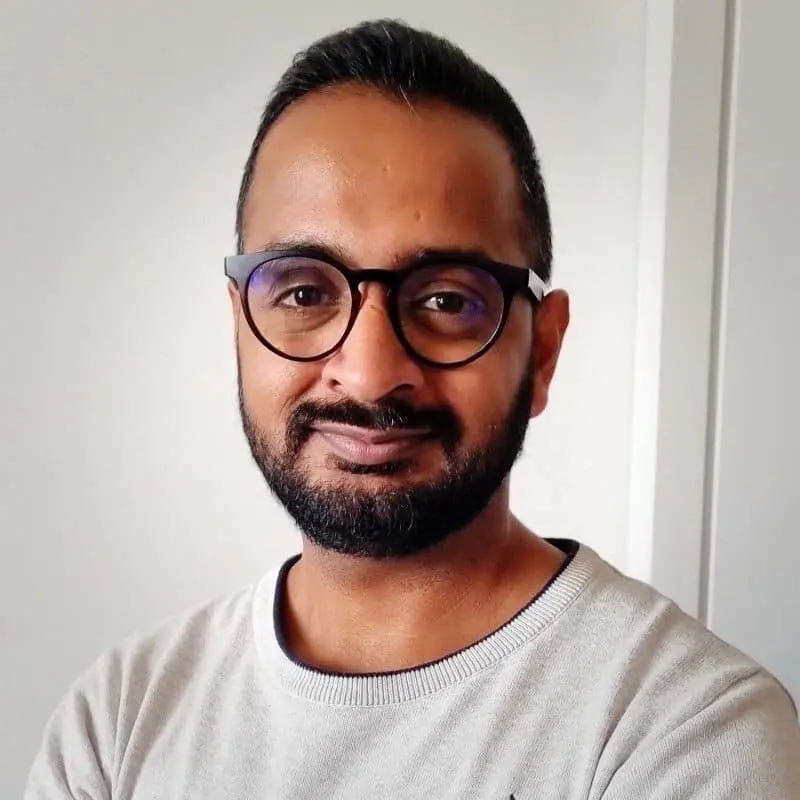
Transcript Synced · select any line to jump ▾ 0:02 Gaurav Rana: Founders scale faster on Deel. Set up payroll for any country in minutes. Hire anyone, anywhere. Get visas handled fast and get back to building. Visit deel.com/dayone. That's d-e-e-l.com/dayone. Australian payment experience is incredibly convenient. We tap our phones, no cards to carry, instant transactions. It feels seamless, but beneath that ease is a very expensive system. A merchant processing about $200,000 monthly can easily use to about $3,000 or more in fees. From the consumer side, it is no better. More than half of Australia's $1 trillion in card transactions are debit cards. People using their own money, but still getting hit with surcharges and hidden costs. There's over $300 per person per year just to access your own money with a tap. And yet Visa and Mastercard continue to report profit margins of over 50%. So we asked, what if we could prove that payments don't have to be exploitative to be profitable? 1:11 Speaker: Welcome to Pick My Brain, the podcast where we help startup founders improve their pitches to better connect with customers, co-founders, and investors. My name's Alan Jones, and I'm an ex-startup founder myself, but now I'm an angel investor with quite a bit of experience helping founders work on their new businesses, find their footing, and achieve their goals. I'd like to acknowledge first that this podcast is being recorded on Gadigal land, land that was never ceded. I pay my respects to their innovators and leaders past, present, and emerging. On Pick My Brain, you'll hear the real story straight from founders as they pitch their startups, tackle the challenges we all face, and try to make their ideas into a successful company. Each episode, we'll see if I can help these founders take their startups another step forward with advice, ideas, and maybe a little constructive criticism. So thanks for joining me. Let's get started. You're listening to a Day One FM show. As a startup founder, you're juggling multiple priorities from the expected, like finding product market fit, to the unexpected, like customer requests for SOC 2 or ISO 27001 certification. But achieving compliance is time-consuming, and time spent on that is time away from the needs of your business. That's where Vanta comes in. Vanta is the all-in-one solution for startups to become compliant quickly and build a security foundation with ease. With a combination of automation, an extensive partner network, and a security marketplace, Vanta provides the necessary tools and expertise for startups to achieve compliance seamlessly, no matter how urgent your needs are, and at every phase of growth. Over 10,000 leading companies, including Cipherstash, Handle, and Indetted, trust Vanta to automate compliance so they can focus on growing their business. Startup customers like you get $1,000 off Vanta at dayone.fm/vanta/brain. That's Vanta, V-A-N-T-A, at dayone.fm/vanta/brain. Today we're joined by Gaurav Rana, who is a co-founder of online payment platform GaniPay. Thanks for joining the show, Gaurav. How are you? 3:18 Speaker: Hey, Arun, thanks for having me. I'm doing well. How are you? 3:22 Speaker: I'm well, thank you. I'm well, despite a couple of minor technical glitches before we started recording. But that's the internet, right? So there's a couple of standard questions that I like to ask founders at the beginning of every episode to help our audience understand a little bit more about the person I'm speaking with. So standard question number 1 is, when you were a kid, what did you want to be when you grew up? 3:44 Gaurav Rana: When I was small, I was always into science. So I really wanted to be something and doing something around that. Natural thing that I knew at the time was being a scientist. And then I later realized that it involves a lot of mathematic calculations. Although I was good at it, but differentials started kicking me in the ass and I just couldn't do it anymore. And I decided that I want to explore and that brought me to the exposure to the businesses. So I was at the time following the likes of Bill Gates and others who were doing tech startups and were scaling it like anything. I was really impressed by their stories and that's what brought me into this whole world of entrepreneurship and businesses. So that's what, like by year 10, I had made up my mind that one day I would have my own setup and I was not sure what it would be, but at the same time I had this calling towards technology. So I was good at the programming and other stuff that I was doing at the time. And I was also impressed by Tech Foundry So, you know, it was a natural inclination. I know it's not ideal, but I have been since then preparing, you know, for getting into this space and doing something good. So it's been about a couple of decades since, and I've prepared myself in terms of, you know, the businesses, in terms of the finances, in terms of technology, in terms of operations. You know, whether I'm in a job or I'm doing anything else, I'm just focused on, you know, getting to my goal, which is to be in a business. And yeah, that's what I was dreaming when I was at that age. 5:30 Speaker: Thanks, Gaurav. You've actually answered the first and the second of my standard questions. The other one being what you were doing before you started GANI Pay. So perhaps we should jump into it. Do you want to maybe pitch me GANI Pay? 5:42 Gaurav Rana: Yeah, all right. So we started GANI Pay because we believe the way we pay and get paid shouldn't be quietly costing Australians this much. Australian payment experience is incredibly convenient. We tap our phones, no cards to carry, instant transactions. It feels seamless. But beneath that ease is a very expensive system, one that disproportionately affects the people who can least afford it. There are around 2.5 million small businesses in Australia, and every time they accept digital payment, which is almost always now, they lose a slice to card fees, scheme fees, or hardware costs. A merchant processing about $200,000 monthly can easily use to about $3,000 or more in fees. For many, that's a month's rent. From the consumer side, it is no better. More than half of Australia's $1 trillion in card transactions are debit cards. People using their own money, but still getting hit with surcharges and hidden costs. And it adds up. There's over $300 per person per year just to access your own money with a tap. And yet Visa and Mastercard continue to report profit margins of over 50%. So we asked, what if we could prove that payments don't have to be exploitative to be profitable? That's where GaliPay comes in. We have built a mobile-first digital wallet and payment system that bypasses cards and terminals entirely. Merchants create dynamic QR payment requests, customers scan and pay instantly through their app. Money settles fast, notifications are real-time, and there's no hardware, no terminals, and no card infrastructure involved. Under the hood, we are using modern rails like NPP, PayID, and Pay2, and offering a stored value wallet that's completely app-based. For merchants, we charge a flat monthly fee, no per-transaction fee, no surprises. For consumers, we offer cashbacks and instant refunds. are a reward for using a system that's better for everyone. But more importantly, we are not a surcharge workaround. GaniPay is a long-term, structurally better alternative, one that empowers small businesses and gives consumers the real value without the hidden costs baked into the legacy card system. We are live on both iOS and Android and accepting signups. The platform is fully built using latest and secure cloud-based technologies. And we've got early merchant interest, and we are just getting started. While others patch the system, we are quietly replacing it with something cleaner, fairer, and built for mobile-first economy. Thanks again, and I'm excited to workshop this with you. 8:20 Alan Jones: Thanks, Gaurav. That's a great pitch. Some of the things that I liked about it is that it was a classic 3-act play. There was a beginning, there was a middle, and an end. And that helps anyone you're pitching to understand where they are in the story. And the theme of the current act that we're continuing on. You're also able to anticipate some of the questions that someone might ask, both if they are an investor with some experience of the payment space, and perhaps also if someone is a potential customer of a service which is in the payment space. So I imagine you're probably sometimes using part or whole of this script when you're pitching to customers and merchants as well. Is that true? 9:04 Gaurav Rana: Yes, that's the intention. So we designed the pitch to cover the core of what we are doing and why we are doing it. And we are aiming it to resonate with both the customers, the merchants and the users, and their investors to understand that the problem that we are solving is broader than like the surcharges at this stage, which is hyped up info. 9:28 Alan Jones: Cool. So any good pitch like this has natural follow-on questions. If somebody is interested to learn more, learn more, there's going to be some things that they'll probably want to learn more. When you speak to a customer or to a merchant or to an investor at the moment, what are the sorts of questions that come up most commonly? 9:48 Gaurav Rana: Yeah, I think merchants, when we talk to them, they understand what we are offering and what value it has for them. But they always end up asking, why would customers pick this up? Why would this be a game where the customer is buying? That is one of the things that they keep on asking, irrespective of what scale and size they are or what nature of business they are. So there is a bit of anxiety about whether the customers would pick it up as well or not, or a preferred payment method. So yeah, that's one of the things that we address. And then from the customer's perspective, we haven't really got that question as much, but when we were doing research, that question came up a fair bit of times and it is about where is my money held? You know, how much money can I put in and what can I withdraw? When can I withdraw and things like that? There were questions around, you know, the use of the app and from the monetary perspective. And yeah, so those are the two key things that we have been addressing from the beginning. 10:47 Alan Jones: Great. And does the question of security come up at all? 10:52 Gaurav Rana: Yeah, definitely. So, you know, everybody wants to know whether the money they're putting in is secure and, you know, the technology that they are using is secure and the information they're providing us is this kept safely and how much of this information gets available to the merchants. But I think a good thing we have been able to achieve a little bit on that is that the focus stays on the monetary transaction. And while this becomes a point of curiosity, it is not a hurdle as such. So once we address that, this is where the information is stored, this is how we are going about security and things. And you know, they're happy with it. They just come back to the monetary part of it. 11:33 Alan Jones: Great, great. I mean, once we get into regulatory compliance and cybersecurity, those are two areas like rife with jargon. And often expert practitioners in those fields use that jargon without, understanding really how impenetrable what they are saying is to the people they're trying to be persuasive to. 11:57 Gaurav Rana: Yeah. 11:58 Alan Jones: How do you describe about, you know, how do you help an unsophisticated investor like me understand that you've taken the necessary steps to be regulatory compliant and also secure? 12:11 Gaurav Rana: Yeah, I think at the end of the day, you know, having some validations come in from, you know, the regulators, I think that's the baseline of, mentioning or securing that faith and interest. So basically, if I tell you that, you know, we are registered on AUSTRAC as a remittance service provider, we don't need to know what that means. It just means that a regulatory body of the AUSTRAC level is overseeing this and we know they have that control. If I tell you that the money is backed by one of the big fours, so all the money that we collect would be stored in one of the big four banks, it gives you a sense of security, you know, that your money is, you know, safe. Yeah. And is also covered by the government guarantees and things. You don't need to get into the business details of why it is secure, what level of security it has and things like that. If you know that it has been backed by a certain regulatory body or, you know, some reputable institution, I think that gives people a little bit more comfort. Under the hood, we are doing a lot of work, you know, make sure that it is compliant, it is, you know, taking care of all the regulatory requirements and everything. So we are making sure that it is following everything and we are dealing with all that jargon. But in the— if we have to explain it to investor or customer, we use or we leverage the acknowledgement from the entities. 13:22 Alan Jones: Gotcha, gotcha. So from an investor's perspective, I guess I'd be interested to know, does both the merchant and the customer have to have the app installed and an account configured before they can conduct a transaction? Or is there some way you have of making sure that if only one of those two parties is using Gannipay already, they can still conduct a transaction? 13:42 Gaurav Rana: So there are a couple of ways to go about it. So because we are early in our approach, so merchants still have to sign up anyway. So they would be creating an account. It may or may not be on the app, but they have to sign up. And then one of the ways that they can immediately start accepting payments is download our merchant application. So they can use that to request payments, and then the customer would also need to be signed up. So customer anyways would have to sign up on GaniPay. So they would be there. All the time. But merchants can, in future, when we have done the POS integration, which we are underway, once that is through, they don't need the application anymore. So they can just use whatever POS system they are using right now and leverage that to request the payment. And once the customers have made the payment, they get the confirmation on the POS. So they get all the reporting and everything in the backend, but they don't need an interface on the counter. And customers, on the other hand, would always have an access to application and they would be able to see their transactions, be it cashbacks, refunds, or payments that they've made, what at OFFC are doing. So they will be having complete control over their transactions, and that is where they would need an account. And we, from the compliance perspective, also need to validate or, you know, identify all our users. So yeah, the application allows us to do that remotely. 15:04 Speaker: Adam here from Day One. Just a quick message from one of our sponsors. Standard Ledger is your trusted partner for end-to-end financial support. They provide core accounting services plus expert financial guidance when you're ready to scale. Whether you need help with bookkeeping, payroll, R&D, or even fractional CFO services, their team supports founders across Australia to manage finances, raise capital, and grow their businesses. Visit dayone.fm/standard today to book your free chat. Gaurav, do you already have investors on board? 15:39 Gaurav Rana: We are bootstrapping and yeah, so we are going to market for investments in the next 3 months. So we'll be looking at angel investment if that suits. And we also had been talking to the merchants who are large scale or at least have that kind of exposure where they would be interested in partnering on this, not just from the usability perspective, but also putting money into building it further. So that is another avenue we are approaching. But yeah, I mean, we would be in the market soon for investment. For now, we are bootstrapping. 16:14 Alan Jones: I don't know how it feels to be a merchant right now, but I imagine for many, you know, every time they walk in and out of their store, they see an Afterpay sticker or an Apple Pay sticker or a PayPal sticker. Do you anticipate you're gonna have some reluctance from people to go through that whole process again and pick up yet another payment method? 16:35 Gaurav Rana: Yeah, I think they would, and I think it'd be good for them as well because while the credit cards and others are being blamed for charging heavy fees for the merchants, we will actually, if you look at or compare it with the other players like ZipPay or Afterpay and others, they are actually having even higher fees. So even though they're getting access to that kind of customer base, which would not have either shopped if they didn't have the Afterpay at this store, they would still have an option. Like, GaniPay serves a very different purpose for them. So basically it allows them to accept the same set of payments, mostly from debit cards or people using their own money, and use that or accept that at a less fees. And that way they're able to sort of get the value out of it in return. 17:24 Alan Jones: Great, great. So I imagine even with angel investors backing you, this is still going to be a question of dividing splitting a total market up into some key verticals that are perhaps more promising for you because a higher volume of transactions or a retail sector which is more pressured than most to try and find some more margin because of challenging economic conditions. Are there particular vertical segments that you think you're going to approach first? 17:55 Gaurav Rana: Yeah, definitely. I think small-time retail stores is what we are going to go for, and we are going to target the grocery or supermarket stores. And the idea is that they've got repeat transactions. So the customers are coming back to the stores more often than anything. They're doing repeat transactions. The value of the transaction is small, and that's where the value from GaniPay would come in. Because if anything above $100, $0.40 also does not matter as much because that is coming back into that low fee range. But if it's anything under $100, then that's where the $0.40 is— Interesting. Becoming sizable, and that's where it matters more. So we're going to target the retail customers who have got large volume and transaction size of less than $100, let's say. So those would be our sweet spot. That's where we would be able to deliver real value. And then while we're doing that, we would always be open for merchants who have a different user base or different transaction volume and otherwise. But our go-to-market would be focused on merchants who have got— Merchants. Less than $100 of transaction value and large volume, like repeat customers coming in. 19:06 Alan Jones: Great. Maybe it's possible to find some angel investors with a background in this space, either on the merchant side or on the banking side, people who feel like they have more expert understanding of what might need to be done in the backend and perhaps a more expert understanding about go-to-market strategy and how to do the marketing right and how to run the sales team right to make sure that you get the the traction and the momentum that everybody needs to see before everybody feels, hey, you know what, this Ganipay thing is really taking off. I see it everywhere. Maybe I should try it out. 19:42 Gaurav Rana: Yeah, yeah, definitely. We'd be keen on getting that, yeah. 19:44 Alan Jones: Great. So how much do you think you might wanna raise from investors in 3 months' time? 19:49 Gaurav Rana: I think we're gonna target to about 600,000 is what we would want because there's some bit to be done on the regulatory front, some bit to be done on the scaling on the technology front. And then more to be done on the marketing front. So we have planned about 600,000 that we would spend on these areas. In 3 months' time, I think that would make more sense for us. 20:14 Alan Jones: Great, thank you. Gaurav, is there anything that I or listeners of Pick My Brains can do to help you from here on out? We've listened to the episode, we're excited about the opportunity to save on fees when we do transactions. How can we help? What's the first thing we should do? 20:32 Gaurav Rana: There are a few things that I wanted to understand from the investor's perspective. So if you were me, what would you spend the next 60 days doing to become an unignorable entity to invest? So what should I do? 20:47 Alan Jones: So investors pretty much always looking for basically 4 things. So they're looking for a rockstar team, people who have previous experience building technologies like this and that those previous experiences have been commercially successful. So that's a useful thing. So if we can help people understand who else is in the team or what they've done before, if it's relevant to what Gannopay needs to do, then that could be really helpful. 21:10 Gaurav Rana: Mm-hmm. 21:10 Alan Jones: The second thing is unique commercially applicable intellectual property. So it's possible to build something in the payment space by using off-the-shelf parts or the same sorts of components and frameworks that everyone else is using. Another way to go is to come up with something completely new that might not just have an impact in Ganapay itself, but might also be commercially available to the rest of the payments industries. So that's another way to think about describing a company to people. Then the next two things are the most difficult to achieve without capital, right? But customer growth and revenue growth are the strongest early indicators to investors that there might be something behind this. So every time we're getting started as a startup with a, we talk about there being a cold start problem. You know, anytime we need to get 2 sides of interactions using our technology before they, before the business really starts to grow. 22:02 Gaurav Rana: Yep. 22:03 Alan Jones: That requires more heavy lifting, right? And persuading people to stop what they're using now and try something new also requires a bit of heavy lifting. So the best way we can prove to investors that we're already through that cold start process and we're off and underway is gonna make it a little bit easier to attract the attention of investors in this space. So focusing as much as you can on how to tell a positive story about the traction that you're making in growing customers and growing merchants and transactions on platform is probably the best way forward. 22:38 Gaurav Rana: So what parts of our story would you like, strip back or simplify so that it lands in a single sentence or makes it more understandable? 22:49 Alan Jones: How the product works for some investors is going to be something that they will push to one side for now, you know, and maybe that will be something that they'll want to take account of later in their due diligence process as they learn more about you as a business. So precisely how it's being done is probably less important right now. What's probably more important is that merchant and customer traction and also perhaps the commercial opportunity behind this. So, you know, what might this look like if we're doing, even better in a little while. 23:21 Gaurav Rana: Okay. And the other thing that we have been trying to understand is like, we are trying to solve a real problem, of course, but at the same time, we want to become a movement more than just an alternative to the current payments system. What would it take for GaniPay to become a movement, something that people want to be a part of and want to help grow and see it growing? 23:47 Speaker: Gaurav, I honestly think that the mechanisms behind most movements are in large part accidental and coincidental. So it's really, really difficult to say. I think the way I would go forward is to experiment with many eccentric and different ideas. Anytime we try to do what everybody else has done before, we're competing for share of voice with all of those other players out there in the market. So if we are prepared to take bold and risky experiments and then try crazy ideas, sometimes one of those will catalyze the world and take off. So no risk, no reward. And it's difficult to say that to any startup in the payment space where risk is such a hot-button topic. But trying to be a challenger brand, you can't really do that by appearing to be as safe. So it's a delicate balancing act. Gaurav, I'm afraid we're coming up towards the end of our time. I really want to thank you very much for appearing on the show today. Thank you, and thanks to the audience for joining me for this and every episode of Pick My Brain, the advice podcast for every startup founder. Thanks for listening, and if you enjoyed this episode, never mind the don't forget to like and subscribe nonsense that every podcast host goes on about. Instead, please take a moment to think about someone you know who could use some of the advice I've shared today and tell them, and maybe they'll listen to it, maybe they'll like and subscribe. But that said, I'm not a lawyer or an accountant, and what What you've heard today is not intended as financial or legal advice, and you should always seek that from a qualified professional before making the big decisions. And I'm not a superhero either, so don't forget that sometimes I'm fallible, and very occasionally I might even be wrong. So please let me know when you think I might be so I can get better at this too. Just reach out to me on any of our social channels or email the show at pickmybrain@startupfoundercoach.com. That's pickmybrain@startupfoundercoach.com. I want to thank, uh, Gaurav Ranav for joining us on the show today. Gaurav is the founder of GaniPay. That is G-A-N-I-P-A-Y.com.au. G-A-N-I-P-A-Y.com.au. Thanks very much, Gaurav. 25:50 Gaurav Rana: Thanks for having me, Aaron. 25:51 Alan Jones: Talk to you soon. 25:52 Gaurav Rana: Have a good one.

 ▶
▶  ▶
▶  ▶
▶  ▶
▶  ▶
▶  ▶
▶  ▶
▶ ▶
▶ ▶
▶