Transcript Synced · select any line to jump ▾ 0:00 Georgie Healy: That Steve Jobs called out your app by name on stage. Please tell me this is true. 0:06 Akshay Kothari: There was a WWDC conference, 2010. Steve Jobs went on stage to release the iPhone 4, and he said, "Before I talk about the iPhone, let me show you a few iPad apps that I like." And the first one he mentioned was Pulse. 0:20 Speaker: And again, let me just show you some of the, you know, the latest apps that have been out. 0:24 Akshay Kothari: Pulse, which is a wonderful RSS reader if you haven't seen it. 0:28 Georgie Healy: Stop. 0:29 Akshay Kothari: And so we ran Pulse for another few years before LinkedIn acquired us. You know, for a long time I thought we had a real opportunity to create the third suite, like after Microsoft Office and Google Suite. I think like, oh, we could build the Notion suite. Increasingly, I'm convinced that the suite of today looks nothing like the previous two suites. I think the suite of tomorrow might look more like iMessage with agents How do people get the best value from Notion custom agents? 0:57 Georgie Healy: Where should someone start? They haven't tried the agents. What's one quick thing that they could try literally right now after listening to this podcast? If Akshay Kathari does not have a Netflix special soon, I will cancel my subscription. He started with a app called Pulse. Which he launched when he was at Stanford, and Steve Jobs called it out on stage. He sold it to LinkedIn, made his first angel investment, and that investment was a company called Notion. The Notion that you and I all use today. He joined as co-founder and COO and has helped that company get to being a $10 billion company. The man clearly doesn't miss, I tell you. I'm so thrilled that he's on In the Blink of AI today We talk about why their iconography is so beautiful, why their merch is talked about behind the scenes at every event. And we talk about the projects he's building behind the scenes. Based on his track record, I really encourage you to listen to the whole show because he has predictions for what is coming in the future in AI and in AI agents. 2:16 Speaker: You're listening to a Day One FM show. 2:22 Ad: Founders scale faster on Deel. Set up payroll for any country in minutes. Hire anyone, anywhere. Get visas handled fast and get back to building. Visit deel.com/dayone. That's d-e-e-l.com/dayone. 2:43 Georgie Healy: I would love to know what your AI hack of the week is that listeners might be able to try at home. 2:49 Akshay Kothari: So one of the things I tried I'm going on a trip to the UK in a couple of weeks and a cousin of mine sent me just a list of restaurants that they recommended in London. It didn't have a lot of information besides just the name and the cuisine. I literally took a screenshot of that and I gave it to Notion AI and I said, can you create a database of restaurants and then fill it with these restaurants and then also pull up the address and the details. And now I have a system that I can essentially add more restaurant recommendations to. I'm looking forward to building this system and maybe I'll publish it at some point. 3:34 Georgie Healy: That was gonna be my next question. I'm like, can I please have this database? Like, I'm sure everyone would love it. Maybe we'll put it in the show notes when you get to it, yeah? 3:43 Ad: Right. 3:44 Georgie Healy: That sounds awesome. Okay, and cast your mind back a little bit to founding Pulse in 2010, a news reader app. As someone who's obsessed with all things media, I found this fascinating. It was acquired by LinkedIn, huge. And then I read, again, tell me if the LLMs are hallucinating, that Steve Jobs called out your app by name on stage. Please tell me this is true. 4:12 Akshay Kothari: This part is true. So yeah, I think Pulse was an incredible story. It was never meant to be a company. It was essentially built by Ankit, my co-founder, and I as a class project at Stanford. We essentially created this iPad app back in 2010. I think we built it in 6 weeks. It was very much like hacked together. And it was part of a class at Stanford called Launchpad. And the professors, the two professors would make you sign a piece of paper which said that in your 11 weeks of class, I think you, the only way you'll get a passing grade is if you launch the product. And so essentially we built this thing, we launched it, and then it was these early days of iPad. So there was actually not that many apps. I think when we put Pulse out there, it was one of maybe 100 or so apps that existed. Wow. 5:07 Ad: And— 5:08 Akshay Kothari: What? Somehow, like, it found its way to the top of the App Store. Apple doesn't tell you when, what it's choosing to highlight. And so I think a few weeks later, this was like a week before graduation for me, there was a WWDC conference, 2010, and I think Steve Jobs went on stage to released the iPhone 4. And he said, before I talk about the iPhone, let me show you a few iPad apps that I like. And the first one he mentioned was Pulse. And so I remember I was watching— 5:47 Georgie Healy: Chop! 5:48 Akshay Kothari: I was watching it in my room. I sort of fell off the chair 'cause I was like, wait, you know, it's such a surreal moment. But yeah, it was quite an incredible, I mean, I think, he basically made it go from a class project to a company. And so we ran Pulse for, you know, another few years before LinkedIn acquired us. So very grateful to Steve. 6:13 Georgie Healy: Yeah, shout out Steve Jobs. I imagine, like, I just can't imagine what that would've felt like. And yes, if Steve Jobs calls it out, you go, "Maybe I'm onto something here." Like, wow. And then, you know, That's not even necessarily the highlight of your career. In 2018, you joined Notion. You are a co-founder of Notion, one of the most beloved tech companies in the world. What did you see in the company in 2018 when you started as an angel investor? And then how did you know that you wanted to go all in? 6:51 Akshay Kothari: So when Pulse was acquired by LinkedIn in 2013, I sort of did what folks in the Valley do, which is when you sort of make a little bit of money, you feel like you can become an angel investor. I mean, part of it is like, I think maybe it's also a way of just giving it, paying it forward. It's like, I think it's a, and so Notion was actually my first investment. And the reason I did it was because Ivan, the CEO, was someone I tried to hire back in Pulse. I was trying to recruit him to become a designer at Pulse. He ended up joining a friend's company then. And so when he decided he's going to create Notion, it was just great timing because I had just sold Pulse to LinkedIn. So I ended up writing a check and I'm not going to lie, I feel like for the first few years I thought I made a mistake because I think the product did not launch until 4 years later. Yeah. And it had lots of ups and downs and we had to rebuild it many times. But when it finally did launch in 2017 and when it really hit product market fit, Ivan asked me to join as a COO and it felt like the right— I'd been at LinkedIn for many years, felt like a great opportunity to get back into the garage and start building again. And it was a risky move at the time to go from like a, I don't know, steady job at a large company to, you know, a team of less than 10 people. And most people had not heard of Notion back in 2018, but it's been a fun journey and I'm so glad I made that move. 8:39 Georgie Healy: You know, that would be the part that's relatable to a lot of listeners. Many people in this time of AI and disruption and, you know, the future being very exciting, but a little scary. Scary. A lot of people are going out on their own right now and going from that safe corporate job. It can be, it can be hard in the early days of building. And I'm just so thrilled by the journey you guys have been on. It's incredible. Talk to me about something that's very signature and very special to Notion and the design topic is the iconic black and white Notion faces. And anyone that doesn't know what I'm talking about, it's— I guess I'm butchering the term, but it's almost like a headshot of employees. Can you talk to me about how much beautiful design matters to Notion's success? 9:32 Akshay Kothari: Part of this goes to, I think kind of at the roots, I feel like folks at Notion are really artists. In fact, the sort of the avatars that we all got when we joined Notion as employees was all hand-sketched by Roman. Roman is an artist who I think it was like the 5th employee at Notion. He still works at Notion, by the way. Him sketching in the office, you see the work put into it. It became, I think we sort of became known for it. It became one of the best perks of joining Notion, the company, is like, oh, you're going to get a hand-sketched avatar from Roman himself. A bunch of investors would reach out. Wanting their, you know, their avatars made as well. And it's a good example of maybe like long-term compounding. Like I think you sort of start with a good seed crystal of an idea and then you sort of like stick to it. I think Notion is just generally, I think a lot of it comes from Ivan. I think it really, you know, it's a bit of a visionary as it relates to like just product design and brand. And be the intersection of those two things. Then he sort of banned us from making t-shirts and sweatshirts. The only thing we can, the only swag we have are these extremely well-designed jackets. 11:04 Georgie Healy: Oh, the iconic jackets. If I can't have a sketch, I want a jacket so badly. 11:10 Akshay Kothari: Yeah, there's a real black market for it, 'cause I think it's, again, only employees have it and there's a new color every year. And so depending on which year you joined, you essentially get that. And I think someone actually hit their 7 years at Notion. And so that was the first time we made an exception. We made a special color, pink color jacket for them. And— 11:34 Georgie Healy: Oh my gosh. 11:35 Akshay Kothari: It's, yeah, it's, it's initially I was like, well, why not just, it doesn't cost that much money to have a t-shirt and put a Notion logo on it. But again, now these jackets are like a lore, right? And it's like, it sort of talks a little bit about just like long-term how much we care craftsmanship and how much we care sort of the details. And so I think, yeah, it's always been part of our DNA and it's somewhat not just about the product we build, but like the offices you visit or the— Yeah. Events, like these, the threads all connect to the same fabric. 12:10 Georgie Healy: You can definitely sense that as, as someone on the other side who's come to Notion events and, and went to a media event where we were creating our agents and the merch is beautiful and thoughtful and everything that feels thoughtful. And thank you for articulating the thought process behind that and why that matters. Cause a lot of this stuff doesn't scale, and it's not the most efficient and cost-effective way, but then the overall result feels premium and feels special. Kind of similar topic I wanted to ask you about, which is Notion lore around the block architecture. A lot of people still aren't aware of the process and the thinking behind that. I think this really differentiates you guys from other tech companies. Maybe explain to the listeners what you— what that block architecture means. 13:01 Akshay Kothari: Yeah, this goes back to the original sort of vision for Notion. When Ivan started the company, he really thought of Notion as a platform where everybody can essentially put these blocks together to build their own software. Right from the get-go, the way we've built Notion has always been very modular. Part of this vision comes from this idea that if you were to, I think, decompose today's software, all the software apps we use, into its building blocks, I think there's actually not that many building blocks. There's maybe like 25 important ones. And so the original idea was like, what if we just gave people these 25 building blocks? Like, wouldn't they be able to create their own personal software? And I think, yeah, like I think we made a ton of progress with that, but I think we had to build our own templates before people realized that it's all malleable. Like it's all customizable. And so a lot of people did it. I mean, that's how like essentially the community became so strong. Like I would go to these, you know, you go to Notion events, you can see it in the community's sort of like the passion they have for their creations. You know, for them it's like, this is not Notion, this is me. Like I built this template and I built this system and they're so proud of it. And I think that's really what drove a lot of the original distribution of the platform was I think creators building things that they were then telling their friends about. And then I think it's actually kind of fun that all of that infrastructure we built is now so handy in this age of AI, right? Because essentially now you can actually tell the AI kind of like in your own language what you want and the AI is able to put these building blocks together and build you something that you can still modify, that you can still customize, that you can still sort of like make it your own. And so I think like, yeah, it's an interesting sort of perspective. And I think a lot of it comes from this idea that today's software is quite rigid. It's like very specialized. Yeah. And I think we saw a world where like a horizontal platform where same thing can be used in a bunch of different ways felt like the right thing to do because then you'd have the same context and you'd have the same ease of use and so forth. It's like the example I think of is like, you know, LEGO is one company, but LEGO can compete with Barbie on one side because you can have LEGO dolls And the same building blocks can also compete with Hot Wheels on the other side because you can also have Lego cars. Like they're all built from the same building blocks. And so for us, it's like, oh, you can use Notion as your CRM and you can also use Notion as your project management tool and you can also use it as a knowledge base. Gives us a lot of options to go, but also more importantly, all of these things can be connected to the same exact tool. 16:07 Georgie Healy: I have seen it firsthand in the ecosystem here in Sydney. I have a lot of friends that are Notion ambassadors, but before I even knew that existed, let me send you my Notion template on this. Let me connect you with this. Let's vibe over this Notion template. I'm like, what the hell is Notion? I'm gonna be honest. And then over time, as soon as you start to use the tools and you almost have your own flavor and your own personality that shows up there. And then you see someone else, you're like, how are we using the same platform? But then you do see that it all interlinks. It's quite, it's quite fascinating, really. 16:49 Ad: Founders scale faster on Deel. Set up payroll for any country in minutes, hire anyone anywhere, and get visas handled fast so you stay focused on scaling. Deel takes care of onboarding, HR, IT, EOR, benefits, and compliance, so your team can grow without borders. It's why more than 40,000 fast-growing companies trust Deel to move fast. Visit deel.com/dayone. That's d-e-e-l.com/dayone. 17:22 Georgie Healy: But not everyone necessarily understands the startup ecosystem. I found this hilarious because my partner is not in startups, right? I love this story where, you know, you talk about 4 years getting to product market fit and then 7 years for your wife to use Notion and it all came around agents. Can you please tell me this story? I found this so hilarious. 17:49 Akshay Kothari: I think that there is no better feeling than seeing your family members use your product. It's just so special, right? My wife to use the product. And I tried many times actually, and I think she was like, "Oh yeah, it looks really cool. It looks very organized, looks cute, but I don't want to do that work." Right? That was sort of like her response. I don't think she was alone actually. I think there's a lot of people who see the extremely well-crafted templates and then they're like, "Okay, well, that looks quite organized, but also looks like a bit of work." So I think they're a bit overwhelmed with it. The fact that you can build anything is exciting for some people and overwhelming to the other. And so I think that's where I think my wife was just in that second bucket where I think it didn't click until like 7, 8 months ago. I said, you know what, forget what Notion is for a second, like docs, databases, like just forget we have that. Just, you know, here's the agent and just chat with it like you would do with any other chat tool. And So she teaches Hindi to a bunch of kids here in San Francisco, and they were organizing a play. So essentially she went to Notion AI and said, oh, I'm doing this play in this neighborhood park. What should I need? What do I need to do to prepare? And the AI said, oh, you're doing it at this park. This park actually requires this permit, and you need to get this insurance. I need to get all of these things because it has access to web data. So And then it says, do you want me to just create a document for you so you have all of this handy? And she said yes. And then she asked a few more questions. And then a few questions later, it's like, actually, should I just build you a tracker so you have all your tasks, what you need to do between now and when the play happens? And then like a few minutes later, a few more questions, I see her taking out her credit card and buying Notion because she ran out of AI credits. And so— 19:51 Georgie Healy: I just imagine you watching behind a wall, like watching this all play out. 19:57 Akshay Kothari: Yeah, yeah. And it's so fascinating. It's like the system of record, like the docs and databases are actually extremely useful, but the way she uses Notion, she doesn't even touch those things. Like all the changes she's making on the docs, all the changes she's making in the databases, the workflows, she's just telling the agent to go do that thing. And And so it's also, I mean, it makes you realize kind of like the unit of work has changed, right? I think unit of work, I don't know, maybe 5, 10 years ago, the simplest unit of work was taking notes. Like we all took notes and like that was how Notion started as well. I think a unit of work that's even simpler than that these days is just having a quick chat, right? It's like, okay, back to the AI hack of the week, right? It's like for me, imagine having to take all the restaurants and then one by one putting in a database, then finding the address, then putting it, you know, so much work. Whereas now I like literally like click two buttons on my phone to take a screenshot, send it to InOcean AI. It just put it on the right place. It even corrected the spelling mistakes. It even got the cuisine down. It even got the address down. And now I have gone from a screenshot to a real system that I can use, that I can share with my friends. And so it's amazing. It's like the power of LLMs combined with The fact that you have a good system of record that you can share that is multiplayer collaborative, I think that combination is so good. But it's funny how we had to sort of build all of that in the background and then wait for the LLMs to arrive, then build the agent to finally get my wife to be a customer. 21:36 Georgie Healy: I'm curious, even you telling me that story, do you think there will be people that just skip all the onboarding steps and all the processes and now are starting to adopt agents on the platform and will be like your wife and just go straight to like agentic AI on Notion. 21:54 Akshay Kothari: It seems like that would be the case, right? I think a lot of the agentic stuff that we're building, we are trying for these agents to mimic how we work today. At some point it will start to look a little dumb because it'll be like, wait, why are you like making the agents do it that way? Like I think that we do it that way because we're humans and we're sort of like doing it that way, but But I think at some point, I think work itself will evolve. I think if we got to some person who was born 100 years ago and just, I think we just showed them today what we call work today, I mean, they would laugh us out of the room because they'd be like, what, you're just sitting in front of a computer hitting a bunch of keys, that's work? I was in the field doing all this work. And so It's fascinating to think about what that is gonna look like 50 years from now, right? I think maybe people will look at us the way we work today as this extremely antiquated thing, right? And so I think people may just skip a bunch of steps and reimagine what knowledge work looks like in agents. For a long time, I thought we had a real opportunity to create the third suite, like after Microsoft Office and Google Suite, I think like, oh, we can build the Notion suite. And increasingly I'm convinced that the suite of today looks nothing like the previous two suites, right? Like I think the suite of tomorrow might look more like iMessage with agents rather than like a bunch of specific email tool and calendar tool and docs tool. Because essentially you can imagine an agent that just triages your email and tells you all the things that you need to do in the email. And then you can have another agent that's like, here are all your meetings and here's the meeting prep doc for you and here's the things you need to read and so forth. 23:47 Ad: Right. 23:48 Akshay Kothari: So I mean, that's just my sort of very small imagination for how it can evolve. But I think if you keep pushing it forward, I think the work itself, the way we work today may look very different than the way we worked like a few years ago. 24:02 Georgie Healy: Not to make this about me, but my son is learning to write, right? He's in grade 1 and a big part of the year is just figuring out how to write words neatly on a line. And I knew I was doing rage bait, Akshay. I knew that this was gonna be controversial on LinkedIn, but I was like, 'in a world of Whisperflow, why are we even learning to write?' And I was joking and I was kidding. But to your point, like, we do kind of have to reimagine a lot of, like, education and the way we work and things like that. And it's, to your point, like, going from Office, like Microsoft Office, I don't think it necessarily goes along the same linear graph, does it? 24:46 Akshay Kothari: My daughter's in 3rd grade. The way she uses computers like doesn't use a keyboard. It's just through voice. 24:53 Georgie Healy: Oh my gosh. 24:54 Akshay Kothari: And I was complaining about that to her sort of whatever principal of the school. I was like, oh, like this, like she's not even like learning how to write keyboard. She's not writing enough. And the principal looked at me and was like, but like, does she have to? Like, I mean, she's using a computer and she's doing things. And so, so yeah, so I think it's like, yeah, I mean the thing that the challenging thing with education is just gonna be like, well, how do we teach people how to even learn things if all of this stuff is just so readily doable. But yeah, I think it could— 25:31 Georgie Healy: I think she'd be like, "Why are you using a keyboard?" Yeah, like, why are you hunched over like a gremlin creature over a laptop giving yourself neck strain? It's a question I ask myself sometimes, I will admit. But this This is fascinating and the future is fascinating and you guys are building 3 steps ahead. I noticed that you launched a new product and you guys, I feel like were very early to AI agents as well. Tell me about Notion Developer Platform and why you're building that and why that's important. 26:06 Akshay Kothari: Yeah, we're very excited. We had our first ever developer day today morning and We launched a bunch of new capability. And if you think about sort of, okay, well, what is Notion today? Very much think of it as like an infrastructure layer, like the best infrastructure layer for you and your agents and your humans, your fellow coworkers to work together. And Notion's obviously the last couple of years built a lot of things on Notion. Like we have the agent layer, we have our own system of record, we've built integrations into other tools as well.. But more and more people wanted to be able to do a lot more and connect to everything. And so what we launched today was basically 3, 3 things. You can now connect to any data source. We launched Notion Workers. So it's just like basically a small snippet of code you can write that will sync Notion databases with any data source, whether it's Salesforce or your internal data. Or like a Snowflake data table, all of that can be synced now with the Workers product. So that's one. The second thing we launched was Tools. So for a lot of different software tools you use, you want to be able to take actions. So an example could be if you're maybe like, I don't know, like a Shopify store owner, maybe you can connect the Workers to have your shop connected. Your emails connected, your Stripe account connected. And then within Notion, you might be able to say like, okay, well, can you just refund this customer? And now through the new tools released today morning, you can now build that connection so that just by saying refund this customer will trigger an action in Stripe. So that's the second thing. And then finally, The last thing that people wanted to do, you know, sort of really wanted from Notion was to bring other agents to Notion. So obviously we've had Notion Agent on Notion for a while, but now we're gonna allow you to bring Codex and Claude and Decagon and I don't know, several other agents that can all operate on top of this context graph that Notion has. I actually see some of this stuff like just the way people use it internally. And I think goes back to our point about just how work is evolving. I think it's actually kind of fun to just see like how a bug in Zendesk being reported can then trigger like the Decagon agent that pulls all the other feedback about that bug, which then passes on to Claude Code, which writes the code to fix the bug. Which then passes to Codex, which reviews it and pass it along, right? And it's almost like a factory of agents actually kind of like almost like working around the clock. And the human input is actually moved from doing this like busy work of moving things along or writing the code to very much evaluating and reviewing. Like, did you build the right thing? Does it have the right taste? Does it have the right design? Like what things you wanna change? And in Notion, you can literally comment on what the agents are doing, right? Like you can be like, oh, like I don't like this part, or I don't like the way you wrote this code, or I don't like this part of the design. And then agents can literally like go run at it, right? And so it's like, if I think about my own work, right, I would have to like, if I was a product manager, I would have to go track these things as they go through the funnel of being built. And now I'm more and more becoming almost like this multitasking reviewer of work, right? It's like, okay, things are just happening, but I gotta review it, approve before things get shipped because I sort of apply my taste through that. And all of that is now possible because of some of these incredible tools we launched today. 30:10 Georgie Healy: I am dying to know because for me, one of the things I hate most in the world is feeling locked into a product or a tool that like especially in this age of AI, now this LLM is top of the charts and I want to switch that out. And the thing I find fascinating about Notion is you can do that. Like if one day ChatGPT is hot and the next day Claude is hot, you can pick and choose. Is it just me? How much are customers saying that that's a key value of using Notion? 30:44 Akshay Kothari: That's a big value proposition for companies, you know, especially in a world where there's there's like 5 good models. I think many models are specifically good for certain things and maybe not for the other. And so if you're like a company, it doesn't make sense for you to really put your future into one model's hands. Like you sort of want optionality and more than optionality, actually, like the reason people are resonating with this is because of cost. Costs are going up. Really fast. And what people want to do is they want to be able to take a look at the task that they're doing with it and then pick the right model for it. I'll give you an example. You can build a mail triage agent in Notion, or like an ops, like Slack Q&A ops agent in Notion. And those two things, I mean, yes, you can use Opus 4.7 or Codex 5.5, but those are more on the pricier side. And for specific things like that, there's parts of that agent that can be done with even open weight model, which is, you know, 1/20th of the cost. And so having a platform that is able to provide you that optionality to manage those costs, to have the right governance is a big reason why people are choosing Notion. And then we're doing all of the work behind creating a harness that supports all of that so that you have optionality for, you know, which task, which model should be used. 32:21 Georgie Healy: It's a great pushback because you're right, it's not just the optionality, it's the cost to just be using these tools. You just reminded me I had a nightmare last night that I ran out of rate limits on Claude and used my credit card. This is genuinely a dream that happened last night, and I didn't know that it was just it was just paying every prompt that I was using. And I looked at my bank account, it was like thousands of dollars, and I was freaking out. And I'm not doing anything that sophisticated. I definitely don't need to be using Claude for it. 32:57 Akshay Kothari: Weird anecdote. Yeah, that's also what we're hearing a lot from customers is, you know, they want some of these controls. And I think maybe the other thing is like, I think there's like a natural sort of multiplayer collaborative component in Notion where you can really diffuse the power of AI inside companies. So I think for every 100 people inside a company, maybe there's like 5 people who are really good with AI. They know how to prompt, they know how to build an agent, and I think what Notion enables is like for those people who are actually quite prolific, they build the agents, they pick the models, they set it up right, they can even collaborate on building that agent with another person. But then once that agent is ready, they sort of unleash it inside a company that, and everybody inside the company can actually use it. 33:47 Georgie Healy: Right. 33:48 Akshay Kothari: And so like more people get to experience that and more of that diffusion happens. And then the admin of the company gets the full control. So like, they know, which agents are spending what amount of money and like, are they using the right model and are there ways to save money and avoid nightmares like the one you had. 34:11 Georgie Healy: Literally. And just last thing on the developer platform, who is it for? Is it for just developers or like, who would you like to have try it out and what would you recommend the first thing they do when they do try it out? 34:28 Akshay Kothari: It is for developers for sure, 'cause I think they will find just incredible power with these new tools, but it's also for people who like copy paste. 34:39 Georgie Healy: Yeah, guilty. 34:41 Akshay Kothari: People who can copy paste things can also use this. That's the power. That's like the new, it's like, I feel like maybe the definition of new developers is like, can you copy paste these prompts and copy, you know, can you, speak English and tell what you want to agents and they will do things and you may have to iterate it a few different times, but that's possible for you too. Yeah, I mean, I think everything we launched is a little bit more involved than clicking buttons, but not that much more. It's like if you wanted to set up a worker, let's say you wanted to create, you sync a database of Notion with your Spotify account. Yeah. So that it has full— all of your activity, all of your playlists, so that you can build an agent on top of your Spotify. You can very much do that. Like you just follow the instructions for how to set up workers. Once you have sort of it initialized, you can essentially ask Claude or Codex to write some code for you that syncs it. And then, you know, I think regular people, are able to create those things. I saw an amazing tweet this morning where somebody who's watching our keynote tweeted that they essentially built a sync engine between Notion databases and their Strava bike runs while they were watching the keynote. It's very easy, right? Because technically you're actually not writing real code. You're literally asking these new tools to write it for you. Mm-hmm. And it's, yeah, it's remarkable how much people can do. It actually goes back to sort of the original mission, right? Ivan started the company because he felt that there's a billion knowledge workers and there's only 20, 30 million developers who decide what tools we use. His mission then and our mission now is to sort of enable more toolmakers in the world, right? Like more people interested in creating things. And it's happening. I mean, it's happening. It's accelerated because I think AI has made the floor even lower, right? It's like everybody can actually lean into it. So I kind of like your question. It's like, it's called the developer platform, but the definition of developer has changed quite a bit in terms of what you and I and other people can do on it. And so everybody should try it. And I think that our hope is that what people build with the developer platform, we will try hard to take the things that people are building with it and make it even more accessible for the rest of the audience. So that is very much our hope. But for the next few months, I think you can follow some of the simple instructions we have to leverage the full power of the capabilities. 37:34 Georgie Healy: I am very guilty for copy-pasting code, and I love the permission to remove the chip I have on my shoulder for choosing chemical engineering and not software engineering and just doing it anyway. Like, let's, let's try and become builders in this, this new era. Before I get to the spicy rapid-fire questions, one question on the future. Notion has 100 million users, probably more since I last looked. And then I want to know what the end goal is. Like, what would you hope for the future of the company? 38:11 Akshay Kothari: I think we discussed this. I feel like it's a good way to think about sort of what we stand for, which is to enable more builders in the world. And maybe like an additional point I would add is that we're very much in favor of groups of people coming together and building together. We are not big fans of this idea that a single person sitting in their bedroom, not talking to other humans and building mega companies. I think we, we think some of the best work done has been done by teams together. And we want to enable that collaboration layer. AI should bring us closer together, not make us more lonely. And, you know, we should all be excited about how agents can augment our intelligence. It's not meant to replace us. 39:16 Georgie Healy: Yes, I love that answer, especially after we talked before recording around, you know, how we can use these modalities to actually be more out in the open and less behind our computers and in front of our keyboards. Okay. We've got the rapid-fire spicy questions, quick answers. Are you ready? Are you confident? Let's do it. Okay. Number 1, how much of your incredible, like I would say, overachieving performance could you attribute to being an overlooked middle child? 39:51 Akshay Kothari: I guess I'm grateful for having an older brother who was extremely good academically in school. We all went to the same school. And so I feel like the expectations were very high. And so I think that was definitely good. You know, I feel like at least in the middle school, I feel like I was really lagging. And I think the same teachers were like— 40:16 Georgie Healy: Really? 40:17 Akshay Kothari: You're very different from your brother. I was like, yes, I'm sorry. 40:21 Georgie Healy: Noted. Oh, he must be so proud though now, right? 40:26 Akshay Kothari: He must be like, "Whoa, buddy." Yeah, no, I think I have two brothers and I'm super close to them. And, you know, we've all done okay in our careers and yeah, kind of fun to see the sort of career evolution for each one of us. And yeah, I think the middle child syndrome is actually an interesting one to study though, 'cause I do think the attention is, on the, on the, on the edge, on the, I guess the, the older and the youngest one. So. 40:59 Georgie Healy: Yeah. Eldest daughter here. We don't have nearly enough time to unpack all the, the things that I probably need therapy for. Okay. I have met Ivan, you know, your CEO at Notion. He was at Make with Notion Day Sydney. It was a huge deal for us. And so of course I was trying to find any similarities with him that I physically could. The only one I really could come up with is that we both liked Coke Zero, which I liked, or I think he might have had a full Coke, but I was like, I'll take that. That's our similarities. Is there anything you've picked up from him over the years, or he's picked up from you over the years, that you might want to share? 41:38 Akshay Kothari: Well, you've probably seen some of this, but I feel like, you know, our office aesthetic is on point, and I think a lot of it is thanks to Ivan's, like, incredible attention to details. And one of the things that— actually, there's a bunch of things that I've picked up about that, but one that comes to mind is I remember when I first joined, he was very particular about lights not facing down on your eyes. So if you ever come to the Notion office, you know, all of our overhead lights face up into the ceiling and then that reflects down. So it's never in your eyes. It felt like kind of very peculiar when I first heard it, but now I feel like I notice it. Like if I go to a restaurant and there's a light, like it's just beaming down and kind of like hard on your eyes. So that's one. I think he's taught me how hard it is to put real plants in an office. It's just like very hard to get it right. So that's why we don't have real plants. We only have dry plants in the office. 42:48 Georgie Healy: There's nothing sadder than a dead plant in the office. Like, you don't need that energy. And the overhead lighting is genius. I noticed that it's in the Nordic countries in particular, they're so good at lighting. I'm a lot more vain than you because I'm not even thinking about my eye strain. It's more just like you get this horrific. Like, you know, the shadows on the face are just horrible. 43:16 Akshay Kothari: Yeah. 43:17 Georgie Healy: Okay. Apps are really, really hard to scale. Take it from me, tried once. And yours was, as we mentioned, like one of the top iPhone apps. I read that it was Time's top 50 iPhone apps of 2011. What's your favorite app right now that isn't Notion? 43:35 Akshay Kothari: I feel like in some ways we're back to the early 2010s where we're all trying lots of apps again because there's such interesting things being built. What's my favorite app? I do like, I think I do like a lot of the voice apps or just like voice AI products, ones where you can literally, I don't know, you can even, put your phone upside down or just like on the table and actually have an AI be part of the conversation. So I think for work, I think Whisperflow is really good. I think with my kids, I love just turning on ChatGPT's voice and you can do some fun things like, oh, I'm here with my daughter and we want to play a game. Why don't we play 20 Questions and you think of something and we'll ask you questions and It's actually super fun even in that setting. So— 44:33 Georgie Healy: My 6-year-old, whenever he asks us a question we don't know the answer to, he goes, "Can we ask the machine?" And I'm like, "Yes, we can ask the machine." All right, last question. This has been an absolute thrill. How do people get the best value from Notion Custom Agents? Where should someone start if they haven't tried the agents? What's one quick thing that they could try literally right now after listening to this podcast? 45:03 Akshay Kothari: I think more generally agents are only so useful as the context you give it, right? And so like, I think the thing I would recommend with Notion is I would just connect your tools to it. Like I would connect Slack, Google Drive, a few other tools. If you have internal tools, you can now use of course workers to connect it. And then once you have that context graph underneath, I think you can actually have the agent do lots of interesting things. I think the other tip I would give is when you build a custom agent, think of it as like, you know, you want to like macro delegate and then micro steer. 45:38 Ad: Right. 45:39 Akshay Kothari: And so what you want to do is you want to give it like something big that you're trying to do with it. It's like, okay, I want you to triage my email. So that's like the macro delegation. And then you want to micro steer. So like, you can ask the agent, okay, give me the last 5 emails you triaged and I'm going to give you feedback. And then you can be like, okay, well, it'll give you a bunch of emails, how it triaged it, how it did. And you could be like, well, that one should have gone here, that one should have had a draft like this. And it will rewrite its instructions. It's like, okay, let's do another 5. 46:09 Ad: Right. 46:09 Akshay Kothari: And so I think I found those to be really helpful, not just for Notion, for any agents is you don't want to, write 3 paragraphs of what this agent should do. You should just at a high level set it up with the right instruction, set it up with the right context layer and instructions, and then just use real-life examples to steer it. And if you're able to do that, I found that to be quite useful. 46:32 Georgie Healy: I know my podcast editors are listening, and we've got a Slack channel, and I usually get my emails of the raw files, and then I send them across, and sometimes we miss which one's where, da da da, what time is that released? So they're listening right now. Georgie Healey is going to create this agent and we're going to make that a bit more streamlined, a bit clearer for everyone involved. So you've got me accountable now. 46:56 Akshay Kothari: It's quite magical because I think like any human cannot have all of that context. Like you just cannot be, I cannot read all the Slack channels we have internally. I cannot be reading all my emails. I don't know what's happening inside meetings. And so suddenly we're so lucky to have this AI that actually can take all of that context, piece it all together, and then do things for you that you can then review and sort of approve. So I'm really excited about just agents in general. I mean, of course we'd be delighted if you all use Notion agents for it, but in general, I feel like we're going to work in a very different sort of evolved way, and I'm excited for that future. 47:40 Georgie Healy: This has been such a generous interview, Akshay. Thank you so much for all your insights. I know this is going to be very eye-opening for many of our listeners. Are you on socials? Can people follow you anywhere? The board is yours, take it away. 47:58 Akshay Kothari: Yes, I'm just @akshaykothari. A-K-O-T-H-A-R-I. That's my handle on both X and LinkedIn. Yeah, those are the two platforms I spend a lot of time on, and my DMs are open, so please message me anytime. 48:14 Speaker: Thank you so much, Vaibhav. Thanks for joining the show. 48:17 Akshay Kothari: Thank you for having me. 48:20 Georgie Healy: Thank you so much for listening to In the Blink of AI. If you want to go deeper deeper on anything we've spoken about today, I write a weekly Substack called Attention is All I Need. Yes, it's hilarious, it's a pun. And essentially I go into AI rants, tech news, events I'm going to, and more. It's bite-sized and I hear it's awesome. Uh, the link is in the show notes below.

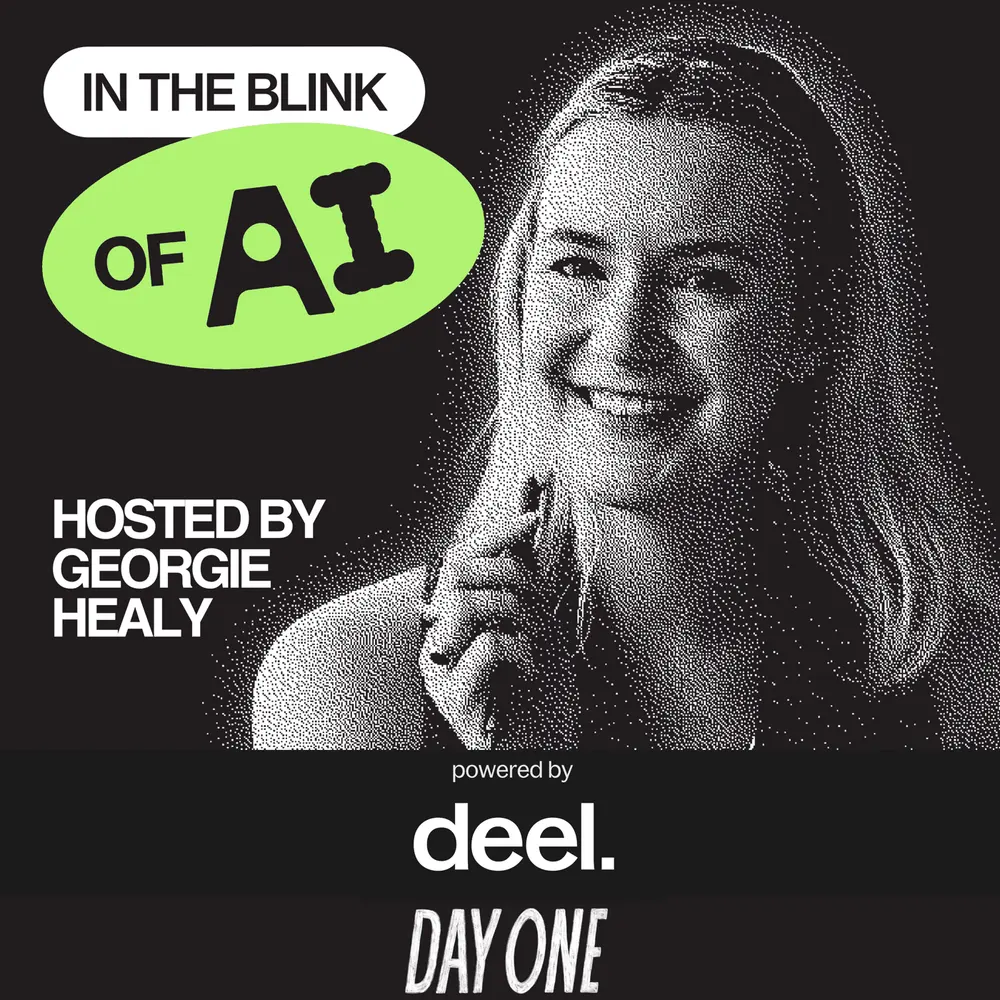 In The Blink Of AI with Georgie Healy
Presented by Deel & Stripe
In The Blink Of AI with Georgie Healy
Presented by Deel & Stripe 

 ▶
▶  ▶
▶  ▶
▶  ▶
▶  ▶
▶ ▶
▶ ▶
▶