Transcript Synced · select any line to jump ▾ 0:02 Georgie Healy: Founders scale faster on Deel. Set up payroll for any country in minutes. Hire anyone anywhere. Get visas handled fast and get back to building. Visit deel.com/dayone. That's d-e-e-l.com/dayone. What is a good use case for an AI agent? 0:26 Will Liang: At the moment, most of the business problems don't need an AI agent to solve. 0:31 Georgie Healy: Interesting. 0:32 Will Liang: Now, most of people don't fully understand what AI agent actually is. Most of the AI agent out there, we call them AI agent, they just simply AI workflows. 0:41 Georgie Healy: I love that you're already being so honest. Thank you. Are you pro-ASI, Will, or are you anti? 0:49 Will Liang: Oh, that is a very challenging one. 0:51 Georgie Healy: The Studio Ghibli memes everywhere. Do you use Perplexity, Will? Do you like it? Does NVIDIA remain a monopoly, Will? Hello everyone. We have our first live show of In the Blink of AI next month, Thursday, 29th of May. It's going to be at the University of New South Wales in Sydney with Andrew McCarthy, Head of APAC and Asia at Notion. Tickets are in the description below. I hope to see you there. Hello and welcome to In the Blink of AI, where I talk to the brightest AI startups and creators each week. I'm Georgie Healy, and this week I'm speaking to Will Liang. Here's some breaking news for you. He is an independent AI expert, but up until last week, he was the Executive Director and CTO at MA Financial. They have 700 employees, $10.3 million in assets under management, but you'll see his passion for AI in this episode. I'm not surprised he's doubling down on his AI expertise to help businesses adapt to this incredible time. In tech. After listening to this episode, it won't surprise you that Will is a LinkedIn Top Voice in AI. He was awarded the Most Influential Asian Australian Under 40 and Global Top 100 Innovator in Data Analytics. On the episode, we chat about his background as an ex-professional Go player, understanding what makes an incredible AI wrapper, the power of AI tools in everyday life, and I even get to ask Will to exercise his financial chops evaluating different AI models, his prediction for the future of companies like NVIDIA and OpenAI. Oof, this was a fun episode. Thank you so much, Will, for coming on the show. Let's dive in. Hello, Will. Happy Friday and welcome to In the Blink of AI. 2:56 Will Liang: Happy Friday. 2:58 Georgie Healy: Look, I am so excited to be meeting with you. When we first met, I admit the first thing that came into my mind is, "Ooh, I would love to have Will on my podcast." We met at a GenAI meetup and you were the keynote and welcome speaker. You gave the most incredible presentation. And then I realized afterwards, "Oh, he's a seasoned professional." You delivered a very successful TED Talk. You had a room of 150 people. I've got the photos. In complete rapture watching you and your presentation. But before we talk a little bit more about that, I would love to hear about your background. 3:38 Will Liang: Yeah, sure. Look, I'm always in, always in financial services, in technology space. So I had many, many different technology leadership roles with the most recent one, Executive Director of Data Technology and AI for MA Asset Management, which is an alternative asset manager here in Australia. So I look after all the data and technology initiative for the organization, you know, all the really boring stuff. 4:06 Georgie Healy: You say that, I bet a lot of people would've been very impressed by your job. So it's that intersection of finance and tech, right? 4:16 Will Liang: Yes, absolutely. It's always been the intersection of finance and tech. And for me, that's what really excite me, right? Because finance is really the beating heart of the Australian ecosystem. And technology is the, you know, really the fancy kid on the block, right? So that intersection really excites me. 4:34 Georgie Healy: Yeah, it's funny. I think we're in the right space at the right time. It feels like a very exciting time, doesn't it, in technology? Look, I'd love to start the show about sharing some groundbreaking news. You are about to embark on a new career chapter. Is there anything you can tell us about this? The show will go live probably around the 11th of April or thereabouts. 5:00 Will Liang: Yeah, no, thank you. I, yes, I'm starting a new company. Let me, myself, let me explain that. So everyone's, you know, everyone's heard about AI, right? Everyone's heard about AI. And, but most of the company are talking the talking about it, right? What do I mean by that is, you know, let's make sure we have agenda items in the next board meeting to talk about AI. Right? So many companies are still at that stage. And some organizations say they are using AI, but if you ask them, they say we have Copilot. 5:35 Georgie Healy: Yes. 5:36 Will Liang: So that's a different stage. But what I really found is very, very few organizations, very few, actually using AI at the core of their business, right? Integrated AI into the core business processes. So I'm launching a company that help organizations to go beyond this buzzword. There's 3 things I want to do. One is I want to look at, help companies with their AI and data strategy. I want to help companies with technology, AI architecture and implementation. And also education for AI is also very important. 6:13 Georgie Healy: Right. 6:13 Will Liang: So it's really about helping business embed AI into the the beating heart of the organization, right? Not just as a side hustle, but as a core capability. 6:24 Georgie Healy: Look, I am so excited for you, not only because you're leveraging this incredible background, guys, please look at Will's LinkedIn page, of tech and finance, but you are such an incredible communicator that I think this is something that, you know, if you use too much jargon or even, you know, you could leverage all that incredible insight you have, but if you can't communicate in a way that organizations actually know how to implement it, you might miss the mark. Please tell me what made you make this huge decision. You've got such an incredible role description in your previous role. Why make the jump? 7:04 Will Liang: That's a great question. So I'm, I see myself as a purple person. Have you heard the term purple person? 7:13 Georgie Healy: I have, but I've forgotten what it means. Please explain it. 7:16 Will Liang: Yeah, it's quite interesting. It's essentially what we say on the business side, people are blue, blue people. On the technology side, the people are red, they are the red people, right? 7:28 Georgie Healy: Ah. 7:28 Will Liang: I've been on both sides, so I see myself as a purple person. And I feel I'm very well positioned to really solve some of the hardest problems for businesses. And that's really what I'm super excited about, super excited about. I've always been in this problem-solving space and not sure if I mentioned to you, but I I spent 10 years in my childhood as a professional Go player. So Go is a traditional chess type of game. I say probably the hardest game that human ever invented. Very popular in China, in Japan, in Korea. So I spent a large chunk of my life playing that professionally. So it's all about that problem solving, that the hard problem excites me, right? Also very different from the traditional kind of consulting concept, right? So my goal is really to help organization with a SWAT team concept. So think about SWAT team, think about Navy SEAL. It's essentially a small team of people deployed to the most challenging situations to solve the hardest problems and do it successfully and do it quickly using AI and technology. 8:41 Georgie Healy: Incredible. I'm very proud of myself for not shrieking when you said that you were a professional Go player. My context and understanding around Go is around how AI played Go. Can you please tell the listeners a little bit about that story? Just because this is just such an incredible story in the world of AI. 9:01 Will Liang: Yeah, absolutely. So Go, it's a very complex game. And in fact, in the technology space, has always been regarded as a holy grail for AI, right? AI have solved chess in the '70s and solved many other games, but Go was just so difficult to solve for AI. And a lot of people say it will take another 50 years or 100 years before that happens. Until 2016, DeepMind in UK created this tool called AlphaGo, and that defeated the best Go player at that time, Lee Sedol, in Korea. I was watching that game, obviously heartbroken. 9:40 Georgie Healy: I bet. 9:40 Will Liang: What am I going to do with my life? And, you know, obviously that was also a trigger point for me to go, hey, I really need to learn AI very, very seriously, right? This technology is absolutely amazing. So it's an interesting moment in my life, but also interesting moment for the entire AI industry as well, right? So that's when, you know, techniques such as reinforcement learning, such as deep learning, get really close look, closely look at. And these days, Go is still a very fascinating game. A lot of people say, hey, AI defeated Go, would Go just completely die? That actually didn't happen. Last year I was in Japan, in one of the big bookshelf, sorry, bookstore. And there was this entire section of all Go books, right? 10:26 Georgie Healy: Really? 10:27 Will Liang: But these days it's all about how do you defeat AI? Things are changing, but it's fascinating. 10:34 Georgie Healy: Do we have a second professional career path in Go for you, Will, one day? Try and beat AI? 10:41 Will Liang: Yeah, maybe, maybe. Do a bit of teaching. I still have my best friends still teaching Go in China. More popular than ever these days because AlphaGo sent a message to many other people, hey, come and learn Go. It's interesting. 10:57 Georgie Healy: That is fascinating. You telling me that story, it did make me think of the expression, if you can't beat them, join them. And that's kind of what you did with AI, right? 11:06 Will Liang: Exactly. 11:08 Georgie Healy: I would love to get your take with your incredible background and insights and what I have seen firsthand that you're playing with all the AI tools, you're using all the AI tools, you're knowledgeable and you're not, you know, just picking one tool and sticking with that the whole way through. So I've got some AI headlines and I would love to get your perspective. 2025 keeps being touted as the year of the AI agent. How does that sit with you, Will? Do you agree with this? 11:39 Will Liang: AI agent is such a fascinating concept and I think that it is a great concept, but I don't think we fully understand, or most of people don't fully understand what AI agent actually is, right? So I like to say these days, most of the AI agents out there, we call them AI agent, they just simply AI workflows. 11:59 Georgie Healy: I love that you're already being so honest. Thank you. 12:02 Will Liang: Yeah, these are actually rare, or they're very, you know, different ways of prompting a large language model, right? Or you can do a parallel prompt, you can do a chain prompt, you can prompt multiple large language models to achieve objective. Most of them are just AI workflows. What AI agent is, I think in my view, there's two things that you have to satisfy. One is you give an AI agent objective, right? Then it will take this objective and develop a list of steps to achieve that objective. Autonomously, right? Number 1. Number 2, you need to be able to carry out each of the steps autonomously itself, right? So those 2 are important features of an agent. I like to think about as an analogy, you know, if you used 000, like emergency call here in Australia, 000, right? If you use it, when you call 000, what do they say? They say, you know, what's your name? Where are you? Are you breathing? Are you bleeding? Those kind of— it's a set of questions predefined by human. So in this case, they are not AI agents, they're just simply AI workflows. What AI agent is, let's say my wife like pineapple, for example, right? 13:14 Georgie Healy: Yes. 13:14 Will Liang: She love pineapple and she say, Will, can you go get me a pineapple? You spend somewhere between $10 to $20, right? Make sure it's not green color, make sure it's It's yellow. And you go to local supermarket in the north of Sydney to buy it. So obviously, if I follow those steps she gave me, I'm not an AI agent, right? But I don't follow the steps, right? So what I do, I got the objective. Hey, we'll go buy a pineapple. I'm so excited. Hey, I got this objective. I go to my laptop, I start searching where has the best pineapple in the world. Japan. So I go to Qantas, I go, hey, book me a ticket to Japan. And I will go ski while I'm there. I do a bit of skiing there and buy a pineapple from Japan, fly back to Australia. 14:06 Georgie Healy: You're such a good husband, Will. Yes. 14:10 Will Liang: Fly back to Australia. And I go, you know, show the customs, I need to declare a pineapple. Of course they don't like it. 14:19 Georgie Healy: Oh yes. 14:19 Will Liang: I had to leave the pineapple at the customs. 14:21 Georgie Healy: Oh no. 14:22 Will Liang: I said, it's okay, I go to supermarket, local Coles, and I buy a pineapple between $10 to $20 and go back home, right? So if you think about that particular example, I'm really the agent 'cause I take objective, I come up with the steps autonomously myself, and I carry out each individual steps. So in that case, I'm an agent. Now at the moment in the market, very, very little AI tools actually do that, right? So one good example I say is, so OpenAI released a tool called Deep Search or Deep Research, in fact, inside ChatGPT, which something I highly recommend. I think it's a really good tool. And that's a good example of AI agent, right? You ask a particular question, it figure out what are some of the website it needs to go to actually find the relevant information for that particular question. Mm-hmm. Right? They will go to website, let's say 20 different website, and grab the information, come back, synthesize them, and come up with a report. So that's a very simple but useful example of agent. There's many other examples, but that, you know, that's one I say I recommend these days. But don't get me wrong though, most of— I believe at the moment, most of the business problems don't need an AI agent to solve. 15:41 Georgie Healy: Interesting. 15:42 Will Liang: There's much, much simpler solutions to solve problems than having to tinker an agent. 15:48 Georgie Healy: I can't help but think that OpenAI weren't thinking of me and my upcoming trip to Europe when they developed Deep Research, but that's the only use case I've used it for. Like, I like medieval architecture and I like this and I like that. What should I do in Europe in these locations for these days? What is a good use case for an AI agent? Maybe in Australia or elsewhere? What's one of the best examples you can think of, Will? 16:16 Will Liang: There are plenty. Let's say in financial services as an example, if you want to sell to a new market, right? Say I'm going to, let's say China, let's say China next month, right? Go to a new market. Hey, can you help me to find out the top 10 infrastructure funds in China, right? Find out that for each of these infrastructure funds, find out the top 3 decision makers, their title, their name, and their contact details, and put everything back into report for me, right? So things like this, again, sounds very simple, but traditional, all these are done by analyst, right? Taking hours or days and try to find this information. But the AI agent can, can really help. with this kind of information gathering exercise. Now, it's not perfect. It's not 100%. It's probably not 80%, to be honest. 17:11 Georgie Healy: Really? 17:12 Will Liang: But that's okay, right? But that's okay. If you get 70%, you can get people to handle the rest 30%. But also, I don't know about you, but I'm a procrastinating person, right? For me, usually writing the first 2 lines in your report is the most difficult part. 17:29 Georgie Healy: Right. 100% agree. 17:31 Will Liang: Have an AI tool to get you 70% there, and that's pretty remarkable. 17:35 Georgie Healy: Oh yeah, good point. It's a lot easier to start with a foundation and edit from there, right? Or be like, oh, I wouldn't add that, I can remove it. But a blank sheet of paper's tough, isn't it? 17:46 Will Liang: Absolutely. 17:47 Georgie Healy: I wonder if you agree with a sentiment that my husband came up with the other day. He works in asset management himself in capital markets, And I was so excited because I work in tech and I'm obsessed with AI. I've got a podcast on AI, I love AI. And I said, you should use ChatGPT or Gemini to help you think of questions to ask companies. And he said to me, look, for me, it's raising the floor, but not the ceiling. It's not making him any better at his job. It's not got any more interesting questions. He said, look, as a starting analyst, to your point, maybe I would expect this level of work, but it's actually not really helping him in his day-to-day. I'm curious if you agree, if he's missing something, should I go back and tell him, oh, he's doing it wrong? 18:41 Will Liang: Yeah, look, I largely agree. So I observe a lot in this space in, let's say, developers, right? Programmers. Where I found what AI helping the most is the middle-level developers. Right. So if you're too junior, you don't, in many cases, you don't really know the right question to ask, right? And what these days, what we say, vibe coding. Have you heard this term vibe coding? Getting more and more popular. So essentially you don't code anymore, but you just prompt a large language model to help you to code. So what you do is you review the code. And you make sure it's right, right? Which is interesting because for really junior entry-level developers, right, it doesn't necessarily help as much because you don't necessarily know what question to ask. And secondly, you don't necessarily have the capability to review it. But that middle-level developers is remarkably helpful, remarkably helpful, right? Sometimes we call them 10 times developer. So essentially you can take a middle-level developer into that 10-time developer category. Now— 19:53 Georgie Healy: Wow. 19:54 Will Liang: If you are at the very, very top, right, extremely good at what you do, so this is where I found AI may not be able to give you a better idea, right? Because at the end of the day, at the moment, AI tools are trained with human data, right? So with human data. So if you are at the top, then what AI tools give you may not be that helpful for you, right? So that's why I said I largely agree with what your husband say. Now, there is an exception. 20:26 Georgie Healy: Yeah, tell me where he's wrong so I can tell him. 20:30 Will Liang: Yeah, so again, back to the Go example, right? 20:34 Georgie Healy: Yeah. 20:34 Will Liang: So when initially when DeepMind trained AlphaGo, it was trained on millions of historical games played by human between two humans, right? They play Go, then they record a game on a piece of paper, then AlphaGo will train on those data. So conceptually, it would not be as good as human in terms of the thinking, right? Or not going to be far beyond human thinking, right? Because it's trained based on human data. Now, then later on what DeepMind did was quite remarkable. You start playing Go between two machines, right? You use one, one, yeah, exactly. Use one AI. 21:15 Georgie Healy: Make them fight. 21:16 Will Liang: Yeah, make them fight billions of times, billions of times every day, every week. So now it's a very famous move called, I think called move 37 or 47, I can't remember exactly. Yeah, one of the games. That move after it was made, by AI, there's no human expert who's able to comprehend. People go, that's ridiculous, right? There's no way, you know, that makes no sense. But it only makes sense after hundreds of moves later. 21:47 Georgie Healy: Oh. Right. 21:49 Will Liang: So that's been quite scary. And that is getting generalized or translated into large language models these days as well, right? So we can talk a lot more about DeepSeq later on, but, you know, DeepSeq play a part in this arena as well. So at some point, AI will be able to develop things that humans are not able to comprehend, and that's quite scary, but exciting. 22:16 Georgie Healy: Scary but exciting is exactly how I feel right now. It's like, yeah, you'd see it and think that maybe it's made a mistake or done something silly. 22:27 Will Liang: Exactly. 22:28 Georgie Healy: But it's thinking 100 moves ahead. 22:31 Will Liang: Exactly. 22:33 Georgie Healy: Wow. Okay. It reminds me of another expression. It's like, you just don't get me. And that's how the AI is feeling. 22:41 Will Liang: You just don't get me. 22:42 Georgie Healy: It's not that I'm stupid. You just don't get me yet. 22:44 Will Liang: Yeah. That's the different, 3 different stages many people categorize, right? You have the artificial narrow intelligence, which is where we are right now. It's very good with specific tasks. Then the second stage is artificial general intelligence, which many people predict it will happen during Trump administration. So within the next 3, 4 years, and where AGI means AI is as good as human for all tasks. Then the next stage is— 23:14 Georgie Healy: There's a next stage? 23:16 Will Liang: What? There's next stage. Yeah, that's right. Which is ASI, artificial superintelligence where AI's capabilities go far beyond human comprehension. We don't understand, you know, that's what I was saying about that Rule 37 is a very, very small example of that. 23:33 Georgie Healy: Are you pro-ASI, Will, or are you anti? 23:37 Will Liang: Oh, I'm pro-AI in general. I'm a technology optimist. I think we need to figure out how to leverage and how to put guardrails and parameters to leverage this very powerful technology. But, you know, to be honest, my view is the ship has sailed, right? We have to think about how to manage it, we think about how to integrate it, but I don't think we can control it and we should control it. 24:03 Georgie Healy: Yes. Thank you very much. That was incredibly insightful. Speaking of insightful, you are a top voice on LinkedIn. It comes as no surprise to me, and I'd love to unpack a post that you made semi-recently, something we've never really unpacked on the show before. Let me just say in your words, and then I'll ask the question. It was about Perplexity AI. You said they had a $1 billion raise and an $18 billion valuation with zero proprietary models. Their weapon, a wrapper that delivers better experience and better trust. Firstly, can you tell the listeners what an AI wrapper versus a proprietary LLM is, and then maybe tell us why the Perplexity wrapper is so superior and they're doing so well with it. 24:53 Will Liang: Yeah, sure. If you look at the kind of AI ecosystem as a whole, right, I categorize them as 3 different layers. At the very bottom layer, you have the infrastructure players, the chip makers, you know, the like of NVIDIA, ARM, and all the cloud service providers, Amazon and Microsoft, Google, Alibaba in China. So that's the bottom layer, right? If you look at the bottom layer, that's not where a lot of money are made at the moment. Then the— you go one layer up, which is the platform layer. Essentially, these are the large language models, right? Large language model, or could be image model, or could be a video model, but the models require a lot of training, require a lot of inferencing. Or you have the most famous one is OpenAI, then you have Claude, you have Google Gemini, you have other models. This layer is the layer that we talk about a lot in conversations in media, right? Media like to talk about these layers. But one layer up is the application layer. So this is really the evolving space of AI, right? So now we have language model. What can we do with it to solve business problems? And Perplexity kind of sitting in that layer where they don't have a model themselves, but what they do is they essentially, it's a search. So they're kind of competing with Google, right? 26:19 Georgie Healy: Mm-hmm. 26:19 Will Liang: So you do a search, right? You type in your question in Perplexity, then it will go to Google and other places to perform a search and grab the result back and put the result into one of the models doesn't have to be OpenAI, doesn't have to be— I think recently they even put DeepSeq there, right, which is very popular, running DeepSeq on Perplexity to synthesize and compile all the information together and give it back. So the benefit of this is reduce hallucination. You know, a lot of people concern, hey, I asked OpenAI, this example a couple years ago, I asked OpenAI, they come back with a whole bunch of legal questions and give you fake legal cases. 27:02 Georgie Healy: Oh yes. Yeah, we've talked about those on the show before. Very embarrassing. Yeah. 27:07 Will Liang: Quite embarrassing. I don't think they do that anymore, but there was an example a couple years ago. Let's say example hallucination where with Perplexity, everything has a reference because it does a search first. Everything has a reference. It pinpoint where did it find information before it gave to you. So that give people a lot of confidence. So that's an interesting model. That's a good model. But the way they did it is they create this layer of wrapper on top of different language models. So we see this also with many, many different other startups, right? So OpenAI has API, that's Application Programming Interface, a way to interact with OpenAI programmatically. Claude has API. So different models have APIs. So we see a group of company or large chunk of companies created to interact with models, then they create an interface on top of it to solve problems. I'm not sure whether you remember, this is very in the beginning stage of OpenAI. If you go to Apple Store, you search for ChatGPT, you have like 20 or 50 different apps all call themselves like ChatGPT and stuff, right? So essentially what they do is they use ChatGPT API, then they put an interface in front of it. So that's kind of an AI wrapper. 28:25 Georgie Healy: Cheeky. 28:26 Will Liang: Very cheeky. And this has been a, there has been a lot of interesting stories about AI wrapper. One of them is it doesn't really have a lot of IP, right? It doesn't have a lot of value. And every time if there's a change in OpenAI or if they made some improvement, AI wrapper would be broken. There's many different stories around it. So many people think AI wrapper is actually not a good thing. I don't do that. Perplexity kind of is changing people's perception on that. Their business model is interesting. It looks really good. It looks really positive. And they're starting to commercialize it as well with adding ads into their model. Then they start a business model and also they're starting to competing with AWS, sorry, Amazon as well from a shopping perspective. It provides shopping experience. You can just do a search and it connects directly with vendors. You can have one click to buy things. So quite interesting model, quite a successful rapper, I would say. 29:30 Georgie Healy: Yeah, very insightful. Like I've heard rapper in quite negative derogatory connotations. Oh, it's a rapper. Like as in it's, you know, cheating or something. But as you mentioned, Perplexity has a lot of brand power, a lot of loyal users. And I would have thought that people that are using Perplexity would have been kind of tech snobs and been like, I wouldn't use a wrapper, but they seem to be really supportive of it. Do you use Perplexity, Will? Do you like it? 30:01 Will Liang: I do. I do. I really like it. In fact, I have a pro license. I have a paid license until very recently. I stopped. I like it. I recommend to a lot of my friends and colleagues and other people about this particular tool. I think that, as I mentioned earlier, that giving the reference is something that they did very beginning when other models were not doing it. And that attract a lot of very, very good positive attention. 30:28 Georgie Healy: Giving the reference allows the user to know where that source came from and that kind of thing is helpful, right? Yeah. 30:35 Will Liang: Yeah, exactly. But also I'm quite positive about them because there is a trend that large language models will become commodity at some stage, right? And you should be able to change and replace a model with another without too much trouble. And they provide that layer of abstraction on top of it. For many businesses, right, they shouldn't care what model. What they use underneath. What they should care is, they solve the business problem. So that layer of abstraction is actually pretty positive. 31:10 Georgie Healy: I'm not surprised you use Perplexity. I have seen in action you sharing many different examples of AI tools that you've used and to very impressive degree. I have you to thank that I have a Cling AI obsession, turning images of my face into very cool videos. I'm not sure whether to thank you or like apologize to all my friends and family that I've sent those videos to. But in all seriousness, Will, how do you keep on top of it all? Like, you're a top voice, you're constantly sharing your insights, you use all these tools. Like, is there, is there any way that we can copy you even on a small level? How do we, how do we get on top of all of it? 31:56 Will Liang: Oh, everyone can do it. I think for me, largely it's because of passion. I absolutely, you know, sometimes you do things, you just don't feel tired, right? Let me tell you a secret. I hate running. Many of my friends trying to drag me into running with them and I just absolutely hate it. So, you know, that's something you're really sucking your energy, right? And consuming energy. But for things like, you know, AI tools, exploring different AI tools, I just generate so much energy because of passion. So I think passion is probably one very important thing. And the other thing is really to solve real-world problems with it. You know, you see all this feedback, right? Very positive feedback coming from solving real-world problems with AI tools. So I say one of the key mindset change that I encourage everyone to have is AI first, right? 32:52 Georgie Healy: Right. 32:52 Will Liang: To look at Look at, let's say you have two screens on your desktop, whether it's at work or at home, or three screens for some people. Try to have one screen always have one AI tool there all the time. 33:05 Georgie Healy: Hmm. 33:06 Will Liang: Your favorite one, ChatGPT, let's say, right? You just put it on screen and keep reminding yourself, doesn't matter what you do, you try to use AI to do it first, right? You try that for a week. It's quite life-changing. 33:21 Georgie Healy: Wow, I love this tip. Even have it like half the screen, just have the model there. 33:26 Will Liang: Absolutely, absolutely. Usually financial services, what happens is usually you have 2 screens or 3 screens. Yeah, one Excel on the left, one Excel on the right, and Outlook at the bottom, right? Because after you making those Excels, you need to send to someone on Outlook, right? So I would You know, replace one of the Excel with ChatGPT or other tools. Life-changing. 33:48 Georgie Healy: Oh my gosh, you are such a financial background person. You remind me of everyone I know in finance that have like 8 screens. Like it's like Wall Street in your office. Look, speaking of your financial background, I have some quick questions I couldn't not ask you. Like having you on the show, I have to get your take on. One is, does Nvidia remain a monopoly, Will? Like if you had to guess in 5 years, do they still dominate the chip market? What, what, what do your spidey senses tell you? 34:19 Will Liang: So nothing here is financial advice. I just want to be clear about that. 34:24 Georgie Healy: No, no, no, no. 34:25 Will Liang: But, um, so my, my personal take is I, I don't think they will dominate, but I think they will continue to grow. They'll continue to, um, to, to, to earn a lot of money because the pie is gonna be bigger and big, getting bigger and bigger and bigger, right? If you look at the chips market at the moment, NVIDIA is doing really well, obviously, but companies like Google have their own chip, right? They have their own TPU chips that's very good with different things, right? There's lots of people, maybe you can correct me here as well, it's your background, but a lot of people say, why Google Gemini has such a big context window? right? So if you look very, a lot deeper in that, partially because the architecture of the TPU is very different from NVIDIA GPUs, and that allows them to have a super large context window. 35:16 Georgie Healy: Which is important because it can remember things you've said a while back. You're not reminding it constantly. No, I already explained that. 35:23 Will Liang: Yeah, it's a very, very distinct advantage. Then you look at Apple, right? Apple have unified memory, which is again, very different domain. Unified memory has its own advantage. What I'm trying to do at the moment at home is I'm trying to build this kind of a DIY station, a few Apple Minis, and each one of them have 64GB of unified memory, which is both GPU and CPU. And you having, you put, you stack 4 or 5 or 6 of them together, you can actually run a pretty large language model. let's say Llama 4 or 5B at home. 35:59 Georgie Healy: Oh my goodness. 36:00 Will Liang: That is not possible to do with NVIDIA, right? The best NVIDIA consumer graphic card is 5090, which only have, I think, 24GB, right? So that unified memory is another model. So I guess what I'm trying to say is there will be different chips out there that have very different advantages compared to NVIDIA that people love to use, right? So, but with NVIDIA, I think it will still go strong and still be winning because the market will get a lot bigger, a lot more companies will jump on AI, a lot of consumers will jump on AI, and it's just going to be so much more demand. Again, another thing is Deepseek. A lot of people say Deepseek is going to tank NVIDIA, it's changing the game, etc. That is true from some aspect, but at the end of the day, what Deepseek has given people is making language models much more accessible, free, a lot of people can use it for much lower cost. And because they enter the market, we'll see other companies like OpenAI, like Claude, they will reduce their price, which they have. So again, it's making a lot more people start using AI models and the And the result of that is more people will buy NVIDIA chips. 37:17 Georgie Healy: Oh, that was such a great answer. Thank you so much. I also think of your poor wife and you're like stacking up your laptops all over the house and trying to build a supercomputer. I think I'd tell my husband to take it to the garage or something. 37:33 Will Liang: Yeah, well, it's going to winter season in Australia, so a bit more heat is not a bad thing. 37:38 Georgie Healy: Yeah, yeah, yeah, yeah. You won't need to put it on your heaters. One more question. In this kind of area before we get to the rapid-fire, if that's okay. 37:48 Will Liang: Sure. 37:49 Georgie Healy: What about ChatGPT? Does it remain top of the charts? Although when I wrote this question, you know, Gemini hadn't had its latest release, but for argument's sake, does ChatGPT remain top of the charts for model quality, or do the incumbents have scale and are they able to dominate in future years? Not financial advice, Will, what do you say? 38:14 Will Liang: Yeah, sure. Look, I see OpenAI in general, they're quite innovative. I still think a lot of things they do is very top of the game. Obviously, they're having an early advantage, right? They're early in the market. If you look at the entire AI tool usage, which was recently published by A16Z, they're still by far the number one, right? Not even number two or three, not even close. One reason is that early advantage, but also the other reason, I do think they are very innovative of the things they come out, right? Such as Deep Research, as I mentioned. Then another thing they came out a few days ago is image generation, which kind of blew everybody's mind, right? It was just so good. 39:02 Georgie Healy: The Studio Ghibli memes everywhere. 39:05 Will Liang: Yeah, so that's like taking the— but, but, but, If you look beyond that meme, the actual model itself to generate image is super good, right? I asked last night, I asked for to generate 3 very cute animals, you know, I think the cutest, and with a text said cute animal at the very top and generated a poster like this, right? The text was spot on perfect. The animals were perfect. The only thing about text was a little bit cut off, right? The top of the cute the 4 letters cut off a little bit. Then what I need to— I just circle that a bit. I go, hey, make sure it doesn't cut off. They generate again. Again, the perfect, right? With word not cut off. So really, really, really amazing stuff. 39:56 Georgie Healy: Wow. 39:56 Will Liang: Now, having said that, I do think other models will continue to have very distinct advantages and continue to gain market share. If you look at Claude as example, right? I use Claude for creative writing. I use Claude for coding, right? So those two things is something I would not use ChatGPT for. Because if you look at ChatGPT, like to use very big words, such as let's delve into this topic, right? Delve, using delve. 40:24 Georgie Healy: No one says that. 40:25 Will Liang: 53 times, right? 40:26 Georgie Healy: Yeah. 40:27 Will Liang: I have this tapestry of ideas, right? Again, very big words. Whereas creative writing, you know, you want to be in the very simple and country style sometimes. So for me, Claude is better. Also coding, Sonic 3.7 is the coding tool of choice. Google Gemini, you know, very also very good model, especially 2.5. If you haven't tried 2.5, I recommend people to have a try. Really impressed by the overall quality of 2.5. But in particular around videos, In particular, I would say if you have anything to do with video processing, analyzing video, use Google, right? So Google, from that perspective, is way ahead of the game, partially because of, you know, the ownership of YouTube, I'd imagine. 41:17 Georgie Healy: Thank you so much for that insightful answer. I'm going to have to start playing with Claude a little bit more because I do get frustrated with the tapestry of words that I get from OpenAI sometimes. We are at the final part of the interview. I would love to ask you 3 rapid-fire questions. Are you ready to go? 41:38 Will Liang: Sure. I love rapid-fire. Go, let's go. We're gonna have fun. 41:41 Georgie Healy: Top 3 best AI tools that everyone needs to try at home. 41:47 Will Liang: Definitely, if you have an OpenAI, ChatGPT is one of them. I would rate Claude being the second one. The third one, I'll say perplexity. 41:57 Georgie Healy: Oh, incredible. And what about one scary headline we might expect this year or next year? 42:05 Will Liang: Oh, that is a very challenging one. I think it has to come something around deepfake. Deepfake is getting remarkably well, right? So, you know, you mentioned CLING, which is very good with generating images, other things. There is something called OmniHuman was just released within the last 24 hours. So if you haven't, definitely check it out. It's so, so real. So you can turn an image, you give an image, still image, plus an audio file, then it starts lip-syncing and that person starts talking. It's scary. I think it has to come from something around deepfake. So again, this is a time to caution everybody just you know, make sure you use human judgment, right? 42:53 Georgie Healy: Yeah, be careful by what you see and be careful what you put in the models, guys. And frankly, I kind of realized the hard way when I was using CLING, oh my gosh, I really need to make sure that the only things I'm uploading here are my own faces. Even if I think my friend might find it funny to put their image in, I feel like there needs to be a little bit of privacy and security and don't do stuff like that you haven't been okay with, people might feel uncomfortable seeing their own image, even if you meant it in the right way, right? Last question. If I was to wave a magic wand, Will, and I know you're about to go through a career pivot, but I'm giving you a different role, and that is as CEO of OpenAI, what are the top 3 things you prioritize first? 43:42 Will Liang: I will certainly think very hard about the emergence of open source models such as DeepSeq. I think it has changed the game. I think if I'm CEO of OpenAI, I will think very deeply, how do I respond to DeepSeq? From a commercial perspective, right? Should I lower my price of the models? How to make it cheaper and faster for everybody? Secondly is, How can we open source or open weight some of the models we have? And lastly is how do we educate people? How do we build some of those models, right? Because again, with DeepSeq, a lot of people call it the Sputnik moment, right? So Sputnik moment is where the satellite was sent to the orbit by Soviet Union. Everyone was scared and it was kind of regarded as one of the starting moments for the Cold War. A lot of people say, hey, Deepseek is the Sputnik moment for AI, except one thing, right? What Deepseek did is it sent the satellite up, it gave everyone a free satellite, and also it tells everybody how to actually build a satellite, right? So I think it's a gift for humanity. So if I'm the CEO of OpenAI, while I'm still innovating, I really need to think really deeply about how to respond to deep seeking in a very, very positive way that's benefiting everybody. 45:14 Georgie Healy: Will, you are such an incredible guest of the show. You're an incredibly knowledgeable expert in AI. Anyone that wants to work with you in future is incredibly lucky. I want to give the last part of the show an opportunity for you to shout out to anything you want the listeners to be aware of. And maybe even where they can follow you on socials to get your incredible top voice knowledge and insights. 45:44 Will Liang: Yeah, sure. I'd love to connect with your listeners on LinkedIn. Yeah, please, please follow me on LinkedIn. I do post very regularly. I post every week a top 5 most interesting things from technology where I still down, distill down into 5 most interesting topics and have a discussion there. And I also post pretty regularly throughout the week about latest about AI and technology. But one thing I want to highlight is there's a lot of hype around AI and buzzword about AI at the moment, but AI doesn't exist by itself, right? It coexists with technology system, coexists with data systems. So we're going to look at everything as a whole. And where— where it's why I didn't want to position myself as only the expert, but really is a technology expert on social media. Yeah, please follow me on LinkedIn. I'd love to have a conversation. And as I mentioned in the very beginning, I'm starting a new venture, a new chapter. A new company, I'd love to have a conversation to help organizations to solve your most difficult problems with AI and technology. 47:08 Georgie Healy: I am so excited for your next chapter. It's going to be incredible, and I can't think of anyone better suited to this space. 47:17 Will Liang: Thank you. 47:17 Georgie Healy: Your passion is so clear. Thank you, Will, for being on the show. I can't wait to talk to you again in future, and And have a great weekend. 47:26 Will Liang: Thank you for having me here. Have a good weekend. 47:31 Georgie Healy: Thank you for listening to In the Blink of AI. You can check out the show notes for anything discussed in this week's episode, and we will be back next week. This podcast was produced by Day One with music by Dan Hansen and visual artwork by Sophie Tyrell. If you loved the episode, please tell your mates. And I love AI news. Please share your thoughts and suggestions to georginarosehealy@gmail.com.


 In The Blink Of AI with Georgie Healy
Presented by Deel & Stripe
In The Blink Of AI with Georgie Healy
Presented by Deel & Stripe 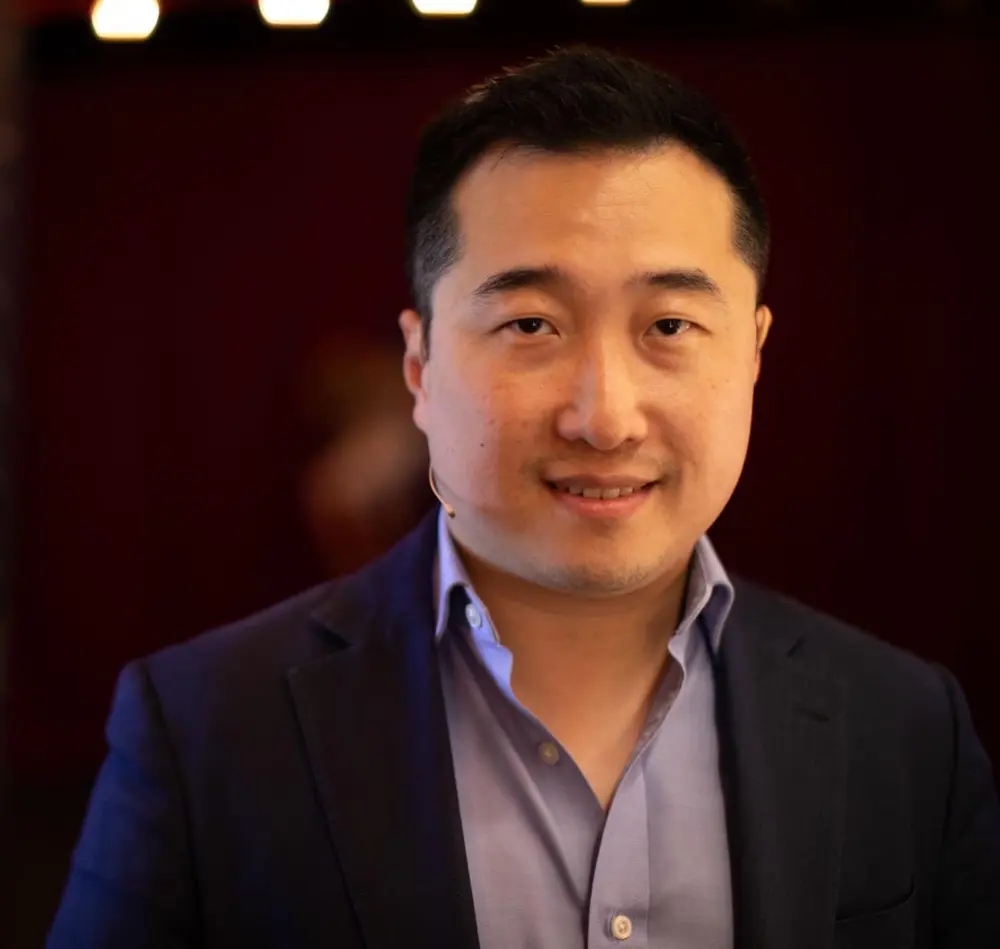



 ▶
▶  ▶
▶  ▶
▶  ▶
▶  ▶
▶ ▶
▶ ▶
▶