Transcript Synced · select any line to jump ▾ 0:00 Freddie McKenzie: Just look around the world around you and look around what is it, what you do every single day, the things that you don't like doing, the things that make you nervous, the things that suck, the experiences that suck. Can you find a technology solution to fix that? I've stopped using ChatGPT. There's an exodus from ChatGPT to Claude going on right now. I'm not on that exodus because I've just kind of been using notion AI where you can kind of pick what model you work with. Had a room full of like 2000 people and they were like, we're here to talk about agents. Like, who in the room is using agents? And like, probably like three people put their hands up. 0:31 Georgie Healy: So let's talk about the fact that you've been in all the news headlines lately. You raised $2 million very recently. 0:38 Freddie McKenzie: That we did. The companies that show why the people behind the value are so novel, but also part of, like, what the company does are the ones that are gonna win. And then the ones that just become like a factory of outputs that don't really have any kind of distinction between them will be the ones that will just get lost in the whitewash. 0:55 Georgie Healy: Don't be those guys. 0:56 Freddie McKenzie: Don't be those guys. 1:03 Speaker: Founderscale faster on deal. Set up payroll for any country in minutes. Hire anyone anywhere, get visas handled fast and get back to building. Visit deel.com day one. That's-double.com day one. 1:25 Georgie Healy: Hello and welcome back to In the Blink of AI. I'm Georgie Healy and today I have Freddie from Manifest, who, frankly, I've been wanting on the show for ages. I have pulled back a little bit on founder guests, especially in the early days where businesses can evolve and change so quickly that the episode can get stale very quickly. And I really care about you guys getting lasting value, not just a good chat. And this is why I wanted Freddie on the show. Not only do they have real product market fit at Manifest and a standout seed, he has the hottest takes, like, at every tech industry event. Whenever I speak to him, I'm like, I really need to get you under the microphone today. 2:06 Georgie Healy: Why automating your inbox with AI is actually a catastrophic idea. Barely anyone is using AI agents and it's not due to the technology. Why the saspocalypse is a myth, why hyper growth hacking is a death sentence for companies, and why OpenAI's ads move is a huge mistake. I could have kept recording for three hours. You're gonna see why, thank you, Freddy, for coming on the show and thank you for listening. Let's dive in. 2:32 Speaker: , 2:39 Speaker: Founderscale Faster on Deal. Set up payroll for any country in minutes. Hire anyone anywhere, get visas handled fast and get back to building. Visit deel.com day one. That's-double.com day one. 2:59 Georgie Healy: Freddie Mackenzie. 3:00 Freddie McKenzie: Hello. 3:01 Georgie Healy: Hi. 3:01 Freddie McKenzie: How's it going? 3:02 Georgie Healy: Really good. I've been wanting to do this for a while. 3:04 Freddie McKenzie: We've been talking about it. 3:06 Georgie Healy: We have. 3:06 Freddie McKenzie: Here we are. It's great to be here. 3:08 Georgie Healy: We've got the great lighting. I feel like this is the moment to share all the hot takes that you've been sharing, only for lucky ones of us who have been able to corner you at a tech industry event. 3:20 Freddie McKenzie: There are very few PR things where I've been able to speak, especially on mic. I've tried to be quite reserved, but today I think I'm gonna open up my little magic book of tricks. 3:29 Georgie Healy: Now, now' I feel I'm excited. 3:31 Freddie McKenzie: I've been excited about this one. 3:32 Georgie Healy: So, yes, and you're off the back of a incredible raise, which we're going to talk about. But before we dive into that, do you have an AI hack or a workflow that you use or anything that you use AI for that you would recommend to people listening? 3:46 Freddie McKenzie: Well, it depends on the environment that you want to use it in. Is it a business environment? Is it a personal environment? I think it's like, AI is a great tool for both of those applications. For me, one thing that I've started doing recently, especially at Manifest, is like, everyone's got an AI note taker. Like, if you don't, what are you doing? And they generate these amazing summaries and these like, really good, like, action lists off the back of them. But maybe this is just Manifest. But from what I've seen is that, like, they get kind of put into a folder and then they just get like lost in like someone's notion or someone's like Google Docs or Driver or so on, so forth, which is crazy because there's like all this really interesting context in there. 4:24 Freddie McKenzie: And if you take like, you know, repetitive meetings, like syncs and whips and stuff like that, and you stack all of the AI transcripts together, you actually get a really interesting image or picture of progress and what progress looks like. Did we solve the things we talked about in the last one? Did we discover new problems and new ways of doing things? And so for me, my little AI hack, which is kind of tied to agents is setting up a system on notion, which is great. My notion. Hat on. 4:54 Georgie Healy: How much are they paying you to say that? 4:56 Freddie McKenzie: Nothing. Sorry, Vanessa. So, yeah, it just takes this like chronological evidence of progress and gives me like a what are the problems that the company is working through and solving and what are the like, common themes that keep coming up? What are we getting stuck on? What are we really good at? And so I would encourage anyone that regularly takes meeting notes to like start to compile all that together and actually start to see and visualize progress. Because we, you know, especially in a startup, like, it can feel really hard sometimes to feel progress and to see progress, but it's actually hidden in there in the data. You just have to find it. 5:31 Georgie Healy: It's so funny you say that. I was bitching, for lack of a better word to someone the other day, because we're so fixated on the things that aren't working. And it can feel very lonely and hard whether you're a founder or have a side hustle or whatever, because you're always looking at the thing that's not working and so you don't see that progress. So I think that's really. 5:49 Freddie McKenzie: Yeah. And it can tell a good story, can tell a bad story, but like, it's all there, it's all sitting there. We're just not using it. So use it, like have a look, see what's there. And it can be motivating, it can be confronting. Just depends on your situation. 6:01 Georgie Healy: But like insights. Good, strong start. 6:05 Freddie McKenzie: Freddie, lots of data chat today. We're in the data. 6:07 Georgie Healy: I expected nothing less. 6:09 Freddie McKenzie: Fantastic. 6:10 Georgie Healy: So where did the name Manifest come from and what exactly do you guys do? 6:16 Freddie McKenzie: Absolutely. Well, to explain what Manifest does very much speaks to the name. So we capture the value that is created throughout the creative workflow. So think about inside a creative agency, a marketing and advertising agency, specifically around, you know, marketing and creative outputs and value. We capture all of that in a way that doesn't require timesheets, thank God. And we bring to light how people and how AI work together to create creative value. And so the idea behind manifesting something is to make it visible, is to show and clearly bring clarity to something. And so what Manifest does is it brings clarity to how important and how necessary humans are in the creative workflow and how harnessing AI and the human plus AI equation looks for agencies going into the future. 7:07 Georgie Healy: Strong vision, strong name. Was it hard to get domains and stuff like that? 7:12 Freddie McKenzie: It was. One of my directors and investors, Simon Pound, and I spent a long time on like WhatsApp messages, coming up with all sorts of names, and then you get onto something that you think's gonna work and you put it in front of someone else and they just like tear it to shreds. You know, I've got a very good sounding board of people that love to tell me when I'm wrong. And so we had a few iterations, and then when we sort of landed on Manifest, I mean, we got the domain gomanifest ai1 to kind of fit into the ecosystem where we come from, where a lot of these other my tech companies have got like a go insert name domain. But secondly, like, you know, go manifest, something I thought was quite cool. I love that we do get called go manifest every now and then, but I don't mind. 7:52 Georgie Healy: I love it. Are you up for some hot takes this early in the show? 7:55 Freddie McKenzie: Totally. Throw in that, man. 7:58 Georgie Healy: Common AI opinion that drives you crazy, 8:00 Freddie McKenzie: that we need to automate everything, especially, I mean, one that I get really stuck on is like, automating your inbox. Like, why do we need to automate our inboxes? I spent a long time, like, running an agency, and now I run a tech company. And. And like, your inbox is your interface to the world. It's your interface to your customers, it's your interface to your suppliers, it's your interface to your staff. A lot of the times, especially if you've got international teams and like, if you going to put an AI in front of that, like, very strong interface, you're not only losing clarity on what's going on inside the business and what's happening, but you're also not being able to think through or challenge yourself on how to manage situations and scenarios. 8:39 Freddie McKenzie: You're offloading that to an AI. Like, I learned most of the biggest problems that were happening inside my agency through my clients giving me a grilling over email. But also, you know, you miss things by not being on the front line. So the idea that we need to, like, put an AI in front of our number one interface to the world I think is, like, bizarre. And I would strongly recommend against it. And I think that that sentiment kind of shapes down to the rest of the business of, like, what are the core parts of the workflow, where people are required, where people are necessary. Stop trying to automate those things, automate all the stuff that we don't need to be doing. 9:15 Freddie McKenzie: But the whole workflow doesn't need to be automated so you can spend less time scrolling reels, get involved, get stuck in and deal with problems. And learn from the communication you're receiving. 9:25 Georgie Healy: That is such a hot take because most people start with the email automation in Gmail. It can just craft a response for you. 9:32 Freddie McKenzie: It's terrible. I love Gemini, but every time I give it a go, I'm like, that is just so far from what I want to say. 9:39 Georgie Healy: It sounds nothing like me too. I do not sound like that. 9:43 Freddie McKenzie: A lot of people recently, cause we closed a raise, have been emailing me and they've been starting it with like, hi, Freddie, congrats on the most recent raise. And every time Gemini creates me the first draft of an email or I try it, it's like, hi there, congrats on your raise. It's like, hang on, I'm the one that raised. They're congratulating me. Where did you get that from? 10:00 Georgie Healy: It's like when someone buys you a coffee and they're like, enjoy your meal. And then you're like, you. 10:05 Freddie McKenzie: No, you do. It's the like, are we not past this now? So, yeah, it's. You don't need to automate your inbox. Just write an email and speak from the heart. And it doesn't need to. You know, I think being too punctual and being too perfect is now like a downside. 10:19 Georgie Healy: So it's an ick. I totally agree. 10:21 Freddie McKenzie: Only comms. 10:22 Georgie Healy: All right. Everyone's talking about agents. You've already brought up agents. You're making my point very clear. But from where I'm sitting, and maybe I'm in the wrong rooms almost, someone's actually using AI agents. Is that true? How many people are you noticing? Genuinely using autonomous, multi step AI? 10:41 Freddie McKenzie: Not many. 10:41 Georgie Healy: Yeah, right. 10:42 Freddie McKenzie: Yeah. It's definitely not mainstream. It's still very much in that experimenting phase. And then there's experimenting with something and then there's implementing it into your workflow and using it day to day and making it part of the way that you do things. And we're not there yet. We're so far from that. I believe went to Google Cloud Summit last year, which I know you've got a great relationship with Google. And that was all about agents. It was about this time last year, so it's probably coming up. Right. Anyway, it was all about agents. Had a room full of like 2,000 people. And they were like, we're here to talk about agents. Like, who in the room is using agents? And like probably like three people put their hands up. You know, this is albeit last year. I reckon if they do that again this year, they're probably gonna get the Same thing. 11:22 Georgie Healy: Yeah. 11:22 Freddie McKenzie: It's not that there's a lack of technology there. Like the technology's amazing and it's great and it can do that. I think what's happening is that people that are experimenting with agents are like creating problems and then creating an agent to see how they would solve that problem. But then when they're actually facing the problems in day to day, not immediately going to, hey, what's the agentic solution to this? Just going, oh, this is annoying. This is part of my, you know, my day to day. Or just like banging into chatgpt and seeing what chatgpt. 11:51 Georgie Healy: I agree and I appreciate you saying this because I feel like people are afraid to admit that they're not using agents. But like, I speak to people that are bringing agents. Like, like all the top companies have them. Salesforce, Google, aws, we're all talking about it. And then I'm like, what is the bottleneck that's stopping people? Is it like, what do you think? Is it the tech itself? 12:13 Freddie McKenzie: It's definitely not the tech. It's just like the practicality of it and then probably like the first output from it, like people that are experimenting with it. I think AI is a beast that you have to work with to get what you want out of it. And if you don't get what you want on your first try, which you usually don't, you know, you probably get a drop off of 50% who don't make it past the first prompt making that up. But I wouldn't be surprised if it's true. So there's a, like actually getting it to do the thing you want it to do through persistence, through trial and error. And unfortunately in the modern day and age, you actually have to think for once about how to command the system to do what you want. 12:49 Freddie McKenzie: You have to think about the solution more, which people don't want to do. So there's your first problem and then the second one is like agents solve a problem for the here and now, but the way that work is happening is changing so fast with new tooling, with new ways of working, with just like employee sentiment. So that particular agent might also not be relevant in like a month or two because hey, we're not using that tool anymore or hey, that's no longer relevant to the business. And so there's also like the retirement of workflows that's happening so fast. 13:17 Georgie Healy: So smart. I love that take. 13:19 Freddie McKenzie: Thank you. 13:21 Georgie Healy: This is a quote I found. 40% of AI agent projects will be abandoned by 2027. Kind of talking about an AI agent bubble. Do you think that's because of the connectors that you're talking about being void? Is there something else or is it like. The way I think about this is I'm lazy. When it's fully easy to use, then I'll start using. 13:45 Freddie McKenzie: I mean, it's never been easier, but I'm like, it's still too hard, which you're so right. Like, I even sometimes get stuck in exactly what I just explained before. Like, you know, I have a few goes and it's like, oh, it's actually just easier if I do it myself because I've got all the context. Right. That's the number one thing that I think that agents suffer from is that they don't have a huge amount of context as to what you're trying to get done. Like, we run everything at Manifested notion. Got my hat on. And it's that living, like, beating heart of the company. It's plugged into Google, into Gmail, into Slack. Like, it's got as much data as you could possibly get. 14:21 Freddie McKenzie: Like, where work is taking place, it's got a way in and you still ask it things. And it gives me back the most ridiculous outputs constantly and I have to try different models and so on and so forth. And then you finally get there and it comes down to either not enough context or too much context. There is stuff in our notion space that is old and has not been updated, like some of our core ICP work that we maybe did like two years ago. And that's still part of the context base of our notion base. And so I also have to be constantly updating that knowledge base to ensure that the AI and then the agents that we're using have good context. So I think the problem is that context moves and changes every single day. 15:04 Freddie McKenzie: And to be in the right moment of context with the right amount of new data, with ignoring the old data and knowing what the right output is, is actually possibly the great problem of agents right now. Whoever solves that, maybe it's us. We'll win, I think, with agents and then make it again easy so that people like you and I don't get frustrated trying to get to that outcome strong. 15:28 Georgie Healy: Because I feel like the context window issue still isn't solved. Like, I still feel like I'm starting a new chat every time. Like, solve that before we start talking about agents. 15:38 Freddie McKenzie: Yeah. So I think if we can solve that context window piece of like, what's good information, what's bad information, then I think agents are Gonna be giving much better results much earlier and then I think that people will start to use it more. But the other flip side of that, and we'll probably get into Manifest in a little bit, but I think that human nature is probably a little part of that as well, a little slice of that. Like our business started off trying to automate timesheets. It's a lot more than that now. But the core problem was is that agencies were relying on self reported data to make decisions around costing, around resourcing, tooling, you know, pricing, you name it. They were relying on this like the garbage in, garbage out. Do you know that concept of like 16:19 Georgie Healy: I used to do data analytics? 16:21 Freddie McKenzie: Exactly. 16:21 Georgie Healy: It's like only as good as the Excel spreadsheet you give me. 16:23 Freddie McKenzie: Right. 100%. And so like that concept of like garbage in, garbage out, you're only as good as the data that's coming in. We understood that we had to take the human out of the equation to get access to that data. Now what we also discovered is that people just hate doing timesheets. Like they so boring but they are really simple in concept. It's like here's a little calendar and there's a few boxes and you just put in how much time you spent. Like it's so simple in like in principle, right. But in practice it's like the worst part of everyone's jobs. They absolutely hate it. So what my concept around like agents are and how AI is going to become part of the future of work is that it needs to be so simple that it almost needs to be automatic. 17:05 Freddie McKenzie: And you like remove the human from the equation as much as you can. Like it's a huge product decision we have at Manifest is can this be done automatically? Can this be done by the system without requiring a request from the user? Because if people like can't fill out a timesheet, which I'm also one of those people, like we're expecting them to create these like multi connected agents that do very, very complex tasks that in some cases may even replace their jobs. So if you're expecting that from people when they can't get timesheets right. That's why we are in the scenario where there's this whole expectation of hype around agents. The technology is great, but human nature comes into play. We just don't want to. 17:45 Georgie Healy: Yeah, that's so true. It doesn't matter how great the value proposition is. At the end of the day, humans are the ones that need to be buying into it. 17:53 Freddie McKenzie: We're creatures of Habits. This is how I've done it for the last 5, 10, 15, 20 years. So let's pull the rule book out underneath us because we can do so much more. And then you actually look at it from a practical sense, and it's like someone might play around with something for curiosity, you know, out of curiosity, and then drop it and leave it. So that's why we're in this position where it's like, yeah, agent projects are being abandoned and they're not being picked up and they're really just being used to, like, trial and to create LinkedIn content. 18:21 Georgie Healy: Guilty. 18:22 Freddie McKenzie: That's right. 18:23 Georgie Healy: What's it like to run an agency? High level. Never heard of what an agency is? Never run one. What is it? 18:28 Freddie McKenzie: Oh, I ran a. I ran a production agency. So we, we produced media and content and TV commercials and brand stories and music videos and boiler rooms, everything in between. And it started off as, like, me and my camera as a freelancer, and then I grew it to a. To a, you know, decent sized agency is chaos. Like, on the best of days, like, working in an agency looks fun because you get to do something that you love and you get to just, like, tell stories and then get paid at the end of the day. Owning an agency is not fun. It is like props to anyone that does it and does well out of it because it's, like, so stressful. Like, there's so many unknowns and there's so many opportunities for failure and for things to go wrong. 19:12 Freddie McKenzie: Especially when we were like, in the media space of it, where. Especially when we're shooting content. Like, you get one shot to capture it, there's a brief, there's a client expectation that changes all the time, by the way. And you get one opportunity to catch it. And if you don't catch it, it's like, oh, my God. Yeah, it was chaos. I mean, we had some great times. Like, we shot some awesome campaigns. My favorite one was one we did actually for Jetstar. Funnily enough, you know me, I fly Qantas. But this Jetstar campaign was. 19:40 Georgie Healy: I was like, you said music videos and all these cool, sexy things, and then you're like, so Jetstar. 19:45 Speaker: Jetstar. 19:46 Freddie McKenzie: So, yeah, I mean, we produced boiler rooms. Everyone's like, what were those like? And I was like, those were the most stressful ones. But because what. Back to my original point, like, you got one chance to capture it. It's a huge international brand. I'll get into that later. But the Jetstar one was really cool. We did it during COVID when there was that brief Trans Tasman bubble that opened up between Australia and New Zealand, where you could fly between the two. No one else could fly internationally, but we could. And we did this campaign for Jetstar that was called Travel Here While the Rest of the World Can't. And it was all about us showcasing New Zealand to Australians. 20:19 Freddie McKenzie: And then there was one that was done in Australia that was selling Australia to New Zealanders. And we shot this like, sick campaign out on the beach in Pha, which is in like West Auckland, you know, like beautiful, like long black sand beaches. It was so stunning. And it was one of my favorite campaigns. It was so much fun to shoot and it was everywhere. It was so cool. We saw it, like train stations and billboards and stuff like that. So that was fun. And then we had like, other ones that I was like, in the middle of the central North island at 4 in the morning, in the middle of winter in a goat farm, like capturing goats for a company that made a bunch of goat milk products. It's kind of radio, you know, that was the kind of like the ebbs and flows of it. 21:00 Georgie Healy: It's exhausting, but, like, glamorous. When you see the final product, it 21:05 Freddie McKenzie: is like there's so much that goes into it that like people don't see. And usually the projects that make you like, the most money that we found were the, like, unglamorous, the boring ones, the simple commercial ones, and then the like, you know, the Audi campaigns and stuff that we did, like, we usually didn't have great budgets on those, but they were fun to shoot and great to put on the portfolio. 21:24 Georgie Healy: Sounds similar to the tech industry. 21:25 Freddie McKenzie: That is a little bit like that. 21:27 Georgie Healy: And then you identified during COVID So when you were shooting these amazing campaigns and things, you identified this agency return on effort problem is not ideal. Paint the picture of that return on effort. 21:41 Freddie McKenzie: Like, what we like to think about at Manifest is we don't like to think of time as time. Funnily enough, we think of time as effort. Because if it is directly related to, you know, what goes into something, that can change based around the way that you get to the outcome. I feel like I'm speaking of riddles right now, but like, time is constant, right? And if you always look at time and you charge on time and you obviously your costs are so associated with time, you'll always be chasing like billable hours. I think effort is interesting because if it you can look at what is the value that you're creating and then the effort to get there can come down to create the same amount of value by utilizing tooling, utilizing AI 100 22:26 Georgie Healy: with you and you. 22:26 Freddie McKenzie: Yeah, utilizing automations and new ways of working. Right. And so for us, especially at Manifest is like moving our mindset away from being a time tracking, time shooting tool, but to being something that captures effort and shows agencies how to reduce the amount of effort to create, you know, the same amount of value or more or how to create more value and directly relate that to effort. And so if it, you know, I think it's really something that people can grasp is like AI has reduced the amount of effort to get to a lot of outcomes. And so we want to carry that across into like how can I reduce the amount of effort that goes into something to achieve the same or greater value? Does that answer? 23:04 Georgie Healy: That does. Yeah, that 100 does. I'm already like thinking about all the things that it applies to in my life. Like things that are low effort, high return. 23:12 Freddie McKenzie: That's right. 23:13 Georgie Healy: But it's still the same amount of time. 23:15 Freddie McKenzie: Like, like, yeah, time on tools is kind of what I like. My, my equation for effort is time plus tool. And so like same amount of time plus better tool could potentially equal more value or less amount of time on a better tool. You know, 23:34 Speaker: founderscale faster on deal. Set up payroll for any country in minutes, hire anyone anywhere and get visas handled fast so you stay focused on scaling Deal takes care of onboarding, hr, it EOR benefits and compliance so your team can grow without borders. It's why more than 40,000 fast growing companies trust Deel to move fast. Visit deal.comday1 that's-double E L.com Day 1. 24:08 Freddie McKenzie: Least amount of effort. 24:09 Georgie Healy: Look, let's talk about the fact that you've been in all the news headlines lately. You raised $2 million very recently that we did pre seed rounds. Like I haven't heard those numbers raised for pre seed in years. Like genuinely, I think. 24:23 Freddie McKenzie: Me too. Yeah, it's quite surreal. 24:25 Georgie Healy: And we're in like, I'll call it, we're in a bit of a fundraising win I feel like with this AI boom. I feel like investors aren't really sure what has moats anymore and what to invest in. Clearly you guys at Manifest showed and proved something to investors. What do you think that was? 24:45 Freddie McKenzie: Yeah, I mean I will acknowledge it's like definitely a tough time to raise capital, especially at pre seed stage and especially probably in AI. Which is funny that I'm saying that because that was all the rage for the last couple years for us. Like first of all we've got amazing investors like shout out to everyone that gave us some capital and gave us some firepower and believed in us, which we appreciate. But also I think the kind of formula that we fit into that allowed us to raise a substantial pre seed is that there's a deep level of domain expertise that, that I have. Like I built this as a tool to solve my problem or we built this as a tool to solve a problem that I face every single day. 25:29 Freddie McKenzie: Like I knew this problem through and through because I had been, you know, at the consequence of the problem and that had cost me money, that had cost me clients. In some cases it looked like it was going to cost me my business. And so the pain for me was personal, but also I thought a lot like the customer. And that idea of trying to automate something, trying to remove friction, trying to remove the human from as many points as we can inside the user experience is kind of what separated us from every single other solution on the market where they still, even the most automated solutions still require a lot of input and feedback from the user. 26:08 Freddie McKenzie: And I was like, well people are just not going to do that. I've seen it happen in principle and in a practical format, people just aren't going to do that. Oh, they just, all they gotta do is click on a box and assign it. And I'm like, yeah, but then they've gotta do that 50 times on a Friday. They just not, they just won't do that. And so that knowledge of not only me being the key stakeholder, being the agency owner, but also me having been the creative, having to track my own time, I knew what the product had to do to be successful in the industry. So the deep domain expertise was one thing and then the second thing was kind of like access to customer. 26:46 Freddie McKenzie: We've got a really strong pipeline. Like everyone loves to talk about pipeline because we're in a pilot phase which is like a closed pilot, we're not accepting new customers right now. And so we are like loading up what the next series of agencies look like. And I've spoken to most agencies here in Australia and I'm still yet to find one that disagrees with what we do. And so our access to market has purely been by A the people that support us and back us, but B the problem that we solve, most agencies that we've spoken to, like we genuinely, some part of our product solves the biggest problem for this customer segment right now and possibly for the next five to 10 years. 27:26 Freddie McKenzie: Like the timesheet problem Looks like a really simple problem. It's like, oh yeah, people just hate doing timesheets, but I can just like tell my team to be better at it, to do better at them and they'll find out that doesn't work. But it's the data that comes back from those timesheets that is like so important right now. As to how much does it cost to create value and create outcomes? How can I do it for cheaper? How can I do it for better? Do I have too many staff? Do I have not enough staff? What tools are we using? Are those tools working? Subscription costs are out of control. So how can I make sure that we're only making subscription decisions on things that work and generate value? 27:59 Freddie McKenzie: And how can I start offlining things that people use once and, you know, haven't used since? So there's so many different, like angles that our data and so many different stories that our data can tell for agencies. And the agencies, obviously I'm a bit biased on this, but like the agencies that don't have that data and don't have it to a level of accuracy that we provide just are making decisions off like blind data that, that really is not a very good depiction of what's going on inside the agency. And they know that. So yeah, so when we come to them with manifest, like it really does like sell itself. It's like, oh, you can get me access to all this data and I can go tell my team to stop timesheeting. 28:35 Freddie McKenzie: Like I'm going to be clapped out of an all hands for telling them they don't have the time sheet anymore and I can actually start making decisions with confidence. And so by solving the biggest problem for the customer, like possibly for the next decade and being able to back that up with actual results to our investors and showing them this is what everyone is saying. Look at the pipeline, look at the conversations I've had, look at the caliber of customers that gave them enough confidence to go, yep, great problem, you know, great founders and deep connection to the industry and then a big enough problem to solve. Like the marketing, creative, advertising industry is huge. 29:12 Freddie McKenzie: Like it's a big enough industry for us to make a substantial business if we just capture that. But funnily enough, timesheets are not just a problem for agencies. Right? 29:19 Georgie Healy: Yeah, I was like, as a consultant, I had to do that as a 29:22 Freddie McKenzie: consultant, as a lawyer, as an accountant, as an engineer, as an architect, like anyone that touches timesheets, which is like most of the, like essentially most of the service based industry, especially digital Service Based Industries has got this problem. So for us, we think we can solve it much broader and wider than Creative. But Creative is close to my heart and I know the problem really, really well and I know the customer work really well. And so we've got a lot of work to do here. But I think our investors could see that actually this is a big enough problem to solve. It's a valid solution to the problem and I think that they can see that myself, my co founder, already are prepared to take it the whole way. 29:59 Georgie Healy: I want to talk to you about your co founder. I read that he. So he's ex Microsoft. 30:05 Freddie McKenzie: That's our cto. 30:06 Georgie Healy: CTO Tom Reed, yes. 30:08 Speaker: Who? 30:08 Speaker: I'm talking about CTO Tom. He built you guys a proprietary AI model. Is that over engineering, mate? What are we doing? Can't you just use OpenAI in the back end? What are we doing? 30:20 Freddie McKenzie: Yeah, the core system I manifest as proprietary that Tom has built for us. It's not a foundation model, I think AI and models and LLMs, there's a lot of terminology flying around, but when you actually break down what it is, it's essentially a pipeline, machine learning decisions that a system is making to get to an outcome. And so what our system does is it takes the chaos of everyone's day and contextualizes that against what they're supposed to be working on, that is the projects that they're assigned and so on. And the tasks. Right. So it's a really specific task and it's pretty simple in terms of like, this is 500 actions and here's 40 boxes. 31:05 Freddie McKenzie: Like do that. Now if we were to run that for each user through like an anthropic model or something like that. There's so much wastage in terms of the way that those systems work and the thinking that they have to do to get to the outcome, that first of all, it would cost us a fortune. Second of all, potentially would be slow. And third of all, we are handling quite sensitive data on behalf of our clients. We're handling exactly what people are working on. And when you're sending that data back into a publicly available model like that, you're potentially creating breaches inside that security loop. Right. 31:42 Georgie Healy: So you can't just screenshot your calendar, be like, what's my timesheet? Why can't you just do it? 31:48 Freddie McKenzie: Funny if it was that simple. No. Yeah. Like there's a variety of reasons why we had to do it this way, but the main one was that we needed to make sure that the privacy and Security behind our customers data was kept in as much of a closed loop as we possibly can. And so building our own pipeline was the best way to do that. And then the kind of happy consequences of that is, you know, it's really, really cheap for us to run the system and we're not reliant on third parties for the core functionality of the platform. And it sounds really good in an investor pitch. Yeah, yeah, I liked it, but it is true. You know, we can back it up. 32:25 Georgie Healy: Ad agencies or production agencies, are they like, will they survive in a few years time? Will they be better than ever? What are we thinking? 32:34 Freddie McKenzie: Production? Yeah. I mean look, I've got a lot of confidence for like the ad advertising and creative and marketing industries. Like just from what we've seen from conversations I have, and just seeing what our customers are doing publicly as well as what they tell us in closed rooms is that I think that the future for that sector is very much going to probably line the indies for the short term. What I can say there's some fantastic indies here in Australia and also over in the US that are adopting new ways of working, that are adopting AI into the way that they do things to create efficiencies, to expand capabilities and just to generally make their system a more well oiled machine. 33:16 Freddie McKenzie: And because they are smaller and they are independently run, they can be a lot more trigger happy with making these decisions around trialing new tools. And so until the larger hold cos can kind of catch up with that and open up the way that they work and be more open to new tools and new ways of working, which is what I am seeing through conversations is that they are. But unfortunately like the bureaucracy involved in the way that the decisions are made at those companies potentially is what's their Achilles heel at the moment. I think that the creative industry is not going to ever be replaced by AI because creativity is human. Creativity is thinking up new ways of doing things, communicating things, seeing the world. 34:00 Freddie McKenzie: And as long as AI is retrospectively looking, you know, humans are a really integral part of creativity. So I got a lot of confidence in that becoming, you know, or continuing to grow as an industry. Also I think like having run an agency, clients just want someone to blame as well. 34:22 Georgie Healy: Yeah, yeah. Who's the human responsible exactly? 34:25 Freddie McKenzie: They've been able to buy a camera and shoot a campaign themselves ever since. You know, they've been able to do anything themselves down to copywriting, but they don't. Because I think clients like to have someone else involved in the loop, especially someone that is a specialist because you're giving yourself the best chance of having a good outcome from that exercise that makes you look good. So I could try and learn how to do something or I could get someone that only does this one thing and then if they go wrong, I don't look bad. I can blame the agency. 34:53 Georgie Healy: Yeah. And it's like such a good flex. Like we've got the best PR agents in the country. That kind of thing is so good. 34:58 Freddie McKenzie: Exactly. And so back to my original point around human nature. Like human nature will dictate the limitations of these technologies and tools. And I think that as long as clients need someone to talk to and someone to bounce ideas off and someone to scream at, people are going to be involved in that workflow. Production, though, that's an interesting one. It's where I cut my teeth. Probably shot 1,000 campaigns in my, in my lifetime. And I'm not as optimistic about production, unfortunately. I mean we, we got hit with so many, so many, like, you know, curveballs when I was running my agency. Like we, we grew so fast at the start because the kind of success criteria for an agency back when I started was like, can you shoot good looking content that you know, works in some, in some cases. 35:47 Freddie McKenzie: So I had a nice camera, I had a good eye for things, I'd like to think. And so we had a lot of early success and word of mouth got around and the company grew really f. Then, you know, polished looking videos weren't converting anymore because people were putting like jelly beans in a jar on some corporate TikTok account. And that UGC wave was now the way to grow and convert. And so when you quite literally the antithesis of what you were creating becomes not the way of doing things anymore. Like we lost a lot of work when UGC had its moment in time 36:18 Georgie Healy: where music generated content, user generated content, 36:21 Freddie McKenzie: when like really dumb content, which was what it was, was actually creating the most organic growth and brands went all in on it. 36:28 Georgie Healy: All of you. That's all I do is dumb content on Instagram. 36:30 Freddie McKenzie: Well, I like to think yours has got some kind of substance to it, Georgie. 36:33 Georgie Healy: It sure does. Yeah. 36:35 Freddie McKenzie: Do you remember when people were like they had like a jar of jelly beans and they were like, I don't know, putting 10 jelly beans in here until my boss sends me to Ibiza or something like that. You know that? 36:42 Speaker: Oh my God. 36:43 Georgie Healy: Yeah, the really like and so transactional, like you can so tell. 36:48 Freddie McKenzie: But the problem is you attract the wrong audience. Like you had brands that like enterprise resource planning Platforms that were producing this kind of content and then they have like 150, 200,000 followers of like kids. Right? Because that's who finds that stuff funny. 37:03 Georgie Healy: That's interesting. 37:04 Freddie McKenzie: But then you now your account is forever going to be like in free fall. Like you're always going to be losing, we're just going to always be losing followers. You're always going to be dropping in engagement because like A, that you're either not doing that anymore because it's pretty silly exercise, but B, like your follower base is genuinely not interested in anything you have to sell. And so then that negatively influences what the algorithm thinks about you. And so it's kind of like a death sentence is like hype riding just to get a bunch of followers or get a bunch of reach I think is a death sentence for corporate accounts, especially in like the enterprise space because you'll just forever be in a receding account that is receding an engagement. 37:42 Georgie Healy: Can I ask you a targeted question that, that has been playing on my mind? Absolutely. Do you go at growth at all costs, like using these hooks and these viral things? Growth hacking and I don't even care what platform, LinkedIn X social media. Or do you want users to reach out to your brand in smaller numbers? Like I know it's such a harder a hard thing to answer, but do you want that loyal customer or do you just want to look impressive when someone opens your page? 38:13 Freddie McKenzie: I think the optics one, which is the growth hacking. Well, I think growth hacking is actually really, really smart and I've seen some people do it really, really well. Like one of my good friends Nick, he's super young and he's just kind of cracked GTM and he just finds ways to get a huge amount of relevant attention relatively cheaply. And so I think that kind of growth hacking is so cool and I'd love to be able to do that myself. 38:37 Georgie Healy: I'll give him my details. Thanks, I will. 38:38 Freddie McKenzie: I'll send you over Nick's details. I think that hype writing is, is like quite dangerous for especially like B2B brands and enterprise brands because I think the way that you know your brand is perceived, especially if you're trying to sell something, it's quite serious. And then you've got like your social team that's like consistently taking the piss out of the brand online creates, you know, well, creates the impression that you're designing a brand that's for Gen Z is or for like younger people when actually you're trying to sell like time tracking software for Example, and then, you know, you're constantly writing trends, you're attracting the wrong audience to your account. 39:11 Freddie McKenzie: And then when you finally realize that it's not converting for you and it's costing you money and you try and change tech, then you're just gonna be forever, like losing following and engagement and then the algorithm's gonna have it out for you. Like that's, that's how it works and that's what people just see. Oh, like ClickUp's got 500,000 followers. Like we need to do that. And then you do that and then you realize why that doesn't work. But it's too late at that point. I mean, I come at it from like. I mean, I've done a lot of campaigns for my clients at Vivid when I was running the agency, but then now we are like an enterprise B2B company. 39:45 Freddie McKenzie: And like you've got me on LinkedIn and Instagram. Like I post on my LinkedIn not very much, so not spicy, just little bits. I just don't post like at all. And we're lucky. Yeah, well, we're lucky that we've got a huge amount of pull on our product just from the network effect throughout the industry. And we're only in pilot right now, so there's not a huge amount of agencies that are using our product currently. But the problem that we solve and word about how we solve that problem has gone round. So that I've got, I'm very, very blessed to say, but more customers than we could possibly service right now waiting in our pipeline that given we were ready to start running, which we're getting really, really close, we'd be able to capture all of them and they'd all be able to get an incredible experience out of our product. 40:32 Freddie McKenzie: So for me, I've never needed to ride the hype train with Manifest. I've thought about it like early days. My co founder and I fiddled around with a few things on TikTok and stuff. I had my own TikTok. What? Here's a spicy one for you. It's not spicy, but it's actually quite funny. I just decided to start making Day in the life TikToks of me and 40:53 Georgie Healy: it was like, who's the founder? 40:53 Freddie McKenzie: Oh yeah, it was pretty tacky. It was like day in the life of a. I think I was 25 at the time. Day in the life of a 25 year old VC backed tech founder. 41:00 Georgie Healy: Oh my gosh, I already hate you. 41:02 Freddie McKenzie: Oh God. Yeah, I hated myself but like, I was just like And I was traveling a lot during that period. Like I was down in Melbourne three times a week. And so there was lots of like airports and meetings and like, it looked like I was kind of rock and roll, which is quite cool, albeit it was actually just like lots of meetings and work. But I just started posting these TikToks with a fresh account and I was getting like 10, 15, 20k views and like hundreds of likes across them, which, like, I thought was pretty interesting. But the work that went into producing them, like, I just couldn't justify was like, why am I doing these? Like, it's actually I was like not looking forward to editing them. 41:37 Freddie McKenzie: I wasn't having a fun time editing them, mainly because I'd spent my whole career editing videos. And so yes, I was good at it, but I didn't enjoy it anymore. And then this one time I was at this, like, I was at this like drinks thing somewhere and someone came up to me and they're like, you're the guy from TikTok. And I was like, I am the fucking guy from TikTok. That's me. I was like, what? And that was the day that I turned it off. What? Someone literally came up to me. They were like, you're the founder, a guy from TikTok. I was like, yes, I'm that guy. 42:07 Georgie Healy: You've already made it worth the while. 42:09 Freddie McKenzie: Oh my God. I mean it feels great, it feels really cool. But like, apart from that, like little pat on the back ego wise, like I just wasn't getting any value out of it and I didn't need to be doing it. 42:20 Georgie Healy: And like, well then a really targeted question because you've obviously got product market fit, you've got more customers than you need. 42:25 Freddie McKenzie: I won't say we're at PMF yet, but we, we're striving for it. We've got problem market fit, but yeah, product team's got a bit of work to do. 42:33 Georgie Healy: Freddie, it's fine. But you've gone by like just genuinely having a product the customers want and need and can see the return on investment fully being there. What do you say to founders that are like, we're not quite there yet. AI keeps like blowing us out of the water. Do you suggest they do usg like user generated content? Like, what do you suggest they do? 42:56 Freddie McKenzie: I think like, especially in the age of AI, like finding a problem that is so like, so sticky but also so like deeply ingrained into the way that we do things. Like, one thing that blows my mind every single day is that like myself and my co founder and my fantastic team are the only people on the planet that are solving like this problem. Like, timesheets have been around since we started working off paper, right? Like, I don't even. I should probably look this up cause it'd be a great story for a podcast. But like timesheet has been around for so long. 43:31 Georgie Healy: Maybe for this podcast. Freddie, thanks. 43:32 Freddie McKenzie: Yeah, exactly. 43:33 Speaker: There we go. 43:34 Freddie McKenzie: I didn't do any research. I'm completely unprepared by the way they've been around for so long, like ages. And no one thought to fix them. Like, and me and my team are the people to do that. 43:47 Georgie Healy: Crazy. 43:48 Freddie McKenzie: Still blows my mind every single day. Like that we are the people. I was like this right? 43:51 Georgie Healy: Where everyone's like, I could have had that idea totally. But you didn't. 43:55 Freddie McKenzie: But the problem's been around for so long and like no one thought to just do it because the mentality is like, this is the way we do things, right? 44:02 Georgie Healy: Yes. 44:03 Freddie McKenzie: Oh, this is just the way things work. Like, people that can't find a problem to solve. Like, and I actually spoke to someone on the weekend who wanted to be a founder and they didn't know what to do. And I was like, just look around the world around you and look around what is it, what you do every single day and actually like, the things that you don't like doing, the things that make you nervous, the things that suck, the experiences that suck. Can you find a technology solution to fix that? Like, people are chasing AI companies that, you know, generate imagery of all kinds of crap that we like, just don't need. Yeah. Like, oh. Someone was pitching me something other day about like an AI like CRM that was like super simple and it didn't have all the fluff of Salesforce. 44:41 Freddie McKenzie: And I was just like, this is so uninspiring. We do not need another CRM. What a kanban. Like, I could create one on notion. I think there's so many problems out there that can be solved and they're not sexy problems. We are not solving a sexy problem. We're solving the worst problem inside agencies and service based companies. And we're doing it in such an intuitive way that it's a no brainer to our customers and so the pull from the product. We're not a timesheet company. I want to be very straight up. My board hates it when I say we're a timesheet company, but we're not a timesheet company. We are a value capture company. And timesheets is like one of the, 45:21 Georgie Healy: one of the obvious levers. 45:24 Freddie McKenzie: It's our competitor. Right. Like we compete against that and like it's pretty easy to compete against timesheets. But like there's so many problems and so find something that's not sexy, something that this is the way that we do things is like a clear signifier that there's a problem to be solved there. And then think up a really like, like intuitive way to do that. 45:45 Georgie Healy: Okay. 45:46 Freddie McKenzie: That's my goal. 45:47 Georgie Healy: It's like the boring non sexy ideas are the ones that pop off. 45:50 Freddie McKenzie: Like anyone that goes, I could market this by posting brain rot on TikTok. That's the wrong problem to solve. 45:57 Georgie Healy: You still don't have a product. 45:58 Freddie McKenzie: Yeah, yeah. I mean maybe it works. There's probably some people that are doing that really, really well. But if you want to solve like an industry wide issue that has like billions and billions of dollars of potential, like tam, I think find like super unsexy sticky problems that this is the way we do things. 46:17 Georgie Healy: As your competitor, I want two predictions from you before we go to the rapid fire. Are you ready? 46:23 Freddie McKenzie: Okay. Hit me. 46:24 Georgie Healy: This is going to be going down in history if you get these wrong. No pressure. Do you think OpenAI having ads? 46:31 Freddie McKenzie: Yep. It's a terrible idea. People are relying on OpenAI to make like decisions about especially purchasing decisions and you're now gonna like sell it off to the highest bidder. 46:42 Georgie Healy: Like fucking hate it. 46:43 Freddie McKenzie: Fuck that. So stupid. Well, they're just gonna ruin their user base because people are gonna like have bad product experience and if you don't 46:49 Georgie Healy: trust it, like if you don't trust the LLM. 46:51 Freddie McKenzie: Yeah. 46:52 Georgie Healy: Like you're just not gonna use it. 46:53 Freddie McKenzie: It's gonna be like, I don't know if it's gonna be terminal for them but like I've stopped using ChatGPT. There's an exodus from ChatGPT to Claude going on right now. I'm not on that exodus cause I've just kind of been using notion AI where you can kind of pick what model you work with. And I just go with whatever gives me the best answer. But like ChatGPT, like I think even like my mum uses ChatGPT, that's how you know it's gone mainstream. Right. But as soon as she starts, like as soon as there's this like ads being rammed down, you constantly like yuck. Yeah, no, yuck. 47:21 Georgie Healy: I mean I remember it happened even like in other apps like Pinterest and like, you know, YouTube. And then people are like paying for Premium to get out of YouTube. But when there's such a good competitor, like Anthropic or even Gemini or whatever, why would I put up with that shit? Like, I just don't understand. 47:38 Freddie McKenzie: I mean, the argument to be made on it is like, you know, we have sponsored content on, like, YouTube. Some of my favorite creators, like, you know, they've got sponsored segments and some of them are good products. 47:47 Georgie Healy: What's the competitor to YouTube? Like? There is no Anthropic. 47:51 Freddie McKenzie: It's a search engine. Right. Like, I think that people, like, read what comes out of ChatGPT is like gospel. And if they can't very clearly, like, differentiate that someone has paid for this answer and then provide like, three answers that come from how the model gets to its decisions and make that differentiation very clear. 48:12 Georgie Healy: Like in a Google search. 48:13 Freddie McKenzie: Yeah, it's misleading, but also it's like, yeah, I think people are just gonna get sick of it. 48:18 Georgie Healy: It's a bad user experience. You have to just scroll past the ads to get. 48:21 Freddie McKenzie: Oh, totally. 48:22 Georgie Healy: All right, second one. Do you believe we have seen the end of the Sasspocalypse or are we just in the beginning? There's more dead bodies coming. 48:29 Freddie McKenzie: I reckon the Sasspocalypse is a myth. I'm strongly. Yeah, it's such a myth. It's something that journalists love to throw around to scare investors or whatever. But I don't believe in the Sasspocalypse. And it goes back to a common theme that I've been banging my drum on about around human nature, right? Like back to my original point around people not being able to do timesheets. If the whole thesis behind SaaS apocalypse is that people aren't gonna be buying off the shelf solutions, they're gonna be creating their own bespoke solutions because it's more understanding of the outcome they're trying to get to or the business and so on and so forth. 49:05 Freddie McKenzie: And it is way cheaper. Someone's got to go and create that tool. And then it has to work. And then they have to either, like, if you're working inside a company, like, hang your career on this tool. If we're gonna get 1,000 staff members inside the agency to use this instead of using Insert X tool, like, and it goes tits up, which they do. Especially when you don't understand how to code and you don't understand how to problem solve and you don't understand anything about the technology that you've created, other than, I'll just ask Claude to fix it if it breaks. Like, people aren't gonna A, take that risk, B, hang their reputation and their career and a potential meltdown inside of a large organization on it. 49:46 Freddie McKenzie: And C, they just can't be bothered, they can't fill out a timesheet. This is the way that we do things. And so like the off the shelf solutions make sense. They solve the problem and they work. And there's someone else to blame. Right? That's my common theme. So I think that the SaaS apocalypse is not true. I think that like there is still plenty of opportunities to create tools to create platforms that operate in a SaaS model and for them to grow and have a huge amount of success and not feel like they are challenged by someone creating their own solution. And the people will, and they'll have a great amount of success with it. But when you don't understand the technology that you're creating and you're potentially relying on that technology to get an outcome for a business, big or small, things go wrong. You've got no one in there to ask. Apart from the thing that created the problem in the first place. 50:34 Georgie Healy: Yes. So that they make our lives easier. But it's also safe and reliable to have like traditional B2B SaaS. And there's people behind it that you can call up and be like, hey, had this issue, fix it for me. 50:47 Freddie McKenzie: That's right, they solved it. But they're also tried and tested. Right. Like there's thousands of people using this tool and so someone else has already broken it before and it's been fixed. If you're deploying something for the first time, you haven't had that exposure to edge cases like the way that people use manifest every day blows my mind. Like you did that and then that, but the button's there and people do strange things on your system. And when you, like when you hedge that exposure over thousands, hundreds of thousands of people, you get a rock solid, reliable system. When you have a bespoke tool that's been created by an individual that doesn't understand technology, doesn't understand troubleshooting, and we're expected to rely on that to do a thing. I think you can see why the sasspocalypse is a complete fad. There's your hot take. 51:36 Georgie Healy: There we go. Strong, rapid fire. You gotta answer these like, yeah, fast. 51:41 Freddie McKenzie: I can't like waffle on. 51:42 Georgie Healy: Well, I mean, I'll just yell at you. 51:45 Freddie McKenzie: All right, well let's go. 51:47 Georgie Healy: One AI tool you can't live without. You mentioned it a million times. It's notion. 51:52 Freddie McKenzie: It's notion. 51:52 Georgie Healy: Human skill that becomes dramatically more valuable because of AI creativity. No questions asked AGI before 2035. True or false? 52:04 Freddie McKenzie: Probably true, but also, I don't think anyone knows, least of all me. 52:10 Georgie Healy: Okay, I know I'm ruining the rapid fire. Do you think OpenAI and Anthropic focusing on IPOs means they're not focusing on AGI right now? I feel like they're distracted. 52:21 Freddie McKenzie: I mean, if AGI makes commercial sense, then it's all complimentary. But yeah, focusing on IPOs is definitely distracting. Focusing on fundraising is super distracting for. For my business. So times that by a billion and put in all of the audit trails and scrutiny that goes into an ipr. 52:37 Georgie Healy: They're trying to benefit humanity, guys. Come on. 52:40 Freddie McKenzie: Do we really think that's what they're here for? Come on. Yeah, AGI is not something I get super excited about or I worry too much about, to be honest with you. If it happens, it happens. If it doesn't, it doesn't. That's my hot take on it. It's pretty boring. 52:56 Georgie Healy: Two more. One thing founders should stop wasting time 52:59 Freddie McKenzie: on automating their inboxes. No fixating on fundraising. Like, fundraising is great and it serves a purpose, but also it is a lot of work. It's really hard and it doesn't define the success of a company. Also, yes, it gives us more opportunities to do more and opens up capabilities and extends runways, but it's like, I think not enough. Founders obsess over revenue and obsess over customer growth and problem. So my recommendation to founders that want to do it is don't think about the fundraiser and then try and create a product or a problem to get there. Find a problem, solve it, and then if fundraising makes sense to you, then do it. 53:41 Georgie Healy: Last question. Oh, no. 53:42 Freddie McKenzie: I was having so much fun. 53:43 Georgie Healy: I know you're on a roll now, 53:45 Freddie McKenzie: just getting into it. 53:45 Speaker: Yeah. 53:46 Georgie Healy: Yeah. Who wins in the AI era, business wise, 53:52 Freddie McKenzie: that is a good one. I actually didn't get this far down the questions. 53:57 Georgie Healy: You're like, I won't really. 53:58 Freddie McKenzie: Who WINS in the A.I. e? Well, obviously A.I. companies, I think, like from a business type, I think it's going to be companies that can tie like their purpose and their IP to something that is human, something that can't be democratized, something that, you know, my, my 18 year old cousin can't create on a weekend and is in his uni hall. But also like, the ones that'll win are the ones that can make like a very, very clear distinction of the value that they create. And you know, not trying to bring it back to Manifest because it's the last question, but like what our core thesis is, is like how we can capture and demonstrate and manifest human value and show how AI accelerates human value or complements it or expands it. 54:52 Freddie McKenzie: Like the companies that do that, the companies that show why the people behind the value are so novel, but also part of like what the company does, are the ones that are going to win. And then the ones that just become like a factory of outputs that don't really have any kind of, you know, distinction between them will be the ones that will just get lost in the whitewash. 55:15 Georgie Healy: Don't be those guys. 55:16 Freddie McKenzie: Don't be those guys. 55:17 Georgie Healy: How do you, how do listen listeners find you and how do they follow you? 55:21 Freddie McKenzie: Now that's a great point. Actually, I have a LinkedIn that I use sometimes. 55:28 Georgie Healy: Yes. You're not gonna reinstall the TikTok? 55:31 Freddie McKenzie: No, I actually deleted TikTok funnily enough. I've been off TikTok for like a year, mainly because I didn't wanna scroll, but then I feel like you just end up on reels. So you can follow me on LinkedIn. My name is Freddie McKenzie, I'm the founder of Manifest. So you can find me on there. You can follow Manifest along there. We have an Instagram that we don't use, so probably you could follow that if you want to. You can't follow my Instagram cause it's private. But you do. But yeah, I mean, we're pretty stealthy about what we do and how we operate and we will be probably for a little bit longer, but we'll be making some noise in a few months time once we achieved what we want to achieve at this stage of the business. But it's pretty exciting, so I can't wait to share it with all of you. 56:18 Georgie Healy: Thank you so much for coming on. 56:19 Freddie McKenzie: Thank you for having me, Georgie. This has been great and look forward to the next one. Hopefully post Series A maybe. Amazing. Thanks, Georgie. 56:32 Georgie Healy: Thank you so much for listening to In the Blink of AI. If you want to go deeper on anything we've spoken about today, I write a weekly substack called Attention Is All I Need. Yes, it's hilarious. It's a pun and essentially I go into AI rants, tech news, events. I'm going to and more. It's bite sized and I hear it's awesome. The link is in the show notes below.

 In The Blink Of AI with Georgie Healy
Presented by Deel & Stripe
In The Blink Of AI with Georgie Healy
Presented by Deel & Stripe 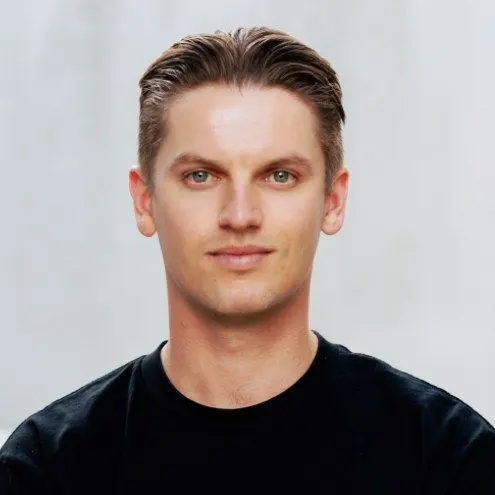


 ▶
▶  ▶
▶  ▶
▶  ▶
▶  ▶
▶ ▶
▶ ▶
▶