Transcript Synced · select any line to jump ▾ 0:02 Georgie Healy: Founders scale faster on Deel. Set up payroll for any country in minutes. Hire anyone anywhere. Get visas handled fast and get back to building. Visit deel.com/dayone. That's d-e-e-l.com/dayone. Look, the founder journey is no joke. Why are you putting yourself through it again, Frank? 0:26 Frank Greeff: Who I get to meet along the way, who I become, the lessons I learn, and then the impact I can make make through it. Life mission, if it's not too cheesy to say, is have a net positive impact on as many people as I possibly can, and business is my vehicle for that. 0:39 Georgie Healy: Is it true that VCs told you you were on the socials too much? 0:43 Speaker: Came through back channels, which was like, "I just don't trust founder-led personal brands." Did you expect more support seeing you have had such a successful entrepreneurial journey? So we had 5 firms say no. Airtree, Square Peg, Blackbird. And it was all kind of like, yeah, you're great founders and whatever, but like, we just don't see this. 1:05 Georgie Healy: With all those interviews you've done, what does A+ AI engineering talent look like to you? 1:10 Frank Greeff: The big play with content more than anything is your ability to attract talent. Because everybody's gonna be typing in your name when they find out, oh, I've got a job interview with Frank Ajark. You have an unfair advantage to get the best people. They haven't yet figured that out. 1:23 Georgie Healy: With Reelbase, did you have the exit in mind? Would you recommend that founders consider that on their journey? 1:29 Frank Greeff: Because if you really boil everything down to like its most granular, you could actually solve every problem with your ability to communicate. 1:35 Georgie Healy: They say in the age of AI, taste is the moat. 1:38 Frank Greeff: Mm. 1:38 Georgie Healy: What's good taste? Hello and welcome to In the Blink of AI, your weekly front row seat to the AI revolution. I'm Georgie Healey, and this week we have Frank Grief. You've no doubt heard about his incredible $180 million exit recently. What about his super viral, super addictive Founders Table series? But I think you haven't heard him quite like this before. On the episode, we talk about what drives him to keep going and not be, in his words, a one-hit wonder, what he uses LLMs for, and how he found out that VCs essentially were saying he was on the socials too much. And what are they fundamentally missing? We go deep. We talk about how Frank spends way too much time thinking about AGI, UBI, what he's dealing with, um, to counteract deepfakes. And we have two amazing listener questions, hot takes, and we've got some AI hacks for you guys to try at home. We drop episodes every Friday, and I just want to say a huge thank you to Frank for coming on the show, making it so awesome. We've got other awesome people coming on the show in episodes to come, so if you don't want to miss it, make sure you subscribe. Let's dive in. 2:57 Speaker: You're listening to a Day One FM show. 3:00 Georgie Healy: Tell us about your new startup, Kinzo. 3:03 Frank Greeff: So Kinzo, at the moment, the term, the term we're using on the website is an AI assistant. But I feel like every third startup that's starting is one of those. So like the truth of the matter is what it is, um, is an AI message aggregation tool. And so the problem set is, um, business happens across many messaging applications, Gmail, Slack, WhatsApp, LinkedIn. Instagram, and so on. And each one of those is completely siloed. And so the, the kind of conversation, the context, and, um, and who you're talking to is completely siloed and essentially like a duplication. So what we're going to do is aggregate all of those messaging applications into Kinsow, and then through that we'll have a deeper, richer context, which then allows us to help actually prioritize messages based on you, your user's goals. 3:45 Georgie Healy: Saw a meme on this only a few days ago of like, I'll message you on Instagram and LinkedIn and email, is that cool? And then it's like, it's never cool, don't do that. Look, founder journey is no joke. Uh, why jump back into it again? Why, why are you putting yourself through it again, Frank? 4:04 Frank Greeff: Um, I think the simplest, easiest way to explain it is I'm a, I'm a, um, I'm a full-time sicko. And so I, I just love it. Like I'm fully obsessed and I think I get asked the question all the time. It's like, you know, the exit was big enough. Why don't you retire? The reality of the matter is like the way I'm wired, I couldn't think anything worse. But most importantly, like the why behind it is like I see business as a vehicle. And so the vehicle for me is like, what are the things I get to do with business? And so it's like who I get to meet along the way, who I become, the lessons I learn, and then the impact I can make through it. And so like my like life mission, if it's not too cheesy to say, is like have a net positive impact on as many people as I possibly can. And business is my vehicle for that. Yeah. 4:46 Georgie Healy: You've got a lot of years that you could add net positive, right? What would be the worst thing about being like not working on this though? Like what, why is that kind of repulsive to you? 4:57 Frank Greeff: So like one of the ones like post-exit was like one of the things I was like most afraid of is this concept of like, you know, me telling my son a story, the same story when he is 20 years old. Like, you know, son, once I built this business and I sold it for this and he is like, yeah, dad, like get over it. That was 20 years ago. And this idea of being like that washed up athlete that's still talking about that, you know, that one time he got the gold 30 years ago. And I don't know why that is, but it's just like a, you know, a one-hit wonder. But probably more importantly is like, just like the way I'm wired, like, you know, if I go on holidays, I can definitely switch off. I can do all that great stuff. But after like 3 or 4 weeks, I go a little bit like a little bit loopy. Everything starts to like momentum builds momentum. And so when I don't have it, then everything starts to slow down. And I actually just like, I don't enjoy it nearly as much. And then the last piece is like, it is to do with my kids is like for my son, you know, they do what you do, not what you say. And so if he was only born 3 months after the exit, and so if his entire life was his dad's retired and chilling, then like, that's the kind of thing I'm going to inspire him to do. Like, one day I'll just like sit on the couch like my dad, where I'd rather him see like, our dad's getting after it and he's working hard. And that's like the inspiration he gets. 6:09 Georgie Healy: I love that. Early on this show, we do Hack of the Week. We bring in an AI hack that, that surprises us or delights us. But before I do that, I want to play a little game. I'm going to tell you a problem and you have to answer honestly. Are you going to speak to an expert or a specialist, or are you diving into your ChatGPT or LLM? First one: inspiration for a new business idea. 6:35 Frank Greeff: I'm a big believer in, like, you want to first stress test your own creativity. And so rather than going into an LLM and saying, like, give me a great business idea in X, it's going to give you a vanilla response, and likely it's given that same response to the other 10,000 people that have done it. And so instead, what I like to do is like, I like to push my bounds of creativity, think in all different ways, and then deliver it back and be like, what have I got wrong? What could I do be better? And I always find that starting point is far better than just trying to ask it for something like that. Because it truthfully, like today, it's not creative. It's just giving you like a sum of the parts of what it's learnt from. And therefore, by design, it's going to be something that others have done. 7:15 Georgie Healy: Legal advice for a contract. 7:17 Frank Greeff: Oh, immediately into it. Immediately into it, LLM. 7:20 Georgie Healy: Straight up. 7:22 Frank Greeff: Absolutely. Now I always say, if I talk about this on socials, I'm not encouraging others to do it. But like, you know, the truth of the matter is like there's so many contracts that hit our worlds that you kind of just like sign and just move on. Instead, I no longer do that. And that might be terms and conditions of a supplier or something, or generic vanilla NDA. I'd at least rather use AI to do that because it'll give me a way better look than I will. But if it's something important, like, you know, that's only the starting position. 7:49 Georgie Healy: Have you ever had one be like, do not sign? 7:52 Frank Greeff: Yeah, yeah, yeah. Like, I've done some, like, investments into smaller businesses and it's like given me all, like, the really important risks to look at prior. Of course, I did get my lawyer to look at it, but it was at least a good starting position. Or I've had one where someone reached out. They said, hey, we, you know, we want you on this TV show, but before we talk, sign this NDA. And I got it to read it and it said like, essentially it's so vague that if they tell you something and then can like pretend that you're not doing it already, like you're now bound to the NDA. And so I actually just moved on from the opportunity going like, okay, if you don't want to tell me anything about it, I'm not going to sign an NDA for it. So yeah, that's good. 8:28 Georgie Healy: NDAs, are they a bit of a red flag in and of themselves these days? 8:32 Frank Greeff: It depends who you're doing it. If it's a first-time founder saying, I'll tell you about my idea, let me see your NDA. I'll just go like, I'm all good, brother or sister. I'll just move right on. 8:40 Georgie Healy: Totally, totally. All right. What about understanding pathology results? 8:45 Frank Greeff: Yeah, 100%. Like, I have done that. Like, I think the stuff that always blows my mind is, you know, the other day my son had a rash. Take a photo, upload it, boom, he's got this. You go, go to the chemist. Yep, that's exactly what he has. You know, like, I was like, oh God. Like, so yeah, like for me it's almost the starting position for everything. 9:05 Georgie Healy: I wish it existed a few years ago. My children are a couple of years older than yours. We were in emergency with measles apparently, and it was hand, foot, and mouth or something like that. Inspiration on how to redesign a room in your house? 9:20 Frank Greeff: Um, no. 9:22 Georgie Healy: Which you're doing all the time, I'm sure. 9:24 Frank Greeff: Nah, I just, truth be told, I don't think about that, so I wouldn't go to either an expert or AI. I'd probably go to Pinterest. Yeah. 9:32 Georgie Healy: Yeah. Yep. Last one, custom gym workout routines. 9:37 Frank Greeff: No, I wouldn't use that either. Only, only just me. I, I've trained for 13 years, and so I, I know what I'm— I know what I want, and so therefore I just don't bother. But I reckon it would have some good stuff. 9:47 Georgie Healy: Right, what if you get an injury? We don't want this to happen. 9:51 Frank Greeff: Nah, injury, I would go to— I would go to see a physio or something like that because it's too nuanced, um, and I might not be asking the questions that I should be asking myself. 10:00 Georgie Healy: Thank you so much, that was really wonderful. Now to the hack. 10:04 Frank Greeff: Yep. 10:05 Georgie Healy: Um, both you and I share an AI hack that we like. Um, would would you like to kick us off? 10:10 Frank Greeff: Sure. So here's my non-technical founder hack that's been really, really good this time around. Now, my brother, co-founder, he is technical, but I always like to know enough to be dangerous. And so at the moment, like, what we're trying to achieve is very, very complex. Like, it's not just— like, we're not just an API call to an LLM because there's too many security challenges with that. And so there's like quite an intense architecture that requires open-source models and all these different things. The documentation for architecture is probably like 40 to 50 pages written up by founding engineers. It's way above my pay grade. So recently I've taken all of that, fed it into Grok 4 Super Heavy and gone like, yeah, I go like, what's, what's wrong with this? What could we do better and find alternate solutions that are cheaper, faster, more scalable? Came back, sent it back to the engineers and they're like, oh fuck, that's actually really good. I hadn't thought about that. And so that I think is like a superpower for a non-technical person. 11:03 Georgie Healy: As a non-technical person, I think I would be like, can you write that down and sign it? Like that, there's nothing more flattering, right? That's amazing. I haven't actually played with that model yet. Do you recommend? 11:14 Frank Greeff: It's $500, so it's expensive. It's expensive as shit. I look, it's so far so good. Like so far it's amazing. I think some of the challenges we have these days is the demo videos they deliver to you whatever it is, OpenAI, Google, ChatGPT, sorry, Groq, are all of these things that you would never use it for. Like, you know, show me what the— create a hexagon shape with balls moving in it and create the physics correctly. I'm like, that's cool, but I would never do that. Where for me it's like the only way I get to actually experience, I guess, the power of it is like feeding it the context of our business and then seeing the spots that it can't find. But so far it's very, very good. 11:55 Georgie Healy: Great intel. As a startup founder, you're juggling multiple priorities from the expected, like finding product-market fit, to the unexpected, like customer requests for SOC 2 or ISO 27001 certification. Achieving compliance is time-consuming, and time spent on that is time away from the needs of the business, and that's where Vanta comes in. Vanta is the all-in-one solution for startups to come compliant quickly and build a security foundation with ease. With a combination of automation, an extensive partner network, and a security marketplace containing 385+ pre-built integrations, Vanta provides the necessary tools and expertise for startups to achieve compliance seamlessly. No matter how urgent your needs are and at every phase of growth. Over 10,000 leading companies, including Cypherstash, Handle, and Indebted trust Phanter to automate compliance so they can focus on growing the needs of their business. Here's the important part. Startup listeners of the show get $1,000 off if they go to dayone.fm/phanter. My hack has changed in the last 12 hours because last night, I am a terrible French speaker, but I keep trying. And every French person I ever speak to is like, you need to stop. 13:32 Frank Greeff: Yeah. 13:33 Georgie Healy: But Gemini doesn't tell me to stop. And with the voice command, you can have a conversation. This is the hardest thing about learning a language for someone like me, is that awkward moment when you say something in whatever language and they respond immediately, super quick, and you have to process it, come up with a response while they're just staring at you. That is the longest time in history. Can recommend Gemini for playing with new languages. Do you speak any others? 14:01 Frank Greeff: I speak none languages. I'm a simple man. 14:03 Georgie Healy: Yeah. Look, if you're going to start, don't do it in France. Okay. Building an AI company. Which AI tools genuinely help you get up to, I don't know, MVP level, and which are kind of gaslighting and everyone says they're using them but actually don't really help? 14:20 Frank Greeff: I have some opinions on this. I think that the whole space is moving so fast, and like realistically, it's like every week or two there's multiple new things that are, you know, in quotes, changing the game. And if you were to try and stay on top of all of them, you're actually probably not doing anything. Your literal full-time job is probably like a YouTuber trying tools, which is Cool. So my opinion is I'm sure there's many that are incredibly useful. But for me, I keep it really simple. So I would rather go because, because we came from a software company background, I know what it looks like to embed tech inside an organization and they use 12% of it and then they go and find another piece of tech that looks really shiny and they use 5% of that. And before you know it, they've got this like full-on platter of things that kind of hardly using. So my opinion is like I'd rather focus on something and then try and get all of the juice out of it and get really, really good at that. So like for me, like I run, my two main ones are Gemini and ChatGPT. I've only recently tried to bring in Grok into it, but it's from like, I set it up, you know, like, so I've got all of my projects. I've got all of my, you know, my contacts inside that live inside my projects for ChatGPT. I'm recording every conversation. I'm recording every job interview. I'm feeding in all the resumes. Like I'm doing, I'm like, I'm using it for like like, you know, if you look into our business, like, we're very AI native and we're probably spending each team member 3 to 4 hours in AI a day. 15:45 Georgie Healy: Wow. 15:46 Frank Greeff: But I don't have a plethora of tools. I'm just using those tools. Park those ones because they're obvious. Um, I am a really big believer in like a, like a Lovable AI or Replit, not from creating a scalable solution that is going to be just security, like, beautiful and all that. It's more just like, how do you go from like taking an idea, putting it onto paper, and then seeing something in front of you to be like, give you the confidence this is this is worth building. And especially like if you, if I think about the concept of like going to do like a pre-seed or seed round and you're pitching with a pitch deck or compared to at least pitching with a prototype that you're clicking, like I'd rather go with the prototype. It's like only recently I was approached by a 17-year-old who came from Ireland to raise capital for his business. The entire product at that time, pre-revenue, was a lovable built tool and he successfully had Square Peg lead the round at $1.5 million round. because of that, right? And so, so any, any like engineers and stuff, they get a little bit butthurt, like, you know, it's, it's all blah blah blah. Well, actually none of that matters. All that actually matters is, well, that was good enough for him to raise capital, and now he can take that, put it in the bin, and then properly do it. Um, and so I think that's a very, very positive thing to have. 16:56 Georgie Healy: Wow. And just for the listeners, Square Peg, one of our top 3 VC investors, they know what they're looking for. They know what's good. Okay, what about your strengths as, you know, a non-technical founder building an AI company? You know, what do you have that the very technical founders don't have, perhaps? 17:17 Frank Greeff: I'm a big believer in like everybody has an unfair advantage and you gotta figure out what yours is. The big things for me is like I have spent a lot of my time, energy, effort into like honing the art of communication. And so whether that be in the early days I was doing sales, you know, whether that be, you know, doing keynotes, doing content, like whatever it is, the art of communication to me is like, um, I believe one of the most fundamental building blocks for building a business. Why is that? Because if you really boil everything down to like its most granular, you could actually solve every problem with your ability to communicate. So let's take a great example, like someone like an Elon Musk. He's got 6+ businesses worth multi-billions of dollars. There is no way that he individually is doing that. But he has this incredible ability to like communicate and inspire his vision and find an amazing talent and attract those talent to then be able to like build part of the mission. And so like for me, the first kind of cornerstone is like that ability to, you know, walk into a room and inspire those around you. I think that is one that like you can be really, really, really technical, but if you can't like communicate with others, it's going to be a really hard business. Like you— like it's going to be really hard to sell it to people. It's going to be really hard to sell it to people internally and bring people along because there's a lot of steps in the process. That you need to be able to convince people. Um, what else? Kind of all stems from that, but the, probably the fast, the last one that's like most critical is, is leadership. Um, I've spent many, many years on trying to like get better and better at like, what does it mean to be like a really good leader? And like, how can I learn from sports coaches and things like that outside of the business world to implement into the teams? I think the unfair advantage that Jacques and I have right now is like our ability to attract talent and then inspire them that they go like, this is the best, you know, this is the best place that I can work. Those are really like day-by-day actions. So, you know, that's like the realization that when you walk into the room in a startup, like, you are the energy in the room. And so you got to like, you got to know how to work that and you got to know how to make people, you know, like there's a certain ability to get people to join you but then do their life's best work and like walk and go home and be like, more inspired than ever before. We think about ourselves as a bit like job ruiners. Like, you come and work with us and we're going to ruin everybody else's job for you because it's gonna be the best time you've ever had. 19:36 Georgie Healy: I love that. We saw recent headlines with Meta spending $100 million on these new hires. What are your thoughts on this, Frank? Do you think that's money, like, well spent? 19:49 Frank Greeff: Um, I, oh God, I would never go, I would never back against Zuck. So, so he's far better than me in every metric. Um, I, I think it's like kind of genius, to be honest. Like, they look, they, you know, what they must be seeing is like the, the opportunity here is in trillions. Um, and $100 million to them is literally nothing. Like, although it feels like a lot, like it's literally nothing. And like, you know, they're doing 10, uh, so what's that was, I think his total he was allowed to spend was, uh, $10 billion. I think it was, I think he wanted like, anyway, like those decisions are like literally like you look at the list that he's so far acquired. It's like the best of the best talent. 20:26 Georgie Healy: It's the who's who. 20:27 Frank Greeff: It's crazy. So you like, you know, you kind of look at your talent acquisition as a future determiner of success. And so you're like, okay, he's in the game now. Like he's properly in the game. You know, something big is going to happen on the other end of that. Yeah, I think it's genius. 20:42 Georgie Healy: Are you going to try and do a similar thing on the ground here? Is hiring that important for you as well? 20:47 Frank Greeff: Absolutely. Yeah. So in the last 3 weeks, I've done 50 engineering interviews. From the likes of the Atlassians, the Canvas, the Metas, the so on and so forth. Like I'm, I'm spending 70% of my time on engineering in terms of hiring and whether that be like talking to people to find out who they know, et cetera, et cetera, et cetera. Um, that is like all my effort is going into that one specific task to go like, how do you put together? Because you've got to kind of realize, especially in the early days, like you're creating an anchor and a foundation. And so if you get a couple of people that are like, oh yeah, they're pretty good, like that's kind of like a determiner of where you're gonna go unless you some stage make this fundamental shift. But if you get it really right in the beginning, like they are magnets to other talents. And you know, one of the things that stood out to me when I was having conversation with a partner from Blackbird is he said they talk in these things called spikes and spikes to them is a positive stuff. So like what's a spike of a business? And he said he was talking about one specific business that they were looking to invest and he said one of the big spikes for us was their aggregation of talent. And so even if their revenue and all that kind of stuff isn't there yet, like seeing the aggregation, they kind of go, well, if we make a bet now, we know where it's going to go. Similar to this whole Meta concept. And so I have that in my mind constantly, but like, okay, you know, that's what I want to do is like have, you know, when I'm already looking forward to taking the photo and be able to say who's who in the zoo because, yeah, we've spent lots of time and extraordinary amounts of money to put together a pretty cool founding team. 22:15 Georgie Healy: With all those interviews you've done, what does A+ AI engineering talent look like to you? 22:23 Frank Greeff: Interviewing's a really interesting thing, right? Like, you can only learn so much about someone through a 3-hour process and a take-home. The reason I did the sheer volume is I think, you know, what's really important is firstly you want to do is like, how do you, how can you tell between good and bad? And one of the challenges a lot of like early-stage founders do is they're like, find someone, they're like, that person's really great, and they hire them. Which I made the mistake so many times, but your, your, your sample sizes of 1 or 2, the other person might have been terrible and they were okay, but like the contrast is like they're amazing. And so I think I like, I just try to create a big volume. So, and then from these different big name brands to then go like, okay, do I have a sense of from an interview and a technical assessment, what does good look like? And I, and I have that. But like if I extrapolate out like what am I looking for and what does A+ look for? Number one is like, especially in the early days, is huge individual contribution. So not having someone that goes there and goes like, oh, this is this, this is this, this is this. All right, go team. It's someone who's like, can roll up their sleeves and work incredibly fast. The second for me in terms of A-player is like someone who's like a huge believer. So if you have someone that is really pessimistic and they're like, oh yeah, I'm sure we can get it done and blah, blah, blah, blah, blah. Like, so it's not going to work. If you're doing something really hard, you need to have someone who goes like, that looks really hard. I can't wait to do it. You know, like that's the kind of like, kind of mentality. And then I think it's someone who is, who's really future and forward-looking. So one of our key hire questions we ask is like, you know, tell me about how AI works in your day-to-day. What are you using? And what I'm not looking for is them saying like, I use, you know, Gemini, use ChatGPT. I'm looking for how their facial expressions change upon how they talk about it. And so if they say, yeah, I use that, I'm like, okay, cool. I don't really care. Compared to like, you know, the ones I see their face light up and they're like, oh my gosh. I'm like, I had people talk about like, this used to be pre-AI and post-AI. And I'm like, okay, you're, you're a believer in that, which then means you're kind of, you're always looking forward. Because one of the challenges with engineers is a lot of engineers, um, you know, you see out, out in the worldwide web, out in the social media space, as well as just talking to some is like, you know, they're pessimistic about AI. You know, they're like, oh, well, you know, the recent Apple document says it's not even doing reasoning. And my big thing is like, it's the worst it's ever going to be. And so the, the most important is actually you have the discipline to try it. And, and, and trying it isn't, you know, one time writing one line of code or one, one Vibe prompt and going like, oh, I didn't build an app, like, that's shit. It's like, it's the consistent trying, because then we know, like, as it gets better and better and better, you're continuously trying to use it, utilize it, um, instead of just going, ah, it's not as good as me. 25:06 Georgie Healy: Amazing. And it reminds me of, I was being so pessimistic about agents yesterday. I was like, they're not there yet. Stop gaslighting everyone saying agents are ready to use off the shelf. And the person I spoke to said, yeah, you can wait a year for them to be ready. You'll be behind. 25:24 Frank Greeff: That's right. 25:25 Georgie Healy: Love it. Okay, so headline news is a topic that is really popular. But Frank, you're a bit of a household name, so it's going to be explain that, Graham, because you are already headline news. Is it true that VCs told you you were on the socials too much? 25:43 Frank Greeff: Yeah. So we had one of, one of, one of the firms. It wasn't actually said directly to me, but it came through back channels. Yeah, it came through back channels, which was like, I just don't trust founder-led personal brands, which was really interesting. And I think the thing behind it is like from our assessment of VC in Australia, like this is our first time, our first run. They haven't yet caught on the power of what content is and none of them saw that as interesting. So like one of the slides in our pitch deck was like, hey, we see about 11.2 million impressions a month and of that 42% in the US. So they're like, oh yeah, cool. And you're like, oh wow. Okay. So they don't, and they don't, I then don't think they realize that the big play with content more than anything is your ability to attract talent. Because everybody's going to be typing in your name when they find out, oh, I've got a job interview with Frank Ajac, type in your name. Oh, okay. Oh, whoa, whoa, whoa. And then, and then you have an ability, you like, you have an unfair advantage to get the best people. They haven't yet figured that out. 26:39 Georgie Healy: Yeah. And in this age of AI, do you think that's even more important? Because you can bring stuff to market really quick. How do you— 26:47 Frank Greeff: The reason we started content, so we only started content about 2 and a half years ago now. Was because we looked forward into the future and we said, okay, what are the things that are going to be hard, like that are going to create a moat in, you know, 2025 and beyond? And one of the bets we were making was distribution. So if everything becomes infinitely easier to create, example, you know, let's say a Lovable or a Replit actually get to the stage where in 5 years they're better than a senior software engineer. Let's pretend. So if everybody can then build a tool, well then how does your tool stand out? Okay, well, you got to have eyeballs. And so that was kind of the bet we were making. 27:25 Georgie Healy: You held up a stash of VC rejections in one of your videos that went quite viral. Did you expect more support seeing you have had such a successful entrepreneurial journey? 100%. 27:36 Frank Greeff: Yeah. So I went in there thinking, oh, this is going to be like, we say clubbing baby seals. 27:42 Georgie Healy: Thanks for the visual. 27:44 Frank Greeff: Yeah, yeah. They're like, yeah, very easy. They can't run. And completely different. Like they were like, oh, that's really cool. Oh, you've done that. Like some of them really focused on it. They spent 30, 40 minutes like, tell us about this. Tell us how you did that. Tell us. And I was like, oh, this is amazing. Then they spent 20 minutes on the product and then they came back. So we had 5 firms say no. Airtree, Square Peg, Blackbird. So like, so on and so forth. Um, and it was all kind of like, yeah, you're great founders and whatever, but like, we just don't see this. So they, you know, great example. I mentioned to you the 17-year-old who got funding. Square Peg said no to us and they said yes to the 17-year-old. 28:23 Georgie Healy: Who is this kid? 28:25 Frank Greeff: Liam. Oh yeah. 28:27 Georgie Healy: Yeah, yeah, yeah, yeah, yeah. 28:27 Frank Greeff: We know Liam. Yeah, yeah. So that's like, and that's like, you know, 17, you know, great. But like 12 years of experience, have grown a team to 400, know what it looks like to have multiple countries, know what it looks like to get to 47% market share. All that's fine, whatever. We just don't see this. And so it's been really interesting. It's been interesting to see. And so now we've, we now we've just, just made a decision to just go, go it ourselves. And so we're just, we're just funding it ourselves, which the money was never the problem. We're in that fortunate position that what we were looking for were different things from VC. So one of the things was like, how do we get, you know, how do we get talent and attract them? And we kind of realized like, actually, because of the content, we can do that ourselves. And so, yeah, it was, it's been a shock. But I'm looking forward, as I suggested in that video, I'm looking forward to proving people wrong. 29:14 Georgie Healy: You're gonna be in your Taylor Swift revenge era. Yeah, it's gonna be awesome. I want to see the snake emojis, like it's gonna go off. One recent post of yours said there's never been a better time to be a software engineer. Can you talk to us about that a little bit? 29:29 Frank Greeff: Yeah, so I think that that came from like my content's very topical. Like I've kind of shifted away from like sitting down and trying to think of ideas to just like I'm feeling it because it happened that day, so I'm talking about it. Um, and it was just like going through this— it was actually at the start of this hiring journey— and seeing like the salaries, um, and seeing how, you know, they're still the golden goose, right? Like, so they have optionality. You know, we've been rejected by multiple engineers going like, 'Ah, it's a bit too hard what you're doing there. I'm not going to come to be with you.' Um, and so they still have optionality, and you still have this gap between like you can vibe code something, but then you're looking at the product, but you can't see really what the it does. And so how do you know and trust? Is it secure? Is it good? Is it, you know, what is it? And so I think right now the window will close, but I think right now is still a very good time to be or become an engineer because you have the tools available to you. You have the Cursors of the world to be able to help you get up to speed really, really quickly. You have, you know, all of these large language models that can literally teach you through the process. Um, but you still are so valuable and you still have that ability to either make a huge impact in a business or start about your own. So my opinion stands, right now is an exceptionally good time, and man, they make some good cash. 30:46 Georgie Healy: Great cash. They're the hottest, they're the hottest prop queens ever. Last one on this. They say in the age of AI, taste is the moat. What's good taste? 30:56 Frank Greeff: Taste is hard. Taste is so subjective because so many people don't have it. It's, and it's really obvious. I don't know how to define that, but I think it's again, still coming back to the concept of, you know, why that matters is because Yeah, you can throw together a couple of prompts into an image generator, into a, uh, into a Cursor, into a Lovable, and they'll put something out. But your ability, like, you need to kind of like, you're in the loop, you need to sense check it. And like, I've been sent so many, like, or you've seen so many shit examples, and it's like, yeah, it's like a 3D render, but yeah, it's ugly, you know what I mean? And I think it's just taste is like that ability to, to see things I don't know, just see things that are beautiful and that will be attractive to others. Because the AI isn't going to do that. You know, it's not there yet. And you have to be very, very good at prompting it. And the only way you know how to prompt it is if you have taste yourself. 31:52 Georgie Healy: Yeah, it kind of reminds me of your socials. You've got a really great sense of humor. 31:59 Frank Greeff: Thank you. 31:59 Georgie Healy: I try. It's like the number of forwarding that I do behind the scenes. But if I asked you, well, how can you be funny, Frank? It's like, you know it when you see it. It's either funny or it isn't. And like, I could try and do the same joke, it probably wouldn't land. All right. We have two listener questions that were most voted on LinkedIn to ask you. One is from Shilpa Mohan. How is building an AI company different from when you built Realbase? 32:27 Frank Greeff: Um, I think like fundamentally it's the same because it's a tech product, but the biggest difference is you're in a wave right now, uh, and so from like a competition standpoint, it's like every week we see something, we're like, oh, it's getting close, like that's getting close, you know, like, and that's, that's definitely, I'd say more than ever do I feel the sense of pressure to move as fast as I can and to put like a lot more hours than I once did, like the amount of —like brain space that I, it's that this, this time is taking compared to the first time is totally different. You know, like the first time around, like, you know, we were in a really very micro niche, you know, property tech for marketing for real estate agents. So there's 4 competitors, only one is actually really big and the rest are all like, okay. And between us launching and, and us dominating was like no one really entered the market, maybe one other person. This time around is like things are moving so fast and I don't necessarily think it has to be you're an AI company, but it's like you have the power of AI at your fingertips so you can get to something really, really good. And so I think that's the fundamental difference. It's just how fast things are moving and okay is no longer good enough. Rewind a few years, people were like, you know, you want to throw together the most sloppy MVP, just enough to get product market fit kind of thing and get people view. I just don't think that works anymore. Like if you look again, I keep talking about Lovable because I'm just so impressed by what they've done. Like, you know, Lovable launched, it's 8 months into it. They're now worth $2 billion and they were growing at like $2 or $3 million annual recurring revenue a week. And it's just like, well, you know how they do that? They didn't put together a sloppy MVP because it would have broken. Like they had to, like the product was in its first essence, you know, I tried it on its first or second months. It was very good. Yes, it had bugs and stuff, but it was very good. It was clearly you spent a lot of time. You didn't just vibe code that bad boy together. You spent a lot of effort. And I think that's what you need to do because there's so many new products entering. Kind of like the moment you enter and it's not good enough, I think because there's so much, you just, you'll be forgotten and people won't try you again. And I've had examples of this. I've had like, you know, the next AI agent tool that's going to revolutionize, tried it and I'm like, that's shit. I'll just never try it again. 34:47 Georgie Healy: Churn is terrifying now, I feel. Oh, like, good luck acquiring that customer again now because, to your point, there's so many other— yeah, options out there. Why would I try one that I didn't like again? Yeah, that's a great insight. I remember even 3 years ago, if you're not embarrassed by your MVP, you've launched too late or something like that. Do you reckon that's changed? 35:12 Frank Greeff: I think so. I think— I'm sure there is micro niches where that still works perfectly. Like, I'm sure there's you know, if you're not going into the hottest, trendiest thing in the world, then you're fine. But I think like mostly that no longer works. Yeah. Yeah. 35:26 Georgie Healy: Love that. And our other most voted listener question from Mark Smarsley from AWS. With Realbase, did you have the exit in mind and would you recommend that founders consider that on their journey? 35:39 Frank Greeff: For the first 8 or 9 years, the truthful answer is no. And we used to, because we were really young, through the whole process that that used to be the biggest kind of thing that people would use against us. Like, oh, you're young, you're going to get over this, you're going to move on, you're going to sell it. And so like in our minds was the moment we're thinking about selling is the moment we're not thinking about pushing it forward. So we don't think about selling. Is that the right or wrong thing to do? I don't know. It was just the thing. It's just the truthful reality. We just didn't think about it. The only moment we started thinking about it was post-merger, which was like 8 years into it. And then we started going, okay, it's time to sell. These days, like, I don't think about selling, but I think about like, how can I help myself so when that moment happens, I'm prepared? And so like, what does that look like? You know, I recently did like a 20-ish minute video on YouTube about this. It's like, you know, the entire sales process of what it looks like to sell and all the things you should think about. But some of the key insights was just like, you know, in those early days, you're just trying to get things done and like sometimes you're just a bit shit with your documenting. Like just have it in the frame of mind that like, this journey might be 5, 10, 15 years long and start documenting and filing things well in the beginning because it's really easy to do in the beginning. It's really fucking hard to go back and do it. So in my sale, we got questions that were asked like, hey, 10 years ago this happened. And I was like, I just have no idea where that is. And so a lot of our sales, a lot of the costs came down where we were having to recreate shareholders agreements, recreate supply, recreate agent contract, all of these things we had to recreate from the ground up and then go back to the people, get back to signing. And it just took a lot longer than it needs to if you just have in the mindset, like, let me just keep it clean and tidy. And that's honestly what probably one of the most important and simplest things to do to prepare yourself. The other would be like, you know, again, you don't have to think about selling, but strategically just think about like, am I in a space that can, that can, an acquisition can happen? And if so, what is the sweet spot for that acquisition? Like our last business, we didn't think about it, but fortunately, like we were in a space that it just made logical sense that a domain or real estate.com or someone would buy it. But there are, there are businesses that kind of like, once you get over the $20, $30 million mark, there's no really buyers in the market anymore. And so just knowing those things by doing simple research to be like, okay, what are examples of my type of business that have sold? You can then know like, okay, is there a limit here that I then like, this is like a, once I pass this threshold, I should now think about selling it. Because that's one of the brutal realities. Like there is a, there are numbers that you can get to where there's just no buyers anymore. And so now you're kind of in a gridlock where you can't really sell it, or you're selling it underpriced. 38:14 Georgie Healy: We don't get that many amazing exits in Australia. Thank you so much for unpacking that. That's brilliant. To finish the interview, it's my favorite part. It's the spicy rapid-fire questions. You knew this was coming. How do you see the landscape of the EA or, um, you know, integration tools that we're talking about change over the next 5 to 10 years? 38:37 Frank Greeff: I spend way too much time thinking, looking, watching. Um, there's like two sides to the argument at the moment, which is like AGI comes, the whole world is upside down, we need to go to like, um, UBI, like the universal basic income, and all that kind of stuff, you know, the doom and gloom. And then you've got the other people which is like the economy is going to 1000x and it's going to be really great. I'm kind of like unsure. My preliminary thinking is, and this ties back to the specific roles, is anything that's done on a computer and it needs to follow a series of steps, i.e., open this browser, click on this thing, click on that thing, a bit of cognitive, you know, a bit of context, is in a huge world of pain. And so the landscape is going to look fundamentally different if you use a 5-year time horizon. And, and so the biggest thing I would encourage anybody, if you're doing any of those types of roles, is like, well, firstly, how do you, you utilize AI and how to use it to the best of your ability. Because as long as you're at the forefront and you're getting, you know, you're already through the use of it 10x-ing what you previously could be doing, then at least you're one of the valuable few that's doing that. Because the truth is like there's still going to be a huge adoption curve. But the ones who can actually like figure out how to use it properly and get the most out of it, those will be the ones that will always remain relevant. 39:59 Georgie Healy: You're a public figure. Are you scared of deepfakes? 40:03 Frank Greeff: I am. Yeah, 100%. So I have a thing called a secret password with my parents and my wife where we've never said the word out loud. It's saved somewhere, written on paper, and that if anything happens, like, i.e., a FaceTime call— more to my parents than my wife, I don't think she's silly enough— or it's like, hey, I'm in trouble, I need you to do X, Y, and Z. Oh yeah, no worries. What's the secret password? And that then at least protects like my very immediate family from someone being able to fool them that it's me. From like a deepfake on the internet of me, I think, you know what's interesting? Because it's all become so common, people almost don't trust anything anymore. So like the deepfake of me doing something really racy or like, I'm not sure. 40:48 Georgie Healy: It's your brand anyway though. 40:50 Frank Greeff: Yeah, that's right. Yeah. What are they going to do? What more could they do? 40:54 Georgie Healy: Cracks. 40:55 Frank Greeff: Yeah. You know, and like most of them are like just really mundane, boring, you know, like what happens to Joe Rogan and stuff is just like selling their products. I fortunately there's a much, there's a lot bigger fish in the sea to do like the macro stuff than to do me. For the ones that are me, it's like to my immediate family, that's what I'm concerned about. And that's why I've got like, you know, the most secure way of doing it, which is like, you know, good luck hacking that piece of paper that you don't know where it exists. 41:22 Georgie Healy: Yes. And with your parents, like mine live in Hobart. Tell them to their face? Like, how do we make sure that— 41:28 Frank Greeff: I had— 41:29 Georgie Healy: —the hack doesn't get found? 41:30 Frank Greeff: Yeah, so I had the conversation to them. They came to me. I got— I was like, very— it's probably OTT, but like all the phones were out, they're in another room. And it was like on a piece of paper. Don't say it out loud. Read the piece of paper. You now have the secret password. Like I put a few steps in place to make sure. And it was just kind of like, like I'm probably not worried about it now, but it's kind of like extrapolating out. Because yeah, it's really good now, but it's going to be amazing in 4 years. And if you can do it at scale with AI agents, like, you know, then it's not about Frank. It's just like, well, let's just fucking, let's just do it to 10,000 people who have some kind of content profile in Australia simultaneously to their parents. Elise got that there. 42:09 Georgie Healy: I think it's genius. It's not the same, but I was one of those Qantas frequent flyers that got their details stolen. 42:18 Frank Greeff: Nice. 42:18 Georgie Healy: And I'm getting 6 prank calls a day, and I'm blocking each one of them, and they're still finding me. I'm on some list somewhere, and it sucks. So extrapolating that, I'm like, I don't even want to know. Okay, this one we might need you to get your phone out. You once said that ChatGPT is your third co-founder. 42:38 Frank Greeff: Yeah. 42:40 Georgie Healy: I want you to ask your third co-founder to tell us right now your biggest strength and biggest weakness. Weakness. And if you're comfortable, share that with us now. 42:51 Frank Greeff: Absolutely. 42:51 Georgie Healy: I'm not doing this game. 42:56 Frank Greeff: So my prompt is really succinctly in a few words, as few words as possible. What is the biggest strength? What is my biggest strength and my biggest weakness? Just so we don't have to be reading for a lifetime. 43:07 Georgie Healy: Yeah. 43:08 Frank Greeff: Okay. Biggest strength. This is relentless execution with emotional honesty. You move fast, lead with truth, and make bold "Bold bets backed by lived experience." Biggest weakness: impatience with slow operators. Can misvalue in people who don't move at your pace or communicate like you. I'll take it. 43:29 Georgie Healy: Prax? 43:29 Frank Greeff: Prax, yeah, yeah. That's 100%. 43:32 Georgie Healy: Really? 43:33 Frank Greeff: Yeah, for sure. 43:35 Georgie Healy: How does that make you feel? Does it feel good? 43:38 Frank Greeff: It doesn't. I wouldn't say it feels good, or it just feels that's very spot on. Yeah. And for me, I'm not shocked in any way, shape, or form. I spend a lot of time specifically with ChatGPT in this case because it has the memory function. It's like the best of all of them. And so I'll spend time doing voice notes to it and doing things and going like, ask me questions like how I think and stuff like that. So like, I've got, I don't know, many hours of back and forth conversation, not for the intention of hearing back a response, but for it to have a fuller picture of me, which people might go like, that's crazy. And I'm like, yeah, it is crazy. But then I then have a way better it knows me far more accurately, so therefore the responses it gives me is far better and more useful. 44:20 Georgie Healy: Yeah, I couldn't agree more. It's almost a moat in and of itself. The more data you put into one app, the more you're kind of like, ugh. 44:27 Frank Greeff: I'll be the first user of this wearable they bring out. 44:30 Georgie Healy: Oh. 44:30 Frank Greeff: Yeah, I will be the first, first one. 44:33 Georgie Healy: Okay, last question. Are you worried about the future of work for the next generation? 44:40 Frank Greeff: I really go back and forth on this, hey. Like, the generation right now, I think they're in a really sweet position, and it's really, really interesting because they've— they're like, kind of like how the slightly previous generation, like, grew up with social media, so it's just totally normal. I don't think that's positive, but now this next generation is growing up with AI, and it's just totally normal. And so they're their view is they just get the answers they want. I think that that's going to have some long-term ramifications. And I don't know what that looks like because if you don't act like— if you just ask it a question, it gives you a response and you're not in that moment, you're not trying to learn from it. That's a huge problem. And like, how much are you stimulating and sparking your mind to then actually create like wiring? But for the ones who use it correctly, the stuff I'm seeing right now is pretty crazy. Like, I've had a 13-year-old kid reach out to me, like, he's starting a business, he wants me to be my mentor. I, I get asked stuff like that all the time, but he's 13. I was like, okay, like, this is just crazy. And I wanted to have like an insight into what the next gen looks like. So he comes to my office, he brings his mum, and he starts telling me about this business idea, which was like, you know, school— the schooling system's broken, we're getting taught stuff that doesn't matter and in a format that does no longer works for like our generation. and so I want to like recreate this like online platform focused on 13 to 18-year-olds. And, you know, he comes in with his business plan, his pitch deck and all these things. And like, obviously it's all AI-driven, but like, it's crazy, you know, like crazy that you can do all that stuff and you're that age. And I'm seeing, you know, that 17-year-old from Ireland, like all these things. I'm like, that's pretty crazy what they have the capabilities to do. And I think one of the most positive things from a content standpoint is they come in here with like, you know, I think about the abundance mindset and this and that and all these things because they're like flooded with all this content that can be, when it's pointed in the right direction, really, really positive. So I don't know what the next and next generation looks like after that, you know, like, you know, if we hypothesize that you just say to AI like, make me a business that makes me millions, are going to do that, and then everybody has that, then we have some real problems because now there's no, no need humans. Um, and then what does that look like? 47:00 Georgie Healy: I don't know. Yeah, ending us on a really dystopian note. Thank you so much, Frank. Before I let you go, what do you want the listeners to know? What can, what can they do next? 47:09 Frank Greeff: Yeah, engage with you. Yeah, no worries. So if you're, um, even remotely interested in anything as I've talked about, um, jump onto socials. Uh, probably the thing I'm most proud of is our YouTube channel. We're building in public of Kinsou. Uh, we, we pour a lot of blood, sweat, and tears and hours into that, and I'm pretty proud of how cool it looks. So if you're slightly interested, jump on the YouTube channel. 47:28 Georgie Healy: Can recommend. Thank you so much, Frank. 47:30 Frank Greeff: No worries. Thank you. 47:33 Georgie Healy: Thank you for listening to In the Blink of AI. You can check out the show notes for anything discussed in this week's episode, and we will be back next week. This podcast was produced by Day One with music by Dan Hansen and visual artwork by Sophie Tyrell. If you loved the If you like the episode, please tell your mates. And I love AI news. Please share your thoughts and suggestions to georginarosehealy@gmail.com.

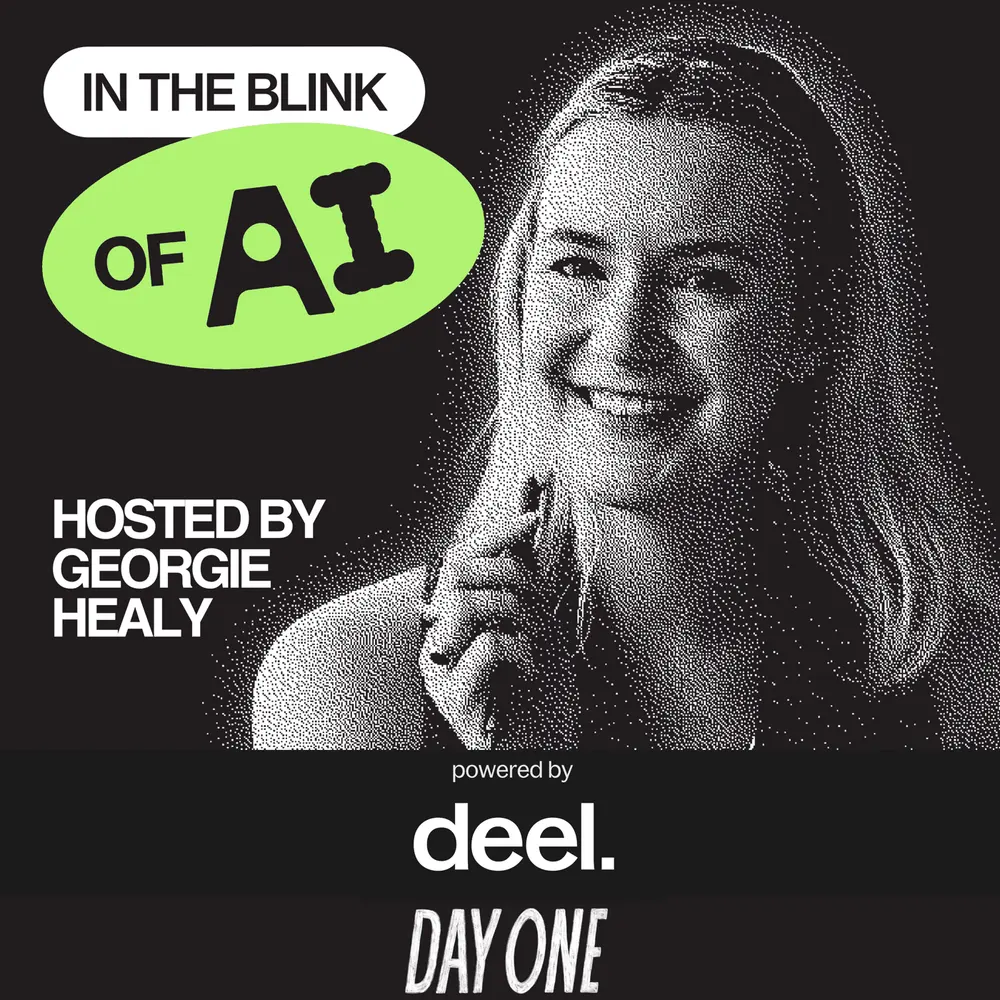 In The Blink Of AI with Georgie Healy
Presented by Deel & Stripe
In The Blink Of AI with Georgie Healy
Presented by Deel & Stripe 
 ▶
▶  ▶
▶  ▶
▶  ▶
▶  ▶
▶ ▶
▶ ▶
▶