


Crypto may only be 17 years old, but adoption is accelerating. Around 60 percent of trading volume today is retail, yet many in the industry believe that within five years institutional participation could dominate. If that shift happens, crypto won’t just be a speculative asset class. It could become a foundational part of the financial system.
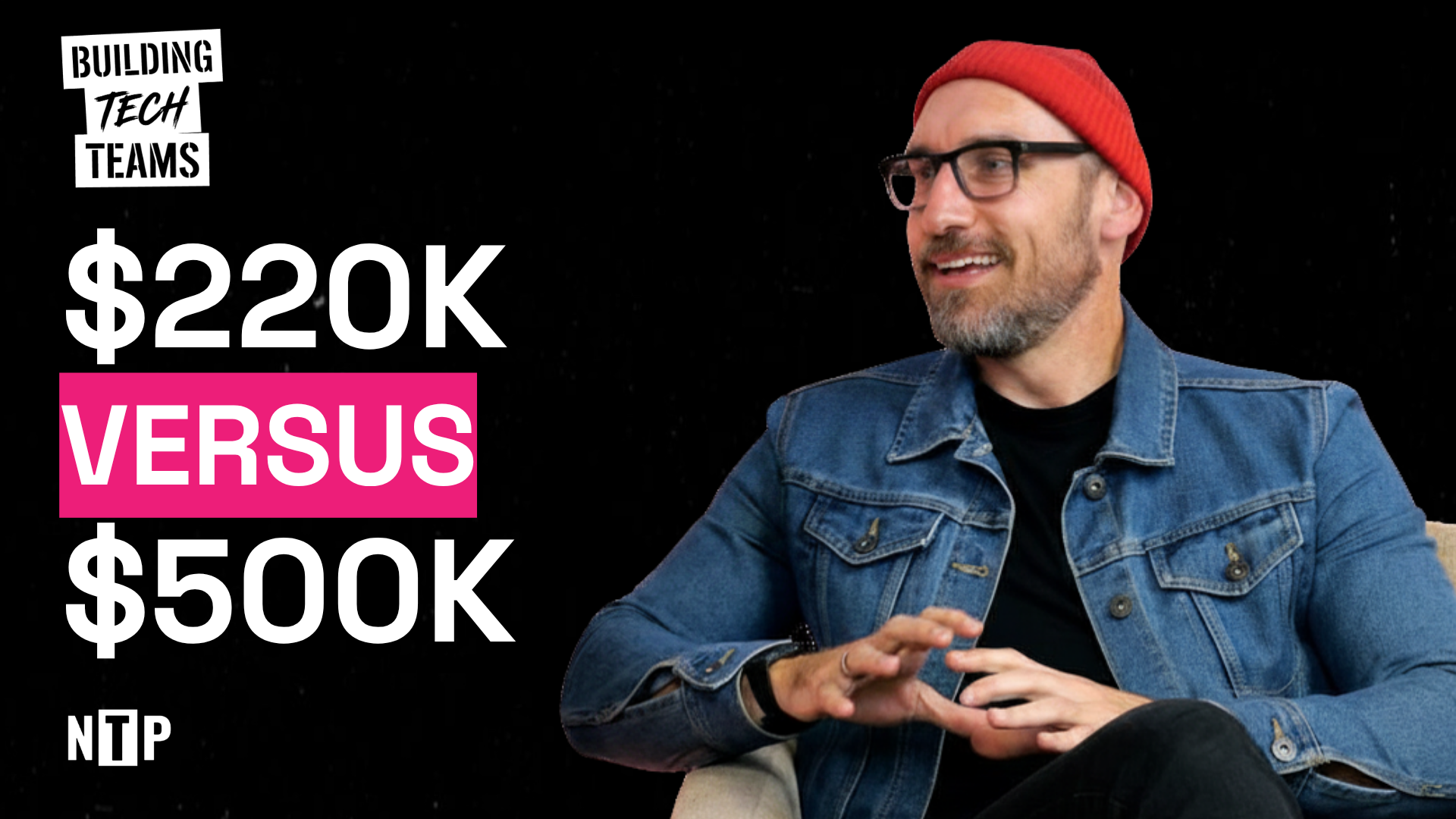
In the final episode of this series, Andy Jones speaks with Jason Titman, CEO of Swyftx, about what mass adoption could mean for Australia. They discuss regulation, institutional investment, superannuation funds, industry consolidation, and whether blockchain and crypto could emerge as a fifth major economic pillar alongside agriculture, mining, education and tourism. The technology may be ready, but the future of crypto in Australia now depends on legislation, coordination and the country’s appetite for innovation.
Transcript Synced · click any line to jump ▾
Jason Titman: As far as crypto goes, I believe it's at its real infancy.
Speaker B: Rates of crypto adoption in Australia have grown rapidly, with recent survey data indicating more than 1 in 5 Australians have invested in some form of crypto. But Jason Tippmann believes that we're still in the very early stages of the industry.
Jason Titman: I talk about crypto only being 17 years old as an industry, and it is very much a retail-based speculative asset class, but it's starting to move beyond that. About 60% of the volume of crypto is now retail. Volume and 40% institutional.
Speaker B: Currently, most of the investments in crypto are retail-based, individuals rather than large organizations buying crypto. But Jason believes that in the coming years, more and more institutions will start utilizing crypto.
Jason Titman: Our prediction and the industry's prediction is that that's going to flip to like a 20/80, so an 80/20 split, where 20% of the volume in the next 5 years is only going to come from retail and 80% is going to come from institutions. Now that That doesn't mean that the absolute dollars of retail is not gonna grow. It absolutely is gonna continue to grow. What it does show is that the institutional adoption is just going to become astronomically larger.
Speaker B: In Jason's view, the growth of the crypto industry could bring enormous benefit, not just to individual investors, but to Australia as a whole.
Jason Titman: I honestly see that blockchain and crypto could become the 5th major economic pillar for Australia. We've got 4 pillars at the moment. We have agriculture, we have mining, we have education and tourism. We've got 3 of those pillars are under great strain. We have to support agriculture, we have to support tourism, education, and mining, but we have to move beyond that.
Speaker B: I'm Andy Jones, and in the 3rd and final episode of this series, I'll be speaking with Jason Tippmann, CEO of the Australian cryptocurrency exchange Swyftx, about the future of crypto. We'll be discussing what mass adoption of crypto could mean for Australia, as well as some of the hurdles that remain for the industry. Jason, in the early days of the internet, we had clunky dial-up modems and just a handful of early adopters setting up websites and email addresses. But over time, the technology improved, the internet has touched so many aspects of modern life, and today you'd be hard-pressed to find someone without an internet-connected smartphone in their pocket. Do you think crypto is on a similar path to the internet? And if so, how far along that adoption path What path are we?
Jason Titman: Oh, I remember those days well of the internet starting up. I think all new technologies that we see come along have a shorter lifetime to do the catch-up. As far as crypto goes, I believe it's at its real infancy.
Speaker B: Okay, at the sort of dial-up modems to age.
Jason Titman: Well, yeah, probably a little bit beyond that. What I will say, and you can see this in numbers and data as well, that every new industry that comes along it shortens the time for adoption.
Speaker B: Hmm, interesting.
Jason Titman: Similar thing that we sort of saw with the internet. Now I think crypto has gotten to the 150 million user mark in half the time that the internet got.
Speaker B: Oh wow.
Jason Titman: So that puts it into perspective. So I think we are entirely at the infancy, but because we're also at the infancy from the point of view of the use cases, crypto has been, and we've touched on that in our conversation, this retail speculative asset class.
Speaker B: Yep.
Jason Titman: But it's moving now more into mainstream adoption and institutional adoption. But the use cases for crypto are moving beyond the individual assets and the white papers and what they stand for. And we're able to use crypto now in everyday life soon. And that's something that Swyftx has been focusing a lot. So I think once you see the practical use cases come out for crypto, you are going to see just a rapid expansion of it.
Speaker B: Mm. And what do you think needs to happen for that rapid expansion? Like you said, you're hoping to see that soon and that there's still a few challenges that are holding it back. What needs to happen in order for that mainstream adoption to start? Well, the technology is there.
Jason Titman: Is there largely. The big piece has been the regulators trying to make up their mind in terms of how they classify crypto.
Speaker B: Okay.
Jason Titman: And how they wanna regulate it. So where Swyftx is at, we are very close to launching crypto-backed loans.
Speaker B: Oh, okay.
Jason Titman: We're very close to launching crypto-backed credit cards. We're talking about remittances and payment opportunities. And then we're also wanting to bring this opportunity where people can be rewarded for holding their crypto on our platform through the staking. Stake rewards. Technology's all there. It's just a matter of having the right licensing in the various jurisdictions in place and also getting some of the right partners around us to do that. But that will then enable people to use their crypto in real-world situations. Now, I'm not anti-banks, but you know, we've gotta say, what is the definition of a bank?
Speaker B: Mm.
Jason Titman: And then we have to look at, well, what do you wanna do with your money anyway? How do you wanna use it? How do you want to operate? And this is giving people that whole ability with crypto use cases. So they've invested typically, or they will buy crypto at the moment 'cause they think it's gonna go up. But now what we are about doing, and this is about more mainstream adoption. So part of it's the regulation piece, but part of it's the use case. If I can put my crypto onto an exchange like Swyftx, Swyftx pays me a return for leaving my crypto there. Swyftx enables, gets me a credit card issued that my crypto can support, or my fiat, whatever. And Swyftx can let me borrow against some of my crypto that is there and I can take that out in fiat and I can go and invest that as a deposit on a house.
Speaker B: Mm.
Jason Titman: That's a very different use case that hasn't been around in the past. So I think that combined with the regulatory environment and change and additional education as more and more people become aware of it and that digitization that we talked about in the earlier episode on tokenization, It is just radically different. The whole landscape has changed.
Speaker B: Well, let's dig into the regulation aspect of this. In terms of crypto regulation, how does Australia compare to other countries?
Jason Titman: We're behind.
Speaker B: Oh?
Jason Titman: We, a number of years ago, we were kind of up there. What I will say about regulation is a couple of things. Certainly jurisdictions around the world have oscillated in terms of their appetites for crypto. But what we are starting to see now is that majority of them are coming together in a united front.
Speaker B: Mm-hmm.
Jason Titman: Now that doesn't mean that we've got at the same pace. It doesn't mean that we've got the same legislation in each country. And that is frustrating, particularly for such a global asset and a global ecosystem as crypto. But what it does mean is that they are all starting to form alignment, that they understand that the asset class needs to be regulated.
Speaker B: Mm-hmm.
Jason Titman: And they're starting to get a view with a fair bit of consistency around the anti-money laundering, the KYC, the know your customer type rules. There's a travel rule that they talk about. All these things can be frustrating frustrating for both the consumer and a platform like ours. But there's getting a level of consistency there. That's what we do want from our governments. You know, we want certainty, clarity, and not too much complexity. We don't want everything to be regulated that we lose the innovative piece. Australian governments and regulators have been listening to the industry over the last 18 months, and they have issued an exposure draft in September of '25 with an expectation that sometime in '26 that will go before Parliament. And there'll be 12 months to hopefully 2 years kind of to give the industry and consumers and everybody time to kind of catch up with it. So we are moving in the right direction.
Speaker B: OK. And if you were advising the Australian government, let's say you get Anthony Albanese on the phone, what are some of the first practical steps that you would be proposing?
Jason Titman: I think they've got to get the referees on the field in order. And what I mean by that is that we have a number of different regulators that are responsible. And I am somewhat critical here because Treasury is really an arm of the government and Treasury is responsible for setting those laws and putting them forward. They've done a lot of work. But you've also got referees like ASIC, which are responsible for regulating part of the industry. You've got AUSTRAC, you've got other elements of the industry. They're actually not that well coordinated when you start to see the different papers that they're all bringing out.
Speaker B: Mm-hmm.
Jason Titman: So what I would say is that the government really does need to hold to task their regulators because It's like trying to play a game of football and having 3 referees. I don't know how a game of Rugby Union, AFL, or Rugby League would go, or a game of soccer would go if you had 3 referees.
Speaker B: Mm-hmm.
Jason Titman: So that's what business is up against in this country. I'm not saying there's not a place for them. I'm saying they need to spend more time getting each other on the same page. So, you know, that level of uncertainty does not help business. It reduces innovation, causes confusion for business, causes confusion for consumers. And consumers at the end of the day suffer.
Speaker B: So if crypto is ever going to see mainstream adoption in Australia, the country's regulatory environment is going to have to change. But Jason believes that if Australia can get regulation right, the benefits for the country could be huge.
Jason Titman: I honestly see that blockchain and crypto could become the fifth major economic pillar for Australia.
Speaker B: I've heard you talk about that in the past. Can you explain the other four economic pillars and why a fifth economic pillar might be needed in Australia?
Jason Titman: Well, I think we have a big productivity issue. You know, I don't think productivity went anywhere in the last 12 months. And I think productivity's gone up about 1.3% in the last 10 years. So Australia's got some issues. You know, it's a beautiful country. It's got many things to be thankful for. But productivity, to keep your population happy and growing and moving ahead in value, you need productivity. We've got 4 pillars at the moment. We have agriculture, we have mining, we have education and tourism. Now, 3 of those pillars are under great strain. Agriculture and mining from ESG, climate change and activism and governments that are reacting to that, those industries are significantly struggling. I mean, still productive, but they are struggling in the productivity. So they're gonna come under increasing pressure. Education, you know, Australia's got some of the best universities in the world, but we are starting to have an argument and there's nothing wrong with having the argument, but we're starting to have an argument and challenging our immigration numbers.
Speaker B: Mm.
Jason Titman: And the message that we are sending to international students is, you know, maybe Australia's— you've got to think about it. So what do you got left? You got tourism. Now tourism just bounces around, depends on the economy. So Australia does not have a broad base. We don't have manufacturing. We don't have a whole lot of these other things. We do not have a broad base, really. We have to support agriculture. We have to support tourism, education, and mining, but we have to move beyond that. So I think a fifth one, and because of our great climate, our general stability and just beautiful lifestyle here and good connectivity as we have with the internet, you can attract the best brains from around the world to live in this place and work on crypto blockchain projects. But you won't do it if the investment's not there and the innovation is not there.
Speaker B: Mm-hmm.
Jason Titman: So I think, you know, governments have gotta stop trying to regulate everything. This industry does need to be regulated, but it needs regulation that sufficiently allows for innovation and that it doesn't just clamp it down. I mean, one of the things I often say to governments, and you know, I worked in industries prior to this that were regulated as well, in liquor and gaming, for example, you can have the best laws in the world, but you won't have an industry. You'll shut it down. So you gotta be careful. And our tax laws as well for crypto need to be looked at.
Speaker B: Mm.
Jason Titman: So it's not hard to do, but for some reason we seem to keep finding excuses to work on other areas. So I'd be saying to the government, listen, you are listening now, you've done some good things. Please don't take your foot off the accelerator. Please go faster. Please don't let perfection get in the way of doing something. And I think governments can learn a little bit from private industry. They need more governance, they need more responsibility and checks and balances, of course, But you know, you can sit around and talk about legislation for 6 or 7 years, it moves on.
Speaker B: Mm.
Jason Titman: You're better off getting something in and you can work on it down the track. But don't feel that you have to regulate every little piece of an industry in order to make it work.
Speaker B: Mm.
Jason Titman: And that's the kind of messaging that I would say. And I would say in Australia particularly, we should be looking at outcomes-based legislation.
Speaker B: Mm-hmm.
Jason Titman: The legislators that I see drafting it are drafting it to cover every little minutia. It's a different mindset. So I'd be encouraging them to look at an outcomes-based basis for which drafting legislation.
Speaker B: And coming back to this idea of crypto and blockchain technologies as a potential fifth economic pillar for Australia, if Australia is able to position itself as a leader in sort of crypto and blockchain technologies, what would be some of the advantages to Australia as a whole?
Jason Titman: Well, I think the GDP output would be significant. We'd be able to be putting ourselves on the world stage. As well in terms of an industry that is more of an intellectual industry. We are going to struggle because of our population numbers, our population growth, our diversity here.
Speaker B: Sure.
Jason Titman: There's so many industries that struggle, whereas this is a digital industry. So between AI, blockchain, crypto, we just have a great opportunity if we've got sufficient innovation that we will encourage capital intellectual capital and financial capital to flow into this market. Australia's a great testing base for many things. It has been for many kind of physical real-world products, many services. But we can export and grow great companies based here in Australia internationally. So there are many benefits that we can do. And for me, it's a bit of a flywheel. You can just start to spin this up.
Speaker B: And when we think about global competition in the crypto space, what are some of the advantages or strengths that Australia has that it can leverage?
Jason Titman: I come back to lifestyle. Crypto is a global industry. You can do it from anywhere. So, you know, why not bank on that lifestyle that we've got here? We've got the good internet, we've got the good lifestyle. You know, it can be done from anywhere in the world. There are a lot of things that you can't, you know, you can't do your agriculture everywhere. You know, you can't do your mining everywhere, but you can actually do crypto from anywhere. So I think that it has that ability as well. If we want to look at more decentralization in Australia and moving people to rural communities where it's cheaper cost of living, et cetera, that's also another opportunity for people to move into rural parts of Australia. If they are some social or economic policies that we want to push, because they would have that ability. So there's lots if we start to look into it and we can get a greater diversity of people and then we are increasing the GDP of the country and exporting a lot more. So we're generating the taxation off it and all of those sorts of things. I keep coming back to it. It's a flywheel, but you've gotta get behind it.
Speaker B: Mm-hmm.
Jason Titman: You can't be half in there. You absolutely have to be in there. And the government at a federal and state level and local level for that matter have to say that this is an economic pillar we want to create, and they have to get alignment.
Speaker B: So when we look to the future of crypto in this, you know, environment where regulation is a really important piece, education and public awareness is another really important thing. As CEO of Swyftx, what do you see your role as well as the company more broadly in terms of leading Australia's crypto industry?
Jason Titman: To move the industry forward, it is important to educate government, Mm. Unfortunately, that takes a lot of time, but it is important. So from a Swyftx perspective, we have a number of our team that are plugged into policy reviews, and there is no end of policy papers being written by government and regulators. So we actively try to respond to those. We are an active participant in DECA, the Digital Economy Council of Australia. We're an active member and participant of the Tech Council of Australia. And an active member and participant in FinTech Australia. So across our industry bodies, we participate and support them both financially and also with our resources and me and others going to various meetings. Because I think it's important if you want to be an industry leader that you give back to the industry that you're in and you help shape it. So the National Anti-Scam Centre, Swyftx was one of two exchanges that were invited to participate in that. Gabby, who actually heads up our financial crimes team, recently was across at the invitation of the New Zealand Federal Police in New Zealand speaking over there. Her and other colleagues in our financial crime and compliance teams regularly, and sometimes I think we over-contribute our time for free, but it's part of building a responsible industry. They are regularly travelling to meetings in Sydney, Melbourne, other places. With federal agencies, including the Federal Police. We are sharing what statutorily we're required to share to help educate and to help reduce scams. So ultimately we are participating in this to help educate regulators and law enforcement and the banks about how we make crypto safer for everybody's customers and for everyday Australians. So that's why we contribute as much as we do.
Speaker B: Well, speaking of contributing to the conversation and education around crypto, I'm certainly very grateful that you've made the time to speak with me today. I've got one last question for you to wrap it all up.
Jason Titman: Bring it on, Andy. Let's have that conversation.
Speaker B: As CEO of Swyftx, one of the largest cryptocurrency exchanges in the country, what are some of the developments or shifts that you are hoping we'll see in Australia's crypto industry in the next, let's say, 3 to 5 years?
Jason Titman: Look, I think we've got a great industry. I think, you know, there's some really good operators here. What are we going to see? Well, we are going to see a number of international exchanges continue to come in and to continue to try and enter. And so it should be. I think we should be a free economy. I think people have to do their own research. There are some really good international exchanges, but there's a lot that choose to be non-domiciled. And I think that's potentially an issue and a risk. And what I mean by that is, you know, any country that SWIFTx goes into, We set up a statutory company and I put my hand up and I am a director in those countries, which a director has a lot of personal responsibilities, financial and other.
Speaker B: I see.
Jason Titman: So I think what we will see is the industry hopefully maturing, but there's probably a few more kind of machinations to go through in that area. So we'll see a consolidation in the industry because it is about scale. The reality of it is, and we've seen this in other new and emerging industries, so we're gonna see an industry in the next 5 years that will have legislation brought in. So it will be regulated. We will see that the financial planners in Australia will start giving advice on crypto.
Speaker B: Mm-hmm.
Jason Titman: And those who are giving advice at the moment on YouTube, TikTok, Insta, will most likely have to have some level of minimum requirements to be giving the advice.
Speaker B: Mm.
Jason Titman: We will see more products being offered. And certainly I can say that just from a Swyftx perspective, and I touched on some of that earlier. So you're gonna see a lot more products being offered. And you're going to see a lot more institutional flow and you'll see the industry super funds at the moment that already have the CEOs that I talk to, the CIOs, so the chief investment officers, the CFOs, they're all investing in crypto, yet the super funds aren't allowing their members to invest in it. So you are going to see mainstream adoption of crypto and you're going to see people that have their money in super funds, in industry super funds, are going to finally be allowed to invest in crypto. So they're probably some of the big things that I see. I do hope that it will be on its way to becoming a fifth major a major economic pillar.
Speaker B: Mm-hmm.
Jason Titman: But I guess, you know, much of that rests in the hands of the government and can they foster between the various regulators or the referees on the field and can they foster through the legislation sufficient innovation to allow this industry to thrive and to bring capital in from overseas and to bring, you know, individual talent in and to stop that brain drain that we have been seeing in many parts of the industry.
Speaker B: Hmm, well, Jason, thank you so much for making the time. I've really enjoyed our conversation.
Jason Titman: Likewise, so, and hopefully your viewers get something out of it as well, so thank you.
Speaker B: And that brings us to the end of our 3-part series. A huge thank you to Jason Tippmann for taking the time to speak with me. This series was supported by Swyftx and produced by Day One, the podcasting network for founders, operators, and investors. Learn more at dayone.com. Www.mandymcpherson.fm. I'm Mandy Jones. Thanks for listening. Thank you.