In 2019, two founders launched Swyftx to make buying crypto easier and cheaper for everyday Australians. Seven years later, the platform processes over a billion dollars in monthly trades and serves 1.5 million users.
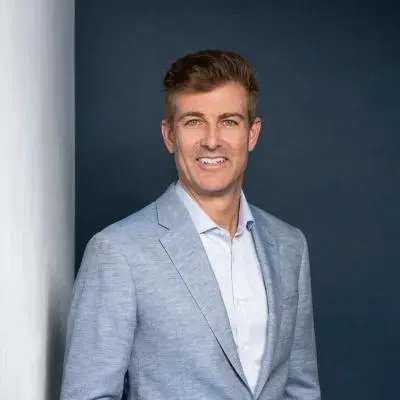
In this episode, we speak with Jason Titman, CEO of Swyftx, about the company’s remarkable growth journey. Jason shares his path from auditing banks at KPMG to building e-commerce platforms, and what convinced him to dive into crypto. We explore the early days of Swyftx, the culture that has driven its success, and what the Australian crypto landscape looked like when the company launched during a brutal bear market.
From a few hundred dollars a month to over a billion, this is how Swyftx became one of Australia’s largest crypto exchanges.
Transcript Synced · select any line to jump ▾ 0:00 Jason Titman: When it comes to crypto, people tend to have pretty strong opinions one way or the other. For some, it's all hype, speculation, and questionable meme coins. But others see crypto as a technology with huge potential to reshape the global economy and solve real-world problems. 0:17 Speaker B: I could see how crypto and the blockchain was going to just fundamentally and profoundly change the way commerce was done and the way people invest. 0:26 Jason Titman: Regardless of your views, the crypto industry affects a lot of people. Recent survey data shows that that more than 20% of Australians have bought some form of crypto. 0:35 Speaker B: 21% of Australians invested in crypto at the moment. Independent studies are showing that there's another 20 to 25% gonna invest in the next 2 to 3 years. That's another 4 million plus coming on. And that's just in Australia alone. So the numbers are staggering. 0:51 Jason Titman: Jason Tippmann is the CEO of Swyftx, one of Australia's largest cryptocurrency exchanges. Used by more than 1.5 million people to buy and sell crypto. 1:02 Speaker B: When Swyftx launched, we were doing a few hundred dollars a month. We're now doing over a billion dollars a month on our platform. So it is a phenomenal growth story. 1:11 Jason Titman: I'm Andy Jones, creative director at Day One, and in this 3-part series, I'll be talking to Jason about what he sees as the future of crypto. In episodes 2 and 3, we'll dive deep into crypto as a technology and what mass adoption could look like, But in this first episode, I'll be focusing on Swyftx, an Australian startup success story, to understand how it got to where it is today. Well, Jason, thank you for making the time to chat with me today. 1:39 Speaker B: Oh, Andy, looking forward to it actually. Yeah, really looking forward to having this chat. 1:42 Jason Titman: Swyftx launched in 2019, I believe. Can you give me an overview of how the company has grown since then and what it looks like today? 1:50 Speaker B: It's been an incredible growth story actually. Launched by Alex and Angus, they were the two founders, and still involved in it and still sit on the board with me and major shareholders. Alex and Angus put a lot of work into building a great culture and putting a really good team of committed individuals together that were just absolutely focused on customer service and really educating people. So that's given us like this opportunity for a great start and to get just a huge number of Australians that have been interested in investing on the platform. 2:22 Jason Titman: Mm, well, you say a huge number of Australians. Are there any numbers that you can give me, any milestones that you've hit? 2:28 Speaker B: Look, this year in 2025, we passed over the 1 million organic customer growth numbers. So, you know, that is for a company that's only just turning 7 years old, a million customers through organic growth has been pretty huge. With some of the acquisitions that we've done this year, we've now got up to about 1.5 million. So a lot of growth. In fact, our customer count in the last 12 months increased by 70%. 70%? 2:53 Jason Titman: So it's huge. And how long, sorry? 2:54 Speaker B: In the last 12 months. 2:55 Jason Titman: Wow. 2:55 Speaker B: So it's been a huge customer. 2:57 Jason Titman: Account company. 2:57 Speaker B: It's crazy. Yeah. 2:59 Jason Titman: And I understand you're an Australian company but with an international presence? 3:03 Speaker B: We are headquartered in Brisbane, but we have more than half of our staff actually outside Brisbane now. And that is with about 150 staff sitting in the Brisbane office. So very much still an Australian company, but we've got operations now in New Zealand, South Africa, the US, India, and looking at parts of Southeast Asia as well. So definitely on the march, but we'll still intend to remain remain, you know, very loyal to Australia as well. 3:32 Jason Titman: So when Swyftx launched, what was the gap that the company was created to fill in the crypto market? 3:38 Speaker B: The ease of buying crypto for the average Australian and reducing the fees because the exchanges that were in the market at that point in time, the founders, Alex and Angus, felt were charging too much. Angus and Alex met at coding camp. Angus was a very early investor in crypto. But he describes himself as a computer nerd, heavily in the business every day as head of basically the solutions architect. And he sits there and cuts code and loves his crypto. Alex, who was his co-founder, was much more entrepreneurial, wasn't trading in crypto, but thought he should. And he found it challenging even though he's got developer skills himself. Because buying crypto prior to Swyftx coming to the market, You know, it was clunky, it was challenging. And they certainly simplified that a lot. 4:28 Jason Titman: Can you give me a sense of what the crypto industry in Australia was like around that 2018, '19, at the start of the company, and how it's changed over the years? 4:38 Speaker B: Look, very energetic, they were. Very energetic. Lots of people that were deep, we call them crypto bros. But lots of people that had built some good platforms and some good networks out there. So, you know, they were very enthused about it. It was an immature industry. 4:53 Jason Titman: Hmm. 4:54 Speaker B: It has matured quite a lot since then. 2018, 2019, when Swyftx launched, was also one of those bear markets where the industry had really, market had really crashed. So the guys from that respect, certainly in terms of getting a lot of trading volume, didn't get the timing right. 5:11 Jason Titman: Hmm, fair. 5:12 Speaker B: But maybe it was good from the point of view we didn't have a lot of trading volume that we ironed out all the bugs so that when the market picked up again and started picking up in 2020 and 2021 and the first half of '22, that we'd ironed out a lot of those bugs. And we were able to scale and grow. And that possibly is why we grew much faster than any other exchange in Australia. And we still are to this day the fastest growing exchange now in Australia. So maybe there was something with that, a fortuitous situation. 5:38 Jason Titman: That's interesting. You say it was maybe not the best time to launch in terms of quick adoption. 5:43 Speaker B: You weren't acquiring user numbers and quick adoption and a lot of negative sentiment around the industry. 5:49 Jason Titman: Can you give me a sense of what the trading numbers were like when the platform first launched compared to what it's like today? 5:55 Speaker B: For sure. I can put this into perspective. I mean, when the guys first launched, we were doing a few hundred dollars a month. We're now doing over a billion dollars a month on our platform. 6:04 Jason Titman: Wow. 6:05 Speaker B: So, and that's really in just over 6 years. So it is a phenomenal growth story. You know, that's what you can see in the tech industry and certainly what you're seeing in crypto. And bear in mind that we've only got 21% of Australians invested in crypto at the moment. Independent studies are showing that there's another 20 to 25% going to invest in the next 2 to 3 years. That's another 4 million plus coming on, and that's just in Australia alone. So the numbers are staggering. There is a move towards mass adoption of crypto. 6:38 Jason Titman: Mm, well, it's an incredible growth story. I'm hoping to dig more into Swyftx in a moment, but first I'd love to understand a bit more about you, Jason. Can you tell me a little bit about your professional background pre-Swiftx? 6:50 Speaker B: Look, I've probably had 3 phases of my career. I actually started 30 years ago with KPMG, an international accounting firm, and started as a computer and corporate auditor. So that was a time when KPMG was getting very much into the banking sector. Banks were very data heavy. So you used to be either an accounting geek or an IT geek, but I kind of crossed the divide somewhere there. And I sort of say that I've come full circle. So first part of my career was professional services, then moved into the motor industry and CFO-type roles and then into the hotel industry. Then I actually started investing with 3 guys that were a lot older than me. And I kind of talk about having the academic smarts 'cause I'd done a commerce and IT degree and then I'd done an MBA. But these 3 guys that were sort of 20, 30 years older than me all left school at 13 and were very wealthy. So they taught me the street smarts of business. And I had about 12 years in the hotel and property industry with them. We did 5 hotels together. 2 of those won Best Hotel in Australia. 7:48 Jason Titman: Sure. 7:49 Speaker B: And we did a number of industrial property developments. And that's where I also say to people that I cut my teeth a little bit on Web 1.0 and Web 2.0 in that whole consumer space. But then with one of my hotel managers, we got involved and we built VenueEasy, a functions and events portal, kind of a marketplace. And we ended up selling that off to some private equity guys. Then I got involved with an online retailer that was importing a lot of containers of product out of China. And we were one of the first online retail stores, pure online retail stores, one of the biggest online retail stores here in Australia. 8:19 Jason Titman: Oh wow. 8:19 Speaker B: Big Shop. And the software that was running that was Neto, which was an online e-commerce platform. And I became first investor in that and then sort of took on COO and CFO role in that company as we grew that to about $6.5 billion of gross merchant value and through 14 countries. Telstra became a shareholder and we sold to a North American company in the end of 2020, beginning of 2021. So that's been a bit of my journey before I started to get much more involved in fintech and certainly then into the crypto landscape. 8:51 Jason Titman: And then moving into crypto, when did you first start getting interested in crypto? What was it that sort of got your attention? 8:59 Speaker B: Well, let me say I became first aware of crypto in the kind of 2010, 2012 era, but I didn't invest in it then. Oh, you missed out. So there's many of us that missed out in that era, but I certainly followed it. I guess being a finance guy, being very much an investor, I was certainly following crypto and trying to work out the use cases. So yeah, I certainly became aware of it. You know, there's always a scepticism, I think partly by nature, partly by academic training and training through the likes of KPMG, being an auditor. But listen, I looked at it, I kept seeing it go up and thinking, oh, okay, okay, you know, missed the boat, missed the boat. Even today, 17 years later, I'm genuinely saying I don't think people have missed the boat. Mm-hmm. Bitcoin, 3.8 million percent increase over the last 17 years. 9:46 Jason Titman: 3.8 million percent? 9:49 Speaker B: Highest, yep, performing asset class ever. 9:52 Jason Titman: Ridiculous. 9:52 Speaker B: For me, it was probably, you know, started investing in 2020, 2021, basically just a little bit before I actually got introduced to Alex, who was one of the co-founders there. So got introduced to Alex, stayed in touch with him for a couple of years, was listening to his story where he only had a couple of users and he only had a few thousand dollars going through through the platform. 10:12 Jason Titman: And I suppose you'd sort of seen similar early-stage businesses, so you had a bit of a reference point at that stage. 10:18 Speaker B: Yeah, yeah, I had. And I kind of then was talking to him about, you know, governance and structure that he might need to look at as he was just absolutely blitzscaling it. And originally I came on as a contractor to just kind of help out and work on a few things. And I guess it led from there where, you know, the guys see a lot of future in the industry. 'Cause I think crypto's so much in its infancy at the moment. They certainly really loved the company and the staff on the culture that they'd built, but I guess they were looking for somebody to take it to the next stage as to where it might go. And that's when I started having the conversation. So I've stepped back from some of the other investments I had through my family office and then said, okay, I'm gonna throw myself back into an exec career and really build this company with you guys and let's take it forward. 11:02 Jason Titman: Okay, so I can see from their perspective why they would want you as part of the team given all the experience that you were just discussing. What was it that you saw in Swyftx, or maybe the crypto industry more broadly? What was it that convinced you to jump into the crypto space and join the team? 11:18 Speaker B: Oh, it was definitely both. You know, coming from this background of understanding tech for many years, understanding the finance industry for many years, I'm not sure I'd say the existing traditional finance system is broken, but it has a lot more intermediaries in it than it needs to have in it. And I could see how that crypto and the blockchain was going to just fundamentally and profoundly change the way commerce was done. And the way people invest. So I got the bug from that. You know, I think crypto's been a traditionally, to date, a speculative retail asset class. 11:50 Jason Titman: Mm-hmm. 11:50 Speaker B: You know, I could see that there was opportunity to make money out of the asset class, but I could actually see where it was going to profoundly change the way in which things operate, particularly coming from my e-commerce background and then from an investment background. So there was that component. Then when it came to the company, I have been a founder, I've worked with founders, and I've invested in founders. Alex and Angus were probably the best suited to me that I think I've ever found alignment with. You know, worked with many and had a great time, but the alignment with these two guys and just the trust that they seemed to be putting in me to run. I mean, I'm a growth guy. I am about growth and I'm about leading and leading from the front. And I could see that they were comfortable with that. So that was important. But I could also see the passion in everybody that they had on the team. You know, we needed to bring some more structure to the company that had grown so quickly. And there were lots of things to work through, but they had a great team and a team that deeply understood crypto and a team that deeply understood and had a huge commitment to customer service. Now I've seen multinational companies talk about customer service. I've seen, you know, $60 billion capitalised ASX companies talk about it. But I tell you what, this company here that had under 150 staff at the time, were just really passionate, too customer-centric in some respects, because you've got to kind of make things work when you try to scale things. So I guess for me it was the founders combined with the industry and combined with the culture and the passion of the people. I said, hey, I think I can really fit in here and make a difference. 13:26 Jason Titman: Hmm. Can you tell me a little bit more about the team culture at Swyftx? Are there ways that it's different perhaps to other companies that you've worked with in the past? 13:36 Speaker B: What I will say is tech companies by their nature are pretty good at drinking the Kool-Aid. They get pretty excited about the problem they're solving for. 13:45 Jason Titman: Okay. 13:45 Speaker B: But what they often don't give enough credibility to is competitors in the space, or do people want what they're solving for? And that's another thing. So there's great tech out there, but it's actually solving for a problem that doesn't really exist or isn't enough of a problem. What I would say is the staff were pretty clear about what they're on about. In terms of dealing with and growing a blitzscaling company or trying to help them blitzscale, there was a bit of work and a bit of structure to be put in there. None of us know what we don't know, so you've got to be open to that. But I did find that they were very open. The big challenge with growing any company, but particularly tech companies with a younger demographic as you're moving into maturity, is bringing people in with talent that kind of don't destroy the culture that you've got, but they bring a level of governance. Mm-hmm. They bring a level of experience. So I knew that was going to be one of my biggest challenges and having the conversations with people to say, "Hey, trust me as we go on this journey." Since becoming the CEO, would you say that there's a particular milestone or achievement of the company that you're especially proud of? There's probably a couple of things, I think. And it's, you know, one thing with my leadership is I probably don't take enough time to sit back and reflect. Because I'm out there growing, growing onto the next one. Having done it a few times now before, I'm probably getting a little bit more good at being retrospective. 15:10 Jason Titman: Mm-hmm. 15:10 Speaker B: What I would say is two things. One, this year we've closed two acquisitions and that's not a mean feat for a company. Sizing up the targets, undertaking the due diligence and closing the transaction, there's a lot of work and it's the team. It's not just me doing it. It's in fact more the team doing it. So I would say the fact that we've closed 2 transactions this year and that we have another 3 in the pipeline is a good milestone for a company. It's a 7-year-old company to be doing that. We've also moved into some international markets this year and we also clocked over, we touched on just earlier there, that million organic customers this year. And I think that's a milestone that should be celebrated. 15:50 Jason Titman: Absolutely. I think it's probably very common for people working in tech that they're more likely to be looking forward, looking to the next problem. But 1 million customers is a pretty big milestone. Is that something that the team took a moment to sort of celebrate? Do you remember the day that you hit that number? 16:07 Speaker B: Yeah, we did. You know, we like to celebrate milestones, I guess, and it's a matter of slowing down a little bit to kind of celebrate. But you're right, looking forward to the next one and not becoming complacent. I think the other thing that it does reflect is that that is 1 million people with their money on our platform. You know, we're not talking about just a customer that signed up and is using an app for fitness. Here or managing their diet or something, which are all important too because you're handing over personal information. But in addition to handing over personal information, you are trusting us with your finances. So that is a significant milestone and it's something that Swyftx works a lot on, is in the education piece and on the trust factor. So it is a significant milestone. 16:48 Jason Titman: In this episode, we've heard how Swyftx has grown to 1.5 million users users, with more than $1 billion in trading on the platform each month. The remarkable growth of the company shows that there's clearly a demand for crypto in Australia. But what does the future of the crypto industry look like? In our next episode, we'll move beyond the story of Swyftx to look at crypto as a technology. We'll look at where crypto might offer advantages over traditional money, the real-world problems it could help address, and why many people are still unconvinced. This series was produced by Day One with support from Swyftx. I'm Andy Jones. Thanks for listening. 17:32 Speaker B: Thank you.