Transcript Synced · select any line to jump ▾ 0:01 Georgie Healy: Founders scale faster on Deel. Set up payroll for any country in minutes, hire anyone anywhere, get visas handled fast, and get back to building. Visit deel.com/dayone. That's D-E-E-L.com/dayone. 0:23 Jeevika Makani: Half of workers think that AI is useless or is not gonna really affect their jobs. And I'm like, that is wild that you can think that. I genuinely think we're living through, like, we have the Industrial Revolution, like a knowledge revolution. So much of our work and how we work is going to radically change. And if it doesn't happen with current incumbents, it's gonna be like AI-first companies being like, fine, if you don't wanna learn how to use these tools and you wanna be deeply inefficient, we'll come in and we'll outcompete, um, because we've got a radically lower cost structure or we can deliver better products and we'll just take your market share. So. Mm-hmm. It's coming, guys. 0:59 Georgie Healy: Hello and welcome to In the Blink of AI, where I talk to the brightest AI startups and innovators each week. I'm Georgie Healy, and this week I'm speaking to Javika Makani, co-founder of AI startup TopRoad. TopRoad help developers design, build, and deploy custom GPTs. They also support developers with the GPT builder tools., which are compatible with the OpenAI store to enable analytics, monetization, and marketing. And if none of that makes sense to you, like it didn't for me, don't worry. In the episode, we dive in and it's all incredibly amazing and understandable by the end of it. I promise. I also could not have had Javika on the show without diving into her experiences as a semi-recent Y Combinator graduate. Less than 1% of applications get a spot and 5 to 10% of startups go on to get billion-dollar valuations. She's already promised me that if she gets a superyacht or equivalent, that I get to jump on board and I have witnesses now. Huge thank you to Javika for being on the show. Let's get into it. Hey, Javika, thank you so much for joining In the Blink of AI. How about we start with a quick explainer on what TopRoad is? 2:22 Jeevika Makani: So TopRoad, our mission is to sort of democratize usage of generative AI. So we're obsessed with applications, right? Because we know that most people aren't gonna figure out how to do the AI prompting and become experts. So we're just like, how can we get these apps that are just like easy and ready to use? And so specifically how we're doing this is helping developers make money from their apps so they actually have the incentive to build great products. So if you're a developer in the OpenAI GPT store, you just install our product and you can kind of charge the end user a little monthly subscription so that you're incentivized to keep making great products. 2:57 Georgie Healy: I can't wait to dive into the product itself and the intricacies of the technology, but I kind of want to start with how you even came up with this idea. How did TopRow come about? 3:09 Jeevika Makani: So it started in Jamaica in January this year. 3:12 Georgie Healy: So actually, as Great ideas do, I guess. 3:16 Jeevika Makani: Yeah, had a founder offsite there. So I was based in New York last year. So weirdly, I know for the Australians that seems extravagant, but Jamaica's actually very close by to New York. And so we had our founder offsite and we knew that we wanted to pivot, like what we'd been working on like last year, growth was kind of plateauing and we had been like keenly watching it and using, you know, ChatGPT and all like the explosion journey of AI. So we were like looking in that idea space and Sam, my co-founder, was like, oh, OpenAI has just launched this GPT store where people can build their own custom GPTs. And I was like, I'm not interested in this. Like, what is a custom GPT? That sounds boring and technical. Like, not for me. And he's like, no, no, no. It's just sort of like, if you wanna like personalize ChatGPT, it just allows you to do that. And you don't even have to be technical to build. And I was like, oh, really? And he's like, 'Yeah, just, just use, like, just build a GPT yourself and you'll get it.' And I was like, 'I don't know, I don't really know how to code.' But yeah, like within half an hour I'd built my first GPT, which I just— 4:17 Georgie Healy: Wow. 4:17 Jeevika Makani: —now because the name sounds terrible. And so my first app that I built was kind of based on a little side project that I have called Books of Color, which recommends books written by people from like diverse backgrounds, which is something that is so unrelated to my tech persona, right?. But the fact that I could combine that and have a little app that was recommending books from like diverse authors was like, oh, I could see how this becomes very user-friendly and that we can put this technology in everyone's pockets. I found that so exciting. And so that was this aha moment for me to be like, right, like this is something that is really democratizing generative AI. It's very user-friendly. It's using the same sort of ChatGPT interface that people like know and love. And so we were like, okay, cool. Like if this is going to be the next kind of frontier of like generative AI apps. How can we kind of play a catalyst role in kickstarting it? And Sam had this brilliant insight as a, as the CTO. He's like, look, developers always flock to new platforms because it's fun and intellectually interesting. Everyone's going to try it. But if you want people to stick around and actually build and iterate on a platform, they need to know how to make money. And so he gave the example of— He had like a Fitbit and a Fitbit had an app store at some point. Apparently no one's heard of it because To his point, basically he'd built an app because why not? And he would get notifications from people saying like, oh, this is broken, or like, could you build this? But because he has like a job, he never got around to fixing it. And so we thought, okay, cool. Like, so we know the developers are gonna be interested in this space because it's this hot new like app store that's just launched. How are they making money from it? And so OpenAI had at that time promised they would be doing usage-based revenue share. And so if you think about that, basically means if you've kind of got like a viral app that like millions of people use, you'll probably make a little money. But we were like, but what about, you know, we knew that some of the really interesting use of generative AI is when we go vertical and you go really niche. So we're like, what if someone has some like property legal GPT that maybe only 1,000 mortgage brokers want to use and they want to charge like $1,000 a month for that. So we were thinking. Okay, for these more niche apps or more like advanced apps that you don't wanna just get base revenue share, let, let them make money. And so the first tool that we built was you just have like a no-code Stripe integration that we would enable and you could kind of set your own price. And so we thought we could play by kind of getting people to develop more like interesting and premium apps. So yeah, that's how we got started. 6:48 Georgie Healy: How incredible. And I'm someone who built an app, couldn't figure out a way to monetize it. And I felt like the onus was on me as a developer to all of a sudden be a go-to-market expert, a pricing expert. You know, these are, these are skill sets that people use their whole careers to develop and it, and it's kind of not the same skill set necessarily, or not a whole lot of overlap with that technical expertise that you expect someone to be in that growth mindset. I don't know if you agree. 7:20 Jeevika Makani: I totally agree. And that's actually one of the most, the biggest assets that OpenAI has and probably the most still underutilized Assets is exactly that go-to-market. So a lot of people know how to build. Everyone can kind of like put out like an AI-powered apps, but it's actually the same questions that we've always had in software development. It's just like, how do I actually get paying customers? 7:40 Georgie Healy: Yes. 7:41 Jeevika Makani: And so why we were like willing to make an early bet on the GPT store is like, they literally at this point have like 200 million weekly active users coming through to use ChatGPT to get eyeballs. Onto your app is, you know, it is like really powerful. I will say at the moment it's a bit challenging because people have to have like a paid GPT like subscription to really use it. So the actual available market is about like 11 million people. But we're excited to see that kind of, sort of like expands to all free users because you think about it like it would be such an amazing user experience. Like say if you're like using ChatGPT, which is an amazing generalist tool, right? It's just that like— 8:19 Georgie Healy: Yeah. 8:19 Jeevika Makani: Apps come into play when you need to have a more like, say it needs to be connected to like a specialist like data source for it to actually answer your question properly. Or if you need it to perform an action outside of, you know, like sort of like the ChatGPT ecosystem. So for example, say my book app that I created, if you get a recommendation for a book, like, wouldn't it be cool to then be able to shop that book? And so that's where the app layer comes in to be like, okay, like we can actually put in e-commerce fulfillment., and you know, you can actually go shop that link. You can go buy it on Amazon. And so that's where apps kind of come in, into kind of like, use. And so I think the mix between all the ChatGPT users plus developers creating these cool apps, I think can be a lot of magic. 9:01 Georgie Healy: Yeah, very clear use example of that user journey and what you'd wanna do next and that kind of thing. And so I think, you know, APIs and apps, and it's very hard to think about what does that actually look like in real life? And thank you for articulating that so well. We're going to dive into some more of the technical stuff soon, but this wouldn't be In the Blink of AI if I didn't ask my most exciting, juicy questions. I've never had someone from Y Combinator on the show before, and myself, and I know a lot of people listening, you know, our hands are on the glass looking in, and we really want to understand a little bit more of what it was like to be part of that cohort. So very special treat to have you. Firstly, I recently saw a stat, 5 to 10% of startups become worth $1 billion or more that have been part of the program. So firstly, when you own a superyacht, am I invited? And secondly, what was it like being in this high intensity, high IQ atmosphere? And, and for that period of time, what will— like, give us an insight of what it was like to be there. 10:11 Jeevika Makani: Yeah, no, what— of course you'll be on my superyacht. Although I would say I'm not a superyacht person, but like a little small boat that we can take out in Sydney, I think would be, would be lovely. Very chic. 10:21 Georgie Healy: Yeah, that's more chic. Fair. 10:23 Jeevika Makani: Yeah, we'll let Jeff Bezos like have his. Actually being in YC was wild, right? I think that it's a very, so like people think of YC, they think of the accelerator program. There was a very long kind of life to YC after that. But the 3-month accelerated program is probably what you're talking about. So the actual experience and what I love about YC is like, it's very founder-led. Like for those 3 months, you're just building your company. You check in with your group partners once a week and then you also have these like talks. So it's like really amazing, like Patrick Collinson from like Stripe or Brian Chesky from Airbnb and kind of giving you like a behind the scenes take of like what it took to build those companies. Like, you know, and like what more like off the record stuff. Which is really amazing to hear. And basically building companies is just really difficult. And so that's like a thing that I find really interesting is how the YC community people are so willing to share their war stories and help each other out because we all know how hard it is. And then the other thing is when you're part of the YC program is that you are kind of put in these mini groups. At that time we were working on another peer-to-peer marketplace business. So every week you're checking with other people who have marketplace startups and like, oh, hey, this thing's not working. Like, what did you guys try and do? And it's also a little bit of competitive spirit as well because you're like, oh, damn it. Like, they doubled MRR. Okay, shit. Like, we have to do the same. So I think that's really kind of good. It's a very kind of— everyone's sharing a lot, but it's also just very high energy. Everyone's very ambitious. So it's just like a really motivating place to kind of get work done. 11:56 Georgie Healy: Wow. And probably for the right kind of person. I was in a way less prestigious accelerator and I found that it brought out like all my anxieties and at the same time probably upskilled me faster than any experience ever could. My husband said he got an MBA from the same prestigious MBA school as you did, and he was watching from the outside and he said it's almost like getting an MBA, like a fast-tracked MBA in some ways. 12:26 Jeevika Makani: Something that I was aware of going into YC and was happy to find it's not true. It's like, and I think it's a function of the fact that like you were just saying that stat, like one of the people in this room are gonna be like very, very, very successful. So like, I think, and everyone knows that the deck is gonna get shuffled, right? So someone who might be really hot out of the gate, their seed round, that's not the same thing as actually having that multi-billion dollar like stuff. There is a long way in between. And so I think maybe the cynical take might be like everyone, you don't know who's gonna win. So like we should just help each other out. And like, then you can get invited on the superyacht. 12:58 Georgie Healy: Yes. Yeah. 13:00 Jeevika Makani: I think more the generous take on it and the one that I felt as my personal experience is like, I just think the kinds of, the attitude you need to build and stick around, you can't just do it on bluster and bravado. Like you have to be curious about your users. You have to have like empathy with what's happening and like work well with vendors and negotiate deals. And so I think that, that people side of things in looking at like who's gonna be a very successful founder, is often really undervalued. And I think like YC over-indexed, like they are very, they are truly founder-led. They back very early teams. So they're not really interested in, yeah, I don't know. Like I think that like, it seems to be like given the cohort of people, like they are trying to find like cool people to want to work with. And so I get the benefit because it's just a wonderful founder community and way less arrogant than you would think. Like I— 13:49 Georgie Healy: Interesting. 13:51 Jeevika Makani: It was just so helpful. Like So helpful. 13:53 Georgie Healy: Wow. You're not making me any less jealous. Gary Tan's the current CEO of YC, and I was listening to him on a podcast talking about that there is actually a little bit of a founder archetype to get into YC, but he didn't elaborate, and I don't think he's given you the rule book either. But from your perspective, did you notice a founder archetype or, you know, Is that something that only, only the people behind the scenes are probably aware of? 14:22 Jeevika Makani: Look, yeah, again, like I'm not privy to their application process. I didn't talk to anyone when we got in. Like we, yeah, we just kind of chucked in applications. We're like, oh cool, no way. And I would say that I'm probably don't look like maybe your traditional YC founder, but what I think the common threads are, and so I mean, and I'm happy to give people advice, but based on like what I've observed. So I think something that's really important to YC is that can you hustle, right? Can you get to zero to one? I talk to so many founders who are interested in starting a company, but if you like never put your product out, if you are waiting for perfection, if you say things like, oh, I need to, like, investors don't understand me and they're not giving me like millions of dollars so I can go build my like MVP. And like, yeah, like maybe you should learn how to code or like just go and hustle. Like what's the thing? So I think like, I think they really do look for people who are like very scrappy and They say that, like they do things that don't scale. So I think they're very true to that. They really wanna see, and everyone there has got stories of some version of being like super hacky, very manual, just trying to like get things across the line. So I think that's very true. And the other thing is like, I think they are looking for founders. I think they've got very high tolerance for risk. VCs generally do, YC particularly. Something that stays in my mind is, I think was Michael Siebel saying like, for YC, like, you know, is it amazing if you get like a billion dollar exit? Sure. But like for YC, it's like, You can have 100 $1 billion exits or you can have like one Airbnb, right? So they're looking for like those Airbnbs. So like, are you on the path to kind of build something like truly like large scale? I think that's another type of lens and it's not for everyone. And I would just like to say that like the goal is never to get into YC. If you are interested in building a very large scale startup that's gonna be on that trajectory, I think YC can be very helpful, especially if you wanna tackle US markets., but there are tons of great companies. There are tons of great startups that don't need that kind of injection, and that's totally fine. And then you'll deliver really great value. So don't feel bad if you don't feel like that's not actually the path that I want to go on. 16:24 Georgie Healy: Uh, so beautifully articulated. Thank you. Last question on accelerators, and this is something that I, in my founder days, really valued, and I'm sure many founders do, is the act of pitching. Now I'm sure not many people pitch better than a YC alumni. So many partners in that program that have probably seen thousands of pitches. Any tips to pitching, especially in 2025 coming up? Are there any things that are kind of passé that we don't do anymore, or any advice when it comes to that? 16:57 Jeevika Makani: Our experience with YC and the application process and the interview process was so unlike how you interact with most VCs. So maybe I'll just speak more specifically about that. With YC, just plain English. Don't use jargon, don't obfuscate, don't talk about like revolutions. No one cares. It's just what do you do? You know, and like just be really open and honest. And what I find, and I always say to people, like people I think can be a little nervous about applying, and then I read, I'm like, honestly, the application process are the right questions you should be thinking about your early stage startup anyway. It's just good discipline to be like, yeah, like what are our KPIs? Like what's the traction like? Are we the right co-founding team? So they're just like good questions to think about. And so just answer them plainly and don't worry if you don't know, that's fine. Or if you know there's something that's like, oh, I wish I, like don't try and hide it because YC has the uncanny ability, like those group partners, they do like, I don't know how many interviews that they do. By the time it gets to interview, they like take the application as read. They will be really across what you're doing and they're very efficient at getting to like the pain points. So if you think you can hide behind words, you can't. The very best thing you can probably just be is honest, be like, hey, look, yeah, this is, yeah, we see this as a risk. This is our hypothesis on how it's gonna work out. If not, we'll kind of like learn as we kind of like go. And the interview itself is not a pitch. So you've kind of got like, they famously will say like, you know, tell us what you're working on. So you just kind of ease the conversation. Again, like I said, take the applications read and they just like rapid fire for 10 minutes. You've got exactly 10 minutes, the questions, and expect to answer like the toughest parts about your, like your business. But it's not much of a, like a presentation as such. So yeah, it's, it's, you don't really have to pitch. It's great. 18:43 Georgie Healy: That's fantastic. So, you know, you can use all these visionary jargon, tech jargon words. Like a consultant and they're gonna be like, okay, yeah, but what's your ARR? And you're like, oh shit. 18:56 Jeevika Makani: Or just like literally what does the product do? Like, is it like, oh, it's a browser extension that does X. Okay, cool. Right. We, we need to like, you need to understand what someone like specifically does. 19:07 Georgie Healy: And then how would you pitch now as someone who's come out of YC and you're not pitching to those guys anymore? Is it any different? And any tips for listeners? 19:16 Jeevika Makani: We've been somewhat fortunate that since YC we didn't raise. So we've kind of just been like, we raised enough money that we've got runway that I get to work on my product. So like, I'm much more interested today, this day, like today, for me pitching means like talking to my customers and figuring out what their needs are and like trying to articulate like, you know, like our vision for like this app ecosystem. So I think when you're being customer facing, the pitch is very different necessarily from like when you're doing like a VC kind of thing. And so I find that very, very liberating. So yeah, you kind of want to raise enough money to give yourself the headspace space to just like go work on the company and then yeah, the next round, yeah, we'll figure out the pitch then. 19:53 Georgie Healy: Yeah, I love that. I mean, not to make this about me, but part of the reason I love chatting to founders on the podcast, not that we won't talk to VCs, but I just love talking about AI products so much. It's so fun and interesting to hear these incredible products. And when it's too focused on, yeah, but what's it worth? It's like, oh, you're kind of taking the fun out of it for me. Okay. I would love to get into TopRoad, especially, you know, how to build these AI products. This is the fun part. So you build tools for custom GPT builders in the OpenAI GPT store. Now you've touched upon this. I actually didn't know there was an OpenAI store either. Can you tell us a little bit about the store? How many things are on the shelves? Like, like talk to me through it if I've never been to the store before. 20:45 Jeevika Makani: Honestly, what you just said is so true, and I, I hope OpenAI is listening to this. So basically it's like an app store. It's like Apple has like an app store, same thing. Like you've got ChatGPT and then you've got like all these like apps that people can create by like third-party developers. And they're kind of like either specialized to perform a very certain task well. So obviously you can ask ChatGPT like how to generate like a SQL query, or you can go to one that's been like very fine-tuned and tested to do that very thing. So sometimes like I think about it like if you just give someone flour and you're like, make something, it's very overwhelming rather than being like, oh, this is a pasta pack. Like, you know, here are the eggs, here are the flours. And like people's brains are like, oh, okay, yeah, I wanna make pasta. If you just give them a flour, it can be a little overwhelming how to think about it. So ChatGPT is a very good generalist tool, but if you are looking for very particular use cases, And, you know, sometimes when you're dealing with ChatGPT, it's very iterative, like trying to explain it. Okay, no, do this. Actually, no, do this. Whereas like you've kind of got all these like apps that are just much more tailored, focused on, on performing a certain thing and doing it like really well. The reason why a lot of people haven't heard about the GPT Store is that it is kind of paywalled at the moment. So it's kind of a perk of if you have like a ChatGPT Plus or above like kind of subscription. But basically how you get to it is like if you're on ChatGPT, there's an explore tab and then you'll see like all the apps there. But my vision, so again, OpenAI, if you're listening, is really hopefully you shouldn't need to know about the app store. Like if you're interacting with ChatGPT, the ability to natively recommend apps. So like someone's got like an app that's one of our users. She runs like a, it's like a travel agency for traveling in Italy. And so like if someone's asking like, ChatGPT about like, you know, can you come up with a trip itinerary? It can do that and be like, oh, and also why don't you check out some apps that will help you with travel planning? 22:38 Georgie Healy: Ah, fascinating. 22:40 Jeevika Makani: Yeah. So I think that's definitely where I think it needs to head is, and especially the direction in which OpenAI is going, like with SearchGPT, like people will come to it for the first thing. Same thing with like Google, like you might type in search, but then like, where do you then link to, to kind of get a bit more depth or to like complete that product or service experience? And so I think that's where that ecosystem is going. 23:03 Georgie Healy: Humor me for a moment. I've got a trip to Japan literally next Saturday. It's not completely planned out. If I went into ChatGPT, you know, I do this all the time actually. What should I do in Kyoto for 4 days? And then there's these onsen. Would an app be able to book the onsen for me or something like that? Or like, is that the kind of vision as well? 23:27 Jeevika Makani: It is. So like, I think like Booking.com, Expedia, they've also got like apps in the GPT store. 23:32 Georgie Healy: Fantastic. 23:33 Jeevika Makani: And that's kind of what people are trying to like combine this experience of like, you might start by doing research about a topic, but then can I just like complete that experience? 23:42 Georgie Healy: Yes. 23:42 Jeevika Makani: And can I book it or what can I kind of fit in a day? So yeah, I think that's like sort of the most, if I can be a little technical at the moment. 23:51 Georgie Healy: Please. 23:51 Jeevika Makani: One of the best parts about they call them GPTs, I call them apps, is that it basically takes like kind of the core ChatGPT sort of like chatbot functionality. And they've got this thing called actions, which are just external like connectors. So you do have to use APIs. There are some ready-made actions such as GPT Builder. So our product, you don't need to have to code to install it. You just like copy and paste it and it adds a snippet of code. But if you know how to code, you can kind of say like, yeah, like I want to like we're actually working on affiliate product at the moment. So you could have like recommend like certain providers and push it to like their site. You can just do all these things outside of the ecosystem because like ChatGPT is a starting point. It's often not a complete product and service experience for the customer. 24:36 Georgie Healy: And you need it essentially to be not GPT Pro, not paid subscriptions, someone like me, the layman's version where they're not paying money to be able to expose you to more customers that have these problems to connect them, right? Like in order to have a bigger user group, or are you targeting just developers? 24:58 Jeevika Makani: Oh, interesting. But yeah, so what we've done is like, so some of my favorite GPTs and like apps are the ones that we've built just internally because they're like very hyper, like it's just exactly like what I need. Like it's, it's very personalized software. And there's actually like a, a broader theme around that that I'm really excited with AI is that in the past, software was quite expensive to develop. Like, you know, you'd have like this army of like developers. And so every company was very like engineering constrained. And so if your product guy has, or gal has like decided on a certain thing, by the time it gets to the customer, you just have to learn to use it that way. Like you can complain all you want, but it's very hard to then get it changed. Whereas with generative AI, because writing code is now a lot easier, you can kind of have these like very like, yeah, like apps for one basically. Or you can kind of have it connected to like your personalized data. So there's a product that we're working on, which is not in the GPT store because as we were just saying, if I flick you a GPT and you don't have a Plus subscription, you know, it's gonna be a little challenging. You have to like sign up for the Plus subscription first. So we're just using the API and we're kind of rolling out some of our apps that we've been using internally just for other people to use. So one is called— Context Crafter, where really like I just keep getting very similar questions from customers. A lot of them are like, if you read our FAQs, you could answer it. And so what we've said is like, there's a lot of like AI writing tools out there. But if you, it doesn't know the context or the information about your company, it's not going to give a very high quality response. It's going to like guess at what the response is. And so what the tool is, is that you can kind of connect your FAQs. And so when it's generating a draft, it actually like knows what like our payment structure is and things like that. And we're just trying to make tools where it's sort of going to be like, you don't need to get permission to use it. You don't need to like install something complicated. I, like I said, our overall mission is like, how can we democratize usage of generative AI? I want people to feel like it's absolutely for me. So if you have this experience where you're like, Oh, like the kind of like native AI writing tool is like talking like some American tech dude and that's not me. It's like, no, well it shouldn't be like that. Like imagine where like, and you don't need to imagine like if this exists, like I already have a writing assistant that I've trained on like all my past investor updates. So when I go to write my next investor update, I just kind of tell it our like monthly like KPIs and then it will just generate the next like monthly update because it knows my format, it knows my tone of voice. So yeah, like all these personalized apps, that's something that like, yeah, where we'll be starting to like kind of deploy so that you could use, even if you don't have a ChatGPT. 27:41 Georgie Healy: It's almost overwhelming how much potential there is. Is there something that you are most excited about? Like, is it the pricing opportunity for developers? Like if you were to say this is something that we the most proud of, is there anything in particular or is it more just the fact that it's a huge vision? 27:59 Jeevika Makani: No, so for me what's really exciting is like, so we work with some developers who that have done really well in the GB Store in terms of like chat count. So like, you know, over a million like chats and they have got like a product, they're getting like a little bit of traction. And it's not the fact that they can just monetize that directly. What I'm starting to see is people being like, oh, awesome. If I know that I can kind of get paid for the, you know, this thing, they're often, what I've observed is like people are keeping their like popular one free. Like they're like, yep, this is a baseline level, but then they're creating a secondary premium, like, version that uses more expensive API calls in the background. Because, like, AI is expensive to run, so people kind of start creating, like, these pro or premium versions. And so that's why I was saying, like, can we actually incentivize people, like, to kind of, like, give people the incentive to create better products? Because I think a very common critique is, like, oh, like, a lot of these, like, apps are, like, these very thin, like, GPT wrappers. Basically, they're just saying, like, it's just ChatGPT. Like, what? Like, why is this? I'm like, Well, you have to think about incentives, right? If I'm doing something for free, like, sure, I'll work. Like, you know, like I was saying, in half an hour I was able to build an app. Only if I think that it's going to like go somewhere, can I turn this into a business or like a side hustle, then people will actually do that work and they'll create something to a higher standard, which at the end of the day, like the rest of us get to benefit from because, um, like these brilliant minds are actually like using the best of AI and then making it into a user experience that's actually useful. And so that's why I really love to see that pipeline of people like coming into the platform being like, oh, okay, like maybe I'll just start with analytics. Okay, maybe I'll just get donations. Oh, actually, I'm going to actually go start like a whole separate kind of app now that I know that I'm going to get a return on like the time and the money I'm investing. 29:41 Georgie Healy: Yeah, you're really enabling these developers to think bigger and more creatively and justify the time investment. That's really incredible. Yeah. Look, we have to talk about compute. Always gotta talk about compute in this, in this show. For TopRoad, is that something that you guys need to consider yourselves, or is it more your customers that you need to consider on their behalf? 30:04 Jeevika Makani: Yeah, it's such an interesting question. So the current model, so in the GPU store, is effectively the end user bears the cost of compute. So that's why you need to have like a paid subscription. 'Cause basically if you are the developer and you build your app in the GPT store, you are not paying for compute at all. The end user kind of use up their message limits through like their paid subscription. And so this is the whole thing that's been very interesting. This ecosystem in the business model is like figuring who is gonna pay for this like kind of like compute cost. And so that's been the current status quo. But what we're advocating OpenAI actually is to kind of switch that and actually just go back to like the, the the way that normal apps are, which is the developer pays the compute cost through like API, like token usage. And because they can kind of price that into their things, they know like, okay, well, when people use it, it's going to cost me this much in compute, therefore I'm going to charge this much for my monthly subscription. Or I might limit, even if you've got like a subscription with us, maybe you can use, you know, it 10 times or whatever it is. And let them do that math to figure out like what their price is based on their compute cost. And then allow them to distribute it for free to the end user and not put the compute cost on the end user. Because at the moment, it's just very confusing for people to be like, but I'm already, why am I paying for it? Like they're paying for something without knowing the value, right? So you're talking about your Japan thing. Like if you pay for like a ChatGPT Plus subscription, that's very like high level, like, oh, I guess I get higher message limits. Cool. Versus being like, oh, you're going to help me basically like be a virtual, like, travel agent and sort out my Japan— that's like a much— because that's where the user like actually interacts with, it's much more tangible, the value that they see. I think we're going to see a lot more success if you put the compute cost on the developer and then the end user just pays for like the app access directly. 31:53 Georgie Healy: Completely agree. How many of us in the past have downloaded an app that we had to pay for and then as soon as you download it, you're like, are you joking me? This is the worst app I've ever seen. I'm not saying any of these apps would be bad, but it's, and then, and then you, you know, it really puts the customer like in this position of, well, I'm gonna give you a zero-star review now. 32:13 Jeevika Makani: Actually, it's funny you say that. So one of the, I mean, it's really from a technical perspective, it has been really interesting. The things that you could do, take for granted normally kind of get flipped on its head when you work with generative AI and things that like, you know, and the inverse is true as well. But one of the things is about free trials, 'cause like to your point, like you might wanna like, make sure it's good before you pay for it. And so originally the product was just like, it just generates a Stripe payment link. So we were saying like, in your instructions, you can like say after like, I don't know, like 10, you know, messages, then ask for payment. So, you know, the customer can effectively like try before they buy. But then the funny thing is like ChatGPT is fundamentally a text completion model. It's very good with like language. This is different with like the O-1 like reasoning models, but like basic kind of like ChatGPT, terrible at counting. And so you'd have these things where like, it'll start counting and then get confused and then like, like you never asked for the payment link. And so what we've had to do is realize, oh, okay, to actually enable, you know, things like that are very important to our developers. Like, you know, I wanna make sure that like the free trial is done properly. We have to just tell GPT, okay, just check if this person's got authorized access. We'll keep the count of the free trial period in our database and just return a result. 33:27 Georgie Healy: Please don't count. Like, it's like giving a humanity student like calculus problem. Like, babes, don't worry. 33:33 Jeevika Makani: Like, got that part sorted. Exactly. Yeah. 33:37 Georgie Healy: I'd be remiss to not let the listener learn a little bit about the ChatGPT models, cuz you just did touch upon it. Why are different models better at different things? And maybe just like a very high-level, very quick overview, just because you're clearly so literate in the ChatGPT space. 33:54 Jeevika Makani: Yeah. So just like, I kind of think them as like classes of models, cuz like within one class they're basically trying to do the same thing and they're just trying to get better and better at it. So When we think of like, you know, we heard of like ChatGPT like 3.5 and 4 and 4. Those are all like fundamentally, like I was saying, like text completion models. So they're very good at predicting what to say next. We use it a lot in a question and answer format, but you don't have to, but like that's just like the interface. Like ChatGPT is an app, you know, right? So the underlying model is just trying to figure out what to say next. And so that's very good at more of these like language kind of tasks, whereas the O-1 family of models is more around reasoning. And so it's kind of like, 'cause if you think about it, how the original models were trained is like, whatever input you get, it was like, what should I say next in response? So it's just so eager to give you a response. O-1, basically think about it, it's like someone who's like, gets a question, who thinks a bit more like a consultant. It's like, okay, like how can I break this problem down? Okay, let me go step by step. Okay, I need to figure out this part. I'll run that, then I'm gonna do this part. So it kind of knows how to chunk out the task. So it performs a lot better on reasoning. 35:00 Georgie Healy: Thank you very much. That's super clear. I remember that, like, the 3.5s and 4 models explained to me almost like a really eager-to-please friend that just wants to give you an answer, so desperate to give you an answer that it's just like, it might be wrong, but I really, really want to help. 35:19 Jeevika Makani: Exactly. Exactly. 35:21 Georgie Healy: Amazing. But the models are absolutely incredible now that, you know, people keep talking about 'When's ChatGPT-5 coming out and how good will it be?' I'm like, 'It's already pretty freaking good.' I don't know. Okay. 35:34 Jeevika Makani: Yeah. 35:35 Georgie Healy: You've touched upon yourself as a founder and for the people that are listening and not watching this on YouTube, they could probably pick up that you're a female founder, but you also come from a diverse background. Maybe just quickly to any of the diverse female founders listening, perhaps you could just give a little bit of an insight into your background very quickly. And any tips for other people that are hopefully trying to become similar to you, want to join that kind of path? 36:02 Jeevika Makani: Sure. So yes, I was born in India and my family migrated to Australia when I was 2. So mostly grew up here in Australia and they lived overseas a lot. And so I first got into the startup world when I was living in Nairobi, Kenya, worked for a fintech over there. It was something that I, I love about startups is like, see problem, try to fix it. Like it's a very direct like connection. You don't have to like beg someone like, oh, I think I should go work on this problem now. And so something like I'm always very passionate about with startups is like, make sure you're solving like an interesting and worthwhile problem. So like in, in Nairobi, it was like, hey, like basically what had been happening is there'd been the growth of mobile money meant that you could kind of disperse funds over like a mobile phone. So people were getting better access to credit. So you'd have like, say for example, one of our customers was a motorcycle taxi company that was allowing their drivers to have like a higher purchase agreement. So instead of being like stuck always renting every day and giving up most of their earnings to like, you know, renting the motorcycle, they could pay down their motorcycle over like 18 months. It's like boring finance stuff, but basically that's like, we could buy that receivable because we could now understand the data that was sitting behind it. And we actually knew that like banks might look at this person and be like, oh, who are you? You're quite like a low-income, like taxi, motorcycle taxi driver. But we were able to look at like these like loan-level repayments and be like, oh no, actually this person's quite a good risk. And we could kind of use tech to automate that and to kind of de-risk this transaction and kind of make it more possible for more people to kind of like own their own kind of like assets. And that's something that's like super inspiring to me. So that's nothing to do with being a female founder. So if I can pull it back, What I would just say is that there's, it's true. Like if you look at all the stats about like the money that goes to female founders, you'll get depressed. So don't focus on that. You said it. You know, if you can kind of just focus on the core fundamentals is all what makes a great business, which is like, do you have like a customer base who has a problem that you can solve? You'll be fine. You'll be absolutely fine. And I think that anytime like you kind of get into like, you know, dealing with venture capitalists who have like a thesis on what a founder should look like or be like, or what problems you'd be solving on. I think the less you have to prove and the more that you can kind of just demonstrate by being like, well, this is my traction. So, so if you, if you know, you know, say as like a female founder, like actually there's like this underserved segment because like we aren't building these products to tailor for like, you know, something that's more women-focused. Perhaps it might be that, you know, a very male skewed VC might not, I don't think people are trying to be like actively discounted, but like they're not going to resonate maybe as quickly with that problem because they're not experiencing themselves. Right. So I do think it's incumbent on VCs to like check that bias and make sure they understand a bit more objectively what the market opportunity is. But it's not, um, I don't think it's like coming from a bad place. And so I think there are examples of female founders who've raised like tons of money. As long as they've been able to clearly articulate the problem. Like I met another YC founder they raised like $10 mil pretty easily because they were going to automate doing like salon quality manicures at home. Like, it's very— Take my money. Yeah, because it was very easy for them to demonstrate that it was like, yeah, like women spend like so much money annually. If you can even get a clip of that, this is like a multibillion dollar company. And so they end up it not working because it was technically constrained problem, but not because of the fundraising side. So So I think like just focus on your core market, make sure that you can clearly articulate the problem that you're solving and who you're going for. And I think you should be fine and don't, yeah, like I think people overthink it. If you have to build, just build it. It just is what it is. 39:46 Georgie Healy: I love this answer and I really appreciate your candor towards it. No one's saying it's easy, but it sounds like if you focus on this big problem, and make that be your focus and nail it. Yeah. Who do you admire as a founder technically in the AI space or otherwise? 40:10 Jeevika Makani: Yeah, it's funny 'cause before I was just talking about YC and they tend to go for companies that end up going on this very like very fast venture-backed path. But I think the guys that I really have always admired is from like Zapier. They do like all the automated like software integrations. Because of how they built their company. So they were very much like, we wanna build this company where they were never interested in like valuations and fundraising for the sake of it. I think they always understood intuitively that like you fundraise because you need resources to go build like a certain thing. But if you can already execute against that without raising a ton of capital and diluting your company to the point that when you exit you've got like barely anything left, like, like that seems silly. And so like now Zappi's like worth like $5 billion, but they only ever raised like $1.4 mil in venture capital. It's just so efficient. It's so useful what they have. So that's the kind of companies I like is like they're just really focused on like building something that people love and focusing on like then taking a clip of that. So basically like revenue. I think that's a really healthy way of thinking about businesses. 41:14 Georgie Healy: Yeah. Fantastic. To finish the interview, I love my rapid fire questions. They're a little bit spicier, but you know, I got you. 41:24 Jeevika Makani: I can take it. 41:25 Georgie Healy: Yeah, you, I have no doubt. Number 1, getting an MBA. You've got one from one of the most prestigious MBA schools. Overhyped or underhyped? 41:36 Jeevika Makani: Oh, controversial. 41:38 Georgie Healy: I never told you it wouldn't be. 41:41 Jeevika Makani: I would say overhyped in this sense. If you ever meet someone who's got an MBA, don't feel like, oh my God, they're so smart. MBAs are not academically rigorous degrees. That said, they are still helpful because it's a great network. And so like the NCI community here, especially here in Australia, is just so helpful. So like the network is really useful, but don't feel bad if you don't have one yet. Don't feel like, oh, I can't understand, like business is not complex intellectually. It's hard to do, but don't feel— I think that's when I don't like it. So this is not a rapid fire answer, but yeah. 42:14 Georgie Healy: I love that. No, no, no, you don't have to have rapid fire answer. The title confusing. Amazing. Favorite AI product apart from TopRoad, sorry. 42:26 Jeevika Makani: I would say probably Notion AI's like tools. So basically it's such a dump of everything we've worked on. And so I really like, it's just like embedded AI feature cuz it allows you to do like conversational search. So I can be like, there was a card that we had, a customer had written about this thing. Can you pull it up? And it can actually conversationally and contextually understand and plot the right results. So I've been using that one a lot. 42:49 Georgie Healy: Brilliant. 42:51 Jeevika Makani: Most overhyped AI product. Microsoft Copilot. Why everyone is making everyone use Microsoft Copilot kills me. Teams 2.0. 43:01 Georgie Healy: We hate it. Stop it. 43:03 Jeevika Makani: Stop it. It goes to the value, the strength of enterprise sales. But you know, the best product doesn't always win, but everyone else building in the AI space, we can do better. 43:14 Georgie Healy: Yes. Thank you for being so real. Every time Celine sends me a Teams link, like a part of me dies and I'm like, I know you don't have a choice. Your company has onboarded this horrible product. 43:27 Jeevika Makani: Yeah. 43:27 Georgie Healy: Okay. And are we in a bubble when it comes to AI? Why or why not? 43:34 Jeevika Makani: We are not in a bubble. In fact, we are like, it is, I know this sounds mad, but I think it's underhyped. I just going up into the office yesterday on like those elevator panels, it was like from the Australian, there's some article that like something like half of workers think that AI is useless or is not gonna really affect their jobs. And I'm like, that is wild that you can think that. I genuinely think we're living through, like, we have the industrial revolution, like a knowledge revolution. So much of our work and how we work is going to radically change. And if it doesn't happen with current incumbents, it's gonna be like AI-first companies being like, fine, if you don't wanna learn how to use these tools and you wanna be deeply inefficient, we'll come in and we'll outcompete because we've got a radically lower cost structure. We can deliver better products and we'll just take a market share. So it's coming, guys. 44:20 Georgie Healy: I could not agree more. I know I've drunk the Kool-Aid, started the podcast, but yes, 100% agree. It's such an exciting time that we're in. Finally, you've been such an incredible host. I feel so lucky that we've had you. Is there anything you'd like to shout out to the people listening? 44:39 Jeevika Makani: Yeah, I just wanna leave you with that, is that if you interact with like an AI app and you're like, oh, I don't like this, please don't give up on AI. Like this is for us, like literally as humanity, it's like this amazing tool that allows us to kind of get to be more human. Like who wants to spend like, you know, I don't know, 3 hours writing a report when you can do it half an hour and go to the beach. So that's the prize here, people. And it is up to us to kind of figure out like tools can be used for like good or bad. So I'm not saying that like, there is going to be some scary stuff as well. But like, just to stay optimistic and try and figure out tools that work for you. And lastly, we are looking for beta testers. Like I was saying, we're releasing some of our own kind of like private apps so that other people can use them, like Context Crafter. So if you go to toprode.ai/apps, we'd love to have you check it out. 45:27 Georgie Healy: Thank you so much. This has been the most fun for me. Thank you for teaching me about TopRoad, about the ChatGPT apps and stores. The fact that an app is actually called a GPT and all the amazing stuff you've taught us on the episode. Thank you so much. 45:44 Jeevika Makani: Yeah, thanks for having me. 45:48 Georgie Healy: Thank you for listening to In the Blink of AI. You can check out the show notes for anything discussed in this week's episode, and we will be back next week. This podcast was produced by Day One with music by Dan Hanssen and visual artwork by Sophie Tyrell. If you loved the episode, please tell your mates, and I love AI news. Please share your thoughts and suggestions to georginarosehealy@gmail.com.

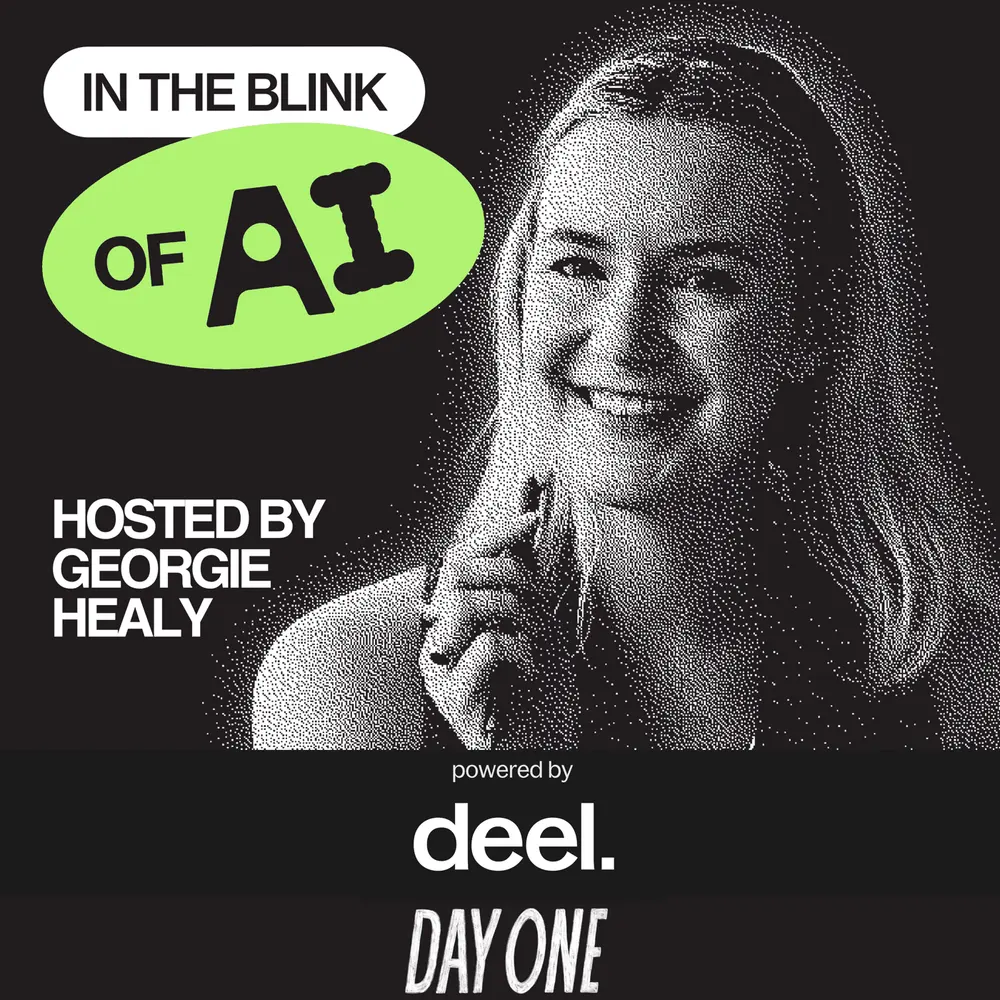 In The Blink Of AI with Georgie Healy
Presented by Deel & Stripe
In The Blink Of AI with Georgie Healy
Presented by Deel & Stripe 


 ▶
▶  ▶
▶  ▶
▶  ▶
▶  ▶
▶ ▶
▶ ▶
▶