Transcript Synced · select any line to jump ▾ 0:02 Cheryl Mack: Founders scale faster on Deel. Set up payroll for any country in minutes, hire anyone anywhere, get visas handled fast, and get back to building. Visit deel.com/dayone. That's d-e-e-l.com/dayone. Are you building a SaaS business and looking to achieve compliance with SOC 2 and ISO 27001 or other security and privacy frameworks? 0:32 Maxine Minter: Compliance can unlock major growth and build essential customer trust, but let's face it, it's usually time-consuming and expensive. 0:37 Cheryl Mack: And like really kind of a pain. That's where Vanta comes in. Vanta automates up to 90% of customer compliance tasks, making you audit-ready fast and saving you up to 85% of the associated costs. Plus, Vanta scales with your business, offering a market-leading trust management platform to continuously monitor compliance, unify risk management, and streamline security reviews. Join 7,000 global companies, including Atlassian and Dovetail, that trust Vanta to build and prove their security in real time. 1:03 Maxine Minter: And for our listeners, Vanta is offering 10% off. 1:06 Cheryl Mack: Just go to vanta.com/first. That's V-A-N-T-A.com/first. 1:14 Maxine Minter: Okay, 3, 2, 1. 1:18 Cheryl Mack: Hey, I'm Sheryl. 1:20 Maxine Minter: I'm Maxine. 1:20 Cheryl Mack: This is First Check, part of Day One, the network dedicated to founders, operators, and investors. 1:25 Maxine Minter: If you want to be a better early-stage investor, this is the show for you. 1:28 Cheryl Mack: So TL;DR, if you don't want to suck at investing, listen up. 1:35 Maxine Minter: I am so excited to have Alicia on our podcast today. I just love spending time with Alicia. I always feel like I learn something. She's just wild, her throughput. Every time you hear kind of the number of things that she covers, like her carrying family and work and like obligations outside of work, just amazing. Like, it's just wild. I think that she actually has an extra day in her week that she's able to like hide in there, but she's got 8 days in a week when the rest of us have 7. She's incredible. Color output. 2:08 Cheryl Mack: That would actually make sense though. I heard that when she came back from parental leave in the middle of 2021 mania, she ramped back so hard that she got appendicitis within weeks. So that just shows you that she's so resilient. 2:24 Maxine Minter: Yikes. Yeah, I mean, the resilience thing in particular, I'm really excited to dive into this in our chat to her because just her anti-fragility, which I think is a quality that I just love in people, and I think it is one of the most high-value skills to foster, and I think it's a skill. And so very selfishly, I'm really excited to just go deep on that with her and learn, because her just— her ability to cut stuff off. Yeah, absolutely. 2:49 Cheryl Mack: And she also— she's worked at LinkedIn, and so her like LinkedIn outreach skills are just epic, and I can't wait to ask her about how she does this. 2:56 Maxine Minter: Yeah, she's everywhere. The number of times when you chat to folks about Airtree, they're like, oh yeah, of course, I know Airtree, Alicia. She is definitely the most frequently mentioned person. So, so excited to dive in and hear how she thinks about all things resilience, sourcing, investing, and just being a superwoman. 3:14 Cheryl Mack: She also apparently has the most EQ in the whole team. So while the rest of the partners are like doing their calculations, apparently she's the glue that just like holds everything together and like reminds them that, hey guys, we're actually talking about like real humans here. So I can't wait to just talk about like how she thinks about founders in that way as well. 3:30 Maxine Minter: I can't wait. Let's dive in. Let's do it. Welcome, Alicia. 3:36 Speaker: We're so excited to have you on the podcast today. 3:38 Maxine Minter: And just generally get to catch up. I feel like I love all of our conversations we've ever had. And so very selfishly, just jazzed to get to spend half an hour, 45 minutes with you today and chat about all things investing, kind of how you think about finding founders, how you source deals, how you think about picking founders and a whole bunch of other things in between. 3:57 Speaker: Well, thank you. Thanks, Maxine. Thanks, Cheryl. I'm really excited to be here. 4:00 Cheryl Mack: Amazing. 4:01 Maxine Minter: So we always ask our guests the first question. Which is, what is the first thing you've ever invested in? 4:07 Speaker: So I think when I was thinking about this, I know you asked this to all your guests, one of the things I thought about when I was really young, I invested my time in setting up a, my sort of first entrepreneurial venture was setting up a cafe in my family kitchen, just serving my own family. So I was the youngest of 3. 4:25 Maxine Minter: Cute. 4:25 Speaker: I used clipart, this is probably showing my age. I used clipart to produce these little menus. You know, you had to pay 20 cents for a cup of tea. I think inflation has come a long way since then. And it would probably be a lot easier with Canva these days to design that. But I would stop anyone going into the kitchen during that time, so it was a bit of a monopoly that I had over the space. And I do remember I used to lose patience with the kettle, waiting for the kettle to boil, so I would flick it over before it had actually boiled and serve lukewarm tea. So it was probably a bit of a life lesson in not cutting corners and maintaining high quality standards. 4:58 Maxine Minter: Yeah. 4:59 Speaker: That was for my first entrepreneurial venture. In terms of the first sort of big financial investment I made. I'm probably, um, very much living the Australian obsessed with property stereotype, but it was a little, little apartment was my first actual investment. And then venture investment, if we're talking, uh, what I do now, my first venture investment at Airtree was a company called Regrow back in 2017. We invested in their pre-seed round. At the time it was called, called Fluorescent, um, and they've come such a long way. I actually just spoke with Anastasia, the founder, this morning. Um, in 2022, they did a really large, uh, I think it was $37, $38 million USD Series B. So they've been on such an amazing journey, and I've been very privileged to be on that journey with them. But that was the first call. I vividly remember making that first call after, you know, the hard part of being an investor is you say no a lot of the time. And that was the first call I ever got to make to say yes, we're investing. And so I still remember that exact moment, and it's pretty incredible to see how far Anastasia and the Regrow team have come since then. That's so cool. 6:02 Cheryl Mack: Oh my gosh, that's so cool. 'Cause Florasat actually was at StartCon back in 2017. And I remember seeing their pitch and being like, yes, this is the one. And I've stayed in touch with Anastasia as well. I didn't know they'd rebranded to Regrow, but I remember meeting them in their infancy as well and just such an exciting team and love what they're doing. And yeah, that's super cool that you also got to be the first one to say yes to them. 6:25 Maxine Minter: Also, super rare that your first angel or like VC investment was such a good one, right? Like such a cracker of an investment that it's still going. I personally like that you worked out when you have a captured market, you can kind of do whatever you want with the product and start serving people lukewarm coffee and they've got like— 6:43 Speaker: I know, I mean, there's not many other options. I feel, I feel bad about that looking back because I don't think it lasted much longer after that. I didn't think we were gonna keep customers. But I did, I did have the market cornered and margins were really high because I didn't have to pay for the input cost either. So Right. 6:58 Maxine Minter: At all. Your electricity bill was really low. Exactly. Maybe the best business that's ever existed. No input costs, no overheads, and a completely captured market. Yeah. We can all dream. Yeah. We can all dream. Hopefully you find another business like that in your lifetime. That's excellent. 7:15 Cheryl Mack: If you do, let us know. We can all invest this time. Yeah. 7:18 Maxine Minter: Yeah. Yes. Yes. Hopefully a bit more longevity than that one. Yes, true. That doesn't last very long. I actually was just recently listening to the last podcast that Charlie Munger ever recorded. Before he passed. 7:31 Speaker: Was that the Acquired podcast? 7:33 Maxine Minter: Yeah, it was on Invest Like the Best with Patrick O'Shaughnessy. And he was talking a lot about like anchoring on what's good for the customer always, right? And never, you know, his principles of never investing in a company that's bad for customers, you know, even if it's incredibly lucrative, et cetera. And I know it sounds really obvious, but it definitely made me pause and think like, what of the companies that we get to see, like, that being a filter that at the end of the day you could always say it's really good for customers as an outcome. And there's lots of kind of very lucrative property businesses that I think are probably not great for, you know, the end customer. 8:11 Speaker: Mm-hmm. 8:11 Maxine Minter: You know, a lot of construction projects where it's kind of like build-flip models where the quality isn't long-term kind of really high quality. But it's an interesting filter to start to ask the question, like, is this end end position just excellent for the customer all the time. Because those, those are the businesses that will survive forever. 8:29 Cheryl Mack: Isn't that the viewpoint from like a startup perspective? Almost every startup is like, we're gonna make the world a better place. And every company is saying that like, yeah, this is really good for the end customer. Like, how do you really determine whether that's the case or not when everyone is saying, yeah, we're gonna make the world a better place? 8:46 Maxine Minter: I've definitely met some that are like— 8:48 Cheryl Mack: Obviously not trying to make— 8:50 Maxine Minter: Oh yeah, I'm just gonna make a lot of money. 8:51 Cheryl Mack: Okay. 8:52 Maxine Minter: Like, that's not, I don't know, Alicia, do you feel like everyone you meet is like, you know, I'm here for impact, I'm here to generate value for the customer, or do you see people exploiting markets? 9:03 Speaker: Uh, look, I think there's— you can tell the difference in a founder who is customer obsessed or who has been that customer and has felt that pain point, and that's what's driving them. I don't see it very often, but there are people out there who might want to be starting businesses because it's a really cool thing to start a business, and they've got a whiteboard of the different businesses they could do and how much money each of them could make and the outcomes. Often they get filtered out before they probably even meet you guys and meet us. But I think you have to be wary of that. Like, is there that genuine obsession with solving customer problems? And I think a lot about— and this is, you know, the analogy with me making tea and cutting corners with turning the kettle off, or, you know, driving a product that isn't actually solving real pain for an end customer— is, and it comes into being an investor as well, it's just, it's a multi-shot game, you know. If you're solving for short-term wins and you're solving for— and I think about that in founder relationships a lot, in the way that I interact with anyone in my professional network, everything is a multi-shot game. You're not trying to solve for like one short-term, you know, in your interest in the short run, because that will come back to bite you because this is a very long career, reputation matters. And I think particularly when you're building a business, if you're not doing the right thing by your customer, eventually that will come back to bite you. 10:11 Maxine Minter: Oh, 100%. Yeah. I think a lot about, have you read Infinite, Finite and Infinite Games? 10:15 Speaker: No, I haven't. 10:16 Maxine Minter: That book, oh, it's so good. The cliff notes are there's two ways to play the game of life or two ways to think about interactions generally. One is a finite game where it's a transaction, right? You're looking to transact even if it's over a long period of time. 10:31 Speaker: Yep. 10:31 Maxine Minter: And so the objective of that game is to extract value. 10:34 Speaker: Yep. 10:35 Maxine Minter: And the infinite game, the objective of that game is to continue to play. And so thinking of the game as you're constantly focused on how do you make sure you're still in the game, a lot of that isn't seeking to be transactional. 10:51 Cheryl Mack: Yeah. 10:51 Maxine Minter: Right. It's seeking to grow the pie. It's seeking to kind of expand opportunities, seeking to develop your network, be high trust, those kinds of things. And wonderful book. It's actually really small. It's kind of quirkily written, but the insights I'm obsessed with. And I think in investing across the board and venture being a kind of subcategory of investing, crucially important as a way to think about the way that we show up, but also as a founder, right? Especially in Australia. 11:20 Cheryl Mack: Yeah. 11:20 Maxine Minter: There's a tiny ecosystem and these are long-term commitments and really thinking through like what are the second and third order effects of this decision that I'm making? You know, what is the impact of these decisions I'm making kind of across the ecosystem? 'Cause as you said, if you approach this like a finite game, it won't last. 11:39 Speaker: Yeah. 11:40 Maxine Minter: You won't be able to play again. 11:41 Cheryl Mack: It also reminds me of the way that like as an angel investor, the name of the game is don't run outta money. Yeah. In order to keep playing, you don't run out of money. 11:49 Maxine Minter: Yeah, crucially important, right? Like never be taken off the board, always be there ready to deploy. 11:54 Cheryl Mack: Yeah. 11:54 Maxine Minter: Which I think is, you know, there's been lots of people over the last year or two and probably coming into this year where, you know, that's advice too late. And so there's lots of really exciting companies that they haven't been able to participate in at really, you know, interesting valuations. 12:10 Speaker: They've been out participating because they kind of deployed too much in '21 and Yeah, I think just thinking ahead and thinking long-term and realizing that I think from a venture investor perspective, like our careers are very long. Each fund, you know, you've got fund cycle and then you extend beyond that. It is your reputation that you carry throughout that. And the same thing for founders, how they manage their business, how they manage their investors, how they manage their board, that is enduring and it's something that they'll carry even beyond that business into their next business. And so I think it's just so important to always have those relationships and the way that you interact and the way that you make decisions, just always keeping top of mind that this is this is not a, this is not a one-shot. So I feel like I need to read that book now. 12:49 Maxine Minter: It's a great book. Yeah. And really like not that long. I do wonder, you know, I feel like I'm starting to see, I started to see green shoots in Q4. I'm seeing even more momentum already this year. It really does feel like we're kind of building back into the risk cycle where you kind of see in venture. And I'm thinking a lot about how not to lose the insights of this last cycle, right? Like, our tactical and theoretical methodologies to stop your brain going back into the hype cycle. Maybe a curveball, but have you thought about that at all? Kind of, what do you think about how to make sure you take that long-term view, you don't get kind of whipped up into the hype cycles as we go? 13:33 Speaker: Yeah. 13:33 Maxine Minter: Any tips would be greatly appreciated. 13:35 Speaker: Yeah, I mean, I think anyone doing our roles is, is trying to think about it in decades and not days. And we know there's going to be cycles, right? There's going to be ups and there's going to be downs. And so I think we're all licking our wounds. It's been a tough, really tough sort of 18 months for the tech sector more broadly. If you speak to anyone who managed a portfolio through the dot-com bubble bursting or the GFC, I don't think those lessons fade quickly. And I think the founders on the front line who have had to make incredibly tough decisions over the last 18, 24 months, those memories don't fade quickly. And I think the challenge might even be just making sure you don't miss the opportunity when things start to turn. I agree with you, Maxine, we're starting to see green shoots and it feels like things are starting to turn. I'm an eternal optimist, I'm a VC, I think it's part of my job. 14:19 Maxine Minter: Interesting. 14:19 Speaker: So I'm positive that this year is going to be a better year, but getting that balance right between the conservatism that we've seen the last sort of 18 months and the cuts, the reducing burn, the flip side of that is you don't want to be too conservative when things do change and lose the opportunity ahead of you. Everyone's in this industry because they want to build really big companies. And so I think that will be finding that balancing act between those scars that are also, you know, really fresh right now. And I think there's a whole lot of lessons from the last 2 years which should remain with investors and founders for a long time to come, but also just trying to time the market so you don't miss the opportunity. I think that's, that's what I'm worried about in terms of getting that balance right with some of my portfolio companies. 15:03 Cheryl Mack: What are some of the biggest lessons you're taking away from this? 15:05 Speaker: Oh gosh, that there are cycles and they— yeah, when they go in there, I think you know, how quickly things can turn, particularly in enterprise sales. Like enterprise businesses reacted when they turned, they turned pretty quickly and became really hard to forecast revenue. And when it becomes really hard to forecast revenue, it's then very hard to forecast burn, and then it's very hard to manage cash. And so, you know, when we, right at the start when things started to turn, we did a session with our entire portfolio where we were pretty pessimistic, to be honest. We were like, It's better to assume things are going to be really bad and make the changes if things are going to be really bad and be surprised on the upside if they're not quite as bad. It could be really, really bad if you think it's not going to be anywhere near that bad and then it actually turns out to be worse. That's sort of existential threats. So we took that approach in the majority of the portfolio, made tough decisions early. So I think making those tough calls early has put a lot of them in a really good position coming out of this. I think the other thing is a lot of companies although it's been really hard to make those changes. The amount of founders that have said to me, like, our business is running so much better now, like they've had to scrutinize costs so much more. And you think, oh my gosh, there was so much inefficiency before. And not to take away from how painful the process is to go through the change, the businesses are coming out the other side stronger. And so I think they're lessons that will hopefully continue to be carried on by these founders that it's like always looking for that opportunity to improve, always looking for the ROI on every dollar spent, that in times when money is flowing, you can get away with, you know, having a little bit more fat in certain areas of the business. And, you know, you hate to think that was ever the case, but I think when, when companies are scaling so quickly, decisions weren't always being made in the best way. 16:55 Maxine Minter: 100%. I think especially coming out of last year, but I think as a kind of general topic that I'm really fascinated by, is this like growth in adversity concept, or kind of this anti-fragility concept, like this ability to grow because you made it through scarcity or adversity as a place of growth. And, you know, as we're prepping for this, uh, conversation, but also just kind of knowing you, your resilience is just totally incredible. It is like completely unflappable. You are unflappable in the face of anything. And I'm wondering, how have you honed that skill for yourself? How have you built that muscle in the way that you— think about things and operate? 17:35 Speaker: As I mentioned before, I feel like I'm an eternal optimist, so I don't know what made me that way, but I am just generally— I think I'm the definition of a glass half full person. So any situation, my like first reaction is to always look for the positive in it, like to look on the positive and then focus on that positive side. I, I don't know what made me that way, but I think I've always been like that. But then as I've gotten older, I've become more aware that it's actually not a natural reaction for everyone. Like, that's just where my mind goes. I feel like it's natural for most VCs though. 18:05 Cheryl Mack: We all, like, I would say everyone here tends to be more of an optimist. 18:08 Speaker: Yeah, I think it is part of the game. 18:10 Cheryl Mack: Like, you have to be if you're investing in, like, crazy, totally unproven, probably unlikely to work businesses. 18:17 Speaker: You're always thinking, like, what if this goes right? 18:20 Maxine Minter: Yeah. 18:20 Speaker: And, you know, in early stage investing, you can rationally talk yourself out of anything. Like, there's a million reasons why it won't work, but believing in that, you know, having that glass half full, and but what if this went right? So I think, I think you're right. I think all my peers, we are naturally optimists. I think also sort of anchoring on gratitude. Like, I always remind myself if I have, you know, setbacks or a tough day, or I always just remember like the big picture. I'm very grateful for so many things in my life, and I think so much of life is perspective. Um, you know, there's that, there's that saying about roses. Have you heard this one where it's like you can complain that rose bushes have thorns or rejoice that thorn bushes have roses? And so it's just about, you know, life is— 19:01 Cheryl Mack: I like that. 19:01 Maxine Minter: Right, that's beautiful. 19:03 Speaker: Life is 10% what happens to you and 90% how you respond to it. And so for me, it's it's just always about trying to anchor on what I'm grateful for, remembering the big picture, zooming out, and not getting caught up in the small things, like not sweating the small stuff. 19:16 Cheryl Mack: So the real question is, when you came back from parental leave in 2021, and within weeks— 19:23 Maxine Minter: because you had gone so hard in the mania of 2021— you gave yourself appendicitis. 19:28 Cheryl Mack: What was the positive there? 19:30 Speaker: Oh my goodness, don't remind me of that. That was crazy. That was so crazy. It was like I came back to a different job. So for context, for those who don't know me, so I went on maternity leave, uh, August 2020, and then came back in April '21, and it was honestly like coming back to a different job. 19:47 Maxine Minter: Oh my goodness. 19:48 Speaker: Yeah, the, the pace, it was just, it was insane. Um, and I, and, uh, there was a period in the Atri office where, uh, John and James, the two other partners, um, and I all had babies within a week of each other, all little girls born in August 2020. 20:03 Maxine Minter: That's so lovely. 20:04 Speaker: Um, so the Slack post on the day we announced our pregnancies was, uh, were pretty funny because it was literally like me posting a picture of my, uh, ultrasound and then John commenting on the thread that he's also having— his wife's having a little girl in August. And then James literally commenting and saying— so James had a daughter 2 days before me, then I had a daughter, and then John had one a week later. 20:21 Maxine Minter: Yeah. 20:22 Speaker: So the relevance to this story is, is John was on parental leave when I came back from, from my leave, and so I was helping with some of the deals that he'd been working on progressing. So I was, uh, it was very, very busy, and I did get to the point where I ended up with appendicitis. It forced me to slow down. There's the positive. All right. And, uh, and get a little bit of sleep. So, oh gosh, don't remind me. Fair, fair. 20:48 Cheryl Mack: I guess on that note though, like, how do you look for that in founders? You know, you, you— for you it's natural, but when you're talking to founders, what level of that are you looking for and how do you determine whether they have enough of it? 20:58 Speaker: Yeah, gosh, I mean, I think resilience is like so high on the list of the qualities that a good founder needs. I think if you have ambition and, you know, and then, then resilience— so you have the ambition to create something really big and then the resilience to to work through any setbacks to continue pushing that vision, then you're, you're, you're very well set up. I think, you know, I won't share any of my, the personal stories of my founders, but if I think through some of the founders that I've worked with, they're some of the most resilient people I know, even just to get to the point where they would be starting a company, you know, from underrepresented backgrounds, complete grit and determination to even get to the point where they would be thinking about founding a business, let alone the journey that they've been on since they've founded a business. —so I think about what drives that resilience. Often in them there's like a burning passion to solve that problem. That's like a genuine, authentic passion. And I think if that's there, then that means that determination is there despite any setbacks because they can't not solve that problem. And then part of it is just understanding their personal background. We obviously do founder references on every founder that we invest in and You know, it's anything that's sort of subjective like this, like resilience is a bit more of an art than a science. But I think you can sort of tell when someone has that grit. And I don't think a lot of people would even be starting businesses if they weren't a resilient person, because it is not an easy journey. I have so much respect for founders because I just see how hard the journey is. And you need, you know, I feel like I have resilience, but nothing to compare to what they have. 22:28 Maxine Minter: 100%. I mean, I was talking to someone recently about their journey. Journey to kind of start a company and that journey of kind of stepping onto that, especially in the last 2 years, such a different prospect starting a company in '22 or '23 versus in 2020, just the number of nos you have to kind of make your way through. 22:45 Speaker: Yeah. 22:46 Maxine Minter: And the number of these kind of the amount of pushback that you get and the amount of, you know, disappointment that can be baked into that system and the resilience in the face of that, like just getting to the start line. Is an enormous amount of work. Yeah. I also have been surprised by the number of friends of mine who have been VCs and then have kind of stepped into the operating world and then they're like, this shit is really, really hard. Yeah. Did you expect it to be easy? I know. Oh my gosh. And like, I just think it's really hard to like kind of comprehend how difficult that is to be in that, in the face of the, that kind kind of adversity all day, every day, and kind of continue to push. So I just echo that. I've got to say, the most impressive humans in my life are the founders that I work for. You know, I just am blown away by them. 23:37 Speaker: 100%. And I guess I think founder empathy is so important as an investor because to understand that, like, I think any investor who thinks, you know, look, everyone has a different style of how they work with founders, but like putting really intense pressure on founders and scrutinizing, like, they, they are stressing. They are like, this is their life's work. This is their blood, sweat, and tears that they're putting into this. Um, we can talk more about working with founders, but I just feel like that you have to be incredibly resilient to go on that journey. And, you know, unfortunately there's still elements of tall poppy in the Australian ecosystem, and it's very easy to criticize people, it's very easy to pull people down, but it's hard to be the one that's actually taking those risks. And, um, my husband's actually starting his own business. 24:20 Cheryl Mack: Cool. Did you tell him how hard it is? 24:22 Speaker: Um, uh, I got him a framed, uh, Theodore Roosevelt quote, "The man in the arena." I don't know if you're aware of that one, but it's essentially like, yeah, it's the person who's in the arena, who's fighting these battles and putting their blood, sweat, and tears into something. And it's easy to be sitting on the sidelines and criticizing that. So I'm sure lots of founders have those moments where they have self-doubt, but just realizing that they're doing an incredible thing, even just taking that risk. And I think to get through those periods, I think a lot about, you know, just being grounded in self-worth as well. Like just knowing that, you know, it's not an arrogance thing or an ego thing, but just knowing that the failures don't define you and you have those setbacks are just a part of your journey and you don't need any sort of external validation on that journey because there will be ups and downs. Unfortunately, it doesn't always go up and to the right, as nice as that would be. 25:11 Cheryl Mack: Mm-hmm. 25:11 Speaker: And I think about resilience a lot as a parent as well. Like I've got a 5-year-old who's about to start school, and so I think as a parent, one of my primary jobs is to build her resilience so that when she's out in the world and I'm not there at every challenge that she faces, that she's able to navigate that. 25:25 Maxine Minter: Yeah, wow. Absolutely. 25:27 Cheryl Mack: I think that's something also that impresses us so much about how you balance like family and work and being 100% there when you're with your kids, but 100% there when you're at Airtree. And I think that's something that like as a parent myself, I look up to and, you know, learn a lot from or can learn a lot from. 25:44 Speaker: Well, thank you. That's very kind. I do think a lot about— again, this is something that I maybe didn't appreciate so much when I was younger, but I think about now and I have to use it a lot in my daily life. I've got 3 little kids, about sort of compartmentalizing and realizing sort of the things you can control or things you can't control. What are the things worth worrying about? What's unproductive worry or unproductive stress versus productive stress? And I think I do have an ability to sort of put things in a box and close that box and move on to the other thing and compartmentalize challenges that I'm facing, whether it's at work or at home. It doesn't always play out perfectly, so I wouldn't want to say it's always smooth sailing, but I think that's something that's allowed me to sort of context switch quickly, which you have to do all the time in as a VC, take out any sort of balancing family. I think just as a VC, you're constantly context switching. And so I think that's something that I really value that I feel like I have somewhat naturally. 26:34 Cheryl Mack: Yeah. Are you building a SaaS business and looking to achieve compliance with SOC 2 and ISO 27001 or other security and privacy frameworks? 26:43 Maxine Minter: Compliance can unlock major growth and build essential customer trust, but let's face it, it's usually time-consuming and expensive and like really kind of a pain. 26:50 Cheryl Mack: That's where Vanta comes in. Vanta automates up to 90% of customer compliance tasks, making you audit-ready fast and saving you up to 85% of the associated costs. Plus, Vanta scales with your business, offering a market-leading trust management platform to continuously monitor compliance, unify risk management, and streamline security reviews. Join 7,000 global companies, including Atlassian and Dovetail, that trust Vanta to build and improve their security in real time. 27:15 Maxine Minter: And for our listeners, Vanta is offering 10% off. 27:17 Cheryl Mack: Just go to vanta.com/first. That's banta.com/first. 27:26 Maxine Minter: I think like transitioning from box to box is such a skill, like that context switching, but also the ability to kind of turn, like draw a line in the sand and move from one context to the other. 27:38 Cheryl Mack: Yeah, especially with the number of founders you must talk to a day, right? Like, yeah, I mean, you talk to 200 in a month, like how many times did you context switch from like rockets to medtech to whatever else. 27:50 Speaker: And I think like realizing that the person that— you might have 200 in a month, right? You might have had 5 coffees that day, but to that person, that's probably the most— one of the most important meetings they've had maybe in their career. And so never losing sight of— you might have just run for another meeting and you've got 10 other things on your plate, but showing the respect to the person who's on the other side of the table who has prepared for that meeting and as, you know, depending on their situation from a funding perspective, this could be— yeah, it's devastating when you have to say no. I never take that lightly because I appreciate what it would be like sitting on the other side of that table. But I think I always make the effort. No one is a number, and you never lose sight of just what that might feel like for the person sitting on the other side of the table. 28:32 Cheryl Mack: That's so cool to hear you say that, because some of the, you know, inside sources at the IC table have told us that you are the highest EQ person in the company, I think, or at least at that table. And so I'm just sitting there picturing everyone with calculators except for you, and you're the one, you're the one being like, guys, do you know this is a real person? And they're like, but numbers. 28:53 Speaker: No, I know. Well, I'm very fortunate. A lot of my, you know, I think just in hiring in Airtree more broadly, I think founder empathy is so high on our list. So, you know, it's something that you wouldn't be a part of our investment team if that wasn't something that we either saw innately or see builders in the time that you're here. It's something that is just, I just think it's a non-negotiable to be able to have that and to show respect. I'm super mindful that any interaction anyone has with someone at Airtree is, that's our brand, that's our reputation. And then coming back to what I said about how much that impacts success as an investor, I think that that's absolutely crucial. So I'm very fortunate to work with a lot of amazing people, but that is very kind of whoever said that. 29:35 Maxine Minter: Do you think it's something that someone just innately has, or do you think it's trainable, that founder empathy? I'm thinking for lots of folks, especially in Australia, right, there's lots of angel investors who haven't been founders before. Yeah, they've been operators, or sometimes they're kind of bringing a subject matter expertise to, you know, their support. And so they've never really stood in the shoes of that person. I'm wondering, do you have any kind of tips and tricks on how you develop that, or maybe even kind of continue to foster that over your time investing? 30:04 Speaker: Yeah. 30:05 Maxine Minter: Because I think it's really easy to get stuck, you know, after 5 years of investing and meeting hundreds of companies and those kinds of things. You know, it's natural for people to trend just in their new context. And I love that you guys hold on to that and be like, no, it's fundamental to what we do. I— 30:20 Speaker: Yeah. 30:20 Maxine Minter: 100% is there for us as well. But I'm constantly thinking about how do I make sure that that skill doesn't blunt over time? So how do you keep it sharp? 30:28 Speaker: Yeah, I think, um, I think if you've been a founder, you have a, you have a head start. Yeah, like that, that empathy, you can draw on your own personal experience. If you haven't, I think some people innately are just empathetic and in this world you get close enough to see the ups and downs. And depending on the kind of relationship you have with your founders, but let's say it's a high-trust, open and transparent relationship and you're an empathetic person, then you should be close enough to see just how hard that is and what those ups and downs look like. If you aren't able to build a high-trust, transparent relationship, you don't have that personal experience and you're not sort of a innately empathetic person, that's hard because you can try to read about it in books, you can try to— and I think you can upskill skill on what other people's experiences have been like to try to sharpen or hone that. But I think it, I think it's harder. I think you probably need some innate empathy, and then you can fill in the sort of operational gaps because you haven't either been a founder or been an operator. But you need to have that skill where you sort of jump and flip into someone else's shoes and understand what it might feel like to be them. It's definitely easier if you've been on that founding journey yourself. But for people, you know, for aspiring investors or investors listening to this, I think the, you know, the research— if you look at the Midas List, there's no sort of correlation between people who have been founders or operators their whole career versus sort of career investors. So I think there's multiple ways to be a good investor, but I think you always need to have an element of founder empathy, however you go about building that. 31:48 Maxine Minter: 100%. I mean, empathy as a skill in particular, there's something called the Toronto Empathy Score, which is essentially the kind of go-to test to work out how much empathy a single person has. 31:58 Cheryl Mack: Was it developed in Toronto, Canada? 32:01 Maxine Minter: I assume so. 32:02 Cheryl Mack: As a Canadian, I would like to take credit for that. 32:06 Speaker: Claim it. 32:06 Maxine Minter: I'm claiming it. Yeah, claim it. Count it. And I believe the team that developed it are also quite vocal about the fact that the skill of empathy can be trained by doing a couple of things, one of which is letting yourself feel the emotion that you imagine that person is feeling. So it's not an intellectual activity, it's actually a somatic activity, empathizing. 32:29 Cheryl Mack: Wow. 32:29 Maxine Minter: And so thinking about, you know, let's say you're delivering the news that unfortunately you're not going to invest Yeah. Imagine a world if you received that information and you were disappointed. Let yourself feel a little bit of disappointment. And over time, practicing that skill, you actually will display more empathy. Because a really interesting thing happens is when you feel an emotion, you very frequently kind of physically display that emotion, and you mirror that emotion back to that person. And then they feel seen in that moment, even if it's just a kind of micro moment. I think the tragedy for me is there's lots of us that have been trained like that emotions are bad or emotions are a negative thing or a dangerous thing and should be just kind of— the volume should be turned down on them. 33:09 Cheryl Mack: Wow. 33:09 Maxine Minter: In total. So it's probably, you know, for those of us that have had that training in life, it's important to kind of like retrain that muscle so that you can mirror back, so that you can empathize. But I definitely, as someone who came from an analytical background with a legal background and like that was the training, like for me it was that journey of like, oh, one can empathize. Got it. I'm allowed to do that. Got it. At it, and now I'm going to train the skill. 33:32 Speaker: That's, that's fascinating. I would love to learn more about how you build that when it's not innate and how you develop that over time, because I think that's, I think that's really fascinating. I think if you think about most, you know, the saying around most jobs become a sales job eventually, and how sales skills, you know, a lot of sales is empathy and like understanding how to work with other people. And so I think that is really interesting that that's something that can be trained over time. 33:55 Cheryl Mack: Especially in a world where like feeling those emotions can be really uncomfortable, right? Like nobody wants to get told No, I'm not investing in your company. So like, why would I want to feel that? I'm in place. So it's like that, that training, I think, you know, props to you, Maxine. That sounds tough. 34:10 Maxine Minter: I actually— 34:12 Cheryl Mack: I'm like, I don't want to feel that. 34:14 Maxine Minter: Right. Yeah. Fun fact. When I was probably until like the first year of being a lawyer, we used to have this joke in my family where my mom was problematically empathetic and I was like just before the ASD spectrum and my ability to like empathize. And then my sister was like the perfect in that out. And then over the course of my early years as a lawyer, I realized like how important human relationships were in success, and then kind of trained myself. 34:43 Speaker: Wow, incredible. 34:43 Maxine Minter: To empathize and to— and then now it kind of— for me, it wasn't, you know, I'm not on the ASD spectrum, luckily, um, for the kind of empathy skills and kind of understanding emotion piece. But I was able to like train my, my skills in that category over time. Now it comes completely naturally. I think there's probably, you know, proclivity there based on my family history. 35:02 Cheryl Mack: But wow, geez, Maxine, we live in a society. 35:06 Speaker: Wow, that's, uh, that's fascinating. And I think to, like, to be so self-aware to say, okay, this is, this is a gap that I have, I'm going to work on that and train that, I think that's, that's incredible. 35:17 Cheryl Mack: I'm curious, how are you saying no to people? Um, Alicia, are you emailing them or you've actually called them and saying like, hey, we're not investing? 35:25 Speaker: It depends. If I've had one meeting, I'll typically email and provide reason. And sometimes they'll come back and want to have a call and provide more detail. I'm happy to, happy to do that. If we've moved into diligence, so like gone through and we met with them a number of times, then that's, that's always a call or face-to-face depending on where they are. So it is the least, without a doubt, the least favorite part of my job. You can see it doesn't— it's not something that I enjoy, but I think it's always trying to, yeah, I guess empathize with them and be like, how can I make this valuable? And often depending on, and I mean, you guys have received, I mean, I've sent you opportunities recently out, Maxine. Like if it's something that's a pre-seed opportunity, I will think about how I can help them in terms, I mean, there's lots of VC memes about tell me how I can be helpful. So I would be careful with my words there, but. 36:11 Cheryl Mack: No, I think the value piece is good though. Like as long as they're not walking away with nothing, then. 36:17 Speaker: Yeah, making introductions to other funds. Like I always do a double opt-in. I'll say, hey, you interested in meeting with this founder? And if they say yes, then I'll connect them. And so, Yeah, figure out is there something that they can get out of this interaction, or is there feedback that might help them come the next time around? It is very rare that we'll say, um, no, we will never invest in this business. Actually, I don't think I've ever said that. 36:37 Cheryl Mack: So typically it's always not right now, right? 36:39 Speaker: Not now. And then, you know, we actually have invested in companies that we've said no to in earlier rounds and then have invested later on, and that's because we made a mistake, right? We end up paying a higher price for it. 36:47 Cheryl Mack: So how long did it take for those ones on average? 36:51 Speaker: Uh, normally it's the next round. Um, it would be more painful if it was multiple rounds down the line. You're paying higher valuation. So yeah, I mean, like, yeah, the reality is if it's one meeting, then it's typically an email with some reasoning to give them some feedback. And then if it can be helpful, maybe connecting them to other potential investors. 37:09 Maxine Minter: I also imagine that there's some businesses that it is, from an investment perspective, the right decision to wait until there's a little bit more validation. Like, I'm thinking about things on the kind of consumer side where, you know, it wouldn't have been knowable at the time that they pitched you knew that it could work, but there was a low probability response from the market, or what seemed like a low probability response from the market, that actually this was a really great idea, or, you know, would drive a lot of value for a corner of the market that was undiscoverable at the time. 37:41 Cheryl Mack: Hmm. 37:41 Maxine Minter: I— that's definitely something I think about investing in pre-seed. Like, there's some businesses we meet that I'm like, I actually can see a world where this could be really amazing, but it's so low probability that relative to to the other options that I have to invest in. It's not the right investment for us to make, but, you know, I think there's a world where, you know, if you continue to bootstrap this and you show traction metrics, it's something that would make sense to invest in kind of further down the path. 38:08 Cheryl Mack: Wouldn't they be too later stage for you then, Maxine, though? 38:10 Maxine Minter: Yeah, well, I mean, yes, I can't then invest. 38:13 Cheryl Mack: But you're saying like AirTree could, right? 38:15 Maxine Minter: AirTree could. I agonize on these kinds of businesses because they're like, you know, it's not obvious to me, or I can't get to conviction on them, but I can see a world where if they did hit, they would be huge. But the kind of risk-weighted reward wouldn't necessarily make sense for us to build into our portfolio. 38:33 Speaker: Yeah. 38:33 Maxine Minter: And so those are the ones that I really sit on the fence with and kind of agonize over the decision, yes or no. 38:39 Speaker: The reality is you're not making decisions in isolation. Like, you've got portfolio construction to think about, you've got other opportunities that are on your plate at that particular point in time. You're making those relative decisions. So it's, yeah, it's tricky. I mean, if you end up investing, let's say we end up investing at a later stage in that case, then you know, with the information you have today, you still should have invested back then because it was a lower valuation. 38:56 Cheryl Mack: Yeah. 38:57 Speaker: But you could say based on the facts that you had at the time, you made the right logical investment decision at that point. But obviously you'd always prefer to get in earlier. I mean, we make an effort of, you know, recording our investment votes, the reasons why we're a strong yes or a not supportive or whatever it might be in our voting process and pros and cons and what additional information would change our mind. And over time we can hopefully look back on that. It takes years to obviously build up enough data there to then go back and say, what were the companies that did really well? And why did we get that right or get that wrong? And, or vice versa. So I think always trying to reflect on those decisions. And we talk about making new mistakes. So it's okay to make mistakes. Like, part of our job is taking risk and we're going to make mistakes, but just don't make the same mistakes over and over again. So I'm always thinking about like, how we make new mistakes and get it, just get that little bit better each day. I love that. 39:49 Cheryl Mack: How often are you going back and reflecting on those decisions? And like, is it a yearly thing as a team? What does that look like? 39:55 Speaker: Yeah, I mean, yearly is probably the right cadence. It takes a long time. I mean, truly, if you really wanted to do it properly, you'd wait till there was DPI, right? So until you see actual full fund through— 40:06 Cheryl Mack: DPI, for our viewers, stands for dollars paid in. 40:09 Speaker: So it's like what you've paid, like your— so your TVPI is your, your paper money essentially, and your DPI is your your, your actual hard cash that's going back to your LPs. So really, we can see markups on paper, um, total value paid in, paid in, TVPI, over time, and you can see those increases and you can say, well, that was a great investment decision because we invested at XYZ and it's now worth ABC. But until you've actually paid money back to your investors, it's, uh, it is a paper profit. So, um, if you truly wanted to see the full cycle of a fund, you need to wait till you've completely paid back all money to your LPs and they're reflecting those decisions. So any more frequently than annually would be really hard to see changes because companies probably haven't even been through follow-on rounds yet. But once you've got, you know, one follow-on round, two follow-on rounds, you can start to learn a little bit more from that. But it— but really, I mean, you're talking over a decade if you want a proper scorecard for how you performed as an investor. 41:04 Maxine Minter: Do you guys look at your anti-portfolio? I've got my anti-portfolio review coming up on Monday, and it's like a whole day of going through my previous decisions. 41:13 Cheryl Mack: It's extremely pay for. 41:15 Maxine Minter: But do you guys do that as a fund? Do you look at your ad portfolio? 41:18 Speaker: Yeah, yeah, yeah. So we, um, when we capture our votes, like a lot of the time we end up voting to not invest in a company. So we've got the reasons there, we've got the votes of each of the partners. So, um, remember the last one we did? Actually, it's probably, it's probably also something that's useful to do annually, right? Because that's changing all the time. And based, you know, you don't always have perfect information on companies that aren't in your portfolio. I think that's the, that's the challenge. But particularly if those companies were to ever exit and that's public, then of course you've got a pretty good data point to go, what did, what happened that we didn't predict? 41:46 Maxine Minter: Yeah. It's a lot of work for sometimes like some great pearls of wisdom, but it's a lot of sifting. You end up wading through a lot of data on like, for me, I look at follow-on rounds at like, you know, where they're progressing to, kind of customers and those kinds of things. 42:05 Cheryl Mack: Do you get someone to do the research ahead of time? Like if you're looking at your anti-portfolio, has somebody already gone through that and said, hey, this company has raised again a follow-on round, or this company has done this in the news, or like, or do you go and do that as part of your looking at your anti-portfolio? 42:20 Speaker: Like, that seems like a lot of work. 42:21 Maxine Minter: Historically, as an angel investor, I did it all, but my volume as an angel investor is nowhere near the volume that I am seeing as a fund. Um, as a fund, I have some support from my team. Um, this will be the first annual like anti-portfolio review, because I'll be looking over my angel investments and then also the folks that we've seen as a fund. But like, we're only really looking at the folks that are 12 months plus. So it's just the beginning of last year. But yeah, like definitely a team to support to kind of help me flesh out. Ideally, I would love that process to have more support. So it's more like reviewing the stats as opposed to doing the research, but mighty team of 2 over here. Yeah, it's not resourced in the way that I would love. 43:06 Cheryl Mack: Yeah, now I'm feeling like I should look at my anti-portfolio closely. I just, when I see big successes, I'm like, oh yeah, I had the chance, but no. 43:14 Maxine Minter: Yeah, if I would recommend, before you dive in, just have a look at Bessemer's anti-portfolio page and remember that Bessemer passed on Apple, Airbnb, Tesla, and then dive in. It'll make you feel much better. I will remember that. Yeah, I think, I think something I have been amazed by in our ecosystem, speaking to a lot of founders, is your name just pops up time and time again. Every time someone talks about meeting Airtree, they're like, yeah, Alicia's amazing. Like, you are so active out there in the ecosystem and just a sourcing fiend. Like, you are so good at it. 43:53 Cheryl Mack: Which I didn't realize is probably because you worked at LinkedIn. 43:56 Maxine Minter: Oh yeah. Do you have special secrets from LinkedIn? Yeah. So we need to know your special secrets from LinkedIn cold stalking founders. 44:05 Speaker: I never give those over. That's why I'm like, I'll tell you later, I'll tell you afterwards. 44:12 Cheryl Mack: Okay, turn off the recording. Tell us now. 44:16 Maxine Minter: How do you think about sourcing, like canvassing the entire ecosystem? I know now with Air Journey, you've probably got a team to support you. So maybe you can go talk about the earlier parts of your investing journey and then now as you think about scaling it and team. 44:30 Speaker: Yeah, I mean, I think I think, you know, when I was at LinkedIn, I was in an enterprise sales role. So I think the sort of core sales skills that I have as having been in enterprise sales is useful in most careers. But, you know, a lot of venture is you're building a pipeline, you're sourcing investments. And I think the best investments, not necessarily it's going to fall into your lap if you're relying on inbound as a sales rep, for instance. Like, I think going out and hunting and finding those interesting founders that might not be at all the you know, speaking on the conference circuit or pitching all the other funds, I think that, you know, they might be heads down busy building an amazing business and haven't even thought about speaking to investors yet. If you can find them at that moment, that's where I get really excited. So I think that will always be a part of how I approach this. I think, you know, if you think about the elements of this role as an investor that involve sales, even just internally, you know, you're pitching to an IC. When you're, you know, banging your hand on the table wanting to make this early stage investment that is not obvious because nothing at an early stage stage is obvious. You're convincing your peers to do that when you're pitching for investment yourself and getting LPs to come on board into your fund. There's so many— those skills become very, very useful across the board. But I think that's how I think about sourcing. I'm trying to find the thing that maybe no one else has seen yet. And I think that also means that I probably look for a more diverse pipeline too. I'm not necessarily looking in the same places that everyone else is looking. I think it's very hard to predict. It's not like a sales pipeline where you have some type of predictability to it. I think you can try to do everything you can to engineer serendipity, but if I think through the investments that I've sourced in AirTree's portfolio, none of them— I don't have 2 or 3 that have all come from the same source. Again, it's so varied and so hard to predict, but I sort of put myself in the situation that hopefully led to that investment coming about. Mm-hmm. And I think we spoke about it earlier in terms of sort of transactional interactions. Like I think if you think about building a network when you're starting off in venture and you're trying to get plugged into the right other funds and the right founders, sometimes that could feel really transactional, like you're doing X to do Y. And I think for me, I've never seen any of the relationships that I build as I'm building this relationship to get this out of it. Like I genuinely love building relationships with people, like, I think what is more important in life than having meaningful relationships? So for me, if I can have an impact on someone's life by helping them with some part of their job or some part of their personal life, that that's what actually gives me satisfaction. And so I think in time, if you're building authentic relationships with people, hopefully, you know, that comes back to you. But it, it not in sort of a transactional way. I don't know how to articulate that properly, but it's not— I'm not doing something to get something. But it does come back to you if you're doing the right thing, and if you're doing the right thing by people in network. Absolutely. Yeah, 100%. 47:19 Cheryl Mack: I think a lot of us operate like that, like put your best stuff out there, provide, put value into the ecosystem, and like if it comes back, awesome. If not, that's cool too. But in my experience, it does, and it comes back in spades. It— the more you put out there to everyone, the more people are willing to help when you put something out there. 47:38 Speaker: Yeah. And the ecosystem is still at the point where we actually just need people helping. 47:42 Cheryl Mack: Like, it's true, we're still so small compared to our overseas counterparts. 47:46 Maxine Minter: Like, we can all still go to a conference together. 47:49 Speaker: Yeah, like, it's— even if the only impact I have is that helping that person do XYZ and then they become more successful because of that, and that doesn't come back to me, then that's still a great thing for the ecosystem more broadly, which is a great thing for all the founders, all the funds, you know, um, and ultimately for, for me because I want to continue to build my career in this, in this ecosystem. So, um, I can't sort of share any very tactical tips or tricks. I think LinkedIn is a good tool, but I'm biased because I worked there for 3 years. But, uh, but yeah, I think through the founders that I've met and how I've them. Like, it's, it's, it's all completely different. And I think the additional challenge that I found, like, when you first start off in venture and you're building a network, you're coming from a bit of— depending on what you've done beforehand, I felt like I had to get up to speed very quickly on being plugged into all the right places and people. And I've then had maternity leave, so there's an element of, like, from an origination perspective and finding great investments, I've stepped out of the ecosystem and stepped back in and stepped out, back in, done that 3 times. And so there's unique challenges that come with that and maintaining relationships across that period. And I've been very fortunate that I've, you know, I've now been doing this for 8 years, and so so there's some longevity there, but it is a unique kind of challenge to face from a sourcing perspective as well. 48:56 Maxine Minter: Yeah, I can imagine. I mean, especially while venture is changing so quickly, like even the anecdote you shared earlier of kind of like stepping out August 2020 and stepping back in, you know, 2021 and just being like, whoa, this is a completely different beast. 49:09 Speaker: Yeah. 49:10 Maxine Minter: You know, the number of people that stepped in in 2020 and '21 and some of '22, and then also like the number of people that stepped out in '22 and '23. Right. I am just blown away by the rate of change in our ecosystem. And so I imagine there's an element here of like, there's some sourcing origination activities you can build and like they compound on themselves over time, but a lot of it is just like net new thinking, net new strategies. And that is your kind of enterprise sales motion, right? Like sales is the same. 49:39 Speaker: Yeah. 49:39 Maxine Minter: You can't always be chasing the same strategy. 49:42 Speaker: Yep. It's changing all the time. And I think anyone who works in this industry is probably because they love constant change. Like I get bored very easily. So I love how much this industry changes, The technology's changed, the people change, even the companies that we invest in. You know, I've been investing in some companies for, you know, 7 years now, but they're changing so much, and that's what I absolutely love about it. So I think if you don't like that constant change, then this job is probably not for you. So I think that's what keeps me on my toes and keeps me challenged and interested. And, um, and I have complete FOMO. You know, the times that I've been on maternity leave for 6 or so months, I've always stayed so close. I've always kept my board role, so I've got that touch point. Because for me, the idea of not being in this world for 6 months and then stepping back in, I just couldn't do it. I have too much FOMO because I, you know, I genuinely love what I do, which I'm very fortunate to be in mission. 50:23 Maxine Minter: Yeah, isn't it the best? I can genuinely say hand on heart, I love this job. 50:27 Cheryl Mack: Oh, same. 50:28 Maxine Minter: Which is just so lucky. 50:31 Cheryl Mack: Yeah, absolutely. I have so many friends who do not feel the same, and I'm like, I am excited to go to work. To me, I don't even feel like it's going to work. And people are like, well, how do you get so much done in a day? I was like, because none of it is work to me. It's all just fun and games. So Yeah, yeah. 50:50 Speaker: Passionate about something that you're not watching the clock, so it's, uh, it's just different. But we are very blessed. Yeah, not many people get to be like that. And I, you know, I feel like we've got— obviously biased— but one of the best jobs in the, in the country. So, um, I'm glad that you're doing podcasts like this to hopefully get the word out there that we should have more. 51:06 Cheryl Mack: This is a great job, come join us. 51:09 Maxine Minter: Absolutely. Yeah, so it's the same question we ask everyone and we probably wrap up our conversations with them, and I think it's a crucial skill to be an excellent investor, which is the skill of bravery. So what was the biggest big cojones moment for you, do you think? 51:26 Speaker: Yeah, I was thinking about this one a little bit, and it seems less scary to me now, but at the time, when I try to put myself back in what I was, what I felt like at the time, I think taking my first maternity leave. I was an associate at Airtree, I was 29, I didn't have anyone in my network who had had children. None of my friends had had children yet. None of, um, there was no one in the venture world who had taken maternity leave. Fortunately, that's changed so much now, but at that point in time there was no peers that I could talk to about that experience. And so I— when I think back, I actually blogged at the time. I wrote a blog when I was 37 weeks pregnant going, you know, I've always been this nerd, I've always been so ambitious in my career, and I've always also been super maternal and always wanted to be a parent. And these two worlds have lived independently, and I've been a happy aunt for all these years, but now these worlds are coming together and I'm really scared for what this means for, for me personally, for my career. And I was just really open about it because I'm like, one day this might help somebody who is feeling like how I'm feeling. And now hopefully how my career's flowed out from there, I feel so much more comfortable. And I think back to how I felt then, I was scared and I was never going to make a decision to not have children. That was always going to be such a big thing for me in my career. But I also absolutely love what I do, as we just talked about. And so that was just a moment where I felt like I could play a bit of a role in being really open open and honest about that. And hopefully there'll be more people that come follow me on the journey after I've been there, which is— which has been the case. It's been amazing. You know, Cheryl, I know you have— 52:51 Maxine Minter: Yeah. 52:51 Speaker: I've seen your events with Winter, and it's like, it's incredible. It's— it— we've come a real long way. But I think back then, 20— sort of '18, it was— it was different. And so I think that, you know, I, I feel weird saying anything is brave, but I felt like at the time that was— I was hoping to try to make that path a little bit easier for the next person. 53:06 Cheryl Mack: And you certainly have. I think that's super brave. Very brave. Yeah, yeah. And for people like me who have since felt like I could bring my kid to startup events and take maternity leave and have her on calls when I need to, like, it's people like you who kind of paved the way, what, 8 years ago? 53:25 Speaker: Well, yeah, she's 5 now, so, um, it was a couple of years into my, my venture career that I went down that path. So, uh, it's gone quickly. She's about to start school. I'm like, where have those years gone? 53:34 Maxine Minter: It's crazy. Wow. Yeah, that's crazy. I also, I mean, just like what an awesome compounded impact into the ecosystem. Like I think a lot of people have read that blog article. 53:44 Speaker: Oh really? Oh, that's nice. 53:45 Cheryl Mack: Yeah. I remember someone sent it to me when I was pregnant. 53:48 Speaker: Yeah. Well, that's nice. I wrote another one when I came back from leave being like, I survived and this is— 53:53 Maxine Minter: I didn't get sent that one. 53:55 Speaker: I'll send you that. Okay. I think it's something you have to think a lot about as an investor, you know, from the origination perspective. I managed my boards while I was on leave. So I mean, if anyone's listening to this that ever wants to have that conversation, I'm very open to have a coffee and share my experience. 54:09 Maxine Minter: Thank you. Amazing. Yeah, thank you so much, and thank you so much for joining us on First Check. This has been the best, true to form. Love this conversation. 54:17 Speaker: No worries. Thank you so much for having me. I've really enjoyed it.

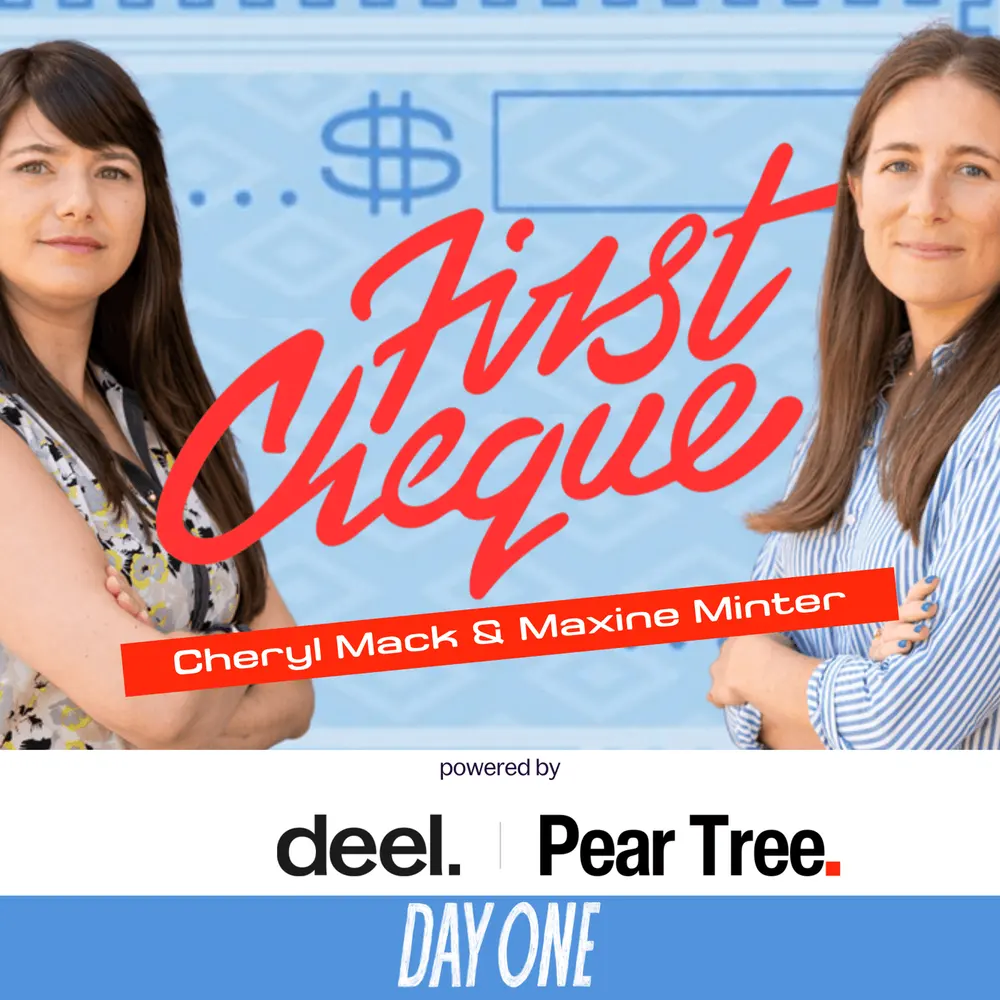 First Cheque with Cheryl Mack & Maxine Minter
Presented by Deel & Pear Tree
First Cheque with Cheryl Mack & Maxine Minter
Presented by Deel & Pear Tree 



 ▶
▶ ▶
▶ ▶
▶