Transcript Synced · select any line to jump ▾ 0:00 Cheryl Mack: In Australia, we have traditionally not been very good at pre-seed. Like, we don't do a lot of pre-seed, as you know. But one of the reasons is that I think Australians tend to be more risk-averse and shy away from pre-seed because of what I think is actually just a perceived sense that it is way riskier at the pre-seed stage than it is at the seed stage. 0:20 Maxine Minter: In my view, like, that is the way that we should be evaluating it, right? It's like the risk stage alignment. You're taking risk up until the point that there is like early signs of product pull. So that might look That might look like revenue, that might look like accelerating customer adoption. 0:36 Cheryl Mack: I think it's really difficult to get a sense of like customer pull at pre-seed, but what I can get a sense of is like how painful is this problem? Very acutely, painfully felt problem that occurs frequently enough that they're willing to pay to solve. Then to me, that's a very good indication of the potential market size. 0:52 Maxine Minter: Okay, 3, 2, 1. 0:56 Cheryl Mack: Hey, I'm Cheryl. 0:57 Maxine Minter: I'm Maxine. 0:58 Cheryl Mack: This is First Check, part of Day One, the network dedicated to founders, operators, and investors. If you wanna be a better early stage investor, investor, this is the show for you. So TL;DR, if you don't want to suck at investing, listen up. 1:12 Maxine Minter: Hello, hello. Welcome. I am excited to dive in for another one of our 101 episodes. We haven't done one of these for a while. We have been chatting to a lot of really interesting folks, but we're finally getting into a 101 on, drum roll, our favorite topic, pre-seed investing, especially because we're seeing in the market today Some interesting dynamics in relation to pre-seed, and obviously it's a place that you and I spend loads of time. So we're gonna go deep on the fundamentals of pre-seed as a stage, its little-known corners, and the things that most people ask us that we are surprised that the market doesn't know yet. So we're gonna nerd out on pre-seed. 1:54 Cheryl Mack: Yeah, let's nerd out on pre-seed. 1:56 Speaker: You're listening to a dayone.fm show. 2:02 Cheryl Mack: Founders scale faster on Deel. Set up payroll for any country in minutes, hire anyone anywhere, get visas handled fast, and get back to building. Visit deel.com/dayone. That's D-E-E-L.com/dayone. 2:21 Cheryl Mack: We do get a lot of questions about pre-seed, and I love playing in this space. And I'm so excited to jump in, but it could be helpful to maybe start with a little bit of history because stages in general are this like weird concept that started with letters. And then there's these like cycles that have slowly pushed things earlier and earlier. And I think that that could be really helpful for our audience to understand the like long— is it long history if it's only 20 years ago? The far way back, the way far back history. 2:53 Maxine Minter: Well, I mean, It depends on when you measure it, but the US technically has been doing venture since 1945, which is just like crazy relative to the Australian ecosystem. You know, like Venture V1, I think started in 2000 in Australia, but like venture proper only really started on Blackbird Fund 1, which was what, like 2012? So we're 14 years in and they're eclipsing, what is that, 60 years? Lol jokes. So yes, as you said, like the, I think the history here is really interesting because Pre-seed hasn't been a stage since the beginning of venture. As you said, venture's kind of started with, first of all, kind of like single rounds, and then it kind of broke up into these alphabetized rounds. So if you talk to a lot of the kind of venture as we think about it, you know, the computer science funding coming out of the Bay Area, it was really like the first venture round was effectively a Series A. You had a business that had product market fit that was making a lot of money, and then you had venture capitalists coming in and kind of funding that next stage. In the ye olde days where you had to buy servers and put them in rooms and like actually you were funding technological risk as a venture capitalist, obviously venture today looks really different than that, at least in kind of main software investing. But it's really only since kind of 2017, 2018, maybe 2019 at a stretch that pre-seed became a thing. So generally speaking, as you mentioned, like rounds, they do this interesting dynamic where we all agree the first round is, let's say, a Series A, as the names would suggest. And then rounds grow over time. And the firms that fund those rounds and get good at those rounds grow alongside that round inflation, alongside the deal inflation. 4:44 Cheryl Mack: And then there's like a bunch of people that are like, hey, you know what? We could undercut them. Let's slide in before that Series A. 4:53 Maxine Minter: Exactly. And then there's so many of them that they need a collective noun. And so they're like, we together will be the seed investors. We are the people who are investing before the Series A. We're coming in even earlier. And so that was the kind of generation of 2014, 2012 that were coming in at that stage as your kind of first rounds, your uncorked, uh, your kind of— they named themselves seed investors, which like Side note, First Round as a brand, oh my God, so good. Like, we need to do our first round. Who should we call? I don't know, what about First Round? 5:30 Cheryl Mack: Yeah, what about First Round? Except now they also like, they get slid up in the stack, right? Because then they do, they raise bigger funds, which means they have to deploy bigger checks, which means that the companies that they're funding at that stage tend to raise bigger rounds. And so then there's a whole new class of investors who's like, Hmm, I'm gonna slide in before that. 5:50 Maxine Minter: Enter the pre-seed investors. So, I mean, uninventively named, right? Like, what are we doing? We are investing pre the seed round. So what should we be called? We probably should be called, I don't know, the pre-seed round investors. And so that was the kind of beginning of this stage that has now become a kind of formal stage. And so everything from idea inception Right? Everything from kind of as early as, I think I have an idea, pre-idea inception, all the way through to the beginning stages of pull from the market, which are where the seed stage investor— we'll come to the definition in a moment. So essentially what happened in 2018, 2019, we started to see this like pretty solid trend of funds, either the folks that have been playing at seed started to go earlier, or new angels or new kind of standalone funds stepping into this space. And so it kind of triggered this evaluation of, okay, well, hold on a second, are we looking at a new stage that is coming about? And then you saw people start to write papers on it, and you saw people start to kind of try to define the space. Very fairly hilariously, PitchBook did a, like, uh, a report on pre-seed to try and define it, and they essentially distilled down, hey, actually, we think the pre-seed stage is whenever an investor calls it pre-seed. It's like, well, no, that is not a risk stage. 7:13 Cheryl Mack: It completely negates the concept of stages. Like, is the next phase going to be that we just get rid of names altogether and we just say, okay, I'm investing this much and then I'm calling it the under $1 million round? Like, I, I just don't see how we go be earlier than pre-seed, right? Like, what's it gonna be? The pre-pre-seed? 7:35 Maxine Minter: The Like, it's such an interesting question. As a side note, like, I just— everything has blended together. Definitions in this industry are becoming harder and harder, right? Like, my fundamentals are that we are funding different risk stages, and like, kind of regardless of what we— the noun that we use, we are essentially saying like, we are funding idea through to early signs that there might be product-market fit here. If we want to call it pre-seed, we can call it pre-seed. And then we are funding that early signs that there might be product market fit through to verified product market fit. That's your seed round. And then we are funding the company building around verified product market fit. That is Series A. And then we are funding your ability to build a big company, i.e., showing that you can expand product, you can deepen depth with customer, That's your Series B. And then from Series B to Series D, it's your maturity ladder through to exit, be it IPO or M&A, or, you know, in these days, maybe even just continuing to operate it for profit. Although I haven't seen a lot of people do that yet. 8:50 Cheryl Mack: I actually think funding risk stages makes more sense because rather than like we've seen pre-seed rounds done at crazy valuations and like, so the size of the round there's huge variability regardless of what stage, whether you're pre-seed or seed, the valuation, there's huge variability, but there's not a ton of variability the way that you describe the risk that you're funding. Like, what risk are we funding? And that's unlikely to have someone being like, oh, I'm coming in earlier than that, other than like the search funds really. 9:23 Maxine Minter: In my view, like, that is the way that we should be evaluating it, right? It's like the risk stage alignment. And so that's how we think pre-seed should be. Defined, you're taking risk up until the point that there is like early signs of product pull. So that might look like revenue, that might look like accelerating customer adoption, that might look like accelerating LOIs. So it's those, the kind of verify viable data from idea through to traction that actually you can start to fund at the seed stage, which I think is a nuanced distinction. I will say as well, There is loads of noise at this end of the market because there are some interesting dynamics that I think we are watching. For example, one is for the bigger funds, right? Folks that are investing out of a fund, say, of more than $500 million, and especially repeat players, like what you see them do is what I would term as a seed preempt. So they're essentially saying, we are willing to underwrite that there's not going to be really a risk that you're going to get to those early signs of product pull, right? We think that we back you to execute through those signs of early product pull. And ultimately what we are funding is you showing that you can build product-market fit here. And on that basis, we'll give you a much bigger round with a much higher valuation. And so you're seeing those rounds being done by the kind of Airtrees, Blackbirds into repeat. Players, right? Folks where there isn't necessarily as much execution risk and they are being, they're kind of round sizes are anywhere between like 2, sometimes all the way up to $5 million and valuations are being done anywhere from $18 to I've seen kind of $27 million USD. And so those are big rounds, right? But essentially what they're saying, they're kind of bundling 2 rounds together because they're saying we don't think that there is a risk that you are not going to be able to make it through that hurdle of early signs of product market pull., but they are titling them pre-seed per PitchBook's, um, I love you guys PitchBook, but like, this is not a good definition. Um, the definition of like, well, they called it pre-seed, so we too shall call it pre-seed, really like muddies the water because that data then gets pulled into the pre-seed valuation averages and it's actually like really lumpy data. 11:48 Cheryl Mack: This kind of leads into one of the things that I think about though, is that like in Australia we have traditionally not been very good at pre-seed. Like we don't do a pre-seed, as you know. And, uh, one of the reasons— a number of reasons— but one of the reasons is that I think Australians tend to be more risk-averse and shy away from pre-seed because of what I think is actually just a perceived, uh, sense that it is way riskier at the pre-seed stage than it is at the seed stage. When in my experience— and, you know, tell me what you think— but like, in my experience, there's actually not that much difference in the risk that you are taking as an investor investing in pre-seed versus seed. However, the valuation and often the like deal that you're getting is significantly better at pre-seed. So like, would love to understand, yeah, what, like, what do you think around, uh, that like difference in risk and whether this is a, a perceived or a real difference in like the risk it takes if these big funds are coming in and going, you know what, actually, like, to us, the, the risk for that you're at currently at when you're technically pre-seed is similar to what we would see for seed, and we're gonna basically just fund you as a seed company even though you're technically still pre-seed, that just tells me that actually the risk that you're taking is not as large as we seem to think it is. And maybe we should all just be investing in pre-seed to get better deals 'cause we're taking on the same amount of risk. 13:10 Maxine Minter: Yeah, I mean like, yes please, more people invest at pre-seed. Like it is so necessary, especially in the Australian ecosystem. Also, it's like such a huge opportunity, or at least like, I'm biased, but I think it is. Like, it— the Australian venture ecosystem is largely flat 2015 to today, dollars deployed at pre-seed. But obviously the ecosystem has grown massively. The opportunity has grown massively. The round valuations at C, Series A, Series B have all grown massively, etc., etc. I think it's amazing. And it should have. No, no, by a long shot, right? It's like still the Wild West at that, that earlier stage for a whole bunch of reasons, right? It hasn't kept up in terms of dollars deployed. It also hasn't kept up in terms of sophistication. It also hasn't kept up in terms of normalization, right? Like, round sizes are anywhere between, you know, $250,000 through to, as we said, like $5 million. Interestingly, uh, we don't have good data in Australia, but in the US there's actually an increasing percent of pre-seed rounds are being done sub-$250,000 round size. Uh, like— Yeah, so sorry, yes, $250,000. So the percentage of rounds that are being done at like above $2.5 million has been shrinking pretty consistently over the last like 10 quarters. And so round sizes are actually getting smaller in the US, but round volume is getting higher. So there's like more companies being funded. That's a great thing. Yeah, that's a wonderful thing. But it's also— 14:35 Cheryl Mack: But we're not seeing that in Australia is what you're saying. We're not seeing the same dynamic. 14:38 Maxine Minter: Well, we don't know. We don't have great data on pre-seed in Australia. It generally gets blended into seed in the data sets in Australia. But I would say anecdotally, that's definitely not what we're seeing. And for the data that we do have, often kind of US data collectors looking in on Australia, that doesn't look like that's what's happening. So the data that we do have, it looks like we're pretty flat on dollars deployed. But coming back to your point about like, we're effectively taking the same risk or pretty close to the same risk at pre-seed that it seems, I think it's a super interesting point. And I think it's right. Like if you think about ultimately everything prior to Series A, you're taking product market fit risk. Right. Elizabeth Ian made this point when she was chatting to us, which I think is like really astute. Just like there are so many ways that even excellent companies, excellent ideas, excellent operators can fail on the way to product market fit. Like consumers are weird beasts, B2B or B2C. 15:38 Cheryl Mack: Humans are just not rational. 15:40 Maxine Minter: They're just not rational. Yeah. Especially on the consumer side, but like also on the B2B side. There is market dynamic risk. There's like so many types of risk excluding the stuff that these founders can control, i.e., like the execution, the quality of their insights, all of those things. But I do think you are largely taking similar risk. I don't think you're taking 100% the same risk. Like, it's not like a one for one. I think in certain groups you're still taking execution risk, right? So for like first-time founders or even second-time founders building in a space where or seasoned operators that are becoming founders for the first time, like that still is a bucket of risk. Also team dynamic risk. Most companies that fail before they get to Series A fail because of team dynamics. And so like that's still a risk bucket that you're taking and you know more by the time you get to seed than you get to Series A. But you like 2 to 3 times less risky, which is the valuation uplift usually between pre-seed and seed. I don't think— 16:41 Cheryl Mack: Can we do some math here? Like, are we taking, are we taking double the risk? Are we taking like a third of the risk? Uh, like if we had to quantify the risk versus like, then I, then the next up, obviously I want to compare it to like the valuation uplift that we get. 16:55 Maxine Minter: If we could turn it into a math equation, we probably would have and have created an algorithm to do it. Like, it's a deeply human stage because mostly the businesses haven't been built yet, right? Like, you're the stuff that your diligence is really like team dynamic. But I think like there was some data, this is pretty aged data, but about 60% of the companies that fail to get to a Series A fail to get there because of team dynamics, either because of co-founder breakup or because of co-founder tension. I don't know how robust that data is, but if that's true, then like you know that dynamic through by the time you get to a seed round, right? Because they've probably not been operating alongside each other for about 12 to 18 months at that point. And so maybe like on that basis, you could get to maybe like double, like you've de-risked that this team executes really well alongside each other. And because of that, they have substantially de-risked. You probably know some stuff about the customer as well. But I still think like, I can't math this for you, but anecdotally, I don't think it's like 2 or 3 times less risky. Mm. What do you think? 18:02 Cheryl Mack: I think your statement that, you know, they, by seed stage, you know that whether they execute really well together, I don't think that's accurate. I think by seed stage, if they've been working together through, like, let's say for a year or two, then you know that they can work together and you might be seeing some cracks, but I've still seen deals, like companies fall apart and you might not have known that, right? Like I've seen deals where like investors have funded at the seed stage and then the cracks have appeared. Almost immediately after. I don't think it's the execution part. You don't know that they can execute well together until like late seed, early Series A. 18:39 Maxine Minter: Yeah, I think that's fair. There's definitely like, yeah, I think it's easy. 18:44 Cheryl Mack: Like work well together, yes. Executing, slightly different. 18:49 Maxine Minter: Yeah, I think that is, I think that's a great point. I also think that like you can work through cracks for like 2 years, but you can't work through cracks for 4. 18:59 Cheryl Mack: Yeah. And especially if you're growing, right? Like growth can mask a lot of founder challenges for a certain amount of time, roughly like 1 to 2 years. Yeah. And then, and then it can't, it doesn't mask anymore, right? So like, I, I think that dynamic is not necessarily de-risked as much as you might think it is. And the reality is that like, I see a lot of high growth, especially now with like these AI native companies, I see a lot of high growth companies really crushing it that first year, which again, like masks some of the cracks, like you see that growth and then it, and then they, they get to the, like trying to graduate to Series A and growth plateaus. And they realize that actually that market wasn't as big as it, they thought it would be, or they can't tap into the next market that they thought they could. So that risk doesn't materialize until they're trying to make that graduation between seed to Series A. And it, like investing at pre-seed or seed, it would be the same. 20:00 Maxine Minter: Totally. I'm just trying to think about the, like, anecdotally, the companies that I see where the team falls apart just prior to this— not falls apart, but like they have regrettable losses from the team, um, just prior to Series A. And I think that companies can— are more likely to survive that than if they have a co-founder exit, like, around the seed stage, but like I have, I have examples on both sides of the ledger there. So I don't know if that's necessarily true. 20:36 Cheryl Mack: Founders scale faster on Deel. Set up payroll for any country in minutes, hire anyone anywhere, and get visas handled fast so you stay focused on scaling. Deel takes care of onboarding, HR, HR, IT, EOR, benefits, and compliance, so your team can grow without borders. It's why more than 40,000 fast-growing companies trust Deel to move fast. Visit deel.com/dayone. That's d-e-e-l.com/dayone. 21:08 Cheryl Mack: That's where the, there's a big difference between like just crossed, just did my seed round, and now starting that scale-up phase to Series A versus like, we're pretty close to Series A. 21:24 Maxine Minter: Yeah. 21:24 Cheryl Mack: Like, that's actually a fairly big difference. Like, if you think about it in like toddler years, right? Like, it's almost like the, you know what, just they change so much, right? Like a 2-year-old is very different from a 3-year-old, but if you are 2 and a quarter, like you're still in that gap between 2 to 3, but actually 2 and a quarter versus 2 and 3/4 is a very different human. 21:44 Maxine Minter: Totally. Yeah, I think that's right. You know, because like just before your Series A, you generally, and again, I say generally because we've like blended the bajeebus out of these stages. But generally speaking, you have kind of worked out what your go-to-market motion is. You have some repeatable revenue. You've worked out like a product that you can sell repeatedly that at least a portion of the market really wants. And so you have some execution breathing space where, you know, if a founder, if a dynamic between the founders isn't working and one of the founders leave, you do have some breathability to go and hire in an executive to do that function. Whereas also like the executive that comes in and does that function is more likely to be like scaling what works as opposed to trying to find what works. And that finding what works is like a deeply founded DNA thing, whereas scaling what works even in like a messy, environment, there's more people that can do that than can do the former. So yeah, I think like, it's definitely not exactly the same risk. I, yeah, I just am not convinced that it is fully 2 to 3 times more risky at pre-seed. For example, graduation rates, right? Like graduation from pre-seed to seed. 22:59 Cheryl Mack: Yeah. What are you seeing? 23:01 Maxine Minter: Is roughly, well, for us it's like just shy of 70%, 12 months plus. But— 23:08 Cheryl Mack: So you're seeing 70% of your pre-seed companies graduating to seed? 23:12 Maxine Minter: That's right. Yeah. 23:13 Cheryl Mack: Is that high? That feels high. 23:15 Maxine Minter: It's high. Yeah. Yeah. That's very high. 23:17 Cheryl Mack: Is that just 'cause you're such an amazing investor, Maxine? 23:20 Maxine Minter: Yeah. Dust's shoulder. I also think that we are like good at picking and hopefully good at supporting. So hopefully that is what that means, but it's early days. Yep. But market average is somewhere around the kind of like, 50-ish percent of companies that graduate from pre-seed to seed. Again, really hard to find good data on this because of challenge in defining pre-seed to seed. I will say that something like, at least in the US, again referencing Carter's data, I think something like 25 to 30% of companies graduate from like seed through to Series A in 4 to 5 years. So the graduation rate actually is like quite low in like pre-seed through to Series A in a 4 to 5 years. 24:12 Cheryl Mack: So are they lumping together pre-seed and seed and then saying, do they graduate to Series A? 24:17 Maxine Minter: Yeah, that's right. 24:18 Cheryl Mack: Ah, yeah, that's confusing. 24:20 Maxine Minter: It's very confusing. But yeah, generally speaking, that's the kind of like they're, they're making it through at anywhere between call it like 50 to 60%. So if it was genuinely 2 to 3 times more risky, you would expect that graduation rate to be much lower. 24:37 Cheryl Mack: Yeah, right. And then in terms of valuation uplifts, like let's talk about that. 'Cause what we're seeing, I mean, is that even though valuations plummeted our rebuilding, I think we're still seeing a, a significant jump. Like, I don't know what you're seeing in your portfolio, but we're still seeing like these kind of really early, uh, valuations around that like $4 or $5 mil mark at the pre-seed stage, but then jumping to seed, we're seeing around that like $8 to $12 mil. 25:05 Maxine Minter: I mean, I think you probably have a much better view across the market than I do, right? Like both for your own stuff, but also at Aussie Angels in the Australian ecosystem. Cause again, the pre-seed data in the Australian ecosystem is like nonexistent. Um, it gets blended in for the like cut-through reports and all of those kinds of things. It gets blended in when it comes to valuations and those kinds of things. But I'll say across our portfolio, so we've done 31 investments out of Fund 1 and committed to 4 investments out of Fund 2 and have data like across '23, '24, '25. And current average valuation for '25 is just under 8.5, but that's averaging over Ow. 25:49 Cheryl Mack: That's of the companies that you invested in at pre-seed? 25:51 Maxine Minter: That's right. Yeah. 25:52 Cheryl Mack: Are you sure you're not overpaying? 25:54 Maxine Minter: I'm pretty sure. Yeah. At least it's like working for us, right? Pre-seed, like for the smaller rounds, for the ones that are being done like $250K to $500K, those are smaller valuations. Those are like to our point at the top, right? Like I think we're starting to see a new stage come in underneath pre-seed, which is like the angel round. 26:18 Cheryl Mack: Yeah, I've heard this term. It's like, yeah, we're just doing an angel round. 26:23 Maxine Minter: Yeah, yeah. 26:24 Cheryl Mack: But then you're gonna have a specialist angel fund, which is like, yeah, we, we're the angel fund that fund the angel round, but we're actually a fund. 26:33 Maxine Minter: It's actually one of the greatest compliments I've ever been paid, is like talking to founders and they're like, oh yeah, we're not talking to VCs yet. And I'm like, uh-huh, cool. Yeah, I am not a VC here. I'm in fact an angel. Um, so I do think those are being done at a lower valuation, uh, which, I mean, those are pre-seed rounds and we have a handful of those. But if you average out our valuation, we're at just, just over 8.5. But I think what you're looking at there is where there are a handful of companies that we've invested in alongside the big funds that are at those like top range seed pre-amps that are blending into our data set. But I think the kind of common— 27:15 Cheryl Mack: And they're all like second-time founders, AI-native companies. 27:18 Maxine Minter: Yeah, that's right. 27:20 Cheryl Mack: Which are just hyped up. Yeah. Okay. 27:22 Maxine Minter: I would say the average valuation we're seeing, if you exclude that out of the dataset, is still like around that like 7.5 to 8.5 range in 2025. 27:32 Cheryl Mack: Oof. 27:35 Maxine Minter: Seed for, at least for us, right? Like our strategy is into the US and so average seed rounds in the US is I think it's like $15 mil USD, and then average Series A is $48 million USD. So those round sizes and round valuations are pretty significantly dislocated from the Australian ecosystem. Cause I think the, as you said, the Australian ecosystem is like almost a whole round earlier in terms of valuation. 28:01 Cheryl Mack: Yeah. Yeah, pretty much. Again, excluding the like seasoned executive executives, AI native companies, excluding those, like we're seeing Yeah, we're seeing seed stage at that like $8 to $12, which you just said is the pre-seed in the US. 28:20 Maxine Minter: Right. Yeah. So average valuation for pre-seed in the US is $7.5 to $8.5 USD. So that can— 28:27 Cheryl Mack: And that would be USD, whereas I was saying, I was talking in AUD. 28:30 Maxine Minter: So I mean, I think the point to make here as well is like— 28:34 Cheryl Mack: So it just sounds like we're getting a really good deal. 28:36 Maxine Minter: We are getting an amazing deal, but also founders are getting a pretty raw deal. Right? Like, and for a lot of them, that's why you're seeing them up and go to the US for pre-seed and kind of relocate and start building there, especially because the Australian ecosystem is a feeder into the US ecosystem. The vast majority of companies that reach scale in the Australian ecosystem get there by going into the US ecosystem. And so more and more founders are just simply being like, okay, we're going to move to the US from the earliest stages. And I think this is a real problem for the Australian ecosystem, especially at pre-seed. Like there's opportunities to invest into great companies and great teams building like globally relevant businesses in the Australian ecosystem at pre-seed for angels and funds, but we're just not utilizing that, right? 29:23 Cheryl Mack: It's also very well suited for angels, right? Like this is a stage that is— 29:27 Maxine Minter: So well suited. 29:28 Cheryl Mack: Is so well suited for angels, especially in this day and age, right? Like if you're, I think angels are becoming more and more educated and understanding that You need to build a proper portfolio, which is like 20 to 40 companies. So if you need to do that, then like, what does that look like? All right, how many, how many checks do you need to write? And how many, like, what does your check size need to be in order to write that many checks? And therefore, what stage are you going to be investing? Because no Series A company is taking your $5,000, $10,000 check. So pre-seed is actually very well suited. Um, and again, if we're not taking, uh, double the risk, but where, you know, we're not— we're getting potentially double to 3 times the uplift, then this is a category that angels are very well suited to take up, especially if VCs in Australia aren't— like, we're, we're a little bit starved for pre-seed in Australia. 30:17 Maxine Minter: Right, on the capital side, not on the deal side. There are so many great companies. Like, for the first time this quarter, we have met more companies, more great companies than we can fund. Right. We simply got to the point where we were like, I can't in good conscience deploy such a large percentage of our funds in a single quarter, but you are a great company and I really want you to succeed. So let me like introduce you to as many early stage investors that I possibly can find because you should be funded. Like, it's really bizarre in the Australian ecosystem because talent has outstripped capital. That is not the dynamic that we are seeing in the US at the moment., right? Like we are back to peak valuations in the US. We are back to very sharp-elbowed, highly competitive rounds, and it's more capital than there is talent, even at the pre-seed stage. So in the Australian ecosystem, it would be great. There are so many great deals for folks to be investing. I will say one thing that pops up, which is probably worthwhile us chatting about, is valuation at pre-seed, right? We've talked a little bit here about like, averages, but I wonder if it's worthwhile double-clicking on like fundamentals. How do you form a view on what is overpaying and what isn't overpaying at pre-seed? 31:29 Cheryl Mack: Yeah, I was going to say like part of the reason I think we don't see as much, and angels shying away from investing in pre-seed is this sense of like, well, it feels riskier. So like, how do I really evaluate this? And there's two parts to that, right? It's, there's how do I evaluate the company and how do I figure out whether this valuation is right or wrong. I mean, I'm like, you're a fund, you can set valuations and negotiate with founders. On my side, the valuation is often like the founders put a, you know, a SAFE note down. It's like, here's my $4 or $5 mil SAFE with a 20% discount, take it or leave it. 32:04 Maxine Minter: And I'm like, eh, okay, I'm buying or I'm not. Yeah, I, I think that, that, I mean, like as an angel, you're generally not negotiating valuations, but of course you can come to a view on whether you think that the valuation is reasonable. So I think the way that we think about valuation, especially so at pre-seed, seed, and increasingly Series A, these are narrative rounds. These are forward investing rounds. So I think the way to think about pre-seed, or the way that we think about pre-seed, is it's input investing, not output investing. So I'm not looking at what you've produced because as we talked about pre-seed is there isn't really anything, like any outputs for you to look at, right? You end up with just like an error in your calculation if you are looking at pre-seed. Source not found. Source not found. So you look at inputs and some of the inputs you're wanting to consider is, as we talked about, team fit to market, right? The degree to which the team deeply understands the market and they're really well placed to win. In their market. For us, we're looking at 100x return profiles. So what that means is I need to get comfortable that if this, if everything goes right for this business, there is a 100x return opportunity between our entry valuation and likely exit valuation somewhere around Series C through to IPO, right? Taking into account dilution, generally speaking, you would expect about 50% of your position to be diluted down over the course of those— 33:32 Cheryl Mack: From pre-seed to what, Series C, D? 33:35 Maxine Minter: Series D, yeah. Series D in the US now average is just over $550 mil. So it's essentially a kind of unicorn range for the kind of higher echelon of those. So we need to see a 20x return profile, sorry, a 100x return profile taking into account. That's our valuation criteria, but for the angels, Right? Thinking about most people are looking for more like 10xing over that period of time. And so forming a view of whether you think that company could possibly get to that range, right, on the valuation that you are investing at. Take into account here dilution as well. So for example, if you are investing in an industry that's particularly capital intensive, hardware, deep tech, climate tech, maybe AI infrastructure, expect an enormous— those being very capital hungry businesses. So you're going to take more dilution, right? It's going to— Said it another way, investors are going to have to pay a lot more in order for them to reach that scale because they're not as efficient a business as say, just like a straight software business. And so thinking about scale, you can get to probability that you'll get there, dilution that you'll get there. And then also the fit of those founders to that problem. And also the fit of those founders to each other if there's multiple people on those teams. You can get to a heck yes on all of those criteria. That's at least how we get to a conviction on an investment. 35:04 Cheryl Mack: I've got one other one that I really anchor on, which is like, how painful is the problem? Because you can't really necessarily evaluate customer pull that early, right? Like, you know, they might have some LOIs, they might have talked to some customers, but I think it's really difficult to get a sense of like customer pull at pre-seed. But what I can get a sense of is like, how painful is this problem? Their solution might change, and the way that they, you know, the technology, the way that they're tackling it, potentially even the ICP of their like larger customer group is likely to change. But I strongly believe if it's a really painful problem, that some target demographic is, ideally a larger target demographic, like small businesses,, but if it's a very acutely painful, painfully felt problem that occurs frequently enough that they're willing to pay to solve, then to me, that's a very good indication of the potential market size. And the more people experience it, the more frequently experience it, the more painful it is, each of those to me is like a factor of, and they can kind of multiply against each other to create this number of like, all right, well, that seems very, very painful to me. It happens a lot. Mm-hmm. It happens to a lot of people and it's an 8 out of 10 on the pain scale, then it like, that helps indicate to me like how big is this potential market size and also what's the scope that they have to play in to figure this out. If it's experienced by a lot of people frequently enough and it's extremely painful, then they, the company, as they try to figure out how to solve it or who does exactly who to solve it for, there's scope to like go down this bucket. Maybe that's not exactly who's experiencing the most acute pain, but like there's potential there for expanding later on. And then they might be able to, like, 'cause there's lots of pivots that happen at that early stage, right? So, for me, the wider that, the bigger that number is, the wider scope they have to play and figure out like what their path to market is and path to product-market fit ultimately. So, for me, that's a really important one. 37:17 Maxine Minter: I think that's such a great one, right? It is like fundamental for velocity. Because for it, okay, let's just remind ourselves, it is completely unnatural for a company to go from idea to billions in enterprise value in under 10 years. Like venture is an unnatural dynamic. It's kind of like putting growth hormones on an already fast-growing thing. So yeah, it needs to be like incredibly painful for probability of velocity. I think that's a really excellent one. 37:47 Cheryl Mack: I joke that like I wouldn't have funded, uh, Twitter or Instagram though, because like it— photos, photo sharing just isn't— wasn't that painful of a problem. And like, look where they ended up. So it's not foolproof. Um, and it does feed into like my personal like thesis as an investor where I, I invest primarily at the B2B, uh, stage. But it, yeah, it does mean that I would've missed out on things like Snapchat or, um, or Instagram or Pinterest. 38:16 Maxine Minter: What do you mean? Uploading photos, selfies of yourself and putting like naff filters on them wasn't a crucial thing? 38:23 Cheryl Mack: It's just not a painful problem. 38:27 Maxine Minter: I do, and I think that that is a really important, important point to make, which is like many very reasonable minds differ on pre-seed and on what like a good investment thesis or strategy or type of company looks like at that very early stage. Like, this is not formulaic. And I think it's why it's so important that there is a wide range of early investors, both pre-seed and seed, because that will translate into a wide selection of companies being funded to prove that there is some kind of validity to their ideas and some momentum in their businesses. And I think, like, we're seeing that in the data as well. Like, the— in the Australian ecosystem, I think in 2023 we saw 27% of pre-seed companies having at least one woman on the founding team, and in 2024 that was 43%, right? Obviously gender is not the only demographic distinction at that stage. But it is an easier to measure one. Whereas by the time you get to kind of blending out all of venture, I think only like 23%, maybe actually was, maybe last data was 19% had at least one woman on the founding team and only 1% were all women. So I think the point to make here is at a very early stage, we have a really like enormous and exciting opportunity to actually change the demographics of who, who's participating. Because there's lots of different perspectives around the table and lots of different ways that these companies can drive value. And you can actually make really excellent return being a pre-seed or seed stage investor in a company that drives to say $200 million in value. It's not going to be a good fit for a venture fund probably, but it's going to be— 40:20 Cheryl Mack: As an angel, hell yeah, I'd take that. 40:22 Maxine Minter: Hell yeah. Like that's easily a 10, maybe even 20x return depending on entry valuation. And so there's a, much wider scope of companies that can get funded and kind of companies that are a good fit for that early stage investing and returns driving for angels. 40:40 Cheryl Mack: Yeah, you hear investors talking all the time about like, oh well, the pipeline isn't diverse enough. Like, how am I supposed to increase my diversity if the pipeline, right? But like, fine, you want to take that argument, invest earlier and the pipeline— Yeah. 40:55 Maxine Minter: Like, it's better, right? Like I'll talk about it. Like our pipeline definitely doesn't support the argument that it's a pipeline issue. It's just not a pipeline issue. It's, we're doing that for free. You hear that all the time, right? We do, we do. Yeah, I'm being overly simplistic, but it does like get my goat a little bit to talk about it as a pipeline issue. 'Cause it's kind of like, oh, it's really hard. There's no amazing women out there. And I'm like, wrong. It's not true. And I now have the data to back it up, so. So I can rage about it publicly because it's just not, it's not accurate, right? Like if you look at our data, if you look at our pipeline, that's not true. And our fund performance is very good. And so we, I don't think it's a pipeline issue. I think it may be a stage issue. And so like more folks participating at that early stage. Okay. If I squint, I can like accept the argument if you're trying to return you know, a couple of billion dollars back to your investors. Like it is harder from a pipeline perspective, but there's lots of funds in the Australian ecosystem and globally that are not trying to return billions of dollars on like 1x their fund back. They are trying to return $50 million on their $50 million, like a 1x their fund is a $50 million return and you can 100% do that with, you know, a diverse pipeline. And so. I will say kind of at the pre-seed stage, it's a great opportunity to democratize that on-ramp into venture to give a wider group of people an opportunity to show like, I know this idea is non-consensus, at least for the folks that are allocating capital, but like, let me show you the data that it actually is a great business. 42:35 Cheryl Mack: Yeah. I mean, I think we have the data, right? Like we just went through it. You get better deals, get a better valuation uplift. 42:44 Maxine Minter: It's more accessible. 42:45 Cheryl Mack: More accessible. 42:46 Maxine Minter: It's more accessible. More people can participate. 42:48 Cheryl Mack: Build a better portfolio. 42:50 Maxine Minter: Yeah, exactly. And I think increasingly, like if we project out over the next few years, more companies will raise these like first and second rounds and then that'll probably be it, right? And that like changes the venture math in terms of creating outlier returns. 'Cause you're not taking, you know, 100% dilution, like halving ownership that you have at those companies because they're not raising as much. On the way up. And so you'll start to see, right, outlier returns on one or two rounds having just invested at the earliest stages. 43:23 Cheryl Mack: Yeah, that doesn't even bring into the argument that like this existential crisis of VC with this AI movement of companies just like shooting up in AI revenue and just being like, actually, no, I don't really need VC. You can keep— I'm going to keep my equity, you keep your money. Uh, I've already grown this to like $60 million in revenue over the last 6 months, so Yeah. 43:46 Maxine Minter: For the listeners, Cheryl just gave me the double bird. I was helping the spot. 43:51 Cheryl Mack: That was like a little Easter egg for those who are watching on the Spotify video. 43:56 Maxine Minter: People were not supposed to know that that happened. Okay, got it, got it. Yeah, I think that that's right. And I will say in the US data, the percentage of companies that have raised around above 2.5 million has gone down significantly over the last 8 quarters, as I mentioned. And so, um, we are seeing that— 44:16 Cheryl Mack: You get in earlier then, right? Like, if we're going to have these companies that are scaling revenue that quickly, then like you need to get in early before they're getting to that scale. 44:24 Maxine Minter: Right. And we're also seeing the funds do this, right? Like, a16z has launched SpeedRun, its own accelerator program to kind of compete with, uh, YC. Uh, you see a lot of the bigger funds starting to stand up pre-seed programs because they are more set up as asset managers now, right? They like come in early, they buy meaningful ownership and they just defend it the whole way up. They're just doing back-to-back inside rounds because they know that these companies are doing really well. So we're definitely kind of seeing that across the board, which is pretty exciting to see. So summary, pre-seed, it's messy, it's human, but it's actually not substantially riskier than a seed or a Series A, right? Series A is really the kind of like big in theory, the big de-risk inflection point where you transition from pre-product market fit risk through to post-product market fit risk. Number 2, the Australian ecosystem continues to be an amazing opportunity. If anything, it's like a better opportunity today than it was previously from a pre-seed perspective because we've got more talent, less capital in the market, more opportunity for angels to kind of fill that gap. And get good deals. Number 3, potentially increasingly is the place for you to get into really interesting deals because they might not need more capital on the way up. And number 4, the Australian ecosystem continues to be a feeder into the US ecosystem. So watching what's going on there in terms of pre-seed dynamics is probably informative on how we do it in Australia. 45:58 Cheryl Mack: Nailed it. You've sold me. 46:00 Maxine Minter: Yeah. I don't need to sell you. You're already out there after Leá Le Guin. 46:06 Cheryl Mack: Oh, right. 46:07 Maxine Minter: Oh, whoops. 46:08 Cheryl Mack: I forgot. Okay. Everyone else, get on board with me and Maxine. We are on the train. We are going to Pre-Seed Town. You should get on it with us. 46:16 Maxine Minter: See you there.

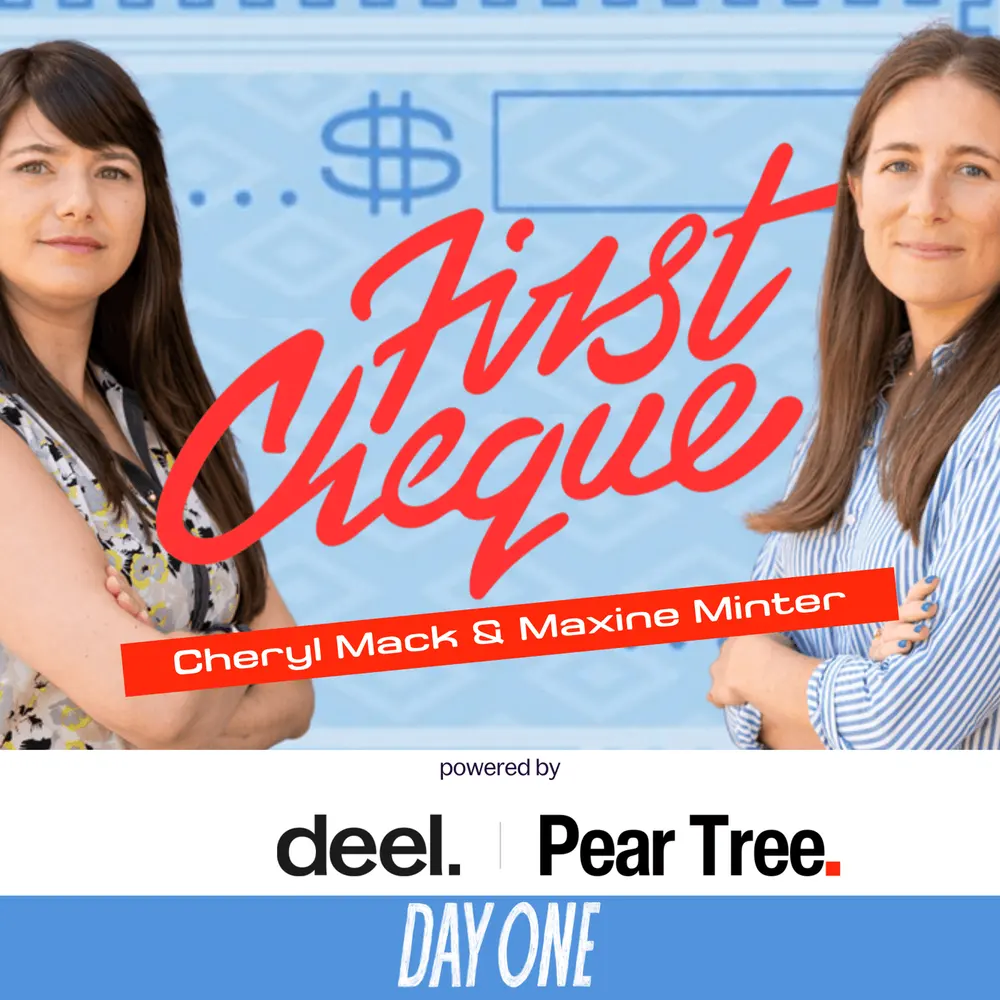 First Cheque with Cheryl Mack & Maxine Minter
Presented by Deel & Pear Tree
First Cheque with Cheryl Mack & Maxine Minter
Presented by Deel & Pear Tree 

 ▶
▶ ▶
▶ ▶
▶