Transcript Synced · select any line to jump ▾ 0:02 Georgie Healy: Founders scale faster on Deel. Set up payroll for any country in minutes. Hire anyone anywhere. Get visas handled fast and get back to building. Visit deel.com/dayone. That's D-E-E-L.com/dayone. 0:23 Brendan Cervin: I think the market is really ready for prompt engineering. Like our clients aren't coming to us looking for help in building AI. They have a problem. They had the problem yesterday. It was, you know, research took a long time and it was expensive. You know, they know that they give the researcher a thing and they get a report at the end. That process is well-defined in and out. Clients are just wanting to buy AI with a click. They don't want to have to tell us how to do the job. They want the AI to simply do the job for them. 0:53 Georgie Healy: Hello and welcome to In the Blink of AI, where I talk to the brightest AI startups and innovators each week. I'm Georgie Healy, and this week I am speaking to Brendan Servin, CTO at Idealy. Ideally are a consumer insights platform, and their 115 customers, I mean, probably more at this point, are the who's who of ANZ corporates. Forbes recently called them a game changer for brands wanting to iterate ideas within 24 hours, and they just announced their $5.5 million seed round with OIF and ICE Ventures. Today we talk about everything from using AI to give next-level insights about customer behaviors to the technology products that give people the creeps, like, I don't know, Google Glass. Huge thank you to Brendan for coming on the show. Let's jump into the episode. Hi Brendan, thank you so much for joining in the Blink of AI. I would love to start us off by you telling me about Idealy. 1:56 Brendan Cervin: Sure. Uh, Idealy is 1 year old. Uh, we're formed from a venture studio and we are a consumer research research platform delivering overnight results. We're taking the process that researchers would normally do, doing that with AI, and sort of taking what would be 3 weeks of research and turning it overnight. So it's pretty disruptive technology. So like, we go out to 400 demographically representative consumers overnight. We're asking them what they like or dislike about a product that the client is testing. It could be a marketing message. These companies include ASB, Telstra, Dentsu. Opal V, Tegal, Asahi, you know, sort of corporate enterprise type organizations that are selling to consumers as a whole. And we're covering New Zealand, Australia, and America at the moment. 2:37 Georgie Healy: Yeah, I do note the New Zealand accent. Very excited to have a New Zealander on the show. You're the CTO, Brendan. You're the best person to ask, what's the decision behind needing AI to create this solution for your customers? 2:53 Brendan Cervin: I wish I had the genesis of the idea myself, but I've been given the keys to it. The venture studio that's formed, Idealy, is from two organizations previously unavailable and TRA, who are both innovation and research studios. So they've been, you know, doing research with clients for 20 years and they've effectively turned their process into AI. So that's really the unlock is they've identified a process that they've been performing for decades and with AI's advent, they've just sort of prioritized it. 3:20 Georgie Healy: Amazing. And you use AI to create consumer insights. What were people doing before they used AI? Like, how did they get those insights before? 3:34 Brendan Cervin: Well, ordinarily a researcher, so we have a number of researchers on our team. Ordinarily a researcher would be responsible for generating the insights from the research that's performed. So that involves reading through all the information that's returned by the consumers, analyzing it, you know, doing some regression analysis and categorization theming, and then ultimately coming up with some top-line insights that the management is looking to make a decision on. So this is all, you know, a traditional process that's been done either in-house by large organizations with research capability, or often outsourced to agencies for research as well. 4:07 Georgie Healy: Yeah, okay. I read an article in Forbes. You guys have been all over the media recently. In that report, it said that 25 to 75% of sales comes from recently released products and services. So if your companies don't use consumer insights, what would happen if they didn't? 4:28 Brendan Cervin: I think within an organization that doesn't have research, there can be a battle of opinions. The highest paid opinion can win in some situations. It can be that ideas are watered down by groupthink, you know, the essence of an idea could be shaved off and the whole opportunity of that idea could be missed just by the watering down of the edges of ideas as they go through organizations. And so ideas can languish as well. They might not be adopted by those around them, and with a little bit of evidence behind them, they can build momentum and actually make it through the organization. So there's lots of reasons why ideas can be stifled without research, and we see its ability to be used more regularly. You know, overnight you can take that idea. We've had clients talk about, you know, they've taken the idea from the back pocket or the top shelf of the desk and just run it through the system, and the next day they've got, you know, real insights that the rest of the company's excited about, can see the opportunity of the idea. So this is really just an increase in the accessibility of the research as well. You know, the research is— the research component is done by our system, and you can just bring your problem. You don't need to be a researcher. We've got the methodology. You can get the insights at the end, but you don't actually have to be the researcher or the expert to get it done. 5:39 Georgie Healy: Yeah, which sounds fantastic, especially when, you know, it doesn't come naturally to some people, but they still wanna leverage that information, I'm sure. We have rapid-fire questions at the end, but I can't help but ask a cheeky question upfront. What's a major product release that a company has done that you can remember or think of that probably could have been avoided if they had done some consumer insights and research behind it first? I can think of a few if you need some time. 6:13 Brendan Cervin: This is— Yeah, I was stuck on this one, actually. I must have— 6:18 Georgie Healy: Well, the one that comes to mind that continuously haunts me based on where I work now is Google Glass. So, and even a lot of the VR products, right? Apparently a lot of nausea and things like that, that even if even if it sounds like a great idea, even if from a technologically interesting perspective we could release this innovative technology, for the actual consumer, for the actual wearer, not a great experience. 6:48 Brendan Cervin: Yeah, I think that there's a mismatch between sort of society's expectations of privacy and what this device allows people to do. And so it just gives people the creeps, and rightly so. So there's some things that look good on paper, but for reasons that aren't, apparent are just not good for society. I completely agree with that one. 7:09 Georgie Healy: I have to ask you then, Meta's teamed up with Ray-Ban, and this is one of the more recent launches, and they've got actually quite flattering-looking sunglasses, but they take photos. How, how do you feel about that? 7:23 Brendan Cervin: I don't know. I think people are going to— technology always moves faster than society, so, you know, if they look good and people start wearing them, we'll figure it out as we go. Um, yeah, regulations tend to come a bit slower than technology, but people will decide with their wallet, I guess. 7:38 Georgie Healy: Well, I do appreciate you jumping with me off piece there for a moment. Let's dive back into building AI products. So with the AI tech that you guys use, as you gather customer data, am I correct in— is this sentiment data? And if so, can you explain what that is? 7:57 Brendan Cervin: Sentiment is part of it. Sentiment is a traditional analysis that you know, our companies may have done on, you know, consumer feedback to look at whether or not they're positive or negative. We do more of a sort of categorization method where we, you know, everyone who talks about recycling packaging is grouped together. And then we're also asking how much they like a product or how unique a product is. So we perform a regression analysis to figure out, you know, of the people who talk about recycling, were they positive? Is this impacting the product positively or was it some aspect that was holding the product back? And so We're using multiple sort of questions to draw that analysis together rather than just sort of a sentiment from a single question. 8:38 Georgie Healy: Interesting. And why have we moved on from sentiment data? Is it just not as robust as it could be? 8:45 Brendan Cervin: I think when you're just analyzing the text, it's valuable and useful. And the system is analyzing sentiment in a similar way to what it used to, but it's centering it on other questions, whether you're asking for a definitive answer of how much you like this thing so that we can sort of position the themes and it's more tangible, it's more granular than sentiment analysis. 9:08 Georgie Healy: On the clustering, what kinds of data is the most meaningful? What would you be looking for as a business that would really help you with decision-making more than other kinds of data? 9:21 Brendan Cervin: Most companies will include a profiling question to identify whether the client is in a you know, a high buying group or a low buying group. And then within the high buying group, they might be looking for a particular demographic they're trying to reach. So they'll be looking for the performance of the product for that specific demographic. So they might be looking for, you know, women, professional women, for example. So they'll be filtering by that and they'll often see that the product, because it's targeted at that audience, has a higher performance against the average of the consumers. So they'll be looking for potentially indicators from demographics that are particularly interested. 9:56 Georgie Healy: Amazing. Does a company ever pivot based on the data? Like, we thought we were targeting millennials, but actually it's boomers that are really resonating. 10:04 Brendan Cervin: They certainly have acted on the consumer feedback. There's been a number of projects that have pivoted in various ways, whether it's the product itself or the messaging that's adjusted. I think more often the product changes rather than the audience that targeting changes. But yeah, it's, it's the whole point. 10:19 Georgie Healy: Yeah, exactly. And then zooming out a little bit from there, you know, I'm learning about the AI space, the listeners, uh, hoping to hopefully get educated in the AI space. What you do, a form of NLP or natural language processing, and perhaps you could kind of explain the context for all of us a little bit more. 10:40 Brendan Cervin: Ever since ChatGPT was released and sort of popularized, a lot of the previous AI technologies like NLP have kind of been redundant. AI is this pocket knife, this universal tool now. So all of the language analysis is just AI, GenAI now. And I treat it as like you're just giving an instruction to someone. So if you wanted to do a sentiment analysis, you can instruct a person to perform a sentiment analysis in the same way you can instruct the AI. But there's a lot more flexibility. So we use, you know, we're using AI for all sorts of specific purposes within the research area that sort of replace previous methodologies like NLP. 11:21 Georgie Healy: and only sharing what is publicly available knowledge. How do you do that? Do you leverage multiple different existing models or how does that work? 11:32 Brendan Cervin: I mean, I'm sure that everyone's building their own AI stacks in slightly different ways nowadays, and I think that there's a lot of difference in how you build it. You've got your low-level language frameworks like LangChain or Semantic Kernel, and then you've got all your AI providers that can be wired up. We use OpenAI because it's ranked the highest in terms of its intelligence and would switch to whoever has the most intelligence. But the problem I think that the technology creates is it puts the person who knows what is good AI output far away from the code. The engineers are writing the prompts effectively that the AI is then answering, but the person who knows the best prompt is the researcher who's written 1,000 research documents before. So we've been trying to build our stack so that the researcher controls the prompt and there's no pollution or modification to the prompts that they work on. In the production environment so they get a like for like in terms of what they're trying to get as an outcome. And we're trying to remove the engineer from the actual prompt process so that they have no responsibility for how the prompts are structured. 12:34 Georgie Healy: So this is fascinating to me. As an AI startup and as the CTO or founder, I didn't know that you could essentially— you said OpenAI is the most sophisticated currently, the best model that exists currently, but you would switch if you had to. Are the switching costs quite low in this industry? I would've thought that you'd have to completely reeducate yourself. No. 13:03 Brendan Cervin: No? No, I think switching costs are low. There's simply an AI as a service. Developers are already building frameworks to aggregate the service, so you can just plug in anything you want. Switch service, you might just need to sign up an account and switch over the APIs. And there, there is some complexity in the details, but I don't think the complexity is enough of a barrier to switch. There's certain features people are trying to build, like OpenAI is trying to build, that created a little bit of vendor lock-in, but everyone's building these features and, and the vendor lock-in won't last long. 13:33 Georgie Healy: Wow, that is fascinating. And no wonder the tech companies are all racing, because if the switch costs are low, you're only as good as your last release, right? Okay, a recent post on your LinkedIn, um, you said that synthetic data in the context of generative AI was almost your favorite subject. So I have good news. I've got some questions about synthetic data. How is synthetic data built or made? 14:01 Brendan Cervin: This is a great question because I've been discussing this last week with some other sort of AI specialists, and they were lamenting the sort of previous generation of AI synthetic data, which are based on models where you'd put in some values and you'd get a predictable result at the other end of this model. And you could look at the model and you could scientifically validate the output of that model. And you knew why it was making the decisions that it was making. And this might be forecasting sales figures or something like that. But invariably the model had scientific research that backed it. And it's a formula or whatever it was. With generative AI, you're just talking to a chatbot, right? So if you say to it, imagine that you are a university student 'in this city at this university doing this course and we want to talk to you about your experience.' Everything that AI outputs is synthetic data. The line between what generative AI puts out as synthetic data and what doesn't is just the label we choose to put on it. There's no scientific background to say that the synthetic data that generative AI outputs is correct or accurate. I think there's a gap in the industry at the moment where Anyone who's doing synthetic data, you have to A, trust the business and its process to generate the synthetic data. And as a consumer, like the output of the synthetic data. Is it telling you something new and novel? Or is it reaffirming your assumptions? But in either way, the expectations of historical synthetic data in new gen AI or the research behind synthetic data now just doesn't exist. 15:33 Georgie Healy: Wow. 15:34 Brendan Cervin: I haven't seen a lot of it. I think it's a problem for the industry. 15:39 Georgie Healy: Correct me if I'm wrong, say, because the categorization, the tagging of synthetic versus not synthetic is, you know, choose your own adventure. You're only really hurting yourself if you call something human data if it's not, right? Like that would only hurt you. 15:56 Brendan Cervin: However you're getting the synthetic data, I'm specifically, probably I should probably camp there. These are my thoughts around consumer market research, synthetic data, not other types of generative AI synthetic data. So when you're asking it to emulate consumer behavior, you know, you're really looking for, is it, can it tell you with some degree of accuracy what number of people in Sydney like to have ice cream at the beach versus at the cinema? You know, and like those are, that's data you could go out to the market and ask. And it's data that you could get synthetic data. You could use synthetic data to answer it. We don't know how accurate it is and there is no specific process to answer it that is well documented and understood and scientifically backed. Every company who tries to answer the question is going to answer it in a different way. 16:39 Georgie Healy: It almost feels a little bit dangerous. It reminds me of, um, scientific discovery. If something's been discovered, how often do people go back and repeat the study? It's like, oh, it's already been proven or disproven or whatever. Actually, it hasn't been disproven because no one's gone off to disprove it. So is it dangerous to kind of have synthetic data at all, almost. 17:00 Brendan Cervin: So I think that there are practical applications for synthetic data in consumer research. I think it comes down to the question you're asking and maybe the importance of the question you're asking as well, to a degree, because there is real cost in asking people to give you their time and feedback. So let's say you're asking this university student what their favorite soft drink is— oh, sorry, you're asking what they think of a new soft drink product and you're asking to describe how unique this product is in the market that they live in. How does it compare to Coke and Pepsi or whatever? If you were to ask synthetic data to do that and you were to pick any of the products that exist in the world, that student lives in Sydney, he sees certain advertisements about certain products, his shop stocks certain products, every city has different products, every person's going to see different advertising. I don't believe that the AI is going to have the capability of telling a business how unique a product is in the market when it doesn't live in the real world. But if you were to ask the AI, when do you like to eat ice cream? What are the occasions you like to eat ice cream? This is one of the very interesting questions that marketers ask is when do you do this thing with your product? And you're going to— AI is going to canvas all the potential things and you don't really care about exact accuracy, but you do want to know where things are leaning and what the spread is. I think AI will always give you a good range of answers the accuracy may not be good, but you are looking for the range when you're asking that question. Like, I might think of 3 good occasions for ice cream, but in reality there's probably 15. AI will find that 15 for you, and the top 5 will be the top 5. 18:34 Georgie Healy: This fascinates me, this kind of prompt engineering topic. And I've listened to a few podcasts about people that are, you know, building the models. And from what I hear, the models will trip over themselves to give you an answer. That is how they're built, is to give you an answer even if it's incorrect. Brendan, do you think that you need to educate even your customers in how to prompt the models in order to ensure that they're asking the right question, like how you explained? 19:05 Brendan Cervin: I'm gonna segue a little bit. I don't think the market is really ready for prompt engineering. Like, our clients aren't coming to us looking for help in building AI. They're looking, they have a problem, They had the problem yesterday. Research took a long time and it was expensive. They know that they give the researcher a thing and they get a report at the end. That process is well-defined in and out. Clients are just wanting to buy AI with a click. They don't want to have to tell us how to do the job. They want the AI to simply do the job for them. So there isn't a lot of interaction. The clients expect us to know how to do it. They don't want to have to help us to do it. 19:46 Georgie Healy: Yeah. 19:47 Brendan Cervin: And so all the AI that you're seeing adopted in businesses, it's a case of, you know, if I get the same output using this AI as I did from another process, then I will use that AI 'cause it is 1,000 times faster. And so, but it's easy to buy products when they're like for like comparison to, to what maybe the client's used to. If the AI's doing something new and novel, then it's a bit harder to evaluate whether or not it's useful. And I think that the barrier to buying a product when you just have to click, it's so much lower versus the investment of knowing how to prompt or use a complex tool. Clients are just, it's that early, it's that adoption phase. You know, 3 years' time it could be that AI just runs everything and there's a general, you know, there's one AI that rules your life and there's, but for a few years I think there's gonna be thousands of AIs solving specific problems in different businesses. 20:32 Georgie Healy: Yeah, and thank you, that is a great point. If I wanted to learn how to use a new tool, I probably wouldn't be paying that much money for someone to come and consult me on the matter. 20:45 Brendan Cervin: The people are lazy. 20:47 Georgie Healy: Even with image, right? Like, I've used certain text-to-image models and it's like, oh no, you need to do layers and layers before you can even get anything close to something in reality. And I'm like, oh, well, never mind. 21:01 Brendan Cervin: There's an art to prompting, but I think there's also IP to prompting, you know, like being a business that solves a problem well. I've been challenging our researchers to sort of trick the AI is like a place where we keep 1,000 questions that a researcher would want to ask about research. And the AI can ask that question to every test and it never misses anything. And it's doing a better job than a human because it's a sum of human capability and knowledge. All the researchers are just throwing their questions in. And if the AI can give a relevant response, then it gets highlighted to the user. 21:37 Georgie Healy: Amazing. What's the perfect blend of synthetic versus natural occurring events when it comes to your consumer-specific audience? 21:46 Brendan Cervin: We don't do any synthetic yet. 21:47 Georgie Healy: You don't do any? 21:48 Brendan Cervin: No, we don't. But I have been building in previous organizations. I think that we're evaluating how we will bring synthetic data into our product. We're concerned around confusion it may create for our clients, you know, Come to us today for real consumer research. It's got AI on the side and we already field questions about synthetic data. We don't want necessarily for people to misunderstand the value of the product we're producing. 22:16 Georgie Healy: I have to request feedback almost daily in my day-to-day job and it is really hard. People don't want to give feedback, people don't want to do surveys. 22:26 Brendan Cervin: Yeah. 22:26 Georgie Healy: How do you approach this? 22:28 Brendan Cervin: So we actually outsource the sort of consumer finding process. So there's a number of international companies with hundreds of millions of consumers that they reward with money based on the amount of time they spend. 22:41 Georgie Healy: That's what I'm not doing. I'm not paying them. Oh, it's so obvious now. 22:47 Brendan Cervin: Yes. So, so we have a third party that provides that for us, and, you know, they have a massive business trying to incentivize people and find people that can be available to complete these surveys and It can take hours to find these people. So that's why, I mean, that's probably the slowest part of our research process at the moment is just the time it takes to get hundreds of people to complete the survey. 23:11 Georgie Healy: You've really articulated clearly how you gather the data and the kinds of natural data that you're gathering for Idealy, but then how do you give that back to the customer? How do you provide it? 23:24 Brendan Cervin: We're effectively returning a report, which is a mixture of graphs and executive summaries, but with interactive filtering so that you can go down to your demographics. We've got dozens of summaries within the reports trying to answer specific questions about the data, that's particular pieces of data within the report. So there'll be an AI summary that looks specifically at demographics and identifies the key demographics and the low-performing demographics, and there'll be another AI that specifically looks at what things were positive or negative, and there'll be another one that will be comparing products to each other and another one that's talking about the profile groups of the buyers. So there's, you know, there's a structured process to the research and there's a structured process to the AI that we're producing at the end as well. 24:07 Georgie Healy: I find it so— like, I used to be a consultant and the firms I worked for are the huge lists of customers you have now. And I know they have data engineers there and I know that they have marketing professionals there? And how come you guys reached product-market fit within a year despite the huge teams that I would have assumed were doing exactly what you're offering? 24:32 Brendan Cervin: Um, I mean, OpenAI released ChatGPT how long ago now? 3, maybe 3 years ago. I was fortunate enough to be in a company that was using OpenAI at the time, but I think, you know, the industry is still waking up to the technology. I think that working with consumers creates its own complexity around pricing and monetization and it's an expensive process. So I think that there's, it's not a simple SaaS product that traditional SaaS geeks maybe are drawn to because you've got to, you're in a sort of market where you're paying for consumers and it's a bit messier than a traditional SaaS business. So I think that there's— I think that the whole sort of market of customer research is a little bit underserved because of the messiness. 25:15 Georgie Healy: And who, who within the companies do you, do you provide this data to? Is it the C-suite? Is it like, which, which business professionals do you work with most closely? 25:27 Brendan Cervin: Uh, sort of the marketing and innovation departments generally is sort of the, the main ones. And within that, you know, you could be a product specialist who's working on, you know, FMCG supermarket products, or you could be a marketing manager doing an at-home campaign for a services business. So from that sort of more marketing base to the innovation base and everyone in between and up to the C-suite, we've seen clients sort of— one particular client said, you know, we spend X hundreds of thousands of dollars on consumer research per year, so we'll try ideally for a year with a portion of that, and I'll consider it a success when all the research has been consumed because they believe that everyone should be doing more research. 26:12 Georgie Healy: Yeah, um, one company that comes to mind is Woolworths with the amount of— well, I don't know behind the scenes, but it does appear that they've got considerable amount of spend towards their marketing and also their, their platform and their data that they're gathering. And, you know, even they've got their marketplace within the Woolworths app now. They're clearly trying to gather data to see if they should compete with the Amazon, or they're like, I'm I'm not sure if you have any comments on that or if you could think of anyone. 26:43 Brendan Cervin: The supermarket industry is an interesting space because obviously lots of suppliers sell to the supermarkets. And the supermarkets, they monetize the data that they have internally. You know, the price lists are sold back to the suppliers. So if you want to understand how much something's selling for, you have to pay the supermarket. So the supermarkets aren't just a company in the industry, aren't just a particular client in the industry. They're actually a whole area of complexity into themselves. You know, the depth of data around purchasing that they hold is, um, valuable to the whole country. So, but yeah, many of our clients are researching products before they hit the shelves and even going to the supermarkets and providing our research as evidence, um, for the product, for, to the supermarkets as to why the supermarket should in fact list the item. So they might be saying it serves a new demographic, or it performs better than a competitor, or, you know, it might be they're going to an overseas market they haven't sold to before. Clients, for example, testing wines and then going up and getting them at Tesco's up in, up in, uh, UK. So the supermarkets are definitely part of our industry, and we're— but we, we're more common— it's more common for our clients to be testing products and then communicating them to the supermarkets than for the supermarkets themselves to be testing on our platform. Although I'm sure they will one day. 27:57 Georgie Healy: Yeah. I have a friend that works for one of the suppliers, big beverage supplier, and it's just fascinating to hear, um, even the data that gets used about geographies in Sydney where, where diet versions versus the full sugar versions and based on location and all of that stuff. It's fascinating. 28:21 Brendan Cervin: Yeah, I'm sure that they have so much data that we're analyzing it to death. 28:26 Georgie Healy: Yeah. Okay, so switching track a little bit, you guys recently raised $5.5 million from very prestigious VCs. Congratulations. How much of that funding for an AI startup has to go towards compute or is it very much the same as any other startup where it's going towards hiring and growth and international expansion and things like that? 28:49 Brendan Cervin: Yeah, no, there's no— 28:51 Georgie Healy: Magic number? 28:52 Brendan Cervin: There's no massive cost associated to AI. I think it's different for every business in terms to how their solution works and how much, how AI-intensive it is. You know, our solution is consumer-intensive. You know, we've got time from people. That's the real cost of doing research compared to AI, which is comparatively low. Yeah, I'd say that, you know, our AI costs are actually in the development of the application rather than the running of it. 29:15 Georgie Healy: And what would be your goal for the product this time next year? If I was to get you back on the show, what would you hope that ideally is looking like from a product standpoint at that stage? 29:27 Brendan Cervin: I've got some pretty crazy ideas. I'm not sure, I'm not sure if any of them will actually land on the roadmap. 29:35 Georgie Healy: I'd love to hear them. It's not AGI, is it, Brendan? Because I mean, that is a bit ambitious. 29:42 Brendan Cervin: No, but I think that AI should be able to understand any survey that someone's done historically. So why not, you know, plug into any historical survey and produce a report that a researcher would produce. And that means that it needs to understand the correlation between all the questions in the survey and dynamically build out a methodology to answer the survey without ever being told what the survey was about, just by reading the survey itself. What I'd like to know in a year's time is that all of our customers are happy with the product. The numbers in the business, but I think that the hearing from customers and monitoring all the feedback the company gets from customers, be that across sales, support, whatever it is, just a finger on the pulse are customers happy with this? Is the product market fit continuing in the way we expect? I think that just having happy customers in a year's time is not an easy thing to do, and that's what will make me happy. 30:33 Georgie Healy: Um, what's one core metric you might be looking for that would dictate success? 30:39 Brendan Cervin: ARR is what SaaS businesses run on, but I think customer happiness is, is my key metric. 30:45 Georgie Healy: Amazing. And technically, you know, as CTO, what's something that's really challenging about building a product like this and what are you and the team really focused on at the moment? 30:58 Brendan Cervin: I find it exciting and refreshing. You know, having built SaaS businesses for 15 years, the technology that we use to build the SaaS businesses has evolved drastically over that time. Having the opportunity to start a new business today is like building with all the latest all of the opportunities that technology has today without any of the legacy decisions that businesses are burdened with. So it's greenfields, the engineers are having a great time, it's highly productive. The problems are all, you know, easier problems to solve today than they've ever been to solve. So it's a highly productive and rewarding time. 31:30 Georgie Healy: I can clearly see you're super passionate, especially on LinkedIn and the socials, and I do recommend people check out the articles you've written So the investor Robbie Paul, CEO of Icehouse Ventures, who participated in your recent round, said of you guys that your growth was really incredible. He said, of the 150+ software companies we've funded, the average time to $1 million in revenue is 4 years, and $5 million takes close to 6 years. Ideally passed the $1 million mark in half the average time and is on track to hit $5 million just as rapidly. Don't be shy. 32:08 Brendan Cervin: It's a very complicated math problem he gave us to do in our head when you described it that way. And I don't think it— I don't think the math maths. I think, uh, you know, half the time is 2.5 years, but we, we reached a million in a few months. So yeah, we were several million at the end of our first year. And so yeah, it's— it has been great first year. 32:28 Georgie Healy: Did you expect it when you were going into it? You've been CTO a number of times. Clearly you, you have some— 32:36 Brendan Cervin: It's always gamble. Some things you can identify at this stage? Yeah, I think I'm getting better at picking them. I don't know, there was a whole raft of decisions that went into the opportunity. I think ideally it's definitely, you know, in the same way that there was a revolution for the cloud era and then the mobile era, AI is a new revolution. Having an AI-first startup, I think is, you probably couldn't have done it 3 years ago, or, you know, it's just the right time. 33:04 Georgie Healy: Yeah, perfect market timing to be a CTO. Congratulations, Brendan. We've reached my favorite part of the show, the rapid-fire questions. Are you ready? 33:14 Brendan Cervin: Sure. 33:16 Georgie Healy: What's the best thing about being a startup in New Zealand? 33:20 Brendan Cervin: I think it's just the fact that it's New Zealand and we don't have to deal with the rest of the world, you know. Like, there's a simplicity to living in New Zealand, um, you know. There's great, uh, talent in, in the industry locally, um, companies are you know, growing experience and growing the, the skilled number of people in the industry. So there's definitely a critical mass in New Zealand, but at the same time, you're not living in Europe or America where the world seems a little bit crazier. 33:52 Georgie Healy: Yeah, you guys definitely, you know, outperform per capita, I feel like, in terms of startup success stories. So there's something in the water over there, isn't there? 34:03 Brendan Cervin: It's easier to ship software overseas than it is to ship anything else. So I think that there's an attraction for us to, you know, like, because we're remote and because software has this attraction, it has a natural affinity, I think. 34:15 Georgie Healy: What's the worst thing about being a startup in New Zealand? 34:17 Brendan Cervin: Oh, time zones to clients overseas. Easy. 34:20 Georgie Healy: What's your worst client time zone possible? 34:23 Brendan Cervin: UK. 34:23 Georgie Healy: Really? 34:25 Brendan Cervin: It's the whole opposite. 34:27 Georgie Healy: I lived in London for a few years, and my friends that still live there, I find I just don't respond to their messages by accident because I'll read it either in the middle of the night and think, oh, I'll respond later, or I get it, you know, as I'm half asleep in the morning and I think I'll do it after daycare drop-off or after lunchtime, and it just never happens. It's terrible. 34:48 Brendan Cervin: It can definitely be disruptive. It's hard to, it's hard to manage. 34:52 Georgie Healy: Now, in your opinion, you're an OpenAI fan, clearly. Will ChatGPT-5, which is at point of this episode rumored to be released in December, be a success or a flop, Brandon? 35:05 Brendan Cervin: I think they won't release anything but a success. If it's not a success, it won't be released. They know that they've got to outperform the market and all existing models there. But they're making improvements to their architecture in a way that improves AI output, which is more than just building new models. The way they're doing reasoning with Chain of Thought and the O1 preview, it's not necessarily all about a massive new model. It's just about the architecture that they're putting around the models, which is drastically improving the output. So, you know, new model or no new model, they're making improvements all the time, which we just passively benefit from. 35:46 Georgie Healy: You don't think they're under pressure to do a new release, seeing it's been a little while now? 35:52 Brendan Cervin: Pressure from the fanboys? 35:54 Georgie Healy: Are you a fanboy? 35:56 Brendan Cervin: I don't know what problem today can't be solved by the AI that we have that will be solved by the AI tomorrow. I think that we're just in the early adoption phase and people just haven't tried to solve problems yet. The AI that was working today, it's incredibly capable. There's 100 more use cases that haven't been applied to it. So, you know, I don't think that the performance of the AI is what's holding back the industry at the moment. 36:19 Georgie Healy: Agree. I feel like it's going super fast already and I would like it to slow down just a little so we could all catch up. 36:25 Brendan Cervin: Yeah, like, this is fine, guys. Like, You take the foot off the brake a little bit. 36:28 Georgie Healy: A little bit, right? Now, I counted on LinkedIn, 5 times minimum you've been CTO. What makes a great CTO? 36:37 Brendan Cervin: I think CTOs are generalists. I try not to prescribe a process or decisions. I think that engineers like to live in a meritocracy, which is great 90% of the time, and then you have to play ref in a few occasions to just sort of Everyone's passionate about decisions in engineering, and sometimes there's just a coin toss as to which way to go. So I'm always asking questions about the process that's being followed. I try to hire people who are experts in the area and go deeper into the problems than I have time to do. A focus on a process is often better than just the decisions. And even the process itself is something which the team should take over and control, so they should be evolving it every 6 months. In the startup, the process you had 6 months ago will not work today. 37:27 Georgie Healy: Amazing. Which other AI CTO do you admire the most? 37:33 Brendan Cervin: I think the person who's making the biggest impact at the moment is Jensen Huang, who is the Nvidia— 37:41 Georgie Healy: Oh yeah, yes. 37:42 Brendan Cervin: CEO technically, but he's a technical person by trade, I think. 37:46 Georgie Healy: Why do you admire him? 37:48 Brendan Cervin: I think that aside from all the software AI improvements that OpenAI has been leading in, you know, the way that Transformers, underlying technology, has been adopted across all sorts of AI implementations, but they're all reliant on processing. And NVIDIA has been releasing, I've heard, the next chips and the performance they're expecting from them. And the fact that the next chips are purely designed by AI themselves the first time I think that they've said that their chip is 100% AI and it's like a ridiculous improvement in performance. And so the chip industry is going through its own boom at the moment aside from the software boom that's happening with AI. And that's going to lift all boats. Every AI application in the world is going to benefit from 100x performance from the chips that are coming out in the short term. And then text AI is just one small discipline of AI. There's all these other ones out there that NVIDIA's getting involved with around, you know, training of robots and then 3D environments and vision AI. There's a lot of AI going on at the moment. 38:55 Georgie Healy: You've ended on such an exciting, fun note, and I love having a CTO of an AI startup on the show so that we can dive into, frankly, waters that are a little deep for me, but I find them really fascinating. This is how me and I'm sure the listeners learn the most. So thank you so much, Brendan. To finish us off, what would you like to shout out to anyone that might want to know a little bit more about Idealy? 39:20 Brendan Cervin: If you're tired of slow research, then come and talk to Idealy today. It's that simple. 39:26 Georgie Healy: Amazing. Thank you so much for being on the show. 39:29 Brendan Cervin: Thanks a lot. Appreciate it, Georgia. 39:33 Georgie Healy: Thank you for listening to In the Blink of AI. You can check out the the show notes for anything discussed in this week's episode, and we will be back next week. This podcast was produced by Day One with music by Dan Hansen and visual artwork by Sophie Tyrell. If you loved the episode, please tell your mates, and I love AI news. Please share your thoughts and suggestions to georginarosehealy@gmail.com. [FOREIGN LANGUAGE]

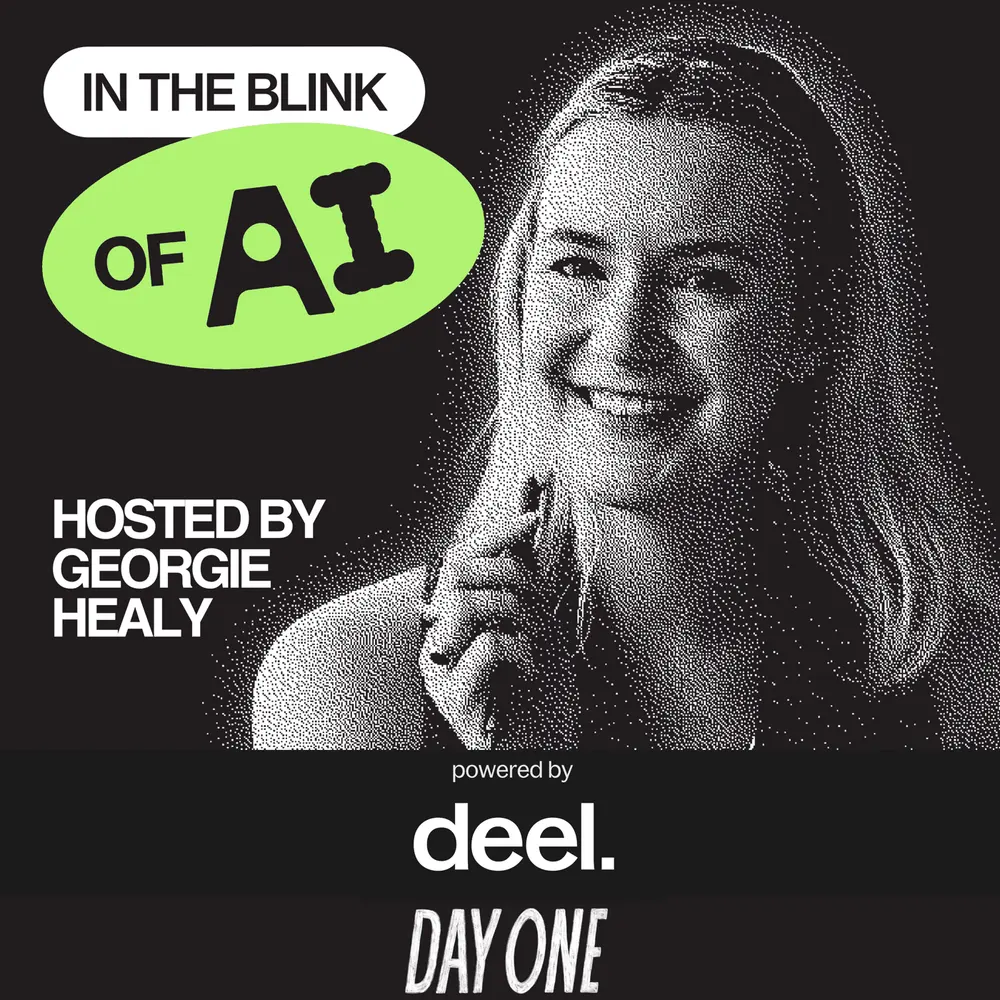 In The Blink Of AI with Georgie Healy
Presented by Deel & Stripe
In The Blink Of AI with Georgie Healy
Presented by Deel & Stripe 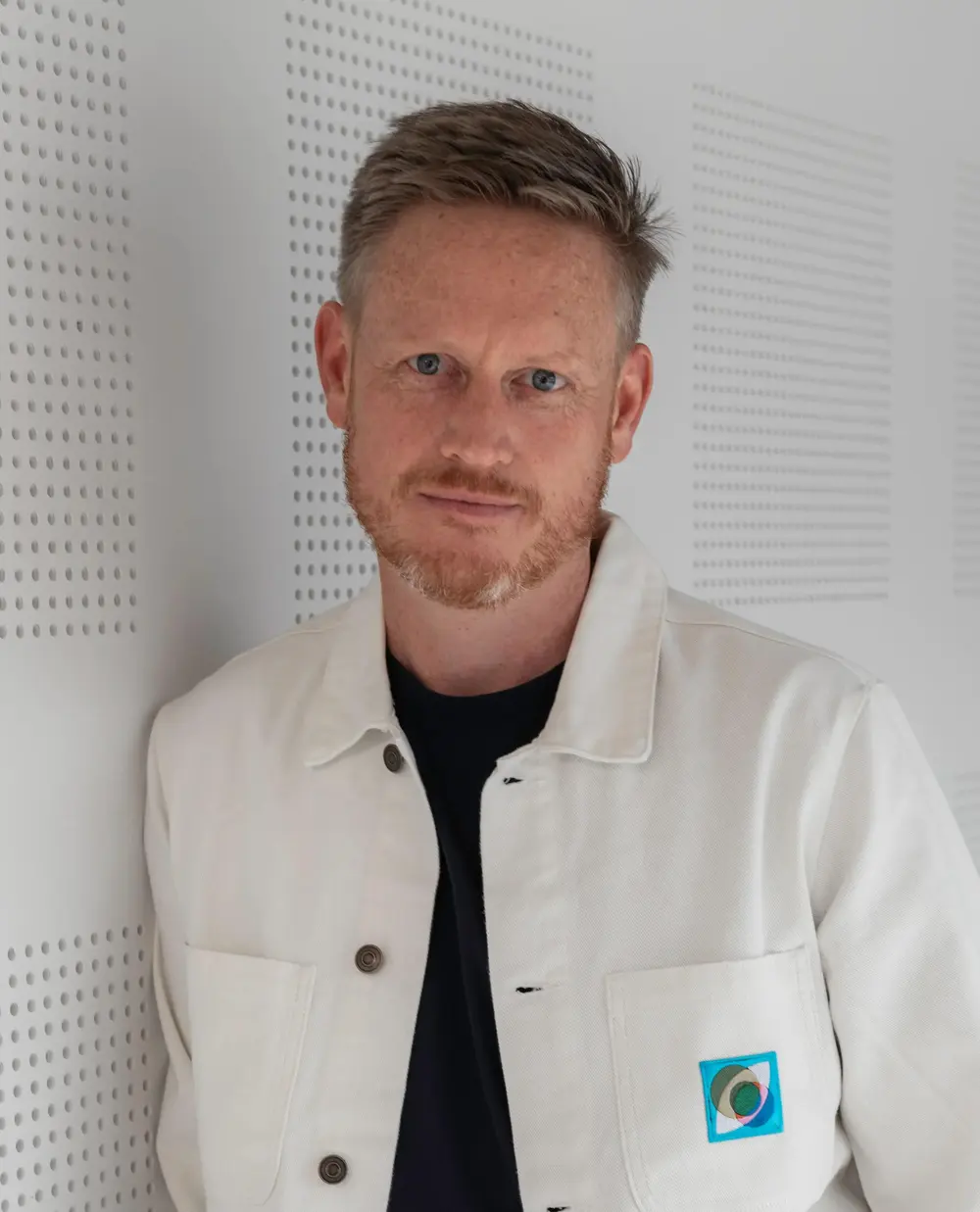


 ▶
▶  ▶
▶  ▶
▶  ▶
▶  ▶
▶ ▶
▶ ▶
▶