Transcript Synced · select any line to jump ▾ 0:02 Georgie Healy: Founders scale faster on Deel. Set up payroll for any country in minutes, hire anyone anywhere, get visas handled fast, and get back to building. Visit deel.com/dayone. 0:15 Georgie Healy: That's D-E-E-L.com/dayone. Hello and welcome to In the Blink of AI, where I talk to the brightest AI startups and innovators each week. I'm Georgie Healy, and this week I'm speaking to nobody. 0:38 Georgie Healy: This is my first ever solo show. We're mixing things up a little bit. Uh, I don't think I've really introduced myself properly on the show before, so, uh, I have 15 years of experience in the startup and tech ecosystem, but I started my career as a chemical engineer. 0:57 Georgie Healy: And one of my favorite career paths, journeys, situations was when I worked in the automotive industry. I worked for Ford, Jaguar Land Rover, and at parties I love to tell people that I worked at McLaren. And it was a really disruptive time. 1:18 Georgie Healy: It was when, you know, all the cameras were being installed and autonomous vehicles was first becoming a topic of conversation. I got into the startup ecosystem during COVID and, you know, really it started as just wanting to build an app for the fun of it. And then, you know, I kind of fell down the startup rabbit hole and just didn't want to come out again. 1:42 Georgie Healy: And so I briefly worked as a VC and these days I run the AI Accelerator at Google in Sydney. So I have been speaking to AI founders every day for some time and You know, the conversations I was having, I just was so blown away by one, what I was learning through having these conversations and in such an easy-to-digest way when it's conversational. And two, I just thought these kinds of conversations need to be heard by a wider audience. 2:18 Georgie Healy: You know, most people just see the fearmongering headlines about AI, or just, you know, they just don't know anyone that's an expert in the field. And that's kind of how the idea for the podcast came about, just making the conversations I was having with AI founders more public. So today it's gonna be a quick one. 2:43 Georgie Healy: I knew it would be a solo episode today. So I spoke to fans of the show about their biggest burning questions, and we're gonna answer them today. And I've got 6 key questions But they all circle around the topic of will AI take my job and what the hell am I going to do about it? 3:01 Georgie Healy: So grab your iced oat matcha latte and settle in. Let's go. So we're going to start with an easy one. 3:11 Georgie Healy: Will AI impact jobs in the future? So I asked previous guest Nicole from EngTruth. She says, probably yes. 3:20 Georgie Healy: So time to get emotionally aware and develop some social emotional skills. I don't know if I pulled off the way she speaks in that, but you get the idea. And I was like, okay, I've got to ask someone else for a positive spin. 3:34 Georgie Healy: So I asked Rayne, partner at Archangel, as if you don't know him already. And he said, 1, AI will bring efficiency. 2, AI will make decisions for humans. 3:47 Georgie Healy: 3, most humans will become dumb. 4, most humans will become inexperienced. 5, lose the meaning of life. 3:53 Georgie Healy: 6, end of humanity. So thanks, Raine. Thanks, Nicole. 3:57 Georgie Healy: I guess that's the show. Thanks for tuning in. Okay, how about we look at question number 2? 4:05 Georgie Healy: Which jobs will be affected by AI? So you guys remember Daniel from our Deep Seek episode? He works at Gigabuddy, and he said, look, if your job doesn't require much intuition, judgment, creativity, or human interaction, then yeah, AI will probably like take your job. 4:25 Georgie Healy: He didn't add the likes in there, I, I did that. And when Steve from Lorikeet was on the show recently, he specifically mentioned the displacement of typesetters, which are kind of like a graphic designer that move imagery. But other areas that will be impacted by AI will be definitely customer service, data analytics, transportation, If you think of self-driving vehicles and the logistics industry, that could be completely disrupt that entire industry. 4:55 Georgie Healy: And I mean, are you really that surprised that AI is going to change your jobs or many jobs? Anyone that's used an LLM recently, um, anyone that's used NotebookLM to upload different YouTube and different multimedia files and then get it to create a Q&A. Anyone that's even done a Google search and then seen at the top of the search results this consolidated, concise answer to your search query, you know that there's a substantial amount of your work and people's jobs that are going to be impacted by that, right? 5:33 Georgie Healy: Robotics is huge, right? They're coming for physical work, dishwashers and people that work in food prep. And emergency first responders. 5:42 Georgie Healy: Like, there's so many jobs that robotics can also disrupt. We've got our next guest on the show who's gonna be talking about how the legal industry is being significantly impacted. A side note, by the way, I didn't get into law post-high school. 5:59 Georgie Healy: Like, you required the top grades, and I was really disenfranchised by that. And so I'm a little bit validated that law's being disrupted because clearly I'm petty. And, you know, it turns out Legally Blonde was a lie. 6:14 Georgie Healy: I couldn't get in purely due to being like giggly and bubbly, which, you know, I just, I just want you to know that. The more you know, right? To Angela from Empathetic AI, she says repetitive and boring jobs will be replaced, but who really wants them anyway? 6:32 Georgie Healy: And I couldn't agree more. So is AI going to take over the world? That's question 3. 6:38 Georgie Healy: Elon Musk famously, I think everyone thinks of this or this hurt them in a deep level when he said this, "AI poses an existential risk, and it could be more dangerous than nuclear weapons." And then he went and founded xAI. But, you know, like these kinds of fearmongering headlines happen daily, at least in my newsfeed. So I kind of think of that Harry Potter scene where there was a troll in the dungeon, and all the students started like screaming, And that's kind of the impression I get whenever I type AI into news. 7:16 Georgie Healy: But like, I loved Jeff Bezos's take on this. He was asked whether AI would take all the jobs, and his answer was that that question was unimaginative. And I kind of love that as an answer, but please, guests, never say that to me when I ask you a question. 7:33 Georgie Healy: Look, I remember when I worked in automotive, you know, the second we started having cameras being put on cars to help with reverse parking and, you know, you know, preventing accidents and things like that. Anyone outside the industry would immediately go to, oh my gosh, matter of time before we've got flying cars. And I just think that we're extrapolating in such a significant way then and now with AI. 7:59 Georgie Healy: We still don't have flying cars, and look, I just don't think we're moments away from a world taken over by robots and useless people. I loved Dan's take on this. He said, "AI can give you an opinion, but people are going to want to talk to a human, not because the human will necessarily give better advice, but the process of talking to a human will make them feel better, like you're in it together. 8:25 Georgie Healy: I just don't know that people will feel the same camaraderie with AI." So, let's go to question 4. Who is building the most exciting stuff in AI right now? Or what company should I be backing? I think I've made it clear on the show before, I'm not an investor. 8:43 Georgie Healy: Uh, you should definitely go ask your local VC which companies will win, which founders are the most likely to be— make their company profitable. But I won't dodge the question entirely. Look, I, I guess we could think of the rise of the internet as a, a great analogy and, and try and use previous data on which companies were successful out of that technical revolution and consider what might happen here. 9:10 Georgie Healy: We thought of Jeff Bezos and Amazon disrupting physical bookstores. Netflix did the same for like Blockbuster and videos. But I mean, what did they all do? 9:22 Georgie Healy: They disrupted a— or augmented an existing industry to great effect. I think 99% of AI companies that I meet are doing that. They're not starting with a blank sheet of paper. 9:35 Georgie Healy: They're making an existing process or industry simplified or a better experience for users or customers. So, I just don't really know who's going to win necessarily. And frankly, I don't really care. 9:49 Georgie Healy: For me, what makes something exciting in AI is: A) Is it easy to pick up? Like, can I just start using it and it's really intuitive? B) Is it super fun? 10:03 Georgie Healy: Do I enjoy using it? And fun can be like great productivity. Otter is fun because you look at the transcript and you're like, whoa, that's pretty fun. 10:13 Georgie Healy: You know, put everything into a clear actionable list for me. I find that fun. And C, does it save me time? 10:22 Georgie Healy: You know, time is currency for most of us right now. Question 5, which tools should I be using? So what I am bullish on is you should be using tools. 10:33 Georgie Healy: I don't really think it matters which, but if you are actively, proactively trying to play with AI tools, I think you're doing a great job. Sam Garvin from Hello Canopy said, companies are now looking for people with the skills to effectively use AI as part of their role. And she's got a really strong HR background. 10:57 Georgie Healy: She thinks that we'll start to see, you know, AI agent building instead of proficient in Excel on resumes. But like, I'm not building agents personally. These are my top 4 skills to upskill. 11:10 Georgie Healy: Just dedicate an hour a week or half an hour a week to play with any AI tool that you've heard about. Like, I'll give you some right now. Go on Gemini or ChatGPT and click the deep research button and ask it something. 11:27 Georgie Healy: What I asked it recently, uh, because apparently I have negative time these days. I'm going to Europe in June. I haven't booked anything, planned anything. 11:39 Georgie Healy: All I know is I will be there and in several different locations over 10 days. And I typed into it, I'm going to be in Paris for 2 days, London for 2 days, San Sebastian for 3, Rome for 3. These are my interests: medieval architecture, inexpensive food, and cringe, but like honest, great places to take photographs. 12:04 Georgie Healy: And it created a beautiful report for me. Now, scientists are using Deep Research to cure cancer. I'm using it for great Instagram photos, but I really think that if you are playing with these tools, you are upskilling and you are already going to be competitive in the future workplace and job market. 12:24 Georgie Healy: 2. Go to local events. I can recommend the GenAI events on Meetup, but I learned so much about other tools through going to these events. 12:34 Georgie Healy: A future guest on the show brought to my attention Cling AI, which is the image-to-video Chinese company. It's incredible. Look, without sounding too earnest, if you focus on learning as play and you're not worried about your job and doing it just because you want to you know, keep your job, you're gonna have a way better time. 12:54 Georgie Healy: And finally, like I will say, tech podcasts, you know, it doesn't matter if they're super technical or super conversational. If you are just ingesting topics around AI, obviously I think this show is a more fun but also educational way to kind of feel on top of things that are happening. It doesn't require you to sit down on your computer and look at a blank screen and figure out what, what the hell am I going to try and teach myself? 13:23 Georgie Healy: It's a, you know, you could do it while doing school lunches and things like that. Charmaine from Friday said the best time to start adapting is now, no matter how small the step. And I couldn't agree more. 13:34 Georgie Healy: So we're up to my last question. What am I doing with my career? What is Georgie Healey doubling down on? 13:41 Georgie Healy: So like, I've worked for 20 years now and in so many different kinds of roles. I reckon I made probably a 7 out of 10 engineer. If I'm being kind to myself, maybe an 8 out of 10 consultant. 13:57 Georgie Healy: When I worked in banking, I was like a 2 out of 10, you know. And what I think I've learned is that what I am 10 out of 10 at is my communication skills, frankly my personality. Not for everyone, but you know, vibes, vibes are high. 14:15 Georgie Healy: And I am just doubling down on my personal brand, my personality being a key moat in the age of AI. I love talking to people. I've developed an incredible network of people that are 900 times more brilliant than I am, and I just focus on what I love doing. 14:35 Georgie Healy: I 100% back myself on being better at making friends than AI, better at helping others, uh, creating genuine connections. I've also seen firsthand that when I co-host an event, you can make such an impact the way people are, you know, about their mindset, about their focus. And that's what I am, you know, if you follow me on LinkedIn, you can see that that's what I'm up to. 15:01 Georgie Healy: That said, I think I've also made very clear that I'm using the AI tools. I am dedicating time to upskill myself and Frankly, I do that daily by asking people that know more about me about AI and putting in the time to play with things I hear about. So my biggest takeaway here is if you figure out what you love and what you are 10 out of 10 at, and you play with the tools at the same time, you are going to serve yourself in the future of the work in a world of AI. 15:34 Georgie Healy: So let's finish this with a quote from our first ever guest on the show, Jada from Xylo Systems. She says, the future belongs to those who leverage AI as a tool, not those who fear it as competition. Big eye face, big eye emoji. 15:54 Georgie Healy: So huge thank you to everyone who asked questions today. Also to the incredible founders that provided answers for the show. I really love this kind of dialogue. 16:04 Georgie Healy: Keep the questions coming. I hope this show inspires you to try something new. And for me, I this week am going to play with Sesame. 16:13 Georgie Healy: I've had more than 5 people tell me about this, uh, in the last 2 weeks, and so I'm desperate to see what the fuss is about. I'll see you next week. Thank you for tuning in. 16:26 Georgie Healy: Thank you for listening to In the Blink of AI. You can check out the show notes for anything discussed in this week's episode, and we will be back next week. This podcast was produced by Day One with music by Dan Hansen and visual artwork by Sophie Tyrell. 16:43 Georgie Healy: If you loved the episode, please tell your mates. And I love AI news. Please share your thoughts and suggestions to georginarosehealey@gmail.com.

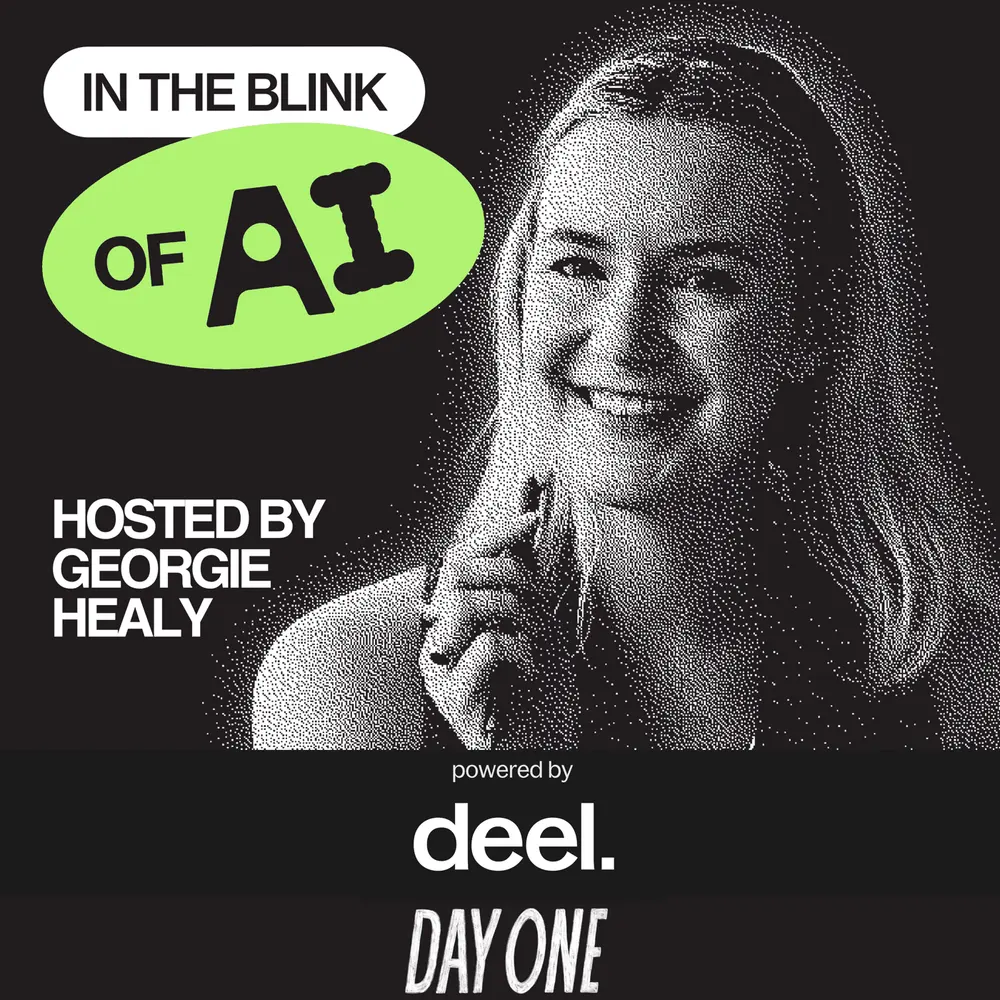 In The Blink Of AI with Georgie Healy
Presented by Deel & Stripe
In The Blink Of AI with Georgie Healy
Presented by Deel & Stripe 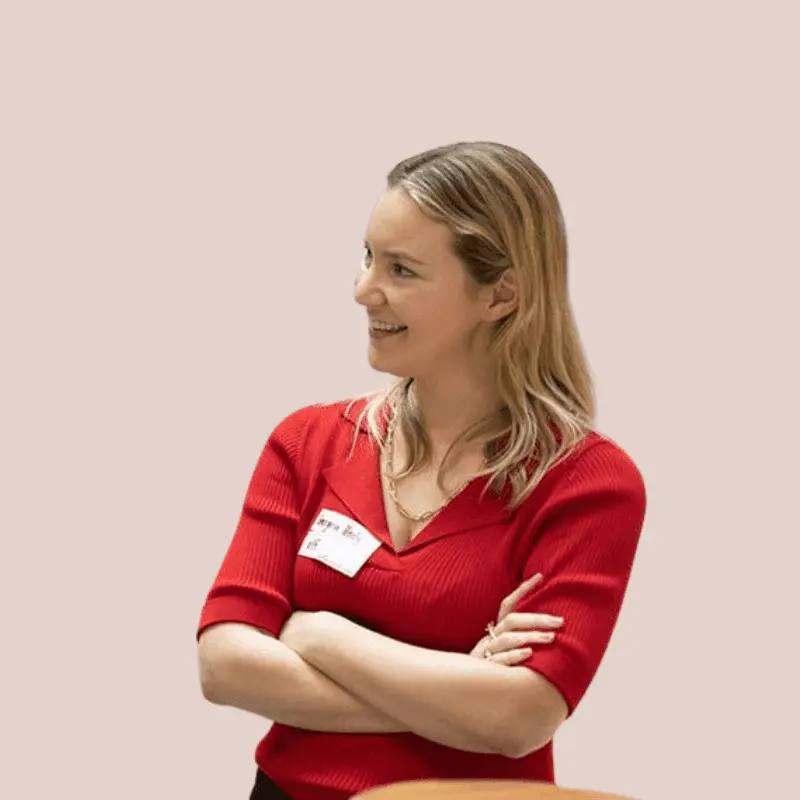 Guest Georgie Healy Host, In The Blink Of AI, In The Blink Of AI

 ▶
▶  ▶
▶  ▶
▶  ▶
▶  ▶
▶ ▶
▶ ▶
▶