Transcript Synced · select any line to jump ▾ 0:01 Georgie Healy: Founders scale faster on Deel. Set up payroll for any country in minutes, hire anyone anywhere, get visas handled fast, and get back to building. Visit deel.com/dayone. That's D-E-E-L.com/dayone. AI researcher or AI engineer, pick one. Refuses to come into the office but great at deadlines, or misses deadlines but in the office Great vibes, good for team morale. Which one? Are you hiring the uni academic or are you hiring the big tech hire like ex-Google, Amazon? Genius AI wizard, but it costs 3 people's salary, or a rookie not so obsessed with salary, just excited to learn? This week I'm speaking to Dominik Ng. 0:51 Dominick Ng: We're gonna get intellectually lazy because we had to do all the thinking before and now we don't. 0:56 Georgie Healy: He has 7 years in academics, a PhD in computer science. He got the University Medal at UCEDD. He was a visiting scholar scholar at UC Berkeley. Then he went on to work at Google for 9 years and since then has been at Relevance AI as Director of Engineering. They're Australia's agentic AI darling. Every time I've vibecoded an app or anything else— 1:20 Dominick Ng: You get stuck at the API. 1:21 Speaker: Always. 1:22 Dominick Ng: It's like, why is there no information coming through? What does this error message mean? 1:26 Georgie Healy: I'm copy-pasting all these API keys and I'm like, Yeah, exactly. 1:31 Dominick Ng: Like what magic incantation do you need to actually get— Yes. The information's there. You can see it. It's just not making its way over the bridge. 1:42 Georgie Healy: Hello and welcome to In the Blink of AI, where AI chat can teach you something but doesn't have to be stupidly boring at the same time. I'm Georgie Healy. Look, there are some amazing technical people with PhDs in computer science, and there are some people that are very charismatic charismatic AI founders and the like. You can find these people on LinkedIn. Doesn't take that much searching. But every now and then, there is a rare special gem who is technically brilliant, but also able to translate that brilliance to the rest of us. 2:18 Speaker: And when that happens, I wanna be really evil and mean and keep them to myself. 2:22 Georgie Healy: But I don't. I get them on the show. You're very, very welcome. Where to start with Dom? Look, he's incredibly brilliant. 2:29 Speaker: He's incredibly patient. 2:31 Georgie Healy: This is someone that likes people. Knows how to motivate them. I am thrilled to have him as a friend of mine. I'm a huge fan. And I'm so excited to share this episode today. Let's dive in. 2:43 Speaker: You're listening to a Day One FM show. 2:46 Georgie Healy: I've been looking forward to this for some time. I've had on my phone notes app, the, the Dom questions, and anytime a headline comes out around hiring or AI teams, or even just any headline really, I feel like you could explain to me in depth, which I love. And the notes have just got longer and longer and longer. So I'm so excited for everyone else to get to bask in your brilliance a little bit, Dom. Because there are amazing technical people, there are amazing storytellers, and you are a rare, rare special gem. Let's start by talking about where you grew up in Australia. 3:28 Dominick Ng: So I, you know, I was actually grew up, was born in a small country town about 4 hours northwest of Sydney in the Upper Hunter, a town called Scone. So, 4,000 people in the town, pretty small. My school, kindergarten to year 12, had 300 at the time that I was there. So, I finished year 12 with 22 other people in my grade. 3:55 Georgie Healy: Wow. 3:56 Dominick Ng: So, pretty much— 3:58 Georgie Healy: We had 300 people in our Grade 8 class. 4:02 Dominick Ng: Yeah, we got to 40 at largest in Grade 7 or Grade 8, and people sort of dropped off as they finished up early, went to boarding school. A lot of children of farmers who typically sort of send the kids to boarding school at some point. So, we just shrank. 4:20 Georgie Healy: Wow. The reason I ask is I kind of do need a link between this rural upbringing and university medal in computer science, Fulbright Scholar, like what's the gap there? What happened? What happened, Tom? 4:38 Dominick Ng: I mean, I think growing up in the countryside, I think it really gives you a really strong sense of perspective. So, you know, my parents immigrated over to Australia, neither of them finished school. And they basically, you know, they owned a restaurant in the town that we grew up in and they worked 7 days a week. Right, really trying to give me and my siblings sort of opportunities that they weren't able to have, right? They both grew up extremely poor and in very large families in Malaysia. And so, I think the perspective there is like, well, you know, you see your parents working so hard, but also you're in a community where, you know, there's kids of farmers who similarly are working extraordinarily hard. You know, I kind of felt a real sense of responsibility in a way to make the most of the opportunities that I got to have. And so, I think the other big thing was, I guess I always wanted to be sort of in charge of my own story, right? I didn't want to have the fact that I grew up in the middle of nowhere in a small country town and went to a tiny school, you know, restrain me. And my year at school, that 23 people I mentioned, Of that, there's 2 of us who got PhDs, there's about 3 or 4 doctors, there's an architect, there's a couple of lawyers, there's a physio. We all actually did pretty well. And also, you know, there's a few people who are— 6:09 Georgie Healy: Something in the water out there, is there? Something maybe. 6:11 Dominick Ng: But there's also people who are, you know, went to be jackaroos on farms and teachers and whatnot. But I think, yeah, for all of us, it was really about like, well, where we are is not really an impediment, right? Like, we each can be responsible for our own destinies. And everything that I think I've been fortunate to do since has really been powered by that. Like, what are the opportunities that are there? Like, I shouldn't let them pass me by. It's having that perspective that you, you know, you don't get every single opportunity when you're growing up in the middle of nowhere. You've got to make the most of the ones that you come across. And as it turns out, you can come across a lot of really great ones. 6:56 Georgie Healy: Yes. 7:00 Speaker: As a startup founder, you're juggling multiple priorities from the expected, like finding product-market fit, to the unexpected, like customer requests for SOC 2 or ISO 27001 certification. Achieving compliance is time-consuming, and time spent on that is time away from the needs of the business. And that's where Vanta comes in. Vanta is the all-in-one solution for startups to become compliant quickly and build a security foundation with ease. With a combination of automation, an extensive partner network, and a security marketplace containing 385+ pre-built integrations, Vanta provides the necessary tools and expertise for startups to achieve compliance seamlessly. No matter how urgent your needs are and at every phase of growth. Over 10,000 leading companies, including Cypherstash, Handle, and Indebted trust Vanta to automate compliance so they can focus on growing the needs of their business. Here's the important part. Startup listeners of the show get $1,000 off if they go to dayone.fm/automatecompliance. 8:17 Dominick Ng: /blink. 8:19 Georgie Healy: When we first met, I was one of the only non-AI engineers in the room, and you just had this sense of patience in explaining quite technical AI concepts. So I feel that humbleness, and I feel that down-to-earthness nature, even though, you know, Relevance AI, where you're head of engineering, is on the top of every awards list at the moment. You wouldn't know if you bumped into you at a coffee shop. I am curious, you've been in AI for some time, you're obviously incredibly technical. Were there any murmurs of this AI boom before it happened that you could start to see some writing on the wall, even when you were in engineering as a student, or like, tell me what it was like. 9:03 Dominick Ng: I mean, AI has sort of been the next big thing for about 40 years now. So I think it's all always sort of been the, the, that frontier, right? And what's really changed in the last sort of 5 years in particular, um, has really been the, the sort of unlocking of data and compute. Um, so a lot of the sort of, um, like things that are fueling the boom right now, um, it's not like we've sort of uncovered magical algorithms or techniques that we didn't really know about before. In fact, uh, you know, large language models, LLMs, language models were sort of 101, AI 101, right? The very first thing you would cover, oh, look at this nice sort of trick you can do. It's sort of, you know, it's sort of cool, but also there's no way this can be practical. 9:57 Georgie Healy: Is that a cat or a dog? Not super useful to day-to-day life necessarily. 10:02 Dominick Ng: Well, the ability to kind of tell cats from dogs sort of, you know, came from really powering up the very basic techniques with more data. And more compute. And it's, it's funny, you know, I, in the PhD that I did in, in this area, you know, there are papers back to the early 2000s that were basically saying like the secret sauce is more data. Like the more good data you add, the better it will do. And so over the last few years, as we've gotten massively more availability of compute power, mostly we can see that in Nvidia's stock price, but also the ability to couple that with enormous amounts of data, like orders of magnitude more data than we've been able to use before. That's sort of gotten us to where we are. So in a way, you could say that the seeds for the boom have been there for a very, very, very long time. It's just that it really needed the kind of fertilizer to come by in the form of data and compute. 11:05 Georgie Healy: Makes me feel a little bit better because I always feel like I'm behind. But, you know, if it took 40 years for us to get here, maybe a few extra years of me catching up won't kill me, right? 11:15 Dominick Ng: Oh, definitely not. I mean, companies were sort of declaring themselves as AI first, you know, in the early 2010s. And you know, that's 15 years ago now. So the wheel continues to turn. 11:30 Georgie Healy: Mm-hmm, mm-hmm. So early on in the show, I love to do AI hack of the week. It could be a tool, it could be a prompt, it could be anything you like. I don't need you to make it more palatable for me necessarily, unless you wanted to. You can go fully technical if you like. I've got one as well. Do you want to kick us off? 11:48 Dominick Ng: Yeah, sure. I mean, you know, forgive me for sort of plugging some relevance things here. 11:55 Speaker: You have to. 11:56 Dominick Ng: We're essentially been working really hard on this sort of productivity suite. And the first thing there is a slide generator that's actually kind of amazing. So just earlier this week, I had a spreadsheet of sort of, of status items basically. So it's very dry, very, you know, very texty. And I basically— 12:16 Georgie Healy: When you say status items, what do you mean? 12:18 Dominick Ng: Just some tasks and what their status was. 12:21 Georgie Healy: Perfect, yes. 12:22 Dominick Ng: So very dry. 12:22 Georgie Healy: I'm with you, yes. 12:23 Dominick Ng: Very texty. And I essentially just put this file into the slides generator we had and said, please generate me a slide deck. Here's some guidance as to what I want it to look like. And then bam, it gave me a really, really pretty slide deck of all of those points and I just had to kind of go back and forth to refine a bit of it. But, you know, I've made so many slide decks as part of my job, just in my personal life as well, because it's a really great way to sort of, or expected way in many cases, to convey information. And you just spend a lot of time making them look right, getting the right padding in. 13:04 Georgie Healy: Aligning. 13:04 Dominick Ng: Aligning things, 'cause I'm really like, the attention to detail is important here. But just being able to have that visual piece handed off so that all I need to do is put the content together. And this was very dry content as well. That's another aspect where you're trying to get the tone right and so on. So being able to kind of hand that off and have that happen and have me be able to be more an editor, like, yeah, an editor overseeing the process rather than having to do— 13:35 Georgie Healy: Less admin. 13:36 Dominick Ng: Yeah, do the sort of admin and mechanics myself. Yourself was just such an unlock, I think. 13:42 Speaker: Yes. 13:42 Dominick Ng: So— 13:43 Georgie Healy: I'm so glad for my career that I'm not in consulting anymore 'cause that would kill me. 13:48 Dominick Ng: Yes. 13:48 Georgie Healy: But it was so boring to do. And looking at a blank slide is really hard as well. 13:54 Dominick Ng: It's the worst feeling, absolutely. So we're sort of calling it vibe sliding. 14:00 Georgie Healy: Vibe sliding. When can I use it? When's it available? 14:05 Dominick Ng: I mean, it's available right now, actually. But in our chat product, chat.relevanceai.com. But you might see some more things around vibe sliding very, very shortly. 14:16 Georgie Healy: Yes. Mine's a little bit of a— my hack, I increasingly will say when I've used something and I'm not sure that I actually recommend it. This Prompt Cowboy product. 14:28 Speaker: Yeah. 14:29 Georgie Healy: So many people love Prompt Cowboy. You can basically type in the thing that you want to have happen, and then it gives a very comprehensive way to feed that into an LLM of your choice, right? Like an A4 page. Maybe the question is, I want to, give me a prompt that you would put into Prompt Cowboy. 14:51 Dominick Ng: Let's see, how about, you know, help me figure out the right sort of, you know, TV sound system. 14:58 Georgie Healy: Yes, yes, yes. But then it'll take that and really flesh it out. Into the most comprehensive prompt that you put it in and you get the answer you want instead of back and forth with the LLM. My personal experience though, Dom, is that I kind of don't want it to be too granular. Sometimes I kind of enjoy the back and forth with the LLM. Sometimes I get more ideas from it kind of needing me to think a little bit more. And prompt again and prompt again and prompt again, or I get inspired or it takes me over here. I don't know that it's for me. 15:40 Dominick Ng: I think this is really, really interesting, right? Because I think this kind of comes at the heart of one of the really sort of, I guess, kind of cringe-like feelings around AI. It's sort of, it's gonna create this sort of laziness, right? Because things just happen for free, right? And it's, The thing is, I think like almost every single sort of technological innovation has had this kind of strings attached to it, right? It's going to be too easy for us to exist because suddenly a lot of the physical things that we were previously unable or found really hard to do, we now have, you know, mechanical or electrical or whatever else sort of assistance to kind of do. And now LLMs sort of represent the more intellectual side of it. We're going to get intellectually lazy because we had to do all thinking before and now we don't. But I think you've hit upon something that's actually, you know, why I find that to be so cringe. It's because, well, we are thinking beings, right? Like, people get enjoyment from the process of going through these things, right? Yes. And yes, there are a whole heap of things where people just want to be lazy, don't want to think about it, but at the end of the day, that's that's not the default state for people in a lot of the things they do. They want to be stimulated. Why do people do crosswords or Sudoku? Why learn an instrument? Why learn an instrument? Why play board games? It's because they want to be engaged. They want to work through these things and use their brains. And I think a lot of people do actually enjoy that aspect where they're going back and forth and able to grow their own knowledge and understand more and have this sort of partner who can do that, who's available and contextual and able to sort of keep up with you in whatever direction you want to go in. 17:34 Georgie Healy: Before we dive into the next section, that has made me think of the Apple headphones that live translate. You've seen these, I'm sure. 17:42 Speaker: Yep. 17:43 Georgie Healy: And everyone's like, "No one will ever learn a language again." And what you described is kind of how I felt about it. I'm like, I never did it. I never tried to pick up a few words when I was in a new country for any other reason than the joy of the process of trying. Do you find that as well? Do you think people will not ever try and learn a language again? 18:06 Dominick Ng: Again, I think, you know, I think intrinsically people are social creatures. 18:13 Speaker: Yeah. 18:14 Dominick Ng: People enjoy communicating with each other. People enjoy the connection and the sparks and the moments that you get where you, as somebody who's learned a foreign language, goes to that country and talks with people who've grown up there and just the moment of like connection that you get. Like, you can't replicate that without, you know, a live translate feature does not give you that same sense of humanity, right? 18:43 Georgie Healy: Yes. 18:43 Dominick Ng: Yes. And at the end of the day, like technology lives in service to humanity. And I think it's really important for us to not lose sight of that. 18:52 Georgie Healy: Hmm, beautiful. Okay, and now to where we're diving into your domain expertise. I'm really excited to talk about, well, there's two areas. One's building AI teams, which we're gonna do later, Agentic AI. You live and breathe this stuff, Dom. I'm so excited to have you on the show. You've got a strong coding background, and I recently read that what would previously take a team of 6 engineers 3 months to complete, one engineer can do on a weekend by themselves with AI-assisted coding tooling. Is that fake news? Maybe. And if it's possible, what does that look like? Like as someone who's not a software engineer, what does that even mean or look like? 19:42 Dominick Ng: Yeah, let's break it down a little bit. 19:44 Speaker: Yes, please. 19:44 Dominick Ng: So I think the kind of key thing to understand here, where are the limits, right? What was causing it to take the 6 months with multiple engineers, right? And so for that, your limitation is essentially typing speed, right? How quickly can those engineers get the ideas that they have and the things that they're trying to do into code and therefore into an actual, to create that actual product. So before AI-assisted tooling, you literally had to type it all out. And we had some tooling that would help and jump you ahead and have, you know, fill you in, in sort of faster jumps. But fundamentally, you as the engineer, as the programmer, have to type every single thing out. 20:33 Georgie Healy: Oh my gosh. 20:34 Dominick Ng: So one of the big unlocks— 20:35 Georgie Healy: It's that simple. It's physical. 20:37 Dominick Ng: So one of the big unlocks has been that AI tooling can just do a lot of the more of the typing for you in a way that was simply not possible before, right? And so that's one big aspect. You can just chew through a lot more things in that way. Now, what are the limitations, right? Well, now your limitations are around what's your idea? Like how complicated is your idea? How many moving parts? Does it have? And so, when you have multiple engineers, you can multitask. You can have different people working on different parts of the system, and you need a good plan to make sure that all those parts come together, right? 21:15 Speaker: Mm-hmm. 21:15 Dominick Ng: It's like when you're building a house or doing renovations or anything like that, all the bits have to slot together even if multiple people are working on them. And so, that original plan is super important so that everything is measured to the right size, slots into the right place, works with each other in the right way. 21:32 Georgie Healy: So, if you've referred to a concept or a word as something and another engineer's referred to it as something else, it's like, eh. 21:39 Dominick Ng: It'll fall apart. 21:40 Speaker: Okay, okay. 21:41 Dominick Ng: Exactly. 21:41 Georgie Healy: Great. 21:41 Dominick Ng: Right? So, now if you've only got one person with AI-assisted, AI assistants doing things, right? You don't have the coordination overhead that you did before, but equally you don't have the benefit of multiple people with multiple different perspectives and skills contributing. 22:02 Georgie Healy: Mm-hmm. 22:03 Dominick Ng: And so where you lose is often like, well, you might miss that, here's one example, right? Colors. There's a good chunk of people who are colorblind, right? And if you have an engineer on your team who, or a designer who is colorblind, they are naturally gonna pick up issues where, for instance, you've used colors that are gonna look exactly the same to two different people. Sorry, to people who are colorblind. But if you don't have that perspective, you might just use those colors and not realize until somebody asks you, why does everything on your site look the same? And so your sort of ability to, you know, in a way having the bigger team and the more diverse team there with more coverage and experience and ideas can also be a real benefit, even though sort of the speed-ups that we are getting from AI tooling is immense. So I think that there's a few different perspectives there on— 23:09 Georgie Healy: That's very interesting. 23:10 Dominick Ng: How do we, you know, we're able to move so much faster, but how do we make sure that we don't lose those perspectives and lose the benefits of having multiple people contributing? In a way we can build bigger and faster. How do we do that in a way that's still giving us reliable, delightful, helpful, human-focused products? And the other thing I would say on this topic is the building the product is one thing, right? Having it up and together and, and, and, and sort of, oh look, on my computer it runs and it's lovely and it does everything I need it to do. But then productionizing it, putting it into a form that everyone in the world potentially can make use of in all the myriad ways that they can think of and not have security breaches, not have bugs in because one country uses right-to-left writing instead of left-to-right, or another country has different number formats and expects things to have commas where you would expect to have space. There's just there's an incredibly long list of details that you need to get right to bring products to a worldwide audience. And those are the sorts of things where, again, if you're one person with a tool building things over a weekend, you're probably not gonna be able to get that far down the priority list. 24:40 Georgie Healy: Wow, the tail end stuff taking you forever. Andrew Ng, he was the co-founder and head of Google Brain. I'm sure you're familiar. He recently said that agentic AI marketing hype has outgrown real business progress, but he does say it is rapidly, the gap is closing. What do you think? 25:03 Dominick Ng: Yeah, I think he's pretty much spot on. The hype around AI, like there's undoubtedly an enormous amount of hype. We're undoubtedly in, in a bubble, right? But again, if we look back in the arc of human history, it's happened again and again and again, right? New technology sort of comes about, there's a gold rush, there's a stampede, and then reality sort of sets in. 25:29 Georgie Healy: Disillusionment. 25:29 Dominick Ng: Disillusionment. It's, you know, the valley of disillusionment. 25:32 Georgie Healy: The trough, yeah, I'm in it. 25:32 Dominick Ng: The trough, right? Before you sort of come back out and you sort of, you know, end up on on firmer ground as we actually understand sort of where things go. And I think, you know, you look back at the sort of tech boom of the early 2000s, right? Most people talk just about the sort of, you know, the pets.com, like these sort of e-commerce businesses that grew crazy valuations and listed publicly on basically nothing. And like, how could they have been so silly to sort of see— It's so obvious now. It's so obvious now, right? But at the time, it's still powered by the same underlying hype. And actually what was happening then as well was a ton of investment because of the hype went into a lot of fundamental telecommunications infrastructure, fiber optic links and sort of data center infrastructure and the like that has enabled the following period that was really the boom of the internet. 26:29 Georgie Healy: Mm. 26:30 Dominick Ng: So, you know, in early 2000s it was really hyped, but it took the rest of that decade for, for every home to get a computer, for computers become mainstream in education and business and government, and for smartphones to then come about. The mobile telecommunications networks had to get to a point where they could support smartphones. And so out of the kind of the ashes of that trough and the hype and the investment came those real tangible improvements and gains in all of our lives, right? 27:03 Georgie Healy: Oh, I'm so excited for that. Like I definitely feel like both is true at the moment. We're all using AI daily, at least, like my mother's using AI. 27:14 Speaker: Like it's— 27:14 Dominick Ng: That's a bit of a test, right? Yes, yes. 27:17 Georgie Healy: And maybe not like she's not using an AI agent yet, but it's like, it's happening. 27:24 Dominick Ng: My parents talk to me about, you know, Deepseek and geopolitical things related to AI. It's permeated the consciousness, right? And that's always, I think, a bit of a marker. 27:34 Speaker: Yes. 27:35 Dominick Ng: How much are people who aren't in this industry using it, talking about it, or exposed to it, are aware of it? 27:42 Georgie Healy: Dom, I keep trying to make this show like a, you know, like a classic startup. It's for a certain TAM, you know, a certain, you know, beachhead market. But everyone wants to know about AI. And I'm like, I keep trying to do that, but everyone is trying to catch up, which is a lovely side effect. When it comes to using agents for businesses, so you're like, this is an enterprise or small-medium business, where should they focus when it comes to agents? Um, or instead of focusing on we need an agent, should they be doubling down on internal knowledge, proprietary data, and context before they even think of that? 28:25 Dominick Ng: Yeah, I think A lot of it comes down to like, well, what are you actually trying to achieve, right? If you're looking to, what are the core problems that you have? And so some of the enterprise customers that we work with, they were having problems where they didn't have enough people to do that, to keep up with the amount of inbound sales requests they were getting. This is a good problem to have, right? And so now we're in an age where we can enable those solutions to be solved. Once you've identified that that's a problem you want to deal with, I think the next question is like, well, is it the type of problem where I can bring in somebody and sort of just describe to them, like, here's what you need to do, here is the goal that you need to accomplish, and here are the tools you have available to accomplish that goal, like training up an intern or a junior or a new person to do the task, to solve the problem. If you can do that, if you can be really clear about that, we find that that's generally the type of role that's really well suited to using agents for. 29:28 Georgie Healy: Wow. 29:28 Dominick Ng: But if you don't have that clarity, if you couldn't bring somebody in and clearly describe to them what they need to do, or you don't have the tools, then you're not really set up for success for either a person or an agent. 29:43 Georgie Healy: Yes, if you can't onboard a person, you can't onboard an agent. 29:47 Speaker: Absolutely not. 29:48 Georgie Healy: Oh my gosh, that's a really, clear way for businesses to think about it. And last for this section, any "I can't believe that worked" scenarios where you've seen someone build an agent that you're like, "I actually am really surprised that that worked so well." So one of the things that we often have to do with engineers, so APIs are sort of the lifeblood of a lot of engineering, right? Oh my God, APIs kill me. 30:15 Dominick Ng: I don't understand them still. So these are just the ways that your system can communicate with any other to get information in. So you have your email and you have your agent, you need to get your email into the agent, you do it through an API, right? And so these are pretty arcane. There's a lot of different formats, there's a lot of inconsistencies and an enormous amount of time is spent by engineers trying to understand how APIs work, trying to understand How do I authenticate? What's the information going to look like when I've got it back? Is it complete? Did I miss something? It turns out that LLMs are actually very, very good at figuring these things out. We at Relevance, we sort of have a lot of agents that are essentially just like, here is a way to call this API and you sort of tell it in human language what you want it to get. So for instance, you might have one here is an email API access. Go and find email messages from this set of dates that talk about this thing, or more complex things than that. And they can go and figure out how to use that API, call the right things and get you back the information. It's kind of like, wow. 'Cause it's exactly the sort of thing as an engineer, you just sit there, you read the documentation, you try some things out, it doesn't work. You try something different. Oh, okay. They've changed that. That's the magical way to get past this error. And you sort of build that knowledge step by step. That sort of ability to, I guess, sort of tenaciously problem solve in a somewhat potentially antagonistic environment is one where I was just like, that's actually extremely impressive. 32:02 Georgie Healy: Wow, because every time I've vibecoded an app or anything else, The API is what— 32:09 Dominick Ng: You get stuck at the API. 32:10 Georgie Healy: Always. 32:10 Dominick Ng: It's like, why is there no information coming through? What does this error message mean? 32:14 Georgie Healy: I'm copy pasting all these API keys and I'm like, bleh. 32:19 Dominick Ng: Yeah, exactly. Like what magic incantation do you need to actually get— you can see the information's there, you can see it. It's just not making its way over the bridge. 32:29 Georgie Healy: I'm so glad that you get this because I'm like, it's 'cause I'm not a software engineer that this must be frustrating 'cause there's some magic like software engineering. 32:37 Dominick Ng: Believe me, it's, software engineers struggle just as much. 32:43 Georgie Healy: Wow, I was even copy-pasting the error code into LLMs being like, I don't understand. And it was like, I don't understand either. And I was like, ah! Okay, we're gonna play a game now. Are you ready? 32:54 Dominick Ng: Yes, let's go. 32:55 Georgie Healy: It's called Engineering Hiring, This or That. As someone who leads engineering teams, I'm gonna force you to pick between two potential hires. It's fraught, Dom. Like there's obviously no real right answer. Obviously there's not enough context, but just assume you're kind of a growth stage startup and you have to pick one. And then you can quickly tell me why. AI researcher or AI engineer, pick one. 33:23 Dominick Ng: AI engineer. 33:24 Georgie Healy: Why? 33:25 Dominick Ng: So AI engineers are typically all about trying to solve problems, practical problems with AI. Right? So, they're generally not too fussed about the how, they're fussed about the what and getting results. And if you're a growth stage startup, that's what that is. 33:42 Georgie Healy: Oh, I see that. You need that. Wow, you made that a lot easier than I thought it would be. Refuses to come into the office, but great at deadlines, or misses deadlines, but in the office, great vibes, good for team morale, which one? 33:55 Dominick Ng: You've got to take the person who doesn't come into the office, but is good at deadlines. And this is tough, right? Because you need the glue people as well. You need the people to hold the team together. But at the end of the day, it's very hard to teach people to be able to meet deadlines. And that is fundamentally the thing that keeps you alive. If you are able to deliver the things that you've promised to deliver in the time that you've promised to deliver them. 34:21 Georgie Healy: Beautiful. As someone who has done both, Are you hiring the uni academic or are you hiring the big tech hire like ex-Google, Amazon, the like? 34:31 Dominick Ng: This is awfully difficult, I have to admit. 34:33 Georgie Healy: Finally, I got you. 34:35 Dominick Ng: This one is the big tech employee, but it's a bit closer than the surface tends to be, right? Because you can get great people out of either and you can get not so great people out of either. This one really does come down to the person. For instance, my time at university, doing my PhD, I was ostensibly a researcher, but I was also doing a ton of really practical sort of consulting and data analyst type work. Lots of work in Excel, putting random little scripts together. I built a scheduling app for the unit that I was working for. Still the most successful piece of software that I made. It's— 35:18 Georgie Healy: they're still using it. Which uni is this? 35:20 Dominick Ng: Sydney Uni. 35:21 Georgie Healy: Sydney Uni, you're welcome. 35:23 Dominick Ng: I found out a couple of months ago they're still using this system about 13 or 14 years after I first built it. No kidding. 35:30 Georgie Healy: This is why I picked the wrong degree, 'cause the ego boost I would get from that would be insane. 35:35 Dominick Ng: It's a nice feeling. 35:37 Georgie Healy: You want one of those academics when you're hiring, right? 35:40 Dominick Ng: Exactly right. And equally right, people who go into big tech, you get people who are doing all that sort of stuff, but you can also get, and this is kind of a little, sort of little-known secret, I guess, a lot of the big tech companies actually have very, very bespoke infrastructure. Like, they've built it themselves. It's not the same as what the rest of the world uses. And often when you get employees from companies like this that have built their own infrastructure, there's a whole bunch of retraining they need to do to just be like, "Oh, okay, I'm back out in the real world. I'm not using the tools that we had available to us." us inside the sphere. And the companies have these for good reason, right? They're working on a scale that far exceeds almost any startup. But it comes with it a lot of baggage, a lot of historical debt, and also this sort of non-standardness. And it can mean that people coming into a startup from those environments have this initial like, oh. 36:44 Georgie Healy: It's not how I'm used to it. 36:46 Dominick Ng: The real world's a bit different. And you don't have as much of the sort of free scalability as it were. So, that's why that one is a real curly one. 36:56 Georgie Healy: Wow, okay, I'm proud of myself for having a tricky one. Last one, genius AI wizard, but it costs 3 people's salary, or a rookie, not so obsessed with salary, just excited to learn, which would you hire at a startup? 37:14 Dominick Ng: Scale up? Oh, this, this one, this one is also a nail-biter. It would just lean towards the rookie. 37:21 Georgie Healy: Really? 37:22 Dominick Ng: Yes. Um, and I think that's because, um, in— so the vast majority of, uh, particularly AI startups, right, uh, we're in the application space. And what that means is that, um, you sort of have the, the base layer, the, the foundation models, right? Your OpenAIs, Anthropic, Googles, etc., who are creating the big models. 37:45 Georgie Healy: Mm. 37:46 Dominick Ng: And that's where a lot of the brainpower is going. There's a lot of complexity in sort of the, both the statistical models, but also, you know, how you wrangle your infrastructure and all of that to make that possible. But that's a very, very narrow space, right? There's a few players in there. You need billions of dollars to succeed in that area. It's very, very hard to break in. 38:09 Georgie Healy: In. 38:10 Dominick Ng: But the space on top of that, the application space, this is the world where, um, there are just so many potential opportunities there for companies because the world's enormous and there are so many opportunities which for an enormous multinational tech company are just too small to care about. But You can make multimillion-dollar, $10 million, $100 million businesses, like hugely successful businesses in these like cracks that the giant companies wouldn't be thinking of. And how do you take on those? Well, you need people who are trying things out. You need people who are generating ideas. You need people who are not fettered by sort of past restraints or sort of too wrapped up in their own kind of own smarts. 39:04 Speaker: Yes. 39:05 Dominick Ng: People who are really humble about what the world actually needs in all the different places that they can find it. And so, self-driven like rookies, juniors, there's a lot of talk about how it's a really tough job market for juniors at the moment. But I think that really sort of like misses the potential in juniors representing people who are not not stuck in ways that have come before and are now more capable than they ever were before to bring that perspective to life. 39:41 Georgie Healy: Wow, amazing. Quite a few at Relevance, I feel, too. These are very talented engineers. Um, speaking of AI teams, another area that I'm excited to ask you about, actually— what does a first-class does an A+ AI engineer look like? So forgetting hiring, if you just weren't even talking about salary or anything else, what, what on paper do those AI engineers have if they're top tier A+? 40:10 Dominick Ng: First one I think is just that drive for self-improvement, because in this era it's easier than ever to learn, but there's more and more and more to learn. And so being willing to, to learn and learn new things and continually do that in a really tight loop, I think is super important. Also because things are changing so fast. Like, you can't just learn something and then sit on it. 40:38 Georgie Healy: Yes, it's already— 40:40 Dominick Ng: It's already out of date. My PhD was about a decade ago. It's all out of date now. 40:45 Georgie Healy: No. 40:46 Dominick Ng: But that's— even that is sort of a long shelf life compared to some of the changes that we're seeing now. 40:52 Georgie Healy: Yes. 40:53 Dominick Ng: What was the apocryphal wisdom 12 months ago is absolutely not true today. So I think that is incredibly important, that self-drivenness to learn and keep learning and being humble with what you know. I think the next part, and it kind of goes hand in hand with that, is a real like can-do attitude. We're able to solve bigger and bigger problems than we ever were before. And I think software engineering is kind of interesting. It's sort of, there are aspects that are kind of considered as like sort of, this is sort of the ground truth that this sort of problem had, like you can only solve it to this degree, right? You can only get so far up this particular mountain before you're gonna stop. It becomes too steep to climb. And AI has really challenged a lot of those— Yeah. Sort of prior restrictions. We talked a little bit earlier about this idea of how many engineers do you need to build a certain product in however long? Those sorts of maths are being upended in some ways. Mm-hmm. Whilst there are other aspects that are still holding true. But fundamental to sort of overcoming this is that willingness to just roll up the sleeves. Try things out, push the boundaries, see what can be done, and be willing to sort of challenge some of those old sort of truisms that did hold true for a while and are now sort of, you know, bending thanks to the advances that we've seen. 42:33 Georgie Healy: I read about an LLM that disproved a mathematical theorem that someone had dedicated their whole careers to like trying to do. Themselves and it's like, yeah, your whole life was a lie, sorry. 42:45 Dominick Ng: Exactly. 42:46 Georgie Healy: It's so stressful. 42:47 Dominick Ng: And yeah, it's immensely stressful and that is exactly one of the challenges when you have transformative technologies coming through. 42:54 Speaker: Yes. 42:55 Dominick Ng: Because people who have been working in that prior environment, there is this disruption that kind of happens. And for them, what I genuinely hope is actually, thanks to this breakthrough that's come through and the context that they've acquired, all of the time that they have spent, that investment doesn't go to waste, but instead they can leverage this in order to go further than they would have been able to before, right? They've got a head start here on everybody else given that they've dedicated so much time to it. What can they do with that head start and the advantage that the tooling now can give them? 43:33 Georgie Healy: Amazing, being nimble and adaptive with that existing knowledge. 43:39 Speaker: Exactly. 43:40 Georgie Healy: Chef's kiss. Look, I think I know the answer to this, but are we facing an AI engineer shortage in Australia? What might the future of hiring for these roles look like, do you think? 43:52 Dominick Ng: It's an interesting question because I think fundamentally the answer is yes, but I think it's a very particular type of AI engineer because it's the type that I was just talking about, the type where people who are just willing to experiment and explore explore and try things out and not feel like because they're in Australia and not in a big market or not exposed to like the cutting edge of research or, you know, to companies that might be world-leading in these areas. It's that type of engineer who feels like they can take on the world and have the tools available to take on the world. I think that's the shortage that we're facing, and that's the shortage we're facing everywhere. I think we're really still coming to grasp with what is now possible. This has been an enormous step change. And I think, yeah, Australia has sort of historically— the joke I sort of tell people is like, in Australia, the sun shines 300 days a year. You get get to Friday afternoon, it's a lovely day outside, you're like, you know what, I'm just going to clock off a little early and just chill. Because we are very lucky in that way. We've been— we're fortunately located, we had a fortunate history, we are a fortunate people. And so, it often means that, you know, you compare that to in the US where the level of competition is so much higher and you live in the northeast and it snows for 4 months solid, you can't go out anywhere and you're sort of stuck at home, you need to do stuff. It is a joke, let's be clear. I'm being very jocular when I say that. But in a way, it's that sort of idea that, well, at times it's sort of, it's the discomfort or it's the restrictions or it's the enclosure, enclosement. 45:54 Speaker: Pressure. 45:54 Dominick Ng: Or the pressure. 45:55 Speaker: Yes. 45:55 Dominick Ng: That sort of feeds into innovation, that motivates people to strive, that motivates people to throw themselves at problems that might seem insurmountable. Mm-hmm. 46:07 Georgie Healy: So— DSF 996, whatever. 46:11 Dominick Ng: I mean, I always say work smarter, not harder. I like that. Because I think you get to a point where you're just starting to work stupider with more time. And it's very hard. Yeah. 46:22 Georgie Healy: And yeah, thank God for your your team that you're not proponent of that. You were based in SF for a while. Did you do the 996? 46:32 Dominick Ng: No, absolutely not. Good. 46:34 Georgie Healy: You would have shaved a few years off your life, I'm sure, if you did that. 46:37 Dominick Ng: More than a few. 46:38 Georgie Healy: Yeah. Look, before we get to our headline news, one more question on this. If you looked at the big tech companies like the Googles and the Amazons the Apples, I'm not sure if we call them big tech anymore. Huh, spicy. Is there any common trend in the way they hire or what their teams look like that are exceptional that maybe even a startup could try and emulate on a smaller scale? 47:05 Dominick Ng: I think in the early days, companies like Google and Apple, when they were a bit smaller, they were able to really focus on people who maybe were a little bit different, right? Like people who, who like didn't, maybe didn't fit into the typical corporate mold. Remember the, like Apple is a very old company at this point. They founded in the '70s. Google is well into its 20s at this point. So at the era when these companies were small, the dominant industries were much more corporate. 47:36 Georgie Healy: Mm-hmm. 47:37 Dominick Ng: And the type of career progressions and career paths were skewed much more corporate. And so these companies really started off this trend of being like kind of anti-corporate in a way and being successful enough to kind of propagate that to many other places. And so, it was that ability to be creative, that ability to be able to get things done outside of a hierarchy or outside of a mold, have a flatter sort of corporate hierarchy where, you know, ideas sort of reign supreme, right? Right. Rather than seniority, rather than sort of years of experience necessarily. And I think these days, because these companies have gotten to the point where they are, they've sort of naturally had to come back on that. It's much harder now, I think, at big tech companies to come in as a brand new junior in any level of the hierarchy and immediately be able to have your ideas sort of shape the whole company or move large parts of the company simply because they've got a lot of people now, they've got momentum, they've got products they need to maintain, they've got a roadmap for the next 5 years. Your place in it is often preordained. 48:52 Georgie Healy: I was listening to the history of Google and as someone who currently works there, it was incredible hearing them say, oh, you know, this team member just decided to go and do this project instead one day and work on that for 6 months. 6 months. I'm like, do you know how many approvals I would need to do something like that? 49:10 Dominick Ng: Exactly, right? But that was, I think, the secret sauce early in the day, having people who could come up with those ideas and go and be able to spend the 6 months bringing them to life and having the structure that could enable that to happen. And in a way, it's sort of why I think it's a common question that gets asked to startups. What happens if, you insert big tech company here, gets interested and comes to eat your lunch. And it's sort of like, well, A, that's not how big companies work. That's not how their decision-making works at all. But B, startups always have this advantage of being super nimble, being able to— 49:47 Georgie Healy: They could pivot tomorrow if they wanted to. 49:49 Dominick Ng: Pivot tomorrow if you want to. It's something that, you know, we are constantly doing and it's really necessary in this day and age as things change so fast. 49:56 Georgie Healy: Yes. Yes. This is one of the things I put in my notes app the second it came out. We're in headline news. So in July, Meta announced building out their superintelligence lab. And I, every news article from mainstream media to the more tech-specific news made a huge point of two things. One is the crazy salaries that Meta were using to hire these exceptional AI engineers. And the second thing was the fact that these were top Chinese university-trained talent. Why would Zuck be after Chinese AI talent, Dom? 50:34 Dominick Ng: Yeah, so a couple of things here. So the salary side, right? It seems pretty clear that Meta has become less desirable as a place to go to, to do AI things, I think. Salaries are simply a function of supply and demand in a lot of these cases. Seems about right, yes. And it's sort of, well, this is the amount of money that Meta is having to spend to convince people to join it over companies like OpenAI, Anthropic, etc., who are really seen as being on the vanguard. So people are willing to take less money to be in those places. And as for the kind of Chinese aspect, I think the very interesting thing here, I think that, I think China has a pattern of really investing heavily, uh, in a way that other countries don't, in areas that it considers to be incredibly important. And so China is an enormous country with an enormous number of people, an enormous number of universities, um, and for quite a long time they have been investing on the research side and actually building capability there. And so I don't think it's any surprise that there's just a lot of talent coming from China because China has invested heavily, uh, from the state, not just the universities themselves. And that comes in the form of, um, you know, I mentioned before, data and compute. They're the things that have really unlocked, um, a lot of the advancements that, that we have. For universities, both of those can be very, very challenging to acquire, especially compute, but also data in terms of collecting it, licensing it, making sure that it's fit for use, uh, working with ethics, etc. Um, and so enabling the training of top-tier talent requires that level of investment. Uh, in countries where data and compute is concentrated in private companies rather than being available to training institutions like universities, you're naturally going to have this sort of challenge of being able to train people to the level that you need them to be at. Um, often they'd have to go do their training at a certain level and then go and work at a private company that has access to the data and compute to really hone their skills. 52:53 Georgie Healy: Amazing. Why could a company justify this salary from an ROI perspective though? Like, I know they need to attract them, but can they do something so much more significant than than UNSW-trained PhD in AI or computer science? 53:13 Dominick Ng: In a way, you partially pay for the brand, if that makes sense. And so getting great people begets other great people. And so even if you are almost certainly overpaying for one particular person, if that gets you momentum, if that gets you a critical mass, the collective benefit you get from that is worth it. I think the other side of it is that when you have money to spend and your goal is to absolutely not be left behind, ROI can kind of go out the window a little bit. And so it's an enviable position to be in to kind of have money to burn, so to speak. And I think there is absolutely an aspect aspect of that here. There is money to burn, and if you don't burn it, well, you're in the same position as if you, like, sorry, if you burn it and it all goes bad, you're in the same position as you would be if you didn't do anything, and you'd have like a little bit of extra money, but you already have so much, so why? 54:20 Georgie Healy: You may as well get the top talent. 54:21 Dominick Ng: You may as well try. 54:23 Georgie Healy: So yeah. AI engineer influencer. Influences on the horizon. I am more excited by, you know, top AI talent than I am about like a celebrity these days. Cause it's like, what, what will I build? Like what's coming? It is exciting. I kind of get the brand behind these big names. Last question. Are you seeing this salary increase, this hype around top AI engineering talent continue or not? 54:53 Dominick Ng: It absolutely won't. It will, I suspect it has peaked. I think you always have this sort of follow-on effect, right? I think right now it's interesting, we have this sort of real trough in software engineering jobs available partially because of what's happened in AI, but also because we've had two decades of like enormous growth in the tech area. And students have flooded into it to follow that. Sure. The sort of courses I was doing when I was at university, there is 10 times the number of people in these courses this year than there were when I did the course nearly 20 years ago. So, the number of people are coming in and of course, when you have more people coming in, you'll have more fantastic, amazing people coming in. And even as the demand increases, right, the supply is increasing as well. So, I think there's definitely a peak. We have probably hit it now, but don't quote me on that one. 55:58 Georgie Healy: Don't worry, there's no evidence of you saying that. 56:01 Dominick Ng: And I also think that, you know, as we get through sort of the hype period, the bubble period, and into that sort of, well, where's the reality here? What are the foundations? That we can bring on that will bring about some normalization there. But I don't think I'm willing to sort of predict exactly when that will happen or what level that will settle at. But it does seem to be the pattern that repeats itself again and again. 56:25 Georgie Healy: Well, you're proving again why you're smarter than me in terms of which undergrad you chose because I did chemical engineering because I lived in Queensland and I did it with a metallurgy double major 'cause guess who had the best salaries? It was the mining industry, so. 56:42 Dominick Ng: Hey, rare earth minerals are incredibly topical right now. You may well, you know, be worth— 56:50 Georgie Healy: We need to talk. 56:51 Dominick Ng: The critical minerals are extremely important. Australia has a ton of them in the ground and not a lot of refining capacity and— 57:00 Georgie Healy: I could refine it right now. I could tell you how to do it. 57:03 Dominick Ng: You are probably worth your weight in lithium, gold. 57:06 Georgie Healy: In rare minerals, am I right? In rare minerals. 57:09 Dominick Ng: I would be brushing off that degree if I were you. 57:12 Georgie Healy: Okay, maybe I will. This is the last episode you ever see. No, I'm just kidding, I'm just kidding. That's exciting. To finish the interview, my favorite part is the spicy rapid-fire questions. I've got 4 for you. We're gonna close on out with. So Chinese LLMs, I've read, read and heard that they're, you, they're, they're open source LLMs, and it's, it's partially to promote hiring, to get the best talent. Engineers seem to prefer working for open source models because when they made them closed source, they lost their talent, apparently. If you were Meta, would, would you stay open source? And can you prove or disprove what I'm reading and hearing? 57:59 Dominick Ng: So from Meta's point of view, right, Meta doesn't make money from creating the best LLM model, right? Meta's money-making business is in social, it's in ads, it's in connecting people together, it's getting people to click on links. And AI is a lever for them to more effectively make that revenue. Unlike companies like OpenAI and Anthropic where they are trying to create the best possible models and then make money off of those models directly. So for Meta, having their work be open source, which generally improves all LLMs and has— attracts people from all over the world to work on them and make it better for them, is a very, very shrewd business move because they're not in the business of training. Yeah, they're not in the business of trying to make money off of that actual underlying LLM. They just They want the models to get better overall and cheaper overall because that is actually what makes a difference for them. 58:59 Georgie Healy: It's not a hiring strategy or anything like that. It's, it's for Meta. It's like free training and not something that we're trying to be best in class at anyway. 59:07 Dominick Ng: Exactly. Giving that model, giving LLaMA away means there's millions of people around the world most likely playing around with it, contributing back to it, adding more improvements to it in a way that you can't do with closed source models. 59:20 Georgie Healy: Amazing. The biggest cringe misconception you keep seeing around AI, can you set the record straight on anything for us, Tom? 59:30 Dominick Ng: Yeah, I think it's the, I guess, the kind of lazy narrative of kind of people turning lazy around AI because like every technology that's come before it, AI can be a crutch. Crutch, right? It can be something that you lean on and then you eventually stop being able to walk or run as effectively as you used to be able to because you're used to having this crutch. But by that same notion, I think if you look at, if you look at, say, concerts, right, people don't go to watch a computer play a classical symphony even though they've been able to do do it perfectly for decades at this point. 60:14 Georgie Healy: Possibly with even better sound. 60:16 Dominick Ng: Possibly with even better sound. We go to see the human performing it, the person, the emotion and the animation and the years of training and the expertise and the translation of the physical into the sound, right? And so, people I think will always be motivated to strive and motivated to create and and conjure things and do things and use our minds. And so I think it's a very lazy narrative to say that the, you know, LLMs and AI tools are going to turn people lazy because really it's helping us stop doing the lazy tasks that have come to being because we've had no other way to do them. How can we use these tools now that those tasks can be taken care of in an automated fashion? What new things can we actually do? We do things today that were unimaginable 50 or 60 years ago because of the difference in technology that has been enabled. So, so, yes, I think that's the thing that really makes, makes me cringe because it fundamentally, I think, mischaracterizes AI as being different to other technologies. Like, yes, it is different. It's sort of tackling a different problem, but it, I think, shows a lot of the same properties as technologies and technological waves that have come before. And we've seen what they do. And it's incumbent on us to remember that at the end of the day, it's about people. How do we improve the lot of people? How do we remember that this technology serves people? And what can people people now accomplish now that we have this technology that they couldn't do before. 62:06 Georgie Healy: This month, our friend, your and my close friend, Jeff Bezos was in Turin in Italy. And he said that investors have a hard time distinguishing between good and bad ideas in AI. What's a bad bet you see investors making? 62:24 Dominick Ng: It's, I think it's a truism that probably 99% of bets will be bad. And I think that's often how investors kind of work. They aim to make bets such that there's 1% that pay off and 99% that won't. And it's sort of the cycle of things. I do think that a kind of bad bet in inverted commas is sort of the underlying foundational model training. Training to be, if I'm really, really honest, because I think the competition is very fierce and I think it will remain very fierce and it does not seem to me like there's going to be a real winner-takes-all there. And so, I think we'll end up in a situation where we have sort of companies where a lot of the early people will be, will do extremely well, but I think a lot of the incremental sort of investments we're getting now because of the way that the costs are kind of running— 63:28 Georgie Healy: So expensive. 63:28 Dominick Ng: Will probably not pay off as well. 63:31 Georgie Healy: Just getting a pit and you're just chucking money into it. 63:35 Dominick Ng: Yeah, and I think the other aspect too is that, you know, kind of scarcity breeds innovation, right? And one of the most proven ways of addressing costs and making things more cost-effective is to have scarcity, is to have restrictions. Conditions that you have to work under. You know, Google very famously in its early days was very successful by building its data centers extraordinarily cheaply, like out of very cheap off-the-shelf hardware rather than the very expensive sort of server-dedicated hardware, and making it very resilient to things failing. So they were able to bring the cost down. And this was at a time when they were still a small company. They didn't have the resources of larger ones. And so that scarcity really helped them innovate in a way that had them well ahead for a long time. Um, uh, their advantage in compute was massive for a lot of those early years, and it came out of that scarcity. And so, uh, in an environment where like there's so much money going into this, you're not motivated to address the cost side of things. Um, the, the Chinese Deepseek model that came out— Yeah. Was a product of the scarcity, right? Deepseek could not get its hands on the same level of compute power, and so they had to innovate. They had to get really clever about some of the mathematics, and that actually had flow-on effects for other models and other providers who weren't really looking in that area as much because they were sort of swimming in compute and swimming in cache. 65:07 Georgie Healy: Incredible. Thank you, Dom. This has been incredible. Well, so pleased you're on In the Blink of AI. How do people find you and how do people find where you work? 65:18 Dominick Ng: So you can find me on all the regular kind of social channels, LinkedIn, et cetera. I'm Dominic Ng, Dominic with a CK. If you spell it wrong, you won't get me. 65:29 Georgie Healy: Guilty, I have done that before. We'll put that link in the show notes. And Relevance, what's the website? 65:34 Dominick Ng: relevanceai.com. 65:37 Georgie Healy: Thank you for listening to In the Blink of AI. You can check out the show notes for anything discussed in this week's episode, and we will be back next week. This podcast was produced by Day One with music by Dan Hansen and visual artwork by Sophie Tyrell. If you loved the episode, please tell your mates, and I love AI news. Please share your thoughts and suggestions to Georgina rosehealey@gmail.com.

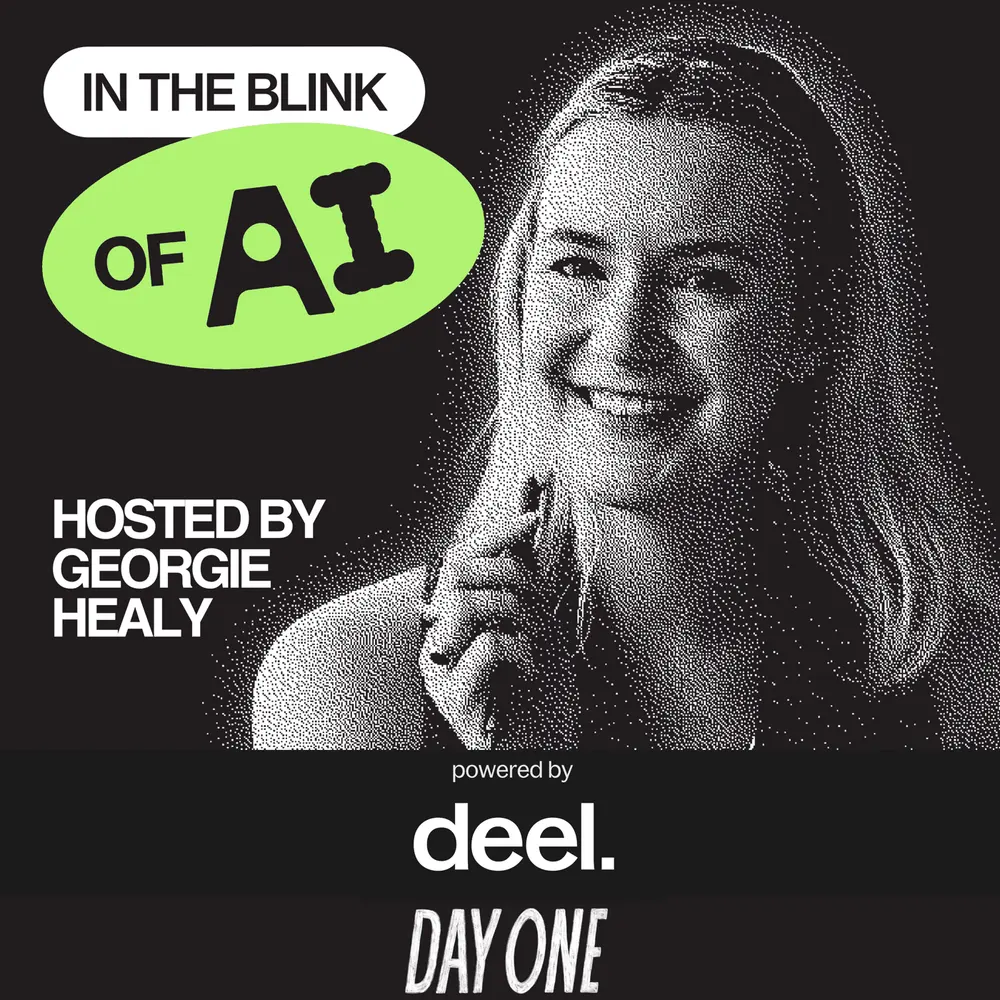 In The Blink Of AI with Georgie Healy
Presented by Deel & Stripe
In The Blink Of AI with Georgie Healy
Presented by Deel & Stripe 

 ▶
▶  ▶
▶  ▶
▶  ▶
▶  ▶
▶ ▶
▶ ▶
▶