Transcript Synced · select any line to jump ▾ 0:02 Georgie Healy: Founders scale faster on Deel. Set up payroll for any country in minutes, hire anyone anywhere, get visas handled fast, and get back to building. Visit deel.com/dayone. That's d-e-e-l.com/dayone. What's the impact AI will have on jobs in the legal sector? 0:26 Denise Farmer: I want to be really clear that at Clio, we see artificial intelligence as an ally to lawyers. Lawyers. So disruption sometimes has this negative connotation, but I think we view it very positively. AI isn't going to replace lawyers. Lawyers that adopt AI will replace lawyers that don't adopt AI. 0:43 Georgie Healy: Yes. 0:44 Denise Farmer: A lawyer utilised an AI tool that created, I think, something like 5 or 6 fake case citations that were later utilised in a legal brief. 0:53 Georgie Healy: Aye, poor guy. Hello and welcome to In the Blink of AI. Where I talk to the brightest AI startups and innovators each week. I'm Georgie Healy, and this week I am speaking to Denise Farmer. She's a general manager of APAC at Clio. She's got more than 15 years of experience in legal tech in Australia, and you'll see from this episode that Denise is passionate about leading teams and legal professionals in adopting technology and AI in this sector. Guys, is it just me or are you constantly hearing about legal industries being disrupted by AI? I'm hearing about this constantly. Thankfully, we had Denise to kind of unpack that kind of negative connotation with disruption and the upside benefits on how AI is being leveraged in the legal profession, including in pricing models, uh, in the evolution of roles. It was such a treat to have such a knowledgeable expert on this topic, and I can't wait for you to listen. Let's dive in. Hello, Denise. Thank you so much for joining in The Blink of AI. I'm really excited to hear your take. Tell us about Clio, please. 2:11 Denise Farmer: Well, first of all, thank you very much for having me. Clio is the world's largest legal technology platform. Used by 150,000 legal practitioners in 130 countries around the world. We grew from much humbler beginnings. We were founded by Jack Newton in Canada in 2008, when he saw a really significant opportunity for cloud computing to transform the way that legal services is delivered. So our mission is to transform the legal experience for all. I'm happy to say we're making really good progress against that mission. We recently acquired a UK-based enterprise legal— Enterprise legal. Workflow solution. So now we service legal practitioners across the full spectrum of law firms from the very smallest to the very largest. 2:52 Georgie Healy: It's so incredible having you on the show, especially just to, you know, unpack for me in my head when I think of legal, I think of dusty bookshelves and like a leather sofa or something like that. So it sounds a little bit more technical than that these days, Denise. You're the General Manager for Clio in APAC. I imagine you think about the future a lot. What can we expect for the future in Australia for legal tech? 3:18 Denise Farmer: Yeah, I do spend a fair amount of my time pontificating on the future of legal services. What can we expect for the future of legal services in Australia? When I think about the convergence of technology and legal services, I think there's a couple of ways that I look at it. I look at it from the lens of individual lawyers and law firms. You know, we've already seen in the first sort of 10 to 15 years of Clio's existence, for example, how cloud-based computing has made legal technology available to much smaller law firms when it only used to be really accessible to much larger, better resourced firms. So it's really leveled the playing field in that regard. 4:01 Georgie Healy: Mm-hmm. 4:02 Denise Farmer: And then when I look forward to what can then happen for Australian law firms, I tend to think of it More on a collective level. So I think we're going to continue to see a proliferation of different types of legal services delivery. But what really excites me when I think about the future is if you think about the individual productivity gains that lawyers are gaining through modern technology, cloud, artificial intelligence, really what I think we stand at the beginning of is almost like a collective giant generational productivity gain that essentially is going to democratize access to legal services. 4:41 Georgie Healy: Wow. I mean, having this show In the Blink of AI and talking about AI a lot, the thing that excites most of us a lot is around that productivity. Look, I've got a stat here for you because everyone's talking about how law and legal practices in general are being disrupted by AI. Apparently 79% of law firms are using AI-powered tools since 2023. Is this fake news, Nis? Like, is this stat, does this ring true to you? What do you think? 5:14 Denise Farmer: We are seeing very high levels of artificial intelligence adoption in law firms, and that 79% includes people who've done like a little bit of experimentation, just sort of dipping their toe in the water, through to people that are, you know, maybe implementing artificial intelligence in a more robust fashion in their law firms. So it covers the full gamut. But yeah, 21% of lawyers have not adopted AI, which is a really small proportion. So we're seeing really, really quick uptake of the technology, and we're seeing that uptake, I believe, for a couple of different reasons. Number one, because as you say, the productivity gain is really significant. 5:54 Georgie Healy: Mm-hmm. 5:55 Denise Farmer: So there's a stat I always come back to, it's from Goldman Sachs, that estimates that 44% of current legal tasks could be automated by artificial intelligence. So that's a really, really huge productivity gain if you think about that, to my earlier point, both for the individual lawyer in their sort of day-to-day work, and then collectively across the sector, that's like super exciting, which is one of the key reasons we're seeing these adoption levels. But also because there are just some really interesting use cases for artificial intelligence within the legal context, from legal research to e-discovery to summarization of cases and documents. There's just a lot of reasons why we see that 79% adoption figure and why the rate of adoption is so fast. It's much faster than back in 2008 with cloud computing. The adoption levels are moving really quickly. 6:49 Georgie Healy: Yeah, I love that you mentioned that. Uh, briefly, I was working in change management for a consulting firm. We would have dreamed of a number like 79% adoption. And you talk about the productivity gains. Is it just because the lawyers are like, this is genuinely really helping me? Like, if you were to kind of guess why the sentiment is so positive? 7:11 Denise Farmer: Yeah, I think the sentiment is positive because Especially when I think about some of the law firms that we help at the smaller end of town, you know, running your own business is stressful. Workloads are really, really heavy. So of course you're looking at anything that can, you know, make your day-to-day life more efficient. And the types of problems that lawyers talk to us about are the same problems they've been talking to us about for a really, really long time, but now they're excited about, you know, the promise of artificial intelligence to maybe solve those in a different way. So they talk to us And we have, you know, tens, hundreds, thousands of conversations with Australian practitioners over the course of a year, you know, me and my team. They talk to us about, "Help me save time, help make me more efficient, help me, you know, manage my workload and caseload more productively, help me to improve the quality of my work." So, and they've got really good motivations for doing so. You know, either you want to grow your firm or increase, you know, the number of clients you can service, Or you might just want better work-life balance, for example. We talk a lot about mental health within the legal sector as well. So they're very excited about these tools because they have massive potential productivity gains, new promise to solve some of the perennial problems that have been in the legal sector for quite some time, but maybe can be solved now in better ways. And will help them either grow their firms or have happier, more balanced lives. That's really why we're seeing this. 8:48 Georgie Healy: Yeah, and thank you for articulating those more granular details of what's happening behind the scenes. I've got one more stat for you if that's okay. I read that AI could automate up to 74% of our billable work. I keep hearing about billable work, Denise. First of all, what are we talking about when we're talking about hourly billable work, and is 74% Automation, a fair assessment? 9:15 Denise Farmer: If I'm not mistaken, that statistic actually comes from Clio's Legal Trends Report, the most recent one that we published back in October at Clio Con in Austin. 9:24 Georgie Healy: You know your stats, Denise, I love it, I love it. 9:28 Denise Farmer: And yeah, so what we're talking about is, you know, the notion that the traditional billing model in legal, which is that, you know, the billable hour, you know, this notion that you bill in sort of 6-minute increments, is no longer that time, is no longer a good measure of the value of legal work. And this isn't new to the, you know, AI kind of modern era. This notion that the billable hour is no longer an adequate way to measure the value of legal work, it's not new. What's new and why we're seeing those sorts of statistics is, you know, the potential game-changing impact that artificial intelligence could have. Mm-hmm. In terms of accelerating, you know, the demise of the billable hour as the predominant billing model in legal. And we see it even in our own client base, a huge rise in the utilization of alternative fee arrangements. So, you know, now the billable hour becomes one in a much broader array of pricing structures and billing options, including flat fee, fixed fee, value-based pricing. So, Yeah, this notion isn't new that time doesn't necessarily equal value, and artificial intelligence is very much going to hasten the demise of the billable hour. 10:51 Georgie Healy: It's all fascinating to me. I think I'd been in startups too long because we always talk about the freemium model, like it's free and then you maybe get ads or something else, and then there's other subscription models from there. So that's really interesting. Thank you for sharing. Now, in previous articles, you mentioned Australia's progressive attitude to technology innovation. You have kind of mentioned the lawyers are excited to take up these, you know, enhancements through technology. How do you see the Australian legal market specifically embracing AI compared to maybe other regions? I know a beautiful British accent, so maybe you've observed different behaviours across, across the oceans. 11:35 Denise Farmer: Well, I've been here a long time now, so it's been a while since I've been in the UK, that's for sure, other than just, you know, for family visits. Australia is definitely one of our more tech-forward markets. Australia, even as a population, I've seen some stats, you know, even just as a general population, our, you know, cloud adoption rates and things like that are very high. And the same is definitely true of Australian legal practitioners. They are very tech progressive. Very eager to innovate, very eager to get their hands on world-class technology and to adopt it in their firms. So yeah, generally speaking, that's been my personal observation of working with Australian law firms for too many years now than I would like to admit to. And I have seen, I think only one Australian stat, and I can't remember who published this stat, to say that I think 25% of Australian lawyers had not experimented with AI or adopted with AI in any way. So if you compare that to the earlier statistic, which was 21%, you know, from the earlier one that you quoted, it's pretty much on a par then with what we're seeing in other regions in terms of a really high proportion of lawyers, both here in Australia and what we're seeing in our other markets that are really keen to leverage new technologies in their practices. 12:50 Georgie Healy: Amazing. And look, another headline that I see a lot when it comes to the legal space, you know, one is around the disruption, but that very quickly leads to jobs. What's the impact AI will have on jobs in the legal sector? I'd love to hear your take, Denise. 13:09 Denise Farmer: Yeah, I think it's impacting in a variety of different ways. And I want to be really clear that at Clio, we see artificial intelligence as an ally to lawyers. So disruption sometimes has this negative connotation, but I think we view it very positively. AI isn't going to replace lawyers. What we say at Clio is that lawyers that adopt AI will replace lawyers that don't adopt AI. 13:33 Georgie Healy: Yes. 13:33 Denise Farmer: And I think the impact on jobs is playing out in a number of different ways. The first is, you know, what I was talking about earlier with those productivity gains, it's eliminating drudge work through legal process automation. So you can automate, you know, real repetitive mundane tasks and, you know, who wouldn't be happy to remove some of the drudge work from their daily lives. So that's one way in which it's playing out in Australia, but in some of our other markets as well. The second way that it impacts on roles and legal work is in the nature and location of where that work happens. So, and I spoke about this a little bit, I spoke on a panel at the Women in Law, Lawyers Weekly's Women in Law Conference in Melbourne towards the end of last year. And In preparation for that, I actually spoke to some of the female-led law firms in our own customer base and within my own network. And many of them had decided they were going to move away from the traditional, you know, big law bricks-and-mortar model. 14:34 Georgie Healy: Mm-hmm. 14:34 Denise Farmer: And we call this the rise of the legalpreneur. And it's, you know, you don't have to be in a building to run a law firm. You can run a virtual law firm, you can run a different type of law firm, you can leverage technology to do things differently. So where you work and how you work are changing. So, and the reason for that is, as I said before, this technology is much more affordable and accessible than it's ever been before. And also, you know, it means you have much greater autonomy, which work to take on, which work not to take on, where to do the work, at what time you do the work. So it's affording flexibility, it's taking out cost. If you see a different way of doing things, you've got the freedom to go and institute that innovation in your law practice. So yeah, we're seeing the nature and location of work change in terms of hybrid working, flexible working, ability to innovate, and ability to harness technology. And that's really attractive. You can attract some really good talent into a law firm if that's how you're structuring your law firm, because— Who wouldn't want any of those things? Flexibility, autonomy, innovation. So that's one of the changes we're seeing. AI itself, we're seeing some different skill sets and roles. With the kind of rise of artificial intelligence tools in legal practice, you need people who can implement AI tools, people who can train on AI tools. We need people who do data analysis, we need people who understand the compliance and ethical implications, so can write AI policies and codes of conduct. So there's a whole proliferation of new roles related to the very existence of artificial intelligence. And I think this is maybe technology broadly, not just artificial intelligence. I think there's just a broader set of career options for anyone that's got a law degree or who is legally trained or has practised for a while or is in practice, there's just a broader set of career options than there ever has been. And yeah, if I think about even my own, you know, sort of friends, colleagues, former colleagues, or my own network, I have friends who've gone to be, you know, product managers at LLMs. I've got friends who now work in the innovation departments of large law firms. You know, if I think about our own team here in Australia at Clio, we've got ex-lawyers, you know, now working in our sales and marketing team, so doing, you know, legal tech sales and marketing. So I think technology and artificial intelligence is having a really interesting and positive effect on, you know, potential jobs and roles when it comes to legal work in the legal sector. 17:19 Georgie Healy: I didn't know anything about law even a year ago, and one of the guests coming on the show, they're ex-M&A lawyers, and then they've gone off to start an AI-backed due diligence company, which, like you say, like, these ex-lawyers are finding some really interesting new roles in the space. I find it exciting, and like you say, you know, it's just opening more opportunities, which is fantastic. Okay, so look, you talked about less mundane administrative tasks. One of the first jobs I ever had was literally getting all the contracts that Panasonic, the company, had and putting them physically in alphabetical order. There must have been thousands, and it was like months of just putting things in alphabetical order. I wouldn't wish it on anyone. But what is something very strategic in law that will not be displaced, at least no time soon? Like, give us a clear picture. 18:20 Denise Farmer: Yeah, I think what it essentially means, the automation of these repetitive mundane tasks really means one thing for lawyers. It shifts legal work up the value chain, essentially. And by that I mean a couple of different things. The law firm of the future is client-centric. So the most important impact is that it frees lawyers up to focus on that client-centricity. So it frees up time to really invest in client relationships. So, it shifts the relationship from being transactional to being that sort of trusted advisor that we all talk about as the sort of holy grail of client relationships. It frees up time to better understand your clients and your clients' needs, to be more proactive. It's going to free up time. The better you understand your client, the more you'll be able to foresee risks and opportunities way ahead of hopefully them actually happening and add value that way, to focus on business development if that's what you want to do. If your overall objective is to grow your firm, it also frees up much more value-added work in terms of business development, frees up time for networking, writing marketing copy, really doing those sorts of things that maybe get lost a little bit when you're caught up on admin. It frees up time for much more strategic, complex problem solving. And one of the things that goes alongside with that is keeping up with your skills, right? If you want to be focused on really high-level, complex problem solving in the legal world, then time to focus on yourself, skills development, continuing professional development, those things are really important. One other way that you can sort of shift from admin into more value-added work. And I love this example. This is, and I hope she doesn't mind me name checking her, there's a lady called Amanda Little. She runs her own law firm and she's also the head of FLENA, which is the Family Law Education Network of Australia. And she actually came and spoke. We held our inaugural Legal Innovation Summit at Sydney Opera House last November. Jack Newton, our founder and CEO, was visiting and my boss, Ronnie, who's our COO, was over as well. And Amanda actually spoke at this summit and she spoke to our audience about how she is deploying artificial intelligence in her own firm and what some of the real clear benefits of that have been. And one of the things that she cited that had been so meaningful to her was it had freed her up to take on more pro bono work. So yeah, there's lots of examples of— Yeah. Of ways that this incredible productivity gain and time gain through removing admin tasks has some really positive benefits from skills development, client-centricity, and paying back a little bit through pro bono work, for example. 21:15 Georgie Healy: I love that. She's keeping busy, it sounds, but with— 21:19 Denise Farmer: She's one of the busiest people I know, but yeah. Yeah. 21:23 Georgie Healy: Look, I'm sure people listening, and especially any of the legal-specific people listening, are dying to hear, like, Let's get specific. What specific AI applications do you reckon are kind of game changers in legal practices? 21:38 Denise Farmer: There's definitely some use cases, as I mentioned earlier, that lend themselves very well in legal, that really are designed just to make the everyday life of a lawyer better. And it lends itself to, you know, task management, summarizing documents. You know, you talked about the due diligence tool, you know, contract review, contract analysis, all those sorts of things are some. Specific use cases, I think it's great to get excited. And we do see these adoption rates increasing, but I think it's just worth sounding a word of caution because we're still, it's still early doors a little bit. We know that the current generation of generative AI tools can be prone to hallucinations, fabrications, unreliable content. 22:27 Georgie Healy: Mm-hmm. 22:27 Denise Farmer: So legal practitioners, yes, we can be excited, but legal practitioners, the obligation is still on the legal practitioner to make sure they're utilizing these tools in a very, very safe way. And our approach at Clio is to take our time. As I said, you know, we're in 130 countries with 150,000 legal practitioners using us. So we do need to be really mindful of some of the risks in some of these tools, and our approach is to bring these tools to market in a very safe way that meets local compliance needs and professional conduct rules. So exciting, but maybe just a word of caution as well. 23:04 Georgie Healy: Yeah, and I'm sure this applies to everyone working in most places, right? Where I work, if I was to upload specific IP or related to my job and say, summarize this document, but I'm putting it into a third-party app or even ChatGPT, definitely deep seek. Um, that's stuff that shouldn't probably be shared over, over those sources, right? Uh, something to be cautious and careful about. Look, as Clio expands in APAC, how do you and the company ensure that it's culturally relevant? Like, I understand, like, legal standards do probably differ. Um, so, so can you talk to us a little bit about that? 23:45 Denise Farmer: We have a rapidly expanding team here in Australia. So we put boots on the ground in Sydney, yeah, January of 2023, that's when I joined Clio. And we've got a rapidly expanding team with some very, very deep roots in legal tech. So Australian legal tech specifically. Yeah, I know, I was just thinking about this. In April, I think I hit my 20-year anniversary of being in the Australian legal— 24:10 Georgie Healy: Happy anniversary. 24:11 Denise Farmer: I know, it's just like, it's just a few weeks away. Yeah, I joined LexisNexis Australia in April 2005, so it's nearly 20 years that I've been in this space in Australia, which makes me feel really old, but there you go. But yeah, so one way we do it is we've got really, really deep roots in the Australian legal tech community. So we have deep expertise. The team comprises in-region product, in-region product design, customer success. So we spend an awful lot of time speaking to Australian legal practitioners. So we very much got our finger on the pulse. Of what Australian practitioners need, and what their obligations are as well. We work really closely with local professional bodies. So for example, our trust accounting is certified by the Law Society of New South Wales. And yeah, these, these are just examples of some of the ways in which we ensure that everything we do is reflective of our, of our local markets. 25:06 Georgie Healy: Amazing. So you've talked cultural. What about ethical? How do you guys ensure that things are ethical? And what are the things that first come to mind when it comes to legal ethical considerations? 25:18 Denise Farmer: Yeah, I think the way we are dealing with it at Clio is to take our time. It isn't always about being first to market. It's about making sure that the tools you are producing are meaningful, safe, and useful for, you know, the practitioners that will be using them. We're very mindful of local regulations. So for example, the Supreme Court of New South Wales issued a practice note in November of last year, which is very much designed to set out guardrails and obligations on legal practitioners in terms of the use of generative AI within the legal context. So yeah, the practice note speaks to, you know, a few of the things I've referenced already. So it's speaks to, you know, the scope for hallucinations and the scope for bias. It talks to how dependable the underlying datasets need to be, for example. It sets out guardrails for what information can or can't be used to train a legal, an artificial LLM or model. 26:28 Georgie Healy: Yes. 26:28 Denise Farmer: So, and they've just revised the, practice note as well, which I was actually really happy to see they revised it because the area is moving so fast. We're going to need to make sure that we're constantly evolving the regulatory regimes as well. So those are the sorts of things when we think about the ethics, it's making sure that we're designing products that meet those regulations and take into consideration all of those things. That said though, and the guidance note is very clear in this regard as well, The Land and Environment Court just offered, just this month produced some very, very similar guidelines. Very, very clear where the ultimate obligation lies though. The ultimate obligation lies with the lawyer. So we've all heard of the Stephen Schwartz case where a lawyer utilised an AI tool that created, I think, something like 5 or 6 fake case citations that were later utilised in a legal brief. 27:22 Georgie Healy: I think I heard about this. 27:24 Denise Farmer: Yes, that one's probably the most famous case. 27:27 Georgie Healy: Aye, poor guy. 27:28 Denise Farmer: Yeah, there was a Melbourne lawyer last year though who was referred to the Victorian Professional Complaints Body, you know, also for citations that turned out to be inaccurate. So very mindful of our ethical obligations, but also a reminder for lawyers to make sure you're up to date on these practice notes, make sure you're aware of the risks. Ultimately, these are amazing tools. They are inputs that you are ultimately the judge of how you use those inputs and the veracity and quality of the, you know, final outputted work product is kind of how I would talk to that. 28:05 Georgie Healy: Wow, that really paints a very clear picture. Before we get to our future of law and AI section, Denise, what would you say to lawyers that are just starting to use these tools? Like, what would be the biggest takeaway you would say to them? 28:22 Denise Farmer: I think keep an open mind. Absolutely number one, make sure you're really clear of your obligations because that's number one, right, is make sure that when you're using these tools, you know, to go back to your earlier question around the higher value work, we still need skilled legal practitioners. It's that human empathy, that capability for strategic thinking. So the first word of advice I would give to lawyers is know your obligations. And maintain the quality of your output because it's your professional reputation as well, right? As well as really important for your clients that they can trust the quality of the output. The second thing is dip your toe in the water, right? You don't have to be like all in, like right from the get-go. Maybe just play around with one of the generative AI tools. Maybe you could write a marketing blog for your website, get a first draft out of AI and then, you know, there's ways, definitely ways you can sort of dip your toe in the water. Yeah. Start getting a feel for what some of these tools can do without going all in, and then just gradually build up your comfort and knowledge from there whilst always remaining very cognizant of your obligations. 29:32 Georgie Healy: I love this. What I say to people that feel a little bit overwhelmed by, you know, AI is going to take my job and I'm not technical, so how could I possibly stay competitive in this new world of very technical, very AI-driven products, treat it like you're playing, you know? Like you can play with new tools, like have an open mind like you say, instead of worrying about, "I have to learn all the tools," or, "It's gonna be a problem and how am I possibly gonna catch up?" Just pick one, play around. Be careful what you put into it though. Don't put anything— Yeah. Secure or anything like that in it. Love it. We're at our final section before the rapid fire, and this is about the future of AI in law. So you've been in a box seat of the legal industry's digital transformation. I do love that quote. What's your vision for how AI will shape the role of lawyers in the next 5 years? So you've really painted a beautiful picture now, but what about in 5 years? What can we possibly expect, you know, if you were to put a lottery ticket on it? 30:45 Denise Farmer: You know, lawyers are still going to be working in a very similar way because we need, as I said, human empathy. We need to understand clients. We need to be able to solve complex legal problems. But I definitely see the rate of adoption of these tools increasing rapidly if we're talking a 5-year timeframe. And I think what we'll also see within that 5-year timeframe is We will start to see these tools become more accurate. So some of the problems that we've spoken about in terms of hallucination, bias, those tools are going to continue to improve in that respect as well. Doesn't mean lawyers shouldn't, of course, be responsible for the utilization of those tools in their work. But I think that's two ways we'll see things change, adoption rates, The number of tools out there that people can take advantage of, and then the accuracy and performance of those tools will change in the next 5 years. We'll continue to see a proliferation of new and alternative models of legal services delivery. And I think we'll also continue on the journey, as I said, towards that collective game. There's a statistic that Jack, our founder, loves to quote from The World. Justice Project, which is that 77% of legal problems that consumers have are currently not touched by a lawyer. So that means that 77% of legal demand is not serviced by a lawyer today. So I think one of the other ways we will see change in the next 5 years is— It's almost like win-win. Productivity gains for lawyers, driving down the cost of legal services, actually opens up some of this untapped market for legal demand. And that's probably, as I said earlier, the thing I'm most excited about is that broadening of access to legal services. And I think we'll start to see that shift as well in the next 5 years. 32:39 Georgie Healy: I didn't even consider this. The people that normally couldn't afford a lawyer but need a lawyer and don't even know where to start will hopefully be able to— that will be democratized for those people. That's fantastic. Okay, well, I've got a bit of a spicy one before the spicy questions. If law firms continue to rely on hourly billing, Denise, which you explained earlier what that was, will they have declining revenues in the next 5 years? What do you think? 33:10 Denise Farmer: The drive for efficiency does not drive down the overall pool of work. If anything, the increased drive for efficiency grows the overall pool of work. Lawyers will obviously need to become more efficient and client-centric, and that's definitely the way I see the law firm of the future, but there's— the overall pool of work does not diminish. So yeah, I think it's just reframing that question, does time equal value? No, time does not equal value when it comes to legal work, and the pool of legal demand does not get smaller. 33:44 Georgie Healy: I have seen people put different pricing models and different customer profiles into some of these LLMs and get get the LLM to do some of the work for them. What's the perfect pricing model for these customer bases to maximize potential sales? So maybe they can play with that too in the meantime. Look, you've been so generous, Denise. We're finishing the interview with some of our spicier hot takes. Are you excited? 34:13 Denise Farmer: Let's go. 34:15 Georgie Healy: What's AGI to you, Denise? 34:17 Denise Farmer: Yeah, like I said, it's a very, very exciting tool that is transforming the daily lives of lawyers. So less drudge work, more engaging work, happier lawyers at the individual level, a huge collective opportunity to broaden access to legal services and justice. So that's how I see AGI. 34:37 Georgie Healy: What about an AI headline you could expect might come out this year, positive or negative? 34:43 Denise Farmer: I think we're going to continue to see headlines about lawyers, you know, getting caught out who have not made themselves aware of their obligations and, you know, who have not necessarily checked, you know, the inputs of their work. I think we're going to continue to see those. So we need to keep reminding lawyers, you know, ultimately you're the arbiter of the work. We need your human judgment in that. So just make sure to be on top of your obligations. I think we will continue to see headlines around how artificial intelligence changes legal work. 35:16 Georgie Healy: So there's a lot of headlines coming out from overseas and regulatory approaches that, like, say the US might be a little bit different to currently here in Australia. But do you think that the US kind of anti-regulatory approach will start to trickle down here? 35:34 Denise Farmer: Well, I can't comment on the US regulatory environment for artificial intelligence. But I have been pretty pleased with what I've seen happen in Australia so far in regard to our own, you know, establishing our own regulatory guardrails around the use of generative AI. I referenced the Supreme Court earlier. 35:57 Georgie Healy: Mm-hmm. 35:58 Denise Farmer: I think the court has taken a very common sense and pragmatic approach to regulation, so that I've been personally pleased to see. And as I also said earlier, The fact that they've issued a revision to that so soon also gives me great optimism for how we'll handle these things in Australia because as I said, the technology is moving so quickly that they've seen fit to already revise. I think that puts us in very good stead. 36:25 Georgie Healy: I do feel for these regulatory bodies. They probably didn't sign up for like a technical innovation to this point, and now they have to kind of figure it out as they write the policy. So, so shout out to the regulatory folk out there listening. And our last question, is there one thing you would hope to achieve at Clio in 2025? What would that be? 36:50 Denise Farmer: We're growing such an incredible team here. We started with 5 people in January 2025, and we are well in excess of that now. So it's just something that's personally incredibly exciting for me. And I know as we expand the talent in the team, our ability to innovate on behalf of Australian legal practitioners and put some really incredible tools into the hands of Australian legal practitioners only increases. So yeah, we've got some really amazing things coming in 2025 that we can't wait to bring to market and put into the hands of Australian legal practitioners. And the fact that myself and our team is going to be able to do that is the single thing I'm most excited for, for Clio in 2025. 37:33 Georgie Healy: Oh, I'm excited for you too. Uh, look, this has been such a great chat. I've learned so much about both legal and how you at Clio are using this time of technological upheaval and just making legal practices better for lawyers in general. Is there anything you'd like to shout out to the listeners? 37:52 Denise Farmer: Yeah, I think just to reiterate the, the point I've made that At Clio, we do not believe that AI is going to replace lawyers. Yes, lawyers who adopt AI will outperform those that don't. That's something I would very much like to convey. We see AI definitely as an amazing ally for legal practitioners in Australia. And just, you know, the most important thing to remember though is, you know, first market is not the most important thing, but bringing safe, compliant, meaningfully useful artificial intelligence tools to legal practitioners. That's really, really important. And then, you know, the third and final point I would leave your listeners with is just how excited I am about that collective opportunity for artificial intelligence to meaningfully expand the market for legal services and further democratize access to legal services and justice. I think that's just a— a really great societal game changer. 38:53 Georgie Healy: I can't wait to see what you guys do this year. Thank you so much for being on the show, Denise. Have the best day. 39:00 Denise Farmer: Thanks for having me. 39:03 Georgie Healy: Thank you for listening to In the Blink of AI. You can check out the show notes for anything discussed in this week's episode, and we will be back next week. This podcast was produced by Day One with music by by Dan Hansen and visual artwork by Sophie Tyrell. If you loved the episode, please tell your mates. And I love AI news. Please share your thoughts and suggestions to georginarosehealy@gmail.com.


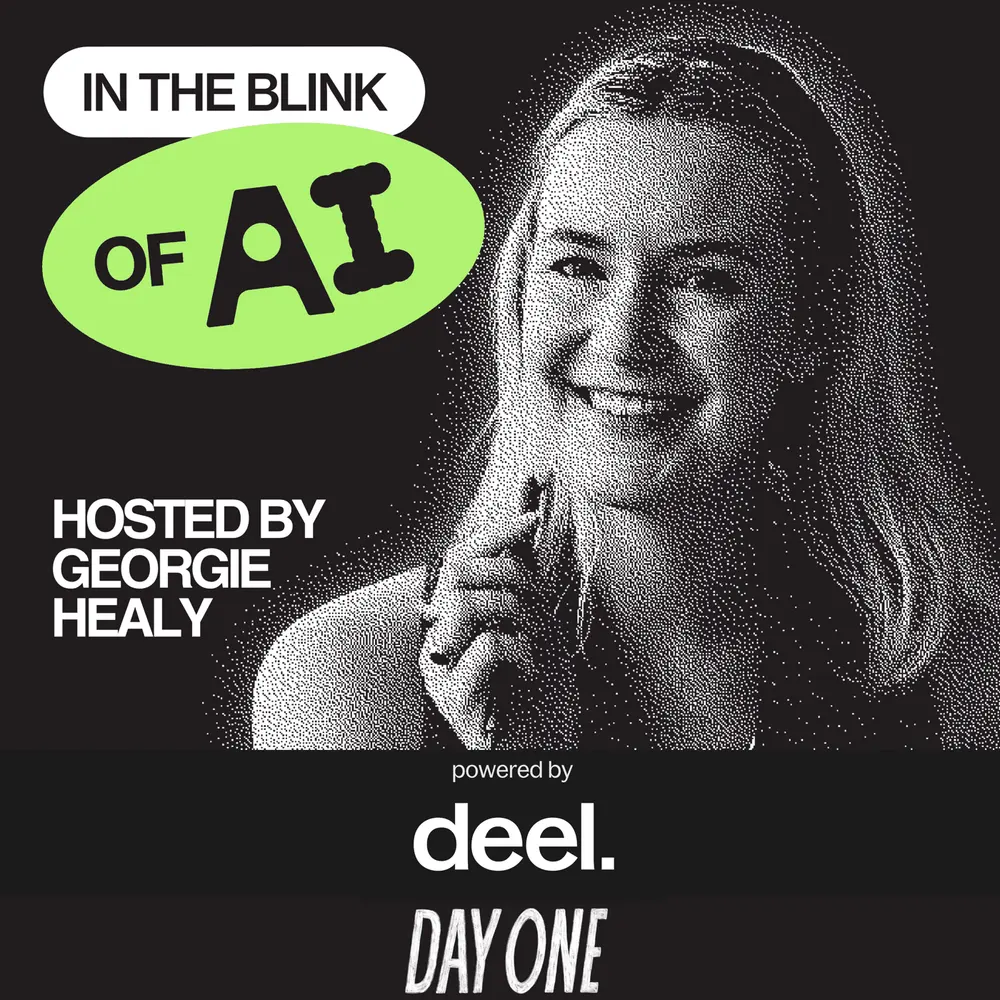 In The Blink Of AI with Georgie Healy
Presented by Deel & Stripe
In The Blink Of AI with Georgie Healy
Presented by Deel & Stripe  Guest Denise Farmer General Manager, APAC, Clio
  Show Host Georgie Healy Host, In The Blink Of AI, In The Blink Of AI

 ▶
▶  ▶
▶  ▶
▶  ▶
▶  ▶
▶ ▶
▶ ▶
▶