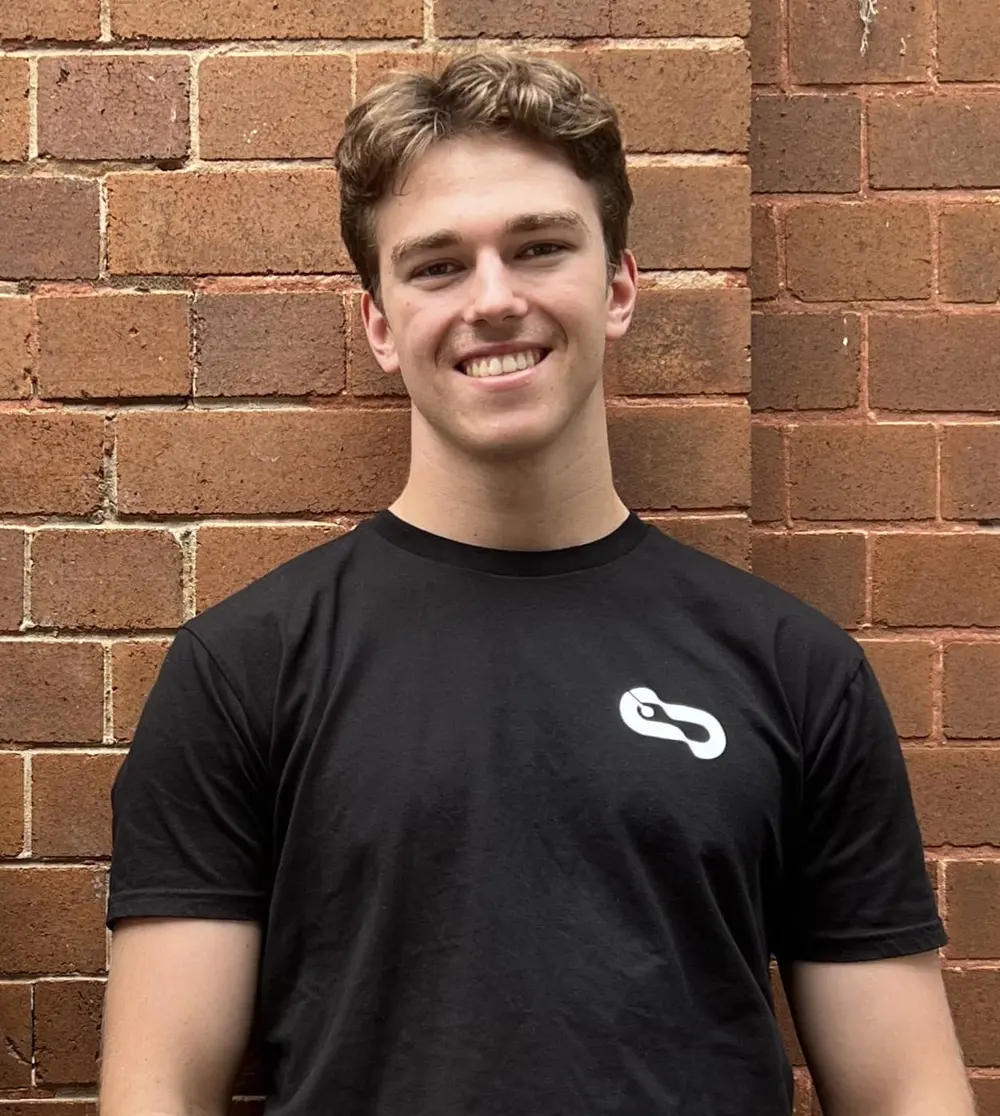
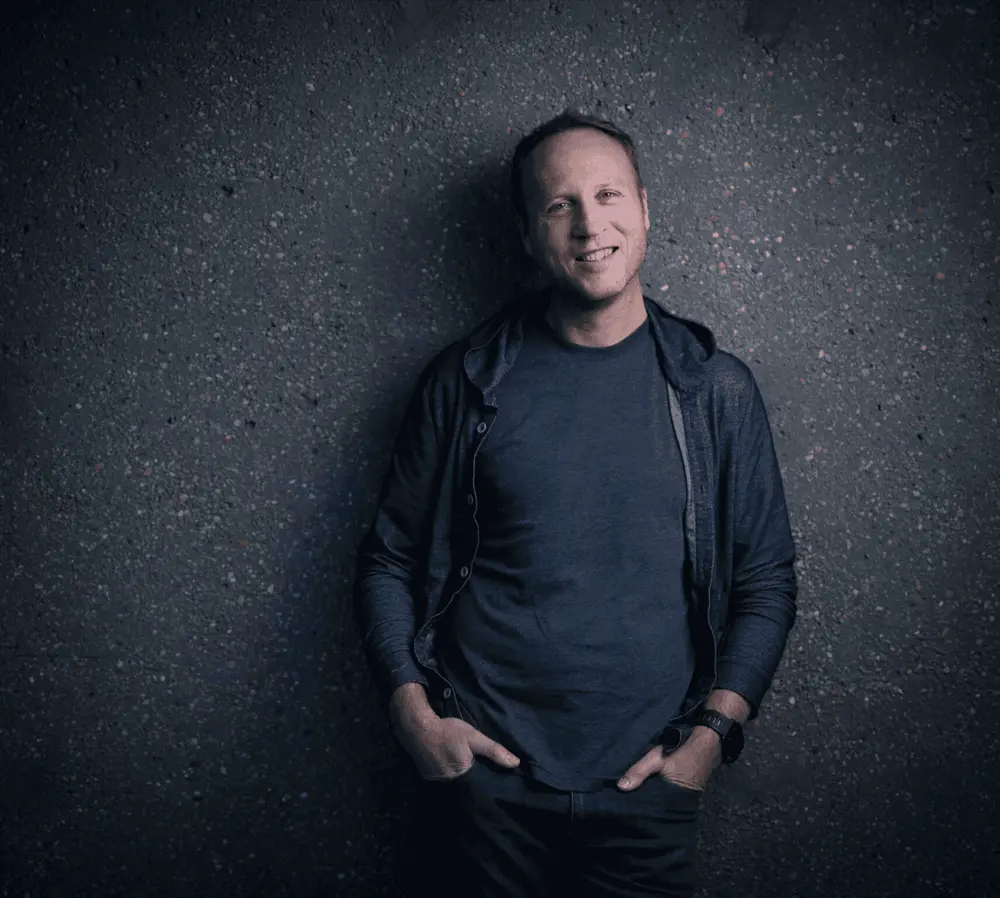
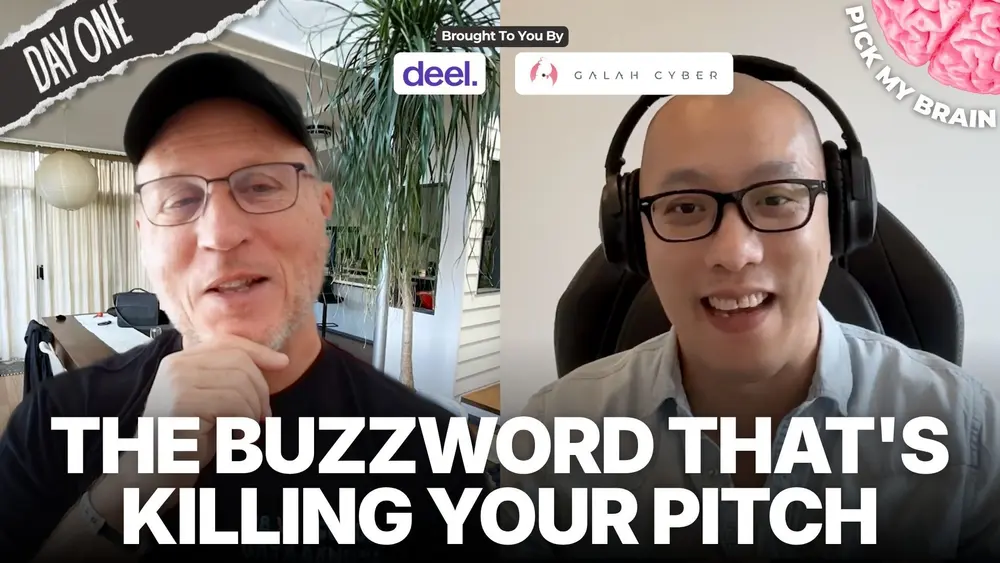
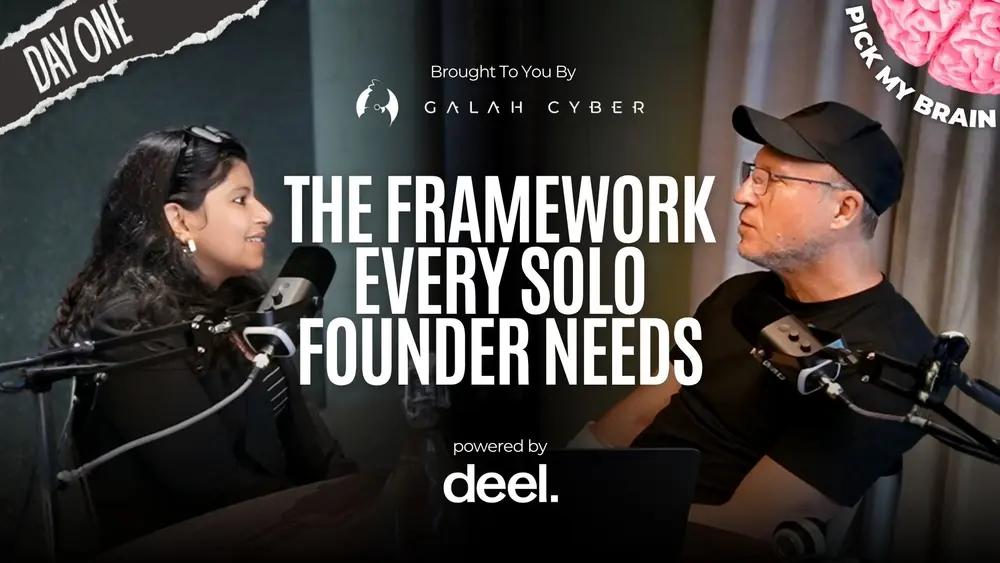
Transcript Synced · select any line to jump ▾ 0:02 Ad: Founders scale faster on Deel. Set up payroll for any country in minutes. Hire anyone, anywhere. Get visas handled fast and get back to building. Visit deel.com/dayone. That's D-E-E-L.com/dayone. 0:21 Speaker: You referred a few times to the nighttime economy. What's the difference between the nighttime and the daytime economy? 0:28 Dexter Todd: This really interesting opportunity presented itself where we were one of the technology partners for South by Southwest Sydney. 0:34 Alan Jones: And being able to take previous investors along with you in the next round is a great way to make other investors feel like, well, other people think this is gonna work, you know, maybe I should get on board. 0:43 Dexter Todd: We do, I think, suffer to a certain extent due to the space that we're in, the nature of the company. Like we're not very sexy in terms of we're not like a B2B AI SaaS play. 0:55 Alan Jones: That's one bit of feedback I don't have to give already. Welcome to Pick My Brain, the podcast where we help startup founders hone their pitches to better connect with customers, co-founders, investors, and more. My name's Allan Jones, and I'm an ex-startup founder and angel investor with decades of experience helping new businesses find their footing and achieve their goals. I'd like to acknowledge that this podcast is being recorded on the Gadigal land of the Eora Nation, lands that were never ceded. I pay my respects to the First Nations leaders and innovators past, present and emerging. On Pick My Brain, you'll hear real stories from founders as they pitch their startups, tackle the challenges of entrepreneurship, and work towards turning their ideas into successful ventures. Each episode, I'll be diving deep into these pitches to offer insights, advice, and strategies to help founders take their business to the next level. Thanks for joining me. 1:46 Speaker: Let's get started. 1:48 Speaker: You're listening to a Day One FM show. 1:52 Speaker: As a startup founder, you're juggling multiple priorities from the expected, like finding product market fit, to the unexpected, like customer requests for SOC 2 or ISO 27001 certification. But achieving compliance is time-consuming, and time spent on that is time away from the needs of your business. That's where Vanta comes in. Vanta is the all-in-one solution for startups to become compliant quickly and build a security foundation with ease. With a combination of automation, an extensive partner network, and a security marketplace, Vanta provides the necessary tools and expertise for startups to achieve compliance seamlessly. 2:27 Alan Jones: No matter how urgent your needs are, and at every phase of growth. 2:32 Speaker: Over 10,000 leading companies, including Cipherstash, Handle, and Indetted, trust Vanta to automate compliance so they can focus on growing their business. Startup customers like you get $1,000 off Vanta at dayone.fm/vanta/brain. That's Vanta, V-A-N-T-A, at dayone.fm/vanta/brain. 2:56 Speaker: We're joined today by Dexter Todd from Bada. Welcome to the show, Dex. 3:03 Speaker: Thanks for having me, Alan. 3:05 Alan Jones: Looks like you guys got started off in Canberra. Is that where you are? 3:07 Dexter Todd: So we started in Canberra. My co-founder and I met there at uni at ANU. And after we started the project and we raised our first kind of pre-seed round, we deferred our uni degrees because at ANU you can do that for up to like, I think it's something like 5 years. You can defer your degree and just pick it back up again. So it's very low risk. So we deferred to focus on the project full-time. And so we spent a bit of time living down in Canberra, just kind of working. The uni was very kindly gave us some offices or desks within one of their startup spaces. And then kind of what happened is some of our mates started moving into different share houses and some people started graduating. So we kind of, rather than staying in Canberra, as some of our connections started to be further apart, we were like, let's just move back to our home city. So Ollie, my co-founder, is Melbourne-based. He lives in Melbourne. I'm Sydney-based. So I'm back living in Sydney, but we do a lot of remote work. But also I go down to Melbourne a few times, stay with his house. We do kind of like week-long sprints and he comes up here a few times. So we get a good balance of in-person and online. 4:11 Alan Jones: That's great. Did you want to talk about BayWa today with the deck or did you just want to talk talk? 4:19 Dexter Todd: I think probably best just to talk talk. The deck that I shared is more of what I would describe as like a send-ahead or a leave-behind deck. Like it's more information heavy and it's meant to be read versus talked over, as you could probably gather from looking at way too much text to put on a presentation deck. 4:34 Alan Jones: That's great. Yeah, that's one bit of feedback I don't have to give already. 4:39 Dexter Todd: It's kind of an interesting story with Bada. So originally we founded it and launched it with the original thesis being to create an app that you could use to quality assure real-world nightlife experiences. So the problem that we were tackling was that, you know, if you want to go to the movies or go to a restaurant or engage in all these other kind of leisure activities, traveling, you can use an app to quality assure your experience before you engage so that you avoid a bad experience and you can discover really cool ones. And that was the original thesis behind the projects. And so we created this nightlife map of Sydney. We used real-time data on how busy venues were on all the live music events to help you basically discover the perfect nightlife experience for your preferences and to avoid negative experiences. And we launched that in April and was kind of tugging along, like we were pretty happy with it. Mm-hmm. Continually iterating on the product. We got some good kind of early growth. So we were about at like, we got to like 1,500 users on that sort of app really quickly. And we were having about like 500 to 600 monthly active users. But then kind of this really interesting opportunity presented itself where we were one of the technology partners for South by Southwest Sydney. And basically what we did for them was we built this like guide in our app to their music festival. So we created like a geographic boundary for the South by Festival. We created like a custom styling and flight for all their festival venues, imported their events in so that basically South By attendees could, you know, plan their experience. They could navigate around the festival area. They could avoid venues that were gonna be full and not let them in. But then the other thing is because we had this backdrop of like the broader Sydney nightlife data, we could sort of direct attendees out to cool experiences in the broader nighttime economy, which satisfied kind of a, a key, I guess, Mm-hmm. Criteria that they had from Destination New South Wales, who's one of their funders, which is that the point of the festival is to activate the nighttime economy. And so something that we learned from that, which was really interesting, is that we'd kind of built this product and we built this, this application that was really useful for these, or that, that applied really well to this specific niche of these festivals that happen in cities that occur across multiple days and multiple venues to help attendees organize their experience, but also for the people running the festival to give them really high-quality data on what their attendees were doing and help them satisfy kind of the interests of their government funders who, any kind of major event happening in a city is funded by the government. And so by helping disperse people into the nighttime economy and activate it around these festivals, we found a unique niche basically is what we discovered. And we think that our product market fit is stronger there. We thought that the demand from South by Southwest and now we did, we've just done Always Live in Victoria and we're talking to some several more festivals. And so we, did our first pivot basically away from this really B2C-oriented nightlife discovery product into this more tool for festival organizers to help their attendees maximize their experience. And so we're kind of, it's been a really interesting process right now because we're in this, we're just kind of coming toward the tail end of this like very transitory period where we figure out what our new business model is. We figure out how we're pivoting it and all that kind of stuff. 7:45 Alan Jones: I feel like I was only gonna get a word in edgewise there if I waited until you finished, but thank you for that. We've got a whole bunch of origin story there, and I've queued up a few questions, if I may, just to help me and listeners understand a bit more about what you're working on. But do you prefer Dexter or Dex? What works best? 8:07 Dexter Todd: Yeah, Dex. Dex is fine, yeah. 8:09 Alan Jones: Cool. So Dex, help us understand just a little bit. You've referred a few times to the nighttime economy. What's the difference between the nighttime and the daytime economy? 8:18 Dexter Todd: Yeah, so sorry, that's a bit of, I guess, potentially industry jargon that I've picked up. I'm not sure how global the term is. Very, very well used in New South Wales, and I think more broadly in Australia, but it essentially means the businesses that are active and do most of their trade sort of after dark would be kind of the loose term. I'd say it's easy to describe it as live music, nightlife, restaurants, and sort of these cultural activations and events that occur after dark and occur in that sort of cultural entertainment space. And in Sydney and in New South Wales at the moment, sort of understanding the nighttime economy and leveraging, sort of driving more impact for it is a very big government priority. But just obviously after years of kind of lockout laws and changes and stuff. 9:04 Alan Jones: And it was South by Southwest Sydney's music stream that you were working, partnering with, right? It wasn't all, I don't remember seeing it all across the tech stream at South By. 9:17 Dexter Todd: No, so we pitched at South By as well in the tech stream, but as an actual technology partner and working with the festival specifically. Specifically for the music festival. 9:26 Alan Jones: How did that come about, right? Because, you know, I'm sure there's a lot of app software vendors trying to get their app used at events like South by Southwest. How did you do it? 9:36 Dexter Todd: For reference, I'm, I'm 21. I'm not like— I'd never been to South by Southwest before, but I was interested in it. I think it's a really interesting and cool festival. And so even though I didn't go the first year, it was in Sydney, I was really interested in that. So I read a lot about it, and something that I remember reading about it was One from last year that the app experience was not great and it was quite clunky. And I read a bunch of sort of user kind of feedback on the app experience. The next thing that I read was that part of the frustration of it was people didn't know where events were on, things were too far apart. And then the third thing was that they would get to these music events and then they'd be full and they wouldn't be able to get in even though they had the badge because it's just, you know, how many people in the venue. And so, something that it just kind of occurred to me naturally that what we'd built with this nightlife guide app actually just solved those problems naturally. And because we, we're a spatial app, so we have a map of the nightlife, so you can see where things are, you can see where you are relative to the various events and venues to know how long it's going to take you to get there. We have this capacity data that we use in our app, so see how busy it is. 10:41 Alan Jones: Just, uh, really quickly, Dex, um, did you reach out to South By or did they reach out to you when they heard about Yeah, we reached out to them. 10:49 Dexter Todd: I thought that what we did already satisfied a lot of the problems that they had from last year, is the short story. And so I just sent them an email, a cold email, and they just, they saw it in their feed and they were like, oh, this is really exciting. And so that's what we did with them. 11:02 Alan Jones: Let's jump on that call. So how did you arrive at a $25,000 license fee to do this project for them? 11:10 Dexter Todd: Like, there's not really an exact science to it that I can really say. We just sort of discussed with them. We looked at what we brought to the table. We were really interested in sort of promotion and marketing. When we first reached out to them, we were more thinking about South By as like a promotion kind of play and like a marketing play for the B2C like nightlife app. It was only after and during South By that we realized, oh, this is where we have a really powerful application in the festival space. So I can't say that it was an exact science. We just kind of chatted to them about it, figure out what we would do, figure out what they were going to provide us. And that was kind of how we came to that. 11:41 Alan Jones: You came up with a number, they asked you to reduce it, back and forth until you arrived at that. And was it a, a one-off fee just for, for this year, or are we able to get them to sign up to a multi-year relationship? 11:55 Dexter Todd: No, so this, this was the first one, just one-off. Um, yeah. 11:59 Alan Jones: Are you doing wayfinding between venues? If I'm using the app, can I see myself on the app as well, and, and do you give me a path from where I am now to the venue I want to go to? 12:09 Dexter Todd: Yeah, so we— you can see where you set— where you are now, you can see where the other venues are. We then basically like link you out to the mapping software, 'cause we, it's like a whole bunch of work to provide that wayfinding, like, and Google Maps and Apple Maps do it already. So we link you out to that. We link you out to Uber, all that sort of stuff. 12:24 Alan Jones: Cool. And is it showing you only venues that aren't currently full, or is it showing you all of the venues and then you click down on one to see whether it's full or not? 12:34 Dexter Todd: Yeah, so it shows you all the venues, but then you can filter based on capacity. 12:37 Alan Jones: Okay. Right. So, so you're only seeing capacity of, of, of, of the venue. So I don't actually, I still don't actually know if I'm going to get turned away until I show up. Is that right? 12:48 Dexter Todd: No, no, no. So sorry, like live capacity, like how busy it is as a percentage of live capacity is the metric that we show. So we show if it's 100% full, 80%, something like that. 12:57 Alan Jones: And how are you measuring that? 13:00 Dexter Todd: So we use an API called BestTime, which is an American company. They are a foot traffic API. They use mobile phone location data to calculate place busyness. 13:10 Alan Jones: So you are using a third-party service to see how many mobile phones there are in that venue? 13:17 Dexter Todd: Yes, that's exactly right. 13:19 Alan Jones: And then subtracting that from, from the venue owner's total? 13:23 Dexter Todd: Well, you can see, you can basically see how, how busy it is or how many phones there are relative to the most phones there have ever been in that place. And that gives you a proxy for capacity. And the reason that we use a third-party provider is because when we first launched it, we, like, obviously we don't have, like, a statistically significant sample size of people in these venues, so we wanted to have basically bootstrap it until our own data became significant enough that we could use that. 13:49 Alan Jones: Gotcha. And did Destination New South Wales or City of Sydney or somebody make that happen for you, or, or did you guys sort that out? 13:59 Dexter Todd: Uh, the data? 14:01 Alan Jones: Yeah. 14:02 Dexter Todd: Yeah, we, we sorted that out. So we, yeah, it's just anyone can license this API basically, and we just have applied it to this specific context. Cool. 14:17 Alan Jones: So when do you get a chance to sit down with your two existing customers and figure out when they need you next and how much that's going to cost them? 14:28 Dexter Todd: Yeah, so South By, we kind of have given them a little bit of a break post the event. What we're doing right now is writing up like a basically a data report for them where we use the data that we have. So we, so we have that foot traffic data, but we do a lot of work internally to do things like classify venues based on their key traits using AI and using like parsing of their websites and create these really detailed and sophisticated pictures of what actually are the features of a venue and, and what makes a venue kind of valuable. And so we're doing work right now to create a report for them where we basically go like, oh, these are the venues that did really well. These were the key traits within those venues that people really liked. This is how people move through the festival. Mm-hmm., and, and present that data report to them. So that's what we're working on with South By at the moment. Always Live, which is in Victoria, has just wrapped up. And so we're just scheduling like in a big event retrospective with them at the moment. And kind of my big priority right now is, uh, just trying to, you know, expand our funnel as much as possible and get, get more festivals coming in. 15:26 Alan Jones: You also hoping to raise some money? 15:31 Dexter Todd: Yep. Yeah, yeah, yeah. So we're doing a capital raise at the moment. Uh, we are raising, so we, we've done one raise already, so we did a pre-seed. A $225,000 pre-seed round last year, and we're doing a sort of pre-seed extension this year, similar size. We thought we were going to do a bigger round, but when we did this strategic shift to focus more on this like B2B festival tool, kind of changed what we thought we would need from a funding perspective. So we're doing this $200,000 round now. We've got $100,000 already committed kind of from follow-on and people who missed out on the last round, and now we're sort of expanding our net to kind of get, uh, more angels in and stuff like that. 16:09 Alan Jones: Great, great. That's fantastic. Um, and so are you able to name any of the people who invested in the first round and who are following on? 16:17 Dexter Todd: Yeah, so in terms of invested in the first round, um, one of our— one of the really exciting investors that we had in the first round were, um, Significant Capital Ventures, who are a, um, Canberra-based VC fund. So they invested, uh, like a, you know, small investment like $50K in our first round. They're ANU affiliated and they're part of that startup ecosystem down there. We're not really, uh, sort of a standard startup investment for their portfolio. They're more of a deep tech company, uh, deep tech, sorry, VC firm. They kind of discovered us through the ANU ecosystem and we have a great relationship with them and they've been super duper helpful. So they invested in our first round and they've been fantastic and they helped us get some angels from last round introducing us around. And they're also doing, uh, they're doing a lot of intros for us this round, which is really, really exciting. 17:00 Alan Jones: Great. But generally speaking, if, if, if you've done a successful round before and you've got some of the, the better known investors in that first round following on again, that kind of creates a bit of a, a tipping point in a, in a capital raise process. A lot of founders who've raised before will tell you it's a bit about momentum and being able to take previous investors along with you in, in, in the next round is, is a great way to make other investors feel like, well, other people think this is going to work, um, you know, maybe I should get on board. Is that what you're seeing at the moment? How's it going? 17:39 Dexter Todd: I, I think it's really interesting. Like, we, we have found that to a certain extent, but then also I would say we do, I think, suffer to a certain extent due to the space that we're in, the nature of the company. Like, we're not very, uh, sexy in terms of— we're not like a B2B AI SaaS play. We kind of exist in a funny space. So it's definitely kind of a, it's been a very interesting exercise in positioning and sort of coming to understand. I think we've had to get a really good grasp on what the investment style, what the portfolio of the investors that we're approaching are because we're in one of those spaces where a lot of people just don't invest in it outright. So that's been a really interesting strategic exercise. 18:22 Alan Jones: Yeah. 18:22 Dexter Todd: But I'm feeling like, I definitely think in terms of talking about a tipping point, I think we've reached that for this round. I think the next 100 is going to come. 18:29 Alan Jones: Right. I think, you know, that would be my feedback too, is that it's entertainment tech isn't really very sexy in Australia. Nobody can really point to, you know, very many unicorns in that space. I would say that there is one that started in Australia and might be a good case study to use in pitches to investors who are reluctant content about this space, and that would be ROKT. If you've, if you've ever bought a ticket from Ticketek or Ticketmaster to go and see a show or a festival, at the end of the checkout process, there's something that says, hey, congratulations, you've qualified for a discount on this and 2 free of that and leads you through like 4 or 5 different offers at the end of the transaction. That's an Aussie startup called R-O-K-T, ROKT. Started right here in, in Surry Hills, I think, originally. And so there are definitely opportunities to, to make good B2B enterprise SaaS money out of the entertainment industry. And, and so, you know, I, I would lean in that area when I'm describing what the business does and, and what it's for. I would maybe start with, we started with helping attendees get to cool venues during a festival or an event. And now we are migrating towards becoming, um, a, a, a data, um, enterprise SaaS. We, we're big data for, for, for entertainment industry promoters and, and organizers. 20:04 Dexter Todd: Mm-hmm. 20:05 Alan Jones: Tourism bodies, government departments. It's a big data play. The, the more festivals we serve, the, the more organizations we serve around the world, the more data we're gonna be able to capture. And then we'll be able to tell a future South By organizer, not just how your event just did, but here's how it compared to previous years of your event, but also here's 4 or 5 other events from around the world that are a lot like yours, and this is how your event differed to how theirs went. Maybe you can take that forward and use that in your applying for future grants or in your commercialization strategy for, for your next year's event. The, I think the, the beauty of, of, of big data enterprise SaaS is, is that it's something you can credibly sign organizations up for a multi-year annual contract. And you can say, we can be your data provider for everything starting with your venues, but then moving on to everything else that we can capture. You know, we might be able to get tourism arrivals and night stays in, in accommodation for, for the start tracking the whole impact of South By on the state of New South Wales. So we, we're starting from here, we've already moved on to here, and the future is we want to do this and this and this and this. And therefore you should be signing up for us for a 3-year annual contract, you know, with a, with an option to, to, to renew. 21:24 Dexter Todd: Yeah, I think that's fantastic. That's, that's fantastic advice. Yeah. 21:28 Alan Jones: Until you can do that, you're, you're very lumpy revenue business with probably a, a pretty high cost of sale. And you'll probably be, even though you've been their previous provider before, each year you'll probably be invited into competitive liquidation. Pitch again against another 3 new apps that were you a year ago, right? So, um, you can say in this space, oh, but you know, we were the app official app last year and an experienced investor was gonna know that. Yeah, but the clock starts again every year when they're planning the new event. There'll be a different person in charge of technology at South by. There'll be 2 new competitors that you didn't have before and you'll just have to go in and pitch again and they'll try and drive your price down and make you compete with each other. The better way forward is to go, no, that's not actually what we do. Like, you know, that's part of what we do, but we're a big data player. We're gonna help you assess the impact of this event across the whole city and the whole state. Help you argue for the resources that you need from, from, from your stakeholders and then sign people up to an annual agreement. 22:27 Dexter Todd: Yeah, fantastic. I think, I think that's definitely like when I said before, searching for positioning that gives us an advantage, I think that I totally agree with that assessment and the importance of our data positioning. 22:39 Alan Jones: Cool. Watch out maybe for that nighttime economy phrase. Maybe early in the pitch, say, you know, in New South Wales and Sydney, we often talk about the fact that there is a nighttime economy. And in fact, New South Wales has a nighttime economy commissioner. His name is Rodriguez. He used to, he brought time out to Australia back in the day, right? So something like that. And have you heard of the phrase nighttime economy? Nighttime economy before? No? Yes? Right, okay, so no. So the nighttime economy is blah, blah, blah, blah, blah, blah. It's the other 12 hours of the economy where some parts of the economy shut down and everybody goes home to watch Who Murdered the Children in front of Netflix and a whole other part of society and the economy and workers and transactions start taking place. That's what we call the nighttime economy and that's who we service. 23:33 Dexter Todd: Mm-hmm. 23:34 Alan Jones: Of course, over time, you're gonna be star servicing the daytime economy as well, right? 23:39 Dexter Todd: Yeah. 23:41 Alan Jones: All right, great. Hey, Dex, thanks for coming on the show. I hope that was helpful. I loved the design of the leave-behind deck that you left us, but as you pointed out yourself, it would be a really good idea to have a really, you know, visually-led rather than reading version of your deck. And in those times when you wanna pitch to people, So sometimes when you're on a call like this, it can help to have a bit of a deck alongside you so that people can see the brand and kind of the brand personality behind what you're building. And I think you've got a good brand, a good brand personality. I think that would work pretty well for you. Thank you so much for appearing on the show. 24:21 Dexter Todd: No, thanks for having me, huh? 24:25 Speaker: Thanks for joining me. For this and every episode of Pick My Brains, the advice podcast for every startup founder. Never mind the "don't forget to like and subscribe" bullshit that every podcast host goes on about. 24:36 Alan Jones: Instead, please take a moment to think about someone you know who could use some of the advice I've shared and tell them that they should listen to it. 24:42 Speaker: I don't know, maybe they'll choose to like and subscribe. Anyway, I'm not a lawyer or an accountant, and what you've heard today is not intended as financial or legal advice. 24:50 Alan Jones: You should always seek that from a qualified professional. 24:52 Speaker: Before making the big decisions. And I'm not a superhero either, so don't forget that sometimes I'm fallible, and very occasionally I might even be wrong. Please let me know when you think I might be so I can get better at this too. Just reach out to me on any of our social channels or email the show at pickmybrain@startupfoundercoach.com. Speaking of startupfoundercoach.com, that's where you might sometimes find show notes, transcripts, and bonus bloopers. If I have the time. The Pick My Brain podcast is produced, edited, and beamed directly to your ears by the hardworking and understaffed team at Day One, the podcast network for founders, operators, and investors. Find out more at dayone.fm. Thanks for listening.


 ▶
▶  ▶
▶  ▶
▶  ▶
▶  ▶
▶  ▶
▶  ▶
▶ ▶
▶ ▶
▶