Transcript Synced · select any line to jump ▾ 0:02 Georgie Healy: Founders scale faster on Deel. Set up payroll for any country in minutes, hire anyone anywhere, get visas handled fast, and get back to building. Visit deel.com/dayone. That's d-e-e-l.com/dayone. 0:21 Harini Janakiraman: Buildship allows businesses to automate any complex backend workflows and AI workflows where Do you prioritize? 0:31 Shams Mosowi: Capital. It's more branding than how the secret recipe. There is a little bit of a secret recipe, but it's a lot more branding. 0:38 Harini Janakiraman: Everybody can build products these days. High quality product combined with a great distribution that becomes part of your story of your company. That's what it is. 0:47 Georgie Healy: Cursa, is it a hit or a miss and why? 0:49 Shams Mosowi: The less people pay, the more demanding they are. 0:54 Georgie Healy: Hot take. Isn't that funny? Who's your favorite kind of customer then? Hello and welcome to In the Blink of AI, your weekly front row seat to the AI revolution. I'm Georgie Healey, and this week I am speaking to Shams and Harini. They're co-founders of the AI startup Buildship. On the show, we talk about vibe coding with the best AI tools, tech product hits and misses, and mistakes in early hiring. If you thought that might be spicy, you'll have to stay till the end for the rapid-fire spicy questions. Shout out for next week where we speak to the fastest growing startup in recent Australian history. You won't want to miss it, so subscribe now so it's waiting for you next Friday. Let's dive in. 1:41 Speaker: You're listening to a Day One FM show. 1:43 Georgie Healy: Hi guys, it's the Buildship founding team. We've got both Harini and Shams here, two people I really genuinely admire, and we'll talk about what you're building. But, you know, I'm just genuinely so excited to have you on In the Blink of AI. A topic that you guys definitely can help us dive through. Harini, tell all the listeners who might not be familiar, what is Buildship? 2:11 Harini Janakiraman: Yeah, so Buildship allows businesses to automate any complex backend workflows and AI workflows. So think of it like a platform on which you can create lead qualification, where you can actually go and enrich your data. So any kind of workflows that you are thinking about automating in your business, you can get started with Buildship and continue to expand and scale on it. 2:34 Georgie Healy: I want to say the elephant in the room, which is, you know, Shams is the CTO, Harini is the CEO. I believe you guys have those titles, but I feel like Harini, you can go technical, and Shams, you can also go sales when you need to. You guys are quite the powerhouse. Shams, how did you guys meet? 2:53 Shams Mosowi: Harini recruited me, actually. So, yeah, we met at Antler, the VC program. 3:01 Georgie Healy: You started as a hire and you worked your way up. Now you're a co-founder. 3:06 Shams Mosowi: Yeah. 3:06 Georgie Healy: I've gotta know, what makes a great partnership? Because you guys to me seem very simpatico. What about the partnership do you think works really well? 3:17 Harini Janakiraman: I think, I mean, I can tell from my point of view, I think we worked really well together as a team in our previous job. And kind of that translates. So it started as a working kind of relationship, and then we kind of continued to communicate and ideate and kind of start building things together. So that kind of spark of someone who can actually communicate well with and quickly experiment and do things with, that's kind of what hit it off here. 3:42 Georgie Healy: And Shams, what's special about Hareeni that made you wanna dive into this long-term relationship, which is a startup? 3:51 Shams Mosowi: I think it's similar with every other relationship. I would say it's all foundationally, it's about like trust and respect. And at the end of the day, you're on the same boat and you're both trying really hard to make things work out. 4:09 Harini Janakiraman: So. 4:09 Georgie Healy: Great answer. What about friends? Can friends be co-founders or like hot takes only guys? Do you think that would work or not work? And have you seen it work or not work in tech? And I want you both to answer this. This? 4:23 Shams Mosowi: So I've tried, I think it could work. I, I don't see it as a problem. I think it's, you still have to be picky with who you're like, what the complementary skill sets are. So if there is complementing, then it would work, but if it's not, it doesn't actually work. But either way, I think there's no such a thing as like failure. There's always learning and growth, so there's no like, oh, don't try. 4:52 Georgie Healy: Yeah. 4:53 Harini Janakiraman: I think it's really hard. I mean, as long as the friendship kind of doesn't get in the way of handling the business side of things or like having that hard conversation, sometimes, you know, you want to balance both relationships and it might get like tricky or murky. So if you're able to have that kind of difficult conversations and not think about it just like a friendship and think about it from the mindset of what's best for the business, then it could work out. But I feel it might be hard. 5:19 Georgie Healy: Yeah, I love your honesty. Uh, there's a very famous program in Australia where, uh, it's an accelerator where it's, you know, all people that want to start a business, but it's 90 days and you find your co-founder in that time. And, uh, I think it's very rare that within 90 days you can find a co-founder that you can see it through the, the tumultuous time of a, a startup. But I also am not sure I'd want to do it with my best friend either. Prefer to stick to having wines with them. This is a recurring segment of the show. It's one of my favorite parts. It's called AI Hack of the Week. So we're gonna go around and share an AI hack or tool that we like, and so that listeners that are listening can try something new every single week. And this week they get 3 for the price of 1. Harini, can you start us off? What's your hack of the week? 6:10 Harini Janakiraman: I think I just literally built one today. Where I just wanna get into my house and open the door. And like, I'm also, when I get out of the house, I wanna order a cab. So essentially like a workflow that allows me to do that with just a voice command. That's something that saved my own life, a quality improvement. 6:30 Georgie Healy: But yeah. Okay, stop. How? 6:33 Harini Janakiraman: How? Obviously using Buildship. So I'm gonna plug in there, but— 6:38 Georgie Healy: Please. 6:39 Harini Janakiraman: Like on Buildship, we can have like workflow that starts off either with like an iPhone shortcut or a WhatsApp message., and we have to hear, I mean, I used to use Uber, but I have a kid, so I have to use 13 Cabs, like a cab service, the old school style where you have to call and book a cab. And so on Buildship, you can just use like a voice agent to make that booking and, you know, make the address and like conversation style stuff. And it's an AI assistant workflow on Buildship. 7:07 Georgie Healy: And how does it open the front door? I'm so confused. 7:11 Harini Janakiraman: No, that's another separate workflow. So you can have multiple workflows where it kind of detects the proximity and you can use like a— 7:18 Georgie Healy: So there's a sensor near your front door and it knows that it's you and not a stranger on the street. Is that correct? 7:25 Harini Janakiraman: Yeah, it's connected to my phone, basically. 7:27 Shams Mosowi: Harini, will there be a tutorial? 7:29 Harini Janakiraman: Yeah, I'm planning to make tutorial on this. Oh, that's great. It'll be published on the website. 7:33 Georgie Healy: Can you do this within the next few days and we'll add it in the show notes, guys? That would be amazing. Thank you so much. What, sorry Shams, that's gonna be hard to beat, but you are next. 7:44 Harini Janakiraman: I'm gonna preface one thing, by the way, for Shams. So Shams, once he has moved to SF, he has literally won all the hackathons there. So he's actually the— 7:52 Georgie Healy: Oh, you've won hackathons. So tell me your most recent hackathon that you won and then follow it with your hack of the week, Shams. 8:02 Shams Mosowi: I did one where I was like, you give the pitch deck to the AI, and then it goes and does like background research on like analyzing the pitch deck, checking like who the team members are, and then like summarizing that and then like scoring based on like the founder fit and the product fit, and then like assessing. 8:22 Georgie Healy: Like, gee, I wonder why investors liked that. Can't even imagine. That's amazing, because they go through thousands of pitch decks a year, right? So Okay. I can see why you won that. What's your hack of the week? 8:37 Shams Mosowi: Yeah, it's all about like finding the right solution for the audience, right? So yeah, I mean this week I've been trying, I put Claude code in Cursor and that's like a way to like type code a lot faster. It's been fun. 8:53 Georgie Healy: Yeah. I've heard this Claude and Cursor relationship really popular with even the non-technical founders. What's your favorite thing to do in there? Because I'm a bit overwhelmed. I'm not even sure what I would start with if I had those both in a split screen. Like, what can a novice do with Claude and what would they put in there? 9:13 Shams Mosowi: I think it's like creating tools that are like, just like, you know, like you need something that you want to, like part of your process. Like for example, imagine you're like, you want to do something to do with like photo editing. And instead of like learning Photoshop, you like ask AI to generate a tool that does a certain, like gives you that specific feature and then it makes that experience of like doing that task a lot easier. So whenever you have a task and you want to like partially automate it or like make it like feel more productive or like help you create something. Yeah. So I feel like creating new tools is really useful and pretty, pretty handy. 10:03 Georgie Healy: I want to be a vibe coder. I've vibe coded once using Lovable and got it kind of 80% of where I needed it to be using ChatGPT in the side window. But everyone that actually knows what they're doing says it's got to be Claude and Copilot together. So clearly I've missed a trick there. 10:22 Shams Mosowi: I use Lovable too. I guess it's like, it's It really depends on what level of thing that you want the end result to be. So if you want something like quick, then you just like talk to Laravel and then build it. If you want something more complex, then you need Claude. If you want something that's like production and you wanted to make sure that you know what's being built and you wanna like, you're gonna deploy it and you're gonna use it for a lot of users, then you should use Buildship. Because there's, there's always different levels of things that you want to use. You don't want to just like, just use this, just use Buildship for everything, or just use, um, Lovable for everything. It's just, you gotta use the right tool for the task. 11:09 Georgie Healy: So Basecamp, Lovable, we're halfway up the mountain, we're using Claude and Copilot, and then when we're when we've played with a few tools, we're good vibe coders, we're ready for the next step, we can start using Buildship, correct? 11:26 Shams Mosowi: When you wanna create more of a system and then you wanna make sure that you have something that is like gonna be used on like an enterprise scale, right? And you wanna be able to see like, okay, which, because with, even with Claude and like especially with Claude Code, is that you just say what you want and then it builds the thing and then you see the result, but you don't actually know what's inside. And then it depends, do you really care what's inside? If you just playing around and you're making something that's, and it's working for your use case, then it's fine. You don't need to know what's inside, right? But if you're handling user data or things that could be potentially sensitive and you want to be like, okay, I need to make sure that. this data is not going somewhere, all the code that's running is trusted, then you need something else, right? So it varies. 12:21 Georgie Healy: Beautifully articulated. That's fantastic. Yeah, I don't need to pop under the hood, but maybe one day I do. So great distinction. Look, my Hack of the Week. I recently came back from Europe. I know, I know, it's really mean to say, but it's made me realize how much I do need two or more LLMs on my home screen at all times. My husband had Gemini on his home screen. I had ChatGPT. Believe me, the fact that I work at Google is not lost on me, the fact that we were switched up that way. But we'd keep asking the same prompt and sharing the, like, what did you get? What did I get? And there was no clear winner. They both were good at different tasks. One example I'll give is we were in Monaco and there's a beautiful car museum all the way from like Ford Model Ts to Max Verstappen's F1 car that he's raced in, right? And my husband stood in front of 4 amazing, beautiful classic cars, and we put the same prompt and the same photo into Gemini and ChatGPT. Gemini got 2 out of 4, ChatGPT got all 4 correct, like perfect model year, perfect everything. But then when we were in Rome and I wanted to see Caravaggio paintings in certain churches, it could, because it's integrated with Google Maps, it would say based on your location, '6-minute walk that way.' ChatGPT can't do that. So, I don't know, do you guys use multiple LLMs on your phone home screen, or am I wrong and I've missed something? 13:58 Harini Janakiraman: Yeah, I mean, for sure. I think different use cases, different LLMs are good at it. I mean, I use like Perplexity for kind of search-based stuff, or ChatGPT, we have like, you know, a bunch of task-based folder structure on ChatGPT where you can specify what task it is good for and kind of dump data there and get some kind of structured output as well. So depends on what you're using for. Obviously Claude is good for coding or like depends on the use case effectively. Eventually I'm guessing all the LLMs kind of merge to single use case. 14:33 Georgie Healy: I hope so. That would make it easier, wouldn't it? And then you're only paying $30 a month and not multiple. Okay, let's get into headline news, guys. Oh yeah, sorry, Shams, tell us. 14:44 Shams Mosowi: I mean, I like here, like the Google Maps integration, right? And that's something that companies can add value on top of the, like, the LLM inference, right? So, like, as LLMs keep improving, you still need that, like, differentiator. And how does your LLM provide better solution by integrating into the, like, the ecosystem that you've built out. 15:09 Georgie Healy: Yeah, it's great for, you know, add this to my Gmail calendar and things like that. Admittedly, Google has got some extra little perks and integrations that are clever. But yeah, I'm not a one, I'm not loyal to anyone. Okay, let's dive into headline news because, you know, it's really, I really love having experts in the AI and tech space to unpack things that those of us are reading our headlines and thinking, is this worth worrying about? Is this something that's important? So, the first one is, you know, we're going to play a little game of the biggest tech products for tech people, and you're going to tell us if they are a hit or are they kind of a miss. So, everyone has heard of the product Midjourney. Shams, what is Midjourney, and is it a hit or is it a miss? 16:04 Shams Mosowi: I would say it's a hit. Midjourney like led the way in terms of the quality of the images that I was able to generate. And now they're like generating videos as well. I think they focus more on like creatives rather than, so they don't share their, they don't have an API compared to other models. They focus more on like creative people using their product directly versus other image generation platform or video generation. Companies where they're monetizing on their API as well. So it's, yeah, I think it's, yeah, it's interesting that they're not exposing the API compared to like everyone else does expose the API. 16:45 Georgie Healy: Okay. So we'll take it as a hit, but they have room to grow perhaps. What about Replit, Harini? What is Replit and is it a hit or a miss, do you think? 16:55 Harini Janakiraman: Yeah, I think it's a hit. So essentially Replit is a platform on which you can create apps and websites and things like that. Essentially, I think it's more geared towards people who are learning to code. I think they are a hit in terms of like integrations. They have like good integrations, I believe, with Google Cloud. They also like launched like a mobile app and things like that. So yeah, I think it's a great platform to learn coding and combination of why coding and front-end app building. 17:24 Georgie Healy: While I've got you, Cursor, is it a hit or a miss and why? 17:28 Harini Janakiraman: I mean, I think everybody in our team, maybe Shams should answer it, but everybody in our team uses it, or we are trying to get everybody to use it. I tried to create like a quick feature the other day without creating like a linear item and a ticket for the devs. It seems to be doing well, but yeah, maybe Shams can answer this better. He uses it every day. 17:47 Georgie Healy: Yeah, tell us, Shams, do you agree that it's a hit? 17:51 Shams Mosowi: Maybe it's a temporary hit. I mean, it's such a competitive space, you know, like you have, You have Windsurf, you have Cloud Code, and they're all competing in the general, like, we'll code anything for you space. So it's, it's kind of, it's a competitive space that we're all in. So I feel like every day someone is ahead. And then, yeah. 18:17 Georgie Healy: Such a great point you make. Like, some of these things might be hits as products, right? They're, they're easy to use. They're— the UI/UX interface is brilliant. Um, they do what they're meant to they do, they solve a problem. But are they a hit from an investor standpoint? Maybe not, which is why I'm not an investor and I just get to play with products and say whether I like them or not. We've got one last one, and this might be a Shams question, but Harini, feel free to give your take as well because it's quite technical, like in terms of community. GitHub Copilot, is this a hit or a miss, Shams? 18:54 Shams Mosowi: I think it's, I'm not sure who, like, it's not, it's how it was, it started as like, it was the OG, right? Um, of like vibe coding or like before vibe coding where it's like you ask AI to do something and it does that. But then I think as, as development becomes more agentic, it, it might've lagged behind and they've, they've updated some stuff, but I feel like Cursor did it earlier and then attracted people's attention. So then, like, I haven't used Copilot. 19:30 Harini Janakiraman: It could have been a hit, but it's a miss. Right. Yeah, it should have been what Cursor and other— I think there are like a lot of smaller tools that have come up that are more successful, like there's specific tools geared towards PR reviews, for example. All these things, I think GitHub would have done it themselves, but they missed the boat, I guess. 19:48 Georgie Healy: So you think going after certain verticals and nailing that might be a better approach. Maybe our first miss on the list. It's good to have a miss. Guys, we're talking about tech products for tech people for the most part. Those last 4 options, Midjourney, Replit, Cursor, GitHub. Buildship's a tech product for, I would say, tech literate people. You guys might be like, oh, you don't have to be that tech literate. You need to be more tech literate than me, okay? When it comes to creating a product and a business that's for developers or this kind of community that's already tech literate, what do people get wrong and what's important to have a hit and not a miss? Hareen, you start us off. 20:32 Harini Janakiraman: Yeah, I think at the end of the day, even if you're building a tech product or like you need to understand the users or like who it is for, I think what people get wrong is get carried away with building cool features and like amazing things, especially I think, you know, as technical founders ourselves, we kind of got into that loophole as well. But what is more important is like actually, are you solving real problems for real people and businesses? I think that's what it is that people should focus on. 20:58 Georgie Healy: Great answer. What do you think, Shams? Would you add anything to that? 21:02 Shams Mosowi: Yeah, I mean, I think unless you're like, you're a giant organization and you're trying to, take over everything, being focused on a specific problem that you want to solve and trying to narrow it down. I think like even for us, it's really hard to like, because as founders, you try to be as ambitious as possible and you're like, okay, I'm gonna, I'm gonna build this amazing platform that solves everyone's problems. And then if you try to do that, then you end up struggling to like balance everyone's needs. So it's easier to like— make sure that you're focusing your, your initial point, and then you're like, okay, do we go from there? 21:41 Georgie Healy: Nailing, uh, which problem to solve. And it's so funny, Harini, you mentioned like tech people do just like cool stuff, like building cool stuff, and it's like, cool, this is great, but, uh, we also need to make money at the end of the day. So I think you guys have nailed, uh, the the community aspect, and we will, we will talk about that soon. But I do want to dive into like building an AI business, building a successful AI business, which is something you guys can talk to. Where do you prioritize capital? Where do you prioritize spending? And is it in talent? Is it in the platform itself? Or is it something else in the early days? Maybe you're, you haven't quite got product market fit yet. Hareening, what do you think? 22:30 Harini Janakiraman: Yeah, I think validating the, I mean, if you're pre-product market fit and you're trying to get to validate the idea, these days I think then MVP, just hypothetically, it doesn't cut it anymore. Like you can actually build, you know, functional product with AI, right? So either getting to that point where you can actually give something in the hands of the user and able to move quickly. So building a team is kind of the area you should be spending first, a team that is actually going to be, you know, agile and move fast, not like in the traditional sense, like let's build a feature for X amount of weeks and months. So something that can be quick, adaptive, and responsive with the user and build out a product until you kind of get to the product-market fit, that's kind of crucial. And after you hit product-market fit, then you kind of invest more in like sales and that side of things. 23:20 Georgie Healy: Shams, we've got a product and Harini is saying, help me find great team members. Who are you what were you looking for and how many members in those early, early days? 23:33 Shams Mosowi: So I guess it depends on the product, right? But you need someone that can build it and then someone that can sell it. And then it depends on, yeah, then it depends on what you're building. So— 23:47 Harini Janakiraman: As long as you're not hiring like Soham Parikh's kind of folks, but I don't know if you heard about that. 23:53 Georgie Healy: As long as you're not hiring who, sorry? 23:55 Harini Janakiraman: There's a guy called Soham Parekh who's been the talk of the town. He's a guy who is working with 9 YC companies, I believe. So he's like somehow managed to do that. So that's a— 24:07 Georgie Healy: Oh my gosh, red flags, guys. Yeah. And how do you find out about this? Is it in all the tech chats? Like, you know, this guy, he's bad news. He's coming for a startup near you. 24:21 Harini Janakiraman: Someone exposed on Twitter saying they tried to hire, then they realized, and then it slowly is like a ripple effect where every company out there that's, you know, kind of coming out and saying, oh, they're actually working with that person. 24:35 Georgie Healy: Oh my gosh. This is why I love this show. One minute you think we're talking really dry technical concepts, and then it's like spicy Y Combinator, like, dramas that are going on. Love it. Look, we're often talking about losing our best startup talent and most mature, incredible AI companies to San Fran. Happened to have Buildship too, guys. As soon as you guys got big, Shams ran away. How do you feel about making the move? Was it the right thing to do, Shams? 25:12 Shams Mosowi: I think it's not like, it's not permanent, right? It's not like lost forever. 25:18 Georgie Healy: Good. 25:20 Shams Mosowi: So, so one thing I realize now, it's like, it's July and it's as cold as Sydney. So I'm like confused. It's supposed to be summer here. So that's definitely like, uh, not gonna stick around for too long potentially. But I would say it's, uh, like it's a more competitive space, so it kind of like helps you grow faster as well. I think like, Australia is very, it's great for like helping you getting started because of such a wide open space and there's so many opportunities. Um, versus I feel like San Francisco's like super dense and there's so many people competing for, even though there's a lot of resources, it's still heavy, like very competitive. Right. So you kind of feel like you look around and you're like, oh, if I don't do If I don't do better, I'm gonna miss out. So it's like, it's very, it's a lot more intense. 26:16 Harini Janakiraman: It's also good for building the branding, right? Like Shams is doing like a hackathon with Replicate and Levan Labs. So a lot of collaborations like that are feasible, much, much more easier in SF, so. 26:27 Georgie Healy: Yeah, I am desperate to go. I'm gonna come visit, I'm gonna come to the hackathon, I'm gonna win it, it's gonna be great. I hear that the talent density is much larger. There's a lot more people that have, you know, years of experience as a startup operator to choose from in San Fran. But to your point, they also have a lot of other startups to work for in San Fran. Is it better or is it worse for hiring, Shanz, do you think? 26:56 Shams Mosowi: Yeah, it's still— we still haven't hired anyone here yet, so we still haven't figured that part out because it is a lot more expensive. Right. So because of the, how competitive it is and how the, like the cost of living is, but there, there is a lot of talent and then, but the problem is like, yeah, how do you, how do you incentivize them to come work with you and how do you maintain them? Yeah. Seems potentially more, a lot more competitive as a startup versus. So I think for us, we've been remote-first company from the start because we started during COVID And so that has been like very advantageous to be able to just look at talent without a geolocation and be able to see like, okay, this person's great. And then we just like work remotely. I think, yeah, we haven't met a lot of the people we work with in person. 27:53 Harini Janakiraman: Yeah. 27:53 Georgie Healy: I feel privileged to have met you both. What do you think, Harini? Have you got a star hire that you're desperate for? Maybe we could find them through the show. 28:06 Harini Janakiraman: Yeah, I mean, we are looking for hiring a star marketing person, but maybe that's a place we can hire from. But yeah, I think overall hiring remotely, we have definitely done some mistakes. We have done some great hires as well. So there's a lot of really great folks across the world, tapping and finding them. If you do find the right talent and fit for your company, it's good. And especially if in the early days of a startup you want to operate leanly, maybe hiring from SF is not a great idea. So that's kind of what— how we started and began building the team. I think we have figured out what works and what doesn't work at this point through some mistakes and good things. 28:49 Georgie Healy: Without naming names, what was your worst hiring mistake that startups just need to know across the board? Don't, don't do what we did in this one instance. 29:00 Harini Janakiraman: I mean, I think I'm glad we didn't do like so many types of hard mistakes, but one of the things we did learn through the process is like, if you're especially hiring remotely, try to work together in a project, try to actually get a feel for how the person is in working day to day, because sometimes people are really good in interviews but not in actual work collaboration, or it really becomes very apparent what is working or not working when you work together on a project. 29:29 Georgie Healy: So, yeah. I actually wanted to talk to you a little bit more about brand. When you mentioned that you're looking for a marketing hire, I would like to push back. You guys are so incredible at brand. Genuinely, your posts on social media and elsewhere, your incredibly beautiful merch, you guys are one of the startups I think that just maybe you know what you're looking for in a marketing person, but yeah, you guys have a natural affinity and talent for it. Did you just— did you actively decide this was important, or are you just kind of the, the, the— have you just got the taste, which is apparently the biggest moat when it comes to building an AI company? Shams, what do you think? You're an actual in this space too. 30:16 Shams Mosowi: So as you can see with like all the 5 coding, making products is becoming a lot easier. And then, but the problem is like, how do you tell people that my product is the best product to use versus like, okay, this, this is the feature that it has. And then now you can, you can just ask like whatever LLM to be like, look at this app, see the features, write a documentation of the features and then give it to another. LM to generate that app, right? So then it becomes more of like brands are, it's like a trust thing, right? So it's like, do you want to communicate quality? Do you want to communicate excitement? Right? So I think that's why it's important. I would say like, if you think about Coca-Cola, it's, it's more branding than how the secret recipe, there is a little bit of a secret recipe. Yeah. But it's a lot more branding. So I think potentially like software could end up being the same. So— 31:20 Georgie Healy: Yeah. Like why do I wear Lululemon activewear? I don't want to go to the gym. I don't want to work out. So I will wear something that I like the brand of, even if it's like triple the price, probably the quality of the material is okay, but not that much better than, than the competitors. It's the brand loyalty. It's the vibe that you get when using it. It's the fact I know what I'm gonna get when I go there. I know what size I am. I know I'm talking about fashion, not tech, but Harini, when you, when you decided this was important for Buildship, like I've seen you wheel in when your knee was, or your leg was affected and you're wheeling in with a, you know, I don't even know what it's called because you've got a big launch and it just generated so much attention and virality online. Are you doing it because you see a direct impact in your customers, or is it kind of like table stakes now, everyone has to do it? 32:21 Harini Janakiraman: Yeah, I mean, it is table stakes. I would say like it's becoming more and more like what is actually memorable there. If there are like X number of similar products, what is actually that you are connecting with, or like you're figuring out something in your feed in that 1 second, what are you actually going to stick around and continue watching it? I think that's what we are trying to figure out as well, where a brand is kind of associated with memorable. You think about that product when you want to start building something. And I think Shams has done a great job with the merch where we are trying to actually do these events and hackathons, and this will be part of it. Maybe, Shams, if you have it, you can show it to the folks here. Yeah. 32:59 Georgie Healy: Oh yeah, this is, uh, you know, video on Spotify now. It's a new thing that we're doing. So, so anyone watching, um, yeah, we'll give Shanz a chance to show us something incredible merch on the show. 33:13 Shams Mosowi: I can, I can bring it. 33:16 Harini Janakiraman: Yeah, the point is like, I think with distribution is the key almost, uh, product and everybody, everybody can build products these case. High quality product combined with a great distribution, that becomes a part of your story of your company. That's what it is. Oh my goodness. 33:36 Georgie Healy: So everyone listening needs to be looking right now. There's no excuse, we've got it everywhere. We've got a Campbell's Soup, uh, in the style of Buildship. It's absolutely gorgeous quality merch too. Like, this is something you guys don't skimp on. It's not just great brand. It's beautiful quality. 33:53 Shams Mosowi: This is like, um, oh guys, you can leather. 33:59 Georgie Healy: But, but to your point earlier too, Shams, you said, you know, what do we need to be known for? Brand in and of itself as a word doesn't mean anything. Is it quality? Is it humor? I'm thinking of those two just personally as, as a customer. Is what comes through— how did you realize those two things are really important for our product and how they need to be integrated across everything we do and every communication that we publish. How did you decide what was important for Billie Jean? 34:31 Shams Mosowi: I mean, as a founder, you spend a lot of time working on your, your company and your product, and you want to communicate that. And then so it's like, I don't want people to like get a very low quality t-shirt with low quality print, and that's like they look at that as like, I'm not gonna wear that. So, so, but then it's, yeah. Yeah. And then sometimes people would see it as like a checklist. Oh, like we need t-shirts, we need hats. Um, so that's kind of like misses the point of communicating something. 35:06 Georgie Healy: Yeah. It's such a great point. It's like, we need a hoodie, we need a cap, we need a key ring. And it's like, one, you're taking all the joy out of beautiful merch, which like, what a shame when it can be so beautiful. The amount of delight that it by the whole room of Googlers, myself included, when you guys showed the merch. It affiliates that sense of delight with Buildship, right? Have you noticed that? 35:32 Shams Mosowi: We try, I guess. It's, yeah, I think it's the same. It's like you wanna put in effort the same way. 35:39 Harini Janakiraman: Yeah, that's the kind of feeling we wanna invoke in kind of the users who try the product as well. But it's also like the sense of like, when you try some other product or some other company's merch, what it's kind of like subconscious, but you kind of start associating the quality with the product, potentially with the company, and that kind of translates. It's not kind of verbally told, "Hey, this is what we are going after," but it's the feeling of excitement. 36:08 Georgie Healy: This is a brand that doesn't skimp out on their merch. They have an eye for detail, they have a sense of humor, they've got a uniqueness. Stuff is kind of seeping into our bones without us realizing, and I'm obsessed with it. One last question on that before we get on the spicy rapid fire. Uh, Shams, how do people earn merch? How do they need to interact with you? Like, what's happening with that? 36:33 Shams Mosowi: So, so we're, we're launching a couple of hackathons We have one next Saturday, so the 12th of July in SF. I think Hernie's organizing one in Australia, in Sydney, some like later in the month as well, potentially. And so now it's, you can, where like you can try it, try the product, play around, and you'll win some merch. And we have other merch as well. Yeah. 37:05 Harini Janakiraman: You can also like build something and tweet about it. If someone does, you know, we'll DM you with some merch. 37:13 Georgie Healy: All right. Developers listening, you've heard, you've heard what you need to do next. I didn't turn on my battery. One second for the rapid fire. Whoops. 35 episodes and I still have fun little tech lectures. Okay. To finish this amazing interview, we've got some spicy rapid fire questions. This is the stuff that's gonna, you know, get you all hot under the collar because, you know, I'm trying to really test you guys. So, um, Harini, without naming names, worst hire and why? 37:47 Harini Janakiraman: Oh, someone we had to let go on literally the next day after we hired because of certain kind of issues with the way they worked together. Yeah. 38:00 Georgie Healy: Great answer. Shams, what is your worst— oh, I was gonna ask the exact same question. What kind of new customer would you say no to? Who's not allowed to use Mailchimp? 38:13 Shams Mosowi: Someone that just like starts by like trying to just ask for features without even trying the product, or like ask for something that doesn't exist and then it's in the product, just like we have a lot of value already. If you, if you haven't built out something and then just, yeah. So it's like— 38:35 Georgie Healy: They're just gonna be impossible to please, right? 38:37 Shams Mosowi: The less people pay, the, the more demanding they are. 38:41 Georgie Healy: Hot take. Isn't that funny? Who's your favorite kind of customer then? Like they just, they just a willing participant, happy with it. They already love it, right? 38:52 Shams Mosowi: I think it's not, doesn't have to be actually. Like they can, they can be disappointed in some aspects and we'll help improve it. But I think it's when someone has a real problem that they're like tackling and they're clear rather than I have an idea and I want you, I want, I need your, I need you to help me build it. But versus like I have an existing business that's like operating and then it needs a technical implementation or a technical solution, that's usually more interesting and more exciting to be like, okay, this, this is going to be eventually going to create value in the world because like Buildship itself, it's a, it's just a solution, right? It's where do you apply it that creates impact in the world. So I think those kind of customers are exciting. 39:43 Georgie Healy: Mate, what don't you miss about Australia? Be honest. 39:47 Shams Mosowi: Probably two things. 39:51 Georgie Healy: Oh gosh. Okay. 39:52 Shams Mosowi: Ouch. NBN and Sydney Trains. So those two. Triggered. 40:00 Georgie Healy: Please discuss. 40:02 Shams Mosowi: At least every time I'm back, I'm like, oh, the weather is so nice and it's beautiful. It's beautiful, right? And then Sydney Trains decides to like go on strike or NBN. Cuts off because of rain or flooding. I don't know. 40:17 Georgie Healy: Mei, okay, we're removing the third wall. This episode is recorded 4 days after it was scheduled because my NBN is still not working. I had to go to an Optus store and get a dongle, and it's only 4G, and I'm so mad about it. This is after 2 weeks of no NBN. Oh my God. Sorry, I just had to let that out. Everyone needed to know my NBN story, but it's true. It's true. Don't come back for the NBN shams. Just come back for the weather. Very mean. Tell me as our last spicy question, then you're off the hook. Tell me a story about a social media fail or just something that did not turn out as you expected it to for Buildship. 41:01 Harini Janakiraman: Uh, I think it was probably our, uh, April Fool's Day campaign. Basically, we put together something really quick the day before. It didn't really land. I think that was probably a bit of a fail. 41:16 Georgie Healy: You didn't get cancelled, it just didn't land in the way you wanted? 41:20 Harini Janakiraman: It was not that bad. So, we didn't get cancelled. I mean, nobody kind of, you know, it was not a big engagement that we thought it would be, that's all. So, I think that's still a positive. 41:31 Georgie Healy: Yeah, that could be a lot worse. We're not gonna cancel Buildship. Buildship's not, yeah, you guys are nice. Don't cancel them. Sorry, James. 41:40 Shams Mosowi: Yes. Another one was that we, we had sent like a nautical theme email, like, like, and then it was like, hey captain. And then someone replied, it was like, I'm not a captain. 41:54 Harini Janakiraman: Someone didn't like that captain. And they thought it's like we misunderstood their name. 42:00 Georgie Healy: Oh, so in the body of the email, you, as a greeting, you said, hey Captain, because the whole theme was nautical, um, sailing, all of that stuff, and they were mad about that? 42:14 Shams Mosowi: They didn't get it. 42:15 Georgie Healy: So you're like, guys, this is a great marketing campaign. Guys, this has been so fun. Thank you so much for coming on In the Blink of AI. Before I let you go, um, each of you, what would you like shout out to the listeners. Harini, you start us off. 42:32 Harini Janakiraman: I would like to shout out that, you know, everybody in any kind of company should be like thinking about hiring like an AI automation engineer, someone who kind of goes around, figures out what they can optimize in their existing company or unlock new opportunities. And if that's something you're interested in doing, we have like actually a demo of what can be built with Buildship in 15 minutes. We'd love for you to check it out and try it. 42:58 Georgie Healy: And Shams, what's your shoutout? 43:00 Shams Mosowi: So we, we released a few weeks ago the buildship.tools and that basically helps you vibe code your backend. So you can, you can try that out to like help you get started. So it does make it a lot easier. 43:15 Georgie Healy: We will put links of those in the show notes. This has been an absolute pleasure. Thank you so much, guys. NBN couldn't keep us down. I hope you have the best rest of your day. Thanks, guys. 43:28 Shams Mosowi: Thank you, Georgie. 43:28 Harini Janakiraman: Thank you, Georgie. 43:32 Georgie Healy: Bye. Thank you for listening to In the Blink of AI. You can check out the show notes for anything discussed in this week's episode, and we will be back next week. This podcast was produced by Day One with music by Dan Hansen and visual artwork by Sophie Tyrell. If you loved the episode, please tell your mates and I love AI news. Please share your thoughts and suggestions to georginarosehealy@gmail.com.

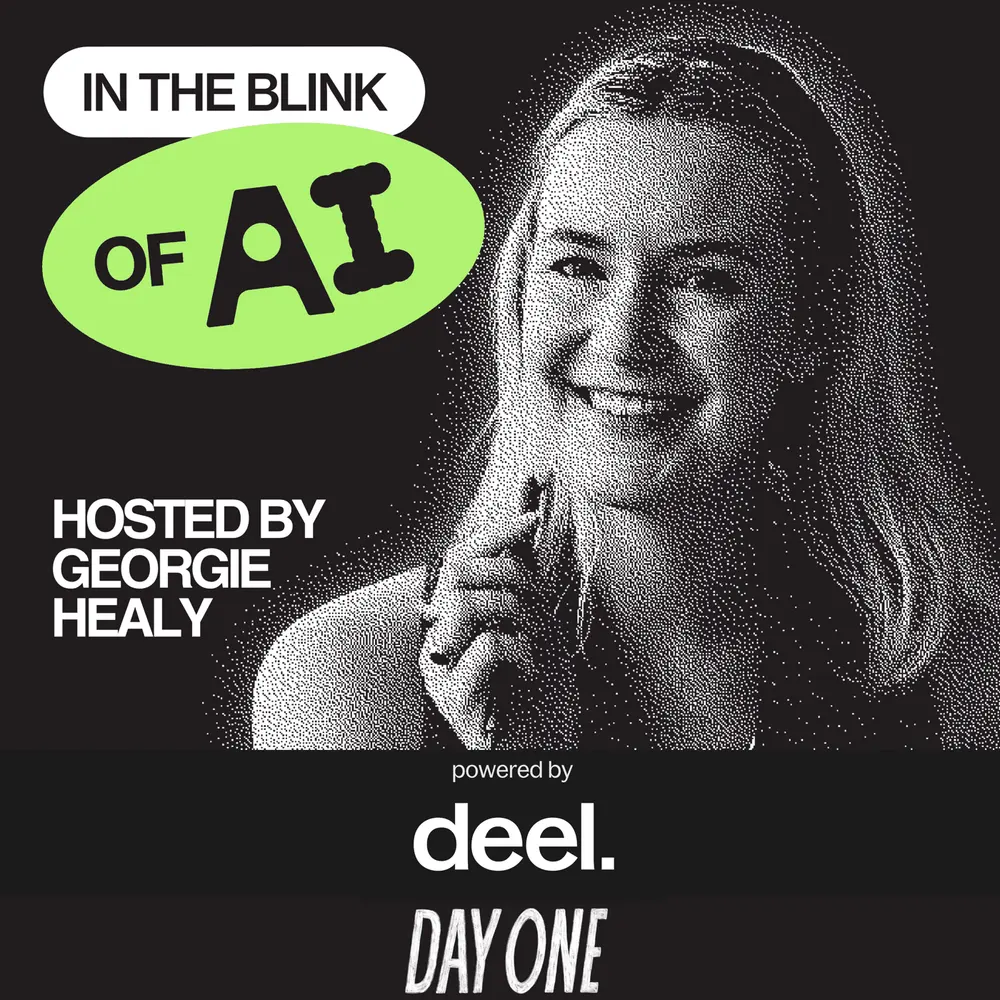 In The Blink Of AI with Georgie Healy
Presented by Deel & Stripe
In The Blink Of AI with Georgie Healy
Presented by Deel & Stripe 

 ▶
▶  ▶
▶  ▶
▶  ▶
▶  ▶
▶ ▶
▶ ▶
▶