Transcript Synced · select any line to jump ▾ 0:02 Georgie Healy: Founders scale faster on Deel. Set up payroll for any country in minutes. Hire anyone anywhere. Get visas handled fast and get back to building. Visit deel.com/dayone. That's d-e-e-l.com/dayone. The government in Australia accused of being incredibly slow moving, not taking on AI in many ways. 0:29 Jack Curtis: Mm-hmm. 0:29 Georgie Healy: Not agile enough, not adopting enough, and not commenting There's a lot of noise in AI. 0:35 Jack Curtis: I actually think a lot of what's going on in AI is a bit of a dumpster fire of signal-to-noise ratio. So, you know, in the olden days, there weren't 1-in-50-year floods every 3 years. You weren't completely changing the energy mix from a bunch of coal plants to behind-the-meter assets like rooftop solar or electric vehicles. And so it was okay to do things very slowly, even if you were doing it in software. But now the challenge is that you are trying to make these very fast decisions as the energy mix moves very quickly, as they still have to keep the lights on every day. And so the way I describe it is that now the energy industry has been asked to do more in the next 10 years than it's been asked to do in the last 100. 1:11 Georgie Healy: Electricity is really expensive and it's getting worse. What can be done? Hello and welcome to In the Blink of AI, your weekly front row seat to the AI revolution. I'm Georgie Healey, and this week we have Jack Curtis from Neera. He's the Chief Commercial Officer, and Neera Nera are often in the AFR and Forbes and Capital Brief, but if you haven't heard of them yet, they deliver 3D digital modeling and analysis for the owners of critical energy and infrastructure assets. Does that sound dry? It did to me too originally, but let me tell you, au contraire, this episode is pretty important if you care about how we actually keep the lights on when there's bushfires and floods, an increasing burden on the energy grid with this world of AI that we're living in. And I was pretty obsessed with how deep we could dive on data centers here in Australia, where to put them, what that means for everyday people that are paying energy bills. And we also unpacked Scott Farquhar's 5-point AI plan for Australia. I recommend watching this on YouTube because we did record it in studio and it's beautifully lit. And I'm going to stop yapping about— let's dive into the episode. 2:29 Speaker: You're listening to a Day One FM show. 2:32 Speaker: Hi, I'm Lucy. I'm Kerry, and welcome to Mumbition, the podcast. We chat with incredible women sharing the hilarious, messy, and brilliant truth about mixing motherhood and chasing dreams. Because building a business while building Lego empires, not always easy, but definitely possible. So grab a coffee, probably reheated, tune in, and join our community of women who get it. MumBition, the podcast for mums daring enough to do both unapologetically. Available now wherever you squeeze podcasts into your day. Hi Jack, thank you for joining In the Blink of AI. I'm so thrilled to have you, and I've said a few times now, I've been name dropping you constantly for weeks now. First of all, I'd love to hear about Neera. Can you tell us about it? 3:22 Jack Curtis: Sure. Well, thanks for having me, Georgie. And to describe Neera at a high level, it's a software company We create digital models of critical infrastructure, primarily today electricity networks. And so we build these deep, rich, complicated visual models, and then we help the owners and operators of electricity grids optimize the grid for a whole range of problem statements. 3:44 Georgie Healy: We're gonna dive into that much more deeply, but I love this concept of a digital twin. Have you already explained what a digital twin is and how come I keep seeing them pop up everywhere in different industries? 3:56 Jack Curtis: Yeah, so it's really become one of the, I guess, new buzzwords buzzwords, including in the context of AI generally, but also just the management of everyday real world. And so a digital twin can mean a lot of things in a lot of different contexts. But think about it at a simple level of creating a virtual representation of something that we use in the real world, predominantly an asset. So that might be a house, might be a stadium, it might be an electricity network. Now where it gets quite busy is that there's a full spectrum of digital twins. You can have a visual twin, so it just looks like your house. So you might be looking to renovate your house and you want to see what it looks like once it's finished. That's one version of a digital twin at, I guess, a more simplistic level. And then all the way to the more complicated end of the spectrum, which is really where we play, are true behavioral models where it actually performs, behaves, has all the characteristics of the actual assets that you are modeling. And so, for example, if there was a power line pole in the real world, and there was a very extreme weather event and you could see that power pole start to bend and stretch and flex. If you saw that in our digital twin, it would be doing exactly the same thing. And that's both a visual representation, but an engineering representation, a mathematical representation, a whole lot of complicated kind of physics algorithmic work that actually gives you that behavioral model. And so the reason why it's become so popular is that it's now being used to simulate things before you actually do them in the real world to reduce risk, to improve the outcome. And so that's why it's become quite a popular theme and more and more something that AI is being applied to. 5:36 Georgie Healy: So your customers, they hear about this bomb cyclone coming. I remember that word thrown around. Yeah. 5:42 Jack Curtis: Recently. Yeah, yeah. 5:43 Georgie Healy: Sounded terrifying. 5:44 Jack Curtis: Yeah. 5:44 Georgie Healy: They could use NIRA to map out what that could look like. 5:48 Jack Curtis: Exactly right. So where we apply AI in that context is that we look at all the previous weather events in that area. So we do a lot of this work in Texas, for example, where we look at all the historical cyclone bombs that have occurred. And then we say when those have occurred, this is the kind of damage that it's created. And this is typically where that damage manifests. 6:08 Georgie Healy: Mm-hmm. 6:09 Jack Curtis: And then we use that data to train the artificial intelligence to say, all right, in the future, if something like this happens again within similar kind of parameters, this is where the damage is most likely to occur. So instead of waiting for the damage to occur, you can go to those parts of the infrastructure and make it a bit stronger, make it a bit more resilient. And when the cyclone bomb comes through, instead of, you know, $10 of damage occurring, you only see $3 of damage. And so it's enabling people to prepare assets for, you know, more and more extreme weather events, but also just general things. So for example, if you own a house that might have termite damage, it's the kind of thing that's helping people optimize the real world before the kinds of events that we're becoming more and more familiar with occur. Mm-hmm. 6:55 Georgie Healy: Amazing. Prevention better than the cure. 6:57 Jack Curtis: 100%. 6:57 Georgie Healy: Yeah. Look, we're going to dive in. I've got a lot of awesome questions to ask you, but first of all, it's a popular segment on the show is AI Hack of the Week. So we both share a hack that we love. It could be a tool, it could be a use case, it could be an actual platform you've used. Yep. Tell us your hack of the week, Jack. 7:18 Jack Curtis: So I have to caveat this, Georgie, where I'm a bit of an irritable user generally, so I'm kind of cranky and old now. So for me to try something new new, it could take quite a lot of adoption friction to be removed. 7:30 Georgie Healy: That's the best hack. 7:32 Jack Curtis: Yeah, exactly right. So I'll tell you two things. One, what I'm in the market for. So if anyone has some good ideas, which is calendar management, time management, AI solutions. So I'm a big productivity, time efficiency person, but I spend a lot of time living in my calendar trying to optimise it, but I haven't found anything that actually does that. Without putting in a jiu-jitsu class at 3 AM in the morning that I didn't want to occur. So something that can read your calendar, read what you do, read your to-do list and optimize around that. That's what I'm interested in finding. The AI hack that I actually enjoy, which is super dull, um, is a platform called Gong. Um, it's an enterprise AI platform. It listens to, um, call recordings and then it transcribes the call recordings. But what I found super fascinating about it is that what it actually can pull out from the insights of the call. If someone, if I spoke to you for an hour and someone said, all right, Gong's going to tell you the 3 interesting things you said. First of all, Gong would say, you only said one interesting thing. 8:34 Georgie Healy: I'm sorry. 8:35 Jack Curtis: But if I were to say, all right, I said these 3 interesting things for sure, it nails it every time. And so, you know, why I think it's cool is that it's actually starting to have interpretive insights, which is where I think AI gets really interesting, where a lot of like and wavy, scrapey AI is just like putting a whole bunch of stuff and automating it. When you start seeing it pull out the things that you as a human would determine were the interesting things, that's where I think it gets pretty exciting. 9:02 Georgie Healy: Does Gorn have a context window where you can— 9:07 Jack Curtis: None whatsoever. I look, it may, but I remember the first time I came across it where it was actually when we were doing a fundraise and one of the funds we were speaking to They said, all right, we're going to bring our go-to-market team and they're going to stress test your go-to-market. And so I just blabbed on for 2 hours and then they sent me the recorders like, hang on, did someone take notes? Did like one of these like, these are the 10 things that if I'd only blabbed for 10 minutes, like I wasted an hour and 50 minutes of your time. They're the only things that matter. 9:35 Georgie Healy: Wow. 9:36 Jack Curtis: So when I saw it was the first time, I was like, wow, that's not just transcribing it and like someone's giving it like context and, you know, kind of nudging in the right direction, like supervised kind of context. It was completely like just straight out out of the, straight out of the bin. So, and then it went in the bin because it was all nonsense, obviously. 9:53 Georgie Healy: But he said one interesting thing. 9:55 Jack Curtis: Yeah, exactly. Like, in 2 hours, I'm trying to improve my unit economic of interesting things to say. 10:00 Georgie Healy: Oh, I'd hate to think of, yeah, if he boiled down actual insights in my day and all the meetings I have. But yeah, that's a great hack. Yeah. Um, and a unique one. I keep hearing about Otter AI and, uh, very similar, very similar. 10:14 Jack Curtis: Yeah. Yeah, very similar. 10:17 Georgie Healy: I've got an AI hack inception. Yeah, go ahead, do it. AI within AI hack. 10:21 Jack Curtis: Sounds very meta. 10:22 Georgie Healy: Oh yeah, no, I went very special hack for you, Jack. 10:26 Jack Curtis: Okay, okay. 10:26 Georgie Healy: Yeah, I was excited for this episode. 10:27 Jack Curtis: I'll just move to the edge of the seat now. 10:29 Georgie Healy: Yeah, yeah, yeah, so many insights. So I've been talking to AI engineers. 10:34 Jack Curtis: Yes. 10:35 Georgie Healy: As I want to do. 10:36 Jack Curtis: Yeah. 10:36 Georgie Healy: More and more. Yeah. And I asked them, look, I'm not an AI engineer. I want to really understand neural networks. Uh-huh. But in a way that it doesn't go right into the deep end straight away. 10:48 Jack Curtis: Sure. 10:48 Georgie Healy: I can't tell you how many times I get the same answer, which is Andrej Karpathy. 10:53 Jack Curtis: Right. 10:54 Georgie Healy: Put it in the show notes. 10:55 Jack Curtis: Yeah. 10:56 Georgie Healy: On YouTube, he goes from— he calls it From Zero to Hero. 10:59 Jack Curtis: Yeah. 11:00 Georgie Healy: All about neural networks. But every episode's really lengthy. 11:03 Jack Curtis: Yes, sure, sure. 11:04 Georgie Healy: And detailed. 11:05 Jack Curtis: Yeah. 11:06 Georgie Healy: And so I'm like writing notes and all the rest of it. 11:08 Jack Curtis: You just want someone to give you the 5 minutes. 11:10 Georgie Healy: I want the 3 interesting insights from that chat. And so I put it into NotebookLM. Have you used it? 11:17 Jack Curtis: Yeah, of course. 11:17 Georgie Healy: Yeah. Yeah. And I just say, you know, what are the most important things from these 2 hours? I still do watch the 2 hours because I think that's important. 11:23 Jack Curtis: Do you really? 11:24 Georgie Healy: Yeah. For me and absorption, I need it like drip fed. Otherwise it doesn't absorb. 11:30 Jack Curtis: You've got better discipline than me. 11:31 Georgie Healy: But then at the end I can turn into multi-choice like questions. 11:36 Jack Curtis: That's quite cool. 11:37 Georgie Healy: Yeah. 11:38 Jack Curtis: Yeah. Repurposing the medium. That's interesting. Yeah, it's not dissimilar to my Gong thing. It's like, all right, I'm going to listen to this, but now I just need the things to act. 11:47 Georgie Healy: The only difference between you and I, Jack, is that I don't have like a really successful AI startup, but everything else— 11:52 Jack Curtis: You have a very successful AI podcast. 11:54 Georgie Healy: I don't have that. I'm the same person. 11:56 Jack Curtis: Yeah, exactly right. 11:57 Georgie Healy: I don't eat porridge for breakfast. 11:58 Jack Curtis: Yeah, gruel. 12:00 Georgie Healy: Okay, I am so excited to get into the next section. This is kind of where you flex all your domain expertise in the utilities space, the AI space. Say, for example, Ausgrid. What were they doing before Nira in real time in, in the week? And what can they now do? 12:18 Jack Curtis: Yeah, sure. Yeah. So often what we're replacing is either a very manual process— and this isn't specific to Ausgrid, but just someone like an Ausgrid— is where— and this is where it gets quite terrifying. When you think about electricity grids, it's about as critical as infrastructure gets. You know, it depends on what you care more about— electricity or Wi-Fi, being able to use your phone or turn the light on. But, you know, it's generally about as critical as infrastructure gets. Now, what's terrifying is that a lot of the very big problem statements that the owners of grids have to navigate have largely been solved through very manual approaches, which is sending thousands of humans into the field to inspect a problem or inspect a risk, identify a risk, put their finger in the air, like literally a finger in the air, and say, all right, there's a rough likelihood that this will happen and that will fail, and therefore we have to go invest against that. So the worst kind of case scenario, but this is usually quite often the case, is that we're replacing a very manual human process, which is not just prone to error, but is prone to like hectic inefficiency. And so if you're relying on just throwing thousands of warm bodies at identifying risk, preventing risk, so that's kind of one thing we're usually replacing. We are digitizing almost all of that. So we can take these rich contextual models and we can look at the assets, we can look at the threats, whether it's encroaching environment like a tree or like a cyclone bomb. And we can say, all right, no more humans in the field identifying the risk, quantifying the risk, or determining what to do next. So we're taking all that human load inefficiency kind of out of the equation. Other times they've been doing it in a software solution, which might be modeling it at the right level of detail, But it's not doing it at the velocity or scale that's required to navigate a lot of the problem statements that energy as an industry is now having to navigate. So, you know, in the olden days, there weren't 1-in-50-year floods every 3 years. You weren't completely changing the energy mix from a bunch of coal plants to behind-the-meter assets like rooftop solar or electric vehicles. And so it was okay to do things very slowly, even if you were doing it in software. But now the challenge is that you are trying to make these very fast decisions as the energy mix moves very quickly, as they still have to keep the lights on every day. And so the way I describe it is that now the energy industry has been asked to do more in the next 10 years, has been asked to do in the last 100. 14:45 Georgie Healy: Mm-hmm. 14:45 Jack Curtis: But by still having people in the field or some like desktop software solution. And so what we're doing is either replacing something that is now completely intractable, like you literally just cannot solve the problem. Or it's been solved in a way that's so slow and so unfit for purpose that it's pretty close to intractable anyway. And again, back to like why digital twins, it's enabling you to do the domain analysis that humans are good at, but putting it on millions and millions of iterations at a timescale that was previously not possible. 15:16 Georgie Healy: Yeah. Wow. 15:17 Jack Curtis: Yeah. And it compounds, you know, when you think like all of these complex infrastructure, it's not just electricity, like telecommunications networks, gas pipelines, they're all a construct of millions of individual assets, you know, over long tranches of area. And so if you think every asset deserves its own validation and then you're like, right, do we have enough humans to do that on the right cadence? It really does give you a sense of like why digital modeling has become such a thing in today's landscape. 15:46 Georgie Healy: Yeah. Okay. So I want to know if there's anything you've predicted because engineers have existed for a long time. I just came back from Rome and saw the Pantheon. I was like, oh, humans technically built that. 15:58 Jack Curtis: Yeah. 15:59 Georgie Healy: But have you modeled anything where you're like, literally humans could not have modeled that? 16:03 Jack Curtis: So what's really interesting about that question is that, and this kind of goes to the broader, I guess, question around AI adoption per se, which is we don't believe, particularly in enterprise, it's not, we're not kind of putting on filters on TikTok videos, which is a totally fine thing to do as well. But in our domain, human domain proficiency is actually very good. And so to your Pantheon example, you look at some of these things that were built and it's like, they probably couldn't build that today 'cause it's prohibited from a cost point of view. But the fact that they were able to build that with the ways that they had to build back then, it's pretty crazy what humans can still do. And so why it's relevant is that our view is that particularly in enterprise land or critical anything land, you don't actually want to completely remove the human component. What you want to do is give them information and insights and the ability to do what they do well, just at much greater scale and much greater velocity and much greater accuracy. And again, I think this kind of goes to the broader point around how fast is AI going to eat the world in enterprise land. I think it's going to take a lot longer than it's a potentially capable of, or b, even when it does become capable of it. So just say someone comes down from the sky and says, All right, the AI is 100% accurate. It's not hallucinating. I promise you that, like, everything's all good. You've then got the human adoption behavior element of it, which is like, I don't know, I still, you know, it's like the whole transition of when, you know, at least my grandparents wouldn't use ATM machines in case the ATM machine, like, stole all their money. And so I think there's going to be a real human adoption element to it, which I think will be very interesting as relates to what does software AI do? What do humans still do and how do you optimise across the two lenses, factoring in the fact, you know, I say this a lot to the engineers at our company, I guess, pearl clutchy about what AI can do and how dystopian it can become. I was like, look, until the AI robots kill us all, which, you know, maybe it's tomorrow, but until that happens, let's not worry yet. Humans still engage with humans and there's still human buying patterns, adoption patterns that need to be factored in. 18:11 Georgie Healy: For some reason reminds me of Waymo's, right? Like originally that was like, I am not getting into a robot car. It will immediately drive me off a cliff. And then we thought about all the safety concerns of human error. 18:24 Jack Curtis: Totally. 18:25 Georgie Healy: And like women actually prefer Waymos apparently. That wasn't something I was thinking about, but late at night— 18:30 Jack Curtis: I wasn't. Getting into a taxi. Of course, yeah, it makes a lot of sense. 18:32 Georgie Healy: Didn't occur to me either. Yeah, I was like, I see that, I see that. And now with more data and more, yeah, it's quite fascinating. But yeah, enterprise or the population as a whole, are they there? Probably gonna take some time. 18:45 Jack Curtis: Yeah, and also it's what do humans want it to replace? So at the end of the day, like doing my expenses, I find super dull and I would love AI to completely automate that. But AI that's going to automate doing the parts of my job that I enjoy. So one of the big areas of AI is automating outbound or engaging with people in a sales capacity. It's like, no, I actually enjoy that. I don't want you to do that. Like maybe you can help me automate parts of that that are inefficient, But I think this whole what AI is capable of and what humans actually want it to do and what to use it for gets a little bit lost in the dystopian noise of how quickly we're all going to be reporting to robots. 19:25 Georgie Healy: Yes. Okay, so back to the everyday listener. We're all paying— you mentioned the Wi-Fi, the electricity, electricity bills. 19:33 Jack Curtis: Yep. 19:34 Georgie Healy: Electricity is really expensive and it's getting worse. I apologize if this is a really rudimentary question, but I never get to ask someone in the space this. What can be done, Jack, about that, do you think? 19:48 Jack Curtis: Yeah, well, I think the first thing is understanding what actually drives the cost of energy. Because to your point, Georgie, like what is, where has energy come from an absolute and relative cost point of view? And now I was speaking to one of the chief economists at one of the large banks the other day, and they see all the obviously consumer spend data, and energy is now in the top 5 of all consumer spend from like a cost of living point of view. And so there's obviously like the lead-off items like mortgages and food, but now energy's become an absolute and relative big part of the cost of living equation. I think the first problem statement is a lot of everyday folks quite understandably don't understand what comprises an energy cost. And so a lot of people focus on what you see in the newspaper, which is, well, the cost of the generation, whether it's like, well, does nuclear cost more than coal or does solar cost more than whatever? But really what drives a lot of, or a meaningful component of the energy cost is how the energy is delivered. So the cost of energy that we all pay for, half of it roughly is a function of the generation of that electricity, and the other half is what was used to transport it. So the grid. Now, a lot of people, I think just by virtue of some of the media kind of context around it, have assumed that, well, it's, it's reliability or introducing different energy mix that's driving it up. Where really what's driving a lot of it now is the resiliency of the network. A lot of the impact of these extreme weather events, you know, climate impact, how that's impacting their grid's ability to be reliable, to deliver electricity 100% of the time. And we actually conducted some consumer research recently on this, and there's a massive disconnect between what consumers actually think is driving the cost of energy and what actually is. And so when you take it back to like, all right, what can be done around this? A lot of what we are doing in the space of optimizing existing infrastructure and ensuring that you maintain the same level of reliability, but you can do it in a more cost-effective way because now you know where all the problems are. So the example around, you know, the hurricane modeling, you can predict when damage is going to occur because the cost to maintain on a relative basis is non-trivial. But when you are doing $100 million of damage every time a flood comes through or a hurricane comes through, like that gets passed through to consumers. Somebody has to pay for it. 22:06 Georgie Healy: Mm-hmm. 22:07 Jack Curtis: And so I think that the first kind of understanding point is cost of energy is now a real challenge. Secondly, what is actually driving that and making sure there is a broader appreciation, particularly at the everyday user level. And then what can we all do to think about, okay, what parts of those components can be improved? Because the other constraint, which is kind of one step removed, is that renewables is just the cheapest source of energy. The faster we get that into the mix, the better. So the generation part will come down. But what's blocking that coming in is the access to the grid. And so then this focus on, well, what's really driving the energy cost? The constraint is actually because more renewables can't come in faster. It's not because renewables aren't ready to come in faster from a cost point of view. So some of these kind of second-order drivers of what's driving energy cost I think understanding that at a consumer level, at a policy level, can really make a massive difference beyond just the fact that, you know, there are things that will naturally drive it up. 23:04 Georgie Healy: So fascinating. Say we do make it so efficient. 23:08 Jack Curtis: Mm-hmm. 23:09 Georgie Healy: We introduce all these renewables, they're ready to go. 23:11 Jack Curtis: Yep. 23:11 Georgie Healy: From a grid perspective, it's top tier efficiency-wise. 23:16 Jack Curtis: Yep. 23:17 Georgie Healy: Can we build data centers? Or how much will that impact the cost of electricity for the everyday consumer? 23:23 Jack Curtis: Yeah, so this is an area we're actually spending a lot of time on now. 23:26 Georgie Healy: Really? 23:26 Jack Curtis: So, we've been, we believe that there's one of the big problem statements of data centers is speed to energization or speed to build. 23:35 Georgie Healy: What's that? 23:36 Jack Curtis: So essentially the biggest constraint for those that develop and ultimately, you know, those that own data centers is how quickly can we get it built? How quickly can we get the compute power up and running? And the slowest part of that process is getting access to the grid and getting access to energy. 23:53 Georgie Healy: Really? 23:54 Jack Curtis: The second slowest part of that process is kind of general siting, permitting, you know, regulatory red tape tape, but the number one constraint is speed to compute time. And the number one constraint to that is speed to energization. And so the first kind of interesting thing about it is it's actually, again, the, the, the energy industry that has the greatest role to play on unlocking the potential for data center investment in Australia. And it is just a space race amongst companies. And countries who get as much of this kind of wave of data center investment, the actual jobs that come with that, the technology investment that comes with that. So Australia is part of the space race. It's like, all right, how quickly can we get as much data center investment in Australia? Then to answer the specific part of your question around what does that do from a cost point of view, it actually— there's a way where it can actually bring down the cost, where if you think about it, the data centers consume their own energy. And so, you know, the optimized solution is that you put a bunch of data centers in an area where you put a bunch of generation that serves those data centers. So it's like captive use of the generation, and then you invest in the network to serve that. So it's almost like a little ecosystem unto itself. But the benefit of that is that when you invest in the grid, you are socializing the cost of that grid across more users or more investment or more energy kind of demand. And so if you think about it, if the grid costs $10 and you have 10 users and the grid costs $11 and now you have 15 users, everybody benefits from that infrastructure investment being amortized across more people. And so if it's done in a smart way, A, data centers can be a massive contribution to industry per se in Australia, do justice to a lot of the, I guess, rhetoric around Australia being an export nation for technology. But then thirdly, actually contribute to the problem statement of cost of energy from a reduction point of view, not from an increase point of view. 25:53 Georgie Healy: So many questions from that. One is immediately I thought about freezer and the more things you pack into the freezer, the more efficient it is. 26:03 Jack Curtis: Yeah, it's a bit like that. 26:05 Georgie Healy: That's, that's far better way to explain it. This is the way I think about the world, Jack, is how much can I fit in my freezer? 26:09 Jack Curtis: That's far more translatable than what I just said for far too long. 26:12 Georgie Healy: Same. 26:12 Jack Curtis: Yeah, exactly right. 26:13 Georgie Healy: Yeah, yeah. 26:14 Jack Curtis: Freezer utilization. Yes. 26:16 Georgie Healy: So much ice. Yeah. And now I want to know, if you were to put data centers in Australia. 26:23 Jack Curtis: Yep. 26:24 Georgie Healy: Someone like me who has not done the research, I'm thinking put them in the middle of the desert. There's so much space. Oh my gosh. But does that even make sense from a grid standpoint? Where should they go? 26:34 Jack Curtis: Yeah, so it's a bit of a sliding scale. So one of the things that we really focus on just in the energy optimization problem statement we're discussing is where is there existing capacity that can be used better? 26:46 Georgie Healy: Yeah. 26:47 Jack Curtis: So what's really the primary solution for the energy transition policy goals right now is we're going to build similar to what you just described in data centers. We're going to build a bunch of energy in the middle of nowhere and we're going to build a very expensive transmission line to connect it. And that will take a long time. But we need this clean, more cost-effective energy, and that's just the fastest, easiest way to think about it. Where— and that is a valid strategy and has to be part of the solution. But what we focus on is imagine if you didn't have to wait for that transmission line to be built. Imagine if you didn't have to pay for that. Where is there in the network? How do we make the network do more than what it currently has? And there's a lot of work that we do increasing the utilization of the network, identifying where if you spent a dollar, you could unlock $5 of capacity. You know, just to use an apples-to-apples comparison. And so that's the same that applies to data centers. So the first answer is where can we find all the utilizable parts of the network where data centers make sense from a data center siting point of view? Ideally, there's proximity to load and where it's needed, but that's not necessarily as required as like access to energy. And then once you've surfaced all those options and maximize those, then your example is an extremely valid one as well, which is like, all right, existing network, like fully maxed, all data center optionality realized. We still have so much demand for data centers that we can actually justify building an energy microcosm around it. So we can actually go build— because the great thing about data centers is that they consume their own energy, where when you build renewable energy zones in the middle of nowhere, you still have to transport the energy to where the consumers are. Where— because the data centers self-consume the energy, you can build the network, build the generation, and you build the load or the customer base all in the one— All in one location. Where when you do that in energy, you're usually building it somewhere where there's not enough people to use it. So you have to ship it all the way back to where it is. And so it's actually a really fascinating third kind of leg of the chair that we don't solve in energy because consumers are over here, energy's over here, and you've got to like build a big transmission network where you can actually have all of it in this microcosm of like a circular economy of generation, network, and consumption. Yeah. Powering something that obviously has a massive role to play in the general economic future of Australia. 29:09 Georgie Healy: I would happily talk to you for another hour about data centers. That is fascinating. One last question, please. 29:16 Jack Curtis: Yeah, of course. 29:17 Georgie Healy: I know they need cooling. 29:18 Jack Curtis: Yep. Water. Yep. 29:20 Georgie Healy: I once saw a very hideous diagram about how complex a data center really is. If they're in that Plan B option and we've exhausted, you know, existing grid availability and they build them in the desert. 29:34 Jack Curtis: Yeah. 29:35 Georgie Healy: Is that another limiting factor? Is the fact they need— 29:38 Jack Curtis: It is. So here's something I learned a while ago that I was very naive about, where when I first learned more about Bitcoin mining and the role that data centers have in that, I thought it was the smartest algorithms that win the day and the smartest software engineers who are like making sure that you mine the most. Where, you know, it was a very naive view where really everyone has the same algorithm. The only differentiating factor is who has access to the cheapest cost of energy. That's all it is. The game of Bitcoin mining is a race to access the cheapest cost of energy. And the biggest contributor to that is because data centers run hot. Can you put them in the coldest places on Earth where the cost to keep them cold is not as high? So that's why Nordic nations, it's a very strong value proposition. Places like Canada where the incremental competitiveness comes down to the cost to keep things cool or the cost to access energy. So, when you're doing this kind of, can we put them in the middle of the desert equation, you do have to overlay that, which is, right, what's the economic trade-off— 30:41 Georgie Healy: Yeah. 30:42 Jack Curtis: Between putting them somewhere hot and what is it going to cost to keep them cool versus putting them somewhere where you want to put an hour outside of Sydney, the land's probably going to cost 5 times as much, the network access is going to take you, you know, maybe longer, what's the cost to essentially access that network. So it is one of the few parts of the equation that doesn't go in the right direction. But when you look at the total sum of the economic value proposition, I still think there's an argument for why, you know, it's not like there's a Vancouver in Australia. There are parts where, right, you might not put it in Darwin versus further south, but it's definitely a factor that really drives that differentiation. 31:20 Georgie Healy: Okay, so this section is called Headline News. I love having an expert on the show because there's always headlines around AI constantly, and some of them are trigger-happy, some of them are clickbaity, some of them are fearmongering. And I like to be able to be like, is this fair and is this true? One of them is the government in Australia accused of being incredibly slow-moving, you know, not taking on AI and in many ways not, not agile enough, not adopting enough and not commenting Yeah. But you work with the government, and I'm curious if you have positive interactions with that, because you're obviously working at, you know, breakneck speed. So— 32:04 Jack Curtis: Yeah, I have to say, I think it's probably a bit of an unfair criticism. I think it kind of goes back to what we were talking about before in the context of just because AI can do a thing, you have to be mildly empathetic about what you're looking to inject it into. And so I always say this about those that own electricity grids. Sometimes they get accused of being a bit slow and inert, but when the consequences of getting it wrong, or the lights go out or a hospital loses access to energy, then you can't move at the same, you know, move fast, break things speed. That's a meme in kind of venture growth land. And so, and I think the, the same kind of applies for government, which is a lot of, there's a lot of noise in AI. I actually think a lot of what's going on in AI is a bit of a dumpster fire of signal-to-noise ratio. And so I actually think if you're going to make very big policy decisions that have implications for non-trivial things like future of the economy or social welfare, that you want to make sure you make the right bet for the right reason and you adopt the right thing. Because we are already seeing this kind of end of the first wave of AI adoption in corporate land where every chairman read an AI article and said to the CEO, what are we doing in AI? So the CEO went off and panicked and did a bunch AI crap. And then they're like, all right, what did we get with that? It's like nothing really that we're gonna use because it doesn't really change the outcome. And so I think there needs to be a bit of like, all right, biggest thing since whatever, the internet, or— But just remember there's gonna be a wave and then there's gonna be, I think, a pretty meaningful filtering of what actually, you know, continues. And I think if you're critical infrastructure or government, you can't really be part of like the test speed run. Of the first wave, you can't really make too many bad decisions. I think that's the first thing. I think the second thing is that in our engagement, and we obviously play in Energyland, we see a lot of proactivity around solving this with technology, solving this with artificial intelligence within the realm of, you know, safety parameters. I don't mean like general safety, just like safety of not making the wrong decision. So what I then translate it to is what is quite common, you know, in government, and this isn't specific to Australian government, which is the mind is willing, but is the architecture of government, um, able to execute at speed? So I think the first problem statement you want to see removed is do they actually want to do something and is there proactivity? I think that's definitely the case. When you look at Australia's focus on increasing its productivity, there are only so many ways that can do it. And technology and data centers and leveraging the circular economy of artificial intelligence is definitely one of them. Them. So there are certain things that I don't think Australia's particularly well positioned to do because, you know, a relatively high-cost labor nation and we don't have the same scale as somewhere like America or China, for example. But this is one that we can be winning in, you know, on a relative basis. And so the mind's willing, the proactivity's there. I think the problem statements are definitely there. So one of the reasons why I think Australia's quite advanced with the energy technology adoption globally is that we've had to deal with these problems before others have. If you look at California, what they're navigating with wildfires, Australia went through that kind of 20 years ago with bushfires. And so I think I described it as having 2 out of 3, like they want to do it, they understand the potential of it, they don't want to make a bad decision. And then like all things, like government just has a behavioral architecture where it takes a little while to do it. But what I think is really needed is an introspection around how do you apply expediency to that? Because they're self-aware of it, just like any large hulking organization is. They're usually like, yes, we can be slow moving. So it's like, how do you debug that? Because we want to move faster. We want to make the right decision. We see the opportunity. We see this potential for Australia actually to genuinely be able to play a leading role, not something where we try to force function a, an industry and subsidize it for 30 years and then take away the subsidy and it collapses in a heap. Like, this is generally an area that Australia can lead in. And so I think where the focus should be on the execution risk, how do we accelerate execution? How do we get out of our way on the things that we know are true about, you know, any government doing anything? And how do we debug execution speed? Because I think all the other things are actually there, the opportunity, the proactivity, the actual existence in Australia of technology that can do it. And this is, you know, not just a Neura-specific thing, obviously. And so that final part of it is like, wouldn't it be a shame if you didn't do justice to all the other things? And just find a way to debug execution. 36:36 Georgie Healy: Yeah, thank you for unpacking that. I feel like every week in the AFR someone's commenting on how, you know, AI may or may not be, Australia has a right to play and be one of the leaders in that space. So thank you. 36:49 Jack Curtis: Yeah, I mean, I think it has a right to play, but it is definitely a space race. Like all the people that develop data centers are flying to every country's government and saying, "All right, how quickly can you get us to uptime?" And so it's looking at things like regulatory red tape, permitting red tape, the kinds of topics that have haunted all kinds of industries for years, including energy access. Like, why are we actually going to do something about these issues that are agnostic to data centers that we've been experiencing in all these other lenders? How would we actually do something about those? Otherwise, we're going to wake up one day and Malaysia is going to have 1,000 data centers and we're going to have 3. 37:25 Georgie Healy: I had the CTO of EY on maybe 5 episodes or so ago. And it was funny, she was saying there are certain technologies that in the past we've waited 5 years to catch up, see how it plays out. 'Cause it could be, you know, it could be a flash in the pan. 37:42 Jack Curtis: Yep. 37:42 Georgie Healy: You know, I started a startup in the era of Web3 and the metaverse and all of that stuff. And you know, oh, we'll wait and see how that goes. 37:52 Jack Curtis: Yeah. 37:52 Georgie Healy: But with AI, I feel like we can't wait 5 years to see how it goes, right? 37:57 Jack Curtis: Exactly. 37:57 Georgie Healy: If you wanna be competitive. 37:57 Jack Curtis: Yeah, I think it's, When you look at what's— this is what's kind of interesting about the data centre energy circular economy, I guess, of it, which is there's just a fact that compute power's going to be required no matter what version of AI happens over what timescale. That's not going anywhere. Whatever views people had on Web3 or the metaverse, and I read a very grim article about the metaverse and who hangs out in the metaverse these days and it's like— 38:23 Georgie Healy: Wait, are there people still on there? 38:24 Jack Curtis: Yeah, it's like the saddest party on Earth. But they're like such— 38:27 Georgie Healy: Not from experience, right? 38:28 Jack Curtis: Yeah. So you're like, do people still go to the metaverse? 38:30 Georgie Healy: Apparently not. 38:32 Jack Curtis: It's like just like the real— anyway, it's a bit of a red herring, but it was like a really depressing article on like what metaverse parties look like. But the point being that this is going to be here in some form or fashion and the investment behind it, not just because AI is a thing, but all the things connected to it. So all the compute power, no matter what version of AI stays, and there's going to be, I think, multiple phases of it. It's impossible to conclude that there's not going to be this massive infrastructure arms race, this massive energy arms race, and then the benefit to hyperscale, whatever the base case of technology is in any country as a function of that, is going to be kind of the third limb of it. And so once you, once you kind of make peace with that as a potential accurate thing to say, then you're right. It's like, look, we don't know exactly what or why, but we definitely know something. So let's not like sod around for 5 years and see exactly what it is, because it's going to be one of those things where if you don't get on the train now, it's not going to be like a unit economic catch-up thing. It's going to compound. Like the ability to scale the infrastructure and the ability to realize that infrastructure in Australia, that's the kind of thing you can't play catch-up on. And so if you're not willing to go at risk and kind of subscribe to that kind of equation of why it'll be a thing, then there's a very hot chance it's just a binary outcome. We're either part of it or just sitting here talking about it 5 years from now. 39:54 Georgie Healy: I feel like that about learning about AI, if I'm honest. Like, to anyone listening, and not to scare anyone, but if you, if you wait another year to start playing with the tools, like, this is why I'm on YouTube trying to get my head around neural networks. I don't think everyone has to do that. 40:10 Jack Curtis: Yeah. 40:10 Georgie Healy: But I think if I wait in 5 years, I'll feel like the ship has sailed. It's quite hard. 40:15 Jack Curtis: I agree. Almost in every context. Like, I always think about in the context of the education system and how fit for purpose it is for the kids of today. It's like, what are they teaching? Like, they're teaching like what we learnt, you know, like millions of years ago. And is that like what they're going to need to know? And like, at what point do they start building that muscle that you're describing of like, all right, like, just start using in some context because it may not be this widget, but it'll definitely be something. 40:43 Georgie Healy: It's so crazy the stuff I learned in school that just was so useless. 40:48 Jack Curtis: Yeah, yeah. 40:49 Georgie Healy: And I still don't really understand tax. Yes. 40:52 Jack Curtis: As long as someone does. 40:54 Georgie Healy: But AI might. Exactly right. 40:55 Jack Curtis: Exactly right. 40:57 Georgie Healy: All right. To finish the interview, it's the rapid fire spicy hot questions. Rapid fire is tough because sometimes I'm like, explain the economy. Rapidly? What? 41:09 Jack Curtis: Yeah, exactly right. 41:11 Georgie Healy: As rapidly as we can. 41:12 Jack Curtis: Sure. 41:13 Georgie Healy: Okay. The first one, you're not a weather forecaster. That's pretty clear. But I bet you've been looking at climate data pretty closely. And be honest, like, what are we looking at in the next 10 years here in Australia? 41:26 Jack Curtis: Yeah, I don't think it's— I don't think the catastrophizing is overcooked. 41:30 Georgie Healy: Really? 41:31 Jack Curtis: And I think probably what's as relevant is not just whether it's X degrees or not, but really the asymmetric impact it has on everything that we use and do. And so I think what isn't kind of advertised as much, and not to be hysterical, is, okay, assume some increase in temperature. It's not just that per se. I think we've underestimated— everything we've built was not built for that. 41:57 Georgie Healy: Mm-hmm. 41:57 Jack Curtis: And we've underestimated the impact it's going to have on it. And so it's not just going to be like 10%, whatever, 10% impact. It's actually completely asymmetric. It starts to make things completely unfit for purpose. So things were built within kind of an inch of suitability. So it's not like, oh, like now they're like minus 1 inch. It's now like, no, they're just not suitable. And so I think that's the part that we see that's probably not as well advertised, which is like, all right, assume something that's not great is going to happen. But being able to model exactly the impact of that, only that's starting to come to the fore. 42:29 Georgie Healy: Really? You go crazy. Oh, but winter was cold today, so maybe climate change isn't a thing. 42:37 Jack Curtis: Yeah, I mean, I hate winter, so I complain all the time about winter. Me too. 42:41 Georgie Healy: I'm wearing like a HeatTech vest right now. Exactly, right. 42:44 Jack Curtis: Every winter I become crankier about winter. 42:46 Georgie Healy: Yeah, yeah, yeah, me too. My knees, what is that? 42:48 Jack Curtis: That's right. 42:49 Georgie Healy: Okay, and another one, spicy, climate tech, not sexy anymore. Is that true? And why do you think people are saying that? 42:57 Jack Curtis: Yeah, I haven't heard that as much. I have seen it. I think it's— 43:00 Georgie Healy: Maybe not to your face. 43:01 Jack Curtis: Yes. 43:02 Georgie Healy: So rude, sorry. 43:03 Jack Curtis: Yeah, that's right. 43:05 Georgie Healy: Is this the first time someone told you that? 43:07 Jack Curtis: No, no, no, I have heard that. I, you know, the way I would describe it as this is if you think that the climate's not gonna continue to impact things, there's probably some naivety to that. If you think that technology is not gonna be one of the only things that can solve it, there's probably some naivety to it. I think the climate tech is dead thing is that it's kind of probably crossed the apex of like buzzwordiness. So climate tech was the thing. Everyone's a bit tired of like banging on about climate tech, but I don't think— I have this kind of glib thing I say when we raise capital, which is, all right, we might just be this year's thing. We might be this year's 10-minute avocado delivery thing. But I'm pretty sure that 10 years from now, people still want electricity and the sun's still going to shine and climate's still going to be a thing. So if I was going to bet on something that's going to still be here in 10 years' time, It's climate-impacting infrastructure, not whether someone wants an avocado in 10 minutes. And so like, I think the fanfare around climate tech, just because people get tired of all buzzwords, has probably rolled off. I don't think it's dead per se. 44:09 Georgie Healy: Yeah. When you're sweating, you know, the middle of June, you might actually be like, I don't care if the term, I'm sick of it. I like the actual underlying— 44:18 Jack Curtis: I'm sick of the term. 44:19 Georgie Healy: Yeah, yeah, I get it. 44:21 Jack Curtis: I don't think the underlying reason for why it exists it has gone anywhere. 44:25 Georgie Healy: Yes. Hey, this is the last question. This was in the headlines very recently and got quite viral. Scott Farquhar shared a 5-point AI plan for Australia. And to finish the show, I'd love just like an agree or disagree with the key 5 points that he said. 44:42 Jack Curtis: Okay. Well, Kim and Scott are one of our biggest investors, so I'll be as— 44:46 Georgie Healy: Are you like, I can save your time. 44:50 Jack Curtis: Everything. 44:51 Georgie Healy: Yes. 44:51 Jack Curtis: No, no, they unfortunately have no filter. So like, just do the thing. You'll get the same answer. 44:56 Georgie Healy: Okay, deal. Make Australia the data centre hub for Southeast Asia. Yay or nay? 45:01 Jack Curtis: I think definitely take a crack at it for all the reasons we described. 45:05 Georgie Healy: Fantastic. Fix copyright laws for, for AI. 45:09 Jack Curtis: Yes. I mean, I think one of the things that I think is really missed, not in absolute but relative to AI, is the data constraint problem. So it's the access to data, it's the sharing of data, it's doing in a way that doesn't make people not want to share data. So I think copyright goes a long way of creating the balance there. But really, AI is only as good as the data that you can train it on. And then the whole kind of split between proprietary data, public access data, where's the kind of social good balance and like, well, if all data is accessible, but then are you going to like destroy entire industries and economies? So I think yes is the kind of glib answer. There's a fine balance on, you know, where does AI become better because you have access to more information? And where are you starting to do an injustice to people that's giving them a negative signal to want to participate in that kind of exercise? 45:57 Georgie Healy: API enable all government services. We're talking licensing, courts, building permits, passport applications, childcare subsidies. 46:07 Jack Curtis: Yeah, I mean, like, God, yes. Like, wouldn't that be great if you went into every single government thing that you did and it just wasn't as soul destroying as it is? I think again, back to the, is that a realistic change management enterprise adoption behavior to expect that needs to be kind of thought through. And so it kind of goes back to talking about AI is ready to do a thing. Wouldn't it be amazing? But don't just say, all right, cool, API government and everything. It's like, all right, what else needs to change downstream? Because, you know, we've got 100-year-old industries that have processes and systems and people and change management that would need to occur where if you try to square peg round hole it too quickly, I think you actually blow up the credibility around it. Exactly. So I think, you know, idea, great, would love it, but have to be realistic about what the integration and adoption upstream and downstream, you know, in very complex workflows would involve. 46:59 Georgie Healy: Amazing. Jack, do you think we can create fast-track digital apprenticeships? So teaming up with unions and employers to offer short 6 to 12 month programs in data center construction and the like? 47:13 Jack Curtis: Yeah, I mean, this is an absolute no-brainer. So our biggest block right now is access to engineer talent, specifically AI machine learning engineer talent. There's no reason why the pathways to curating that, making it more accessible, doing it in the context of real world. So the Digital Apprentice idea where it's like, all right, just put people in the deep end, make it faster. Don't just theorize it for 3 years. This one that has no— this one has no blocks. There's no reason why that can't be a thing tomorrow. You just need to set the right incentive, the right goal, the right policy structure.. But unlike the API one, which I actually think has a lot of downstream friction, this one should be done tomorrow and is actually one of the biggest blockers to AI innovation in Australia. We cannot find machine learning engineers for love nor money. 48:01 Georgie Healy: I live in Cookshie and the number of Irish friends I have now that did the farm apprenticeship. 48:06 Jack Curtis: Yeah, yeah. 48:07 Georgie Healy: Let's just train them up in LLMs and— 48:10 Jack Curtis: Well, if you subscribe to the theory that AI's commoditize a lot of domain expertise. Just get people onto tools as fast as possible. So I think that one's an excellent one. 48:19 Georgie Healy: I've got a 3 and 5-year-old. I'm getting them to work. 48:21 Jack Curtis: Yeah, that's right. School's a waste of time. 48:23 Georgie Healy: You know, I'll give you a lolly. 48:25 Jack Curtis: Exactly right. 48:28 Georgie Healy: All right. The last one from the 5-point plan for Australia. I've outed myself as a terrible parent. 48:34 Jack Curtis: I got to say no at least once. No, I was on a Zoom call with like my marketing team this morning and like my 3-year-old walked in, 3-year-old, and I'd give him a vitamin that I, you know, gaslit him was a lolly. I was like— 48:45 Georgie Healy: Oh, because they're the chewy sugar-covered vitamins. 48:48 Jack Curtis: Full transparency, his name's Oliver. And I was doing it to try and get him changed. And then he took it and then ran off. And then he came, jumped on my lap during the Zoom call and he said to everyone, "I got a lolly for breakfast." And I was just like, I'm not even gonna explain it. So safe space. 49:03 Georgie Healy: I mean, I feel like thou doth protest too much. It was a real lolly. 49:07 Jack Curtis: And now you're like, no, well, how do we, I was like, how do we backtrack that? Yeah, it's too late. 49:12 Georgie Healy: No, we've got all sorts. We've got the vitamin D ones 'cause my daughter's lactose deficient. And then we're like, well, why not give them every vitamin possible so that when they eat like bread for dinner every night, it's fine. 49:24 Jack Curtis: That's right. Yeah, have a white diet till you're 12, I don't care. 49:27 Georgie Healy: We've got this thing called an Emmy sandwich. My daughter's name's Imogen. So she's invented this, it's trademarked, no one can steal this. It's margarine on white bread and then you put tomato sauce hot sauce and barbecue sauce. Yeah. 49:39 Jack Curtis: That's an amazing phrase. I'm glad you trademarked that 'cause millions of people are about to steal that. That sounds amazing. 49:43 Georgie Healy: Had daiyous. I'm sure delicious. The last one. 49:48 Jack Curtis: Yep. 49:48 Georgie Healy: Lead by example, embed AI in government. Do you think we can do this in Australia? 49:54 Jack Curtis: Yeah, I mean, I think it goes back to the suggestion around just get everyone to try and use it. And you know, I know Scott's particularly passionate around this. He speaks about, you know, his commitment to doing it for obvious reasons, but just generally everyone should at least be building the muscle. And so again, it kind of goes to the adoption friction. Government has lots of systems and tools that they've used for years. How do you find easy ways to get it into the system without having to pull out the arterial load of everything else that's been creaking around there for however long? And so like all these things, I think it's like, don't solve world peace straight away, just find the way where you start building the muscle and maybe they just use it to manage their calendar or to watch a YouTube video. But it's like, just build, start building the muscle. Then over time you'll find that you can kind of extrapolate that into more complex things and big problems like getting data centers into Australia. So just start now and doesn't matter if it's in a facile way. 50:52 Georgie Healy: This has been such an incredible conversation. I feel like my brain has grown like double in size. I thought something was happening there. Yeah, no, I'm like, I can't. I didn't wanna say anything. It seemed weird. 51:02 Jack Curtis: Ponytail's hurting. Exactly. 51:02 Georgie Healy: Like it's too tight now. 51:04 Jack Curtis: Your eyes are kind of spiking. 51:06 Georgie Healy: Bugging out of my head. Yeah, it's the best problem to have, really. Thank you so much for joining the show. Thank you for having me. Before I let you go, any shout out to the listeners? Where can they find you or Nira? What would you like them to know? 51:19 Jack Curtis: Find me on LinkedIn. If you're a machine learning engineer, please bail us up. We do really interesting, complicated things. You gave me the option. That's the shout out. 51:28 Georgie Healy: Fantastic. Thank you so much. 51:30 Jack Curtis: Thank you, Georgie. 51:32 Georgie Healy: Thank you for listening to In the Blink of AI. You can check out the show notes for anything discussed in this week's episode, and we will be back next week. This podcast was produced by Day One with music by Dan Hansen and visual artwork by Sophie Tyrell. If you loved the episode, please tell your mates, and I love AI news. Please share your thoughts and suggestions Questions to georginarosehealy@gmail.com.

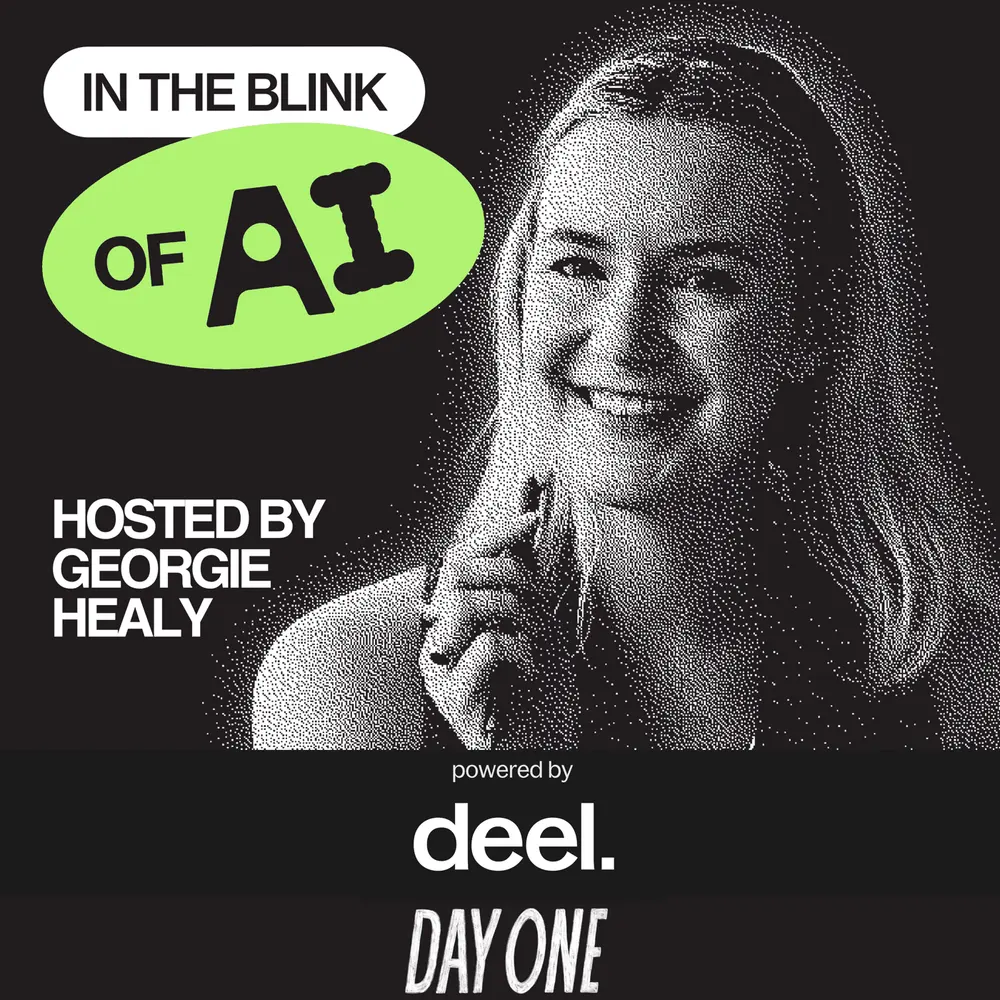 In The Blink Of AI with Georgie Healy
Presented by Deel & Stripe
In The Blink Of AI with Georgie Healy
Presented by Deel & Stripe 



 ▶
▶  ▶
▶  ▶
▶  ▶
▶  ▶
▶ ▶
▶ ▶
▶