Transcript Synced · select any line to jump ▾ 0:02 Georgie Healy: Founders scale faster on Deel. Set up payroll for any country in minutes, hire anyone anywhere, get visas handled fast, and get back to building. Visit deel.com/dayone. That's D-E-E-L.com/dayone. You are an expert VibeCoder. You have a whole website dedicated to your projects. You didn't just win one VibeCoding Hackathon, you won multiple. Talk to me about what you think stands out about your projects. 0:35 Maddie Reese: I have fun when I build these things. I have fun. I try to center that and I try to just go, okay, well everyone else is going to be making something not boring, but something useful. And what I try to go for is, is not really, is this going to be useful? I go for, would someone have fun using this? 0:54 Georgie Healy: What skills do you have, Maddie, that software engineers might not have? Coding as a language will just become English. No more Python, no more C++, no more of these languages. Do you feel for that? Or are you, no, keep the old school programming languages, please. Hello and welcome to In the Blink of AI, the show where we play with AI until we realize, oh my gosh, I'm gonna quit my day job because this is bringing me so much joy and I can actually start paying the bills with it. I'm Georgie Healy, and this week I am speaking to Maddie Reese. She's a multi-hackathon-winning VibeCoder San Diego native who has built projects such as Pet Hero Comics, Flights Overhead, and my personal favorite, Startup Obituary, a memorial service for your failed startup. Obsessed. Maddie brings a levity and playful energy and creates real projects. And this episode, Maddie has some amazing tips and tricks to help us get through those kind of awkward early stages of the no-code websites and the common tips and tricks that will help you get past those stages. Maybe get some pen and paper ready for this episode. I can't wait to hear about the projects you do after listening. Send them to me. Uh, I'm on Instagram. I'm on LinkedIn. I'm on X. No one follows me on X. I can't wait to hear how you find it. Let's dive in. 2:22 Speaker: You're listening to a Day One FM show. 2:26 Georgie Healy: Maddie, thank you for joining in The Blink of AI. I have been telling you off mic how excited I am for this and how I've been talking to all my friends about having a legit vibe coder in the house. It's the first real time we've done it and I'm pumped. Firstly, let's check in. Where are you dialing in from today? 2:45 Maddie Reese: Yeah, so first, I'm so excited to be here. Second, I'm from San Diego, California. So kind of opposite of the world. Amazing accent. 2:54 Georgie Healy: Oh, yeah. But sunny with beaches. I think you've got quite a good hardcore metal band scene there too, which is super cool. Have you visited Sydney, Australia? Have you been down under before? 3:08 Maddie Reese: No, unfortunately not. I'd love to. I used to travel a lot, but never made my way to Australia. 3:16 Georgie Healy: Where's the weirdest place you've visited? Not weird, but like most unusual. 3:21 Maddie Reese: Most unusual is actually one of my favourite places I've been to, which is Budapest in Hungary. Amazing. 3:29 Georgie Healy: Beautiful. 3:31 Maddie Reese: Beautiful. It's beautiful. 3:32 Georgie Healy: Yeah. 3:32 Maddie Reese: Gorgeous. And yeah, just one of my favourite places. 3:36 Georgie Healy: I am gonna add to that. Love Budapest. Was there, I think, over a decade ago. You know, one place that I think needs to be talked about more is Istanbul. In Turkey. Have you been there before? 3:48 Maddie Reese: I've never been. No. 3:50 Georgie Healy: Add it to your list. Gorgeous. Gorgeous. You'll swing by there on the way to Australia, no doubt. We would love to have you. 3:57 Maddie Reese: Of course. 3:58 Georgie Healy: Okay, so let's dive right in. Early on in the show, we love to share an AI hack of the week, but I mean, it's, it's a tool, it's a use case, it's something that you are vibing with or like. Do you wanna kick us off? 4:14 Maddie Reese: Yeah, so I think the one that I'd love to share is this, it's kind of interesting to explain. It's almost like a bot that you message with, but it just lives in iMessage. It's called Poke. It's by a company called Interaction. And basically it kind of organizes your life. You can set up a bunch of automations in it. I have one where I tell it like, Okay, end of every month, tell me what's leaving Netflix and schedule some time for me to watch whatever I want to watch that's leaving. And it just— Oh my goodness. Yes. It gives me the list and then I just go, okay, well, I'd like to watch that. And it looks at my calendar and it says, okay, I'll just schedule it for, how about this time? And I'm like, okay, perfect. And then I can watch it. 5:00 Georgie Healy: So not only do you not miss the movies or an awareness of the movies, but it's also scheduled it in so that you're like, Oh, well, I don't have to now do an additional task. It's a long horizon task, Maddy. 5:13 Maddie Reese: That's amazing. Right? It's fun. 5:17 Georgie Healy: Yeah. I wonder— the only time I've done something similar is on ChatGPT. Like if I'm looking for tickets to a certain concert, I've got it set up such that it'll do a reminder, but it doesn't integrate with my calendar, does it? Because maybe Gemini would do that. Anyway. That is such a great hack. Such a fantastic hack. My hack of the week is Suno, S-U-N-O. Are you familiar with the music app, Maddie? 5:46 Maddie Reese: Oh yeah. Yeah, yeah, yeah. My dad is a big fan, so he sends over a lot of different music for us to listen to based on our lives and things. It's really fun. 5:55 Georgie Healy: Oh no way, he personalizes it? 5:58 Maddie Reese: Yep. 5:59 Georgie Healy: Oh my gosh, what has he sent you that was personal to you, Maddie? 6:03 Maddie Reese: Oh gosh, okay. So this is a bit of a funny thing. I am obsessed with Grimace from McDonald's, the purple character guy. 6:12 Georgie Healy: He's having a resurgence, yes. 6:13 Maddie Reese: Oh yeah, yeah. So he's made things about like for my birthday, he made something where like Grimace was wishing me a happy birthday, things like that. Funniest thing ever. It was so good. 6:24 Georgie Healy: We need your dad on the pod next. 6:26 Maddie Reese: That is iconic. 6:27 Georgie Healy: That is so good. I was really impressed with this because not only can you generate personal things like you mentioned. But I alluded to being into like hardcore metal. It's got like a distinctive taste. It's got a double drum. It's got like a certain kind of guitar. Like it's a very— in the metal community, there's like weirdly very specific niche groups. And I was like, there's no way it's gonna nail this. And I said, create this song in the style of a very popular band here, Parkway Drive, thinking it's no way going to emulate them. It 100% did. I was like, I would listen to this song. 7:10 Maddie Reese: Yeah. 7:11 Georgie Healy: Yeah. 7:12 Maddie Reese: Really impressive. That's pretty impressive. 7:13 Georgie Healy: I know. I know. And my friend did an Instagram story and she had AI-generated her Greyhound on the COVID of Vogue, but also had a Vogue soundtrack about the Greyhound. I was like, this is incredible using that. 7:32 Maddie Reese: Oh my God. No, my favorite use cases for AI are just doing things with my pets. 7:38 Georgie Healy: Yeah. 7:38 Maddie Reese: That's the best thing ever. They've been in so many situations thanks to different AI tools. It's just, you know, it's crazy. 7:47 Georgie Healy: Oh, my pet is— I'm really glad my pet's not on social media. I've got a cat that's a boy, a large 10-kilo cat, and I like AI-generated like a princess dress on him and stuff like that. He would not love, he would not love. 8:05 Maddie Reese: But like, Mom, you're embarrassing me. 8:08 Georgie Healy: 100%. I would get canceled very quick from my own cat. But, but no regrets. Okay. I am so pumped to get into the, the whole reason why I stalked you, found you, made you come on my show. Maddie, you are a— I'm going to call it— you are an expert vibe coder. You have a whole website dedicated to your projects. You've won multiple hackathons in this space. This is a category of skill set I didn't know, maybe didn't even exist a few years ago, and you've already risen to the top of the field. Like, first of all, killing it. So, so, so impressed. Can you tell us a little bit about the projects you've done this year and maybe a few favorites that you've done? 8:58 Maddie Reese: Oh yeah, okay. So honestly, I only started in this space in June. So everything, yeah, everything I've built has been this year, which is, I impressed myself. I'm gonna say it. I'm really proud of what I've done so far. 9:16 Georgie Healy: Yeah. 9:17 Maddie Reese: It's just been, it's been an absolute blast, but I've created a lot of projects where they've just been kind of one-offs and fun. And then I've created quite a few projects where I'm like, this is actually, this is something that I'm pretty proud of. Like, I really enjoyed this. I guess I would say my favorite has been, and I think this was kind of where we connected, was I built, if I'm remembering correctly, I built this copy of Google Drive and Google Docs. 9:46 Georgie Healy: Yeah. 9:47 Maddie Reese: This for a hackathon and I ended up winning, which I was, I was happy with that, but, um, yeah, I built it in 4 hours on Lovable. Um, and it, I, if I do say so myself, it looks pretty similar to Google Drive. 10:00 Georgie Healy: Yeah. Yeah. I, I was completely blown away. Even if you had years of experience, it was mind-blowing. Like so much to talk about. Number one is you like Lovable. Is that, have you tried multiple tools and that one's your favorite? Maybe tell us why that is. 10:21 Maddie Reese: Yeah, so Lovable was the first one I used. My dad, who we've talked about, he was the one who actually introduced me to Lovable. 10:30 Georgie Healy: Oh. 10:30 Maddie Reese: He's been really into AI for a while now, so he was the one kind of showing me all these tools. But he showed me Lovable back in June and he was like, "I think you would love this." And I was like, "Okay, I'll try it out." Tried it and I was like, "Oh my God, you are right. I love this." and it's just kind of consumed my life since then. 10:52 Georgie Healy: And, and, um, you and I, uh, because I've stalked you on LinkedIn, you and I have quite a strong community background. We're really into, um, that kind of creating an impact and influence in the community. But, but am I right in saying that you're not a developer, you're not a software engineer, um, and you still found a lot of joy in doing these projects? Uh, what was there any friction at the beginning? And if so, how did you get yourself out of the headspace of, um, I do deserve to be here and I do deserve to enter these competitions amongst the best of them, you know? 11:28 Maddie Reese: Yeah. Yeah. So that was something I, I expected I would struggle more with than I actually did. There definitely were some, some points where I was like, oh my God, like I'm stuck. Like, I can't do this anymore. Like, it's— I'm done. Um, but it— like, I'm a very anxious person. I'm a very pers— a person who gets in my head about that kind of stuff. And then I've just found so much joy in this that it overpowered all of that other stuff. And that's what I think it was most— that's what I like to focus on the most is because I just— I'm having so much fun. Yeah. And like, why, why shouldn't I be entering these things if I'm having fun and I'm building projects that work and I think they look pretty cool and why not? Like, why, why, why should there be this barrier to entry? 12:20 Georgie Healy: Hell yeah. I think that is so inspiring. It's really inspiring to me. I get in my head too, and I, I, I kind of keep comparing myself to the wrong group. Why am I comparing myself to an AI engineer with a PhD in computer science? That's probably not A fair comparison. How about compare myself to myself in June? 12:43 Maddie Reese: Exactly. 12:44 Georgie Healy: Exactly. 12:45 Maddie Reese: Right. It's been so cool to have discovered this thing that has brought me so much joy. Honestly, it's, there's so many layers to it. It's like, I'm so, I've having so much fun because I've found this. I'm having so much fun doing it. I'm having so much fun, like just knowing that I found something that I really enjoy. It's just like, it keeps going up and up. 13:09 Georgie Healy: And for the record, this is not a fluke. You didn't just win one Vibe Coding Hackathon. You, you won multiple. Maybe talk to me about what you think stands out about your projects. I know, I know you can't necessarily say there's a formula, but it's definitely not a fluke. 13:27 Maddie Reese: Thank you. Thank you. I think what I would say is it kind of ties back to what I was just talking about in that I have fun when I build these things. 13:37 Georgie Healy: Yeah. 13:37 Maddie Reese: I have fun. I try to center that and I try to just go, okay, well everyone else is going to be making something not boring, but something useful. 13:48 Georgie Healy: Yes. 13:49 Maddie Reese: And what I try to go for is not really, is this going to be useful? I go for, would someone have fun using this? 13:59 Georgie Healy: Yes. I was trying to find in my notes the name of one of them I saw on your website was hilarious. It was, it was, oh my gosh, I'm trying to find it. It was to do with like creating your own like obituary or something similar. 14:19 Maddie Reese: Please remind me. Launch Obituary. 14:21 Georgie Healy: Yes. Okay, tell the listeners about this. This was iconic. Thank you. 14:26 Maddie Reese: So this was, um, basically a generator to create obituaries for your failed startups. Everyone has at least one in this space, right? So sometimes it deserves an obituary. 14:38 Georgie Healy: Oh, this is what I mean about playful, having fun with it. Iconic. Um, okay, I am gonna actually focus some of the questions I want to ask you, so What is depreciated code in, in the context of vibe coding? I keep hearing that depreciated code sounds very technical. 14:58 Maddie Reese: Oh yeah. Right. It's, it's, it's less technical than it seems. It's basically just code that, um, uh, it has kind of multiple meanings. One is that it's code that is generated that is, is outdated and won't work anymore. Um, so basically what you're, you're generating something and you're expecting it to work at the time it's being generated. But really it was never going to because it's old news. It's— it was developed like 5 years ago. 15:26 Georgie Healy: Oh my gosh. I didn't even know that that was an issue. Okay. Follow up on that. How do you debug very technical things? Like when I have tried to vibe code an app and fallen over at the API key stage, I think I'm being clever and I'm copying the error code into Gemini, into ChatGPT. I will waste hours and still not solve it. And, and that's when I start to get a little bit like I don't deserve to be here. That's when I get that friction. Any advice on that? 15:57 Maddie Reese: Yeah, definitely. So I would say first step, what I do is I just use whatever tool I'm using. I copy the error codes into that, try and debug it there. Doesn't normally work. Second thing I do, go to, yeah, Gemini or ChatGPT. Paste the error codes into there, see if that works. Third thing I'll do, and this is more common if you're, you know, using an API key or something like that, you'll want to go and look at like the documentation for whatever tool you're using. 16:28 Georgie Healy: How? 16:29 Maddie Reese: Copy. Oh, okay. This is a good one then. All right, so if you're using an API key for a particular tool, honestly, you can just Google that tool name and documentation. Or if you find, if you find the API key through like a, the developer tools section of that tool's website, um, it'll normally be listed there. Couple of different ways to find it. They do try to make it easy on you, but if you don't know to look there, you're not gonna find it and you're not gonna know it'll help you. 17:02 Georgie Healy: See, this admittedly wasn't lovable and maybe less user-friendly, but my example is in Google Firebase. And they said wrong API key to generate a prompted app. And then— 17:13 Maddie Reese: Interesting. 17:14 Georgie Healy: Then I went to the API key library and I'm just copying different API keys being like, I don't know what you want from me. And I didn't actually know what kind of API key it needed. It was like it's missing one, but couldn't tell me what kind of API key. How would you vibe your way out of that? 17:36 Maddie Reese: Okay. So that, that one I would look into, what do I want to do with the site? I'd kind of look at it big picture and say, okay, what do I want this site to do? And then I'd kind of zero in and, and be like, okay, well, where do I, can I ascertain what I need this API key for? Then. I'd go to something like Gemini or ChatGPT and kind of explain my whole idea. Oh, that's genius. And say, it's asking me for an API key. What could this API key be? And then kind of just go from there, go down the rabbit hole and just figure out like, okay. 18:15 Georgie Healy: That's actually genius. It doesn't actually matter about the specific API key if big picture I can zoom out and say, this is what I'm trying to achieve. How do I achieve it? Love. Okay, well, this is the issue that I've faced twice and I've sent it to you. 18:33 Maddie Reese: Yes. 18:34 Georgie Healy: I have vibe coded guinea pig of the day for you, Maddie. Just for you on Loveable. 18:43 Maddie Reese: Amazing. 18:43 Georgie Healy: And we're going to call this segment of the show Roast My Vibe Coding Project. How does that sound? 18:50 Maddie Reese: Perfect. Perfect. 18:52 Georgie Healy: I love a good roast. So basically around this API key issue, um, in the past project, it was around actually generating the image of the guinea pig. It wouldn't generate the image of the guinea pig because it didn't have the right API key on Google Firebase. So I was like, you know what, for Maddie on our episode, I am going to use Lovable and create the exact same project. Guinea pig of the day, you get a new one every day on the website, uh, different coat type. Maybe what kind of healthy food they'll eat. I'll definitely link in the show notes. And I sent this to you, Maddie. What are your first impressions? And please roast my app. That is the point. 19:36 Maddie Reese: Okay. All right. So I have it here, so I'm just gonna pull it up again and just kind of go— 19:42 Georgie Healy: Yes. 19:42 Maddie Reese: Go full on. First impressions, you could do so much more with this. That's my first thing is that you not necessarily more features or anything, but kind of just, I saw you did a couple prompts. There are definitely more prompts that you could have done and dialed it in more, maybe is what I'll say. 20:07 Georgie Healy: So that is great. I did a few prompts. Let's share them. So number 1 was build me a Guinea Pig of the Day website showing a different breed of guinea pig with key details and a photo. And then it got the wrong photo and I was like, don't do that. This is AI generated. But then it did it again. And then finally I added a little bit more context. I don't need lifespan or size or temperament details because all guinea pigs are the same temperament, Maddie. But I do want fur and color options, fur length, and then a food of the day, which it did add. Just to answer your question, those are 3 prompts. Fair pushback on the fact that that could have been a little bit deeper dive, what would you have added? What if you were to make this like an A+ guinea pig of the day website? What are you adding to it? 21:02 Maddie Reese: Interesting. Okay. So I think I would do something like, my question is, would you, do you, you don't want AI-generated photos of the guinea pigs. You want real guinea pig photos. 21:16 Georgie Healy: I do want real guinea pig photos, but mostly I'm just unhappy with the generated photos because they were inaccurate. 21:23 Maddie Reese: Yeah, okay, okay. 21:25 Georgie Healy: It should have rosettes and weird things on its fur, and the AI-generated one kept being like this stock standard, non-distinctive, nondescript. Yeah, how dare you? How dare they? 21:39 Maddie Reese: I want the fancy one, right? Right. Very good. All right, so what I would do then is I would kind of Ooh, maybe I'd try to add in like a web scraper or something and say like, I want you to scrape the web for actual pictures of actual guinea pigs in this breed and tell it specifically for that. You probably run into issues with like copyright and things like that and licensing is kind of the issue. So another thing you could do is actually, you know, use a web scraper yourself and kind of say like, separately and say, okay, I want you to search these specific sites where I can find, you know, open licensing photos of actual guinea pigs. And— 22:30 Georgie Healy: Yes. 22:31 Maddie Reese: You know, search and find exact ones and then preload them in like a year's worth or something. 22:36 Georgie Healy: Yes. 22:38 Maddie Reese: Yeah. So it'll still do the fun guinea pig of the day, but it won't have to do that searching every time. Might be a little helpful. 22:47 Georgie Healy: Have you ever had to do that? And, and if you did, like, by— to the point of getting more accurate imagery than Shutterstock or those kinds of websites that are like Unsplash and those ones, have you ever done that? Have you ever needed to do that? 23:04 Maddie Reese: I have not needed to do that, not for pictures. Definitely have done it for the web scraping for, um, content and things like that, like different, um, I built this one site. I went to San Francisco Tech Week and I built a, um, a web scraper that scraped all of the calendar events because there were thousands happening that week. Um, and I built my own little, um, like natural language AI searcher thing to search for the events and, um, pull back the ones that I would be most interested in. 23:36 Georgie Healy: How? 23:36 Maddie Reese: That one? 23:37 Georgie Healy: I, I, I want a 3-step, like this is us exactly how you did it. 23:43 Maddie Reese: Yeah, so really easy actually. Uh, first thing I did, I went to ChatGPT and I said, this is kind of what I want this application to do. Um, so I, I don't often go in saying this is exactly how I want to build this website. I say this is what I want this website to do, and I let it suggest things to me like, this would be the best, uh, right? I like to do different options, like give me 3 options of how this could be achieved. Not, yeah, not getting into the specifics of how could I specifically build this. I just go like, how can I achieve this outcome? And then I get into the specifics once I've chosen one way of doing it. So I did that and then I put kind of the output into Cursor and it just kind of clicked accept on a bunch of prompts and it worked out well. And then I built the rest of the site in Lovable. Okay. 24:40 Georgie Healy: Okay. I am going to dumb it down and not dumb it down. Wrong wording. I'm going to finesse even further. Why ChatGPT to start and then Cursor second? Why would we do that workflow? 24:54 Maddie Reese: Yeah. So I like to do ChatGPT because I can get a longer— really, it's more user-friendly for me. It's more user-friendly. 25:03 Georgie Healy: Yeah, I find that. 25:04 Maddie Reese: Cursor. Yeah. Cursor is just kind of it's geared toward doing like the coding tasks. So yeah, you can ask it questions, but if you want to get more in depth and kind of suggest it maybe smarter in other functions other than coding, I prefer to go to ChatGPT. 25:23 Georgie Healy: Me too. I definitely find this because whenever anyone says they use Perplexity or other things, I actually, I actually find ChatGPT a lot more easy to just everyday discussion for sure. And then, and then you've gone into Cursor with the prompt ready to go. What happens there after you've clicked like create this, generate this? Like tell me exactly how you did that. 25:50 Maddie Reese: Just a little arrow that you just click on and it sends it off into there and then it starts working and it gives you a kind of a plan and you say, okay, looks good. You accept it and then it just, it keeps going. So you can review kind of everything it's doing. You can see the code base on the side if you'd like to. But a lot of the time I just, I don't even delve into that. I just kind of go, okay, this, this looks right. Or if it is doing something that I think is kind of way out of left field, then you can say, okay, don't do this. It gives you a little option to reject that. and put in your own input. So I have to do that once in a blue moon. Most of the time though, I'm just accepting things. 26:33 Georgie Healy: And any final steps? You're not then going into Lovable after that to generate a website if it's just for your personal use, you just leave it as is? 26:42 Maddie Reese: Yes. So for this one specifically, I built the web scraper kind of thing in Cursor, and then I used that generated output, um, to then build a site in Lovable using that. That stuff, all of the scraped details from the calendar that it built. 26:59 Georgie Healy: My mind is blown. This is amazing. I'm definitely trying this. Okay, we're gonna play a really silly game called Snog, Marry, Avoid, vibe coding edition. Are you ready? 27:11 Maddie Reese: I'm ready. 27:12 Georgie Healy: Snog, marry, or avoid— this is very like UK wording, but I'm sure you get the premise. 27:19 Maddie Reese: I get it. 27:19 Georgie Healy: For lovable Replit and Cursor. Which one are we sogmaring avoiding and why? 27:28 Maddie Reese: Interesting. Okay, so my first one that I'm knocking out because I haven't even tried it yet, uh, is Replit. Everyone keeps telling me to tell— to try Replit and I haven't done it yet, so I'm gonna avoid Replit. I'm so sorry, Replit, I would love to try you, but I haven't done it yet. 27:47 Georgie Healy: Sorry to this man. Okay. 27:51 Maddie Reese: Okay. And then I'd snog Lovable. I love Lovable. It's just, it's great for, for building websites and web apps. So good for that. I love it. Really easy to use. And then I would marry Cursor because it is, it's more It's more versatile in what it can build. You can really build anything in there. It's less, less just focused on web stuff. I think that's, I think that's my ranking. I think I'm gonna lock that in. Okay. 28:24 Georgie Healy: Beautiful answer. I would love to talk a little bit more around, I mean, we're talking about the joy of vibe coding and we're talking about you winning competitions. That was real cash money, by the way. Amazing. But You've actually got a really incredible business happening now through vibe coding. Maybe you could tell us a little bit about when you were like, I am excited to do this for other people, and kind of your thought process around what, what vibe coding can lead to as a business. 28:59 Maddie Reese: Yeah, so I actually, I have not built anything for anyone else. I have not. However, I'm trying to kind of build this all up into like, like I want this to be kind of my, my life is just surrounded by something that I'm having so much fun doing. And actually this is, I have work at my family's company currently. We have a real estate business, but this is my last week because I am leaving to kind of do full-time vibe coding. Oh my gosh. Yeah. And like kind of just doing a lot of stuff in this space. So it's, it's bittersweet because like, I'm, I love doing that, but also I'm so excited. It's going to be so much fun. Anyone has any opportunities, let me know. I'm available now. 29:47 Georgie Healy: We are Kindred Spirits. You know, we heard it here first. When you're, when you're a famous vibe coder, we'll remind people where they first heard of you. Um, Maddie, that is so exciting and So, so empowering, like the, the power of like leveraging AI tools. We're seeing it right now of the future opportunities AI can bring, not just taking away jobs, but also creating new ones that give you more joy, right? 30:17 Maddie Reese: Exactly. It's, it's seriously, it's, it's blown my mind that this has happened in such a short time, um, and been just not even just the opportunities because there have been so many opportunities, but also just that I found something that I truly, really enjoy. So I'm just having an absolute blast. 30:36 Georgie Healy: And a very, very good at. Yes. Amazing. Okay. I have some extra questions here, um, because I am sure you're gonna inspire a lot of people to try their own projects. Can you please tell us, What is the most frustrated you have been when building something? What was the challenge? Was it technical? Was it a specific thing? And how did you decide to not like just throw the, flip the whole table and never try again? Maybe talk us through that. 31:08 Maddie Reese: Okay. So I would say the, the, the most frustrated I've been with a project was actually my first ever vibe-coded project. I was building a site where you could put in a picture of your pet and then it would generate a comic book cover starring your pet. And then you'd be able to, it would send you to Shopify, you could purchase a poster and then it would actually send it over to like a print-on-demand provider and send you the actual poster featuring your pet. So I thought it was really cute, but— Cute. So frustrating to build. 31:47 Georgie Healy: It's iconic. Yes. 31:49 Maddie Reese: Yeah. So frustrating, but it was cute. It's generating some cute stuff. But my main big problem with that was I was trying to integrate the Shopify to the print-on-demand provider connection. And I had been going back and forth kind of with ChatGPT to try and figure out like, how could this, like the backend of this work? So I was trying to implement it in Lovable, kept going back and forth, nothing was working. And this was, and realistically it probably took a day and a half, but it felt like forever. And ChatGPT kept telling me like, this should be working, you know, this is exactly what you have to do. Finally I went back and I kind of said like, is this actually possible? And then it tells me like, oh no, that actually isn't possible with the print-on-demand provider you've been using. They don't offer that functionality. And I'm like, oh my God, like, are you kidding me? Ah, man. It was so frustrating. 32:50 Georgie Healy: I was like— Wow. And I have been there before where I've kind of been gaslit by the LLM. Like, should be able to do that. That's all. Or your code's ready now. It's fixed. Yeah. 33:06 Maddie Reese: So I kind of, there was a part of me that was like, I'm just giving up. But I kind of saw it as a challenge at that point. I was like, okay, well, now I have to make sure it actually does work. I was like, I'm gonna prove ChatGPT wrong. I was like, okay, I can't do it this way, but like, I'm gonna force it to work some other way. So it did end up working eventually. I just used, not with that print-on-demand provider, I used a different one and I was able to actually get it to work. But— Man, it was rough. 33:38 Georgie Healy: Yeah, but how empowering to be like, no, no, no, you're wrong, ChatGPT. I will make this work. Wow. 33:47 Maddie Reese: Exactly. 33:49 Georgie Healy: Maddie, that is so— okay, so what would you say to anyone listening who's in the middle of something? They've been gaslit by the LLM. They've poured 4 hours in. Now what's your suggestion to that person that's like, "Fuck this." Yeah. 34:08 Maddie Reese: Okay, my first thing would be to do kind of what I did then and just double-check, like ask again, "Is this actually possible?" And if you get that dreaded no answer, then what you need to do is figure out how to make it possible. So come up with a bunch of different scenarios, really think it through in your head and just keep plugging them in and say like, "Okay, would this work?" Okay, what about this one? What about this? And then eventually you will find one that works and it may take you a little bit of time, but you will be able to solve that puzzle. 34:42 Georgie Healy: Wow. Wow. You're amazing. Okay. So a few burning questions for you, Maddie, if you're ready. Yes, I'm ready. Number 1, say someone like creates a project and they're at the point where it says, you can publish this online on the internet. What are some lessons you've gleaned through going from the, okay, this is just a little project that I have that no one can see publicly on the internet versus actually getting a domain, actually paying for it to be hosted? Any thoughts around this for those of us at home vibe coding? 35:22 Maddie Reese: Yeah, okay. So kind of what I'd say first is if you're using a tool like Lovable or Bolt or anything like that, they have hosting incorporated in, like, with your subscription. So you just have to press publish and it's live. There's virtually no barrier to that. If you're using a tool like Cursor or something like that, then yeah, you have to deploy to a different site and kind of host it that way. But when it's so easy with these kind of web-based tools, my initial thought is like, why not publish it? Like, what do you have to lose with that? Especially when it's free and there's, it's literally just about pressing a button. I see people a lot thinking like, okay, well, this, then this makes it, this makes it real. It makes it, people can discover this and they can kind of judge me for it. Yeah. That makes me sad, first of all, for them. I'm like, "Oh my God, no." Like, I don't— like, everyone should be celebrating this. Like, this is amazing that you've developed something that is something that you feel is ready to be published and that you're ready to show the world. Like, that's amazing. Second thing is, yeah, you never know where something is going to lead. You never know truly which of your projects are going to take off. There have been projects that I've thought like, oh well, no one's really going to like this. Like this is built just for me and for my enjoyment. And then people love it. And there have been projects where I've kind of gone like, oh well, this is something that people will like and no one cares. And so I kind of developed this mindset of like, everything I publish is for me. Anyone else who sees it, cool, that's great. 37:17 Georgie Healy: Yeah. 37:17 Maddie Reese: But this is for me and this is why I'm building this because I enjoy it. 37:21 Georgie Healy: That's how I feel about guinea pig of the day, Maddie. Like, I love guinea pigs. Okay. I have got my app or my website 99% where I want it to be. I add in one more prompt and then it breaks it. It jumbles everything. What have I done? Talk me through, like, deep breaths. What do we do now? 37:46 Maddie Reese: Yeah. So, okay. So a couple, a couple of different methods for this. Um, if you're using a tool like Lovable or any of those web-based ones, they allow you to revert changes. So you can just take out that last prompt. 38:00 Georgie Healy: Backspace. 38:01 Maddie Reese: Yeah, exactly, exactly. And it's like it never happened. So that's, that's the easiest way to do it. Um, if you're using a tool like, like Cursor and you're deploying to GitHub and stuff, you can still revert changes. It's just a little more involved. However, I would say, you know, in most cases you are totally fine. You can just, like you said, backspace and it's like it never ever happened. So do not allow that— 38:27 Georgie Healy: That's it. 38:27 Maddie Reese: Like that fear of that to stop you from trying to make bigger changes. What I would say is that try to only make one change at a time. So that way if you try to do something and one thing works but the other doesn't, that way you don't have to lose all your progress, your good progress. 38:45 Georgie Healy: Oh, that's really clever. Really, really, really clever. Okay. Last question on this. What would you use Lovable for versus Claude and then GitHub, which sounds like a level higher, a level more complex? Discuss. 39:07 Maddie Reese: Yeah. So if I, if I were building kind of a simple, simple web app where I'm not going to have to install things from other places. If it's really just like a website, that, or just like a little game on that you can play on a website, that's something that I would use, uh, Levelable for. If I were doing something more involved, or if I'm building kind of a, um, an iOS app or a phone, phone app, um, I'd use something like Cursor or Cloud Code, um, and then deploy to GitHub. Mm-hmm. Or I'd also use that if I were building something where I knew I, I might have to do a little more babysitting and not just rely on everything the AI is telling me. Like, it's a little more complicated. I know I'll have to probably do some more debugging. Yeah. 39:56 Georgie Healy: Okay, amazing. Look, I am already itching to start playing with these. I'm sure our listeners would too. I've got two headline news for you to unpack for me, Maddie. So Vibe Code According to, you know, I'm going to call him an investor. Many people that listen to the All In podcast will know him. Chamath said that vibe coding is dying. There's a churn graph, you know, people on board, but then they immediately leave. And then on the other hand, I'm hearing vibe coding is hotter than ever. $100 million valuations after $2 million ARR in the first 2 weeks for the startup Anything, the vibe coding startup. So, so it can't be both, Maddie. It can't both be hotter than ever and dying. What, what's your take? Because you're in the ecosystem. 40:50 Maddie Reese: Yeah, so from my perspective, it does seem hotter than ever. It really does. And I guess if you want to get like granular, really, from my perspective, I'm more into it than ever, but genuinely, like, what I'm seeing from everyone is that people are excited. People are excited and they, they love to try out new things. And I kind of think that's where that churn comes from, is that people really get into trying new things. But the reality is that most people have their favorite tools. 41:25 Georgie Healy: Yeah. 41:26 Maddie Reese: So if they're already comfortable with using one tool, it doesn't mean they've stopped vibe coding altogether. It just means that maybe that tool wasn't for them. 41:34 Georgie Healy: Such a great insight. If you look at my churn on Perplexity, uh, very high, but I'm on other LLMs constantly. So LLMs aren't dead. It's just that specific tool. Great insight. Okay. Last one. If vibe coding was to die, which we We don't expect, not given what we're seeing. What do you think would replace it? What are all these creative technical people like yourself gonna do instead? Is there anything you personally would do? 42:09 Maddie Reese: Ooh, interesting. Okay, so I guess I would say, hmm, I guess I would say I would try to find something to fill that void, like having found this already. If it were to just go away, I'd need to find something, right? So honestly, what I'd probably do next is try to actually learn how to code. Really? 42:34 Georgie Healy: Yeah. Wow. 42:36 Maddie Reese: I mean, I feel like I've learned so much through this that I know kind of some basic things, even if I'm not physically typing out the code myself. So I feel like I'd have a much better kind of baseline than I did years ago when I tried to learn how to code then. Like I did try to learn back then and I tried all those like, what is it? Like Codecademy and things like that. 43:00 Georgie Healy: Yeah. 43:01 Maddie Reese: It never stuck. 43:02 Georgie Healy: Yeah. 43:02 Maddie Reese: But I think there's a much higher chance of things sticking now that I have this baseline and I know that I love to do this. 43:09 Georgie Healy: How empowering. We were talking about, you know, You can be a non-engineer, that doesn't mean you're non-technical, and you are living proof of that, Maddy. To finish the interview, we have 1, 2, 3, 4, 5 hot takes. Are you ready? 43:27 Maddie Reese: I am ready. 43:29 Georgie Healy: Let's do it. What skills do you have, Maddy, that software engineers might not have? 43:35 Maddie Reese: I am probably having more fun than they are. Because I have not approached this like it's my job. I don't depend on it yet. I'm just building things that are fun to me. And I think, I hope that's something that I'll keep with me forever. 43:56 Georgie Healy: Yes. 43:56 Maddie Reese: But if you're approaching something like it is your job, it is something that you use to make a living, it's harder to have that kind of fun. Um, so I think that's kind of my biggest asset right now is that I can just build things for fun, for me, and to just have an amazing time. 44:16 Georgie Healy: And that's why your projects have cut through, because they're playful and funny and silly. And not silly in a bad way, but in like a, oh my gosh, this is just delightful. 44:27 Maddie Reese: Oh yeah. 44:29 Georgie Healy: Son of a bitch Mary is genius. Yes. 44:32 Maddie Reese: Yeah. Thank you. 44:33 Georgie Healy: Okay. Is there any technical skill though that you don't have that does kind of keep you up at night? Is there anything where you're like, if I could wave a magic wand, that would really make my life easier? 44:45 Maddie Reese: Yeah, honestly, I, I understand. Okay. I understand the basics of using GitHub and everything, but then someone says something and I'm like, I understand way less than I thought I did. And I just have not taken the time to like sit down and really figure out the whole thing. So that is, that's what I'd say is I'd be like, okay, just import all this knowledge into my brain, please. So I can stop feeling like I'm missing something every time I push something to GitHub. 45:19 Georgie Healy: Look, I feel like you going full-time on this, the list of words you don't understand are gonna decrease very rapidly. 45:26 Maddie Reese: Hope so. 45:28 Georgie Healy: Hey, are you for or against this rhetoric that the next software 3.0, if software 2.0 is where we're currently at, is that coding as a language will just become English? No more Python, no more C++, no more of these languages. We're just gonna be essentially prompting like we are now, and coding is just talking. Do you feel for that or are you kind of like, no, keep the old school programming languages, please? 46:03 Maddie Reese: Interesting. So I would probably say a mix. A mix is probably what would make the most sense because I know that people use these different languages for different use cases. So would it, I guess maybe I don't know enough. Maybe that's my thing. Maybe this is possible where we can have a world where, yeah, it's as simple as that and we kind of don't need the real backend actual code. 46:38 Georgie Healy: Andrej Karpathy is apparently the guy that invented this term vibe coding in the first place. And so he brought it up, but I never thought about it the way you are saying it, which reminds me of languages in general. Like we could have just one universal language. We could all just speak Spanish, right? But when you learn another language, to your point, there's a special thing. You know how sometimes people with other languages say, "I'm not sure how to explain it in English." Like you can't directly translate that. 47:11 Maddie Reese: Yeah. Exactly. 47:12 Georgie Healy: Yeah. Last question for Maddie on In the Blink of AI is to publish Guinea Pig of the Day. What would you do to it to make it 10 outta 10? 47:27 Maddie Reese: All right. All right. Okay. So it looks good. Like the thing with these AI-generated websites is they all look good. The issue is, and it might not even be an issue depending on your perspective, they do all tend to have similar traits. So what I like to do is my first thing is I change up the font. I go to Google Fonts, I pick a font I like that matches with the project, and I ask my tool of choice to use that font. Really great way to just instantly kind of elevate the look a little bit. Um, so that's, that's kind of my, my first step that I do in like polishing up a website. 48:08 Georgie Healy: Incredible and original and not like, oh, this is clearly from Lovable. And if I was to feed the guinea pig a snack and make it make a sound, what's the prompt you would give Lovable? 48:24 Maddie Reese: Ooh, interesting. Okay, so I guess I would say, I want to create a fun feature, and I would love to make it look like I'm feeding the guinea pig a piece of food every day. And then I would kind of turn on that little discussion mode that you can do in Lovable, and I would just kind of ask away and be like, what can— how can we implement this? And I'd go through the list of questions and we'd come up with a plan together, I guess, and go from there. 49:03 Georgie Healy: Maddie, you are my favorite person of the week that I've talk to because you're inspiring. You've shown what it means to really play with and have fun with AI, and you are a wealth of tips and tricks. Like, what more can I want? Thank you so much for being on the show. Before I let you go, how can people find you? We'll put links in the show notes, but really, what's next for Maddie? 49:33 Maddie Reese: Yeah, so I am, I'm launching my, my YouTube channel. Love to be posting some more videos on there. Yes. Yeah. And I'm pretty active on Twitter or X. I'm @maddiedreese everywhere. That's where you can find me, but I'm hoping to do some more live streams on there too and just kind of show me fully vibe coding a project and kind of go from beginning to end, show people the entire process of how I do it. 49:59 Georgie Healy: This is what is needed. Like this is so needed because I know that this podcast is verbal and we're talking, but I can't, wait to see it in action, have a split screen and play around with Maddie on the left-hand side with me. Thank you so much. Thank you for dialing in from San Diego. 50:19 Maddie Reese: Oh my gosh. Pleasure. This was so much fun. Thank you. 50:23 Georgie Healy: Yay. Bye-bye, Maddie. 50:25 Maddie Reese: Bye. Bye-bye. 50:28 Georgie Healy: Thank you for listening to In the Blink of AI. You can check out the the show notes for anything discussed in this week's episode, and we will be back next week. This podcast was produced by Day One with music by Dan Hansen and visual artwork by Sophie Tyrell. If you loved the episode, please tell your mates, and I love AI news. Please share your thoughts and suggestions to georginarosehealy@gmail.com.

 In The Blink Of AI with Georgie Healy
Presented by Deel & Stripe
In The Blink Of AI with Georgie Healy
Presented by Deel & Stripe 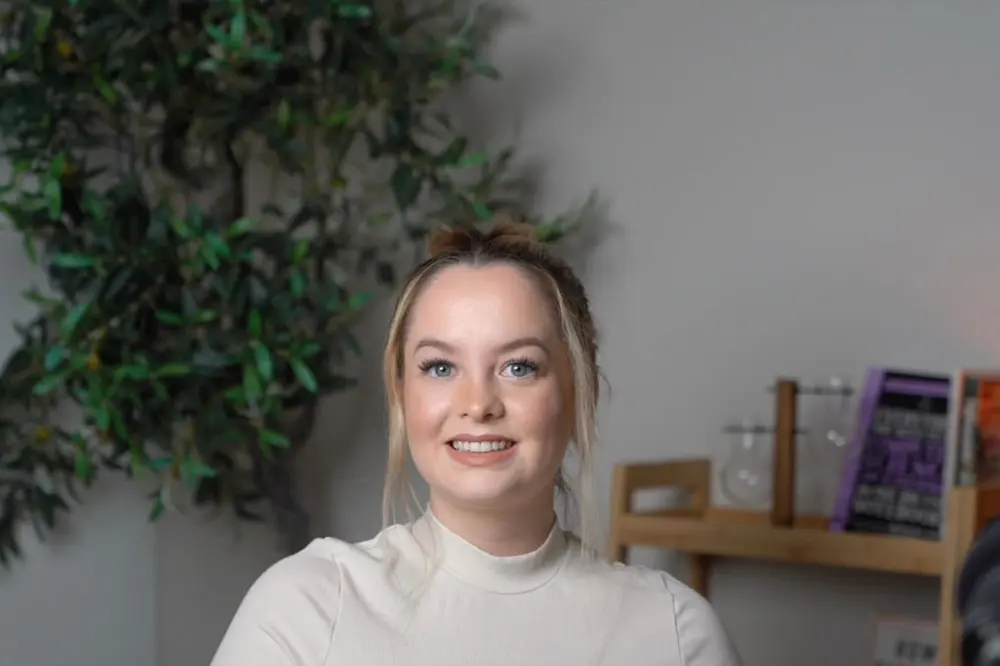
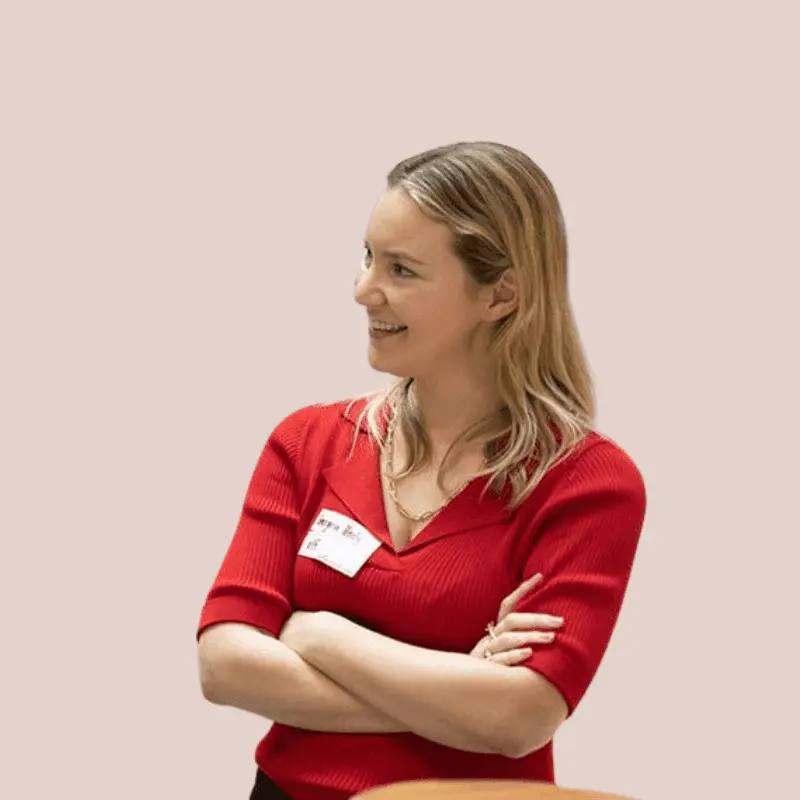


 ▶
▶  ▶
▶  ▶
▶  ▶
▶  ▶
▶ ▶
▶ ▶
▶