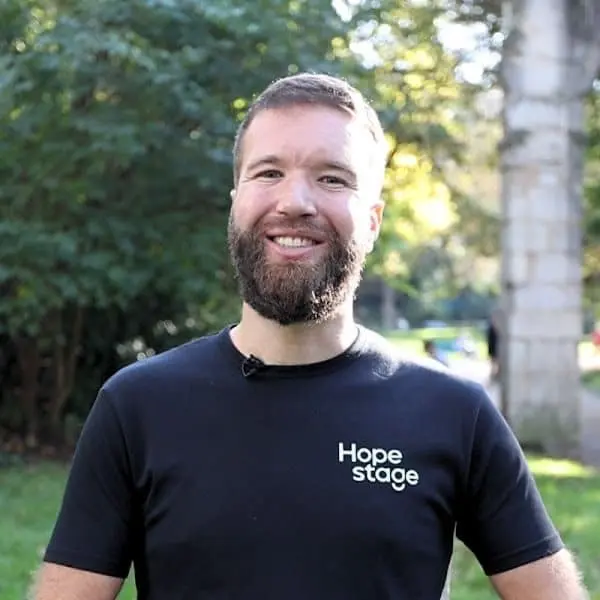
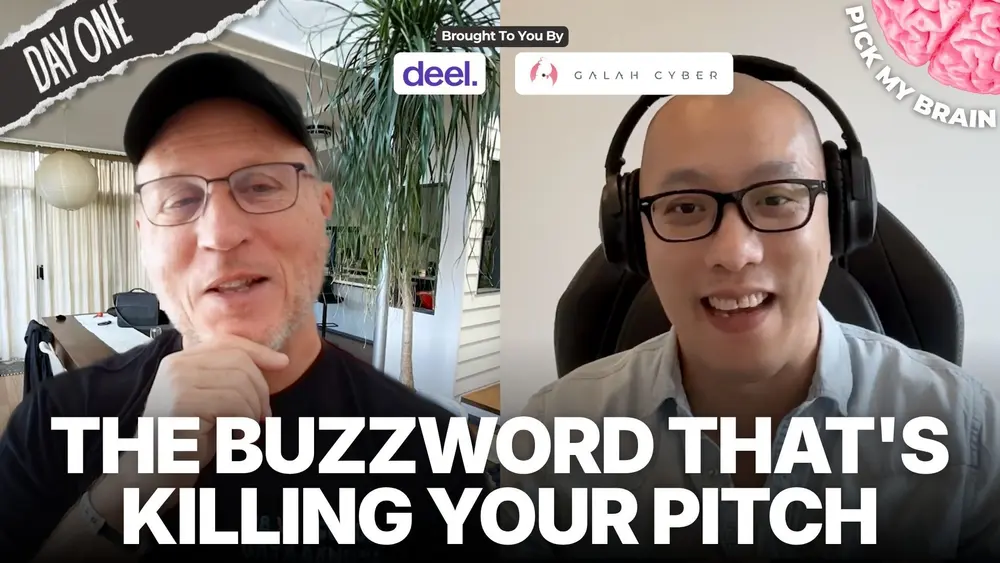
Transcript Synced · select any line to jump ▾ 0:02 Speaker: Founders scale faster on Deel. Set up payroll for any country in minutes. Hire anyone anywhere. Get visas handled fast and get back to building. Visit deel.com/dayone. That's d-e-e-l.com/dayone. I was walking in the park in Paris, in France at the time, and I read something about bipolarity, about bipolar disorder. And then I called my mom and I told her, like, maybe that could be what I have because I started to see, like, some high and lows. And she almost cried. And so I went to see a psychiatrist, a second one. They both diagnosed me with bipolarity. And then I was like, okay, now I know, but what do I do? What do I do with this information? 0:58 Alan Jones: Like— Yeah. 0:59 Clement Baissat: How do I manage it? 1:04 Speaker: Welcome to Pick My Brain, the podcast where we help startup founders improve their pitches to better connect with customers, co-founders, and investors. My name's Allan Jones, and I'm an ex-startup founder myself, but now I'm an angel investor with decades of experience helping new businesses find their way and achieve their goals. But first, I'd like to acknowledge that this podcast is being recorded on Gadigal land, land that was never ceded. I pay my respects to their innovators and leaders, past, present, and emerging. On Pick My Brain, you'll hear the real story straight from founders as they pitch their startups to tackle the challenges we all face and turn their ideas into a successful business. Each episode, we'll see if I can help these founders take their startups another step forward with advice, ideas, and maybe a little constructive criticism. Thanks for joining me, let's get started. 1:49 Speaker: You're listening to a Day One.fm show. 1:54 Ad: Wondering how your AppSec program really stacks up? Glaas Cyber's Application Security Assessment gives you a quick 10-minute pulse check built around the 5 core principles of AppSec: inform, integrate, influence, innovate, and iterate. In just 10 minutes, you'll get a clear snapshot of your maturity across each of these principles, along with practical insights you can put to work straight away. Head to glaascyber.com.au/assess and take the assessment today. That is galahcyber.com.au/assess. 2:30 Alan Jones: Today we're joined by Clément Beysa, who is a founder of mental wellbeing startup Hope Stage. Thanks for joining the show, Clément. How are you? 2:38 Clement Baissat: Yeah, thanks a lot. Yeah, happy to be here. Thanks, Harleen. 2:42 Alan Jones: My pleasure, my pleasure. Clément, clearly you weren't born in Sydney. When you were a kid growing up in France, what did you think that you wanted to be when you grew up? 2:53 Speaker: Actually, like, I remember that from really, really young, I was saying to people, like, I want to do business. I remember, like, I've been to Australia when I was like 16 to live for 3 months in the family. And I wrote this essay and I laugh about it. It was about, like, me wanted to, to give the, take the decision and, and not follow the rules kind of. So I was already into like the starting a business, starting something to solve problem, I think. 3:25 Alan Jones: Cool, cool. And what were you doing immediately before getting started with HopeStage? 3:30 Clement Baissat: Actually, I was diagnosed just before, so I was working in another startup to develop a new product. And before that, I built two startups in B2B. So one in B2B SaaS that is working pretty well. And the other one was a digital agency, but I went bankrupt. So I was like depression, bankruptcy, and then I was diagnosed as bipolar. So not the funniest moment of my life. No. But— 3:59 Alan Jones: I'm sorry that happened, man. That sounds like it was quite a crisis point in your life. And for the benefit of our audience, I think now is probably the best time to talk about the fact that what Hope Stage is, is a platform to help people dealing with the fact that that they now understand that they need to live with a bipolar disorder. Is that correct? 4:22 Clement Baissat: Yeah, exactly. 4:23 Alan Jones: I have some familial experience with living with bipolar, and I know that I would say perhaps a larger percentage of the startup founder community exists with either diagnosed or undiagnosed bipolar symptoms. Has that been your experience too? 4:45 Clement Baissat: I think, yeah, if you look at the percentage of start-uppers, I would say we are on average more present into entrepreneurship. 4:56 Alan Jones: Yeah. 4:56 Clement Baissat: It's like neurotypic. So ADHD, bipolar is usually like more common. Yeah, that's, that's the case, I think. 5:04 Alan Jones: Yeah. So, um, when did you begin Hope Stage? 5:08 Clement Baissat: Was in 2022. 5:11 Alan Jones: Mm-hmm. 5:13 Clement Baissat: So basically, like, I can tell you a little bit about my journey. I think it's important because it's really related to what I do. So I did my first depression. I was like 19 years old. I didn't know what was happening to me. And for like 10 years, I went through up and down, like started companies, like quit job, like within like 30 minutes without knowing what it was. And so basically I remember this day, it was a tough moment of my life. I was like, so COVID 2020. So, uh, like I had to stay at my home because of COVID and I was having a digital agency at the time. So 13 people, I went to depression, then I couldn't work. I couldn't just do the job. And, and then I had to fire everyone. Uh, just went bankrupt. That's so, it was a low point for sure. And then I was walking in the park in Paris, in France at the time, and I, I read something about bipolarity, about bipolar disorder. And then I called my mom and I told her like, like, maybe that could be what I have because I started to see like some high and lows. And she almost cried and told me that I had some family who had bipolar, but they were ashamed of telling me because, yeah, they were ashamed of what they had. 6:49 Alan Jones: Mm-hmm. 6:50 Clement Baissat: And so I went to see a psychiatrist, the second one. They both diagnosed me with bipolarity. And then I was like, okay, now I know, but what do I do? What do I do with this information? Like, how do I manage it? I took a job in the startup because I wanted to settle a little bit. And, but like 2 years later, I started Hope Stage, like just trying to fix this problem. Like, how do you recover and how do you do it with a higher percentage of success? And so building each of those steps. So Hope Stage is like basically the stage of hope. Because all of us, we go through those different stage, which is like understanding what you are and who— what's happening, what are your triggers. So we do it through media. And then you have acceptance. So accepting that you're different, that you cannot drink alcohol the same way, that you have to take treatment. And so we do it through online community training and talking group. And after you did those two, then you need basically support. And then we do tailored support. So we work with psychiatrists, psychologists to build your team and build your system to basically manage your difference and find your stability. 8:12 Alan Jones: It looks like when I go to hopestage.com, um, you know, my, my French is really just primary school French. Um, um, but it looks like you have, um, a large and growing community there of people using Hostage as a support app? Can you give us a sense for how big that community is now? 8:31 Clement Baissat: Yeah, so basically, so most of the people now are French. It's about 83%. So it's like, so it's different things. So there's the media, which have like millions of views. And then the online communities is about 6,000 people. So it's a Facebook group, uh, which is really active. And, uh, the training and talking group, we train about 3,000 people. But the live and talking groups, because like in the training you have like a full training which is free, and then you have also like webinars with psychiatrists and peer helpers, so people also have bipolar, and we do 8-week program when we help you with 2-hour session, like really like go deeper and, and do the work, you know, like build your action plan for depression. Like what you're gonna do, how you're gonna do it, how you're gonna share it with your family and your friend. So whenever you see something happen, you can prevent this depression from happening. And so this is really new. We started, uh, in April and we trained, I think, 130 people or something. Yeah. For the moment. And we are finishing the second session in a few weeks. So that's what we have. And now in English, there's also a website in English, but it depends on your navigator. I don't know if you saw it or not. 9:59 Alan Jones: I didn't find it. I'm sorry, but I'm sure it's out there. And in that case, how many English language users do you have now? 10:09 Clement Baissat: It's almost none for the moment. Okay. Okay. It's like, so it's upstage.com/en. 10:15 Alan Jones: Uh-huh. 10:16 Clement Baissat: But it's like some, most people, like they put their navigator in a language and then we just show for this language. But if your navigator is open to other language, which is sometimes the case, it's really rare, you will be in French. 10:32 Alan Jones: Cool. Cool. You're here now in Sydney at Fishburners, I believe. And so is your mission to now grow a Hope Stage community in Australia? 10:49 Clement Baissat: Yeah, exactly. So we're doing it step by step. So we've launched a podcast. So we're doing an event next week actually with psychiatrists and partners to really like I, what do we need to work on, you know, and because I'm, I'm learning the, how does it work here? I like, what are the needs? What can be done? And so, and also like, so we have like the podcast, which is launched, social media starting to be set up. Uh, and then we are working on the online training. So for the moment, we are just gonna do like video training. We won't start the live, at least not. This month, maybe in a few months. And then like find a few customers. We have like, we have like 2. So it's the beginning for the Tailwind support here. Because that's basically everything is free outside of the Tailwind support. So we basically, our goal is to say like, you want to do it yourself. We want you to have the possibility to do it and we're going to give you all the tools to do it. 11:59 Alan Jones: Yeah. 11:59 Clement Baissat: Then if you want us to do it with you, then you just pay and we take you by the hand and we do it with you. 12:06 Alan Jones: Okay. For the benefits of the capitalists in our audience, how much are you asking them to pay to get your help? 12:18 Clement Baissat: So it's about, so it's $1,800 a month. And then what we do is like we build the their own system because everybody has to build, uh, like what works for them. And that's the toughest thing about it because we're all different and we all need a different psychiatrist. We all need a different treatment. We all need like a different psychologist. And so what we do is we use technology and we build, uh, like the person's own tool. And so we do a one-on-one session every week. We record everything that's going on. So with a psychiatrist, a psychologist, we analyze analyze the data and then we find a way to properly move forward step by step. So, and we believe a lot into like coming back to the pillar of health. So the pillar of health, if people want to know, is like sleep, nutrition, hydration, like sports, socialize, and light. And basically most of the problems we have are linked to this problem. So if you go back a step back and you fix your sleep, you're usually going to sleep everything else. 13:37 Alan Jones: People who work for Hope Stage, how many of them do you have on the team now? 13:45 Clement Baissat: So actually there's an NGO in France. And so in the NGO, we are Like, okay, let's say 7. There's some people works, but just a few hours a week. But it's like, yeah, so mainly on the online community and sadly on paperwork, to be honest, because like you just need to get money from foundations, this type of thing. And so, and in the company, I'm like alone, but I'm working with freelance. And so it's really like, yeah, it's a one-side business, but I don't have the money right now to hire people. So that's, you have to do it in one way and you have to help people in one way. 14:33 Alan Jones: Cool. Cool. Raymond, will you establish an NGO here in Australia as well, or will it just be a private company? 14:42 Clement Baissat: I think I will go for private company because I did the NGO thing. And I think it's not— it's too slow for me in the way I try to do things. And I feel like I'm begging for money all the time. And I did it for a few years and we helped hundreds of thousands of people. So it's great. But I don't think I want to do the journey again. 15:13 Alan Jones: And what kind of data or research are you able to point to, to show potential backers, customers that HopeStage is effective in helping people? 15:25 Clement Baissat: So we work with a lot of psychiatrists and especially one of them, she's Dr. Barbara Combe and she has been working with bipolar people for like, I don't know, 30 years or something and she did work in did a program in a hospital in the south of France, in Toulouse. And so she helped people like on their way to rehabilitation and she found, so she did it for 10 years and our program reduced relapse by about 40%. So I'm not gonna go into detail, but it's around that. And it's, this program is the foundation of what we do in the training. And in the talking group. And so that's what we use. And, and it's really about like, how do you digitalize this program and how do you use, uh, like studies, scientific study to, to go forward. Um, and right now it's like, there's a lot of new stuff coming on, but what we found That if you can just help people accept, understand, and find the right psychiatrist, psychologist, and build their plan, it's like, it's already like huge. And I think we are doing much more than the 40%, but we don't have medical study yet. So I cannot like give numbers that are not fully true. Okay. 17:03 Alan Jones: Clément, if we have Pick My Brain listeners who have been listening to us just talk about Hope Stage and would like to find a way to support you or find a way to get in touch to consider becoming a member of your community and benefiting from Hope Stage offering, what's the best way for them to to do that? 17:29 Clement Baissat: I would say just contact me by email or LinkedIn. Email, I respond for sure. LinkedIn, sometimes I don't go there as much. 17:38 Alan Jones: Okay. Well, look, we can publish your email address in the show notes and make sure that our subscribers see that. And in the meantime, perhaps people can get started by going to hopestage.com/en. So that's H-O-P-E-S-T-A-G-E.com. Stage.com. And if you want the English language version, then /en. Clément Bessat, thank you so much for coming on, on the Pick My Brain podcast today. I think you're doing something very important and valuable for the Australian community. And I think I speak for us all when I say thank you. 18:19 Clement Baissat: Thanks a lot, Alan. 18:20 Alan Jones: Thanks for joining me for this and every episode of Pick My Brains, the advice podcast for every startup founder. Thanks for listening. And if you enjoyed this episode, never mind the don't forget to like and subscribe bullshit that every podcast host which goes on about at the end of their show. Instead, see if you can take a moment to think about someone you know who could benefit from some of the advice we've discussed on today's show and tell them. Maybe they'll listen to it. Maybe they'll like and subscribe. I don't really care, but my producers do. Uh, so that said, I'm not a lawyer or an accountant, and what you've heard today is not intended as financial, legal, or psychiatry advice. And you should always seek that from a qualified professional before making big decisions. I'm not a superhero either. So don't forget that sometimes I'm fallible and very occasionally I might even be wrong. But please let me know when you think I might be so I can get better at this too. Just reach out to me at any of our social channels or email the show at pickmybrain@startupfoundercoach.com. That's where you'll find me. And that's also where you might find some of the show notes from time to time when I get around to it. Uh, Because I don't get around to it very often, the Pick My Brain podcast is produced, edited, and beamed directly to your ears by the hardworking and understaffed team at Day One, the podcast network for startup founders, operators, and investors. Find out more about us at dayone.fm. That's dayone.fm. Clément, thank you so much for coming on the show today, mate. Really enjoyed meeting you. 19:48 Clement Baissat: No, it was fun. 19:51 Alan Jones: Thanks for joining me for this and every episode of Pick My Brains, the advice podcast for every startup founder. Have you been listening to the show and wishing you could ask for a little advice about your startup? Well, here's your chance to do just that. We're trying something new and you can be part of it too. Leave me a voicemail message with a question you'd like answered in a future episode, and I'll do my best to give you the best advice I can. Just go to speakpipe.com/pickmybrain and leave me your most pressing question, request, or just some feedback and support for the show. Go to speakpipe.com/pickmybrain or follow the link in the show notes.


 ▶
▶  ▶
▶  ▶
▶  ▶
▶  ▶
▶  ▶
▶  ▶
▶ ▶
▶ ▶
▶