Transcript Synced · select any line to jump ▾ 0:01 Pauline Fetaui: Founders scale faster on Deel. Set up payroll for any country in minutes, hire anyone anywhere, get visas handled fast, and get back to building. Visit deel.com/dayone. That's d-e-e-l.com/dayone. 0:20 Prashanth Puspanathan: The failure of a company, the death of a loved one, personal injury or illness, like these are the things that often tend to shake us up in a way that make us really question and relook at the way we walk through life. And that's unfortunate that it often has to be a traumatic event that leads us to do so. To be able to do so without the repercussions, the real-life repercussions of such an impact, but within a contained 8-hour experience where you can wander into such realms, where you can walk into towards death, you can walk around within death, you can walk back into your trauma, and then to be able to emerge the other side unscarred, or emerge the other side without actually having cancer, without actually having had yourself or someone die, but having lived through it, experienced that, seen the world through a different lens, that is a profound luxury. 1:12 Pauline Fetaui: From surgery to psychiatry, from psilocybin to Bitcoin, from founding a billion-dollar crypto brokerage to pioneering psychedelic-assisted therapy technology, Dr. Prash has walked one of the most unconventional founder journeys you'll ever hear. In this episode, we go deep with Dr. Prash, psychiatrist, entrepreneur, researcher, investor, and psychedelic medicine pioneer. We explore his personal psychedelic experience that shifted his life and purpose, the parallels between fiscal freedom in crypto and cognitive freedom in mental health, scaling Caleb Brown into a global crypto brokerage, exiting to SwiftX in 2025, and his latest venture, and Osis Therapeutics using VR to revolutionize psychedelic therapy integration. It's a beautiful conversation about liberation of thought, finance, and human potential. 2:10 Speaker: You're listening to a dayone.fm show. 2:14 Pauline Fetaui: Mighty Partners is a growth lender backing Australia's best operators with the capital and confidence to grow without giving away what they've built. Mighty offers up to $10 million in funding with flexible repayment terms for up to 3 years. Join businesses like Amber Electric, WeMoney, and Safewill who have scaled sustainably using smart debt. Grow your business. Keep your business mighty. Learn more at dayone.fm/mighty. You're a psychiatrist, you're an entrepreneur, and you're a psychedelic medicine pioneer. You migrated here to Australia in 2005 from Singapore. You yourself are multilingual. You have honors in medicine from Monash University. You actually started in the surgery, going down the surgery pathway, and then you actually went into psychiatry. You then obviously had some time on your hand and you went and found some co-founders and you started a small little startup called Caleb Brown in the crypto and fintech space that was quite successful. In fact, you recently exited to SwiftX who acquired acquired your brokerage this year for around $100 to $200 million, rumor has it on the street. 3:33 Prashanth Puspanathan: That is correct. 3:34 Pauline Fetaui: Yep. Not only that, you yourself, you both have been, your group or your team has been awarded winning fintech startup of the year in 2018, which is quite a, you know, illustrious award in the startup ecosystem for fintechs to win. So well done to you guys. And then you also went back to your traditional routes of, well, maybe training and actually went into the psychedelic-assisted therapies by launching a startup called Enosis Therapeutics with another co-founder focusing on the post-integration of psychedelics. And that comes on the back of the recent, well, not so recent now, I think it was like 2021, you founded Enosis Therapeutics. And around that time was the same time where Australia gave permission for for psychedelics, well psilocybin and MDMA and others to be used in therapeutic situations. Is that correct? 4:32 Prashanth Puspanathan: It was 2023. 4:35 Pauline Fetaui: Yeah. There you go. There you go. And 2021 is when you started Enosis Therapeutics? 4:40 Prashanth Puspanathan: That's correct. 4:41 Pauline Fetaui: Yeah. Yeah. So you're a little bit ahead of the game. Um, so that's why I think I reflect on your career as I've read it, which is quite in-depth in the background. So please go away and have a read yourselves, but you have pioneered multiple things. So financial services globally is quite challenging. Digital assets and currencies has now started to become mainstream, you know, with, you know, regulation and governments around the world starting to come into the game. You guys were well before your time in establishing Caleb Brown. Then you've got the health sector, which is obviously your training. So you're well qualified as a doctor yourself. Yeah. And a clinician to be an expert in this space and build a technology company in this space. But you're pioneering that with focusing on psychedelics, which I find really interesting. And also personally makes, brings me a lot of joy because it should be out in the world because there is, there is a lot of freedom in that. So quite a windy journey. 5:43 Prashanth Puspanathan: Most definitely. Yeah, it's been convoluted to say the least. 5:46 Pauline Fetaui: So did you always set out to have this sort of convoluted journey or what actually sparked it? Why did you go from surgery to finance? 5:55 Prashanth Puspanathan: Can't say I always was going to have a convoluted journey. I mean, my, my, I came here, I came to Australia for medical school and I was going to be a doctor. It was relatively straightforward. Psychedelics happened. Psychedelics are what changed everything for me. Psychodelics were what opened— I can almost trace a, make a, make a marker in time of before and after. Um, and the world was never the same again. And in some ways it, it, it did surgery a great disservice because I rapidly lost interest in operating on the body and wanted to operate in the mind. And I left to do psychiatry training just to work with psychedelics. And that was 13 years ago. back when there were, you know, like 6 of us in the whole country really publicly talking about psychedelic therapy or the therapeutic use of psychedelics. So my journey with psychedelics started, or professional journey with psychedelics probably started 13 years ago. And I credit that the paradigm shifts and perspective changes to a lot of the openness and curiosity and inquisition that have got me to this point. 7:03 Pauline Fetaui: And you yourself, um, personally have experienced psychedelics. Was that a contribution to your decision to to move down this path? 7:11 Prashanth Puspanathan: Oh no, that, that's, I think exactly what I'm talking about. It was personal experience that led me to then go on a 6-month deep dive into both experientially and theoretically back in 2011, 10. And after that, the world was never the same again. And that became and has since been the purpose. 7:35 Pauline Fetaui: Can I ask what that first experience was? 7:37 Prashanth Puspanathan: It wasn't the first experience as much. The first was, uh, more of a, ooh, hmm, kind of an experience. And it was the second with psilocybin, which was the oh, uh, that was the one. 7:56 Pauline Fetaui: I can't look back. And can you just describe a little bit more of that experience? What is, for those who don't know, what is the oh? Hmm. 8:04 Prashanth Puspanathan: I suppose it is coming face to face with the enormity of what actually is, to be faced with the complete insignificance of oneself in the greater tapestry of what is humanity, society, reality. But at the same time, to contend with the ab— absolute significance of your being as being an integral part of that tapestry. Now that is a That is a mind warp that one has to contend with, to, to be unable to ignore the absolute subjectivity of everything and start to really question the idea of objective metrics of truth and false and right and wrong and good and bad and evil. And once you start to see the contextual nature of everything, you start to break down the otherwise binary notions of which we walk through the world. And with that comes humility, compassion for others, and appreciation for all beings as having value perspective. Yeah, I think that the humility is a huge part of it. And we walk through the world with increasingly concrete ideas of ourselves, the people around us, the world around us, our value systems. And with every day and every year we grow older, often these get more set in stone and more concrete. And to have something like loosen the foundations of that, strip that back into these individual narrative threads is so profoundly valuable. And we do not have any tools that really allow us to do it, barring often, if you think about in conventional life, often it's really traumatic events that do that. The failure of a company, the death of a loved one. Um, a personal injury or illness. Like, these are the things that often tend to shake us up in a way that make us re— really question and relook at the way we walk through life. And that's unfortunate that it often has to be a traumatic event that leads us to do so. To be able to do so without the repercussions or, you know, the real life repercussions, uh, of such an impact, but within a contained 8-hour experience where you can wander into such realms where you can walk into towards death. You can walk around within death. You can walk back into your trauma and then to be able to emerge the other side unscarred or emerge the other side without actually having cancer, without actually having had yourself or someone die, but having lived through it, experienced that, seen the world through a different lens. That is a profound luxury. 10:49 Pauline Fetaui: So well said. I have not, obviously, um, you yourself have experienced it and then you've worked with people who have experienced it as well. So can you tell us a little bit more about the, your practice and the post-session support with, you know, assisted psychedelic therapies and what, what is that actually and what is integration? And then, and then I want to reverse back and give my, um, own take on what you just said. After we get the full picture of post-psychedelic experience. As a startup founder, you're juggling multiple priorities from the expected, like finding product market fit, to the unexpected, like customer requests for SOC 2 or ISO 27001 certification. But achieving compliance is time-consuming and time spent on it is time away from the needs of the business. But that's where Vanta comes in. Vanta is the all-in-one solution for startups to become compliant quickly and build a security foundation with ease. With a combination of automation, an extensive partner network, and a security marketplace, Vanta provides the necessary tools and expertise for startups to achieve compliance seamlessly, no matter how urgent your needs are, and at every phase of growth. Over 10,000 leading companies, including CypherStash, Handle, and indebted trust Vanta to automate compliance so they can focus on growing their business. Startup customers get $1,000 off Vanta at dayone.fm/vanta/pauline. 12:28 Prashanth Puspanathan: People think of psychedelic therapy and often just think of the psychedelic session. It's just a psychedelic experience. That is just a part of the whole process. It is a, is infantile superstition to think that it's just the effect of the psychedelic that creates all of the change. And I've said this a few times at various different forums that if it was just the impact of the psychedelic, then Burning Man would be the greatest group therapy experiment known to man. But it is not. Evidently there's something more that creates sustainable change and As much as the psychedelic is incredible, as I've just described, at producing these insights, emotions, taking you through experiences that create perspective change, from the moment that experience ends, that can start to fade. 13:17 Pauline Fetaui: Hmm. 13:17 Prashanth Puspanathan: Unless you make an active effort to integrate that into your future, which is what is so often missed, because that is the bit which is work. As much as the psychedelic experience can be incredibly challenging and difficult and full of tears. That is the easy bit because really you just have to lie there and let the psychedelic take you on a journey. What you have to do after is the actual work of putting that into practice and changing the way you live. So psychedelic therapy as a result usually consists of a few, a sample protocol. They're gonna describe it, could be 3 preparation sessions, which is psychotherapy sessions to prepare you for the experience. Mm-hmm. To, so you anticipate what's going to come such that you set your intentions such that you are, um, heading into it with the, with on a boat with a, with a distinct rudder. Then you have a dosing session, which is anywhere from 6 to 8 hours long, um, where you consume the medicine. You're usually lying on a couch. Um, you've got music piped in, which has been a curated playlist to take you on a very specific journey through different emotional cadence. Mm-hmm. You've got blindfolds on, and the reason for the blindfolds are to turn your attention inward, to direct, rather than directing outwards, which is where most of attention normally is. With the blindfolds on, you have nowhere else to look but into yourself, which is the terrifying place that we mostly try to avoid. 14:46 Pauline Fetaui: Mm-hmm. 14:46 Prashanth Puspanathan: And here you have no option. And there are two therapists that are in the room with you, um, to help modulate the experience. And then after is, are the integration sessions, which is once a week psychotherapy, um, where we, we, we go through the experiences, the insights, things that emerge from the dosing session and work out how to fit that into your world going forward. Often a protocol has 2 dosing sessions, so it could be 1 dose, 3 integration sessions, a second dose, and then maybe 6 integration sessions. So the whole process can go on for 3 months. So that's an example of how we would work with this. 15:24 Pauline Fetaui: So, so for the rest of, um, the understanding beyond psilocybin, what are some of the other medicines that are being tested at the moment or actually working right now in Australia? 15:37 Prashanth Puspanathan: I would say psilocybin probably has the most evidence and is the most researched. Um, alongside that, second to that would be MDMA, which isn't a typical psychedelic. You can almost consider it a psychedelic-esque substance. It's often called an empathogen because of its capacity to produce feelings of empathy and compassion. And it has had tremendous evidence in post-traumatic stress disorder. Alongside that, there are far fewer trials, but looking at substances like LSD, also colloquially known as acid. 16:12 Pauline Fetaui: Mm-hmm. 16:12 Prashanth Puspanathan: DMT. Or ayahuasca. And a few trials into ibogaine, which is a root that comes out of the Gabon, most commonly mescaline, which is found in the San Pedro or peyote cactus. 16:28 Pauline Fetaui: Mm-hmm. 16:29 Prashanth Puspanathan: These are some of the other psychedelic substances around 5-MeO-DMT, which is secreted by the Sonoran Desert toad. Yeah, these are some of the other psychedelic substances. They have those varying degrees of depth of research into each of these, psilocybin and MDMA would certainly have the, the greatest evidence base at the moment. 16:47 Pauline Fetaui: Okay. They're doing 5-MeO-DMT in Australia as well? 16:52 Prashanth Puspanathan: Uh, there was a trial done here. 16:54 Pauline Fetaui: Okay. 16:55 Prashanth Puspanathan: Yeah. But in terms of legal prescription, it's only psilocybin and MDMA for very specific conditions for very specific people. 17:01 Pauline Fetaui: Okay. That whole process that you just described, you know, people, it, it's, it's beautiful and it sounds profound. I know from my personal experience, and I've shared this with you before, um, I have I've also only recently in the last 4 years, um, had my own experiences with medicine. All I can say is there are parts, of course, that are beautiful and profound, and then in some situations it can be completely terrifying. 17:26 Prashanth Puspanathan: Mm-hmm. 17:26 Pauline Fetaui: Um, and I can't emphasize enough that the work you are focusing on with Enosis Therapeutics and the integration post-medicine is definitely the work to be done. Um, I remember myself having one experience, um, where I definitely was not prepared and It was terrifying. And then I feel like the following 3 days were a nightmare for me. And I needed support and I ended up seeking, you know, professional support for that. Post that, I definitely understood the need for integration, the internet, and need for support and really respecting what the plants could do and understand what they are in order to sort of leverage and have that profound, beautiful experience that you explained in the beginning. 18:12 Prashanth Puspanathan: Mm-hmm. 18:13 Pauline Fetaui: So thank you for sharing and thank you also for doing this work because I know personally that I had a profound shift in my perspective, humility, empathy, and a lot of the trauma that I carried around was dissolved with, you know, the work that I did post as well as pre and during. I sometimes think of it as in like, I just wish everyone had access to it. And I always imagine, imagine if all the politicians around the world had access to this. Can't they just go and sit with it just, just for a few days to come out with this sort of empathetic and humanity-centric approach to the world. What drives your mission to go down this path? 18:51 Prashanth Puspanathan: Look, I have two thoughts on what you just said. The idea of politicians taking this, and I've had this romantic notion for a very, very long time, but without getting too philosophical about it, there would be nothing more terrifying for someone in a structure of power. Than a psychedelic. I, I've often said that if I was a king or a autocrat, the first thing I would do is to make psychedelics illegal. 19:21 Pauline Fetaui: Explain. 19:26 Prashanth Puspanathan: If I was an autocratic dictator, it is completely counterproductive to my aims to continue to be an autocratic dictator. For to ha— to have people who think. And while I can't criminalize thinking, I can criminalize things that facilitate people thinking. And psychedelics for, for, for me as, as autocratic dictator, just reiterating that in case someone catches that soundbite outta context, um, it, it, psychedelics would be the most dangerous drug in the world. 20:00 Pauline Fetaui: Mm. 20:01 Prashanth Puspanathan: Because they would threaten to destabilize the system, which I have built in a very structured manner that so that no one breaks out of. 20:10 Pauline Fetaui: Isn't that just what happened? 20:12 Prashanth Puspanathan: With? 20:13 Pauline Fetaui: You know, in the last 100 years, only the last 50 years. 20:15 Prashanth Puspanathan: Oh yeah, yeah, yeah, yeah. That's exactly what happened. That is exactly what happened. And if you go back to Nixon's war on drugs and Harry Anslinger, you know, the architects of the war on drugs, it was very clear that the counterculture movement was inextricably linked with, well, one, with psychedelics on one hand, but two, it was, they were refuting the Vietnam War at the time. 20:46 Pauline Fetaui: Mm-hmm. 20:46 Prashanth Puspanathan: And that was the one thing the administration couldn't handle. And one, you couldn't criminalize them for thinking a particular way. You could criminalize the thing which so much of the identity was tied to. And that was an enormous part of the precursor. To, to the war on drugs, uh, which has been very clearly outlined, um, since. 21:05 Pauline Fetaui: Yeah. Like they shut down all of the funding that they had and the research that they had around it. They, all the trials they had going and— 21:13 Prashanth Puspanathan: Which were government funded. There were about 123 different trials, including CIA funded trials into psychedelics at the time. 21:19 Pauline Fetaui: Mm. And they all shut down. 21:21 Prashanth Puspanathan: Overnight. 21:22 Pauline Fetaui: It reminds me, I, I read this book and this is actually what opened my eyes to psychedelics in the first place. I was pretty much a straighty 180. Um, um, only a few years ago. And I, I did have an experience, a life experience that pointed me, obviously led me down this direction. Um, but I read a book called The Immortality Key and written by, uh, Brian Murarescu. Yes. And I loved it because A, he's not taken any psychedelics. So I was like, okay, he's at B, he's a lawyer. I was like, okay, well, this is right, right down my shreddy 180 path. And then by the time I finished the book, I was like, oh my God, deep down rabbit holes looking for, okay, what is this psychedelics? Where can I get access to them to understand them more? What can I do to research them? But they, he described obviously the same thing. Well, it sounds like the same thing happened, you know, hundreds and hundreds of years ago, which was there was a group in Greece that were providing, you know. 22:22 Prashanth Puspanathan: These are the Eleusinian Mysteries? 22:24 Pauline Fetaui: Yes, Eleusis, yeah, Eleusis Mysteries. And they were a center where people were traveling hundreds and hundreds of miles to go and get, you know, the immortality key to life and get healed. And they're, you know, obviously their lives changed. And what they found and discovered in the urns through architectural digs was that it was just, you know, obviously the wheat and the barley fermented, which created that psychedelic effect. 22:52 Prashanth Puspanathan: That was a fungus. 22:53 Pauline Fetaui: A fungus. There you go. So it's— 22:55 Prashanth Puspanathan: It was a fungus. It's been happening, reoccurring over, you know, how many, um, Psychedelics have probably been used in religious sacrament for as long as they have been, there has been religious sacrament. In the Vedas, there are multiple references to the Vedas, the Vedic texts from 5,000 years ago. Multiple references to Soma, this liquid that was drunk that produced enlightenment. Um, there are even archaeological finds of particular cups with inscriptions on it, um, which were for the drinking of Soma. And if you look across geographical geographies, you will find evidence to similar brews that were consumed, that produced visions, that provided insights, that foretold the future. There's different ways in which they're spoken about, but you have to wonder. 23:46 Pauline Fetaui: So I'm gonna pull on that string a bit and go into your personal beliefs or what you think, what is on the other side, like why obviously these plants were out there for us to, you know, discover and change. Um, you, you mentioned before going into realms that allowed you to see and bring back insights. What do you think that is, or do you think it's just, you know, visualizations for us to shift perspective? 24:13 Prashanth Puspanathan: Do you know the book The Doors of Perception? 24:15 Pauline Fetaui: Mm-mm. 24:16 Prashanth Puspanathan: The Doors of Perception was a book by Aldous Huxley who wrote Brave New World as well. In fact, the band The Doors got their name from the book, The Doors of Perception. 24:27 Pauline Fetaui: Oh, awesome. 24:29 Prashanth Puspanathan: Um, and The Doors of Perception charts an afternoon in Aldous Huxley's life where, um, Humphrey Osborn, a psychedelic researcher from the UK, comes over and doses him with mescaline. And, uh, Huxley's wife and husband follow Huxley around for the afternoon. And the first part of the book, the book is called The Doors of Perception and the Marriage of Heaven and Hell. And the first part of the book is Huxley describing his experience, and the second is his sort of expansion on his thoughts on the whole thing. Now, the title, The Doors of Perception, came from somewhere else as well. Came from a 1798 poem by William Blake called The Marriage of Heaven and Hell. And in that William Blake writes, for when the doors of perception are cleansed, man will see the world for what it truly is, infinite. For he sees the world through the narrow chinks of his cabin. That for me is a brilliant exposition on what the psychedelic experience is. We all have these perceptual filters. You sat in a restaurant, in a crowded restaurant, noisy restaurant, having a conversation with the person in front of you., but if you stop and try to tune yourself out, you can start to hear the conversations from across there, things that you never heard otherwise while you were having this conversation because you had consciously tuned your perceptual filters this way. Now the same thing happens unconsciously all of the time. It's necessary. It's what we have to do to survive in the world because otherwise the, the total breadth of perceptual stimuli out there is, is just too much. And we end up over time conditioning ourselves into these perceptual filters. If you wanna see someone without the perceptual filters, look at a kid. Kids are— 26:13 Pauline Fetaui: Mm-hmm. 26:13 Prashanth Puspanathan: Kids are small adults on acid, essentially. They're just tripping all the time. That's what they are. Everything is exciting. Everything is new. Everything is, whoa. Oh, did you see that? We're like, we don't even care whether that thing exists, right? They still have that wonder. They still have that curiosity and they are completely permeable to perceptual stimuli. Over time, that gets narrowed and focused and focused and focused because we start to specialize into being adults. These are the perceptual filters that we have and we create them purely perceptually, like visually, auditory, but we also create them ideologically. 26:53 Pauline Fetaui: Mm-hmm. 26:54 Prashanth Puspanathan: We all become ideologues over time. We create these narratives on as I said earlier, and what is right and what is wrong and what is good and what is bad. And so the opportunity to crack that open, and anyone who's, who has tripped will be able to relate to the fact that trying to get from here to your kitchen over there to make an omelet could take about half an hour because you'll be distracted by 42,000 things between here and there. because your perceptual filters are now cracked open. Can you function like that in day-to-day life? No, you cannot. But therein is a window of opportunity with your filters open to delve in. And again, it's what do you want to apply that to? You can walk around in the jungle with those perceptual filters open and be completely wowed by the, by the wonder of nature. Or you could crack that filter open and dive in and see what you normally wouldn't see, what you've normally buried so far down. And that is the opportunity we have at mental health. 28:02 Pauline Fetaui: Okay, podcast is over. We've done enough work. No one needs to hear anything else. Go and subscribe to Dr. Prash, and you will enjoy a very good life with open perspective. Oh, that was brilliant. I, um, thank you for sharing those book recommendations and that quote. How impactful. Um, and a great way to answer What's on the other side? Um, thank you. 28:27 Prashanth Puspanathan: So, yeah, maybe a summary of it was not on the other side. It's always here. 28:31 Pauline Fetaui: It's here. Absolutely. 28:33 Prashanth Puspanathan: It's just, we're not looking. 28:34 Pauline Fetaui: After about 3 of my, um, experiences that I had, um, uh, I, I, and I have tried 5-MeO-DMT, um, otherwise known as bufo or toad. And I kept on, I woke up straight away and I was like, we're everything, but we're nothing. We're everything and we're nothing. And I've read and heard other people in their experiences and they all had that sort of same similar translation or experience where they, they understood that we are everything in the world and it's so important and it's so beautiful and we have to take advantage of it. But at the same time, we're so insignificant and the stories are insignificant, which then brought down that grounding and humility, um, that you talk about. So obviously if you're a dictator and, you know, running a country, you're not incentivized to go and take an acid trip. Got it. Understand. Although I think there's a few leaders out there at the moment that are obviously dabbling in a few things because they know how to harness it and do the integration work maybe. But there is obviously a potential perception that if you do that, then your ambition, uh, goes and your drive. So obviously in a dictator's position, they want to drive and take over the world and have as much power as possible. As a founder yourself personally, um, you are obviously a doctor, but you are a founder as well. You had your experience, um, with psychedelics many years ago. That hasn't shaken your ambition because since then You've, you've not only constantly endeavored to pursue and pioneer psychedelic-assisted therapies, but you've also built Caleb Brown. So you obviously did not lose any of that ambition. 30:24 Prashanth Puspanathan: Oh, it became my ambition. 30:26 Pauline Fetaui: And what exactly is your ambition? And why did you go into Caleb Brown? 30:31 Prashanth Puspanathan: Oh, um, I mean, Caleb Brown is a whole other story in itself, I guess. Um, Psychedelics brought me to crypto. I was writing a talk on cognitive liberty, the idea that one should have the freedom to think to the limits of possibility of one's mind. Freedom of thought, I guess, which is just to be able to think whatever you want to think, but to be able to think to the possible limits of one's mind. And it was an argument on the war on drugs as being an impingement on cognitive liberty. I definitely came from rather libertarian roots, and that led me to this idea of fiscal liberty, which I'd never considered before. You grow up in a first world democracy with a stable economy and you never have to consider it until reading through this. And then I stumbled across the Bitcoin white paper, Satoshi's white paper. And I didn't understand it and it took me a long while, but there was something in it which like really resonated. And that led me down, yeah, another rabbit hole of deep diving into the ideology behind it. And that's how I got sucked in. Beautiful, almost poetic philosophy. And that's how I started investing personally. And that investing personally turned into a side hustle, which then turned into a main hustle. And I wasn't a, I mean, I'm not a finance bro. When I started Caleb Brown, my financial literacy was embarrassing. But I'd teach myself everything. I had a friend doing a business and economics degree at Carnegie Mellon and all her lectures were online and I got hold of her login details and listened to 2 and a half years worth of lectures in about 6 months to try and teach myself as much as I could, which is all theoretical. But I did this as well working as a doctor. 32:23 Pauline Fetaui: So you are now a finance bro. 32:27 Prashanth Puspanathan: Sorry. No, no. The, the, the cultural assimilation never happened. Um, yeah, thankfully. Uh, so that's how Caelum Brown happened, and I do credit psychedelics with it. Um, I, I see them as very distinct parallels. I, I spoke at a conference, 2017 or so, um, and the title of my talk was on, on Satoshis and psychedelics. As ideological revolutions in tandem, because I see both of them as effectively disruptive technologies that threaten the status quo of well-established, incredibly rigid, highly resistant to change industries, finance and medicine. And that are growing with zero top-down support, with full top-down resistance. 33:17 Pauline Fetaui: Mm-hmm. 33:18 Prashanth Puspanathan: And, and are purely a result of the the sort of vehement insistence of an underground community of believers who have pushed this forward against all odds over about a very similar time period in terms, at least in terms of the modern psychedelic revolution. The parallels are so distinct and yeah, I find myself one of them. 33:46 Pauline Fetaui: I can see the parallels. I can see the parallels you've drawn. And I have seen that in a podcast of yours also, or an article where you talk about the freedom of the mind and the freedom of finance. And this is exactly what you've pioneered to do. So the journey then after you obviously read, you know, 2 and a half years worth of curriculum in 6 months. 34:11 Prashanth Puspanathan: Yes. 34:11 Pauline Fetaui: And then what sparked the interest to then actually build Caleb Brown? And how did you meet your co-founders? Can you tell us a little bit about that journey? 34:21 Prashanth Puspanathan: Yeah, so Rupert and I used to play soccer together. We played every Wednesday for the last 6 years, for 6 years. And Rupert was already very into crypto. He was working for a crypto company. Caleb Brown started off as an arbitrage desk. So when I was first trying to buy larger and larger amounts, and then I sold an apartment and I was trying to put more of it into Bitcoin. And back then, if you're trying to buy $50,000 worth of Bitcoin, you, this is, you know, at that point Bitcoin would have been $400, $500 and you were pumping your way. There was no liquidity in Australian markets. You were pumping your way down the order book so much that it didn't make sense. I mean, realistically, if you look at it now, like, who cares? It wouldn't have mattered at all. But you're pumping your way up like 15%, 20%. Doesn't even make any sense. So we had to find a way to buy on international markets, which we did. And then we found that there was somewhere between a 5 to 10% arbitrage between international markets and local prices. 35:23 Pauline Fetaui: Hmm. 35:24 Prashanth Puspanathan: So once we'd worked that out, we started an arbitrage desk. So we were sending money to international exchanges, which by the way, it was cowboy country. Like you were sending money to a Russian exchange registered in Belarus, operating out of Liechtenstein with a bank account in Mongolia. All of those are true. So I'd be sending money to the bank of, uh, Ulaanbaatar and you'd send it there and then you'd wait and then like 10 days later you'd get a support ticket in Russian, which you'd Google Translate and it would say your money's here. And then you'd buy Bitcoin, send it to the Australian, your Australian exchange address, sell it immediately into cash, make your 7%. and then start the loop again. Anytime we had about a few of these loops of parcels of money somewhere in the ether flying around. So that's how we started. And then we realized because just by virtue of the fact that we understood crypto and there were people who were starting to get interested and no one knew how to, I mean, even now no one knows how to. It's such a complicated ecosystem for many. And that was the purpose of Caleb Brown. It was a structured— service with a guy, with a person you could speak to who would manage the whole process for you. It wasn't rocket science. It was the basis of private banking. 36:40 Pauline Fetaui: Hmm. 36:41 Prashanth Puspanathan: That's all it was. It was the basis of financial services for a long time before internet banking and platforms started to take over a lot of that. And that's effective view. And in some senses, I guess it's not a surprise that a psychiatrist built a people business. Cause that's what it was, it was a service business. 36:59 Pauline Fetaui: Yeah. 36:59 Prashanth Puspanathan: Yeah. And so we, we started there with a commission on trades and then that was making money. And so we started hiring and that's where I met Jackson. I was giving these occasional talks at the Melbourne Uni Financial Students Association and Jackson left university to come and work for me. And soon became COO. And then when I handed over the reins as CEO, he was to him as CEO, and he's a phenomenal creature. Yeah, I think he's 29. Um, and he's been my CEO for the last few years. 37:40 Pauline Fetaui: And how long, how long did it go from you, from getting Jackson in and you guys running it and what, at what stage were you up to? How big was your team? How much sort of turnover did you have, if you can share? 37:53 Prashanth Puspanathan: Hmm. 37:54 Pauline Fetaui: Just to give us an understanding of the size before you brought in a CEO. 37:58 Prashanth Puspanathan: I'm gonna say we had about a billion in assets under management. 38:02 Pauline Fetaui: Mm-hmm. 38:03 Prashanth Puspanathan: Um, or assets under control at that point. Uh, maybe 10,000, 12,000 clients scattered around the world. Um, and we were just really beginning our global expansion. We were running a global operation 18 hours a day from Australia, worst time zone. Possible to run that. And a key part of Jackson's remit was really the global expansion of setting up our offices and a pod system. So the way, what Killam Brown looks like now is that no matter where you are in the world, no matter what time of day or night, you can pick up the phone and call your broker and either him or his counterpart on the other side of the world will answer and execute anything you want right there, which is a service that is unparalleled. anywhere. And we've got about 50,000 clients, high net worth clients with a very different demographic to an exchange. So our clients with an average age of about 46, I think, and I think our oldest client is 79. Like that is not your typical crypto exchange. 39:04 Pauline Fetaui: Yeah. Wow. 39:05 Prashanth Puspanathan: It's a very different demographic, very different investment sizes. 39:09 Pauline Fetaui: Very different service. 39:10 Prashanth Puspanathan: Very different service. It's a white glove, it's private banking. For crypto. 39:15 Pauline Fetaui: That's remarkable, the size that you got it to, even just before getting in as CEO. And so you personally were still practicing at the same time? 39:26 Prashanth Puspanathan: Yeah, I was initially practicing and then dropped down to part-time and then I'd take a break. And it was a journey that the hospital has been very kind to me, or at that time the hospital was very kind to me in terms of allowing me to facilitate. To facilitate that dream. And then eventually I was just running it full-time. But yeah, Jackson joined in 2017 and has grown with the company and then has become the company in a lot of ways. 39:54 Pauline Fetaui: It's quite beautiful. And geez, I'm sure he was thankful that you were giving a lecture that day. 40:00 Prashanth Puspanathan: Well, I would hope so. 40:02 Pauline Fetaui: And likewise you were too. 40:03 Prashanth Puspanathan: And likewise, most definitely. 40:05 Pauline Fetaui: Yeah. Okay. So you obviously exited this year. I'm sure after an exit, there's a sigh of relief. 40:13 Prashanth Puspanathan: All right. 40:14 Pauline Fetaui: For you guys personally, your 18-hour days may be over now, but can you tell us a little bit about the journey of exiting? Did you set out to do that? Did you plan? Yeah, what was going on inside? 40:29 Prashanth Puspanathan: There is a level of humility that every startup founder needs to understand their own limitations. And we know we had done really well to get it to this point. But we also had to be very realistic about like, well, if we really wanted to turbocharge this to that next level, we needed exposure to a much bigger client book. We needed to be able to fuel marketing. We needed backend teams that were going to be much larger and we needed the expertise to do so. And we could either go out and try and hire all of that or raise money for it. Or we could find the right partner to go on that journey with. And that is where, why we went out looking to raise and to become, um, oh, sorry, looking to get acquired and become under the umbrella of a much larger entity with which we would be able to like truly extract the maximum potential of what Caleb Brown could be. And that's how we found Swyftx. 41:35 Pauline Fetaui: And was your, your search global or? 41:39 Prashanth Puspanathan: Our search was global. Yeah. Our search was global. And we were certainly talking to a lot of global players, but there was also distinctly a romantic allure to becoming together with Swyftx, you know, a group entity that was the largest crypto company in Australia. And that could start to, that could properly own the market here. Which is clearly Swyftx's ambition that we were aligned to. And equivalently, Swyftx wanted to enter the US market, which is where we have major inroads in. We are licensed in all the different states. We've got clients, but 50, 60% of our clients are in America. And so that was a, that was a marriage that made a lot of sense for both parties. And, and the great guys. Yeah, I say guys as a gender-neutral term. Yeah, it's a great term. 42:28 Pauline Fetaui: Hannah. 42:29 Prashanth Puspanathan: Yeah, great team. And yeah, it's been, I mean, the acquisition process is never fun. Trying to execute on a deal that size is never fun. There are agreeing on the sale price and agreeing on the more macro terms of the easy bit. It's the last, that last 10%. Of the tiny intricate details that can take forever to make sure you're both exactly aligned. And you want to get it right so that everyone's aligned on the right incentive structures and like both trains. I mean, you're really, you're talking about two trains on separate tracks, both going 80 miles an hour that you're now trying to draw together while they're still moving onto one track and get them to merge in the same direction. The problem is this track hasn't been laid. So you're laying the track track as you go. So you're laying the track while putting two trains together. Like, that is what merging two companies is like. And that's tricky business. And it's the last 10%, right? Because the last of the things that aren't aligned there, that's when the train gets derailed. So it's been a phenomenal learning journey through this. Yeah. I mean, this experience will hold me in such great stead. 43:43 Pauline Fetaui: How long did that take? 43:44 Prashanth Puspanathan: All up about 9 months. 43:46 Pauline Fetaui: Yeah. And the 10%? 43:48 Prashanth Puspanathan: About 3 of those months or 6 of those months maybe. Yeah, it's hard to know, but yeah. 43:54 Pauline Fetaui: But that's a good perspective for other founders who are listening, right? Is not to underestimate the preparation for an acquisition and what's required. If you could rattle off a number of tips that you would give a founder who was looking to be acquired, what would you, what would the most biggest lessons you would share with them from your journey? 44:12 Prashanth Puspanathan: Plan ahead. If you've got an idea, I mean, in crypto land, we work very much along bull market and bear market cycles. And so we had to plan 18 months before when we thought the bull market was going to be in a way, because the last thing you want is to be halfway through a sale process, so the bottom falls out of the market and everything goes to pot, right? And so the planning Before the planning, before the planning was absolutely everything. That was a key bit. Two, don't ever congratulate yourself too early because it's not over till it's over. 44:49 Pauline Fetaui: Mm-hmm. 44:50 Prashanth Puspanathan: Three, I think it's too, we, we too often think of these, like it's a company and it's another company as these sort of monolithic entities and forget that at the end of the day, it's people. All of these things are made of people. Institutions are made of people. And if you can remember that it's people, and if you can speak to the humanity that lies beneath, you can cut through so much of the red tape and bureaucratic riffraff. If you just speak to the people, to the, speak to the person behind the title, that can be invaluable. And that's often missed when, when you sit in boardrooms. 45:26 Pauline Fetaui: Would you say the people component, a lot of that comes from your own experience as obviously a psychiatrist. 45:36 Prashanth Puspanathan: Perhaps. It's hard to ignore that. I'm not sure if the way I relate to people and think about, you know, humanity is because I'm a psychiatrist, or if I'm a good psychiatrist because of the way I think about people and relate to humanity. 45:51 Pauline Fetaui: I understand. Well, I guess it's all, it's all inherently you now. 45:55 Prashanth Puspanathan: It is, yeah. 45:57 Pauline Fetaui: Going into then your journey as a psychiatrist and you're not practicing, I assume now. 46:03 Prashanth Puspanathan: I do. I still do. 46:05 Pauline Fetaui: You are, you still do. So after Jackson stepped in. 46:09 Prashanth Puspanathan: No, I, I still, I run a small private practice, a half a day a week. Um, it, it, it is my identity. I'll always be a psychiatrist. I'll always be a doctor. Um, so much of the work I do with the gnosis is automating, operationalizing what are otherwise therapeutic processes. And so it is important for me to keep my finger on that pulse. 46:32 Pauline Fetaui: Mm-hmm. 46:33 Prashanth Puspanathan: And I like working with a very distinct subset of people. I mostly work with, um, high-functioning executives or startup founders, mostly people who aren't there to cure for the treatment of pathology, but who are there because they wanna sharpen the knife. 46:51 Pauline Fetaui: What does that mean for the treatment of pathology? 46:55 Prashanth Puspanathan: Most people come to see a therapist when they're depressed, as opposed to considering that the same perspective changes and paradigm shifts that you try to get to in therapy could happen before you get depressed to prevent you getting depressed. And it's often much because the point of depression is that it's a concrete state that is really hard to shift. You know, that that the black dog that follows you, that the shadow that looms over you, it is impossible to lift that mask and see past that gray. When you are still in a flexible state where occasionally we all tend into psychological distress and then out again, like that is the, that is the point to engage in long-term psychological work, long-term psychotherapy, um, as a preventative measure. Mm-hmm. That's who I like to work with. And particularly the subset that I've described, because I guess there's a feeling of, at least for them, there's a sense of empathy of like, you get it. I don't have to explain all the troubles of what it is to be an entrepreneur to you. I don't have to explain EBITDA to you. If I say that we got margin called, like you get it. You know, there's so many elements of that, which are probably a reason why I've created that very neat little particular niche, um, in terms of my private practice. But yeah, it's only half a day a week. 48:16 Pauline Fetaui: I'm sure you've got a waiting list. Okay, so I'll have to find that waiting list for some point soon, but, um, you probably have a longer one after this episode, um, goes live. Um, so still practicing half a day a week. Um, you started building Gnosis Therapies Therapeutics in 2021. Um, obviously whilst you were in the thick of also Caleb Brown. You yourself, like what sort of, I guess, at a personal level as a founder and an investor and a clinician building and scaling high-growth global companies, what are sort of the tools that you use personally to keep yourself in that sort of preventative state? 48:59 Prashanth Puspanathan: You mean apart from psychedelics? 49:01 Pauline Fetaui: Yes. 49:01 Prashanth Puspanathan: Exercise to keep myself in that preventative state. I make sure that I devote a certain amount in every week in the pursuit of beauty in whatever form, be that art, be that music, be that dance. Um, we need, as we need inspiration as humans, we need inspiration or we get dragged in down to the doldrums of the banal. And There is beauty all around us and there is no greater inspiration one needs than the beauty that is actually all around us. And having a dedicated time of, to, towards that and allowing yourself to be inspired is to be able to see something and experience something that is greater than you. And that is something to aspire towards. And I think we have always needed that. As humans. I think it is a role that religion played in our lives for a very, very long time, that access to something which is greater than us, that we can aspire to, to, towards, and that inspires us to be better and greater. And I think beauty can play that role and that it does for me. 50:19 Pauline Fetaui: I like the way you framed that, a level of beauty, finding joy, finding whatever actually brings you, takes you away from the mind. And allows you to experience life. Great tip and great reminder because a lot of, obviously I work with founders during, by day we mentor founders and help them with their tech businesses and there is always never a time. They're always juggling so much. You ask them to take space and to go and reflect and go think of things and they feel like they're gonna drop the ball, they're gonna miss out. It's actually gonna compromise their business. But you've proven, and if you're obviously you're subscribing to this philosophy, you've proven that, you know, you can juggle multiple things and be able to create space for beauty in amongst that. Would you say that's your— is that your secret weapon and a guidance you give to high-performing entrepreneurs? 51:15 Prashanth Puspanathan: I'll add one more thing. Yeah, yes, yes, yes. I think there's always enough time. But the nuance I was gonna add to that is the why of why you are doing it. And so often people lose track of the why. And I put to you that if the why is money, it is very hard to stay motivated. Very hard. 'Cause money is just a marker. It's just a scorecard. And if it's just money, then yeah, that's a, that's a very abstract distillation of what could be actually should, or should actually become something completely else. Whereas if the driver is some inner sense of purpose or identity or meaning, then all of a sudden it becomes, I wouldn't say very easy, but it's very easy to remind yourself at least. It's very easy to pull back to that reminder of like, oh, that's, that's actually why. Whereas if you don't have that, And if it's just money, then there's nothing to pull yourself back to. 'Cause the money's always there. There's always more money, right? That is not a grounding anchor by any means. Money is a kite in the wind and it can never ground you back to a rationale of why. Rather, it's an endless debt spiral. 52:34 Pauline Fetaui: I'm curious on your opinion on, given that and the money, money is obviously comes with some form of ambition to get to an end result, which is marked by money or a milestone that they've got in their mind. And definitely what— after my experience with psychedelics, my care factor for structured timelines, ambitions with specific measures and milestones, all my construct of that, that I imagined, went out the window. Like, it just naturally sort of dissolved, and I was a bit more— I think I thought at one point I was like, oh my God, am I losing my ambition? And then I realized, no, actually I now have a limitless feeling in my head or in my body. And it's this feeling that if I actually put too much of a definitive construct around a target, I'm actually potentially limiting what the potential could be. And so I was just like, Oh my God, this is so freeing. But it's also at the same time, I felt like a part of me was dying at the same time because I was like, okay, this is uncomfortable. Now what do I do if I don't have this sort of feeling and pressure of urgency? Like I'm missing, I'm behind schedule all the time. I'm not, but I, but then I realized, oh, actually, you know, half of the time my mind is actually just running for no reason and running around probably in circles, in loops. when actually when I've got that sort of space and realize that I can actually make space to walk to the beach and go and dance and go and do other things versus, you know, being stuck to my desk constantly online and on calls. You know, I was actually ended up, I felt like I've become more productive since. How, I've just ranted on, obviously you're not my therapist, but I'm using you as my therapist now. 54:24 Prashanth Puspanathan: But— Please. 54:24 Pauline Fetaui: Like how, how do, how do you describe that in a way that people who have not had psychedelics, who have not, who are very structured, determined, they've got this goal. Okay, well in 4 years' time, we're gonna be at this milestone in 5 years, and then this is what it's gonna look like. What's the remedy? Or is there, is there no need for one? 54:41 Prashanth Puspanathan: You are not the highest point on the curve. You are the area under the curve and the area under the curve, the curve can look very, very different. It could be skewed in multiple different ways. And it becomes very easy to forget that it's actually the area under the curve that matters. It is the rounded, full nature of your being that you put into anything. It is what gives context. It is what gives meaning. And if, if the target suddenly becomes just the highest point on that, you will often find when you get to that highest point that there's just disappointment. It's the area under the curve. So just think carefully about how you want to structure that curve. 55:26 Pauline Fetaui: And if I'm going to break that down into more layman's terms, because I must, is the area under the curve for me sounds like a more holistic life of experience. 55:35 Prashanth Puspanathan: Yes. 55:37 Pauline Fetaui: Yes. Yeah, bringing my full self to a problem. I definitely agree, you know, with, and I, that resonates so well because even the experiences that I've had where you feel like you may have hired the wrong person or Oh no, I've made a decision. It's not going in the right way and I've gotta backtrack. I've lost space. And in my past life, I would've scrutinized that decision and dwelled, spent way too much time on it. Now I'm at the point where I was like, actually, no, this was meant for a reason cuz I was meant to inherit that lesson, whatever that was. And I always feel like then just around the corner, just me relaxing into it and, and not being so fixated on what I didn't do. Allows me to go, oh, actually that's why I needed to do that. Cause just around the corner was another reason why I needed to learn that lesson. And so I've kind of, I kind of sort of have lost, I've lost confidence in me thinking I know everything and I've gained confidence in me knowing I know nothing. And this is gonna be, everything is actually contributing, like the downtime, the full-time, the on-time. All of it is contributing to these decisions to where we're going, whether it's at work or personal life or anything else. It's hard to, it's hard though. It has taken a lot of work after psychedelics and also understanding myself and a lot of internal work for me to get to that point. And there's a lot of people walking around who never ever get to that point in their lifetime. 57:02 Prashanth Puspanathan: It's also not helped by conventional pop culture rhetoric. That doesn't quite speak to that. To an extent, LinkedIn world, but certainly Instagram world is a world of only positives and everyone's getting rich and everyone's succeeding and everyone's enormously happy and everyone's so bullshit. That is not real. That is not the real world. And it starts to skew you by virtue of comparison into thinking that you are falling behind and you're lagging behind. But it absolutely is not true. And I, this is one of the areas in which I think it has done, it does us a huge disservice because of this complete fake reality that it purports upon us. Yeah. If we can break out of that, we realize that everyone's actually going through the exact same thing. And two, that this is a game. This whole thing is a game. And like, are you here to play the game or are you not? You know, why does Djokovic— could instead be playing in the Serbian third division and he'd win everything. Why doesn't he? Why does he, why does he put up with the risk of losing by playing against Nadal or Alcaraz? That's the point of the game. Yeah, we lose track of the point of the game. 58:29 Pauline Fetaui: Yes, yes, yes. Subscribing to all of this, liking all of this. So then we go into the pioneering into this space further. So you've, you've, you're practicing, you're still psychiatrist. You obviously have put the crypto to one side, obviously still have endeavors in there, but you have Enosis Therapeutics. So tell us about the journey of starting Enosis Therapeutics and speaking of realities, you delve definitely into a different virtual reality, um, with your technology. So tell us a little bit about that. 59:02 Prashanth Puspanathan: Gnosis is Agnieszka's brainchild. Agnieszka is my co-founder. Um, I, I describe my, my leadership style and what I do as being an entelechist. The, the entelechy is an old Greek word for life force. That is what I do. I bring things to life. Um, but often that means wrapping around someone else's idea or someone else's thought process. And, um, very honestly, Agnieszka is, is, is my genius. Um, and this is originally her idea, which was to look at what technologies we could use. And in particular, she had background with virtual reality tech, um, and what technology we could use to augment, um, optimize. The psychedelic therapy process. Enosis builds technology products to either improve the efficacy of or reduce the cost of psychedelic therapy, and that can take various different forms. Our intention is not to touch the psychedelic experience in any way. In fact, if anything, it is to preserve the sanctity of the psychedelic experience exactly as is, but use tech to optimize all the bits around it, which are all the human elements. You know, there's been hundreds of millions that have gone into psychedelic drug development. Hundreds of millions, probably close to a billion dollars of investment. 60:24 Pauline Fetaui: Is that just in Australia? 60:26 Prashanth Puspanathan: That's, that's— 60:27 Pauline Fetaui: It's globally. That's not a— globally. 60:28 Prashanth Puspanathan: Yeah. 60:28 Pauline Fetaui: Yeah. 60:28 Prashanth Puspanathan: To manufacture synthetic psilocybin. The mushroom is just fine. It's just fine the way it is, the way it always was. It has been, it's evolved over millennia. It is just fine. Everything else is man-made. The process, the setting, the how we deliver it, how we work with it in integration, what are the different, like the music that we use, all of these are the man-made bits. Those are the real low-hanging fruit that we should be targeting rather than going after something that nature has done a perfectly good job of. And therein comes our approach. Which is tech has always been good at automating and improving on human processes. And so we will be, we'll spend a lot of time thinking about the inefficiencies, the gaps, the potential for optimization in that whole process that I described earlier. And consider what tech products we could build to do so. And the more you work in this space, the more of these things that come up. So our flagship product is a virtual reality-based integration tool. And just to be clear, it is not trying to replicate the psychedelic experience in VR. It's not pretty fractals in VR. It is instead a tool that you utilize from the moment you finish your psychedelic dosing session. It's a third space somewhere between your normal reality, your psychedelic reality is this third space. 61:59 Pauline Fetaui: Mm-hmm. 61:59 Prashanth Puspanathan: Which you can enter and in which you start to download your insights, emotion, thoughts as they emerge from the psychedelic dosing session. Um, within that, we've, we've equipped you with a range of tools to create voice notes, visual recordings, symbols to draw, uh, an interactive journal, if you will, in this three-dimensional space where you can interact with them. You can walk around in that space, you could start to organize your thoughts. And on top of that, we have overlaid, um, a 6-week, uh, integration program. Everything that I would otherwise do with, uh, other patient, but that has been overlaid into this self-guided integration program that you can do at home no matter where in the world you are. It would be able to be downloaded off the App Store, the VR App Store. Um, And that as you go through the exercises, the prompts, the guides, reflecting on your dosing session, having first recorded all the insights that emerge from your dosing session, you add to this mind map, to this mental model, so that after the end of 6 weeks, what you've built is a really comprehensive download of your mind into this 3-dimensional space, which can then stay with you forever. Um, and there are multiple other upgrades that we are planning along, including an AI integration, but like everyone else is, I suppose. But the idea that that's at least the cornerstone of what that program is, and there's numerous levels that we can add to that. Hope that made sense. 63:34 Pauline Fetaui: It did make sense, and I'm just going to frame it in my words, if that's okay. 63:38 Prashanth Puspanathan: So I had— Please, because you've experienced it, or one part of it. 63:41 Pauline Fetaui: I experienced, I had the chance last year at South Start, thank you South Start people, that we, I had an opportunity to meet you and we, you did a demo with the VR headset and I got to experience it the next day. It was the most beautiful landscape of experience that I have had. And I've had a number of, obviously, as you can imagine, VR experiences. It was the most beautiful. And I can just imagine if I had had a tool like that post even my first not so good psychedelic experience. that those 3 days post would probably have been much different, um, to what I actually experienced, which was nearly to the point of, you know, no return. And so the, because I understand how important integration is post and how you can actually have a psychedelic experience. And I feel you could actually go into a pit of depression because you feel like you're back into the reality of the world and your day life. And you realize that what was experienced there is no longer here. Mm-hmm. And you kind of are trying to figure that out. So if you don't have sort of a stepping stone and a sort of a soft place to land post and someone to support you, it can be completely, yeah, um, alien and terrifying. 64:59 Prashanth Puspanathan: Untethered. 65:01 Pauline Fetaui: Yes. Nice. I had the luxury of going to Peru last year and having an ayahuasca, um, retreat as well. And I, after that retreat, after each ceremony, I spent copious amount of time writing what I, what I experienced and what I saw, it still didn't do it justice. And then I started to look for tools online that could actually then visualize all of that for me and just upload it. And there was nothing there. And so I was wishing at that point, like, I wish I had a tool like yours to be able to actually then capture that experience and play it back to me because you do have this sense of loss after some time. Yeah. That you don't remember things, you don't start to recall, and they start to sort of drift away from you. Yeah. So I can't, I can't say like what you're doing and doing pioneering for this space for the post-integration work is going to be revolutionary, not only for people like me, um, who, who can, I believe you said that it's going to be available on the Meta Store. 66:00 Prashanth Puspanathan: Probably the next 2 months. 66:03 Pauline Fetaui: Excellent. 66:04 Prashanth Puspanathan: You know how tech launches are, but yeah. 66:06 Pauline Fetaui: I do. I do. So this sometime this year. And, uh, I can only imagine also what it's going to do for psychiatrists in your field. Um, so what is the vision for the, um, the therapist side and, and a tool like yours? What does that actually mean for the psychiatrist? 66:24 Prashanth Puspanathan: I don't, we don't expect it to, certainly the intention is not to replace therapists. I don't think we ever, you never will. Um, but when you consider that Most people who have a psychedelic experience don't integrate it. And a large part of that is because integration can be really expensive. Then if we can offer something which can do, let's call it 40% of the job for 2% of the cost, then we have brought some good into the world. And for those who are already working with therapists, so we are running a clinical trial. Starting in a month, 30 patients with depression at a psychology clinic, psilocybin therapy, and with and without VR. There are a number of different things that we're testing, including a few other products which I can go into. Um, but the way we see this as being used is as an, an aid. So as much as you come and see your, your therapist once a week for integration work, the, the experience is unfolding, like the ripples are unfolding constantly. They don't just emerge every third Tuesday at 9:00 AM, uh, when you have your session, they're there all the time. And so something that allows you to stay in the constantly in that realm of being present with that experience the whole time that you're going through this, by being able to have something that you can do at home that continues to collate the insights, um, is how we see this being used with therapists and as a therapist aid. 67:54 Pauline Fetaui: Beautiful. And I can only imagine it would actually, for the patient, it would be also a much— I can only imagine, like, I never really was subscribed to therapy. Um, like I've always felt a little bit uncomfortable. That says more about me than the actual situation, obviously, but this creates an actual safe space where I feel like I'm actually a bit more in myself. And then I have a witness on the other side, then pulling me through as needed and guiding me. Is that about right? Yeah. 68:23 Prashanth Puspanathan: Yeah. This is your space. It's your mind space. Yeah. 68:27 Pauline Fetaui: And so tell me a bit about the other tools that you guys are looking to develop and is there any other applications? Because obviously psychedelic assisted therapies is one, but, but I'm sure I know that I would use this for journaling because I journal every day. I would use this in replace of my paper and pen. 68:44 Prashanth Puspanathan: I understand. Yeah. So, um, okay. Well, other products, uh, at least inosis is, inosis remains psychedelic focused. Um, we, there's another product we've developed, which is a remote administration tool for psychedelic dosing rooms that reduces the human resource burden that is otherwise required. Um, and that is something that is being trialed that will be tested in this trial. 69:08 Pauline Fetaui: Can you explain, sorry, is that an actual physical device? 69:11 Prashanth Puspanathan: Yes, it's a physical device connected to an app, uh, a na— our, our native app that allows for remote administration. Yeah, these are small things that we, we notice as human inefficiencies and that no one's thought to, to, to try to do it differently before. And we're like, we can solve this with Tick. And we are also producing, we'll probably start work on that next year. Once the wireframe is ready, but a therapist tool. So an app-based therapist tool that therapists can use in the dosing rooms that acts as a scribe that um, is psychedelic specific. Um, and all of these things all link back to our same data backend. So over, over time it becomes, um, one single platform. 69:59 Pauline Fetaui: Okay. So, so is, what is the vision for Enosis Therapeutics then? Where is this going with all these different tools? And it sounds like it's revolutionizing the practitioner side. But also I'm gonna get access on my side as a patient. 70:15 Prashanth Puspanathan: Yep. The aim is for it to be the single unifying platform, um, that is the, the companion through the whole psychedelic therapy journey. Whether you are the patient, whether you are the therapist, whether you are the study doctor or the, the patient's doctor, the authorized prescriber or psychiatrist, um, A patient's own psychologist. Ideally, if there are permission logins to all of them, and for every step of the way, there is a part of that platform, whether it's the remote administration, whether it's the backend from the VR tool, whether it's the therapist using it as a scribe. And you know, so there's a range of other functions that we look to build into this, but that becomes the aid throughout the whole process. That is the companion. So that is what we're looking to build out. 71:07 Pauline Fetaui: Okay. And who owns the data? 71:11 Prashanth Puspanathan: The patient. 71:12 Pauline Fetaui: Okay. And that's your continued mission to keep that sort of sovereign ownership with the patient, obviously, and being able to extract that at any time. 71:21 Prashanth Puspanathan: The moment you want to sell that sort of data, you should be done. You have no credibility. That should be it. And I firmly believe the person for whom this is most useful is the patient because it allows you to, and this is part of the longer-term vision I briefly mentioned in AI piece, but I see that dataset as being able to populate a psychological digital twin. 71:48 Pauline Fetaui: Yes. 71:49 Prashanth Puspanathan: Of you. 71:50 Pauline Fetaui: Amazing. 71:52 Prashanth Puspanathan: Which you can then use for everything from A/B testing of scenarios, having a conversation with proposing a scenario to and seeing how it would react, um, which could be quite— 72:03 Pauline Fetaui: Scary. 72:05 Prashanth Puspanathan: Quite creepily similar to you. And we're collecting data for physiological digital twins all the time. That's what your Apple Watch is. That's what your Oura Ring is. That's what your Whoop is. It's to populate a model that is a physiological digital twin. No one's doing that for your psychological data. 72:22 Pauline Fetaui: Okay. So that's a mental model of the mind. For me, my digital twin of my mind. That is scary if it got into the wrong hands. 72:30 Prashanth Puspanathan: Absolutely it is. 72:32 Pauline Fetaui: But I guess it's no scarier than someone having access to my bank account and— 72:37 Prashanth Puspanathan: In a way. Well, I mean, someone having access to your social media accounts. 72:42 Pauline Fetaui: Yeah, it's no different. 72:44 Prashanth Puspanathan: Yeah, in some ways. There's a lot there. 72:46 Pauline Fetaui: Except for when you start to put humanoids around it. 72:49 Prashanth Puspanathan: Sure. 72:50 Pauline Fetaui: And then I have mini-mes running around the world. 72:52 Prashanth Puspanathan: Yes. 72:54 Pauline Fetaui: Yes. Which is an ambition that I do have at some point. That, that gives me a lot more free time in my life. 73:01 Prashanth Puspanathan: The moment we, you start to scratch beneath the surface of any sort of utopian ideal, there is a very dark dystopian shadow that looms behind. It's inevitable. It is the duality of man. 73:13 Pauline Fetaui: Well, on that vein, what do you see the future of psychedelics in the world? You know, whether it's the next 10 years and then 50 years? 73:22 Prashanth Puspanathan: Um, I think the next 10 years we'll see a wave of legalisations and decriminalisations start to happen. Uh, I'd certainly hope so. Seems inevitable. What I would hope for in the next 50 years though, is a shift from psychedelics being used for the treatment of pathology. So at the moment, psychedelics are legal. Australia became the first country in the world to legalise psychedelic therapy. 73:47 Pauline Fetaui: Why is that? Sorry, why is that, by the way? Because they're a bit behind on other things. 73:52 Prashanth Puspanathan: Yeah, they are. But there's been a lot of advocacy that has happened here, um, which has, which has contributed. Yeah. Um, but it's only for the treatment of very particular conditions. PT— MDMA for PTSD and psilocybin for treatment-resistant depression. Now, what that means in lay terms is you need to be depressed. Then you need to have been depressed for long enough, but you need to have been depressed for long enough and have tried enough ineffective treatments with a high side effect profile, at least 2 of them for 6 months at a time. And only after you— effective, I read it as like, have you suffered enough? And if you have, all right, now you can have the mushroom that grows in your backyard. I mean, it's not actually the mushroom because it needs to be psilocybin in a therapeutic setting, but. Um, that whole thing is conceptually whack in my mind, but this is, it's more a reflection of the way the mental health system is structured and how we, how we treat mental health, um, or think about mental health these days. And this is just slotted right into that system. So, um, where I would like to see psychedelics get to in the like next 50 years is not in the treatment of pathology. And I've said this more than once now., but is in prophylaxis, is in prevention. If we can create those paradigm shifts, if we can create, if we can open those doors of perception before you become depressed, before you become treatment-resistant depressed, then we can keep all the knives sharp. We, we can create a society that is, that lives a more examined life. And that should be the goal, not spending our time setting up trampolines at the bottom of cliffs to catch the cliff jumpers, which is really a metaphor for how we structured mental healthcare today. 75:44 Pauline Fetaui: How it's currently designed. How likely do you think that's gonna happen in the next 50 years? 75:49 Prashanth Puspanathan: I, I do not know. 75:50 Pauline Fetaui: Like your closest to it, you speak and you lecture and you travel around the world, you know, what's your, um, I guess, you know, with Australia legalizing it early, Do you have great hopes? Do you, what sort of advocacy is going on now for that to be the case? 76:06 Prashanth Puspanathan: Oh, that's happening distinctly globally and certainly in America. RFK is a tripper and he certainly made some strong indications that he would like to hit things ahead in that direction. But the zeitgeist in healthcare is shifting towards wellness very slowly and more so within a very small demographic, but there's greater awareness of the idea of wellness over treating illness. Right. And the whole longevity movement is entwined with that. Oh, that's huge. And that for me was more likely to be the tide that this boat can rise with because they're ideologically entwined in that way. Wellness of the body and longevity of the body, but equivalent to, yeah, mental wellness rather than treatment of mental illness. So yes, I do hope, I do think that if that movement in that industry, which has an enormous amount of financial backing behind it, and we can't ignore that money talks, then if that gets wellness or the idea of wellness as a as a principal paradigm in healthcare more to the fore, then I think we have an opportunity to get to that point in 50 years with psychedelics. 77:29 Pauline Fetaui: I definitely, um, feel a lot more confident that we have that ability post-COVID because that woke a lot of people up, um, and gave a lot of people back ownership of their own rights, especially with their own body and their mind and taking control of their own wellness. Um, But I also think there are more people like you walking around in the world who are leading and pioneering these conversations as well as technologies. And people like, you know, in quite high-powered roles in government who are personally walking this way. So they're looking to make change dramatically. And I definitely think the opportunity for us as a whole, like with getting access to conversations like this, like I don't think I would have had someone, I wouldn't have talked about this probably 10 years ago like this, me personally, because I'm obviously had a traditional career. Definitely 10 years ago I was working for Hewlett-Packard. I don't think it would have been quite mainstream and well accepted for me to talk about psychedelics. I think having these types of open conversations gives me a lot of hope. And the taboo is, is being lifted and removed as people realize that, you know, the plants were put on the earth to give us some form of healing and tooling to evolve, um, which is exactly what we did. 78:50 Prashanth Puspanathan: That's the ridiculous bit, isn't it? It's right there. Yeah. 78:54 Pauline Fetaui: Yeah. 78:54 Prashanth Puspanathan: Right there. 78:56 Pauline Fetaui: Yeah. Yeah. But don't touch it. 78:58 Prashanth Puspanathan: Don't touch it. 78:59 Pauline Fetaui: Go smoke a cigarette instead. 79:02 Prashanth Puspanathan: Plant them and when you pull it out of the ground, it's illegal. 79:06 Pauline Fetaui: It's wild. Exactly. It is crazy. So tell me, what is the future now for you as Dr. Prash, as the founder, the investor, what's your next endeavors? 79:17 Prashanth Puspanathan: Well, I think alongside my own projects, a key thing is how I can bring both the, I guess, the expertise and experience that I have been blessed with from the journey I've had over the last 10 years to others. I find myself in a unique position as I'm a clinician, I'm a researcher, I'm an investor, I'm a startup founder. I'm now an exited startup founder, and that's a very unique perspective to have. It also allows me in every room to speak to someone as one of them. And that is something that many researchers and clinicians don't have the luxury of. And I, I see a lot of research that doesn't really good, interesting research that struggles to make the light of day, that struggles to, to get to commercial outcomes. Um, and that is something that I'd like to put a lot of my energies towards, or I am putting a lot of my energies towards correcting by being able to wrap around translational research, get it out of the lab, um, and turned into commercial opportunity is, I think, I'm one of the best users of my resources and my experience and in line with something I've been doing for a long while, which is not being the smartest person in the room, but identifying the genius and being the entelechist, breathing life into these projects, into these ideas. And yeah, that will be the mission. 80:52 Pauline Fetaui: Love that mission. And you sound like you have a great responsibility you carry to do that. 80:58 Prashanth Puspanathan: I do. 80:58 Pauline Fetaui: Like you see it as your responsibility. 81:01 Prashanth Puspanathan: I absolutely do. I was, I'm incredibly fortunate on a number of different levels. I don't live in a war-torn country. I come from a beautiful family that blessed me with the most immaculate psychological foundations I could have hoped for. I am blessed with health and I'm blessed now with wealth, and I have been blessed with experience and context and life stories for miles. And I, yeah, that, that is something that has been, once it's been given to me, yes, to some extent I've earned it, but also large parts of that, regardless of how it's come to me, I'm in a very fortunate position. And that is a, with that should come responsibility. 81:46 Pauline Fetaui: But I don't want us to get confused. You've worked very hard. To also, so let's not forget the probably 24-hour days, not just the 18-hour days and what it takes to juggle 3 to 4 different businesses at the same time. And I can only imagine the sacrifice that came with that because it, what we don't wanna, what I don't wanna do is I definitely don't subscribe to, you know, it doesn't always come at, it's not just for free, it comes at a cost. Yeah. What you're, what you're put, what you're putting into the world and the endeavors in your mission and taking that responsibility as personal sacrifice as well. 82:24 Prashanth Puspanathan: Yeah. I've sacrificed friendships, relationships, fun over the years. There was a, I think it's an Elon Musk line about entrepreneurship being like, or building a startup is like eating glass while staring into the abyss of death. 82:41 Pauline Fetaui: Oh my God. 82:43 Prashanth Puspanathan: I've never heard that. That's amazing. Yeah. Yeah. Um, and, and, and the, um, the eating glass gets easier, but, um, the abyss gets— I can, I can't remember this exact line, but the abyss, abyss gets deeper and deeper and deeper, which happens the more you get into it. Um, anyway, that is a, that is a reflection on how it's hard not to feel sometimes. But I think again, going back to like, why are you doing it? And if it isn't about, if the, if the drive, primary driver isn't money, money should be a great byproduct of it and a, a necessary, a necessary way of marker of success. But if the byproduct is, if the driver is purpose and meaning, then a company is a means of scaling yourself. It is a means of growing extra arms and extra legs and extra heads to be able to scale yourself to get to that end purpose and that end meaning. And if that is so, then it will always feel worthwhile. 83:45 Pauline Fetaui: On that note, Dr. Prash, thank you for all you're doing, definitely for the pioneering of psychedelics, but not only that, financial freedom through the wallet. I'm excited to watch, uh, Enosis Therapeutics and where it goes. Uh, hopefully I'll be one of your first users on the other end of the consumer product. And I definitely am looking forward to having you on stage at Something Tech at the end of August this year. 84:12 Prashanth Puspanathan: In a month. I'm very much looking forward to it. Thank you so much for having me. It's been a lovely chat. 84:16 Pauline Fetaui: Thank you. Thank you for tuning in to the PerspectiveX podcast. If you enjoyed this episode and want to hear more, please hit the subscribe button wherever you get your podcasts. 84:30 Speaker: Podcasts. 84:30 Speaker: This podcast was produced by the Media Gurus and our friends at Day One, the podcast network for founders, operators, and investors.

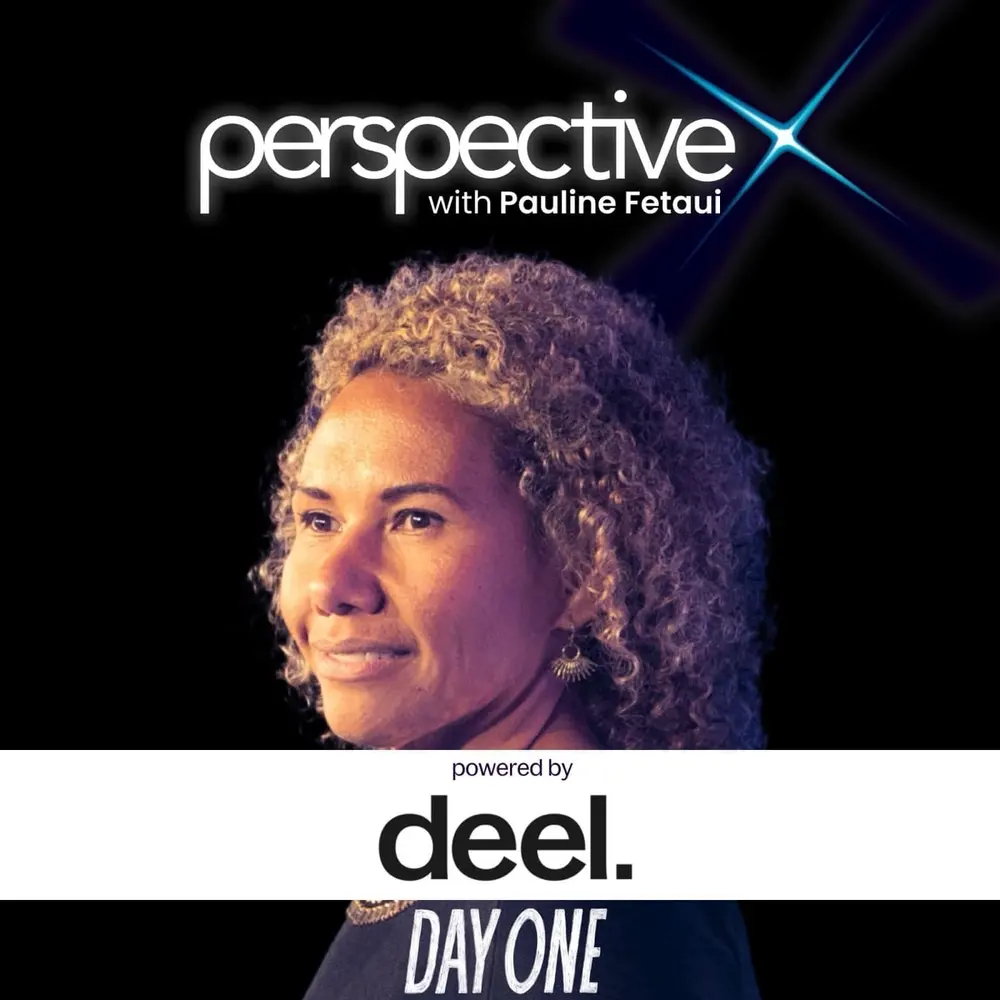 Perspective X with Pauline Fetaui
Presented by Deel
Perspective X with Pauline Fetaui
Presented by Deel 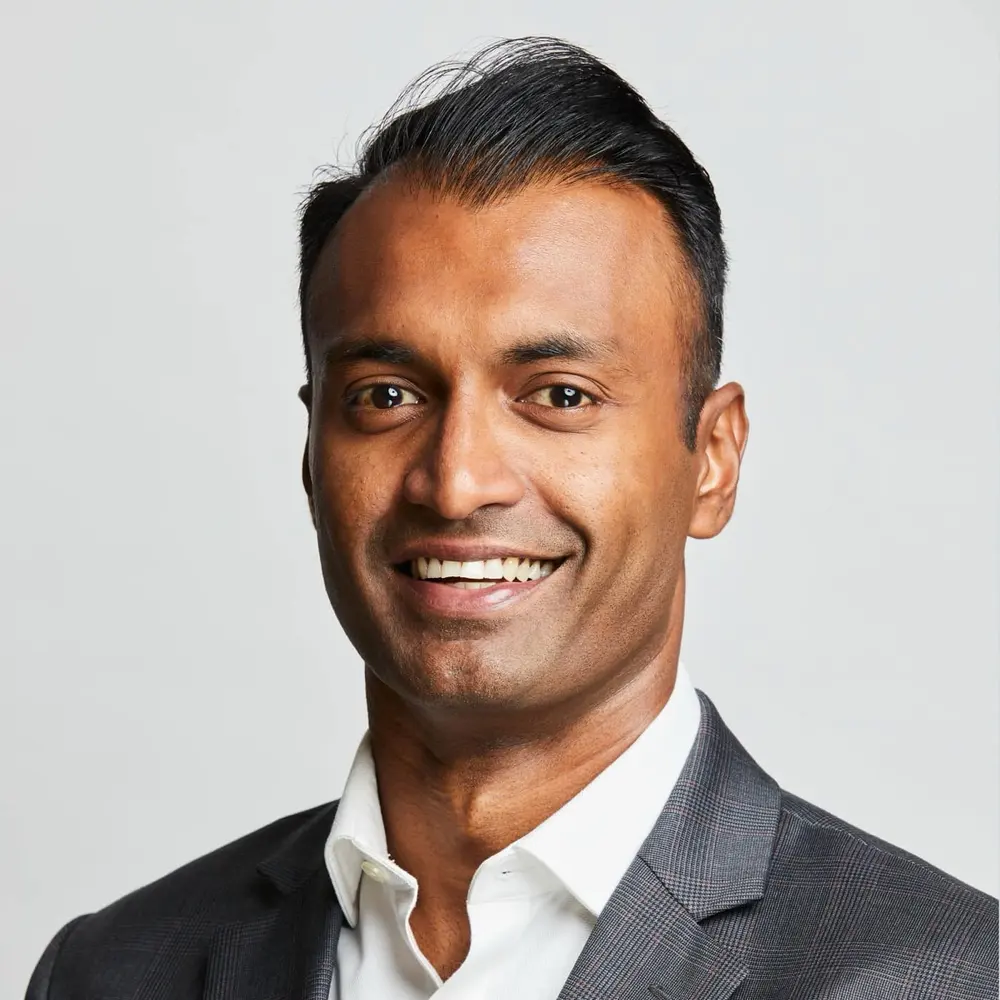
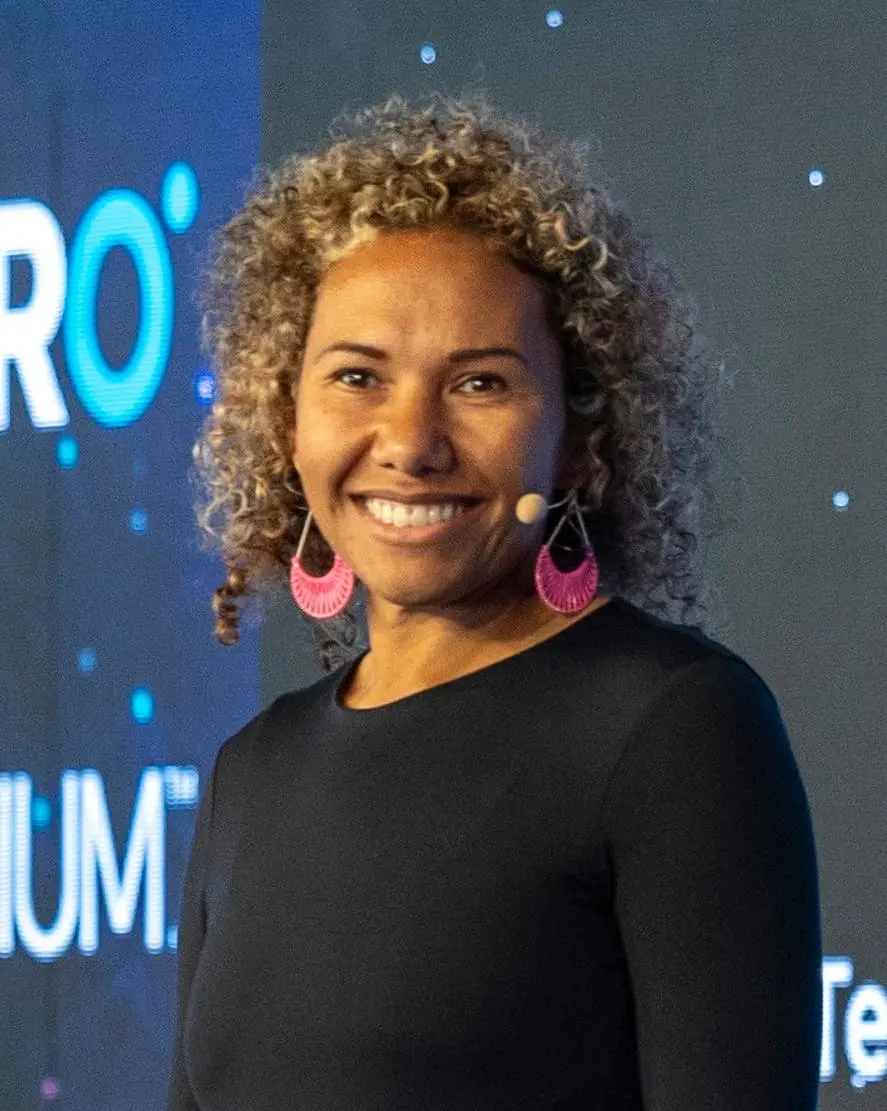

 ▶
▶ ▶
▶ ▶
▶