Transcript Synced · select any line to jump ▾ 0:02 Speaker: Founders scale faster on Deel. Set up payroll for any country in minutes, hire anyone anywhere, get visas handled fast, and get back to building. Visit deel.com/dayone. That's D-E-E-L dot com slash day one. 0:22 Christina Jones: People don't have a lot of hope. They don't have a lot of joy. That's where creativity is needed. Part of that is exploring your imagination and seeing what's there and even Even if you don't like it or if it feels cringe, that's part of the process is to express ourselves and have that joy or even just letting out some emotions that we might have had bundled together. That's why emo music was so good back in the day, you know? 0:46 Georgie Healy: But what are some telltale signs in your writing that people don't notice what's obvious AI slop? 0:52 Christina Jones: It's called antithesis. So it's not this, it's that. 0:56 Georgie Healy: Oh. 0:57 Christina Jones: That's a big one. The thing with LLMs, and this is why people notice the em dash, is that it's done in a way that people don't write in that way. Like, there's too many of them. 1:06 Georgie Healy: A New York Times columnist said the same thing as you. I love an em dash. You can take it from my cold dead hands. 1:11 Christina Jones: Exactly. I really love it. I'm the same. Even just a screenshot of my calendar and asking, steelman approach, hey, where am I wasting my time? 1:22 Georgie Healy: Hello and welcome to In the Blink of AI, your front row seat to the AI revolution. I'm Georgie Healy, and I have a bug, not a feature, today. But you're safe from where you're sitting. But if I do I do sound husky. Now you know why. Today we have the incredible CJ, Christina Jones. She's Head of Design for Generative AI at Canva. And we're the anti-slop show today, guys. There's a lot of AI slop out there. Prompts that create horrible texts, images, videos that no one wants, no one wants to see. And we're just generating it because we can. And I'm guilty of this too, guys. It's very easy to switch my brain off and just prompt into a, you know, ChatGPT, Gemini, add this cat with the dress on it. Guilty. But if we do this too often, are we starting to turn off our original thought, turn off our creative thinking? I think there is a huge advantage to AI plus creativity and using it as a companion if we can also expand our mind and start looking for things outside a frame of reference. And CJ tells us exactly how to do that. It's an opportunity for you to lean in more and differentiate yourselves when there is slop everywhere. I also have my first ever AI rant, so get excited for that. And if you're subscribed on YouTube, you're gonna start seeing more behind the scenes stuff coming out this month, more incredible guests in my favorite studio in Sydney, and I just can't wait to hear what you think about it. So don't be shy. Let's dive into the episode. You're You're listening to a Day One FM show. Hey CJ, thank you for joining in the Blink of AI. I've genuinely wanted to have you on the show for ages and only just like built up the nerve to ask. So thank you for being on the show. I'm thrilled to have you. I follow you genuinely everywhere, LinkedIn, Instagram, Substack. If you start something else, I'll follow you there too. But you know, we're on the, in the Blink of AI podcast. So maybe we'll start with your day job. 3:38 Christina Jones: Sure. So I'm CJ. I'm the head of design for GenAI at Canva. So that's all of our Magic Studio products as well as Canva AI that just launched recently at Canva Create. 3:49 Georgie Healy: It's huge. I've been on Canva since I had my first child because I wanted to do birthday invites and things like that. Oh, so you've been there, yeah. Yeah, yeah, which is 6 years ago. So big fan. But outside of AI, is there any projects that you love or are working on or anything like that? 4:05 Christina Jones: Yeah, I've been writing on my Substack that you follow. I'm trying to look at how we can kind of look at the new ways of work. I get a lot of advice questions as well. So seeing how I can expand out my writing into many different places as well. So that's been a little pet project for me as I've been kind of growing my own skills as well. 4:27 Georgie Healy: Yeah, because I see you as a thought leader, you are a thought leader. So it must be interesting trying to think of how to share that. 4:37 Christina Jones: Yes. 4:37 Georgie Healy: And in what format and that kind of thing. Is there anything you're gravitating towards that feels what feels natural to you that you, because I've tried a Substack and for me I found it really tough, but you seem like such a natural. I'm curious if like you've played with formats and one works. 4:53 Christina Jones: I do, I do. So Substack is a long form. I'm trying to actually grow in it so I can write a novel that I have an idea for. Oh my gosh. Yeah, so it's a way to practice writing 'cause writing is a form of thinking. But I have been playing around with Instagram like you've seen, like short form videos and even on YouTube now with something more long form. And I think what's exciting about it is that your writing voice and your speaking voice are kind of different. And so I like playing with both mediums just to see how different they are and where I can learn from that. 5:25 Georgie Healy: No issues if it isn't the case, but it feels like you don't use AI for your writing. Is that the case or does it help you? 5:33 Christina Jones: Yeah, actually. So I actually wrote a piece about that too. I was using it for a while because I just I've been wanting to be a writer since I was, I wanna say middle school, high school, like emo kid, just wanted to get my feelings out and— 5:48 Georgie Healy: Friend of the pod. 5:49 Christina Jones: I know. And so I tried it so many times and just failed because it is a bit of, you have to be bad to be good at it. And I just couldn't handle being bad. So I created a custom Claude project to help me with my writing. It was more like an editor I called him Lemon because it was like a little cat that I imagined that would be like sitting over my shoulder and giving me some editorial guidance. And as I was using it though, I did realize that it was giving me ideas of like, "No, your writing is actually about this," when I knew it wasn't. 6:26 Georgie Healy: Oh. 6:27 Christina Jones: So there would be examples of I'm writing an essay about navigating ambition, for example, and would say, "The emotional core of your piece is actually this instead." And I was like, "No, I'm not." I'm like, that's not what I'm doing here. Like, so it was a very weird moment when I was using AI to help me and I actually decommissioned it. So I don't use it anymore. 6:47 Georgie Healy: Oh my gosh. 6:47 Christina Jones: Wow. So there was a period of time, like maybe a couple months where I was using it for editorial advice and now I just don't use it at all. Yeah. 6:56 Georgie Healy: It is so interesting you say that because I, for the first time ever, have an AI anti-hack as well. 7:01 Christina Jones: Oh wow. 7:02 Georgie Healy: Normally it's very positive. Like these are things you should be using, but I think it's helpful to know like it's okay if you've tried something and it's not actually been supportive, useful. 7:13 Christina Jones: Yeah. 7:13 Georgie Healy: You know, that's not a personal problem with the way you're using AI. It's worth trialing and playing around. 7:22 Christina Jones: Yeah, exactly. I think just the act of trialing it also helps you understand where do you actually need help. And I think for me it was just the act of doing it is where I needed help. Like things would stay in my head, but I just couldn't get it onto paper. And so having something to say, this is good, this is bad, helped me at least build up the practice of writing. But after a while I was like, ah, it's telling me what to do and it doesn't know me at all. So how can I keep using this? 7:50 Georgie Healy: I don't need to be micromanaged by AI right now. 7:55 Christina Jones: Exactly. 7:55 Georgie Healy: I am curious if you recommend people launch and scream and close their laptop, or like, 'cause that's the only way I'll publish anything is the launch and scream. But for you? 8:10 Christina Jones: Yeah, I do the same. I throw my phone across the room. I don't want to look at it. 8:15 Georgie Healy: It's like a spicy text message. 8:18 Christina Jones: I think just doing it is fine. And what's the worst that can happen as you do it, right? Even if somebody gives you critique or criticism, that's actually still a great outcome at the end of it because someone read it, had a strong enough reaction to then give you something. But honestly, I think just the act of doing is the best part, even if it's into a void, even if it's, you know, you feel like, what am I getting out of this? The process is how you learn. So I would definitely say do it. 8:51 Georgie Healy: Ah, such a great start to the show. Obsessed. Okay, so AI hack of the week. We do this every episode. Do you wanna start us off? Do you have an AI hack you wanna share? 9:01 Christina Jones: I do have an AI hack. I've been trying this out, um, because Oftentimes we use AI or LLMs to give us feedback on something. I've been trying this approach, it's called the steelman approach. So the opposite would be strawman, where you kind of have like an argument like that. In steelman, what you do is you prompt with, here's what I'm intending to do, or, you know, what I wanna write. Tell me what's wrong with all of this. Like really break down what's wrong with all of this and then provide suggestions on how to improve this. So then it's a way for you to not get into a sycophantic conversation where it's like, "You are the best ever." Yeah. 9:41 Georgie Healy: My AI thinks I'm so clever. I know. No, but that's fantastic. In what circumstance do you love using that? 9:49 Christina Jones: Yeah, so in one way it could be designs. Like I give, here's the way I intend to lay out this design. Like, give me the reasons why this doesn't work. So I can at least have a bit of a think of, am I just following conventions or is it actually something useful? But you could do it another way with like strategy or even writing like, hey, here's my response back to this person, for example. So tell me like what's wrong with this? Because then you can really think about what's the issue here? Like, what am I trying to— Yeah. What am I trying to get across? And what could be someone's argument back to me that then I can make it stronger? So it's a great little approach, basically having AI tell you when you're wrong more than getting that reassurance that you're right. 10:39 Georgie Healy: I love this. And it's in like a safe space in your home. Like you kind of get the feedback, the potential downside of what you were going to share publicly anyway ahead of time. It's almost like a, a virtual audience of sorts. Exactly, yeah. 10:57 Christina Jones: You can kind of have a, you know, a lot of people want to use AI as a thought partner, but you do need to have a bit of dissent when you have a thought partner because that's how you get better outcomes. If everyone's a yes man, then you won't get a great outcome at the end of it. 11:11 Georgie Healy: You won't grow, you won't learn. Love this. I might try it with a few upcoming LinkedIn posts. 11:16 Christina Jones: You should, you should. 11:17 Georgie Healy: That are a bit spicy. Okay, I mentioned that This is the first non-hack I had, and I felt quite passionate about sharing this one because it— for a moment, I was really excited about the AI and its potential, and then I noticed myself almost feeling like there's something wrong with me, and I didn't want to use AI because clearly I'm not technically proficient enough, and I really don't want other people to do that. So I'm like, oh, I need to share this example so that you know that we all kind of reach blockages sometimes technically. So I'll stop talking around it. Uh, there's a tool called Google Firebase. When I first used it years ago, you definitely couldn't just prompt an app. It's, it's like a no-code, submit a prompt, it'll generate an app. And I had this really cute idea of guinea pig of the day just to play with the app. 12:15 Christina Jones: Just to play with the app. Yeah. 12:16 Georgie Healy: Could have been really amazing. Um, and it did everything, you know, and I could see it generating code and I was so excited. I was like, this is a game changer, took 2 seconds to get so close and then it would fall down every time at the very end. We need the right API key. 12:34 Christina Jones: Mm-hmm. 12:34 Georgie Healy: I'd be like, okay. And then I found an API library that like approved Google API key codes and everyone I'd put in, they'd be like, it's reached its rate limit or some, something technical. And then I'd put that into Gemini and be like, what does this mean? How do I fix it? CJ, I spent 3 and a half hours trying to find an API key. It was like the final little step, that's all it needed. And in the end, I literally couldn't get it. I spoke to the people in the Firebase team, like, what is? And they're like, oh, I shouldn't even ask you that. And I'm like— There's no Guinea Pig of the Day app now because of this API key issue. And it's like a travesty for our time. So my takeaway really is, is even someone like me who thinks I'm technical, I work in AI, I love AI, I'm pro-AI, sometimes it's like, sometimes I do wanna throw it out the window. 13:29 Christina Jones: Yes, yeah. And that's okay. And I think that's hard too, 'cause when you're building apps or websites, there's still the infrastructure that's behind it that a lot of these tools can't do yet. It's getting there, like a lot of them are getting there, but yeah. 13:42 Georgie Healy: And that's actually such a good point too. If I threw out the baby with the bathwater on this and was like, well, I'll never try ever again, be a real shame. I think the tech, it's not, it's not that it's not going to get there. It's just I need to pause and, and take a moment and try again in a few months. 13:58 Christina Jones: You learned a lot about API keys. 13:59 Georgie Healy: I didn't know what they were before. I know that there's a library. 14:03 Christina Jones: Yeah. 14:03 Georgie Healy: I know that none of them work. Okay. So, you know, I, I really was excited to chat to you briefly before recording kind of around AI and the big picture around AI because I've given a very niche case of an AI use case, niche case we hear here, and we hear a lot of noise around tools to use. But I'd love you to just very briefly, big picture, like if, if someone was to just start from scratch and think of where AI could fit into their lives, how do you kind of zoom out and then maybe slowly, slowly zoom in slowly? Yeah. 14:42 Christina Jones: So I look at AI as it's a great set of technology and tools that we can use in wherever we have technology today. So when I started out getting into AI, I was also like a designer. I had no idea what this was. And I started working at a research institute for AI where I was surrounded by PhDs who, you know, they dedicate their lives to this. And then I'm just a fresh egg, like, what's happening here? But the way you look at it is that Artificial intelligence is what can we try to help machines understand about humans to then help us. And I know that the news oftentimes gives a lot of things like AI is taking your job or different things like that, but the technology as a whole is actually quite beneficial to us. We see it every day. So when you're scrolling YouTube and you're trying to find the right video, that has machine learning and AI powering behind it. The same way if you go through the airport and you scan your passport and it lets you through, that's also AI. It's computer vision that's checking your face against your passport photo as well. So all of these little automations that actually help us breeze through our lives. So I think for someone getting into it is looking at, are there things that I'm doing day to day that this could help me with? For example, Mm-hmm. Even just looking at my calendar and seeing like, where do I spend the most time? 16:11 Georgie Healy: Oh gosh, yes. 16:12 Christina Jones: Or, you know, I always struggle to do these types of emails, especially to my rental agent. Like, please just help me write them so I can do that. That's how AI can help. And in a broader sense too, in the background, things like forms you have to do with the government, helping automate that. Even in healthcare, just checking against diagnoses or looking at big amounts of data, it can also help there. AI has been in our lives for years, even dating back to the '50s when it was first conceptualized. So I think it's just at this stage in time, it's getting a lot quicker and a lot better, but now a lot of us have access to it. It's not just behind the scenes as it used to be before. 16:55 Georgie Healy: I feel like there's a deeper story on the rental agency situation, which might need another podcast. I'm desperate to know what you're doing with your calendar with AI, because at the moment mine's just color-coded and I'm not sure. Oh, I know. I think color-coded is great. I'm a millennial, so— Yeah. 17:11 Christina Jones: I actually, I use even just the screenshot of my calendar and asking steelman approach, "Hey, where am I wasting my time?" Like, what's going on here that's, am I giving myself enough blocks for focus time? Am I giving myself space for creative work or kind of having a back and forth conversation to know where are my gaps? Like for example, I do my best creative work in the morning. And so if I put a lot of meetings there, there's no way I'm gonna get stuff done. So doing stuff like that, and there's actually a lot of startups around Sydney that are looking at this too, to see like how can AI look at calendars, look at people's availability and bring all of that together. I don't know if you remember Good Day with Catherine. 17:58 Georgie Healy: Of course. 17:58 Christina Jones: Yeah, so that's what she's looking at. But you can think about that, like a lot of these AI startups are looking at where are the problems that we're having. And how can AI do something in the background to just alleviate a lot of that decision fatigue that we have? 18:14 Georgie Healy: And that's such a frictionless way. Like if I'm honest, part of the reason my calendar isn't optimizing my energy levels and my performance better is 'cause I'm like, "Oh, well I need to kind of figure out what the labels are and change them all and I haven't done it." And I'm like, "That takes hours and who's got hours?" Yeah. The screenshot, Plug, like, I, anyone could do that tomorrow. And then if you wanna iterate on that and play further, but that's a great, just, you could do that right now. 18:43 Christina Jones: You could even have suggest me some labels and different things as part of that. Suggest me some labels for this, like, or even just having, I think what AI helps me with is just that first draft. So even if it's wrong, I am able to even see that and just conceptualize like, oh, this is what I actually want. And I think the hardest part sometimes for us is getting to that first draft state. 19:08 Georgie Healy: 100%, blank sheet of paper, overwhelming. 19:12 Christina Jones: Yeah. 19:12 Georgie Healy: Screenshot into LLM help and then iterating from there. I'm trying that today. Not joking. Okay, I'm guilty of this, just was guilty of this. Is AI just a productivity hack? Am I just focusing on productivity? 'Cause I'm like so bored of the productivity conversation. 19:31 Christina Jones: Yeah, yeah. 19:31 Georgie Healy: Even though it's helpful, but like, Is there more than— is there more to AI than productivity hacks, CJ? 19:37 Christina Jones: I definitely think so. I definitely think so. I think it's looking at how can it kind of be this entity that's not a person to help us with things. I think we focus on productivity because that's where a lot of our current— 19:52 Georgie Healy: Friction. 19:52 Christina Jones: —friction is. But even with things like diffusion models, which is our image generators, our video generators, you can imagine that that can be used in ways to help people conceptualize things that would be harder or brainstorm a mood board a bit better or even just being able to gather materials just to help. I think it has a lot of great applications across the board. But even for productivity in the background of like processing like hundreds of thousands of medical data or stuff like that, that's still quite impactful to us as a society as well. Yeah. So I think it'll give and take in different things, yeah. 20:31 Georgie Healy: Yeah, we had Harrison AI on the show, like one of our earlier episodes. And for people like my parents' generation that frankly, you know, they read the headlines and the headlines are scary. And it's really lovely to see things like that where it's showing how you should be triaged quicker based on the degree of urgency and things like that. 20:53 Christina Jones: Yeah. 20:53 Georgie Healy: And then it's very hard to be like, oh, well, AI's all bad when you can see those, those interesting use cases outside of that. But— 21:02 Christina Jones: Yeah. 21:02 Georgie Healy: But if, if it was only productivity hacks or doom and gloom, I could see why you'd be like, maybe, maybe forget about it. 21:09 Christina Jones: Yeah. And I feel like too, especially being, if you're working in AI, it's always good to see where people's criticisms of it are because then that helps us build a better product overall. I think people have some real concerns about the ethics of it and who decides what. And I think that's something that we should be aware of. So it's helpful to see the doom and gloom just so we know, okay, how can we actually improve this so that way we have a better life for everyone in the future too? 21:37 Georgie Healy: I couldn't agree more. One hot take that I haven't really shared, it's in my drafts in LinkedIn. I hate the idea of a household robot, like a —like a physical AI humanoid robot freaks me the fuck out. Like, it really does. 21:55 Christina Jones: What if it was like a cute robot? 21:56 Georgie Healy: Yeah, then it's fine. 21:57 Christina Jones: Okay. 21:58 Georgie Healy: If it's like a guinea pig shape, like, totally fine. No, I read— gosh, oof, we might have to fact-check this in the notes. I think it was Sergey Brin speaking about— or maybe it was an MIT paper, but they use robots to walk you in the house in order to train themselves in the task that need to be done, unstacking your dishwasher and stuff. I'm like, the idea of a robot staring at me, like I can't, I can't. Meanwhile, I'm, you know, always online, always sharing my entire life story. But the idea of a robot watching, I don't know why I care. 22:36 Christina Jones: I think it's 'cause they're a bit soulless in the eyes. And yeah, I don't like the humanoid versions. 22:42 Georgie Healy: Yeah. 22:42 Christina Jones: I know it has some applications for people who are maybe in elderly care or something like that. 22:49 Georgie Healy: Yes. 22:49 Christina Jones: But I prefer the ones that look more like cats. Or animals or like a little different thing that's not a person, yeah. 22:57 Georgie Healy: And just for the record, in my LinkedIn draft, I'm like, for elderly care and companionship and joy and that kind of thing, great. I'm like, I just don't need it in the house to help me unstack the dishwasher. 23:10 Christina Jones: Yeah. 23:11 Georgie Healy: It just feels like the balance. But in 3 years, next time I'm unstacking the dishwasher and everyone else doesn't have to do that, watch me be a massive hypocrite and be like, you know what? Creep me out, I don't care. I cannot be bothered with this task. Okay, so leaning a little bit more into AI outside of productivity, household chores, we're in a cost of living crisis, CJ. Why do we need creativity in the first place? Like, I feel overwhelmed and it sounds expensive. 23:43 Christina Jones: Yeah, oh, creativity is expensive. It's the freest thing that you can do actually. Really? 23:48 Georgie Healy: Yeah, it is. I think of art and like, oh, it sounds like a luxury, you know? 23:52 Christina Jones: Oh really? Okay. I think creativity as a whole is just being able to take something from your imagination or an idea and making it. And so it doesn't have to be art that's painted. It can just be written word. It could be collaging things that you have already together. It doesn't actually require a lot of extra things. But I think actually in a cost of living crisis, are people, or in times when we feel like people don't have a lot of hope, they don't have a lot of joy, that's where creativity is needed the most. And I think that part of that is exploring your imagination and seeing what's there. And even if you don't like it or if it feels cringe, as the young kids say today, Mm-hmm. That's part of the process is to express ourselves and have that joy or even just letting out some emotions that we might have had bundled together. That's why emo music was so good back in the day, you know? 24:48 Georgie Healy: Oh, it was so good. My Chemical Romance understood me on a deep level. 24:53 Christina Jones: Yeah, I know, I know. 24:54 Georgie Healy: I have a friend that's very, very successful, A-type like me, like we vibe on this level. And she signed herself up for an art class years ago. She's like, "I'm not an artist. It's purely for joy." And I always remember this because she does get asked a lot, "Is it improving? Are you getting better over time?" 'Oh, this looks better to me than your last one,' da, da, da. And she's very like okay with those kinds of comments, but she is like, it's so not the point. Yeah, exactly. 25:26 Christina Jones: It's so not the point. 25:26 Georgie Healy: This is just not an area that I'm trying to necessarily achieve an outcome in. 25:31 Christina Jones: Yeah, exactly. And I think that's the struggle a lot of people have with creativity is that in order to do this, I need to have, I need to sell it then. It has to be for some reason. I'm going to sell my eyes. 25:43 Georgie Healy: Yeah, exactly. Oh my gosh. 25:45 Christina Jones: And then that's the thing is that, you know, there's part of it is for expression and learning about yourself and seeing how you wanna communicate things. And also if someone wants to sell it, then they should be able to and get that fair price for it as well. So I think that's the thing is like creativity is for everyone. We have it as we're kids. And then slowly as we're going through school and other things, it becomes more around our productivity. Like how are you gonna get your grades? And can't really grade on creativity so much, even though I went to art school and they try, but like you can't really do that. Yeah. 26:19 Georgie Healy: Yes, yes, I did music and it's not quite the same, but I remember part of the reason I didn't take up music after school is I just was like, I don't understand the rubric, I really don't. You're playing trombone, I'm playing piano, you're voice. 26:35 Christina Jones: Yeah. 26:35 Georgie Healy: Technically you're a grade 5 AMEB in our Australian Music Examinations Board and I'm grade 8, so should I be better? I don't know, not based on that song that I just played. 26:46 Christina Jones: It's very— 26:47 Georgie Healy: and then it kind of took the joy out of it a little bit for me as well. So it's— anyway, that needs therapy, not a podcast. Actually, speaking of creativity, weirdly, when I look at my most creative accounts that I follow apart from yours, the— I'm a romanticie girly, I read all those novels, Sorry Not Sorry, and I love following AI-generated imagery from those novels. 27:16 Christina Jones: Oh, interesting. 27:18 Georgie Healy: Which, my goodness, could not have existed years ago. You can't create this in a film, like, you know, very photorealistic, based on the book, with the dragons, with the very unique scenarios. And I am obsessed. Like, it's so clever what these artists are creating. 27:36 Christina Jones: Yeah. 27:37 Georgie Healy: I'm curious if— maybe not that exact, but like, are you seeing that in your line of work? I'm sure you're seeing some exciting— 27:46 Christina Jones: Yeah, yeah, I do feel like I've seen a couple of trends. One is from, you know, traditional artists that are just like, no AI whatsoever. 27:55 Georgie Healy: Yeah. 27:56 Christina Jones: And I totally understand that from them because they've put so much hard work into their craft and they should be rewarded for that as well, right? Then I see a middle ground where there are designers or artists who are looking at how they can use AI to kind of as a new media. Them essentially to play with it with their own materials. Or even now with some of the advances with diffusion models, you can like train your own model in a way with LoRA and basically have it just know your stuff. 28:25 Georgie Healy: Wait, what's LoRA? 28:26 Christina Jones: LoRA is like a way that you can train with just like a little bit of context. 28:31 Georgie Healy: Okay. 28:32 Christina Jones: So maybe like 10 images instead of having to train on like thousands and thousands. And it's looking at, okay, what are all the connections between these images? And then can I the rest of the diffusion model in order to fill in the gaps. You can do it on like Leonardo AI and like a lot of other tools where there's this like specific training. But I think even from that, then artists are looking at how can I just train my own model with just my own materials, not even use another model because I don't know what it's been trained on, right? So I wanna make sure it's all of my own materials. So I see a lot of that kind of playing in there. There. And then on the other end of the spectrum is people who are AI artists, as they call themselves, that are using diffusion models and different things to essentially create art, like the ones that you're seeing there as well. So there's quite a spectrum of people using it. The thing I don't agree with is when people are like, AI art is better than real art, because I just— I don't think that's a true thing at all. 29:37 Georgie Healy: Who's your favorite old school artist? Artist you have? 29:39 Christina Jones: Oh, my favorite old school artist. You know, I grew up in the US and so I love Georgia O'Keeffe. I love all of her paintings. I love her, even just her, what she's done to build what it means to be an artist of like having alone time and being able to really examine something. But yeah, that's one of my— I've had many. I'm just so amazed. 30:01 Georgie Healy: I'm so thrilled I know who she is too. 'Cause I do not have the art pedigree. My sister and my mom, like there's some genetic, actually genetic. 'Cause the whole time I'm thinking about this, I wanna be more like you, CJ. I wanna be more creative. I wish I had the art background. My mom and my sister draw beautifully, can paint. Is it just not possible for me? No, no, no, no. Are you being polite? 30:30 Christina Jones: No, no, I'm not being polite. All of that just comes from comes from years of practice and doing it. And I think there are certain things that maybe it feels like it's genetic, like having an eye for things or, you know, being able to express yourself in a certain way. But a lot of that can actually be taught as well. It's just a lot of continuous practice on a lot of artistic— that's what I learned in art school was like, oh, you can actually— Yeah. Continuously practice to get to a certain point of your career. And what happens for a lot of people is that they try it, they're bad at it, and then they say, "This isn't for me and I can't do this and it's an inherent talent I have to have." And that's just not true. 31:13 Georgie Healy: I love that behavioral focus because it's true. You said this earlier, you know, "I was bad at it, didn't wanna, you know, I don't like being bad at things." Yeah. I don't like being bad at things. I like being good at things, so I do two things. 31:26 Christina Jones: Yeah. 31:27 Georgie Healy: No, but it's true. I've got a 5-year-old who loves to draw. He's already better than me, but guess what? He's always drawing. 31:34 Christina Jones: Exactly. 31:35 Georgie Healy: Like, yeah. And so sometimes I'm like, maybe the gene skipped a generation. That's the only reason you can draw and I can't. You know, I noticed this a little bit in fashion. Like I just love fashion. I work in Texas. 31:52 Christina Jones: Yeah. 31:53 Georgie Healy: The t-shirt and jeans combos are amazing. But I am always on Pinterest. I'm following the Instagram. It is kind of like a muscle. I don't think I like grew up being like, "Oh, that combo goes together." I just vicariously like look at, you know, body types and what suits proportions. 32:10 Christina Jones: Yeah, you've trained your eye. You've trained your eye to look at things and you know, and you've built that taste over time and then you know how to execute it 'cause you've been buying things for yourself or probably for your children or even your husband. Oh, it's so much joy. Just getting it all together. 32:24 Georgie Healy: So much joy. Like, you know how people hate shopping and I'm like, I, I'll do it for you. 32:29 Christina Jones: Yeah. 32:29 Georgie Healy: Um, can I take you shopping? Yes, please. I do need a stylist. Oh my God, you really don't. You really don't. Um, no, it just brings me so much joy. Look, this topic of taste though, I keep hearing about it even with the, the people that are not talking about art. They're just talking about building an AI company and it's democratized and you can bring something to market very quickly. You can copy something that's in market very quickly. So what's the differentiator and, and the VCs and some startups are saying it's taste. 33:00 Christina Jones: Yeah. 33:00 Georgie Healy: Is it taste? 33:02 Christina Jones: I think part of it is, if we step back, the way a lot of these AI models work is it's making an average of everything. So it'll take, hey, make me a website, make me an app, guinea pig of the day. It's gonna look at all the apps that are out there and then decide, okay, this is what an average app looks like. And so if everyone's doing that, they're all going to present the average, right? And so then taste, how that comes in is you look at that average and say, "Actually, it needs to be like this. Actually, this would be a better way to do things because I have an eye for things or I know how people behave or I know that this is average and I want to do the opposite of it." And so that's where it comes in. 33:47 Georgie Healy: Oh, that's clever. 33:48 Christina Jones: Yeah. So I think like that's the— When they say taste, it's like having looked at a lot of knowledge and a lot of things out there and saying, "This is my personal opinion on what this should be." A lot of taste building is actually just taking in information and then forming your opinion around that. 34:08 Georgie Healy: Oh, that way takes the pressure off. 34:11 Christina Jones: Yeah. 34:11 Georgie Healy: Oh my gosh, just have some taste. CJ is like, "Whoa, I don't know how to do that." I know. 34:16 Christina Jones: Who defines what's good taste or bad taste? That's also like, could be cultural. Like what's good taste in Australia might be bad taste in the US. A curse word that's very popular here is bad taste in the US. And so that was like a thing for me where I was realizing like how taste can really change depending on where you're at. 34:37 Georgie Healy: I feel like around the taste topic as well, we talked about creativity and kind of growing that muscle. Say you're a startup, you're like, this all sounds great, but I want taste quickly. 34:49 Christina Jones: Oh, okay. 34:49 Georgie Healy: I wanna form opinions quickly. I've got a product, I've used the AI. How could you grow the creativity muscle a little bit? 34:56 Christina Jones: Yeah. 34:56 Georgie Healy: Or the original thinking muscle just a little bit. You've looked at your calendar, you can carve out an hour. 35:03 Christina Jones: Yeah. 35:03 Georgie Healy: Any suggestions, any thoughts? 35:06 Christina Jones: I think the biggest thing for growing original thought and creativity is looking at actually having time to observe around you. And get out of your bubble. So those would be two things. So just building a little skill of observation where let's say you sit down at a cafe and you're just like, no headphones, no laptop. I'm just gonna observe the people around me. You'll start seeing a lot of connections of, oh, people seem to be wearing this, or I'm noticing a lot of these cars, or people are talking about this kind of thing that's happening. Even just observing nature, like, "Wow, these trees have a really different bark." Just like trying to look at the world like a child. 35:49 Georgie Healy: Wow. 35:50 Christina Jones: Like observing, like we never take time to observe, right? It's go, go, go, go. But actually looking at like, "Wow, the concrete is a really different color. And when it meets this intersection here, it turns into a darker color. How interesting." Just trying to build that. Because then you can see why your users or other people around you are saying certain things, why they're gravitating towards certain things, because you're being able to observe the world around you. So that's one way. And then the second way is you wanna try to break outta your bubble by seeing things that you are not used to seeing. So it might even be like your friend did, just went to an art class, like that wasn't what was expected of her. Or maybe you go to a restaurant you've never been to, or you, read a book that is not something you would normally do. Like breaking out of that can actually help you build that original thought because you've seen something from a different perspective. That's why a lot of, you know, a lot of tech people love to read nonfiction. And it's always like tech books and business books. But fiction is actually a really interesting way to see into humanity. And reading things that are way outside of those nonfiction things can really help. I know you said the romanticism, but it's true. You just validated me. You can see, you can see. You see a different perspective. 37:09 Georgie Healy: The dragons have a meaning. 37:11 Christina Jones: They have a meaning. You're out of your bubble. 37:13 Georgie Healy: Yes. 37:14 Christina Jones: But that's part of that is that, you know, when we're in tech, it can feel like everything we have to read and do is centered around that. But that doesn't help with original thought 'cause you're just reading and looking at what everyone else is doing. Gotta be punk, gotta be emo. 37:29 Georgie Healy: You gotta be emo, guys. Maybe that's the headline. You gotta be emo on AI. Like you really do. I started journaling, but you know what I, like as of now, I've decided I think I'm gonna start the journal with a few observations. 'Cause you know, I have the first guest ever on the podcast, Jada, she's the CTO of a conservation AI startup called Xylo. And she shared on her Instagram this week, she carries around a notebook and she just observes nature specific, but it'll be like a tree or bark or whatever. Yeah. And she flicks through and it might be a little picture. She's doing it for the joy of it, but I think I'm gonna do it for nefarious reasons, which is to improve my intellect. How lovely, thank you. Okay, we're gonna ask one headline news question. 38:24 Christina Jones: Okay. 38:25 Georgie Healy: And then we're gonna get into spicy takes. 38:26 Christina Jones: Okay. 38:27 Georgie Healy: Are you ready? 38:27 Christina Jones: Yes. 38:29 Georgie Healy: Okay, the topic of AI girlfriends, boyfriends. The headlines love it. I know it's clickbait, I know it is, But it's always seen as very negative because, you know, this is a way to not connect with your living, breathing humans around you. 38:51 Christina Jones: Yes. 38:52 Georgie Healy: And it's sycophantic, like you mentioned before, and our AI boyfriends look like my fantasy novel boyfriends and all of that, and you can make them whatever you want them to be. 39:03 Christina Jones: Yeah. 39:03 Georgie Healy: I see all the downsides. Is there any upside? 39:06 Christina Jones: I think there can be an upside if these companies are being responsible. Yeah, in my personal opinion, I feel like a lot of these companion companies are looking at AI as like, hey, we're filling the gap where people feel lonely and maybe they want to improve their, you know, human-to-human skills. But their metrics are around engaging with this bot. It's not actually around, is this person actually taking time out of not being here? Are they actually making human connections? And so a lot of researchers nowadays that are looking into this topic and seeing it are proposing how can there be guardrails? Like, is there even a law or convention or something that we all agree to in a similar way to accessibility where we say, hey, there needs to be time off the app? Yeah. We can't be upselling people. Like, because they're in a vulnerable state, they're already lonely, and then you're saying, "Oh, you can get more responses with your friend that absolutely loves you all the time. Just upsell, you know? Pay more and they'll be here forever." Those kind of things. Like, we don't have a lot of regulation around this. So I can see where there is a benefit of sometimes just spilling your guts out to something that so doesn't bother you. 40:25 Georgie Healy: Yeah. 40:26 Christina Jones: I know my husband, like— 40:27 Georgie Healy: Yeah. 40:28 Christina Jones: I have a Claude project called Existential Crisis when I'm going through something that I know I've told him 10 times, but I just need to say it for the 11th time and I can just get it out. I know it's so good. 40:40 Georgie Healy: I've used it related to anything more in my life. Yes. 40:43 Christina Jones: It's so good to get it out. But then there's a limit. Like, I shouldn't be using that all the time for everything because part of all of this is to have a really great human connection, right? So I see why people go to them. I'm not knocking anybody's— 40:59 Georgie Healy: Yeah. 40:59 Christina Jones: Like want to do that. But I do think there's a real ethical concern there of, well, what's the intention behind our company? 'Cause if it's to get more users and more people using these bots rather than building connections around them, then that does kind of fray our community in a way. 41:17 Georgie Healy: Yeah, using the TikTok algorithm of like the longer you're on the app, the better. Very, very messy. Yeah. Do you ever remember when ChatGPT, the criticism of the app was that it was like glazing too much, right? But as soon as they took that back, people freaked out. 41:37 Christina Jones: Yes. 41:37 Georgie Healy: My friend, this is my friend that I like, how dare you? It's like if you change your personality tomorrow, I'll be like, why are you acting like this? And people were like, oh, and that's not with an artificial boyfriend. No, no. 41:50 Christina Jones: Yeah. 41:52 Georgie Healy: Yeah, that's, if you spend that much time with something. 41:55 Christina Jones: Yeah, you build a connection with it, right? And I think that's where researchers look at, there's a bit of a paradox of, hey, if we personify this thing, then people understand it and they feel more inclined to use it. But at the same time, when you personify something, it then feels like it's a person. And so then you have certain, and I'm guilty of this too. I'll be like, my good friend Claude. 42:19 Georgie Healy: Yeah. 42:20 Christina Jones: And it's not a friend at all. It's just an LLM. 42:24 Georgie Healy: Yes. Yeah, uh, I remember one of his few great moments, in my opinion, was when Sam Altman did say, "We deliberately called it ChatGPT to differentiate from being a human being." Yeah. Um, I will not go on. Um, let us go to the hot take section. Um, we've had some spicy takes, but I've got a couple more for you. 42:47 Christina Jones: Okay. 42:47 Georgie Healy: Okay, I had a friend who shared read some articles by a very prestigious fashion magazine that were clearly ChatGPT written or an LLM written. It was, it, you know, there was some telltale signs, right? Uh, but if it's not double hyphen— what's it called? M-dash. Yeah. What can people look out for for that? Just, you know, we're not saying you can't use them, but what are some telltale signs in your writing that— not in your writing, one's writing. 43:18 Christina Jones: You can tell me. 43:19 Georgie Healy: Yeah, yeah, we'll look out for them now.— that people don't notice? Because she was very intuitive, but what, what, what's obvious AI slop? 43:29 Christina Jones: Yeah, I think a big one is the argument. It's called antithesis. So it's, it's not this, it's that. 43:36 Georgie Healy: Oh! 43:36 Christina Jones: That's a big one because it is a great tool to use as you're writing to showcase an argument or to help someone understand. The thing with LLMs, and this is why people notice the em dash, is that it's done in a way that people don't write in that way. Like, there's too many of them. And so then it's the same with antithesis. There's too many of them. You're only supposed to use it in a way that's like to really emphasize an argument, but it'll be like every other sentence is like, "It's not just this. It's that thing. It's not that thing. It's this thing." Like, that's a really easy way. 44:10 Georgie Healy: People don't talk like that. Yeah. Okay. That's a really good one. I'm going to start noticing those now. 44:16 Christina Jones: You will. As soon as you— and then it's hard because, because you notice it in certain ways. You're like, maybe I do want to use this, but now I'm worried if people are going to think— No, look, yeah, I'm curious. Because I love an em dash. 44:27 Georgie Healy: Yes. 44:28 Christina Jones: Especially as a designer, an em dash is a nice piece of type. I love having it. I love using it in writing. But yeah, there is that worry now of like, if I use this and I'm not using AI, people will assume I am. 44:41 Georgie Healy: CJ, I've never seen an em dash before. Like ChatGPT genuinely. And a New York Times columnist said the same thing as you. I love an em dash. You can take it from my cold dead hand. 44:53 Christina Jones: Exactly. I really love it. 44:54 Georgie Healy: I'm the same. And I'm like, I have never noticed this in my entire life in any writing. So if you put one in, I'm going to assume that has to be— isn't it interesting? Yeah. 45:05 Christina Jones: Yeah. Yeah. How it's changed. 45:07 Georgie Healy: Okay, we're all behind AI, right? Like, we're all like years behind. We'll never catch up. I'm not a software engineer. We're gonna become potatoes, CJ. Like how do we possibly compete in this world if we're not software engineers? When that seems to be the future leaders of the world, people that understand tech super, super deeply. 45:26 Christina Jones: I don't think that's true just given, if we think about the whole world, tech is only a certain part of that. But I do think that there are certain things that you can learn or just have literacy, even if you don't use them, it. So with AI, there's a lot of free courses out there of like, here's just how this works. I think just knowing that is a great stepping stone for anybody to have. They don't have to be coding every single day. And I think the thing is that if you're interested in it, then you can use LLMs to teach you how to code or teach you how to do certain things that you might not have done otherwise. 46:04 Georgie Healy: Yeah. 46:04 Christina Jones: But I do feel like the world is so big in everything that we need to work together that I don't think you need to be a software engineer to advance. I just think like knowing the basics is the same way, you know, we all use mobile phones and we kind of know how it works, but we're not like, I know how mobile networks work and 5G works and everything. 46:24 Georgie Healy: That's such a good point. I never will. 46:27 Christina Jones: Yeah. 46:27 Georgie Healy: But I can text. 46:29 Christina Jones: Yes, exactly. So I think it's just knowing like if those things do become more commonplace, like at your work you have to use XYZ as part of that, just learning it as a tool in that way. 46:40 Georgie Healy: Yeah, don't spin out, guys. Like I need to tell myself this as well. Yeah. 'Cause sometimes working in tech, you're like, you do think it's the whole world. 46:47 Christina Jones: Yeah. 46:47 Georgie Healy: Everyone's looking at me and wondering why I don't have a software engineer. Not actually the case. And the more you spin out, the less you'll actually probably enjoy the process and learn. 46:58 Christina Jones: Yeah, exactly. 46:58 Georgie Healy: I love that. Okay, one thing listeners can do now— actually, we talked about this a little bit around expanding your creative thinking, expanding your original thinking, you know, just a takeaway. 47:10 Christina Jones: Yeah, I think the two biggest things are giving yourself time to observe and then giving yourself moments where you can be outside of your comfort zone, I think are the biggest takeaways there. And you can do that very simply. It doesn't have to be like, oh, tomorrow I'm moving to Italy and starting an artist residency or anything. I mean, if you want to, if you want to. But it could just be like, I'm gonna go to the library and pick up a book I normally wouldn't pick up. I just like the COVID of it, so let's see where it goes. Yeah. 47:40 Georgie Healy: You've got permission from— Yeah, from one of my favorite people. Speaking of one of my favorite people, if people don't know where to follow you, how can they find out more? Where should they look for you? 47:50 Christina Jones: Sure, so I'm on LinkedIn. As Christina C.J. hyph-brackets Jones. 47:57 Georgie Healy: M-dash? 47:57 Christina Jones: No, no m-dash. Just little parentheses for that one. And I also write on Substack. It's under Jonesish, so Jones-ish, where I write about essays. I have advice column on there as well. And then I can recommend lots of different Substacks as well through there. But that's where I'm at. 48:18 Georgie Healy: We will have all of these in the show notes, but I I sincerely had the best chat. Thank you so much for coming on the show. No, thank you. This was amazing. Thank you. 48:26 Christina Jones: Thank you so much. 48:29 Georgie Healy: Thank you for listening to In the Blink of AI. You can check out the show notes for anything discussed in this week's episode, and we will be back next week. This podcast was produced by Day One with music by Dan Hansen and visual artwork by Sophie Tyrrell. If you loved the episode, please tell your mates, and I love AI news. Please share your thoughts and suggestions to georginarosehealy@gmail.com.

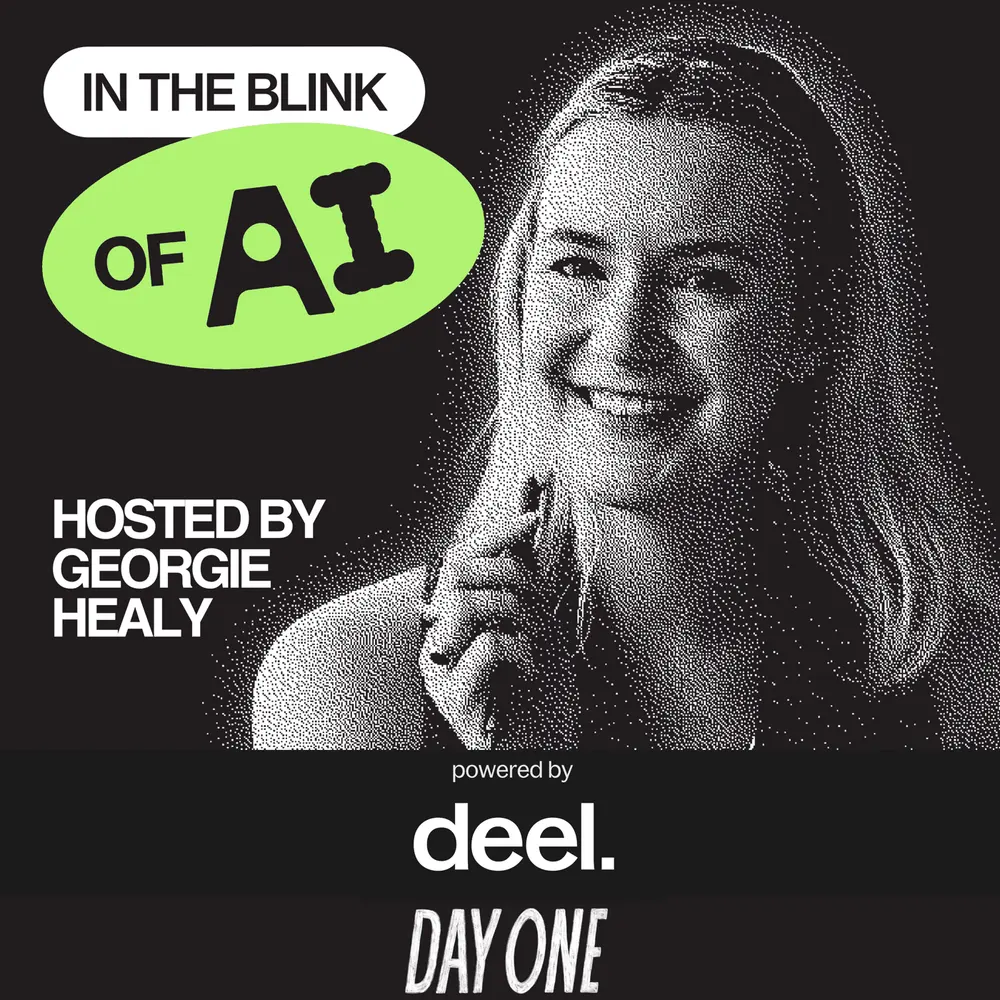 In The Blink Of AI with Georgie Healy
Presented by Deel & Stripe
In The Blink Of AI with Georgie Healy
Presented by Deel & Stripe 

 ▶
▶  ▶
▶  ▶
▶  ▶
▶  ▶
▶ ▶
▶ ▶
▶