Transcript Synced · select any line to jump ▾ 0:02 Georgie Healy: Founders scale faster on Deel. 0:04 Speaker: Set up payroll for any country in minutes. Hire anyone, anywhere. Get visas handled fast and get back to building. Visit deel.com/dayone. That's D-E-E-L dot com slash day one. We are a company that helps people to enjoy caring for their brain. And we do that by making mobile games that monitor brain health. So you play games and we help you monitor your health. It's very simple. 0:38 Georgie Healy: Hello and welcome to In the Blink of AI, where I touch the brightest AI startups and innovators each week. I'm Georgie Healy, and this week I'm speaking to Christina Ma, founder and CEO of BrainLand. They're on a mission to speed up diagnosis and delay disease helping you monitor and improve your brain health. Look, if she wasn't so smart, she would be very intimidating. Christina is a neuroscientist and a biomedical engineer. You've probably seen her on a panel recently, or you are one of the many visitors to her showcase at South by Southwest in Sydney. To those that aren't aware, South by Southwest is kind of like the Coachella of technology and innovation. BrainLand is a perfect example of AI-driven image analysis and the advancement of health outcomes. In this episode, we discuss the growing field of biometrics and how advances in AI and smartphone devices are enabling digital health. 1:37 Speaker: Thank you for tuning in. 1:39 Georgie Healy: Hi, Christina. I've been looking forward to this conversation for quite some time, so thank you so much for joining me. 1:47 Christina Maher: Thank you for having me. I'm so glad to be here. 1:50 Georgie Healy: So how about we start with this? Why did you do a PhD and what was it in? 1:56 Christina Maher: Ah, that is a very, very good question. So, you know, I always wonder where to start with this, but I think it's good to go right, right, right back to the beginning where growing up, low socioeconomic household, my parents were uneducated and Many, many years ago now, many years ago now, my dad became very ill. He went to the doctor, they said he just had a fever, sent him home to rest. That was on a Thursday, we lost him on the Saturday. And so really that sudden, you know, a lot more detail, he obviously went to the hospital and so on, but by that stage he'd had, his disease had advanced. And really what happened was he had not only had a delayed diagnosis of what he had, but also a misdiagnosis because doctors just sent him home thinking he just had the flu. 4 years later, that almost happened again with my son who was running a fever for several days, took him to 2 GPs who said he just has the flu, take him home. If I did not persist and look for a third GP who said, take him straight to emergency, he needs surgery. Mm-hmm. The surgeon who operated on him said that if we didn't bring him in at that exact time, we would've lost him. And so by this stage, I'm still in this mindset of losing my dad. I'm now going, what is going on with the healthcare system? Why? There were so many things. Why is it so hard for doctors to keep up with the research? Why am I not aware of all the symptoms to look out for? We don't know the questions to ask. And so there were a number of issues there. And really, I was the eldest. In a family of 5, so I became the breadwinner of my family. And, you know, struggling financially, all the things that happen when you lose, well, the key breadwinner of your family, which was my dad, those things stay with you forever. Those memories stay with you forever. And so I'd always been obsessed with the brain growing up. Like, I'm always— I was always fascinated with, you know, why people do what they do, why people behave a certain way, how we— you know, decide to take control of our health or not. You know, all these things about the brain and how it really controls your everyday life, I was always obsessed with. So I'll go back to uni, do a neuroscience degree. And really it all just kind of spiraled from there. From there, I realized that I could go and do a PhD. I went and spent some time in a clinic. I worked in a clinic for a year and a half where I worked with actual patients. We did neurofeedback. I was really interested in things like brain imaging and learning how these external hardware devices image the brain and understand the signals we can't see and see inside the body. And so from there, from that clinical work, I realized that I was really interested in the hardware and software side of things, and I wanted to understand more about that. So pivoted from neuroscience into a biomedical engineering PhD, and, and that's kind of where it all began. You know, people don't realize in a PhD, depending on which faculty you deal with, but particularly in engineering, you're not there as a student. They expect you to be there as a full-time job, commit fully, long hours, produce outputs. Your supervisors, you can almost think of them as investors, really, if we want to make that analogy with the startup world. You have to produce results. And honestly, like, there's nothing worse than that blank face of my neurology supervisor when I would show up to meetings, you know, with not the best results or not what he expected or not something amazing to show him. And so learning that whole stakeholder management piece was a fantastic experience. Learning to pivot. Being able to see the gaps and seeing where you can come in and still do something novel and still do something unique that is going to help people, and that is going to allow you to execute and complete your degree and finish on time and do all the things that PhDs require, which is like getting publications, for example. That's like a huge part of it. And I ended up not only finishing on time, but publishing every chapter of my PhD. And I think I really learned there that— 6:22 Georgie Healy: Mm-hmm. 6:22 Christina Maher: I'm capable of so much, and I learned what my capacity was, and I learned how much I could actually learn. Like, I completely taught myself to program, you know. I'm— I have these traumatic memories of staying up till 1 AM, you know, finding bugs in my code. And yeah, learning how much I could actually teach myself and absorb was, was an awesome experience. And, and it's something that guides a lot of the way I operate now. 6:53 Georgie Healy: I think we're very kindred spirits. I remember during high school, my father was always the math science whiz of the household. My mom was incredible at English. And anyway, I got so much help in high school with my math, thought I was a math genius, and then did engineering. And the first unit, first subject, my dad's like, oh, I'm out now. This calculus has gotten so advanced. I was like, What? I've got to teach myself now? So I do know that those are nightmares that keep you up at night about like, I've got an assignment due in math or deep, deep software engineering. 7:35 Christina Maher: Physics. Yeah, physics. Forget it. 7:38 Georgie Healy: Awful, awful. But we got through it. You not only got through it, you got your PhD. And thank you so much for telling me your story. I'm so sorry with what you went through with your father and your son. That sounds incredible. Incredibly, not only devastating, but also you somehow turn that into your superpower. So I think that's a great place to start talking about your startup. So many of us may consider a PhD, we may consider a startup, but to do both, how did that happen? 8:10 Christina Maher: Yeah, I mean, I always wanted to run my own business. I always knew that I was going to do my own thing. I did not know that it was going to be in healthcare or health tech. And I didn't realize that, you know, these experiences that I had in my family would become what drove me so much. In terms of what we're building, this really arose out of learning in my research that we have all of this amazing hardware and software that can image our bodies and brains. But to access that technology, you need to go and book to see the doctor. You need to pay a lot of money. You need to see a specialist and so on. And oftentimes when you go and do those tests, they're just a one point in time test. So you're not able— the doctor or the specialist you go see is not able to capture, you know, a longitudinal or a lot of data over a long period of time. And so what I realized is that yes, we, we do need those one point in time tests from really fantastic imaging machines, but we can also support or prop up or enhance that information with longitudinal information. And so that's kind of how the whole idea arose. 9:27 Georgie Healy: And, uh, hardware for brain imaging, I'm imagining those little dots that are all over the scalp with long wires attached. Are we talking that? Like, dumb it down for me. What are we, what are we talking about? 9:43 Christina Maher: Yeah, so there's, there's a number of different ones. There's hardware that images the structure or anatomy of what's inside you. So humans have amazing capabilities, as you know, but our eyes can't see through our skin. We can't see our blood flowing through our veins. So this hardware allows you to do that and you can have hardware that allows you to see the structure, which is like MRI machines, CT scans, X-rays, those sorts of machines, industry-grade, medical-grade hardware. And then you also have the same grade machines that allow you to see the function of your brain. So that's like things like functional MRI, electroencephalography, which is like the little electrodes that you would have seen on people's heads. 10:30 Georgie Healy: Oh yeah, is that what it is? 10:32 Christina Maher: Yeah. And so those those allow you to see functional things about the brain. So I guess your brain in activity, your brain doing something. And so when you combine those two pieces of information, you can get a very nice comprehensive picture of what's happening in the brain. But all that machinery or all those devices are really expensive. Obviously people don't have them in their homes. And what I realized is that despite the fact that we have a lot of wearables, nothing is capturing what's going on up here from a sort of, I can do this in my home perspective. And so I think really where a lot of this tech is headed is technology in the home, you know, imaging your brain or— 11:17 Georgie Healy: Yeah. 11:17 Christina Maher: Your brain's activity from the comfort of your home. And really that's kind of where, where we're starting. It's using the device that's available in everyone's hand, which is a smartphone to capture information about your brain from the comfort of wherever you are, wherever you wanna do it. 11:35 Georgie Healy: Fascinating. In my household, we are tracking our sleep, we're tracking like fitness, like all sorts of things. And I don't think that we are by any way dissimilar to most adults in the 20 to 50 age bracket. That's fascinating. So, so this is an AI podcast. You've obviously got the strong technical background. How do you leverage AI with BrainLand, which is your startup? And, and do you need to leverage AI for BrainLand? What would it look like without that? 12:11 Christina Maher: Yeah. So there's a whole emerging field of what's called nearables, which is like wearables, but near you. So non-contact. Devices, and these pick up what's called biometric information. And I think, like, let's define biometrics. It's biological and behavioral characteristics of an individual which allow you to distinguish in a repeatable way features of that person or their characteristics. And this biometric data is— it's not small. It's— there's, there's tons of it. And groups like I don't know, TikTok, for example, are already capturing so much of our facial data, our facial movement, voice data, all this sort of stuff, but they're not linking it to health outcomes or a health state or a health-based condition or an illness. So where AI comes into the picture and where it helps us, helps enhance what we wanna build and what many health tech companies are building is aggregating that data and analyzing it. And for what we are building, absolutely. It would not be possible without some of the incredible AI tools that are available now. But really, you know, if I think about AI more broadly, like beyond just building models to analyze biometric data, our entire team is enabled by AI. I will not let anyone in our team not use AI. I tell my entire team, we need to be experts in the AI tools that are out there. I make everyone keep a list of what's out there in terms of the products and services. We use AI for finding and compiling the research that we, that we want to talk about. You know, like I can only spend so much time giving my team the research that's out there from a neuroscience or neurological perspective. It's just so much more efficient to get AI tools to find it, summarize it, package it up in a nice way. We use it obviously for writing code. That's a big one. We use it for fixing errors in the code. And then of course for analyzing data. So, and we even use it for customer research, you know, when we do a lot of our one-to-one customer interviews. If I sat there and analyzed the hundreds of interviews that we've done individually, that would just take hours. So we also use it to analyze sentiment and themes in the interviews as well. And so really we are completely, like, hugely enabled by AI. Amazing. 14:56 Georgie Healy: And you touched upon the regulatory, but how, how do you get data? How do you ingest data? What kinds of data do you use in order to, to make those inferences and insights? 15:08 Christina Maher: I think a few things underpin our data strategy and inside that sits our data security and data privacy strategy. So at the moment, you know, being self-funded, We don't store your data, and that's just because it's quicker, it's easier, it's way more secure for us just to take the biometrics, extract the features or the scores that we want from that data, and then discard the data. So in that way, there's no privacy risk to, to anyone, to any users using the tool. When we do start to use it for analysis, we plan to use the best encryption techniques available. And that is one of the benefits of having being very embedded in the academic and research environment for the last, I don't know, 5 years now, is that I'm very close to a lot of whatever is the latest and greatest in cybersecurity. And I'm not a cyber expert by any means, but I do make a point of educating myself on this topic because data security is absolutely the number one thing that keeps me up at night, right? And so, you know, we have fanta— I've got fantastic academics working in the cybersecurity and data security space and From that, or we've developed our data privacy, I guess, strategy going forward. When we start to save or, or keep people's data, we'll use something called homomorphic encryption to not only secure the data or encrypt the data, uh, but also for the analysis. So I should probably explain what that is. We're all familiar with encryption, encrypted data. When you use WhatsApp or any of those tools, your data's encrypted. On both ends, homomorphic encryption allows computations to be performed on the encrypted data without having to decrypt it first. So what you get is the results of those, or that computational analysis remains in an encrypted form entirely for the entire process. And then when it is decrypted, the results that you get are identical to what would have been produced if you did the analysis on the unencrypted data. So really, it allows us to have end-to-end encryption, never decrypting the data for analysis, because that's what happens in a lot of these sort of health tech companies. You encrypt the data, you de-identify it, but then you still have to unencrypt it or decrypt it in order to do any sort of analysis. And what this new, this new technique allows us to do is to never never decrypt it, which is fantastic. And it's, and it's a lot more safe for, for users. And the other thing I want to say is like, it's 2024. We're not keeping anyone's data if you don't want, want us to, you know what I mean? I mean, that's just, that's not a thing anymore. So your data is yours. If you want it gone, if you want it removed, it's gone. Like we don't make it difficult for people to ask to remove their data. And, and we certainly will ensure that we remove people's data if, if they want it gone. That being said, there are papers upon papers that show that patients or people living with neurological conditions or chronic conditions are very willing to share their data freely if they think it's going to help them find a cure or treatment for their condition. So yeah, I mean, once you know that, you sort of can operate with a level of confidence. But absolutely, we, we are like 100% always thinking about that data security and data privacy piece. 18:43 Georgie Healy: Gosh, I love this podcast. I've already learned what a mirrorable is and what a homomorphic encryption is. That is really insightful. Thank you, Christina. Okay, switching tracks a little bit. So since I got my job in working with AI startups, I've had to field a lot of questions, namely from boomers, namely from my parents, about AGI or machines taking over the world. Terminator style. But one thing I have been able to get even the most fearful people to agree upon is the benefit of healthcare leveraging AI for the good of the world. I saw recent news articles about detecting breast cancer way before it's able to be depicted on a blood test. Perhaps as an expert in the space, I'd love to hear your thoughts of healthcare and AI and what we can achieve now. That the technology is moving so quickly. 19:38 Christina Maher: Yeah, absolutely. Uh, you know, I just read the other day that Harrison AI, who is a radiology health tech company, just produced their first foundational model that outperforms or performs to, I think, the same level of radiologists in analyzing— I think, is it CT scans? I can't quite remember, but Two pieces there which stood out to me was the foundational model piece. So we don't have in Australia that, that we know of. I know some groups are kind of secretly working on things, foundational models in the health tech or healthcare space. And radiology is one area that's ripe for disruption with AI because radiologists spend hours looking at scans. We don't have enough radiologists., to look at these scans. And, you know, even when I was at the Brain and Mind Center, which is where I was before I left to go full-time in my startup, they were also working on a number of models to analyze different types of scans. And really the challenge there is getting enough data to train your models, getting quality data to train your models, and having the processing or the compute power to, to train your models or to build models on. And the thing is about MRI that a lot of people don't know is— and this is what I love about the fact that I've gone deep on this topic— is people think MRI is a gold standard of imaging, and it certainly is, but it's still limited by or constrained by the protocols that you put in place when you go and get your scan. So same— and the same applies to CT scans and all the other types of of imaging technologies. So, you know, the timing of the pulse that's sent through your body, because MRI is about sending a magnetic wave into the body, the timing of the pulse, the timing that you wait for the molecules in the body to relax and then pick up the signal from those molecules, those are all— those all form part of a protocol. You know, how long you spend in the machine as a patient, how your movement in the machine creates noise. In the scan makes the scan a little bit blurry, how we remove that noise or how we account for the noise in some way. The differences between scanners— you might have two scanners from the same provider and they will be programmed differently, they will be serviced differently. All these nuances, they apply across all your different data types that you collect and they apply across time as well. And so it's very hard to get a quality— Quality. Dataset to train your data on, and it's hard to clean the data, preprocess the data. I mean, it's not hard now because, you know, we have AI and we have a lot of tools to do it, but it requires a lot of computing power. And so to be able to create models that can do that, uh, and do it with a level of accuracy that is comparable to specialists in the field who have been in the field for many, many years is a huge advance. And that represents a massive step forward for people in low resource countries or people who live in countries where they either can't afford the technology or they have even less specialists than we have here. So on a global scale, the application of AI for health tech, for example, in the radiology space, is incredibly, incredibly powerful for helping us to create more healthy societies and helping us to live longer, manage diseases better, and giving people back quality of life. So I think that's really important to note. I forgot what the rest of your question was. 23:35 Georgie Healy: That's fine. I will definitely tell my dad about the radiology example next time he says that, um, you know, he can't use ChatGPT or else the computer will take over his life. 23:45 Christina Maher: Yeah, like, it's a really good point. 23:47 Georgie Healy: And, and you've, you've beat me to this question. Harrison AI, you've mentioned. We've also got Heidi Health in Australia. We're seeing some amazing health tech platforms getting funded. Why do you think the VCs are starting to jump on this in particular? 24:02 Christina Maher: Uh, that's a good question. I don't know if they're jumping on it in Australia. Perhaps in the US or, or elsewhere. Look, I think it depends on your business model at the end of the day. There are a number of different health tech startup models. Obviously B2B is a very commonly known one that we're familiar with. For example, Harrison will sell their software to radiology practices, but they've also partnered with imaging groups like iMed Radiology and things like that. So the B2B model makes a lot of sense and is probably very profitable for them. I think that where VCs can see the value from a financial and commercial perspective, then it makes sense for them to come on board. And I think that at the end of the day, their job is to keep their LPs happy. And so where it makes sense to do that, yes. Uh, there's, there's other VCs who play more in the impact space. So if we're improving people's health, if we're getting them to a diagnosis faster, if we're getting them to treatment faster because we got them to a diagnosis faster, the impact of that is, is huge. Not only from just improving quality of life in general, but also from a productivity perspective. So the time people spend being unproductive because they're thinking about, do I have an illness, is something like it takes up the equivalent of like 2 weeks worth of your productivity. Wow. And then we put off booking the doctor. And then when we finally go to the doctor, we might have to see several doctors to find a diagnosis. All of that is time away from work or time spent, you know, doing something that's perhaps, I mean, not productive in terms— in sort of a career or in a work sense. So from a productivity perspective, it makes sense to care about people's health. And I guess that's why we're seeing a rise in a lot of these employee wellness programs and things like that. And certainly that's why we are building what we are building. It is purely there. We are not building a diagnostic tool, by the way. We're building what is essentially a pre-screening tool that allows you to identify whether or not you should go and seek further medical help. 26:14 Georgie Healy: Yeah. Not just from a logistics standpoint, this is fantastic, but just a mental health perspective, this is fantastic. Fantastic way. A friend of mine was talking about how long it took from, you know, detecting something that may or may not have been an issue through to blood tests, through to finding out, blah, blah. And that was someone that was highly motivated. Imagine putting that off slightly and just the fear that would come with that. I've talked to you about being pregnant before we both got children. And yeah, like that is just a hard time when you do not know if there is something or not something. Shrouding his cat, you know. 26:50 Christina Maher: Oh, totally. I mean, you're sitting there being like, am I overreacting? 26:55 Georgie Healy: Yes. 26:56 Christina Maher: Do I go to the doctor? And you know, this is a great point about having kids too, because our generation— I'm assuming we're in a similar generation here. 27:05 Georgie Healy: I assume you're right. 27:07 Christina Maher: But our generation are known as the sandwich generation, where we're looking after kids, but we're also looking after our elders, our parents. And so we have almost a double burden, and I don't mean burden in a bad way, but a double responsibility to be carers. And there are statistics around the amount of time carers have to take away from work, informal carers, not carers who are paid, but informal carers like us who are looking after children, looking after parents who might not know where to go or who to see, or even, you know, that older generation are not typically inclined to go to the doctor. Mm-hmm. When something's wrong. 27:47 Georgie Healy: Correct. 27:47 Christina Maher: And there's a lot of research on that as well. So relieving that carer burden and allowing you to get closer to making a decision about whether or not you actually need to go and see a medical professional is a really important step in helping people to seek help faster or to feel that peace of mind faster. 28:09 Georgie Healy: 100% agree. Another Aussie company that's very different but almost similar to this topic, Fetch Pet. They're, they're working on AI to understand if your pet needs to go to the vet or not, because that's just another burden, right? Another thing that you're like, is this an issue or not an issue? 28:27 Christina Maher: Oh yeah. Yeah. 28:29 Georgie Healy: Amazing. Okay, let's talk a little bit more about you, Christina, cuz you genuinely are such a fascinating human that has clearly lived in so many different workplaces and lives. You mentioned Macquarie earlier. For anyone internationally listening, Macquarie's very prestigious, very competitive bank to, to get to, and for you to even start there and then do a PhD and then do a health tech startup in AI, it's just fascinating. Do you think your academic background has given you a head start or a headwind in terms of getting into that founder mindset? 29:03 Christina Maher: Oh, I like that question. It depends on the way you look at it. And I'm actually super optimistic, so much so one of my supervisors said to me, Christina, I think you're too optimistic. And I'm like, is that even possible? 29:20 Georgie Healy: Sue me. 29:23 Christina Maher: Yeah, exactly. Look, having a breadth and depth of knowledge across different industries the banking fintech environment, the academic environment or research environment, the clinical environment, hospital environment, you know, working. I've worked, I've worked in so many places. I've been working since I was 14. One of my staff reminded me the other day because he was like, how do you know all this stuff about tax, right? And I was like, wow, I don't even know. And then I realized I've been working for so long that, you know, I've just accumulated all this information and experience. I think Knowing how things work in academia, and particularly in research, is very important to understanding why research takes so long to reach people. The admin in hospitals and in academia is just wild. The ethics to get a study over the line for a clinical trial is, you know, an intense process, but it's important. We do need to protect people's data, and we do need to protect people that enroll in clinical trials. So I get that. And we have one of the best regulatory environments for clinical trials in the world. Companies from the US come here to do their clinical trials for that reason. Like, we are known for this robust system. So, so that's, that's fine. But, you know, like, I've got startups who reach out to me because, you know, I also do consulting work to try and fund my business. And, you know, they will ask me specifically for help with writing ethics applications because it's such a pain. It takes so long. It's so unclear. The whole process is very nuanced. People don't know the rigor that's involved in this. So when you're stuck in that and you have to do that only as a job, that's, that's not fun. But knowing how that whole process works, incredibly advantageous. The connections I've made throughout my time in academia, I know the best specialists, the best doctors now. And, you know, growing from— going from someone who grew up in Fairfield, which is like— which was at the time like the Bronx of Australia, right? Like going from having no networks, no connections, knowing nothing and no one to where I am now is just— it's eye-opening and it's just not where most people would land, you know, at least in my opinion. And having that academic background has supercharged that because I can reach out to anyone in the world and they will respond to my email. And like in any hospital or clinic, you know, I've done invited talks for the Department of Neurology at Cleveland Clinic, one of the world-renowned clinics for brain diseases. I earlier this year went to the US to shadow one of the leading clinicians in the concussion space. And so I spent a day following him around with his patients and you learn so much firsthand from being there. It's one thing to come from the outside and ask people about their experiences, ask clinicians, ask doctors, ask patients, but to actually be in it and experience it is a whole another level of, I guess, experience. And you pick up the nuances, you pick up the— you know, people call them anec— people call it anecdotal evidence, but it's still evidence at the end of the day of how people feel when someone gives them a treatment protocol that's personalized and that changes their life, especially when they've been looking for that treatment for 2 years. You know, he— this guy, this Dr. Had patients, he sees like 20,000 people a year. He has people fly in from all over the US. He gives them a personalized treatment protocol and they all rave about them, about him. They tell him that he's changed their life and you just go, if this is possible and this is being done, then you know, it just has to— that, that sort of thing has to expand. We have to do more of it. And so really that's what we are focusing on at Brainland. It's capturing the data that will allow us to provide better monitoring for people and for their brain conditions, and then from there provide better personalized treatment. 33:31 Georgie Healy: And tell me about your team. How do you hire for such a specific domain area? 33:38 Christina Maher: I've worked in all-male teams for a long time and I've seen the nuance that's involved there and what occurs there, particularly when you're building AI. The way that they think about the input data, the features that they want to care about in an AI model, because AI is really— machine learning models are really statistics on steroids. They're about capturing features or extracting features from a dataset and weighting those and making some more important and some less important and things like that. 34:12 Georgie Healy: What do they weight more important? 34:14 Christina Maher: Tell me. Oh, you know what? I don't wanna say this, but I have noticed. I will say I've noticed there's different levels of importance that people place on things like emotional features, for example. And I mean, that's just one example, but depending on the diversity of the team as well, there might not be a lot of, a lot of thought around the cultural background of the individuals from which the data comes. 34:43 Georgie Healy: Mm-hmm. 34:44 Christina Maher: Uh, there might not be a lot of thought around the medical knowledge or the medical literacy of those individuals. A lot of people don't know what to ask when they go to the doctor. They, they think the doctor is going to tell them everything. And we've, we found this in our research that a lot of people, they want more information and education around supporting them when they go to see the doctor. I think for me, when I'm hiring, I want to see that the person has a breadth and depth of as much as possible at, you know, whatever stage they are in their life and in their career. That they just are thinking expansively and that they can learn quickly and that they are proactive in taking initiative. But really, you know, I make an effort to hire females. We have two biomedical engineers. Well, one's an electrical engineer, one's a biomedical engineer, both females. And it doesn't mean I'm excluding males, but it means that when I reach out to amazing person at Skillz, Robin, I wanna shout out to her because she's helped me find my first 2 hires. One was a guy, one was a girl. But I will say, you know, specifically, please send me female applications or female candidates so I can look at them. And, you know, a lot of people say they don't hire females because it's hard to find them. And yes, that is the case. Having worked in, you know, in this industry for the last 10 years, the male talent pool is so large compared to the female talent pool. But in saying that, you will find good females if you look hard enough and if you spend the time doing that. And, you know, all my team, they are just incredibly talented. They're all flying under the radar. They learn quickly. They are adaptable, like they are able to pivot. You know, we've pivoted a few times already. Yeah., and I think that mindset is super important as well. 36:40 Georgie Healy: Incredible. Thank you for sharing. And before we get into some rapid fire questions, tell me what Melon Mag is. What's that? 36:51 Christina Maher: Oh yes. Melon Mag. So I, you know, having had the privilege to go back to uni and become educated and learn how to learn and learn what to learn about and develop this, this massive wealth of information, I have always been really, really passionate about sharing that information and helping other people to become educated in topics that they might not have access to information about. And of course, you know, now we live in an information society. We can access a lot of information everywhere, but there's also a lot of misinformation around. And so I want Melanatic to be a place where people can find out, you know, the latest research about the brain, of course, but in a way that they understand. So meeting people at their literacy level or their health or scientific literacy level is really important to me because— What a lot of people don't know is all the medical jargon that we use these days was really only coined for doctors to be able to communicate with each other about certain conditions. And so it's not that you're dumb if you can't understand these big words we use, it's that they just weren't created for you to use them as, as the individual. They were just created for people in that space to use. And that same thing applies to legal jargon and everywhere else where jargon is used. So MELANMAG is really about bringing people the latest research on the brain, whether that's behavioral science-based stuff or neurological diseases, and allowing you to access and digest that information in a way that, that you understand. 38:32 Georgie Healy: Amazing. People should check out the Brainland website if they want to check out Melon Mag as well. Okay, to finish with a bit of rapid-fire questions, I'm going to ask you something. You just give me your immediate thoughts pop into your head. How does that sound? 38:48 Christina Maher: Okay, I've never done this before, but I'm excited. 38:52 Georgie Healy: It's the second time I've done it, so I'm an expert. Okay, introvert or extrovert? 38:57 Christina Maher: Introvert. 38:58 Georgie Healy: ChatGPT, Gemini, Meta AI, other? 39:02 Christina Maher: Oh my God, all of them. 39:05 Georgie Healy: Okay, tech you use every single day? 39:07 Christina Maher: My phone. 39:08 Georgie Healy: Yep, there, there, there. Anything you think that's more hype than value in the AI space? 39:13 Christina Maher: Ooh, oh my gosh. I don't know actually, that's a tough one. I think a lot of AI is hype. I think it just depends on whether people get funding to build these things that they're building because, you know, a lot of it comes down to marketing and whether or not people wanna use these tools. And there's so much new stuff out there that we just don't even know what people want yet. 39:42 Georgie Healy: Bad. Elon Musk or Sam Altman? 39:46 Christina Maher: Oh, oh, that's rough. Do I have to pick one? 39:50 Georgie Healy: This is the title of the episode, Christina Picks. I'm kidding, I'm kidding. 39:57 Christina Maher: I don't wanna pick one because obviously Sam Altman's done an incredible job with OpenAI, but Elon Musk has done an incredible job with like, for example, Neuralink and obviously being in the brain-computer interface space. I can't not pick him. But also then again, you know, I use ChatGPT almost daily, so can't pick one. 40:18 Georgie Healy: No. I feel like if you asked me about this, about Mark Zuckerberg a year ago, I would have said, yeah, he's dead, he's dead. And now he's having this big renaissance. So yeah, I won't hold you to either answer. Which part of your life would you outsource immediately to machines? 40:34 Christina Maher: All the home tasks, all the home admin, cooking, washing, laundry. Cleaning, all that stuff. Please, can someone make a robot already to do that for me? Like, I might make that robot because it's just— 40:48 Georgie Healy: You're not busy. I feel like you could do that too. 40:52 Christina Maher: Yeah, if someone doesn't, I might. 40:55 Georgie Healy: That could be our next, uh, next venture. Okay, we'll talk offline. Um, anything you've read about yourself or Brainland that's complete nonsense? 41:03 Christina Maher: Oh, Not yet. We haven't had the privilege of someone picking up anything about us yet. So soon, but if that ever happens, it might be a good thing. 41:14 Georgie Healy: Yeah. 41:14 Christina Maher: Yeah. 41:15 Georgie Healy: All news is good news. And finally, anything you want to shout out to the people listening, anything you want people to know about Brainland or any call to action you want to make? 41:25 Christina Maher: Yeah, absolutely. So we are a company that helps people to enjoy caring for their brain. And we do that by making mobile games that monitor brain health. So you play games and we help you monitor your health. It's very simple. And so to anyone out there who might be actively deploying funds, any investors who are looking to invest in what will be the leading brain health company globally, please reach out. Anyone who is living with— or knows of someone who is living with a brain condition, please also get in touch. Please visit our website. We will have the link there live for you to try our app, play our games, see how you like them, give us feedback. We're always open to feedback. And really, we are here for people to improve their brain health. And so we would like as many people trialing our, our app. 42:23 Georgie Healy: Christina from Brainland, thank you so much for speaking with me. I absolutely love talking to you. I love learning about, uh, nearables, homomorphic encryption, about the industry in general. Oh, I could talk to you for another hour. Thank you so much. 42:39 Christina Maher: Thank you, Georgie. Thank you for having me. 42:42 Georgie Healy: Thank you for listening to In the Blink of AI. You can check out the the show notes for anything discussed in this week's episode, and we will be back next week. This podcast was produced by Day One with music by Dan Hansen and visual artwork by Sophie Tyrell. If you loved the episode, please tell your mates, and I love AI news. Please share your thoughts and suggestions to georginarosehealy@gmail.com.

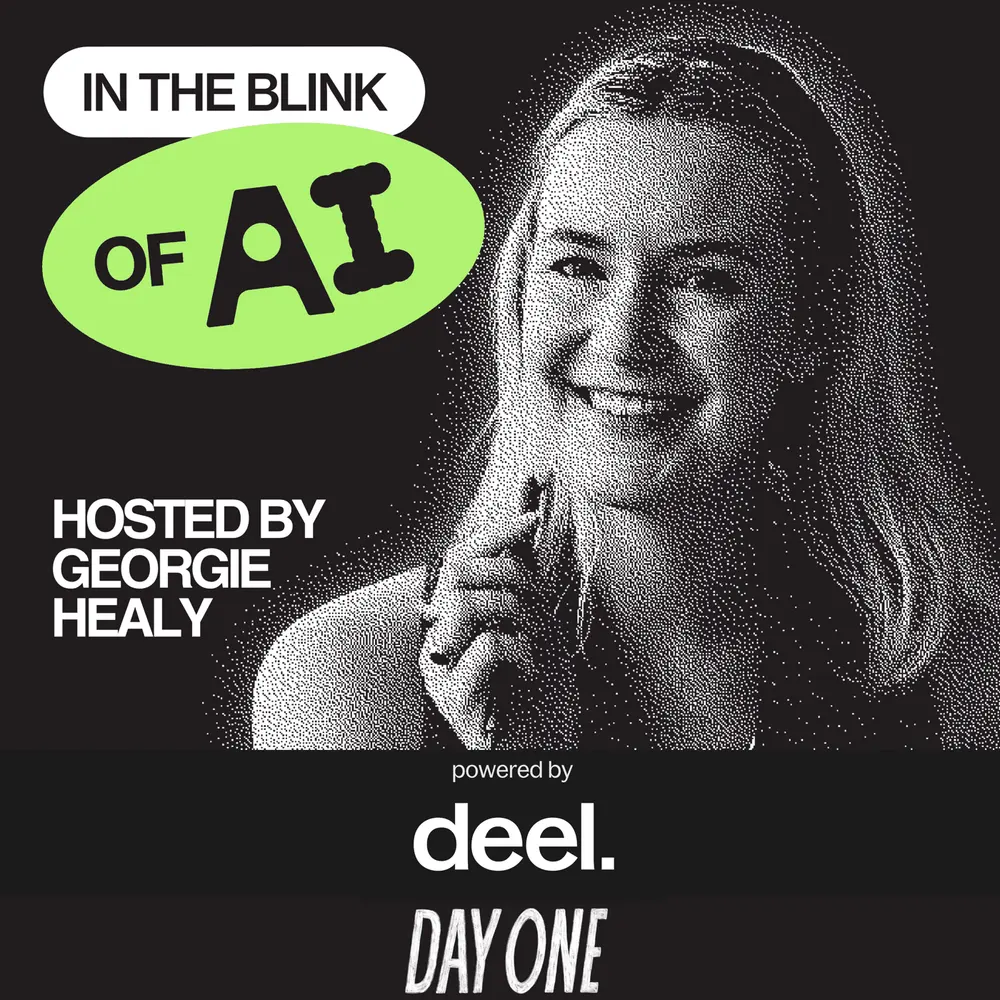 In The Blink Of AI with Georgie Healy
Presented by Deel & Stripe
In The Blink Of AI with Georgie Healy
Presented by Deel & Stripe 
 ▶
▶  ▶
▶  ▶
▶  ▶
▶  ▶
▶ ▶
▶ ▶
▶