Transcript Synced · select any line to jump ▾ 0:02 Georgie Healy: Founders scale faster on Deel. Set up payroll for any country in minutes, hire anyone anywhere, get visas handled fast, and get back to building. Visit deel.com/dayone. That's D-E-E-L.com/dayone. 0:21 Josh Vinson: Building a headset that uses ultrasonic pulses to induce lucid dreams. 0:28 Georgie Healy: Oh, I want that. Patient sitting in a chair, there's a neural interface or a screen in front of them. They're not moving their lips, but it's typing out their thoughts in front of them. Is this fact or fiction? Is this sci-fi? Is this real? Did I make that up? 0:42 Josh Vinson: No, that's real. That can actually happen now, definitely. 0:46 Georgie Healy: What kinds of diseases do you think AI will solve before scientists? 0:49 Josh Vinson: There won't be diseases become cured that don't in some way involve machine learning and artificial intelligence. If we bet long-term, you know, in 100 years, this is gonna either, you know, if we're around, this is gonna be happening. How is it gonna be happening? Well, people are gonna have electrodes in the brain. 1:03 Georgie Healy: Seeing Neuralink's going after this, will Grok be the best model to use? I told you it was spicy. 1:11 Josh Vinson: Uh. 1:13 Georgie Healy: Hello and welcome to In the Blink of AI. I'm Georgie Healey and we are going into the future. This is gonna sound like illegal sci-fi stuff, but it's actually happening. We're talking about brain interfacing and basically the way you type in the future is not gonna be with your keyboard. Today we have Josh Vinson. He casually confirms something that sounds mildly illegal to me. A patient can sit still and not move their lips and a screen will type out their thoughts. This is real. This is happening. This has happened. This is going to continue to happen. And we talk about the invasive and non-invasive ways this is happening through AI, through the technology revolution that we're currently in, and the big players in this space. Josh is really passionate about the non-invasive techniques, and he's really passionate about something called experience transfer. You're gonna have to listen to hear that part. Mild warning, we do kind of get into where those wires are getting poked. So if you're a little bit on the queasy side about that stuff, might want to skip ahead for those. But if you really want practical insights into how brain signals are going to predict treatment options in the future, how they're going to help solve some of those neurological diseases, uses that have long been big question marks for scientists. This is an incredible episode. I was so thrilled to have Josh on the show. Thank you for listening. 2:42 Speaker: You're listening to a Day One FM show. 2:46 Georgie Healy: I'm thrilled to be partnered with Stripe for today's episode. Did you know that Stripe Startups offers early-stage venture-backed startups access to Stripe fee credits, expert insights, and a focused community of builders? We love builders on In the Blink of AI. Apply today at dayone.fm/stripe. We're gonna start officially with hacks of the week. I'm gonna kick us off. I had a hack of the week. I was very happy with this one, and then I had to completely change tack because I have started properly using voice activation across, across my laptop. Like, not within an LLM, but things like Whisper Flow, Super Whisper. You download it. Have you used these? 3:39 Josh Vinson: No, no. But I've seen lots of stuff about Flow. And I think that's like a potentially really interesting way to interact with a computer, except that you need to be in a space where you can talk out loud. 3:50 Georgie Healy: This is true. And apparently like having headphones in really helps with this and background noise and things like that. Yeah. 3:57 Josh Vinson: But then you kind of like, would you be annoying other people? I guess if everyone's got headphones in. 4:01 Georgie Healy: Oh yeah, I don't care about that so much. Okay, well that's good. That's their problem. No, I was speaking I was speaking to Gareth from Frye. They help small business owners, and I was very cheeky, and I was kind of like, I think I know all the AI tools. I think I'm across it all. And I had not tried this before, and he shared his screen with me. And anytime you've got a cursor, you can just kind of talk instead of typing. He's like, I didn't bring out my keyboard all day. 4:29 Josh Vinson: Wow. 4:29 Georgie Healy: Cool, right? 4:30 Josh Vinson: Very cool. Yes. I think that that is— it's going to be really interesting to explore all the different ways that we can like supersede the mouse and keyboard. I actually think that neural decoding and brain-computer interfaces are going to be the kind of final form of that. Yeah. 4:45 Georgie Healy: So, but yeah, why even talk? 4:46 Josh Vinson: Just think. Yeah, no, exactly. Yeah. And it's like completely private to you as well. Private. 4:50 Georgie Healy: Yeah. Yeah. That is my big hot prediction for the year is more and more people are going to start getting away from the keyboard and mouse construct that way we kind of had to do to interact with the hardware and computers. 5:03 Josh Vinson: This is like maybe a bit of an AI Luddite thought, but like how do you code with Whisper Flow? I guess the answer is you don't. You talk to Claude Code or Codex and then— 5:13 Georgie Healy: Think vibe coding you could do with voice, but not so much. Yeah. 5:18 Josh Vinson: Interesting. 5:19 Georgie Healy: Okay. What's your hack of the week? 5:20 Josh Vinson: I would say I'm probably like behind the frontier with respect to using like AI tools and stuff in my workflow. My hack, I thought about this a little bit, would be I think that the Codex and Claude Code and all of that, like all of those like AI coding tools are really, really good at taking like, so a lot of, some of my work is just writing data processing scripts, which is like, doesn't require any interesting thought processes. It's just like your data's in this format, needs to be in this format. And there's lots of like format A and you're trying to get them all to be a common format. And if you write one function that does it and then you're like, okay, now look at all of these other databases and try and emulate this function, but for them, can churn that out. And it's like days, would've been like days of work for me in like 10 minutes. 6:06 Georgie Healy: Are you using a specific tool with this? Have you tried different tools for this? 6:10 Josh Vinson: I kind of bounce between Codex and Claude Code depending on vibes. 6:14 Georgie Healy: And what vibes are the vibes? 6:17 Josh Vinson: How many times do they not do the thing that I want well? And then I'm like, and then also you just see on Twitter, people are like, oh, this new Opus, what is it? Like 4.5. 6:26 Georgie Healy: 4.5, everyone keeps talking about it. 6:28 Josh Vinson: But then OpenAI come up with like 5, GPT-5.2, and then it's like, yeah, kind of just follow that. But I mean, it's getting to the point now where they're just both insanely good. 6:37 Georgie Healy: This is it, right? 6:39 Josh Vinson: And yeah, I mean, I haven't, I haven't had a moment in a long time. I mean, to be again, I don't use them that much, but when I use them, I guess partly because I know exactly what they're good for, I'm just like, oh my God. 6:53 Georgie Healy: These leaderboards are crazy, right? Because can't keep on top of it. No. 6:57 Josh Vinson: It's moving so quickly. 6:58 Georgie Healy: And to your point, they're all excellent. 7:02 Josh Vinson: Yeah, particularly now. I feel like we've hit this inflection point where they're not making these dumb, really obvious mistakes anymore. And they'll run the code for you now. And then if it doesn't work, they'll correct it and they'll write tests for you. And it's just like, it's crazy. 7:18 Georgie Healy: Yeah. 7:19 Josh Vinson: And vibes of the company. 7:21 Georgie Healy: And vibes of the company. 7:22 Josh Vinson: Yeah, you're just voting with your money. You're like, who do I like more? 7:24 Georgie Healy: Oh, and the headlines of like, who's left the company recently. Which AI engineers, like max exodus from companies. 7:32 Josh Vinson: Yeah, who's working where? 7:33 Georgie Healy: Tend to make me be like, oh, something's happening, something's bad. 7:36 Josh Vinson: Yep. 7:36 Georgie Healy: I heard that OpenAI, like it was a Twitter quote, so like take this very seriously everyone, but said, guys, my OpenAI friend just got a housemate, be wary. 7:49 Josh Vinson: Oh yes. 7:49 Georgie Healy: Did you see this? 7:51 Josh Vinson: Yeah, yeah, yeah, yeah, yeah, yeah, yeah, sell everything. 7:53 Georgie Healy: There's blood in the water, guys. All right. I have a rant of the week. I've never done this before, but I do think increasingly I wanna be not just an AI sycophant that just only tells good stories in AI. I heard about this last year. I wanted to get on the show and tell people, please don't do this. My personal opinion. I'm hearing that people were using AI to generate an image of Santa within their actual living room to show their kids. 8:19 Josh Vinson: Mm-hmm. 8:19 Georgie Healy: And be like, look, Santa came. I get the ick from this. So badly, Josh, because I feel like there's already trust issues with AI. I don't like the kid involvement in the fakery of imagery. Um, I just feel deeply uncomfortable with the privacy and the security aspect of your home and then creating like essentially a deepfake. Do you get the ick, or is it just me? Because I was listening to a show where everyone was sharing that they did that, and they seem to all be fine with it. What am I missing? 8:50 Josh Vinson: Well, where my mind immediately goes is like, you're just creating more and more sophisticated lies to tell your kids, right? There's a difference between like, oh, hey, like, I know how we told you that Santa brought these presents here, but actually we did it, versus like that photo that you saw of Santa. Like when a kid kind of grows up learning that any photo or like has to, you know, go through the realization that any photo they have seen could have potentially been faked. 9:16 Georgie Healy: Yes. Just a reminder for us all to kind of stay vigilant with what we're doing. And just 'cause you see a trend trending, be careful in the AI space. 9:25 Josh Vinson: I think there's gonna be a lot of things like that where people, I mean, I don't know, I always nerd snipe myself into thinking too deeply about things, but I feel like there's like an argument to be made that we should really, you know, be thinking more about like the consequences of our actions, more steps, like steps into the future about like, oh, if we do this, then this is gonna happen. 9:45 Georgie Healy: Yeah, I do agree. 9:46 Josh Vinson: In the way that we use these tools. 9:48 Georgie Healy: I do agree. With the recent social media ban for under-16s, that's like a reaction to what we were noticing and things. Playing out that way. I am guilty of sometimes not thinking things through. You know, I've got a partner that was very against us putting our kids on social media, and I fully agreed with friends that were pro it and had private accounts and being okay with that as well. And sometimes you just don't know until you see things play out. 10:19 Josh Vinson: Yeah. 10:19 Georgie Healy: And then you're like, "Oh, we probably shouldn't have done that," and things like that. And I need to start thinking more is my 2026 goal. 10:26 Josh Vinson: But it's like, it's almost impossible because these like new technologies are coming out, they're having new consequences that are harder and harder to predict. 10:34 Georgie Healy: Yeah. Let's dive into your kind of domain background and experience. We've never gone into this space before on the show. I'm really excited to chat to you. I'm just going to paint a little bit of a, bit of a picture. A patient sitting in a chair, there's a neural interface or a screen in front of them. They're not moving their lips, but it's typing out their thoughts in front of them. Is this fact or fiction? Is this sci-fi? Is this real? Did I make that up? 11:00 Josh Vinson: No, that's real. That can actually happen now. Definitely. 11:03 Georgie Healy: Are you lying? 11:05 Josh Vinson: No, no. That's the thing that people can do for sure. 11:08 Georgie Healy: And it's been proven. And tell me, tell me kind of about the proof and how it's been proven. Like, are scientists Yeah, scientists— Writing papers on this? 11:17 Josh Vinson: Yeah. 11:17 Georgie Healy: Like, how far between academic and in universities and they're proving it from that scale and actual patients being able to use this safely? 11:28 Josh Vinson: I think it's all very research stage at the moment. And like, there's a gulf between like something being a demonstration in a lab, even a really good one, and like actually deployed in the world. People can, you know, it's in the market, people can buy it, or it becomes part of like normal healthcare. But I think we're kind of moving between those two worlds now. This is like becoming a reliable enough demo in a lab that we can start to think about how do we commercialise this? How does it get applied to people's lives? Who needs it? 11:58 Georgie Healy: And what do you call this space? Because I'm calling it neuroscience plus AI. Is that what you would call it? What is this? 12:06 Josh Vinson: I mean, the, like the overarching umbrella term is like brain-computer interfaces. 12:11 Georgie Healy: Okay. 12:11 Josh Vinson: Which is like, how do you take signals from a brain and then give them to computers in ways that computers can interpret them and take actions based on them? 12:19 Georgie Healy: And to dive a bit deeper, are we saying you think a thought, it types the thought, just like the voice AI I'm talking about? Or is it predicting our next thought even? Like an LLM? 12:32 Josh Vinson: Well, that's a complicated question. It's like there's a continuum there. When you are thinking about things, when you're constructing language in your mind, there's like an— or when you're speaking, there's an element like you're speaking sequentially, but you're not. Your brain is not operating sequentially. There's kind of a— there is a predictive process there. There's a sense in which you've kind of already formed a sentence before you've said it. When these models are extracting information from your brain, can, you know, they can kind of do both, right? You can, you can get like the words as they come, but, you know, it's hard to say because It's not even really clear yet how, or at least I'm not super familiar with how the words are constructed in your— like, so the thing that like cognitive psychologists talk about when they talk about like thoughts in your head is called the phonological loop, which is like the part of like your working memory that deals with like you're in a monologue. And it's, you know, there's like, we've carved out like that this is a thing that, I mean, obviously like a lot of people can, can do this. Some people can't allegedly. And then these models potentially are extracting information from it. What that information looks like is kind of an open question. Is it word by word by word? Can we get that level of detail? Or is it more sentence at a time? 13:47 Georgie Healy: Yes. 13:47 Josh Vinson: But yeah, there's a continuum between extracting things that are happening live in your brain versus predicting, right? And the extent to which the prediction is happening in your brain versus in the model. Obviously, LLMs can in some sense, word predictors. 14:00 Georgie Healy: Yes. 14:01 Josh Vinson: And like you could start a sentence and then the model could be pretty sure based on its understanding of, you know, human language, but then also where your brain is kind of, what your brain is doing about how you're going to finish it, maybe even before you're consciously aware of it. 14:15 Georgie Healy: You're reminding me of when I was in France and trying to learn French the hard way, which is like arrive in the country and start to speak it. And there were certain sentences like, how are you? Da da da. Like, how might have are you come after it? But then there's sentences I say or think, and in my mind, having not studied this, that I've never said before in my life. And I've constructed these 4 words together that I've never said before, like brain-computer interface. I've never said those 3 words together. Like, oh yeah, surprise. 14:51 Josh Vinson: Yeah. 14:51 Georgie Healy: So, so this whole space, like we're still figuring it out. 14:56 Josh Vinson: Is that correct? Yeah. I mean, neuroscience is far from solved. 15:00 Georgie Healy: Yeah. 15:01 Josh Vinson: And I think if any, we're going to get any, like one of the really interesting things we're going to get out of neural decoding, which is kind of the act of passing neural signals into a machine learning model for the purposes of understanding them semantically, is we're going to probably learn a lot about what the brain is actually doing. But you know, Obviously cognitive neuroscience has made a lot of progress and there are lots of interesting studies that point in certain directions and give hints about, you know, how language is constructed in the brain. I would say we quite know quite a lot about that, but it's not— yeah, we're not, we're not, we're not very far from a complete description yet. 15:37 Georgie Healy: You've got a psychology background, right? But you're an AI engineer. 15:41 Josh Vinson: Yeah. 15:41 Georgie Healy: Good mix, I'd say. 15:42 Josh Vinson: Yeah. Great mix. 15:44 Georgie Healy: What? 15:44 Josh Vinson: Why? 15:45 Georgie Healy: Yeah. Yeah. Geoffrey Hinton. 15:46 Josh Vinson: I'm not comparing myself. 15:48 Georgie Healy: You heard him just say it's Australia's own. Jeffrey Hinton on the show. 15:51 Josh Vinson: That's not what I meant. 15:55 Georgie Healy: What would you love to solve and what are you really passionate about solving specifically in the space? 16:02 Josh Vinson: I think I am, I mean, there's so much, right? I mean, partly I'm just very interested about how the brain works. And I think that this is just a great way to understand it and also have something practical come out of it. I think that when you do kind of like pure cognitive science and cognitive neuroscience research, you run this danger of being too abstracted away from the world and you're kind of, everything is very theoretical and you can find evidence for it, but then you're not actually connecting that back to the world and putting it, demonstrating its utility by putting it into something that's acting in the world. And that's like, then you risk learning nothing. 16:41 Georgie Healy: Mm-hmm. 16:42 Josh Vinson: So by creating these models and putting them into to work as in medicine or in research or as a kind of a product. You kind of validate the things that you think you're learning about the brain. From the perspective of like, what would I like to solve? I think that one of the really interesting kind of terminal technologies here is like experience transfer. I think like mapping between two people's brains and like being able to have this like not necessarily higher bandwidth, but like very information dense like very rich representation transfer between like people's brains. 17:17 Georgie Healy: Like, imagine— So I've just come back from Venice. 17:19 Josh Vinson: Yeah. 17:19 Georgie Healy: And I'm trying to explain it to you, but it's really hard. 17:21 Josh Vinson: Yes, exactly. 17:22 Georgie Healy: Water everywhere. 17:23 Josh Vinson: Yep. 17:24 Georgie Healy: In your mind, what are you thinking? 17:26 Josh Vinson: Yeah. 17:28 Georgie Healy: Experience transfer. That's fascinating. 17:29 Josh Vinson: Yeah. Or like sometimes the example I use is like when I, I love music and when I send people songs, you know, I'm kind of almost trying to communicate an experience that I'm having. And like, you know, the proxy, like the way to, I'm trying to, instantiate that experience in someone's mind by having them listen to the same song, which like probably is not, you know, everyone's so different in kind of important ways. So that probably doesn't, you know, sometimes it resonates, sometimes it doesn't. But now imagine I can just send how the song makes me feel. 17:57 Georgie Healy: Oh, I wish I could send you how the Oasis in Sydney concert felt because that was excellent. 18:03 Josh Vinson: Yeah, no, exactly. I mean that, and we have, you know, all sorts of like really rich experiences which language kind of failed to articulate. 18:11 Georgie Healy: Wow, that's incredible. Okay, challenges. What do people get wrong when it comes to— well, what I've written here is neural decoding. Is that the same thing or is that something different? 18:23 Josh Vinson: Neural decoding is the thing that I'm kind of interested in and working on, which is how do you take brain signals and turn them into semantic insights about what, you know, what state is that person in, what intent, like motor or otherwise intentions do they have. Basically just like understanding their mind by taking signals from the brain. 18:43 Georgie Healy: What's the hardest part? Like, if you had to— I'm sure there's a lot that's hard. 18:48 Josh Vinson: Yeah. 18:49 Georgie Healy: But if you were like, man, this might not work, what is the reason why it might not work? 18:55 Josh Vinson: The two kind of like things that you kind of, you learn very early on when you're doing this kind of stuff is that there is a huge amount of variance So you need some kind of way of extracting the signals from the brain. And that, so you have a device, you know, it's either non-invasive, so it sits outside of the cranium, the skull, or it's invasive and it comes inside the cranium. And like those devices themselves have a huge amount of variance. 19:24 Georgie Healy: The hardware itself. 19:25 Josh Vinson: Yes, exactly. And so like your model has to be able to ingest from, ideally different pieces of hardware because you kind of want your thing to generalise across, you know, different people or different devices. 19:38 Georgie Healy: Different skull shapes, different— 19:39 Josh Vinson: Yeah, but even just like the electrodes, you know, have like, or the sensors have like different kind of tolerances in their manufacturing process, which leads to like different amounts of noise and different like sensitivities that you can't really get rid of. So that's one thing is like hardware variance. And then the other thing is interpersonal variance. And this is something I think about a lot. Like, is like, to what degrees are our brains actually, can you construct a map between them? Can you actually, you know, are they generally understandable? And then like, we've come a long way here. There's a lot of interesting papers that show, like, obviously you have degrees to which you can train a model on a bunch of people and then put another, have another person's brain data be interpretable by the model. And you all pretty much always lose some performance. 20:23 Georgie Healy: Yes. 20:24 Josh Vinson: And I am really curious about like what that performance loss actually is, what the interpersonal component of that performance loss is, and to what degree do you— like, how do you correct for that? 20:35 Georgie Healy: Have you started changing the way you think about your own thoughts since coming into this space? Because I feel like as a deep thinker, I'm getting the sense you're a deep thinker already. Have you started kind of second order analyzing your thoughts since getting into this? 20:53 Josh Vinson: Well, I mean, I think related to what I was just talking about, the thing that I think about a lot more is how different are we and how different are our representations of things. And like, what does that mean for, yeah, communication normally? Like, I think that, you know, when you talk to someone and— have you ever had that experience? I mean, I feel like everyone's had the experience where you're talking to someone and you think you're getting across what you're getting across, and then all of a sudden, like, they ask a question or they say something and you're like, oh, you're actually on a completely different page to me. 21:24 Georgie Healy: Yes. 21:25 Josh Vinson: And I think that that's interesting and potentially circumventable with this technology, but it also just makes me think, yeah, like how different are we really? Like how different are our representations of things? But I've always been thinking about that. I think that it's just now it's like practical importance because I have to understand how to overcome that in order to have these models be effective. 21:47 Georgie Healy: So if we could experience trance, transfer and kind of experience paint the picture more than just the words could. Uh, you think communication could get better between people? Do you think we could solve world peace? I'm being silly, but genuinely, like, would it be better in like negotiations and things like that if people understood each other a little bit better? 22:10 Josh Vinson: Maybe. I mean, there's also a degree to which, like, in a negotiation you want to hide information from the other person that they could, you know, use. Or so, yeah, that is— I have honestly not thought about that other than, you know, the technology is like an interesting thing to exist. But I think that's like, we have no idea where this is going to take us. In a similar way to like, you know, as artificial intelligence kind of progresses and it becomes more and more clear that, you know, these things are going to be able to do like economically useful work, like what's downstream of that is really hard to predict. I think what's downstream of really, really advanced applications of neural decoding is incredibly hard to predict. And like, for example, a relationship, like that's like an interesting thing that I wonder what, you know, what kind of changes if you just immediately know exactly where the other person's coming from and you don't lose information in a conversation. 22:59 Georgie Healy: My friends and I always talk about like people's different love languages. Like, you know, the words of affirmation versus gifts versus this versus that. And it's like, I'm giving you so many gifts. Why are you not giving me gifts back? Oh, because I'm giving you words of affirmation. That's how I show love and care of people I care about, you know. 23:19 Josh Vinson: Yeah, and you look— yeah, exactly. Because, and there's so much like, every— everything is kind of differently salient to different people. And so like, you know, people who don't— for example, to continue on the kind of love language thing— people who don't, you know, aren't kind of as accustomed to gifts as part of their love language, then don't also probably see gifts with as much salience, and so then don't appreciate the significance of it. 23:40 Georgie Healy: But if I could give you my experience of when I received give a gift and how much that makes me think that you care about me. It's like, whoa, okay, I'll give you gifts. 23:49 Josh Vinson: Like, sure. Yeah, yeah, exactly. 23:50 Georgie Healy: And in the AI of it all, could this technology have existed 5, 10 years ago? How much has that progressed this work? 23:59 Josh Vinson: Oh, massively. I think there are like two— so LLMs and things like that have given two things. One, they've given like a blueprint for like, oh, this is how you create very powerful general models. And, you know, I mean, like, that scale works and things like that are really interesting insights that can now just be applied broadly to— and are being applied broadly to different modalities. And then also, I think, for example, for like the decoding thoughts thing, it is like really useful to have a— to build on the back of a model that already deeply understands language and has good priors over what kind of sentences get formed, understand syntax and all that stuff to make it readable. Like, it's possible that information is to some degree not available with, for example, like a non-invasive brain-computer interface. And then having the model bridge that gap is going to be like invaluable. 24:51 Georgie Healy: I'm sure the listeners will be dying for this before I get to the next part. When you say invasive versus non-invasive, like I'm imagining the headsets that I've seen with the wires that are connected to the scalp. What's invasive? 25:04 Josh Vinson: Well, invasive are like things like Neuralink, where you cut open the skull and you insert electrodes directly into the brain. 25:11 Georgie Healy: And that doesn't freak you out? 25:12 Josh Vinson: Oh, it freaks me out massively. Yeah, yeah, yeah, yeah. 25:15 Georgie Healy: No, I, um, you said that really straight. 25:17 Josh Vinson: Well, I'm so used to thinking about it. Yeah, but yeah, no, it's— I mean, I am personally very bullish on non-invasive for like lots of different reasons, but partly because I think that the idea of opening the skull and putting electrodes into the brain is actually a really— it's dangerous, but also it's in some sense potentially irreversible. Not all, you know, as the technology advances, there'll be degrees to which we can, like, it will matter less. But you can't have— if the electrodes are in the brain, the electrodes are in the brain. You can't take it off. 25:49 Georgie Healy: Really? 25:50 Josh Vinson: I mean, it depends. You could design, for example, the system so that you could unplug it or something and guarantee that it's not recording information. But you can't pull electrodes in and out of the brain willy-nilly. That's like a procedure that you don't want to do a lot. 26:05 Georgie Healy: Is it easier to insert than uninsert? I don't know if that's a word. 26:09 Josh Vinson: So I'm not super up to speed on this because I'm so kind of excited about non-invasive technologies. I haven't spent a long time looking at or thinking about invasive things. But, you know, I think that it's, it's partly an engineering problem. And, you know, I mean, Neuralink are doing really interesting things to solve it in terms of like automatic robotic surgeries. And, you know, robots are really good at doing. 26:31 Georgie Healy: Precision. 26:32 Josh Vinson: Yes, exactly. And adapting to things like where's the vasculature in the brain so that we can insert electrodes and make sure they don't go through arteries and things like that and cause brain bleeds. The electrodes are getting smaller and less, more biocompatible. You know, a big problem was like you would insert, it used to be the case that you would insert electrodes and like cysts or scar tissue would form around it, or like the brain would like have like an immune response. And then that would effectively render the electrodes useless. It's— there's worlds upon worlds of complexity in invasive technologies. Yeah, there are, you know, kind of for every problem there's potentially a solution. At some point, I think that you— there are like unsolvable problems. Like you can't just have the brain. I mean, there's a limit to the number of electrodes you can insert into the brain, right? The skull is kind of a closed thing. You have limited space. You can't just like thread electrodes. 27:27 Georgie Healy: There's only so much surface area, right? 27:29 Josh Vinson: But these go into the brain, right? So there's only so much volume. 27:31 Georgie Healy: Ooh. 27:31 Josh Vinson: Yeah. And then— I mean, it doesn't matter how small they are, you're not going to get them to slide in between neurons. Maybe, I don't know. I mean, I'm always very tentative because I'm like, who knows what people are going to come up with. 27:44 Georgie Healy: There's so many things. 27:44 Josh Vinson: Yeah. But assuming you can't do that, you're always going to be killing brain cells in the process. And so right now the technology is kind of limited to people whose quality of life is insufficient or bad enough that they then are happy to make take the, you know, risk trade-off. 28:01 Georgie Healy: Yes. 28:02 Josh Vinson: And the question will be, does— and this is kind of the one of the big things in terms of like invasive versus non-invasive— is does it become safe and reliable enough that the risk is so low that the rewards that you get from having electrodes in your brain for a person who's otherwise has, you know, reasonable quality of life, do they outweigh the kind of risks? And I think Neuralink effectively, that's the bet that they're making, is that you start— I mean, there's a huge market for people who you know, need this technology because, you know, they're, they're quadriplegic or they're blind or something. Um, and then there will be the kind of, you know, as they kind of continue to develop the technology, I suspect that they, you know, and this is something that like Musk talks about all the time, and, and people who do not have these certain kinds of, um, disabilities will also want this the implant. 28:57 Georgie Healy: To optimize their lives. 28:58 Josh Vinson: Yeah, because it will provide them something that they otherwise can't have, you know, like to interface in an incredibly high bandwidth with a computer, to, you know, have these, you know, experience transfers, but with maybe artificial intelligences or something. 29:12 Georgie Healy: So Musk is bullish on this, like he's really into it. 29:15 Josh Vinson: Yeah, I think that, look, it's always very difficult to work out exactly his motivations, especially now. Yeah, I mean, one of the things that they talked about a lot in reference to starting the company was high-bandwidth BCIs for the purposes of connecting people and AIs. And I imagine that that was probably the North Star. And then they were like, okay, how are we going to— if we bet long-term, in 100 years, this is going to either— if we're around, this is going to be happening. How is it going to be happening? Well, people are going to have electrodes in the brain. 29:49 Georgie Healy: Okay. I mean, I— it's so clear the risks from a physical standpoint, and you've touched upon the benefits and why Neuralink are going after what they are. I, I know that this is a side slight tangent, but there's a lot of, um, really— like, my grandfather had MS. It was really sad and really horrible to see. We don't know how or why MS, uh, comes in some people and not others. Maybe that's that science is evolving. Do you see AI involved in these kind of more complex diseases that we haven't been able to solve and solve them faster? 30:26 Josh Vinson: Yes, absolutely. I think that's like the medium-term holy grail here is like— 30:32 Georgie Healy: Medium-term, not even long-term. 30:33 Josh Vinson: Yeah. I mean, you know, timelines are hard to predict, but I really think that like one of the major component, like markets for this and applications to this technology in the things that you can be working on right now. Experience transfer is lofty and it's interesting. It's not particularly important. It's just an amazing thing that makes sense in a post-scarcity world. But in a world where people are suffering from neurological and psychiatric illnesses, that's the thing that has a huge— there's a huge possibility to diagnose, to treat, to monitor. to understand like different subclasses of these different illnesses. 31:18 Georgie Healy: If there's anything on the top of your mind in terms of papers or, or emerging studies, is there anything that you're like, this might be coming soon? 31:29 Josh Vinson: I think that the early work, the work that's coming out now that I'm quite interested in is it's like providing deeper understanding about all these different illnesses. I think that Psychiatry is a very— and this is, I don't know, I mean, the feedback from this might be negative, but it's an immature science and it kind of is. I think it's imprecise and it's a little bit too discreet. It's thinking about different psychiatric illnesses in terms of like, you are this or you're not. I think that we're going to have this kind of revolution where we start to understand the continuum of all the different kind axes of variance in psychiatry. And then we'll start to think about these disorders probably as more continuous things and things that are mixed. And then that will influence the way that we treat them because we'll have a better understanding of any individual's— the distribution of their psychiatric conditions. So, I mean, concrete examples that are interesting are like using EEG for— on the side of psychiatry, for understanding whether or not people are responsive to, uh, ECT, electroconvulsive therapy. 32:41 Georgie Healy: And what's EEG? 32:42 Josh Vinson: EEG is, is kind of the thing you referred to before of like electrodes on the scalp. 32:46 Georgie Healy: Oh yes. 32:47 Josh Vinson: So you measure like the electrical activity that is being conducted from the surface of the brain out to the surface of the scalp, um, which is something that I'm very interested in because I think it's like a really powerful non-invasive measuring, like functional neuroimaging technology. But yeah, I mean, there is an interesting study that showed with reasonably high accuracy that you can predict whether or not someone's responsive to ECT, which is really great because that's like, it can be really effective, but it's also quite a complicated and risky procedure. So deciding, you know, if someone's going to be responsive to it without having to, you know, with high accuracy, without having to do anything too complicated is great. Similarly, like different, different responsiveness to different ADHD medications. 33:31 Georgie Healy: Mm-hmm. 33:31 Josh Vinson: On like the neurological, the neurodegenerative side of things, like understanding, you know, if somebody is like pre-Alzheimer's or where they are in the kind of neurodegenerative process without having to, you know, do a biopsy or do anything really complicated. These are all really exciting applic— like short-term applications of this technology that I could see being used in clinics, you know, in the next few years. 33:58 Georgie Healy: Capital intensive. As a startup founder, you're juggling multiple priorities, from the expected, like finding product market fit, to the unexpected, like customer requests for SOC 2 or ISO 27001 certification. Achieving compliance is time-consuming. And time spent on that is time away from the needs of the business. And that's where Vanta comes in. Vanta is the all-in-one solution for startups to become compliant quickly and build a security foundation with ease. With a combination of automation, an extensive partner network, and a security marketplace containing 385+ pre-built integrations, Vanta provides the necessary tools and expertise for startups to achieve compliance seamlessly, no matter how urgent your needs are, and at every phase of growth. Over 10,000 leading companies, including Cypherstash, Handle, and Indetted, trust Vanta to automate compliance so they can focus on growing the needs of their business. Here's the important part. Startup listeners of the show get $1,000 off if they go to day one, Not necessarily. 35:22 Josh Vinson: I think that we're kind of bottlenecked by model quality at the moment, which is the thing that I'm working on. And what I'm interested in is how do you make these models much more reliable, more generalisable across people? Because EEG, I think, as a technology has gotten a bad rap because it's really noisy and there's a lot of— the signal-to-noise ratio is quite low. Obviously, it's like you're quite far removed from actual brain cells firing in some sense. But I think that the answer to that is get more sophisticated models and use these kind of more and more powerful models to dampen out the noise and extract the signal and generalize across people. And I think that we're at the point now where people are starting to apply the learnings from large language models, which is like train big models, big deep neural networks at scale with lots and lots of data. And you get this really, really large increase in model performance and generalizability. 36:21 Georgie Healy: I could talk to you for 3 hours on this, but we are at our spicy rapid-fire questions that we do at the end of the show. 36:30 Josh Vinson: Yep. 36:30 Georgie Healy: You have to answer these in 15 seconds or less. 36:33 Josh Vinson: Yep. 36:34 Georgie Healy: I won't time you. It's okay. Safe space. 36:36 Josh Vinson: Avaij. 36:37 Georgie Healy: And I've added one that you don't know based on your last answer. Okay. Surprise. 36:42 Josh Vinson: Is that gonna come at the end or the beginning? 36:44 Georgie Healy: Right now. 36:44 Josh Vinson: Okay. 36:45 Georgie Healy: You ready? 36:46 Josh Vinson: Uh, yep. 36:46 Georgie Healy: Seeing Neuralink's going after this, will Grok be the best model to use? I told you it was spicy. 36:56 Josh Vinson: Uh, I don't know. 15 seconds or less. Maybe if they integrate these things, you know, if they have the kind of like communication between companies successfully, but other companies, you know, if as this technology becomes more advanced, other, you know, companies will come up and then, you know, labs will partner with companies. And I think that, you know, the lead might disappear. I don't know. That's an interesting question. 37:19 Georgie Healy: Thank you. What kinds of diseases do you think AI will solve before science, scientists? 37:25 Josh Vinson: At some point, all of them. Like, I think we're just going to get to the point where you, there won't be diseases that become cured that don't in some way involve machine learning and artificial intelligence. 37:38 Georgie Healy: Your previous role was at like Aussie darling edtech company SimConverse. Some of my favourite engineers come out of that company. You were recommended to me from a previous engineer out of that company. How are they attracting the best talent? 37:54 Josh Vinson: Yeah, I think there's two parts to this. One is just do do something interesting, like be an interesting company that's like using cutting-edge technology and allows, you know, then kind of requires the best engineers, but also like excites the best engineers to work there because they get to do the interesting things. And then also just as a founder, I mean, when I met Aidan, I was kind of blown away by how intelligent and strategically minded he was. And I think that that, you know, leaves a big impact on people. You want to work for people who you admire intellectually, especially if you could work at Google or OpenAI or elsewhere. 38:32 Georgie Healy: I'm sure that, that, that problem to solve and founder matters, right? Yeah. Who's the smartest AI engineer in Australia? 38:40 Josh Vinson: When he's here, Ethan Smith. 38:43 Georgie Healy: I know Ethan Smith. Why is he the smartest, do you reckon? 38:47 Josh Vinson: He just has this incredible— I mean, he's more of a researcher an AI researcher, ML researcher, but he just has this incredible intuition for how these things work. And he's kind of relentless in building understanding. And yeah, I just, I, you know, he, I've never had conversations with someone where I'm like, wow, you really just see these things so clearly in your mind. 39:10 Georgie Healy: He never told me he was the smartest engineer in Australia. 39:13 Josh Vinson: He's so humble. He's so humble. He's incredibly humble. It's very impressive. 39:17 Georgie Healy: Wow, he's about to get so many DMs. All right, last question. Actually, two, sorry, I lied. What companies in neuroscience and startups in the space are people sleeping on? We know about Neuralink, but is there anyone that you're like, people should be more aware of this? 39:36 Josh Vinson: I mean, in Australia, Neurode, I think they're a really exciting company doing interesting things. 39:41 Georgie Healy: They're hardware, right? 39:43 Josh Vinson: Yep, yep, yeah, they build their own hardware. 39:44 Georgie Healy: Amazing. 39:45 Josh Vinson: I mean, I think that like a lot of it's very nascent, but like in Australia, Synchron, in America, Forest Neurotech, they're doing some really interesting stuff with a new technology or an emerging kind of technology called TFAS, which is really cool. I'm a sucker for this company called Prophetic in the US. I think they're doing like the kind of dream that they're selling is very interesting. Dream, like pun not intended, is very interesting. 40:10 Georgie Healy: They're doing dream stuff? 40:11 Josh Vinson: They're building a headset that uses uh, like ultrasonic pulses to induce lucid dreams. 40:18 Georgie Healy: Oh, I want that. 40:19 Josh Vinson: Yeah, right? It would be like a qualitative change to your life to be like, have— be able to reliably do that without having to like, you know, do all the— 40:27 Georgie Healy: Josh, I'm reading fantasy novels before bed and I still can't lucid dream. It's really rude. You're doing it for years. 40:33 Josh Vinson: You have to do this like insane practice where you— I mean, there's lots of different ways to do it, but it's like, you know, you have to be like reality checking while you're awake. And I mean, I know people who have successfully gotten to the point where they can reliably lucid dream,, it was a lot of work. 40:45 Georgie Healy: No, I need, I need just someone to like— 40:47 Josh Vinson: Yeah, put a headset on. 40:48 Georgie Healy: Exactly. 40:48 Josh Vinson: Well, it's literally just like you wear like a band on your head, but I mean, it's not a product yet, but they're building it and it looks really cool. And the, the, like, the research is there. 40:57 Georgie Healy: I'm fascinated by that. Last one, um, I wear a Fitbit equivalent. A lot of people do tracks. For me, I like to know my step count, sometimes heart rate, sleep quality. There's things that I look for. Will people have brain trackers, and what do you think they would like to track if they could? 41:18 Josh Vinson: Yeah, I think that there's going to be a huge kind of wearables for neural signals market. Like, just considering how popular like Fitbit and Apple Watch are, I think, you know, I mean, Apple could come out with a product eventually and it would just— people would use it. 41:33 Georgie Healy: They just buy it. 41:33 Josh Vinson: Yeah. I think getting things like like how distracted are you throughout the day? I mean, like presence would be an interesting thing. Like how much are you actually paying attention to the world around you and actively involved in it versus like in your own head ruminating or things like that. Yeah. And then maybe— 41:51 Georgie Healy: Great for meditation, right? Yeah. 41:53 Josh Vinson: Well, and just great for like for the goal of meditation, which is to be more present, right? Maybe like attentiveness as well when you're working, like letting you know when you're in an environment is like not conducive to you doing well, or what kind of things, um, allow you to like, you know, be at your best when you're at work and things like that. 42:13 Georgie Healy: That reminds me, um, of my body battery. That's a status statistic, and sometimes I check and it's like, it's really low. No wonder I'm not thinking properly. I'd love a brain battery. 42:23 Josh Vinson: Yeah, yeah. I mean, and those things like, they'll be integrated together, right? Because like the body battery, I mean, like if you're not feeling well, yeah, on some level that's It's also something that's happening inside your brain, right? And yeah, you're kind of inferring that based on things that, you know, physiological signals from your body. But now you'll have like, oh, how is your brain actually operating? 42:45 Georgie Healy: Heard it here first. Thank you so much for being on the show. Seriously blew my mind, no pun intended. Where can people find you? Your LinkedIn's very sparse, Josh. Do you want people to discover you on there or not? 42:59 Josh Vinson: What would I ask? 43:01 Georgie Healy: You'll allow people to connect with you on there? 43:03 Josh Vinson: Yeah, yeah, sure. 43:05 Georgie Healy: Yep. So when you have a big announcement, people will be ready and waiting, right? 43:09 Josh Vinson: Yep. And it will— 43:10 Georgie Healy: I— 43:10 Josh Vinson: yep, I'll do it on LinkedIn. 43:12 Georgie Healy: Deal. Thanks so much. 43:13 Josh Vinson: Thank you. 43:14 Georgie Healy: Bye. Thank you for listening to In the Blink of AI. You can check out the show notes for anything discussed in this week's episode, and we will be back next week. This podcast was produced by Day One with music by Dan Hansen and visual artwork by Sophie Tyrell. If you loved the episode, please tell your mates. And I love AI news. Please share your thoughts and suggestions to georginarosehealy@gmail.com.


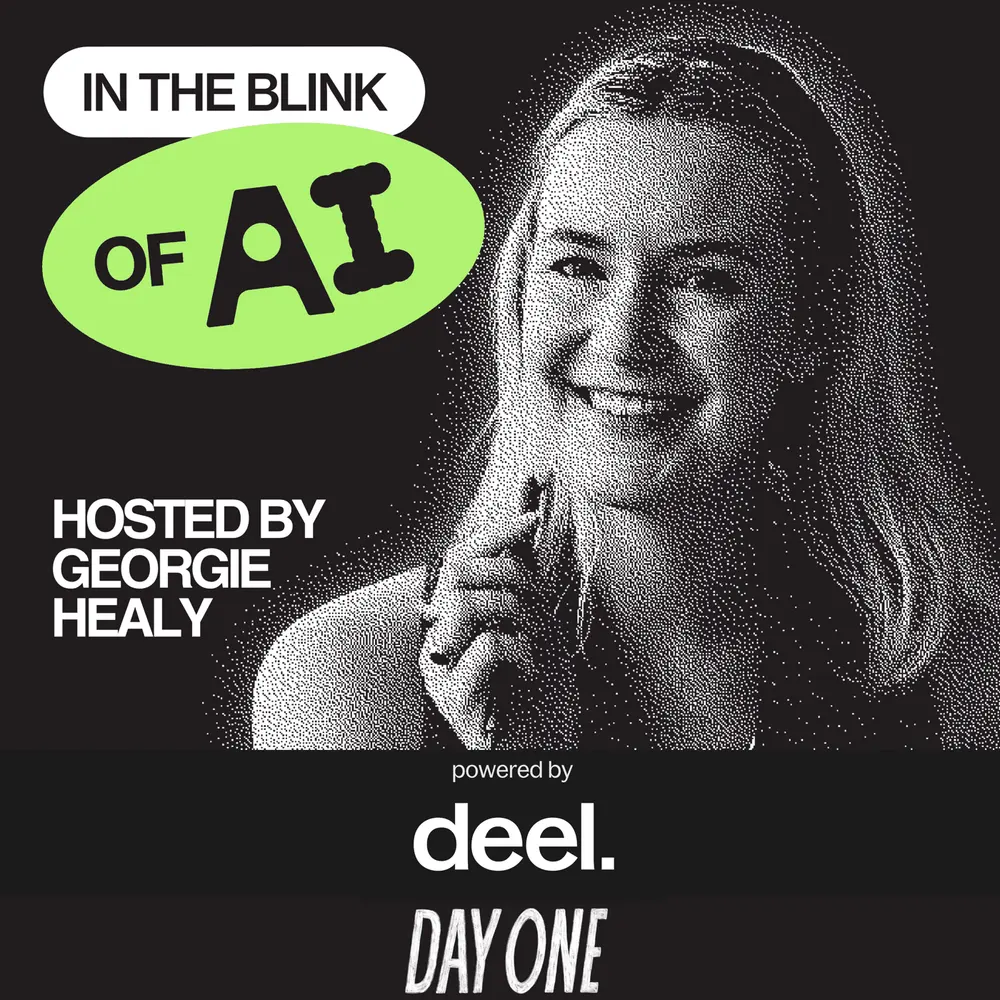 In The Blink Of AI with Georgie Healy
Presented by Deel & Stripe
In The Blink Of AI with Georgie Healy
Presented by Deel & Stripe 


 ▶
▶  ▶
▶  ▶
▶  ▶
▶  ▶
▶ ▶
▶ ▶
▶