Transcript Synced · select any line to jump ▾ 0:02 Speaker: Founders scale faster on Deel. Set up payroll for any country in minutes, hire anyone anywhere, get visas handled fast, and get back to building. Visit deel.com/dayone. That's d-e-e-l.com/dayone. 0:23 Speaker: Are you building a SaaS business and looking to achieve compliance with SOC 2 and ISO 27001 or other security and privacy frameworks? 0:32 Speaker: Compliance can unlock major growth and build essential customer trust, but let's face it, it's usually time-consuming and expensive. 0:37 Speaker: And like really kind of a pain. That's where Vanta comes in. Vanta automates up to 90% of customer compliance tasks, making you audit-ready fast and saving you up to 85% of the associated costs. Plus, Vanta scales with your business, offering a market-leading trust management platform to continuously monitor compliance, unify risk management, and streamline security reviews. Join 7,000 global companies, including Atlassian and Dovetail, that trust Vanta to build and prove their security in real time. 1:03 Speaker: And for our listeners, Vanta is offering 10% off. 1:06 Speaker: Just go to vanta.com/first. That's vanta.com/first. 1:14 Speaker: Okay, 3, 2, 1. 1:18 Speaker: Hey, I'm Sheryl. 1:20 Speaker: I'm Maxine. 1:20 Speaker: This is First Check, part of Day One, the network dedicated to founders, operators, and investors. 1:25 Speaker: If you want to be a better early-stage investor, this is the show for you. 1:28 Speaker: So TL;DR, if you don't want to suck at investing, listen up. Today we have Jesse, who is one of my favorite investors in the world, who also happens to be at After Work Ventures, where I'm also an LP, full disclosure. So really excited to have her here today. One of the things I love about Jesse is that, you know, every time I open my LinkedIn or my Twitter, I get— 1:57 Speaker: if it's Twitter, it tends to be something I laugh out loud at. 2:00 Speaker: If it's LinkedIn, it's like, I'm gonna learn something today and I'm probably going to be impressed that she has spoken up about this thing and like slightly nervous because she has the balls that I just simply do not. 2:14 Speaker: And I get nervous on her behalf that like, how can she say this? 2:17 Speaker: It's so impressive. 2:18 Speaker: It's so impressive. I think we wanna jump into like, how did this happen for you? And you know, how can some of us pick up just a little bit of that extra bravery that you have? 2:28 Jessy Wu: Firstly, that's very kind, Cheryl, and I'm glad I provide that intermittent entertainment for you. I think there's probably two ways to answer this. First is how do I as an individual kind of have the cojones, as they say, to be bold and wade into certain conversations? And then what is the role of building a personal brand as a small fund? So coming at it from a challenger brand angle and where kind of having share of voice by being somebody who's willing to kind of be a lightning rod for certain kinds of conversations can actually be aligned to a fund strategy. So the kind of reason behind the rhyme, as you will. 3:13 Speaker: Ah, there's reason behind what you do. 3:15 Speaker: Yeah. I also wanna celebrate we are now 2 from 2, cojones. 3:20 Speaker: Yes. 3:20 Speaker: Has been mentioned on 2 from 2 episodes. Maybe we should make this a rule. Maybe we should like require cojones are mentioned on every single episode we do from here on out. 3:29 Speaker: Yes. 3:30 Jessy Wu: Yeah, it can be one of your repeat questions, like how Patrick O'Shaughnessy always asks, "What's the kindest thing anyone has ever done for you?" It can be like— I love that. What's the big cojones moment you've had that you're most proud of or something? 3:46 Speaker: Yes. Okay. Thank you, Jessie. 3:48 Speaker: Oh my gosh, amazing. Yes. 3:49 Speaker: You're gonna have a little bit of Jessie in her podcast from now on. 3:52 Jessy Wu: Love that. So where do my cojones come from? I've been reflecting on this, and I think the most honest answer I can give is that I was just really deeply loved by my parents as a child. 4:04 Speaker: Wow. 4:04 Jessy Wu: Love that. And they sometimes listen to my podcasts. 4:08 Speaker: Hello, Jessie's parents. 4:10 Jessy Wu: To this one. But I think they just always thought the world of me and thought that I could do anything. And I think that really instilled in me a very unshakable sense of self-worth from early on in my life, so that even as there's slings and arrows along the way, I think I've never been particularly insecure. I've never felt like an imposter or like I didn't deserve to have a seat at the table. And I think I've always felt that I am well-intentioned and come from a place of self-awareness and reflection such that I can kind of back myself in to kind of be led by my intuition to make some calls. And you know, when people say, "Oh, how do you have the confidence that, you know, you have the right to be heard?" And it's like, because my mum told me I did. You know, like that just truly is what's at the bottom of it. So. 5:07 Speaker: That is such an interesting angle, right? I think that is such an interesting question that you are implicitly being asked, which is why do you think you have the right to be heard? Like, why are we even asking that question? 5:19 Jessy Wu: Yeah. Yeah. How, what is it like for you, Maxine? Because you are also somebody who like isn't afraid to stand out for what you believe in? Where does it come from for you? 5:28 Speaker: I honestly think it is like the same in that my mom told me I had the right to be heard. I'm not sure that I have the same level of bravery that you do, to be honest. I think you and I have talked about this a lot, right? Like there are definitely some moments where I dip my toes in and then like, ooh, freak out, that water's too cold. But I do, I do, I think it is. A fundamental belief that on some topics, I feel like I have the right to be heard. And I think you phrasing it like that was just true Jessie form, just like crystallized the inside of like, why are we even asking that question? Like, why are we asking the question that you have the right to be heard? You have the right to be heard because you have an opinion on it and people want to hear your opinion. You can always share your opinion if people don't want to hear it. Great. But that doesn't mean you don't have the right to share it. 6:18 Speaker: Yeah. 6:18 Speaker: Yeah, it makes me wonder like, why are we asking others that? Like, why are we asking that question of other people when the reality is that anyone who wants to play in this space who has a vested interest should be able to voice their opinion whether it's agreed with or not. And like, let's champion that rather than ask. 6:37 Jessy Wu: Yeah, I think, and this takes me to the second part of the point, that people do perceive that there is a lot of downside to being the person who sticks their head above the parapet. And that, you know, if you're a, lightning rod for a conversation, you can also get burnt to a crisp, right? I think for me that there is certainly guardrails I've put around how I do that because I acknowledge I'm not just a kind of agent, I'm also a principal. I also represent the fund that I work for. But I think that there is a way to, as a small fund that, you know, the point of departure is that no one has heard of you. You're not a preferred investor for anyone, you are just money. And, you know, if you're quick money, that's good. If you're not money that's suspicious in any way, that's good. But how do you actually mean something to someone so that people have an active reason to want you to be on their cap table because it says something about them as a company, or because you're the kind of person who they want to associate themselves with and who they want to work with? And I think that when you're coming from nothing, you can take a lot of risks, right? And I think that's why you see challenger brands like Who Gives a Crap, for example, take a lot of risk in the early days with the founder, Simon, sitting on a toilet for 48 hours, you know, to kind of get a crowdraise campaign away. And, you know, people would be like, "Oh, that's so unprofessional. It's so crude. You know, he's like got his pants down." He's not a CEO, but he really had nothing to lose because he wasn't really the CEO of a large company at that point anyway, but a lot to gain from being, you know, at the center point of a conversation, from being noteworthy, from starting a conversation about, you know, equality of access to hygiene and water. And that brand has obviously gone on a really good trajectory. So I think that as a challenger brand, you kind of can't also be an awesome, ran because if you're coming in into an industry where there are brands that are very established and in VC that looks like, you know, the big 3 funds who, which have been around for over 10 years and have a very successful track record and have a big brand and marketing and community team, you kind of can't just be a smaller version of those. You have to zig a little bit where others zag to be known as something and for there to be an active reason why might somebody, someone might prefer a first check from a small fund like the ones that we run from one of the big three. So I think there is also a lot of upside to being known for something rather than nothing. 9:37 Speaker: I think that's the wonderful thing about our ecosystem. Yeah, I like, it's such a, I mean, first of all, I love how intentional it is, right? I love that you are true to brand, you are really thoughtful in the way that you are challenging. It's not just kind of like throwing stones. You're just like, there is, there is a strategy behind it. And I think that the great thing about our ecosystem and being a great investor is that in theory, you have to be contrarian and right. Like the big returns come from having a different perspective. And I think that's what's interesting about your opinion definitely is that you very frequently are contrarian and prove out to be right. I think bravery is an element here, but you, even as a small fund, a challenger brand in your framing, you can come in and see options and see opportunities that other people don't see. And then be that in content, be that in your observations of the market around you or the ecosystem around you or on particular companies and developing, making it clear that your brain is excellent in that way. Mm-hmm. To bring you onto cap tables and to support the founders that you work for, I think is really awesome to see. 10:49 Jessy Wu: Yeah, thanks for saying that, Maxine. You know, it's too early to tell the results, but no, it's great. 10:55 Speaker: That's true. We're all just hanging out here with like incomplete data. Like, is this working? 11:00 Speaker: Yeah. We were just talking about how like investing has one of the most brutal feedback cycles. So we'll see, you know, what happens in the next 5 to 10 years. 11:09 Speaker: But on that topic, like, you know, one of the things that I think Afterwork in particular and, um, and yourself have been a champion for is that like e-commerce and consumer brand investing where we just don't see other investors, particularly in Australia, making some of those bets. Like, does the content thing factor into that or is this just like a whole other, um, category where you feel that there is contrarian thinking that can get better returns? 11:34 Jessy Wu: Yeah, for sure. So I think how we think about brand for us is aligned with how we think that fantastic D2C companies might think about brand. And I think it's about trying to have a larger share of voice than you have kind of share of wallet, or in our case, something like funds under management or FTE or something like that. And I think that the way you can shortcut to that is when you have a really distinctive brand, um, that comes to mean a whole bunch of things that are larger than itself. So I've recently written about, um, the really great brands that have gotten fantastic acquisition outcomes from global kind of PE funds, and that's Aesop, which got acquired for $3.7 billion by L'Oréal, and more recently Zimmermann, which fielded a $1.75 billion acquisition offer from Advent International, which is a very savvy global PE investor that has invested in things like Lululemon, and, and did so at the point in time where they really catapulted athleisure into the forefront as a category and and rode its popularity to success. And, you know, what do we think that those really great brands have in common, and where— how do they therefore command that pricing premium? I think that it comes from firstly having like a really distinctive product that is able to do its own marketing. Um, so Aesop's brown apothecary, um, bottles, instantly recognizable. Even some of its scents, like the botanical geranium vibe. It's like you can almost recognize some scents as Aesop when you smell them on people's hands. And then Zimmermann, you know, it's the kind of frilly tulle silk, really high quality, but also just like really playful, fun, feminine aesthetic. And when you have really distinctive products, those products that people are proud to put in their homes and wear, those products do their own marketing, right? Like real estate agents go and buy Aesop to put it into open homes to try and create an aspirational vibe. Aesop isn't like doing an affiliate partnership with real estate agents. They're going and spending $40 on hand soap to stage these homes. And then people are wearing Zimmermann to their, you know, most special occasions, 21st, graduations, galas. And then they're taking lots of beautiful photos and posting them all over social media. And because it's so distinctively recognizable as Zimmermann as well, it just creates so many associations of Zimmermann with something that is playful, but also something that is elevated and for special occasions and makes people feel really powerful and beautiful. And all of that is kind of free for those brands. Like, it's not performance marketing, it's not even buying billboards. It's just getting their users to generate the content that markets it. And I think that perpetuates One, like pricing power. So the margins on these products are probably absolutely insane, right? Like $40 for hand soap, that's 10 times more than hand soap at the supermarket. And even that has got a pretty large margin because it's 99% water, right? And Zimmerman, like $1,000 dresses, but you know, it'll be the thing that people see as an investment or a collector's item, so they're willing to really have that be their one big splurge for the year. And then two, it's, I guess, like we would maybe call it something like customer acquisition costs. When you have so many free marketing channels because it's UGC-driven, that can really reduce how much you have to spend on performance marketing and sales and promos and how much you have to pay retailers because it's not you begging DJs to put Zimmermann, as part of their lineup, they need Zimmerman to anchor that store so that people come in. So I think for us that there is real, like, power to use the Hamilton Seven Powers framework in these really beautiful brands. And there is a kind of acquisition flywheel as well. And because of those two things, you can get gross margins that resemble something like SaaS, and you can also build moats around that. In a way that, you know, somebody who just starts selling $40 hand soap in brown bottles isn't going to be able to do. So I think that there's more resemblance between these kinds of companies and our traditional VC companies than people might realize. But they are also really exceptional. They're not just another e-commerce company. They're certainly not a dropshipper. But I think that there is a path to be treaded to build a fantastic company in those in those lanes. 16:28 Speaker: So interesting. When you are developing one of these theories or like developing one of these insights, what is your path to it? I.e., like, talk us through the stages you go through between like first thought through to exploration, you know, and then what are the next steps from there through to, yeah, actually, I think this, this is right, even though most other people in the ecosystem or on this particular topic would disagree with me. How do you build conviction around something like this? 16:59 Jessy Wu: Yeah, for sure. And like Wan, it is very much a team effort. So if I keep using the D2C example, there was an after-work $1 million proof of concept fund that just made 30 investments and, um, you know, in some things that weren't traditionally venture-backable, partially to learn, but also partially because we thought that there were really great founders at the helm of these companies, even though they weren't traditional kind of SaaS or marketplaces.. And then we saw that there were a few companies where we'd invested in that fund that were D2C, but just started absolutely flying. Um, they were the companies that, you know, um, had the most consistent month-on-month growth and they were also starting to be able to improve their gross margins over time. So Leica is an example of that. Um, when we first invested, they were, they had less than— Great company. Uh, less than 4,000 dogs subscribed, and they've kind of quintupled that and have served over 20 million meal— meals. 18:00 Speaker: Wow. 18:01 Jessy Wu: To dogs. And there were some others as well. And we were like, okay, what do these D2C companies have in common? And there were a few things. So one was like end-to-end control of the product and a manufacturing capability. So for example, Leica manufactures all of its own products. It's not third-party manufacturing, and they can have very tight control over quality, over the like R&D process, and, and over costs. So as they scale up, they can buy more and more of the same supplies against like key ingredients, for example, and negotiate, negotiate the cost of those supplies down., and they can, um, make their equipment better at and better at producing those things. So that's, you know, very hard for a kind of fast follower to come in because there's, there's a physical moat. There's these big warehouses, big equipment that they've gotten and customized, um, all of these supply chain relationships, logistics relationships. So we were like, you know, that's as significant as, as software companies have. And then there was also a distinctive product. So a, a real kind of 10x. Between kibble that you might find in the supermarket and the kind of premium lightly cooked products that they sell. And you've also got initially a performance marketing flywheel that, that does work, right? So yeah, we saw that there's more, there's more to this than the mental models that other VCs might have put against these companies. So then we started to draw out where specifically it was really important to be excellent and then turn that into kind of our roadmap for investing in other DTC companies and the framework we put against the pitches that we see. 19:54 Speaker: It reminds me so much of the kind of rule of thumb as an investor that to be a really great investor, you have to see the deal, you then have to win the deal, and then you have to learn from the deal. 20:04 Jessy Wu: Yeah. 20:04 Speaker: Or work the deal, you know? 20:05 Jessy Wu: Yeah. 20:06 Speaker: And if you can get that flywheel happening over time, like you really start to get better information and build a more impactful portfolio than you otherwise might be able to do. 20:15 Speaker: Yeah. 20:16 Speaker: I mean, I think one of the things that jumps out to me there is you, the process that you went through and the kind of learning from the decisions that you've made and using those as learning points to then rebuild your decision-making framework. 20:29 Jessy Wu: Yeah. 20:29 Speaker: How frequently are you doing that cycle for yourself and as a fund? Like how frequently are you adjusting your decision-making models? 20:36 Jessy Wu: Yeah, I think it is one of the benefits of having a really large portfolio as a first-time fund manager. So we have 25 positions in this kind of $20 million After Work fund. So we get to track a lot of different companies. And absolutely, I think that, um, with every company there's a really salient set of learnings to be had about executing on the zero to one, about what product market fit looks like for different kinds of companies. About, you know, what are some acquisition methods that seem to really work and ones where it's like squeezing blood from a stone. 21:12 Speaker: Mm-hmm. 21:12 Jessy Wu: Yeah, I think it's a really privileged position and one that we don't take for granted to have all of these different things to learn from. Curious what you think, Maxine, 'cause you've got a significant portfolio as well between your fund and angel investments. How do you think about kind of codifying the experiences you've been on and learning from them? 21:32 Speaker: Yeah, I think like decision-making diaries, people are probably sick to death of me talking about decision diaries, but I just, I just think that they are like the most powerful tool as you are learning to be an investor. And as you continue to compound on your investing, capturing how you're making decisions and reflecting on what are the heuristics you're using. I mean, in your circumstance, Jesse, reflecting on your heuristics specifically for a thesis, or kind of the circumstances in which you're making an investment, the information you're collecting, kind of how you're deciding and adjusting those over time, I think are really, really impactful. I do also think just it adds a new lens to this like learning check question, you know, especially for folks that are coming in and like wanting to start angel investing, you know, in whatever stage, you know, I'm constantly beating the drum to like spend a year, write as small a check as possible and like reflect heavily on how you're making decisions and what you're learning over time. Cause I do think the information value of time is so valuable in our industry. Right. And actually I feel like we're seeing a whole bunch of folks do this at the moment. I'm seeing this kind of across the ecosystem where funds are leaning on that information value of time and not deploying early., right? You know, in my world, in the pre-seed world, there's lots of folks, and Jesse, you and I share quite a few cap tables and have seen this firsthand. Actually, all three of us share a couple of cap tables. Party. Yeah. Cap table parties. 22:59 Speaker: Cap table party. 23:00 Speaker: Right. We have seen these a couple of times where the, definitely the big international funds and even some domestic funds moving out of that pre-seed, like early seed stage because they want the value of more information. And so they get to kind of make a mental decision, like we want to back them or we don't want to back them, but we don't have to make a decision now. We can actually wait and collect more information over time and make that bet, you know, into the future. We obviously don't have that opportunity as a fund 'cause we just do pre-seed and we only write that first startup check. So we kind of have to live and die by our decisions, which makes it a little bit more high conviction. 23:36 Speaker: Nippy. 23:36 Speaker: So we really have to kind of get to conviction on that. But yeah, I think decision diaries being the like major level that I use. And then reflecting on those decision diaries at an annual cadence. One thing that I am currently percolating and would love both Cheryl and Jesse, like your thoughts on this, 'cause you both have big portfolios of companies that you backed and then even bigger portfolios of companies that you've passed on. Like how do you review your anti-portfolio and how do you think about your anti-portfolio? 24:04 Jessy Wu: Yeah. 24:05 Speaker: And to be, what I mean here, an anti-portfolio, just for those folks listening is the companies that you considered and decided not to invest in. 24:13 Speaker: The first show? Yeah. I mean, like, I guess if I think about what my anti-portfolio is, it is quite a lot because I probably see more than the average, like, angel investor, but it's not something that I, like, actively go out and, like, go through my anti-portfolio on a regular basis and, like, compare it to how they're doing now. What typically happens is I will hear about a company doing really well who have just raised their, like, you know, $100 million Series B and at X valuation, or sometimes that's not listed, but you can kind of infer from what they've raised. And then I'm like, hey, wait, I saw them, and go back through my list, and I will look at my notes. And those, I think, those are the ones that hurt the most because— 24:57 Speaker: Yeah, they're so painful. 24:59 Speaker: It's so painful. Ugh. I talk to funds about this, and maybe, Jesse, I'm keen to hear your thoughts, because when I talk to funds about this, funds are like, we would rather see the investment and have said no than have not seen it at all. 25:13 Jessy Wu: True. 25:14 Speaker: And I'm kind of, I feel a little bit differently cuz I'm like, as an angel, I just know that there is no op— like there's no way that I'm gonna see everything. Like my goal in life isn't to see everything like a funds is. I don't know if that's Afterworks' goal or not, but I hear a lot of funds say like, we wanna see everything. Whereas I just know that I simply can't. So when I see something and I say no to it, and then it becomes really like a very successful company, that hurts me more than if it's like, well, I didn't get to see that. I never had an opportunity to invest in. 25:44 Speaker: I clearly obviously would've invested in it if had I had the opportunity. So it's like, I can almost like give myself this out. I don't know if that's the best approach to it, but I can't say that I like actively go through my anti-portfolio. Yeah. 25:58 Speaker: But I do look at my notes if I see something and be like, why did I say no to that? And see if there's something there. And sometimes it's like, yeah, you know what, I still stand by that. And you know, they could have just raised their $100 million, doesn't mean they're gonna have a good exit. Or that just wasn't for me. And you know what, as an angel, I wouldn't have been helpful anyway. So like maybe being on their cap table, just, I would've been taking up dead space and that's not helpful for anyone. So it's okay. 26:22 Speaker: Yeah. Yeah. Jesse, do you try to, I mean, do you guys hold yourself to the standard of wanting to see every single company in ANZ? 26:29 Jessy Wu: Yes, I would say that like, yep, substantial coverage is a goal. And I think it's not necessarily always to review each opportunity in depth, but to have it referred to us or, you know, to have seen a pitch deck through our pitch portal. I think that Australia in particular, and with things slowing down a little bit, now it's not too hard to have something close to full coverage, like maybe 80% coverage. So I think, I think that, yeah, we've tried to build the infrastructure through the community and through our brand that that is something we can try to work towards. I think with anti-portfolios, reflecting on some of the ones where we had a few meetings with them and either took them to IC and didn't get over the line at IC, or, you know, the deal lead didn't ultimately have conviction to trigger an IC. The N is small, but I do think that some examples are where we over-rotated on the business model already existing, or there being lots of kind of bodies in the idea maze, as they say. So different people have had different goes at the problem. 27:45 Speaker: Hmm. 27:45 Jessy Wu: 'Cause I think, and that's a bit of a top-down way of thinking about it, which is like, like, oh, you know, this has been a very salient problem for quite some time, but nobody really has cracked it. Or this business model, like this product and business model exists elsewhere in the world in some form already. I think that that is where execution or the founder having just like a really bright spark about how they're going to kind of capture lightning. Mm-hmm. Can be difficult to evaluate in an, in an investment process because it's not really real until it happens. 28:25 Speaker: Hmm. 28:26 Jessy Wu: And so I think that's something that really good investors probably get better and better at, which is just assessing where, regardless of whether there's lots of bodies in the idea maze, that there might be some reason that somebody who comes at it with a slightly different point of view or with like a real spike in, I don't know, performance marketing or like in TikTok marketing or something like that could just take off. 28:54 Speaker: Are you building a SaaS business and looking to achieve compliance with SOC 2 and ISO 27001 or other security and privacy frameworks? 29:02 Speaker: Compliance can unlock major growth and build essential customer trust, but let's face it, it's usually time-consuming and expensive. 29:07 Speaker: And like really kind of a pain. That's where Vanta comes in. Vanta automates up to 90% of customer compliance tasks, making you audit-ready fast and saving you up to 85% of the associated costs. Plus, Vanta scales with your business, offering a market-leading trust management platform to continuously monitor compliance, unify risk management, and streamline security reviews. Join 7,000 global companies, including Atlassian and Dovetail, that trust Vanta to build and improve their security in real time. 29:34 Speaker: And for our listeners, Vanta is offering 10% off Just go to vanta.com/first. 29:39 Speaker: That's vanta.com/first. 29:42 Jessy Wu: Um, maybe an example is like Checkmate. Blackbird invested in that seed and it's recently raised a big Series B from international investors. They're doing something that at first pass resembles Honey, um, which is like, it basically will populate, uh, code for you when you check out and you'll get a discount. And it's like, oh, hasn't that kind of already been done? Honey exists, it got acquired by PayPal. It's not a huge standalone business. Haven't they got distribution? But I think what we maybe underestimated about Checkmate is just how much cut-through they were able— were able to achieve through resonating with people on new platforms like TikTok and getting that virality behind them. And becoming the like most downloaded app in the App Store in the US? Yeah. 30:34 Speaker: Yeah, it's, I think it's a really interesting question for us in like decision-making as investors. I love this concept of an idea maze and that there have been, you know, there's a lot of bodies in that idea maze already. You know, there's so many very high profile and then less high profile examples of where you look at an idea and it's not clear that it will break out relative to the other people in that group. You know, Google obviously being the most obvious of one of these. There were so many search engines at the time that Larry and Sergey went to market for their seed round. And it's really easy in hindsight to be like, well, Google's the obvious bet, but was it obvious at the time? 31:10 Speaker: Yeah. 31:11 Speaker: And especially from a kind of decision-making perspective, like the information that you consider to try to get to conviction, like was it knowable at the time that you made the call? This is the challenge of investing super early and looking back on the, your kind of anti-portfolio is constantly asking yourself the question like, like, okay, the reason that this won, was that knowable at the time or was that information that had to be collected somewhere further down the journey? 31:38 Jessy Wu: Yeah. 31:38 Speaker: I also, on the like emotional pain of looking at your anti-portfolio, if you ever just need like a metaphysical pillow to cry on, Bessemer has a post about their anti-portfolio and it includes like Airbnb, Instacart, et cetera. So if you ever have a moment where you're like, oh my goodness, I missed this like amazing business, just like look at Bessemer's anti-portfolio and then their overall returns and just place it under your head and shed a tear into it and then move on. 32:05 Speaker: Yeah. Perfect. We should send that out to all of our listeners. Just, they can have that as well. 32:10 Speaker: Right. Yeah. Actually, maybe we should do that. That could be our first piece of merch. Yeah. Jesse, you were just nailing it today. Our first piece of merch is a Bessemer anti-pillow. 32:19 Speaker: It's a pillowcase. We should send people a pillowcase. Amazing. Yes. Done. 32:25 Speaker: Would you invest in that as a data-sea company? 32:27 Jessy Wu: Ooh. It might be a bit of a niche market size, but we can grow it. 32:32 Speaker: Yeah. What if we spent 48 hours in bed with it? Like the toilet paper. 32:36 Speaker: Yeah, that is like, I think that is a smaller niche. Cheryl, I'm not sure how that becomes a larger market. 32:41 Speaker: Oh, right. 32:42 Speaker: If you cry into it. The theory being that your tears expand the market. Is that the direction? 32:48 Speaker: I don't know. Who gives a crap guy spent 48 hours on the toilet. I could spend 48 hours in bed. Truth. Truth. 32:56 Speaker: Yeah, it's much less lewd, that's for sure. So on that thread, yeah, on that thread, as you're thinking about ways of making decisions, especially in those moments where you're like looking at companies and trying to take in all of the disparate pieces of information, how do you think about kind of first impression, system 1 decision-making versus like considered thematic analytical decisions based on the information you can get at pre-seed and seed? I mean, they are really low information stages to be making calls. 33:25 Speaker: Yeah. 33:26 Speaker: How do you go about making those decisions and collecting the information you need and moving between those two systems? Because in my opinion, I think that they both have value at that stage. 33:33 Jessy Wu: I totally agree that they both have value. So I think using the language of Kahneman, Systems 1 is kind of the very intuition-driven, yeah, the first set of thoughts that you might have. And then Systems 2 is almost the override where it's more logical, it's less emotional. And I do think that, you know, first impressions do count for a lot because we have a limited amount of time with founders, you know, a 30-minute, 45-minute call to make a judgment on whether you want to dig in and learn more or, you know, whether you think it's unlikely it'll be on the investment path and then you don't want to take up too much of the founder's time. But I do think that there's also something a little bit dangerous in over-indexing on that systems 1 first impressions thinking. So something that I've noticed in myself is that I can be very dazzled or impressed by founders who seem like they're really quick. And you know, you'll throw something out there, and they'll grasp the concept immediately, or they'll grok the mental model that you're laying down immediately. And they'll be able to speak to it in this very kind of articulate, polished way that betrays this kind of intellectual deafness. And you're like, oh, wow, you know, they're like this powerhouse at processing information, like they could do anything. And then I think when you step back a little bit from the moment, you think, well, are there subsets of people who are just really familiar with the kind of reference that I'm throwing out there? Mm-hmm. Like, you know, are we part of a similar in-group where this is just like a common thing that we talk to one another about? You know, it feels like you're throwing something out there and they autocomplete your search. But then it's like, do we just both have these cached thoughts that we're saying at each other? And you just happen to have the right cookie stored in your mind to finish my sentence. Whereas somebody who's you know, not part of this in-group or, you know, part of the group that is mine might come across as slower because they're oblivious to the kind of ways we talk to each other or the mental models that VCs love to ascribe to considering deals. And I think, you know, because of the experiences I've had as a person that reference, circle for me is, you know, people who've studied liberal arts degrees or law degrees. It's people who've spent time in consulting. It's people who've spent a lot of time kind of doing the navel-gazing about our industry or our craft that other VCs do. And I think that what I've tried to do is make sure that when I reflect on a meeting, I think about, oh, was I really blown away by them because of like a genuine, really well-articulated insight? Or was I just— did I just get the impression that they had a lot of intellectual acuity because they all knew about all of the ideas and concepts that I'm— that I have on my mind? And that's something that I've learned to be more attuned to and not over-index on. 36:52 Speaker: I'm so into that analogy, the like caching of my same mental models. The cookies. So good, so good. Maybe perfect case in point, sounds like all three of us have those same cookies stored. 37:06 Speaker: Ah, so good. I do— 37:08 Speaker: a good friend of mine actually shared this term with me, um, Courtney from Sousa, this idea of VC catnip. Like, there are these things that they come up in conversations and it's like VC catnip, and you have to like stop yourself from jumping at it, jumping at it. I think this is one of the really nerve-wracking things about the absence of diversity in folks writing checks is that they're like, probably if the folks that are deploying capital are largely from similar cultural backgrounds and have had similar experiences, it means that their, their cookies look, could look similar. 37:45 Jessy Wu: Yeah. 37:45 Speaker: Which means those founders that are referencing information that isn't in those cookies but is really valuable, Yes. They don't get cut through. 37:53 Jessy Wu: Totally. 37:54 Speaker: The downside for the ecosystem, I think that that is terrible because it stops us from being a true meritocracy. It stops us from backing those ideas that have a huge opportunity behind them regardless of how they're communicated to this particular group of folks that are deploying capital. But on the other side, I also think it is a superpower for folks like us who don't look like the norm, who haven't necessarily had the experience of the norm, that our cookies might actually be slightly different. So we can see opportunity in groups of people that are not the norm. How do you think about controlling your biases, thinking about backing people who don't look like you? And how do you try to make sure that you kind of see opportunity in all of the versions that it shows up for you? 38:39 Jessy Wu: Yeah, so I think for me, my story about inclusion and exclusion is probably more informed by the fact that I migrated from China to New Zealand when I was 7 than by being a female and by being a woman of color. So what my story was is that I, you know, landed in New Zealand having very little English and also having no understanding of the tacit norms and implicit knowledge that existed within, you know, a Year 3 classroom. 39:16 Speaker: They're so powerful, those unwritten rules. 39:18 Jessy Wu: Yeah, an anecdote that I've been thinking about recently is, you know, in Year 3, it was towards the end of the year and I got invited to my first birthday party. And I'd been hearing about other kids going to birthday parties all through the year. And, you know, I was really excited when I got invited to my first one. I felt very grateful to be included. And I remember that there was this invite that was kind of handwritten by the mum on a card. And it had, you know, the details where and when. And she wrote, "P.S., bring togs." So for those who don't know, togs is the kind of word in New Zealand for like a swimming costume, like swimmers. But we didn't know what it was, my family and I. And this was like kind of pre-Google, I wanna say it was like the early 2000s. The good old days. But basically we were like, okay, let's look it up in like our, like paper, like, you know, TOOGS, Oxford Dictionary, like, okay, TOGS, TOGS, couldn't find it. We were like, what are TOGS? And then we were like, maybe it's toys. Is it like bring toys? But then like, what, what is the context here? Like bring a toy as a present, bring toys to play with. How many toys? What kind of toys? And I remember just being just riddled with anxiety for a week, thinking that I'd blow my chance to find belonging at this kid's birthday party because I'd bring the wrong thing. 40:48 Speaker: Oh, my heart breaks. I know. 40:51 Speaker: I just wanna go and tell 7-year-old Jessie what a dog is. 40:56 Jessy Wu: Yeah. And that's kind of a microcosm, little things like that came up. Throughout my childhood. And I think now as an adult, the way that I reflect on inclusion is I don't want to deny that how you look and your culture is salient, because it is. But I do think that there is this kind of almost invisible dimension, which is do you possess the tacit knowledge? Do you possess the kind of shibboleths, you know, the reference, do you have access to kind of the in-jokes? Do you know how to dress for an occasion? That kind of thing that actually is more alienating to people than simply rocking up and feeling like they're in a visible minority. So I think because that is my story, that is the way that I approach the question of diversity and inclusion, which is not necessarily to over-index on kind of differences in people's demographics, but really focus on creating the kind of environments where people don't feel alienated, where people feel there is an on-ramp to learning the tacit knowledge by making them more legible, by codifying them, like what it means to be part of this community, our values, how we do things, making that really legible to people, being the kind of host That does the hard work of including people who are kind of sitting by themselves at the side of the room. So I think that's how I live those values in my life. And yeah, I think that instead of like tracking demographics really closely, it's like, are you turning up in a way and are you putting on events that are able to feel accessible to people? Who, who don't identify with this in-group. 42:52 Speaker: I think that's so powerful. 42:53 Speaker: I think that raises some really interesting points around like how we can do better as investors to bring new people on board. Like if our whole goal for, you know, this podcast, for example, is to open source some of those conversations that we get to have behind closed doors, well, you know, how, how do we empower the next generation of angel investors who may not necessarily look like us or sound like us or behave like us. So, I mean, like Jesse, I'd really love to just ask you like, well, you know, if we want to make people feel less alienated coming into angel investing, like what suggestions would you have? 43:29 Jessy Wu: I mean, I think that you have done a huge amount here, Sheryl, like with your events, with creating on-ramps for people to start being angel investors through your syndicates. And, you know, with kind of really reducing the barrier of being a sophisticated investor to start participating and deploying money there. So I think that's all, all fantastic. So I think, you know, I'm really keen to hear about how, how you guys think about it as well, because you have both done so much to create on-ramps and to include people who probably don't recognize themselves as angel investors or a part of this ecosystem. 44:05 Speaker: I also, I mean, I think the thing that the reminder that we are indexing visual indications of diversity is just a heuristic we're using. We're making a whole bunch of assumptions that me presenting as a white woman, I had a certain set of experiences, and I have a certain set of mental models and expectations, especially as like a middle-class white woman, like what I bring to interactions, kind of, and my expectations of what, you know, how I would be thinking, etc. I think that the reminder that we are just making assumptions about how someone else shows up. I think, I mean, I think that is such a wonderful reminder. And my big one with, I think I'm aligned with you, is that like information is one of the biggest barriers there. I can think of, so as you were telling that story of being, you know, third grade Jessie trying to work out what a TOG is, right? Mm-hmm. That is an acute version of a very relatable experience I've had in so many different circumstances. You know, as you step into new environments and you're like, what in the actual eff is this jargon word that this person is using? 45:13 Speaker: Yeah. 45:14 Speaker: That I don't understand and therefore like cannot apply any other information I have or intellect I have to it. And I think it's something that you have to be so careful of is indexing too much on knowledge as opposed to intellect. Right? Like knowing the right words, knowing the right frameworks, knowing the right people, etc. So I think I probably would think about it in two directions is like, one, how can you change the informational asymmetry between people like the in-group and the not in-group? 45:47 Speaker: Yes. 45:47 Speaker: And help them be able to engage in that and learn about it faster so that they can speak the language if they need to, or at least understand the dynamics that are happening. And then the kind of inverse of that, of reminding the people in the in-group that they are actually in the in-group. 46:03 Speaker: Yes. 46:03 Speaker: I think the reality is that for a lot of people that are in the in-group, you don't— 46:06 Speaker: They just don't think about it. 46:07 Speaker: You don't think about it. Like you forget that you are then there. And I see this all the time kind of with my executive coaching hat on where CEOs are just like out doing their thing. You know, they're just like building their companies, having their conversations, and they don't realize that they now have the label CEO on them. So they like are not getting the information that they need or in the same unfiltered way that they did when they were just, you know, a person building a product. Like now they are a CEO of a very successful company and they come with a whole bunch of information filters that they didn't kind of totally grok previous to that. Or I think as investors, you have to be aware of that dynamic as well. Like the moment you have that title of investor or you start working for one of those funds, information gets filtered to you in a certain way, or you have a certain impact on people that might not be communicated to you and might not be entirely obvious to you in kind of first interactions. And so I think it's also like an awareness and a kind of backwards communication of like, "Oh, I now am being experienced in this way for a whole bunch of reasons that I don't have control over. And so what does that mean in terms of the way that I communicate, the way that I—" Yeah. The actions that I take. And I think that has a bunch of different impacts. It's a high leverage thing and a potentially destructive thing as well. 47:22 Jessy Wu: Yeah. 47:23 Speaker: So I think about that in that kind of, in that dichotomous way of like both inward looking and outward looking and how you kind of close that gap. Because I think it's a reality of what humans do, right? We do it in all circumstances. We construct those norms in a small group and it's just about being aware of the impact of those. And how to access them. 47:42 Jessy Wu: And also being aware of the fact that being a capital allocator gives you a degree of power and also casts a shadow, right? Because I think, you know, we all are just still the 7-year-old who didn't know what TOGs are, but like— 48:00 Speaker: Absolutely. Yeah. Every day. Every day I'm like, what does that mean? Yeah. 48:06 Jessy Wu: Yeah, other people perceive us as investors whose, you know, judgment, advice, opinion of them matters. 48:15 Speaker: Yeah. 48:15 Jessy Wu: And I think it's something that requires a lot of awareness and growing to be like, oh, not only am I an agent, I'm also a principal. And that comes with a degree of responsibility to be like very meticulous with your words and how you treat people. Because you are amplified by the, the role that you have in the capital that you are the gatekeeper to. 48:39 Speaker: Yeah, I think it's interesting when you see founders, uh, holding you in that regard. And because I don't feel like I have this power that they, you know, that it feels like I wield sometimes. Uh, and I think we need to be conscious of that as well. Like one of the most interesting, um, situations I ran into is that I became, you know, a VP. Of a fund and a founder that I, you know, had spoken with regularly just as, you know, a casual peer, peer mentor kind of thing. Um, it doesn't talk to me as much anymore because they— that fund has invested in that company and I lost that. And for the longest time I could not work out why. It probably took me 3 months longer than it should have, but I realized, oh, because that information is now being filtered from me and I, I don't have access to that anymore because I, I'm, you know, I'm taking on this, this capital role. So I think as investors, we need to be conscious that we have that perception placed on us, whether we want it or not, and how to either, either foster that back or take responsibility for it and make sure that we're, uh, you know, putting ourselves in the right position to empower the founders in our lives to ideally filter the right things out or not filter as much out or filter, only filter what we don't want out. 49:56 Speaker: I'm not sure. 49:57 Speaker: I think it's unavoidable. 49:59 Speaker: Yeah. 49:59 Speaker: Right. I think that is the right rational move for founders to filter information. And because that information does have an impact. 50:05 Speaker: Yeah. 50:06 Speaker: For them, like a very material impact. And like the reminder that like the founders are the ones that are doing all the work here. Like they are the ones taking an all-in bet on one company. 50:16 Speaker: Yeah. 50:16 Speaker: And committing, you know, 10 to 15 years of their life. To this journey. So I fully understand like that is the right filtering mechanism. I think it's just like understanding that as an investor, like you are collecting information that is now going through some kind of filter. 50:30 Speaker: Yeah. 50:31 Speaker: And that is a reality and that is the way it's going to be. And Jesse, I love this, like taking responsibility for the impact that you have because of the leverage point that you now sit at as you progress up. And I mean, even from an angel investor all the way through, you know, I think anyone who's sitting in an investment role or even in like support role at a fund, they can also experience that, you know, that leverage impact. 50:57 Jessy Wu: Yeah. 50:58 Speaker: There's one thing I have observed of you, Jessie, that you are so thoughtful and excellent at thinking about the impacts of your actions. And I would love to explore this. Like, do you think about the theory of change as you are applying it? Like, do you strategize and think about it, or does it come naturally? Is it kind of a system 1 or system 2 thinking for you in the way that you think about theory of change? 51:25 Jessy Wu: Yeah, so I think for me, the theory of change that I see both as being the most salient in our society is, um, something that some people call like the Overton window. So, um, or like what's acceptable discourse. So for those who are unfamiliar, it's kind of like saying that ideas sit on a spectrum, and you can map it to a political spectrum or you can map it to a broader kind of 3-dimensional map of going from unthinkable to radical to acceptable to popular to policy. And then you might go off the other end of the spectrum and kind of do it in reverse order. And The theory kind of says, you know, what politicians propose, what they campaign on, what ends up being legislated has far less to do with their personal preferences and who they are as a leader, and far more to do with where that Overton window sits. So, you know, politicians on both sides of the spectrum will probably only ever legislate on things that sit in that kind of, you know, at least acceptable, hopefully popular, you know, sometimes bipartisan middle ground. And that's where the change occurs. That's what, that's what gets legislated. That's what gets investment, et cetera. And like, what is the role of discourse in moving that around? Right. So I think, you know, you can see in the States that when Donald Trump made it socially acceptable or like You know, from his position as the candidate and then the president, saying the things that he did about keeping immigrants out, building the wall, he drastically moved the Overton window over to the side where those kinds of things that are whistleblowing for racism in some ways, it's like it's the southern border, it's not a border with Canada, right? Like, That just— I think he dragged the Overton window over there. So even though some of the more hardcore policies might not have gotten implemented or gotten enough bipartisan support, certainly what was possible to be legislated moved over to his point of view of the world. And I don't even want to map it to a left or right-wing thing because I don't think that there's necessarily any coherence between economically conservative ideology and like, you know, an anti-immigrant one. So I think, you know, in our corner of the world, in the VC ecosystem, there's also things that are currently kind of seen as radical or like unthinkable insofar as they're just not even part of the consideration space, right? And I think to create systematic change that can kind of be scaled beyond just one person, I see it as being higher leverage to play some role in shifting, nudging, curling that Overton window over a space where you're really excited for some stuff to happen, rather than necessarily being the single hard-charging person in the middle of that. Especially if that— what you're like really interested in changing currently sits in like a radical territory, you need to create like, critical mass and gravitational pull towards it by shifting that broader window of discourse. So yeah, that's kind of my theory of change. Curious for what you guys' theories are. 55:01 Speaker: I mean, I would totally agree with you. The Overton window has been extremely informative in the way that I think about change, like of all forms, and also understanding like, yes, interesting how you bring something into the field of view as acceptable, but then also how it leaves the field of view of acceptable. You know, like watching for those indications that we're kind of on the back half of something, you know, no longer being acceptable. And I think there's like looking at both of the edges of the Overton window and looking for those behaviors. Yeah. It also frames the way that I think about the roles that you can play between like radical and how that might be experienced through to like progressive through to consensus. 55:42 Speaker: Yeah. 55:42 Speaker: Yeah. You know, you hear people put out a radical idea. And I think this is what is so interesting in contrarian thinking, right? Is that like a lot of contrarian thinking is the radical element. They say it and you're like, that's crazy. 55:56 Speaker: Could work. You know, and you like quickly go through that process. 56:01 Speaker: And I think that's a big part of it as an angel investor. I wonder if we want to experiment with the cojones question as a wrap up here. Real-time iteration, folks. You're hearing it real time. 56:12 Speaker: What is the biggest cojones biggest thing that you've done? 56:15 Speaker: Yeah, what is the bit, the moment where you have shown the most cajones? Yeah, I need to think about this one. 56:20 Jessy Wu: Does any one of you two want to answer it first? 56:24 Speaker: Oh, I love this reverse questioning. 56:26 Speaker: I think this is like— 56:26 Speaker: I'm not sure this is how a podcast is supposed to work, but I'm digging it as a style. I'm into it. Um, what is the biggest cajones moment? 56:34 Speaker: I mean, like, starting a company in general, I think, is, is a huge cajones moment. Like, like putting your own capital and time and putting a thesis out there that something is— I think this thing is going to work and I'm going to chase it down with all of my heart, all of my energy, all of my time, money, and effort for the next 5 to 10 years. Like, in general, I think that's probably one of the biggest cojones things you can do in life. 56:58 Speaker: Um, it's partly why I think we all back— 57:01 Speaker: 100%. 57:01 Speaker: Founders who chase that. But having really, really— like, I've started companies before, but Ozzy Angels, my most recent, like that feels like the, the real jump into the ocean, 2 feet forward or headfirst actually, um, moment where it's like I really needed to, to have those cojones and, and, and go for it. So I think I'm gonna say starting a company. 57:24 Speaker: Yeah, 100%. 57:26 Jessy Wu: I think for me, the thing that actually requires bigger cojones than any individual, maybe slightly impulsive, action is, um, turning up like for the aftermath. So like, I think, you know, like as you guys have kind of pointed out, um, it is a small ecosystem that we exist in. And to the extent that, you know, things get a bit pointed, um, with any particular person, like that person's gonna be at a 361 Angels event. Um, you know. 57:56 Speaker: Have you been burned by the lightning, Jessie? 57:58 Jessy Wu: Um, yeah, not Not hugely, I don't think. But I think it's like, you have to play this kind of long-term game, hopefully with long-term people. And I think that means you have to like kind of own your truth. You kind of can't just like drop a grenade and then like smoke bomb and be like, I'm never gonna see you all again. Because in some ways that's kind of not courage, right? You're like, you know, you're just, you're running away. But I think that it takes courage to, live your truth in a way that maybe rubs some people the wrong way, or is maybe slightly pointed and makes somebody feel that they are being challenged, but then to be able to just like keep turning up in the same ecosystem as them, on the same cap tables as them, and still kind of have functioning relationships with people and not feel the, the desire to kind of like flip table, rage quit. Yeah. Takes cojones to kind of find equanimity. 58:57 Speaker: Amazing. Well, I cannot wait to continue to stay in the same ecosystem as you. Even if you flip a table here and there, I'm here for it. I'm up for the table flipping and I'm very grateful for your time this Saturday morning and having a chat with us. 59:15 Jessy Wu: Yeah, thank you guys. Great to be an early guest and really looking forward to where this this podcast goes. I think you guys are fantastic, um, voices, and I look forward to, um, you know, having you in my ears on my walks and runs and that. 59:28 Speaker: Oh, that's very sweet. Thank you, Jessie. 59:29 Speaker: Thanks, Jessie. I'm so sorry about that! It's okay, it happens to everyone sometimes. So you're from England? Yes, yes, yeah. Oh my God, wow! That was really good! Thank you very much for watching this video! If you enjoyed it please give us a thumbs up or subscribe if you haven't already. And don't forget to check out our other videos on how to speak like an American native speaker. Bye bye!

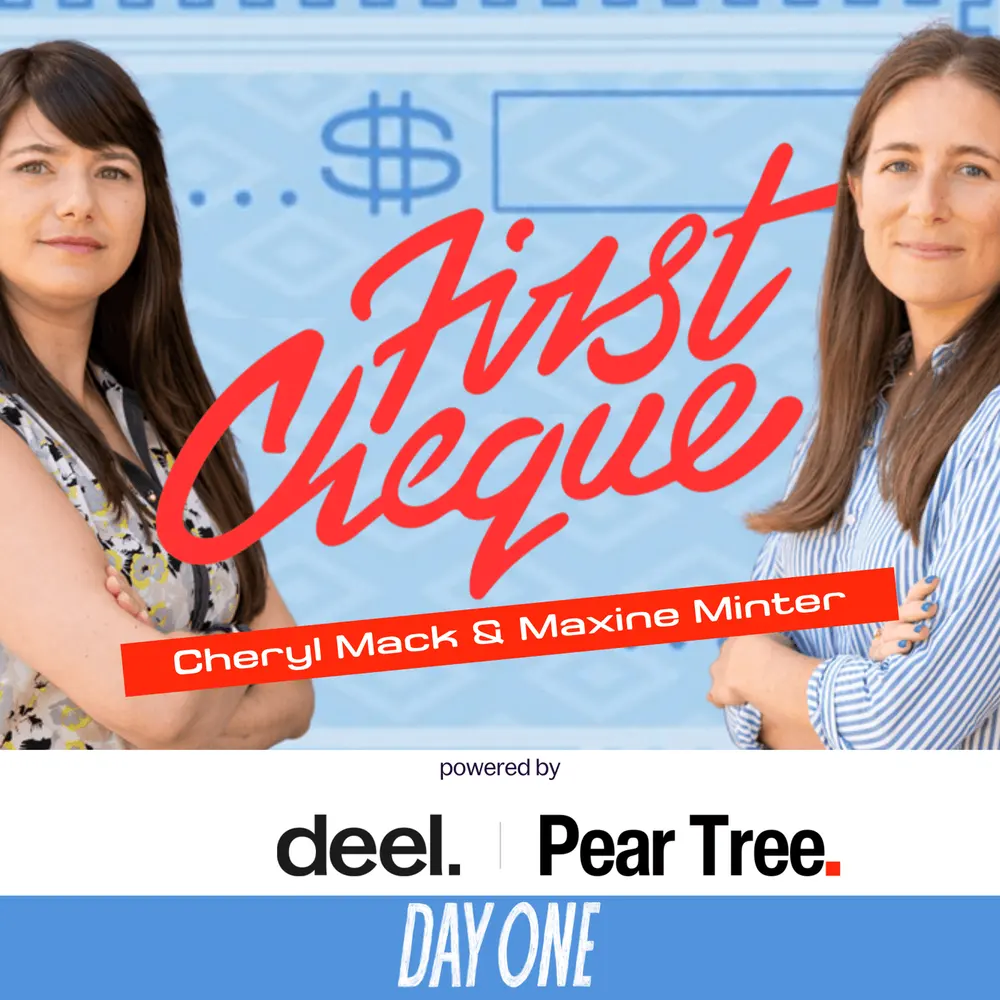 First Cheque with Cheryl Mack & Maxine Minter
Presented by Deel & Pear Tree
First Cheque with Cheryl Mack & Maxine Minter
Presented by Deel & Pear Tree 


 ▶
▶ ▶
▶ ▶
▶