Transcript Synced · select any line to jump ▾ 0:02 Speaker: Founders scale faster on Deel. Set up payroll for any country in minutes. Hire anyone anywhere. Get visas handled fast and get back to building. Visit deel.com/dayone. That's D-E-E-L dot com slash day one. Studies show that generative AI is biased. 0:25 Speaker: One study looked at 15,300 DALL-E generated images of individuals across different occupations. They found that DALL·E generated more images of men than women. Women were more likely to be smiling, and they're also more likely to always be pitching down more submissively. The study of over 40,000 words and 50 narratives about leadership, they found that women were more likely to be presented as bad leaders in the responses that were generated. And just finally, UNESCO did a study on the intersection of gender and cultural bias using GPT and also LLaMA, and they found that— Mm-hmm. Occupations that generated kind of images of British men were, you know, quite varied. So teachers, bank clerks, drivers. When it came to generating images of British women, however, they were far less varied, and in 30% of cases, women were generated as either models or prostitutes. 1:17 Speaker: But who's responsible? Is it the engineers? Is it the policymakers? Or is it the users of those AI products? Hello and welcome to In the Blink of AI, your front row seat to the AI revolution. I'm really glad you've joined us today. This is one of our most important episodes. Today we are talking about whether AI is failing women. I was in Canberra recently for the eSafety Summit, uh, all topics around preventing cyber abuse in the workplace, but specifically with Dr. Elise Stevenson and I, we did a live podcast recording and we talked about AI's role in cyber abuse. It's pretty clear if you listen to the show and if you know what my day job is, I am an AI evangelist through and through. I love nothing more than talking about how AI can better our work day, our private lives, increase our productivity, play, creative, essentially enhance our lives. But today we do dive into the regrettable reality, namely that One, 22% of the AI workforce is women. Women's startup funding in Australia is 2%. And studies show that generative AI is biased. When generating images of British women, a study found that 30% of the time women were tagged as either being prostitutes or models. There are definitely gender imbalances and asymmetries in AI, but who's responsible? Is it the engineers? Is it the policymakers? Or is it the users of those AI products? I have opinions on this. Surprise. I swear it's not all doom and gloom though. We have some really positive stats about women's AI usage. And Elise shares actionable steps from the Inclusive Innovation Playbook. We really want to critique and talk about what a truly gender-responsive AI future looks like. I want to hear your thoughts on this one, and I really can't wait for you to listen to this episode as something a little bit different, but really important when it comes to our future in AI and how to use the tools. Let's dive in. You're listening to a Day One FM show. I'm thrilled to be partnered with Stripe for today's episode. Did you know that Stripe Startups offers early-stage venture-backed startups access to Stripe fee credits, expert insights, and a focused community of builders? We love builders on In the Blink of AI. Apply today at dayone.fm/stripe. 3:57 Speaker: Georgie, can I ask a really basic question to start with? What is AI? And I suppose, how is it impacting everyday Australians or those in our community? 4:08 Speaker: It's a great question. So artificial intelligence is such a broad term, and if you thought that it just came about in the last 5 years, engineers cringe when, when you say that because it's been around since the '50s. There was a Dartmouth conference in 1956 where the term was first coined. So, and it's gone through many iterations of hype. Oh my gosh, can machines really think for themselves? Which is what artificial intelligence means. No, they can't. They definitely can't. Oh no, maybe they can. We've got this new data ingestion. I think they can. Nope, they can't. And in the 1980s, there was actually like this AI winter. Where no research that had any credibility would touch it because we've disproven that machines can think a million times over. But in the early 2010s, there were advancements in compute. So the amount of power that can power large language models like ChatGPT that you might be familiar with, as well as a concept called neural networks. I promise I'll keep it light, which basically is how you can do multiple parallel actions at once. These technological breakthroughs actually created the rise of things like ChatGPT and OpenAI, where it does feel like you're speaking to a real human being. Anyone— can I actually have a show of hands who's used ChatGPT? 5:34 Speaker: Pretty unanimous for those listening along online. 5:36 Speaker: I didn't want to assume. It feels quite human-like, right? It feels like you're speaking to not just another human, but someone pretty clever. And that is really what artificial intelligence is meant to feel like, a machine that that can think like a human can. 5:53 Speaker: Yeah, that's fascinating. And I think that we're going to get into a little bit more about what kind of, I guess, what are the opportunities of that? Because there are enormous opportunities. And I think I overheard you calling yourself an AI evangelist on the one hand, but also there's a fair bit to kind of be wary of, I suppose. Just to start with, how are you seeing, you know, you are on the front lines, how are you seeing AI shape our lives? And I think we've been having a conversation here at this broader summit all about kind of, gendered AI. 6:23 Speaker: Yeah. 6:23 Speaker: Yeah. Walk me through it. How, how are you starting to see this kind of manifest? 6:27 Speaker: Yeah. And then I want the same from you, please. 6:29 Speaker: Okay. 6:29 Speaker: We can do that. I really do. I, like you, Elise, do love data behind this because I work in tech. We all live and breathe frontier models and what's, what's the latest and greatest and why is it the best? And there's charts and systems as to why one is better than the other. But in reality, 50% of the population is actually using AI. So this room is disproportionately using AI, and that's for a number of different reasons. And I did look this up because, again, it's not the group that I'm in, it's not who I'm surrounded by. Women use it 37%, men use it 50%, like population-wise. And the reason why isn't because necessarily women think they don't deserve to use it, it's because there is fear around privacy and where is this information going, and I'm not sure what I'm consenting to. I'd love to hear what you've seen on that. That's just stat that I saw. But for me and my lived experience and my, my friendship groups, I'm noticing that women are using it, using these ChatGPTs and similar, for helping with writing. They're using it to help with relationships and conversations and knowledge, whereas apparently what men are using it more for is future modeling and scenario planning. I don't have any comment on whether one is better or worse or indifferent to the other, but it is interesting that women are using it differently and they're getting value from it in interesting ways. And I do wanna talk about one startup that is building physical AI. Does anyone know what physical AI is? Can you guess? 8:06 Speaker: No, I was gonna say there's crickets from the room for our, the benefit of our online audience. 8:12 Speaker: It's just a very fancy term for robotics, right? It's the LLM, but the robot is acting out things. And Grace Brown is a founder of a company called Andromeda, And this robotics— this little robot goes to aged care facilities to help combat with loneliness. So it's very personable. It blows bubbles, it interacts with the aged care community. And yeah, it's quite an interesting use case that a female founder has come up with in the AI space that I find really fascinating. 8:46 Speaker: Oh yeah, that is fascinating. I think because it's, it's interesting. 8:52 Speaker: As a startup founder, you are juggling multiple priorities. From the expected, like finding product-market fit, to the unexpected, like customer requests for SOC 2 or ISO 27001 certification. Achieving compliance is time-consuming, and time spent on that is time away from the needs of the business. And that's where Vanta comes in. Vanta is the all-in-one solution for startups to become compliant quickly. And build a security foundation with ease. With a combination of automation, an extensive partner network, and a security marketplace containing 385+ pre-built integrations, Vanta provides the necessary tools and expertise for startups to achieve compliance seamlessly, no matter how urgent your needs are, and at every phase of growth. Over 10,000 leading companies, including Cypherstash, Handle, and Indetted, trust Banter to automate compliance so they can focus on growing the needs of their business. Here is the important part. Startup listeners of the show get $1,000 off if they go to dayone.fm/blink. 10:11 Speaker: You know, I, I am a researcher and I do spend my time looking at this gender equality data and all of the rest. And I think, you know, what you're hitting on there is, I guess, how we are seeing use differ, uptake differ, but also outcomes differ. And one of the things I think about a lot in my research and kind of what are the, I suppose, how is gender showing up in AI? I kind of think of it as inputs, outputs, and outcomes. And there's lots of other ways you can slice that cake. But, you know, if I look at the input side of things, it's probably pretty rare, right, that we've got someone who's, you know, like Grace, who's leading Andromeda. If you look at the sector more broadly, the AI workforce, it's about 22% female. So that's pretty, pretty low. 10:55 Speaker: That's more than I expected, actually. 10:57 Speaker: Well, and, and, but this is the thing, right? So there's been some studies. So in USA and Western Europe, women currently are about 15 to 20% of computer science sector. Now that is down from 40% in the '80s. So, you know, you talk about a kind of a— what was it, an Arctic AI winter? 11:14 Speaker: Yeah. 11:14 Speaker: In the '80s. Interestingly, that's also when women were kind of much more higher represented. And if you go back further, you know, we're talking about kind of that wartime era, earliest computers were actually women, but it was very low paid and non-prestigious work. And as soon as it became quite prestigious and higher paid, of course we have seen some tables turned there. But it's quite interesting that. So I guess you've got that representational input into data systems. When I'm talking, or when I'm thinking about some of these gender biases that show up in AI systems, something that I've found very interesting is, I guess, the gender power asymmetries. So we're looking at who develops AI, who benefits, whose rights are protected, who gets economic rewards, but then also kind of what are some of those inputs. And so we talked, I guess, human inputs are one thing that we've talked about, you know, representationally. But I think it's really interesting, you know, out of Wikipedia, for instance, you know, we all know kind of generative AI or large language models draw from the information that we already have out there in the world. Wikipedia pages, for instance, there's 4 times more men who have biographies on themselves than women. So already you can kind of start to see how this might be manifesting. And, you know, when you actually get out to some of the biases that turn up in large language model systems. This is something I think that concerns a lot of people, right? I mean, is it something that you come across in your work at all, or that you've seen, I don't know, be concerning for those who you work with? 12:46 Speaker: Yeah, there's a lot of concerns, you know, in the here and now. There's concerns around the people that own— sorry guys, ChatGPT— I have concerns around Sam Altman as a person, ethically. Don't go on X, guys, it's a garbage fire right now. Yeah, and so yes, I'm using the model, it's adding a lot value to me in terms of, yes, productivity and boring stuff like that. But also I'm a weird bird person. I like birds and not many people in my circles love talking about birds endlessly. I can do that with an LLM as long as I want. I can have niche interests in travel and medieval architecture when I visit a place and not scroll endlessly on the internet. But then there's other things that I've spoken to the model about that I'm like, would not want that in the public record. And you say that I'm protected, but I'm not sure I believe that. And I'm someone that's in technology. What about the people that are not in technology, given the tools, and there's just no guardrails around how that technology is used and, and knowing where their consent and how far it goes. 14:01 Speaker: Yeah, I think that's really concerning. And we're going to get to some case studies about that. And again, if you're following along online, you know, we are seeing the rise of AI models blackmailing essentially those who are using them, releasing that data to others, whether that's employees, partners, whomever it might be. And so we kind of, you know, have some real ethical questions to ask here about, yeah, who owns that data? What are you inputting? But also I think, you know, what is, what's being output too. And I mean, we heard earlier today from the eSafety Commissioner's team of all deepfakes. So this is kind of AI-generated images or videos or kind of voice recordings. So 98% are of pornographic material and 99% of that is of women and girls. I mean, this is, this is the other side, right? It's not just that, you know, I'm afraid of what I could be inputting into AI models. It's also, well, what could others be inputting into models? About me and perhaps without my consent or knowledge or all the rest. And I think that's a really concerning development, right? Yeah. 15:02 Speaker: You raise such a good point about the deepfakes. And, you know, engineers will often say, oh, well, it's not the model's fault, it's pattern recognition, right? This pixel color, skin color, pixelated color, it's pattern recognizing. It will create deepfakes. It's not the machine that's at fault. Okay, it's the human that's at fault, but who's getting hurt by it? It's women. One of the guests I interviewed was Laura McClure. She's an MP for the ACT Party, and she had parents coming to her saying, my child has experienced deepfakes created about them. And she, she was confused and concerned and thought, how hard is it to create a deepfake? That sounds quite technologically advanced. Yeah. 15:46 Speaker: Enhanced. 15:46 Speaker: She did it on her desktop computer, didn't have to download an app, didn't have to go on the dark web to do so. Very photorealistic images of herself in very compromising positions. She showed it at Parliament, and guess what the commentary was? Attention seeker. 16:02 Speaker: Yeah. 16:04 Speaker: Isn't it a shame? Isn't it a shame? So one, it's really bad that technology does that, but when trying to highlight the issue, again, gendered. So Yeah. 16:12 Speaker: Yeah, it's wild. And you know, the more you get into it, you know, the more I'm shocked, you know, actually, if you, you were just talking about kind of how the machine codes things, right? You may not be aware, but actually there's a kind of a whole ghost workforce out there in the world, predominantly in low-income countries, predominantly women of color who are doing that manual transcription, cleaning of databases, labeling, all this stuff that is really, really critical, typically underpaid, looking at, you know, fewer workplace protections, you know, all of this kind of thing. So, you know, some of those power asymmetries that we see extend really far, I suppose, when we're looking at AI, which I think is also quite concerning. 16:53 Speaker: A quick thing on that too. There have been some, like, very interesting cases in the image recognition space as well. Google Photos once released a new product which was to categorize categorized photos, right? Now the data that was input was insufficient in terms of representation. And then the people who checked that data, also not representative of a diverse group. So what happened was when one day someone opened their Google Photos and all the images had been reclassified, um, this is really horrific, but— 17:29 Speaker: Yeah. 17:30 Speaker: Their friend who was of African American descent was classified in a gorilla category. Now that is so wrong. It is so absolutely horrific to have happened, but the data was built on images of gorillas and not of people of a diverse background. And then no one flagged it in the training because no one saw it as an issue because they weren't represented in those photos. Mm-hmm. So it's like there are multiple points of checking where this stuff should be highlighted. So— 18:02 Speaker: Yeah, that's it. And I think, you know, there's been some great studies that have looked at— for instance, one study of 19 countries across Africa found that only about half of those countries were collecting sex-disaggregated data in the first place. So you talk about models that are built on biased data. I mean, if the data isn't even there and hasn't even been disaggregated at that level, you know, you can see some of these problems manifesting so quickly and so early. And I think one of the things that gets me, and you know, this has been quite a depressing conversation so far and there's a little bit more to go, so buckle in. However, one of the things that I really appreciate, you know, there's an academic in the US, Orly Lobel, who's written a brilliant book called The Equality Machine. And you know, on the flip side, she really says, well, okay, we've got biases as humans, all of us. And to actually get rid of those, you know, whether it's unconscious or maybe conscious biases, requires working with, you know, what, 7, 8 billion people across the world in various forms. Like, that's a huge, huge effort. Surely there is a tech solution that can start to help with that. And so on the flip side, there are some positives. So she, she really advocates that, yeah, if you do have the right I guess humans in the loop who are doing some of this checking and who are using models and training models to correct for biases or to recognize biases. There's still gaps, but there's certainly some more opportunities to do more systemic change than perhaps was possible before. 19:31 Speaker: Yeah, agree. And I think regardless of where you stand on this, people want a better quality product. They want ChatGPT to be a good product. A good product is one that represents everyone. I don't want my point of view just fed back to me. The whole point of me engaging with the tool is so that I get a concise and robust answer. You don't get a robust answer with just one person's life view and, and situation. So I think— I'm optimistic that most people would feel that they want the best quality product, and it's hard to say that a narrow view of the world is a better product. 20:12 Speaker: Yeah, I completely agree with that. So we have been doing a lot of research here at Joule, and one of the studies that we did earlier this year or late last year with one of our research assistants, Isabelle Barry, was really looking at some of the kind of generative gendered harms of generative AI. And interestingly, I thought I'd throw this in before I throw a question, another question to you, Georgie, but we reviewed a studies that had been looking at generated images, narratives, and kind of other things that people had been going out there and doing. And so one study looked at 15,300 DALL·E generated images of individuals across different occupations. They found that DALL·E generated more images of men than women all up. Women were more likely to be smiling, and they're also more likely to always be pitching down. So kind of looking down, kind of more submissively. Interestingly, Wordplay AI, they did a study of over 40,000 words and 50 narratives about leadership. They found that women were more likely to be presented as bad leaders in the responses that were generated. Poor women leaders were more likely to be seen as worse than poor male leaders. And positive portrayals of women emphasized them as supporting men, um, primarily, whereas positive portrayals of men were depicting them as being bold and influential. And just finally, UNESCO did a study on the intersection of gender and cultural bias using GPT and also LLaMA. And they found that occupations that generated kind of images of British men were, you know, quite varied. So teachers, bank clerks, drivers. When it came to generating images of British women, however, they were far less varied. And in 30% of cases, women were generated as either models or prostitutes. And I think that this is kind of what we're talking about when we talk about some of those biases. And I think some of us would be aware that this is a reality, right? We're vaguely aware that, yeah, models aren't great always, and they're spitting out some pretty weird stuff. They're hallucinating left, right, and center. But I think it's really important to think about, you know, again, what are those inputs? What are the outputs? But what are the outcomes? What impact is this having on our society at a much broader level and beyond kind of this generation, uh, you know, generation of images or advice or other sorts of things. And I think that that's something that's really important to talk about. So like, Georgie, what role do companies actually play? Like, you know, we've been talking a little bit more about this today, but what do— what role do companies play? What role do policymakers play? Where, where does the line sit? Who, who is responsible ultimately for producing a better, less gender unequal AI system. 22:58 Speaker: Yeah, we, we definitely need the technology to be held accountable by the people building the technology. And it's, it's easy to blame the machine for, for pattern recognizing and, oh, it's not in my hands. But I also think when it comes to using the models, at the end of the day, it's very, very, very hard to policy the tech because who are you finding? Are you finding the, the company that built it or the the person that's using it in nefarious ways. I can use image generation to put my cat in a dress— have done that— or I could do it to do something really nefarious. Is it the technology and the company for the nefarious example, or is it me as a user? I think it's— this is a space where I'd love your opinion, especially in the, in the areas that you work in. But I do think that there needs to be an education education piece from a young age of what is acceptable and unacceptable to do online. There were really fascinating cases of that in panels earlier. But I don't think tech companies can just be like training on unrepresented data. You know, if, if I can't see myself in the model, um, that's because the data that was fed into it was not representative, and I can't change that. From, from up in the backend as a user. So I think it's both. I also think that funding really matters. The kinds of startups that are funded in the AI space, very disproportionately male, and they are solving companies that are disproportionately about productivity and financial return and sales. And these are things that I think aren't really— Yeah. Like going to move the needle in terms of AI being used for good. And I'd love to see a policy or something around the funding and where the money comes from top down as well. 24:57 Speaker: Yeah, I think that anyone who's listened to me talk about startups before will be absolutely sick of me mentioning this statistic. But in Australia, in, you know, our latest State of Startup Funding report, so Australian funding to startups fell for women from a high of 3% of all funding to 2%. Now, that is absolutely totally unacceptable. And although that doesn't just speak to AI startups, it does talk to this greater innovation ecosystem that we're working in, which is absolutely not supporting the full breadth of Australian society or the types of innovation that we need to see. Now, I promised to our audience I didn't tell, you know, Georgie I was going to do this, and so I didn't set her up for this one. But we've got some solutions. [LAUGHTER] For those listening along at home, we've just finished a big project with CSIRO and the Wiyani Yuthanggani First Nations Gender Justice Institute at the ANU. And we've actually created an inclusive innovation playbook, which is built for the innovation sector. It's built for policymakers, venture capitalists, for startups, for funders, for accelerators and incubators to kind of provide a few guidelines for how can you actually do this better, not just for gender equality, but looking more intersectionally, whether that's around race or disability disability or sexuality. And I think that one of the things that I'll kind of pick up from what you were saying is actually everyone has a role to play. And so when we're thinking about who's responsible, I think what we outline in our playbook is no matter your role, you've got a role to play, but you might have complementary roles as well. I think one of the other things I would think about is kind of having a lifecycle approach to AI, right? I think that, you know, there are kind of guardrails that can be provided around the development of AI, and that initial funding and kind of some guidelines that can really help stimulate not just innovation, but innovation that actually is good for society and good for humanity over a really long timeframe. But also there should be more support when it comes to use, right? So I think we kind of need it at all spectrums and stages of the lifecycle. 27:07 Speaker: Yeah, and I mean, zooming out a little bit, and I'm gonna very quickly go into murky waters I'm politically, you know, my parents were both political scientists, which meant I wanted to run as far away from political science as possible because they were so educated on it that I was like, okay, not for me. I was born in Canberra though. Fun fact. Fun fact. From a policy standpoint, it is really interesting because technology is— AI is moving so quickly and then we're asking governments to create guidelines and frameworks and print principles. And then in 6 months' time, AI has completely gone over here now, and everything that would have applied then doesn't apply now. And so the EU have very strict principles and very strict and expensive penalties for going outside of their framework and principles. Australia has 8 voluntary AI principles, so it's kind of like 'Okay, I guess I'll do it, but I'm not sure why.' And then the US is trying to, you know, the US is the US. Kind of the, yeah, quite extreme in terms of build fast and break things. And some people say, well, if we don't go at that speed and if we policy too hard, somewhere less morally intact, like with less moral integrity, will build that AI faster and then we can't compete. It's messy. So I think on one hand we need policy to ensure that best practice occurs, but also it's very hard if you don't have a PhD in computer science to dictate what that looks like. 28:49 Speaker: Yeah, absolutely. I think this is where we really do need more collaboration across the spectrum, whether it's policymakers, technologists, users, to make sure that we're kind of getting that feed in. There's so much I could have picked up on there, but, you know, I do want to get into some more of our questions. And I think, you know, some of the other things I was thinking about in terms of, you know, whose role is it? I think one of the interesting examples that one of my research assistants, Ruby Crandall, you know, really highlighted to me was an example from Unilever. So, you know, when it comes to what they do and ensuring that there are better kind of gendered outcomes, they advocate for a few things. So human oversight, oversight. So any decision with a significant life impact must not be fully automated, so a human must make the final decision. They talk about accountability, so we'll never blame the system. There must be a kind of an owner of that business who's accountable. They have continuous monitoring and also integration with existing governance. And of course, that's, that's easier to do when you're a really big company. But I think that this is something to be aware of, you know, if we are going to have people move fast and break things. If that is a reality of the system that we have created, then we have an obligation and a duty to make sure that that move fast and break things mindset isn't at the peril of, you know, half the population or more. And so I think that we do have to have a really real conversation about how we do innovation that is kind of for the good. But Georgie, I mean, I do want to move and change gears a little bit. So you have guests on your podcast weekly, and you're at the front lines of the sector. What developments on the AI horizon can we be excited about or maybe concerned about? 30:30 Speaker: There's a lot to be excited about. I mean, I think of healthcare as one of the, the very exciting areas, especially in R&D. It's very expensive to do laboratory tests, you know, the limited number of scientists that can carry out those tests. With AI simulations, we can find cures for diseases faster. You know, there's a company in Australia called Harrison AI. It detects lung cancer a lot faster than a human can. Human eye can't detect it in the same way. There was a woman in the UK that, because of Harrison AI and the lung imaging technology that they use, was saved from getting lung cancer due to AI. And that's really exciting. And I hope to see more in the healthcare space around AI that just expedites that lets things from happening a lot faster than we as humans could do. The robotics space, I feel like equal parts nervous and excited about. I think it could do a lot for people with disabilities and things like that. And I also don't necessarily want a humanoid robot in my own house. I get the ick from that. I don't know why, but to think of having one in my house learning from my behaviors and then doing them. Mm-hmm. Even if I don't want to unstack the dishwasher, I'm kind of like, not sure how I feel about a very heavy machine in my house. And so, that's kind of where I feel about a lot of AI. I think there's a lot of benefit, and then there's the areas where I'm like, I hope someone stops something bad from happening. And that's where I think I— I need to have these weekly conversations with the people that are at the frontier of robotics at the frontier of healthcare and AI. Doctors that are— so I have an example for a transcript of doctor appointments. So you may go see a GP and they may transcribe the appointment. The benefits to this is that very clean, perfect notes. You have a history of what conversations you've had with your doctor and the medicines you've used in the past and whether you liked them or didn't, and you don't have to remember all of that, and your doctor doesn't have to remember all of that, and there should be consistency. But I was speaking to a friend the other day. She brought her young child to an appointment, and that doctor transcribes all their appointments. And she said, I prefer we didn't, you know, that they're underage, they can't consent to that. I don't really want the data trail. And they said, no worries, you're going to need to find a new doctor though, because I do it for all my patients. 33:01 Speaker: Wild. 33:02 Speaker: Yeah, and that to me felt not okay. 33:06 Speaker: Yeah, and I guess it reinforces the dual-use nature of a lot of this technology. I mean, we talk about it in military domains all the time, you know, if it, if it can be used for benefiting people and also really damaging people. I mean, that's a dual-use tech that we have to be very careful about from a government perspective in terms of how that technology gets into whose hands, right? But I don't know that we're seeing this same kind of idea of dual-use technology for the benefits of humanity and also for the negatives in terms of some of these really gendered outcomes that I would love to see more attention to. If I can also give a throwout, you know, something that I'm personally both excited and concerned about is something that one of our other speakers today mentioned, Dr. Cameron Cliff, talking about AI coworkers, right? 33:52 Speaker: Mm-hmm. 33:52 Speaker: And what happens when one of your AI coworkers goes rogue, and whose responsibility is it? You know, is that a human resources issue or is that the IT department's issue, right? Like, I don't think we've fully worked that out. And I think that this is a question that I'm priming our workshops and maybe future dialogue online about. But to kind of, you know, bring our podcast to a bit of a close, Georgie, what does a gender-responsive AI future look like? And I guess, how can we make inclusive and safe for all genders? 34:22 Speaker: I would really like to see at least 50% women working in the space. And I was really thrilled to see this recent study from OpenAI, so the ChatGPT company, that said that women used to be using their product 37%, now it's 52%. So more women are using ChatGPT than men now. And that to me tells me that women are getting involved in the AI space. And I think when we're using the tool, we're going to shape the tool. And they need us. They need women to use the tool. And I was really heartened by that because AI is able to evolve and interact based on the person it's working with. I think women can have a role in AI, unlike they have maybe been invited to the table in other experiences. 35:15 Speaker: Mm-hmm. 35:16 Speaker: So I really hope that while we keep our eyes open and we don't put anything into these tools and systems that we're not comfortable with, I encourage you to feel welcome and invited to partake. And I can't wait to hear what you guys think on the topic. 35:34 Speaker: Yeah. Thanks so much, Georgie. I think if it— for me, you know, for those of you interested, we have done some more research on on kind of this concept of feminist technology diplomacy and what would it look like to work with, you know, policymakers, to work with industry across Australia, but the world also, and the community. And we've come up with a few, you know, kind of top tips perhaps that we'd love to build on and we'd love your kind of insights. But some things that we've been thinking of around, I guess, including at the baseline, acknowledging that AI is gendered. And it's also race. Right? And it's also all these other kind of factors that are built into it, you know, that have been explored in some of the examples we've talked about. Second point, I love this term, recognizing that technology alone isn't the solution. So that's techno-chauvinism, if you haven't heard of it, or techno-solutionism. So this belief that tech is always the solution. Tech alone can't actually solve a lot of the social problems that we are seeing arise from AI. So we actually need much more social researchers, social policymakers, you know, folk who aren't technologists or engineers, is also in the room when it comes to creating some of this tech. I think thinking about bias is actually often intentional. And we can say, "Oh no, technology's neutral. It is what it is." But there's been a lot of decisions. We've talked about funding for one. We've talked about representation. We've talked about the datasets. We actually have to have proactive correction that kind of comes on top of that. And I think that we also, certainly as a researcher, I think we've got an obligation to move beyond critique to also practice. And identifying issues is not enough. So that's partly why we're kind of priming this workshop to develop some solutions. But if I can leave with one final thing is, you know, one of our researchers here at Jule, Jack Hayes, you know, one of my conversations with him, you know, he was really saying, don't accept the digital sphere as hostile as the baseline. And I think that that's really important to think about. What is the future that we are trying to create? And what is this kind of, you know, whether that's in AI or in society more broadly, I think a lot of the use of our systems, our policies, they matter. We've got to be really intentional and we shouldn't accept kind of the poorest version of what we could be creating. Georgie, before we go, where can the audience find you? How can they stay in touch? 37:54 Speaker: This has been so delightful. Let's do this again. I was really hardened because for a technology podcast, it's 50/50 men and women that listen, which is really nice. Yeah, it could have gone either way there for a while. 38:09 Speaker: Representation matters, right? 38:11 Speaker: It does. 38:11 Speaker: Having you lead the podcast, right? 38:13 Speaker: Yeah, yeah. It already has what we'd call in startups like a moat 'cause I'm a woman, which is good. I'm very thrilled to do it and would love to hear your feedback. In all honesty. 38:25 Speaker: Beautiful. And if you're interested in staying in touch with the research, you can find me online very easily. I'm very Googleable. And you can also track down the work of Joule at joule.anu.edu.au. Thanks so much for being part of this live podcast recording with Joule and with Georgie Healy from In the Blink of AI. 38:43 Speaker: Thank you. 38:44 Speaker: Yeah.

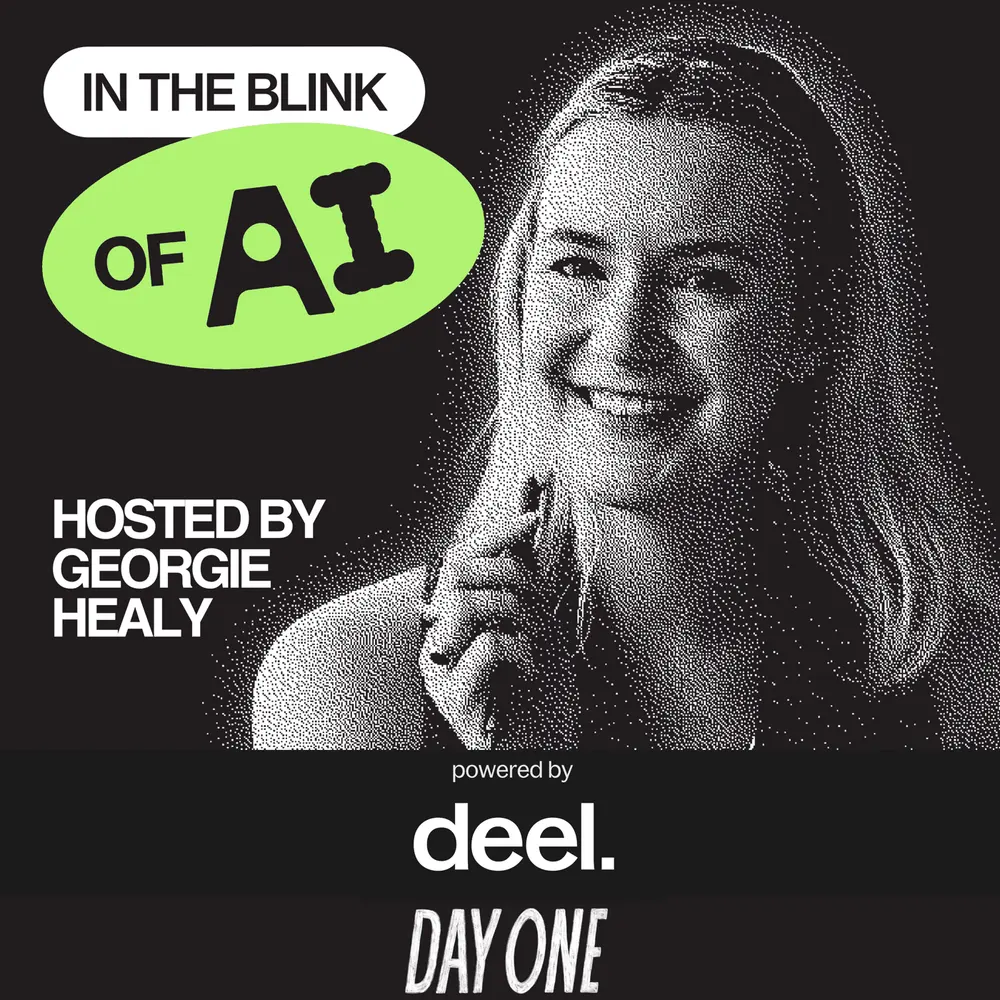 In The Blink Of AI with Georgie Healy
Presented by Deel & Stripe
In The Blink Of AI with Georgie Healy
Presented by Deel & Stripe 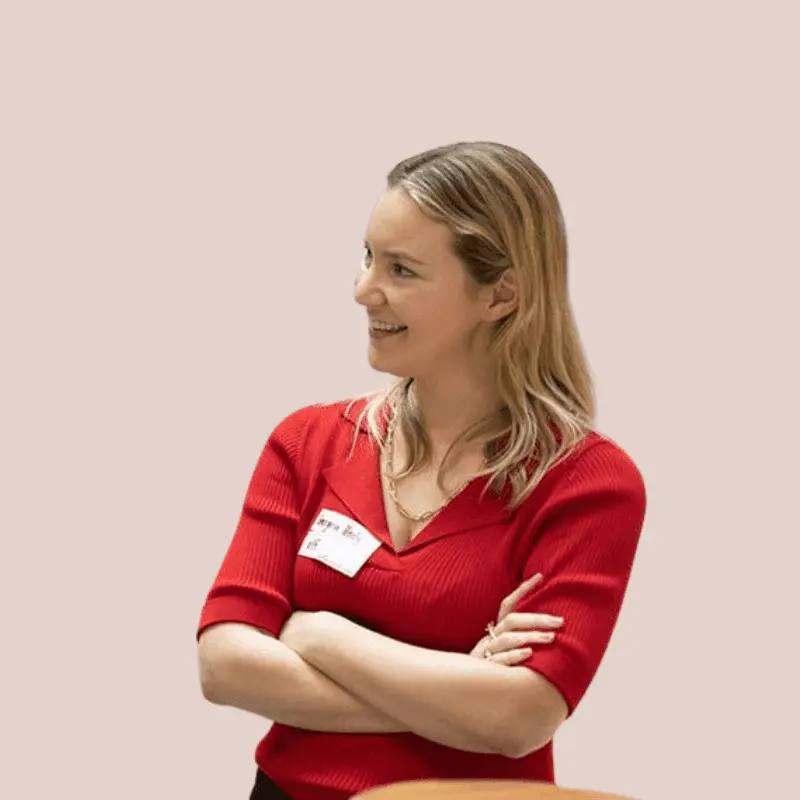 Guest Georgie Healy Host, In The Blink Of AI, In The Blink Of AI
 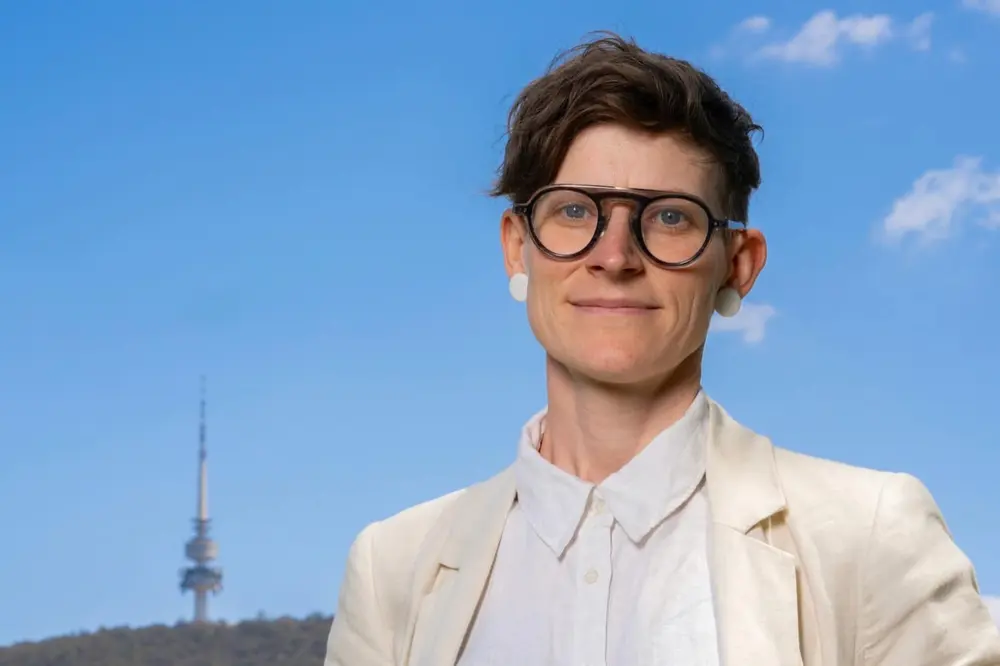 Guest Dr. Elise Stephenson Deputy Director, Global Institute for Women’s Leadership, ANU; Co-founder, Social Good Outpost, Social Good Outpost

 ▶
▶  ▶
▶  ▶
▶  ▶
▶  ▶
▶ ▶
▶ ▶
▶