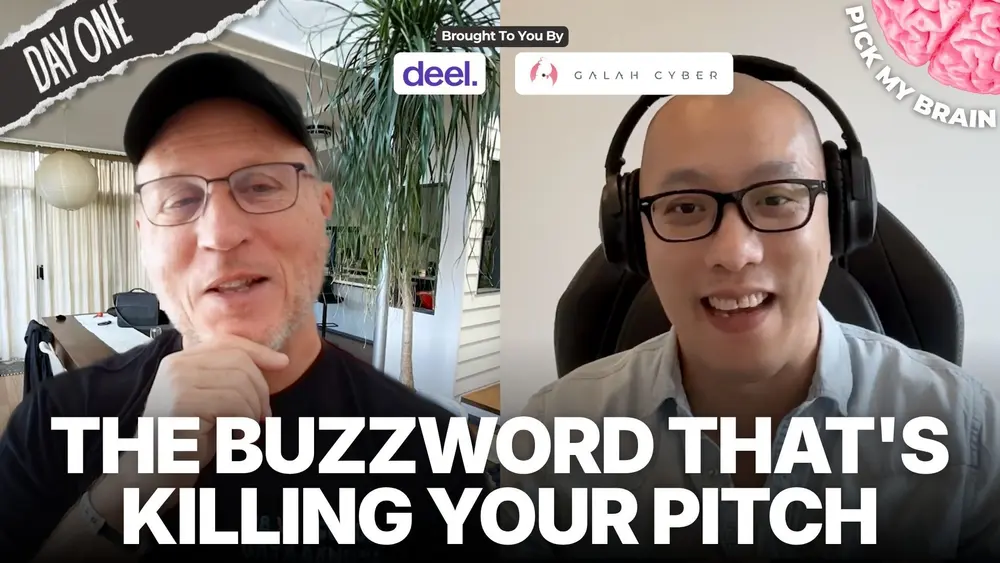
Transcript Synced · select any line to jump ▾ 0:02 Georgie Healy: Founders scale faster on Deel. Set up payroll for any country in minutes, hire anyone anywhere, get visas handled fast, and get back to building. Visit deel.com/dayone. That's D-E-E-L dot com slash day one. 0:22 Jacky Koh: We are an end-to-end platform that allows people, and especially non-technical people, to essentially build AI agents, the tools for agents, and also an AI workforce, so multi-agent systems, all in the same platform. 0:36 Georgie Healy: How do you keep agents ethical? 0:40 Jacky Koh: I suspect a country to almost try and completely ban AI. 0:45 Georgie Healy: Ooh. What's your favorite Pokémon, Jacky? 0:49 Jacky Koh: We're not gonna stop until we're number one, so yeah. 0:51 Georgie Healy: What's Model Context Protocol? 0:54 Jacky Koh: We really didn't want to go down like uncanny valley where we essentially portray agents as like, you know, Humans, like, you know, it's visually like humans. 1:03 Georgie Healy: People glorify Silicon Valley, Jackie, but what sucks about it? Hi everyone. We have our first live show of In the Blink of AI in a couple of weeks. Thursday, the 29th of May, 5:30 PM. My guests will be Andrew McCarthy. He's the head of APAC and Asia at Notion. We'll be going behind the scenes. We'll be recording things that will not be in the podcast episode. Later. We'll edit out the really spicy stuff. So if you want to come along, we've been crafting a really entertaining evening. So tickets are in the description below. I hope to see you there. Hello and welcome to In the Blink of AI, where I talk to the brightest AI startups and innovators each week. I'm Georgie Healey, and this week I'm speaking to Jackie Ko, the co-founder of Relevance AI. These guys have been on my Mount Rushmore of guests. They have been building agents since way before it became the year of the AI agent, and they recently announced their Series B raise. Relevance is the home of the AI workforce, and even I can build an AI agent using their platform. I last week went into their offices and sat down with Caitlin from their team and we built an AI agent called Gina. She scours for the top AI voices in Australia, and I've been using her to get great inspiration for future guests. So if you haven't built an agent before because you think it's something just for developers or just for software engineers, I really do recommend you try their platform. It's really intuitive and frankly, it's fun. Yeah. And if you've got any questions about that, you can always ask me. Thank you so much, Jackie, for coming on the show. This was such a fun episode. And yeah, I'm pinching myself that I got to speak to him. 3:10 Speaker: Enjoy. You're listening to a Day One FM show. 3:13 Georgie Healy: Hey, Jackie, thank you for joining in The Blink of AI. We're just coming off the back of a lovely 4-day weekend, and there's very few things I would be excited to open my laptop for, but being able to chat to you, one of the most successful Australian AI startups and the founder of Relevance AI. You know, saying that I'm excited to chat to you is definitely an understatement. Can you please tell the listeners who may not know about you and Relevance what you're building? 3:45 Jacky Koh: Sure thing. So my name is Jacky. I'm one of the co-founders, co-CEO of Relevance AI. I'm more from a data science and ML background, but more importantly, Relevance AI, we're building the home of the AI workforce. So that's essentially multiple AI agents working together autonomously and collaboratively to help solve and automate increasingly complex and repetitive tasks for the human workforce. We're a team of, you know, around 70 people based in SF and Sydney, and we've been fortunate enough to work with some of the largest companies in the world, Fortune 500s, and also fastest-growing scale-ups as well. 4:21 Georgie Healy: When I asked a few of our most successful guests on the show who I had to speak to, Relevance and you, Jackie, came up almost every single time. You're such an incredible success. We're thrilled to have you on the show. So you build an AI agent workforce for companies and then package it up nicely, or do you give them the tools to create their own, like, DIY agent workforce? How does it work? 4:46 Jacky Koh: Yeah, it's mainly the latter. So we are an end-to-end platform that allows people, and especially non-technical people, to essentially build AI agents, the tools for agents, and also an AI workforce, so multi-agent systems, all in the same platform. And it's fully hosted, deployed for them. And yeah, it's pretty non-technical, no-code friendly. But we also sometimes work with customers where we essentially start them off with a template that is already proven, already really good, handcrafted by us or experts. Yeah. Expert user of ours. And that's also another way, you know, people can start with Relevance. 5:27 Georgie Healy: Okay. So it sounds like, you know, you don't need to have a software engineering degree to be able to work with you guys. 5:34 Jacky Koh: Yeah. 5:34 Georgie Healy: Something that popped in my head over the weekend that I, you know, added to this question list last night was, say I told you, hey, I'm about to go to uni, or maybe I'm a high school student about to start uni, and I'm going to do a software engineering degree. In the world of vibe coding and stuff, do you reckon this is a waste of time now, or would you still recommend someone to pursue a career like that? 6:01 Jacky Koh: Yeah, no, that's actually a really, really good question. So the truth is, like, you know, with vibe coding there's, and with software engineering in general, there's a lot of different opinionated ways to solve a problem. And if you don't know how to code or don't know at least how the code works, you won't be able to fully understand the nuances between every kind of opinion native way of building the software. This means it can cut into costs, speed, et cetera. So despite vibe coding, and I am a huge believer in vibe coding, becoming more and more important and more and more proliferated, knowing how the actual code works is still really crucial. It allows you to really get that last mile out of the things you build. And it's the same with agents as well, right? You can pretty much get AI to build at least 70% of the agent, But with our platform, with AI, you can essentially type in natural language to build the 70%. But then the last 30%, you still need to get a domain expert, subject matter expert to handcraft it, whether it's through natural language or whether it's through fixing the dials, fixing the prompts, et cetera. That's still really, really crucial. And knowing how these mechanics work behind them is still really crucial. 7:17 Georgie Healy: So yeah. On one hand, I so agree with you. This vibe coding is awesome, right? It's democratizing getting to that zero-to-one stage or non-technical founders building technical companies. But like, yeah, would I love to— I don't know if you've seen The Matrix where they kind of put a DVD into someone's brain and then they have kung fu skills. If I was to pick anything that you could DVD straight into my brain, it would probably be software engineering. 7:43 Jacky Koh: Yeah, I do think I'm like, you know, going for a degree and I hope like, you know, the universities adjust to this. Is probably going more and more in depth into software engineering and pretty much, you know, you really utilize AI as part of the teaching to say like, hey, we now know that it's really easy for, you know, someone to pick up coding thanks to like, you know, AI making it much more personalized of a learning experience. Like I was able to pick up, you know, another language and pretty much say, hey, explain this new language to me purely in like, you know, Python, one I already know. 8:16 Georgie Healy: Yeah. 8:16 Jacky Koh: And I could do the same with other more technical stuff. And that's really personalized learning, right? So I actually think higher education should actually go more and more in depth rather than the level that it's currently going through. 8:32 Georgie Healy: Hot takes, university lecturers, update your notes, please. Look, let's get into something I'm really excited to peek behind the scenes of what you guys are building at Relevance. So Cast your mind back, you met your co-founder in a math classroom, I read about, in year 8. Why do you guys work so well together? That's, that's a long history. Are you opposites? Do opposites attract, or are you very similar? 8:59 Jacky Koh: Oh yeah, we're definitely opposites, probably in a lot of regard. I think like, you know, people who work with us, they're like, they pretty much know where we are very, you know, clearly opposite in. And It's actually really good because, you know, I'm really aware of my weaknesses and he is as well. And we kind of make up for each other's weaknesses. The other parts as well is like we do, you know, share some similarities, probably more so in like, you know, our vision, mission, the kind of like, you know, technological front of things. So even though there's differences, it's not like everything is you know, uh, completely opposite. So yeah. 9:42 Georgie Healy: And how, how quickly did you realize that and started delegating? Like, Jackie, you're talking to the investors, like, where, where do you guys really see that clear distinction on, okay, this is definitely more of your kind of domain expertise versus the other? 9:58 Jacky Koh: Yeah, it's, it's actually kind of funny because, like, we actually overlap a lot in terms of what we're good at as well, technically. Both of us can talk to investors, both of us know how to write code, both of us know how to sell and market as well. But the key thing is like, you know, there's always like kind of contextual relevance and at what kind of situation is it best for each one of us. So like, for example, I'm kind of more well-known to be a bit more inconsistent in terms of like, you know, my IC contributions. 10:34 Georgie Healy: Mm-hmm. 10:35 Jacky Koh: Whereas he's a lot more consistent. If we need like a big pop, then, you know, I'm much more of the forefront person. Or if, you know, we're in a, you know, a kind of dire situation, I'm also the person to lean on. But whereas if it's more like day to day, then Dan is like, you know, better at it. So, you know, there's more of these like kind of personality traits that we're actually much more opposite and how we work. That's much more opposite that really complements each other. So yeah. 11:02 Georgie Healy: Oh, that's fantastic. So, so there's investment committee meeting, or you've got to ship product and someone's sick, both of you can handle that. It's all good. You can sell, you can build, you can do all of that stuff. But yeah, the personalities are different. That's kind of awesome, right? And it sounds like I need to call you in an emergency, Jackie. 11:21 Jacky Koh: Oh yeah, I'm definitely the kind of person, if there is an emergency, I'm for whatever reason, like, um, yeah, very, uh, like, you know, calm and collected about it. 11:33 Georgie Healy: Do you freak out after? Like, are you very calm in the moment and then 3 hours later you're like, oh my God. 11:40 Jacky Koh: Uh, not really. I think I get into a bit of a, like, a zone state, um, where you kind of don't realize you're, you know, you're present. Uh, it's a, it's a bit of a weird feeling, but it's very much like I feel like I'm at my peak when there's a dire situation. Thankfully, there's not too many dire situations so far, but like, yeah, it's definitely one of those personality traits I have. But so yeah. 12:05 Georgie Healy: That's brilliant. I mean, with a 70-person company, you really do want someone at the head that's like not going to freak out in any like crazy scenario. So very happy to hear it. There's an article in the Startup Daily back in December 2021, so years ago. Machine learning data analysis startup Relevance AI lands $4 million. So 3.5 years ago, did you expect that you would still be doubling down on agents in 2025? Like, can you remember how it felt back in, you know, 2021 and the thoughts on agents back then? 12:42 Jacky Koh: Yeah, I mean, I'll be totally honest, like 3.5 years ago, agents wasn't really a thing. People definitely didn't talk about it. I think it's closer to 3, if not 2.5 years ago, is when we really pivoted into agents. But the mission has always been the same. We wanted to essentially bring AI to essentially the human workforce to help automate a lot of the really repetitive, boring manual tasks. I saw this at my last job at IAG, where there was a lot of people just like, you know, doing these really repetitive and boring tasks that is quite soul-draining to them. And when you kind of free up and bring machine learning to them and actually free up a lot of their time, on that task, it makes them happier, it makes them more productive. They can now focus on things that they truly enjoy and it's great for the business as well. So that's the kind of always been like the core kind of center thing, a theme that we wanted to bring to the world. So that hasn't really changed much. But yeah, in terms of like what was the exact solution and exact technology we brought to the world, that has changed a little bit, right? Like yeah, we did pivot from, what was traditionally what we called a vector database company. In fact, we own vectordatabase.com, et cetera. We were pretty full, but we decided, hey, this is actually not the right domain space for us. We actually were much more passionate about agents and agentic automation when we saw that kind of trend starting to happen. 14:08 Georgie Healy: So yeah. I think the listeners for the most part are all over AI agents. It's the year of the AI agent this year, but what they might not be aware of is how ahead of the curve you guys were. Uh, which is why I'm pumped to ask you, Jackie, what do people get wrong about agents? I remember when we had a quick chat earlier, maybe this month, we talked about single versus multi-approach. Please, please tell us a little bit more about that. 14:34 Jacky Koh: Yeah. Um, there's a lot of, you know, different myths about like agents. I think this is probably less of a myth, but more so, um, when you're interacting with agents, um, You might give it multiple different tasks and you might say, hey, look, it's not performing that well on these different tasks. That's because this agent is trying to act like everyone. And that's where multi-agent system comes in. You can actually allow yourself to build agents to essentially be a little more niched down, say like, hey, this agent is specifically really, really good at, let's say, copywriting. This agent is really, really good at specifically asking questions. This agent is really, really good at synthesizing data, et cetera. So you can break down what is traditionally a, you know, a longer task into smaller, smaller tasks that, you know, can be performed by a specific role. And that will actually greatly increase the reliability, accuracy of the task being executed. And it also makes everything much more modularized. So you can actually reuse these agents that you build out. So we definitely see that multi-agent systems is going to start, you know, picking up in trend. Actually, I think Google just recently released the protocol as well called Agent-to-Agent, A2A, and that's actually trying to help facilitate a multi-agent system as well, and it's just a protocol for that. But yeah, that's why we call ourselves the AI workforce company, not the AI agent company, because we believe that, hey, in order for AI agents to really proliferate, it's not just one agent doing it, it's multiple agents and it's them collaborating together. You can kind of even see it as well in how the LLMs are starting to be constructed. There's this term called a mixture of experts where essentially it's not just one large LLM. People kind of think it's always like one large LLM. It's actually multiple, you know, medium-sized LLMs mixed together to essentially form a mixture of experts. So you have LLMs that are, you know, more specifically trained on each specific domain. And then you essentially give a task to this LLM that then routes it to these different LLMs, so to say. Architecturally, it's a bit more specific than that, but just on a high level, that's how to think about it. And that's why it's the same thing with multi-agent systems. We strongly believe that you're not giving tasks in the future to just one agent, you're giving it to multiple agents. 17:01 Georgie Healy: So yeah. I think we've done 25 episodes now, and that's the first time I've had that broken down for me in the LLMs. Space. That's awesome, Jackie. I mean, you did, you did tease us a little bit that people get other things wrong about agents. One more thing that people might get wrong about agents that grinds your gears. 17:22 Jacky Koh: Yeah, I think a lot of people, you know, when they talk about agents, and this is probably specifically in the automation space, they just think about, you know, traditional automation with LLMs in it. And that's the wrong way to think about agents because that's more just a traditional automation workflow enhanced with LLMs. So like, let's say, I'm not sure if you've ever used the If This Then That, IFTTT. 17:51 Georgie Healy: Yes. We do use that. Well, I have used a form of that, but it was, I think, VBA in like Microsoft Excel. I used if statements. I know, I know. Look, old school. I'm a millennial. Give me a bit of credit. 18:05 Jacky Koh: Yeah, so you essentially specify all these rules and then essentially one of these steps will involve an LLM. And that's where people kind of start calling those agents. Those are in fact not agents. They're much more just AI-enhanced workflows. Or workflows with AI in them. So yeah, in fact, you can actually have workflows, this traditional automation workflow, with agents in them, but it's never like if I add an LLM, then it's an agent, so to say. So yeah, that's kind of one of the things that people get tripped up about. An agent is a lot more autonomous. You're actually just giving it a whole bunch of tools and you're not really saying, hey, do this, then that, and that. You can, you do it in natural language in text or like prompt rather than like a kind of Flow-like builder where you're like saying if this, this exact value is equal to this, then you do this. 19:01 Georgie Healy: So yeah. Oh yeah. We did have a guest on the show that mentioned that majority of AI agents are glorified workflows, which was a spicy take that went a little bit viral. But thank you for unpacking the if-then statements and the distinction between that and actual autonomous agents. Going off and completing the tasks. Look, I'm gonna go a little bit left field here, but I can't not ask you, tell me the story behind the really cute kind of Super Mario-like characters on, you know, your website, your branding, your t-shirt today. Anyone that's watching this on YouTube, I'm obsessed with them. Tell us about them. 19:45 Jacky Koh: Yeah. So for context, I am a huge gamer. I played you know, Pokémon when I was young, played other multiple, you know, different kinds of games like Zelda, et cetera. 19:57 Georgie Healy: Yes. 19:58 Jacky Koh: Always been obsessed with gaming. Still play games when I get the chance to these days. But yeah, no, and kind of the pixel character really came into mind as something that's quite nostalgic and also quite relatable in terms of like, hey, virtual workers. We really didn't want to go down like uncanny valley where we essentially portray agents as like, you know, humans, like, you know, visually like humans. And we didn't really want to do that. So we, you know, tried to find what's the best kind of, you know, alternative and came across pixels. And then, yeah, we wanted to kind of go hard on it. It was cute. It also portrays the meaning quite well. And there's a lot of fun branding stuff you can do with it. You know, we iterate on it. We're still iterating on it. And yeah, that's kind of how it came to be. The other part as well is, Building agents kind of reminds me a little bit, and building the AI workforce kind of reminds me a little bit of almost like playing FarmVille slash idle games where you're essentially investing the time to build it, et cetera. But then once it's kind of live, you can essentially log out, come back, and you're just collecting essentially all the fruits of essentially what you built. The agents are automatically working in the background. So that's kind of— The messaging we want to be able to send is like, hey, these agents are truly autonomous in the background on autopilot so that you can essentially go take a sip of coffee and then come back and then a whole bunch of work is done for you. 21:30 Georgie Healy: Oh my gosh, that made me want to ask you so many additional follow-up questions, but I'll try and keep it calm, Georgina. Number one, went to Tokyo end of last year, obsessed, went to the Pokémon shop, came home with So much Pokémon-related paraphernalia. What's your favorite Pokémon, Jackie? 21:49 Jacky Koh: Oh, Bagon and Salamence. 21:53 Georgie Healy: Beautiful. Don't know either of those. Gonna Google them later. Actually, no, I don't know what they are. I'm into like the cute fluffy ones, like, you know, the Volotrix, Voli, Volipix, Voli, Volotrix? 22:09 Jacky Koh: Uh. 22:10 Georgie Healy: Vulpix. 22:10 Jacky Koh: Oh, Vulpix. 22:11 Georgie Healy: Yeah, yeah. 22:12 Jacky Koh: Yeah, the fox, right? 22:13 Georgie Healy: The fox. And I don't know why my brain is breaking. I blame the long weekend. Eevee. Eevee. 22:21 Jacky Koh: I love Eevee. 22:22 Georgie Healy: So cute. Okay, but that's not a question. My question is, you know, around that uncanny valley, I couldn't agree more. There's something a little bit creepy about AI that's pretending to be a real human. I don't know if you've played with Sesame, Jackie, and it's it's like conversational. So chatting to an AI, you're chatting to the AI, you know, interface. I find it creepy. I don't know if, I don't know if you agree. 22:51 Jacky Koh: The, yeah, the voice is quite, you know, realistic. I think the only thing that I find creepy is when, yeah, like essentially they portray it very much as a human in terms of like, you know, visual. Like, let's say if it was like more of a, like, you know, pixel style agent talking to me, you know, then it's just more like, oh, hey, these are like, you know, NPC characters in a game. Whereas if it's like, you know, essentially almost like a clone of myself I'm talking to and it looks exactly like me, that I'll definitely find creepy. 23:23 Georgie Healy: Totally. 23:24 Jacky Koh: And avoid that. That being said, that's like our opinionated decisions. There's no like necessarily right or wrong in terms of branding. We just wanted to go with this brand and it resonates. 23:38 Georgie Healy: So yeah. Yeah, I love it. And yeah, a lot of people love sesame and I find it creepy, but there you go. One of your customers is household name SafetyCulture. Tell us what it's like working with Australian startups as customers. Is there a difference that you notice, especially in the early stage or, you know, they're not a publicly listed company stage? 23:59 Jacky Koh: Yeah, I mean, working with Australian startups is honestly amazing. Like, this is not saying, you know, working with US startups is not amazing. Both are actually quite equally amazing and in their own different ways. But the great thing about Australian startups is that you're— for us, it's that they're close, right? 24:18 Georgie Healy: Yeah. 24:19 Jacky Koh: They're just down the road and you can really utilize your kind of learning opportunity here when, you know, teaching them all these different concepts. Because it's not like SF where everyone's talking about AI agents, all the latest technology every day. Whereas in Australia, people have other topics as well to talk about. So you get more chance to be able to enable people, teach them these concepts, and actually verify the concepts that you're explaining is that more widely understandable versus if you did the same thing in let's say SF, people kind of get these concepts more straight away because they have the context, right? So that's one thing that's been really beneficial. Messaging that has worked well here usually works quite well globally, but the vice versa doesn't necessarily happen. So that's one of the great things. And yeah, just that, you know, fellow Australians, it's always great to work with. So yeah. 25:20 Georgie Healy: Yeah, I want in on that WhatsApp group chat for all the Aussie amazing founders. That'd be an epic, epic behind-the-scenes view. On the same note, you've got investors here in Australia and across the pond in Silicon Valley. You've got King River Capital here, very prestigious, and as well as Insight Partners, massive. What's the difference? Like personality-wise, are there any things that are different from the way you speak to your Aussie investors or you talked about investment committees and things like that, or are they more similar than they are different? 25:56 Jacky Koh: Well, they bring really different values, to be honest. And they're all like, I wouldn't rate one higher than the other, so to say. I could never do that. And yeah, I mean, like our Australian investors, King River Capital, they're absolutely amazing. They really help in terms of like a personal level. If I need to have a quick chat about, or just sense check something, I always go to Zeb at KingRiver, and he's been really wonderful with that. That's kind of why we decided to go with them for our Series A was because of that side as well. And that's really great. And in terms of like, yeah, Insight, they're a much more larger investment firm. And same with our partner, George, he's pretty much invested in a lot of company. We really go to him when we need pretty much proven experience advice. He's worked with tons of AI companies. He's invested in a lot of the unicorns as well. So that's kind of the great thing is that if you work with a US investor, you get access to a lot of the insights around that industry at pretty much the largest scale possible. Whereas here it's a lot more about kind of the more personal side of things with working investors. And Yeah, so that's kind of the difference in terms of value, I would say. That being said, you know, it's not, you know, that's the only way to look at it. Like King River has invested in multiple unicorns and we still ask them advice that they can draw experience from there. But if you're looking for, you know, specific trend in a specific industry, then the US investors typically would have that experience much more accessible. But yeah. So that being said, they're really great. We have honestly amazing set of investors. We also have Peak15 based in Southeast Asia, who used to be formerly known as Sequoia Asia as well. So— 27:53 Georgie Healy: Yes. 27:53 Jacky Koh: Honestly, every one of our investors are great and we've always taken a global approach with investors. We wanted to be a, you know, ultimately we know we need to distribute the AI workforce globally. So we kind of pick the best investors we saw in each region. So yeah. 28:08 Georgie Healy: Thanks so much for sharing that because, you know, in Australia, frankly, and especially in my role with the AI Accelerator for Seed and Series A AI startups, there wasn't that much of AI startups at that level of maturity. So it is really special to ask your insights at a later maturity than a lot of the startups currently that we see at the pre-seed and seed stage. So yeah, really fascinating. On that note though, say you're an AI founder listening to the show, what, what are you noticing they're getting wrong with their tech stack in the early stages? Or how can they set themselves up better to scale that you're seeing, you know, when they're picking models or picking, uh, tech providers? Like, what should they be aware of, do you think, Jackie? 28:56 Jacky Koh: Yeah, I think the number one thing is to not lock yourself into a specific provider, to be honest. Um, the model improvements are honestly coming out on a monthly/biweekly basis. That state of the art is changing very, very frequently. And if you lock yourself too much into a provider, you're essentially making essentially your LLM side inflexible. And therefore you can get eclipsed by competition if you decide to kind of go all in in one provider because for whatever reason, next next week the other provider is like 10x better or at least, you know, 1.5x better. And you don't want that to happen. So that's the one thing I would really like, you know, suggest is at least, you know, from the framework front, don't like lock yourself too much into making your, you know, platform only work with this specific model. Making it work with multiple is a lot better because you can pretty much enjoy the benefits of just the LLM providers making this wildly better without really having to do much besides like making it compatible. So that's one thing we found. And as well, like when you're building these things, it was like what doesn't necessarily work 100% now doesn't mean it won't work honestly in like a month's time or two months' time. As long as like kind of fundamentally, if you're looking at it from first principle, it looks sound, there's a lot of ways to kind of overcome pretty much the last mile. So yeah. 30:33 Georgie Healy: I love this. Get those credits, founders, and don't get locked into one place, one domain, one tech company. And yeah, like I hear that switching costs can, like it's not that significant, the switching costs, but staying nimble early on, I guess, is smart, not getting too deep on in one infrastructure. I would love to ask you, Jackie, we've never unpacked this on the show before, and I can't think of a better person for this. What's Model Context Protocol? 31:06 Jacky Koh: Oh yeah, MCP. So I've seen this great image to kind of, that's a good analogy for this. So think of MCPs as like USB sticks you attach to your computer. Your computer is essentially like your LLM. And let's say you have a USB stick that is like Google Drive or it's like, you know, now like Zoom, Google Sheets, etc. So as you kind of attach these USB sticks into essentially your laptop, which is your LLM, it now can actually interact with those different services now on your behalf. So let's say you attach a Google Drive MCP. 31:51 Georgie Healy: Yeah. 31:51 Jacky Koh: Into your LM, now it can essentially automatically upload photos for you, download photos for you, reorganize your photos for you with just natural language. So the, the LM essentially knows how to interact with all the different APIs that is presented in MCP. So that's a great, great way I've seen explained. And it essentially allows LMs to go from, you know, what is just generating text to now actually being able to perform actions on your behalf. To actually being able to call into APIs, to be able to essentially work with all these different systems. And MCP is pretty much a much more now really picking up in popularity, a widely used protocol to facilitate that. 32:33 Georgie Healy: So yeah. Do you need any specific prompting to enable it to do that? Like how, you've plugged in your USB, then what? 32:42 Jacky Koh: Yeah, to be honest, You don't actually need that much prompting in terms of like when you're giving it the task. The majority of the prompting is actually done on the MCP side where you're explaining what, for example, if I plug in the Google Drive USB, the LLM does not know fully what Google Drive is or how does this API work. It probably does in terms of like, you know, the kind of data it's ingested. But let's say if I, you know, plug in an MCP or something completely new in terms of like technology, like let's say Apple drops a new API and it's not in the data that the LM was trained on, you need to define what each of these endpoints in the MCP does so that the LM can actually understand and interact with it. Because MCPs don't have to be only constructed in popular tools, it can be constructed from— I can personally construct an MCP for my computer or Jackie for whatever reason. Yeah, you can, but you need to define what are these things. I can't just kind of give you MCP without any instructions. So that's where you kind of need to adjust the prompt a bit. 33:51 Georgie Healy: So yeah. Oh, I need to try this. Sounds awesome. Okay. Two quick personal questions, 'cause you know, can't not having you on the show before we get to the rapid fire. You told me you're not much into reading books, Jackie, but you do like articles. What kinds of articles are transformative to you and what, what, who do you like to read about to get inspired? 34:15 Jacky Koh: Yeah, I am. Yeah, that's true. I don't, bad habit from childhood. I don't read as much books, even textbooks from schools. But what I do love is, yeah, listening to YouTube videos like ColdFusion. There's other ones that, you know, forgot what it's called. It's like Insider News or something. Insider Business. Yeah, Insider Business, where it explains the business models of all these different intricate business, which is quite interesting. I really love watching those things. It's quite a lot of information explained a bit more quickly. 34:54 Georgie Healy: Yeah. 34:54 Jacky Koh: And it doesn't go, you know, as deep sometimes, but there are, you know, usually longer form ones that go like a 1-hour It's 2 hours that I also enjoy watching. And then yeah, same with articles. I love reading articles. I read, you know, TechCrunch articles. I probably am on Twitter a bit too much as well. Just to stay up to date with all sorts of different information. Yeah, I mean, Paul Graham, for example, has some great essays that he's written on his website. Other people have done the same thing. Another great insight that I really like, which actually came from Twitter, which is a really short-form video, but it was around leadership. So what does a good leader need to have? And this is a principle actually I stand by as well, which was actually explained by the MongoDB CEO when he got asked this question. He said that there's 3 kind of key things to being a good leader, which is like, you need to be really good at ICing. So you actually need to be able to do that kind of task that you're asked to lead because this allows you to essentially show everyone, lead by example, show that you're not just a middle manager, that you actually know how these things work in the deep intricacies. So yeah, you need to be a great IC or at least have been a great IC and still keep up to date to it. You need to be able to lead people. So like being a good manager on knowing how to motivate people, knowing how to knowing how to, you know, encourage people, knowing how to, you know, help them when they're, you know, down, etc. So being a great manager and leading the team. And then finally, you also need to be able to know how to grow the team as well. So those are the 3 kind of key characteristics of being a great leader. And that, you know, that came from a short-form content. That being said, it's not like I never read books. 36:48 Georgie Healy: Yeah. 36:48 Jacky Koh: I do read probably 1 book maybe every year or every 1.5 years or 2 years. 36:55 Georgie Healy: I just— But you're not joining a book club anytime soon. 36:58 Jacky Koh: Yeah, pretty much. I'm not huge into reading physical books. I try to listen to audiobooks, but typically, yeah, I prefer the kind of condensed version of things. 37:10 Georgie Healy: So yeah. And you're a nonfiction kind of a guy. You're not reading about dragons and fairies and fantasy. 37:17 Jacky Koh: No, no, unfortunately not. I've always been a TV person. So when people say that book is better than a TV, I'm like, I will never get to experience that because I'm never going to read that book. 37:27 Georgie Healy: So, so yeah. I love how much you know who you are. You're like, yeah, that might be true, but can't be bothered. Sorry, I'm out. Whereas I'm the opposite. I'm like, you know, I've got a 5-year-old and a 3-year-old and I'm already thinking to myself, they cannot watch Harry Potter until they read the books. I'm like, oh. 37:46 Jacky Koh: It's not me saying it's, it's worse or anything. It's just, I, I know myself enough to know that, like, I'm not the kind of person to just sit down and read a book kind of thing. 37:56 Georgie Healy: 100%. Like, even, you know, socially, I'll hang out with friends and some of them love the podcast, right? Absolutely love the podcast. Others are like, I am never going to listen to a podcast. It's not because I don't like you. It's not because I don't want to support you. I just don't like listening and, you know, that kind of format of absorbing information. You can't force someone to absorb information in a way that doesn't, you know, come naturally. And that's fine. Although it's on YouTube as well, guys, just, just saying. One more question before we get to the rapid fire. We recently had Will Liang on the show. He was the CTO of MA Financial. Now he's going off and he's helping large businesses adopt AI. And he said he was a purple person. And that basically is, you know, blue people are business people, red people are tech people. And he was like, oh, I'm really in the middle. I'm kind of a purple person. When I spoke to you, Jackie, you mentioned you're a T-shaped person. What's a T-shaped person? 38:56 Jacky Koh: Yeah, yeah. Actually, a lot of people ask me about this, but just to like, you know, broadly define it. So T-shaped person is essentially someone that has picked a vertical that they really, really, you know, love and care about or in an area that they excel at. And then, but they still expand their skills like horizontally. This is great for two reasons. One, you at least have an area where you can feel confident about. You're not kind of a jack of all trades. You're jack of all trades, master in one. And the good thing as well is that you'll find that a lot of different, pretty much almost like every kind of subject area, another subject area can actually help you in improving that. A classic example, this is probably too specific to AI, is like neuroscience and machine learning. You actually find people who are deeply in machine learning draw a lot of inspiration from neuroscience because it helps them understand how the brain works. And machine learning is trying to replicate a little bit of how the brain learns, right? So that's how deep neural networks kind of came about. And that's like, you know, one of the fascinating things. So that's why I'm more T-shaped. I like to kind of expand on my vertical of like machine learning and data science by learning other topics. And I've often found it benefiting my main area of expertise. Yeah, there's so many examples of this. Like marketing is a good example. Marketing is really, although this is kind of more of a cross-section, but like a really crucial thing in marketing is A/B testing. And it's a really crucial thing as well in machine learning. And by doing marketing and doing the A/B testing there, you kind of understand how crucial it is and how to do good ones. Et cetera. So it really helps there. Same with software engineering. Like software engineering really helps you with machine learning because by understanding how the software works, you can also kind of go past, you know, really get to the limits of what machine learning is capable of. So all these different subjects really matter. And by at least picking one, you can at least, you know, feel confident about really being good at one thing. And also I think the T-shaped person as well is just like, hey, I'm— and this is like, you know, a kind of different explanation that someone asked me and I kind of explained and they kind of really resonated is like, you know, you can be more horizontal, but realistically you're horizontal purely because you haven't found an area that you've like, you know, 100% enjoyed and you're just like almost like still trying to find something. Or maybe you're just the kind of person that really likes doing everything. Yeah. But if you're T-shaped, you do enjoy doing a lot of different things. But at the end of the day, there is one thing that, you know, you just really, really enjoy a lot more than others. So that's how at least I've started to define it a bit more. 41:47 Georgie Healy: Oh, you've just made me realize what I've uncovered in the last 6 months, even kind of since my latest job and podcast. I was so horizontal. I kind of was like, well, I've got an engineering I did a commerce undergrad and a commerce master's, and so these are all very technical things. But Jackie, you know what I'm actually best at? It's people stuff, it's communication, it's, it's that kind of thing. And I think because my, you know, academic credentials were so technical, um, you know, I was a 6 out of 10 engineer, right? Like, I can do it, I can figure it out, I'm okay. But what I actually can be 10 out of 10 at is, is, you know, more people-related stuff. And in the last 6 months since doubling down on that I'm like, oh my gosh, it's like things get a lot easier and more fun, frankly. I'm not sure if I use the analogy correctly there or not. 42:40 Jacky Koh: No, no, pretty much. And like, you know, pretty much all the horizontal tasks, at least now when you're doing it, you can see how it improves like the main thing you really, really enjoy. Like if you had to do, you know, a bit more engineering, at least now you can be like, hey, if I understand this more, I can, you know, speak to engineering-minded people a bit more easily. I can communicate these concepts more easily to them. If I, you know, had to pick up finance, I can, you know, relate to finance people a bit more, right? 43:07 Georgie Healy: Yes. 43:08 Jacky Koh: It really helps you kind of almost like make every task a bit more enjoyable. 43:14 Georgie Healy: So yeah. Yeah, yeah. And, and kind of the empathy around the people you speak to as well. If you've tried it yourself and you've done it yourself and you've learned about it, even if you're not, you know, excellent at it, you can have a context where it That's it for the rapid-fire questions. Are you pumped for some spicier questions to finish the show? 43:35 Jacky Koh: Sounds good, let's do it. 43:37 Georgie Healy: People glorify Silicon Valley, Jackie, but what sucks about it? 43:43 Jacky Koh: I mean, I think everyone has the same consensus there. It's not the greatest place to live in. There's, you know, it's not the cleanest place. It's not the most affordable place. It's not, yeah. It's pretty much not the best place to live in, but the actual people, the talent density is like absolutely world-class. So that's one thing I love about it. But yeah, I would say like living there sucks. 44:08 Georgie Healy: So yeah. It's very hard coming from Australia to almost anywhere else in the world. I went from Australia to London and I was like, oh gosh, what do you mean there's no like beach? Okay. There was no mention of AI in the Australian federal budget. Why do you think that was, Jackie? 44:27 Jacky Koh: So I think it's, this is really just taking a wild guess, 'cause I don't really follow Australian politics too much, to be honest. But I think it's probably just that they're not, you know, as on top of it. So therefore they didn't really wanna introduce something for it. And yeah, I presume, you know, once they have a bit more knowledge about it, then they might, you know, introduce something. More. And actually, probably more importantly, it's because it's not what I think the average Australian thinks about. The truth is, the average Australian, I don't think, thinks about AI too much. So therefore, by not including it in the— like, you know, they would only include it if, you know, the average Australian really talks about it, cares about it. But because I don't think, you know, the average Australian cares about it too much, so I don't think that— I think that's why probably didn't include anything to it. But this is taking a wild guess. This is, you know— 45:23 Georgie Healy: No, that is such an intelligent answer, Jackie. That's actually something that didn't occur to me. I was only thinking of two reasons. One is deliberate negligence. Two is, yeah, you know, they didn't know how to comment on something they weren't deeply understanding of. But I didn't think about the fact that, you know, for the mass audience that's reading it, that it wouldn't— The reason I think this is such an intelligent answer, Jackie, is because The first time I heard that it wasn't in the budget was through Anish from UpCover mentioning it on his LinkedIn page. It definitely wasn't in the news. No one was talking about it. And, you know, those of us who are really deeply invested into AI, it feels like a huge oversight. But yeah, maybe for most people, like, yeah, it didn't really occur to them. 46:09 Jacky Koh: Yeah. 46:10 Georgie Healy: Very clever. Very clever. What's one scary headline we might expect about AI in either this year or next, do you think? 46:18 Jacky Koh: Good question. Scary headline. I mean, besides the ones that, you know what, actually probably a scary one. I, and this is a bit of a black swan event, but like I suspect a country to almost try and completely ban AI. 46:37 Georgie Healy: Ooh. 46:38 Jacky Koh: That would be next. A XXX country. I'm not going to list a specific country, but XXX country would say like, you know, AI is completely banned. And, you know, I don't know how they'll enforce it, but yeah, I, you know, I could see that as a headline. 46:55 Georgie Healy: So yeah. Wow. I love it. You know, we'll turn it into a social promo and if it happens, we're pulling that up on LinkedIn and X and all the places. I mean, we've banned, you know, Uber in some countries, social media bans for under 16. Yeah, I can see it happening for sure, for sure. How do you keep agents ethical, Jackie? 47:21 Jacky Koh: Yeah, I mean, honestly, it's really around the use cases of it. So I mean, it's a bit harder for us to control because we're more of a DIY. But that being said, we target more ethical use cases. Like realistically, you could build any kind of agent in our platform. We do have like guardrails, et cetera, to prevent certain kind of things happening. But ultimately, like, you know, people kind of building, we want to be a free platform for people to essentially build the agents that they want to build. But realistic, yeah, it's about the use cases we target. We don't target unethical use cases. We target ethical ones, so to say. It's a lot more in kind of go-to-market, sales and marketing, but also back office automation. We're not targeting use cases to do with, yeah, essentially causing people harm. Yeah. 48:10 Georgie Healy: Yeah, yep. If you're an unethical customer, don't bother calling Jackie or Relevance. They're not interested. Last question. I saw Apple's building a medical agent to replicate human doctors, and I saw Microsoft is building a cybersecurity agent. How are these large incumbents, you know, the Microsofts and Apples of the world, going to struggle in the world of agents where, you know, more nimble companies like you guys at Relevance don't struggle? 48:40 Jacky Koh: Yeah, that's a good question. Honestly, the main areas that they'll struggle with is pretty much like, you know, pace of decision-making. And actually another part is probably vendor. But that being said, that's changed a little bit. Like if you ask me, you know, I think like A month ago, what would Microsoft really struggle with, at least from the AI side? One of my answers would've included that they're not vendor agnostic. They have that strong strategic relationship with OpenAI, which means they're kind of locked into that model. And let's say if Claude releases something better or Gemini releases something way better, they can't really leverage that. But they've actually kind of loosened that strategic partnership a bit. They're using other models. So that is no longer, from my perspective, a valid answer. But yeah, realistically, it's a lot of it is about pace. Like, you know, a company as large as them, they have to make a lot of different bets and therefore their best people are quite spread out. And, you know, they're going to have, you know, these all these different initiatives, but it's not actually as concentrated and as large as people think. Like, you know, let's say Microsoft build, I don't know in this specific case how many people, but like, let's say they want to build, like, you know, let's say a sales agent. I don't think it's going to be like a huge, large team effort. Like, it's actually going to be, you know, roughly probably 15 to 30 people, so to say. And it's not going to be their best engineers. They're going to put their best engineers on things that are already proven ROI. So that's actually, you know, and on top of that, you have your just usual kind of large company. 50:24 Georgie Healy: Yeah. 50:25 Jacky Koh: Struggles as well. So those are the things that will make them slower and allow them to compete less fast. But that means that they also have the advantages in terms of distribution, et cetera. But ultimately, for us at least, I am more than happy to compete, even if it's with the biggest companies in the world. We love doing this so much. We believe in it so much. And there's so many different ways to tackle it. We have our own opinionated version, so we're going to go with our opinionated version. We're going to keep working with customers, keep making things better and better. And at the end of the day, the hard work should show. 51:09 Georgie Healy: Spoken like a true leader. Jackie, you have come in after a 4-day-long weekend, first thing, haven't seen these questions before, and you've just smashed them. I'm so grateful for you coming on the show. Before I let you go, is there anything you want to shout out to the listeners? Anything they can do? Can they follow you? 51:31 Jacky Koh: Go. Yeah, yeah. I mean, shout out, um, you know, obviously, uh, thank you, uh, Georgie, for, um, especially having me. Um, yeah, it's a, you know, great set of questions. Yeah, I mean, shout out to Relevance, um, and to all the Relevance users. You know, we have some huge improvements coming in. We're going to keep making our platform better. We want to help amplify a lot of the content that people make about Relevance as well. We're going to, you know, pretty much, yeah, keep making it better and better. We're not going to stop until we're number one. So yeah. 52:02 Georgie Healy: Massive. And what about the merch, Jacky? When can we start buying merch? I want Relevance merch. 52:09 Jacky Koh: Yeah, that's actually A more frequent question than we ever expected. 52:15 Georgie Healy: Side hustle. 52:18 Jacky Koh: Hopefully soon. Hopefully soon. We'll see. We'll see. 52:22 Georgie Healy: Epic. Mate, this is a pleasure. Have the best rest of your day. 52:27 Jacky Koh: You too. Have a great one. Thank you. 52:31 Georgie Healy: Thank you for listening to In the Blink of AI. You can check out the show notes for anything discussed in this week's episode, and we will be back next week. This podcast was produced by Day One with music by Dan Hansen and visual artwork by Sophie Tyrell. If you loved the episode, please tell your mates, and I love AI news. Please share your thoughts and suggestions to georginarosehealy@gmail.com.


 In The Blink Of AI with Georgie Healy
Presented by Deel & Stripe
In The Blink Of AI with Georgie Healy
Presented by Deel & Stripe 



 ▶
▶  ▶
▶  ▶
▶  ▶
▶  ▶
▶ ▶
▶ ▶
▶