Transcript Synced · select any line to jump ▾ 0:02 Georgie Healy: Founders scale faster on Deel. Set up payroll for any country in minutes. Hire anyone, anywhere. Get visas handled fast and get back to building. Visit deel.com/dayone. That's D-E-E-L.com/dayone. 0:23 Jada Anderson: I don't think it's an issue that's unique to AI. I think it's across the board. If you're developing technology, it's going to cost you. And so you have to make sure that if you're doubling down on that technology, that you're confident it's going to bring you long-term value. So I think even as we built our software, you know, we had to really make sure that what we were building was going to be of value to customers, but also, you know, help us with growing our business in the long term. 0:50 Georgie Healy: Hello and welcome to In the Blink of AI, where I speak to the brightest AI startups and innovators each week. I'm Georgie Healey, and this week I'm speaking to Jada Anderson, CTO and co-founder of Xylo Systems. Xylo Systems is a cloud-based data and AI platform that supports businesses to measure and manage their biodiversity footprint. They've received several awards and industry accolades, and earlier this year they won the award for Commercial PropTech of the Year. Xylo have quickly become industry leaders in the role of AI and achieving sustainability. Helping businesses leverage technology to minimize their environmental impact without compromising on operational efficiency. Today, Jayda and I speak about computer vision and remote sensing, as well as mushrooms and overhyped AI applications. A big thank you to Jayda for kicking off season 1 of the show. Perhaps you could start with telling me a little bit about Silo Systems. 1:51 Jada Anderson: Yeah, sure. Thank you for having me, Georgie. It's fantastic to be here. So Xylo Systems is a biodiversity intelligence platform that empowers businesses, including major property development companies, to measure and manage their biodiversity footprint. So for those who don't know, over the past 4 years, we have seen growing global recognition of our economic dependency on nature. As well as the existential threat that a decline in nature poses. And this has led to, you know, the formation of global disclosure frameworks like— it's a bit of a mouthful, but the Task Force for Nature-related Financial Disclosures, also known as the TNFD. And we're starting to see legislation put in place to protect nature, which is fantastic. But this is a real struggle for businesses in prioritizing biodiversity and, you know, helping them to start reporting on their impacts is a big part of what XyloSystems exists for. So our platform aggregates large and complex biodiversity datasets, and from this we can produce actionable insights on the state of biodiversity on and around a company's asset, which hopefully helps inform them on, you know, decisions that they can make and biodiversity-positive management actions they can take to assist in supporting nature, but also reporting to these big frameworks like— TNFD. 3:15 Georgie Healy: Wow, amazing. It sounds quite data-led, but to break it down a little bit more, what's this Global Discourse Framework? Did I say that correctly? 3:27 Jada Anderson: Disclosure Framework. 3:28 Georgie Healy: Yeah. Disclosure Framework. 3:30 Jada Anderson: Yes. So the whole range, and you know, what we're seeing in nature is actually very similar to the process that we saw in carbon a few years ago. So essentially when we're starting to expect companies to be responsible in how they, you know, emit carbon emissions and manage nature. There are frameworks that are set in place to provide a framework for organizations to publicly share what their impacts are. And the intention with that being that, you know, once you publicly disclose your impacts, you're more likely to start improving on them. So that's what we've seen in carbon. There's a whole range of them. There's the Task Force for Climate-related Financial Disclosures, which is sort of the sister to the TMFD, as well as a whole range of other ones that are regional. So we're seeing quite a few a few come up in Europe, and we're also seeing some happen, you know, on a national level. For example, in Australia, we've seen the national— sorry, the Nature Repair Market. There's a whole range of different reports and frameworks, and it can be quite overwhelming because they all serve a slightly different purpose, but they all interlink in encouraging businesses to start publicly disclosing what their actual impacts are. 4:37 Georgie Healy: Amazing. When I hear biodiversity in Australia, I'm thinking koalas. I'm thinking maybe bilbies. Are you targeting specific animals? Like, for those at home, what are we talking about when we say biodiversity for Xylo Systems? 4:54 Jada Anderson: Great question. Um, when we think about biodiversity, it is a really complex concept, but the actual definition of biodiversity is the diversity of biology, so the diversity of species that make up nature. And so that means that, you know, a big part of what Xylo's mission has been is to preserve biodiversity, and that means preventing the extinction of species due to human activity. So a big part of what our platform does is really starts by identifying which aspects of biodiversity or which types of species are the most under threat due to human activity. So quite often in Australia, it is, you know, the cute small furry things. It's the, it's the small mammals. But this is a global epidemic in that, you know, we are having a dramatic impact on biodiversity and it's increasing. So we really need to be conscious about how we interact with nature and how we can, you know, continue continue with business as usual but also preserve, you know, the species that are the most vulnerable to land clearing, invasive species, pollution. There's a whole range of different things that we do that can really put biodiversity under threat. 5:59 Georgie Healy: Yeah, amazing. I remember growing up, for Easter, being an Aussie, there was a big campaign around Easter bilbies. So when I think of endangered animals, I'm thinking of bilbies. But maybe like, what's your top 5 most endangered list that come to mind when you think of that? 6:18 Jada Anderson: Oh, it's a tricky question because there are so many. And I think, you know, the one that's sort of been quite well known in recent years is the koala. The koala is now endangered, which, you know, is quite sad given how symbolic it is of Australia's biodiversity. There are so many, though, that go under the radar. You're testing me with, you know, listing specific species, but there are a lot that are, you know, even in mycology. You know, if we look at the fungi that make up, you know, a lot of functioning ecosystems, we're seeing that that can be threatened due to poor soil health. So there are so many sort of aspects of biodiversity that we don't generally see or characterize as being an area of high biodiversity. But there are a lot of aspects that are being threatened. And the same goes for plants as well. If we look at the Australian Endangered Species List, there are a lot of plants that are being threatened, which can have ripple effects onto larger species as well, given that they sort of typically provide a source of food and habitat as well. So it's really these chain effects that I think is really fascinating to me, but can also be more problematic when we think about, you know, once we start to lose some species, we see this sort of ripple effect across all different types of species as well. 7:29 Georgie Healy: Yeah, that definitely makes sense. Now, you're CTO, so you're clearly very across all the data sources and things like that. Perhaps you could tell me a little bit bit about how you're leveraging AI as part of your offering? 7:44 Jada Anderson: Yeah, so I would say given the, you know, massive explosion of AI over the last few years, I would still consider Xylo quite early on our AI journey, but it is super, you know, exciting to see how AI can be leveraged in a whole bunch of different ways. I think, you know, we've been really strategic in how we think about interacting with AI because we are still a startup, an early-stage startup, and we're learning about how we can address customer needs. 8:09 Speaker: So I think the biggest way we have implemented AI is through our data processing pipelines. 8:15 Jada Anderson: So we're looking at integrating a whole range of different biodiversity data sources from disparate sources. And we need easy ways to integrate them into a larger database schema that is easy to integrate into our bigger platform. So a big part of that has been thinking about how can we quickly clean, ingest, and process data in a way that's efficient for us, but also going to help us scale as we continue to evolve what the platform looks like as well. 8:41 Georgie Healy: Mm-hmm. 8:43 Jada Anderson: This is particularly exciting when it comes to some of the more unique datasets that we find in biodiversity technology, particularly around remote sensing technologies as well. So we're just at the start of this process. But, you know, ecologists have deployed camera traps and bioacoustics out in the field, you know, sometimes for multiple years at a time, which collects a whole bunch of data, which is really labor-intensive to process. You know, historically, it's been people sitting at a screen and like clicking when there's an animal in the camera, for example, in the frame. Or a bird is heard. So thanks to AI now, this kind of process is a lot less labor-intensive. It means that we can get really valuable insights from really large datasets quite quickly. So that's one piece. I think the other one that's really clear to us and that we're looking at quite a bit at the moment is how can we translate complex ideas into simpler ones? And I think this is something that, you know, ChatGPT and other LLM models have done really well, is that, you know, you've got a professor in your pocket, if you like. And of course, not all of the information that you get is, you know, trustworthy, but it's a great starting point when you're really starting to learn the ropes of biodiversity. And this is the process that we're finding that sustainability managers in the organizations that we work with are going on. You know, how can we actually introduce biodiversity in a way that's intriguing and interesting and can also encourage them to teach others in the organization about what biodiversity means and also why it's important? So we're really experimenting with how we can use— Mm-hmm. Models to distill the complex into something a little bit more digestible, but also helping with things like reporting as well. Because again, how can you report something if it's really complex and you don't really understand it? 10:26 Georgie Healy: That is such a blast from the past. You just reminded me of when I worked at Accenture. We had some volunteer leave that we could take, and I completely forgot about this until you mentioned remote sensing. We would literally, as you say, click through images captured in the wild from a camera and say, you know, dingo, not dingo, koala, fox, like whatever creature it was. So, so it's obviously progressed since, you know, the 6 years I was at Accenture. Can you tell me a little bit more of how you use that? Am I correct in it's basically using that kind of technology but different? 11:12 Jada Anderson: Exactly. 11:13 Georgie Healy: Yeah. 11:13 Jada Anderson: So I think this is a really interesting thing because camera traps have been used for many, many years now. This is not new, new technology, but it's about how we're processing that data. And particularly, I think it depends on what type of information you're trying to get from those remote sensing datasets as well. So whether you're looking at a lot of the fundamentals of this is computer vision. So it's a little bit different to the ChatGPT technology, but it's still sort of classed as you know, under the umbrella of AI, but essentially computer vision to recognize whether something alive or moving is in the shot of the camera. And so depending on the model, you can have some which identify— are just looking at tigers, for example. If you have a tiger in the shot, it will take a picture and you can extract the data from it. So the time and location and all those kinds of things. There are also some that are a bit more specific as to looking at behavior. So if you're looking at you know, what exactly is an animal doing in that shot, you can extract those. And so I think as we go on, we continue evolving these models. Not only will they get more reliable, but they'll also be able to extract more interesting insights, not just that an animal is in the frame, but actually what are they doing. And so, you know, they still take a long time to process, even with using an AI model on top of the data to extract those insights. But again, I think this will evolve quite quickly. particularly with the developments we've had in the last few years, that these insights will be available faster, but also with more detail as to animal behaviors and interactions and all those other things which are really useful for understanding, you know, the state of the population. For example, if you're surveying for a tiger population in an area, it's really important to understand what they're doing, where they are, how many of them there are. All those kinds of things can really inform conservation management. But again, also in the context of corporates, you know, what is your risk and what kind of impact are you having on the environment around you? 13:04 Georgie Healy: Yeah, that's so fascinating. I know you're early stages, but how has starting to integrate this AI changed your relationship with clients and customers? 13:14 Jada Anderson: Yeah, I think it's an interesting one because, you know, depending on the organization we're working with, some have already invested in bringing in ecological consultants. They've already had, you know, people help them with collecting some of this data. Some organizations, and depending on where they are, if they're in an urban developer, for example, you know, this is sort of way beyond their scope as to what they've looked at in the past. I think in the next few years it will become more common to start deploying remote sensing, one, because it's cheaper, but also because it can be faster as well. So I think we're still at the very beginning of this process, not only as a technology and as a company, but also as a market and setting that expectation for, you know, what companies are actually expecting when they think about reporting on biodiversity. Is it just based on open-source datasets, or is it actually doing some more localized data collection as well? Yeah.. And I think for now, at the moment, we're starting to see that organizations are still trying to get over that initial hurdle of one, understanding what biodiversity is and that reporting. But once we get beyond that, the expectation will be to have really high-quality localized datasets, and that's where this will really play a role. So we're still at the very much beginning of this because that's where our customers are as well. 14:22 Georgie Healy: What kinds of customers do you have currently? 14:26 Jada Anderson: Yeah, so we, we've actually Did a bit of a pivot at the beginning of, uh, actually sort of mid-2022. We originally started as an organization helping conservation organizations because that's sort of where me and my co-founder Camille originated and our experience was in. But we realized that corporates were the biggest sort of source of, um, you know, needing to start making biodiversity decision-making at the heart of their organizations. And so we work primarily with developers, so property developers. We also look at developers of energy infrastructure as well. Generally sort of mid to large enterprise is our primary market because they're the ones that are starting to think about TNFD. But we're also, at the very beginning, starting to help sort of small and localized developers as well, who are either individuals or just small organizations as well, because they are also having to go through biodiversity compliance measures. You know, the New South Wales government, for example, have their own legislation about approvals for where and when you can clear land based on the state of biodiversity on those sites as well. So this is across the board an no matter how big, how big of an organization you are. But so far we've, we've started with large enterprise developers. 15:38 Georgie Healy: And the developers that don't have ecologists on board, what do you generally have to re-educate them about? What don't they get? 15:47 Jada Anderson: Yeah, it's, it's a really interesting one because for a long time sustainability managers in these types of organizations have had to deal primarily with carbon. So a lot of it is actually starting to think about how does what we're providing in our platform interrelate with what they're already doing with carbon and climate, because they very much are hand in hand. And I always like to say that reporting on nature is sort of the low-hanging fruit to help you with your carbon and climate goals. But very much it is starting at square one as to, you know, you have an asset and therefore you have land and you are responsible for the biodiversity in nature on that land. So how are you starting to think about, you know, mitigating risks. And I think it's always good, particularly for organizations that are early on this journey, realizing that this is not just a, a nice thing to do. This is actually really important for you as a company, because if you don't consider the risks of not preserving biodiversity on your site, then you might have real issues down the track when you depend on the resources and the value that you get from that land as well. So it's very much sort of educating them on the biggest high-level risks that they can start to think about with biodiversity, how it's interrelated with climate, and also how they can be a bit more future thinking and making sure that they are thinking about the preservation and quality of that land that they are responsible for. 17:07 Georgie Healy: Amazing. And when I speak to founders, I often hear the cost of compute of integrating AI into their product is quite steep. It's a hard balance to make. How do you consider the the trade-off between incorporating AI and improving a product versus actual revenue you get returned? 17:28 Jada Anderson: It's a great question. I don't think it's an issue that's unique to AI. I think it's across the board. If you're developing technology, it's going to cost you. And so you have to make sure that if you're doubling down on that technology, that you're confident it's going to bring you long-term value. So I think even as we built our software, you know, we had to really make sure that what we were building was going to be of value to customers, but also, you know, help us with growing our business in the long term. So I see it in the same way with AI, very much start with an MVP approach, you know, do lots of little experiments and put them in front of customers and see what the feedback is. And if you continue to sort of get traction on those, that's when you can start thinking about scaling. And of course, with that scaling comes more cost, but then you've also got higher confidence that it's going to be of value to customers. So we are very much still in that experimenting phase. I wouldn't say that we've gone through the full-blown scale mode yet, it. It's very much lots of little experiments and seeing, seeing what's working and what's not. 18:23 Georgie Healy: Switching gears a little bit, what inspired you to take the leap and join a startup as CTO? 18:30 Jada Anderson: Big question. Um, so I would say I was never in intention specifically to join a startup. It was always to work on something that I felt really passionate about. And, you know, my passion for nature goes way back. Yeah, I started, you know, with a degree at uni with applied mathematics and biology, which, you know, at the time seemed like a very random mix, but, you know, in hindsight was quite useful and sort of just followed my curiosity with those things. And I pursued that through university and ultimately ended up doing an honours year looking at the impacts of plastic on freshwater fish. The outcome of that research is probably unsurprising in that plastic is actually really bad for freshwater ecosystems. But spent that year really trying to work out what I wanted to do next, whether it was going to be a PhD or whether I went out into the world and did something else. And so I got to the end of that research and realized that academia wasn't, wasn't right for me and wanted to just— the concept of a startup was very much for me like, I'm at a point in my life where I have the flexibility to take risks and just dive into something and learn as much as possible, essentially. And so I was looking at startups for that reason. If you can join a, you know, a company in the very very early stages, you have the opportunity to, you know, try your hand at lots of different things and learn a lot. And so yeah, I was looking at the time for, you know, a small organization to join, hopefully with something, you know, working on something that was of value or something I was passionate about. And I met Camille, my now co-founder. She was a solo founder at the time and had started Xylo just under 12 months before I joined. And as mentioned, originally it was looking at solving a problem for conservation managers, and that was very much you know, after my year of looking at conservation and plastic in ecosystems that very much felt aligned. And so, yeah, I met her and she was actually looking for a CTO and a co-founder. At the time, I did not feel like I had the credibility or the experience or anything like that to be a CTO. I had experience in applied maths, as I mentioned, and I also had done a bit of data science and Python coding, but I was still like, I I don't have the credibility for this whatsoever. So I approached her and said, look, I don't think I'm CTO material, but would love to just join you and work, you know, with you in any capacity possible. And so we just started sort of working together and building out the MVP for this idea to help conservation managers, and very much sort of took ownership of that MVP and felt really excited about building a product that could have real impact. And yeah, about 6 months down the line Camille asked me to be her co-founder. She proposed to me. So we ended up sort of working together in, you know, a founder relationship. And it just made sense that I sort of take on ownership of that technology. And, you know, just like any role in a startup, you just have to learn on the job. You know, there's never— I don't think you're ever sort of, you know, prepared for exactly what you need. You always have to learn things as you go. And that's very much what I did. With building the cloud architecture and designing the database. And we then started working with contractors to build the application that we now have. So a lot of that was just learning on the job and, and going from there. 21:55 Georgie Healy: That imposter syndrome is very relatable, Jada, and very much testament to yourself and Camille that you are able to still say yes and still join, and then that relationship evolve and her to still give you co-founder status afterwards. So that's, that's really impressive from both of your ends. I, I loved that story. A lot of us as children obsessed with animals, we all want to be a vet. At what point did you think that you— like, what sets you apart from the rest of us that all loved animals and all had pets and, and all wanted to be vets, and, and you that stayed in the industry? What do you think that special sauce is? 22:40 Jada Anderson: Yeah, it's a good question. We actually, when we did our platform launch last year, we hosted a little party at our office and sort of invited a whole bunch of advisors, and we also invited our parents. And we put our parents on a panel and asked them exactly that question. And I think for me, the question was very much that I was just really curious. Like, I, I always sort of felt this passion and connection for nature. And I remember sort of a point, sort of middle of high school, where I was starting to learn about industrial agriculture and the decline in natural ecosystems because of our actions, and feeling this almost like anger at the time. You know, it was this like frustration that how could we be doing this to something that, you know, supports us and, um, you know, provides all these resources and, and gives us so much. And I just remember, yeah, feeling that real sense of frustration and feeling like I had to do something about it. Like, I couldn't see anything else I would want to dedicate my life to. And so I think it was sort of fueling from that original curiosity as a kid into something that was much bigger that I could really feel myself contributing in a meaningful way to. Yeah, it was very much following that curiosity and leaning into it because I hadn't found anything else that I really wanted to work on, so I just kept pursuing it and kept studying it. It just sort of became this train of, you know, I just can't— I had the blinders on, you know, this is, this is the thing I want to work on. 24:09 Georgie Healy: Yeah, and quite a unique story. Xylo Systems, you know, VC-backed, but in the conservation space where we see a lot of non-for-profits. Perhaps you can tell me, are there, are there other startups like you either in Australia, New Zealand, or globally that, that you admire or have done similar things? 24:29 Jada Anderson: Yeah, absolutely. I think this is a really exciting time, and I think climate tech definitely, you know, led the way with this, that, you know, you can build a startup that is not only going to be successful and be VC-backed and make significant money, but also build something that's really impactful. So I think it's been really exciting over the last few years, you know, with the evolution of Xylo Systems. We've also seen the startup of other companies that are also working on problems in nature. So one that we always love to shout out is Wilderlands. So they're a Melbourne-based startup looking at building or developing biodiversity credits, biodiversity units that are voluntary for companies to purchase, but essentially are a really meaningful way of investing in preservation of biodiversity into the long term. So that's one that we— we're huge supporters of the Wilderlands team. We're also seeing just fantastic stuff come out of UK and Europe as well. There's a lot of research and startups coming out of universities that are really looking at connecting and quantifying biodiversity for corporates as well. So, you know, you can put it as, as competitors, you can look at it as partners. You know, there's a whole range of different companies that are in this sort of bigger nature tech web that we're also a part of, and we're all very much supportive of each other. It's been fantastic to connect with other startups that are either working adjacent to us or in slightly different markets and feel like the camaraderie that we're all working towards something that's, that's really meaningful and we can all succeed together, which has been amazing. 26:05 Georgie Healy: I lived in London for 4 years and the only creatures I saw were pigeons and rats. So can you tell me a bit more about why you think that it's really exploding in that area? 26:18 Jada Anderson: Yeah, there's a lot happening in the UK. It's really interesting considering that, you know, it has one of the oldest modern histories in the world. There isn't a whole lot of nature, but there actually has been a whole shift, I think, recently in rewilding. And I don't know if you've heard of that term before, but it seems to be growing. Yeah, it's essentially reconnecting people to nature through understanding the intricacies of nature. So it's big in the UK in terms of, you know, connecting people through foraging and hiking and walking and, you know, community in nature. Nature. And I think that's happening quite a bit because so many people do live in urban environments and feel that disconnection and yearn for it. So we're seeing a lot of that in the UK also, you know, Northern Europe as well. There's quite a lot of that happening. And I think it is stemming from— maybe it's post-COVID kind of lockdowns, but people craving getting outside and, you know, understanding more about the environment that they're around. And also realizing that there is a lot of biodiversity in urban areas. You know, we generally think that in a city there's nothing, but we're actually, you know, even I know the University of Sydney has done quite a bit of work on looking at urban ecology. You know, there are a whole range of birds and insects and plants that thrive in urban environments. So I think it's really exciting because it is connecting people and again, sparking that curiosity that makes you want to protect nature in a much more— A much more meaningful way to the long term rather than sort of extracting from it in a way that's very much short-term thinking. 27:54 Georgie Healy: And on the flip side, what do you notice that is specifically Australian, and what are the specific Australian challenges to biodiversity? 28:04 Jada Anderson: Hmm, I think it's a really interesting question because when I talk to organizations overseas, everyone looks to Australia as sort of the, the pinnacle of biodiversity and thriving ecosystem. And, and in many cases that's true, but I think we also have very much you know, challenges when it comes to management of land. I think in Australia at the moment, we've got— we're at a really interesting point when it comes to legislation. So for those who haven't followed it, you know, the Nature Repair Market is sort of a federal level piece of work that's looking to overhaul how endangered species and endangered areas are being managed. There's a lot more to come of it, but I think there's more to come in terms of how corporates start to engage with land management in the context of this new legislation. That's coming through. There'll definitely be challenges with that. And also just making sure that we have legislation that sort of encompasses the complexity of biodiversity rather than looking at certain aspects of it. How can we start to make sure that we're thinking about interconnectivity of ecosystems rather than parcels of land? How we can think about migration species as well. You know, there's so many aspects of biodiversity that are more than just, this is a square plot of land that has lots of biodiversity, we must protect it and do whatever we want around it. You know, it's very much how can we think about the interconnectivity? Mm-hmm. Effectiveness of biodiversity. And that's really important considering that we're seeing lots of development along the east coast of Australia and lots of land is being cleared. So there's a lot more to come, I think, but it's also how can we develop legislation that's fair but also realistic and going to be a benefit to biodiversity in the long term. 29:44 Georgie Healy: Amazing. Uh, I, I keep wondering in the back of my mind, because my undergrad was in like metallurgical engineering and I had a lot of friends that did environmental engineering, and I keep feeling like there's overlap, but I'm not super informed. Do you help mining companies when, when they're expanding, or is that just not something that's done 20 years after I did my undergraduate as much? 30:11 Jada Anderson: Definitely happening. It's not our primary market, but it's very much an important one. So yes, there are quite a few compliance measures that mines have to go through, particularly through once a mine has been completed. And it needs to be remediated. So looking at what kinds of plants are really beneficial for, you know, improving the soil quality, for trying to return it back to a functioning ecosystem. There's a lot of complexity when it comes to that, and it also takes a really long time to return it to a state that can support life again. But it's very important, and particularly in the context of Australia, of course, that's, that's really necessary to make sure that we have a protocol for what is good enough is enough, you know, once a mine is closed, what state can we sort of say that it is a functioning ecosystem again? So yes, lots of challenges, but thankfully there are some compliance measures in place. I can't comment on how useful those compliance measures are though. 31:08 Georgie Healy: Yeah. So who are their partners that you would work with? Would you work with an environmental engineer or I guess an ecologist or like what are the kinds of roles that you'd work quite nicely with at Silo Systems? 31:20 Jada Anderson: Yeah, so the primary roles that we engage with directly are the sustainability manager role. It kind of depends on the size of the organization, but yes, sustainability managers are sort of the core, um, sort of stakeholders to advocate for the data and insights that we provided the platform. We do also find that we get quite a bit of success working with executives as well. So people in the boardroom need to be across the biodiversity and nature risks that their organization has as well. So we are finding that because it is such a complex, you know, the insights that we provide have to be sort of considered in a much more sort of holistic way, that we need lots of different roles involved in the insights that we're providing. So, you know, from the boardroom to the sustainability manager to planners to architects to gardeners as well. So there's a whole range of different touch points depending on on where you're going to have most influence that can actually benefit from biodiversity. And that's again why we sort of want people to really pursue curiosity and educate others in their organization about biodiversity, because I think there are so many different roles that could benefit from the insights that our platform gives them. 32:34 Georgie Healy: To finish the interview, I've got some rapid-fire questions. How does that sound? 32:39 Jada Anderson: Perfect, let's do it. 32:41 Georgie Healy: In-person or remote working? 32:43 Jada Anderson: In person. 32:45 Georgie Healy: Oh, I like the clean answer. Uh, what technology do you use in your day-to-day life that you love? 32:52 Jada Anderson: Technologies? What kind of technologies do you mean? It could be— 32:56 Georgie Healy: Well, I shouldn't even say this, but I love using Meta AI because it's already on WhatsApp, and I've got a trip to Japan coming up, you know, giving new prompts about what's the best sushi restaurant in Tokyo that I can actually get into. 33:11 Jada Anderson: Got it. Oh, it's a tricky one. I think, I mean, one for me, it's a bit of a nerdy one, but it's called iNaturalist. So it's an app that helps you, you can sort of take sightings of plants or animals, take a photo and upload it, and there's a community of ecologists that will help you identify what it is. And then that sighting can be used for research as well. So that's one that I always pull out. 33:36 Georgie Healy: So say I'm going for a walk around Moranwick, and I see a beautiful flower in a garden and I take a photo of it, will it tell me what that is? 33:46 Jada Anderson: Yeah, so it's— you can take a photo of it, and generally they recommend a few different angles so you've got the flower, the, the leaves, any different components. You can upload it, and the app has a model that will help you suggest what it could potentially be, whether it's the species or the genus. So it can be a bit more generalized. You can suggest what it is and upload it, and then others will either confirm that you're right or provide suggestions as to what else it could And so it's a really helpful way for you to kind of learn how to identify different plants and animals. 34:16 Georgie Healy: My dad is one of those people that knows the name of every tree, and it's like the best party trick ever. I think I need to download this so I can start. 34:27 Jada Anderson: Absolutely. Highly recommend. 34:30 Georgie Healy: Okay, so ChatGPT, Gemini, Meta AI, what's your chatbot of choice? 34:36 Jada Anderson: I'm still GPT. That's just, you know, what we've used. But I have to say, I am due to do a bit more experimenting with the other ones because they have— I'm sure they've changed a little bit since I last looked at them. But yeah, GPT is my go-to at the moment. 34:48 Georgie Healy: It is really funny getting them to kind of fight and put the same answer into each. I would never do this, of course, but for a master's degree, for example, very interesting to see the different answers on a very specific technical subject. 35:02 Jada Anderson: I'm sure. 35:05 Georgie Healy: Yeah. Hypothetically. Okay, so anything in the AI space that you think is like pure hype, not much value? 35:14 Jada Anderson: Oh, I think it's less about the underlying AI and it's more about the applications that are probably more hyped than they need to be. There have been some models that, for example, I know they've got a lot of benefit, but the DALL-E sort of images I think are are useful as a starting point, but I don't know whether you could actually use them in contexts that are, you know, able to publish to the public, for example. I'm always able to sort of like identify whether they're AI or not. So, you know, maybe that's a good thing. Maybe that's a bad thing. 35:46 Georgie Healy: I think that's a great answer. I've downloaded all the different text-to-image platforms and I'm not really sure what to do with the images after. Yeah, really good point. It's a really good point. I mean, I lie. I have got one that I have as my profile picture on Instagram, but I mean, I can't sell it. 36:07 Jada Anderson: Yeah, exactly. But maybe that's a good thing. I don't know. It's kind of good if you know it is AI-generated. Like, my Slack image is one that I tried to get to say Xylo on the shirt, and I ended up spelling it XJLO or something. So it's like, it's kind of funny. 36:23 Georgie Healy: But nobody even knows where she works. 36:26 Jada Anderson: Exactly. 36:28 Georgie Healy: Amazing. Yeah, mine's so clearly AI. I'm like so airbrushed, it's incredible. Your favorite wildlife or plant? Go. 36:39 Jada Anderson: At the moment it's black cockatoos. Um, for a long time, like, they have been endangered, but I'm actually starting to see them around my house. I saw 3 of them fly over just yesterday, and it's magical. Like, they are absolutely beautiful. 36:53 Georgie Healy: You're with your right audience. I am obsessed with birds, and they are stunning. Anyone who hasn't seen a black cockatoo, they are enormous and so noisy, right? They're just amazing. 37:07 Jada Anderson: They describe the call as like a squeaky gate, like it's a squeaky gate call. 37:13 Georgie Healy: That's so true. If there's any, you know, Australian wattle or something near your house and there's a black cockatoo, your whole like road will be eviscerated afterwards, like covered in tree branches and like— Yeah, absolutely. I love Okay, so what part of your life would you outsource immediately to a machine? 37:35 Jada Anderson: Washing the dishes. Yep, yep, definitely. 37:41 Georgie Healy: Anything you've read about yourself or Xyla that's complete nonsense? 37:45 Jada Anderson: Nothing yet, nothing yet, I don't think. 37:48 Georgie Healy: It's not too late, guys. 37:50 Jada Anderson: Yeah, nothing. I mean, unless— there's always controversy around raising money as women. I think that's always something that can be a little bit misconstrued about how easy or hard that is. So, um, you know, we've had a few articles about Xylo and our experience of raising money, which I think can be quite easily misconstrued. 38:09 Georgie Healy: Yeah, yeah, two female co-founders. Yeah, there's probably is some— how to say this— like, uh, right to play and things like that that shouldn't even be asked. It's just a shame that because being in the minority of startups that have VC funding that question marks get raised at all. 38:29 Jada Anderson: Absolutely. Yeah. 38:30 Georgie Healy: Speaking of media, I keep seeing you guys on lists of awards. Can you, before we, before we leave, can you remind me which awards those were, Jada? 38:41 Jada Anderson: Just recently, the one that's top of mind is we were part of the PropTech Awards. And, you know, it's funny, sort of being classed as PropTech because we consider ourselves nature tech, but given our market is property, we won Best Commercial Business in PropTech, which was incredible. And we also won the Energy and Environment Award as well, which is fantastic. So there's so many wonderful technologies out there helping development companies and real estate companies, you know, do their jobs better. And it was fantastic validation to recognize that we're really helping, you know, our target market with, with their problems and their needs when it comes to nature and biodiversity. So, yes, very— you know, absolutely shocked, but also, you know, really proud of us and our team for what we've built so far, considering that this is just the beginning of the journey. 39:29 Georgie Healy: Yeah, incredible. Not just an amazing climate tech startup, but commercially won that award as well. So that's incredible. The board's yours. This is the last opportunity for shouting out anything you'd want to for people listening. 39:44 Jada Anderson: Thanks, Georgie. For those who have been following, we're currently raising our seed round and And as part of that, we're also expanding the team. So I'm just open to call because we will be hiring all types of different roles. So if you are interested in working with us, just send us an email to hello@xyllosystems.org or, or by the website. And also just keep across LinkedIn. Welcome to connect with me on LinkedIn and we'll let you know when we've got some new roles coming out. But yeah, really excited to expand the team very soon. 40:17 Georgie Healy: Amazing, Jada. I've really loved chatting to you today, Jada. So thank you so much and chat soon. 40:23 Jada Anderson: Bye. Thank you. 40:25 Georgie Healy: Thank you for listening to In the Blink of AI. You can check out the show notes for anything discussed in this week's episode, and we will be back next week. This podcast was produced by Day One with music by Dan Hansen and visual artwork by Sophie Tyrell. If you loved the episode, please tell your mates. And I love AI news. Please share your thoughts and suggestions to georginarosehealy@gmail.com.

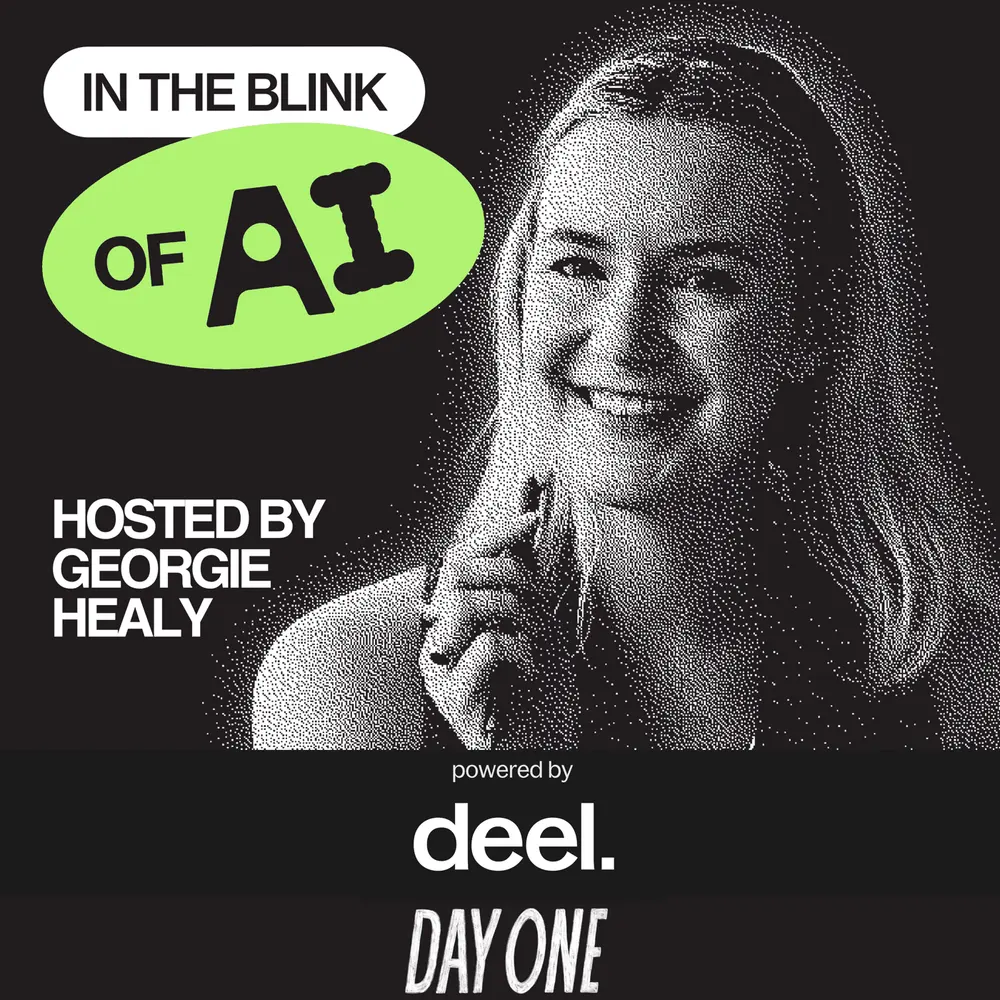 In The Blink Of AI with Georgie Healy
Presented by Deel & Stripe
In The Blink Of AI with Georgie Healy
Presented by Deel & Stripe 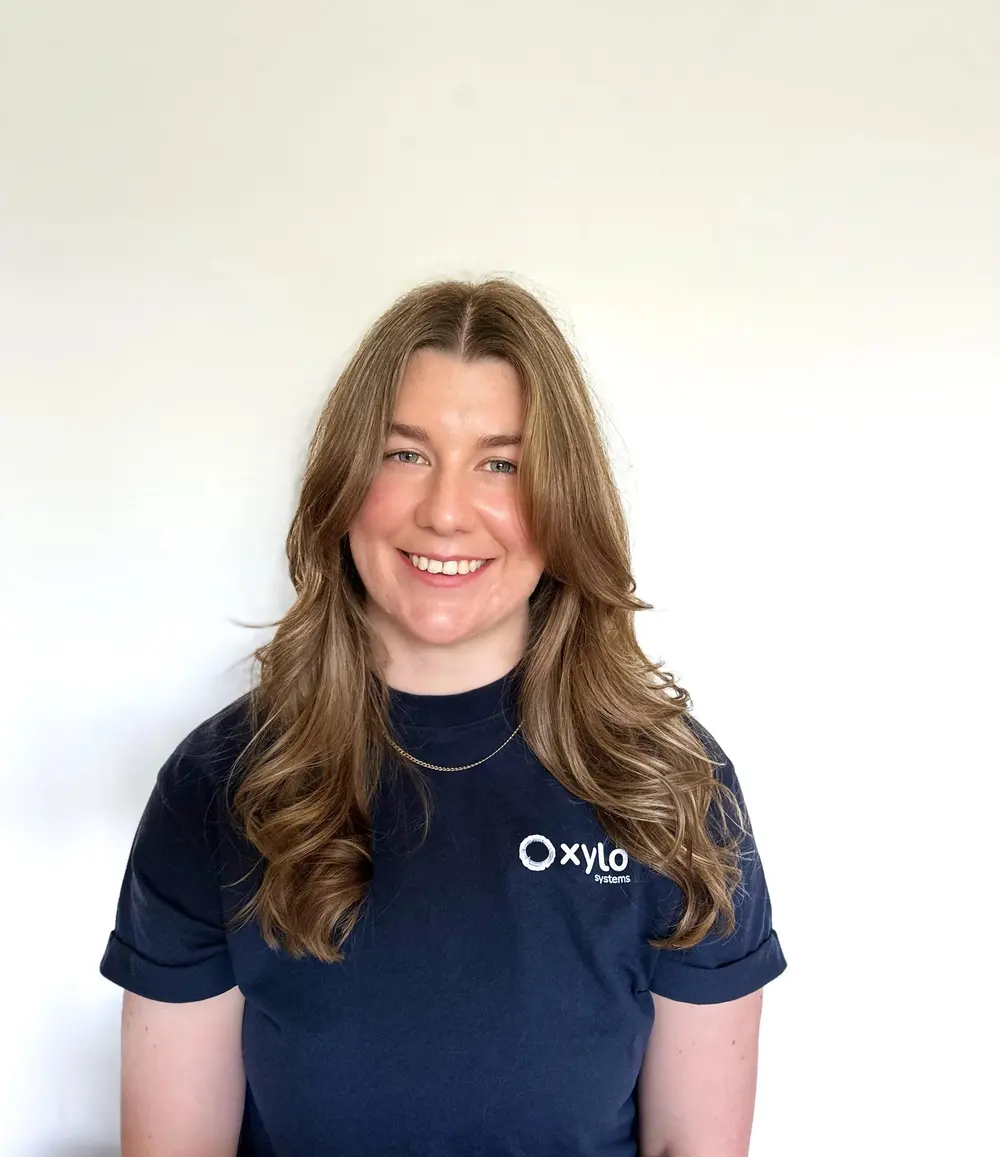


 ▶
▶  ▶
▶  ▶
▶  ▶
▶  ▶
▶ ▶
▶ ▶
▶