Transcript Synced · select any line to jump ▾ 0:01 Georgie Healy: Founders scale faster on Deel. Set up payroll for any country in minutes, hire anyone anywhere, get visas handled fast, and get back to building. Visit deel.com/dayone. That's D-E-E-L.com/dayone. 0:20 Millie Marconi: And so TestFeed allows us to analyze content before it's been published. So essentially preventing potential reputation damage, And we use synthetic audiences to help understand content, tone, unintended interpretations, and also showing how your audience will respond to the content. 0:42 Georgie Healy: The concept of global warming was created by the Chinese in order to make our manufacturing non-competitive. 0:48 Millie Marconi: I'm only seeing the hockey stick growth on LinkedIn. I'm only seeing, I made $100K overnight, and I really strongly disagree with that rhetoric. It's not reflective of what it is to build a business. 1:00 Georgie Healy: Sorry, losers or haters, but my IQ is one of the highest. 1:04 Millie Marconi: It's no longer cute to not know your financials, and I think it's the same with the technical side of things. It's really not cute. You need to be across the business, and I think any business that is, I guess, seeking investment as well, it is going to be a big part of the thesis of raising is understanding the backend of the product. 1:25 Georgie Healy: Hi everyone. We have our first live show of In the Blink of AI on Thursday, 29th of May.. It will be at the University of New South Wales in Sydney with Andrew McCarthy, Head of APAC and Asia at Notion. Tickets are in the description below. I hope to see you there. Hello and welcome to In the Blink of AI, where I talk to the brightest AI startups and innovators each week. I'm Georgie Healey, and this week I am speaking to Millie Marconi. She's the founder of Yesterday. They're a VC-backed startup going through a public Pivot. What began as a workforce planning solution is evolving, and their new product TestFeed has already got hundreds of people on the waitlist. She shared a product demo a few weeks ago on LinkedIn, and it went completely viral, but more of that on the show. We talk about what it's like to be a non-technical founder building an AI company, being a digital nomad. I think every time I speak to Millie, she's living in a different country, and she works 6 days a week, and we're both incredibly passionate about content as a currency, which we were on a panel for recently. I know you're going to love this episode. It was a real treat to have Milly on the show. Let's dive right in. 2:44 Speaker: You're listening to a Day One FM show. 2:47 Georgie Healy: Hey Milly, thank you for joining in The Blink of AI. We're so thrilled to have you. Can you start us off by telling us a little bit about your day job, what you're working on? Go. 3:00 Millie Marconi: Thank you so much for having me. So I'm currently the founder and CEO of Yesterday, so every day looks crazily different. So I'm working on at the moment our recently launched Test Feed. So this is our flagship product. We posted a demo a couple of weeks ago on LinkedIn. And so Test Feed allows us to analyze content before it's been published. So essentially preventing potential reputation damage. And we use synthetic audiences to help understand content, tone, unintended interpretations, and also showing how your audience will respond to the content as well. So it's, I guess, pretty exciting technology. 3:40 Georgie Healy: I'm so thrilled. Yeah, I'm so thrilled about this, especially because like, frankly, in the last 3 to 6 months, I have forced myself to publish more content, but I have no strategy, no idea. I, I sometimes get myself into semi-hot water even while trying my best and thinking I'm quite aware of what audiences need. And frankly, like, being able to have a synthetic audience sounds genius. So sorry I cut you off, you were gonna say something. 4:13 Millie Marconi: No, don't be silly. No, so it's exactly that. So it's, I guess, a security layer of testing your content before you post. So I think many people feel the exact same as you do. It's quite daunting posting content. And actually being able to run it by someone, but being able to run it by a synthetic audience, which is made up of 10,000 users in your target demographic. So yeah, that's what I'm working on at the moment. 4:40 Georgie Healy: 10,000 users. That's massive. That's so good. 4:46 Millie Marconi: Yeah. So synthetic audiences are really exciting and it's definitely new technology. But yeah, that's really what is taking up a lot of my energy at the moment is everything around getting this business off the ground. 4:58 Georgie Healy: Now we will, we will really dive in and finesse and ask some very specific questions around your flagship product TestFeed. But before I do that, what, what are you really excited to focus on in the next 3 to 6 months, would you say? 5:14 Millie Marconi: Yeah, so for me, I would say a massive unlock is synthetic audiences. So that's really where I'm spending a lot of my energy is exploring what's possible in this space. So essentially, it's democratizing a lot of the previous quite difficult market research or brand sentiment analysis that was really gatekept by a lot of capital and really only reserved for sort of very big enterprise customers. So I think there's a lot to be done in that space. And that's really what I'm extending a lot of my time to is how we can democratize market research, how we can democratize brand sentiment and, and using the application of a synthetic audience in lots of different use cases. 6:00 Georgie Healy: cases. Wow. So it's not just the, the big rich corporates that can get these insights. That's amazing. 6:11 Millie Marconi: Absolutely. 6:11 Georgie Healy: Okay, so look, I think, you know, anyone that's been on LinkedIn in the last few weeks will have not, not come past your post. You blew up the last time I looked, and it was a week ago, so it's probably way higher. You had 278 comments on your demo for TestFeed. Can you tell people that somehow were under a rock in the last week and didn't see it what what did that demo demonstrate for people? 6:37 Millie Marconi: Yeah, so it honestly went crazy. We've had over 800 users sign up to our waitlist. Um, so pretty crazy in just a couple of weeks. So essentially the demo was basically a screenshot capture of the product in action. So what it showed is 3 different variants of content and then which variant was performed best according to the specific audience that you entered. So the example post that we created was startup founders. Um, and then essentially it tracked the different metrics across the 3 different variations of content. And then the winning variant, it showed predicted responses. So anything from positive comments, neutral comments, and then potentially, um, negative or adverse responses as well. So you could really— showcase exactly what it would look like to post that content, and also to, I guess, see how that content was perceived with your audience. 7:39 Georgie Healy: I don't know about you, but the number of times I've had people say to me, oh, I'm too scared to post. Like, oh, it's just very— it is daunting to post things online. And even if it's an okay post and it only gets a lukewarm response and you thought it would get higher, it's not just for, you know, not getting canceled, right? It's like, how can you maximize the feedback? Millie, how did this idea come to you? Like, it's genius now that you mention it, but, but I don't think I would have come up with it personally until I heard about it. So, so where did, where did this idea— when was the inception of this idea? 8:19 Millie Marconi: Yeah, so it's actually quite an interesting story. Um, it came about from quite unfortunate circumstances. So about probably 4 months months ago, I posted— at the time I had a product in recruitment tech, um, and so I was posting quite prolifically on LinkedIn around recruitment, anything to do from candidate interview tips to salary transparency, you name it. I was creating a lot of content in that space because I did have subject matter expertise, um, having worked in the recruitment sector for a number of years. And I posted something that really, I didn't intend any offense, but it definitely was a post that was perceived very negatively. So within a matter of a couple of hours, it had tens of thousands, on its way to 100,000 views— uh, sorry, impressions. It had so many comments, I had to turn the comments off, and I was getting bombarded with really, really negative, um, messaging, which again, I completely take responsibility. It was a post that I did not interpret it in the way in which another audience interpreted it. So that really gave me the idea of, if I had run this content by someone, there's no way I would have posted that, or there's no way I would have posted it with the opinion that I posted it. Um, so it created an idea for, well, what if I could actually simulate my target demographic and I could simulate how they would respond to the content before I posted it? So rather than running it by a friend or a family member who's probably going to be quite biased and understand where you're coming from when you create content. The idea was to, to try and simulate the audience. So that was, I guess, the seed of the idea. And then from there, we just ran with it. 10:11 Georgie Healy: Wow. 10:11 Millie Marconi: And it was something that I actually did not know if it had any legs, but I started showing this brief little demo that we had as just an internal tool. I started showing it to people and the response was insane. And I was getting messages saying, can you please— I want to post this today, can you please run it through test feed? So really showed me that there was a viable product there. 10:35 Georgie Healy: There's a huge appetite for this. I'm just noticing for myself, posting more regularly and just getting eyes on what I'm building and what I'm focusing on has given me credibility and it's giving me opportunities that I never expected. And I'm not even a founder, so So I can imagine for founders this would be huge. Is that your target audience? Is this— is TestFeed for founders or is it for anyone? Like, who, who, who's your main customer going forward, do you think? 11:05 Millie Marconi: Yeah, so I would definitely say a very strong ICP for this product is the founder community because number one, it's a community I've been a part of for years. And additionally, I do think there's increasing importance on personal brand for the likes of founders to be able to raise capital, to grow their product, to build in public. And I guess also the importance of managing your reputation as well. So that's definitely a core ICP, but then we're also seeing a really strong response from social media managers, content creators, community managers. Mm-hmm. So anyone sort of in the more B2B social media space. Um, so those are sort of the two markets that we're really focusing on initially. But I would say for me, I think it's always important that you're building for a community that you're a part of. Um, and I definitely feel that strong go-to-market with the founder-led community. 12:04 Georgie Healy: I do really feel for you though, that, you know, I'm, I'm so pleased that you are building such an incredible product that people will benefit from, but I'm also kind of sad to hear the circumstances from which it came from. Does it affect you, Millie, in the way you take risks now? Like, are you now more risk-averse, or now that you've been cancelled, are you kind of like, oh, I survived that, maybe like, maybe I can take more risks, it didn't kill me, it made me stronger? 12:34 Millie Marconi: Yeah, it actually has completely transformed the way in which I take risks. So I'm very much more aware of reputational risks as they can honestly be more devastating than business risk. Like, I truly believe that. So I wouldn't say it made me more risk-averse overall, but I would say it made me more intentional about what risks to take. So taking bigger swings where I've done my homework and being more careful about communication that might be misinterpreted. But I do think it also gave me a bizarre sort of sense of freedom that, you know, regardless, nothing's going to be as bad as you think it will be. So trying to be more bold, even knowing if something flops, it is what it is. And I think that's a big part of the build in public rhetoric as well, is, you know, you need to be there to share the wins and losses. 13:32 Georgie Healy: This really is such an interesting topic, right? Like, you want to be a founder, you're going to need to take risks. I am not a big fan of Zuckerberg, but the whole build fast and break things. But can we do it in a way where it's not like I got canceled for something that wasn't even worth the risk kind of thing? Like, like you say, if I'm going to take risks, if I'm going to put myself out there, can it be more educated and worth it? 13:59 Millie Marconi: You know, definitely. 14:01 Georgie Healy: Look, speaking of which, speaking of, you know, taking risks, Some people seem to choose, some founders seem to choose the stealth mode and I won't share anything until the product's finessed and perfect and ready to launch. And other people, we had Sam Garvin on the show from Techstars, build in public, share your wins, share your failures. You are in the latter camp. Tell me why building in public, pivoting in public, just putting yourself out there works for you, Millie. 14:33 Millie Marconi: Yeah, so it was something that I wasn't doing last year, definitely. And I think I actually felt quite alienated because I felt like I didn't belong in the founder space, which I know I belong. I've literally been an entrepreneur my entire career, straight from university. I've had one part-time job that lasted an abysmal amount of time. 15:00 Georgie Healy: She needs to be an entrepreneur. 15:05 Millie Marconi: So I know I belong, but I felt like I'm only seeing the hockey stick growth on LinkedIn. I'm only seeing, I made $100K overnight and I really strongly disagree with that rhetoric. It's not reflective of what it is to build a business. So earlier this year I decided I really wanted to be a lot more transparent in my founder journey. I was taking a pretty significant pivot and I decided I was gonna actually, uh, document that entire process. So I really do think creating content is very scary, and I completely empathize with that. But I do think there is definitely a need for more transparent content. And as, um, I listened to your interview with Sam, and I think it's really important. The build in public is showing what the reality of a day-to-day founder looks like and, and the highs and the lows. And I think We do need a lot more of that, and that's in this space and, and particularly for women as well. We don't necessarily see too many female founders and we don't see too many female founders building in public. So it's a really important avenue so we can see for younger future entrepreneurs what it looks like to actually walk the path of a founder. 16:19 Georgie Healy: I couldn't agree more. I was very briefly a founder. Unlike you, Millie, it's not really in my DNA, but you know, I, I had a go at it. And I was often asked like, who do you really admire in this space? And I felt sick because I was like, there aren't many female entrepreneurs that at the time, and this is maybe 2019, that I could just call upon and say that person. Namely because probably I just wasn't seeing many in the space and they weren't as public. And I would've really benefited from seeing someone like you, Millie, who was not just sharing the wins and the incredible demos and success, but but also like, now we're going for a pivot and, you know, I'm a non-technical founder. Um, I don't know if you felt the same or if I just wasn't looking in the right places. 17:10 Millie Marconi: No, I felt the exact same. And it's been really interesting. I think I changed my LinkedIn to say pivoting in public a few weeks ago, and the amount of messages I've had from founders saying, oh my gosh, I'm having huge issues in the business, I really want to have a chat, or, you know, I feel really seen and I'd like to explore this more. It's been crazy. And so many startups that look like they are absolutely kicking goals from the outside, the responses I've had to that has been really interesting. So I think, yeah, there's definitely— I felt really like, again, I didn't belong in a lot of these communities because I wasn't achieving hockey stick growth. So yeah, I think we need a lot more transparency and a lot more showing the reality of, of what it is to run a business, and pivoting is a big part of that. 18:04 Georgie Healy: Yeah, I'm sure you're inspirational, not just to the women, to the men as well, right? Like, there's this funny thing where VCs are like, we love backing, you know, uh, serial entrepreneurs, AKA you have tried businesses many times before, and, and you know, this is maybe your third or fourth iteration that's probably come from failures, but we don't want to see the failures. We just want you to be a serial entrepreneur. Or even, you know, we back founders that, that take risks, dream big, blah blah blah. But then there's, you know, you see the headlines, right, Millie, where if a startup fails, it's front page news, and the VC's front page news, and the founder's front page news. And it's like, yikes, I don't want to be Melkram. 18:49 Millie Marconi: Like, yeah, absolutely. And I do also think with that as well, the reason in which like we see, okay, startups had investment and then startups failed. We don't really see what's going on in the middle. And I do think a lot of it is to do with, there is so much, I guess, reputational risk if you've raised on an idea and then you are changing the idea based on market feedback, circumstances. 19:16 Georgie Healy: Mm-hmm. 19:17 Millie Marconi: Technical capability, whatever it is. So I did, I guess, want to really focus on showcasing what the pivot looks like. And so I think that's been really eye-opening just from the conversations I've had with other people. Because again, there's something happening between someone raising capital and a business failing or a business succeeding, and we need to, I guess, see more of that path. 19:44 Georgie Healy: You've got a very technical product at TestFeed and you're leveraging AI and you're very clear and very open about being a non-technical founder and and you're not the only one. There's a lot of non-technical founders, and it's an incredible time in technology that AI means that we don't have to be software engineers anymore. It's quite an exciting time. But what superpowers do non-technical founders have that maybe, you know, exit-lasting software engineer founders don't have, do you think? 20:14 Millie Marconi: Yeah, I would say this is something I'm really passionate about, and I think Focusing on what you bring to the table is an unfair advantage. Now we have the barriers to enter on the technology side are completely diminished what they were 5, 10 years ago. So now building isn't necessarily the biggest pain point a business will have. It's distribution and it's also the human side of the business. So as we democratize different skill sets with AI, we're going to need that human-centric focus. So what does your unique skill set look like? How are you showing empathy with dealing with your customers? How are you communicating? How are you building community? Those are all really important skill sets, and I think now more than ever we need to focus on those. So I think being a non-technical founder, and if that's really within your core suite of skills, harness that to the best of your ability. And additionally, I also think something that's— it's taken me a while to learn is that the naivety of being a non-technical founder can actually be quite an advantage. So— I know, very controversial figure, but Elon Musk is really quite famous for basically not accepting that different challenges with SpaceX or what have you were completely impossible. And it was that resilience to continue, continue, continue to lead to incredible successes. And I think sometimes something that I've learned over different businesses that we've had where I've had technical co-founders is sometimes understanding how difficult it is to create the product and bring the product to market can actually be a negative. Mm-hmm. I think there's almost a level of naivety where it's just, okay, let's persist, let's be resilient, let's overcome that hurdle. And I can see the vision and I want to create that product. So yeah, I think that's actually an incredible win for a lot of founders. 22:22 Georgie Healy: Great call out. It makes you think of the Steve Jobs versus Steve Wozniak of it all. So everyone's obsessed with Steve Jobs. He's a non-technical founder. He would dream up these amazing products. And also maybe a controversial figure, that Steve Wozniak was the engineer behind the scenes. But most people don't even know who Steve Wozniak is. 22:45 Millie Marconi: Absolutely. 22:45 Georgie Healy: And it's like, yeah, yeah. Okay, so I'm a non-technical founder, I have an incredible idea, but it needs to leverage AI. Milly, what do you suggest to those founders? And can you maybe give us a little peek behind the curtain how you integrated AI or technology into Testfeed and into Yes Today? 23:06 Millie Marconi: Yep. So for me, AI is a huge part of my focus every single day. I've been an early adopter of AI, obviously a non-technical founder, but I really do keep abreast of different AI tools, and I think that's really important. That's almost a non-negotiable for any founder, whether technical, non-technical. And even if the business is not predominantly in the AI space as well. So I would really say, I guess, focusing on the distribution piece and focusing on where you can, I guess, leverage your abilities to create a really successful product. So whether that be, okay, we're gonna do so many user research interviews that we know every single thing about this product and about what our customer needs so that then when we do work with a technical partner, we have a very clear idea of exactly what we want. 24:04 Georgie Healy: Mm-hmm. 24:04 Millie Marconi: We've done all of the groundwork. I think a mistake that I've seen a lot of non-technical founders make is they don't necessarily understand the path to actually build that product. They don't know their customer well enough. And then managing cash flow, managing the actual technical production is really quite challenging. So that's something that I've learned very much the hard way. 24:26 Georgie Healy: Yeah. 24:27 Millie Marconi: In addition, I have an amazing technical team to support me. So I am very much focused on upskilling as much as possible and learning as much as I can about the product, as much as I can about product management. So, yeah, I will never pretend that I'm technical, but I do definitely try my best to understand the product and understand what's happening in the backend as well. It was actually a quote from Zoe Foster-Blake. 24:55 Georgie Healy: Yeah. 24:56 Millie Marconi: And it was to do with finances in GoTo, and it was like if she was sitting in an interview with the CFO and the CTO and whoever from GoTo, which went on to be acquired for $80 million, she said it's no longer cute to not know your financials. And I think it's the same with with the technical side of things. It's really not cute. You need to be across the business. And I think any business that is, I guess, seeking investment as well, it is going to be a big part of the thesis of raising is, is understanding the back end of the product. 25:32 Georgie Healy: I just Googled, um, Zoe Foster-Blake built a $177 million company, which is the GoTo that you mentioned. She's got a net worth herself of $36 million. So, uh, yeah, it's no longer cute to not understand your product, Millie. I love that. Um, so it sounds like you're across your product and you know how to provide direction to your technical team because you've got that insight about your customers and your product. That's a really great way of positioning it, but you also don't just fully switch off when it comes to technical and go, oh, I'm not technical, I'm not going to listen. 26:11 Millie Marconi: Definitely. And I think also leveraging AI tools to learn AI tools is really important. 26:19 Georgie Healy: Oh, what are you playing with? Yeah. What do you like to use? 26:21 Millie Marconi: I'm so— I'm big on Cursor. 26:25 Georgie Healy: Really? 26:25 Millie Marconi: So playing around with the product. Again, I'm not at all good enough to ever take a product to market myself, but I will always be continuing to learn. And I think There are so many tools available to us, Lovable, and there's so many great resources. 26:43 Georgie Healy: I was playing with that. I was in a nail salon recently, you know, I've got many diverse skill sets. One is multitasking, and I downloaded the Lovable app and I was trying to get it to create a map of like medieval sites across the world, and that's the task I was giving it while I was in the nail salon. I love hearing what other people are using. Have you ever you like used AI just for completely silly stuff like that? Because that's, I think, predominantly what I use AI for. 27:15 Millie Marconi: I use it genuinely for absolutely everything. And again, my partner is a CTO of a, um, a startup, and he's a developer, so I think he also has introduced me to AI early days. We use it for absolutely everything. I use it as a therapist. I use it as— and I actually have shown people who actually work in psychology. This is basically— again, this, it's absolutely not recommended, but, you know, it does really democratize a lot of these traditional expensive avenues that aren't necessarily available to someone, the support that they need when they need them. So, um, yeah, I think it's fantastic. Absolutely every element. 27:58 Georgie Healy: I recorded an episode recently where I kind of put my foot in my mouth in a major way, and I was just spiraling over this really silly comment I made. To bring it back to like getting canceled, I was terrified. Just a very silly sexist comment that I really, uh, just didn't even expect to have said come out of my mouth. Like, what was that? And, uh, I chose to release the episode because the founder handled it in such a beautiful, eloquent way. And I used ChatGPT being like— I can't stop stressing about this comment I made, and it was so helpful. It was so helpful. It was like, first of all, we all make mistakes, and it just really talked me through it. It was really helpful. 28:46 Millie Marconi: Yeah, absolutely. Yeah, it's honestly a game changer. I think they're also the— and this is particularly big in the recruitment tech space— is the delineation between people in, say, big companies that the use of AI is throttled and then say startup founders, there's a huge divide. So I think it's actually quite interesting seeing the adoption of AI in different communities because I think sometimes it does feel a bit of a bubble and the use case in which I use it and friends in the startup space use it compared to some of my friends who work in corporates. It's so insane to see the difference. So I think— Yeah. Also, something I'm very passionate about is micro SaaS, so small bite-sized products that are easily usable and they don't require any technical skill set. I think that has huge advantage to mass adoption as well. 29:43 Georgie Healy: I, I'm fascinated to hear what you're noticing because listeners of this show are a real mix. We've got, yes, a ton of founders that listen, and founders are often at the the coalface of innovation and using the AI tools first. But we've also got a lot of professionals that listen to the show that are increasingly being told and are using AI tools. But it— but yeah, I'm curious what you're noticing with the corporates versus the entrepreneurs, perhaps. 30:13 Millie Marconi: Yeah, it's really interesting. I would say a lot of companies that I have spoken to as there should be, there's parameters around how they can use AI in their workforce. But I also think the appetite to use AI outside of work really needs to be there because I am definitely aware of a growing divide about how certain sectors of the market are using AI and certain sectors aren't. So I think that's going to be increasingly important. Mm-hmm. I was actually talking to a family member who's at university at the moment. He was asking me, what should I do? He wants to get into business. And I said, start playing. Literally start playing every single AI tool. Teach yourself Cursor, teach yourself every single tool. 31:07 Georgie Healy: Yeah. 31:07 Millie Marconi: On the market. And I think it's really important because that really opens up so much more. 31:13 Georgie Healy: I love the wording you use too, like play. I agree. Like if we take it as like a, this is e-learning, people are gonna really quickly switch off and feel not only kind of it's a chore, but also a little bit perhaps overwhelmed. Like there's so many different AI tools and I completely get it that even for some like an LLM, well, do I do ChatGPT or Gemini or Claude or like there's so many out there. And then I'm hearing about Deepseek that the headlines are telling me that it's dangerous to be using these products. I get why people are overwhelmed. So, Millie. 31:58 Millie Marconi: Oh, absolutely. 31:59 Georgie Healy: What should they use? What, what, where would you start? Or even like a top 3 products that you can have fun and you can play and don't upload company documents, but at the same time like, let's, let's kind of have fun here and remember that this shouldn't be a chore, you know. 32:19 Millie Marconi: Yeah, I actually, because of my previous life working in executive headhunting, I actually now have quite a few candidates that I've become quite friendly with, and I actually have conversations with quite a few of them who are looking to start their own businesses, and I've I've created a few documents that basically show them exactly how to set up the projects in Claude and how to— 32:45 Georgie Healy: Wow. 32:45 Millie Marconi: Do a deep research project in Gemini. So I would say really what my advice to those budding founders are, so for example, I have a friend in Tokyo who is starting a travel agency. And so for her, I set Claude and I showed her how to use it. I created a prompt that basically helps her create prompts. So then this sort of prompt engineering barrier to using Claude is, is diminished. So Claude and then Gemini Deep Research, I think is fantastic. I use that multiple times a day, whether it's researching different companies, researching random things about whether spaghetti was invented in China or— 33:30 Georgie Healy: Oh, that's so awesome. That's so awesome. Yeah, I love that. I love it. And also it highlights, you know, it depends on the task, but at the same time, guys, you don't have to know all of them. You get told, use Claude for this, I'm going to give you this use case, I'm going to help you with the prompting, and then use Gemini for the deeper research, the reports, the insight that need more content and more unpacking and time for it to do the inference. But you don't have to do all of them, guys. Like, you're gonna overwhelm yourself. 34:06 Millie Marconi: Definitely. Definitely. Yeah, I think just start small. Start with whatever you have available to you, free plans, and just play. Like, I really do think that's the biggest unlock. 34:18 Georgie Healy: I keep hearing that Claude is the best LLM because it's, uh, the tone of voice is very like human-like and conversational. Would you agree? Is that fair? Or why did you suggest Claude? 34:32 Millie Marconi: I love clothes. So I pre— they just announced Anthropic, just announced Unlimited. So it's like, I think it's $200 a month. We were previously paying for multiple licenses each. We'd have to, we'd hit our limit and then we'd log out and then log in on a different. So this is awesome. 34:51 Georgie Healy: You're an AI household, so it feels like the old days of the dial-up internet almost. You're like, oh no. But I need to make a phone call. That's awesome. Yeah, I need to play with Claude more. I have downloaded on my phone. I like the tone of voice a lot, but yeah, I've loved Deep Research for even silly stuff. Like I'm going to Europe in June and it's a very quick whirlwind trip, like 2 days in Rome, 3 days in Paris, 2 days in the south of France. And I'm like, I don't want to miss— like living in Australia, it's a very short trip. I really want to maximize optimise my interests and not coming home and being like, oh my God, we spent so much time doing this thing that I don't want to do. I'm not much of a foodie, for example. So I'm like, deep research my perfect itinerary based on my interests is like, imagine how much time that would take me normally, right? 35:48 Millie Marconi: Yeah, it's honestly game-changing. 35:50 Georgie Healy: Thank you for nerding out on AI tools with me for a second. I can't have you on the show and not ask you about something that I find very much black box, which is a very nomadic lifestyle. You, you— I don't know if this is a cringe term— you're a bit of a digital nomad. Every time I call you, you're— last time I spoke to you like 2 weeks ago, you were in Vietnam. Now you're in Tokyo. You're going to be in Sydney shortly. Like, tell us first of all when this started, and second of all, why, why do you have such a nomadic lifestyle, Millie? 36:28 Millie Marconi: Yeah, so we started traveling, my partner and I, 2 and a half years ago. And essentially we moved out of our rental and just decided, let's just try a month away. And we very quickly fell in love with it. And from there it's really just spiraled. So for us, it's a guest. The change in environment, I think, is so inspiring. We've met so many amazing people, and we've met this really great community of people doing the same thing. 37:00 Georgie Healy: Really? 37:02 Millie Marconi: Yeah, we've met— like, we met this amazing man in Osaka last year who's in his 60s, who's been traveling for 6 years, and he has a map of the world with every single city it shows the precipitation overlaid with the temperature, and you'll move accordingly to the— yeah, amazing. Oh my gosh. So we've met so many great people that have really made us feel— like challenged our thinking, challenged, I guess, our sense of stability and what, I guess, success means to us. So yeah, it's been really fantastic. We will definitely be traveling till the end of this year. 37:44 Georgie Healy: Wow. 37:45 Millie Marconi: But yeah, I think it's, it's really, it's such a privilege and it definitely has trade-offs, but it's also, I think for an entrepreneur, it opens you to such a broader sense of, I guess, lifestyle and solutions and problems and how different cultures approach businesses. So it's, it's been really, really fantastic. 38:07 Georgie Healy: All right. Don't tease me. What are some of the downsides? Any funny stories? 38:13 Millie Marconi: Not necessarily a downside, but recently we were in Vietnam and we had a couple of work meetings and it was obviously a cultural thing. We were meeting a couple at 2:00 PM and they texted us before we arrived saying, just letting you know, we have to leave by 9:00 PM. And this was meant to be a coffee catch-up. And that originally freaked me out. I'm like, how can I possibly fill 7 hours of conversation? And we quickly learned it's a cultural thing. It's basically like respect for someone coming to visit your country and meeting in person. And it was just this amazing experience. And we had this fantastic day and it actually happened a second time as well. And it just really showed me, I guess, what we perceive to be so normal in our little, I guess, rushed, you know, 1-hour sit-down coffee catch-up. Um, it's just really expanded my thinking, um, I think exponentially. But I would say— 39:18 Georgie Healy: That is insane. Yeah, but in the best possible way. Like, I feel like in Sydney, if someone puts an hour block in my calendar for coffee, lunch, a meeting, I'm like, an hour? 'Can we get this done in 20 minutes?' Like, what's the agenda item? And it is kind of like, why are we— why is that the only way to conduct conversations? 39:43 Millie Marconi: Yeah, definitely. 39:43 Georgie Healy: And what about the upsides? Like, I know the upsides in terms of travel. I love travel. I'm obsessed. I can imagine it's great. But what's something that people might not be aware of that's another upside? 39:56 Millie Marconi: I think the network. So I originally was thinking we would feel quite disconnected from particularly Sydney startup space, but it's been completely the opposite. I feel like now I have this global network of like, I had a friend who's from Atlanta who lives in Japan connects me with an investor in the US last week. Like it's just been this amazing sort of melting pot of people who are all sort of similar-minded, that are really interested in exploring different cultures, but also working. And it's very, I guess, friendly to startups because obviously we don't have the routine of a 9-to-5 in the office. So yeah, I would definitely say the community side has been amazing. 40:45 Georgie Healy: That is incredible. I would not have expected that. I definitely would have assumed I felt lonely in those circumstances. So that's amazing. Uh, before we get to our fun rapid-fire part, um, any tips for founders that are just like, oh, but my whole life is in Sydney and, you know, I just don't know what— how I would do it, where I would do it. What's the nomad light version? What would you suggest if they wanted to just dip their toe and try it? 41:14 Millie Marconi: Yeah, I would really say just start with 4 weeks while you are working. So go somewhere for 4 weeks and don't change your work routine. Because that actually gives you a true indication of what it means to, I guess, travel and work. We really only get like one day where we'll see the city on a weekend, maybe a Saturday, and we work every other day. So it's definitely not the same as traveling. 41:40 Georgie Healy: Wow. 41:40 Millie Marconi: Um, so I would say try that and see if you like it because there is a lot of instability, there's a lot of changes, there's a lot of disruption. So it definitely has to be something that you're interested in. I know, for example, my sister who is a biomedical engineer, she loves travel, but she loves to go on holiday. And I think for me, I don't like a holiday. I don't like time off. I like having this sort of structure of work. 42:08 Georgie Healy: You love the 6-day work week. That is such a great take. It reminds me of, you know, when I went to London as a holiday. Very different city to living in it. Like, I remember being like, why is everyone so cranky and mad here? Anyway, I'm gonna go to the museum for free and the art galleries for free and like, da da da da da. And then when I lived there for 3 years and the rent is so high and the weather's so shit, I'm like, oh, this is different to my holiday. 42:34 Millie Marconi: Yes, absolutely, absolutely. That's spot on. 42:39 Georgie Healy: Okay, we're at my favorite part of the interview where we do a fun spicy rapid fire, but this is the first time I've ever done something a little bit different. I thought, seeing we have you and your incredible Tess Feed product, I'm going to share 6 cringy social media posts, mostly Twitter posts or X posts that have come from either Elon Musk or Donald Trump. And you have to guess who it was from. Are you ready? 43:11 Millie Marconi: I'm ready. Number 1. 43:13 Georgie Healy: Sorry, losers or haters, but my IQ is one of the highest. 43:17 Millie Marconi: Who's that? That, that has to be Trump. 43:21 Georgie Healy: It was Trump. Well done. Okay. The concept of global warming was created by the Chinese in order to make our manufacturing non-competitive. 43:30 Millie Marconi: That also has to be Trump. 43:34 Georgie Healy: That's Trump. 43:34 Millie Marconi: Well done. 43:35 Georgie Healy: Well done. You know your content. Tesla stock price is too high in my opinion. 43:41 Millie Marconi: That was Elon, and I know because it led to potential fraud charges. 43:46 Georgie Healy: Was a huge story and their stock market crashed fucking hard like after he did that. What an idiot. He needed test speed. Yeah, he really did. I'm up for a cage match if he is. Lol. 44:02 Millie Marconi: I think that's Trump. 44:03 Georgie Healy: So that was actually Elon Musk talking about Mark Zuckerberg and having a big cage fight. And then he like backed out when he realized that Zuckerberg was actually up for it. Fun times. But now history haunts him because he said he was up for it. 44:23 Millie Marconi: Not sure how, uh, Trump's jiu-jitsu is. I wouldn't trust that. 44:28 Georgie Healy: Yeah, yeah, yeah, yeah. No, um, this was Elon too, so, so, yeah. But neither of, like, hello. I would really pay money to see it though. I really would. It's freezing and snowing in New York. We need global warming. 44:45 Millie Marconi: That's gotta be Trump. 44:48 Georgie Healy: It's Trump. Well done. Well done. Well done. For a moment there, I forgot which crazy white dude I was thinking of in my mind. Yes, you're right. It was Trump. He wanted global warming. That's a good one. And the last one: masculine energy, I think, is good. Corporate culture sort of swung towards being this somewhat muted thing. Who's that? 45:10 Millie Marconi: Okay, so the original was Zuckerberg. 45:13 Georgie Healy: Okay. Yeah, you caught me. That was a trick question. 45:16 Millie Marconi: Oh, there you go. 45:17 Georgie Healy: Zuckerberg. You're like, they're all saying it now. 45:20 Millie Marconi: Oh no. I actually made a LinkedIn post about that. That was, yeah, an interesting time. 45:26 Georgie Healy: Really? We need to link that in the show notes. Okay. Producers, can you link Millie's LinkedIn post on that in the show notes? Thank you so much. Look, I think they all need a test feed. Um, thank you for playing that game with me. Millie, you've been such an incredible guest. Absolutely love this chat. Kind of forgot that we were recording because I was having so much fun. What would you like to shout out to the listeners? What do they need to know? How can they keep up to date? 45:53 Millie Marconi: Uh, join the waitlist for test feed. Product will be live in about 1 to 2 weeks, which I'm quite excited about. And I'm doing like updates via email on the product development as we go. And additionally, I'd really like to shout out, I guess, female founder community. We know the stats about VC-backed female founders, it's abysmal. So I think we really need to do as much as we can to champion and support budding entrepreneurs and make the space more inclusive for female founders. . And I know, Georgie, you're obviously doing amazing work in that space, so thank you. 46:33 Georgie Healy: I want more female founders on the show, so reach out if you're building with AI. Would love to have you on the show. And let's, you know, embrace the building in public, the non-technical AI founder. Milly, you are such an exceptional, you know, guiding light in this space, and I really appreciate having you on the show. Thank you so much for sharing behind-the-scenes insights, and I'm so pumped for Tessfeed. I'm on the, I'm on the list. I can't wait. I produce a lot of content. I need help. So thank you so much. 47:07 Millie Marconi: Thank you. 47:11 Georgie Healy: Thank you for listening to In the Blink of AI. You can check out the show notes for anything discussed in this week's episode, and we will be back next week. This podcast was produced by Day One with music by Dan Hansen and visual artwork by Sophie Tyrell. If you loved the episode, please tell your mates. And I love AI news. Please share your thoughts and suggestions to georginarosehealy@gmail.com.

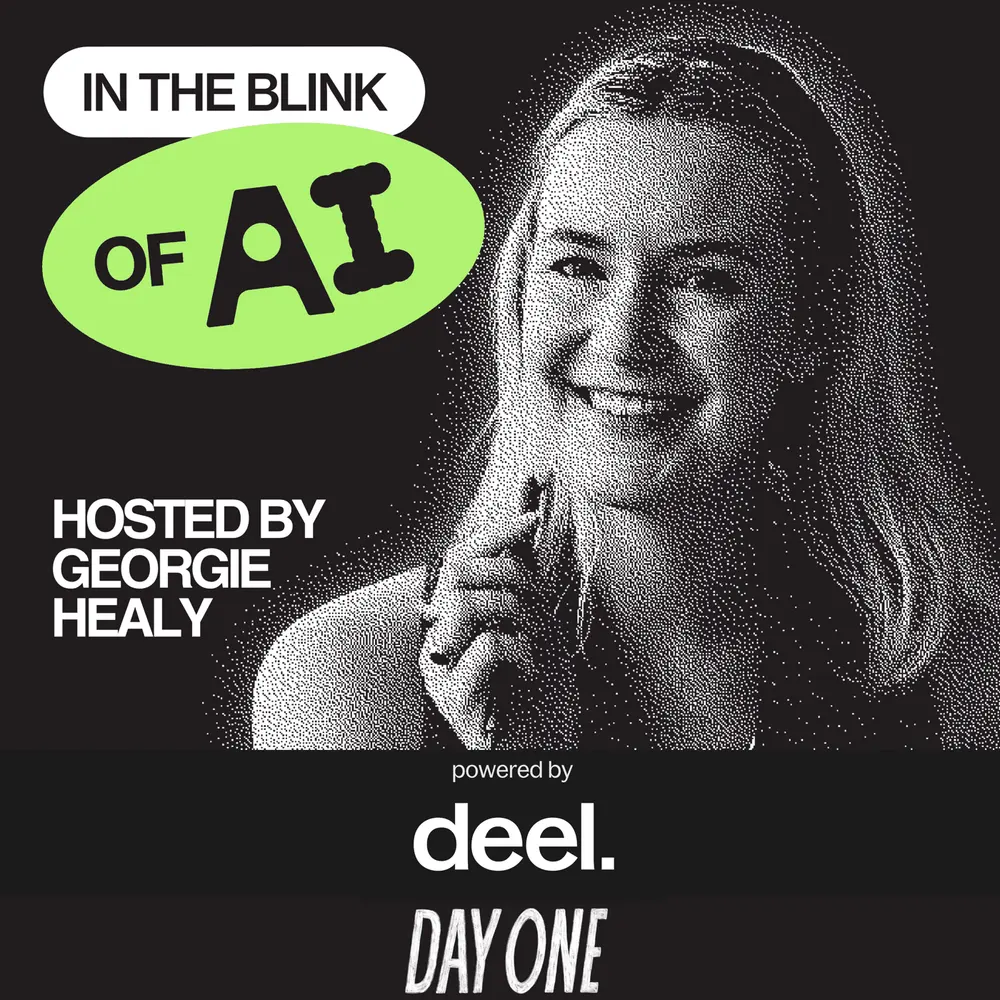 In The Blink Of AI with Georgie Healy
Presented by Deel & Stripe
In The Blink Of AI with Georgie Healy
Presented by Deel & Stripe 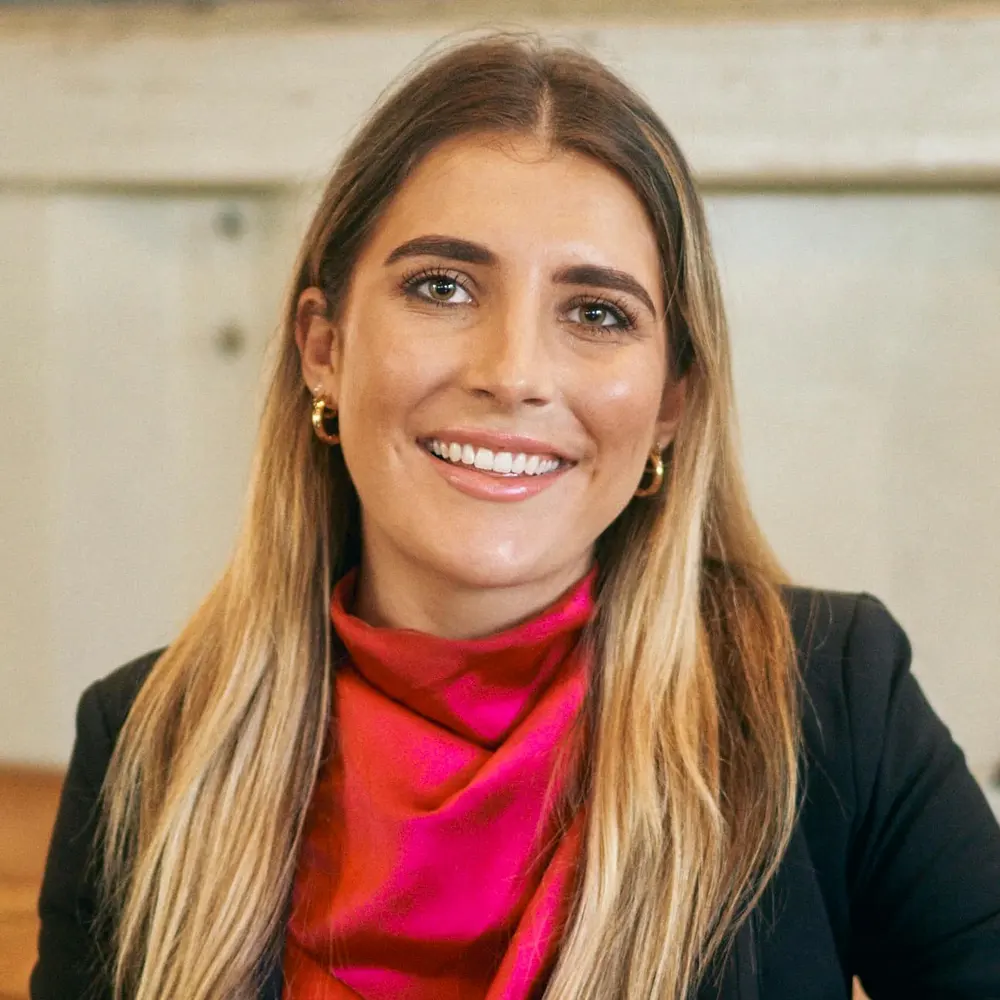
 ▶
▶  ▶
▶  ▶
▶  ▶
▶  ▶
▶ ▶
▶ ▶
▶