Transcript Synced · select any line to jump ▾ 0:02 Georgie Healy: Founders scale faster on Deel. Set up payroll for any country in minutes. Hire anyone, anywhere. Get visas handled fast and get back to building. Visit deel.com/dayone. That's D-E-E-L dot com slash day one. 0:24 Alex Valente: I actually have a vivid memory of during COVID helping a biotech company in the US that was running COVID testing using the software that I was working on at Atlassian as my product. And I had no idea that anyone was using it for COVID testing. And they had this like really niche request. And I was like, why do you— why does this one customer care so much about this? And we met with them and they're like, yeah, if we could do that, we can get this other machine to automate COVID tests. Yeah. I was like, this is like the highest value thing ever. 0:58 Georgie Healy: Hello and welcome to In the Blink of AI, where I talk to the brightest startups and innovators each week. I'm Georgie Healy, and this week I am speaking to Alex Valente, co-founder of Redactive AI. Redactive helps enterprises manage new data threats and empower their security teams. Guys, this is an incredible episode. I do hope the producers edit out my constant cackling. Alex has been incredibly fun to speak to. He's super engaging. And a big part of this episode, I just had to dive into business building and strategy. Alex has had a really incredible career in the biggest technology startups and scaleups. And earlier this year, him and the Redactive team were able to secure one of the biggest seed rounds in Australian history. We also chat about founder mode, who are the AI vertical people versus horizontal, and powerful AI models versus actually delivering value to customers. I know you're going to love this episode. Thanks for tuning in. Alex, thank you for joining me today. I know there'll be so many listeners super excited to hear about Redactive and yourself and your incredible story. But those who haven't met you, can you tell us a little bit about what Redactive AI is and what role you play in the business? 2:19 Alex Valente: Awesome. I'm, I'm Alex, one of the co-founders of Redactive. Redactive helps enterprises move fast with generative AI safely. And the way we do that is by understanding the permissions associated with their data and allowing LLMs to kind of read those permissions and make sure that the right people can access the right information inside of an organization when they're using generative AI. 2:38 Georgie Healy: I still love hearing it, even though it's the third time I've asked you to do that for me. Do you mix it up every time? 2:45 Alex Valente: I mix it up very slightly every time. Every single person doesn't know this, but they're all being A/B tested. I've become like one big A/B testing robot. Bot. And depending on how much people react is pretty much how we progress the next A/B test we run. So if you ever receive an email from me, chances are we're testing some sort of new messaging and to see whether or not you open it or whether or not you react to it. This is kind of, I guess, the bit of the founder life, which is you're always trying to figure out what works. 3:14 Georgie Healy: So why haven't I received an email? Is my data not important to you, Alex? 3:19 Alex Valente: If you want me to put you on a messaging list, there's plenty of them. 3:22 Georgie Healy: I subscribe. So we'll talk about your background shortly, but you know, this is an enterprise customer value prop. You've got a fair bit of domain experience in this space. Is it through your previous job roles that you realized this was a gap? How did that come around? 3:43 Alex Valente: Yeah, I think the way that kind of Redactive got started was pretty interesting. I had worked at Atlassian for a bit of time, and I'd worked on a bunch of different enterprise products. So initially I'd worked on their data center implementation, which is their largest enterprise customers, their method of deployment. Worked on that initially. Then I worked on their cloud platform, which was trying to drive more enterprises towards the cloud and looking at cloud and enterprise functionality there. And then I worked later on on JSM on another very large enterprise feature in asset management. So every single thing I kind of worked on at Atlassian had kind of by chance been about enterprises. And then when I worked for a growth up called Immutable, and then while I was at Immutable one day, I kind of was playing around with generative AI. I was actually using it to see if we could write research emails as like a hackathon project. And then I was talking to Andrew, one of my co-founders, and I was saying like, the domain here is massive. Like there's a massive opportunity for us to kind of go out and really transform how people do their jobs. and we actually attempted to start a consulting firm. It lasted 5 weeks because I'm a bad consultant and we get bored very easily. And I think we took all of the learnings of that consulting firm and every conversation we had and we were like, man, this is so clear to us that every single organization is experiencing the exact same problem. And the exact same problem is I want to use generative AI, but I want my data to be inside of it, which is the way that people describe it to us initially. And I want the permissions to be right. Everyone kept talking about like, I don't want, you know, people to see things they shouldn't be able to see. That was always the kind of core problem that people were expressing to us. And we put that into a PowerPoint presentation and kind of the rest is history. We were kind of off to the races and we sent the PowerPoint presentation to one friend, they sent it to another person, uh, that ended up kind of on the desk at a venture firm. They called us on the phone saying, hey, what's going on with this, with this PowerPoint presentation we're seeing? Seems like a really interesting product. We were like, oh, I didn't know we had a product. And then before you knew it, we were kind of we started building what is today Redactive. We called Lucas on the phone, we said, hey, we kind of, you know, we need to get ourselves a CTO next. And we built a prototype, we did all types of kind of things to progress the story. And then kind of Redactive was born, and it was born kind of out of that idea of, you know, people need to protect their data, but they need to make it useful and accessible. 6:07 Georgie Healy: Yeah, Redactive, when you did your raise earlier this year, it made a huge splash. Who will talk about that later. We've had some pretty incredible vertical AI founders on the show. We've had Angelette from Empathetic AI, that's a tax autopilot. We've had Jada from Xylo Systems. She uses biodiversity data to manage biodiversity impact. And I'm noticing some VCs, won't mention names, are super excited specifically on vertical AI. 6:35 Alex Valente: Mm-hmm. 6:36 Georgie Healy: How Copilots and Autopilots can transform workflows, for example. What's your thoughts to horizontal AI and why is that impactful and why is that important for your customers? 6:46 Alex Valente: Yeah, great question. When we started Redactive, the product hypothesis was that we need to empower developers that are building inside of an organization to be able to build the workflows that are specific to their organization. Our broad idea there was we don't want to force enterprises. We saw from our past experience how specific many of their workflows were, and kind of what those organizations look like. And we understood like they have developers, these developers write code every day to build the workflows that they need. They don't build low-code app builders. That's not like, that wasn't the use case that we were targeting. We were targeting these specific developers inside the organization. And we wanted to kind of solve their problems. And their problems were predominantly things like, again, data access, managing data pipelines, interfacing with enterprise data sources. So we kind of went down that path because we saw the opportunity there. We stayed away from the vertical stuff because the honest truth was we weren't vertical kind of people. We had built tools that supported knowledge workers or tools that supported enterprise developers or tools that worked across organizations broadly rather than industry verticals. I think like our experience naturally led us down that path. What we found is like the problems that you can solve on a horizontal layer can obviously be gigantic as well, which is really exciting. So while you might be able to solve for, say, a particular industry in a particular country that has particular rules on a horizontal layer, you're kind of solving like really, really large problems pertaining to a section of technology that is difficult for an organization in every country. How can we use AI? This is a question we got asked the other week. How can we use AI to understand our data permissions to make sure that they're correct. Like, this is to me a substantially more exciting problem than being able to solve for a specific industry vertical because the impact is so large. Like, you can help so many different organizations, different people to protect their data. So that's kind of, I think, how we got shifted in that direction. And I think that's why it was exciting as well for our team. 8:48 Georgie Healy: Yeah, amazing. We'll get this question done upfront because, you know, I know you've been asked about it a million times, you've been interviewed by Forbes, but this seed raise that you raised was astronomical— $11.5 million. That's a lot of money for a seed round, and it's made a huge, you know, huge wave on the Australian ecosystem. Did you expect that level of participation? Were you getting any indicators early on? 9:15 Alex Valente: We got the indicators from our customers, obviously. Before you get the indicators from your investors. Like we could see, we can attract very large customers that have big problems and we can solve those problems for them. And I think when we saw that, we were like, oh, this is a, you know, this is not a company that's going to kind of swing for a small prize. We're going to swing for the fences. And so you can kind of see the round represent that. And I think that's what, again, that's what excites the people I think who work here. And I think that's why it's a great place to work with us. It's people are not scared to swing at big prizes and tackle big problems. And because of that, we've been able to attract, again, finance that's representative of, I think, the large opportunity that we're swinging at. So I wasn't, I'm not going to say I was surprised. I think by the time I started dealing with the customers that we were dealing with and I saw the level of their sophistication, I was like, hey, we're in the big leagues. I think it was commensurate with the work that my team was doing. 10:13 Georgie Healy: To founders that might be listening, is that a strategy that they could take on, like go for the big customers, or is there a risk to that? Like, what would you suggest? 10:23 Alex Valente: Pretty much say the same thing to everyone, which is like, I feel like Australians are scared of putting forward a big vision, and oftentimes we put forward small visions and we talk about local problems and we're scared of saying, hey, I'm going to compete against the Americans, or I'm going to compete on a global scale. I think thankfully by virtue of the team that we put together really early on at Redactive, everyone wanted to compete at a global level and no one was scared. A lot of people had startup experience and lots of people had worked at international software companies, which is always very valuable. And so early on it was like, hey, we're going to swing at a big horizontal prize that goes across many industry verticals and across countries. And we're going to make this an international company from day one. And we want to solve this key challenge of like, safe and responsible use of generative AI. And we want to do that via the lens of data permissions. And we went out there to market and we said, this is how, this is our vision. This is what we think. And I say to all founders now, like, you shouldn't be scared of being opinionated and getting out there and saying exactly what you think and communicating a large vision. At the end of the day, you will swing for big prizes. You will find things that work and things that don't work, and you will again attract capital commensurate to the problem you're trying to solve. You're trying to solve a small problem, you'll get less capital. And if you're trying to swing for a big problem, you're going to attract large ACVs and more capital to kind of fund that business. 11:44 Georgie Healy: I think you're a perfect example, Alex, of someone who is ambitious and has that almost what you notice in the American ecosystem of the way they pitch is very like unapologetic and like, can I change the world? And this positive, passionate energy. But somehow I don't get tall poppy syndrome where I want to cut you down. Like you've got a good balance of, you've actually got some modesty in there as well. I don't know if that's just you or. 12:13 Alex Valente: I think on the journey as well, like we made a lot of mistakes. Like I've probably spoken to you about some of those, like, you know, the first time we plugged in our software infrastructure into a large enterprise installation, it was like, that was a humbling experience. You know, every, you know, we got humbled very quickly. We, you can go to enterprise and say like, yeah, everything does this and this and this and this. And then, you know, you plug your software in, it doesn't work or something goes wrong. And then, you know, everyone's kind of looking at you and they're like, cool. So you said it was going to work, so you better go and make it work. And before you know it, you're kind of sitting in the office at like late night and figuring that out. 12:45 Georgie Healy: You're like, where's my manager? I need someone to tell me what to do. 12:49 Alex Valente: I was like, oh man, I remember like my last job. It wasn't like, I think like we used to plug in the software and it used to just work. Like what's going on with this one? For all of like the visionary, I guess, rhetoric, the reality is also there, which is like, hey, you do need to go and back it up and you do need to put in the effort. And all I can say to people is, you know, swing at big prizes, try and solve big problems and have a big impact. But having a big impact means solving the problem. You actually do need to fundamentally solve someone's problem. You can't just do like the sometimes American style of, you know, communicating more marketing than, than, than reality. 13:28 Georgie Healy: Yes. 13:30 Alex Valente: We really focus on driving customer value. That's our key metric at the end of every day of how we, we judge whether or not a product is, is valuable or functional. 13:38 Georgie Healy: I'm in a startup group chat where it's literally about podcasts we've listened to, and one of the ones that's blown up recently is on a live episode of the Acquired, they had Zuckerberg on, and it is really interesting because he's gone through quite a roller coaster being in favor and out of favor and in favor and out of favor. So even if you are that kind of macho personality originally, regardless of gender, you're going to be humbled at some point. Something's not going to work. Like, Alex, if you try and get into that metaverse, you may get humbled. 14:15 Alex Valente: I think he's such an interesting character because he's the type of person who has, like, swung really big initially and been super successful and was kind of a bit difficult to relate to early on. Then he kind of went into the metaverse thing. He probably got taught a pretty big lesson pretty fast in the metaverse. And I'd like— I kind of respect him for, for still sticking with it. Like, he— 14:38 Georgie Healy: his— 14:39 Alex Valente: maybe his vision has changed and, like, he's kind of trying to figure out what it looks like. And then on the AI thing, like, changed the game again. 14:47 Georgie Healy: Literally. 14:48 Alex Valente: Completely changed his image, I think, once he released Llama. And like, he was like, oh, this guy who everyone thought was like this maniac on like controlling a platform all of a sudden has released like the go-to open source model. And I think like pretty much, I guess, birthed a lot of what, you know, the enthusiast movement uses today is a lot of the infrastructure that really Facebook has built. So A fascinating character. 15:13 Georgie Healy: Not as technical as you, and I have mad respect for this open source play and his just willingness to keep like throwing things at the wall and innovating and like, you know, just clearly is passionate about building product, right? 15:28 Alex Valente: Yeah, 100%. Like he definitely hasn't gotten bored yet. Like, you know, he's clearly trying, tries in every market. And yeah, I think he's a super interesting character as well. He's like gone through a full personal rebrand as well. He went from being like nerdy and wearing hoodies to now he's jacked. He does MMA. He wears like, you know, he wears a gold chain. 15:48 Georgie Healy: Yes, he's got the broccoli haircut. 15:51 Alex Valente: I should start wearing a gold chain. I was like, listen, not yet. Maybe when I am at his level. 15:56 Georgie Healy: Next podcast, I want to see a gold chain or I'll be mad. 16:00 Alex Valente: I think my programmers would be like, Alex, this has got to stop. Like, we've got to do enterprise styling. No gold chains. 16:05 Georgie Healy: He's out of control. All right, when we get back to the capital question, you get this huge pool of funding, you're now sitting on a lump of money. Does that change your strategy? Do you go, okay, now we've got to go growth because we've got all this money now? Or, or is it regardless of how much we raise, this is the approach and that doesn't change? 16:27 Alex Valente: Um, the way that we looked through this kind of lens was through the lens of like product, right? You have to make investments as a team into products that have product-market fit because otherwise when you push that growth engine, things just don't really work. You can send 100 salespeople at a given market, you can have a specific pitch, you can have a product that kind of works, but unless it has proper product-market fit, your return on investment just, it just won't work. Like when we tested certain things in certain markets, We could— you could feel it. Like, you can feel that this thing is just not hitting the, the product market fit how we expected. So initially we didn't go and throw all the money at selling our, our product as it was in that moment. We were like, that's not a winning play and that's not a responsible use of capital. Instead, we ended up investing a lot of that money into hiring good engineers that could support the product and the product iterations we wanted to make in order to get the product into a place where it did have that product-market fit and we could start pushing the growth engine a little bit further down the line. So if you look at the organization today, it's kind of roughly 13 people. Like, you know, the majority of that is engineering. And the reason why is like Redactive is a product that really hits a lot of developers and the product needs to be super well engineered. Otherwise, you know, it becomes very apparent very early on like that it's, it does not meet the required standards. Yeah. Of the customer. And again, so until it's kind of was in that place where we were more comfortable, like, okay, it's meeting the needs of a customer, that's when we started going, okay, now let's start pushing the growth buttons. Let's get in, you know, an enterprise salesperson. Let's talk about marketing. How can we start pushing these, these other levers? Because otherwise I think you, you end up, you actually end up wasting a lot of your own time. This is another thing as well, which is like the only thing that sucks, like more than probably like spending money on a product that's not— that doesn't have good product-market fit is attempting to market it yourself as the founder and then being like, oh my God, this is, this is, this is not the right product for this particular market, or I'm not— I haven't got this, you know, set up correctly, or it's not meeting the customer's expectations. So making sure your product has PMF is that, that key requirement, I would say, before pushing any growth engine. I wouldn't go and push a growth engine before that. That's the case, even if— even, you know, even though I have the capital. So that's broadly how we looked at it. And that was the right bet because now our product's in a much better place. And when we do hit enterprises, we can actually service them. And that's probably where we find ourselves today. 19:03 Georgie Healy: On the product, maybe I have trust issues. If I had a team majority of technical people, it's a technical product, it's in security. I know you've got an electrical engineering degree, you're very technical, but sometimes I wouldn't sleep at night being like, is this actually, what I hope it to be? Like, you're a co-founder, you might have a step back from what's actually being built from a technical security perspective. How do you know that it's to the quality you want? How do you know that it's correct? It's AI, it's tech. 19:35 Alex Valente: Like, this is now where it comes down to this concept of like collaboration. Like, any organization reaches a certain size where you don't know the exact intricacies of every single person's job, and you have to trust them and you have to work with them. And a lot of people recently been talking about founder mode and about getting involved in like every single thing inside of a company. And I think getting involved is absolutely super valuable as a founder. You should be getting involved. Like, you know, I get involved super deeply in the product. I get super, super deeply in what data we capture, the strategy behind all these things. But at the same time, you know, as a founder, your time is limited. You want to be making those investments into the places where it is, you know, delivers the highest ROI. And I think sometimes people construe founder mode to be like, I'm going to get involved in like, you know, the intricacies of how we do billing. And it's like, is that really the thing you want to be opinionated about? Or maybe you should be opinionated about like, you know, how you're tackling a particular problem space inside of a particular, you know, one of your particular products. What I ended up finding is like, You need to get involved. You need to use the product. You need to see the product live. You need to sit with a customer and watch a customer use the product. You need to understand what the customer wants to do with the product in the future. You need to interview customers. You need to talk to them. You need to get extremely close to these people. And you need to sit with your engineers and see, understand the constraints, reflecting what the customer said. Again, that's a super cooperative thing. I don't need to know the exact intricacies of how our authentication pipeline works, although I do find it very interesting. The reality is it's really that customer response and whether that customer need is being met that is actually the key thing that should drive a business's decision-making because they're the people paying for the product. Even at the end of the day, if it's not specifically the way that I maybe prescribed it to be, if it meets a customer's need and my engineer understands the customer's need, then, then I'm really happy. I'm actually much happier than if that, you know, it was delivered exactly to my specification, because my specifications aren't important, the customer specification. 21:45 Georgie Healy: Yeah, that was a really great explainer on what founder mode actually can look like in reality versus— yeah, like, there are only so many hours in the day. In the Forbes article that I've mentioned already, one of your investors, Michael from Blackbird, is quoted as saying, "GenAI applications are only as useful as the data they have access to, and for most enterprise, the most valuable data is sensitive and permissioned." Do you agree with that? I've heard the case that model quality can for the most part be improved by just throwing large volumes of data and compute, and inherently will just get better. 22:21 Alex Valente: Absolutely. Yeah, and I think like this is now the, the conversation between like, what's the difference between like a model's ability to do really interesting actions, and then how do we deliver business value? Those are two separate conversations. Like, you can have the most powerful model in the world and it will still deliver no value to a business if it can't access the business's genuine workflows and data. And that was broadly our hypothesis. Our hypothesis at the start of the business was models are going to improve in quality. We're not going to try and train models that are better than the models that are in market. Like, that is someone else's job. That's not ours. Our job is how do we get businesses in order to build the use cases that are going to deliver them value inside of their organization? How do we solve problems for that? And Tolo puts it really eloquently, which is the, you know, the most valuable data to a business is the data that is sensitive and it is permissioned. And I'll give you an example. If you're a bank and you want to start, say, building workflow automations inside of your bank, the first place you might start is say, I don't know, loan processing, right? You want to understand all of the loans that a given manager of a bank branch is responsible for and see if any changes have happened to these loans that are relevant. So you might have an agent workflow that goes through and reads all of these loans and it reads them on behalf of the bank manager. In that workflow, you require access to the repository of information that stores those loans. And you require authentication on behalf of the bank manager. So you actually need to represent that bank manager as a, as an entity. And then you need to go and fetch all of those, those documents and then you need to pass them to an application that consists, broadly speaking, of an LLM, some other things in order to do some additional processing. You know, in that world, the really hard part, or at least the generalizable part, is the data access and data pipelining part. The part that Redactive solves for, which is how do I connect to all these enterprise data and how do I do it safely and securely? The part that we leave to the bank or to the respective financial services institution or whatever the customer is, is that specific workflow. And that's really something that major enterprises are kind of building all the time. They're building these specific applications that solve problems inside of their organization. Every single kind of customer we've sat with, we're always surprised by the use cases that come out of their permissioned and sensitive datasets. You know, it could be anything from like an HR use case to, you know, business development to loan processing, investment. Like, it's so broad spectrum, but the thing that's consistent across all of them is it's their data, it's stored on their services, it's permissioned, and it's very important to them. It's very sensitive. 25:05 Georgie Healy: You've kind of answered this already, but you do make it sound easy to get those permissions and that data. I've worked at a bank before and it didn't matter who you were, like the red tape, the hoops, like all of that. Am I missing something? Like, is there something special in your pitch deck that wins them over that they're like, yes, here you go? 25:27 Alex Valente: Probably the secret sauce of Redactive is the fact that we actually don't store any of the raw text on our servers. We only store embeddings information. And this is now like where we're getting into like pretty the AI part of podcast. Really what Redactive is under the hood is a large organizational search index of embeddings information and then a bunch of metadata that we store associated with that. And essentially at query time, we go and fetch these documents live from the data source, the source of truth, using the authentication token of the respective end user. And that pitch to organizations, what it says to them is like, hey, there's no data duplication. We're not storing your data. All we're doing is essentially mapping authentication tokens and documents to embeddings. And that is a really valuable pitch to them because they understand, well, now I don't ever have to worry about the permissions being out of sync and I don't ever have to worry about my data being stale. And for Redactive, it's really valuable because what it means is we store really, really useful and interesting information on our end that we can provide services to our customers with. So one is data access, exactly the kind of problem that I was explaining before. People can build applications that fetch their information. But recently we've started providing analysis on top of people's permissions and their embeddings to say, hey, did you know that, you know, there's abnormalities in your permission structures pertaining to their embeddings, which has been like this super, you know, unique use case that came from one of our customers who asked us, hey, is there anything weird in our SharePoint instance? And it was like, hey, this is kind of a fun hackathon to give to our devs. Like, let's go and find out if there is any abnormalities in the respective knowledge base associated with your SharePoint instance. And what we were able to find is like, hey, the permissioning on this document is abnormal relative to its semantic contents. So these are the types of things that Redactive is able to do now because we have this store of semantic information and permissions. And that's broadly speaking what happens under the hood. So it sounds really easy, but Georgie, it's like, you know, man, the thing's blown up. You know, we had— there was a lot of speed bumps along the way to get it into a place today where I can say it works. But yeah, we've learned a lot and the product as it is today is very unique in its structure because it is only semantics and authentication. 27:53 Georgie Healy: Yeah, I appreciate you sharing. That's incredibly interesting and also another great use case of founder mode. Like, you really do get under the hood there. That's amazing. When we last spoke, it was for a slightly different medium. It was for an article. And, you know, I— it was just after you got the raise, and you guys definitely had like a, a gold sheen. And I asked you like, what stresses you out? And you said, you know, what really keeps you up at night is ensuring customers are successful. and that main focus on customer success and satisfaction. I already know the answer to this, but I found it really interesting. Can you talk a little bit about your past history and why that customer obsession focus came about? 28:36 Alex Valente: Yeah, I think like customer obsession was something that was drilled into the team. I think when we first started at Atlassian, like we all, we worked at Atlassian and at Atlassian one of the core values was like, this customer obsession concept. And we used to work so closely, like, on our products to make sure that they met the customer's needs. And like, broadly speaking, that's probably the best business advice anyone would ever give you, ever. And I know for a fact that management consulting firms— there is data that supports this, which is the most important thing is customer CSAT. It's whether or not a customer would recommend you to another potential customer. So customer satisfaction is the number one indicator in a business's success. So Atlassian drilled that into us when we were product managers. And I think I try and drill that into our team. I've experienced like numerous times, I think in my career, working with customers, seeing them both be successful and not successful and understanding, like seeing the impact of what that means on the business where I've come to understand like when we, things are working, for the customer, they are working for the business as well. I actually have a vivid memory of during COVID helping a biotech company in the US that was running COVID testing using the software that I was working on at Atlassian as my product. And I had no idea that anyone was using it for COVID testing. And they had this like really niche request. They were like, we need this particular field to modulate on this particular you know, action. And I was like, why do you— why does this one customer care so much about this? And we met with them and they're like, yeah, if we could do that, we can get this other machine to automate COVID test. I was like, this is like the highest value thing ever. And we were able to ship it like super easy. Now I think back on that, I was like, that customer was, was like, when we spoke to them, they were like, this CSAT was, you know, a million out of a million. Like it was— they were just so unbelievably happy with the service that they had been provided. And I think that they have become a very big advocate for Atlassian. I see them at, whenever we go to Atlassian conferences, they present every single time now. And I think it's because Atlassian's always been providing them a great service. And we carried that forward into our business as well. We were like, this is one of the key values that every single organization should have. Customer obsession is like one of those key values that every organization should have. Yeah. 31:02 Georgie Healy: Yeah, amazing. Atlassian clearly such a guiding principle and great foundation. You've also worked at venture capital, you worked at Immutable that you mentioned, another incredible Aussie success story. 31:16 Alex Valente: Mate, Immutable's awesome. Oh yeah. 31:18 Georgie Healy: Yes. And then you founded Redactive. Now you and I are mates, but even I get kind of intimidated when I like list all of that out. It's kind of like I wrote in my notes here that it's like a Daniel Day-Lewis winning streak. But for tech industry roles? Like, what's going on there? Are you carefully crafting a career narrative behind the scenes? Is this part of the plan? Like, can people copy you after uni? Like, how do they do that? 31:45 Alex Valente: It's partially luck, it's partially like passion. And yeah, I think like probably what's missing from that is like all of the times that, you know, I stuffed it and like things weren't going right and When I graduated uni, I think I applied for like 50 jobs and I got, I got one offer. Wow. I got it. 32:05 Georgie Healy: It was in VC. 32:07 Alex Valente: So like, no, this is, this is the type of stuff, like after Atlassian, like after uni, having like seeing that, it was like, you know, life could have gone really differently. Like I probably had a bit of a weird resume. I was probably a bit of a strange candidate, and Atlassian was looking for that type of person and they bet on me. And then I was like, oh mate, I thoroughly enjoyed it. But if I hadn't found that opportunity, maybe my life would have gone in a different path. And so like, even when we recruit people now at Redactive, we also try and look for people maybe who like have had a bit of a different path. Because we— I think we all recognize like, you know, any— anything can happen in a person's career. And like sometimes just being in the right place at the right time is— can, can kind of change everything. Immutable was another time where it was like, that was just the right time for me. I wanted to work for a smaller company that was faster moving. I wanted to try a different industry. I was passionate about gaming. Actually, everyone at Redactive loves gaming. That's a whole nother story. 33:07 Georgie Healy: Yeah, that's why I didn't pass the first round. They're like, "Do you like games?" And I was like, "No." They're like, "Thanks for coming." Well, it's quite funny. 33:14 Alex Valente: So Lucas and I used to be in the same Age of Empires group chat. So that's actually how— 33:19 Georgie Healy: No way. 33:20 Alex Valente: We were like, man, we need a CTO. And it was like, who should we call? And it was like, Lucas is like a really senior machine learning engineer and he's also very good at Age of Empires. 33:31 Georgie Healy: What's Age of Empires? Is that like medieval? 33:34 Alex Valente: Yeah, it's a medieval strategy game. It's very fun. It's also very nerdy, but I highly recommend it if no one on the call's played it before. Check it out. 33:45 Georgie Healy: Yeah, that's the biggest tip for the day is play Age of Empires. That's exactly right. I'm one of those people that's like definitely strange in general. I love medieval everything. I like tick every nerd box you can imagine, read all the fantasy novels, like all of that stuff, obsessed with it. I think I missed a trick not getting into gaming when I was younger. I think that would have been my community. 34:08 Alex Valente: Yeah, if I can get you on anything now, like gaming's tough to start now. 34:12 Georgie Healy: Yes. 34:13 Alex Valente: What I recommend is, um, The Rest Is History podcast. Oh, and I'm also a subscriber to their club, um, which I, which I highly recommend to people. 34:23 Georgie Healy: Okay, while we're at it, I listen to History Hit, which is also on YouTube. Amazing. Uh, Gone Medieval, that podcast, can recommend. But The Rest Is History, I don't know. I listen to a BBC one called You're Dead to Me. That's a good one. It's history. 34:40 Alex Valente: Yeah, nice. 34:41 Georgie Healy: I digress. Okay, amazing. I can't wait to get to our rapid fire round, but let me just ask one more question. Um, okay, I've got a really gossipy one, so I can't not ask it. 34:51 Alex Valente: Go for it. 34:52 Georgie Healy: One of your key investors is Atlassian Ventures. 34:56 Alex Valente: It is. 34:57 Georgie Healy: Many, many people, myself included, would find it very thrilling to bump into Scott or Mike at an airport. 35:05 Alex Valente: Yeah. 35:06 Georgie Healy: You got their phone numbers on speed dial? Do you know them closely? Like, are you mates with them? 35:12 Alex Valente: I don't think those guys, uh, I don't think they, they know who we are, but, but I do. But if I saw them, I would say hello. When I've met them a couple times at work, they were wonderful people to deal with. I'll give you some, a bit of goss. 35:25 Georgie Healy: Do! 35:26 Alex Valente: Because I feel like, you know, that's what people always want. I reckon if you want to get Scott's attention, you wanted to post in the cycling channel. 35:34 Georgie Healy: Oh, cycling, like bicycle cycling. 35:38 Alex Valente: That's it. Yeah, so you could— I reckon if you DM'd him and you were like, oh, I've got this great idea, I reckon he wouldn't reply. But I reckon if you posted a photo of yourself on a bike ride, he'd reply to that in the cycling channel. He's an avid cyclist. 35:50 Georgie Healy: Hello! 35:51 Alex Valente: And Mike was always a big crypto fan, and he loves novel product ideas. So that was probably where I would say, if you, if you're looking to get his attention, that's maybe a place where you could go. 36:02 Georgie Healy: You are full of great tips. Okay, rapid fire round. I'm gonna finish with 4 to 5 questions and you're just gonna tell me the first thing that comes to your head. How does that sound? 36:14 Alex Valente: Sounds great. 36:15 Georgie Healy: Sydney versus Melbourne startup ecosystem. 36:19 Alex Valente: Um, like, you've started— that's the hardest question ever. 36:22 Georgie Healy: [FOREIGN LANGUAGE] Ah, Sydney. Yes, that's the correct answer. Favorite consumer AI platform that you have used. 36:31 Alex Valente: I'm an Anthropic fan, so we'll go with Claude. 36:34 Georgie Healy: Which part of your life would you outsource immediately to machines? 36:39 Alex Valente: I've got a 15-minute spiel on how the washer-dryer combo is the greatest invention known to man, so it's going to be clothes washing. 36:44 Georgie Healy: Nice. Like, you have a dryer in like an apartment or— 36:50 Alex Valente: Washer-dryer combo. It takes something that used to be multiple steps and turns it into one step. It is amazing. 36:56 Georgie Healy: I'm still in the dark ages. 36:59 Alex Valente: Okay. You're going to get away from the— I'm telling you, washer-dryer combo, unbelievable. Miele, they make a great one. 37:03 Georgie Healy: Miele washer-dryer, writing that down. Anything you've read about yourself or Redactive that's complete nonsense? 37:13 Alex Valente: They regularly say Lucas used to work at Atlassian. He didn't. He was a consultant. He was an AI consultant. But because Andrew and I worked at Atlassian, they just lump us all in and they're just like ex-Atlassians. 37:24 Georgie Healy: Yeah, he would find that super annoying because he's like, yeah, that's great, but I also like have other things going on. 37:32 Alex Valente: Because he's an AI engineer. Sometimes in print, AI engineer is read as an engineer that is digital, right? 37:40 Georgie Healy: Yeah. 37:41 Alex Valente: So sometimes in print they quote him as a real-life AI engineer, which we find very funny that he's a real person. Like, he's the first engineer that's ever like in a— in print that they have to specify He's a real person. He's like made of flesh and bone. 37:56 Georgie Healy: He's real life, guys. 37:59 Alex Valente: Yeah. 37:59 Georgie Healy: To be fair, I've never actually met him and I cannot confirm or deny whether this is true or not. 38:05 Alex Valente: Yeah, exactly. Until you see him in real life, until it's 3D, you can never know. Maybe he is just AI. 38:13 Georgie Healy: You just have him there for clout. He's not even real. Okay, finally, anything you'd love to shout out to the people listening? Are you hiring? You're clearly not raising, but what would you like people to do? 38:23 Alex Valente: We are hiring. Yes, we are always hiring. So if you're interested in working in AI and helping enterprises move fast with AI safely and responsibly, we are hiring. We're hiring engineers, but the most difficult person we're trying to hire at the moment is a marketing candidate. So if you know anyone who is a, as we say, a scrappy storyteller, we would love to hear from them. So please submit a resume, you can go to redactive.ai and look for the careers page. Otherwise, I just want to say to everyone, like, hey, you know, I'm always open to helping out people in the community. You can reach me on LinkedIn, shoot me a message. Hopefully I can connect you to the right person, or I can help you out myself. 39:07 Georgie Healy: I can definitely vouch for that. I could also vouch that you're not AI. 39:11 Alex Valente: I'm also real. 39:14 Georgie Healy: Person. This has genuinely been so fun, Alex. We've talked about the founder mode, we've talked about the Zuck-native science, we've talked about vertical, horizontal AI, having a big vision as a founder. There's so much that I think, um, other people would have loved as well. So I really appreciate you taking the time. 39:34 Alex Valente: No worries, Georgie. Thanks so much for having me. I had a lot of fun as well, and we hopefully can get you to our office in Melbourne where we're tuning in from right now. 39:42 Georgie Healy: You owe me merch. You owe me merch. 39:44 Alex Valente: We've got some left here. 39:47 Georgie Healy: Ciao a tutti, bye. 39:48 Alex Valente: Bye. 39:49 Georgie Healy: Thank you for listening to In the Blink of AI. You can check out the show notes for anything discussed in this week's episode, and we will be back next week. This podcast was produced by Day One with music by Dan Hansen and visual artwork by Sophie Tyrell. If you loved the episode, please tell your mates and I love AI news. Please share your thoughts and suggestions to georginarosehealy@gmail.com.

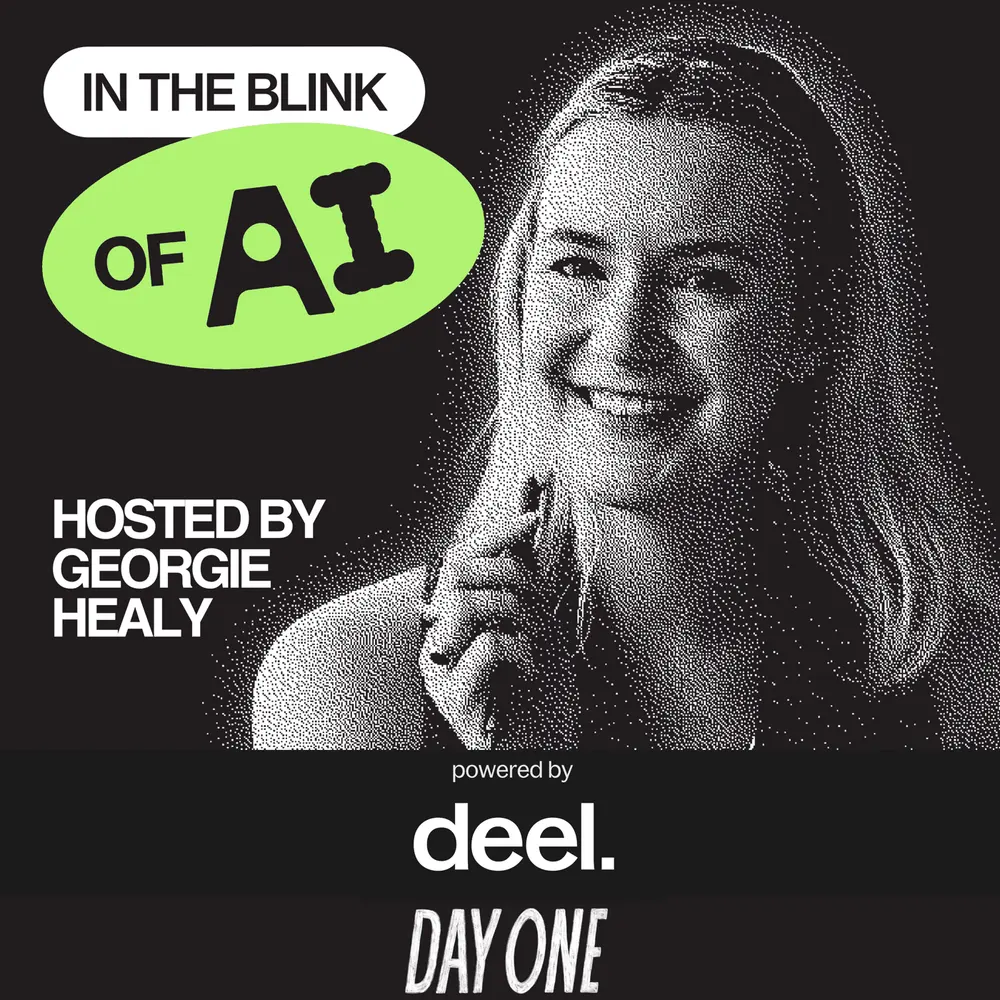 In The Blink Of AI with Georgie Healy
Presented by Deel & Stripe
In The Blink Of AI with Georgie Healy
Presented by Deel & Stripe 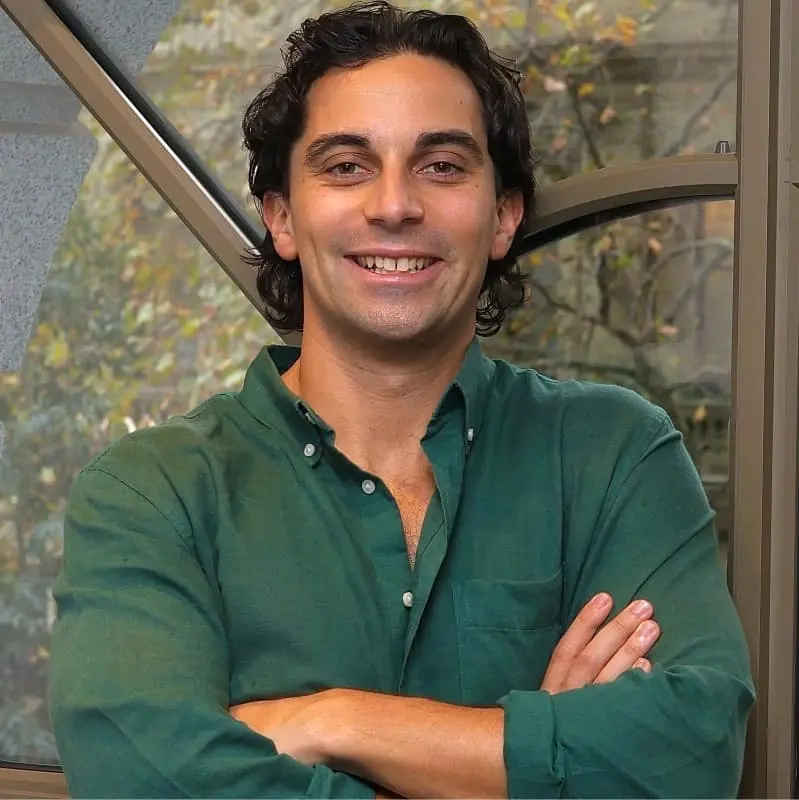
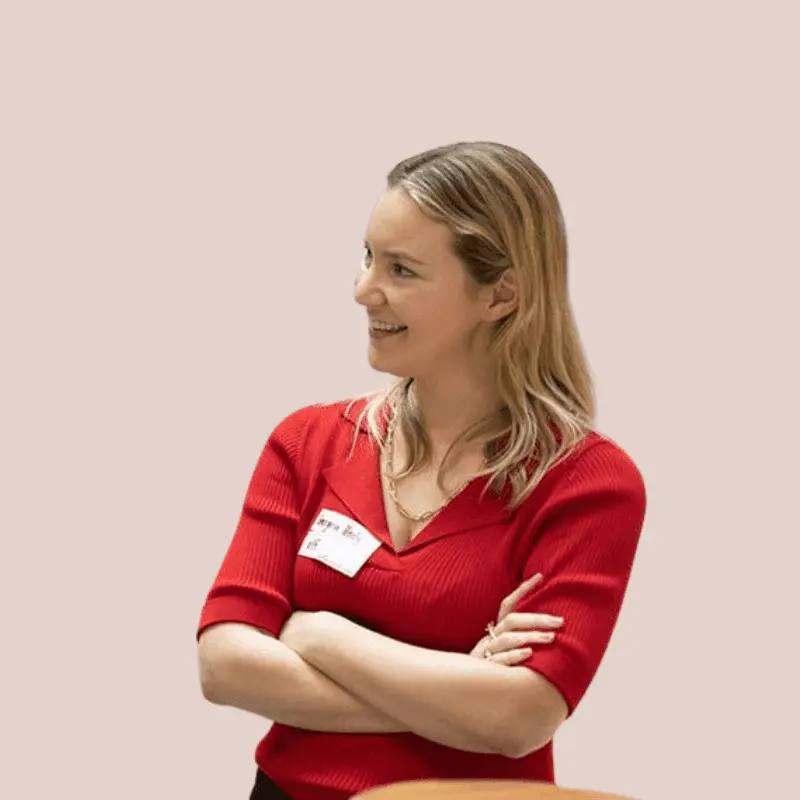


 ▶
▶  ▶
▶  ▶
▶  ▶
▶  ▶
▶ ▶
▶ ▶
▶