Transcript Synced · select any line to jump ▾ 0:02 Georgie Healy: Founders scale faster on Deel. Set up payroll for any country in minutes. Hire anyone, anywhere. Get visas handled fast and get back to building. Visit deel.com/dayone. That's D-E-E-L dot com slash day one. Why is AI helpful in diagnostics? For pet health. 0:29 Jei Wing: When you're building this algorithm, researcher or developers behind the algorithm have access to huge amount of data, which is very hard to obtain as a single vet or a single clinic. In China, people say there's no rare disease because there's so many people. So even a rare disease in like Australia, there's like tens of thousands more people getting the same condition in China. So I think the same applies to the AI diagnostics. In order to train an algorithm, you'll need a huge amount of data, which will really help to like balance that own bias or have more information to help diagnosis. 1:10 Georgie Healy: Hello and welcome to In the Blink of AI, where I talk to the brightest AI startups and innovators each week. I'm Georgie Healy, and this week I am speaking to Jing Wei. She's the lead AI engineer at Fetch. Fetch are backed by Australia's biggest VC funds, AirTree, and they're supporting vets and pet owners with insurance. They cover pet issues, even including the hereditary ones. And I don't know about you guys, but I've noticed a lot of people have pets, younger people have pets, and vet bills are incredibly expensive. I've seen $10K ones. And, uh, Jing even mentioned, you know, $6,000 for dental issues. And if you're a pet owner, you know, your pet is like a family member, but maybe you can't afford these bills. They're using AI to quickly, quickly and accurately analyze large volumes of vet reports in all different formats. Like it could be a PDF file. It could also be a scribbled handwritten note by a vet so that they can support claims faster and for more people. In this episode, we chat about the rise of robot guinea pigs in China. We use— we talk about AI used in diagnostics. And what it's like working at a startup in an AI role. I would also like to apologise because I felt like attacking cavoodles in this episode. I had like this weird rant about how I didn't like cavoodles or any kind of poodle, and frankly, it's not even true. I don't know where that came from. I might need to have less coffee before recording next time. If you're a cavoodle listening to this, I sincerely apologise. I hope that you will let me pat you in future. And I will never slam you like that in public ever again. Let's dive into the episode. So, hey Jing, thank you for joining In the Blink of AI. 3:06 Jei Wing: I'm happy to be here because I've been listening to this podcast during my hard treadmill. 3:12 Georgie Healy: I actually used to run on the treadmill. I think my years of running are starting to become behind me, but everyone is obsessed with the stair machine. Have you tried it? Because I feel like the girlies are obsessed with this damn machine. 3:27 Jei Wing: I find that it's a bit hard for me because my heart rate goes up really fast. Like, it's 190. 3:34 Georgie Healy: Oh my God. 3:34 Jei Wing: I don't want to risk my life. 3:36 Georgie Healy: I don't want you to risk your life either, especially because Fech can't really afford to lose their lead AI engineer. So, so, you know, stay safe out there. 3:45 Jei Wing: Yeah. 3:46 Georgie Healy: Look, let's dive into the episode. You know, I would have done a bit of an intro about Fech and yourself in the beginning, But I want to hear about it from you. Can you tell me what Fetch is and what your role at the company is? 3:58 Jei Wing: Well, actually we are pet insurance company, but we are more like, I think it's called insurtech. So we focus on technology. We build every platforms we are using and we are using AI to automate a lot of our processes. 4:13 Georgie Healy: Yeah. Amazing. Insurance tech, so boring. Pets, not boring. And AI and pets and insurance tech genuinely really interesting. 4:21 Speaker: I'm sure we'll talk about some of the use cases cases in the show to come. 4:26 Georgie Healy: We first met because you did the Google AI Accelerator, which is where you started really thinking about how to implement AI into the product. But before we talk about that, you have a PhD. I would love you to unpack a little bit about when you first started playing with AI and how was it received when you were at uni. 4:47 Jei Wing: So actually, I've done research since I was in my undergrad. So my research has always evolved around like things I'm interested in. So my PhD is about building proactive conversational agents. Well, you know, Google have the product smart home, Google Home. So my PhD is around that. I'm building an agent, like a speaker, can proactively talk to users and ask them questions and ask about their days. Wow. 5:18 Georgie Healy: So Alexa, if Alexa cared even more about you. That's amazing. What year was that though? Because you were a bit ahead of the curve, right? 5:28 Jei Wing: I started in November 2019. 5:31 Georgie Healy: Wow. Before AI was what it is today. How did your professors receive it when you said that's what you were interested in doing? 5:41 Jei Wing: Actually, at that time, I think people were kind of crazy about this idea of a smart home. You know, you go home, you have the speaker and doing all these sorts of things for you. But there are a lot of limitations because at that time speech recognition and a lot of algorithms aren't as good as nowadays. So I was facing a lot of challenges. 6:02 Georgie Healy: Yeah, I remember the smart home Internet of Things era, like everything was Internet of Things. You know, your fridge needed to have AI and so did your microwave and everything needed to, to be connected to Wi-Fi. It kind of seems very passé now, right? It seems like old-fashioned almost. 6:22 Jei Wing: Well, I would say I think now with the new, like, new AI technologies, we can definitely do a much better job than before. 6:31 Georgie Healy: If you were to have the smartest time, what would it look like? 6:35 Jei Wing: Because my partner is very old-fashioned, but so my PhD supervisor, he actually spent more time automating his home rather than supervising me. So at his home, If you have a cup of coffee, the coffee machine will greet you, say, enjoy your coffee. And have a central controller tells you when the best time to heat the washing machine because it monitors the solar energy. 7:00 Georgie Healy: That is incredible. Look, let's get to pets, one of my favorite topics. And for this part of the show, I'd love to mix a bit of headline news and pets and get your take with your very deep insight and background. This I found fascinating. So there is a guinea pig called Boo Boo produced by Hangzhou Genmo Technology. I think this is out of China and retails for 1,400 yuan, which is $190. Did I say that correctly, Jing? 7:33 Jei Wing: Yeah, kind of. It's okay. 7:36 Georgie Healy: Please correct me, don't be too polite. 7:38 Jei Wing: It's pronounced as Hangzhou. Hangzhou. 'Cause it's actually my hometown. 7:43 Georgie Healy: You're Shuiqing in China, right? 7:47 Jei Wing: Yes. 7:47 Georgie Healy: Oh, amazing. Have you seen the Skinny Pig Boo Boo? 7:50 Jei Wing: I searched it up in one of the most popular Chinese social media apps, and I watched a few, I would say, like influencers doing the vlogs of that Boo Boo. 8:01 Georgie Healy: It's developed with children's social needs in mind. It's sold 1,000 units since May. What do you think about it? It's saying it uses AI to interact with humans. What are your thoughts about Bubu? 8:14 Jei Wing: Actually, I watched a few vlogs. I found it very interesting. I kind of want one myself. So apparently one person commented saying they had two Bubus, and if you interact with them, then each of them will behave differently. And one brought the Bubu to the flight, to flight, and the attendant thought it was an actual pet. I asked them, how did you bring this up there? 8:42 Georgie Healy: You're kidding. They brought it onto an airplane and people thought they like smuggled in— What a fun April Fools'— It's the 17th of February today. We could make this happen. 8:55 Jei Wing: No, but it's also very fun, you know, you see other people commenting, do you need to charge it? Then the person like, yeah, the battery can last 8 hours. And bring you to the reality. 9:08 Georgie Healy: So I used to have actual guinea pigs. Anyone that was in my life in my early 20s will attest to the guinea pig obsession, which normally is for young kids, but I loved them. But they're noisy, they're messy. They— there's a lot, there's a lot around guinea pigs that's probably not ideal. I would get this AI pet. The owners suggest that it makes their lives more enriched and happier. Do you think there's any downside to having a robotic pet? What would you say, you know, maybe to consider before getting one? 9:43 Jei Wing: Actually, I think it's quite cheap, so probably worth it. 9:48 Georgie Healy: Yeah, $190. That's really reasonable, right? 9:53 Jei Wing: But I do feel like the battery life is kind of killing all the joy. You know, if you want a pet, you want to interact with it all the time. 10:01 Georgie Healy: Yeah, yeah, kind of. If you're charging it because it just turns itself off, you very real— like, quickly realize that it's not actually giving you real affection. Social robots like BooBoo are expected to grow to— by a factor of 7— to $42.5 billion by 2033. Do you reckon they'll start to replace pets altogether, especially in, you know, these big cities where people are in apartments? 10:28 Jei Wing: I don't think so. But actually, when we talk about social robots, one thing I think that's promising, probably provide some companionship to older adults, actually seniors, because a lot of social robots are being developed to help like children, but they can actually bring a lot of comfort to older people, you know, because of all the aging populations and actually care about them a lot. 10:54 Georgie Healy: Wow, I didn't think of the aging population because as a pet lover yourself and myself, there comes a bit of a concern that if you get an elderly person a dog or a puppy and they have a long lifespan, then, you know, there's the implication that maybe they will outlive the person and can they care for them and take them for walks? So I didn't think about robotic pets for the, for the elderly, that's really key. Would you get your great-grandmother a BooBoo? 11:26 Jei Wing: I'm not sure if she can understand the whole concept because my family actually installed camera so they can see she's safe. Every day she unplug the camera. Every day, like, she had to do this task, then she unplug everything. 11:44 Georgie Healy: Yeah, maybe AI is a bridge too far for the current elderly population, but if You know, maybe in a few decades to come. I mean, I would love one. Putting that on my Christmas wish list. One last question on the topic of robotic pets. I have a bunny. It's kind of the AI Pod mascot at this stage because I have to let her out when I'm recording because she creates such a ruckus. And rabbits are really territorial, and I don't want to get her a friend because she may kill her friend. But what about robots for pets? Pets for pets. 12:21 Jei Wing: Yeah, this question actually reminds me of all these videos. You know, they are like someone in Shanghai walking a robotic dog and all the other dogs are like so surprised at this dog and are terrified of this like the robotic dog. I think it's possible. And because, you know, when I was doing all this, my work, so I saw a case from history about a dog. Depressed because another dog in this household died, like passed away, and one dog just like became depressed. Maybe I think it might be beneficial if that's the case. 12:58 Georgie Healy: Yeah, because where I live in Sydney in the eastern suburbs, it's quite, you know, there's a lot of people that want a family dog, but it's quite populous, and so I see a lot of puppy daycares, but it's not ideal, I would say, because, you know, you have to go to work and the dog stays at home. And really, the puppy daycare is a small space with other dogs, and I'm not sure that it's the perfect solution if, if you just want your dog to feel not lonely during the day. 13:28 Jei Wing: But to be honest, a lot of puppy daycares is pretty good. They have spa. 13:34 Georgie Healy: What? They can get a manicure while you're working away. Okay, we need more robotics to actually implement the spa at home as well for our pets. The Washington Post discussed the rise of AI pet care. Why is AI helpful in diagnostics for pet health? 13:51 Jei Wing: I think it's because when you're building this algorithm, then I would say the researcher or developers behind the algorithm, they have like access to huge amount of data, which is very hard to obtain as like a single vet or a single clinic. In China, people say there's no rare disease in China because there's so many people. So even a rare disease in like Australia, there's like tens of thousands more people getting the same condition in China. So I think the same applies to the AI diagnostics. In order to train an algorithm, you'll need a huge amount of data, which will really help to like balance a vet's own bias. or have more information to help diagnosis. 14:37 Georgie Healy: I love that there's no rare disease in China just because the data pool is so much bigger that it's no longer rare. Um, so data is really valuable when it comes to diagnosing issues for vets, and I guess a vet doesn't have to be an expert in every single topic because AI will help them with gathering information. Apparently you can buy AI devices that will monitor your pet and, you know, keep track of them throughout the day. I think of people with like glucose monitors and things like that. Do you think it would help with vet bills and, and vet insurance if we could continuously monitor pets with some kind of an AI device? 15:18 Jei Wing: I think it's a bit tricky topic. There are insurance company for home insurance that they can install sensors at your home so they can lower your insurance premium. Which essentially is to get more data about whether you're gonna go into a risky situation. So obviously for pet owners, it's good to have to know about your own pet's health. 15:42 Georgie Healy: Yeah. 15:42 Jei Wing: Their habits, daily like eating habits. But on the other hand, you would also think about, is it worth it? It's just like company ask employee to wear a wristband. So they can walk more steps every day, then they can reduce the insurance bill. Then you find it's a bit— 16:00 Georgie Healy: Dystopian. 16:02 Jei Wing: Yeah. 16:03 Georgie Healy: I agree with you. Yeah, it's a little bit freaky. I mean, even for things like Fitbits and sleep tracking and things like that, for me personally, I don't— I personally don't like them because if I'm not well rested, I kind of don't want to know. And if there's some like health issue, I'm sure I've got something. Don't really want to be reminded of it daily. 16:26 Jei Wing: I know the feeling. 16:29 Georgie Healy: Okay, I'm going to get your hot take on a new app called Tabli. It reads cats' facial cues to assess, I guess, whether they're in pain, if they're feeling positive, and it uses AI-crunch data including ear position, orbital tightening— I guess that's something to do with their eyes— muscle tension, whisker positions, head positions. Thoughts on this? Do you think it's fake news or valuable? 16:57 Jei Wing: I think this series of research has been going on for quite a while. I'm not sure about the whole company's technology, but I think they're just commercializing the whole idea. Because I graduated from UniMelb, so there was a— there's a research team at UniMelb. They're doing very similar things a couple of years ago. So you can take a photo of your dog and it will tell you the emotion of the dog. 17:21 Georgie Healy: Wow. I mean, I know this isn't, you know, really your specialty at Fetch, but I think this next frontier in understanding our pets, you know, people really are increasingly having like very personal relationships with their pets. They adore their pets like they would any other family member, and, you know, being different species, we do want to feel closer to them. Do you think AI can help us get to that? 17:50 Jei Wing: I definitely think it can. Like, for normal, like, us, normal people like us, it's really hard to know. 17:56 Georgie Healy: Oh, that's so flattering, Jing. 17:58 Jei Wing: No, no, no, I'm just saying, like, when you are doing dog training, a lot of time, for example, my friend's dog, she gets confused all the time because us human give her very ambiguous instructions or makes her confused. So if we have some technology to help us to understand what they're really thinking, it will really help us with training and not only make them a good dog, but also make the dog's life much more comfortable. Because there are a lot of, I think some owners actually suffering from like some misbehaved dogs, but I don't think that's essentially the dog's fault or human's fault, it's just like we don't understand them. 18:41 Georgie Healy: Yeah, if we could communicate in a way that they understood, we wouldn't get frustrated, they wouldn't get confused. Yeah, I tend to agree with you. I really don't think it's the— Pets generally love their owners. They're not trying to misbehave necessarily. They just don't know what we consider is bad behavior. They don't necessarily. So any weird and wacky ideas at Fetch that you decided were just too wacky and stayed on the cutting room table? 19:08 Jei Wing: I think we have way too many to name a few because currently we have a lot of data and we just want to organize them in a form that we can make good use of. For example, when our agents process a pet's medical history, we essentially know what vaccines and the like, warming, preventative medication the dog's been received. So we are trying to figure out if we can give the owners all this information. And actually one idea, I think eventually I'll try to implement it, is we have the weight of the dog, like along their life. So some of our, some of my colleagues, they also own a dog, they would really like to have a a chart of how, like, the weight that their dog grows. 20:06 Georgie Healy: This is very toxic, Jing, okay? This is very toxic body shaming for these animals. 20:12 Jei Wing: No, I just want to know from a puppy to a grown dog, you want to see every step of this dog grows. 20:20 Georgie Healy: I understand now. I thought you meant just like some breeds eat more. No, no, no. But the size of the animal matters, right? 20:29 Jei Wing: Yeah, yeah, yeah. But you want to— I think a lot of owners would like to see that. 20:33 Georgie Healy: I think owners of micropigs would really like to know that too, right? The promised land of a micropig apparently just isn't, isn't real. 20:42 Jei Wing: Yeah, I know a lot of people are disappointed about it. 20:45 Georgie Healy: Yeah. I know that we'll get into rapid fire spicy hot takes, but is there any data about an animal that just remains elusive to you? Like a type of breed that you're like, we've got all this data on them, but, you know, we still just don't get them. Like, they're just an unusual animal or an unusual breed. 21:05 Jei Wing: I think of many, but the one breed— so, you know, poodle mix is always a mysterious breed. 21:12 Georgie Healy: Everyone's got a poodle mix. Everyone's got a Cavoodle, Labradoodle. Yes, I've got you. 21:19 Jei Wing: Yes. And also, apparently— I didn't know this, but I only learned recently, like, Cobble dog is also a poodle mix. Cobble, Australian Cobble dog. It's one type of Labradoodle, but it's a designer, pretty dog. 21:33 Georgie Healy: Wait, how do you spell this? I need to look this up right now. 21:36 Jei Wing: I think C-O-B-B-L-E. 21:39 Georgie Healy: Oh yeah. Oh, see, I would've just called this a Cavoodle as well. 21:43 Jei Wing: A Cob— I think it's a Labradoodle. 21:47 Georgie Healy: Yeah, they all look the same to me. Can I tell you my hot take that will get me canceled because everyone has one of these dogs. I'm just not a fan of a poodle. So if you add a poodle to anything, I'm like, you made it worse. And I know for the hypoallergenic, and I know for all of those things, there's just— and I'm a big pet lover, but for whatever reason, I just can't do poodle mix. 22:10 Jei Wing: I, I know people like poodle mix, but I like poodles just for they are. 22:15 Georgie Healy: Yeah, yeah, yeah. I think, I think it's— I think I had a bad experience with one poodle that lived next door that was just so yappy, yappy, yappy all day, but it just ruined it for me. I think they're beautiful looking, but it's just something I can't do. A poodle mix. Okay, let's get into what you do day to day, which is building AI products. And I would love to know, you know, we, we have talked to researchers before, but how does being a researcher by background help you in your role now? As an AI engineer? What was— where's the research link that, that helps you? 22:54 Jei Wing: When I was at university doing research, I know my research is limited. And obviously I read others' research articles and talk to other researchers, try to improve my research project. But I know I just need to say this project has certain limitations. But I do expand the whole knowledge a little bit and that's good enough. But when I'm a company, I do something very similar. I read other research papers and I know what's like the latest technology sits, but I also know that I cannot tell my colleagues like Fu, say, oh, this algorithm has this limits. 23:38 Georgie Healy: We may lose. 23:39 Jei Wing: Yes. 23:39 Georgie Healy: Fu's, um, one of the co-founders of Fetch. Yes. 23:42 Jei Wing: But I guess my research background makes me less terrified when reading newest AI research paper. And I can also try different techniques that's like just been, let's say, published last week. 23:58 Georgie Healy: Yeah. So your ability to understand a scientific paper and pull out what's meaningful from it, I guess, would, you know, in this very fast-moving state of AI, be very valuable. Where do you get your latest news sources, your white papers, your research papers? Do you still try and keep on top of that or are you like, no, no, no, that was university Jing. I don't need to do that anymore. 24:24 Jei Wing: Oh, sometimes I do. I don't even know. So for latest papers, they are usually published on Archive. So it's a platform. A lot of researchers publish their non-peer-reviewed paper there so that other people can check it out. First. Because the field is progressing so fast, you cannot wait for like a 12-month cycle for a paper to be published. And another thing I've only recently started to see is I know a lot of people hate Reddit, but I also do find a lot of people provide some very practical experience there. And also on Chinese social media, I'm keeping up with some other people's updates. Because a lot of people will share the challenges they face in their day-to-day AI work, which is actually very valuable because first I know like people are having similar issues and I'll— maybe they'll share how they can tackle that. Then I can learn. 25:25 Georgie Healy: Wow. So 3 key sources you shared there. One is obviously peer-reviewed papers, but in this really fast-moving time, I didn't know it took a year to possibly publish these things. So non-peer-reviewed is a great source. How did you spell where you got that from? 25:43 Jei Wing: Oh, it's called Arxiv. 25:44 Georgie Healy: Arxiv. Okay, so Arxiv. Reddit. I'm a huge fan of Reddit as well, just for getting a sense and a bit of a conversation around, you know, the latest AI news. And Chinese social media. This might be a little bit outside of my understanding because I don't actually speak Chinese or Mandarin or any of the languages. But is there like a tech social media platform? 26:09 Jei Wing: No, it's just a media platform for everything. You can go there searching for how to do your makeup, but also people are there sharing AI technologies and AI news in the meantime. 26:22 Georgie Healy: This might be the most hot take of all, What happened when Deepseek was released? Because obviously in Western countries it blew up Twitter, X, whatever. We had someone come on the show rapidly to talk about it. What about actually in China? What was the on-the-ground? Was everyone really proud of it? Like, how did people— what was the sentiment in China? 26:43 Jei Wing: I think it's half-half. I see a lot of people saying that OpenAI is doing much a better job, but other people were like battling, saying, I think Deepseek is really good. And some people actually making money out of it. They are selling tutorials on how to install like the smaller models of Deepseek on your local machine. 27:04 Georgie Healy: So that it doesn't track your responses or? 27:08 Jei Wing: Oh no, it's just like people teaching other stuff that you are selling essentially like you're on Coursera, you can sell a course. Then they're selling tutorials on how to better use, like download or installing. 27:23 Georgie Healy: That's incredible. I, yeah, because I think at least the channels I've been seeing, everyone thought Deepseek was just like superior in so many ways with the reasoning. If people wanna hear a bit more about that, you can check out our episode on it. But it's really interesting to see how China, you know, is also still kind of some people are pro-OpenAI still? Because I would have assumed it would be just very patriotic and like, yes. 27:53 Jei Wing: Actually, no, I wouldn't say so. 27:56 Georgie Healy: What do you think? Are you a fan of one or the other? 27:59 Jei Wing: Actually, I've been using Deepseek quite a lot. It's a bit hard to say, but I sometimes ask for messaging advice in Chinese. That's actually much better than, say, ChatGPT. Because Deepseek is trained on much more Mandarin datasets. So it sometimes provides better suggestions. 28:20 Georgie Healy: And for messaging for specifically Chinese conversations you're having then? 28:25 Jei Wing: Yeah. 28:25 Georgie Healy: That's really interesting. 28:27 Jei Wing: Wow. 28:28 Georgie Healy: So in the backend, they're obviously translating into English before. 28:32 Jei Wing: Oh, actually no. You know, so currently for a lot of reasoning models, because every company distilling other companies' model. So you may see Deepseek is thinking in English even though the input is in Chinese, but you may see other companies think like a really model thinking English, but sometimes the Mandarin might pop up. 28:53 Georgie Healy: I have heard of this and seen this a bit. Yeah, yeah, yeah. Look, incredible hot take. Thank you for that. Definitely couldn't have got that otherwise. So what do you consider when you want to use an AI tool? So like you gave the Deepseek example of conversations. And messaging. What's important to you? You, you understand AI so deeply. What do you look for when you're playing with AI tools? 29:16 Jei Wing: So back in 2019, when I first used GPT-3, I thought it was amazing. I think this technology can be used by anyone because you can interact with natural language. But now we have so many new models. Then I realize sometimes some companies may secretly change parameters in the service they provide, and you only see the model name remain the same, but something may change in somewhere you don't, you don't see. I found that's very hard to control. So currently I'm trying to find a way to use a more controllable model, for example, open source models. But at the same time, it's not everyone have the resource to host open source models. For example, you may download the smallest DeepSeq R1 model to your local machine, but you cannot like host the real whole DeepSeq R1 model. It's the same for like LLaMA from Meta. Because I feel like when I'm using technology to make API calls, I know my input. Yeah. But sometimes my output may change like one day or one week later, the output is totally different. I find it's very hard to control. If I want to build a tech product that's based on AI entirely, I need to make sure the quality is consistent. But currently I find it's a little bit hard to control. 30:46 Georgie Healy: And is that because the computer can't handle the compute or the size of the model and can't react accordingly? 30:54 Jei Wing: Sure. For hosting a model, usually on a normal laptop, you can maybe host a very small model depending on the configurations of the laptop. 31:05 Georgie Healy: And when you say very small, just help me out here. I thought anyone could just get a LLaMA, Meta open source model and just kind of download it, play with it. 31:17 Jei Wing: Yeah, you can download like a 7 billion parameter model, I think 7B. But that could probably require like a $2,000, $3,000 laptop. But that's usually the normal household will have, right? If you want to run a big parameter model, then you probably need to borrow some GPU resources. That costs a lot of money. 31:42 Georgie Healy: And Jing, do you use a 2K laptop and use 7 7 billion parameter models, and what are you missing out in a 7 billion parameter model that you could get with the better ones? 31:55 Jei Wing: Oh, I'm only trying it out actually just over the weekend because I want to fine-tune some models. It's obviously not as good as a bigger model. 32:02 Georgie Healy: Yeah, because the quantity of data that's input into the models must be smaller. Is that correct? 32:10 Jei Wing: It's just like the computer processing speed is super slow. Oh, we cannot wait for 1 minute to output 1 word. That's too slow. 32:18 Georgie Healy: Understood. Yes. This reminds me, I created an image to video just for marketing socials and it took an hour. And I know that it's because I'm not paying and I'm sure my computer could handle more than that. But the number of times I just thought, I can't be bothered. I don't even know if the output will be worth the wait. It reminds me a little bit of that. Like, yes, I could probably get something superior with a bigger model, but if it's that slow, I just can't be bothered at all. 32:55 Jei Wing: Yeah. 32:55 Georgie Healy: So you've played with AI products, but you're also building AI products. What do you consider when you're building an AI product that is going to be in the hands of an everyday user, that, you know, your Fetch product is insurance and in the backend you create AI models. What do you consider when building them? How complex and what matters when you create them? 33:18 Jei Wing: So a little bit fun fact, I think the other day I saw a survey, you know, these days everyone, every company is talking about let's do AI start, AI product. I think there's only maybe like 20 or 25% of companies that actually have AI products in production. 33:37 Georgie Healy: Wow. 33:37 Jei Wing: So I think that's a very low number because when you're building product that runs day to day, that needs to be very consistent. But just like my answer to the last question, sometimes the output, the quality is not the same. So I think that might be a main reason. And in our company, because the domain is in veterinary and I'm only a PhD, in AI. So I don't really know veterinary that much. So I need to collaborate. I need to talk to an expert like our head vet and also agents who use our products to understand their brains because I need to bring domain knowledge into the product. And that's very difficult. 34:26 Georgie Healy: Yeah, that's such a great point. We had Harrison AI on the show and I spoke to someone with it. Medical background who was a doctor, but he's not building the AI model. You know, having that deep veterinary domain experience, you understand the pain points of being a vet and you understand the pain points of building an AI model. I'm sure there's a lot of conversations around that. What are some big challenges with building AI models, like from a technical standpoint? 34:56 Jei Wing: You're seeing the biggest challenge is how we do a fancy algorithm But actually the biggest challenge, to be honest, is all the documents sent to us from vet clinics. You would think PDF might be the most popular document, but there are maybe like 100 other document formats that we need to handle. And that's very hard. 35:22 Georgie Healy: So you are saying that, you know, you'd expect just the vets to upload these PDFs into a central system. But you're getting handwritten notes too and all sorts. And you have to manage that in your model. 35:35 Jei Wing: Yes. We need to manage all sorts of inputs in our models. And we also need to, even for PDFs, it's very different. PDF is so user-friendly to human eyes, but it's actually very, very hard to computers. Yes. 35:54 Georgie Healy: And I have to know what kind of AI technique is being used to see this image, PDF, you know, JPEG, whatever it is, PNG file. Just a little bit of technical jargon, please. What is actually happening to go from that to a, you know, next step for you? 36:18 Jei Wing: Well, actually, technologies for like doing text extraction is quite mature. We have OCR since decades ago, but like recent large language models makes it much easier for us to take in natural languages and output in a more structured form. But for PDF, sadly, I don't have a good solution. And I was very surprised to find that out. There's no one. 36:49 Georgie Healy: Like I'm on every Reddit forum, every Chinese social media. 36:53 Jei Wing: No one has a good solution. It's just very weird. It's sometimes for some PDF document, you can just use a package, other people's written code to get all the text out. But sometimes this PDF might have images that I need to actually have another tool to analyze those images. 37:16 Georgie Healy: Oh yes. Like Harrison AI have X-rays, for example, to try and detect issues, are you also receiving images? That's so tough. 37:25 Jei Wing: Yeah, of course. 37:26 Georgie Healy: That's really complex, isn't it? Yeah, I can just imagine, because even just doctors and vets in general, it's like they've gone to the school of bad handwriting and they have to make it as squiggly as possible. 37:39 Jei Wing: Recently I learned that some clinics have bad practice. So, you know, when you're— when Even for human doctors like GP, they have a template in the digital records, right? Some vets may not edit anything in the template. So then the vet note may say everything is normal, but then the dog actually went in for an ear infection or skin infection. 38:04 Georgie Healy: Oh my goodness. And that would really impact you guys as an insurance company because you'd be like, well, lowest cover possible. Actually, this dog has all these issues. Okay. Something I ask a lot of our guests, how do you reflect on the costs of managing an AI startup? Like, you know, I know you are the engineer, so you're building the model and maybe costs isn't your number one priority, but I'm sure you are asked a lot, the cost of this compute that's impacting our profits, things like that. How do you think about cost of compute? 38:37 Jei Wing: Oh, So far we haven't really used much of this to like fine-tune our models or to host our service, but I did accidentally incur a $1,000 cost on Google Cloud Platform accidentally, and I didn't know. 38:58 Georgie Healy: How, how, how do you accidentally spend $1,000? I would love to accidentally spend $1,000. It might be differently though. 39:05 Jei Wing: Because previously I want to host a model on Google's platform. So I just use one of the service and I test it out. I find it's not that good. So I just forget about it, but it just keeps running for 3 weeks straight. Been there. 39:26 Georgie Healy: I've been there with subscribing to Substacks that I'm not interested in anymore and things like that. Look, Fetch is hugely successful in the pet space. What markets are you guys in? You're obviously in Australia, but I'm guessing pets worldwide have very similar issues. It's, it is, you know, health at the end of the day. 39:46 Jei Wing: Yeah, I think we're currently trying to be more prominent, like be strong in Australian market, but the company definitely looking to other overseas markets because Like you said, everyone likes pets. Not that many people like children anymore. 40:03 Georgie Healy: Children are really like COVID era, but we're moving on. 40:09 Jei Wing: Yeah. So we are definitely looking to expand to overseas markets, maybe Europe or maybe Southeast Asia. But I think currently we're also trying to work harder in Australia to have a bigger market share. 40:24 Georgie Healy: Like really, really take a big market share in Australia before launching elsewhere. Sounds like a great strategy. And what pets do you insure at Fetch? We've talked about dogs. 40:35 Jei Wing: Currently we insure both cats and dogs. 40:39 Georgie Healy: Cats and dogs. I'm really triggered. Why don't you insure bunnies, Jing? 40:43 Jei Wing: They're expensive because actually Fu's friend has a bunny and every time the bunny is sick, you need to take the bunny to a specialist. 'cause normal vets can't treat them. 40:56 Georgie Healy: Can I tell you a story? I got my bunny who's a girl, and the very important thing is, like with cats and dogs, is to desex them. Just makes their quality of life a lot better. I think their life expectancy and things like that too. I didn't know that you needed to take them to a specialist vet, and the vet I took them to said, yeah, yeah, no worries, I can do that, no worries. And my bunny repeatedly would pull out her stitches. I needed to buy a baby onesie so she wouldn't pull out her stitches, and she still did every morning, and it was terrifying, and I was worried they were going to get infected. And finally, I went to an exotic vet in Sydney, and it cost thousands of dollars because they needed special stitches, and they had to undo the damage that the original vet did. Mm-hmm. 41:50 Jei Wing: Yeah, I think that's the reason. 41:53 Georgie Healy: She's doing great, guys, don't worry, she's fine. But that would be my hot tip— these small pets that, you know, capitally not intensive, you know, to buy a bunny, not expensive, but to look after and, and the ongoing costs, very expensive. Anyway, uh, what about any trends in the types of pets that are popular in Australia? Any breeds that you're noticing more and more are coming through your claims and insurance policies? 42:21 Jei Wing: I think you know the answer. 42:23 Georgie Healy: The damn kaboodles? 42:26 Jei Wing: Yeah, there are a lot of akibudous. It's also so putumix, I would say. 42:31 Georgie Healy: I really do regret saying that they're not my favorite because, you know, I'm just putting everyone offside now. I think maybe I'm just being contrarian because I see so many. I'm like, I'm gonna choose to be different. What kinds of relationships do you need to have to make Fetch successful? I'm guessing vets. What other, what other partnerships are important? 42:52 Jei Wing: Oh, I think other vet house platforms. So we are currently doing integrations with some, I think it's called PMS, patient management system company. So we can get vet notes directly from the clinic. And we are putting a lot of effort on building that integration. 43:14 Georgie Healy: And when you say vet clinic, this is something I actually don't understand. Are vets majority private practices? Like, are they owned by one person or are there like franchises of vet? 43:27 Jei Wing: I think they are both. So you can have like a mobile vet, obviously like Free Soul, you just go everywhere, treat animals. Like mobile, but it's also franchise. So there's a huge one, I think it's called Green Cross. So we literally need to do special template for them. 43:46 Georgie Healy: Yes. Okay. That must make it easier to capture market share when that exists. I just realized how long we've been talking. I've been having the most fun. We are now at my favorite part of the episode, which is the rapid fire. So I've got 5 rapid fire spicy questions for you, and then you're free to go, Jing. You've been very generous so far. What do university students that want to go into startups need to know? 44:13 Jei Wing: I think they just need to work harder. 44:16 Georgie Healy: You're in for a shock, uni students. Are there any popular pets that you dislike? Now you're going to get cancelled as well as me, Jing. 44:29 Jei Wing: I would say dachshund. And Frenchie, because they're not very healthy. 44:34 Georgie Healy: Yeah, okay, well that's actually a nice take. You're like, you want there to be healthy pets and you've seen the downside of having French Bulldogs and Dachshunds. Is, is the Dachshund issue with their backs? I hear that they're— 44:46 Jei Wing: Yeah, yeah, they have some spinal pain, spinal issues. 44:50 Georgie Healy: Um, okay, will AI lead to more pet ownership? Why or why not? 44:55 Jei Wing: I think it's irrelevant. So unless you— we're talking about AI pet, maybe if we consider AI pet owners as pet owners, then probably more. 45:04 Georgie Healy: Yeah, you're right. It's like AI could lead to more robotic pets, but will that impact actual pet ownership? Maybe, maybe not. Is AI capable of detecting health issues in pets? 45:16 Jei Wing: I definitely think so. And I'm trying to build that out actually. 45:21 Georgie Healy: What would be your mount Rushmore of pet issues that you'd want to solve, like a health issue that you would really love to solve with AI? 45:30 Jei Wing: Currently with the latest AI technology, we can get some nuanced information extracted out. For example, if the owner say the dog's leg is weak months ago, maybe that could be a sign of potential future conditions. 45:49 Georgie Healy: Oh, I see what you're saying. It's kind of an indicator of something else. 45:56 Jei Wing: Exactly. 45:58 Georgie Healy: I really loved this chat. Is there anything you'd like to shout out to the listeners as well? 46:04 Jei Wing: I would say brush the teeth of your dogs and cats. Dental is very expensive. 46:09 Georgie Healy: I have never brushed my cat's teeth. I have to brush its teeth? 46:12 Jei Wing: Actually, I'm not sure about cats, but I do know But dogs, dental costs tons of money. My friend has a Border Collie. She probably spends like 6, 7 grand on the dog's teeth. 46:27 Georgie Healy: Oh my goodness. What, why do they need to be brushed? What's happening? Is it plaque? Is it, what is it? 46:34 Jei Wing: Calculus, just like, like us. And if you have, because for dogs, you obviously won't do a dental implant, right? And a lot of conditions, can happen because a lot of infections can happen because the dog's like tooth fracture or like missing teeth and also bad breath. 46:53 Georgie Healy: You might have just saved people thousands of dollars with that one. Thank you so much. Thank you for being on the show. 47:00 Jei Wing: Happy to be here. 47:03 Georgie Healy: Thank you for listening to In the Blink of AI. You can check out the show notes for anything to discussed in this week's episode, and we will be back next week. This podcast was produced by Day One, with music by Dan Hansen and visual artwork by Sophie Tyrell. If you loved the episode, please tell your mates, and I love AI news. Please share your thoughts and suggestions to georginarosehealy@gmail.com.


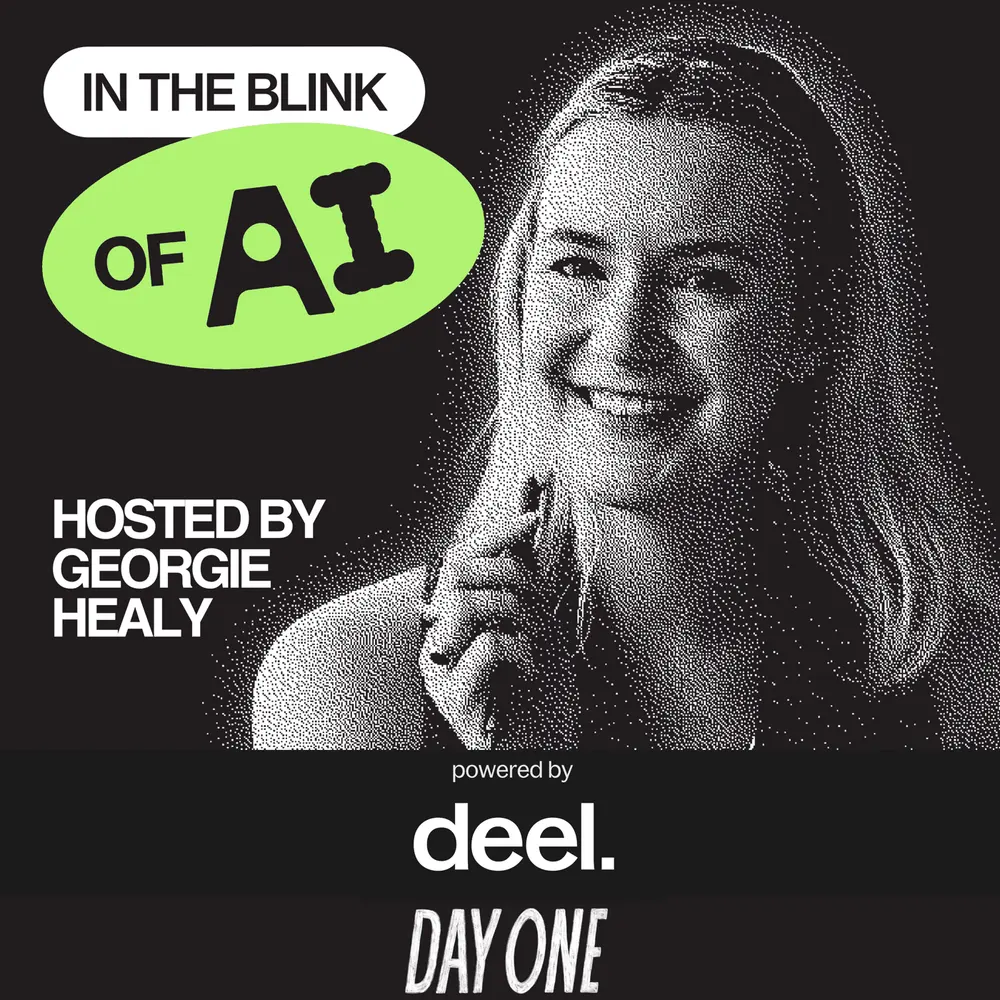 In The Blink Of AI with Georgie Healy
Presented by Deel & Stripe
In The Blink Of AI with Georgie Healy
Presented by Deel & Stripe 


 ▶
▶  ▶
▶  ▶
▶  ▶
▶  ▶
▶ ▶
▶ ▶
▶