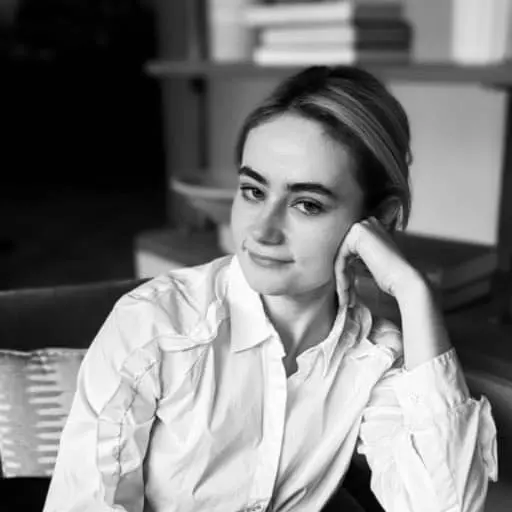
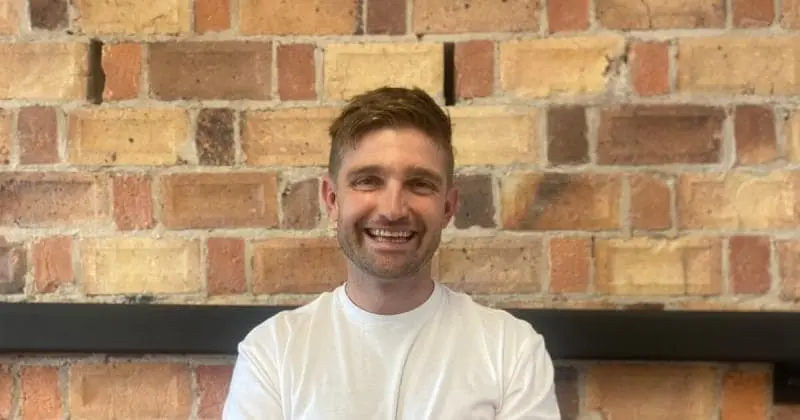
Transcript Synced · select any line to jump ▾ 0:00 David Booth: You're listening to a dayone.fm show. 0:03 Georgia Rippin: I would dress up as an assistant and then I would sneak my way into the mailrooms of all the big studios in New York. So like HBO, Vice, all these different places. 0:17 David Booth: Was there an inflection point or sort of a moment that you recall getting inspired that this was the path for you? 0:22 Georgia Rippin: Everything that the legacy studios are bargaining for with AI like really sucks. But I think on the independent side, it's really positive because you are, getting these great tools that you're able to utilize to make better productions. 0:36 Speaker: Welcome back to Diaspora.nz, where we're on a mission to seek out and profile the hidden gems, the best founders, operators, researchers, and emerging leaders of the great Kiwi expat community. Today we're on the ground in New York City and in conversation with Georgia Rippon, who is the founder of Cold Open, a platform that's transforming how creators of mid-form video, that's like the short episodic content, shorter than a movie or a big TV series, but it's longer than your TikTok reel, those individuals are connecting with studios and looking to monetize their content. Georgia studied law in New Zealand, but always had her sights set on a global stage, determined to make her mark and break in, and had some really bold and unconventional approaches of getting there. You'll hear about this, but sneaking into mailrooms with Whittaker's chocolate wrapped in a CV, really, it worked. Get some of her insights on the critical industry trends, from the complexities of IP rights in an era of rapid content creation to the nuanced role that AI is playing in reshaping media production more broadly. She talks about some of the potential in like those specialized AI tools or, you know, innovative product placement strategies even that could redefine the content monetization and, you know, help to build new engines for these content creators. So really exciting episode, looking forward to your feedback. Remember, send it to a founder friend, send it to an expat. This is the diaspora.nz podcast and here's my conversation with Georgia Rippon. 1:58 David Booth: Georgia Rippon, we're sitting here in New York. It's a total pleasure. We've known you for a for a few years now. 2:03 Georgia Rippin: Yes, yeah, yeah, yeah. 2:03 David Booth: But never had the chance to meet, so pleasure to have you on diaspora.nzpod. 2:08 Georgia Rippin: Excited to be here in person. 2:09 David Booth: Fantastic. Give us the really quick download if we'd just met. What brought you to New York City and what are you focused on today? We're gonna unpack and go in all sorts of different directions with this story, but give us the summary. 2:20 Georgia Rippin: What brought me to New York was I wanted to work in film and television. I studied law and Māori, so vastly different. But I thought if I wanted to work in film and TV, it had to be on the biggest stage, 'cause I thought that would have the most access to opportunities and the most impact for what I wanted to do. 2:39 David Booth: The pipeline of people who study law but go on to do things not law is a good one as well. 2:43 Speaker: Yes, I think so. 2:43 Speaker: Did you ever see yourself practicing, or was this always just a foundational building block? 2:47 Georgia Rippin: I don't think I was quite sure when I was back in New Zealand. I think doing film and TV, even though I'm from Wellington, seemed— 2:55 Speaker: Yeah. 2:56 Georgia Rippin: Like a really weird thing to do. Like my dad was a policeman, my mom worked for the government, so it was never something that was necessarily encouraged because the viability of that career path was really uncertain. So I think going to law school and getting those analytical thinking skills was like a great way to set you up to do anything. 3:13 David Booth: Did you ever think you'd get into film and TV in New Zealand, or was it always, you know, the bright lights of Los Angeles calling, and now New York obviously, but did you ever think you could do it back home, or was this always a, I must go overseas to achieve these goals? 3:25 Georgia Rippin: I think it would've been far more difficult to do it back home because I think it's harder for younger people to maybe access those same opportunities because there's a lot of older people in those seats who've been there a long time. And I think in America they're a little bit more open to it. 3:41 David Booth: Yeah, oh, I mean, there's a lot more to be open to as well. It's a bigger pie. 3:44 Speaker: Yes. 3:45 David Booth: You know, much, much larger opportunity. Why in the first place? Was there an inflection point or sort of a moment that you recall getting inspired that, you know, this was the path for you, even before that? 3:56 Georgia Rippin: I think it started off when I made my first web series or midform show. For those who don't know— Let's talk about it. Yeah, yeah, yeah. A midform show is essentially a mini TV show, and it's made by an independent content creator. It's episodic in nature, and the episodes are shorter, so between like 10 to 20 minutes long. 4:17 David Booth: And midform, I mean, to connect this back to today, midform is the core piece of Cold Open. This is a platform for people to produce and get distribution for their mid-form content. So, um, what, what is not mid-form? Single YouTube video posted is not mid-form. A Netflix series is not mid-form. A full movie. So what are the— what's the most famous example? If you had to direct someone to something that they've probably seen, I would say the early versions of really famous Hollywood adaptations. 4:45 Georgia Rippin: So Workaholics, It's Always Sunny in Philadelphia, South Park, um, the early version of The Simpsons. These all started off as midform shows. And Broad City. 4:54 David Booth: So you started off with midform shows. Um, you were back to the very early days. You made your very first one and thought, wow, that was fun. 5:01 Georgia Rippin: Yeah, I was obsessed with it when I was at law school. I was spending all my time trying to find them on the internet, a really hard task because I was like ripping them off different websites. It was a huge thing growing up in New Zealand because streaming hadn't yet come and a lot of media wasn't accessible to us. So you were constantly on like— 5:20 David Booth: So you were ripping off the LimeWire or something? 5:21 Georgia Rippin: Yes. Yeah. Don't come for me now. Okay. 5:25 David Booth: It's okay. You're doing your bit for the industry back to pay it back. 5:28 Georgia Rippin: Exactly. Exactly. Forget about my sins. And YouTube and Vimeo to find these different shows. And I just thought they were so incredible. There were awesome Kiwi ones as well, like Flat 3 by Roseanne Lang, who's obviously killing it right now. And I really just wanted to make my own one. 5:45 Speaker: Mm. 5:45 Georgia Rippin: After having gone through that experience, I also really wanted it to get views, as everyone does when you make something. So, I spent like every lunchtime at law school going to the cafe and ringing the media to see if they could write an article about my show. And I was really lucky because staff responded and said, "Herald, the spin-off." So, I actually ended up getting quite a bit of press off the show, which was really exciting. And ultimately it was actually that press that allowed me to stay in America and do this because it was crucial for getting my O-1 visa as an alien with extraordinary ability. 6:22 David Booth: Yep. 6:23 Georgia Rippin: 'Cause it's so old school and you need press in your home country. 6:26 David Booth: The extraordinary aliens are strong. That's the visa for anyone who is thinking about following ambitious paths into America. We should talk about that a little bit later too, but let's stay on the short form for now because there's something here that I wanna trace through. Your first one, um, realize that it's very hard to get distribution, very hard to monetize, very hard to get views. At the same time, YouTube is obviously a phenomenon. It's gigantic. Everybody's on YouTube watching all sorts of things. How do you connect the two to say like there is an opportunity which is underserved by YouTube, which is more sticky or relationship-based than TikTok, or something in between, um, and trace that through to Cold Open of today? 7:08 Georgia Rippin: Great question. I don't think I quite knew after making it, because I think the internet really went through a huge seismic change in terms of what was happening with video. And that was really in my time when I was coming to America. So when I arrived to America, I got my job producing for Avalon, which was a huge titan in the industry in terms of adapting these shows to long-form adaptations. So, they did Workaholics for Comedy Central. 7:39 Speaker: Mm. 7:39 Georgia Rippin: They did Flatbush Misdemeanors on Showtime, which I was lucky enough to be a producer on, and a couple of other ones. And what I really saw when I was working there was that there was now just so much video being uploaded to the internet, and YouTube was kind of becoming this beast that we see now, where— it's really crazy— 0.64% of the content uploaded will get over 100,000 views. So, this huge long tail of content that's never ever gonna be seen. 8:04 David Booth: Well, so that implies over 99% of the content gets under 100,000 views. The inverse of that, of course. 8:10 Georgia Rippin: So I think kind of applying my experience from Avalon where I was like, this is a hugely valuable asset to Hollywood and it could be monetized and we're having this inability to find it now because of how the internet and the creator tools and the accessibility of everyone having an iPhone and being able to make something were changing. And it kind of felt like, so the Marvel movies are like a huge thing and like what if you weren't able to go to a comic book store or find all the comic books that created this like hugely valuable asset class? So I essentially wanted to be able to aggregate all these kind of shows and work out ways to monetize them studio side. And then in the process, we found out some other ways to monetize them as well. 8:49 David Booth: So the first theme is substantial increase in content being uploaded to platforms generally. I think this is similar to the internet, you know, across the board lowers the barriers to produce content. First it was writing, people started blogging,, and then along comes a monetization platform like Substack. I suppose you could say fits into that niche. There's still higher barrier to production for high-quality video content, or at least there was. You'd say there's a lowering barrier to entry now as tools get better, as AI generative— AI tools make it easier to create these things in the first place. So I'd say like we're still at the base of this growth curve. There's still going to be a lot more content coming online. So the real value becomes in— or where is the value occurring now? Is it the curation? Is it the relationships with the producers? Or is that— how do you think about that value supply chain? 9:42 Georgia Rippin: Both of which you mentioned. Firstly, curation. 9:45 Speaker: Yeah. 9:46 Georgia Rippin: Finding the really good shows that are episodic and have a continuing storyline and can be developed into these full-length TV shows for the Netflixes, the HBOs. And can have other lives beyond that because it is just really good content. And it is that length of between the 10 to 20 minute episodes, so it can really scale to something and have value on its own. 10:08 David Booth: The monetizing studio side means to me you've got studios who are actually looking to pick up these shows and put them into full production or get them into distribution on their networks or on their platforms. They're actually on the platform today scouting for their next shows, right? 10:23 Georgia Rippin: Yes, we have a network of over 30 really great studios, so places like 824, Sony, Warner Brothers, Amazon, looking for this kind of IP that scales into these awesome shows that have gone a minimum of 6+ seasons. 10:39 David Booth: Yep, so basic marketplace in that case. Content creators, how and why do content creators come to you to upload their content instead of, or as well as YouTube? 10:49 Georgia Rippin: It really depends, but the main reason is that they're underserved by YouTube. YouTube doesn't really prioritize episodic content. It actually almost makes it impossible for the consumer to watch it episodically with the way that it's uploaded. 11:03 David Booth: And episodic is, you mean, you're just tracing the same storyline across sequential, like, 10 rounds of an episode. 11:09 Georgia Rippin: Yep, that makes a lot of sense. 11:11 David Booth: Exactly. Yeah. 11:11 Georgia Rippin: It would also not allow you to view similar content that's in the same category. So, like, if you're looking for a mid-form show on YouTube, if you start one, you're not going to be led to another one as well, which really hurts the ability for these creators to have value. Because if you're surrounded by a similar genre, you're going to be able to reach more people with discoverability. 11:31 David Booth: Yep. 11:31 Georgia Rippin: Um, and I actually talked to really famous New Zealand, um, creators Viva La Dirt League who are doing really well, and that was something they mentioned. They were like, we actually have to make every episode almost a bottle episode because we know that if we make it episodic, it's going to hurt the show. 11:45 David Booth: Yeah, yeah. So they have to make an episode with the assumption that they're getting a first-time viewer in every single time that only watched that one episode. So you, when you say that, you sort of had to bookend it, uh, with the context in the end. Um, yeah, that's, that's really interesting. How do you think about, or what is the role of sort of attention spans in this? It feels like 10 years ago, 20 years ago, people were more likely to sit down and watch full-length movies. They're more likely to sit down and read full books. Today we're kind of getting more and more wired to quick, uh, feed, feeds of, of TikTok-style content and always just trusting the algorithm to recommend the next thing. Is episodic content still— how does that evolve into this, you know, next 10 or 20 years? 12:27 Georgia Rippin: I think it's gonna become even more important because right now, while I think you mentioned there's a huge focus on the algorithm, people still want to see a continuing story with characters that develop. That's a tale as old as time is that we want to see people growing and interacting. And I think it's only gonna become more important. And I think when you see certain stories on TikTok that have really blown up and had more kind of attention after the fact, they've really been episodic. 12:58 David Booth: Mm-hmm. 12:58 Georgia Rippin: I don't know if you followed the story, "Who the fuck did I marry?" I haven't, but I'm excited to hear more. This is— it's kind of an odyssey. It's like, it's a 200-piece TikTok story where essentially this woman is following how she was scammed by a man that she married. 13:14 David Booth: OK. 13:14 Georgia Rippin: And the IP was picked up by Onyx, which is a subsidiary of Disney, to then be adapted into a TV show. 13:22 David Booth: Okay. 13:22 Georgia Rippin: It had so much press in the US because people want to follow a continuing story. 13:27 David Booth: Yep. There was an Odyssey evolved a few weeks ago about somebody who found a rolled-up rug buried in their backyard, and there was all of the journey about, "Hmm, I wonder what's inside of that rug." There was 20 or 30 TikToks that dropped. Not that I'm even on TikTok to watch it, but it made it to Twitter, which is how prolific it was. Feels like an episodic content in the murder mystery category in the making. 13:49 Georgia Rippin: Exactly. We don't wanna see like clipped moments. We wanna see a story that unfolds. 13:54 David Booth: We wanna follow along and we wanna build relationships with the people behind them. 13:58 Speaker: Exactly. 13:58 David Booth: Now that's really interesting. We're jumping around a little bit here, but I'm fascinated. So this is sort of the evolution of the content. Bring us back to your story. You made the first couple of series. That was your opportunity to come to the US. You have been sort of working in the industry as well as building Cold Open. How do you think about sort of breaking in or getting your foot on the ladder and, you know, reflecting on those times? What have you learned along the way about the American film industry or breaking in and achieving what you have? 14:27 Georgia Rippin: I think you have to be super naive, which I was. 14:31 David Booth: It's called minimum viable naivety. You've gotta be naive to take the shot in the first place. 14:36 Georgia Rippin: Exactly. 14:37 Speaker: Okay. 14:37 Georgia Rippin: I think film and TV is one of the hardest industries to break into 'cause it's highly nepotistic and connection-oriented. And arriving as someone who is from the bottom of the world and had no connections, that was a very steep curve. But I felt like I didn't really think about it. It was just like an exciting challenge. So the way that I essentially did it when I moved to New York was I would dress up as an assistant, which was really the nicest dress I owned from H&M that looked somewhat like Issie Masaki. [LAUGHTER] And then I would sneak my way into the mailroom rooms of all the big studios in New York. So like HBO, Vice, all these different places with packets I made of my resume, cover letter, and a block of Whittaker's chocolate addressed to who I had LinkedIn stalked could hire me. And it actually worked. I ended up getting called in by the, the CEO of Avalon Television had passed along my note and resume to the SVP of production in New York. 15:34 David Booth: Mm-hmm. 15:35 Georgia Rippin: And so she brought me in. I had a job as a PA, which is like the lowest person in the totem pole in production at the time. So I like took a day off to come in. And when I arrived, she thought I was actually his niece from Australia, 'cause he's Australian. And that was the only reason she met with me. And I was like, "Oh, I actually don't know him." And she was like, "Okay, this is super weird. David has never replied to anyone for like 10 years from like a cold outreach, but okay." Well, they've obviously never had anyone in the mailroom sending them chocolate with CDs wrapped around it. 16:08 David Booth: That's a phenomenal story. I thought that was only in myth and legend, but you've pulled it off. 16:13 Georgia Rippin: Yes. Well, I— 16:15 David Booth: So landed the interview. 16:16 Georgia Rippin: The usual way of like applying online into a portal wasn't working. So I was like, I gotta get creative. And during the interview, she loved the fact I had a law degree because a lot of producing in the US is legal work. Rights and clearances, union contracts, vendor agreements. So it was really unusual for a young person to have that kind of expertise. So she was really excited about that. Like during the interview, she had said that she was also like really unorganized and was like looking for someone to bring— she's kind of like Rain Man, like insanely smart, but also to like bring structure to what we were doing. 16:47 David Booth: Yeah. 16:48 Georgia Rippin: So I had to go back on set after the interview. She mentioned that she writes everything down on Post-it notes. So to, hopefully ensure that I got the job, I went to the nicest stationery store in Flatiron after the interview and FedExed her like 6 lots of really nice Post-it notes and was like, if you hire me, I will be the most organized person you've ever met. 17:09 David Booth: I love this. There was a couple of, yeah, components in there, a real grit and hustle. One thing going back to your— so bringing the legal experience into production as well, it is, it's an industry with all sorts of existing established unions, all sorts of IP rights and questions around the ownership of those IP rights, particularly going into the future of revenue share. I'm curious about like, what is the biggest choke point among all of those? When you think about all the biggest sort of problem set facing the industry today, one would be, I mean, to start with the unions from a production point of view, how do you see these pieces sort of moving forward? 17:48 Georgia Rippin: In terms of legacy media with unionization? 17:51 Speaker: Yeah. 17:51 Georgia Rippin: Everything that the legacy studios are bargaining for with AI, like, really sucks in terms of, like, being able to take people's image rights. So, for example, if you're not on set one day, maybe they can, like, put an AI version of you in and they'll have that image in perpetuity. Maybe you'll show up as well in, like, a background shot and you don't get paid for that. That, like, that's really hard. And the studios are bargaining for, like, what benefits them the most as opposed to the individual creators. 18:18 Speaker: Yeah. 18:19 Georgia Rippin: But I think on the independent side, it's really positive. Because you are getting these great tools that you're able to utilize to make better productions. I'm actually not that bullish on generative AI in video developing really well because there's a lot of latency issues with the US power grid that I think large language models are gonna be restricted to really small LLM use cases. 18:38 David Booth: Okay. 18:39 Georgia Rippin: But I think it's actually gonna be really powerful in really single use cases amongst production stuff like coloring, sound, which is a really big issue for independent creators. 18:49 David Booth: I'm excited to hear this because, yeah, I think on the whole the creative industry would look at AI as more of a threat than an opportunity. But it strikes me that a lot of individual creators could see the opportunity to, say, license out their voice or their image to actually extend the ability to use it to sort of to new fields, or perhaps to sort of have their— in a musician, have their voice sampled into more tracks, or for a, you know, an opportunity to extend beyond the realm of where they're, you know, currently able to reach. That's the optimistic take. The cynical take is that's going to put them out of business. What's the middle ground there? 19:27 Georgia Rippin: I think AI companies that don't use your likeness or voice to train the model and exclude it, you don't have to. When you are inputting like voice or video into a model, you don't have to use it as part of the training data. And there are companies that are, excluding that. For example, TwelveLabs is like a great company that's able to like ingest your video and read it and do all kinds of tagging and it's not— 19:52 David Booth: And not use it to train their own model. So they're providing the service without incorporating your data into their product, which makes sense. So you'd be more comfortable using Twelve than you would be say using ChatGPT, which has sort of ingested everything across the internet or Google's Gemini has ingested all of YouTube without necessarily acknowledging individual content creator rights and ownership. Would that be a— 20:10 Georgia Rippin: Yes, exactly. 20:11 David Booth: A fair playback? 20:12 Georgia Rippin: I think there's a lot of misinformation around it. For example, there's this new startup that essentially allows creators to sell their video libraries for training data. 20:20 David Booth: Mm. 20:20 Georgia Rippin: That's getting rid of all your value and never gonna be able to use that again. And it's also extremely low price 'cause we haven't seen the end of litigation with the big media companies who have had their data ripped by companies like OpenAI. Yep. 20:33 David Booth: So you'd see this on your platform though as well. So some of your creators would probably by default not want the content they've created and uploaded to be used in training. In some cases they might see it as an ancillary revenue stream. Can they sell, the content, the, you know, the rights to train on that data to companies, or is that a worthwhile proposition? 20:52 Georgia Rippin: I don't think it should be an ancillary revenue stream. 20:54 David Booth: No. 20:54 Georgia Rippin: 'Cause you're losing the value of what you've created, and there's so many other ways to monetize it, which Cold Open has created, which we can go into later. We should, yep. That I don't think is beneficial at all. 21:06 David Booth: How about the ownership of the content that they've uploaded? If your creators or people who are trying to upload content onto Cold Open have incorporated other IP, some of which they might not, have entire, you know, clear ownership of. Are you sort of verifying that in the same way that, you know, YouTube will take, have takedown requests from IP rights owners if they see that their IP has been uploaded by someone else? Are you policing and monitoring that yourself, or is that sort of a risk in the future? 21:35 Georgia Rippin: So our creators warrant that they own their own work, so it's never the case that someone's like uploading a show that someone else has made. And That's specific to us as well because we're essentially curating what gets uploaded as well. So— 21:50 Speaker: Yeah. 21:50 Georgia Rippin: And have relationships with all the creators as opposed to us just like aggregating in the internet and taking people's work and putting it onto Cold Open. 21:59 Speaker: Yeah. 21:59 Georgia Rippin: We have relationships with every single creator. 22:01 David Booth: So you are reviewing everything that goes into Cold Open yourselves? Are you— how do you assess something that is worth uploading or is not? —what does the criteria look like, or is there a rejection process of things that don't make it into Cold Open, and why? 22:15 Georgia Rippin: Yes. Naturally, all the IP that gets submitted to Cold Open is of a higher quality than, let's say, a TikTok. 22:22 Speaker: Yeah. 22:23 Georgia Rippin: Because the amount of effort and work that goes into creating a 10-minute episode is so much more than 30 seconds where you can just pull up your phone and create a piece of media. 22:32 David Booth: Yep. 22:33 Georgia Rippin: So it's naturally a higher bar anyway. We're looking for quality in terms of technical, like, camera work. Is it so old that it's not great, or the sound is really bad? But otherwise, it has to have a continuing narrative, episodic, and characters that develop. But that can be scripted or unscripted as well. So we have fantastic reality series, we have dramas, we have comedies. 22:55 David Booth: A big task that you're taking on for yourselves though, of the moderation would be one word, for like a user-generated content platform, there is a sort of a thin line between the role of your company in this. Are you building a technology platform that people use to upload their own thing and you are not necessarily accountable for that? Or is there an editorial process that you take? Mm-hmm. In this case, you're very firmly in that latter category. So I suppose that means you have to have your own guidelines, your own sort of quite sort of strict accountability framework for what is perhaps like not appropriate to upload. Have you ever run into problems with that? Like, have you— has anybody tried to upload inappropriate content for, you know, by whatever definition there might be? 23:40 Georgia Rippin: Yeah, we've had, uh, overly sexually explicit content. And also, like, I'm very liberal, but, um, certain shows will verge on inappropriate for what we're trying to do. 23:50 David Booth: Yeah, I mean, there's, there's all sorts of ways to look at the moderation, and some people say, well, free speech, it's sort of a baseline, and other people will say no, create a very safe and specific environment for this specific type of audience. And I'm always curious to see where people fall in that. It's often, it's always somewhere in the spectrum between the two. 24:08 Georgia Rippin: Well, we have three specific use cases that's getting to TV series on a platform, monetizing on fast channels, and the third is an ad product. So if you're not really within those, there is no point for uploading. 24:22 David Booth: That makes sense. Yeah, so let's get back to it. So on one side of your platform is the creators, they're uploading content. On the other side of the, the studio. So you mentioned monetizing on the studio side. Just give us a quick download of exactly how that business works. Are they paying to be there? Are they paying per, you know, per episode, or what's the consumption model? 24:39 Georgia Rippin: Um, so creators don't pay to be on Call Open because that's really important to us. Um, for the studio side, they pay us a fee if one of the shows goes to series. Um, that's like a standard business model that happens in Hollywood. Um, you get compensated for effectively bringing the package of IP, which is the show that it's based on, but it's also the creators that came with that show. The second model that we have is, which is a new model we were talking about a little before the interview, is brokering the shows to FAST channels. So FAST channels are free ad-supported TV channels. They're effectively the channels when you turn on your smart TV, they're the ones inbuilt into the television. 25:20 David Booth: Right. 25:20 Georgia Rippin: And they're often really niche to a specific interest. So it could be Black culture, it could be Baywatch, it could be tennis. Horror. So you're able to find one of these channels and have a lean-back experience. So you're just watching the content. It's really great. It's entertaining. You don't have to spend an hour looking for the right show on Netflix. And you don't have to pay for it. 25:41 David Booth: Yep. How much of that— 'cause the role of sort of brokering to those channels or to introducing to those studios, that would be a— it's a role that's existed for some time. 25:51 Georgia Rippin: No, this is actually a really new growing area. So, fast channels have become really popular in America almost as a pushback to the fact that subscription prices for streaming services have become so expensive. 26:05 David Booth: Yep. 26:05 Georgia Rippin: And to be able to maintain those, you're looking at hundreds of dollars for a household to be able to have all the shows across Max, Netflix, and Hulu. And people are increasingly wanting great entertainment they can just turn on and be entertained without the price point. 26:21 David Booth: It's an example of how we've sort of come full circle or everything old is new again or new is old again. 26:28 Speaker: Exactly. 26:28 David Booth: Yeah, we've basically replaced the cable TV bundle with a bundle of subscriptions that costs about the same. And you still have to, you know, the only difference is instead of turning on the TV and having something to watch, you have to turn on the TV and find something to watch. So the FAST is a response to that. It's also perhaps a response to, 3 or 4 years ago was the peak of the streaming wars, and you had Netflix, I think, leading the pack, throwing money at so many new shows, so many new producers, so many new creators. Um, I believe that that's sort of ramped down a bit again now, or perhaps some more reasonableness has come in, perhaps forced by the market. Um, do you have any observations of, of like, what can you define the streaming wars for us? Um, who are the key players, and what, what's sort of the timeline of, of the rise of Netflix v Disney+ v others? 27:19 Georgia Rippin: I think that's still enduring and I think Netflix is still leading the pack. Yeah. 'Cause everyone's trying to get to profitability and Netflix is doing that, which is good for them. 27:27 David Booth: Who are the biggest players in cold open or even the most aspirational sort of platforms for your creators to pick up? Would it be Netflix or would it be the fast channels that you've been talking about? 27:36 Georgia Rippin: Yeah, so the long-form adaptation to a TV show, it is the Netflixes, the Amazons, the Hulus. So like all the big— streaming platforms that have distribution. 27:48 Speaker: Yep. 27:48 Georgia Rippin: So that's kind of the, that side of the table. The next side for immediate monetization for our creators is brokering them in large blocks of content to these fast channels. So right now as an individual creator, you're not able to get your show just on one of these channels because you simply don't have enough content. And also these coveted relationships with these distributors. So at Cold Open, we're, creating the opportunity for these creators to be able to monetize off their work now. 28:15 David Booth: Yep. 28:16 Georgia Rippin: By brokering them to these channels to be viewed on there. And what's really exciting is it's immediate monetization for the creator for an incredible product. And secondly, you're able to collect all those statistics from viewing on FAST and also feed them back into the studio side. 28:31 David Booth: Into the creative process, yeah. 28:32 Georgia Rippin: Exactly. And be able to show validation for the product on these FAST channels. 28:36 David Booth: It makes a lot of sense. So the, the primary path to— you know, revenue for the creator as a brokering into shows? And when they, when they do, are they graduating beyond mid-form content? Are they doing long-form content on Netflix, or is that like, where does that definition stop on the, on the content style? Um, and does that mean thus that the primary goal of mid-form content is to get discovered, or is mid-form content actually being consumed for its own purposes as well? 29:02 Georgia Rippin: Um, it's definitely being consumed for its own purpose. At Cold Open right now, we're not consumer-facing because it makes more sense for us to use the infrastructure of existing channels who are pouring a lot of money into advertising to get our shows viewed. Maybe in the future we'll go that way, but for right now it makes sense to work with partners. 29:20 David Booth: Yeah. Yeah, I was gonna ask that actually, like, is there somewhere where I as a layman, you know, enjoyer of mid-form content might go and subscribe to my favorite producers, creators? And the answer is not yet. 29:33 Georgia Rippin: You can watch it right now on Koldopen with a K on our website or our app. But we are not putting effort and attention into marketing consumers, but it is available. 29:43 David Booth: Yep, yep, that makes sense. What are you most excited about in this space going forward? You've sort of, you've said it's not necessarily the GenAI, if anything, it's more of a threat and maybe a false promise. What are you more excited about in the next 5, 10 years? 29:57 Georgia Rippin: I think I'm really excited about the opportunities for creators making money with all this new existing technology. I think in terms of fast, that's really exciting for us in Cold Open, not only in the distribution, but also for creators to make money with some other developments in Gen AI. So one of these, for example, is AI-based product placement. So essentially being able to put in after the fact, like a coffee cup at the front, an advertisement in the back. And we have awesome tech partners that can scan the footage and then find the opportunities for this different product placement and add it in within our creator's shows. And we're also working with them on another new product soon to be launched, which is really exciting, which essentially allows creators to also make their work into ads themselves. So to be able to scan the footage and be like, okay, we could take these 3 different moments from the show and then it could be a Pepsi branded advertisement because you already have a continuing narrative that's exceptionally high quality that people wanna watch. Yeah. And you can add in the Pepsi and also add an L-band to it, and then Pepsi has like an incredibly high quality ad for low cost. 31:06 David Booth: Yes, there's something really interesting there. As soon as you have the capacity to edit, I mean, you could be doing localization, you could have, you know, the actor is sitting there drinking a generic green can, but actually post-production have Pepsi in America, but it's actually Coca-Cola in Europe. Well, yeah, how can you buy the geographic rights to this one or to that one? I think the gaming industry went down that path a little while ago, and it's been, been quite interesting. 31:32 Georgia Rippin: Yeah, I've heard some of the developments with Roblox. It sounds really cool. 31:35 David Booth: Yeah. You've been sharing a lot about the sort of the experience of the creator side, the product. Take us under the hood or behind the scenes on the company of Cold Open. So you've been building this startup, you've been thinking about, you've raised some capital, you've been building a team. What's that journey been like for you and sort of where are you at on the the growth ramp? 31:58 Georgia Rippin: Yeah. To start off with, it was really focused on building supply side because we had to get to an inflection point of having like at least 100 shows to be able to enter in rooms and have a really large content library to work with people. So that was great. 32:13 David Booth: You're right, there's a big chicken and egg dynamic. You can't really engage with the studios until you've got some sort of substantial asset. But until you have the studios on platform, Um, what was the initial proposition for the content creators to get, to get them there? 32:26 Georgia Rippin: We're providing a better experience than YouTube and visibility to studios they're currently not getting. 32:32 David Booth: So you had a period of time where you were sort of pre-revenue building products, trying to make it in New York City. 32:38 Georgia Rippin: Yeah, getting people on the platform was initially really hard because we also didn't have the platform built out. We were building it at the time. Um, so it was a lot of Zooms with people and kind of like working out what the proposition was gonna be. I think I Zoomed with everyone like 10 times to try and sell them on the vision of what I was doing with Cold Open. I'm really enthusiastic and passionate about the space. 33:00 Speaker: Me too. 33:01 Georgia Rippin: So I literally think that was the reason that people said eventually yes. 33:05 David Booth: Yep. 33:06 Georgia Rippin: And then I think we were really lucky 'cause once we got to the first 50, it just became a lot easier. You didn't have to strong-arm your way in 'cause like you had that collection of content and could point to it. So then after the first 50, it was actually like inbound submissions from people. And we're really lucky because the creator community is highly networked as well. So if someone was like a cameraman on a show, they would be passing on the information about Cold Open, which is really cool to see. 33:32 David Booth: When you think about the sort of the centers of gravity for industry, obviously Los Angeles is a core for the global entertainment industry. What drew you to New York specifically? What kept you here? I know there's some opportunities with, Avalon, you were involved in the Hernán López Fellowship. Tell us about that journey and sort of the things you've picked up along the way. 33:54 Georgia Rippin: So, not moving to LA was really because I am a terrible driver. So, when I was living in New Zealand, I would crash my car into my neighbor's fence and I moved houses frequently every year. 34:05 David Booth: Fantastic. Okay. 34:06 Georgia Rippin: So, I knew that if I moved to LA that I would immediately come out of the airport and hit someone and then spend the rest of the time paying off an insurance claim. 34:14 David Booth: I've never heard that one as a motivation to move or not. That's fantastic. 34:20 Georgia Rippin: So, I knew I had to be on foot. 34:21 David Booth: Yep. 34:22 Georgia Rippin: So, that was the motivation for moving to New York. 34:26 David Booth: Yep. 34:26 Georgia Rippin: And there's a lot less film and TV in New York than LA, because there's just like a wider breadth in LA. Like you could be on a random HGTV cupcake show, but in New York it's a lot of premium shows because it is so expensive to film here. And you need to benefit from the tax credit. So it's a lot more competitive. But I'm glad I chose New York, 'cause especially when I was working in film and TV, like once you got into the community, you were in and you were part of it and would work on incredible shows. But what kept me here for work as well is that I love the city. I love the ability to get on the subway and meet people and the connectiveness. When I think of LA, I think of it as kind of like Auckland. I'm gonna give a bit of shade. Let's do it. It's disparate. There's no heart of the community. And especially if you're moving here as an immigrant, I think the ability to make connections easily is so valuable. And I think it's harder in LA. 35:19 David Booth: Aside from walking into mailrooms with chocolate in pocket, what have you done to make connections and to build your community in New York? 35:25 Georgia Rippin: Definitely hitting up a lot of New Zealanders. I would like filter on LinkedIn to, I think everyone in New York who went to a New Zealand university. 35:33 David Booth: Done that trick. 35:35 Georgia Rippin: And would then like reach out to catch up, bring them Whittaker's chocolate. I also went through a now defunct incubator called Launch House, which I found really valuable. I actually made some of my best friends who live in New York who are founders, and we also hang out today. I actually work with them as well in SoHo, so it's been an awesome community. 35:55 David Booth: Launch House used to run month or 6-week-long cohorts in Paris Hilton's old mansion in LA. Is that the one? 36:02 Georgia Rippin: Yeah. 36:02 David Booth: Or is it a New York version? 36:03 Georgia Rippin: It spun out of your company On Deck, right? 36:05 David Booth: It was very closely related. 36:07 Speaker: Yes. 36:08 David Booth: Sort of, yeah. Have you sort of sought out or looked for other startup communities over this side of the country? I mean, Launch House is obviously one, there's accelerator programs, there's a lot of early-stage capital in this market. What's been your experience sort of pitching for angel and early-stage capital in the US market in particular? 36:28 Georgia Rippin: Honestly, I haven't done too much of it 'cause we have been focused on getting to sustainability of making money. So, I can't speak so much to that experience. I think I'm still working out how to find my community because I am in a different space. It's media tech. 36:45 David Booth: Mm-hmm. 36:45 Georgia Rippin: There's a lot of opportunity right now because legacy media is being disrupted by free. 36:50 Speaker: Yeah. 36:51 Georgia Rippin: Everyone wants— 36:52 David Booth: You talk about the advertising adjacent opportunity. I mean, New York is the center of the ad industry in some ways. So, I assume there's some of those opportunities. 37:02 Georgia Rippin: Yes, totally. Outside of the founder community, there's awesome people in ad tech and marketing, and I feel like I'm constantly learning from them. I was just at Adweek last week, and the amount of people who are willing to offer their knowledge, and also it's an incredibly jargon-heavy industry, and kind of teach the lingo has been really awesome. Definitely going to conferences, I think, has offered a lot of big. Especially when even if you show up to a conference and you're like, maybe this could be relevant, it might come around full circle. Like I went to NAB, which is this broadcasting kind of conference in Las Vegas 2 years ago. 37:41 David Booth: Mm-hmm. 37:41 Georgia Rippin: And I went, I was like, oh, it could be helpful. I went and I left and I was like, oh, that was not helpful at all. It was all this like legacy media, cable, fast TV. And I was like, is this even gonna take off? 37:51 David Booth: Mm-hmm. 37:51 Georgia Rippin: And then a year later, it's become a huge market for us. 37:56 David Booth: Yeah. One of the beliefs I've always had was that if, I mean, so much comes through serendipity. The only thing you can do is to manufacture that, basically put yourself in the path of luck as many times as possible, which requires putting yourself out there at conferences sometimes, requires putting yourself out there in the mailroom at other times. I'm going to keep referencing that because I think it's fantastic. Think about the, again, the behind-the-scenes journey And one of my favorite questions as we bring this into a close is always like the, what can we do for you or the, how can, you know, the Kiwi diaspora around the world bend its will in your favor? What are the things you're looking for in the next 6 to 12 months and how can we help? 38:36 Georgia Rippin: I think meeting people who are involved in ad tech, media tech, and free TV. I'm really excited to learn more and collaborate with other people in the community. I don't know so many Kiwis who are working in media outside of like traditional film and TV, which is really in New Zealand. So continuing to expand that community because when I have met Kiwis in those communities, they've been incredibly helpful. Who I, one of them who I think, you know, Ben Young in New York. 39:05 David Booth: Gonna see him shortly in a few hours' time. That's a really good shout. When people are thinking about the creator side of the journey, maybe it's young, folks aspiring to a career in the creative industries. Maybe it's people who have sort of been producing content on YouTube already and want to think there might be a better way. What's the advice to them? Or actually, let's start with people who haven't yet built the skill set. Where, where are they going, or what are they doing to get into creating, creating video content in the first place? What's the roadmap look like pre-Cold Open to sort of to start to build up their own library so that they can come and start submitting to you? 39:42 Georgia Rippin: You have to find collaborators. 39:44 David Booth: You have to have a niche, you have to know what you wanna produce. Yes. And then the tools, are there places you can look to learn the skills, to learn the tools? What do you recommend? 39:53 Georgia Rippin: Yes, there are these incredible resources for film writing, film podcasts. ScriptNotes is a really good one. If you go on YouTube, you are sure to find stuff. But also at the same time, I think if you write something that is gonna be funny and that you really enjoy, you're gonna make something really cool. We haven't seen enough. I feel like we're speaking to New Zealand, but we haven't seen enough comedy coming out of New Zealand in a long time. So like if you write something that you think is hilarious, I'm sure it's going to crush. 40:19 David Booth: Shout out for Rhys Darby's new Substack. Have you seen what he and Rosie Carnahan are up to? 40:24 Georgia Rippin: Yes, because he was on your podcast. 40:25 David Booth: Absolutely. I was going to try to make that link, but I mean, he's now producing a lot of sort of private content, you know, like subscriber-specific content behind the scenes on Substack, which is really cool to see. It's another emerging trend. But they've shared similar sentiment, which is that, you know, there are few— people are sort of few and far between, but always open to supporting each other once they get here. So that's the content creator side of it. What about on the production or the studio side of it? Who are there studios that you're not yet connected to, or, you know, aspirationally want to build better relationships with that you'd love to get introductions to if someone's listening? 41:01 Georgia Rippin: Yes, uh, definitely Netflix. It's a really siloed studio, so specifically in the scripted comedy section in the scripted comedy section of Netflix. 41:11 Speaker: Yes. 41:12 David Booth: We'll see what we can do. Fantastic. We'll bring it to a close there. That's been a lot of fun. I'm excited to follow on this journey and we'll have to do this again in a year or two's time and pick it up from there. 41:25 Georgia Rippin: Incredible. Thank you for having me. 41:26 David Booth: Thank you, Georgia. 41:28 Speaker: And that's a wrap. Thanks for listening. As a quick reminder, make sure you hit subscribe over in your favorite podcast player so you can keep getting stories like this landing in your feed every Friday. Help power you through those weekend chores. For my day job, I'm an entrepreneur in residence and an investor at Blackbird Ventures. We're backing best Kiwi and Aussie founders no matter where they are in the world, back home with global ambitions or out there building generational companies. My personal sweet spot is pre-seed and seed. I like to say there's no check too early, so drop me a line anytime. It's dbooth@blackbird.ventures. BC. This episode was produced by Day One, the podcast network for founders, operators, and investors, and is part of the Day One Network. Thanks again. Look forward to seeing you back next week.


-is-building-the-next-wave-of-mid-form-video-and-sneaking-into-hollywood.png)