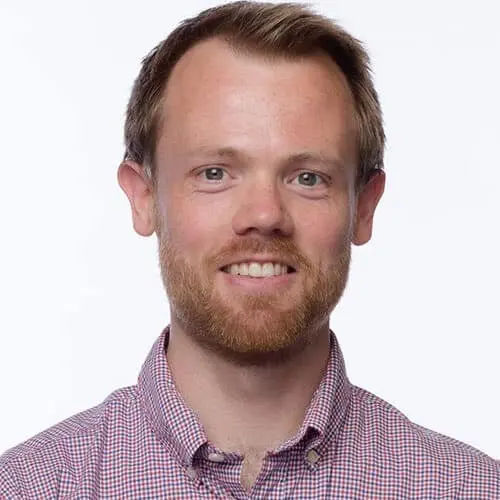
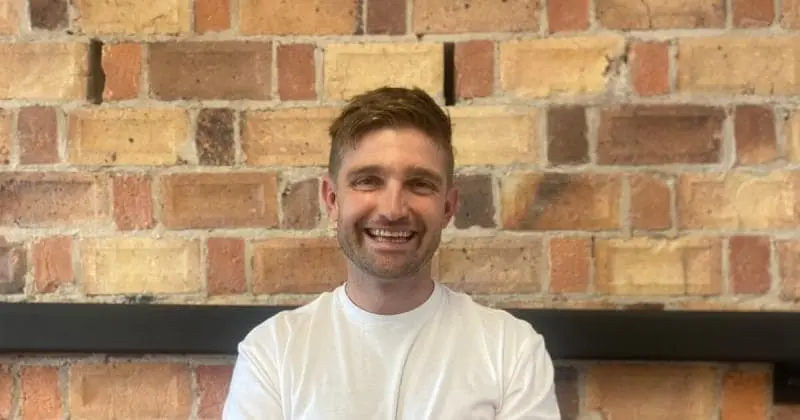
Transcript Synced · select any line to jump ▾ 0:00 Speaker: You're listening to a Day One FM show. Yeah, our mission is to increase the GDP of robotics. So we want to grow the pie for everyone. 0:07 Speaker: Well, how do you think about labor productivity? How do you think about sort of the second order effects on society of everything you see now playing out? 0:14 Adrian Macneil: You know, a couple years in, it was one of these Friday demos and we're sitting there and the guys are demoing some features and I'm like, this thing is way too good to be an internal tool, right? This thing is getting out of hand. It's way too good to be an internal tool. I think there's something here. This could be a company. 0:27 David Booth: You know, I love San Francisco. A lot of the most ambitious, talented people in the world seem to wind up there. I'm always curious about like how and why that idea got lodged in their mind. 0:35 Adrian Macneil: And then I sit there thinking, and especially maybe this is part of coming from New Zealand, right? But you just think about like all of the jobs and all of the things that could be automated that are way easier than driving around San Francisco, right? You're like, why don't we have self-driving tractors yet? Why don't we have self-driving lawn mowers? Why don't we have self-driving forklifts? 0:51 Speaker: Welcome back to diaspora.nz, where we're on a mission to seek out and profile the hidden gems, the best founders, operators, researchers, and emerging leaders of the great Kiwi expat community. Today's guest is Adrian McNeill, founder and CEO at Fox Club, a developer platform for robotics and autonomy. Now, Adrian founded Fox Club on the back of a 5-year run leading infrastructure engineering at Cruise, General Motors autonomous vehicle division, where he'd seen firsthand how much of the robotics stack needed to be reinvented from scratch with every new automation. That was a realization that led him to starting Fox Club with a vision to make it easier for small teams to build and deploy intelligent machines, whether they're warehouse robots or autonomous tractors. Adrian takes us back to that Friday demo that planted the first seed for him into the open source movement that made the leap possible and into how he went about building the early team, including a handful of early Cruise engineers around their shared conviction. We unpack what's coming next from quadrupeds to humanoids to where robotics is bottlenecked and where it's really struggling to live into its potential and what it means when he says he wants to be the Stripe or the Shopify of the autonomy world. You can help us out by sharing this pod with a friend or a family member around the world, by posting it online, sharing it, or leaving us a 5-star review wherever you listen to your podcasts. Can't do this without your support, so really appreciate it. Adrian, it's a pleasure to have you on the diaspora.nz podcast. We're fortunate we're in New Zealand. You're actually— 2:18 Adrian Macneil: We are in New Zealand, coming live and direct from Cambridge. 2:21 David Booth: Yeah, the first ever Diaspora episode recorded from hometown NZ. For me. Excited to have you here. You are building developer tools for robotics, for visualizing data for people building robotic applications. That's awesome. I can't wait to talk more about it. Tell me about the moment that you realized this was possible though. 2:37 Adrian Macneil: Before I started, I'd been doing Foxglove about 4 years now. I was at Cruise Automation, which was a subsidiary of General Motors, building self-driving cars there. And we did every, every Friday there were demos, basically the team would get together and show off cool things that have been built during the week. And one of our tools that we had built at Cruise specifically was a sort of visual debugging tool. You know, a couple years in, it was one of these Friday demos and we're sitting there and the guys are demoing some features and I'm like, this thing is way too good to be an internal tool, right? Like this is just one of the specifically internal tools that we built. This thing is getting out of hand. It was way too good to be an internal tool. Like I think there's something here. This could be a company. So that was kind of the genesis of the idea that eventually became Foxglove. 3:20 David Booth: Brilliant. I didn't realize such a strong connection. 3:22 Adrian Macneil: What was the process of then, like, the realization of leaving your role there? 3:28 David Booth: When and were you allowed to bring team members with you or sort of building a team from scratch? What was the, the I've got to take the leap to build this independently moment? 3:36 Adrian Macneil: Yeah, I mean, there was probably still another year or two before that ultimately became a company, but I always had the, I was always planning to go into a startup after Cruise. You know, I spent 5 years at Cruise and I knew that the next thing that I would do would be a startup. I was, thinking about what that was going to be. I always was really interested in developer tools, especially. I've always been someone that believes in building the machine that builds the machine. 3:59 David Booth: Yeah. 4:00 Adrian Macneil: And so as I was kind of coming to the end of my time at Cruise there and thinking, you know, how would we actually build this out? As it had happened, the team that was working on this, I wasn't directly working on this project. It was one of the teams that was reporting to me, but that team had already open sourced some of their core, some of the core things that they had built there. So we had access to some of the source code and things that had been kind of explicitly released by Cruise. And then as far as the team goes, I think the early first 4 or 5 people at Foxglove all came from Cruise, but they had all already left. I think they had either, you know, either left a year or two ago, or one of them maybe had left like a month ago, maybe. But— And in general, in California, you cannot like sort of non-compete agreements are illegal and unenforceable. So companies can't prevent you from specifically hiring people that have worked for a competitor or something like that in the past. They can prevent you from soliciting, so they can say, oh, you sign a non-solicit agreement, you can't actively come after employees that work at your former employer for, you know, a year or something generally. But it's perfectly fine if they leave or if they reach out to you, or, you know, there's a lot of kind of gray area of it's totally fine if they reach out to me. 5:09 David Booth: So it's a fact. I mean, that'd be a fascinating thread to pull maybe later or another day, but the, the innovations that's enabled by just the freer movement of, of labor and skills and people among ideas and companies, it's almost like a more competitive market for talent, right? 5:22 Adrian Macneil: Right, yeah, the entire Bay Area is built on top of people leaving companies and starting their own company. I mean, this was the founding, literally the founding of Silicon Valley, right? Was like, you know, these guys at whatever it was, Shockley Semiconductor. 5:32 David Booth: The traitorous 8. 5:33 Adrian Macneil: Right, yeah, exactly. They leave, they start to come in, and of those guys, you know, a bunch of, you know, some of them go off to start Intel and a bunch of these other companies and that, and that got the whole thing going. 5:42 David Booth: So Foxglove was 2021. It was not that long ago on the calendar, but it was a long time ago in AI development and in sort of what's happened at the pace of of development of this industry. 5:52 Adrian Macneil: Pre-ChatGPT. 5:54 David Booth: Yeah, that's almost a BC and AC type of thing. If you think about the fundamental assumptions that you made when you started the company, how much of what you believed then to be true did you validate or invalidate, or how's it evolved since then? And maybe tell us about exactly what you're doing as well, 'cause that would help. 6:14 Speaker: Yeah, yeah. So broadly, you can think of what we're building as a developer platform for robotics, Um, and when we started that 4 years ago, that was a pretty, that was a pitch that was not sort of super common, I guess. I went to a lot of investors in 2021 and pitched them on, you know, we want to build developer tools for robotics and developer tools for the robotics industry. And they all said, what robotics industry? Like, why don't you do something Web3 or crypto? Because this is like 2021, right? I mean, everyone's just like going nuts on NFTs and Web3 and all of this stuff. 6:43 David Booth: And the interest rates are zero and the VC dollars are flowing. Thick and fast. 6:47 Adrian Macneil: And so it was, you know, it was easy to get started with a seed round in 2021, but there was definitely not anywhere near as much interest in the big thing besides, you know, obviously the huge thing that's changed in the last 4 or 5 years is ChatGPT and LLMs and generative AI. That obviously happened. But the other thing that has happened in parallel, especially over the last 1 to 2 years, has been a huge uptick in interest in robotics, manufacturing, reshoring. And so you could see these things coming 5 years ago. It was obvious. At least for me, leaving Cruise, I left Cruise with this really strong conviction that, that there's huge potential for robotics and autonomy in the world, right? I think about the fact that when I left, we had, had almost got to the point, and shortly after I left, they got cars driving around San Francisco with no one in the, no one in the driver's seat, right? So I was like, Took longer than we thought, you know, in 2016, we thought maybe it was going to be a couple of years and, you know, it took more like 5 or 6, but, but it happened, right? We got to a point where we can drive cars around in San Francisco with no one in the front seat, which is insane. And then I sit there thinking, and especially maybe this is part of, part of coming from New Zealand, right? But you just think about like all of the jobs and all of the things that could be automated that are way easier than driving around San Francisco, right? You're like, why don't we have self-driving tractors yet? Why don't we have self-driving lawn mowers? Why don't we have self-driving forklifts? And like, I think, you know, maybe that's sort of growing up in New Zealand and working in kiwifruit packhouses and working on orchards and having seen some of this, you think back and you think, man, why haven't we automated this stuff yet. So I think I had very strong conviction, uh, at that point, 4 or 5 years ago about the potential for autonomy because I had seen what was possible because I see, hey, we can drive around San Francisco in a self-driving car with no one in the front seat. This is crazy. But I also very strongly felt that the industry was being held back by a lack of off-the-shelf tooling, off-the-shelf infrastructure. That was, that was part of the reason for Foxglove. I, I knew from Cruise that 80% of the software engineers at Cruise are not building the algorithms that are driving, right? 80% of them are building all the infrastructure, the data infrastructure and the fleet infrastructure and the, you know, how do you, how do you learn from all of this data that you're gathering and figure out the incidents and building the simulation and building the verification and validation. And so this huge kind of bottom of the iceberg that it takes to get a self-driving car on the road. And that was only possible because Cruise raised billions and billions of dollars. We hired literally like thousands of people. We had, at least 1,000 software engineering, like, you know, software engineering was at least 1,000 people when I left. 9:10 David Booth: And then got acquired into GM, and you were there through the GM era as well. 9:15 Adrian Macneil: GM actually acquired Cruise very early on, so I joined sort of weeks after that in 2016. So GM acquired Cruise when the team was about 30 people. I joined, my co-founder at Foxwell was there prior to that acquisition, that's how I knew the company. But they got acquired in 2016, it was a very small team. But GM just started pumping a ton of money into it. They're super bullish on self-driving technology. And so we hired, you know, and it was a pretty wild ride, but we started, when I joined it was, you know, maybe 30 or 40 people. I think we grew from that to like a year later it was 150 people, a year later it was 450 people, a year later it was 1,200 people. You know, it was just kind of year over year, like tripling and everyone's showing up kind of. 9:54 David Booth: It'd be a fascinating example of a company that's gone through that hyperscale era after the acquisition. In most cases, that's, you do that and then you get acquired after you're big. I'd be really curious, I mean, there's so many different ways to take this conversation right now. We're going to do this first and then we'll get back to general robotics and then we're going to go back into the kiwifruit packhouses in the early days as well. But just while we're on the topic, what did it feel like being inside of a startup inside of GM? Was there like a corporate shell that had to be broken or was it purely independent? 10:23 Adrian Macneil: Oh yeah, the early days were crazy, especially at first. So yeah, first of all, yeah, it's very unusual for acquisitions to be successful. And I mean, Cruise ultimately was not successful. The GM just decided to kill it a few months ago, finally. You know, it's a cold wind too. 10:38 David Booth: Was, was it not successful due to internal factors or the innovation or the rate of pace, or was it external factors? I mean, they, um, there was an incident on the road in San Francisco. There was a few regulatory problems. 10:49 Adrian Macneil: I mean, it's, it's ultimately because GM's not the right vehicle to do this, right? It's just like you have a very traditional, very risk-averse, very procedurally oriented You have a company that's, you know, 100 years old and has dialed themselves into producing cars at scale and optimizing things and optimizing supply chain and bringing together a lot of components. Uh, most car companies, at least in the West, and companies like GM are a company full of project managers, right? They're not actually kind of building really many or any of the components themselves. They're sourcing a whole lot of components, integrating them, building a final product. Um, so they have very long development cycles. very kind of waterfall development and ultimately they are very risk averse. And so I think there were always forces from very early on in GM at Cruise, you know, like I said, I joined just post-acquisition, but we are a tiny company. GM has whatever, 100,000 employees or whatever. Cruise has 30. They show up and they're like, all right, we're gonna roll out, you know, Windows laptops to everybody and you're gonna be on the GM firewall. And you know, you were not allowed to use AWS. Like we don't believe in the cloud. Come, we've got a data center that works perfectly well. 11:52 David Booth: Yeah. 11:52 Adrian Macneil: So, you know, the early days there was, yeah, there was a lot of forces from GM that were like, okay, great. We acquired these guys. We're gonna absorb them into the mothership. To her credit, Mary Barra, the GM CEO, was super sort of, uh, you know, gave us a lot of shelter. And so early Cruise, and you know, it took a lot of sort of, I think, fighting by the Cruise leadership and things as well. But, um, Cruise managed to, to make ourselves independent. You know, it came to a bit of a showdown, but ultimately it was like, yeah, leave Cruise alone. They can do all their own HR and hiring and IT, and they can use AWS and just let them do their thing. Um, and so once we got past that stage, um, we actually had relatively little interaction, like most of the Cruise team had very relatively little interaction with GM. We had a lot of freedom, um, to work. But as it came to later on and when Cruise started running into, you know, real sort of scaling challenges and they had things like the accident, um, you know, that's when it all comes crashing down, right? And it's like, there's people in GM that just can't take that level of of brand risk and, you know, to put it charitably, like they've got a 100-year-old, very established brand. They can't have you going around like sort of ruining that with a, with sort of a moving quickly attitude. 12:58 David Booth: To get to set up a little segue back, back out of the weeds, 'cause this is fascinating, but I'm curious if you'd say autonomous driving is like a, a form of specialized applied robotics. And then you say, well, general robotics would be automating anything. And then what you, one of your insights was like, well, actually we can take some of the lessons learned, the technology built within this one form of specialized robotics to others. So really curious about the other emergence. So putting self-driving aside, the other emergent forms of robotics or automation that you are, that you've first seen like the most adoption within and that you are most excited about in the future. 13:33 Adrian Macneil: I think coming out of Cruise had mostly a gut, a gut feel that this had to happen, right? It wasn't some, you know, a few data points. I could look around and see a few startups, but I didn't have a lot of connections outside of the AV industry. I talked to a lot of people at other AV companies. Autonomous vehicle companies and generally figured out that we were all building the same thing. You know, go to talk to Tesla and go to Waymo and Zoox and Aurora. And I was like, oh, you guys built that tool as well. Oh, you, you know, we all invented the same sort of stack that it took to build autonomy and it all ended up looking quite similar. And I had sort of, I would say, a strong gut feeling that the stack that we had built was generally applicable to autonomy. Anytime you've got sort of sensors and actuation, you've got, you know, something out there in the real world that needs to take in a bunch of data and make some autonomous decisions. It's not getting sent back to the cloud and what's happening there. And then those autonomous decisions are going to have actions that are important. And so I would say when I, you know, I first started, it was more of a gut feel that, hey, we built the self-driving car, but we would need this exact same stack if we were building a self-driving lawnmower or a self-driving forklift or something, right? Or a self-driving tractor. Like, and, and also a lot of robots in industrial settings, so like warehouse logistics, manufacturing, where you've got manipulation type problems, you've got robot arms and things. 14:44 David Booth: Yeah. 14:44 Adrian Macneil: It all still comes down to like, hey, there's a bunch of sensors, figure some things out, make some actions happen locally. And so yeah, it was general sense that that would've passed. 14:52 David Booth: So was there a first customer or was there like, what's the, uh, one of your customers today that you, you could tell us about that you are most excited about? 15:00 Adrian Macneil: We have customers across self-driving, handful of self-driving companies, but I wouldn't say that it's like a majority or anything. There's the, there are self-driving companies, a lot of like agricultural robotics companies. So people doing things like tractor autonomy, but also autonomous sprayers and things like that. So John Deere are leaning in really heavily on this. They have a subsidiary that does a lot of sort of R&D around autonomy, around automating sprayers, automating tractors, things like this. There are a lot of indoor, like warehouse and logistics type things. So there's a lot of people building robots to move packages around warehouses. And there's also a lot of like, um, package sorting, pallet unloading, loading, uh, truck unloading, loading, which are interesting problems because you've got to sort of stack a bunch of arbitrary sized boxes on a pallet. Yeah. 15:39 David Booth: Are you seeing more, maybe the answer's all the above, but are you seeing more people who are using your tools for their own purposes? Like I'm Amazon and I want to do better package loading and unloading, or separately, is it like vertical-specific robotics companies who are building these things? And then another extension of that, like why not do some of this yourself? Like could you ever go into the business of developing a self-driving forklift and marketing and retailing that product and servicing the customer? And what's stopping you from, or How do you think about those strategic paths? 16:08 Adrian Macneil: So yeah, good question. Most of our customers are not building it for themselves. I would say John Deere is an example of that. They're building it for themselves. But, and you know, we do have like Amazon, sure, they're building a lot of the, but bulk of our customers are people building robots that they are going to either sell or lease to end customers. So the question of like, well, Foxconn is so good at robotics, why don't you guys just like go build self-driving forklifts or something? I guess. You know, our position in the market is a platform play, right? Like we want to build horizontal tools and infrastructure. And most, you think about, my analogy is if you want to build a SaaS startup today, right? You don't take on a lot of kind of R&D risk, right? So like most SaaS business, most vertical SaaS businesses today, from a technology perspective, are gluing together a bunch of off-the-shelf components and like focusing on product-market fit. And that's a good thing, right? You want most startups, a bunch of people can get together in a garage and they can like, you know, glue some existing off-the-shelf open source stuff together, commercial stuff together. They can do their hosting on a bunch of commercial off-the-shelf platforms. They can do their, you know, infrastructure and their observability. And they grab a bunch of open source frameworks, glue it all together, and like focus on product market fit, focus on go-to-market, figure out like, what are you building? Who are you selling it to? And how are you, how are you selling to them? Um, that's, that's possible in SaaS today. In robotics today, that is not possible. So in robotics, it's the complete opposite. Usually it's like, well, if you can make a robot do that, that'd be amazing. Sure. Well, but in an instant, can you make a robot do that? So like most robotic startups today are taking on a massive amount of R&D risk and the product market fit is like blindingly obvious, or at least it will be if they can make the robot do the thing that, you know, reliably that they, that they promised to. So, so I guess, you know, bringing it back to Foxsoft, like the entire SaaS industry rests on top of, you know, a whole pyramid of, of existing kind of horizontal layers. That make that possible for people to go do the vertical things. And so that's what we're trying to unlock in robotics is we are trying to make it easier. You know, our, our mission is to increase the GDP of robotics. So we want to grow the pie for everyone. We are not going to go and take on, you know, some, um, particular application. We do want to move further up the stack and, you know, make it easier and easier to build autonomy, but we don't want to— Integrators and, and kind of vertical robotics play a, you know, play a different market. I, I like, um, You know, Bill Gates had a quote about platforms, right? It's like a good, a good platform, like creates way more value above the platform than it captures itself, right? 18:28 David Booth: So. So to, I mean, to apply your metaphor directly, you're building an e-commerce company. You don't reinvent a storefront. You use Shopify or like you assess. Yeah. You don't reinvent payments. You use Stripe. You don't reinvent the database. 18:41 Adrian Macneil: You use Supabase or something. Right. And 10 years ago, that was like, I mean, or 15 years ago, you wanted to build an e-commerce company. Quite often you were just literally writing the e-commerce stuff for yourself, right? It's like, wow, good luck building, or at least you're getting, you know, You're installing WordPress and you're gluing together some plugins and now you just go to Shopify and you don't have to, and you also, even the logistics side of e-commerce store today, you don't even worry about that, right? There's a whole kind of like 3PLs just sorted for you. 19:04 David Booth: Sometimes, uh, for software startups specifically, there are services you use when you're small because it doesn't make sense to invest in the R&D to do those things now. But when you get bigger, you say, great, like now this is a really core part of my business. It makes sense to in-house this. So it'd be like a deplatforming risk. In the lingo. Is that true of Foxglove? Like, is there a, I mean, obviously John Deere is using it today and Amazon. So there's, you've clearly got really big customers, but is there a world in which like they use you to accelerate their early development, but then they, maybe there's a risk to them not owning that part of their stack themselves? 19:37 Adrian Macneil: As a rule, that hasn't been a problem for us. There is a little bit of divergence and kind of feature requests you get from small, smaller startups versus larger companies. Larger companies generally want something that can be a nice kind of point solution and solve a problem, but that integrates well into their existing very custom stack. Whereas startups generally want something that is a little more fully featured and just kind of solves all of the pieces for you. So there's a little bit of product tension there, but by and large, that rule of people kind of outgrowing a tool doesn't happen. Like as a rule, you don't see that as much in developer tools. You don't see— 20:12 David Booth: Yeah. 20:12 Adrian Macneil: You know, it's a, it's a tool that you use, right? And so you don't, you see as many people, you know, if you don't like decide they're going to build their own GitHub replacement because they got to a certain size. I mean, Google did obviously, but like apart from Google and Facebook level scale, everyone else just, you know, use GitHub or GitLab. You don't go and decide at some point that you've outgrown your like version control system and you need to build one from scratch. So it's a little more like that. I guess it's easier because developer tools, developer tools are a great entry point into companies that like a great feature because they are, generally not on the critical path at first, right? And so like that gets your foot in the door. That means that you can build trust with a company without having to come in and say, hey, you know, put us on your critical path from day one. 20:52 David Booth: Yeah. 20:53 Adrian Macneil: Yeah. 20:54 David Booth: That makes a lot of sense. If you, uh, if it's accurate to then say like if you wanted to be the Shopify or the Stripe of like robotics infrastructure, both of those companies have a particular piece of what they do, which is really, really hard, like Stripe. Fraud detection is really, really hard to do yourself. Is there a piece of what you do today which you said like, this is, we're going to focus our energies on cracking that because once we've cracked that, it makes us that much more defensible or that much more valuable or something else. What, what is that piece? 21:21 Adrian Macneil: Yeah, so the core thing for us right now, the biggest part about what we do today is, is observability for robotics. So we help people with logging data on robot. We help data people get data off the robot and getting data off a robot is, is a very interesting problem because most robots are operating in factories or fields, so they have very little Wi-Fi and they're recording tons of data 'cause they have multiple cameras and multiple other sensors. And so they're always recording way more data than you could possibly offload. So selectively offloading interesting pieces, gathering that data in the cloud, and then using that to go and debug and figure out problems. So we have a whole sort of multimodal visualization tool, a whole browser-based visualization tool that lets you go back and look at that snippet and figure out why did the robot fall down the stairs? Why did we back into this pallet? Why did the self-driving car slam on the brakes? You know, whatever it is, you wanna understand why the robot made that decision. So you wanna be able to go back and look frame by frame at What are we getting in the cameras? What are we detecting in the scene? What have we decided about this? And so this whole piece, I would say, uh, you know, the core value proposition there is not that any of that is rocket science, but it is a piece that first of all takes a long time to build. Like we had teams and teams of people building this at Cruise and other software, you know, other big companies like Tesla and Waymo and things also have huge teams dedicated to this. So to do it well takes more engineers than, an entire, like many of our customers even have on their entire staff. So we can afford to do that because we can amortize it across a lot of companies. We can afford to do that. We can afford to build this. There's also not skill sets that you quite often see, like a robotics startup is going to go hire a bunch of robotics engineers. Robotics engineers as a rule don't love writing JavaScript and like building like super tight web UIs, right? Like it's just not, not kind of the core competencies. 23:00 David Booth: They've got so many problems they've got to solve already. Powertrain, you know, mechanical pro— 23:06 Adrian Macneil: Yeah, I know, exactly. Like, this is my other thing, right, is another reason why we don't see as much pressure for people to sort of in-house this thing is like, you know, you build a SaaS company today, you hire a few full-stack product engineers who can like glue shit together, and then you've got a product you can bring to market. You want to bring a robotics company to market, you need mechanical engineers, electrical engineers, you need robotics engineers, you need some ML people, you need ML infrastructure people, you need backend people, you need frontend, you've got some web UI that you can connect to it. And then you also need an operations team because you've got, you know, you need to put these things and then you need, you know, go to market, you need to figure out yourself. So just like the margins in robotics, there's so many skills that you need to bring together. And so generally they're pretty excited to offload anything they can. 23:45 David Booth: We're going to, we're going to cast forward in time and then I want to go back to the kiwi fruit. So give me 5 years in the future, the maybe 10 years in the future, like pick a time at which you think the world really realized the potential. What does that look like? To unpack that further, I'd say like, how do you think about labor productivity? How do you think about sort of the second order effects on society of everything you see now playing out? 24:07 Adrian Macneil: Yeah. So where I think we are now is about 1980 PC industry, right? We're at like, this is my analogy is we're at, you know, the late '70s, very early '80s of where PCs, you know, have just got to the point that they may be a little bit useful and a few enthusiasts are starting to buy. I have a you know, I mean, I guess a lot of people have robot vacuums in their homes, but besides that, like, not many people have general-purpose robots in their home. I have like a humanoid and a robot dog, but they're mostly, you know, remote control. You can't do that much with them. Kids are terrified of them. Yeah, so we're like 1980 PC around, like, it's like, there's a few enthusiasts that have a robot at home, but like, by and large, they're like incredibly clunky. But this is going to grow very, very quickly, right? As, as, and, you know, we're talking about sort of the impacts that AI have had broadly. But the other thing is that AI is starting to have a real impact on robotics and the way people build software for robots is now becoming very different than what it was even a few years ago. So as robotics picks up over the next decade, they are going to get to a point where they are very broadly useful and then they're going to become very widely distributed. And so I, you know, my sort of back of the envelope calculation is probably within 20 years there'll be 20 billion robots in the world. 25:18 David Booth: If you listen to Tesla say every house will have an Optimus and that Optimus will be doing doing the dishes and folding the laundry and looking after the kids. And it's basically like, to what extent is that vision true, or do you see them being more commercially applied first, or where are they showing up? What's the tip of the wedge? 25:34 Adrian Macneil: There are already a lot of robots commercially. I would say, you know, without getting into the pros and cons of the humanoid form factor, like, I think that's very interesting for some tasks. And maybe broadly speaking, like, legs versus wheels, right? There are some tasks that legs are very good for, but legs by and large aren't that useful in commercial settings and in like factories and warehouses because like show me a warehouse and I'll show you zero stairs. Like this is just, um, you know, wheels are very good in some environments, but then you get into outdoor environments, maybe legs useful. But there are a lot of robots commercially, right? And robots, you know, again, this is anything that can kind of sense, think, and act. So anything where this could be a fixed base robot that's just an arm moving around doing things, which there's a lot of that already today. Could be a mobile manipulator. So it's driving around and it can pick up packages or, or put things down. I think we will start to see over the next 5 years robots breaking into homes, but they're going to start out— 26:25 David Booth: Not literally, but you know, figuratively break it. 26:27 Adrian Macneil: Sorry. Breaking into the home market and literally breaking into your homes. 26:31 David Booth: Well, I mean, maybe. 26:32 Adrian Macneil: We're going to start to see that, right? But they're going to be, it's not going to be an Optimus in the first, right? Like that, first of all, it's going to take people a while to like come to terms with, uh, even a, you know, a 5 or 6-foot robot wandering around your house, but also There are form factors that are probably a lot cheaper to build, like Optimus. I don't know what it costs, but it's, it would be in the like hundreds of thousands of dollars probably right now. Um, there are much cheaper form factors, but there are, for example, like RoboViking cleaners. Um, they already came out with ones at CES this year that have like just a little arm on the top that can like move Lego out the way and things, right? It can just like kind of get things out of the way while it's going and doing the vacuuming. So it can't quite put them away yet, but you can see that form factor scaling up a little bit to the point that maybe you can. Sort of tell it to put some books back on the shelf and things like that, that we're, that we're not that far away. I mean, technically that is possible today. And so we're not that far from that being commercialized. I think we're quite a way away from, so when I say robots in homes, it's going to be more like that initially, right? It's going to be a while before there's like, you know, and TBD if anyone actually wants like a full-fledged humanoid walking around serving them dinner. It's like a little bit creepy when you see the videos and stuff right now. 27:34 David Booth: Is this space that you, you think there is an opportunity for people to build startups ground up, assemble a team, raise some money, or is it one that's going to be more likely owned by the big guys. So like from, from Tesla to Amazon to the, you know, they've got the budgets, they've got the in-house engineering, they've got the distribution to get in every home very quickly. Um, is this, I mean, it's similar to a lot of trends like AI, you could argue a lot of the value is kind of accruing to the incumbents, to the, the big tech companies. 28:02 Adrian Macneil: Yes and no though. I mean, a lot of the, yeah, my vision of the world is much closer to the SaaS industry to that. I think vertical robotics is going to look because Just, you think of all of these applications and we come back to, you know, kiwi fruit and farms and things like this. There are so many niche applications. And so if we can make it possible for small teams to glue together, and this already happens, we have some customers that are 3 people that have, or 1 person even that have built their own platform and they've built the software and they're out there doing real things. So like today, the right people can already achieve this with small teams. We want to make that 1,000 times easier, right? We want to, we want there to be tens of thousands of robotics startups that are And again, I come back to the early PC industry, right? So like early PC industry was very vertically integrated. You had, you know, the Amiga and the Commodore and the Apple II, and it was each one of those came with the software and the hardware and the operating system and the apps all kind of made by the same vendor. And then through the '80s, this like massively commoditized, and then you can go and buy a PC and you could get a motherboard and a CPU and, you know, some ISA cards and a case and a screen, and you plug all that together and you had a Windows operating system and then you had like thousands of people building apps across all of this. So I expect the robotics industry is going to commoditize over the next 5 to 10 years. We'll get a lot of off-the-shelf hardware, a lot of off-the-shelf software that you can use, and we'll get it to the point where tons of vertical companies. So I do think that, sure, there will be some, um, some players, especially complicated robots like humanoids or something, and it's probably going to accrue to a very small number of people that are building them at scale and can afford to, to manufacture that at scale. But I also think there's going to be a massive long tail of people just building like custom robots for, and you know, starting up a— 29:36 David Booth: Is there one, let's say you weren't building Foxglove yourself, but Foxglove exists in its best form in its future state, and you are coming along, you're going to start a vertical robotics company, equivalent of your vertical SaaS. What's the vertical that you would start a company in? And what's the product you'd build? Request for startups. 29:54 Adrian Macneil: There are so many areas that are ripe for disruption. I guess the main kind of advice I would give to myself in this, theoretical situation is, is to find things that just sound like ridiculously easy, right? So like the people that are, that are scaling robots today, um, for example, like AMR, autonomous mobile robots in warehouses, there are lots of mobile robot companies that are in the tens of thousands of units shipped, which is like quite big for robotics today, that have robots that literally just like, all they can do is drive from A to B and people are loading stuff on them on one end and then they drive across the warehouse factory and then people unload them at the other end. And like, you know, you think about from an autonomy perspective, that sounds just incredibly simple, but that's just, that's just where we are today. Right. And things like autonomous lawn mowers where it's like, yeah, just follow the path around. Um, and if something's in the way, like stop or go around it. But these are just, you know, they're just, they're very, uh, or, you know, people are making, starting to make good money in, uh, autonomous surveillance. So like, you know, in oil and gas and construction and things like send a robot dog out to just go take some photos at some point. But all it does is. walks there, takes a photo and walks back or whatever, right? Like just keep it simple because the people that are succeeding are the ones, or, you know, Chef Robotics, actually these guys just did a fundraising announcement yesterday. You roll this thing up into a food production line where people are packing like, you know, prepackaged lunches and things like this. And today humans stand there and just spoonful of rice, spoonful of rice, spoonful of rice. And then the next person was like, you know, spoonful of lettuce, spoonful of like, they roll this thing up and they've got a robot that just All it does all day is spin flour, spin flour. Like, this is a, this is already a hard enough problem to, that you can make a big business doing spin flour. 31:32 David Booth: The rise of the cloud kitchens and like Sweetgreen and like those folks that, um, I think one of the most compelling use cases I've heard recently, and the name is escaping me, I'm sure you know it, um, is the basically inspection of, of very sensitive risky areas. So like the outside of oil and gas fields or the— 31:48 Adrian Macneil: So like Gecko Robotics is doing. I think it was Gecko. Yeah. Yeah. Yeah. Probably they're, they're doing a really good bit. You know, they do a lot of like inspection of oil and gas, I think. Also, even kind of inside, because once you've got a big, um, you know, my dad used to reckon oil and there's like, you know, you get these big tanks and things that have, once they've had petrol on them, humans are not allowed to go in there basically after. So how do you inspect that after it's, yeah, so. 32:09 David Booth: So tell me about a vertical use case is kiwifruit. Let's talk about it. Um, was that an introduction, the pick and packing in the early days? I understand there is some sort of, uh, machine vision, uh, inspecting and looking for ripeness and packing and things today. Take us right back. Like, where did you grow up? Walk us through what were the inflection points early on that brought you to this point? 32:28 Adrian Macneil: I think, I think this idea was always in the back of my head, right? I grew up in Te Puke, which is, you know, obviously Kiwi for capital of New Zealand, represent. So high school jobs was exposed to like go work in a packhouse all summer. It's like, oh yeah, go do a bit of orchard work. 32:41 David Booth: Nothing like repeatedly packing boxes of kiwi fruit to make someone think about automation, right? 32:45 Adrian Macneil: Well, some of the jobs I just couldn't handle, right? I mean, one of the jobs that I did for about 2 hours and then I was like, you know, I did one shift of this and I was like, I'm out. Was just, was grading, right? So grading at the time, hopefully they've automated it by now, but 20 years ago, grading was watch all the kiwifruit roll by and pick out the ones with blemishes and put them on a different track. Cause it's like, these are going to be export grade versus domestic or whatever. So it's just like, just watch them roll by. And then when there's a problem, you know, one that's a blemish, like pick that out and stick it on the other tray. It's just like mind numbing, right? You kind of just space out while you're watching it. Um, but I did spend like several summers through, through university. I spent several summers. doing tray making. So tray making is basically like, you know, around the clock, get a bunch of blanks, like the Kiwifruit boxes just come in big square pallets of flat boxes, load them into the machine. 33:26 David Booth: Yeah. 33:27 Adrian Macneil: And then quickly run around and like load some more glue into the machine and then quickly run, run on the other side and grab all of the folded boxes. The machine folds the box, but it can't look, you know, it can't take the blanks off the pallet and it can't put the folded ones onto the pallet. And you know, this job I actually love because they pay you per box rather than per hour. So you could just work really hard and and make a lot of money. But, um, but you know, I just, in the back of my mind, he said this whole time was just like, these are, you know, these are kind of mind-numbing jobs, right? Like there are, there are things that you can, you know, that are difficult or dangerous for people to do, or, you know, they're just, a lot of people have workplace injuries and things doing this kind of stuff. So can we get robots to do these, these jobs that are like difficult, dangerous, or boring? Um, and can they ultimately do a better job? And then people can come and add value where people do best, which is, you know, very like lateral thinking and being flexible and things that robots today are still a very long away from? 34:15 David Booth: I had to look it up. It's Robotics Plus from Tauranga. Do a lot of the specialized stuff. I recall, um, and I wish I had the name front of mind again as well, but there was someone that was looking doing fish grading on vessels offshore. It's like when you're on an offshore fishing vessel and you're like, I've got a very high-grade fish, you can afford to helicopter it to shore to go to sashimi. Whereas if you've got a standard, whatever it might be, size, length. 34:37 Adrian Macneil: And then it automated that, is that, um? 34:39 David Booth: It was, it was the automation of grading and it was the I can't recall the specifics now, but I'd say anybody who hears it, and if I'm talking about you, give me a shout because I'd love to catch up. So you were working in the packhouses, also software engineering, and there was a, I'm not sure what the winding path was that took you to the Treasury. You're a software engineer at the New Zealand Treasury. 35:00 Adrian Macneil: Yeah, that was my first job. Yeah, so I went to university at Massey in Palmerston North, and then coming out of that, I got an internship. I was a bit slack on it. 35:08 David Booth: Was that like a push or a pull? Were you drawn to go work with the Treasury or was like, oh shit, that's the only place I can— 35:14 Adrian Macneil: Oh no, I just had no idea that, you know, the sort of grow up in New Zealand and Te Puke and these things and just simply have no idea about sort of how big the world is and how to get into it. And so I was always, I mean, I was interested in computers since I was, you know, 3 years old or whatever, but I had no idea how to, how to, you know, make a career or what that was going to look like. But I did computer science at Massey. And then coming out of there, I was sort of applied for a few internships. As I recall, I got an internship offer at the Treasury. So I did a summer there and then they made me an offer to come back the next year full-time. And so that was kind of one thing led to another. I worked there for a couple years or something. I'm not sure exactly, but after that, I sort of, you know, just government wasn't for me at the time. It wasn't super fast moving or it wasn't a lot of sort of a very high ceiling to get to there. So. 36:01 David Booth: Though I was going to try to draw a connection between And a couple of years later you wound up at Coinbase, Director of Engineering. And is there a common thread around like, well, it's financial, you know, infrastructure engineering, the thing about the future of treasury management, or is that a bit of a reach? 36:16 Adrian Macneil: So from Treasury, I, a buddy of mine had a web development company and he was looking for sort of some more help. And so I quit the Treasury, much to my parents' dismay that I was leaving a well-paying job to go and and sort of, uh, just help my friend build websites or whatever. But, but we started building websites. And so we was just the two of us and we would just, you know, split the money that we made. So we would stay up all night, you know, building websites for random local people in Wellington. And then one of the websites we ended up building was an e-commerce website. And like I say, back in, you know, whatever this was, like late 2000s, it was a normal thing to just build your own e-commerce platform while you wanted to have an e-commerce website. So we coded up this, this e-commerce website platform. 36:56 David Booth: Yeah. That was Expresso? 36:59 Adrian Macneil: Yeah. So it was, yeah. And so I kind of flipped that into a business and we took kind of the core of that, turned that into a business. And so I built this e-commerce software that are selling to a whole lot of different. And so at the time I was also kind of bouncing around doing a bit of traveling and read 4-Hour Workweek and I was like in Thailand and had this kind of e-commerce website platform and selling it to a bunch of people. And so as a, as part of building this e-commerce platform, you know, we're talking about the Shopify example, as part of building this e-commerce platform, I actually built integrations. I personally coded up integrations with probably about like 40 different payment gateways. And so I'd done a lot of stuff with like, I had a lot of exposure to how super annoying it was working with payment APIs and how kind of outdated a lot of the payment APIs and things were. And then I also, after that, I went to this startup in Sydney called Rooms and we were doing, it was like a sort of a flatmate finder website, a long-term Airbnb, but we were trying to manage the payments. And so I also, who was doing some payment management and payment integrations there. So I came out of that just massively frustrated at how annoying most payment kind of platforms were to work with. And so that was how I, you know, Bitcoin came out and I think I was more, I mean, at first, you know, first heard of Bitcoin, I was like, oh, that sounds like a scam. But then sooner than most, I was kind of like, oh, programmable money. He's like, that sounds amazing. Like programmable money is a great idea. Why? I was like, I was more open to that because I had spent so much time, you know, programming money and doing like payment gateway and things. And I realized how how annoying the sort of legacy APIs were. So I got into, into kind of crypto quite early, got a job at Coinbase. That was when I first moved to the States in 2014. 38:30 David Booth: Was that the draw to the States or were you otherwise convinced you needed to be in Silicon Valley? What was the, what was the moment of that? I'm curious about, you know, I love San Francisco. A lot of the most ambitious, talented people in the world seem to wind up there. I'm always curious about like how and why that that idea got lodged in their mind. 38:48 Adrian Macneil: Yeah, I mean, the analogy I draw is like, you want to be a famous actor, like you want to be a world famous actor. Do you want to do that in Cambridge or do you want to do that in LA, right? 38:58 David Booth: Like— Maybe you go to LA for a while, you get famous and come back to Cambridge. 39:02 Adrian Macneil: Well, that's the New Zealand dream, right? Um, we'll talk about that. We need people to accuse to be more ambitious than make a few million dollars and move home, but we'll come back to that. You want to be, uh, you know, you want to make You want to make a lot of money in finance, you go to New York or London, right? Uh, you want to, you know, you want to be a top musician. There's maybe a few cities you go to, but, but by and large, if you, if you want to be a, you know, world famous pop star, you go to LA. So like, if you want to, if you want to be at the top of your game, you need to go to the place where all the people at the top of their game are. And so that was always, um, I think, you know, again, early when I was very early growing up, it wasn't super obvious, but it became pretty early. Through college in my first few years working through, you know, university in my first few years working that San Francisco is the place to be if you, you know, this is, it was obviously where all the startups were happening. It's obviously where all the VC capital is. So you want to go to a place where you're, you're surrounded by just a whole lot of people that are all super ambitious and building things. 39:55 David Booth: And of course, with a couple of companies like Coinbase and Cruise, you'd have a, you'd have like a professional network robustly built around you for, you know, talented people who go on to do cool things. 40:04 Adrian Macneil: Yeah. I mean, because I wanted to start, and like I said, I've been doing kind of businesses and side hustles and things in my life, but I wanted to start a VC-backed startup. But, you know, there's not very few people go straight out of school into building a successful VC-backed company. Most people, you want to go and see how it's done at the best, right? So you want a front row seat. And this is again, you know, why I try to encourage so many ambitious, especially like ambitious Kiwis, I encourage you to leave and go to San Francisco, go to Silicon Valley because You need to see firsthand what it actually takes to build a company like that and what it looks like to be at like a super high growth company, what the level of intensity is at these companies. I mean, I showed up and, you know, I had no idea. I showed up in San Francisco for my first day at Coinbase and I was like blown away that the HR person was like emailing me on Sunday night, like before the, before my first day and emailing me on Sunday night being, hey, you got everything for tomorrow, blah, blah, blah. I was like, you're working right now. This is like, my mind couldn't comprehend that people would like work on a Sunday or whatever. 41:04 David Booth: Yeah, uh, well, definitely, um, one of the, one of my favorite bits of advice for people, if they do want, you want to start a company, you're young, great, like, what, what is the highest density of future co-founders? Where are they now? What is the, if there is a medium to large still scaling quickly company where the, the types of like high agency, you know, uh, people who you want to be your co-founder in the future, where are they right now? Go work there. 41:28 Adrian Macneil: Yeah, you want to, yeah, you both, both you want to meet a whole lot of people and cohort and, you know, my co-founder and two of the people at Foxglove, we worked together at Coinbase and at Cruise. So we've been working together for 10+ years now. Right. And so you meet people that are, have the same sort of state of mind and then you also get a front row seat to what it takes to really do this. 41:47 David Booth: And you've in the meantime also started a family, you moved to North Bay. So you're kind of following the trajectory of growing up in the Bay as well. What are your reflections now? Do you ever think, oh, you know, my kids, I wish they went through school in New Zealand, or do you compare and contrast like different lives you could be having here or there? How do you think about education, raising the family? What are you prioritizing, knowing sort of everything you do about the future? 42:10 Adrian Macneil: First and foremost, it's just that I wouldn't be challenged enough going back here. I think, you know, if we came to New Zealand, it's like, and the school environment, um, I honestly, I enjoyed growing up in New Zealand, but I don't, I don't know enough about like, you know, what the school environment is here now in the 2020s. I know what it was like in the '90s and early 2000s, right? And so I think, you know, in some ways it's, it's, you know, can kind of reminisce about growing up in New Zealand and running around with bare feet and, you know, going to the beach every day and this kind of stuff. But especially, you know, there's a lot of— America is a big place too, right? Like there's a lot of places and people don't realize, but well, I don't know, maybe they do, but you can go and live in a nice, you know, nice town or the community and be not too free and be a short drive from, San Francisco instead of, instead of what you're doing. 42:57 David Booth: I sometimes tell people, because we're in Cambridge, we're an hour and a half, maybe two south of Auckland. I tell people that's a little bit like living in Napa Valley or sort of the north end of Sonoma and driving into San Francisco a day or two a week. 43:07 Adrian Macneil: Um, right. Which people do. Yeah. People live up in Tahoe and that's about 4 hours driving. 43:12 David Booth: They live up there and selectively coming down to the Bay. Yeah. Now it's a really interesting one. Have you kept any ties to back home? 43:20 Adrian Macneil: I mean, I know you've Yeah, I mean, family and, and, and, you know, friends from school and things here. But, um, but yeah, mostly I would say it's, it's, you know, maybe I would come back and kaihai at some point, but for now it's kind of the, you know, the focus is building and San Francisco is the place. 43:34 David Booth: Aside from like hop on a plane and come to the Bay Area, what's something you'd tell ambitious young people back here or founders back here, or maybe even broaden it out to founders who are like thinking about building in in hardware and robotics broadly? 43:48 Adrian Macneil: When I was, yeah, thinking back to myself in my early 20s, I had a lot of energy and enthusiasm and I had no idea what I was doing. And so, and I had a lot of impatience, I guess. And that can, that can hurt you because you'd get an, I'd come up with a startup idea and I'd go crazy on it for a couple of weeks. And then after like 2 months, it like, you know, hadn't suddenly kind of blown up. You watch these movies and you watch like Social Network or whatever. At least that was the one that you watch back in the day and you get all excited about building a startup and you hack on something for like a month and then you're kind of wondering like, why hasn't it blown up yet? And then you just get bored and move on to the next thing. And so you don't, you don't build up the kind of mental stamina for, oh yeah, you're going to need to like, my thing now is don't start a company at all, or at least a startup. Let's say you want to build a high growth startup. Don't start a startup unless it is something that you're ready to work on for 10 years. 44:38 David Booth: Right. 44:38 Adrian Macneil: Like you need to, you need to go into a startup with this is a thing that I would be excited to work on for 10 years. Because if it's successful, it's going to be probably more than that. If it's not successful, well, if you go in with the attitude of this is going to be a quick flip, like you're probably not going to, um, you're probably not going to make it. You're just going to get burned out. And I didn't have that energy kind of earlier in life. So what I kind of say to founders, besides, besides if you work in tech and you, even if you don't want to be a founder, but you work in tech, go, go be at the top of your game. Like don't, at least even if you want to come back in a few years, that's fine. But like, go and see what it actually is like to work at the top of your game. In a company, worst case, you come out with a bunch of money and you can go retire in New Zealand. Um, we'll go do whatever you want in New Zealand. Best case, you actually get excited about, you know, being more ambitious and doing something bigger than that, starting your own thing. But, you know, that's number one. And number two is if you're going to start a company, even if you're 22, 23 and want to start a company, um, I mean, sure, by all means, have a side hustle and things, but like, if you think that you want to actually build a real business and like that is going to grow to hundreds of people and, and, you know, hundreds of millions or billions of dollars in revenue or whatever, go work at a, go find a company that's doing that first and just like see, go learn the ropes, like just go get a front row seat, find an early stage company that's high growth and has high potential. And that's a whole, you know, it's a little bit of an art to picking them, but, but go get a front row seat and see what it takes, the level of energy and intensity and, um, and learn from the best, right? Go, go. I mean, you know, I just, at Coinbase, I was directly reporting to Brian Armstrong, the CEO, right? And I was just, and And Fredo, some of the other co-founders, they're great guys and they're just, you know, super focused, super intense, super high energy. You see like what kind of founder it takes to build a company like that, that, you know, IPO'd for, you know, whatever it was, $80 billion or something. 46:20 David Booth: Yeah, it's wild, wild journey. Um, tell me, uh, my favorite final question is what can we do to help you? You're a member of the Kiwi diaspora. I want to send more talent your way, partnerships. What are the things that you would love to have more of in your life that we can help find for you? 46:36 Adrian Macneil: I think the, um, you know, it's only recently that, that kind of Kiwi networking things have even really become a thing in, in the Bay Area. So it's, it's, it's really cool to see that happening because sometimes you just make connections that, that you otherwise wouldn't have. And Americans are really big on like their colleges, right? College networks are kind of the thing. So I almost think about like New Zealand as kind of like— 46:54 David Booth: I do the same. It's like you've got the Stanford alumni over there, you've got the Harvard alumni over there, you've got the New Zealand alumni over here. 47:00 Adrian Macneil: Yeah, let's do the New Zealand line because it's kind of, you know, you meet a Kiwi and you're like, oh, where are you from? Oh, Cambridge. Oh, so yeah, I'm just down the road. Oh, cool. Like you just, you, you have, you have something in common that Americans, you know, have because they went to Harvard together or whatever, right? Or Yale or whatever it is. 47:14 David Booth: Like I've also found there's a really good filter on it because a lot of, not, not always, but a lot of the time, if you're a Kiwi and if you're in America in particular, it's actually quite hard to get a visa. 47:22 Adrian Macneil: Yeah, no, it is. Yeah. So there's selection bias, right? Like the people that, the people The people that have like made it from America to the Bay Area, to San Francisco, by and large have worked quite hard to get there. Like just that, so you get the selection bias of like the people that are there are usually pretty high agency and they're pushing to do things. And that's again why I, you know, I encourage people to do that because it'll filter out. I mean, more people should try, but a lot of people will give up because they can't be bothered. It's just too hard figuring out how to, you know, get a visa to the States. And so they give up, but that's fine. It weeds out the like low agency people and the high agency people. But I think this is huge, right? Because the other part of, of what makes Silicon Valley work is successful startups and successful founders who then go and help the next generation or even people that haven't even finished. You know, it's not even like they had an exit and sold, but a lot of people, as soon as they start becoming moderately successful, they start angel investing and advising other people. And there's a lot of like pay it back in the Bay Area, right? 48:15 David Booth: Mm-hmm. 48:15 Adrian Macneil: And that is, is great because, you know, there's tons of other founders I know from people that I worked with at Coinbase and people that I worked with at Cruise and I'm just, you know, people you meet through the years and there's a lot of pay it back and how can we help? And a lot of, there's a lot of money that's just sprayed around because it's, it's funny money, right? Like people go and make $5 million here, $10 million there from like small exits or they go and look at Google for a few years and they, you know, make a few million dollars and then they start throwing out like $10,000 angel checks here and there and advising their friends. And so there's a lot of money that's just kind of floating around for early stage, for early, even half-baked early stage ideas. And there's a lot of advice that comes with that. And so that the angel investor networks get you a lot of help there. And I think like, you know, bringing it back to New Zealand, I think New Zealand specifically could benefit from this, um, both with Kiwis in, in San Francisco that are, you know, even that are starting things in the Bay Area or that are even just working at other companies in the Bay Area. Um, but also back to founders that are in New Zealand, you know, if you want to start something in New Zealand, I still strongly advise people to go work in the Bay Area first and come back and just, just get some knowledge about what that actually looks like because there's only a couple companies. There's fewer companies in New Zealand that you're going to be able to get that experience from. But I think like all the founders that are in the Bay Area, now that we're starting to tie these like diaspora networks back together, we could be getting a lot more of the Kiwi founders and things to be angel investing and advising. 49:34 David Booth: Are you angel investing yourself? 49:36 Adrian Macneil: Yeah, yeah, yeah. Although I would say, you know, it's, we've got to figure out some tax vehicle for this. It's a pain in the ass angel investing in New Zealand companies from basically like, you know, owning, owning any, um, international things from, from the States. So if we could figure out some tax vehicle where you get all the Kiwi founders in San Francisco to invest in, um, in like a US registered LP fund, and then that handles all the tax fuckery, that would be great. 50:02 Speaker: Kiwi. Yep. I, uh, conveniently have spent a lot of my career thinking about that problem. So we should talk about it more. But, um, if I were to distill your long-winded answer to the, how can we help? It would be like, if you're a young Kiwi founder, if you're thinking about building something generally, moving to the States, think about particularly hardware robotics, you'd be down to, you know, meet and jam and that's really cool. 50:22 Adrian Macneil: Yeah, for sure. I kind of flipped that around until how, until how I can help rather than, but I, there are a lot of Kiwi founders, um, and, and Kiwis in general in the Bay Area. I have friends. In fact, I think the way we even met was through Hardy. Um, and he, back when I was at Coinbase, I think just like randomly cold emailed me and was like, hey, I'm like a Kiwi. I'm coming to San Francisco. Like, can I come and meet with you? And he came. So he came to the Coinbase office and from like 2014 or something. Um, that's how we know each other because he just like cold emailed me and was like, I'm also from New Zealand. So there you go. I don't, you know, everyone don't talk at once, but like, you know, the Kiwis are going to be very open and helpful in the same way that like Americans benefit from these college networks. Yeah. 50:58 David Booth: Brilliant. Oh, that's generous. 50:59 Adrian Macneil: That's awesome. 51:00 David Booth: We'll make sure the right people can find you. And, um, looking forward to doing this again in a couple years' time when we see how this robotics space continues to play out. 51:08 Adrian Macneil: Keep growing. 51:09 David Booth: As A lot of fun. Thank you, Adrian. 51:11 Adrian Macneil: Cheers. 51:14 David Booth: And that's a wrap. Thanks for listening. As a quick reminder, make sure you hit subscribe over on your favorite podcast player so you can keep getting stories like this landing in your feed every Friday. Help power you through those weekend chores. For my day job, I'm an entrepreneur in residence and an investor at Blackbird Ventures. We're backing best Kiwi and Aussie founders no matter where they are in the world. Back home with global ambitions, or out there building generational companies. My personal sweet spot is pre-seed and seed. I like to say there's no check too early, so drop me a line anytime. That's dbooth@blackbird.vc. This episode was produced by Day One, the podcast network for founders, operators, and investors, and is part of the Day One network. Thanks again. Look forward to seeing you back next week.






-on-developer-tools-for-robotics-and-why-ambitious-kiwis-need-to-go-and-come-back-smarter.png)