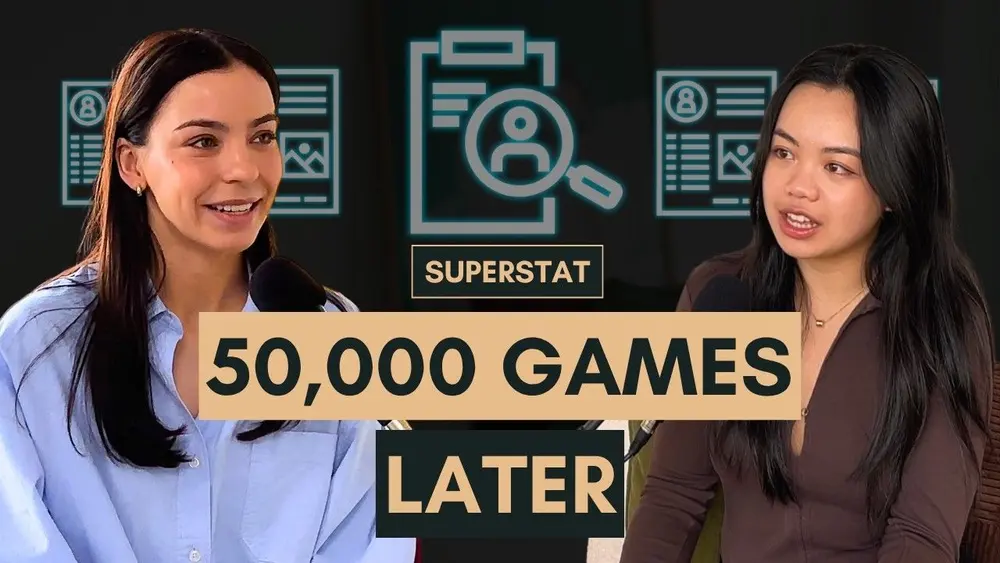
Transcript Synced · select any line to jump ▾ 0:00 Speaker: Toasty is an AI health tracking app. You can track your symptoms, food, body signals, and we basically surface insights and find patterns that you would otherwise just miss. 0:08 Vivian Shen: To our surprise, from day one, people were like filing bugs, people were filing feature requests, and they weren't writing like a few sentences. They were writing like paragraphs and paragraphs. 0:18 Speaker: We always think carefully, like, does this actually need AI? 0:21 Vivian Shen: I think we've actually been very deliberate in when, how we introduce AI into the app. 0:26 Georgie Healy: You guys are huge on TikTok. More than 3.5 million impressions last I checked. That's crazy. 0:32 Vivian Shen: Before Toastie, Anna and I were never online. We didn't have like a social media presence. 0:37 Speaker: Whoa. 0:37 Vivian Shen: So whilst— 0:38 Georgie Healy: You're like a boomer. 0:39 Vivian Shen: What? 0:40 Speaker: Honestly, we feel like boomers sometimes. 0:42 Speaker: Yeah. 0:43 Speaker: Hello and welcome to In the Blink of AI. I'm Georgie Healy and I'm really thrilled because I have wanted Anna and Viv from Toastie on the show literally since I first met them. We, They did meet at Google Sydney. They both are software engineers there, but they have this not-so-secret double life. They're huge on TikTok, actually. They have literally millions of impressions, and their story's really amazing. They met in a computer science lab at uni, never planned to be entrepreneurs, and then they decided to enter one hackathon, won that, and have won every hackathon they've entered since. They are special and magical in a multitude of ways, but namely in the fact that they each suffer from chronic illness, had to hack their way around trying to self-manage those, and decided, you know what, no one else should have to go through that, and created the delightful Toasty platform. I say delightful, it genuinely is. Their mascot is adorable. And they, um, because they're so clever, they've done it in such a seamless, meaningful way and have built a huge community since. I can't wait for you to have a listen. And if you listen all the way to the end, they have a very special surprise for listeners. Let's dive in. You're listening to a Day One FM show. 2:21 Speaker: Founders scale faster on Deal. Set up payroll for any country in minutes. Hire anyone, anywhere. Get visas handled fast and get back to building. Visit deal.com/dayone. That's d-e-e-l.com/dayone. 2:37 Georgie Healy: Hi, welcome to In the Blink of AI. I've been wanting to do this genuinely for maybe a year and a half. Very excited to have you. Thank you for being on the show. I'm just gonna kick right off with an AI hack of the week. Tool, use case that you like. Viv, why don't you start us off? What's a good hack? 3:01 Vivian Shen: Ooh, so recently Toasty actually went through a redesign and we actually used AI to walk us through like a whole branding workshop. So we gave it, you know, our goals, our intention, how we wanna be like, how we wanna be perceived basically. And they came up with colors, logos, copies even, like how we should be presenting ourselves and like situating ourselves in the market. And I thought that was really cool. And it came up with some really great mocks as well. 3:24 Speaker: 'Cause you guys are so good at that. The fact that you did that process and was happy with the outcome, it's a great hack. I love it. What about you, Anna? 3:34 Speaker: All right, so we've done quite a few pitches in our time now, but I'm a massive introvert and I get really, really nervous every time. But one hack that we found super useful whenever we're preparing for any sort of like pitch or presentation is we go into live mode. So either Gemini or GPT, and you can, give your pitch to the AI model and then ask it to pretend to be one of the judges on the judging panel and ask you questions as if you were being judged. So then it gives you a whole range of different things that they might ask, and you can practice saying the answer out loud back to the model, and the model will give you feedback on how you answered or how you could strengthen your model. And this makes it so much easier to prepare and helps you feel a lot more confident. So— 4:19 Georgie Healy: I've seen you guys pitch on stage and you, like, we'll get into it. You're very good. 4:25 Speaker: Thank you. 4:26 Georgie Healy: This is something a lot of people are trying to work on though, and it's something in the past that it's very hard to practice unless you're on stage, and how often can you do that? And it's a little bit late by then, right? That's brilliant. 4:40 Speaker: Yeah, so highly recommend that to any founder who's, especially if you're just getting started, that's a great way to practice your pitching and answering Q&As. 4:48 Georgie Healy: I remember in job interviews back in the day, I did used to camera record myself a little bit, but I'm not an expert, it would be based on little things that I didn't like that I would do that other people might be okay with versus things that actually matter. And that's super clever to have like an external third party. Fantastic hacks, guys. Kicking off the show super freaking strong. Let's remove the fourth wall for a second. We do know each other, right? 5:15 Speaker: Yes, right. 5:16 Georgie Healy: We did meet. We met at Google in the Sydney office. But a lot of people love to know like, what's it like working there? And more specifically, what's underrated about the Sydney office, do you guys reckon? 5:28 Vivian Shen: I have a story, which is good work-life balance, actually. I remember this so clearly and vividly, like first day in the office, my new job, and my manager actually comes to my desk after 5 o'clock. It was past 5, he comes to my desk and he says, Vivian, I'm gonna go home now because it's past 5, it's past my working hours, so I'm gonna go home. You don't need to stay past your working hours and you should set up the work-life balance that you want for yourself. And he just left. And then I just thought that was, I think that was just a core memory for me. And as I grow older now, I realize even more importantly that, you know, you should prioritize your health, especially with us with our chronic illnesses. And work is not everything and is really important to set this good balance. 6:11 Georgie Healy: Absolutely obsessed with this. Definitely testament to the googliness of the office for sure. 6:18 Vivian Shen: Exactly. 6:19 Georgie Healy: Beautifully said. Anything you'd want to add to that? 6:21 Speaker: So I mean, everyone loves the free food and everyone loves, you know, all that stuff. But I also just really love the creative spaces that they have in the office. So there's a lot of just like random nooks and crannies full of random stuff that you would never imagine. And it's just very cool to be able to, you know, take a break from your code and go do something random in the office or just sit there and dissociate. Like, you'll never get bored. 6:46 Georgie Healy: Agree, agree. Favorite office space, do you have one? Like favorite little funny nook? 6:51 Vivian Shen: I think we really like the Passion Project room in like level 4. 6:55 Georgie Healy: Oh yeah. What's special about it? 6:57 Vivian Shen: It's just, I think it's very like a startup vibe. It's a room with like so many whiteboards and I think desks are arranged in an area that like, you know, promotes a lot of discussion and I think it's a really fun room to be in. 7:08 Georgie Healy: Oh, you're making me nostalgic, guys. Obsessed. Now I want to go back to where you first met. I loved this story. First year uni, you're both doing computer science, right? 7:20 Vivian Shen: Oh, I actually did data science. Data science. Yeah. 7:23 Speaker: And I was still a biomedical student back then, but— 7:26 Georgie Healy: Okay, okay. The specifics got lost in my brain along the way, but you were in a computer science lab? 7:31 Speaker: Yes. 7:32 Georgie Healy: Okay, okay. And then you met each other. First impressions? 7:37 Speaker: All right, so let me set the scene for you. 7:41 Georgie Healy: It's— Let's get comfy. 7:42 Speaker: Friday morning, 8:00 AM. 7:44 Vivian Shen: Yeah. 7:44 Speaker: This is a help lab for struggling first-year computer science students, introduction to programming. All right, and this is where I first meet Viv. And she had just come from a uni event that kicked on till really late the previous night. And everyone was like, oh wow, like, we didn't think you'd make it. It's like 8 AM on a Friday. But Viv was like, nah, I'm here and I'm ready to get full marks on my assignment. And so I knew from the very beginning— 8:12 Georgie Healy: She's a keeper. 8:12 Speaker: She's gonna get stuff done. 8:13 Georgie Healy: Yeah. 8:14 Speaker: That's who you want in your corner. 8:16 Georgie Healy: And also can also party. That's cool too. Like both. Like, why not both? Why not both? That's amazing. Work-life balance. Can you confirm or deny that this happened? 8:28 Vivian Shen: This definitely did happen actually. And I think funniest thing is I did get 100% on that assignment. 8:33 Georgie Healy: See, you guys are winners. Love that. Absolutely love that. But whose idea was it to start the first hackathon? 8:43 Vivian Shen: Ooh, I think actually might be my idea. So this was like, we were still in uni at the time and we're thinking, you know, how can we stand out against all these other software engineers applying to all these jobs? And we thought, you know, we should join a hackathon and actually build something from scratch. And so we ended up joining UNSW's largest hackathon. This was our first ever hackathon. 9:03 Georgie Healy: And for the listeners, UNSW, one of our big universities in Sydney, Australia. 9:07 Vivian Shen: Yeah, so our first ever hackathon and we actually ended up winning it.. And I think that was just a turning point for us because it was just so much fun building something from scratch. And I think it gave us more joy and purpose than I think we could ever get from our corporate jobs. 9:22 Georgie Healy: Oh my goodness. A lot of people are entering hackathons, you know, I was recently at the Minstrel AI Hackathon at UNSW, but, but you know, there seems to be almost one every week now. Any tips? You guys have won a few, like let's say Let's be honest, you guys keep winning them, stop entering them, and then how can people win? 9:44 Speaker: All right, so I would say our best advice is honestly don't overthink it too much. Just pick an idea, stick with it, and you don't have to be a great engineer, like at all. Just hack something together, focus mostly on the pitch. So it's mostly about how you can sell something in a very short period of time. So focus on the actual presentation, do the bare minimum for the engineering. Like funny story for one of the hackathons we did actually was we didn't even hook up our backend properly, but we were like, you know what, it's gonna look good, we're gonna do a live demo. So we did a live demo, right? Nice. We had one person interacting with the web interface and then we had another teammate literally open up our database and like delete the relevant rows and stuff like in real time. So then we refreshed and it looks like it actually works, but It was just us in the background. Like nothing worked. We just wanted to make it look like it did. But for a hackathon, that's kind of all you need. That's all you need. 10:38 Vivian Shen: Yeah. 10:38 Georgie Healy: Because you can do the backend technical stuff. It's not about ability, it's about the vision, right? 10:45 Vivian Shen: 100%. 10:45 Georgie Healy: And if it could work. I did see some of the entrants that didn't win. You can tell that they spent that entire hackathon allotted time in kind of over-engineering, I would say, if that's fair. And then when they got on stage, it was a little bit like, oh, here it is. Yeah, okay, that's a great tip, great tip. That brings me to what is Toasty? What are you building outside of your 9 to 5 at Google? 11:14 Speaker: Yeah, so we're working on our health tech company called Toasty. So Toasty is an AI health tracking app. You can track your symptoms, food, body signals. We also do lab reports and scans, and we basically surface insights and find patterns that you would otherwise just miss. So for example, we surface irregularities or things that you might want to check, anything you might not have noticed, and try to help you really understand what's going on with your body. 11:38 Georgie Healy: Love this. The chronic illness space, you know, I've learned a lot even just speaking to you guys ahead of the show. Uh, often called an invisible space. Why do you think that this is an important space? And Viv, why you guys specifically important to solve it? 11:57 Speaker: Yeah, so the keyword is it really is invisible a lot of the time, like invisible chronic illnesses. I think a lot of people look at us and go, oh, you two look like two, you know, young, healthy, happy people. 12:09 Georgie Healy: You're glowing right now. 12:10 Speaker: Oh, stop, sorry. 12:12 Georgie Healy: Thank you. 12:13 Speaker: But yeah, like a lot of people have under the surface a lot of chronic health problems, a lot of things that that you just don't see in the outside world. And that makes it really tricky to interact in a world where everyone just assumes everyone else is okay. And it's not until you actually talk about these issues or you realize that people are actually struggling with these things that it becomes, you know, more evident and you can actually get things that help you make life just feel a lot more accessible or easier. So we think it's really important to have these conversations. We think it's really important to talk more and to, you know, help each other through these challenges because it's definitely not easy. Yeah. Um, and I guess going into this space, obviously it's a very personal issue for us. Like, for me, a few years ago, like, I just got really unwell just out of the blue. There was nothing specific that triggered it, it was just a very sudden decline in my health. And after months and months of going through all these tests, I finally got diagnosed with an autoimmune disease. But even after that, I got a couple of sheets of paper prints out from Crohn's and Colitis UK, so not even Australia. I don't know why that one's a little bit odd. Never heard of them, but Super helpful. Yeah, and you know, a bunch of medications and you kind of just left to figure out what's left. Like, how do you feel normal now that, you know, everything's not normal and every day is, is it a flare-up? Is it gonna be remission? You don't know. There's like all these different things that you have to figure out and you're really left on your own to do that. And so, yeah, we figured there has to be a process. There has to be some sort of support, right? 13:50 Georgie Healy: Yeah, that's beautifully said. And so clearly you've had to learn it the hard way, but how amazing to be able to give back even though those tools weren't available to you at the time. Viv, tell me like why you guys got together and how you started to solve it or solve it, how you started to consider how you would play in this space. 14:13 Vivian Shen: Yeah, so this actually happened as I was just like over at Anna's house and we were just talking and chatting. And this was after Anna actually got diagnosed. And she was showing me about, you know, all the different medications she had to like experiment with, or how she's managing her health and how she actually got diagnosed. And it was a lot to go through. And I think during this time, this actually might have been the first time I actually told Anna, I also have a chronic illness. It's called polycystic ovarian syndrome. And I've also been experimenting with all these medications and diets and whatnot. And then we just thought there has to be a better way to like automate a lot of this. And we're actually the best people to do this because we both have the chronic illnesses. And we also have the software skills to develop something like this. Yeah. So that's how the conversation started. And we initially wanted to build something for ourselves, just like an app to use for ourselves. But as we were talking with like more people, we realized this is a much bigger issue and it's time to, you know, release this app more publicly. 15:06 Georgie Healy: Oh, so incredible. And, you know, different illnesses as well, but still trying to cater to lots of people that might be going through similar feelings and emotions and a weirdly fragmented industry. So that is amazing. Anna, you did tell me you were tracking everything on spreadsheets at a time. Finding those patterns. And now, like, in this age of AI, everything can be automated. Anything you're kind of grateful for doing the hard way, or are you mostly just really bitter? 15:39 Speaker: I think yes and no, right? It's kind of like learning how to do algebra or math calculations, like, manually in class, and then the next year they just give you a graphics calculator and you're like, oh my gosh, why didn't— you gave this to me earlier, so I think it's great. 15:54 Georgie Healy: Wait, this existed the whole time? 15:56 Speaker: Yeah, literally. Um, but I think it really helped me like just get more in tune with my body, and I think it was kind of a crazy thing for a person to do. Like, I don't think the average person would for over a year write down every single thing that went in and out of their body, but it was a good experience and it gave us a lot of data that we were able to use for, you know, the first iterations of Toasty, which was awesome. 16:20 Georgie Healy: Yeah, amazing. And kind of helped it helps you craft what you are looking for when it comes to good tech, I guess. 16:26 Speaker: 100%. But I definitely would not recommend it. Um, I would recommend Toasty instead. 16:31 Georgie Healy: Yeah, way, way easier, and we'll get to it, but way nicer. Okay, so AI is great for pattern recognition. Where does AI help you in building a product like this? So where do you use AI in the product, and where is it helpful? 16:47 Vivian Shen: Yeah, so I think we've actually been very deliberate in when, how we introduce AI into the app. And I think we're big believers that not every single feature needs to have AI. We only use it in areas we think it's actually gonna deliver or bring value. So I think that's really key and important. And we do use a lot of AI in a lot of our workflows, like speeding up coding, speeding up like a lot of tickets, et cetera. So that's been really helpful. But at the end of the day, like all the product decisions, all the business decisions are all made by us and it's all like vetted by us because I think our superpower is that we both do have these chronic illnesses and we're building for people like us. And it's really important that we have like the right interests and like the right needs and the right features in mind as well. 17:30 Georgie Healy: Yeah, it screams your guys' personality in the best possible way, which I absolutely love. 17:41 Speaker: Founderscale Faster on Deal. Set up payroll for any country in minutes. Hire anyone, anywhere, and get visas handled fast so you stay focused on scaling. Deel takes care of onboarding, HR, IT, EOR, benefits, and compliance so your team can grow without borders. It's why more than 40,000 fast-growing companies trust Deel to move fast. Visit deel.com/dayone. That's D-E-E-L dot com slash day one. 18:11 Georgie Healy: You got early funding while you were at uni, and then before you even graduated, you've got like this capital coming in, but you both told me you didn't wanna start a business. Is that true? And Viv, like, when did you go, "Huh, this might actually be interesting"? Yes. 18:36 Vivian Shen: So yeah, it was never Anna or our dream to start a business together. My whole dream was to basically find a job in corporate and work there really forever. 18:44 Georgie Healy: Yeah. 18:44 Vivian Shen: So that was my entire dream. And then I think from doing all the hackathons and also with our experience with chronic illnesses, I think that really resonated with us and it was just so much more fun. And I feel like two key moments I remember where I thought this business really had legs was one, when, you know, we started building this, we started talking about our chronic illnesses a lot more. And this kind of goes back to, you know, the invisible illness part where, you start talking about it and everyone starts opening up about it. Like all our friends started saying like, "Oh, you know, I also have this chronic illness." And then when you look at the stats, it's actually really surprising. Almost 1 in 2 people have chronic illnesses in Australia, but no one really talks about it. And that's a really big narrative we wanna change. So that was really important. And also another key thing was our first partnership with the PCOS Awareness Association, which is halfway across the globe based in like the US and UK. And we actually landed that partnership when we were pre-prod. We didn't have any users, we didn't really have any product, we just had a few mocks. And it was through a cold, like, LinkedIn email I sent them actually. And they really just resonated with our story and they had a really big need and they've expressed that they've always looked for something or wanted something like this. And that's how that partnership was formed. And I thought, you know, there is really some good things to do in this space. And I think this is the area where we could really make a big difference here. 20:03 Georgie Healy: Wow, already going global. Just like that incredible storytelling piece that you guys do so well that I feel like, you know, a story tells a thousand words. As opposed to just like sending the app, you know, it's like, why? And why is this important that really would resonate and get people on board? We're gonna get into that a little bit more soon, but first, Do you think, Anna, do you think the general models, so ChatGPT, Claude, Gemini, why don't they play in this space? And should they? Like, is this a space they could do a good job of? Or like, this is the constant question I keep asking guests. Why not just Gemini do it? 20:51 Speaker: Yeah, and that's a great question because I know, like, everyone I know has been like, oh, I have this weird stomach cramp or this weird thing on my arm, you know, I'm just going to plug it into ChatGPT, which Can be fine sometimes, but the thing with general models is that they are very general and they're built for the masses, and they know a little bit of everything, right? And that's great, and it can actually get you, I would say, maybe like 70-80% of the way there most of the time. But when you get down to very specific niche chronic illnesses or other chronic health conditions, then it's a lot more important to have a very holistic understanding of your body as an individual, because everyone works very, very differently, and everyone Everyone responds very differently. So the advice that a general model will give will be general advice based on the tiny little bit of information that you've put in, whereas you want something that understands you on a broader, more holistic level. There are so many things that are very, very nuanced and that are hard to pick up. And unless you know what all those things are and can specifically tell the model that to factor those things in, then it can struggle. 21:59 Georgie Healy: Yeah, and I, not to make this about me, guys, but I have asked the model specific questions about specific things, health-related or otherwise, myself, my kids, and even though I've got memory saved and memory enabled across all the LLMs, it forgets stuff, and then I'll be like, wait, you're not factoring in this other thing that really, and that's frustrating. And to have something all in one place that's just specific to those needs and those problems, I feel is really powerful. 22:30 Vivian Shen: Yeah, exactly, 100%. 22:32 Speaker: Yeah. And the stakes are a little bit higher as well. So, you know, if it forgets your favorite color, that's okay. But if it forgets that you had a certain viral infection 3 months ago and is recommending you to do X, Y, Z. 22:45 Georgie Healy: Probiotics again or something. 22:47 Speaker: Then the stakes are a little bit higher sometimes, so. 22:50 Georgie Healy: Completely agree, completely agree. You know, I'm switching around, but I have to ask on that topic, how much do you think that your users care that there are real people with real chronic illnesses behind the product. Because to that point, I'll be, you know, and I'll be like, the robot doesn't really care. It feels like you guys really care. 23:09 Vivian Shen: I like to think people care about us because I know we do get a lot of messages actually. We've actually had like a Googler who found our app just like organically through search and then realized we worked at Google. And then we had like a very, I think we had a very nice chat and I think they were just like so touched that, that, you know, people who have chronic illnesses are working in the space. And it's not just like, we're not here to make a quick buck, we're trying to make our lives better, we're trying to make the lives of everyone else better as well. 23:35 Georgie Healy: You have full-time jobs too. So it's like, you know, you are really doing this in your free time as something that you're really passionate about. And that clearly comes through in the product. Okay, I'm getting back on script. I apologize, I got excited. 23:48 Speaker: You're so fine. 23:51 Georgie Healy: Viv, how do you prioritize features? If I was like, hey, make it blue, How would you— how important would that be on your list? 23:59 Vivian Shen: I think, I feel like a couple things we think about, which is, you know, user requests, we do think about that feature request. We also think about how easy is it gonna be to implement and how much user value is it gonna deliver. And also another mixture of like, you know, how excited will people be about this feature? Will it bring excitement? Will it make us stand out from the crowd? And it's really just like a balance within all of that in terms of like, you know, what features we prioritize working on next. 24:24 Georgie Healy: Oh, I do love that, like, will it spark delight kind of question. 24:27 Vivian Shen: Exactly, exactly. 24:28 Georgie Healy: Obsessed with that. Now, Anna, I have used a few apps that are like giants in this space. I've used Flow, I've got my Fitness Pal, my Garmin has a thing that I don't really use. How do you guys view those competitors, or are they competitors even? 24:46 Speaker: They are and they aren't. So I wouldn't say they're direct competitors because we're not trying to, we don't go specifically into calorie tracking or anything super specific like that. We work on a much broader scale, and again, trying to bring in a very holistic overview of your health as a whole person rather than like one fragmented aspect. Especially with chronic illnesses, it doesn't really work in one silo. It works as the whole body as one system. Um, and so things like Flo, MyFitnessPal, they have their own like little specialties, and they're awesome because they really do sort of lay the groundwork for these types of apps, right? And they did make this sort of tracking a lot more popularized. 25:29 Vivian Shen: Yeah. 25:29 Speaker: And so that's awesome. But there's still, you know, a lot of different areas of the space. And I think we do target, you know, a much broader spectrum and a much more niche market almost. 25:40 Georgie Healy: Yeah, people like familiar with how to use that kind of an app, but it solves a different problem. That's so interesting. Chronic illness management, especially in your lived experience, it's sensitive. And embedding AI, I saw Duolingo got under a lot of hot water for using AI. You guys are laughing and smiling. Okay, so understood space. Does it make you like question how you would implement AI in the product and how that would be used? 26:11 Speaker: Yeah, so we definitely are very careful with our AI usage. I don't like— when we talk about what we're building, we don't say we're building an AI app, we say we're building in the health tech space. 26:24 Georgie Healy: Yeah. 26:24 Speaker: And so there's a couple of different— I think there's a few nuances, right? So with something like a language learning tool or a productivity tool, it's more about education, and so trying to teach people something new. And so when you do that, it needs to be very accurate, it needs to be you know, true to what it is for things like culture and language. Whereas our focus and the way that we use AI is very, very data-driven. Whatever data you give us, whether you track that manually, you upload your reports, or you take photos, we take that and we just let AI do what AI does best, which is collate, sort through, organize, and make sense of all this crazy unstructured data and spit it into something that makes a lot of sense, that's easily digestible, and that is going to pick up things that you wouldn't easily be able to see. And so we are using AI in slightly different ways, but we always think carefully, like, does this actually need AI? Or, you know, we don't want to slap a label on it just because it's AI. And we know people care a lot about, you know, the human aspect behind that as well. 27:36 Georgie Healy: Yeah, it's really fascinating, especially because you guys are obviously very technical. I'm noticing a lot of our listeners are in very technical industries, industries, and AI is what, you know, we're evangelists, we love AI. But then the broader community I'll see on Instagram, I'll see on these places, glad this isn't AI. And so I kind of forget that the, like, you have to be really careful about what you use and why. Have you thought about this as well? 28:00 Vivian Shen: I think we definitely have thought about this. And I think at the end of the day is, you know, there's pros and cons to branding yourself as AI company. Pros and cons, definitely. I think for us at our core, we are a health tech company. We're here to, you know, improve patient outcomes, improve our own bodies and like our understanding of health. And AI is just simply one tool we get to, you know, one tool we use to get there basically. And so that's our branding. And I think it's a lot more warm and more human as well. 28:27 Georgie Healy: It's also, I feel funny when companies are like an AI-enabled company. I think we're in the world now where it's like saying a company that's on the internet. It's like, yeah, like it's kind of table stakes now anyway, right? Great. Before we get to possibly my favorite section, one more on this. Viv, what are some of the indicators that your customers trust you? Any interesting emails or convos you've had? 28:57 Vivian Shen: Ooh, okay, so I think super early on we actually put out a feedback form or like a contact us form, right? And we didn't code it up actually, we just like, made it on Google Forms and just like made it open and linked there. Super easy, 2 minutes. And we thought no one's ever gonna use this. And then to our surprise, from day 1, people were like filing bugs, people were filing feature requests, and they weren't writing like a few sentences. They were writing like paragraphs and paragraphs, like 500, 1,000 words or more. And it was, I think we were just overwhelmed and blown away by how much of an unsolved problem this is. And a lot of people care a lot about what we do in the space. And I think we were really touched about this. And even now we still get emails emails from users who are, you know, offering to help us with SEO or marketing or branding, and they're just doing that for free simply because they care about like the app and what we're building on. 29:47 Georgie Healy: That's so special. Wow, I think so many startups would kill to have such an engaged group of like customers and users. That's so beautiful. 29:57 Speaker: Yes. Can I jump in with— 29:58 Georgie Healy: Of course. 29:59 Speaker: So like my favorite piece of feedback that we've ever gotten on the contact form was, um, one guy was like, oh, you know, I was just like, I was going on your app and I was testing to see how many network requests you, you were making. And so I was like security auditing your app. 30:17 Georgie Healy: And what's a network request, just for the listeners so they know? 30:20 Speaker: Essentially, it's basically like if the data that they put in is going somewhere else, or if they think that we're sending our data to other platforms or third parties, or, you know, taking it anywhere that it shouldn't go. So someone pretty much did a free security audit for us and they were like, "Oh, I was really impressed to see that you had absolutely zero, there was nothing. And so it makes me feel a lot more secure and trusting of this app because I know that my data is not going anywhere that it shouldn't be going." So you got like a jump scare audit, but you passed? Yeah, yeah. 30:55 Georgie Healy: That's great. You're like, "Thank you." That's great. Oh my gosh. I mean, I guess there are some people that are like out there just double checking looking where that private stuff goes. And it's probably good for listeners to know as well that you guys are like, yeah, like, genuinely is not happening, and just ask our customers. Okay guys, I am probably your biggest fan on TikTok. You guys are huge on TikTok. Let me get this— more than 3.5 million impressions last I checked. That's crazy. That's crazy. And I will just speak for myself, I have tried to grow on TikTok find it very hard and you guys make it look easy. Viv, have you always been social media experts? 31:37 Vivian Shen: Oh, actually funniest story about this is before all of this, before Toasty, Anna and I were never online. We didn't have like social media presence. We never post on Instagram, not even the story. We basically only use Messenger to like message our friends basically. 31:52 Georgie Healy: Whoa. 31:53 Vivian Shen: So— 31:53 Georgie Healy: You're like a boomer. 31:55 Vivian Shen: Honestly, we feel like boomers sometimes. When we first started using Instagram, we had to search up like, how do I make a post? How do I make a story? Like how do I make a— 32:02 Georgie Healy: Oh my gosh. 32:04 Vivian Shen: But yeah, like I think the whole reason why we started building our social media presence was actually because we started going to a lot of like marketing, like branding seminars because we didn't really know much about that space. And I think a really common theme or something that was kept on recurring was about how people were growing all these successful businesses. And a big reason or big driver because of that is they had a really strong personal brand on social media. So when they did launch a product, they weren't launching to like, like one or two people. They were launching to like, you know, the followers which had hundreds and thousands of following, and they were all invested in the journey, and they did really well there. And so that's when we thought, you know, it's time, we need to have a social media presence, even though we're actually both really camera shy. We're so camera shy. 32:50 Georgie Healy: Um, I'm like, next minute I put these cameras and mics in front of your face. But yeah, you wouldn't know, you guys have very good poker face. 32:57 Vivian Shen: More practice. 32:59 Georgie Healy: Must be all the practice. 32:59 Speaker: Yeah. 33:01 Vivian Shen: Wow. 33:02 Speaker: Yeah. 33:02 Georgie Healy: Do you find it rewarding now? Do you think about it as much now, or is it still like, ah? 33:07 Vivian Shen: I think we still get scared about this. 33:09 Speaker: Yeah. 33:09 Vivian Shen: Even like, even before recording all of this, I was like, oh my God, like I hope— 33:12 Georgie Healy: Really? 33:13 Vivian Shen: I hope we present as authentic and like— 33:16 Georgie Healy: You definitely do, but it's lovely for me to hear that. It's lovely for listeners to hear that because they will see your profile, they will see your TikTok. I know I do, and assume that it's like you just are born with it or you're not. So that's really lovely to hear. Anna, has being on TikTok helped your brand? Has— have customers found you through those channels before? 33:38 Speaker: Oh yeah, definitely. So especially because we're still pretty early stage, um, to this day we've spent a total of $0 on marketing. 33:47 Vivian Shen: Oh yeah. 33:48 Speaker: So all our growth has been organic, and a huge channel for that is social media. So TikTok, Instagram, sometimes like LinkedIn or all these other platforms. And so social media has been just huge to skyrocket our growth. 34:02 Georgie Healy: And you're not paying for ads to grow it as well, is that right? 34:06 Speaker: No, at the moment we're not. 34:08 Georgie Healy: 'Cause I was told today, oh, you know, your Instagram would pop off more if you paid. And I'm like, I refuse to pay for it. If it doesn't pop off, too bad. I'm like, no way. And Viv, when I'm on social media and I see this rhetoric around, I hate AI, blah, blah, blah, how do you approach that? Do you have to be careful on the platforms as well? With, with that kind of rhetoric? 34:33 Vivian Shen: Oh, actually, funny, funny thing you ask, because I think we got a comment like that yesterday, literally just yesterday. I think, I think sometimes, because you always get negative, you get negative, um, I guess like comments every now and then for no reason at all, really. Like, I think most of them don't even use the app and they just like say something negative on the internet. But I do feel like this goes back to like, you know, the branding with like how we're using AI. And I think we're just very deliberate in like the features we do use AI for, um, and we're very like we're very much a health tech company. Health and improving patient outcomes is at the core, and AI is really just one tool we get used to get there. 35:09 Georgie Healy: Yeah. I mean, having an AI podcast is ripe for getting angry comments when people don't like AI. 35:18 Vivian Shen: I know. 35:18 Georgie Healy: I don't think I can ever win you over. Like, there's nothing I can do, guys. 35:22 Vivian Shen: They're just not your customer. 35:22 Georgie Healy: Yeah, they're just not the target. Although I do try and have guests that are, you know, a little less AI fanatical and have a diverse this range of perspectives. But I do think, yeah, you just gotta know the people that are at least curious and the ones that are not even a little bit curious, right? 35:42 Vivian Shen: I will add, I feel like, I think my team at Google actually, like, I think very early on, um, people were not on board with AI at all. Like, a lot of them really disliked using AI to help with their workflows and whatnot. And I feel like that, I think the whole impression or like the view of AI has really been changing, um, quite drastically in the last couple months because AI's just grown so much and there's a lot more things it could do that it couldn't do like 1 or 2 years ago. But people, some people are still like caught up with what they could do like 2 years ago and they've never like retried some of the products. 36:14 Georgie Healy: 100%. Even with agents, I still feel like they're not quite there. I feel like they're like, you guys are AI engineers, I'm sure you could get them there. But for most of us, it like to stick them together, it's a disaster. But it doesn't mean it will stay a disaster. It doesn't mean, yeah. Yeah, that's very interesting. Guys, we've already made it to the spicy rapid-fire questions. Are you ready? You pumped? 36:40 Vivian Shen: Ready. 36:40 Speaker: I'm ready. 36:42 Georgie Healy: Anna, what's one chronic illness myth you'd like to permanently retire? Let's just get rid of it. 36:48 Speaker: It's for old people. 36:50 Georgie Healy: Oh, only old people get chronic illnesses. 36:52 Speaker: Yeah. 36:53 Georgie Healy: You know. 36:54 Speaker: The amount of times I've heard the, "Oh, but you're so young. Like, you're way too young for that," is crazy because it can— you can just wake up one day then something will happen. You never really know. There's a huge proportion of people who are young and have these chronic health conditions, but we always just assume that, you know, you're in your 70s. 37:12 Georgie Healy: Yeah, yeah, it is funny. Like being young and being just completely immune to everything is not actually a thing. Fun fact, very good to know. Viv, do you ever choose other tech products in your business and personal life that aren't Google? Shock horror. Are you allowed to? Is that legal? 37:32 Vivian Shen: No, I mean, I mean, I mean, absolutely we do. We have to experiment with what's out there and you have to choose what's right for your product. 37:38 Georgie Healy: Yeah. Okay, amazing. And Anna, if Toasty, the mascot, very cute little toast, came to life, what's their personality? What's their vibe? 37:49 Speaker: Great question. So Toasty has a lot of different personalities actually. And if you want to know what your Toasty personality is, you can go to our website and there is a personality quiz. That's toasty.au/quiz. 38:03 Georgie Healy: I'm 100% putting that in the show notes and doing that. Okay, I want you guys to guess what mine would be. 38:10 Vivian Shen: Ooh. 38:11 Georgie Healy: And then I'll try it and I'll see if I get it right. 38:14 Vivian Shen: I wanna say Green Goddess. 38:16 Speaker: Yeah, I would say either Green Goddess or Honey Drizzle. 38:19 Georgie Healy: Mm. Ooh. I will report back. 38:22 Speaker: All right. 38:22 Georgie Healy: I will share. I'm so excited. Okay, Viv, what's the worst piece of startup advice you've ever received that was just so against what you're trying to build? 38:33 Vivian Shen: Lying, actually. 38:35 Georgie Healy: Oh, that's fun. 38:36 Vivian Shen: So we had like a trusted investor who told us to basically like lie or like exaggerate the truth a little bit, and then they forgot they told us this. And obviously like this goes against what we do, so yeah, we don't do that. 38:49 Georgie Healy: Yeah, we don't lie. Yeah, that's a spicy hot take, uh, from that guy. And what's the— uh, that I just Anna, one thing on the Toasty roadmap you're most excited about that you can tell us about? 39:03 Speaker: Oh, there's so many exciting things happening. I think one of them is creating very easy shareable summaries for your GP. 39:11 Georgie Healy: That's fascinating. 39:12 Speaker: So your doctor appointments are gonna get a lot easier. 39:15 Georgie Healy: Oh wow, so you've got the app and everything that's been happening, and then that can get collated and ready to go. I've got like a Keep Notes app that every now and then I'm like, well, it's not worth booking the doctor for right now, but next time I go in and then I forget and that note gets lost. Yeah. Genius. Absolutely genius. Guys, thank you so much for joining in the Blink of AI. Real privilege. I knew this would be amazing. But before you go, I believe you've got something special to share with the listeners of Blink today. 39:47 Speaker: Yes, we do. Thank you so much for having us on the pod and thank you to all the listeners for listening. So we do have a discount code for all Blink listeners to get 90 days of Toasty Pro for free. 39:59 Georgie Healy: Oh my gosh, guys, you're amazing. That's the best. Thank you so much. And I will tell you what my quiz results are tomorrow. 40:09 Speaker: Can't wait. 40:09 Georgie Healy: Thanks, guys. 40:10 Speaker: Thank you. Thank you. 40:14 Speaker: Thank you for listening to In the Blink of AI. You can check out the show notes for anything discussed in this week's episode, and we will be back next week. This podcast was produced by Day One with music by Dan Hansen and visual artwork by Sophie Tyrell. If you loved the episode, please tell your mates, and I love AI news. Please share your thoughts and suggestions to georginarosehealy@gmail.com.
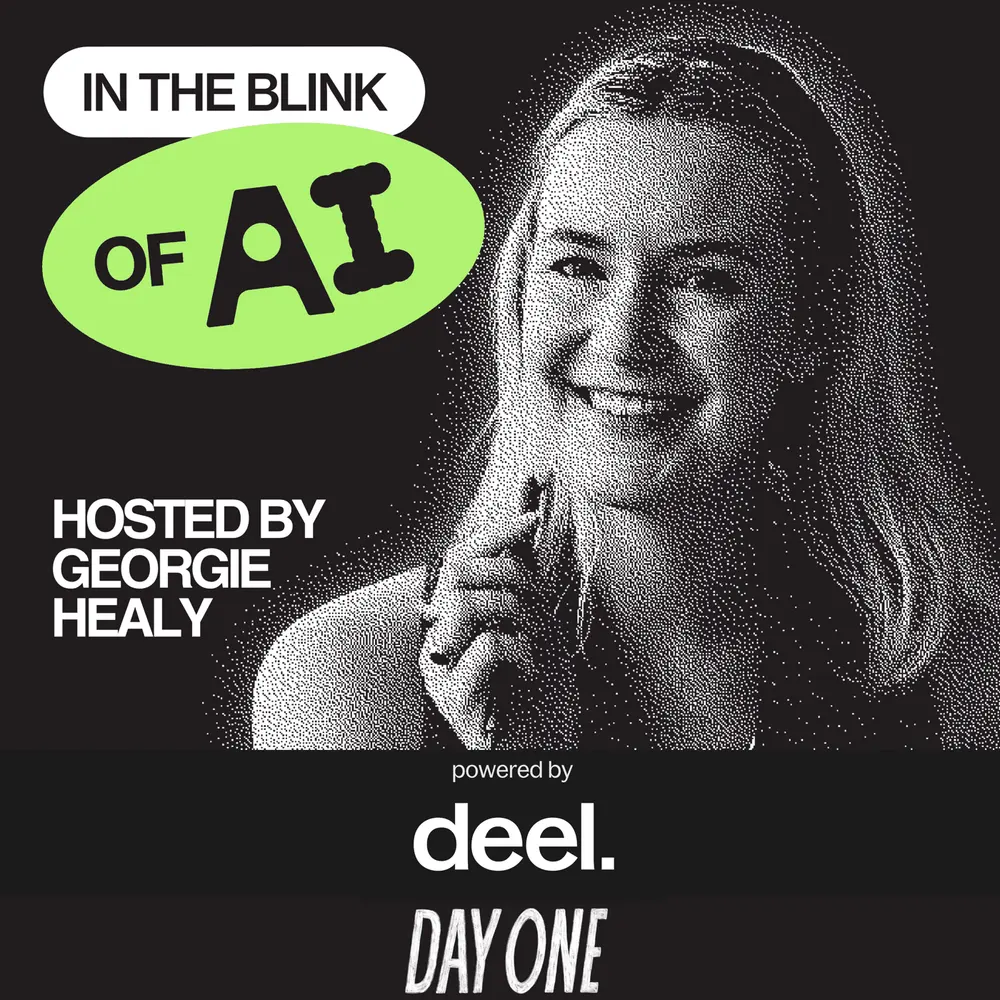 In The Blink Of AI with Georgie Healy
Presented by Deel & Stripe
In The Blink Of AI with Georgie Healy
Presented by Deel & Stripe 
 ▶
▶  ▶
▶  ▶
▶  ▶
▶  ▶
▶ ▶
▶ ▶
▶