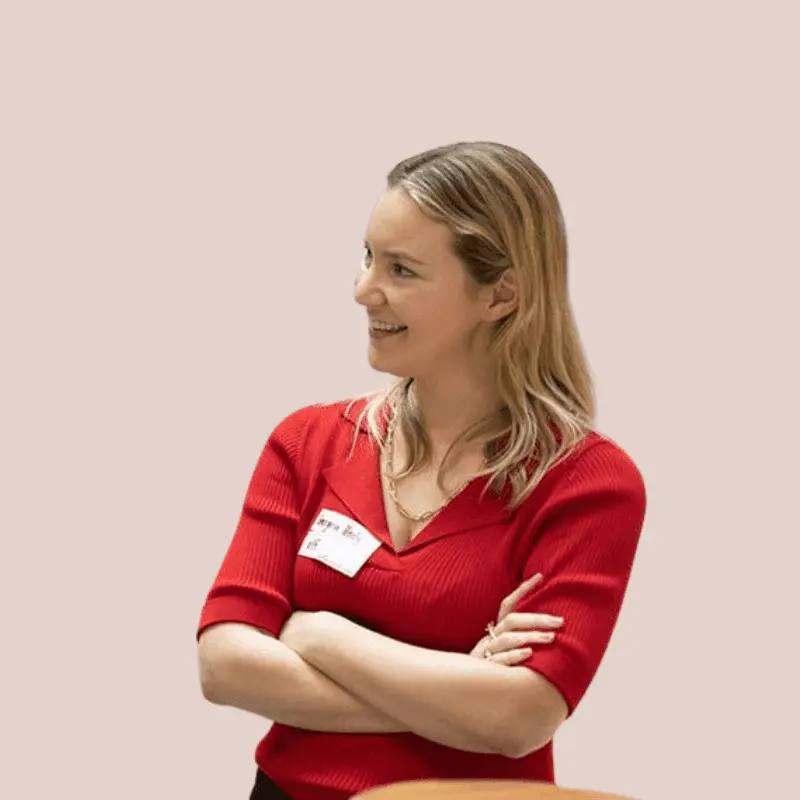
Transcript Synced · select any line to jump ▾ 0:02 Georgie Healy: Founders scale faster on Deel. Set up payroll for any country in minutes. Hire anyone, anywhere. Get visas handled fast and get back to building. Visit deel.com/dayone. That's D-E-E-L dot com slash day one. 0:24 Sam Garven: I've been on the end of someone who's wanted to make a report, so I've not been shy about telling my story, and in that I was sexually harassed, which ended up turning into sexual assault in the workplace. I was bullied as well. And I did sometimes tell someone, and then a few times I didn't, but none of those times was, you know, it wasn't handled in the way that I would've liked it to be. And so I know what it's like to not have that avenue of feeling safe to be able to make a report or even knowing how to make a report. 0:57 Georgie Healy: Hello everyone, happy 2025. I am checking in because this episode with Sam is one of my favorites. It's one of the most genuine conversations I've had with someone, especially a founder behind the scenes early in their journey with a lot of experience and a lot of wisdom to depart. However, the thing about recording with a founder in the early stages is that 2 months is a long time in terms of what they're able to develop and achieve and products they're able to ship to market. And that's what has happened with Sam. So, I'm just giving a quick update based on our conversation and a few updates that she's shared with me on her end. So, I'm just gonna read you out the WhatsApp message from her, and then you will be fully up to date with the rest of the show. So, you will see that they have rebranded from Canopy to Hello Canopy. This is to better capture the mission and vision that's coming to light in 2025. So if you follow their LinkedIn, you'll be able to get some exciting updates throughout the year. Number 2 is their pilot has officially launched. They've already got a rollout for this first version, and they've got a select group of companies that are already signed up for that. If you wanna be part of the next release, they've got a waitlist, uh, so you can be part of the first pilot. just get in touch with Sam on LinkedIn or head over to their website. And finally, Sam has a co-founder, Emma, and they wrapped up the Techstars accelerator program at the end of December. My LinkedIn was absolutely flooded with incredible photos from their demo day. And this year for them is about focusing on the build, getting Hello Canopy into market and in the hands of employees and businesses. So you're about to hear some really— Um, candid and really generous thoughts and feelings that go behind the scenes of being an early-stage founder of a fast-moving AI startup. So with no further ado, I'm about to give you the original intro now and kick off the show from there. Thanks so much. 3:14 Georgie Healy: Hello and welcome to In the Blink of AI, where I speak to the brightest AI startups and innovators each week. I'm Georgie Healy, and this week I am speaking to Sam Garvin, co-founder of Canopy. They're creating safer, more informed workplaces through the use of AI technology. This is our most unfiltered, most authentic episode yet, and it's a little surprise since Sam's EQ and IQ radars are off the charts. In this episode, we discuss the explosion of non-technical co-founders, building AI startups. Yes, it's definitely possible. The superpower females have for networking, which is vital for business building, and the joys of building in public. We also chat about tall poppy syndrome and the kinds of people who should join an accelerator program. Take it from two women who have lots of life experience in this space. Lastly, I hope after listening to this episode, you learn how to embrace the cringe. Please enjoy the episode. Hi, Sam. Thank you for joining In the Blink of AI. I am so pumped for this episode. We did a briefing a few weeks back, and even in that short space of time, you've achieved so much. And I think you've got such an incredible and insightful voice in the Australian ecosystem with what you're building currently. Can you start me off a little bit with kind of an elevator pitch about Canopy? 4:44 Sam Garven: Yeah, for sure. So, hi, Georgie. Great to be here. Good to see you again. So, I'm the co-founder of Canopy, and Canopy is a misconduct and psychosocial safety reporting platform. What that actually means is you, as the employee, let's say you've experienced something at work. Let's say it's harassment or bullying. You can jump into Canopy's platform. It's AI-assisted. And so, you can ask all the questions that you would have before even getting to report-making, like, What is harassment? What information do you need? How can I actually make this report? And Canopy will talk you through that report-making process. You can report anonymously, identified, or your report will be submitted into— I'll call it report limbo for now— until someone else names the same person. And then, those reports will be submitted at the same time to give you that safety in numbers and acknowledging that power dynamics are very real in businesses today. And then, on the submitted side of things, which is on the HR side, so my side, my my people will have the report all in one place. So, it's managed end-to-end, also assisted by AI. So, I can be there checking what are my obligations or what's my company policy on this. And then, we'll also have data analytics. So, I can get a snapshot of all of the hotspots in my company to know where I can jump in and actually make really meaningful change when it does come to my company's culture. So, that's Canopy. Caveat being we are 6 months young. So, we are pre-product, pre-MVP. But that's sort of ideal sort of dream state. But we're going to be iterating, of course, as we go through building. 6:22 Georgie Healy: Incredible. I mean, I'm sure this happens to you all the time. I want to dive into my own personal stories and how I would have loved to use this product. But you obviously, with your background in HR, had a big picture view of the industry, a view of your role. How did you know that this is a problem that needed solving potentially through technology and through AI? 6:44 Sam Garven: Yeah, great question. So, I think it even starts before my time stepping into, you know, people and culture and HR in that I've been on the end of someone who's wanted to make a report. So, I've not been shy about telling my story and in that I was sexually harassed, which ended up turning into sexual assault in the workplace. I was bullied as well. And I did sometimes tell someone and then a few times I didn't. But none of those times was, you know, it wasn't handled in the way that I would have liked it to be. And so, I know what it's like to not have that avenue of feeling safe to be able to make a report or even knowing how to make a report. And then, what I was seeing in people and culture is that, you know, I would say, by far and large, like most P&C teams are so well-intentioned and they want to know when things go wrong. But the mechanism to actually make somebody feel like they can bring it to you is through email or in person or telling their manager. And sometimes, that is quite confronting. And so research and data does tell us that people just don't make those reports. You know, only 18% of people will report being sexually harassed, which is so little. Only 34% of people will report bullying and harassment. And Australia is the worst developed country for bullying and harassment. So we just— we're not seeing the reports coming through, and the data supports that. And so looking at all of, you know, my, my— Yeah. P&C friends and colleagues, they just know that they're not getting the reports. And then, if they do get them, the way they're managing them is like through Slack and through email and in Google, you know, Google Drive and Google Docs. And, you know, it's just not a very condensed, streamlined way to actually manage those reports in the first place. So, it's very multifaceted, right? But I think the problem is so, so complex in being done differently in each business that it does make it really hard for employees, P&C teams, businesses to know exactly what's happening, how to manage it, and how to actually solve for it. 8:41 Georgie Healy: Incredible. And thank you for your candor. Like, it's one thing to have that domain experience that helps you build a product, but it's not something that you'd wish anyone would go through, obviously. But how fantastic for you to turn such an awful situation into trying to actually improve systems and processes such that that doesn't continually happen. I'm curious, like, Obviously you've had background in supporting people in your, in your previous roles in HR and in the startup ecosystem, but specifically the role of a founder. Is it because you were like, no one's solving this, I have to solve it, or no one will, or, or I can't wait for that to happen? Or did you always kind of want to build your own thing as well? How did it come about? 9:26 Sam Garven: For me, I never wanted to be a founder. Not that I didn't want to be a founder, but I had never been like, I'm gonna have my own company one day and be a founder. I'd never actually imagined that for myself. But through the work that I was doing at Grapevine, so I'm one of the co-founders of Grapevine with a bunch of other wonderful women in the startup and tech ecosystem. I really got to see where the gaps are in being like, why isn't there a way for someone to do this? And I looked into it and there's really not much out there in the way of misconduct reporting, psychosocial safety reporting. And so, I was like, well, who's going to do that? And the answer was pretty obvious. I was like, well, why, why couldn't it be me? So, I started tinkering. I started looking at how it could possibly be solved. And then it sort of just happens. Like, I almost like tripped and fell into being a founder because I started thinking of all the ways that this problem can be solved. And then Canopy was just born. And I have to say, now that I am a founder and now that I'm starting to build Canopy, this is actually what I was meant to do. And I don't know how I didn't have this like aha moment sooner, but I think it's because I didn't have the thing that I was so passionate about that I knew had to succeed. So a long way of saying I didn't think I wanted to be a founder, but now that I am, that's all I want to do is be a founder. 10:42 Georgie Healy: Incredible. Yeah, you do meet people that kind of go straight from uni into entrepreneur, and I'm just like, whoa, that's like— it's a kind of risk element of, you know, you know, starting your own thing and building from a blank sheet of paper and all of that. I've been there too, and I totally know the intoxicating feel of being like, I'm going to build something that I have deep passion about and something that I have knowledge or experience in. But it's not an easy journey. That aside, what exists in the startup ecosystem that might kind of touch upon this? Because to me, I've never heard of anything like Canopy before. All I can think of is— the HR roles and corporate structures of it, like of a business and how they approach the bullying and harassment, you know, for lack of a better word, like topic. How does it get addressed? Like, tell me, tell me from an industry perspective versus a startup perspective. Like, I don't even know where to start with, with background knowledge on this. 11:47 Sam Garven: Yeah. You mean like how companies are doing it now without Canopy? Yeah. 11:52 Georgie Healy: Like, how do they do it? 11:53 Sam Garven: Yeah. So, through the research that I've been doing, so I've been interviewing a ton of like heads of people and culture. There's different flavors in different businesses. Sometimes, it is an anonymous inbox that an employee can send an email to that says, "Hey, this thing happened to me. This is where, when, who, what, how happened, and I would like for it to be addressed." Sometimes, employees are telling their manager, and sometimes managers they don't have all the answers. And it's really hard being a people leader. And it's really hard being a people leader when you don't get the training on how to be a people leader because it's not just that you're good at your job, therefore, you manage people. They're two completely different skills. So, I've been hearing feedback from managers that are like, "Well, my employee tells me something has happened or they make a complaint. I don't want to overpromise, but I don't want to underpromise. I don't actually know what to do about it." I do also know that some people teams in startups, they're like, "Well, I know everyone's first, middle, last name." and I know that people come to me. Some people are in bigger businesses and they're like, I know that people aren't coming to me because they don't even trust that our engagement surveys are anonymous. Why would they come to me to make a complaint if that trust already isn't there? So, there's a lot of different factors. And I think businesses and HR teams are trying to solve it in lots of different ways, but they're almost having to hack their own system internally to find a way to support their people in this report-making process. There are admittedly some solutions out there at the moment, and a lot of them do address things like whistleblowing, because companies over a certain size need to have a whistleblowing policy. They need to have a pathway for somebody to make a whistleblower complaint. But often, whistleblowing is, I think, someone's committing fraud, or someone's laundering money, or it's something that feels really serious. And so, for an employee who had their manager shout at them in a meeting, that doesn't feel like the right avenue. It almost feels like, well, that's it's not a big serious thing, so I won't report it. So I think there's just, there's some gaps there that whilst good intentions are had by the business to say, we want to know, you should tell us, there's just not that mechanism. 14:05 Georgie Healy: Yes. And on the startup side, when I think of HR tech, at least in Australia, which is where I'm familiar, I think of like Employment Hero and like startups that will help you with hiring or, you know, timesheeting and even tax and things like that for SMBs. I don't know anything like Canopy. Is there anything like it or is this the— I'm leading the witness, but is it the first of its kind? I just haven't heard of anything else or have you seen it done well? 14:37 Sam Garven: Yes. I'm not sure how much I want to go into naming all of my— 14:42 Georgie Healy: No, no, no, don't name your competitors, but you have seen it done before. 14:46 Sam Garven: Yeah, there are some companies who I would say are doing a good job. 14:51 Georgie Healy: Yeah. I mean, there is a huge problem to be solved. I'm not surprised that there are startups doing it. They're clearly just not name brand, or at least I'm not aware of them yet. 15:00 Sam Garven: So— Yeah. I think, I think it's really interesting that this is a problem that's not been solved yet. And I think there's a reason for that. I think when you come to, when you look at things like HR tech for holding all your employees' data, we've got some legal and risk sort of things that you consider there. You've got HR tech for recruitment because recruitment is such a huge pain point and it's so crucial to a business being able to deliver. But you don't have it for this space because I don't think there was a spotlight being shone on it for a very long time until all of a sudden, we're starting to get new legislation shining a light on businesses' responsibility to do good. You're starting to get employees and the media speaking up saying, "Hey, you're not doing the right thing and therefore," you're gonna be plastered on the front page. So there's a bit of a change in public sentiment around accountability. There's a change in legislation. There's going to be some new case law coming in that's going to actually show how much it's going to cost businesses to do nothing. So there wasn't a real sense of urgency, which is why I think nothing has been done by way of, we'll call it, innovating this space up until really recently. So the timing I think is gonna be the really important thing, at least for us at Canopy. 16:12 Georgie Healy: Fantastic. Great market timing then. Few tailwinds to make the most of. I get asked constantly about my history going through accelerators. I quite liked accelerators. I did a few and I didn't have your background of actually having quite prestigious and, you know, amazing roles within the startup ecosystem. Assistant before I started, and you've recently joined the Techstars Accelerator, one of the worldwide best known, best, most prestigious, um, accelerators. But you've obviously had experience. I'll ask you what people ask me a lot: how do you find being part of an accelerator? 16:55 Sam Garven: I love it. I told somebody the other day that it was the best decision I ever made for Canopy. Now, a caveat that was saying every accelerator is different. I think Techstars is different depending on what country that you go to, right? And so, I think it all does come down to the specific accelerator program, but also the stage of your business and what you want to get out of it. So, for me, I've never been a founder before. I'm a first-time founder. I've been more of like an operational person. I'm a subject matter expert, but I'm not a product guru. I'm not technical. I have really visible gaps when it comes to building a tech company and building a tech company that's enabled by AI. Like, I know there are gaps there. And so for me, joining Techstars was all about getting access to resources, getting access to knowledge, getting access to people that I otherwise wouldn't have gotten, or it would have taken me a long time to get on my own. You know, dare I say it accelerated my ability to learn all these things. The one surprising thing that I didn't anticipate coming into Techstars was the community of the actual cohort. So the other companies in the program with me and the program team as well. I've never worked around such a group of uniquely skilled individuals who are so passionate about helping each other out. I think Every day, I get so excited to go into the Techstars office because I know that I've got this huge extended team of people to lean on who all have unique skills and unique ideas that can help me get stuck or unstuck, sorry, can unstick me from a rut. So, I think that's been the real sort of, I suppose, jewel on the crown is the other people in the accelerator program. However, it's not for the faint of heart. I think I told you before we started this recording, I cried an hour ago because— Yeah. I'm very stressed, but I'm learning so much, but I cried in a good way. But there's just a lot. It is a lot, but that's the point of an accelerator program. You know, you are meant to rapidly grow your business and grow your knowledge of building a business. And that's not going to come without a little bit of pressure. 19:15 Georgie Healy: It is confronting. I remember the one I did, it was basically like speed dating with 90 people and find your co-founder and you're all kind of, first learning how to pitch your company and pitch yourself. And I haven't been on dating apps because I, I'm ancient and found my partner before them. And I was like, this is a lot of skills at once that I'm trying to learn and I'm not very good at. And I had confidence before, but now I'm not sure. So it is, it is really full-on. But I love what you said about like, yes, you've got— you've clearly got an incredible network, you've clearly got incredible experience and skills, but, but like, here's a huge gap and like, we're going to focus on that and you're going to develop that like rapid pace and have a community out here that really wants you to succeed and wants you to win. So very, very articulately explained. We just had Annie from Build Club on the pod and she said there's a certain kind of founder persona that she now looks for. Now, is a very, very, very early stage AI accelerator for people that don't know. Do you think there are certain kinds of people that are right for accelerators regardless of skill background personality-wise? 20:33 Sam Garven: I wouldn't say there's like a particular persona. I would say it's more a particular mindset is probably the best way to describe it. We're lucky enough at Techstars for 12 of the 10 accelerator programs to be completely women-founded, or at least have one women co-founder. We've got all types of people from all different backgrounds. We've got a couple, to coin a phrase being thrown around by a few neurospicy people, their term, not mine, but I absolutely love it. So, I wouldn't say there's a particular kind of person, but I would say it's the mindset that's really important. Every single person came in being like, this is going to be hard, but we want to lean into it. 21:13 Georgie Healy: Mm-hmm. 21:13 Sam Garven: And we want to lean into it really hard, and we want to stay consistent in how we show up and how we learn and how we support each other. So I think that's the most important part, is saying like, it's going to be hard and that's okay, and I'm coming in here with an open mind and I can be a little bit malleable, and I've got, you know, strong opinions loosely held that are going to be challenged. So that mindset is really important, whereas I don't think it's like a particular, you know, kind of person, um, you know, demographic, background, skills, experience. It's more about like the brain, the brain that they're bringing in, um, and, and how shapeable it is and how open to feedback, criticism, challenges that it is. 21:51 Georgie Healy: Amazing. It kind of brings me like that kind of scrappiness to something I've noticed definitely in the last recent months and year is this building in public persona. Like, I don't know if this is still the cool done thing, but years ago when I trying to build, it was this stealth mode was seen as being like, wow, it must be really— if it's quiet, it must be exclusive and special. And now it's like almost the opposite of that. If you're building in public, you're confident enough that, you know, it's something that you're at least semi-proud of. What's your take on building in public as someone who is literally building right now? 22:33 Sam Garven: Do it. Come out of stealth mode. Knock that off. No, I think there's lots of different reasons people build in stealth mode. For me, building in public is free marketing. Like, why am I not taking my potential customers and advocates on the journey with me and saying, this is what I've learned, or here's the things that I believe. And because I believe that, alas, here's Canopy. Like, people buy from founders, especially when you're early stages. People buy from me because I am Canopy. But I am the product. I am the marketing. I am the product. I am the face of it. And so, the more I'm building in public, the more I'm being vulnerable, the more I'm sharing my motivations about why I'm doing what I'm doing for Canopy, the more it's going to create that brand strength and that brand awareness. And so, when I am ready to say, I've got an MVP or I'm looking for pilot customers, which I am, I already have that brand and I have that strength and I'm not starting from zero. by coming out real punchy and saying, I'm out of stealth mode. And again, I want to caveat that with saying people are in stealth mode sometimes because they're building a competitor brand, right? And I think that can be really cool and really exciting when you do come out of stealth. But for me, building in a space that no one is really focused on quite heavily yet, it's really important to take everyone on that journey. 23:56 Georgie Healy: I love it. So any tips for other people that are a little shy or a bit risk-averse or You know, you know, the people that won't even publish things on LinkedIn that they're proud of because they're a little bit scared of how to go about it or how to first take that first step to sharing. Any, any tips for those kinds of founders? 24:18 Sam Garven: Embrace the cringe. Oh, LinkedIn is cringy and we know it. Um, but also you'd be really surprised the amount of people that believe the same thing that you believe or are going through the same struggle that you have. I think I posted something. Like a month ago that said, "A pitch deck has humbled me and I don't know what I'm doing and I thought I did when it came to a pitch deck." And I was sort of half joking, but also really serious. And a ton of people I'd never met before were like, "Oh my gosh, me too. The struggle is real." And so it's these little things, these little moments where I wasn't overthinking and I was actually just like, "Hey, here's a share about something that I'm feeling or I'm struggling that I'm seeing," that really resonate with just everyday people on LinkedIn. And if you can't do that, and if you're afraid to post, comment, you know, comment on the people's posts that like you really respect and that you really like and get yourself involved in the conversation. I think that's a really nice step to then going out and posting about it yourself. Once you feel that people aren't coming for me when I'm commenting, this is actually okay. 25:22 Georgie Healy: I love this. Embrace the Cringe is the title of this podcast as of now. No, it's not. But I love it. 25:29 Sam Garven: Love it. 25:30 Georgie Healy: Okay, a bit of a different track now. You've obviously got a, and it's a slight accent, but you're getting more Aussie by the day. I'm sensing, Sam. I'm curious about the Australian startup ecosystem and how it, how it's perceived outside of Australia. Like, this is something that I haven't been able to ask anyone before. 25:48 Sam Garven: So I'm Canadian. I've been in Australia for 11, probably going on 12 years now. So, I've not actually lived back in North America for a long time. I've not lived in Canada for 15 years. So, I've not been in North America for quite some time. But the thing that I really noticed when I came to Australia that is so unique to its culture and particularly startup is tall poppy syndrome. Like, it's so uniquely— 26:14 Georgie Healy: Oh, please. 26:15 Sam Garven: It's so uniquely Australian. And I think particularly as a woman building a startup, trying to tackle AI while building my startup, It's very easy for people to say, like, no, we don't like that, or this person's getting too big for their britches. And I, and I think that is something that is really uniquely Australian, and it's such a shame to see. You know, once we have people who have reached these, like, the height of success, right? We've got, like, Mel Perkins, right? We all talk about Mel Perkins, and she is wonderful, and she's done great things. But, like, you know, it took her a while to actually get there, and what's probably the adversity that she faced along the way. And I know there's a handful of other women founders out there who are experiencing that tall poppy syndrome, right? Like they're seeing a lot of success. And because of that, people are nitpicking and looking for reasons to chop them down. And I know the same can be said for men as well, but I find it particularly challenging as a woman in this space, trying to throw some elbows to be like, no, no, make space for us. But the second that you slip up and you're like, oh, I am imperfect, people are really quick to focus on that rather than like focus on how you're trying to fix it or how you're trying to move on, which I think can come back to the point of building in public and make that like really scary as well, right? You're committing to something publicly, but then you screw up. You're also doing that publicly, which can feel like you've taken 100 steps forward and now like, what's it all been for if you do mess up in public? 27:44 Georgie Healy: Two really important points there, the tall poppy syndrome with Australia and also the female rhetoric to make yourself smaller and to be demure and mindful and all of this stuff that seems to be celebrated, you know, don't be bossy, don't be loud, coupled with that Australian don't be too big for your britches, really, really hard to be a female founder. Like the fact we won't even call ourselves CEOs because it sounds too much like an asshole, but you are essentially. How, how are you addressing that? And do you find that the women in tech Techstars help because you're all kind of, no, no, no, you can talk, and no, no, no, I want to hear what you're trying to say. 28:26 Sam Garven: Oh, 1000%. Sorry, I jumped on that right away, and I say sorry too much. And someone shouted at someone else in Techstars the other day because she apologized for having an emotion. Because there is that, you know, oh, I shouldn't have that emotion, I shouldn't feel this way. But me crying in public an hour before this podcast in front of a bunch of people is something I wouldn't have ever done until this cohort of feeling really safe. I think another thing that I'm trying to lean hard into is surrounding myself with other women in this space. So, I'm part of a WhatsApp group that is a bunch of women founders. I'm constantly trying to connect other women founders because that's what other women founders have been doing for me. And so, I think there's this like, the one superpower I think women have is we are super connectors. 29:15 Georgie Healy: Mm-hmm. 29:15 Sam Garven: We're always trying to find ways to like grab each other and put people together and say, I think you guys should meet, or you should do this and come together, or let's get dinner, or let's grab coffee. And so leaning really into that to create my community and my network has been instrumental into me feeling like, yes, I can do this. I think when I first announced that I was building Canopy, I got connected to, I'd say about 15 founders who were like, oh, you should connect with these founders. And 13 of them were women. And so I think that's just a really powerful thing for me to see coming into this when I'm really doubting myself, to see other women sprinting ahead and doing that. And so continuously surrounding myself and then trying to bring others in, I think, is the best way to sort of create that ripple effect. 30:00 Georgie Healy: Oh, hello, gorgeous cat. I have never heard, and this is something So clever. This— women are natural connectors. That's what my job is, by the way. Like, we are so good at networking and so good at connecting, and it's something that brings us a lot of joy. We're also really good at it. If that's not critical for building a startup, I don't know what is. So leaning into that inherent skill set as females in this role in startups, which is so male-dominated It's such a great take, Sam. I've never, I've never heard of it, but— 30:38 Sam Garven: Well, look at the community collective, right? That Paz, and I've never, I think, you know, I've seen her at events and I had the chance to meet her, but the feedback in what she's doing is so incredible, but super connector, right? It is. It's like a, it's a superpower that, you know, a lot of us have. 30:53 Georgie Healy: Truly very insightful. One final thing on the tall poppy syndrome, because it is something that I think I think is becoming increasingly discussed but definitely not solved. You'll even see in presentation styles, the American presenter will be like, we're gonna change the world. And then I don't know if it's the colonial British style, which is like, we've got a product and it might be okay. And then Australia kind of falls in, in the middle. Um, what's your approach when you pitch? Do you have to actively force yourself to be a little bit more American? I don't know. I don't know a better word for it, Sam. 31:33 Sam Garven: I think that when I pitch, I'm incredibly passionate about what I'm doing and I try not to stifle that. I really try and just let it flow out of me. However, I'm very conscious that the topic of harassment. The topic of psychosocial safety is something that, at least on the harassment front, women experience more than men. But when we talk about psychosocial safety, if we're thinking about the construction industry, which is really male-dominated, there is a huge problem in construction with psychosocial safety. And not enough people are talking about it. But where I'm starting is with my tech community and what I know, and mostly women at least according to the data, are the ones who are most impacted. So it's almost like I'm really passionate about it. And I want to talk about it all the time and tell everyone and pitch it. But I also have to be really aware that people aren't seeing this problem the same way that I am, or some people aren't even seeing it as a problem at all. So there's this huge piece around education, I think, that I need to be really mindful of when I am going in saying Canopy is going to solve your problems. And some people say— What problem? So there's an education piece that needs to, I think, really come to the forefront and start to be talked about more before the pitch is going to land with everyone the way that I hope it lands. 33:05 Georgie Healy: Yeah, very relatable. Like, just growing up in the 2000s and the songs that were released and things like that where you're like, I'm not comfortable with it, but I'm not even aware why. And then you look back and you're like, we put up with that, didn't we? And, and it's wild to think that we did. Like, just, yeah, incredible how a movement can, can re-educate you in and of itself. Okay, getting into some drier technical, if, if you'll allow me. 33:36 Sam Garven: Yes. 33:37 Georgie Healy: You know, you touched upon the different kinds of industries that you can target, but the way you target them has to be unique, perhaps. Um, when it comes to metrics, what, what, what do you do in this very early stage of building your startup in a space that I would argue is, you know, quite revolutionary in some ways? What metrics do you look for, or will you look for, to know if you're on the right path? 34:03 Sam Garven: Right now it's all about asking questions and getting answers. That is my number one metric is how many questions can I get answered? So that's questions about how I set up my products, how people will interact with my product. What are the problems that employees in tech have? What are the problems that employees in construction and mining have? Just looking for where's that data overlapping to know that I've got the strongest case for actually solving for it when I have, you know, MVP and when we make iterations on that. Also, because we should be talking about AI as well, is that the questions that I'm asking are around, is this something that AI is going to solve? So, when someone makes a report, is AI going to solve that? Or is AI going to assist that? Or is AI going to hamper that person in making a report? There's a lot of really critical questions when it comes to, I think, how I think about AI in Canopy. And is Canopy a product that has AI at the heart of it and everything that does, or is Canopy its own standalone product that is assisted by AI to make it easier to use or more user-friendly or more insightful? And I would say it's the latter, right? I think it's more defensible as well when you say we're solving a really unique problem because we deeply understand it and the product uniquely solves for it.? And we also have AI that's going to help you do it better, that's going to help people feel more safe or have more information. So, those are all the questions that I'm asking as well, not just how do I build this product and what are the features, but what's AI's role in all of that? And do we need it in some parts of the product? And if yes, to what extent? And what's AI capable of now versus in a year's time, trying to predict the future a little bit, which is going to be a little bit difficult, but like use case planning, how much AI is cooked into, you know, the heart and soul of the product. 36:15 Georgie Healy: Yeah. Like a term that's thrown around a lot in my parts is like AI first versus like an AI feature. And there's no right or wrong. But it is really interesting how many startups think that if they just bolt AI on, it'll help. But clearly you're figuring out, is this an AI product that is supportive here or there? And you're getting as much data as possible before you implement, kind of thing, which is, which is fantastic, by the way. 36:45 Sam Garven: Yeah, I think rightfully so. Every company who is looking at AI— and look, this is something that I've had challenged a lot, which I've loved. When people say, why do you even need AI? Could you not do this without? And I'm like, that's a great question. And then I write it down and then I go and figure out how to validate for that. And that's like the most important thing before I say like, yeah, cool, let's, you know, let's make it center, the centerpiece of what it is that we're doing. Like, am I asking the right questions? Because I can't afford to get it wrong. 37:15 Georgie Healy: Yeah, yeah, you do not want to have to start over. Is Canopy, and maybe add this to your list, is a vertical AI solution in that it's, you know, very domain-specific in HR, in harassment, bullying, that could help a certain industry and it has to look different for others? Or are you trying to make it horizontal, that Canopies can be used in any industry, but it's kind of in and of itself a standalone product? 37:45 Sam Garven: I think for now, more of a vertical in that I don't want to build everything for everyone because then I'll have nothing, right? So, what I want to do right now is focus on a particular part of, let's say, we'll call it tech, right? Employees who are laptop-based, they're relatively predictable in their workplace environments. They're not like off delivering food or slinging drinks at a bar or somewhere that doesn't even have cell or internet service, right? Like we know how employees are going to interact. We know that we only need desktop. We know the employee awards that they're under, which is a very HR thing. But this is a space that we know, right? We can make these sorts of predictions about how people will interact with the product that we can be pretty certain of. And then, from there, how do we take 80% of Canopy and then lift and shift? And now, we're like, "Okay, great. We're now in hospitality." But what's unique to hospitality is employees are slinging drinks. They're running from table to table. They're not sitting in front of a laptop. Right. So, what are the things we need to consider for them? They even might be casuals. They might be students, right? There's all these different things to consider about how they would interact with their product. Do they need to make a phone call if something's happened? Do they need to send a text and that's the way of making a report? So, I think there's going to be a lot of nuance to how the individual or the employee will use it to make sure that the business and the people teams actually have the right data and really meaningful data around these reports to do something about that. So I don't think we can lift and shift 100%. But I do think 80% of what we're looking to build is going to be applicable across all sorts of different industries. 39:27 Georgie Healy: Amazing. Cognizant of the fact that I'm slinging questions at you while you're probably dealing with this on a minute-to-minute by, like, basis. But I'd be remiss to not ask you about such a sensitive topic and privacy. Have you guys started thinking about that and how to go about it? I'd love to hear your initial take on that. 39:51 Sam Garven: Privacy keeps me up at night. It's the one thing that I know we can't get wrong. So the whole ship something, you know, even though you hate it or you should be ashamed of the first product that you ship, We don't have that luxury. We deal in such sensitive information and data that we can't afford to break trust and call it a whoopsie and then go and fix something in the backend. That's just not how it's gonna work, especially when it comes to data security and privacy. So, thinking about things like SOC 2, thinking about all of the different unique data security and privacy things that we'll need to bake into the product, 'cause really, it's our ticket to play. 40:31 Georgie Healy: Mm-hmm. 40:32 Sam Garven: I'm thinking a lot about that. And when we're looking at building out our MVP, let's say we're using no-code, low-code solutions. Are they already SOC 2 compliant? Like, what are the things that we can say while we're building? Do we know that all of the tools that we're building on have these compliance things already baked in? So thinking about that really early, because then, as we do start to scale and go more into, like, enterprise, we'll have to start thinking about the things we're doing ourselves to become compliant. But as long as we, we know the how to approach it, what the best practices, the tools that we're bringing in to assist us to make sure that we're always thinking, okay, security, privacy first. Like, that has to be front of mind for everything that we're doing. So, we're not going to ever compromise on saying like, "Oh, let's just get it done and we'll figure it out later." Like, no, let's think about security now and is what we're doing safe for people. So, it's— and look, as we're going, we're going to have to be like tweaking and making sure that we're always checking back in on it. But it's like the number one thing that I have in my mind whenever I'm thinking about how we actually build. 41:36 Georgie Healy: Incredible. And you've touched upon this before about gathering data and having all these questions. At what point are you like, we're good, we've got sufficient amounts of data or sufficient kinds of data? How are you approaching that? 41:51 Sam Garven: Yeah. When do I finally get to hit go? I think I can't really answer that question right now. Perhaps it's when a question asked doesn't result in 5 more following up the bottom. Every question that I ask, 5 more pop up, 6 more, 7 more pop out. And I think once we sort of stop the leaky bucket of questions coming out, and we know that we've answered the most important hypothesis, we know that building this sort of bare minimum meets the things that our, our, our users and our customers and our buyers and our decision makers are asking for, then we'll hit go and go from there. So, it's not really an answer that I have at the moment, but it's, I've got too many that I've got to work through at the moment and prioritize to even see a light at the end of the tunnel just yet. 42:42 Georgie Healy: Yeah. And Sam, you're across everything. I've talked about privacy, data, people, building a product, you know, but, but at a certain point, I'm sure you want to expand your team. One of the roles that are the most critical for Canopy and one of the roles that are most critical for an AI startup, I'm, I'm starting to think CTO, like talk me through that. 43:04 Sam Garven: So in next year, so this will be a next year thing, but engineering, I am not technical. My co-founder Emma is not technical. We need somebody technical, but that'll be a next year thing that we look to do. And again, there's so many amazing like no-code, low-code solutions that are out there that we'll look to utilize until then. But engineer, very likely product design as well, because there's a lot of— User experience considerations about the journey of somebody through our platform and making sure that on the worst day of their life, people can report easily. And the people in culture on the other side, they've got the things that they need that are the most important to solving this for this person right away. So I think those would probably be the two at the beginning of the year that, that we'll be looking at. Likely, once we look into potentially raising a bit of capital, that's the thing that will happen next. 44:02 Georgie Healy: Fascinating. I mean, I work a little bit more with the seed and Series A. Non-technical founders and, you know, and then they've hired the engineering team and I see the finished product of an amazing team. They've already got their AI engineer and blah, blah, blah. But the path that you're on is quite fascinating and how to find them. And, you know, it's just something that I think people that would love to build an AI solution that don't have engineering background, that journey and following what you do is quite interesting and compelling. 44:38 Sam Garven: Yeah, you can still do it. I didn't think that I was going to be able to build something on my own, especially in the space of AI, especially as someone from HR. Once you start doing it, you're like, wow, I actually can do it. And this is something that there's so many amazing tools and support and people out there that there's actually nothing that's stopping me right now, at least in this exact moment. Now, what's going to stop me was when I actually need a full-blown product, but there's nothing stopping me right now in this moment to get me to the next step of where I need to be. Yeah. 45:06 Georgie Healy: And who better to do the interviews and to know like a perfect fit for a company, right? 45:12 Sam Garven: Like I got, I got my own in-house recruiter of myself. 45:15 Georgie Healy: She's, she doesn't charge extra. 45:19 Sam Garven: She's very free right now. I assure you. 45:22 Georgie Healy: She's so cheap. Okay. So future, like thinking, you know, I hate being a consultant, but your North Star, what does Canopy look like in, you know, 10 years? What's your dream vision for the company? Does everyone have it? 45:38 Sam Garven: Oh my gosh. Okay. Stop me if I'm talking for too long, but North Star for Canopy is we're a global company. This is a problem that is not unique to Australia. This is a problem being felt everywhere, all across the world by employees. So being a global company who is uniquely positioned to help those individuals who are speaking different languages, who have different policy and legislation and all of like the really dry stuff, but that's there to support employees, making sure that global teams and people have access to Canopy. Additionally, I also see this being a much bigger play past businesses. How are we looking into things like, you know, is Canopy in event spaces? I would love that. I would love for Canopy to— be in schools to be able to support kids making a report about being bullied, which is such a huge problem, or children having, children having deepfakes made about them. They're not telling a teacher. That is mortifying, but it's a horrible experience. And so I would love for Canopy to be there to be able to help kids feel safer in schools when something horrible is happening to them. I just think the use case for people wanting to feel safe and wanting to say something It's just, it's everywhere. And so, you know, my north star in 10 years is like, how are we everywhere to make people feel safe at work, at school, at events, at places where there's like professional memberships or gatherings? Like, how can we show up for somebody when they're having a really tough time to make them feel like they have a way to speak up, to tell somebody, and to actually be able to get that support and get that attention? To have the right thing done by them. And that's what I see in 10 years. 47:25 Georgie Healy: I need to stop making this about me, but wow. If I, yeah, I'm happy for my children that this is being built. I'll say that much. Um, are you looking for VC investment or is that something that you're not, your head's not in that right now? 47:41 Sam Garven: I'm snooping around. I think it's something that I would look for. I think it's something that we'll be looking into next year. Right now I'm just like, right. What's like, I'm laser focused on MVP validation, answering all these problems. But I'm also no stranger to knowing you need money to have people and to build a business. And so I'm starting to have a few conversations right now, but I'll be looking to kick it up a notch, I think, at the start of the year and test the waters of what that could look like. 48:09 Georgie Healy: Amazing. So I always like to finish the Blink of AI podcast with some rapid fire questions. I say something, you just tell me the first thing that pops into your head. Some are spicy, some are not spicy. How does that sound? 48:22 Sam Garven: Sounds good. 48:24 Georgie Healy: Canadian winter or Australian summer? 48:26 Sam Garven: Oh, oh no, they're both terrible. Um, oh, Australian summer. 48:32 Georgie Healy: Okay. Are you buying into the Zuckerberg renaissance with his OpenAI, open source AI? 48:39 Sam Garven: I find it so hard to buy into Zuck full stop. Like, I'm a fence-sitter. Ask me later. 48:46 Georgie Healy: We'll catch up in a year. Favorite chatbot? Gemini, ChatGPT, Meta, other. 48:55 Sam Garven: Ooh, I'm a Gemini girlie at the moment, having a little play around, but I love the competitiveness that they all have with each other. So like, keep trying to outdo each other. Let's see what else you guys can come up with. 49:06 Georgie Healy: You're like, I'm not married to any of you yet. 49:08 Sam Garven: I'm definitely happy to like, you know, I don't know what the right word would be, but like— 49:13 Georgie Healy: Play the field. 49:14 Sam Garven: I'm happy to play the field. That's what it is. 49:17 Georgie Healy: I know the answer to this. Stealth mode or building out loud? 49:21 Sam Garven: Yes. Loud. As loud as possible. 49:23 Georgie Healy: Out loud? Did I make that better? 49:25 Sam Garven: No, no, I think that's better. It's not just building in public, it's building as loudly as possible. Yeah. 49:32 Georgie Healy: Amazing. And finally, the platform's yours to share anything you'd like to share about Canopy. How, how can people get involved? How can they start playing with the product? 49:44 Sam Garven: Go. Okay, great. So first and foremost, we have a waitlist. I would love for people to sign up to the waitlist, but I'm also looking to speak to as many people as possible. So if you are an executive, if you are a director, if you are a head of P&C, if you are a manager, if you are an employee, if you are a person, I want to speak to you about Canopy. I need to know as much as I possibly can because I'm building this product. For people who work in companies, which I would argue is quite a few people. So, I just want to make sure I'm speaking to as many people as possible to build this in the right way possible. So, that would probably be my biggest ask is reach out to me, let's have a conversation because I'm building this for you. 50:25 Georgie Healy: Ah, Sam, thank you so much for chatting to me. Absolutely loved learning about Building Out Loud, the Techstars accelerator, about Canopy. About embracing the cringe, all of it. Thank you so much. I hope you enjoyed the chat as well. 50:41 Sam Garven: Yes, I did. Thank you for having me. I really appreciate it. 50:44 Georgie Healy: Thanks, Sam. 50:45 Sam Garven: Bye. 50:48 Georgie Healy: Thank you for listening to In the Blink of AI. 50:51 Georgie Healy: You can check out the show notes for anything discussed in this week's episode, and we will be back next week. This podcast was produced by Day One. With music by Dan Hansen and visual artwork by Sophie Tyrell. If you loved the episode, please tell your mates, and I love AI news. Please share your thoughts and suggestions to georginarosehealy@gmail.com.

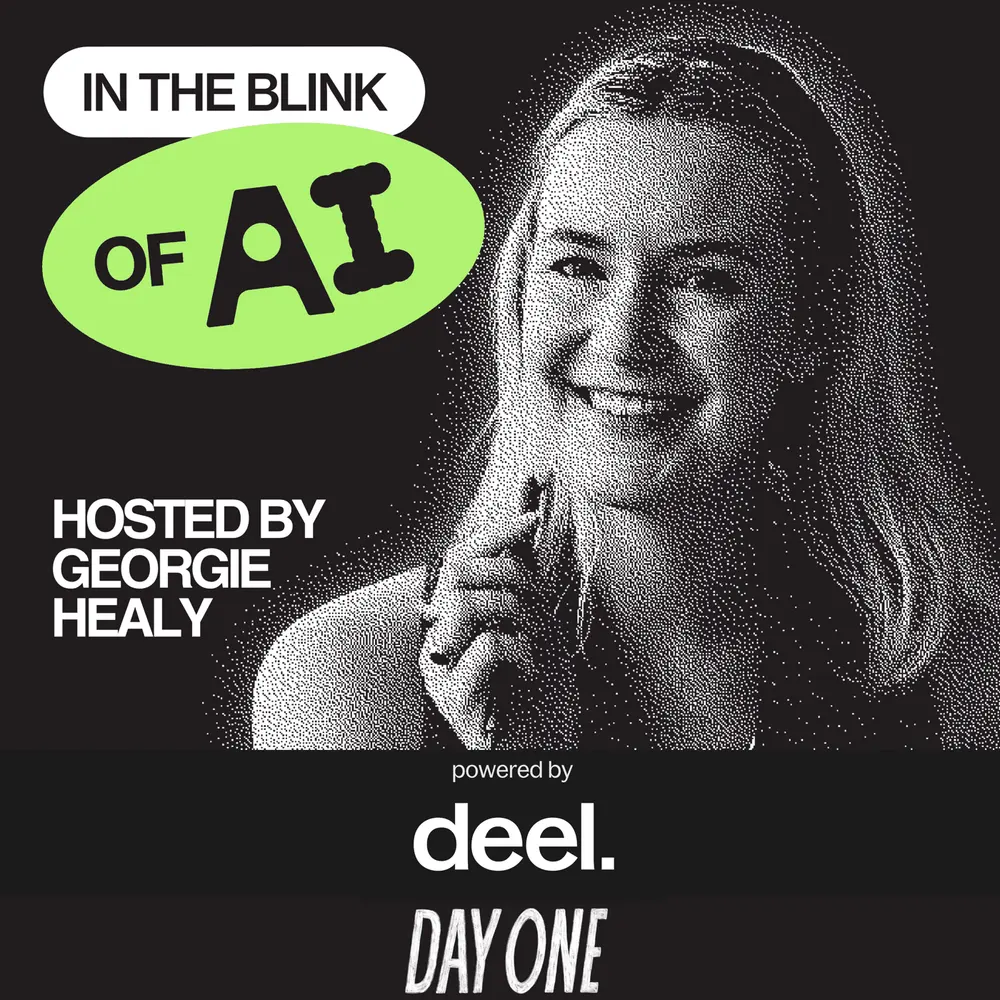 In The Blink Of AI with Georgie Healy
Presented by Deel & Stripe
In The Blink Of AI with Georgie Healy
Presented by Deel & Stripe 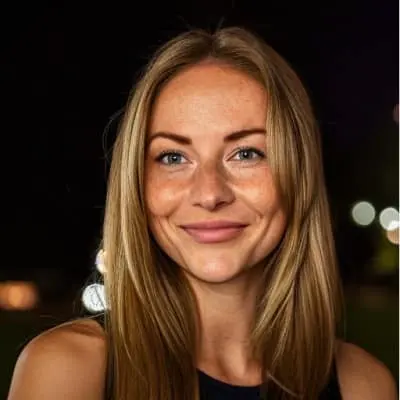
 ▶
▶  ▶
▶  ▶
▶  ▶
▶  ▶
▶ ▶
▶ ▶
▶