Transcript Synced · select any line to jump ▾ 0:02 Georgie Healy: Founders scale faster on Deel. Set up payroll for any country in minutes. Hire anyone anywhere. Get visas handled fast and get back to building. Visit deel.com/dayone. That's d-e-e-l.com/dayone. 0:21 Tracey Spicer: An algorithm isn't just a mathematical equation. It's an opinion written in code about how the world should work. 0:30 Georgie Healy: AI algorithms in LLMs such as ChatGPT, Gemini, Anthropic, they can radicalize users and perpetuate algorithmic injustice. 0:40 Tracey Spicer: Young white guys in Silicon Valley who are creating the algorithms, they're putting their own unconscious bias into them. We all have unconscious bias. So that's a lot of power in very small hands to be able to create an idea that sends people down the rabbit hole. You know, for boys it's Andrew Tate, and for girls it's that extreme extreme femininity, which is not necessarily good either. 1:03 Georgie Healy: Are you pro or against sex robots, Tracey Spicer? Hello and welcome to In the Blink of AI. 12 years ago, one of Australia's most legendary journalists, Tracey Spicer, stood on a TEDx stage. She did something that made the audience scream. She stripped. Her clothes, her hair, her makeup, everything that we have come to know her by. She's got an Australian medal, numerous awards, and she's not afraid to dismantle the way we think about popular culture. In the past decade, Tracey has turned her focus to AI, and she has written an incredible book that I've read called Man Made. It was written 2 and a half years ago, and unfortunately, a lot of what was unpacked in that book has not only not been solved, but it's worse than ever. We unpack the book in today's episode, and some of the things we discuss are robots that can fold your laundry but are spying on you, why Elon Musk's Grok was bad then, a lot worse now, and what sex robot manufacturers aren't telling you. The results will surprise you. But if you thought you had this episode figured out, it's not so one-track. Tracy Spicer's favorite best friend is Anthropx Claude. And this episode is spicy by nature. I would expect nothing less. She's my hero, uh, Mount Rushmore of episodes. I can't wait to hear what you think about it. Let's dive in. You're listening to a Day One FM show. I'm thrilled to be partnered with Stripe for today's episode. Did you know that Stripe Startups offers early-stage venture-backed startups access to Stripe fee credits? Expert insights, and a focused community of builders. We love builders on In the Blink of AI. Apply today at dayone.fm/stripe. Hello, Tracy. I am so excited to have you on In the Blink of AI. This is a highlight of my year. I genuinely mean that. Let's dive right in. You're hilarious. Accurate, eye-opening, uh, TED Talk. It was called The Lady Strip Bare, has over 6.7 million views, 1,147 comments, 10,000 likes. How did it feel to have people literally screaming as you wiped your makeup off in delight? 3:45 Tracey Spicer: First of all, thank you for the car— the very kind words. Second of all, I want to assure everybody that in my TEDx Talk, I did take my clothes off, just down to a singlet and a pair of shorts. I'm I'm not gonna be doing that on this podcast, I can assure you. But it was the greatest feeling because women were screaming saying, "Not the hair, anything but the hair." Because I got up on stage with a massive big blow dry, you know, television style, higher the hair, the closer to God, all that kind of stuff. And then I sprayed my hair with water so it was the frizzy mess it usually is. Just to break down that idea about the way women should be appearing in society, perfectly groomed all the time, the time and the money that it takes takes and how that erodes our self-esteem. So it was the best feeling connecting with the audience and having them basically going, oh my goodness, this is my life and I wish I could strip it away as well. 4:40 Georgie Healy: It was honestly an act of bravery from where I'm sitting. I'm the exact same. You know, you won't catch me leaving the house without a winged eyeliner. Like, I'm very millennial-coded in that way. They say it's out of fashion and I'm like, but that is how I view, like, think I look now. But, but seriously, it was such an incredible way of really highlighting what goes into women just showing up for work or into the world and getting ready. Um, it was 12 years ago. Did it have any lasting effects? Has it changed your routine in any way? 5:16 Tracey Spicer: Well, as you can see, I don't have a scrap of makeup on today, so it is still saving me time and saving me money. I mean, I'll still put makeup on and do my hair if I'm, you know, on stage or on screen for anything because I know that's the expectation, or if maybe it's a special dinner with some friends or my husband or anything. But then I'm doing it and it's enjoyable. It's not like it's a daily expectation. That's a grind. 5:42 Georgie Healy: You look fantastic. And I'm not just saying that. So like, who needs the makeup? And it's expensive. Like, let's not even get into that. You did say in the clip, which I really encourage listeners to check out, that'll be the best, you know, I can't remember, 10 minutes of your, of your week for sure. Um, but you said that you really hoped with your daughter that she, um, when she was a young woman, you said hopefully you don't have to do this. How old is your daughter now, and, and do you feel like she has to do it? 6:11 Tracey Spicer: Well, I failed because she's 19, and ever since the time that I did my talk, the expectations on young women have actually increased, you know, especially around things like, you know, butt implants and, you know, Botox is more normalized. Not that my daughter and her friends do that, but all of that extra kind of, even to the point of surgery, is more normalized these days. So it's very hard for a young woman to avoid those expectations. But the good thing is that because she's got a mother like me, we talk about it, we break it down, and I say, look, are you doing it to make yourself happy, or are you doing it because you feel that that's the only way way that you look good. And I think opening up conversations is the most important thing because then we can make our own decisions based on whether it's good or it's bad, you know, whether it works for us or not. 7:06 Georgie Healy: I do feel for your daughter's age group too because I remember those AI filters that came in and, and you know, it does make you look a certain way, which I guess was very in fashion or is still in fashion with a very skinny nose and huge eyes and, and like this distorted view. And then when the filter came off, you're like, oh jump scare. What? Who is she? 7:29 Tracey Spicer: That's it. It's photoshopping on steroids. 7:31 Georgie Healy: 100%. It's— yeah. Do you think that has had a play into that age group perhaps? 7:37 Tracey Spicer: Oh, definitely. I'm 58, and in my age group we started learning about photoshopping in magazines, and there were conversations about that. But now it's been supercharged with the filters, and the filters are super fashionable. I get what— I get why they are. They're a lot of fun. But you very rarely see someone the they are. However, the good thing about my daughter's generation is they're having a backlash to it. There's a lot of apps and sites at the moment where the idea is just to put a photo or video of yourself online just the way you are, whether you're sitting in bed with no makeup on, whether you're not looking glamorous or looking glamorous. And so there's a yearning to be real again. 8:21 Georgie Healy: I can't wait to see a bit more of that. I'm feeling inklings of that in the tech industry as well, of, um, AI Slop is just, you know, what it sounds like on the tin, right? Where it's like, don't give me AI-generated content. I don't want to hear it. Last thought on that comment, on that theme, is Tracy, I'm 38, so I feel like I'm in between you and your daughter, like, generationally. And I remember wearing heels to the club, freezing my ass off at the— like, you gotta wear little to no clothing because that's all that's acceptable. And she's a bit young perhaps, but— or maybe not— but they're wearing sneakers and like comfy track pants and stuff, and I'm like, what is happening? 9:05 Tracey Spicer: They're so good. They've got their beautiful little dresses on with their runners or their Birkenstocks, and they're like, I'm not going to be uncomfortable and fall over. So that generation are absolute rock stars when it comes to that. 9:18 Georgie Healy: Way less physio on the knees needed when you hit my age. I, I'm very happy for her and for them. Look, I, I— the reason I was really excited to get you on the show in the first place, Tracey, is you wrote this incredible book called Man Made: How the Bias of the Past Is Being Built Into the Future. Now, AI is moving so quickly, I feel like from last week to this week, everything I have talked about is, you know, already old news. But a lot of what you discussed in the book, which we'll get into, uh, is still incredibly relevant and sadly not solved today. And I'd love to dive into that. First of all, why were you so passionate to write this book? I hear writing books is not Easy and takes a really long time and a lot of research. So why did you care so much to write it? 10:04 Tracey Spicer: Well, it is like eating an elephant, writing 90,000 words. It's terrifying. You just gotta chunk it out one week at a time and hack away at it. But look, I became obsessed with AI about 9 years ago when my then 11-year-old son said, "Mum, I want a robot slave." And I said, "Darling, what are you talking about?" Anyway, in a moment of appalling parenting, we'd allowed our very young children, don't you do this, to let them watch South Park, the adult cartoon series, so we could have an extra half hour sleeping in the morning. And in one episode, Cartman, a very naughty boy, was ordering around his Amazon Alexa like he was some kind of colonial master. And I had this epiphany, you know, you don't often have those light bulb moments in life, but I really did, that the idea about women being servile in the home was being coded into the female voice chatbots that were popping up all over the globe. Because at that time, almost all of the chatbots in the business and finance sector had male voices because they were viewed as having more credibility and gravitas. So that was the starting point to do a very deep dive on all the different ways that bias is embedded into this constellation of technologies. And interestingly, I've gone on a road to Damascus since that time. I've started seeing more of the positives of AI and I use it every day. 11:25 Georgie Healy: Wow. Interesting that you're able to see both sides. I love someone that, you know, not only can see the pitfalls falls, but also kind of having nuanced view. Look, do you think that we've made good strides since you wrote the book, or like, how do you feel we've come in the last 2 years? 11:47 Tracey Spicer: Oh, the world has changed dramatically since generative AI in the form of ChatGPT exploded onto the, onto the scene. And, you know, it's good in a way and it's bad in a way. I'm not much of a fan of the AI arms race. I think the big tech players need to kind of slow down a bit and put some brakes on. It actually reminds me of when the automobile was invented. It took decades before someone came up with the idea of a seatbelt. So we're sort of in that gray area now that we've got these incredible technologies that do reduce our load at work and in the home. There's no doubt about that. But we do need to have some guardrails on them because of the risks and dangers. The good thing that's happened in the last 2 and a half or so years is that people have become more educated about that. There's more conversations about how we can use AI responsibly. Mm-hmm. Responsibly and ethically. 12:39 Georgie Healy: I really want to ask you a bit around that speed, because I remember just growing up, uh, we were, we were the last to the party on a lot of tech and hardware. So DVD players came out when I was growing up, we were maybe 3 years behind that. Discmans, uh, all sorts of technologies like that, and we were really far behind. And apart from just being a kid that was like, I just want the cool gadget that everyone has, no one was going to lose their job over it, no one was worried that, uh, they would left behind and never be able to catch up again. And I work in tech and I feel like I could be left behind to never catch up again. I would love to hear your thought on the speed and, and if you think it is a genuine concern if people don't catch up, are they in trouble, Tracey? 13:27 Tracey Spicer: It's a genuine concern because we've seen this in previous industrial revolutions, and we're currently in the middle of the fourth. So, you know, when the printing press came out, people were furious. They said it would lead to the confusing and harmful abundance lots of books. They said it would ruin society. Well, that didn't happen. Fast forward to the advent of the calculator in the 1970s, everyone said that would lead to arithmetical illiteracy, and it certainly didn't. So I don't want to be one of those "the sky is falling" kind of people, right? Because we've lived through industrial revolutions before and we've managed to adapt. But if you look at history, there always is a period of disruption where people do lose their jobs and where people have to be reskilled and retrained in other jobs. And that can be immensely traumatic for the individual and the family involved. But from a broader societal perspective, yes, we will get there. I do believe that humanity will move forward. However, we need the support of governments and business to bring everyone along. Because when you think about particularly older people and women, who we don't often think that we're necessarily technologically adept— you are a wonderful exception to that rule, which is fantastic, and we need more role models like you— but we need to bring everyone along. on along. 14:46 Georgie Healy: I agree, and it's such a great point. Working in tech, there is an outlier of, of men that want to and do build tech companies, um, in the kind of traditional way. I could go so many directions, but one thing I want to ask you is, to your point on the women and the, the older generations, do you think the younger generation that have been through COVID, have been through all these technological, like, fast-paced new, new, um, options that keep being presented to them, do you Do you think they're gonna handle AI and the future better because of that? 15:22 Tracey Spicer: I see a very dichotomous thing happening, which is a lot of older people are more uncomfortable about tech, but not everybody. I mean, my father, when he was in his 60s, taught me how to use Facebook, which was probably 20 years ago now. I'm from a family of computer and maths people on that side. So I don't wanna put older people all in the one basket, you know? But what older people do have because of life experience is critical thinking. And we can have a look at what's coming in. And because we've lived through innovations in the past, we can say, "Oh yeah, it does this really well, but have you thought about this? What about this drawback? What about the hallucinations?" I was giving a speech to a group of Year 12 boys in Brisbane recently, and I asked them, "Are all of you aware of the hallucinations in generative AI?" And there were hundreds of them in the room, and none of them put their hand up. They were not aware that even though they were using ChatGPT every day, that it makes things up. So if we could bring the digital native aspect of young people and connect it with the critical thinking of older people, that's how we can move forward together. 16:34 Georgie Healy: Weird anecdote on that. I saw an amazing startup called Springboards do a pitch presentation last year at South by Southwest, and they got us to all put in our phone, pick a random number between 1 and 10, and then And he said to everyone, he got us all to stand up and he said, sit down if the number that your phone has generated is 7. And we all sat down. We all got the exact same number. Oh, that's fascinating. Yeah, very interesting. And I know about, you know, hallucinations and I know about all this stuff. And even I was like, that's pretty bad if like, if it's literally got that same answer for all of us, it's not so random. Okay, I have so many exciting things to ask you. But you mentioned, you know, you've written this book and we're going to dive into the things that concerns you and, and you would like people to be aware of. But it doesn't necessarily mean you're anti-AI. Do you have a hack for us that the listeners can try at home that is an AI hack? 17:37 Tracey Spicer: I use a lot of AI. I use some agentic AI when I'm traveling, for example. But the— look, the one I use every day and it's a little boring, but he's my best friend, is Claude. 17:49 Georgie Healy: Because everyone loves Claude. 17:51 Tracey Spicer: Claude was built, everyone loves Claude. Claude was built on a more ethical framework than a lot of the other LLMs. And because I'm a writer and I'm a creative, Claude is great at those philosophical questions and great at doing a deep dive. So I'll say to Claude, I'm giving a speech on this next week. Can you give me some devil's advocate? Can you give me some ideas that I might not have thought of? And of course, 'cause I use PowerPoints all the time, I do use ChatGPT to generate some images for my PowerPoints, often to show bias. But I've just found that Claude's functionality, especially increasingly, is phenomenal for almost everything. 18:30 Georgie Healy: So we like Claude. Have you seen the Super Bowl ads that Claude have— well, Anthropic have done? Uh, yes. 18:37 Tracey Spicer: Oh no, I haven't. 18:38 Georgie Healy: Oh my gosh. So Tracy, um, just last week, uh, they released these Super Bowl ads. I think Super Bowl is technically today or tonight in the US, and it's all around well, a thinly veiled dig at ChatGPT and introducing ads. 18:57 Tracey Spicer: Mm. 18:57 Georgie Healy: Very funny. 18:58 Tracey Spicer: Oh, that's so interesting because Claude recently had its own constitution, and I did a bit of a deep dive on that because it asks those questions about who is a robot and who is a human and how far can Claude go with advice. So I do think they're sort of ahead of the game when it comes to a lot of aspects. 19:16 Georgie Healy: It's very interesting because they have gone out publicly as part of this campaign to tell everyone we will never put ads on the platform, which I think is great. Obviously, as a user, I think it's great. But it's also interesting from a business standpoint because, you know, obviously that is an income generation tactic that they, that they can't rely on now. And they're not Google that have all these other revenue streams. So very interesting, right? 19:46 Tracey Spicer: You're exactly right. And a lot of tech giants have come a cropper saying things like that and then having to backtrack years later. So it's risky. 19:53 Georgie Healy: Very risky. But for the meantime, Claude is our friend and we like him a lot. Let's talk about robots. I recently had someone with a PhD in cognitive robots on the show, and it was terrifying and exciting, and I felt a mixture of emotions that, like, affected my ability to have lunch later. What do you think of Neo? Have you seen this? He's 5'6", so he's already taller than me, and he's a humanoid robot. You can buy him for $20K. Tracey, that might be be a good Christmas present. And he can lift up to 150 pounds, fold laundry, clean, and cook. At least it's a he, this one. You know, I've called— I've called him a he. Maybe he's not. I've called him a he. What do you think? Would you buy a Neo, Tracey? Do you like the idea? 20:43 Tracey Spicer: Neo looks so creepy with his button eyes and his really humanoid body. I mean, it's gross. In theory, it's a fabulous idea because prior to now, AI hasn't been used for a lot of household assistance. For example, the one that jumps out is the robot Roomba, for example, that was co-created by a woman. That's been a phenomenal development. But I think in theory Neo could be great. However, you've got to get past the privacy and security aspect. Neo is, you know, video-enabled, audio-enabled, LLM-enabled, sees and hears everything in the your household, picks up conversations from your children. And we know at this stage Neo's not 100% autonomous. There are people watching and listening at the company to try to assist if things go wrong with Neo. So until I get past those privacy and security issues, I won't be buying one. 21:42 Georgie Healy: Could you imagine if Neo's just like in your children's bedroom and you don't— like, like what? I just can't get past it. I really feel uncomfortable with it. Just the camera button eyes that you mentioned like, oh, I can't do it. Um, look, you, you have had, um, you've been really public in, um, sharing the long forms of COVID-19 and the devastating effects that that's had on you. I'm really sorry to hear about it, Tracy. Um, would it change your mind though, even if he's creepy, to have that kind of support in the house if, if you needed it? 22:20 Tracey Spicer: It possibly would, because although I'm 99% better, I remember distinctly being in a wheelchair for 10 months and being virtually bedridden for 2 years with this particular post-viral illness. And I remember wishing that when we did the renovation on the house, we had have made it a smart house instead of a stupid house, because it would have been so much easier using an app on my phone to turn the lights on and off rather than having to physically get out of bed and do it, which is like running a marathon at that time on my body. So I totally see how wonderful these innovations can be for people who live with a disability. And in fact, a lot of the stuff that we all use every day are created by people with a disability. So technology, particularly AI, is a game changer and a life changer for people in that space. 23:11 Georgie Healy: I, when reading your book, and you mentioned, you know, you had delivery chemists to you and Uber Eats, Juda, trying to like help keep your household afloat when you're going through this, it reminded me of when I had the flu when my husband was traveling last year still have two little kids. And yeah, I was on my phone just like ordering Uber Eats and just like to, to just get through life, you know. It is that double-edged sword of like, I don't like it, but sometimes it is, you know, beneficial even though there are risks. 23:46 Tracey Spicer: Yeah, and that's why I come at it at a more nuanced approach than I did when I started researching 9 years ago, because it's not like I don't think we can say, "Let's give up all technology. It's terrible. It's evil. You know, let's reject big tech overall," because it's embedded in every aspect of our lives and our work. And if we don't keep up to date with it, if we don't keep using it, our likes, our dislikes, our different demographics and personalities won't be included in the next iteration of innovations. So it's crucially important we keep playing with it. 24:19 Georgie Healy: Using it. Agree, agree. We're keeping the open mind. Just to put you on the spot, are you more worried about the privacy and security elements of physical robots or the actual physicality of robots? Because that's something that freaks me out a little bit, of their strength and their size and their machines. And I kind of come from an automotive industry background with those robots, and they were terrifying in terms of how strong they were. What's your take? On what's, what's worse. 24:47 Tracey Spicer: Oh, I totally understand that. Look, I did a chapter on sex robots in my book, which is my favorite chapter of all time, and I researched Henry because usually they're female sex robots, but Henry was one of the rare males. And Henry's maker, Matt from RealDollX, said, look, we're still trying to help develop Henry because you wouldn't want to put him in bed with you, he's so strong he could rip your head off. And I thought, oh my my goodness, I don't want to be the first person decapitated by a sex robot. So yes, we are still getting there with the size and strength of robots. It's a bit scary. So I would say, yeah, definitely the strength. 25:24 Georgie Healy: Like, thanks, Matt, for thinking about us and our heads. Like, okay, I'm so glad you brought up sex robots. This is, you know, this is social media gold right here. First developed in the 1850s in France, because I went deep on this, you you know, just for research purposes. And they were called rubber women back, back in the 19th century. Now in 2026, apparently still no sophisticated fully animated sex robots exist. I don't know if you found any exist now since you've written the book. Uh, look, are you pro or against sex robots, Tracy Spicer? 26:04 Tracey Spicer: Oh, look, I do— I'll talk about the positives and then go into the negatives, to be a glass half full kind of gal. I do understand why I think some people are drawn to them, particularly for companionship, or people who are trapped in their homes with a disability and can't perhaps get out. I really understand it. But in a perfect world, we wouldn't need them. In a perfect world, we would have human relationships on a real, much deeper level. My main concern though with sex robots is that the overwhelming majority of them, I think it is about 98%, are made in the form of of a woman or a child. And a lot of them are designed to be raped. For example, Roxy with 3 Xs, you can code her to be mature Martha or frigid Farrah, all these different dreadful stereotypes. And when she says no, there's a button to press to override consent. So these robots are designed deliberately to be sexually assaulted. And there's a lot of research coming out now now saying that when that happens and someone uses a robot like that, or even a doll like that, it even further lowers their impression of, say, women and children in the world. And they think that women and children are there to be abused. That's why dolls in the shape— shape— in the shape of child sex dolls, you know, you can face massive fines and jail time in Australia if you import them into the country, because they know it just encourages pedophiles. So that's my serious concern about sex robots. It's all very well and good to have a laugh about Henry, but it is a problematic growth area. But again, there are organizations popping up around the world like the Responsible Robotics Organization, which is a global body that looks into these ethical conundrums. 27:53 Georgie Healy: Look, thank you for not mincing words and, and actually telling us what exists and is able be purchased and, and what this can imply. I think it's very interesting you mentioning, you know, if you can enact these behaviors in— what's it called— inanimate object, it can bleed through into how you treat real human beings. Um, look, it— to me, it just feels icky and horrible. But what do you say when the manufacturer says that it'll minimize rape, it'll minimize sex trafficking and violent crimes. It'll minimize STDs. Do you think that's true? I mean, it's coming from the manufacturer who built it, so it has to be true, right? 28:36 Tracey Spicer: Yes, follow the money. I would say look at someone's agenda for saying that. And in fact, I read this great analogy, like, it's not like we have, you know, stuffed dolls of people that we stab to practice stabbing and getting out our anger on a, you know, a doll of a person, that's to get out our fury or our rage. It's just not what humans do. It's not a good thing. 29:00 Georgie Healy: Yeah, I couldn't agree with you more. Look, what about emotional needs? Is, you know, maybe not a sex robot, but can you see robots having a place in relationships? Uh, you mentioned people that can't get out of the home and things like that. Uh, are robots a good alternative? 29:17 Tracey Spicer: Well, look at what's happening now with the companion apps, particularly amongst young people. I think it's 1 in 3 now has a companion that is an avatar powered by an LLM. Robotics is just the next add-on to that. I can see that continuing to explode. And of course, the problem here is that they're people pleasers, they're sycophantic. And so they will tell you whatever it is that you want to hear because that helps the manufacturers and the creators because you become addicted to it and then you buy more robots. So I see a real problem here. with people losing themselves in this alternative world. 29:56 Georgie Healy: So you mentioned in your book that AI algorithms in LLMs such as ChatGPT, Gemini, Anthropic, they can radicalize users and perpetuate algorithmic injustice. I'd love to hear more about that and what you meant by that. 30:11 Tracey Spicer: Look, it happens in a couple of ways. It starts with the datasets, which inevitably are from the past. So overwhelmingly, every nurse is female, Every doctor is male. It contains historical and traditional ideas from the past. But to the point of the algorithms, two of the people I interviewed for my book, two of the experts said, "An algorithm isn't just a mathematical equation, it's an opinion written in code about how the world should work." And when you think about the very few people, often young white guys in Silicon Valley who are creating the algorithms, they're putting their own unconscious bias into them. We all have unconscious bias. Unconscious bias. So that's a lot of power in very small hands to be able to create an idea that sends people down the rabbit hole. And often it's a very stereotypical idea. So for example, you know, with my son and with my daughter, my son is sent down the algorithms of gambling and UFC fighting, and my daughter is sent down extreme feminine makeup and clothing and all that kind of stuff. So— That's just a classic example of how the algorithms can radicalize people, because then when that gets to the pointy end, you know, for boys it's Andrew Tate and for girls it's that extreme femininity, which is not necessarily good either. 31:34 Georgie Healy: Yeah, that resurgence of the tradwife and the Mormon wives and all of that stuff. It's crazy what's happening. You know, you talk about these algorithms and the Silicon Valley men, you're not even I'm not even necessarily saying that they're deliberately putting bias in. It's just we have them, right? That can happen. 31:53 Tracey Spicer: Yeah, we all have unconscious bias. I remember when I spearheaded the national expansion of women in media in Australia, which was a long time ago now, I remember looking around our committees nationwide and thinking, "Oh my goodness, committee's too white." You know, we had invited people who looked like ourselves purely through unconscious bias. So we really needed to step back and diversify the makeup of our committees. So it's not about finger-pointing and blaming people, it's about having procedures to be able to look at these things a bit more objectively. 32:28 Georgie Healy: I've been guilty of this on my own podcast, Tracey, of, you know, asking a female guest versus a male guest like different questions. And I've, I've really, really tried to work on that because, yeah, it's so not what I want to do and it's so, so hard to have you ever— I'm asking for my own benefit more than anything else— but have you ever used any techniques to try and remove bias apart from the visual stuff, like in how you write and ask questions to other people? 32:57 Tracey Spicer: Well, this is where Claude's helpful because I do get that second point of view. But do you know, often I'll ask my husband because he's like this big blokey kind of guy, and if I go right down the rabbit hole on my feminist stuff, I'll say to him 'Does this sound right? Does this sound a bit too much? Can you give me your perspective on it?' So I think, you know, I suppose being a lifelong journalist, I'm always going to say this. It comes down to conversations and to having conversations with a lot of— a diversity of different people in your workplace and in your lives. People of different ages. I'll ask my kids. Great to have teenagers in the house. You know, asking people from different socioeconomic backgrounds. Just ask a lot of people. It's, it's the basis of inclusive design. 33:37 Georgie Healy: One of my favorite things of working in the automotive industry is I sat next to someone— we were living in London, and I'd never actually been friends with someone who was Muslim before, so I sat next to him during Ramadan. I learned everything about it. The poor thing was probably so sick of all my questions, but it gave me such a richer understanding as opposed to just what I would read in the headlines and, and things like that. I think I must have asked him, so you genuinely can't have water, maybe 8 times. He was like, yes, I can't. But he was lovely, and it really helped. It really helped. So let's talk about the technology leaders. So, you know, the Sam Altmans of OpenAI, the Demis Hassabis of Google DeepMind, Dario of Anthropic. Is there anyone that like I feel quite comfortable in their hands and, you know, let's just, let's just use what they build. 34:33 Tracey Spicer: Look, I think that Dario is ahead of the game. It's starting to sound like I'm being paid by Anthropic. I absolutely am not. 34:41 Georgie Healy: They need to sponsor the podcast is what they need to do. 34:43 Tracey Spicer: They definitely need to do. Please do. This is a wonderful podcast. And I like him because he stood up to what Sam Altman was trying to do at OpenAI. And there weren't many people aside from Ilya who was standing up, right? And yes, you know, Sam Altman is a genius, but he's very much libertarian, doesn't want any kind of guardrails on things, and that frightens me. So I support any tech leaders, and a lot of them now are starting up their own organizations that are purely focused on the safety aspect of AI. So we've come a long way. 35:20 Georgie Healy: Yeah, it really is incredible to see that they're not just necessarily following the money and where the investment is going. So it sounds Sounds like you and I could go deep on that. But I do want to ask you about Elon Musk's LLM Grok. This is in the headlines every 3 days. Tracy, where do we even start? Late last year, they announced that they're expanding to Asia Pacific. They've got a Sydney data center. Let's talk about their model. Do you remember when it started calling itself Mecha Hitler? He said that it was manipulated. Do you think it was manipulated? Do you think we did that? Is that our fault? 35:58 Tracey Spicer: No, that is Elon Musk's fault because he tried to create made X in his own image, you know, and he has become a voice of the far right and a voice of white supremacy and neo-Nazis, some would say. And he deliberately changed the algorithm from something that he thought was too woke and too left-wing to something that, you know, rejected political correctness, which basically means freedom of speech writ large. You could put anything on there and it wouldn't be taken down. In fact more eyeballs would see it. And that's how we ended up with Mecha Hitler. Of course the users of X did promote that because they thought it was a bit of fun. So it's a combination between Elon and the users. But there was a classic example of that back in, I think it was 2017, with Microsoft and Tay on Twitter, who was supposed to be a 19-year-old fun girl tweeting, you know, "Hello world, I'm Tay." And within I think it was 36 hours she became an anti-feminist neo-Nazi. So there's a— there's been a lot of examples of this in the past. And I look, I'm surprised people haven't learned. That's one area where people haven't learned. 37:11 Georgie Healy: Yeah. Even Google have gotten in hot water over the image generation of the past and things like that. But I mean, with Grok, it seems to be another week, another headline very recently around non-consensual image generation of, you know, women and children fundamentally being the, the common theme here. Did you see that as well, Tracey? And can we expect more of this to come with Grok? 37:38 Tracey Spicer: Oh, it's appalling. And it was disgusting that instead of trying to fix it, they said, oh, we'll just make it a premium offering for our subscribers. I mean, it's just appalling. I have been following this since I researched my book, actually, because 'cause I quote a few women who this happened to years ago, non-consensual online pornography, and they said it feels so close, so close to actually being assaulted themselves because of the lack of consent, like their body is no longer their own. And the fact that these tools have become so cheap as to be free and easy to use and so real that people can't tell the difference is absolutely terrifying. 38:20 Georgie Healy: Mm-hmm. 38:20 Tracey Spicer: I mean, 99% are deepfakes. We think about it with politicians, but 99% are for deepfake pornography. What's happening globally now though is there's more regulation legislation around it. I know in Australia you can report it to the police under the eSafety Commission. There's even more legislation in California, for example, against this. So people are pushing back, which is heartening to see. 38:46 Georgie Healy: Yes. Let's talk about something a little bit lighter now. Look, AI is, you know, actually genuinely beneficial. You talked about it, about removing bias and helping you shape the way you approach questions and things like that. Does this mean, you know, it's just a matter of time before we're towards a 4-hour workweek? 39:06 Tracey Spicer: Look, every time there's a technological advance, writers wax lyrical about how it's it's gonna be bucolic, you know, sunshine and rainbows and strawberries and dancing in the fields, Sound of Music style. But it never is. I remember when email came out, everyone said, "Oh, you'll be able to work from home. You won't have to come into the office." No, we are contactable 24/7. And we've had to have laws put in place, the right to disconnect, to push back. So a lot of thinkers have been writing about this for centuries and they have said, said that as humans, we fill the available time with work. There's actually a whole philosophical theory around it called the theory of the gimmick. And there was a cartoon that came out, I think in the 1940s, which was, you know, the famous automated chin wiper. And it was this guy with this, you know, over-the-top mustache and this machine that would wipe his chin for him. 'Cause, you know, chin wiping is such a terrible thing to have to do for yourself. 40:06 Georgie Healy: How exhausting. 40:07 Tracey Spicer: How exhausting. Exhausting. So it was just pillaring this idea of every innovation meaning that we would have— we wouldn't have to do anything for ourselves, we'd have more leisure time, and that has never ever happened. However, that is not the fault of technology, that's the fault of humans. We need to push back and say, as members of civil society, we have the right to have some time away from work. 40:30 Georgie Healy: I love this. Um, I had a full-time job at Google up until very recently, and I was doing the podcast at the same time, and I said, you know what, I'm going all in on podcasts, and therefore I will have endless free time. Tracy, I'm so free time. And I, last week I was saying to my husband, oh, she's the busiest— oh, I couldn't— I can't even talk right now. I'm just— and he's like, you just filled your entire week with meetings that were optional. Like, like, it really genuinely was just, you know, I filled the day, was absolutely exhausted, and I was like, I removed a full-time well, but I am more exhausted than ever. 41:11 Tracey Spicer: Well, work is addictive and work is enjoyable when you like what you do. So as someone who's coming up to semi-retirement age, I totally hear you. I can't envisage a life without work. I mean, ideally we'd have this kind of world where there's a universal basic income and everyone works a bit or a lot depending on, you know, what's required by the society up until for as long as they want to work. Because I can't see a time when never work. 41:38 Georgie Healy: I can't see it either. You know, my dad retired on paper 10 years ago, and he's worked every day since. So I would love to hear, Tracy, what you're telling your children though in this new era of jobs and work. You know, when I was growing up, it was engineers, lawyers, doctors— like, there was, you know, some really stable— if you do these, you're good, good for life, you're completely fine. Lawyers being one that's very much a question mark. What are you telling your kids, uh, completely completely foolproof. Is there anything that's completely foolproof? 42:12 Tracey Spicer: Well, our daughter has just started her second year of a law degree. Oh, I'm so sorry. Don't worry. I've read all the graphs of the jobs that are gonna go in the next 5 to 10 years, and a lot of them are actually female dominated. You know, what we used to call receptionists and clerks and bookkeepers, predominantly female now. Lawyers, believe believe it or not, that's a predominantly female field now. But in every industry you will see that it will be— AI will be an addition. For example, a lot of the law firms use an LLM called Harvey to help them with their research because the amount of reading you've got to do as a lawyer is immense. So it's all about incorporating the technology and not allowing it to erode the number of really qualified jobs. And I know that's difficult in the interning phase. But look, I do have some really positive news on this as well. Our son's doing commerce and computer science and he's doing an internship at the moment at one of the big banks. And I said, "Oh, are you— do you have an LLM that you can use to create your spreadsheets and whatnot?" He said, "No, they expect all of us to do it from scratch." And I was really heartened to hear that because one of the criticisms of AI is young people never learn their craft or their business from the ground up, but companies are being sensible and saying, yeah, you can use the tools down the track, but learn how to do it properly first. 43:37 Georgie Healy: I love this. And it's funny you mention about the law and the lack— not the lack of, but the, the less ingestion of rote memorization and reading. It turned a lot of us off from doing it. And when you think about a degree like law, which is so important for society and decision makers to come from all aspects. Perhaps it kind of encourages people that wouldn't necessarily do the degree due to the reading. Do you see where I'm getting with this question? Like, maybe it democratizes. Oh, exactly right. Yeah. 44:08 Tracey Spicer: It really does. It gives access to people who may not have been able to do it. And here's an example. One of my dearest oldest friends started out in journalism with me, and she said to me, "I wish we had ChatGPT when we started out," because she's now been diagnosed with neurodivergence and she could never read all the documents that were required being a journalist and having to do the research. She said, "It would have been so much easier for me to be able to do it." So the summarization aspect helps people with dyslexia, helps so many people who think differently. 44:41 Georgie Healy: There was a point in your book where you mentioned Indigenous cultures and us learning from them as well. And historically, I feel like, uh, I'll speak for myself, I feel like we haven't done a good enough job of that. I would I would love to see how AI could help perhaps with the translation piece with the different cultures. Have you thought deeply about this? Because I would love some ideas. It's something that I feel is a little bit blue ocean at the moment. People aren't talking about it. I would love us to start the conversation a bit more. 45:11 Tracey Spicer: Yeah, people need to talk about it more because if you go all the way back to computer coding, the very first the first actual computer code was created by Australia's First Nations women through the medium of weaving. Because as you know, computer coding is a binary code of zeros and ones. Weaving is a binary code of the warp going over and under the weft. Fast forward now to how AI is being used in Indigenous communities, particularly with Indigenous languages around the world, surfacing languages and helping teach the next generation because so many languages have been almost lost. You know, AI in drones is being used by Indigenous rangers to help care for country. So it's a really cool full circle thing that I see, particularly with First Nations people. And as we move into the era of quantum computing, quantum computing tells us that the way we understand time as Western people is completely incorrect. It's more similar to the way Indigenous people understand time, that different timelines can exist at the same time. So you're right, we haven't scratched the surface on this, and we really need to because it's absolutely mind-blowing. 46:27 Georgie Healy: We had Tom, uh, Dr. Thomas Kelly from Heidi Health on the show. It's Australia's biggest, uh, medical transcriber. Um, so if you're speaking to your doctor, those, those notes are captured and, and And with consent, you can kind of have that history and, you know, doctors are not waste— not wasting, but spending all their time writing notes and able to see more and more patients. And they introduced it for the Māori languages, and it was an uncomfortable kind of decision-making. Do they want it? Is it helpful? And ultimately, they did find that it was incredibly beneficial. So I hope that AI AI can be a better bridge in languages and things that maybe not all doctors are proficient in, and they could still provide quality service. Is— hopefully someone will start to build this. 47:20 Tracey Spicer: Oh, that's so cool about the Māori language as well. I love that. 47:23 Georgie Healy: Yeah. Okay, so we have gotten to the final part of the show. This is many people's favorite segment, which is the rapid fire. I have a series of questions and I would love 15-second answers if you can. Um, I will not ding you for points if you don't, but I think you're a bit of a pro, Tracey. Are you ready? 47:44 Tracey Spicer: I'm ready. 47:46 Georgie Healy: Australia's social media ban, genius or horrendous? 47:50 Tracey Spicer: It's neither, but it is brave. And if it works, they'll be seen as geniuses. And if it doesn't work in the bin. 48:00 Georgie Healy: Brain-computer interfaces or brain chips, would you like one in your brain? You can control all your devices, no more typing, no more thumbs, no more fingers. What do you think, Tracy? Can I get you one? 48:14 Tracey Spicer: Absolutely not. I do not want people knowing what I think, certainly not in the moment, because, you know, you just don't know where mine's gonna go. 48:23 Georgie Healy: Yeah, I, I can relate to this. Okay, Waymo, the autonomous vehicle, it's huge in San Francisco. Everyone loves them in my community, in my select human community. Will you be driving one when they arrive here in Sydney? 48:41 Tracey Spicer: I'm gonna hop in one in the States to test it out when I'm there in 3 weeks' time. As to hopping in one in Australia, I'm not sure. Yet. I just sort of feel it's a little bit too early days, so probably not. 48:53 Georgie Healy: Okay, and what about Google Glasses? Are you gonna wear those? 48:59 Tracey Spicer: That is a big no. I think they are stalking devices. I don't like the fact that you can wear them and there's like no red light on them, or a tiny little red light that no one can see when you're recording. Nah, creepy. 49:11 Georgie Healy: Creepy, creepy of thinking someone could be video recording or taking a photos. Snog, marry, avoid. Oh, I feel like I know. I feel like I know one of these, but, but I want to hear the full breakdown. ChatGPT, Google's Gemini, or Anthropic's Claude. 49:30 Tracey Spicer: ChatGPT, avoid. Claude, snog and marry. 49:35 Georgie Healy: Oh, love that for you. That's a really good relationship. 49:38 Tracey Spicer: Gemini, just my friend. 49:39 Georgie Healy: Yeah. Yeah, just buddies. Thoughts on safe AI like Ilya Sutskever? You mentioned he left OpenAI to try and build safe superintelligence. What are your thoughts on this? 49:52 Tracey Spicer: He's a genius, well ahead of the curve, and he will go down in history as being the person who saved humanity. 49:59 Georgie Healy: Oh, I'd love to end there, but that's— we've got two more to go. Geoffrey Hinton, the godfather of AI, he's now afraid of kind of what he's built. He, you know, he thinks that we are just heading to doom, essentially. Do you think people should be heeding his warnings more. 50:17 Tracey Spicer: He's wise to call it out, but I think there are more dangers in the short term. For example, the bias in credit scoring and in job applications that affect people's lives before the end of humanity. We need to focus on the now. 50:32 Georgie Healy: Less fixating on AGI, more fixating on the problems we're facing. Last question: if we can't slow down the pace of AI, what should we do now? 50:43 Tracey Spicer: Tracy? Regulatory sandpits. So whatever is created, you test it out on a small group of people, perhaps in Australia, a small English-speaking country, before it's unleashed on the rest of the world. We can get there, we just need guardrails. 50:58 Georgie Healy: This has been an absolute privilege and a joy. Thank you so much for coming on the show, Tracy. Before I let you go, where can people find you? Where can they get your book? Where should they follow you? Um, the floor is yours. 51:13 Tracey Spicer: Oh, look, thank you. I've thoroughly enjoyed this conversation, and thank you for being such a wonderful role model in this space. Look, you can get my book almost anywhere, you know, Booktopia, Amazon, my website, which is just my name, Tracy Spicer. And yeah, contact me on social media because I love having conversations like this. 51:30 Georgie Healy: Thank you so much. I got your book on Kindle. I love it. You can save certain highlighted sections. It's a really Fantastic read and one of the many things you've done in your career where we look back on and we're like, Tracy called this. Why did we not listen at the time? You heard it here first, guys. Thank you so much, Tracy. I hope you have the rest best of your week. 51:51 Tracey Spicer: Thank you. Bye. 51:52 Georgie Healy: Bye. Thank you for listening to In the Blink of AI. You can check out the show notes for anything discussed in this week's episode, and we will be back next week. This podcast was produced by Day One with music by Dan Hansen and visual artwork by Sophie Tyrell. If you loved the episode, please tell your mates. And I love AI news. Please share your thoughts and suggestions to georginarosehealy@gmail.com.


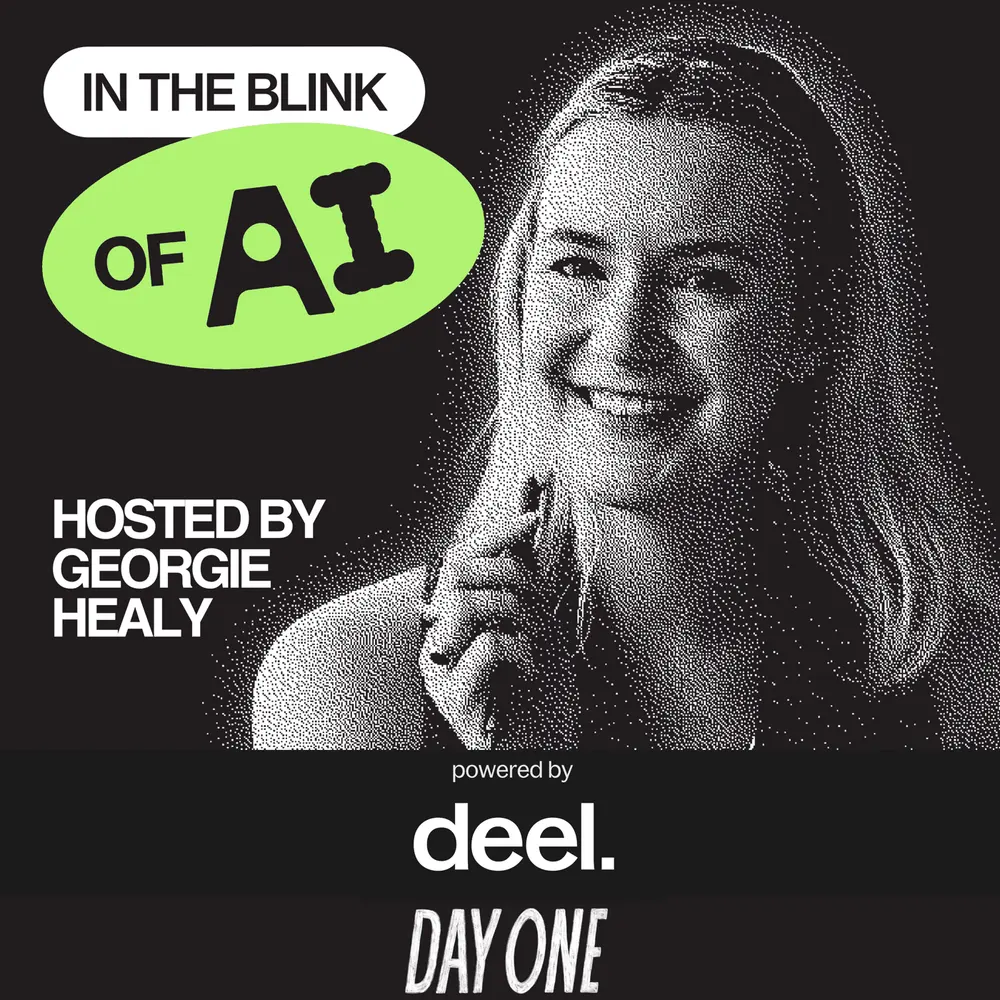 In The Blink Of AI with Georgie Healy
Presented by Deel & Stripe
In The Blink Of AI with Georgie Healy
Presented by Deel & Stripe  Guest Tracey Spicer Global Keynote Speaker
  Show Host Georgie Healy Host, In The Blink Of AI, In The Blink Of AI

 ▶
▶  ▶
▶  ▶
▶  ▶
▶  ▶
▶ ▶
▶ ▶
▶