Transcript Synced · select any line to jump ▾ 0:01 Georgie Healy: Founders scale faster on Deel. Set up payroll for any country in minutes, hire anyone anywhere, get visas handled fast, and get back to building. Visit deel.com/dayone. That's D-E-E-L.com/dayone. 0:21 Holly Rankin (Jack River): These tools that are meant to be transformative and apparently the most useful thing in the world have been created from very openly stolen data. 0:30 Georgie Healy: And no one's So this is actually talking about the owners of that data, the people like yourself that have put hundreds and hundreds of hours and teams together to create something that has been stolen and then is now being monetized. 0:45 Holly Rankin (Jack River): Rights holders and creators globally think that there should be correct licensing and permission granted to train models and obviously payment. It's pretty basic to common law globally. Music is about making humans feel something. And so how we make it is humans feeling something. Humans can kind of smell synthetic stuff and they don't want it. We want to be human, like we want to feel each other. 1:10 Georgie Healy: You're a musician, you're a creative, you're a cultural strategist. Are you anti-AI with all of those hats on? Hello and welcome to In the Blink of AI. I'm Georgie Healy, and frankly, I'm sick of speaking to people in big tech. Which is why I'm speaking to people in other industries that are directly affected by AI and directly being part of the solution, not the problem. Which is why I'm speaking to Jack River or Holly Rankin. She's pretty freaking famous. If you don't know her, she's the ARIA-nominated multiple times singer-songwriter, musician, cultural strategist, and she spent decades mastering the art of a hit song. Song. Today Holly's sharing why the assumption that AI training is fair game— frankly, all of us that are paying subscriptions to either Gemini, ChatGPT, Anthropic's Claude are paying money and giving money to these huge tech companies who have not paid the, uh, artists and the writers for the data that has been ingested to use them. That's a simple fact. So what has Holly been doing in Australian Parliament, and what is she suggesting and proposing, and what are other artists suggesting proposing to solve it. She's not anti-AI, as we get into on the show. She's come with receipts and solutions. And frankly, after speaking to her for this episode, I have not stopped thinking about it. I think there's many of us that could be part of the solution here. I can't wait to hear what you guys think and how you can get involved, like me, that want to be part of making AI equitable and safe and fair in the future. Let's dive in. 2:57 Speaker: You're listening to a Day One FM show. 3:00 Georgie Healy: I'm thrilled to be partnered with Stripe for today's episode. Did you know that Stripe Startups offers early-stage venture-backed startups access to Stripe fee credits, expert insights, and a focused community of builders? We love builders on In the Blink of AI. Apply today at dayone.fm/stripe. Hello, Holly. Thank you for joining in The Blink of AI. I was so thrilled when we had a mutual friend connect us. Low-key didn't know whether you would actually answer my email. It's a privilege and an honor. First of all, did you listen to Hottest 100 this year? Any favorites? 3:42 Holly Rankin (Jack River): I did listen to the Hottest 100. I was driving from, I think, Sydney to Foster, where I live on Wurrami Country, and it was so nice because I'm a mother of a 3-year-old. I got to drive and listen to it on my own and just turn it up real loud. I heard so much new music. I'm obviously a little bit out of the loop, but I loved all the long-form music in there and the music that kind of suggested that audiences are really out doing their own thing in different corners of the world and the internet right now. Like Nina Juraci, Tame Impala. There's a lot of beautiful long-form, weird, like long-listen music, which is a nice social indicator for me. 4:22 Georgie Healy: I love this as the host of a long-form podcast. Um, yeah, people say that our attention spans are getting shorter, the algorithms are just rinse and repeating. Love seeing that audiences are open to other things. We're gonna chop it up on these kinds of topics today. Um, I do have to know though, is your algorithm screwed because of your 3-year-old, or have you kept it tight and there's no wiggles in there? 4:48 Holly Rankin (Jack River): My Spotify algorithm is screwed, but I do— I loved entering my kids' music era because it's like perfect pop music. But my— she's obviously nowhere near my social media. So my social media is wonderfully, perfectly apocalypse, AI, Taylor Swift, Margot Robbie kind of stuff. Yeah. 5:06 Georgie Healy: I think our algorithms might be very similar. 5:10 Holly Rankin (Jack River): Yeah, you can actually look now. It's a new little feature. You can actually have a little look at what's your kind of top topics in your algorithm. 5:17 Georgie Healy: So I know. 5:19 Holly Rankin (Jack River): What tip? Yeah, I only found it last week and I sent it to some folks who are working on algorithm regulation. I was like, this is new, they're trying it on. 5:29 Georgie Healy: The only thing that I'm terrified is if they start sharing that with your friends. I don't need them to see what my algorithm's showing me around romantacy and the like. 5:38 Holly Rankin (Jack River): Yes. Yeah, I did. I did immediately, I screenshotted mine and then like sent it without reading it and then someone called me out. I was like, I was like, oh, I should know before I send. 5:48 Georgie Healy: Yeah, it's like my Spotify wrapped. It's like, okay, I'm weird. Just, just get, get with it. Like, that's, that's my algorithm is me and it's weird. Okay, so to kind of push past the third wall here, you're known as Jack River as a musician. Your name is Holly. I will be referring to you as Holly. But I have to unpack My personal favorite music video of yours is with Peking Duck. It's so iconic. It's called Sugar. Over 100 million views. 100 million. Over 1 million views. Could you imagine? By the time this goes live, it'll be 100 million. Is it the first time you've ridden on a scooter? Because you looked very confident. 6:27 Holly Rankin (Jack River): I doubt it was the first time I've ridden on a scooter. Yeah, I grew up in a regional town. We ride a lot of things in the country. So I know, I think it was It was such a fun day. I think Reuben, Adam, and I will always remember how fun that day was 'cause we just got to ride around Perth on scooters in like early '90s outfits and be absolute idiots and children. So it was a lot of fun. 6:54 Georgie Healy: Yeah, it's so intoxicating. That video just feels fun. The song is catchy. You're clearly all on the same page. It just was match made in heaven. Super impressive. What people might not be so aware of is your company. Sentiment. So you're an expert really on the cultural zeitgeist and where strategy meets that. You help institutions and organizations engage with cultural moments. Is AI a cultural moment to you, Holly? 7:23 Holly Rankin (Jack River): I think AI is many things. It's a technology. It's obviously having a cultural moment. It is a cultural narrative. A lot of what I think AI is in inverted commas. So yeah, absolutely. It's a, it's a technology, a narrative and a moment. 7:39 Georgie Healy: Yeah, yeah, agree. If you were to read the room currently, how are the waters feeling? How do people feel about AI in general right now? 7:50 Holly Rankin (Jack River): At Sentiment, my team and I are really, like, we don't like to generalize with audiences too much because we know that in reality every different kind of subsection of the public is likely feeling something different about something like AI. So I love have like sitting in that viewpoint and not overgeneralizing on how people think about something as large and all-encompassing and vague as AI. And I honestly, I love to have conversations with mothers in the regions and 12-year-olds and people who are outside of the kind of bubble or even the social media bubble. And I do think there is a trend. That I see, if I was to generalize with real life and online conversations, that broadly the next generation and parents and kind of city civilians are feeling they're probably being over-marketed to by technology companies right now. And I feel like they can feel the government's probably lack of literacy around and lack of ability to deal with the technology and the speed of it. And I guess, um, a lot of question marks around the proposed rapid, you know, rapid scale and potentially over-embellished assumptions of what it's going to do for people in our world. And meanwhile, they're like living their everyday lives. So yeah, I'm sure we'll talk about a bit of that today. 9:18 Georgie Healy: Yeah, we sure will. It is interesting you say that because, you know, there's some things about being in the tech industry and a lot of listeners are in the tech industry and we can drink our own Kool-Aid. And not be aware of the sentiment. I can remember politically a few times I've been caught out being like, "But none of my friends thought that way. I did not see Brexit coming. I did not see Trump being voted in." It's because I surround myself with people that vote the same way I do. So I just don't see this happening. But it is interesting you mention about the government versus workers and mothers and things like that and the disconnect of potentially those, um, we feel it in tech as well, of, uh, the government doesn't seem to be on the same page as us. So it's interesting. Look, let's, let's dive into, you know, before, before we get into that, you're a musician, you're a creative, you're a cultural strategist. Are you anti-AI with all of those hats on? 10:23 Holly Rankin (Jack River): No, I mean, I think being anti-something, like, I'm not really anti-many things outside of being pro, you know, general human rights and, you know, general basic values. No, I— yeah, I'm not a person that's like anti-something. I think AI is— it's a technology. We use a lot of technology. Our whole industry is based on a lot of different forms of technology. It's how we make music, it's how we distribute music, etc. So we're pretty native to technology and how it can transform an industry in our work. 10:59 Georgie Healy: Yeah. 11:00 Holly Rankin (Jack River): So absolutely not. I'm quite a, I guess, you know, it's not a secret nerd, but like I've been deep in technology land as it's known today since I was really young as well. I like patented my first social media platform when I was like 19 here in Australia and have been kind of on this journey with the birth of what we call AI. For many years. So no, I don't feel like I'm anti-AI. Yeah. 11:32 Georgie Healy: Do you use AI weekly? Is there a tool that you like to use? Is there something that if I was to come over and see what you're playing with on your laptop that you love using? 11:43 Holly Rankin (Jack River): At the moment, I go through phases like all of us, but I use AI pretty well daily. I use Claude, definitely loving Claude for just general text-based generation. I use, but like, I use Vibe Code, the Vibe Coding app to kind of rapidly test ideas. And then I'm constantly trying to find great mapping tools and like, it's in every tool right now, I think. So yeah, I feel like it's a bit like saying www., like everything's got AI. 12:17 Georgie Healy: So it's such a good point. That's such a good point. It's like you can remove that. We get it. It's got AI in it. Like everything does. Very interesting. And I guess something that I wouldn't have necessarily initially put on your bingo card is that, like all the engineers I speak to on the show, you're also using Claude. That's really cool. You mentioned being tech native since, you know, you were quite young. Tell us, what does go into creating a piece of music from the idea in your head to actually me seeing it on Spotify? 12:53 Holly Rankin (Jack River): Such a big question. I feel like that, you know, it's like asking an engineer what goes into a piece of software that can change lives. Like, so I'll try and do a quick tour of it, making a song. I guess songwriters and writers— what will speak to songs particularly right now— songwriters are like, you know, miners of their own thought and their own subconscious. And so, let's just talk about like a success— someone who has this as a job, right? It means that before the song is even thought about, they've cultivated like an ecosystem in their mind, in their life, where they're able to like identify micro— kind of micro pieces of magic in their psyche. And that will arise in you as like, you know, an overwhelming feeling or an interesting thought. For me, it's often— Yeah. Oh, I haven't heard that articulated in that way before by another human, so it makes me interested in it. So it's finding a cool thought or a melody or a lyric that comes to you intentionally or unintentionally and crafting it into melodies and, and/or words. That's how you're usually writing a song in black and white. And I just want to focus on that because we're going to talk in depth about the value of this. The general person would be like, I can't, I could never write a song. And I don't believe that. I think everyone can. But the, the art of being able to identify and cultivate a really interesting, innovative thought into something that is essentially like bioresonant with other humans is an incredible art form. Number 1. So number 2, you take that song that you think is really good and catchy. For me, I will take something into the studio or choose to produce it if it stays with me for a number of months. So if it's naturally kind of catching on in my head after 3 months, 6 months, or a year, then I'll be like, okay, you're through. You pass the test to, you know, get into the studio. You take a song into the studio, whether it's with your band or a producer and collaborator, and like you've crafted the song to a point where you are happy to like take it into the studio, which costs money and takes people's time. You take it in, you start producing it. So you lay down different layers of the song. Often they're like melody and lyrics to something basic. And then you put hundreds of layers of whatever sound, like instruments and sounds in that song. And that's how you start producing the song. In any given song, there would be like from like 30 to 200 tracks. So that's, you know, let's say 100 tracks lined up on top of each other. And that is, that's instruments, that sounds, that's vocals, often like any pop vocal is like a stack of around like 20 to 30 vocals on top of each other, like to hear one nice, beautiful, clean vocal. So you produce a song, you track it all. In that process, every one of those 100 tracks in a pop song or a song that you're hearing on the radio has had like meticulous attention to the dynamics of the sound, the frequency of the sound, the shape of the sound, the quality of the sound, how it sounds. So yeah, so a producer like Matt Corby, who I made my last album with, he might spend like 4 hours on a single snare sound in a single part of a chorus in a track. Like, these people are like incredible, incredible professionals and like— Yeah. Wizards at what they do. So yeah, any pop track has attention to absolutely every kind of jump and movement in frequency in that track. Let's times that by 100. That process can take anywhere from like a week, which would be insanely lucky and very unlikely, to very likely 3 to 4 months or 6 to 12 months of revision around those 100 tracks and the kind of quality of it. Then you take it into a mixing studio when you're happy with how all the tracks sound. A mixer will take those tracks and then meticulously organize and kind of finalize the dynamics between those 100 tracks. So how loud each track sounds in relation to one another over that course of 3 minutes 30. Again, these people are incredible. They're running like every single track likely through a processor, through multiple tools and different processes. Again, a lot of it around frequency in the sound. Once the mixing's done, so a mix will come back to the producer and artist, which is myself and me as a producer and my co-producer. You usually do like at least 6 revisions of the mix. If not, like if it's a pop song, it's probably like 30 or more. Like I can't speak for Taylor Swift, but you know, you're doing a lot of revisions of the mix. Yeah. The mix then goes to a mastering engineer. So the mastering engineer then takes that final mix, which is the vocals, the instrumental, and a guide as to how those two fit together. And they like super, super finalize the frequency of all of that together. And then it's done. Then the mastering often takes, you know, 6 to 10 rounds, but for a pop song, again, it's probably like 30. So That is a tour of how a song is made. 18:51 Georgie Healy: Listeners don't need me to tell them that is a lengthy process with experts that have very defined roles that start and end. And without one of those roles, you couldn't have the music, right? Like, that just sounds— in— like, that sounds insane. That is so long. It— like, is there anything in that process where you're like, oh, I I would do that with AI tomorrow if I could. That would be great done by AI. 19:21 Holly Rankin (Jack River): No, and I didn't— I should mention the songwriting part. I really skipped over that. Most songs that people know will have 3 or 4 songwriters in a song. A well-made song often takes months of like really careful iteration around every single word, how it is expressed, like the accent in the word, the roundness in your mouth, like all of the movement. So no, for like, for me, like AI— so throughout this conversation, I will note that like AI in general to me is, is a very vague term because when we're talking about music in particular, we have such a great number of tools. There's probably like, let's say like 60, 70 different tools and plugins that we've been using for decades. It's not like, so if it's rapid information processing or like data, data processing for a better result, yes, we already use those tools. If it's AI in the, in terms of would I hand over some of my creative ideation or like, um, perfecting a piece of audio to something that has its own thoughts about that audio and I have no idea what the logic is within that approach. No, not personally for me, because, um, I absolutely love and enjoy, as does I think most creative professionals, the absolute expertise in how we craft sound for human bioresonance or, or resonance with other humans. And I think you— it just— maybe in 100 years when there's a really mutual relationship with technology, but right now music is about making humans feel something. And so how we make it is humans feeling something. 21:12 Georgie Healy: So beautifully put. So beautifully put. The machine can't tell you how a human will feel when listening to something, right? With all the data in the world, it just isn't a human at the end of the day. With all of this in mind, with all the processes involved, with all the people involved, with all the stages and iterations and revisions, Tell me why I got you on the show in the first place. Let's talk about how AI companies are using that work and then training their models with it, often or ever without permission and payment. What are your thoughts on this? Like, tell the listeners what is actually happening, but I don't think most people are aware. 21:55 Holly Rankin (Jack River): Yeah, I guess so. The majority of large language models that are used for generative AI have been trained on billions and billions of pieces of scraped data essentially. And that's how these models were built and that's how they were trained. Very much on record and all of this. I think most listeners should and would know that the training data for LLMs has been scraped as a standard. So that scraping— scraping meaning using material to train data without permission or payment of the creator or the copyright holder. The rights holder. That's happened globally. It's happened in majority of territories. Companies specialize obviously in scraping data for training and providing packages to the major companies. So it's a big deal. These tools that are meant to be transformative and apparently the most useful thing in the world have been created from essentially like very openly stolen data. And also noting the kind of proliferation of value of these companies over this very short amount of time and the celebration of the value of those companies as well. It's a, it's a bit of a wild concept that they're being built on stolen data. So this has been a really existential, very serious concern of— Any person, organization, or company who has created content or owns the rights to that content. So that's authors, filmmakers, researchers, writers, musicians, you know, cooking blog writers, like anyone who, any human who's made anything, these models have taken them and used them, and they're now monetizing the trained models off off an asset that's been taken for free. So it's pretty wild. Very Wild West. Yeah. Obviously companies and individuals around the world have been extremely, extremely concerned about this, especially with the idea that AI is going to underpin the next kind of version, or already is underpinning the next versions of the global economy. So I can stop there. I'm sure we're going to go into it, but this is a, you know, hugely complex space, but really simply, um, rights holders and creators globally think that there should be correct licensing and permission granted to train models and obviously payment. Um, but really that, that basic, like, you are stealing something is, um— Yeah, it's pretty basic too. Common law, you know, globally. Yeah. 25:02 Georgie Healy: You know, when you, when you explain it, it sounds so obvious. But Holly, people are not talking about this enough, especially in where I see, where I'm sitting in tech. People are saying we've got to get the models better, they've got to use, they've got to get more data that'll improve the model. And no one's actually talking about the, the owners of that data, the people like yourself that have put hundreds and hundreds of hours and teams together to create something that has been stolen and then is now being monetized. Like, it's wild. Like, no one is talking about this. You went to Australian Parliament to talk about this. What did you— what did you go to speak about and how was it received? Yeah. 25:47 Holly Rankin (Jack River): So here in Australia last year, the Productivity Commission, which is a body under Treasury, released a report that kind of stated that they were considering adding a text and data mining exception to our Copyright Act, which would mean that technology companies would be able to legally mine text and data for free to train their models. And this is a push coming from the largest tech companies in the world. And obviously, like the Tech Council of Australia, the Business Council of Australia folks here locally, it's— but this conversation is happening globally. Just noting there are, there are hundreds of live cases around the world on, on this issue and happening in all jurisdictions, any jurisdictions. Anyway, back to Australia. Our industry saw this report come out and realized that this is a serious consideration of the government. There'd been no consultation from the Productivity Commission or the government with creative or media industries. So when I was alerted to it, I, you know, I look at a lot of issues, tens of issues every day, and Sometimes it's very strategic for government and other stakeholders to make issues seem small or inconsequential or too complicated. And this is one of those issues that I saw could have a material, almost existential benefit to my industry and quite honestly humanity. So yeah, I got quite involved with my industry and our kind of broader copyright sector in Australia alongside writers' guilds, media companies, and creative industry bodies like my own ARIA, Australian Recording Industry Association, Australian Performing Rights Association. And we began having conversations with government, essentially encouraging correct consultation with with our sector. We had conversations with unions and as many conversations as possible with the technology sector, which I'm really passionate about, like basic conversation and consultation on existential matters. But yeah, we— the kind of— the thing that got a lot of attention was a Senate committee hearing, which was they happen every other day in Parliament House, but we turned up with a, you know, a great group of, of humans who could articulate this and the impact that it would have on Australian creators and content. And— Mind you, it's really important to also highlight that the proposition of a text and data mining exception would have allowed free and open access to all cultural content as well. So First Nations stories, books, art, everything. So it was, yeah, it, um, you know, just— 28:50 Georgie Healy: It's horrifying. Like, when you, when you lay it out like that. 28:54 Holly Rankin (Jack River): Yeah. 28:55 Georgie Healy: To me, I would stop producing content. Why would I put all this— apart from the hard work, apart from the money, the cultural aspects, the emotional aspects— this is my lived experience, my life, my thoughts that I'm putting on the internet for you to now steal, maybe regurgitate in a way that I'm not comfortable with, and then monetize. Are you like— can I, can I ask straight, would you release an album with things as they are right now? 29:26 Holly Rankin (Jack River): Yeah, I'd absolutely release an album with things as they are because I have a great lawyer and I, I know the law and I believe that we're going to figure this out. And there are very reasonable reasonable, super reasonable, super basic solutions here, which is license the content. 29:44 Georgie Healy: What does that mean when you say license the content for rookies like me that are like, I don't know what that means? 29:50 Holly Rankin (Jack River): Sure. So companies who, who own large language models can choose to enter into licensing agreements with rights holders. So the people or companies who own the rights to that piece of content, this is already happening. It means you can enter into a licensing agreement to say, let's say it's your podcast and I'm OpenAI, I could say, hey Georgie, I'm going to license the content from your podcast to train my model for 3 years and I will use all of the audio and anything you produce and I will let my model train on it and I will pay you X. 30:32 Georgie Healy: Mm-hmm. 30:32 Holly Rankin (Jack River): And Georgie, as the content owner, you will say yes or no. That will be an agreement. It's really basic. 30:41 Georgie Healy: You know what you're entering into though. 30:43 Holly Rankin (Jack River): Yeah. Yeah. You're able to give consent and permission. This is, this is a really, for us on content copyright holder side, which is media companies, record labels, film companies. Publishers like Penguin. This is something that these companies and organizations have been doing for over 100 years. We've, we've been through, you know, been through sketchy waters, which is, you know, going from LimeWire into Spotify. 31:19 Georgie Healy: Remember those days? Yeah, I'm a millennial. Yep, yep. Yeah, it was done well now, right? I was like, I can't believe we got through that period. But it was done. 31:27 Holly Rankin (Jack River): Yeah, it's, it's done. And I, if like, it's done, we did it and we can absolutely do it again. So, and it is happening. So licensing is occurring at scale. It's not a headline story, but OpenAI have entered into multiple large licensing agreements. Adobe has entered into licensing agreements. You know, NVIDIA, Universal Music Group have entered into licensing agreements, Google and AAP. You know, there's ElevenLabs and Cobalt. There's, there's so many examples of licensing occurring at scale with really big players. And it kind of comes down to like a narrative that it's too hard and attribution isn't possible within models. And basically that these models need to be built so fast that we can't, we can't worry about it. And yeah, I think what, what is missed is human culture and content plays such a significant role in our civilization. 32:31 Georgie Healy: Yeah. 32:33 Holly Rankin (Jack River): And, um, when you kind of propose if the tech companies, you know, and I'm talking about the, the major 6 or so, are proposing that they should have access to all human content for free, um, because it's too hard to license it, it's absolutely wild. And then secondly, I, I don't think that these companies are realizing the kind of material effects on the material industries and the role of culture in humanity, and that you actually, you need all of this thinking to continue to have value, to have diversity in your models, to have value in culture, the culture that you exist in, and to keep society as a structured, living, breathing, diverse organism. Like, it's, it's, um, I think really short-sighted and really, uh, kind of blinkers on without realizing what you're talking about and what the impact of it is. And yeah, I, I think it's honestly as essential for humanity. 33:42 Georgie Healy: We started the show talking about where we were when Hottest 100 dropped. You know, this is a cultural phenomenon that's like across age groups and demographics and things that we all get excited about, that supports a cultural phenomenon that is hard to explain to other nations and things like that because it's so— it's so, you know, we had an engineer talking about experience transfer. It's very hard to do that kind of thing as humans. And for tech companies to just kind of lift and shift data and build fast and break things, it's it's missing that. I definitely feel that. Nerdy question though, should Spotify be advocating for you guys? Should YouTube be advocating for you guys? Do they have more leverage than the musicians themselves? And where are they playing in all of this? 34:31 Holly Rankin (Jack River): Yeah, so I mean, Spotify, Spotify exists because of those agreements and license licensing or transfer of value of music. So they're absolutely in support of licensing correctly. And if the value of music is nothing in the age of AI, in inverted commas, then those platforms will have no future. Music will have no future. So YouTube similarly has royalty-structured backends. They've made the technology, it exists. So yeah, any platform who relies on the value of music to exist is generally in support of of licensing correctly. So yeah, I mean, I'm sure we'll continue to discuss it as a species this year. 35:25 Georgie Healy: Yeah. 35:25 Holly Rankin (Jack River): But it's pretty obvious to me that, yeah, there's a lot of short-sightedness happening, a lack of consultation, and just a blindness to the kind of destruction that will occur to entire economies and very real, real life, real life on the ground jobs and industries. Like, you know, forget your Ed Sheeran concerts, forget your Taylor Swift concerts, like— 35:52 Georgie Healy: No! 35:52 Holly Rankin (Jack River): Forget your festivals, forget your— Deftones! No! Forget the whole 100, like, forget all of that. Because if you're kind of saying that AI is going to underpin everything and it's for everyone and it's going to underpin the layer of the economy, but you're, you're kind of destroying the economies that you're trying to help as you go. It just doesn't make sense. And I think, yeah, that's, um, the gist for me. 36:23 Georgie Healy: Yeah. There was a very viral moment that happened, and you've alluded to the people that you were in the room with, uh, in that Senate hearing. Um, so many friends sent this to me because I knew I have an AI podcast, work in the AI space. It was, um, Australian rapper Briggs. He was was talking about whether AI could fake a Briggs track, right? What I didn't know, Holly, is you were sitting next to him because I rewatched it. You're right there next to him. Do you agree with him? Do you think people will be put off by AI music? It lacks the care, authenticity, human elements, handwritten, hand-thought-of, hand-imagined song. 37:04 Holly Rankin (Jack River): Yeah, I do agree with Briggs, and I think he put it so beautifully when he said, like AI's never been in a lounge room in Shepparton, the, the, you know, town he grew up in. Um, it doesn't know what the carpet smells like, it doesn't know what the food smells like, it doesn't know the way, you know, his father or his mother treated him. Like, it doesn't have those experiences. Um, I do agree with him because I think that we have hardly scratched the surface of human intelligence and the I need more words for it, but I guess bioresonance and like the attention to frequency and emotion and the complexity of that. Our understanding of that is so, so, so basic. And to think that rapid information processing AI in a data center can fabricate that at scale, I think that we're going through like a buzz moment at the right now, but I don't— I think humans can kind of smell synthetic stuff and they don't want it. We want to be human, like we want to feel each other and we want to— and like, sure, AIs might make music for artificial intelligence or some future species, but as long as we're human, we'll want things made by humans. And I know there's probably listeners out there thinking like, yeah, but AI is like topping the country charts and it's like, Maybe the country charts are a bit basic. I'm sorry, but like, you know, there are, yeah, there's really basic forms of music like that. Sure, they'll pass the pub test. 38:43 Georgie Healy: I'm pretty sure that the frog— what was it? The frog song? No, there was like the hamster dance and the frog song. It was like beep beep, and it was like super viral. It was the worst thing that humanity's ever created, but it did technically go viral. 39:00 Holly Rankin (Jack River): Like it was awful. Yeah, and I'm sure, I'm sure it will continue to nudge. I'm sure there'll be synthetic moments of success, but I— 39:08 Georgie Healy: Sure. 39:08 Holly Rankin (Jack River): Again, I don't think we have defined what innovation is, what intelligence is. I don't think, I don't think we're doing a very good job of being human right now. I don't think many of us are very happy. So I think that basing it off virality or top of the charts like basing, calling that success of AI with humanity. I think we need more factors in the, like, you know, in the test to determine what it actually is. 39:39 Georgie Healy: There's a lot of fear about our jobs, about our futures. We don't know how to navigate this time, but that song's successful, so AI must be great. 39:48 Holly Rankin (Jack River): Yeah. 39:49 Georgie Healy: You mentioned Taylor Swift, and I've been trying to find an excuse to bring her up ever since. Why is it that she can write about a specific a specific ex-boyfriend of hers and the feelings she went through, and they're very, very, very specific. And I'm like, oh, she's talking about me. AI, can it do that, Holly? Do you think AI gets my ex-boyfriends the way Taylor Swift does? 40:10 Holly Rankin (Jack River): Um, I, I don't know. I'm sure it'll try, but I think that goes to someone like Taylor Swift has spent so many years understanding her own psyche and the parts of whatever she's thinking that might resonate, and they're like all the like neural pathways and the, the, the words, and that like it's such an art form for her to write so simply that, yeah, I just think that AI, AI has— and to be frank, like where technology's at and, and the people that are designing this, like I think we're really, really early days in terms of actually creating things that are actually anything close to the human experience. Because I think that our understanding of the human experience is really based on, you know, 200 years in the patriarchy. I think we've got a long way to go to write songs like Taylor Swift with machines. 41:12 Georgie Healy: I strongly agree. I also would love AI to try and give me the feeling I felt in an Oasis crowd of people I've never met before, and we're all doing this Polish soccer team chant, and I don't know what's happening, but it's happening and I'm loving it. And there's something very human about that. 41:29 Holly Rankin (Jack River): Yeah, I think I will say, like, I'm like, why? Like, why do we want AI to do that? And I think that there's just such a lack of conversation around, like, the efficiency. Like, why don't you just go to a concert? Why don't you just listen to a human song? Like, why do you want a machine to, like, create something for you in your weird lonely room with, like, headphones. Like, it's what— it's really a lot more efficient to just go to a festival. 41:55 Georgie Healy: Like, yeah, with actual experts that know what they're doing. Yeah. Okay, I want to get your take on this. This is all over the headlines. Anthropic have agreed to pay $1.5 billion to settle a book piracy lawsuit. They trained their LLM Claude, um, and technically they paid for those books, But then they were— the way that LLMs reproduce books and content and things like that, that's where it fell into icky waters. Do you think this was the right outcome, this lawsuit, even though they paid for it? The fact that they reproduced it through the LLM, how do you feel about that? 42:34 Holly Rankin (Jack River): Yeah, like, firstly, this case was settled, which meant that it didn't get to go through to a final ruling. And I think that obviously Anthropic knew what maybe the court was going to say, which is that this is, this is illegal and we need, you know, national global laws and regulations in place. So it was a settlement, which meant Anthropic knew what they did wrong and they likely know what the right thing is to do. You know, I agree with them where the, where that case got to in the end. But yeah, this is exactly what we're talking about. I think that that, you know, these companies should be paying to license this music for the actual thing they're doing with it. You know, if you— yeah, and it's not like we all know, if you go on to Claude and say, write me a, you know, write me a podcast script in the style of Georgina, like, you know, you're going to— 43:30 Georgie Healy: Don't dare it. 43:30 Holly Rankin (Jack River): Yeah, like you're gonna get a suggested script in your voice. It's like you can talk about it all day, but at the end of the day, this is what the LLMs are doing. They're reproducing original human content without paying for it in any form. And I think the majority of the public are not really keen on that. Like, well, they're actually passionately against it. 43:52 Georgie Healy: So— Yes. Yeah, it's kind of once you make it clear to people that now we can't stop seeing it. To that point, we've got Universal suing Anthropic. There's Germany voice actors that have boycotted Netflix. Hollywood suing Midjourney for image infringement. News and publishing. New York Times is suing like all of the AI companies. What should, what should listeners be aware of? You're obviously across so many of these cases, but for the average everyday person, what should, would, what should they do? What should I do? How can we help? How can we make a difference? 44:25 Holly Rankin (Jack River): Yeah, I guess like at the end of the day, I, it is quite simple. I think our creative industries, media industries, have a very simple proposition that enter a conversation, license his content properly, and, and value it as it should be valued, full stop. So I guess it's encouraging your organization, if they have a stance, perhaps to do a little bit more consultation on it and conversation around it. And yeah, go out and, go out and chat about a deal, like, or, or have, have a conversation. I think there's, there's a really weird standoff happening between these sectors, and I, I I understand the fear of technology companies in the face of thinking they, they need to build like serious attribution software in every corner of their large language model. I don't— I think that the, you know, copyright sectors, content holders, they don't— they know that that's probably really challenging. And we'll talk about something in a moment that's really cool though. But there's a, there's a really like basic in-between, which is settle on a reasonable licensing deal to train your models. And as we can see, yes, there's a lot of lawsuits happening. There are also a lot of deals happening around the world. So it's finding the reasonable in-between. But something that is really happening that I'd love listeners to look at, and I'll keep watching it evolve, is Cloudflare's partnership with a company called Human Native. And Cloudflare are— Human Native are a company that specialize in attribution and licensing software for large language models and technology companies. And they're partnering with Cloudflare at scale. Actually, I think Cloudflare may have bought them, but it's a, it's a really significant step where the infrastructure of the internet is changing. And it's possible. You know, we've got the best thinkers in the world on these problems. We can't say that it's not possible because that would be very boring. 46:36 Georgie Healy: All right. Hot takes, 15-second answers. Are you ready? 46:40 Holly Rankin (Jack River): Yeah. 46:41 Georgie Healy: AI-generated music. I'm not going to say whether it should win an ARIA, but do you think it will win an ARIA in the next few years? 46:49 Holly Rankin (Jack River): Probably not. I don't. I think that there'll be some rules around that. Or maybe there already are. I think there already are rules. Yeah. 46:56 Georgie Healy: Good to know. You love a vibe coding session. What's on your dream list? If, if, you know, your 3-year-old goes to bed on time, which my children definitely do not, what are you, what are you going to try and build one night? 47:09 Holly Rankin (Jack River): Well, I can't say it on this podcast, but I am building something interesting, and vibe coding has been my playground. But I think if it's something that I'm dreaming about, I want to work with experts. I'd want to work with engineers. And I am working with engineers who, who would make it. So yeah, I think that's a bit of an ode to, you know, human expertise. Yeah. 47:32 Georgie Healy: We love engineers. How do you feel about AI-generated music from musicians who have passed away? So like Elvis Presley and his family estate have decided, yeah, yeah, yeah, Anthropic, here you go, or whichever company would actually AI-generate music in the style of Elvis and then re-releasing it. Do you take on this? 47:55 Holly Rankin (Jack River): I'm very like free, you know, free world vibes. Like if the estate, the content, the people who own the content want to do that deal, then great, do it. Like I think it's the— my basic principle is just getting permission to do it and then it's up to you whatever you want to do with AI. Go on a holiday. 48:16 Georgie Healy: That was so beautifully said. You're an absolute star. Holly, thank you for coming on the show. For the listeners, where can they find you? Where can they How can they follow you and how can they support you with these initiatives that you're working on this year? 48:30 Holly Rankin (Jack River): Oh, thank you so much for having me. I love— I'm sorry for rambling. I love talking about artificial intelligence and creativity so much. I am on Instagram under JackRipa. I'm Holly Rankin. I'm on LinkedIn. My company is Sentiment Agency, so you can find us there. But yeah, reach out. Love to meet anyone who's interested. Interested in this and so here for conversation. Like, just let's have a chat on this. I am a big believer in people just talking and figuring it out together. So yeah. 49:07 Georgie Healy: Such a privilege. You will see Holly and I at a, uh, political tech creative space near you. This is one thing I really hope does come out of this disruptive time, is that more industries start speaking to one another and supporting one another. Absolute privilege. Thank you so much, Holly. 49:26 Holly Rankin (Jack River): Thank you so much. 49:30 Georgie Healy: Thank you for listening to In the Blink of AI. You can check out the show notes for anything discussed in this week's episode, and we will be back next week. This podcast was produced by Day One with music by Dan Hansen and visual artwork by Sophie Tyrell. If you loved the episode, Please tell your mates. And I love AI news. Please share your thoughts and suggestions to georginarosehealy@gmail.com.

 In The Blink Of AI with Georgie Healy
Presented by Deel & Stripe
In The Blink Of AI with Georgie Healy
Presented by Deel & Stripe 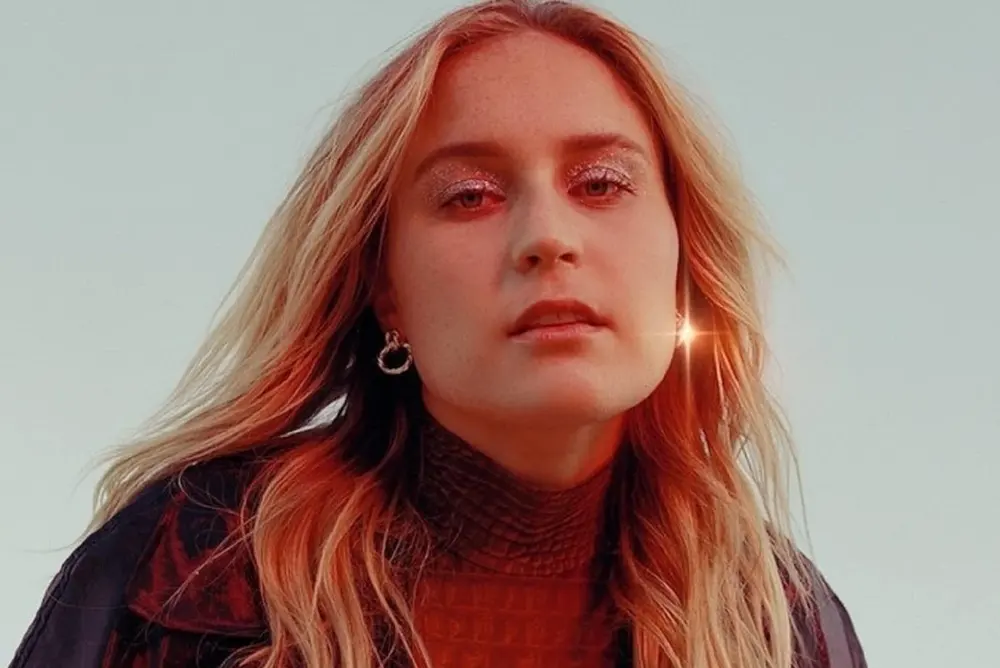 Guest Holly Rankin (Jack River) Co-Founder and Executive Director, Sentiment
 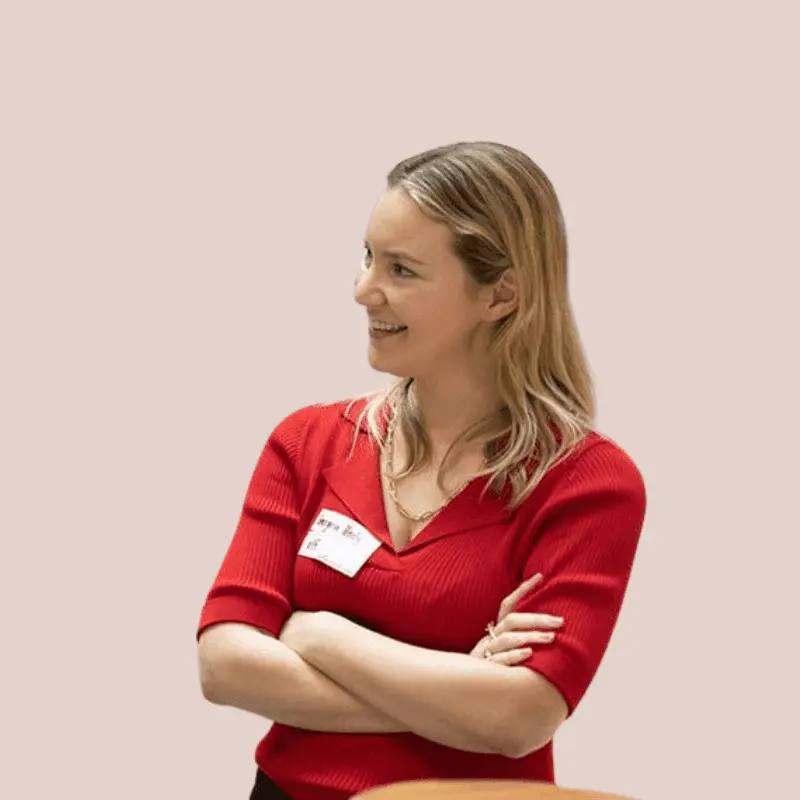 Show Host Georgie Healy Host, In The Blink Of AI, In The Blink Of AI

 ▶
▶  ▶
▶  ▶
▶  ▶
▶  ▶
▶ ▶
▶ ▶
▶