Transcript Synced · select any line to jump ▾ 0:02 Georgie Healy: Founders scale faster on Deel. Set up payroll for any country in minutes. Hire anyone anywhere. Get visas handled fast and get back to building. Visit deel.com/dayone. That's d-e-e-l.com/dayone. Hello everyone. Welcome to In the Blink of AI, an extra special episode for you today. Wow, what a huge year it's been. Even more massive in AI. The pace is insane. I've been speaking to AI engineers and they're overwhelmed. So, you know, good luck to the rest of us keeping up with model releases, AI hacks, you know, rhetoric online and which is true and which is false and signal from noise. And that is why I'm so happy to have this show, having the best minds in business, tech, politics, and coming on weekly to unpack what is actually real and what is noise. Uh, way through the year, I had a lot of listeners mention that they want specific hacks. And so that's when we started AI Hack of the Week. I have today gathered the top 10 AI hacks we've had on the show so far, so that over the holidays you can really dive in and stop using LLMs and the same prompts time and time again, the same stale reasons we use AI, and actually really support your personal and professional 2026 life with something ready to go. So let's dive right in. 10 AI hacks for you to try in 2026. 1:43 Georgie Healy: You're listening to a Day One FM show. 1:47 Georgie Healy: I'm thrilled to be partnered with Stripe for today's episode. Did you know that Stripe Startups offers early-stage venture-backed startups access to Stripe fee credits, expert insights, and a focused community of builders? We love builders on In the Blink of AI. Apply today at dayone.fm/startups. Www.melissa.fm/stripe. So, let's start with Dr. Thomas Kelly. He's the founder of Heidi Health. He's shared a hack that's going to become increasingly popular. You're going to see conversational AI everywhere if you're not already using it. And he uses conversational AI as a tour guide when visiting new cities, helping him with speeches. Let's have a listen to Dr. Thomas Kelly's hack. 2:38 Speaker C: So my favorite thing is whenever I'm in a new place, it doesn't have to be a new city, it could just be a new suburb or something like that. Any of the chatbots that have a voice mode, so you can use ChatGPT or Perplexity is also pretty good. You can just turn it on and then there's different ways to do it. You can have, the problem with all of those voice modes is that they have a problem with ambient noise. So if a siren goes by, it'll suddenly start replying. So what I do is I'll put headphones in like this, some of them have like a physical mute button, so you can just mute and then walk around. And basically the intro prompt could be something like, whatever you want it to be, like, you know, I'm walking around Amsterdam. I've never been here before. I'm just going to like tell you things that I see. Can you like give me the history and like steer me around the city? And it does an amazing job. And as you walk and like you talk back, it's like having a tour guide in your ear. So it's one of my favorite things to do. 3:38 Speaker D: You can use it in different ways. 3:39 Speaker C: You can do language tutoring if you want to try to speak the language in an area. You can, I don't know, practice speeches. You can, you can do all sorts of things. But the key thing is just the muting is the trick. Like, it doesn't really work unless you— you can hold your phone in your hand as well. So you just mute and it's like a walkie-talkie. So, you know, open it up when you want to hear, mute when you're off. That's, that's my hack, I think. 4:05 Georgie Healy: That's a brilliant hack, Tom. I love this hack. It's something everyone can use. Everyone travels and sees new places. And agree with you that I've got small children and sometimes I try and use voice mode and then within a split second I'm being interrupted by a 3-year-old's chatter. So I love that. Thank you. When I spoke with Maddie Reese, the vibe coder that's managed to go all in on that as her new career after winning every hackathon she's entered into, she brought a fresh AI tool that I've never heard of. This is why we get guests from overseas, guys. This is an AI tool called Poke, and she uses it to organize her life. Here's Maddie. 4:52 Speaker D: So I think the one that I'd love to share is this, um, it's kind of interesting to explain. It's like a, it's almost like a bot that you message with, but it just lives in iMessage. 5:03 Speaker E: It's called Poke. 5:04 Speaker D: It's by a company called Interaction. Um, and basically it, it kind of organizes your life. You can set up a bunch of automations in it. I have one where I tell it like, okay, end of every month, tell me what's leaving Netflix and schedule some time for me to watch whatever I want to watch that's leaving. 5:23 Georgie Healy: And it just— 5:24 Speaker E: Oh my goodness. 5:24 Georgie Healy: Yes. 5:25 Speaker D: It gives me the list and then I just go, okay, well, I'd like to watch that. And it looks at my calendar and it says, okay, I'll just schedule it for, how about this time? And I'm like, okay, perfect. And then I can watch it. 5:37 Georgie Healy: So not only do you not miss the movies or an awareness of the movies, but it's also scheduled it in so that you're like, oh, well, I don't have to now do an additional task. It's a long horizon task, Maddie. That's amazing. 5:52 Speaker D: Right? It's fun. 5:54 Georgie Healy: Yeah. I wonder, the only time I've done something similar is on ChatGPT. Like if I'm looking for tickets to a certain concert, I've got it set up such that it'll do a reminder, but it doesn't integrate with my calendar, does it? Because maybe Gemini would do that. Anyway, that is such a great hack. Such a fantastic hack. Back. My hack of the week is Sunoo, S-U-N-O. Are you familiar with the music app, Maddie? 6:23 Speaker D: Oh yeah, my dad is a big fan, so he sends over a lot of different music for us to listen to based on our lives and things. It's really funny. 6:32 Georgie Healy: Oh no way, he personalizes it? Oh my gosh, what has he sent you that was personal to you, Maddie? 6:39 Speaker D: Oh gosh, okay, so this is a bit of a funny thing. I am obsessed with Grimace from McDonald's. The purple character guy. 6:48 Georgie Healy: He's having a resurgence, yes. 6:50 Speaker D: Oh yeah, yeah. So he's made things about like, for my birthday, he made something where like Grimace was wishing me a happy birthday, things like that. Funniest thing ever. 7:00 Speaker F: It was so good. 7:01 Georgie Healy: We need your dad on the pod next. That is iconic. That is so good. I was really impressed with this because not only can you generate personal things like you mentioned. But I alluded to being into like hardcore metal. It's got like a distinctive taste. It's got a double drum. It's got like a certain kind of guitar. Like it's a very— in the metal community, there's like weirdly very specific niche groups. And I was like, there's no way it's going to nail this. And I said, create this song in the style of a very popular band here, Parkway Drive, thinking it's no way going to emulate them. It 100% did. I was like, I would listen to this song. Yeah, yeah, really impressive. I know, I know. As a startup founder, you're juggling multiple priorities from the expected, like finding product-market fit, to the unexpected. Like customer requests for SOC 2 or ISO 27001 certification. Achieving compliance is time-consuming, and time spent on that is time away from the needs of the business. And that's where Vanta comes in. Vanta is the all-in-one solution for startups to become compliant quickly and build a security foundation with ease. With a combination of automation, an extensive partner network, and a security marketplace containing 385 pre-built integrations, Vanta provides the necessary tools and expertise for startups to achieve compliance seamlessly, no matter how urgent your needs are, and at every phase of growth. Over 10,000 leading companies including Cypherstash, Handle, and Indebted trust Vanta to automate compliance so they can focus on growing the needs of their business. Here's the important part. Startup listeners of the show get $1,000 off if they go to dayone.fm/blink. Next we have Isaac Pieris, founder of growth agency Pistachio, and he has a hack that will supercharge the quality of answers you get from LLMs and save you time giving context. 9:29 Georgie Healy: So mine is not necessarily a tool or like a specific use case, but something that I've done that's just made life so much easier when I am using AI. I've, I've started saving these context documents, so just like text files that live on my desktop, and I've got one for myself, I've got one for Pistachio, the business, and then anytime I'm using AI and I need to ask it a question, I just drag those files in and it instantly has all the context it needs about who I am, who my business is, like all our ICP, you know, the media channels we have, the clients we've worked with, testimonials from clients, my career history, all this kind of stuff. And so it just means that you just skip the whole learning curve and the questions that it needs to ask you, and it has all the information it needs. 10:21 Georgie Healy: How long are those text files? Like, how deep did you go? 10:25 Georgie Healy: I went pretty deep. I used AI to write the text files, which is a bit of another hack, which can be good. 10:32 Georgie Healy: Hacking Snaption, great, love it. 10:34 Georgie Healy: Yeah, yeah, exactly. I find them really good because obviously you can create custom GPTs and Claude projects and all that kind of stuff, which has all the information. But I find it really useful having these because then you can use other custom GPTs that are really good at other things. So you can use it something for writing landing page copy or business accounting or whatever it might be, and you can still have the same context coming in. 11:01 Georgie Healy: I am going to try this because there have been a few times where I assume that the context window is sufficient enough that it's remembered all my backstory, and then I'm just realizing the hard way that I have to continuously re-prompt and re-remind. So I'm going to try that. That's brilliant. Just have them on the desktop ready to go, right? 11:22 Georgie Healy: Pretty much. 11:23 Georgie Healy: I love it. Thank you for that. That's something we can all use. My hack, I just got back from 2 weeks in Europe. Yeah, I know, what an asshole. And it was astounding because it was the first time I had been on a trip, even since December when I went away, that I've leveraged AI in everything I did in terms of vacation planning. And I've got one particular anecdote for this because of course you can use ChatGPT to ask like where to go, what to see. Great. We all know that. But when I was in Rome specifically, there was this incredible Caravaggio exhibit. I thought we would be able to get tickets. It was completely sold out. Bumped into someone at baggage claim who was coming from America to go to this Caravaggio museum, and I just had So much FOMO that I didn't get tickets, but the painter Caravaggio has paintings in all these churches in Rome, like so many, but you wouldn't know by looking. Now in the past, what would I do? I would Google which churches have Caravaggios, then go on Google Maps, then try and figure out. But if you just go on ChatGPT— no, if you go on Gemini, because it's integrated with Google Maps. you just say, where is the nearest Caravaggio church based on where I'm standing? And it's like, this one's in 3 meters, this one's in 10 meters, this one's in 62 meters. And no one was leveraging AI in this way. They were all going to this €90 exhibit. And my husband and I were like, there's one, there's another one. No queue, no people in front of them. Um, really special. I know it's a random one, but I thought that was pretty crazy. 13:10 Georgie Healy: Curated your own exhibit. 13:12 Speaker E: That's very cool. 13:13 Georgie Healy: Right? We should have charged for it. We're like, we're doing it to do it. I've got one of those little— 13:17 Georgie Healy: Walking through it. 13:19 Georgie Healy: Now, when we had KB, the CTO of EY for Oceania, gosh, it was a masterclass in how Australia needs to embrace AI as a nation and what we need to do to really lock in. Her hack is another LLM one, but she's shared how she's using ChatGPT to help her family decide what to have dinner. I love the way she approaches this, and this might be a good one for post-Boxing Day with all the leftovers you have in the fridge. 13:51 Speaker G: I have my kids taking a photograph of the fridge, like the fridge door open and taking a photograph of the fridge, and then asking ChatGPT what they can make for dinner. Mainly because I don't want to get that question when I get home at 7 or 7:30 at night, like, "Mum, what's for dinner?" I'm like, there are 3 competent people in this house that could have made that decision already, and I no longer subscribe to being the dinner recipe fixer-upper of this house. So I've definitely delegated that and just said, take a photo, send it to ChatGPT, and then, you know, let it recommend options for what you want to make for dinner. So I've completely— I'm trying to really shift some of those, like, I think that are quite unhealthy habits that tend to head to women in the household and kind of go, actually, you know, assistance can relieve that unnecessary mental load from women and use it to educate my family on that. When I'm in a hurry, I have a go-to prompt which is called Prepare Me, and it's learned, you know, how to, how to do a very quick, here's what you need to do. For this next meeting that you're walking into. Here's who you're meeting with, here's the background, and here's what you need to do. So if I'm kind of caught up or delayed and I'm just, I'm like, I've lost my place on where I am in my day, I can hit Prepare Me. And I really like that one. It's really simple. The other one I really like is I call it my end of play prompt, and I'm using Copilot for both these. And I simply have it summarize my inbox, my meetings, my Teams mentions, and basically I'm saying to the prompt, like, can I, can I log off for the day? Like, have I done what I needed to do today? And it will either say yes, you can jump off and you're good, or no, you actually need to attend to these 3 things. And so it's a nice way for me to have peace of mind because I don't— after I've walked into the front door and kind of said hi to the kids and we're sitting down, I don't want to then go back online because I've forgotten to do something. They really notice that. And so the end of play prompt— I feel like everyone deserves peace of mind to log off. And, and at the same time, you say yes and commit to so many things throughout the day that you do— you don't want to miss anything. So I think that that's a nice one. 16:09 Georgie Healy: Okay, our Chaos Monkey episode with Mike Keating and Hazig Norden from Enhance Labs. This is This is so many of your guys' favorite ever episode. So chaos is well embraced on In the Blink of AI. This hack will become more commonplace in 2026. Heard it here first. Using voice mode combined with conversational prompting is an absolute game changer when it comes to using AI. Strongly recommend you all start using voice more to unlock better quality outputs from your LLMs. Let's dive into Hack of the Week. I want a hack from each of you that you can share with listeners that they can think about going forward. 16:55 Speaker H: Mine's voice. As we discussed before, I'm youthful and young people like me are very— 17:03 Georgie Healy: People are watching this on YouTube, Mike. You can't actually lie. 17:07 Speaker H: Oh, the video of our faces will be there. 17:09 Georgie Healy: Shit. 17:10 Speaker H: Okay. Yeah, that hurt me. No, the big thing for me is voice, to be honest. It's like, being an older head in this game, I, or just generally, like, I'm really bad with computers and software and changing behaviors and adopting software is something I'm terribly bad at. And voice is something that I think Azit really kind of like championed internally to the annoyance of a lot of us early, 'cause he wouldn't shut the hell up. In our little Queenslander, just yapping all day back and forth, like literally like hours and hours and hours. And then we finally moved a couch into one of the rooms and kind of locked him in there. And you just hear him yabbering away. And then we all started to pick it up. And then for good or for bad, it changed the whole way that we work. Pretty much everyone at the team now, like largely, like exclusively talks to their computers. And so, the future of offices will be interesting because like we've got desks and monitors and now like I'll be down the back by the pool, obviously get my tan on. But I'll be like, someone will be outside, somebody at the desk, somebody in the kitchen, somebody will be in a room. Everyone's just talking away. Now, like on mobiles, being able to run around and continue your work and do actual meaningful work like on the fly. It's crazy. It is just like the biggest, I think for me, the biggest uplift in productivity and improvement of, from an experience standpoint. It's been so cool. 18:46 Georgie Healy: So people are sleeping on voice, I feel. I feel like people aren't leveraging voice as a tool for sure. 18:52 Speaker H: And it's, and it's like particularly like talking to your laptop may feel a bit weird because you don't do it, but you talk to your phone, you, you have headphones and talk to people. So like that, that pattern shouldn't be as weird as it is. The other side of it that I don't think a lot of people appreciate is like, one, the experience for sure is great, but LLMs thrive with context. And so you, particularly if you enable like the voice-to-voice chat mode, they are really good at like eliciting like stories and anecdotes and names. And so what you're doing there is like context engineering. You're enriching the context of which the model can work on top of. Versus in a chat interface, like, everything about the UI is encouraging conciseness. So it's like a tiny little text box, typing sucks, so you just like, like, one or two-word answers, and then the model's then obviously like aggressively trying to like, uh, contribute, and thus it's like pulling in a bunch of random insights and context and data to try and fill the gaps that it has. So from like an experience standpoint, voice is awesome, and from an actual output standpoint the context is incredibly powerful for the model to give you meaningful, personalized insights. 20:09 Georgie Healy: Now, having Sarah Corr, Principal Design Strategist at Portable, was such a refreshing change from all the productivity hacks we've had on the show. They're great, I get it, but she uses LLMs to find her blind spots and check her own bias. A great one for speech writing and sharing end-of-year summaries to your team. 20:33 Speaker I: I've got a very simple one for anyone who uses an LLM chatbot like ChatGPT or Claude. I actually use it to counterfact-check my own bias and perspectives where possible. So I understand completely that LLMs are full of bias, and it's actually something where there's so much emerging research around, right? Like, how do we develop tests for this. But I'm like, actually, me right here, like, I am so full of bias. I don't even know what I don't know. And chances are an LLM that's trained on such massive data might be able to help illuminate some of my own blind spots. So the way I like to use ChatGPT or Claude sometimes is actually just to say, hey, this is what I'm thinking about, an idea. What am I missing from this? If I wasn't me, relatively privileged, living in Melbourne, kind of quite tech savvy, what are the things about this question or idea might I be missing in my exploration? What perspectives might I need to surface for myself? And what can I do to ask my chatbot partner to be a critical thought partner? And prod me a little bit. So if you take anything that you're thinking about and exploring with your bestie LLM, I would just also encourage you to say, "Hey, ChatGPT, can you tell me what I might be missing or not thinking about that I should maybe think about factoring in before I form an opinion?" I think that's brilliant. 22:21 Georgie Healy: Is there anything that you're able to share that that you uncovered unconscious bias in your questioning before? 22:30 Speaker I: Actually, I might share an example that's pertinent potentially to listeners that are in organizations. While I was working at Data61 with the diversity and inclusion and AI research team there, we partnered with Seek, the recruitment company. 22:49 Georgie Healy: The biggest one or something. I don't know the stats. Someone Google that while they're listening, but it's huge. It's huge. 22:57 Speaker I: And what's wonderful is they actually have a team and a role specifically around responsible AI. So, what we were doing was working with their product teams that used AI in their products or were about to. And we actually, the team at Data61 took the idea of a user story that, you know, a product manager in tech might be used to. As a user of this Riverside, app. I want to make sure that I'm being heard clearly so that I know that the recording when it goes out is going to be easy to listen to. That's an example of a standard user story. What we encouraged the team to do at SEEK was go through and identify user stories and then say, hey, what happens if we tried to generate this from the perspective of a 50-year-old woman who doesn't speak English as her first language and lives in regional Victoria, what kind of things, additional considerations, might I actually need to do to my user story to make this more accessible? And so it's a way that we can actually use that simple, that simple kind of concept— what am I not seeing— and apply it to a really strong engineering process that already exists, just to tweak our thinking about like, hey, for every AI use case, what might someone who does not look like me, that I do not know well, what might they think? It's no replacement for human research, but it can be a really helpful thinking tool. 24:35 Georgie Healy: When I spoke to Kunal Gupta, he's a founder, investor, and author, in June, he shared what he called an AI hack or party trick, which I would love you to all try over the holidays, maybe at the lunch table. Ask ChatGPT to tell you 3 things you don't know about yourself, or use whatever LLM is the one that knows you best, obviously. If you ping me your answers, I will share mine. They're a little too real, but they're actually quite accurate. 25:09 Speaker J: Kind of a bit more of a party trick versus a hack. Sure, many of the listeners of this probably have done this already, but it's to ask ChatGPT tell me 3 things I don't know about myself. 25:21 Georgie Healy: Ooh. 25:22 Speaker J: 3 things. 25:23 Georgie Healy: I haven't done this. 25:24 Speaker J: And I love, I love over a coffee or dinner with a friend, you know, asking them to do it in front of me. And then like I did that last night and then the friend I was with, she was like, ah, it's really generic. It probably could apply to you too. And I said, well, just tell it that. And then she's like, can you be more specific? This feels very— and then the second attempt, like it really hit home. And I felt the emotion in my friend as she was reading it. And then if you want to take it to the next level, then you ask it, give me 5 pieces of life advice based on this. And it would be, yeah, it's a really interesting mirror. 26:02 Georgie Healy: I am going to try this, first of all, but I've kind of been skirting around that a little bit with kind of using it like a psychologist. I don't know why, you know, we don't have the time to digress into why some people are comfortable sharing things with a psychologist and some aren't. For me, I've never had the critical energy to do so, but I am, I am getting so much therapy on the Lil Olams and I'm loving it. Um, I mean, yeah, just even, I know I'm talking too much about this one silly thing that I did, but I can't seem to move past it. And I'm not burdening anyone with that. And it doesn't get, um, the LLM doesn't lose their patience, does it? 26:52 Speaker J: Yeah, I mean, I think over the next few years, or this decade, call it, uh, the democratization and accessibility of therapy-like use cases is definitely one of the top 3, you know, benefits to humanity from LLMs. 27:08 Georgie Healy: It is such a pro in the pros column for AI for me as well. I loved the crossover episode between In the Blink of AI and First Check. We had Cheryl Mack and Maxine Minter, you know, very intimidating icons in the Australian startup ecosystem who are actually really friendly and kind. Don't you hate when that happens? And we talked about 3 key AI tools you need to suss out. One is Prompt Cowboy, one is Deep Research, and the other is NotebookLM. Let's listen. 27:45 Speaker F: Mine, I probably have one that's, I think everyone could use. And then I have one that maybe not as many people would get value out of, but it has been just like amazingly valuable for me. So the kind of crowd pleaser that I use all the time is Prompt Cowboy. For anyone that hasn't experienced it, essentially what they have done is they have taken everything that we currently know about maximizing high-quality prompts and they have built it into an engine so that you can write what they call your lazy prompt, which essentially just means like describe what you want and then they generate it into a prompt that actually is gonna make it an incredible output. I use this all the time for preparing research notes. So my workflow is I wanna get up to speed on an industry that we're looking at from a, angel investment perspective, I put in, you know, I want to learn more about this industry. Let's say it is HR CRMs, just for the sake of top of mind. Can you please educate me on HR CRM industry value creation and an investment memo or an investment education memo for a VC? And then they turn it into this like maybe 400-word-long prompt with like context information, etc. It does it automatically. I copy and paste that into Deep Research and then press deep, then press search, and I get a 6 to 7 really high quality, 6 to 7 page, really high quality research report on like industry players, investment dynamics, value creation, progression, all of those kind of things, which is really helpful when I'm trying to get up to speed on a particular space. So that's my— like crowd pleaser, everyone could use it. The one that I am absolutely crushing on at the moment is Advanced Voice Mode from OpenAI in ChatGPT. So it's the little, if you look at your GPT app on your phone, it's the little circle on the right-hand side with like the 3 voice bars. It is essentially the voice interface for OpenAI. They did an update 3 weeks ago, 4 weeks ago, which changed the voice model into something that was— actually had like emotional affect to it. And so it feels much more human. And the way that I've been using this is my mum lives 3 hours south of Sydney and I love spending time down there with her, but 6 hours in the car over the course of a weekend at this very moment in my life feels like a lot. So I stockpile all the things I need to brainstorm or I need to make a decision on. Mm-hmm. Out over the course of my week, and then I queue them for my drive down south, and then I have a conversation, a brainstorm conversation with OpenAI while I'm driving, and then I take the output of that conversation and produce the relevant document or strategy or whatever it is that we need to produce. So a tactical example is we are very much in the scale journey. Like all early stage businesses, we are making the progression from just like the wild west of comp and salary progression and role progression into a more formalized leveled system. And so I wanted someone to educate me on what best in market looks like there, and then be a brainstorming partner for what our comp philosophy should be, and then help me put together that document. And because Advanced Voice Mode can search the internet while you're driving, you can like, you know, what examples, what are some benchmarks? Okay, interesting. Can you factor that into this? This is what our comp philosophy is. This is how we're thinking about 'Leveling, can you put together some levels for me for these 3 roles that we've got in our organization?' Et cetera, et cetera. And then you finish that process. And then when I got back to my desk, I just said, 'Great, can you summarize the above into a Notion document?' And ta-da, that was our com philosophy, our leveling process, and our performance review motion for our business. 31:41 Georgie Healy: Oh my God. 31:41 Speaker G: Damn, I don't even wanna go. Like, I got nothing compared to that. 31:45 Georgie Healy: So we had Christina Jones, Head of Design for Generative AI at Canva— may have heard of it— and she told me how she uses LLMs to steelman approach her ideas. Now, why does this matter? Well, it allows you to think through criticisms people might give you ahead of time. It is a superpower in complex fields. So if you want to do something quite ambitious next year, definitely try this steelman approach. And it ensures you truly understand what you're talking about, but in like a safe and private way with the LLM. 32:21 Speaker E: I've been trying this out because oftentimes we use AI or LLMs to give us feedback on something. I've been trying this approach, it's called the steelman approach. So the opposite would be strawman where you kind of have like an argument like that. In steelman, what you do is you prompt with, here's what I'm intending to do or, you know, what I want to write. Tell me what's wrong with all of this. Like, really break down what's wrong with all of this and then provide suggestions on how to improve this. So then it's a way for you to not get into a sycophantic conversation where it's like, you are the best ever. 33:00 Georgie Healy: Yeah, my AI thinks I'm so clever. I know. No, but that's fantastic. In what circumstance do you love I love using that. 33:10 Speaker E: Yeah. So in one way, it could be designs. Like, I give, here's the way I intend to lay out this design. Like, give me the reasons why this doesn't work. So I can at least have a bit of a think of, am I just following conventions or is it actually something useful? But you could do it another way with like strategy or even writing like, hey, here's my response response back to this person, for example. So tell me like, what's wrong with this? Because then you can really think about what's the issue here? Like, what am I trying to get across? And what could be someone's argument back to me that then I can make it stronger? So it's a great little approach, basically having AI tell you when you're wrong more than getting that reassurance that you're right. 33:59 Georgie Healy: I love this. And it's in like a safe space in your home. Like you kind of get the feedback, the— potential downside of what you were going to share publicly anyway ahead of time. It's almost like a virtual audience of sorts. 34:16 Speaker F: Exactly, yeah. 34:17 Speaker E: You can kind of have a— you know, a lot of people want to use AI as a thought partner, but you do need to have a bit of dissent when you have a thought partner because that's how you get better outcomes. If everyone's a yes man, then you won't get a great outcome at the end of it. 34:31 Georgie Healy: Finally, we have Frank Grief, co-founder of Kinzo AI. Brilliant guest, as he truly gets what makes a good podcast. He's got a podcast called Chew the Fat. And for Frank's episode, we've got a little bit of a bonus as well as his AI hack of the week. We played a game where I give Frank a bunch of hypothetical questions, and for each he told me, would it be better to use the LLM for or a human expert? Thank you so much for listening to this show. Enjoy this last hack and give me some recommendations for what we should cover as a recurring segment in 2026. We'll keep this going forward because it's been so well received, but I wonder if there's anything like, I don't know, things you can't use AI for or AI fails. Kind of love that. I'm doing that a little bit on Instagram. Should that be part of the show? Let me know. Thanks so much for listening. Let's dive into Frank's Hack of the Week. Early on this show, we do Hack of the Week. We bring in an AI hack that surprises us or delights us. But before I do that, I want to play a little game. I'm going to tell you a problem and you have to answer honestly. Are you going to speak to an expert or a specialist, or are you diving into your ChatGPT or LLM? 35:50 Speaker J: Mm-hmm. 35:51 Georgie Healy: First one. Inspiration for a new business idea. 35:56 Speaker K: I'm a big believer in like, you want to first stress test your own creativity. And so rather than going into an LLM and saying like, give me a great business idea in X, it's going to give you a really vanilla response. And likely it's given that same response to the other 10,000 people that have done it. And so instead, what I like to do is like, I like to push my bounds of creativity, think in all different ways, and then deliver it back and be like, what have I got wrong? What could I do better? And I always find that starting point is far better than just trying to ask it for something like that, because it truthfully, like today, it's not creative. It's just giving you like a sum of the parts of what it's learned from. And therefore, by design, it's going to be something that others have done. 36:36 Georgie Healy: Legal advice for a contract. 36:37 Speaker K: Oh, immediately, immediately. Do an LLM. 36:41 Georgie Healy: Straight up. 36:42 Speaker K: Absolutely. Now, I always say if I talk about this on socials, I am not encouraging others to do it. But like, you know, the truth of the matter is like there's so many contracts that hit our worlds that you kind of just like sign and just move on. Instead, I no longer do that. And that might be terms and conditions of a supplier or something, or generic vanilla NDA. I'd at least rather use AI to do that because it'll give me a way better look than I will. But if it's something important, like, you know, that's only the starting position. 37:10 Georgie Healy: Have you ever had one be like, do not sign? 37:13 Speaker K: Yeah, yeah, yeah. Like I've done some like investments into smaller businesses and it's like given me all like the really important risks to look at prior. Of course I did get my lawyer to look at it, but it was at least a good starting position. Or I've had one where someone reached out, they said, hey, we, you know, we want you on this TV show, but before we talk, sign this NDA. And I got it to read it and it said like essentially it's so vague that if they tell you something and then can like pretend that you're not doing it already, like you're now bound to the NDA. And so I actually just moved on from the opportunity going like, like, okay, if you don't want to tell me anything about it, I'm not going to sign an NDA for it. So yeah, that's good. 37:49 Georgie Healy: NDAs, are they a bit of a red flag in and of themselves these days? 37:53 Speaker K: Oh, it depends who you're doing it. If it's a first-time founder saying, I'll tell you about my idea, let me see your NDA, I'll just go like, I'm all good, brother or sister, I'll just move right on. 38:01 Georgie Healy: Totally, totally. All right, what about understanding pathology results? 38:06 Speaker K: Yeah, I've 100%, like, I, I have done that. Like, the, I think the stuff that always blows my mind is you know, the other day my son had a rash, take a photo, upload it, boom, it's— he's got this. You go, go to the chemist. Yep, that's exactly what he has. You know, like I was like, oh God. Like, so yeah, like for me it's almost the starting position for everything. 38:25 Georgie Healy: I wish it existed a few years ago. My children are a couple of years older than yours. We were in emergency with measles apparently, and it was hand, foot and mouth or something like that. Inspiration on how to redesign a room in your house. 38:42 Speaker K: No. 38:43 Georgie Healy: Which you're doing all the time, I'm sure. 38:45 Speaker K: No, I just, truth be told, I don't think about that. So I wouldn't go to either an expert or AI. I'd probably go to Pinterest. 38:52 Georgie Healy: Yeah. 38:53 Speaker C: Yeah. 38:53 Georgie Healy: Yep. Last one, custom gym workout routines. 38:57 Speaker K: No, I wouldn't use that either. Only, only just me. I've trained for 13 years and so I know what I know, what I want. And so therefore I just don't bother. But I reckon it would have some good stuff. 39:08 Georgie Healy: Right. What if you get an injury? We don't want this to happen. 39:12 Speaker K: Nah, injury, I would go to, I would go to see a physio or something like that because it's too nuanced and I might not be asking the questions that I should be asking myself. 39:21 Georgie Healy: Thank you so much. That was really wonderful. Now to the hack. 39:25 Speaker F: Yeah. 39:25 Georgie Healy: Both you and I share an AI hack that we like. Would you like to kick us off? 39:30 Speaker K: Sure. So here's my non-technical founder hack that's been really, really good this time around. 39:36 Speaker J: Now, my brother co-founder, he is technical, but I always like to know enough to be dangerous. 39:40 Speaker K: And so at the moment, like, what we're trying to achieve is very, very complex. Like, it's not just, like, we're not just an API call to an LLM because there's too many security challenges with that. And so there's, like, quite an intense architecture that requires open-source models and all these different things. The documentation for architecture is probably, like, 40 to 50 pages written up by founding engineers. It's way above my pay grade. So recently I've taken all of that, fed it into Groq 4 Super Heavy, and gone, like, yeah, I go, like, what's wrong with this? What could we do better and find alternate solutions that are cheaper, faster, more scalable, came back, sent it back to the engineers and they're like, oh, fuck, that's actually really good. I hadn't thought about that. And so that I think is like a superpower for a non-technical person. 40:26 Georgie Healy: Thank you for listening to In the Blink of AI. You can check out the show notes for anything discussed in this week's episode, and we will be back next week. This podcast was was produced by Day One, with music by Dan Hansen and visual artwork by Sophie Tyrell. If you loved the episode, please tell your mates, and I love AI news. Please share your thoughts and suggestions to georginarosehealy@gmail.com.

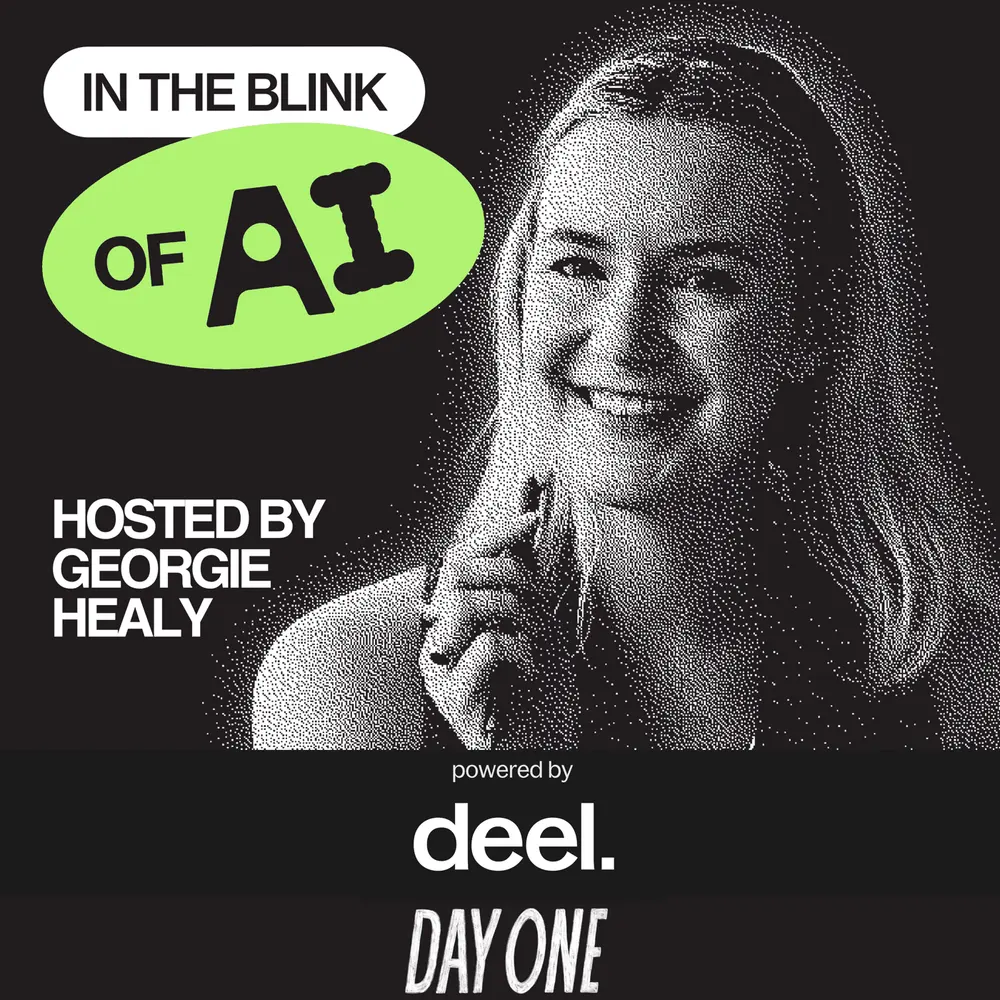 In The Blink Of AI with Georgie Healy
Presented by Deel & Stripe
In The Blink Of AI with Georgie Healy
Presented by Deel & Stripe 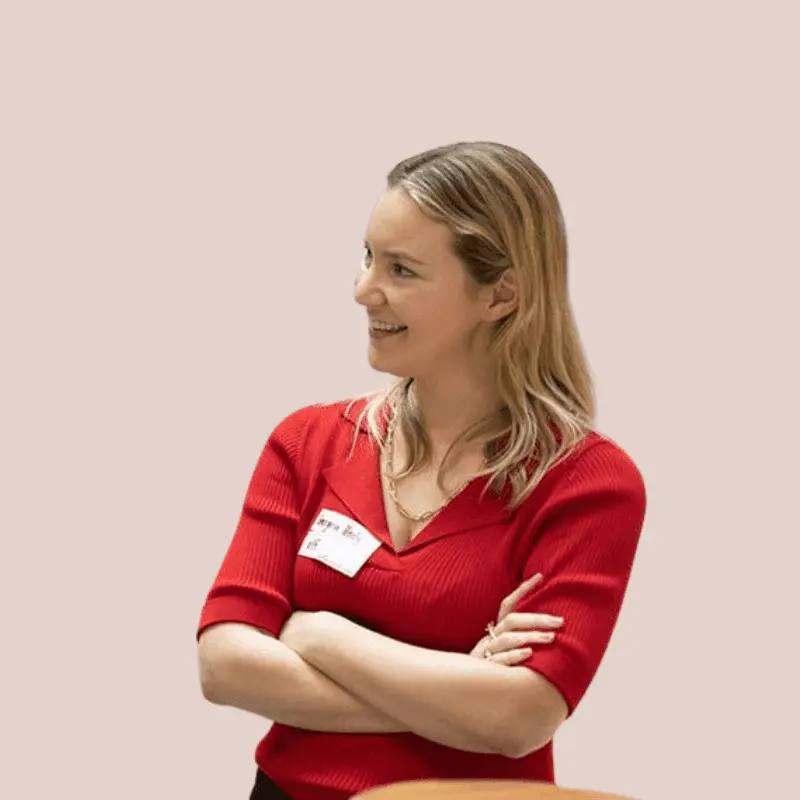 Guest Georgie Healy Host, In The Blink Of AI, In The Blink Of AI

 ▶
▶  ▶
▶  ▶
▶  ▶
▶  ▶
▶ ▶
▶ ▶
▶