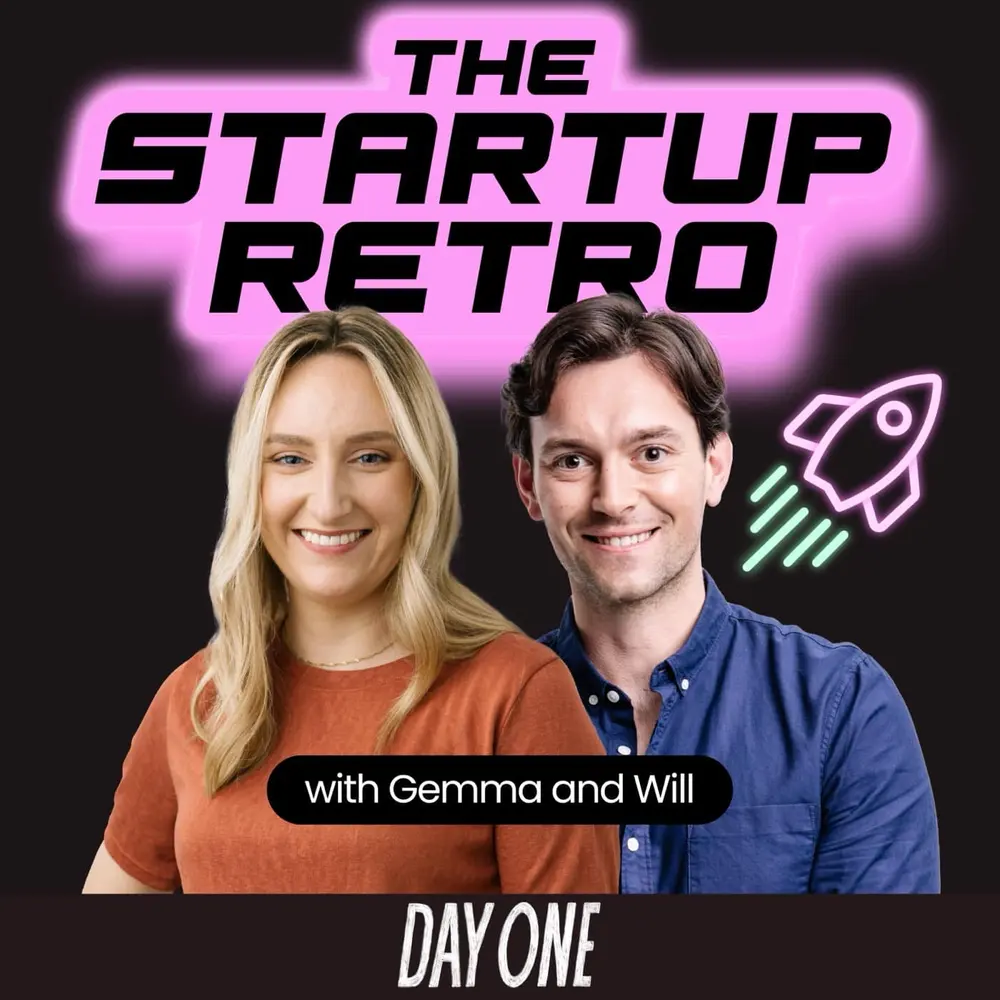
Transcript Synced · select any line to jump ▾ 0:00 Speaker: You're listening to a Day One FM show. This podcast was recorded on the lands of the Kurnura and the Kulin Nation. G'day and welcome to The Startup Retro, a weekly show where we help you level up on the Australian startup ecosystem by giving you an insider's view on Aussie startups and venture capital. I'm Will Richards, and on this week's episode of The Startup Retro, I'm super excited to be joined by Cheryl Mack from Aussie Angels, as Gemma is off in Italy for the next few weeks. Cheryl comes with a heap of experience from the early angel investment space and some great insights on the news of the week. In today's episode, we dive into— 0:37 Speaker: Uber partners with Turo following the end of Car Next Door. 0:40 Speaker: Premier Capital's new growth fund. 0:42 Speaker: And the sale of Airtrunk and a massive exit for the founder. 0:45 Speaker: The highlights from this year's Startup Daily Awards. 0:48 Speaker: And SafeAg Systems, who are the safety culture for farms. 0:52 Speaker: This podcast also includes an interview with David Burt from UNSW Founders, where we discuss Labor's proposed cap on international students and what that means for the Australian startup ecosystem, universities, and the economy more broadly. Let's jump into the headlines. And a headline that just hit the news this morning was that Uber is now pivoting to a partnership with Turo after just turning the lights off of its partnership with Car Next Door, which was an Australian startup it acquired a few years ago for $105 million. It's basically, turned off that partnership and now working with Turo instead, which is another US-based business but has a really strong presence in here in Australia. What did you think of that, Sheryl? 1:34 Speaker: Yeah, I mean, it's kind of funny that one minute about a week or two ago, it feels like Uber was saying things like, oh, well, you know, we can't make Car Next Door work because of car ownership costs and people are stealing cars and a lot of kind of excuses that felt a bit random or insufficient based on their previous investment. But Turo really did land in Australia with a bang. So, I like, I can't blame them for wanting to partner with Turo. 2:06 Speaker: Yeah. And I guess it's a global presence that already exists as well, so that it maybe just works better for Uber to use that as well. They were saying like the drivers that they were getting with Uber were not as respectful of the vehicles and not as high quality. But then what you're sort of seeing now is everyone who was using The Car Next Door app via the Uber app is now just going to be using— like, it's the same group of people who will now be using— 2:27 Speaker: It's the same group of people. 2:28 Speaker: Yeah. 2:28 Speaker: So, so, like, the excuses make me question, and the timing, like, the fact that they purchased, shut it down, partnered, all in, like, the span of a very short period of time, it feels like, uh, is a little bit questionable as to, like, was that the strategy all along? 2:45 Speaker: Yeah, exactly. Well, $105 million is a lot of money to, to test an idea out, but I guess when you're Uber, it's, it's maybe not— 2:51 Speaker: Yeah, I think that's a rounding error when you're Uber. Like, that's probably not material. The accountants weren't picking that one up. 2:56 Speaker: Yeah, yeah. And it's so— some stats on Turo's year so far. They've had 134% rise on bookings year on year and host earnings. So, these are the people who put the cars to be rented out have— they've had their income go up by 189%. So, I think if you're sitting there right now with a vehicle on Turo, you're pretty happy with how it's been going and probably where it's going to go in the future with this increase in demand. 3:19 Speaker: Oh, for sure. And also, they've— I mean, they've got bonuses and benefits for becoming a Turo driver right now. So I think with the, with Rivals being shut down and bonuses, like, I, I don't know, I've got a car, maybe I'll register on Turo. 3:33 Speaker: My car is, um, I don't think it actually, uh, qualifies because it's too old, unfortunately. 3:39 Speaker: You got like a junk box? Yeah, one of those rally cars. 3:42 Speaker: Yeah, it's unlike Airbnb where you can kind of put anything on there and people will review it and whatever, but I think Turo has some safety concerns around certain vehicles, so unfortunately I can't get onto it. 3:52 Speaker: Fair, fair, fair. 3:53 Speaker: Another headline I saw that really grabbed my eye was a report by Airwallex on the financial confidence that founders have in the market right now. And they surveyed 500 founders, and I think just from the stats that we're seeing, they were probably founders definitely on the earlier side of the journey. But there were some pretty interesting things that came out about how founders are feeling about their confidence in their, let's say, their business and their financial outcomes. But then also what services are being offered by banks and what I guess from Airwallex's point of view is maybe a massive gap in the market of founders not being served by, you know, traditional banks. So one stat that really jumped out was that 92% of founders have concerns about their financial operations and that almost half of them, 44%, were frustrated by the products that traditional banks offer startup founders and startups themselves. Is that something you sort of see on the you know, from your perspective at Aussie Angels working with really early-stage founders, a lot of frustration and a lot of anxiety? 4:52 Speaker: I mean, I feel like that's just par for the course. If you're running a business and you don't have concerns about your financial operations, then like you're not growing quick enough, you're not going big enough, you're not taking enough risk, at least in the startup space. Like if you're running a, you know, a dry cleaning business, then yeah, you probably shouldn't have concerns about your financial operations. But Yeah, we see this all the time. It's pretty standard. Not something that I'm like, I don't know if they, if this is the first year they've done it, but like, if you'd asked me what I thought this would have come out as, I think this is unsurprising. Doesn't mean that it's good. Well, maybe then lots of founders having concerns about the financial operations, but founders being pressured by the products offered in terms of how they can get funding and how banks can support them through that journey, not necessarily just funding, but like the way that you run a business if you are high scale and the types of cash flow issues you tend to face, there are very few options out there. So, actually I'm maybe mildly surprised that it's as high as 56% aren't frustrated. If anything, I would have expected that to be more. Yeah, yeah. 6:02 Speaker: Yeah, I wonder as well, like, is that frustration not just for the relationship that the startup, like the business has with the the bank or the business bank, but also, you know, as a founder, you know, your risk profile, if you're going to borrow for other things in your personal world, it becomes really challenging. Like I've heard stories of founders going to get a mortgage to buy a house and— 6:20 Speaker: Oh yeah, they can't. 6:21 Speaker: Basically just not touching them. 6:22 Speaker: Yeah. 6:23 Speaker: Which can just put so much external pressure on young founders or any founder really. 6:28 Speaker: Well, if you think about, it's a tiny segment, right? Like you've got, what is it, 25 million Aussies and, call it 12,000 to 20,000 of them are like tech founders, that's a tiny segment. So like, unless somebody comes up with like, actually I'm going to focus on this segment and it's a viable segment to focus on, I can understand why they're not like trying to actually cater to this segment. We really need somebody who is open to catering to this segment. 6:57 Speaker: Yeah, it's an interesting opportunity. I wonder if Airwallex will jump on this. Obviously they run a financial— 7:02 Speaker: Maybe that's why they commissioned the report. 7:04 Speaker: Exactly. Maybe it's just their way of finding market opportunities. They showed it. Exactly, yeah. They would win a lot of favour here in Australia if they did it. I did see another stat that really jumped out, which was that 33% of founders rely on family and friends for financial support. And this was separate from family and friends investing in the business. This was kind of like talking about, you know, oh, could I potentially borrow some money, or could you lend me some stuff so I can basically like live while I'm either bootstrapping this business? 7:30 Speaker: Like pay my bills. 7:31 Speaker: Yeah, yeah. 7:32 Speaker: So that I can put more money into the business. Interesting. Again, I kind of thought you meant like all the family and friends supporting as in like in— because it says as a significant source of venture capital. So I'm like, actually, that seems low. Like a lot of, a lot of founders get their first checks from their friends and family, but for financial support, I mean, I don't know. That's interesting. 7:53 Speaker: Yeah, you sort of like need to then lean on people when you're like so— like if you have a steady job, like you're very unlikely to like contact your family, be like, oh, can you just lend me some money? Unless something really serious happens. But I think when you're trying to build this business, there's no income for the, for the next short term, you're just way more likely, which I think is where that 33% be like, oh, do you mind if I just grab some cash for whatever reason? Maybe it's a loan, maybe it's a, you know, put kids through school or something like that. Definitely just increases. 8:21 Speaker: Yeah, it gives new meaning to the, the term like, it takes a village. 8:24 Speaker: Yeah. 8:25 Speaker: It takes a village to raise a kid, it takes a village to build a business. 8:28 Speaker: 100%. 100%. Well, if you have any, any friends, any founder friends, um, you know, just check in on them and make sure they're doing okay. 8:34 Speaker: I actually, I used to offer every founder, and even before I started investing, I would tell founders, if you need a meal and a place to sleep, like call me. And founders would take me up on that all the time. So I used to have founders come over just for like dinner, 'cause they're like, yeah, I don't really have, I don't want to eat ramen again tonight. I'm like, yeah, come over. I mean, I'm probably not making you anything fancy, but I'm happy to make it a bit more nutritious than a bowl of ramen. 8:58 Speaker: That's so good. I think it's like there's so many ecosystem events where you see, like, I think that like there's a big separation between like founders crying poor and like, oh, I can't afford to eat sort of thing. Like that's very different to, I think, the vast majority of people, but it just like, it's just an extra thing they don't have to worry about. Like there's so many ecosystem events where if there's pizzas, you know, guaranteed, like the venues fill up. Like it's just such a nice, like, oh, perfect. Like I just don't have to worry about that tonight. 9:25 Speaker: Yeah. 9:25 Speaker: I can work a bit later, I can focus on my thing and just rock up and meet some good people and have a free meal. 9:31 Speaker: And learn something. Yeah, 100%. 9:34 Speaker: Exactly. The next headline that jumped out was the start of a new venture fund, which is sort of playing in the private equity late-stage tech space. And it's got some quite heavy hitters. So, we've got Ryan Son, who was previously at Perennial Capital, private to public, who's launching a new private equity fund in partnership with some big hitters from Seek Investments and Cube Holdings. And they're investing in companies with revenues of $10 million plus. So definitely that later stage, you know, companies that are on their way to going public or big trade sales. I think they're probably likened to investing compared to businesses like, or investment firms like EVP, who are sort of known really for going after these, you know, quite steady income SaaS businesses. 10:20 Speaker: The one thing that I question a little bit here is that they're saying the fund size is going to be between $30 to $50 million, but the check sizes that they're going to write are between $5 to $20 million. Like 5 or what is it, 10 $5 million checks. 10:34 Speaker: Yeah. 10:35 Speaker: Like that's, I mean, a 10-company portfolio is somewhat diversified, but honestly, that to me doesn't sound like the math adds up, especially then if you're going to write $20 million checks on a $50 million fund, that's 2.5 checks. Like that doesn't make sense. So I would think that they would need at least $100 million to make that kind of math work. 10:54 Speaker: Yeah, well, this came out of Street Talk on the IFR. So obviously there's always, room full. 10:59 Speaker: I have been misquoted in the AFR many times. 11:02 Speaker: Yeah, definitely. So, but it's a great, it's a great call out because, yeah, it doesn't really quite add up. But I think the comparisons, they're definitely not a traditional venture fund, they're more of a private equity player which is targeting this internal rate of return of 25% plus, which is a pretty healthy target. 11:18 Speaker: It's still pretty healthy. Like, I know VC funds that barely hit that. So I mean, and honestly, if you're getting a 25% IRR in a VC fund, like, you're still doing all right. 11:28 Speaker: Do you think there's, there's room for these sorts of funds in the market to be popping up? Like, is there a gap in Australia's ecosystem for this? 11:36 Speaker: 100%. Australia does not have nearly enough, like, funding options and different types of funding sources, and we're just not that creative. Like, this is the next thing, it's good, but like, we need like 20 more of these that are all differently structured. We just got to get more creative. So I absolutely appreciate this. And I think it's a step in the right direction. But there is gaps left, right, and center. And this is filling one of them. And I hope that they're successful with this and then build another one and pick another gap that we see and continue. And then maybe that will make room for the next person to come along and go, great, well, they were successful in filling this gap. I see another gap. 12:19 Speaker: Mm-hmm. 12:19 Speaker: We are just so far behind in terms of different types of— funding structures here compared to our overseas counterparts like the US and the UK. 12:27 Speaker: Yeah, I've got two builds on that. I think I would love to see your list of things that you would want to see in the ecosystem, like, like what's missing. And I think just like Cheryl's list, I think there's already a Cheryl's list of resources, but then Cheryl's dream list of like things to, to, for Australia to jump on and like maybe give some ideas for these investors who have, who have been around the block. Like they've all, they've all invested with some quite well-known companies before I think this is like the evolution of the ecosystem as well, where people learn in, you know, like the likes of Seek Investments. Like that's a massive internal venture fund at Seek obviously. And then they're now seeing a gap in the market to launch something new. So potentially you can get those two things together, Sheryl's list of dream funds and dream things missing. And then a few young investors can jump on those and try start them. 13:13 Speaker: You don't have time for that, Will. I could fill an entire hour with my like dream list of gap fillers. 13:19 Speaker: Fantastic. And the final headline was a massive transaction, and I'll caveat this with it's not really a startup and it's not really a traditional venture startup, but I think we've been talking about private equity a little bit here. And that was the sale of Airtrunk, um, a data center business which has been sold in a $23 billion deal to a consortium of investors including Blackstone and the Canadian Pension Fund Investment Board. Um, marking it basically as one of the largest acquisitions in Australian history. 13:50 Speaker: Yeah, man, that is a bonkers number. And the fact that the, the founder will walk away with a cool $500 mil plus about the same amount in, in stock— 14:00 Speaker: Yeah. 14:01 Speaker: Uh, is just like, that is next level. 14:04 Speaker: The crazy thing is he only had— he'd already sold 88% of his stake in the business in 2020, so he only has prior to this transaction, around 10% left in the company. 14:15 David Burt: Damn. 14:15 Speaker: Then he's just sold 5% for $500 million and he's still got another 5% left in the business, so. 14:20 Speaker: That's like, man, I don't know who got to invest in that business, but it's also the type of thing that like, you're right, it's not exactly a startup and so, it's probably not something that I would have invested in anyway, but it does make me question sometimes. 14:33 Speaker: Well, I think you're already on the path of property investment and starting some interesting interesting new businesses, and we can probably chat about that a little bit later, but potentially that could be the new Airtel. 14:42 Speaker: Oh, definitely. That's, that's, that is, I'm, I am absolutely on that path. 14:47 Speaker: Well, it's a great founder story. So Robin Kuder was, he started the business in 2015, but originally an immigrant from Bangladesh who started the business. It expanded to 11 data centers with 5 of them operating in Australia and other sites in Japan, Singapore, Hong Kong, and Malaysia. So it really is a global business. And has, yeah, just been taken private by the likes of Blackstone. So, a fantastic outcome for this business and the founder. And hopefully we see some of that capital recycling back into the ecosystem fairly soon. 15:18 Speaker: Yeah, 100%. 15:19 Speaker: So, Sheryl, this week there was a pretty fun event that you actually got to attend, and you were one of the nominees for the awards night that Startup Daily put on. Firstly, how was the night? 15:28 Speaker: The night was epic. They did a fantastic job. Simon is an excellent host. He's hilarious in all the best ways. 15:36 Speaker: But the night was excellent. 15:38 Speaker: I think they said last year was about 200 people attended. This year was about 400. So, that room just felt packed and such good energy. 15:46 Speaker: That's fantastic. Yeah, it's so nice, I think, to just pause and reflect on what's happening around us, really take a chance to sort of like talk about some of the amazing things that are happening. And it's not necessarily just like financial outcomes, but really like these support networks and these people who are doing amazing things to enable everyone. And it's really just nice to stop and, give everyone that chance to reflect and have those conversations. 16:11 Speaker: Little pat on the back. 16:11 Speaker: Yeah, exactly. I saw a really beautiful post from Vicki Sterling, who was the industry champion, around how the night and the award has really, you know, given her energy to go back out there and do the amazing things that she's doing. So I think just for that case, it's awesome. And to celebrate, you know, the best new founders and the up-and-coming talent from the young networks is fantastic too. So since you were there, I would love for you to maybe touch on What were some of the most exciting nominees and startups that you saw and what categories did they win? 16:40 Speaker: Oh yeah, for sure. So one of the awards was the most innovative startup. There was actually a tie for that one. It was a tie between Goterra and Agilate is I think how I pronounce that. 16:54 Speaker: Agilate. 16:54 Speaker: Goterra is a really cool one. They manage food waste by using robotic insect farms. Like that is just next level futuristic if you think about it, right? Like we are creating so much waste and they're just like, Cool, we're going to use robot insect farms to fix that. Don't worry, team. And then Agilate provides healthcare solutions using smart glasses and AI to serve remote communities. So if you think about like some of the biggest challenges that we're seeing in remote communities, and again, they're just coming in and being like, yeah, let's use AI and smart glasses. Love that. 17:25 Speaker: I might just jump in. I think both of those, like an interesting similarity, they're so different, but both of them have the same dynamic of like bringing innovation to where it needs to happen. Like Goterra have these big shipping containers that they take to the likes of Coles or outside these shopping centers and restaurant complexes or farms, and that's when the food waste is found. And it's the same with the, the healthcare, like the smart glasses as well. Like, you can take them to these remote communities where they can really have an impact. So it's just like a similarity you see in both those businesses, which is, which is fantastic. But they're both doing two extremely different things. 17:55 Speaker: Yeah, yeah, bring the innovation to the people. 17:59 Speaker: Build it and they will come, as long as you take it to them. 18:02 Speaker: Yes, exactly. I love that. And then another category, which is unsurprising that they of course included an AI category, but it was the AI Game Changer. And the company that won that was Curious Thing AI. So, that was Australia's first AI startup, first voice AI startup, sorry. They basically launched the first AI phone agent, which is pretty cool. They've now expanded to the US, UK, Canada, but I think they, and they've been around for a few years now. So, they were, you know, ahead of the times and they changed the game. 18:35 Speaker: Those are so great. Like, you probably have spoken to their AI robot Lucy on some phone call without realising it. 18:42 Speaker: Probably. 18:43 Speaker: Yeah, they have some crazy stats around how many phone calls they have going on simultaneously. But yeah, very cool to see. Curious thing, I think one of my callouts was definitely Startup Investor of the Year, which went to Startmate, and I think Batco accepted the award on behalf of the investment team there. But oh my God, do they do a lot of deals. 19:03 Speaker: Oh yeah, I'm, I think I'm an investor in like 5 or 6 cohorts now. And when they send out updates for them, I just get like piles of emails because it's just, they've invested so many companies. And I think I'm an indirect investor through their fund in a number of big winners. So I'm super excited. 19:21 Speaker: That's awesome. Yeah, I think like that, well, Harley can mention as well was Scalata Ventures too. And they've been super active in the last few months, especially. But yeah, Startmate, just, they've got that accelerator program. They've now got the, the early stage, um, angel bets going on as well. Just the sheer volume they get through, they're really playing to the, to the power law and getting some fantastic results. 19:41 Speaker: Oh yeah, power law all the way. 19:47 Speaker: All right, cool. Let's jump into our favorite startup picks of the week for startups that have just raised some capital. And Shara, what was your pick of the week? 19:54 Speaker: Ooh, so my pick of the week is SafeAg Systems. As somebody who splits my time between Sydney and Adelaide, this was a South Australian company that I actually, I think I saw them present at Evoque Ag or something. 20:07 Speaker: Mm, yeah. 20:08 Speaker: Last year. And it is founded by a mother-daughter team. You see couple teams all the time, but not a mother-daughter team. I think it's the first company that I've, that's first startup that I've seen has been a mother-daughter team. So I'm loving that. 20:22 Speaker: Yeah, it's an interesting round actually because we got a tip-off from AgFood about this. So the details around exactly what the capital committed was is sort of hard to get our head around because there's been no official press release. Um, but AgFood has suggested they're going to commit $2.5 million, um, into this business. And I think the closest comparable to sort of explaining what they do is they're kind of like SafetyCulture but specifically for the agtech sector and farms basically. So their focus is really on policies and procedures and building templates and allowing people working on farms who are obviously surrounded by massive equipment, massive machinery, and sometimes really big animals, basically, to get through the process very safely. 21:04 Speaker: Yeah, amazing. I'm so excited to see this one. 21:06 Speaker: So, they've had some pretty good growth since they've been founded, and they were founded quite a few years ago, and I believe this is the first external capital that they've taken on. So, around 4% of Australia's 240,000 farm workers are currently using the app, and it's already generating $2 million in revenue, which is Yeah, very commendable, but plenty of room to grow. 21:25 Speaker: So I know you said they're like safety culture, but for agtech, but for those who are like unsure of what that might mean, basically they, their product has things like policies and procedure templates, inventory management, emergency management, worker induction, onboarding, task management, basically everything that you would need to manage a farm or an agriculture production operation from the ground, right? Like if you're thinking about how you actually manage everything from start to finish and ongoing, their app provides that. 22:02 Speaker: The Startup Retro is supported by Teamified. So I'm super excited to be joined by Simon Lee, the co-founder of Teamified. Simon, I'd love to get your thoughts on the rise of fractional roles for startups in Australia. It's a trend that I'm seeing really start to kick off lately. How do you sort of see that in the market at the moment and what does Tamify do to help? 22:21 Speaker: Yeah, I don't know about you, but everywhere I'm seeing fractional everywhere now. If you actually look at the biggest cost on people's balance sheet is their labor costs, right? And 90% of businesses, it's their labor cost is the biggest cost. And so building remote teams is a great way to reduce the cost, but fractional services is also, you know, if you're a small business, do I need to hire a full-time CFO? Do I need a full-time CMO? We'll hit $18 mil revenue this year, and I've still got a fractional CFO and a fractional CMO, and they do an amazing job. When you're trying to start a business, trying to find who should I partner with, and having someone that at least a vetted CMO or a vetted CTO is just gonna make it that much simpler. 22:58 Speaker: To learn more about how Teamified can help scale up your business, head to teamified.com.au. Super excited to be joined by David Burt, the Director of Entrepreneurship at UNSW Founders. Following a big change that's happened from the Labor government reducing the cap of international students coming into Australia, and obviously Australia is really a country that is of course sort of built on immigration and built on that flow of skilled talent coming in. We can't forget the traditional custodians, of course, who have also created the Australia that we know and love. And I am also an example of international immigration. David, I'd love you just to set the scene on, I think firstly, what UNSW does and what your role is in the university sector and the connection between university and the startup landscape. And then what this change sort of means for you and your role. 23:52 David Burt: Thanks, Will. So the University of New South Wales, or UNSW, people can think of it, we are a global standard research-intensive university. So what that means is we educate the next generation of students, and we do world-competitive, cutting-edge scientific research to try and produce the knowledge. And there's a tight connection between those two things, and we can touch on that a little bit more. But that's what UNSW does, is a, you know, we're trying to compete with MIT and Stanford and Harvard to be a, one of the best universities in the world. And then as Director of Entrepreneurship, I work in the UNSW Founders Program and we partner with philanthropy and government policymakers to create more opportunities for people to start and grow new companies. So we're all about trying to help UNSW people, so that could be alumni or the scientists themselves or the students, start and grow companies. 24:46 Speaker: So you work with students all across the board, so you could be a student coming in doing an undergrad or even someone doing maybe a short course all the way through to a PhD. I think even professors, right, they can jump in and try and start a business too. 24:59 David Burt: Yeah, we work with students and UNSW people across the whole spectrum. We have first-year students, undergrad students at UNSW that have actually raised venture capital to do their startup while they're a student. We have people that have recently graduated, we have PhD students, we have professors. Um, all of them are kind of eligible for support in the program, and we have hundreds of them in each category that are either actively exploring how to do a startup company or have actually started, and we're helping them grow in the first few years. And again, what's different about UNSW Founders is we work with people months or years before incorporation. So again, all our services are free. We don't charge anything. We don't take equity in their company for the service. We work with philanthropists that think on generational timescales, like the Farrell Family Foundation. So Peter Farrell, founder of ResMed, is one of our key donors. Um, or we work with government policymakers who are really interested in economic development. And we have a strong nexus to that because pretty much all net new jobs in an economy are started by firms less than 5 years old. So, if you want job creation, you need a steady clip of new companies being started every year. 26:04 Speaker: And let's dive into the issue at hand where the Labor government has basically said they're going to cut the numbers of international student by about 30%. So, they're capping it at 270,000 in 2025. I hope I've got that correct. I think you're the expert to— 26:18 David Burt: Yeah. The proposed cap is 270,000 students a year. 26:22 Speaker: Perfect. And what do you think that means broadly for for universities like yourself, but then also just the startup sector in general? 26:28 David Burt: I think the first answer to that question is, what does it mean for Australia's economy? And it's bad news all over the shop. So Australia is a tiny population with a huge landmass. We have an aging population. And so less international students means less startup founders and less talent for early-stage startup employees. If you think about the risk appetite it takes to uproot your life and study and live in another country, That actually maps really well to the risk appetite and mindset of starting a company or joining a very early company. So at an Australian level, this is bad for the economy. 27:01 Speaker: Mm-hmm. 27:02 David Burt: It also brings in, depending on how you measure it, and there's a little bit of debate around how much foreign currency or export revenue that international students bring into Australia, but everyone will agree it's at least $20 billion a year, and some people measure it up to $43 or $44 billion a year. So that just gets stripped out of the economy. So, that's at an economy level. For universities, it's a hit on the revenue. Obviously, international students are charged a premium to study in Australia compared to domestic students. And so, that's a revenue loss for the university. And so, again, for the startup sector, if you think some universities invest quite heavily in startup support or ecosystem support programs, so if the university revenue takes a hit, you might see some of those programs closing. And we saw that in COVID, when COVID— 27:46 Speaker: Mm-hmm. 27:46 David Burt: Stopped a number of, you know, many university students from showing up in Australia. University revenue went down and you saw a sort of a corresponding decrease in the support that the university sector was, was putting into the startup community. 27:59 Speaker: Yeah, that's fascinating because you guys are almost a little bit protected from that because you're so— you're built on that philanthropic donations from, from influential people across, across Australia who want to see that impact. But I guess more broadly, there's a lot of universities that don't have that support, and basically what you're saying is they'll just turn off the, the switch if they can't afford it. 28:16 David Burt: And, and we saw that Yeah, in COVID we saw entire programs close or teams, you know, go down by half. And again, every university has a role to play in helping their community be entrepreneurial. University is the perfect mix of people right at the early stage of their career as well as domain experts in their field. You get those people combining together, it's a great sort of coral reef for startup formation, just helps nurture the little fish. And again, universities have a massive role to play in supporting that. Early stage entrepreneurship, especially the months or years before incorporation where people are trying to figure out, they're trying to find their feet. 28:50 Speaker: Yeah, of course. Could you explain the sort of the students who will be affected by this? Is it the whole gamut of students that participate in the Australian university sector or is it, are we just talking about undergrads here or PhD students? Like, is there a type of student that's going to be adversely affected and then by the flow-on effect, is that going to affect us? Like, are we going to struggle to commercialise research because a lot of PhD students are just no longer doing their research in Australia. 29:16 David Burt: So it's positive to see that the proposed legislation does exempt PhD students from the cap. So PhD students are a critical piece of not just the university infrastructure but just the talent that's available to the business community. So fortunately, PhD students, as it's currently proposed, wouldn't be restricted by the cap, which is great. So it would be mainly targeting undergraduate and postgraduate students. I think it's also important to emphasize that Right now, this is proposed legislation, so it hasn't actually passed Parliament. And so there's actually a window of time where the community, the startup community, can actually influence government. Because when it comes to government policy and how it is actually made, often government will float an idea, and if there's a lot of feedback from the community, they will change legislation or they will revisit it. And so I think we're in that window right now where if people have access to policymakers, their elected representative, you know, write them a letter, bump into them at an event, let them know your opinions on this topic, because this is the window to influence what is currently proposed legislation hasn't actually passed Parliament yet. 30:15 Speaker: Yeah, there's been a few proposals that the startup community has rallied behind and managed to halt or delay, which is, which is good. So we do have some influence and we can definitely use it here as well. I'd love to get your sense on international students and how they participate currently in the startup ecosystem. And, and I think from your perspective, you're really uniquely positioned to sort of see that. I know from my university experience there were a lot of, I think, local students who were very interested in, in starting their own company or testing out new ideas. What's it like from the international student perspective? 30:46 David Burt: Yeah, so at UNSW we have about 60,000 students, and year to date we've had about 10,000 of them through the Founders Program in one shape or form. And that means they've come to at least one of our events. And so there's a lot of curiosity from international students to be interested in entrepreneurship for two reasons. One, there's a massively increasing trend of students interested in entrepreneurship. That's, that's true for international, just as it's true for domestic Australian students. About 20 to 30%, depending on how measure it think that starting a company or working as an early-stage employee in a startup is their first step post-graduation. And that's sort of, you know, really 10x over the past 10 years. Yeah. It used to be probably about 2%. Now it's at least 20, sometimes 30. And so when you sort of look at what we see in terms of the students that are actually participating in our programs, huge demand from international students. They're subject to the same economic forces and reality of what the job market look like and what's happening to legacy industries because of technology disruption. So international students are hugely interested in entrepreneurship. They're showing up, they're starting companies. Some of our best early-stage companies that have come out of the Founders Program are founded by first-generation migrants. 31:54 Speaker: Do you think when international students are coming into Australia to start those new businesses, because I think that's a really fascinating— that it's grown so quickly, do you think they're uniquely positioned just by nature of who they are to start more resilient businesses that solve a more unique issue? 32:08 David Burt: I think as a first-generation migrant, and again, I'm I'm not one to Australia, I was born in Australia, but I have, you know, I work with a lot of international students that are excited to start a company. So, I meet hundreds of them every year. And I think being an international student, being a first-generation migrant to Australia does give you a pretty unique mindset. Again, risk appetite to uproot your life, move to a new country is really well suited to the risks of startups. They have a global perspective from day one. They understand that there are other markets, there are other customers. I think if you're raised in Australia, Australia's pretty great. It's, you know, it's an easy place to start. Stay. Um, but sometimes we see, you know, domestic startups not realize how important global markets are and just how big the world is. And so I think international students come with that global ambition a little bit more baked in from day one. I think the other piece is they often have lower safety nets as well. And so when you think about the resilience and the, the kind of effort required and the mindset required to do the work to grow a company, we see first-generation migrants and international students really perform well on those, on those dimensions. 33:15 Speaker: And then what about just working at startups or getting an internship at startups? Is that something— I think starting a business is, is definitely taking the leap, but what about just interacting with, you know, maybe not a seed stage company but your biggest sort of technology companies across Australia? Is there a big appetite for that as well from the international student market? 33:33 David Burt: There is for two reasons. One, because of the sort of aforementioned interest in startups as a career choice. The other is a lot of the bigger employers in Australia, um, they sometimes have a little bit of hesitancy around employing international students. Obviously the visa situation, um, often when you study in Australia and graduate, it comes with sort of 1 or 2 years of work rights, but some larger companies still won't accept those people as employees. They're very risk-averse when it comes to visas, and they're sort of wondering, you know, what happens 1 or 2 years in the future, whereas startups are actually really attractive employers because they think in 6, 12, 18 months in terms of their runway, their ambition, how they're trying to grow. And so it's a nice alignment between what a startup is actually looking for in an early stage employee and the time horizon and the risk tolerance of, of, you know, a recent university graduate. 34:24 Speaker: I'd love to get your sense, just to wrap up the conversation, around if you were to maybe rewrite this policy, what would you like to see change, or what ideas would you like to see the government take into account if they were going to change this proposal Yeah, it's kind of like if you wanted to dig a hole and you sort of picked up a hand grenade, is what they're doing at the moment, when they should pick up a shovel. 34:43 David Burt: So the problem is cost of housing and lack of housing. That's the actual problem that's really hard for a lot of people in society at the moment. And so the solution to the problem is not to blow up the international student market, it's to put in place good housing policy. And the thing that people forget is Australia's actually been here before. It was a massive housing shortage in Australia in the aftermath of World War II. So in the aftermath of World War II, around the sort of late '40s, home ownership in Australia was about 50%. And there was a lot of housing stress and there was a bit of a housing crisis. And then the federal government put in a policy and over the next 20 years you saw housing ownership go from 50% to over 70%. Now that took 2 decades. Housing policy is hard and housing policy has essentially been ignored by all flavors of politics for the last 20 years. There's been really zero effective housing policy in Australia. And those chickens are finally home to roost. And so the answer to the question is we'd really love to just scrap this legislation entirely and design a policy that's fit for purpose for the actual problem, which is we need a decade of good housing policy to make up for two decades of zero housing policy. 35:50 Speaker: So this is a Band-Aid solution to a much, much bigger problem. That's just, you know, maybe, maybe fixing one symptom of the issue. 35:56 David Burt: It's, it's not even a Band-Aid because the majority of international students that I speak with actually live in sharehouses. And so if you take 50,000 international students out of the economy, you're not freeing up 50,000 houses. You might be freeing up 50,000 bedrooms, but again, it's only a particular segment of the population that's open to living in a share house. So again, when you think of the housing stress that actually exists in Australia and where it exists, this isn't even a Band-Aid. This policy is a, is a distraction. They're trying to distract the public by looking like they're doing something when actually it's not even a Band-Aid. It's just politics. 36:32 Speaker: Fantastic explanation. I think a lot of people get a lot of value out of that. In terms of how can people maybe find you and interact with what you do at UNSW, I'm sure there will be people who want to learn more about what you do and what the UNSW Founders Program does. Could you provide some opportunities for them? 36:47 David Burt: Yeah, absolutely. So the best way to look at what we do is our website. If you just Google UNSW Founders, we'll be the first result. We primarily exist to help UNSW people start and grow companies. So alumni, students, and staff. We do have some programs that are open to anyone living in Australia that's interested in starting a company, specifically in the domains of health, biotech, climate tech, and national security technology. So if you're a UNSW person interested in startups, absolutely. We have an infinite amount of programs for you and support. And if you have ambitions in those particular areas of the economy, health tech, biotech, climate tech, or national security, we have some specific programs that are government-funded and donor-funded in those areas that are open to anyone excited to build a company from Australia. 37:32 Speaker: Awesome. Thank you so much, David. 37:33 David Burt: Great. 37:34 Speaker: Thanks, Will. 37:38 Speaker: So every week we love to end the podcast the same way we end the newsletter, which is with a section we called Knowledge as a Service, which is where we share an interesting read or listen from the week. And there was plenty of discord this week around Paul Graham's most recent essay, Founder Mode. 37:55 Speaker: Founder Mode. 37:56 Speaker: Did you give Founder Mode a read and does it resonate with, with you and your founder journey? 38:00 Speaker: Yeah, absolutely. I mean, I love reading stuff from Paul. He is that wealth of knowledge that is easy to read and digest, but you're right, it creates discourse, which is fun. So yeah, absolutely. Do great companies need great founders and great managers? Absolutely. The stage at which I invest, which is that earliest stage, we are backing founders. 38:26 Speaker: Yeah. 38:26 Speaker: So, for me, it's like the only requirement that needs to exist. But I do think that Paul missed a crucial point, which is that the best founders also ignore like 90% of advice that they get from people within the ecosystem. 38:42 Speaker: Yeah. 38:43 Speaker: So, it's not just about rejecting corporate dogma, it's also about rejecting startup dogma as well. And that's why the best founders, the best companies, they are doing so in a very unique way that others generally haven't thought of. And so I think that's one point that if we wanted to build on it is that it's not just about rejecting corporate stuff, it's about rejecting all of the startup stuff as well. 'Cause you get tons of advice and it's about filtering that. 39:10 Speaker: Yeah, that's fascinating. But like, don't you think, and I completely agree with the stage that you invest, it is all about the team, it's all about the people, it's not about the systems necessarily. But surely at some point, you know, it has to, the business does need managers. The founder can't, you know, can't accept every bit of information that the business is generating, can't make every single decision. I think it's interesting 'cause a lot of people were sort of like, oh no, there's these amazing founders that we all look up to. Like the classic example is like a business like Facebook with Mark Zuckerberg where he's led the whole way and he's managed to pull rabbits out of hats one after the other. I think it's interesting, like, but he's obviously exceptional. And not every person is exceptional. And sometimes you do need, um, great teams to get great work done. So sometimes I think it's like, it's founder mode up until a point, right? 40:00 Speaker: Yeah, but I think it's missing the point that like, Zuck had people surrounded. Like, he— his right-hand person was Sheryl, right? Like, so if we're saying that it's only the founder, like, that's just not true, right? Like, I think maybe that's another point that like people are missing, that it's not just founder, and the best founders have great managers around them that have supported the back end of whatever crazy idea they've come up with. In pulling that rabbit out of the hat, they have made sure that there was a rabbit in the hat to pull out. 40:28 Speaker: 100%. Well, I think, yeah, the essay Founder Mode definitely went viral, and there's, there's some very interesting discussions on LinkedIn and Twitter about it. But it actually led to my pick of the week, which was another essay by Paul Graham, which I've gone back to a couple times and definitely sent to a few young people I know who have, who have asked me for a little bit direction, which is an essay called "How to Do Great Work." And it sort of helped me at one point in my life where I was a bit like, oh, what do I want to do in the next 5, 10, 15, 20 years? And yeah, allowed me to sort of pick the focus that I wanted to work on. And I think it's paying off so far. But yeah, it's a good essay. Have you ever read "How to Do Great Work"? 41:08 Speaker: Oh, I think I read it like 10 years ago when I first started in the startup ecosystem. So, please don't ask me to quote anything from it. 41:15 Speaker: Yeah, of course. That's all good. 41:16 Speaker: No, one to check Thanks for joining us for this episode of The Startup Retro. We would love to hear what you thought of the show, so feel free to reach out to us directly on LinkedIn with your feedback. That's Will Richards and Gemma Clancy. 41:32 Speaker: And if you've enjoyed this episode, we would love if you could follow us on your favorite podcast player and leave us a review so more people can find us. 41:38 Speaker: Catch you next week. 41:46 Speaker: Listen to the Unfunded Podcast, brought to you by the Day One Network and hosted by me, tech writer Joan Westenberg. We're sharing the no-holds-barred untold stories from entrepreneurs who have decided to build a business on their terms. I'll be interviewing successful founders and operators on the grit and ingenuity it takes to build and scale independent startups without the support of traditional venture capital funding. Subscribe to the Unfunded Podcast now, wherever you get your podcasts.