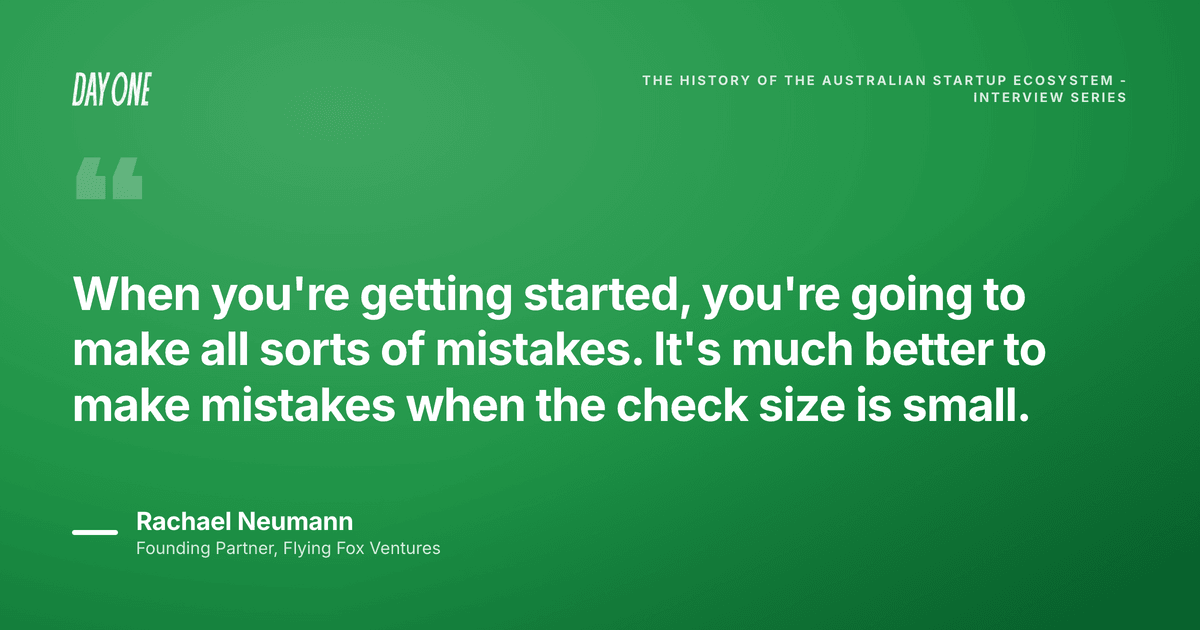
Transcript Synced · select any line to jump ▾ 0:00 Speaker: Let me tell you about our partner, Teamified. If you need to build a top-notch team quickly, Teamified is your go-to solution. They not only provide fractional CTOs, they can also do contractors and even remote team members tailored exactly to your needs. And whether you're looking for expertise in the Philippines, India, or Sri Lanka, Teamified has you covered. What's amazing is that Teamified uses a blend of AI and human expertise to cut hiring times by 50%, cent. The platform handles everything from automated onboarding to day-to-day management and even performance tracking. You can also handle rewards and recognition, buy equipment, and order training all through their platform. Simplify your hiring process and get the best talent fast with Teamified. Check them out now and transform your team. Go to dayone.fm/teamified. That's dayone.fm/teamified. T-E-A-M-I-F-I-E-D, and get started today. Hi, I'm Adam Spencer, founder of the Day One Network, which is bringing the history of the Australian startup ecosystem to you. I believe in founders. It's why I do everything I do at Day One and our media company, W2D1 Media. And that's why the Day One Network exists, to create helpful content for founders. We've got some great shows in development, but a large part of what we do couldn't be done without support from our partners and sponsors. And I couldn't be happier than to be working with NTP, who get community better than any other technology recruitment company out there. A Newcastle company like mine, NTP are invested in seeing the growth of the local tech community in Newcastle, Sydney, and more broadly Australia. So thank you, NTP, for helping us bring helpful content to founders and the startup community in Australia. Back to the interview. Hi, I'm Adam Spencer, founder of the Day One Network, which is bringing the history of the Australian startup ecosystem to you. I believe in founders. It's why I do everything I do at Day One and our media company, W2D1 Media. And that's why the Day One Network exists, to create helpful content for for founders. We've got some great shows in development, but a large part of what we do couldn't be done without support from our partners and sponsors. And I couldn't be happier than to be working with NTP, who get community better than any other technology recruitment company out there. A Newcastle company like mine, NTP are invested in seeing the growth of the local tech community in Newcastle, Sydney, and more broadly Australia. So thank you, NTP, for helping us bring helpful content to founders and the startup community in Australia. Back to the interview. Hi, I'm Adam Spencer and welcome to Day One, the podcast that spotlights Australian startups, founders, and the organizations that empower Australian entrepreneurship. We go back to the beginning to tell the story of Australia's most inspiring founders and how they built their companies. You're listening to a special interview series as part of a documentary W2D1 is producing about the history of the Australian startup ecosystem. On the episode today, we have— 3:18 Rachael Neumann: Hi, I'm Rachel Newman. I'm one of the founding partners of Flying Fox Ventures, which is an early-stage venture firm that backs Australia and New Zealand's most ambitious founders and pours fuel on their fire to help them realize their global ambitions. Well, I would say I first got involved in the startup ecosystem in Australia, probably in, well, maybe 2015 when I came and launched Eventbrite as managing director. I was deeply involved in the startup scene in San Francisco prior to that, but I think coming out as an operator of a US-based company, bringing that to Australia. It was, first of all, the first time I was getting my hands dirty in the ecosystem, meeting lots of other amazing entrepreneurs, meeting investors. There were only a few of them back then, but getting to know them. And then getting to know, you know, some of the other country leads or managing director of US-based startups that had launched in Australia. And that was the first time I think I also jumped head on into giving back to the ecosystem. So that's when I started hanging out with Startmate. Startmate. Got to know a bunch of companies then, mentored them through the accelerator program. And I think that's, you know, it's one of those things you start to meet people, you get introduced to others, and kind of one thing begets another. And before I knew it, I had my hands in lots of different pots across the ecosystem. 4:45 Speaker: Coming from what is the center of the startup universe, San Francisco Bay, to Australia, what struck you? 4:53 Rachael Neumann: Yeah, I think going back to 2015, even then, the startup ecosystem was still a bit nascent compared to what I was experiencing in the Bay Area. And I'll go back even further. I moved to the Bay Area in 1999 as a freshman at Stanford, and I was a student between '99 and '03. So you can do the math and figure out how old I am. But what's important about those dates is that I had a front row seat to the tech bubble, and then of course, it bursting in our face. And so I had kind of seen a whole cycle. And then by 2015, you know, there was a renaissance of the tech scene and it was totally bustling in San Francisco. And so for me to come to Australia, I kind of felt at that time that I was going back maybe 10 years or so to when things were just kind of recovering from the bubble bursting. And I don't mean that it was immature in, you know, the talent that was available or the amazing companies that were coming out, but just immature in that it had a few of the core ingredients, but it wasn't coming together as a beautiful recipe yet. And, you know, I think that meant that there wasn't a ton of private capital that was available. There were certainly amazing talented people who were having a crack at companies, but it still wasn't, I think, a mainstream viable job option for, you know, young, smart folks coming out of school. You know, the government was trying to figure out how they'd play in it. Universities, I think, were kind of ignoring it and were focusing on the traditional subjects. And so, I think, like, the flywheel of the ecosystem, the actual system of the ecosystem wasn't quite working together. But, you know, I look now and it's just, what, 6, 7 years later, and there has just been an exponential growth phase for Australia. And what I see now is, you know, incredible talent, more private capital than we've ever seen before, lots of entities, whether that's corporates or universities, overseas organizations trying to get involved. And so, it's really exciting to see how it's coming together. And what we're also seeing is second-time founders recycling back into the ecosystem either as mentors or investors. Mm-hmm. We're seeing folks who have made some money through liquidity events, maybe as early employees for some of these tech companies. They're coming back as investors, and they're not just bringing their capital, but they're bringing their experience second time around. So, I always say it's never been a better time to start a startup or invest in a startup in Australia, and I just feel like every day it gets to be more and more true. 7:29 Speaker: That life cycle that you just outlined, you know, that virtuous cycle, is that the same kind of trajectory or path that, you saw in Silicon Valley? 7:39 Rachael Neumann: Yeah, I mean, lots of people talk about the PayPal Mafia, for example. Those are a handful of people who were either founders or early employees at PayPal, learned a ton as operators, made a ton of money as well, and they went off to found the whole second generation of companies that came out of that. And we can actually look at super successful entrepreneurs and investors and trace them back like a family tree. Back to some of those early PayPal founders and employees. And so, it's going to be really exciting to see who is our PayPal Mafia equivalent in Australia. It could be Canva. You know, Canva just had a large fundraise that for the first time had a big secondary sale where lots of employees had an opportunity to have a liquidity event. So, maybe we'll see some, you know, Canva employees show up as founders, as investors, as angels, as mentors. We'll see who's going to be the winner in kind of cycling that next gen, but we're at that really critical point where enough companies are reaching a maturation phase where they're throwing off grown-ups, and I don't mean grown-ups age-wise, I just mean like been there, done that experience, and it's going to be very exciting to see what they do next. 8:58 Speaker: What prompted you after— so managing director of Eventbrite in Australia, in Melbourne, left there in 2016, start of 2016. Can you tell me the story of how Launchvic came to be? 9:11 Rachael Neumann: Yeah. So, I'll tell you when I— in 2016, the point that you mentioned, I left Melbourne to go back to San Francisco, actually to go back to Eventbrite in a global strategy capacity. But during that time, I had met actually Philip Dalidakis, who at the time was Minister for Innovation, Small Business, and kind of looked after the in the startup space. We had met because I had done quite a bit of work having brought Eventbrite to Australia and then making Melbourne my home. I got to know folks in the Victorian government and became a bit of a poster child trying to lure other American companies who wanted to post up in Australia, trying to lure them to Melbourne to call home because of all the fantastic things that Melbourne can offer as well as, you the government putting together some pretty exciting incentives. So I got to know the Victorian government just through that capacity. And I don't know the full details of the Launchvic origin story. I just know that I was asked to be part of the founding board as this entity was standing up. And it very much was a startup in and of itself. So it's a startup of the government trying to serve startups. And like a startup, it was a rollercoaster ride. There are lots of ups, lots of downs, times where we knew exactly what we were doing, times where we were fumbling through the dark. Mm-hmm. In the dark and just trying to figure it out. So it took a while for us to figure out who was the right person to lead it. And obviously, we had the amazing Kate Cornick come on. She was, you know, technically the second CEO, but the kind of the permanent and enduring one. And she has just done such an amazing job with that organization since coming into the helm. And at the time where she took over, there are— I think the board was, I don't know, 10, 12 people. And I think the actual organization was maybe 2 or 3. So it was very clear that we didn't need board of that size, and we just were of that size just to get it stood up and to figure out the strategy and get great people into the building. And so many of us kind of slowly peeled off once we knew that Kate had full control of the reins and let her do her thing. So it was an absolute privilege for me to, you know, serve on the board during those formative, uh, times. And actually, you know, that's where I tend to do well, is during the the launching and starting of things. When it's ongoing governance, there are definitely better directors out there to, you know, continue to make sure that the wheels are on the bus and they're all moving in the same direction. So they have a very strong board right now who's able to uphold that governance and continue to make sure that they're, you know, staying at the forefront of the Victorian startup ecosystem. But it was a great opportunity for me to participate. Yeah, I think that's really important. During those early days. 11:56 Speaker: What attracted you to the investing world? 12:00 Rachael Neumann: Yeah, so the story there is I had actually in San Francisco when I was living here, the rules are different. So you don't have to be a sophisticated investor in the same way that you did in Australia, which just basically means you don't need to be as rich. And so I had like a few little opportunities to dabble and write some small checks. And I didn't do it very thoughtfully or very methodically. But I got excited about the idea that I can just put my money where my mouth is. If I am high conviction on something, if I have— we call it an unfair advantage, meaning like I know the industry or I know the founders. Why not throw a little bit of money in and see what happens? And so what happened when I came back to Australia after living in San Francisco once again, because there was a back and forth period, a few things happened at the same time. 12:53 Speaker: Mm-hmm. 12:53 Rachael Neumann: One was Eventbrite had an IPO, so that created a liquidity event for me personally, and it gave me the financial situation to be able to participate in a high-risk, high-reward asset class. And then I met two founders. I met the founder, Ryan Stewart, of a company called Capiche, and I met him up at the Myriad Festival up in Brisbane, where he was pitching his company, Capiche. And then shortly thereafter, I met Jason and Zach, the founders of Tixel, which is a Melbourne-based company, but I also met them in Brisbane, funny enough, at the Collider Accelerator. And those two companies, I immediately understood the customer pain point they were trying to solve. Because I don't know how to do lots of things really well, but there are two things that I actually do know how to do pretty well that I honed when I was at Eventbrite. And one of them is the industry of live events and ticketing, and that's the space that Tixel played in. And then the functional expertise of taking customer feedback and converting that into meaningful product and services to unlock growth, and that's what Capisce does. And so, you know, I met these founders. I said, "Wow, I really understand the problem that you're solving. You're tackling it in a really innovative and very clever way, and I feel like, one, I understand it, but two, I think I can help you kind of bend the arc of your growth trajectory here because of my network, my experience, and maybe some of the advice I can give you along the way." Mm-hmm. So I decided those are the first two checks that I wrote in Australia. And so I was very much following what is my industry expertise, what's my functional expertise. And then I started to meet a bunch of companies that were in the area of just that I really want to learn. And so I'm quite passionate about gut health. I have like a whole thesis around the gut being almost more important than the brain. And I met the founders of a company called Mindset. They were at Startmate and I was their partner. They have a product now called Nerva, which uses hypnosis to alleviate symptoms of IBS. And then I also met the team at Microba. I met them at a pitch contest in Sydney. And so I thought, wow, I really believe in this space and this company. What better way to learn as much as I can than put a check in and then I get a front row seat to learn about this area that I am both bullish on, but also really want to learn about. And so then I— so then my investment thesis was go to the functions that you know, the industries you know, and then the places you want to learn. And then once you write your 5th, 6th check, then it starts to take off. Like, then the check-writing curve looks like a startup curve. So, it's like, it takes a long time to write your first 1 or 2 checks, and then before you know it, you're writing way too many. So, then I, you know, it was just about finding incredible founders and backing them when they knew their problem space better than anyone else. They were able to, again, come up with really interesting, thoughtful solutions to these customer problems, and I just backed their ability to be the one who's going to solve it. And then Flying Fox came about because I was a very active angel myself, and I had lots of people coming up to me saying, "Hey, how do you do what you do? How do you learn how to do it?" So how do you have either the competence or the confidence And then they said, "Maybe if I know how to do it, how do you get access to all those deals?" And at an early stage, in order to write like 10 solid checks a year, you should be looking at about 1,000 companies, and not everyone has access to deal flow that is that order of magnitude so that they're getting enough sniffs so that they can get 10, 15 high-quality deals at the other end. And then there's always the question of access because if they— find a great deal, but they're being a good little angel and writing lots of small checks. Not everyone wants a $10K check on the cap table. We call them kind of rats and mice. And so the idea for Flying Fox came about, and I partnered up with Kylie Fraser, who now is the other half of the founding partnership of Flying Fox. We started Flying Fox to come up with a model that helped to bring new people into the early stage investing. Space, give them the education and the confidence to invest, give them the power of pooled capital so that we can get into those best, you know, choice deals, and we take the deal flow and the due diligence and the legals and the accounting, all of that off their hands and just do it for them. So Flying Fox is now running in its second year. We're deploying about $10 million a year, half of which we put into first checks across 10 companies, and now our portfolio that's over 30 companies. We have lots of our babies are growing up and needing more money, and so about half of our capital year goes to follow-on checks in our existing portfolio. So it's one of those things where it just has happened really organically, where I follow both my interest, my expertise, my passion, and then I just saw a big gap in the market, and it's just been an absolute honor to be able to, you know, bring incredible investors along. Mm-hmm. On the journey, which just means we get to increase the impact and the number of founders that we, that we support in them doing their life's work. 18:09 Speaker: You've had like a front row seat to the ecosystem, especially in Melbourne, being, you know, being involved in Startup Oz, being on the board of Launch Vic, running Flying Fox. What are some of the biggest challenges that you've seen this ecosystem face, or like, what gaps do we need to fill? 18:25 Rachael Neumann: Yeah. Listen, I know for the last few years, it's obviously been a hot topic to talk about diversity inclusion, but in particular, just making sure that the presence of female founders is where we need it to be, both in that they're seeking out capital and that they're receiving capital. Prior to, I would say, up until about 9 to 12 months ago, we never had a problem with that. Over just about half of our portfolio has a female founder. We have always been able to find incredible women who are building world-class companies and backing them. But I will tell you that number has, like, fallen off a cliff lately. And I actually talked to David Swan about this in an article that he did just last week. My hypothesis is, you know, with COVID women who sometimes tend to have lots of demands on their time during these lockdowns and have been forced to take the lion's share of, you know, duties at home, whether that's homeschooling or looking after parents, family, and just like the energy and time and physical, you know, space is just not there to start companies. But I've asked my peers, and we are all consistently seeing the same thing, that just the number of female founders that are coming through the top of our funnel has kind of dried up. So what's unfortunate is that I think that we were making some really good progress, and I feel like we have gone back 5 or 6 years in just the numbers that my peers and I are seeing. Now, I hope that, you know, with schools back open and hopefully they stay open and with the return to normalcy, hopefully we'll see that change. But the problem is, is that— 20:13 Speaker: Mm-hmm. 20:13 Rachael Neumann: I invest in the super early stage. So that means that if companies right now, if women aren't starting the companies, we're gonna have an impact of that missing birth rate for a few years down the track. So I guess my call to action is just as many women out there who are sitting on an idea or thinking about starting a company, please, like, take a crack now. It's never been a better time with just the amount of capital available. The talent that's there, and we need you. We need your ideas. We need your operational skills, and, you know, we're looking to back you. So I think that's been one of the challenges. You know, with Startup Aus, we had a few choice issues that we tried to push, some which we got some successful changes made, some that we didn't. I think that, you know, immigration and talent continues to be Something that Australia needs to think really critically about. We are still a net importer of talent. We have incredible talent in Australia, that's right. But there are still gaps and there's still an experience gap. And so we should be a net importer of talent. And so we need our immigration policy to be aligned to that. And right now, the main companies that have been able to tap into overseas talents attract talent are the ones that are large corporates that can bring big numbers of people overseas and go through the various immigration hoops that are required to sponsor folks. And so, we need to think about— and we have this now, this direct entry stream visa for tech workers, but we need to just think about how do we continue to make it super easy for startups, young startups that don't have huge HR departments, who, you know, big budgets to pay immigration lawyers and migration agencies. Just how do we allow them to bring in the talent that we need, whether that's engineering, product managers, even, you know, sales and marketing people who just know how to sell and market tech products or software. Like, we need that talent to come in. And again, if you look at what happened during COVID we slammed our borders shut. Mm-hmm. And it is really hard to get talent in when we have a completely closed border. So again, it just means that we lost a lot of momentum for 18 months not having talent come to Australia. And it was actually an amazing time for us to attract talent prior to like the major lockdowns. You know, Australia was faring pretty well in COVID. It was a pretty awesome place to be. And you can see other industries that we were allowed to bring talent in, like— Film. The film industry, you know, movies. We had half of Hollywood living in— I was up in Byron Bay the second half of last year. Like, I'll tell you, half of Hollywood was there with me. And so when the government decides that an industry is worth investing in and everything lines up, it works. Australia is a huge magnet for talent. And so we need that same focus that the government put on the film industry to put on our tech industry, and incredible things are going to happen if that's the case. So I still think that we have a gap in our immigration policy, or moreover, how our government thinks about doubling down on the tech industry in the same way that they have doubled down on others. You know, then there are a whole bunch of like little boring things that I don't know if I'll get into, but, you know, I mentioned earlier— Yes. Right now, investors need to be sophisticated as a definition, which means they need to have assets over $2 million or income of $250,000 per annum. And I think that that— I understand why that policy is in place, but I think it's the wrong hurdle. And there's discussion right now of them actually increasing the bar for sophisticated investors, so increasing the means test. And that's just the wrong direction we're going. And we need to get more and more people to smartly and safely, but we need them to participate as early-stage investors. In Australia, we're only investing about $3 per capita in early-stage companies versus the US is putting about $25 per capita. So we just have this huge funding gap. And if we know this and we need more and more people to become investors, we should make it easier and not harder. We should allow people to educate their way into the asset class rather than— Yeah. Having to have a certain amount of money. Having money doesn't mean that you know what you're doing, right? So I just hope that we make some small policy changes that are in pursuit of what we're trying to achieve, which is mobilizing more capital and more interest and more energy into this sector. 25:06 Speaker: I normally ask this advice question, which is asking what advice you would give a founder, what one piece of advice you would give a founder, but I'll also add, you know, pick either of these. Which— what one piece of advice would you give a new investor? Or what one piece of advice would you give a new founder? Or both? 25:26 Rachael Neumann: All right. So the piece of advice I'd give a new investor is, first of all, there are two sides of this coin. The first one is just get started. And the second one is, but if you're going to write your first check, be ready to write 10. And the reason I say that Is because there's this thing called portfolio theory. And it's kind of like if you're going to roll the dice, it's very rare that on the one— if you roll once, that you're going to get the number you want. But if you roll many, many, many times, or many times at bat, if you prefer a sports analogy, you're much more likely to hit a home run or whatever the equivalent is in cricket. And so the way that you do that is by having a big diverse portfolio. And so one of the biggest mistakes that I see is I meet folks who are just getting started. Over the course of a few years, they're like, "Oh yeah, I've invested in a few companies. It was, you know, my cousin's college roommate's brother's company, and yeah, you know, a second one over here." And the average— the last time I had looked at the data, which was about 2 years ago, the average number of investments per angel in Australia was 2.7 investments, which was a statistical guarantee of $0.00 return. And so we need to make— we need to make sure that people are investing safely, and that means having a— as big and as diverse portfolio as you can muster. And so, the advice that I give folks is think about the number that you— the instinct that you have on the check that you wanna write, and instead take a zero off the end of that and add it to the number of checks you're gonna write. So, if your gut was saying, "I'm gonna write $100,000 into my brother's cousin's roommate's company," you know, pull back and instead write 10 $10K checks, at least when you're getting started. When you get— when you are starting to invest, you're going to make all sorts of mistakes. It's much better to make mistakes when the check size is small and when you have lots and lots of at-bats. The more revs you have, the more you're going to learn what to look for. You're going to learn your own personal tastes and your own personal investment thesis, and you're going to just get better at that pattern recognition. So in the beginning, at least go for a high rev. Yeah. Low-check-size strategy. And if you, again, if you can't get into a cap table because you have a small check, either go in through a syndicate. Flying Fox is one of them. There are others. Or, you know, get 5 friends together, and together you're $50K, and, you know, the company's more likely to take $50K from 5 friends than they are, you know, $10K from you alone. So there are different ways to do it, but definitely when you're getting started, go for lots of small checks rather than a few big ones. 28:02 Speaker: Okay. 28:03 Rachael Neumann: Advice for a founder. So first of all, I'm very conscientious to never give directions to places I haven't been. And I personally have not been a founder, other than of course starting Flying Fox. But I'll give founders advice from an investor's perspective. And that is, if you choose to raise capital, and not all companies need to, and if that capital is going to be from a venture firm like Flying Fox, and Not everyone wants to be venture-backed, but if you are, I just recommend that you take some time to think about or discover how we see the world. So every investor, first of all, has her or his own investment thesis, and usually you can either glean that from their website, you can look at their portfolio and get an idea of what turns them on, what they're interested in, or you can listen to podcasts, read articles that they've written. But really understand what does this individual investor want in the world, or like, and make sure that you are barking up the right tree. So find the investor that you think is interested in your company. But then you should think about them like a customer, like a customer discovery. What is the pain that they're trying to solve, and what is the information that will resonate with them so that they can understand what am I doing? Mm-hmm. Where am I going? And where are we gonna take this thing together? And so just do the same process that you should be doing in your company around customer discovery, just do that with investors. Get inside our heads a bit, understand how we think and how we see the world, and then we'll be able to connect much more quickly and get very excited about what another is doing. So that's just a little bit of advice if anyone is in fundraising mode. Thank you. 29:48 Speaker: This is the last, last question. Keeping in mind that I'm trying to make a documentary here that will tell the whole story of the Australian startup ecosystem as honestly as possible, you know, we want people from all corners of the ecosystem to listen to this story. Do you have a message? Is there something that you just want to get off your chest, maybe that you just think about all the time? Is there something that you think the community needs to hear? 30:12 Rachael Neumann: I'll tell you where I think not enough attention is placed in the startup ecosystem. I— listen, founders are the center of our world, and we obsess over our founders, and we invest in companies because we have found amazing founders, and we back them. But for every founder, there is the first 10 employees, and then the 30 employees after that, and then the 100 employees, and the 2,000 employees. And so, what the startup ecosystem actually needs from a— Yeah. Scale perspective is we need tons and tons of talented people, not necessarily to start companies, but to join companies. And what's great and exciting about that is that it means that there's literally a place for everyone. There is some, like, there is a job for everyone in the startup ecosystem because our companies are going to need talented, talent in lots of different shapes and sizes with different skill levels, different areas of expertise. And so if you're sitting there and you are in a traditional job in corporate Australia and you just think, oh, I really want to get involved in a startup, or I, you know, I want to work for these cool companies, but I don't know how, just have a crack. Like, just take a look at what they're hiring for, or reach out to the founder and just pitch yourself if you don't see a job description that matches up to what you think you you want to do or can do, because we need people in order for this ecosystem to work. Yes, we need founders. Yes, we need investors. Yes, we need incubators, but we need hundreds and hundreds and thousands of people to build these companies and help them scale. Every single startup that I know in my portfolio and beyond is hiring right now. Everyone. And so, I just want— what I would love to see in the next couple of years is just this, you know, right now we're in this period that we're calling the mass resignation. I want to see the great resignation. I want to see a mass migration from the corporate world into the startup world because there's something for everyone. 32:22 Speaker: I hope you enjoyed that interview. More interviews are on the way. Follow the podcast wherever you're listening right now. Stay tuned for more interviews with many, many more amazing people from the Australian startup ecosystem. Thanks for listening and see you next time. Bye.