Transcript Synced · select any line to jump ▾ 0:01 Georgie Healy: Founders scale faster on Deel. Set up payroll for any country in minutes, hire anyone anywhere, get visas handled fast, and get back to building. Visit deel.com/dayone. That's D-E-E-L.com/dayone. Anish, why do you think the Australian government is silent on AI in the federal budget? 0:28 Anish Sinha: And so do we have a plan by the government to essentially appease voters by investing in AI? I don't think the government can bank on the narrative on the AI to help swing votes. 0:39 Georgie Healy: Super hot take. What kind of startup will not survive in 2030? 0:44 Anish Sinha: Just as every business today has an email address, businesses in the future will have an agent to help them accomplish tasks. 0:50 Georgie Healy: Will AI replace humans in the insurance industry? 0:54 Anish Sinha: Once you've been a founder, they say you're practically unemployable. And I think I kind of find myself in that space. 1:00 Georgie Healy: What do people get wrong about the men and finance stereotype and what do they kind of get right as well? Hi everyone. We have our first live show of In the Blink of AI next month, May 29th, which is a Thursday, and it will be at University of New South Wales in Sydney with Andrew McCarthy, head of APAC and Asia at Notion. Tickets are in the description below, and I hope to see you there. 1:28 Speaker: You're listening to a Day One FM show. 1:33 Georgie Healy: Hello and welcome to In the Blink of AI, where I talk to the brightest AI startups and innovators each week. I'm Georgie Healey, and this week I am speaking to Anish Sinha. He's the co-founder of Upcover. Upcover helps small businesses in Australia with their insurance. And everything from public products to liability to cyber and privacy. In this episode, we get a bit political. We talk about the implications of the Australian Federal Government not mentioning AI in the federal budget and what that means for Australia and its startups, as well as where we could look to copy. And it might surprise you that America is not the only answer here. The election is fast approaching, so a huge thank you to Anish for jumping on to record with us ahead of May 2nd. And there are a lot of hot takes in this one. I am sure my producers are going to have fun with the social promos. Let's dive right in. Hey Anish, thank you for joining in The Blink of AI. You are very well known across the startup ecosystem and in the media as well, frankly. But for those unacquainted, please tell us who you are and where you work. 2:46 Anish Sinha: Thanks, Georgie. Lovely to be here. I'm Anish. I'm the co-founder of Upcover. We are Australia's only platform for business insurance, and we work with about 60,000 small businesses, scale-ups, and startups, offering them a range of insurance products from director's insurance to cyber. We also partner with about 30 different global and local insurers to bring the best of the breed products to market for these founders and business owners. 3:11 Georgie Healy: I mean, insurance tech, it doesn't sound very hot. And you, frankly, when we last spoke, also said the same thing, that it doesn't sound super sexy. So thank you for making that easier for me. But I mean, 1,260 people seem to have disagreed when you on LinkedIn shared your $19 million raise 2 months ago. The AFR was also quite excited. So maybe I'm wrong, Anish. Is insurance tech really sexy right now, do you think? 3:41 Anish Sinha: I think insurance has always been sexy. I've always been someone who's been interested in risk and finance. And when I met my co-founder, Sky, we both geeked out on the same book, which was The History of Risk, and I hadn't quite met anyone. I'd like to say boring is the new sexy, and insurance, an industry which has been around for hundreds of years, if you actually go back to the origins of how it started, which was pooling of risks so entrepreneurs and explorers could undertake brave journeys. And I think it hasn't quite changed in its breed. Most founders, business owners, those building at the cutting edge of tech need some level of buffer so they can protect themselves or protect themselves against the vagaries of running a business. And that's exactly what a business insurance product is expected to achieve. Unfortunately, the way it's delivered is completely analog. Mm-hmm. And so we are trying to take change that one product, one industry, one business at a time. 4:41 Georgie Healy: I mean, when you match risk and innovation together, I could definitely see it's a lot more sexy. Yeah, I'll have to think of insurance more as risk. The most popular novels right now that my book club are reading are always like fantasy and romantic, and it's always a lot of risk and dragons and bad guys and all of that stuff. So Insurance tech, who knew? Now, before you were an entrepreneur, you worked at Goldman Sachs in India. What do people get wrong about the men in finance stereotype, and what do they kind of get right as well? 5:16 Anish Sinha: I think men in finance is a very Western phenomena. I was born in India, and if you were someone who was good at math and physics, you pursued engineering, and if you didn't want to be an engineer after engineering, you'd go into finance or do an MBA, and then a natural progression from there on was either you were a consultant or a banker. So in my head, banking or Goldman was where I met some of the smartest people. I found that they were extremely curious about things around them. They were extremely mathematical, very logical. A lot of them went on and have gone on to do some incredible things. And I wouldn't say as a founder you're extremely logical and rational. You try to be as much as possible, but you're also— Yeah. Betting a lot on a vision that may seem irrational to others, but rational to yourself. So in a calculated way, you are making a bet. I think a career in finance helps you as a founder because it helps you read numbers. And as you get to the later parts of building a business, not in the 0 to 1, but as you progress beyond the 1, the better you can read numbers, the more you can understand your key metrics. And if you can understand the levers on how to drive those numbers, it just makes you as a better founder and a better business owner. So I think what people get right, that they're extremely numbers-driven and they're cold and calculating and can read balance sheets like a book backwards and forwards. I think what they might get wrong is they might underestimate their curiosity and grit because bankers, at least the ones I worked with, had a lot of drive to get to the outcome they wanted to get to. Yeah. 6:56 Georgie Healy: I mean, you're a special breed, Anish. I remember I had to do a few profit and loss statements and balance sheets and, and, you know, all of that stuff at university, and I wanted to cry every time I look at them. But I know how important they are. Was it hard for you to kind of go from that stable job, great brand name of Goldman Sachs— I'm sure, you know, your friends and family were all incredibly impressed— to, I'm just gonna start a new company that you've never heard of before, and, you know, 1 in 100 apparently fail. How did you do that and find it explaining that to your friends and family? 7:35 Anish Sinha: I think it was extremely important for me to learn the ropes. So after quitting Goldman, I worked at this company, which was backed by Sequoia Capital. I was an early-stage employee. We raised Series A, Series B. We went through the whole growth scale-up phase. I joined with little to no, I mean, practically no startup experience. And I remember speaking to the CEO on day one and he said, why don't you run email marketing for us? And as you can imagine, right, I mean, it's pretty technical. I've never done marketing in my life. And here's this guy who's trusting me with a whole lot of money and resources to go run what is one of their critical marketing initiatives. So I just feel like Having spent 3 years in the trenches with some of the best operators I worked with gave me the confidence that anything's possible. As they say, right? I mean, if it's chaos and you can't really know what the next move is, then the more empirical you are, the more data-driven you are, the better outcomes you can get to. And I guess that's kind of how I learned the ropes and I learned from the best. And UpCover was largely a result of wanting to have more skin in the game. So I knew I had the agency, but I wanted more skin in the game. I wanted an upside and the freedom to make decisions. And yeah, I think that those are kind of the origins of Upcover. 8:52 Georgie Healy: We're going a little bit off piece, but I can't help it. You are now the co-founder of an incredibly successful, well-respected startup in the Australian ecosystem. Could you go back to an operator role? Could you ever go back to a consulting role from here? 9:09 Anish Sinha: I think as an operator, yes, if the vision was exciting enough. I hope I don't have to. I hope I can move on to the next phase, which is enabling more operators to become founders. Once you've been a founder, they say you're practically unemployable, and I think I kind of find myself in that space. I think it's also incredibly empowering to be a founder, to be able to make decisions and live with those decisions and not having anybody else. To say, "I owe my decision because of somebody else." You're largely running the ship and you're responsible for making those decisions. So I think I could if the vision was exciting enough, but I hope I don't have to. 9:45 Georgie Healy: I don't think you will for the short term, that's for sure. Look, the reason I was so excited to get you on the show initially is an incredible LinkedIn post you made recently. You highlighted 2 weeks ago, that the Australian federal budget has zero mentions of AI across the entire 357 pages. And just bear with me, I'll do a quick quote from that post. Australia has delivered a budget that does not mention AI once. While this isn't the first time, it is now becoming increasingly unusual as other major global governments and funds prepare to spend billions on securing a foothold with this new technology and niche. Mm-hmm. Why do you think the Australian government is silent on AI in the federal budget? 10:33 Anish Sinha: Well, it's interesting, right? I mean, when you think about governments and you think about their decision-making, I wouldn't try and find faults in one person or the system. I think it's largely an incentive problem because you're dealing with a system here. And the incentive is largely to do with how does their decision sway votes in their favor or against their favor. And when you think about investing in AI, the reason it gets such low attention spans from the government is because it requires long-term narrative. It requires long-term resource allocation. And so do we have a plan by the government to essentially appease voters by investing in AI? I don't think the government can bank on the narrative on the AI to help swing votes. And So that's why I go back to it being an incentive problem rather than anything else. I think long-term AI has some incredible benefits that it can bring to both consumers and small business owners in making them capital efficient, driving more money to their bottom line. But short-term, especially in an election cycle, I don't think it benefits the government. And so, you know, the results are there for you to see. For you to see. And I wish they'd taken a more long-term outlook, but that's just the state of the affairs. 11:50 Georgie Healy: Hmm. Since you mentioned it, I haven't been able to stop thinking about it and ask other founders about it. I asked Jackie from Relevance AI what he thought, and he thought perhaps, you know, the majority of readers of the federal budget aren't like you and I and him and all the listeners of the show that can't stop thinking about AI and are using it daily. Do you think that there's something to do with not omission and not accidental oversight, but deliberate, like, 'Well, we could include it, but no one would understand it,' or, 'It's not relevant to most readers.' What do you think about that take? 12:27 Anish Sinha: Yeah, I think like I said, right, I mean, it comes down to incentives and what does mentioning or including the word AI does for who the readers are. And if the readers are largely not, it's the role of the government to foresee because they have the resources, the capability, the skills, and the mandate. From the people to be able to make decisions on their behalf or to foresee what's coming. And unfortunately, the way governments make decision is more short-term than long-term. And so I truly believe that maybe they didn't have an audience for it, especially in the election season. And so I think Jackie's right and I agree with him. 13:03 Georgie Healy: Mm-hmm. 13:04 Anish Sinha: If there are more listeners, more readers, but we also cannot pass the buck on to the voters and say they should have been wanting AI. It's the role of the government and the mandate they've been trusted with to talk about issues that might be important not today, but 5 years from now, 10 years from now as a country. 13:19 Georgie Healy: Yeah. What would you hope to see if you could wave a magic wand, you know, of that 357 pages, what would you hope to see if they were to rewrite it? 13:33 Anish Sinha: Well, I think starting with some mention of AI, talking about how there will be capital that'll be laid out to help companies commercialize some of the technologies that they're building, helping set up some sort of a seed fund. America and China are both great examples of how they have a thriving ecosystem and how it's been enabled by government largely through capital infusion or through programs where they enable smaller companies to build technologies that can then be commercialized and then become VC-backable. So I think there's a lot that can be done there. There are a lot of ideas. There are a lot of people who are smarter than I who are part of the government or part of the machinery who can suggest these things. But it starts with resource allocation and being able to at least find a mention of that in the budget. 14:18 Georgie Healy: Oh, I'm so glad you brought up China and America because I just did a quiz, um, before we spoke about, you know, who I should vote for based on my personal, uh, preferences and ideologies. And one of the questions was, do you think Australia should be more aligned with America or China? And you mentioned both are a little bit more progressive in terms of their capital support in the AI space. Can you please explain that to me a little bit, just so I know, just so I know? 14:51 Anish Sinha: Yeah, absolutely. I think if you look at the US support, US government support to small business innovation, they've essentially had a core pillar. They have two federal programs that support small business innovation, and both those programs effectively head fund, provide seed stage capital to small businesses or to startups that are doing deep tech or might be building something that could be commercialized with more capital down the road by a Department of Defense or Department of Health. Similarly, in China, you've had a lot of state backing to founders and entrepreneurs. They've set up specific incubation programs that are tailored to one industry like advanced materials or space or bioengineering, and they are trying to get more and more Chinese immigrants to come back who started in the US, who started overseas, providing them with grants and funding so they can come back and build businesses in China. And then they've, as a result of that, they've set up co-investment programs with VCs, or they're investing into VCs to enable this ecosystem to come to life. So in that sense, I think there are a lot of programs that Australia can learn from. We don't need to be pioneers. There are examples of successes and failures in both US and China, and we can study them and we can say what works best for our economy. I think Australia is blessed to be in a part of world where we're not surrounded by neighbors where we have to continuously militarize ourselves. Like a lot of countries are not that fortunate, and so they have to incur defense expenditures and security expenditures. I think tech can be the biggest export that Australia can have to the world, and it's also a sort of a safe haven to invest and build quietly so that we can attract the best of the breed of founders and entrepreneurs and VCs to come here and fund companies and startups. 16:42 Georgie Healy: I nearly pressed go live on a LinkedIn post recently because all the founders I speak to still say that Silicon Valley is the best place to build because the operator density there is better, the VC density is much higher, and all of those reasons, but nothing to do with lifestyle or anything else. If Australia were to ever compete, is it simply a matter of, you know, encouraging, as you say, you know, the government could encourage Australian operators to be here if there were more monetary incentives, or is there something else missing that would make us compete with Silicon Valley one day? 17:23 Anish Sinha: Yeah, I think it's a hard one, right? I mean, Silicon Valley is unique. The more you read about it, the more you get fascinated by it. And unless you've been there, you can't really you can't visualize why it works the way it works. US has a very different risk capital structure, which means capital chases opportunity at a velocity. It backs founders and companies with very, very bold vision. And so I would say US is quite unique in that. China has had to build that up. So I think we should be inspired from the US and try and learn from China and on what US has accomplished in the last 60 to 70 years since the first venture capital dollars were deployed, China has been able to accomplish in the last 20, 25 years. So I think if we were to learn from an ecosystem, I'd pick up China over US just because it seems more engineered, and that is what we would need to create an ecosystem here. And it starts with talent density, being able to attract the right kind of talent from all across the world. As you said, lifestyle is amazing, and no other country can promise that sort of— peace, security lifestyle, and that is a big, that can be a big selling point for really smart people, researchers who wanna come here and build. At the same time, you could attract dollars and capital from all across the world to build in Australia. So I think there's a lot of ways in which we could talk about how Australia could win. Again, as I said, there are much smarter people than I who are in positions of power, who have the capital to be able to orchestrate this movement. And I think Government has an extremely important role to play here. 19:02 Georgie Healy: Speaking more closely to risk and, you know, the areas that you play in day to day, speaking of cyber, when we spoke, you mentioned that the government allocates $20 towards businesses for cybersecurity breaches. To me, that seems a little small. What do you think, Aneesh? Is that small? 19:22 Anish Sinha: I think, look, it's just, Putting things in context, right? There are 3 million businesses in Australia. I think the government funding towards cyber risk mitigation was about $50 million. So the math is approximately $20 per business. It pales in comparison to the cost of compliance, the cost of responding to a data breach, and the more recent events that have happened that expose businesses to phishing or cyber attacks. So I think in that sense, $20 is, is heavily inadequate. There should be some level of benchmarking done to understand what it costs an average business owner and how it could cost them their livelihood and what can be done to mitigate that. And it's not just capital, it's also awareness and education and making sure that, I mean, what we do is pretty simple. We offer these products online so business owners are empowered to go online, search for the information, and then be able to buy these products by themselves. But the industry is largely analog. Brokers offer these products through PDFs and offline systems. And it's an irony that a product that's supposed to protect you for online risks is effectively sold offline. And so even simple measures like requiring business, requiring insurers to sell these products online so business owners can compare and truly understand what they're buying is a step in that direction. Yeah. Yeah, I mean, that's kind of how we look at it. Like, business owners should be able to access information and then be able to compare and contrast and be able to buy from specialists, not just someone who's selling farm insurance one day, motor insurance another day, and then cyber, you know, on the third day. 21:03 Georgie Healy: And travel insurance, and yeah, I get quite overwhelmed. 21:07 Anish Sinha: Yeah. 21:08 Georgie Healy: Yeah, amazing. Look, you've been really, like brave handling all these political questions. Not everyone can handle that on a live show. So before I move on to the next section, we're not offering political advice, but the election is in a week's time. If listeners want to feel more, more informed— and majority of our listeners are in the startup space— what do you suggest, Anish? How can they better make a decision ahead of the, uh, vote next week? 21:35 Anish Sinha: Oh, that's a tough one, right? I mean, Just ask yourself how closely you resonate with what's being put out. It's an imperfect choice always, and it's always a trade-off, and know the trade-off you're making in voting one versus another. To me personally, I like to not be ambivalent and go for someone who's got an opinion on something, even if it's a wrong opinion, or if it's an opinion I don't agree with, because they have taken a position and they will go one way or another based on the results of their opinion. And so that's kind of how I make decisions, being conscious of the trade-off that we're making, asking the questions on whether we agree with their policies, and then making sure that we turn up to vote. I think that's really, really important as well. A lot of people go through the decision paralysis and then on D-Day they might just skip. Yeah. 22:31 Georgie Healy: Yep. Guilty of that personally. I get overwhelmed. But yes, thank you so much, Anish. That was awesome. All right, let's jump into, you know, it's In the Blink of AI. Let's, let's dive through some AI headlines. So, you know, I can't have you on the show without talking about agents. We're in the year of the AI agent, you know, can't, you know, open up a news article without seeing that. Do you think it's exciting or overhyped? What are your thoughts? 22:57 Anish Sinha: I think the possibilities are really exciting. If you look at the evolution of AI, it's practically 3 years old, and I still remember I started playing with ChatGPT when they released their early versions, and it would forget stuff. Did you? 23:12 Georgie Healy: Wait, tell me before you go on, what was it like? How did you even find the early versions? 23:18 Anish Sinha: Oh, I mean, ChatGPT was one of the most talked about product releases for a very long time, so if you were If you're an engineer or if you follow Reddit threads— 23:27 Georgie Healy: Or even Sam Altman in general, right? Like he's been a superstar for years. 23:32 Anish Sinha: They've done a brilliant job marketing their product. So it was one of the most anticipated product releases of the year. But if you remember playing with the early versions of the product, it would forget stuff. It didn't have the context window, it couldn't retain information, it would hallucinate a lot. I remember asking our engineers to play around with training the models when the APIs first became available, and we weren't quite sure what it was because it couldn't really remember complex information. Remember, we're working with insurance contracts here, which are 40-page PDFs, and we're trying to analyze 200, 250-page PDFs here, and it's not quite going to plan. So we were quite skeptical, but 6 months in, as they started to release better models with larger context windows, and then more— 24:17 Georgie Healy: Yeah. 24:17 Anish Sinha: Players joined the race. You had Gemini, Anthropic released their model. It just started to become so much more powerful, but the applications are still limited because you were still using it to understand and assimilate information and synthesize information to research, not really to do things. And that rapidly changed about 6 to 12 months ago as agents started— Agents. As people started to ask what you could do with these models to help you accomplish more workflows. And so when Anthropic released their Model Context Protocol 6 months ago, which allowed agents to be able to work, sorry, the large language models to be able to work with third-party databases with APIs, all of a sudden that opened up a completely new possibility where now a large language model could effectively work with a third-party database rather than just search the web or query information, and it was possible to now build so much more than what was possible. And then Google 2 weeks ago released an agent-to-agent protocol that then allows agents to talk to each other. So when you think about the evolution from going from being able to assimilate, understand information, search, to then be able to query third-party databases which may not have made all their information available, or allowing an agent to speak to a database,— and then last bit, for agents to speak to each other, I just think the evolution has sort of come full circle. And there's so much power now with engineers. And we've been running projects internally where we've been playing around with AI and asking what's possible, what can we do, what are the jobs that need to be done, and can we do it with fewer humans, and can we empower people who are exceptional in the company to work with an agent so that they can accomplish the workflows that they want to accomplish? There's so much. There's so much to do. 26:06 Georgie Healy: I, I feel the enthusiasm like coming off the screen. I've got it as well. And I love that you brought up MCP, this Model Context Protocol. It's another thing that I can't stop hearing about. How do you think that those of us at home that are not on the, you know, coalface of innovation like you guys clearly are at UpCover, you know, what if I want to play around with MCP and I'm not really sure how to start a niche? What, what do you suggest to those listening that are like, I keep hearing about it and I'm not sure how to start, you know, having a turn. 26:39 Anish Sinha: Yeah, it's interesting, right? I think the MCP is Model Context Protocol, right? It's a way for large language models to speak to APIs. Previously, if you had a Claude client interface, let's say you're on Claude and you're searching for stuff and you're trying to do something, if that had to go and speak with a third-party database like a Gmail or a WhatsApp or a Slack, you essentially needed the large language models to be able to work with the APIs from these databases so you could query the record. Let's say the instruction was, I wanna look for all the emails in the last 7 days which have a mention of XYZ where I'm trying to accomplish this particular task. That would've been really hard, would've been practically impossible for Claude to accomplish unless somebody had and what is called an MCP server, or Gmail had that server that was available that allowed your client, which is where you're entering all the details, to then be able to go query that database to be able to access information. But with MCP, that becomes available. And so effectively, irrespective of what client interface you're using, whether it's ChatGPT, whether it's Claude, whether it's Gemini, you can use them to then understand how to better accomplish something out of a third-party database that you own. Mm-hmm. That is your Slack, that is your Gmail, those are your working files. And so I believe that is a seminal change in how agents will accomplish things. And what Google's talking about now is an agent library. I remember Sam Altman or someone else who was talking about how businesses, just as every business today has an @email address, businesses in the future will have an agent to help them accomplish tasks. And that agent will be basically a mirror of the business so that it can help the business owner accomplish these tasks. And so I don't feel that world is very far away where Google's already talking about an agent library or an agent app store where you can have different agents to accomplish different things. Because at the end of the day, we use software to accomplish tasks, and agents are a means to accomplishing this task without having to go through a whole bunch of navigation and UI and buttons to accomplish something. 28:52 Georgie Healy: Ugh. I'm so excited, especially, you know, the thing I always think about is I'd love my own EA, but I'm just not important enough for an EA yet. But with AI, I don't have to be rich and famous for an EA. And you mentioned the agent-to-agent thing. I can't remember what demo it was. Maybe you remember which demo it was. Somewhere demoed an agent calling up a restaurant to book a reservation, but that restaurant also had an agent. So the agent was booking talking with another agent at the restaurant and they're like, "That's all booked in." And the other one's like, "Oh yeah, thanks. That was great." And they just see agents talking to each other. Yeah. 29:34 Anish Sinha: Yeah, I think you can accomplish a lot of tasks here, right? I mean, agents are using different languages, they're using different models, and they may not be able to converse with each other, exchange instructions. At UpCover, we see a lot of use for I mean, there are large language models which are the baseline, but to be able to accomplish complex workflows that we are trying to do where each person within the business is doing 3 or 5 or 7 different tasks, each of which requires a level of specialization, if that could be delegated to one person. Running analysis on your P&L could be just one task. Trying to create and build a report that we look at every week and be able to draw insights from it could be just one more agent. And so there is so much at the horizon now for founders and for companies to be built with fewer people who are more empowered to do highly creative tasks. And for more repetitive tasks, there are agents out there that they can just utilize to get it done and improve their quality of decision-making. 30:42 Georgie Healy: I would love the agent to have just read through the P&L so that I didn't have to cry over it for my uni subjects. Look, I would love to hear a little bit more about how you right now at UpCover are incorporating AI. You've already told us that you encouraged your engineers even in the early days of ChatGPT to start playing with it. Like, would you consider yourself an AI evangelist? And, you know, how keen were you to start incorporating it? In your business? 31:13 Anish Sinha: I think every tech founder has to be an evangelist at their business and they have to be thinking about what else can we do to make sure that we can do more with less. I mean, there's the Shopify memo that everyone's talking about obviously on the use of AI. 31:30 Georgie Healy: Tell the listeners. 31:31 Anish Sinha: Yeah, what we have at Upcover is primarily an AI channel where we talk about the latest and greatest. It's largely me. Posting about all the stuff that's happening because I like to keep on top of stuff and stuff's changing so quickly and there's so many releases every week. And it's largely to get a dialogue going in amongst the engineering and the product folks to make sure that we're all on top of what's happening. And also we are trying to move away from how software has been traditionally built. If you think about how software was built pre-AI era, there were a whole bunch of tools and buttons, and this is largely for anyone that has a user interface. Mm-hmm. You had to navigate a whole bunch of workflows and buttons to be able to accomplish a task. And what AI enables you to do is effectively get straight to accomplishing the task. You don't necessarily have to go through that workflow, understand what the views look like. You wanna accomplish something and the agent helps you accomplish it. And so it takes away a lot of engineering and it requires a rethink as well of how you imagine building products. I would imagine a lot of front end or user experience components would go away while still helping users accomplish what you would want to accomplish really, really quickly. What we've done at UpCover, we exist in an industry that's heavily analog. There's about $20 billion in business insurance that's bought and sold largely over PDFs and emails. And we feel a lot of that information sits not mined, not made sense of year on year, and brokers use that information store that information in PDFs and then get business owners to fill that again and again year on year. And so what we've done is we've internally built a project pipeline which allows us to read from emails and from PDFs, being able to make sense of that data because effectively businesses are living organisms and they change from one year to another. And when we have their records already, the next year should merely be an update on those records rather than collecting all that information all over again. from business owner, which might seem intuitive and this kind of how you would want to do it, but the industry doesn't function like that. All the information sits in emails and PDFs and never gets mined, never gets structured. And so there's a massive opportunity here for us to mine that information for intelligence, run it by the users, make sure that they can confirm to it, and then that reduces not just human error, reduces the time it takes for us to give a business an accurate business insurance quote, And it's largely around structuring information that we've been working on. 34:03 Georgie Healy: I'm sure you set yourselves a very high standard in terms of risk and mitigating risk. Maybe tell the listeners that may have not seen the Shopify memo, and then perhaps tell us how you try and mitigate risk in this fast-moving, technically advanced industry that you're in. 34:25 Anish Sinha: Well, it's interesting, right? I mean, we operate in one of the most heavily regulated industries in the world. Australia is a basket case. It's even more regulated than some of the bigger markets like the UK and the US when it comes to insurance. And so we have to be extremely cautious also because we deal with small business owners. We are extremely careful on what we say and what we don't say. And so internally we've got controls and procedures that allow us to make sure that we have gatekeepers before we release anything out to the small business audience. And this is not just around making sure that the product is working perfectly, but what we are saying is accurate. Within AI, we've largely kept it to internal tooling. We've used it to increase productivity, increase efficiency, make sure that we can get more done with one person having many more tools at their disposals. And so we've been, we've been toying with the idea of how can we build an agent that assists an underwriter, or how can we build an agent that works with a customer support agent? And that's largely to increase the throughput and to increase the accuracy because all of that then translates into a better outcome for the business owner. It's a speedier outcome, it's an improved customer experience. Business insurance costs are going up year on year, and that's largely because what is— a business owner understands their business better than anybody else. But unfortunately, when it comes to translating all that information to an insurer, it gets lost because it's sent over emails and PDFs, which may not remain consistent year on year, and there's no single system of record. It's hard to price risk accurately. And so it all starts at input. How do we collect that input from the business owner? And then how do we persist that back to the insurer? And so when I said it's all about structuring data and enabling folks at UpCover to be able to structure that data and present that data to the insurer. And that's what we've used AI for as well internally to simplify and streamline that flow of information so we can do it better than any other broker on the street, any other entities that are trying to deliver that experience. 36:33 Georgie Healy: This time has flown by. I've been enjoying it so much that I've got one question before we get to the rapid fire. 36:40 Anish Sinha: Yeah. 36:41 Georgie Healy: What startups do you admire, Anish? You're quite, you know, you might not consider yourself mature, but you're quite mature compared to a lot of startup founders that are working with AI in Australia. Who do you admire in the Series C+ stage? 36:57 Anish Sinha: I've got 3 names and different industries. So Samsara Eco from the recycling space, love the vision and the mission. And the fact that it's for the planet. CoverGenius from our industry, they're kind of pioneers in the space and I think they got their start in 2013 or 2014. So really early on the horizon when insurtech and fintech wasn't a thing. So I put them on the same level as the afterpay guys, but they're kind of Series C, Series D. And then Gilmore Space because they're pushing the envelope on what's possible. 37:31 Georgie Healy: What's Gilmore Space? 37:33 Anish Sinha: Um, I think, uh, if you, if you Google them quickly, they're, uh, they're— yeah, I'm gonna have to— um, they're the SpaceX of Australia, if I gotta— 37:43 Georgie Healy: what? How do I not know about them? 37:46 Anish Sinha: Yeah, that's just— 37:48 Georgie Healy: wow. Oh yeah, okay. Gilmore Space Technologies, M-O-U-R, leading launch services company in Australia. I need this on my radar. That's Epic. 38:02 Anish Sinha: Yeah, that's just— and they're Queen— I think they're Queensland-based. 38:05 Georgie Healy: Oh, I'm a Brizzy girl. Um, I won't be pulling a Katy Perry, but, uh, I might go— I might go follow their journey anyway. 38:15 Anish Sinha: Yeah, that's why, like, I would— I would have imagined Australia is such a great country to build and launch space programs from if there's enough capital, because there is there's absolutely talent coming out of universities. 38:29 Georgie Healy: There's the talent, and there's also like, think about just the huge surface area of desert from which you could launch from, right? 38:40 Anish Sinha: Yeah, I mean, there's just, uh, just such a potential. 38:44 Georgie Healy: My, um, friends, a lot of them did space and mechanical engineering at UQ, at the University of Queensland. Um, it was kind of all your you know, it was a double major degree, so all your elective subjects were space-related. 38:58 Anish Sinha: Right. 38:59 Georgie Healy: And unfortunately at the time, and admittedly this is, you know, some time ago, um, there just wasn't the, the job market in Australia for those kinds of jobs. So you could go and work for NASA after that, but there was very little here in Australia. So I'm glad to see that that's changed a little bit. My, my husband actually did space and mech— and mechanical engineering and just ended up doing mining industry stuff, which wasn't as inspiring, I will say. 39:27 Anish Sinha: Yeah, it's just, I think growing up in India as well, a lot of people who were great, so there are like a couple of programs at universities that offered aeronautical engineering and a lot of people went to the Jet Propulsion Laboratory at NASA. Like that's kind of where everyone landed. And so it's natural that SpaceX was founded there, but in this day and age, I think governments like China are investing significantly in building homegrown aerospace industries. So as India, and I think Australia's not far behind. I mean, I'm sure there should be more companies like Gilmour Space coming out of Australia. 40:04 Georgie Healy: Yeah. 40:05 Anish Sinha: But it's an incredibly hard one to build in. 40:07 Georgie Healy: Yeah, I imagine the capital intensity is not low. Okay, anyone really rich listening, please go support or build one of those companies. Mate, we're at the end of the interview. I am so pumped for some rapid-fire questions. Are you ready? 40:24 Anish Sinha: Yes. 40:25 Georgie Healy: In your very small window of free time, what AI tools do you play with? What do you find fun? What are you loving? 40:32 Anish Sinha: I'm using Claude and Replit together, and this is largely to build product demos, prototype, to find inspiration in what we can design and build quickly without involving the engineering team. Claude, I just generally think, is extremely versatile. And I also use NotebookLM. 40:55 Georgie Healy: Oh yeah, yeah. I love Claude, I love NotebookLM. Will AI replace humans in the insurance industry? 41:06 Anish Sinha: Yeah. I think AI can replace the business ops and the process ops. There's a lot of process ops that sits within insurance companies, and that is all the paperwork that's required to file policies and calculate premiums and do the backend work of making sure that these programs are running properly. A lot of that can be outsourced to agents. I still think that the selling of particularly larger policies where businesses are spending $5,000, $10,000, $15,000, $20,000 will be accomplished by humans, but those humans could be assisted by AI agents to make the sales process more accurate, to help the salesperson get up to speed and become more competent. Because as you can imagine, Gilmore Space is a business and so is UpCover and so is CoverGenius and so is Samsara. And when you think about the breadth of complexities of activities that each of these businesses are engaged in, it's humanly impossible for someone to be able to assist all these businesses with accurate underwriting and being able to make insurance available to them. And I think agents have a real useful role to play here because they can synthesize, streamline, and assimilate all that information, make that easily available so these contracts work to the needs of the business and to protect these businesses against the risks that they're taking in there. in their entrepreneurial endeavors. 42:30 Georgie Healy: Yeah, I don't want to be reading all those PDFs personally. What's one scary headline we might expect in the insurance industry in the next year or so? 42:41 Anish Sinha: I think the, as with LA fires, I think just the level of risk with climate-related events and how that plays into insurance pricing. I think those events are no longer black swan events, no longer once in 100-year events. The intensity is just going up and it's becoming harder to predict which property risks will get impacted. If you're a motor insurer, it's hard to know when hail, a hailstorm will happen and what the impact will be. Same with fires and floods. And so I believe there is, those headlines will become scarier and it impacts the end customer and the business owner because their insurance costs then end up going through the roof. And for no fault of theirs, right? 43:28 Georgie Healy: Yeah, I, you know, normally we are so mad at the insurance company for not paying off, you know, every single thing that can happen. But is it true that the insurance companies out in LA had to raise their premiums to a point just because they knew something like this would happen in the Palisades region? And then people obviously couldn't afford them, but obviously it's not the insurance company's fault either. They're not doing it out of, you know, in a vacuum, are they? 43:58 Anish Sinha: I think it's like, it's a tough decision for an actuary, right? Like you're going through data that suggests endpoints towards higher and higher levels of risk to the extent that some sort of risks become uninsurable. If you're in a flood zone or if you're in a fire zone, it's extremely hard to price for that sort of risk because the level of uncertainty around what might happen is wild. There's not enough statistical data and also the data that's available doesn't quite forecast into the future accurately. Your confidence on what the outcome could be and how much of an outlier it could be, you have very low confidence in your ability to predict. And so, effectively those risks become uninsurable. So I don't know what the solution is. There is more money going into research and AI-led forecasting, but as we understand, AI is prone to hallucination. So it's hard to know where, you know, how the industry will come around to it. 45:02 Georgie Healy: Really appreciate your honesty and your expert opinion on that. It is a tough one. Say we experience AGI in the next 10 years or maybe 20, depending on your definition of AGI. Is this a net positive or negative for humanity in your opinion, Anish? 45:19 Anish Sinha: I heard someone say that AI is really good for humans because they're like, they can mirror humans. And so that means they don't have an emotion of their own. And so you could have this emotional conversation with an agent who does not respond emotionally. And in that sense might be a very patient listener. And so they might be able to build a better relationship with a human than maybe your spouse or your partner or someone who you emotionally relent into. And so I think it's got interesting consequences for what might happen as agents start to become more common and they start to just become a part and parcel of our lives. Yeah. 46:03 Georgie Healy: I had this experience where, you know, not always, but sometimes I'll put my foot in my mouth, right? And, you know, I don't beat myself up relentlessly, but I don't want to be annoying and just like, you know, you tell someone, they say it's fine, but then you're like, yeah, but is it fine? And that's a really annoying conversation to be on the other end for. But ChatGPT will listen to me endlessly and be such a good listener and so kind. 46:31 Anish Sinha: Totally. It's an expert at mirroring us and being able to respond patiently and not give up when too many requests are made of it. And I think it just, I don't know whether it's emotional, whether you would call it IQ or EQ, but the ability to be able to respond. And I think it's just going to get better with time. So I don't know what consequences it holds for our human-to-human relationship. 46:57 Georgie Healy: Last question for the episode, super hot take, what kind of startup will not survive in 2030? 47:08 Anish Sinha: I think there are a lot of people building cool stuff in AI, but if those are not extremely attuned to what you're trying to accomplish with it, if the use case isn't very, very clear, I think those ones will find it extremely hard because there are— I think agents are really good at being able to extrapolate and work through a sequence of tasks as long as the uses are really clear. But as you start to sell, as they start to find wider and wider adoption, being able to make sure that you truly understand those use cases and then those use cases can be then communicated if we are talking about agent-to-agent flow across agents, Anyone who's not honed into that specific workflow will find themselves harder to compete with larger, more enterprise-grade products that maybe a Google or Salesforce is releasing. Yeah, but I could be wrong, who knows? 48:04 Georgie Healy: We get a lot of love for the vertical AI solutions just because of the domain expertise that's required, and companies like Google either don't want to or just don't compete in and play in. So I'm very excited to have you as an expert on the show, Aneesh. Thank you so much for coming on. To close out the episode, what should the listeners know? What would you like to shout out? Where can they follow you? Give us all the stats. 48:34 Anish Sinha: Yeah, absolutely. Look, I mean, we are in the business of solving business insurance for founders. So if you're a CEO, CTO, or a CFO and you don't quite truly understand what you bought from your insurance broker, or you're paying thousands of dollars for a piece of paper, hit me up on LinkedIn and I'll be more than happy to have a coffee and chat about how your business is growing and what risks there might be. I feel ultimately founders are pushing the envelope on what's possible and they need to have, they need to make sure that they have the right sort of coverage along their side to make sure that as they grow their business, expand revenue streams, grow into new geographies, launch new products, the piece of paper that they have, which is basically an IOU, which is an insurance contract, works for them. 49:15 Georgie Healy: Especially coming from someone who's in the trenches with them, understands startup risk, done it themselves from ground up. Absolutely love it. Thank you so much, Anish, for coming on In the Blink of AI. 49:28 Anish Sinha: Thank you so much, Georgie, for having me. 49:31 Georgie Healy: Thank you for listening to In the Blink of AI. You can check out the show notes for anything discussed in this week's episode, and we will be back next week. This podcast was produced by Day One with music by Dan Hansen and visual artwork by Sophie Tyrell. If you loved the episode, please tell your mates. And I love AI news. Please share your thoughts and suggestions to georginarosehealy@gmail.com.


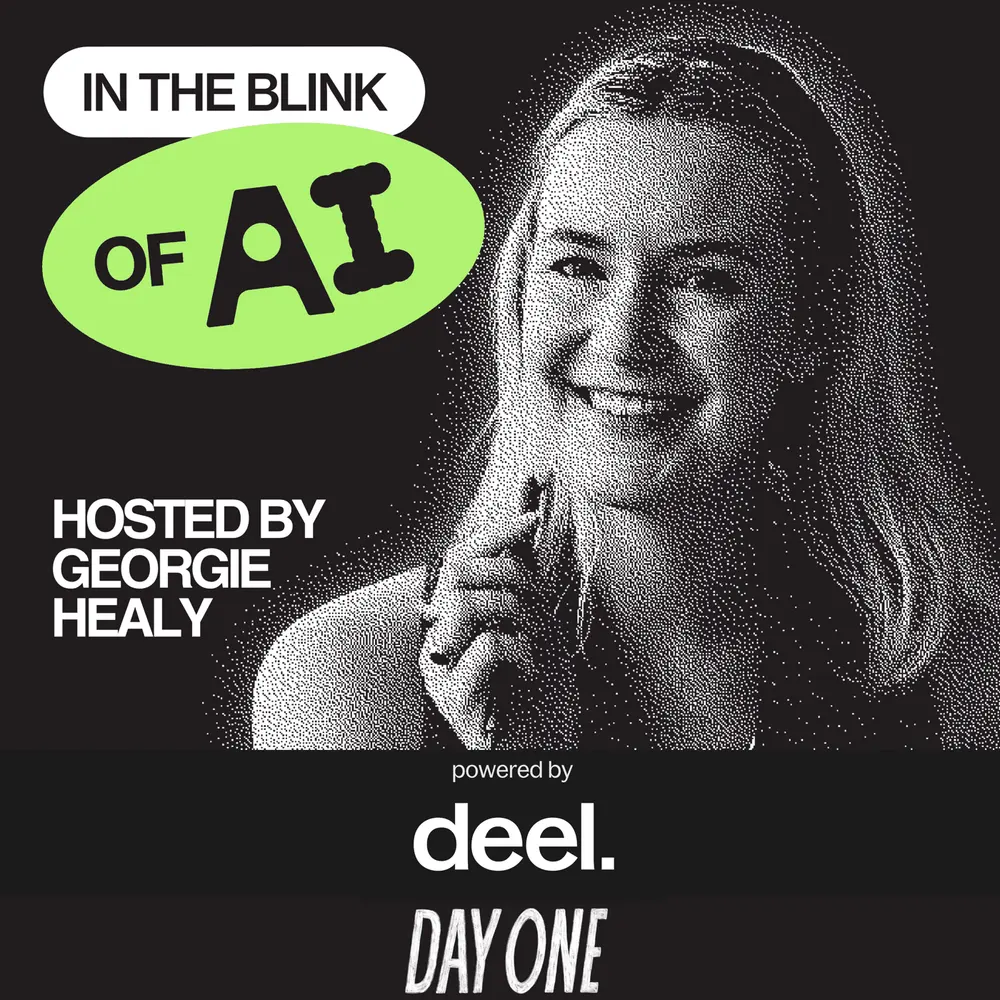 In The Blink Of AI with Georgie Healy
Presented by Deel & Stripe
In The Blink Of AI with Georgie Healy
Presented by Deel & Stripe 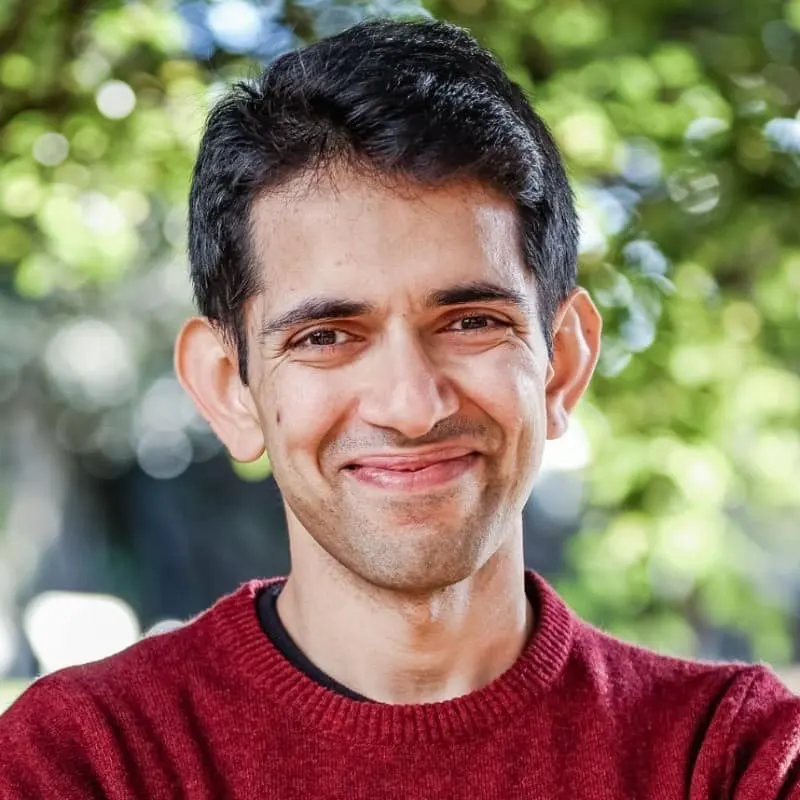


 ▶
▶  ▶
▶  ▶
▶  ▶
▶  ▶
▶ ▶
▶ ▶
▶