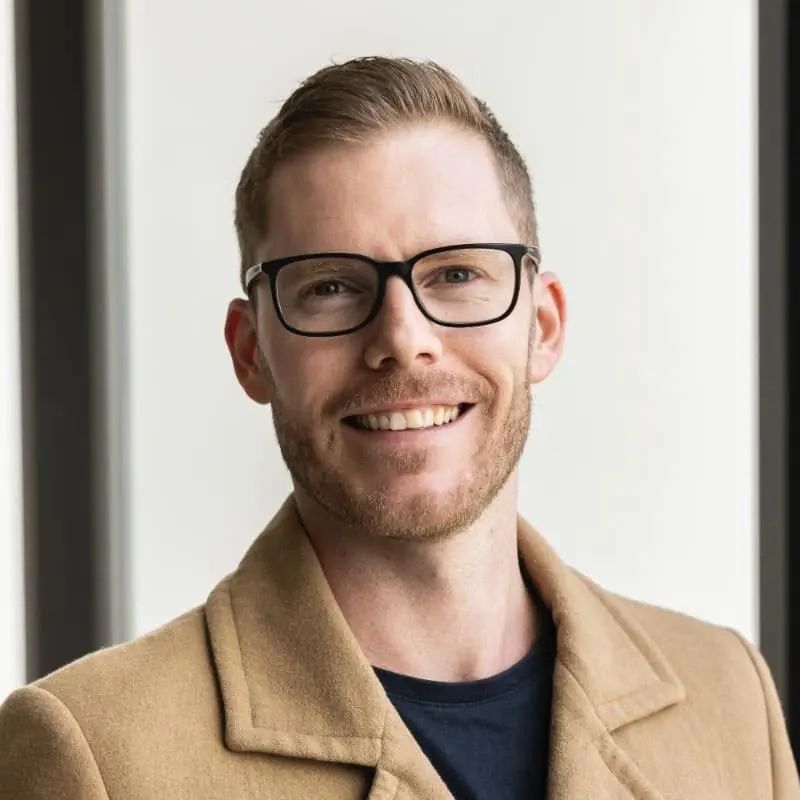
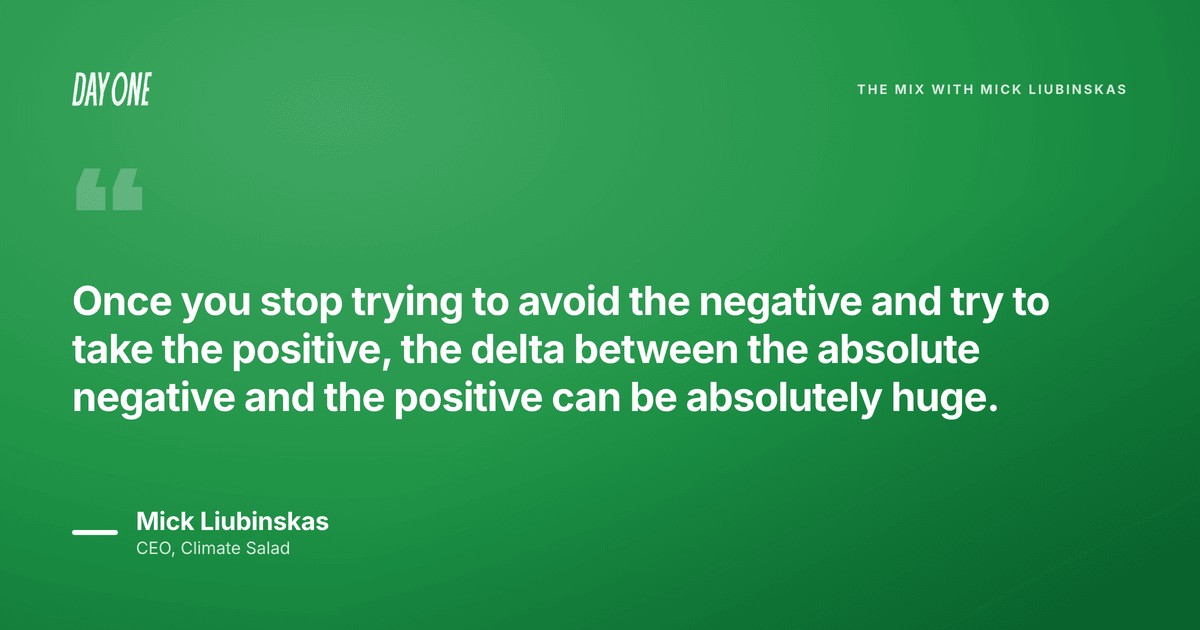
Transcript Synced · select any line to jump ▾ 0:00 Speaker: You're listening to a DayOne.fm show. 0:05 Speaker: What drives you to make bold moves, to build something that didn't exist before, to live, lead, and choose life with intention? Welcome to Perspective X. I'm Pauline Fatowi, and this is not your typical business podcast. Each episode, I get to speak to extraordinary entrepreneurs and leading innovators to unpack what truly fuels their journey. Not just the wins, but the inner work, the overlooked decisions, the mindset shifts, and the personal moments that sparked something bigger. This show is about the ripple effect of choice, the kind of deep accountability that lets us respond to life rather than react to it. Because when you realize everything is temporary, and you are the creator of your own experience, you start to play the game differently. So if you're curious about how people build meaning alongside success, how they evolve through challenges and shape the world with intention, this is your invitation to listen in. Perspective X, where we go beyond the highlight reel and into the moments that changed everything. Available now wherever you get your podcasts. 1:17 Mick Liubinskas: Hey everybody, it's Mick Lubinskis here from Climate Salad, and we've got another, the MIX podcast. We're coming to you— I was gonna say live, but it's gonna be recorded. But I'm live, we're alive, so that's great. We're at Macquarie University, and I just had an incredible tour of the lab here, and we're going to hear all about some incredible innovation. I'm here with Tom from Laverde. Tom, tell us all about it. 1:42 Speaker: Hey Mick, thanks for having me. 1:44 Mick Liubinskas: No problems. 1:45 Tom Collier: Hi everybody. Yeah, my name is Tom Collier. I'm CEO and co-founder of Laverde. And we are a precision fermentation synthetic biology company. In a nutshell, what we do is guide microbes like yeast through fermentation to produce products for different industries. In particular, we produce and brew palm oil. So instead of a rainforest, we actually are able to do this theoretically under a city car park on circular waste feedstocks is our end goal. 2:15 Mick Liubinskas: There's a lot in there, and I think people are probably aware of palm oil. Um, but let's talk about the impacts, like why you dedicated your life and the next 10 years of it to, um, to solving this massive problem. 2:27 Tom Collier: Yeah, so why— it actually goes back over a decade now when my then-girlfriend, now-wife, who I actually met here at Macquarie, were both studying— she was doing law, I was doing science— and she just returned from a trip to Borneo where she'd followed her father filming a deforestation documentary for Animal Planet. What she saw there was quite destructive and it's quite moving. So when she was telling me about it, I couldn't help but look into it myself to learn, you know, what are these problems. 2:54 Speaker: Thanks, mate. 2:55 Mick Liubinskas: Give me the focus. 2:57 Tom Collier: Yeah, that was— it was quite hard to hear. There's also quite a strong realization looking into what's happening and how you make palm oil and, you know, all the destruction, rainforest deforestation, all of these things that have to go into it, animals displaced, species extinction. Realizing that even if you made a palm tree more efficient or had better agricultural practices, it's very unlikely to change anything into the future or go meet up, meet with the growing demand and requirements in the system. So I've calculated some easy numbers around global demand is looking to be like 4 times larger by 2050. So that's a huge part of our equatorial-based planet has to be converted over to palm oil production. So why is this growing? Well, it's in 50% of our supermarket products and up to 70% of our cosmetics. So it's not going away anytime soon. There's a good chance you've probably used it today. I know I have, even just washing my hands or, you know, using, drinking certain products or just going to the supermarket. You'll probably find it cut in with other types of oils. Realizing all of that, I was doing my undergrad at the time, molecular biology, and started to look down the line of, is it possible to use microbes who also, you know, you know, are all related by DNA and different metabolic pathways that tells us what we all do. And yeah, I realized it is, it is possible and viable. So then I did a master's and a PhD. Still haven't completed that bloody PhD, but almost been distracted by building this company because it's just, it's been so exciting to pull it forward. And the theme and the goal and the outcome was to actually use yeast to grow palm oil. So that's been a big part of why we started. And now we're a great team. I think we're up to 6 people. Uh, we started about 18 months ago, closed out, you know, 2 early rounds of investment to complete a pre-seed. We are running as fast as we can this year to get our early samples to a lot of these larger corporates who use orders of magnitude for palm oil, you know, so some cases 800 million tonnes a year, which is just ridiculous volumes. 5:00 Mick Liubinskas: Thanks, mate, that's a really good background. So interesting to dig in on a few points. What the one that you just covered there, I think is really interesting, is that when you mentioned you've used it a few times today, and obviously you're trying to not use it, so it's— you're not obviously going anywhere to use it, but it's, it's almost impossible to, to completely avoid it. What is it about palm oil which makes it so valuable? Why, why do people use it in so many products? 5:22 Tom Collier: It's the molecular makeup of it. Um, there's actually a very simple diagram that can keep everyone focused on, but Palm oil is really made up of something called a triglyceride. It has a backbone, has three squiggly tails. So we all, we all know maybe from our exposure to food in high school chemistry or PDHP, but we all know about polyunsaturated fatty acids and saturated fatty acids. And, you know, some are good for your heart and some are bad for your heart. And then you have omega-3s, you know, omega-3s are good for your heart. Omega-6s are not so good in some scenarios, but get used by the brain. Well, A lot of life shares this common chemistry. So yeast cells make these molecules, human cells make these molecules, tree cells, or particularly seed oils. Palm in particular is a fruit oil, but seed oils like canola, sunflower oil, they all make these similar type structures. When it comes to palm, and it's very applicable to a lot of other seed oils, but palm is really good at being what you would call inert. So it's generally, once it's been heavily processed, it is generally colorless, flavorless, it's generally quite transparent. It blends quite nicely with different products. So whether it's a cosmetic moisturizer, it blends right in and lets the, you know, in cosmetic world they have what are called active ingredients or emulsions. It lets the other things take, take point. 6:51 Speaker: Okay. 6:51 Tom Collier: And shine, uh, what, uh, outshine physically but also metaphorically the other products. But when you think about something like chocolate, you know, is a really good example. Chocolate and margarine, uh, palm oil goes into these types of products because of this structure, uh, it has. And there are variations of this structure that only change slightly, but when you have those certain combinations and those certain variations you'll have a solid with this fat in it. An oil is a fat that at 30 degrees is solid, but at 37 degrees is melting. 7:27 Speaker: Yeah. 7:28 Tom Collier: Or even tighter temperature changes. So that's why you have chocolate on the table. Yeah, solid. But as soon as you put it in your mouth, it's starting to melt. That's a desirable characteristic for some— many, many different products. Very similar with margarine. Yeah, it's actually one of the— margarine and other products are driving cause of why we now use seed oils and, you know, palm oil as well in a lot of our products, in our cooking oils. If you look back into, I think it's pre-1910, it wasn't a common thing— 7:58 Mick Liubinskas: No. 7:59 Tom Collier: —to use to cook, cook with these types of oils. It really came through, I believe it was Procter Gamble made a wonder product, I've forgotten the name that they put on it, but now we have billions and billions of tons of— sorry, millions and millions of tons of this every year. 8:13 Mick Liubinskas: Yeah. 8:14 Tom Collier: So that's a little bit of the science behind what we try to do. And I'll wrap— close out very quickly on, on that question is that's where our liver and our positioning comes in quite strong. The control over the profile of these molecules is really where we, where we shine. It's very hard to ask plants to do things that are different to what they naturally or natively do. We're able to guide our yeast through a process to encourage them to produce different oils of low and high value for different customers. So we talk with cosmetic customers, nutraceutical customers, as well as food customers for nutrition. 8:49 Mick Liubinskas: Wow, interesting. I think it's amazing, again, where the climate problems are not caused just because Procter Gamble made a product decision a while ago, but it's kind of like the combination of that and then increasingly like, I don't use butter, these products are better. And then just growth of scale of population, growth of consumption, growth of the middle class who are consuming more of these products and luxury items as well, like chocolate and cosmetics. That they're luxury items, right? They're not necessities, but they're all growing. And they're, you know, when you're considering across 8 billion people, that's just a massive demand. And then that, and countries like Indonesia are knocking down old-growth rainforests in order to grow more palm oil to sell it to— so we can eat more chocolate, have more cosmetics. And that's like a negative circular outcome for the environment. And your goal is to insert in there a manufactured palm oil that's lab-grown. Tell me about like the two interesting questions over there. One is, right now you're in a lab. How do we get that to scale? Mm-hmm. And the one overlapping that is, how do we make sure that process is not also negative for the environment? Because you're like, it's like, well, you can have soy milk or oat milk, but that's also bad. Or like, it's really hard. You've got to, you've got to make sure that the onus of responsibility is higher, right? Like, you can't be like, it's slightly better or it's temporarily better. It's got to be just better, right? It's got to be as good and then better. 10:18 Tom Collier: Like, that's really hard. Yeah, yeah, you've hit the nail on the head of a lot of the problems, um, that, you know, not just Löwär but just globally you face. When you start talking about the category of sustainability, you have to hold yourself accountable to the standard that you're casting onto anybody else. 10:37 Mick Liubinskas: Yeah. 10:37 Tom Collier: And you're spot on with the growing need for it. This population, we have a lot of people to feed. We have a lot of a rise in the middle class. We have major consumption desires. So one of the things, and I'll move to the sustainability point in a second, but one of the things that is our kind of, or at least one of my personal goals for Löwür, which our team is working on, is giving back the autonomy to the end user. So the end user is the person at the supermarket shelf who is sick of having to feel bad about every single product or look at the back of every single second product to figure out if it's got something bad for the environment in it. 11:16 Mick Liubinskas: Yeah. 11:17 Tom Collier: Our goal is to give back the autonomy so that they can see a logo, you know, see a Lever logo on the front of the bottle and go, yep, you know, I know this one's going to be sustainable. I know this is meeting my price expectations, my product expectations, and my sustainability expectations. So that's a big— that'll be an amazing win for our team. And I imagine you're very similar companies in this space. Then moving on to, yeah, the scale issue, it's actually relatively straightforward, you know, and that's an oversimplification of the point. Sure, should be easy, you know. Without going into every single detail, which is, you know, what will be the part of our lives for the next, you know, 5 to 10 years. We use yeast, which has been known and shown to scale ridiculously high. Like if you've ever had a mainstream beer, not a microbrewery or a craft beer, but if you ever had a mainstream, you know, Budweiser, if I'm gonna speak to a global audience. 12:12 Mick Liubinskas: Yep, sure. Or a Stella. 12:13 Tom Collier: Yeah. Stella, Heineken, you know, our good old VB. Yeah, um, or, you know, a good old New, that's come— most likely that's come out of a massive 100,000-liter-plus, you know, massive fermentation tank that's taken malt and barley and combined it with yeast to then make the ethanol to make the beer. Well, we're not that far removed from that process, so scaling it, uh, it's not a new— a brand new technology. The yeast is changing in our aspect, but the existing infrastructure— And I'm I'll speak, you know, you know, clarify this for any scaling experts. I am very much simplifying it here for a general audience. Uh, there are, there are differences, but in general, um, but the one key thing that we do is we work— we will be working with third party, third party contract manufacturers. We have our own small lab level, you know, 6-liter fermentation capacity here in the lab, which allows us to demo strains. 13:07 Mick Liubinskas: Yeah. 13:08 Tom Collier: With different media types to deliver small samples. 13:11 Mick Liubinskas: Yeah. 13:11 Tom Collier: We've got 2 targets this year, 2 global customer, 2 big corporate customers who want 2 different molecules from us, you know, in this, in this space that all come from palm, keeping us true to our mission. 13:22 Speaker: Yeah. 13:22 Tom Collier: And our capacity enables us to do that. 13:25 Mick Liubinskas: Yeah. 13:25 Tom Collier: You then step from that lab, lab level capacity to a pilot demo facility. This can be 10,000 litre tanks. There are a couple in Australia, more offshore, but then you really got to go bigger. You have to go minimum 100,000 liters. And there is capacity out there. It's, it's, and it's growing. I was actually, you know, reading this morning, uh, a book on this, uh, of, of, cause I met amazing, amazing contact last week, Mark Warner, who's has a company called Liberation Labs and shout out to you, Mark. It was great to talk to you last week. They're tackling along with Cauldron in Australia, they're tackling global fermentation, uh, bottlenecks and how to alleviate that. As far as funding-wise, funding these things, you can go through joint venture mechanisms, you know, very, very You can go through private or debt equity options. You know, right now we're in the VC phase. We've just closed out, we've just, leave that news for another time. Yeah, but we're, yeah, we're going through that stage. But yeah, you might have had another question mixed in there, but I— 14:25 Mick Liubinskas: No, I did throw in multiple. So the end result is not that there's going to be a big, you know, a bunch of liver operations around the world and plants that produce palm oil and people go and buy a couple of liters. Is it much more like they use your technology to go and make specific palm oils for chocolate or for cosmetics? Like, they use the technology or the fermentation process? What are they buying then? Are they just buying palm oil and they're going to use it however they want to use it, or— 14:50 Tom Collier: Well, yeah, there's two levels of how we work going forward. So with one of our products, it is a replacement technology, but there are the more specific application ways to do this. But you can also have them— you can have the best of both worlds. In theory, you can have a strain that is producing a, a UK with, let's say, call it a basic palm. 15:10 Mick Liubinskas: Yeah. 15:10 Tom Collier: And then also targeted high-value oils pulled through with that process at the same time. 15:16 Mick Liubinskas: Yeah. 15:16 Tom Collier: So our business model is, is growing as we grow. Our ambitions are growing as we grow. Today we're, we're looking to be a strain production company as well as a demo facility. 15:27 Mick Liubinskas: Yeah. 15:27 Tom Collier: Capacity to then hand over or do a joint venture. 15:30 Mick Liubinskas: Okay. 15:30 Tom Collier: With a particular customer in mind to be globally, you know, on-site with them, but also, you know, whether that's Australia, Europe, or the US, or in Southeast Asia. 15:39 Mick Liubinskas: Yeah. 15:40 Tom Collier: Really though, you know, our goal here is to make sure that we are solving our core mission as fast as possible. 15:48 Mick Liubinskas: Yeah. 15:48 Tom Collier: And, and to solve this, you know, I've done some early calculations. The volume of palm oil, it's, uh, it's like over 70 million metric tons or more a year. So the volume of this and the amount of fermentation tanks that would be required, it's thousands of liver companies to actually fully replace. What we're aiming for is a mitigation strategy to reduce future and further deforestation with our long-term goal to help reforest as well. 16:19 Mick Liubinskas: Yeah. 16:19 Tom Collier: So yeah, it's definitely beyond just our capacity to solve this problem and it will work, Yeah. Will require working with a lot of others. 16:29 Mick Liubinskas: Yeah, I think that's, I think it's another challenge with people thinking about the problem. Like me just not eating chocolate's obviously not gonna solve it, although me picking the right chocolate brands could. I think there is definitely better practices we can use with reforestation and deforestation and like land use. And there are better parts of the technology we can use and there's better, like there's less waste we could have. Like I think we've got to, do I have to attack it on all fronts? One note, I saw waste to feedstock. So this goes to the overall benefit of the product. Tell us about that. Like, are you, are you able to take another negative and turn it into a positive as a part of that other supply chain? 17:09 Tom Collier: Yeah, so it's what we're working towards. We are, we are here forward at this point in time, but we've been working with some options to make sure that we can go back and be fully circular. Yeah, it's a balance. Sure. Um, and I was reading Net Positive, actually this morning by Paul Balmouth, the ex-UNILABOR CEO, who's done an amazing job at showcasing how corporates can actually be sustainable and return value to shareholders. 17:34 Speaker: Yeah. 17:34 Tom Collier: All of these are great metrics. And one thing stuck out to me while reading it, it was recognizing that even when you have a $10 or $15 billion revenue company tackling sustainability, you can't do everything all at once. 17:47 Mick Liubinskas: Sure. 17:47 Tom Collier: There is a balance to it. You know, in our example, we need to work with optimizing and having the best strain of yeast for the target molecule we can produce to actually do those, those steps. You don't want to vary the feedstock because, you know, very similar to humans, if you eat one thing for a month, you're going to feel very different at the end of that month. If you have just pizza for a month versus if you have just salad for a month. Yeah. Not saying either or is better or worse, but variety— 18:15 Mick Liubinskas: We're not called Climate Pizza. Climber Salads. We want to— 18:19 Tom Collier: don't lose our salad sponsors. Yes. So if you're having— let's just say in this analogy, you know, our yeast eats salad. Sure. It's really good at eating salad, and that gives us a consistent oil profile, which is for our target customer. For us to go and mix in with salad— sure— pasta— sure— pasta salad. Exactly. Um, then you would start— you might change the feed or the output of that strain. So we're here now. Yeah, we will be circular, and that is one of our primary goals, is to have these things fully circular. And that's quite important from a, from a cost point of view for our product pricing, price points. It's important for our customers. You know, we've validated this with over, over 60 customers now globally, uh, small and large international corporates. And sustainability is a very core theme to them. And hitting price, of course, is very important. So we're trying to pair everything to make sure they blend seamlessly. 19:10 Mick Liubinskas: Yeah. 19:11 Tom Collier: The last thing about getting onto waste feedstock is that, you know, it liberates you from where you produce and manufacture. So the world's supply of sugarcane is, you know, Australia and Brazil, and you can get a lot of corn from the US. That's where a lot of these large-scale, you know, fermentation tanks I was talking about earlier have been stood up and been built based on labor costs, energy uses, and feedstock supplies is actually one of the most important things. So there is a strong argument to have an adaptable feedstock with an adaptable strain. And adaptable feedstock, by that I mean a waste feedstock. And then, you know, in a, in a future world we're aiming for is you take the waste of a city. Yeah. The biological waste of a city, and you feed that back through the system to make the products, to then make the future waste of the city. And you keep going around, of course. 20:00 Mick Liubinskas: Yeah. 20:00 Tom Collier: In this circular analogy. 20:03 Mick Liubinskas: And did you mention, like, in terms of Unilever and others, like, the next question I have is about regulation. So obviously I'm hoping that consumers seeing the problems and making better choices is possible, though they're probably not going to pay, yeah, 10-20% more, let alone double. So, you know, regulation's been massively increasing with at least reporting and then some penalties or rewards for better behavior. That seems to be really hitting this year. 20:30 Speaker: Mm-hmm. 20:30 Mick Liubinskas: So in terms of the timing of the getting better and better and getting to scale, and the problem's getting worse, so people are more likely to act on it. But the regulation, how quickly is that driving up your value because you're a better alternative? Do you have line of sight to that, or is that— do you think that's still a year or two away? 20:49 Tom Collier: Yeah, so I can speak— I can of course only speak to things that I'm aware of and that I've been able to consume in this space. There's two things, uh, well, there's a couple of things, but in When we're talking about palm oil, which is, you know, our first phase, our first step of sustainable, a sustainable campaign, it's, you know, if you've read some books, it's our moonshot. We have, we also ideally would blow out well beyond just palm oil. But when it comes to palm oil, there's something called the EDUR, which is a European regulatory body pushing forward to essentially ban the use of unsustainable palm oil from It was actually supposed to be, I believe, January of 2024 or maybe even 2025. That was given a big buffer. It was notified to Europe, to a lot of the corporates. It was given, you know, quite a long buffer and a lead time. And I think, I believe last year they were getting close to it and they just said, no, we can't, we need another year. 21:46 Mick Liubinskas: Right. 21:47 Tom Collier: Or maybe it was even 2 years ago and they said, we need another 2 years. 21:49 Mick Liubinskas: Yeah. Yeah. 21:49 Tom Collier: So there are big, serious regulatory mechanisms happening in places like Europe, which are in other parts of the world following suit based on end-user pressures. And we are going to ride those tailwinds immensely. 22:04 Speaker: Yeah. 22:04 Tom Collier: We have other internal, when it comes to people like Unilever, for example, but a lot of these corporates, they have their own internal ESG goals that were set down in their own, you know, in their board meetings, but also heavily influenced by the UN goals. They're pulling through as well. There are tailwinds there. We've been talking with some of these customers who are actively pursuing next generation technologies a decade before they know they need them to pull these things forward. So we're in a really, really fortunate space to speak to what you were saying around, like, I don't think I've come across one customer that's used palm oil that said, oh, I don't want to use a sustainable stock if you can meet the price point. 22:45 Mick Liubinskas: That's right. 22:45 Tom Collier: Like I've never, I have not come across that. We've been definitely pulled. The difficulty we've been hitting is that, you know, coming back again to 50% of supermarket products, 70% of cosmetics, it's just because of this versatility of the oil. It can function from a margarine. 23:02 Mick Liubinskas: Yeah. 23:02 Tom Collier: To a shampoo. 23:03 Mick Liubinskas: Sure. 23:04 Tom Collier: With a few changes. 23:05 Mick Liubinskas: Yeah. 23:05 Tom Collier: Our difficulty has actually been what product. 23:08 Mick Liubinskas: Sure. 23:08 Tom Collier: Do we target? 23:09 Mick Liubinskas: Yeah. 23:09 Tom Collier: So we've spent over a year with customers now to the point where we know exactly what two corporates want. 23:15 Speaker: Yeah. 23:16 Tom Collier: And that's exactly what we're keeping, you know, almost like blinders, I believe they're called, you put on a racehorse. We've kept those on to be laser focused to deliver on two variations of this molecule, which is— excuse any scientists or chemical— just out there, but extremely, extremely— yeah, it's very, very precise. 23:34 Mick Liubinskas: That's amazing. So 50% of all products, 70% of cosmetics, like, that's such— they're such big numbers. And what you've got, you've got total inertia, right? You've got they're so used to it, as you said, it just works now. 23:47 Tom Collier: Yeah. 23:47 Mick Liubinskas: And they're probably not sitting there, they're not walking into the jungle and seeing the orangutans and seeing the impact. So this is the issue is like there's mass organizations and the end consumer, it doesn't like, you're so removed from the problem. But I think that combination now of that problem and how it was done and the scale, we've gone, it's gone too far. The regulation really driving it. And pushing for change. And then now it's a matter of actually, as you said, it's not going to be like, okay, tomorrow we're going to go to— how many millions of tons did you say? 24:20 Tom Collier: Oh, 70 million. 24:21 Mick Liubinskas: 70 million tons. Like, it's not cool. Let's, let's just switch tomorrow from 70 million tons of non-sustainable to sustainable. Great, well done. Like, it's going to be a messy 10 years. I've heard describing all this, and it's the people use in different ways, but it's like, um, it's going to be gradually, then suddenly. You know, it's going to be like, look, I think we're still in the gradually phase because it's like you're getting it out there, getting it working, testing different products, making sure it really works, increasing scale, getting the fermentation side right and the regulation and the companies totally agree. Every corporate I'm speaking to is saying we need to be acting now in order to not be in a lot of trouble by 2030. So even though it seems 2030 seems like a long way away, it's only 5 years. And to change the whole world's supply chains to make sure your chocolate still tastes great. 25:10 Speaker: Yeah. 25:11 Mick Liubinskas: But everyone needs to be really active now. So that's, that's why you're getting so much inbound customer inquiries and demand and why investors want to invest in the product is because there's a clear path to just revenue of a good product. 25:23 Tom Collier: Mm-hmm. 25:23 Mick Liubinskas: And that's what's really exciting. I think that, that combination. On that basis, like we're here in 2025, like how far can you go on that journey this year? 25:33 Tom Collier: As far as we can. 25:35 Mick Liubinskas: Yeah, sure. 25:35 Tom Collier: So our goal is, we've lined up our first customers and our goal is to deliver on our promise of getting them out our samples. 25:44 Speaker: Okay. 25:44 Tom Collier: And, you know, meeting that product spec. So the key thing here is not just giving them rubbish, but giving them high quality samples of our oil, calculating our inputs, our input and output costs accurately, as well as our LCA. Yeah. 25:58 Mick Liubinskas: So— LCA, for those people that may not know. 26:01 Tom Collier: Yeah, so LCA is a lifecycle analysis and essentially just think of it as like a metric that can be accurately put on, put on something to say, oh, how sustainable is it? 26:10 Mick Liubinskas: Yeah. 26:10 Tom Collier: You know, what is the energy use, water use, all the other metrics that go into it, you know, cost of feedstock or even what we're feeding our yeast in our example. What's the impact of that, the environmental impact of that feedstock? Is it waste? Is it not waste? 26:25 Mick Liubinskas: Is it net zero? 26:26 Tom Collier: Is it, you know, where does it all sit? 26:28 Speaker: Yeah. 26:29 Tom Collier: We've actually had some of our peers over in the US and over in Europe demonstrate with their demo facilities a 90% LCA reduction or benefit, sustainability benefit, in their equivalence of their methods of doing a very different but similar process to Laverre. You know, in terms of LCA numbers and changes, that is ridiculously massive. 26:53 Mick Liubinskas: Yeah. 26:54 Tom Collier: You know, if you'll, you'll usually aim for maybe a 10% better sustainability output. 26:59 Mick Liubinskas: Yeah. 26:59 Tom Collier: Not at 90% better. Output. And that really comes from, unfortunately, the harm that is done to make palm oil, um, with burning of rainforests, bulldozers ripping up, you know, mining is also usually mixed in with timber and palm plantations, all of that. Yeah. Whereas the footprint and the numbers that we can, we can put output are so much less water, so much less power. 27:23 Mick Liubinskas: Yeah. 27:23 Tom Collier: So much less land and environmental footprint. Physically, because we can produce hectares. You know, we could take— you know, I can't remember the number exactly, I only did it the other week— but, you know, we're talking about taking 10 hectares of land and compressing it to 1 square foot of land to make the same amount of oil. Yeah, that type of ratio is quite, quite important. 27:48 Mick Liubinskas: Yeah, that's, that's what's really exciting. And what I love about working in climate solutions is Once you actually stop trying to avoid the negative and just say either deny it's happening and the problem, like, and I think most of the world agrees that we know the problem and you actually try to take the positive, the delta between the absolute negative and the positive can be absolutely huge. And this is a great example because as you said, deforestation, loss of biodiversity, like so many negatives of the current process. And the new process, it doesn't even have to be like absolutely miracle. But this one is— this is actually just so much better. And I think that's why it's going to go gradually, then suddenly, is because I think the really key tipping point we have to get to in climate solutions is not when the green premium is palatable by most customers, but where there's a green profit, where it's like, this is— the regulation has made it fair. And I think absolutely that's good. That's ratcheting up and ratcheting up every year from, from right now. That is absolutely ratcheting up. And the technology is also ratcheting, ratcheting up. So it's like, oh, we really, really need an alternative. Look at what Oliver has done. He's a great alternative. It's like it really, really works. It's massively better for the environment. It's cost effective. Like, like we're getting to the point where that is absolutely like massively green profitable. So very, very excited to see the progress. Really quickly. I just got to have a tour of the facilities here. There's an incredible lab here at Macquarie University. Can you give us this, the— might be able to share some photos, but can you give us this in one minute? It's an Australian-led bio lab, one of the best in the Southern Hemisphere. Can you tell us a little bit about that? 29:34 Tom Collier: Yeah, so we're very, very lucky. Our staff at Laverre and our team, we get to use some of the best state-of-the-art lab equipment and facilities here. I personally would say, yeah, in the Southern Hemisphere, it's ridiculous the amount of access to equipment that we have to play with, which advances the biology. And we're very fortunate to work with groups like the Australian Research Council Centre of Excellence in Synthetic Biology, the Australian Genome Foundry. And linked into that is the BioPlatforms Australia, the National Reconstruction Fund, Investment New South Wales, you know, a lot of individuals as well as Macquarie. Mm-hmm. Individuals and organizations have come together. And the Synthetic Biology Center of Excellence is actually larger than just Macquarie. Macquarie is the hub where things are organized and a lot of the work is done, but it is a large group of, I believe, about 11 different institutions. I could be wrong on that. We're really lucky. But, um, you know, what I'd like to maybe end on there is actually what it enables companies like Laverde to tap into. Yep. So you know, this very expensive, you know, sometimes million-dollar pieces of equipment that we get to access lets us ask brave new questions. So earlier on in, in this chat, you asked, well, you know, there's, there's price tolerances to just be sustainable. You have— there's maybe 15% tolerance if you're a sustainable product, or, um, you know, you've got this other metric. Well, what we've realized with customers is you've got to hit the nail on the head with maybe 5 different value props to get that momentum going beyond just sustainability. Of course it's going to be price, but this facility and this equipment and the technology that we are building on— 31:14 Mick Liubinskas: Yeah. 31:15 Tom Collier: Let's ask the brave new questions of— and or the past question of why do we take a plant oil's seeds and then put them on our face or in our body and expect them to be perfectly compatible or the best product for us? Sure, there's a lot of work a lot of smart people have to do to take things to work for humans. A lot of formulations, a lot of, a lot of, you know, nutraceutical products, cosmetics, and foods. We're asking the brave new questions as we build out this palm oil equivalent, but we're also looking forward and going, what are things that you can't get in the supply chain? What are things that you, you don't need to take down 10, you know, 10 hectares of rainforest to squeeze out that particularly valuable molecule that you'll get 2 grams of, or destroy the Amazon for a certain molecule. Yeah. What if you can actually design for humans, by humans, certain products? Yeah. That's what we're aiming for. 32:09 Mick Liubinskas: Fantastic. Look, it's so good. And you see the problem here, 50% of products in supermarkets, 70% of cosmetics, and we're not talking about dropping those, we're talking about just change the way we make them. And there's an incredible opportunity here and fantastic to see the momentum, wonderful to be a part of it as someone who's doing my Master's of Sustainable Development here at Macquarie Uni, great to be able to drop in and see the lab, Very impressive. They won't let me touch it or play with it, but it's great to see that Tom and the team are doing such good work. Tom, congratulations on the progress. I'm looking forward to an amazing year, and thanks for sharing with everybody. And yeah, we hope to catch up with you later in the year when you make some more progress. 32:46 Tom Collier: Awesome. Thanks for having me, Rick. 32:47 Mick Liubinskas: Thanks, mate. Good to see you. 32:49 Speaker: Bye, everyone. Bye.