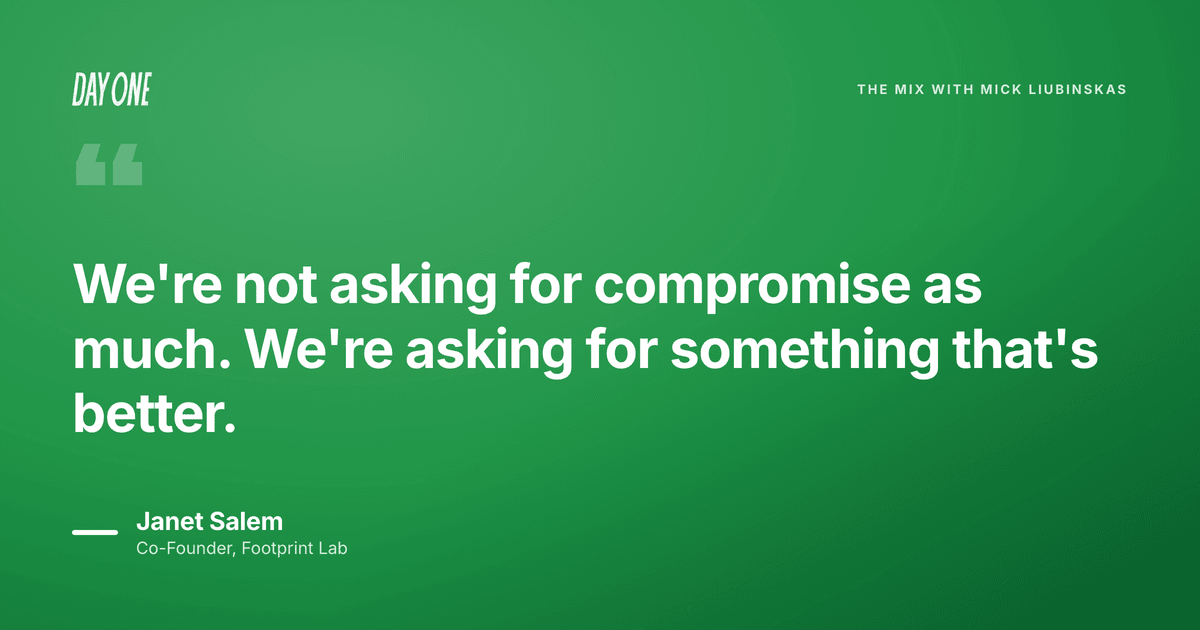
Transcript Synced · select any line to jump ▾ 0:00 Speaker: You're listening to a DayOne.fm show. 0:05 Speaker: What drives you to make bold moves, to build something that didn't exist before, to live, lead, and choose life with intention? Welcome to Perspective X. I'm Pauline Fatowi, and this is not your typical business podcast. Each episode, I get to speak to extraordinary entrepreneurs and leading innovators to unpack what truly fuels their journey. Not just the wins, but the inner work, the overlooked decisions, the mindset shifts, and the personal moments that sparked something bigger. This show is about the ripple effect of choice, the kind of deep accountability that lets us respond to life rather than react to it. Because when you realize everything is temporary and you are the creator of your own experience, you start to play the game differently. So if you're curious about how people build meaning alongside success, how they evolve through challenges and shape the world with intention, this is your invitation to listen in. Perspective X, where we go beyond the highlight reel and into the moments that changed everything. Available now wherever you get your podcasts. 1:17 Mick Liubinskas: Yeah, it does. It feels like totally like Wayne's World. Um, you know, Hey everyone, we're already riffing like crazy. It's 20th of December, the last day of year for me, about to go on holidays with my family, but we are not done yet. It's been an incredible year. We're gonna finish strong with an amazing story of 4BitLabs, and we have Janet to share that story. Janet, welcome. 1:44 Janet Salem: Hey Mick. 1:45 Mick Liubinskas: Yeah, great to have you here. Just wanna start, quick elevator pitch, tell us about what do you do? 1:50 Janet Salem: What do we do? We provide really high quality environmental data that can be added to financial data so that everyone can know the carbon footprint of what they're spending money on. 2:02 Mick Liubinskas: Right, great, fantastic. Well, let's just dive into the, the problem you're solving. So tell me about how does— you've got obviously these massive issues we need to do 50 years ago. What, what role do you play in getting us to a climate-positive planet? 2:15 Janet Salem: Our endgame is really climate finance, so we want to get money to the solutions, whether that's low-carbon ways of doing things, energy production products, or other types of solutions like we're talking about offsets. But those things that are available and ready to scale to what we need, they don't necessarily have the pipeline to them. And so what we do is we, we work on building that pipeline by making sure that anytime you spend money on anything, you can know what your carbon footprint is. So what is your connection to those problems? And once you know that as an individual, as a business, as an institution, then you can start thinking about options. And then other people will need to come in to make that connection. So if I, for instance, buy a cup of coffee for $8, I might find that that had a carbon footprint of, let's say, 4 kilograms. So that opens up the space, especially through the emerging, amazing fintech world, to then say, hey, do you want to offset it? Do you want to see lower carbon options nearby? That sort of thing. 3:40 Mick Liubinskas: Yeah, fantastic. And let's get into the big ambition and where we're up to next. We've been doing some amazing work with you. You've been a part of the Global Growth Program. And it's been wonderful to see you thriving. Um, I'd love to go back just briefly. What, what's your origin story? Like, either, um, you know, tell us about yours and Footprint Labs. Like, how did you get started on this? 4:00 Janet Salem: Well, the Global Growth Program was perfect because I come from a global background. I worked for the UN for 17 years working on sustainability programs, and, um, and that's— so, so my thinking really is global. And right from the start, we were using data at the UN from the University of Sydney, and that data covered the material footprint, the carbon footprint, land footprint of everything, everywhere, all at once. Um, and the problem was that I was using this amazing data to inform policy projects, um, to identify, you know, where the priorities are for specific countries. You know, you could really break it down with this data. But, you know, everyone knows— like, when's the last time you read a UN report from start to finish? 4:56 Mick Liubinskas: Yeah, yeah, yeah, yeah. It's been a little while. 5:00 Janet Salem: Yeah. So that is my origin story. I was so frustrated that this great data, all the insights were there, solutions are then, you know, over here, not scaling to what we need. And so, so I really wanted to get that data to that point of decision-making, which could bridge that gap between those economic decisions we all make as, as a business or as an individual that do cause or drive climate change through those complex supply chains that are very far away. And if we could link what we are all doing, um, professionally and personally to climate change, then I hoped that that could create more of a pipeline for the solution. So as a, you know, it's funny, as a founder, like, I, I was like, what should I do? So I thought, I'll do a PhD, you know, amazing. So I started a PhD with a team that makes this data with the intent of, you know, then bringing it more to the fintech world, because every financial transactions were digitizing at the same time. It's hard to remember that that wasn't the case, you know, 5, 6 years ago. Um, there was still a lot of cash, but now that everything had been digital, I was like, just put the data there. But then during the PhD, all these companies started asking for data, you know, we want to build this solution or this app or this carbon calculator. And that's when I thought, okay, I think I could have a bigger impact if I left the UN and then really focused on bridging, you know, getting this data to where it's needed so that we can have a hope at scaling climate finance. 6:38 Mick Liubinskas: Right. So it's an interesting intersection that you've been driving at. And so how long has it been since you left the UN and been building this new vision? 6:49 Janet Salem: 2 years. 6:51 Mick Liubinskas: 2 years. Wow. How are you feeling about that journey? So obviously it's not all solved and that's not all on you, but I'm really sort of checking in terms of, I think there's a lot of people who see the problem and are trying to work on the solution. Yeah. And I think especially right here at the end of 2024, which has been a tough year, but actually I think we've made some progress. So this combination of feeling of momentum, but still being stuck at the same time. Yeah. Where are your emotions at and your energy levels to go and drive this forward? 7:25 Janet Salem: Yeah, we, we're actually feeling the opposite. For us, it's been an inflection point, especially with the Global Growth Program, because the way it works is that a country will set a net zero target. So if I can be net zero by 2040, 2050, 2060, or even later, once they've set that goal collectively as a society, they're saying, okay, it will happen. The first thing that they then have to do is then figure out where the non-net-zero things are, like where are the carbon footprints? And that's where the ESG disclosures start to come in. So this has been really big. Singapore, India, Australia, even China, they're all announcing that disclosures will be mandatory. And then that's where we come in, because as someone who supported international policy I really feel for policymakers because there's all these great policy instruments that they have that they could put in, but if they can't be implemented, that's a problem. 8:24 Speaker: Yeah. 8:25 Janet Salem: So that's when we come in and we say, okay, no problem. We can work with banks or fintechs to layer in that data so that a business that has to disclose can just look at their general ledger or their transactions and then just see what the carbon footprint is. And there they go. They can report now. Obviously you want to get more specific over time. You want to know specifically which vendor had which footprint. But as a starting point, there is no reason not to start now. And that's what we're finding exciting. 8:57 Mick Liubinskas: It is really complex, right? I think it's— there's— and there's no getting away from that. I think it's a— it's part of the reality. And I know you've just always brought such a positive can-do attitude to this, no matter where we are in this, on the rollercoaster ride of this industry. But it is really interesting to think you've got this, you've got past data and then you've got a future, which is kind of unknown. And then you've got scientific information and then you've got a narrative and a story and you've got strategy and emotion and you've got pure finance. Yeah. And you've got, it all has to work, right? You can't, you certainly can't be like, why doesn't the world just take trillions of dollars and put it towards climate positive? Because it'll work out in the end. And even though I believe that's probably true, like, you just can't disassemble all of that and, and then go and make it better, better world. We've got, we've got to do it with the tools we've got right now and the world we've got right now. And I think that I really see that in Footprint Labs as being like, you know what, you, uh, how do you actually generally take where we are and move forward rather than thinking It's broken, let's fix it. 10:08 Janet Salem: Yes, and it's exactly what climate salad is. No one wants to eat lettuce on its own, right? No one's sitting there chewing on some lettuce, but then you also don't want to eat a bowl of just tomatoes or croutons, or no one wants a bowl of dressing, right? Yeah, yeah, yeah. So it really doesn't work on its own. What we're doing is information. Is information gonna solve climate change? No, but the, the other amazing businesses that are in Climate Salad or in other parts of the world that can produce energy cleanly, they can produce leather, you know, without carbon-intensive cows. They— there are all those solutions. And what we just want to do is, is bridge to them. And the bridge is, I guess, between like policies and the solutions. Yeah. And then the businesses are stuck in the middle saying, what do we do? But basically every business is going to have to measure, you know, reduce, decarbonize, offset, right? So once they have to do all of that, we can help them with the measurement. 11:15 Mick Liubinskas: Yeah. 11:15 Janet Salem: But then our real goal is that those beautiful solutions that we're seeing are just, you know, it just kills me that if they don't scale, that would be a disaster. But once the company knows 'Okay, oh, what's going on with, you know, the— our events are super carbon intensive. We need to go like low carbon events. Okay, let's look at the catering. Let's look at our energy. Let's look at all components of our products.' Then they can start to look at the other parts of, you know, Climate Salad that have those solutions ready. 11:49 Mick Liubinskas: Yeah, yeah, it is, it is really. And that's the name of this podcast is The Mix, and it is really about that. I know It's my general go-to approach, which is to try lots of different things. And then it's about driving the depth. And that's an interesting question for me to you is the, we have had that, I call it the sort of the bite of regulation now of like, okay, I've made a claim, now I've started measuring. And actually the cost of not acting is actually going up and up and up. So therefore I can start to look, as you said, to all those other solutions in Climate Salad and otherwise. Yeah. To actually genuinely improve my financial situation by making better environmental choices. 12:34 Janet Salem: Yeah. 12:36 Mick Liubinskas: Where do you see Australia in the world in that continuum between total ignorance and total climate positivity? Like, where do you, where do you feel we're all at? 12:46 Janet Salem: When I started uni in the '90s, that was when Australia had the world's best photovoltaic R&D, right? So you had like this amazing technology and solutions were there, but Australia also hadn't really agreed that climate change was real on a policy level. So you had this disconnect between the representatives of our society that, that's, you know, set what it is that we want to achieve or avoid and the solutions for that beautiful future. And so that's why you saw a lot of that really amazing research go abroad. And Australia is actually one of the lowest, um, research commercializing countries in the OECD, which is really odd. Um, great at doing research, not great at bringing it into— 13:36 Mick Liubinskas: It's a common theme you see. 13:37 Janet Salem: Commercial reality, which also is where the impact is. So fast forward now, we're also really good at innovation, R&D, and we're getting much better at research commercialization, but we're really more in the, like, we're good at prototyping. Um, and I think the better— the best option for entrepreneurs in this space in Australia has been, look, work with, work with researchers, get it into a prototype, minimum viable product, and then once you've proven that the case, or how you've got your proof of concept, then you can go abroad. And there's a lot of opportunities abroad And I think like the— also there's been a lot of support from government to establish Australia and specifically New South Wales as the carbon services hub to the world. And why not? We've got really like world-leading research. The data I'm working or commercializing has been used by the UN for a couple of decades now. 14:35 Mick Liubinskas: Yeah. 14:36 Janet Salem: So, you know, why not? And the other thing I'm learning as I get more and more in the fintech world there's a lot of innovation in terms of the structures around data, um, and fintech. So open banking, open energy— these aren't common abroad. So there's a lot of, um, you can experiment a lot. So our general, like, growth plan is we develop solutions, we test out anything that's particularly innovative in Australia. 15:05 Mick Liubinskas: Yeah. 15:05 Janet Salem: And if we want to test for scale, um, India is a great place amazing fintech users, providers to the world. And then if you want to commercialize, it's, it's Singapore. And in the future, of course, we need to go into Europe more, in the US. But right now, Asia Pacific, they're moving very fast on policy, and they're underserved in, in climate data and all the other types of data that we have. 15:31 Mick Liubinskas: Yeah. 15:32 Janet Salem: Whilst trying to have those policies and ESG requirements and also being hit by, you know, the expectations of investors globally, of trade. Yeah, global supply chains. So it's kind of our focus at the moment. 15:46 Mick Liubinskas: Yeah, it's just intrigued me to see the difference here. Prior to climate tech, it was like basically go to Silicon Valley, you got a software company, you go to Silicon Valley. But Europe's been so far ahead of the regulation and then obviously Brexit, not great, but still obviously strong markets, strong regulation. US seemed to catch up with the Inflation Reduction Act and a lot of states making really bold decisions. And Asia was, I think, clearly a massive part of the problem and solution and highly motivated. But I certainly started Climate Salad and I started my work sort of 7 or 8 years ago. Asia seemed to be like probably one of the harder markets. But I agree, over the last 12 months, I've seen a massive shift. Certainly China going from a mystery to an absolute nut committed to the solutions, like game-changing cities and EVs and batteries. And like, they're like, wow, this is— we can get climate benefits and we can grow the economy. And obviously it's not perfect yet. Like, it's, you know, still using coal-fired power plants, of course, but they're installing massive amounts of solar, wind, and hydro. Mm-hmm. And then as you said, Singapore being really, really strong, India seeing the challenges and acting on it, Japan and Korea really, really strong, Southeast Asia like ripping up regulation. And your mix of approach there about some R&D here, test in India, go to Singapore, look globally. 17:13 Janet Salem: But— 17:14 Mick Liubinskas: That sounds hard, but that's like, it's open to you 'cause again, you've got that global connection and you're like, that's just the journey you need to follow to make this work. 17:25 Janet Salem: Yeah, I guess that's just where I come from. I mean, my whole career has been global where the solution that you have to work on solutions where they can be adapted for different countries. No country wants something generic, but there is, what's important is harmonization and consistency, you know? So every, Asia Pacific, I mean, is a natural focus for me and it was in the UN as well. I had a global role for the first 7 years But then all the numbers were sort of like, okay, you know, Europe, US, Asia. And so I just went where the numbers were big. 18:05 Mick Liubinskas: Yeah. 18:06 Janet Salem: And it's not only where the numbers are big, it's where the growth rates are, it's where change is happening. And so with climate solutions, you wanna piggyback on changes that are already happening. For me, that was digitization of, transactions. Yeah, rather than trying to— yeah, as a solution, trying to do— have the burden of introducing change yourselves, which environmentalists haven't proven to be great at. 18:34 Mick Liubinskas: But yeah, I— it is, um, again, obviously would have been great to start decades ago, um, but I— doing my Master's of Sustainable Development, uh, was interesting to see the, the big push from the UN on education and realizing that that actually was something that heavily influenced me. But the— I was just having a conversation with a friend this morning about the difference between kind of a precision approach to this first, like a very strategic chess game of how this gets changed. Because I think to your point around the size and scale and the numbers in Asia are just unparalleled. But I feel like the European regulation is because of the manufacturing size of Asia, but then also the pollution impacts, negative impacts. Like, it's, it's so complicated again, but it feels like that's— it's already tipped from the— well, if the world's going in this direction and we are, you know, a lot of the engine room of manufacturing for the world. 19:37 Janet Salem: Yeah. 19:37 Mick Liubinskas: We've got it, we've got it. If we don't transition, then we might be left behind and maybe everything will drift out. And so therefore, if they're thinking about how they're going to power their manufacturing and they're saying, well, thanks Australia for your coal, but you know what? It's actually cheaper for us in every possible way and better for our local environment if we produce through solar, wind, and hydro batteries, then it won't matter, right? Like Australia, like it won't matter if Australia doesn't have a carbon tax because we just won't be able to sell our coal as much. So the dynamics are so, so rich and intertwined. Yeah. Yeah, it's interesting to hear your approach and understanding around that. I love the harmonization point. That's really key. 20:19 Janet Salem: The EU, love, love what they're doing because they cover so many jurisdictions with one jurisdiction. So that's, that's the benefit of, of regionalized policymaking. And I think ASEAN is really going to move that way as well because no one wants to have a different rule for everything. In so many countries. What's really important that the EU has done is that they've made their policies relevant to the rest of the world by having a border tax, CBAM, the Carbon Border Adjustment Mechanism, which is the, you know, the T word, the tax. But we can't use tax, so we say adjustment. But suddenly, if you want to sell competitively into Europe, there's now a business case to have a lower carbon footprint, or at least to measure it and to know it. That's where I— everywhere I go, they're always saying, but what's the business case here? And I went to Vietnam earlier this year, and there they were saying that their, um, apparel industry has lost 30% of their exports because they can't meet the ESG requirements of, um, global supply chains. And so they've lost to, to Bangladesh, where there is more capacity. And we've just signed on a Cambodian bank for the same reason so that they can help their business account holders meet global ESG reporting requirements. They don't lose out on those export, those beautiful export opportunities. 21:49 Mick Liubinskas: It is. It's a really— it's a 4-dimensional chess game, which is really, really interesting. And one thing I was reflecting on this morning is that even though it feels like this year has been so hard. I think we have had good momentum and good progress. We are— I think we are going in the right direction. Yeah, we're still, we're still in the middle of the fight, um, but you signing on bags from Cambodia and really playing that key role is wonderful. What, what does, what does the next 12 months look like for Footprint Lab? 22:20 Janet Salem: Okay, very, very excited. So, um, my co-founder Tim, if he were here, he would be like He's the, the calming— he's the yin to the yang, you know. 22:30 Mick Liubinskas: Yeah. 22:31 Janet Salem: But, uh, he's not here. So the sort of the big dream is we can't just look at carbon. Everything has to be nature positive. So it's not just 4-dimensional, suddenly it's 10-dimensional. But, you know, we have the same data, like the same structure for material footprint, which is the raw materials that are taken from the ground per dollar of what you spent. 22:53 Speaker: Yeah. 22:54 Janet Salem: And that's actually my favorite metric. Um, so I'm really hoping that people will start to embrace a wider range of metrics, do what we've done for carbon accounting, uh, but for other things. So, and it's like these things that are so, you know, would you have a clue of how many raw materials are needed, let's say, for the average Australian, for your average consumption every day? How many kilograms of raw materials are taken from the earth for one day? Would you even have a— get like one kilo is like— 23:26 Mick Liubinskas: Well, I know that from the Electrify Everything, the team's— the sort of— that I use about 12 kilograms of coal per day. So I'm guessing it's probably close to 50 kilos. 23:39 Janet Salem: Yeah, it's actually 200, over 200 kilos per person. Quarter of a ton of stuff. So imagine, you know, if you had to be fully self-sufficient, you'd have to like every day dig up, and it does not include water. It's just digging up stuff from agriculture, forestry, fishery, and mines for one day of the typical Australian consumption. 23:59 Mick Liubinskas: Yeah. 24:01 Janet Salem: And so we also have disaggregations so we can actually isolate palm oil, for instance, or other kinds of materials that have a specific impact on biodiversity. And we can also know— we also know which countries And so once we start to get— we see this discussion about nature-positive development. It's— we can't just be thinking about climate change as carbon only, just in the same way as, you know, for health, we don't just look at calories. We need to look at nutrition. We need to look at, you know, whether we're getting the right vitamins, etc., etc. We need to be thinking about nature the same way. And so knowing the water footprint material footprint, land footprint, biodiversity footprint, and then the social things. We've got labor footprint, gender footprint, modern slavery footprint. So getting that more holistic data enrichment into every dollar that is spent all around the world or planned to be spent because we have the projections, that's my goal for the next 12 months, is to broaden out what we've done for carbon accounting. 25:07 Mick Liubinskas: It's the ambition of which matches the size of the problem, right? And I think that's really key. What, just curious personally, because I know you've got a lot of knowledge and passion and wisdom around this, what's your engagement philosophy? Like, do you engage, like, there's a lot of people here who either don't understand it or are actively trying to fight against what we're trying to do. Is your view that we have to engage and try to convince them, or is it stay focused on those people who get the solution and trying to work on it? Like, is— where's our energy best spent? 25:39 Janet Salem: It's— so I actually grapple with this a lot because sometimes I feel like I'm using the UN hat, which is you don't have to think about a business, right? So you're going to where the— where the people are not convinced, and you engage and you understand what's worrying, and you sort of then can shape your messages through lenses that matter to them. 26:01 Mick Liubinskas: Yeah. 26:01 Janet Salem: Important. We can't just, you know, green bash. Um, but then as a business, uh, there's two schools of thought. One is that you need to invest some time educating the market. 26:11 Mick Liubinskas: Yeah. 26:12 Janet Salem: So that's where they're not convinced that this is— you're selling them something they're not looking for. Um, Indonesia is a good case in point there. There's no requirement on Scope 3 reporting, but we've been there now, um, I think twice this year. Austrade is very keen. We think they're going to introduce mandatory requirements. We spend a lot of time educating banks, fintechs, stock exchange, chambers of commerce without getting paid for it, right? So you sort of then have to think, oh yeah, we have, you know, fiduciary duty as directors to maintain a business and need to pay our suppliers and staff. So then you sort of think, okay, the main engagement is where is this an easy sell? You know, and that's why I think fintechs— I've been to a lot of fintech festivals where you say, guys, you've already got 99% of the infrastructure in place. 27:05 Mick Liubinskas: Yeah. 27:06 Janet Salem: Do carbon accounting. You know, with our help, you can just add that 1% and offer an extremely valuable service. 27:13 Mick Liubinskas: Yeah. 27:14 Janet Salem: That's actually a strong business case because that market is, is a multi, multi-billion dollar market globally that you want to get into. But secondly, you can then meet investor expectations around what are you doing to mitigate your climate risk? You know, are you part of the transition or are you going to lose out to others? So there's a couple of business reasons why they can do it. It's technically easy for them and it's also something they can feel really good about. 27:45 Mick Liubinskas: Yeah, fantastic. That's That's really good. I think it's so necessary. And I think you're really right about the climate cell mix because there's someone the other day asked me a really detailed question about nuclear versus electrifying everything. And I was like, yeah, I've read a lot of this. I know it all, but I'm such a generalist across this. But it gives me like, sometimes I go, oh my goodness, I'm really worried about what's happening in Southeast Asia with data and financing regulation. Like, oh great, Janet Footprint Lab's got that team, got it. Like, that's sort of it. And then somebody else is working on this and it's like, it's a, you're feel buffeted by all these parts because it is so broad and there is no single solution. It's so interesting to hear everybody working so hard and finding their own paths, which is great. And again, sitting here after, again, a great but tough year and feeling the positivity, I think is really, really important. Yeah. Obviously this will come out in 2025 early, but so hopefully we've continued to grow and grow and grow. There's a lot of people who listen to these who are either in non-climate jobs or they've got ideas for doing something nature positive. And they might be thinking like, is this, like, how hard is it on the other side? How worthwhile is it? Like, should I commit to this? You must meet people like that all the time. What do you say to people who are on the precipice of making a wonderful climate change contribution but maybe need a bit of a supportive nudge. 29:18 Janet Salem: Yeah, um, yeah, my husband's a case in point actually, you know. On our first date— so he was working in e-commerce, you know, like selling, sell, sell, sell, um. In our first date, he's talking about how he really wanted to, to do something that aligned with his values. Yeah. Um, and I was like, stay where you are because you can do a lot with that. Anyway, we, we did get married and, and everything, but in the meantime I was like, hey, you know, the great thing about your role is you're in the product role in e-commerce, so your job is to make solutions people want and to, you know, bridge between customer success and, um, engineering. So yeah, why don't you look at how to make circular economy work? Because the sustainability team is bogged down with reporting and they're not in there under-resourced, but your team has the designers, they have the, you know, the link to engineering, they have the link to, to customers. And so I got him a capstone student from the University of Sydney where I was teaching PhD, and, um, and she worked with the sustainability team to develop a circular economy strategy. And she now works there full-time, and they have a more ambitious circular strategy. They've got some solutions in place. So all to say is, don't— you don't need to move into climate. You're actually— the main thing you can do where you are is ask the sustainability team, what do you need from me, whether I'm an engineer, product, accounts, blah blah blah. Don't make— by the way, if you're in accounts, stay there, because don't make the sustainability team become carbon accountants. It's a waste of like their beautiful energy and time. 31:04 Mick Liubinskas: Yeah, I see. 31:05 Janet Salem: So I think, you know, use the leverage you have where you are. But at the end of the day, there's 3 things any of us can do for climate. One is do what you can within your professional role and tell your managers and HR that you want to see the company doing more on sustainability and you're willing to do it. The second is, of course, consume sustainably as an individual. First thing you do is switch to a renewable electricity supplier and— 31:34 Mick Liubinskas: Yep. 31:35 Janet Salem: Renewable super, clean super. And the third thing that's most important is to not only vote but engage. So if you can find your local state and federal representatives, just write them a note saying, please no more coal, please stronger net zero, whatever you gotta do, do it. 31:54 Mick Liubinskas: Yeah. 31:55 Janet Salem: Then I think those are the three things that anyone can do. Even without changing anything, like changing their job at all. 32:02 Mick Liubinskas: Yeah, and me being a total geek, I'd love your feedback on this, like as an extension to build on that. I was involved in the internet before it was in a browser, so text-based internet. And I was so excited about it. And I spent so many years just wondering why everyone wasn't just jumping on board like I was. And I think there's a bit of a parallel to this, which is when people jump into this and when you look under the bonnet and see the challenges, It's easy to be like, how does everybody not see and understand this? Like, how are you not like acting this straight away? But I think to your point around the, we don't need every single person in the company to become sustainability experts. We need them to implement sustainable practices. 32:44 Janet Salem: Mm. 32:45 Mick Liubinskas: And there is a digital parallel, right? Like there's the people who are in procurement weren't like going, oh my God, the internet. Wow, this is gonna solve all my problems. But now, most of them are on procurement with something that's digitized. The point I'm trying to get you— I love your feedback on— at some point, climate and nature, even nature positive, becomes normalized. We don't talk about it, we don't have to have conferences because everyone's like, yeah, yeah, yeah, of course. Like, it's just, it's everywhere, everyone's doing it. Like, so it is there. And obviously this is more regulation driven. Like, the world's not— The world doesn't desperately need everyone to buy their pet food online, um, but the world needs to go in this direction. So we have this, this extra pressure but also massively bigger change. But it feels like there are parallels to that kind of journey. Do you feel the same? It's— we've got to get to the point of normalizing this. 33:35 Janet Salem: Yeah, I 100% agree. And that's why I think we've got to look at what else is normalized. If maybe it's a business case plus meeting regulations, right? That's a no-brainer for any business. You need to make money and not get in trouble And so rather than— yeah, I mean, we need to do everything. We need the salad, and no one wants— no one wants to eat the lettuce or drinks the sauce, so you gotta combine it. But the main thing is, how do you make it, uh, part of a business case? Well, yeah, that's where fiscal policy comes in, and government procurement has to be a real driver because so much of our economy is— is to serve public goods and services. So I think like once you get public procurement, then you get the institutional procurement, so the universities, um, etc., then, you know, then, um, investors can then sort of ask, okay, well, we also want to see it now from, from the business. That takes care of the business case. Then all the experts in different, you know, you know, no climate person knows the intricacies of an apparel supply chain, so let them work it out. 34:46 Mick Liubinskas: Yeah. 34:47 Janet Salem: And then on the regulatory side, of course, like as part of reducing financial risk, you know, climate risk then becomes that financial risk, you know, disruption, um, or again, like some fees or whatever. So I, I say put, put climate into policies. 35:07 Mick Liubinskas: Yeah. 35:08 Janet Salem: And then let the market do its thing. 35:11 Mick Liubinskas: Yeah, I think that's right. As we were saying in another podcast recording, that I've seen sort of brilliant ideas and things that have come from leadership within bigger companies die in middle management because they've got to be implemented, they've got to be rolled out, they've got to work with incentives. And I think climate is the same. So I think it's just got to infiltrate everything. And it comes down to just, I think it is economic benefit. We can't expect Yeah, it's, you know, billions of people around the world, most of them can't afford to do it or don't fully understand the science behind it to make better decisions for the planet all the time. To agree on your 3 points, like every single person that does makes their job climate positive and consumes better and engages better, absolutely better. But yeah, I think certainly for us as entrepreneurs, the job is not to hope that everybody grows a conscience, but actually to make better products that are just economically better. And then it's going to become— that's what I think it's going to just take off, right? When we, when we go past, when we go from a green premium to a green profit, that's going to be the big, big, big take. 36:19 Janet Salem: Yeah, I mean, look, the, the UN Secretary-General said we need everything everywhere all at once, so we don't really have time for the voluntary approach. Anymore. 36:30 Mick Liubinskas: Yeah, yeah. 36:31 Janet Salem: Um, so they're also saying climate change is— winning slowly is the same as losing. So we need these kind of rapid things that can, can really cause an inflection point. That's why I think fintech is, is really powerful, because it has that speed. Um, and then, you know, let them handle all that— the intricacies of like getting into the data and the banking and everything. They're already good at that. We can just layer in what we have. 36:58 Mick Liubinskas: So Jenna, let's take a minute and think about, you and I get, I try not to read the comments, but both from family and friends, and we're coming up to the holiday period where we're gonna take, people are gonna cop some of these questions. Let's go to the controversial stuff. Let's deal with that hard stuff of that we're gonna face over the dinner table. So the first one, carbon footprint, it was made by the fossil fuel industry. Industry to put the blame on individuals. It doesn't actually add up. And my, my little, my little bit is a fraction of 8 billion people. It doesn't matter. What do you say to that? 37:32 Janet Salem: Yeah. So the carbon footprint, the Scope 3 emissions, they're right in the sense that your Scope 3 emissions or your carbon footprint is someone else's Scope 1 emissions. And shouldn't they just handle it right? They should just decarbonize what they're physically emitting to the atmosphere. And I actually agree with them. That would be wonderful. But the thing is, if we wait for that, it takes too long. And a lot of that supply side, they're saying, oh, well, people want this and they want it at a certain price. They want it, you know, so we're just doing what the market's asking for. And that's where the carbon footprint comes in. It says, okay, if you want to then flip it, why don't we reassign all those scope 1 emissions to the endpoint of the value chain so that if, you know, in the cup of coffee, that would be about, you know, 5 kilos of carbon. And you say, okay, so now, you know, as the final consumer, what are the emissions that you've driven with your purchase? Or as a business, by the way, it can also be, you know, depending on which coffee beans you've chosen, which whether it's a— there's a cup. Now, this is what's happened because you are supposedly driving demand. What are you going to do about it? Okay, so it just opens up that option for both of them to have the transparency to know what the connection is to climate change and what they could do. So obviously the Scope 3 person would say, well, maybe I can choose something that has a lower carbon and I support that supply chain. But let's just say let's just say that both of them take action. 39:11 Mick Liubinskas: Yeah. 39:12 Janet Salem: So you've got the Scope 1 person producing the emissions and you've got Scope 3 consuming the end product, and they both take action, um, and we are now double counting. Ooh, is that so bad? I mean, because the rate of action is only, you know, the opt-in rate is only about 4%. 39:31 Mick Liubinskas: Yeah. 39:32 Janet Salem: So if everyone double counted then we're only going to get to 8% anyway. 39:37 Mick Liubinskas: Yeah. 39:37 Janet Salem: So all we do is get there twice as quick. So for me, I think that double counting, it's just a win, and it doesn't say that the Scope 1 person's not responsible. 39:46 Mick Liubinskas: Yeah, I think it's the reality of it, right? Which is that you can't just go and buy a bad product or sell it in a bad way and go, well, all I did was, you know, I was just the drug dealer. I didn't make the drugs, I didn't consume the drugs. Like, it's like I just shipped it from here to here. You're like, I think everyone's going to take response. Like, what we've created in this complex world, as you said, about 250 kilograms of stuff per day, like, it's— no one actually could do that per day. Like, it's actually the productivity of the world and this globalization which has made that possible. So we've got it, we've got to kind of unpick that and go, gee, we've, we've— that's been amazing for us being able to get stuff, but actually it's come at the cost of the environment. 40:29 Janet Salem: Yeah. 40:29 Mick Liubinskas: So now We have to measure everywhere until it all goes down. And I agree, I don't, I don't care. I don't care particularly about like greenwashing because I think it's just the, it's the step along the way. Obviously it's not enough, but it's like, yeah, okay, we're going to try to do better. Great. Now we need to measure. Great. Now we need to work out what to do. Great. Now we need to act. Great. Now we need to keep acting. And, and it's going to take 10 years, but we're changing 200, 200 years of developed infrastructure, um, in, in a very short period of time. So I think I agree, I think that it's not going to be clinical and perfect. That's, that's the reality. We just got to push through that. 41:07 Janet Salem: Yeah. And another analogy is, you know, if, if you were told you were diabetic or something, so there's a problem, right? Would you as an individual then say, well, it's the responsibility of the food producers, um, they're putting too much sugar into the food. So, you know, we need them to really take action. 41:27 Speaker: Yeah. 41:28 Janet Salem: Like, you wouldn't really— you'd be like, okay, well, what can I buy that's a little bit lower calorie or low sugar or that's still got all those other nutrients I need? So there is a balance. Like, yeah, there is way too much sugar in a lot of our food, but at the same time, if there's a problem, we can also take some steps to, to address it. 41:46 Mick Liubinskas: Yeah, and I agree. It looks like— I think I believe in market forces, but I don't think market forces aren't going to lead us. Like, it just doesn't have a good enough moral compass that works fast enough to help the environment. Like, I absolutely think the, the consumers of climate-positive products has gone from super niche to big enough to care. And that's, that's like— I agree. It's the combination of factors, right? Like, if, if they can keep serving up cheap soft drinks that have lots of sugar in it with water and carbonate and chemicals, and everyone's drinking and they make a profit and there's no regulation, they're not going to change. But if everyone's like, why are people, you know, drinking more soda water or just more water? Or like, oh my goodness, like the adjustment will come. But yeah, I think feel— feeling empowered about that. We need all of it. Like we, as you said, everything everywhere all at once before. 42:37 Janet Salem: So yeah. But can't— like another climate salad remember, it's sort of very relevant. So I just pick, pick them for it as a good example. So refilled, right? So you say, okay, oh, why— they should make healthier drinks, you know, why is there so much, so many unhealthy drinks? I just need something to drink. And oh, it should be like, there should be something where it like plugs into the wall and, you know, it's just like a SodaStream and then, you know, you add a little bit of flavor or something. Yeah. Like, why can't they do that? You know, you always here. Why can't they just— So then Refilled comes along. They have this beautiful vending machine that plugs into your existing water system. 43:14 Mick Liubinskas: Yeah. 43:15 Janet Salem: And they're like, yeah, actually, you don't really need to truck around water from the other side of the planet. You can use what you have here. And then the machine can carbonize, it can add vitamins, it can add, you know, nice flavors. And those can— you can change them in and out all the time. And then you can even bring your own cup. You know, or bottle and fill on the spot. Solution! Like, you know, they're like, hey, we've done it. And they're extremely intelligent people. They could be doing something at like KPMG or Deloitte or getting really well paid elsewhere, right? 43:47 Mick Liubinskas: Yeah. 43:47 Janet Salem: Instead, they're like becoming an entrepreneur. So great, we have the solution. But then the problem is like we're trying to— we're discussing at a nearby location. The problem is that they you know, Coca-Cola wants an exclusivity deal for their vending machines and the pricing structure, what they're used to paying is different. Like they're not used to the idea that you'd need to lease a vending machine. And so, you know, we say that circular economy is this $4 trillion opportunity. 44:19 Speaker: Yeah. 44:20 Janet Salem: But in the reality, there's so much that's sort of stacked up against these solutions. They have to try to fit into this very linear economy mold and still make it work. 44:32 Mick Liubinskas: Yeah. 44:33 Janet Salem: When even in the reality, it's that solution is cheaper, it's healthier, it's better for the planet. 44:39 Mick Liubinskas: Yeah. 44:39 Janet Salem: But as long as we are not paying for the waste of all those bottles or the, you know, the traffic that's being contributed to the roads to truck them around. 44:48 Mick Liubinskas: Yeah. 44:49 Janet Salem: And you know, there's so many things that, larger corporates that are decades old have worked out, it's really hard for the solutions to compete in the market unless we change the market. 45:00 Mick Liubinskas: I think that's— I think it's totally right. And again, it goes back to the point that we need tens of thousands of new products in whole new industries, and we need everything to change a little bit. And it's the other big thing— the big controversial question I get after I dig in a little bit is, is that, oh, 'You want us to go back to the Stone Age?' And it's like, absolutely not. Like, I love the world I live in. I'm massively privileged, I recognize that. But I want me to continue traveling, my family to be able to travel around the world. Let's just make sustainable aviation fuel. Like, I love eating and trying new foods. Like, let's do sustainable agriculture. Like, we just— we're not talking about getting rid of the good things in life, we're just changing them so they're climate positive. And I think there is no excuse not to. Like, we, um, it's not like it's, it's actually impossible. We just need to do it in slightly different ways. 45:55 Janet Salem: Mm-hmm. 45:55 Mick Liubinskas: And actually, I think it should lead to, um, more energy, like cleaner, cheaper energy, like cleaner air, cleaner water, quieter, like everything should get better. But we're on the hard side of that equation, right? We have still got all that work to do to get to full when they get there. 46:12 Janet Salem: But this is when, this is when nudge theory has done the work for us. So we know if we want people to change behavior, it's got to be, it's got to be easy, it's got to be attractive, it's got to be social, as in you've got to see it being a social norm, and it's got to be timely. And it's actually interesting to see nudge theory enter into, um, innovative policy. So the New South Wales government actually funded a reality TV show called Renovate or Rebuild, and it was like this, you know, all the juicy things you want, the makeover of the old show, old house, and do we renovate it or do we knock it down and rebuild? But what they have Trojan-horsed into it using behavioral insights is both options only present sustainable solutions, but they never talk about sustainability. So they talk about low energy bills, they talk about natural light, they talk about comfort, um, and, you know, you know, you'll never have to go to a petrol station again. Like, you know, these things that are desirable, um, and without saying it's an environmental option, because that just does not— that just doesn't convert a customer. 47:23 Mick Liubinskas: Agree. It's a really loaded ride. I think it has the pressure, um, I think it's, you know, Climate Salad was supposed to be a newsletter, but I, I think in terms of like climate tech and climate solutions, I think it's actually actually just— it's solutions, it's better products. It's like, it's, it's focusing on that, the other side. So yeah, yeah, I totally agree. Well, work, work to be done, but I'm glad that we've got such— so many amazing people are working on those solutions. 47:47 Janet Salem: Yeah, and we're getting better. Environmentalists are getting better. We're not asking for compromise as much, we're asking for something that's better. So yeah, that's all the journey. 47:57 Mick Liubinskas: Thank you so much for sharing. So excited about how far you've come this year and how big next looks for, for you and the team. Um, really excited. How do people find out more about, about you and Footprint Lab? 48:08 Janet Salem: Yeah, you could just like Google Footprint Lab, find me on LinkedIn or footprintlab.io and get in contact. And yeah, hopefully this time next year you're going to know the carbon footprint of everything you pay for in a business as an individual. And, um, yeah, you'll know where to go for a better option. 48:25 Mick Liubinskas: It's a really great finishing point. Yeah, 3 years ago we ran the first ever climate tech meetup in Sydney and event and awards and, you know, 150 people. And then we've grown that year and year and year, just now up to 700 companies. And, um, it's just incredible to see the momentum we've got. It— again, I don't think 2025 is going to solve it all, we're going to have it done, but it's just another important step forward. Um, yeah, and agree, I think we're building momentum as we go. 48:55 Janet Salem: So— Well, inspired by that, I'm just going to add a fourth thing that everyone can do, which is be like Mick, support people with a good idea or a good solution, whether that's in your company, it's a policymaker, um, or an entrepreneur. Like, just reach out and say, hey, I like what you're doing. Just a little, some support, I think, is always really good. We're not all going to get it perfectly right, but let's stick to the positive and see what we can do. 49:19 Mick Liubinskas: I totally agree with you, and I know there's been, you know, negative people have put on in terms of carbon footprint that it came from groups trying to sort of put the blame on other people. And I get that, but I also think that we underestimate our power, our power, as you said, as consumers, but as employees, our power as voters, our power as investors, whether it's banking or super. And just that tiny little bit of effort and support, like every decision that every individual makes that is that goes from being climate negative to climate positive just starts nudging us more and more in that direction. And you can genuinely feel that momentum building, like, and it's not everybody and it doesn't need to be, but it's every year it's more and more and more. And that's what gets me excited about 2025. So Janet, again, thanks so much for sharing. Love your work and excited to see 2025. 50:16 Janet Salem: Thank Great, you. yeah, thank you.