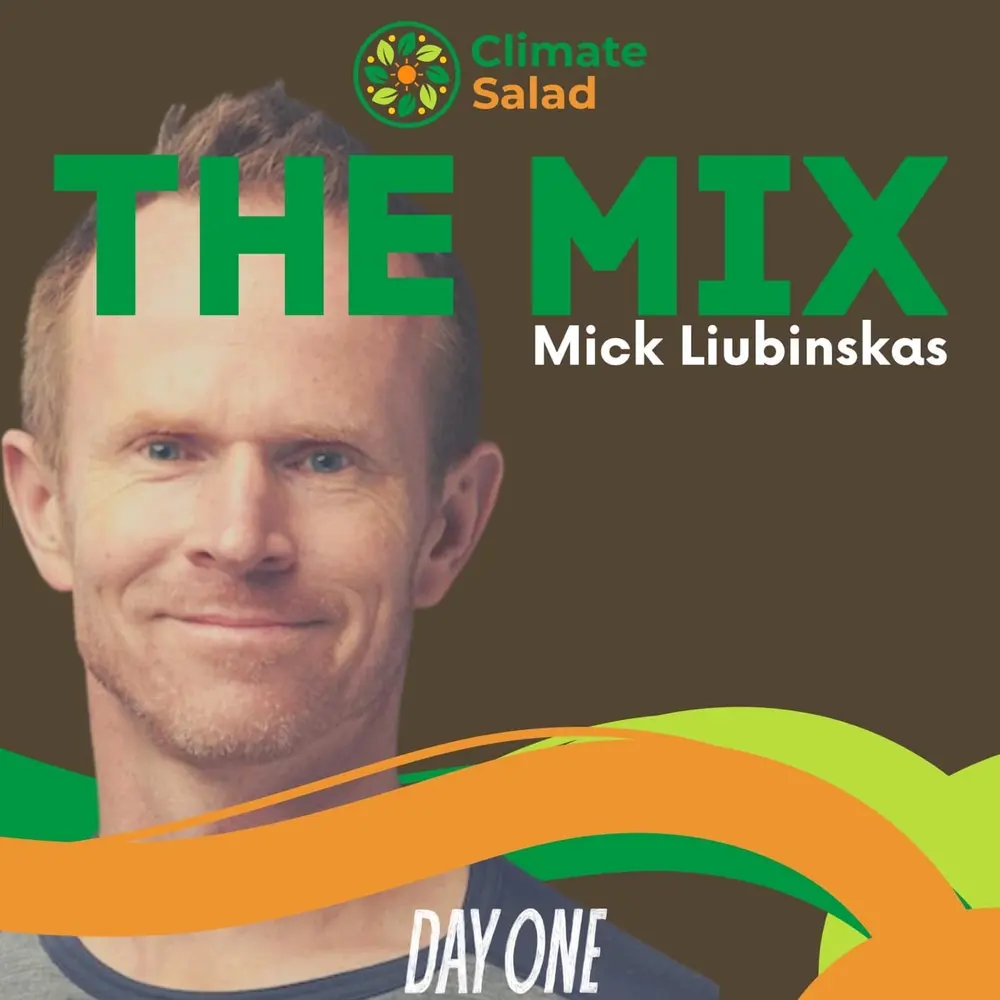
Transcript Synced · select any line to jump ▾ 0:00 Speaker: You're listening to a DayOne.fm show. 0:05 Speaker: What drives you to make bold moves, to build something that didn't exist before, to live, lead, and choose life with intention? Welcome to Perspective X. I'm Pauline Fatowi, and this is not your typical business podcast. Each episode, I get to speak to extraordinary entrepreneurs and leading innovators to unpack what truly fuels their journey. Not just the wins, but the inner work, the overlooked decisions, the mindset shifts, and the personal moments that sparked something bigger. This show is about the ripple effect of choice, the kind of deep accountability that lets us respond to life rather than react to it. Because when you realize everything is temporary, and you are the creator of your own experience, you start to play the game differently. So if you're curious about how people build meaning alongside success, how they evolve through challenges and shape the world with intention, this is your invitation to listen in. Perspective X, where we go beyond the highlight reel and into the moments that changed everything. Available now wherever you get your podcasts. 1:16 Mick Liubinskas: Hey everybody, it's Mick Lubinskis from Climate Salad here, and as you As you all know, one of my favorite things is speaking to entrepreneurs about the incredible solutions to create a climate-positive world that they're building. And one of those we've been lucky enough to work with in the Global Growth Program over the last year is Tia and the team at Anaxiom. Tia, welcome to the show. 1:41 Tia Collings: Thank you, it's great to be here. 1:42 Mick Liubinskas: Let's just start with the basic. Give us the elevator pitch. Tell us, tell us what you do. 1:46 Tia Collings: Yeah, so I'm Tia Collins, co-founder of Anaxiom. I was fortunate to meet my co-founder Bhajan Rahimi about 12 months ago. So essentially, Anaxiom is on a mission to save water and energy within industrial processes. And at the moment, we're doing that through a piece of technology that he's been working on for about 10 years that is called— we call HydroCool. And over the last— a little bit over a year now, actually, we have been talking to a lot of different customers, potential customers, and have found applications for the system within mining, so refinery of alumina and lithium, where we can save energy and water, green hydrogen, and most recently data centers, which people kind of raise their eyebrows to and go, how does it work across all those things? And I'm sure we'll get into that a little bit later. But amazingly, we have found these really good applications for it and are working very hard to now bring those to fruition and pilot. 2:44 Mick Liubinskas: Fantastic. So really interesting to see the combination of like your backgrounds meeting up with your other co-founder, Look, let's go back to the start of that. How did those two things come about? Were you working in this space, interested in this space? Yeah, and what made the connection to decide to do the wildly challenging thing of building a new climate tech company? 3:05 Tia Collings: Exactly, what made us jump in? So Behjan's obviously been doing this for a very long time. He had actually been trying to look at ways to commercialize that system and hadn't been able to find the right person and actually joined Antler. So we met at Antler. So for people listening, Antler is a program that you can join. You don't have to have an idea, but they used to interview you, I think 10 to 3% get in. So we met there. My journey to get there was very much, I had my first startup in my 20s, learned how hard that is to do, and then sort of had other businesses after that. Social Startup 48, we launched where we used to help people launch social businesses. And I got to a point in my career where I wanted to go back and do that, but didn't necessarily have an idea, but knew I wanted to get into climate. And so was fortunate enough to meet Bijan during that program. And we just worked really, really well together and have ever since really. So since joining, really it was about going out and as I mentioned, having all these conversations and working out where's the biggest impact we can have with Hydrocool in terms of that energy and water that we've set out to do. And also where are we getting that biggest, where do we feel like we can get the biggest traction with customers? And that's really been the last 12 months, is working that out. 4:28 Mick Liubinskas: Okay, well, thank you. That's a really great intro in terms of how you both met. It'd be good to get into some of the team stuff a bit later, but I do wanna come back to that point around you wanted to work in climate, your co-founder had been working on this for many, many years. It has many broad applications. The journey from a starting point to a, big company amongst all of those climate possible solutions around all the industries, it's quite overwhelming. And I find like, it's kind of like, it's overwhelming from a, boy, we've got so much to do. But from your perspective, there's so many different ways you could take it. There's so many different avenues and parts of the solution. Like, tell us about what parts of the value proposition really guided you in choosing this path and tell us about that value. Like, why is that value, um, so important? 5:15 Tia Collings: So I think there's probably a few things there, and I'll talk to it personally because I think there's probably different things that guided Bijan. For me, I had been working as a sustainability consultant and also been working internally within a business doing some of their sustainable strategy and things like that. And I really felt that software has a really big role to play here. It does. And there are some amazing software businesses in climate But I really felt that I wanted to go into hardware and I wanted to be on the ground, really changing things because I saw that in the end of the day, and you see this a lot, you know, you know yourself with a lot of climate startups, really, it's not the easy thing, but it is the thing that makes the really, really big difference. And so when I went into that program, I was looking for hardware and I was very focused on hardware, how much impact. And I think there was only a few engineers in there that were really focused on hardware. So I was very lucky that I got on with Bijan very, very well, but that really did guide me. I had this big idea that it had to be in hardware. Water is a completely different industry to me. I think lots of people understand the energy side. Water, I have come to respect at a whole different level of how scarce it really is. Like we turn on the tap here in Australia, you know, we're one of the, the driest continents on the planet, but actually we only hear about it when we go through drought. So actually working in the industry, it's been really eye-opening and I've learned a lot. But I think having wanted to go into hardware at the same time, it's my first hardware climate startup. It's definitely got more challenges than software, but I'm enjoying the ride. 6:57 Mick Liubinskas: Yeah, fantastic. And the direction of the business, like in terms of all the different ways you could take it, tell us about the value proposition. Like, how does it, how does it mean? One thing I'd like to really drill in here is we can hope that everybody makes a climate-positive decision and pays a green premium, or we can make better products. Like, where does Anaxiom sit? But not assuming that you've— it's all perfect and you've solved all the problems. But one thing I'm really interested in digging into these conversations is the journey and the choices you need to make in order to add enough value to keep going. Yeah., but also to build a big enough business as everything changes. 7:34 Tia Collings: So, I, yeah, love what you said there about building better products. And I actually think that's what it's all about. Like, if you look at the product, the best sustainable product that has hit mass market the fastest is the LED light bulb, right? And they didn't come in and sell the LED light bulb as a product that was sustainable and green. It was doesn't cost as much, you don't need to change it over. And so Anaxiom really sits— and I, I think that's very, very important for businesses as well, is that there's a very big business case when we're selling in. We're saving them operational cost. It works better than what's currently in there at the moment, and it just so happens to have a really big impact on sustainability as well. And I think that's where we're going to turn the needle when it hits the bottom line. When you can actually save money, but also this huge impact on, on the environment. So very much on that side, build better products and, and build them sustainably that they have this impact as almost we can't do anything else with it. We can't not save energy, we can't not save water. But when we were going in and talking to lots of customers, that value proposition we were really looking for was, okay, if we're saving that much energy, how much money are we actually saving them? And therefore, what's the ROI? What's the return on that investment? Yeah. And how short can we make that so that this is something that is very scalable, can be bought very quickly, and is not a big decision once we've proven out the tech at scale to sell it in. And I think, yeah, very focused on that business case. I mean, look at Trump getting in, right? Like we're looking at some American cases and, you know, what's going to happen in green? And we just went, well, it's not just about green because they're saving a lot of money and that's where we're going to push forward. 9:20 Speaker: Yeah. 9:20 Mick Liubinskas: That's a really good point. I think it is difficult for those people who understand the size of the problems that you can't rely on the problem itself as a reason. Now that might change over the next 10 years, I think, as regulation comes in and also as people see that, see that, understand the problem and it's no longer a choice. But I think we're definitely not at that stage. And it just, it does make it much easier. But amongst that, again, you mentioned at the start, all your conversations with such a range of customers and with all of your experience and where you could take it, Is your view that you're trying to create a fairly general product that a lot of people from different industries can use in different ways, or are you trying to actually make it more targeted product and then build sub-products or customizations along the way? Is that, yeah, in any, again, this goes to my interest in the choices and journeys of the entrepreneurs in this space. 10:17 Tia Collings: Yeah, it's a great question. So we think about that in two ways. The first one is the industry and the lifecycle of the industry. Industry. So if you look at selling into mining, it takes a very long time. Quite a risk-adverse industry. We know that for us to get in there, that's probably going to take us a few years of trying to pilot, trying to push forward. A lot of businesses have died trying to get in there, but for us it's a big one and, and we know we can make a massive impact. And in terms of the mission that we're trying to prove, it's a really good one for us to go after. So we kind of see that as like, okay, it's a really long-term play, but we want to start making those plays early in that in that market now. In terms of, you know, going into data center, we see that as much faster. And so we could probably get a product into market, which is what we're working on in the moment, which is very quick. You know, you're using this system, it's A, B, or C in this brochure. But where we have really focused is the system is very, very similar as long as we focus on within a a couple of percentage of degrees. So within sort of 5 degrees or 10 degrees plus or minus, we don't actually have to change the system too much or optimize the system too much. So we've really focused on the temperature ranges that we're going after. So for the audience, our system doesn't run on electricity, it runs on waste heat in an industrial process. And so we've really focused on the temperature that we're taking from that industry to help us on that sort of roadmap journey to, to commercialize and to also make it simpler. Because otherwise, we know that if we go after too many markets, it's too many things that we've got to change about that product. We're probably going to die getting there. Um, and so we do have to get really focused on what's the roadmap of the product, how are we going to actually get it to a point where we can commercially sell it, um, but also make some bigger bets on bigger industries like mining that might take us a long time to get there, as I mentioned, but have a huge outweighed impact if we, if we can. Hope that answers your question. 12:21 Mick Liubinskas: Yeah, really, really interesting. I think it is, um, you know, two big choices you made around number one, uh, with the laser-guided focus on hardware. Like, that's a bold choice, but I think, I think it's, um, an important one because I agree software is very important, but will— is not nearly enough by itself. We can't optimize our way to climate positivity. So that is really, really, really interesting. And then I think a good point around the knowing the speed at which your market moves. Like, you can be the best entrepreneur and the greatest salesman and have the best, most incredible product ever, but I think it is very, very difficult to get a market to move faster than it is ready to move. Yeah. And again, one of the frustrations is that the markets are, they're very big and they're very slow. And I think it means there's lots of great revenue and business opportunities when we nail it, but it is gonna take years. So that you're building that patience into the business. 13:23 Tia Collings: I think so. Like we have gone the venture route, we have taken venture money, but I think as a business, you know, in the climate that we're in, in terms of financial climate, we very much are focusing on getting the sales in as well and focusing. And so we know that as a business, if we were purely if we were only to focus on mining, for example, we'd be more heavily reliant on having to raise to close that gap. Whereas if we can go after these other very big growth markets where there's huge issues, especially within data centers that are moving very, very quickly, we can be self-sufficient. And that's what a lot of climate— I know a lot of businesses need to get to very, very quickly to last. 14:00 Mick Liubinskas: Yeah. Are you in your conversations with data centers? You've mentioned that a few times now. It's a really interesting one. We had a conversation about a month ago around the massive benefit potential of AI to solving climate problems with a massive cost. A climate— sorry, data centers. I think a lot of people like you and me would recognize that as a major problem. Data centers themselves and those people who operate them, are they really, really aware of the climate challenges that they're facing? 14:29 Tia Collings: Absolutely. And different businesses have different lens on that. But when it comes to data centers, I think it was Gartner just published a paper early, late last year. New Year's, like, throwing me off, which said that only 40% of data centers will actually be able to build. So you're coming up against literally boundaries on the amount of water and the amount of energy that they can consume or that they can take from local communities. And so I think that it's not just a sustainability question in that market anymore. It's actually, it's not there. It's not there on the grid. It's not there to be taken. You know, there was the Macquarie Park article recently in Sydney Morning Herald last year as well that said in that area they're not able to build houses because the data centers are using so much water. So we're having this huge issue. And so I think for them it's actually whether or not they can run their business or they can actually build that data center. And we talked to a very large data center operator within Australia that call themselves the dead ducks. Mm-hmm.. And literally what they said was, you know, without that energy permit, without that water permit, we actually can't build. And so for us going after that market's obviously been critical cuz we've found that what we are offering and what we can help them with is so critical to that being able to run their business. And I think if you can find that and also help solve some challenges on the way, that's where we've talked about that sort of product fit or being sustainable. You're suddenly fitting into that mission critical of the business. Um, and so, you know, obviously focusing, focusing a lot. So I think a lot of them had said they were going to do things, a lot of them have done a lot of things, but now are having to look at that really seriously. And I guess there's some, some really scary, you know, I get worried like they're using nuclear energy now in America. Um, Microsoft just is trying to get the Three Mile Island, um, you know, nuclear plant. So I think, yeah, we're definitely seeing those limits push and looking at nuclear again, which I didn't think we'd see for data centers. 16:26 Mick Liubinskas: Yeah, it's really very interesting 'cause in data centers, again, I think assuming that they need to play a role, right? I think it's unlikely we're gonna turn them all off, but the combination of energy, heat, water, geography and location, even the cabling and plastics and the e-waste, like they represent, and I don't think people, get the scale. Like, I think they kind of think, you know, like everyone sees their home computer, but the amount of actual, you know, the size and scale of data centers is just incredible. And it's a bit like waste and meat usage and even energy generation. It's kind of hidden away. Or you just go, oh, wow, how fast is my Google search? You're like, yeah, it's great, but it comes at a cost. So yeah, that's interesting to say that that's biting now. And we're starting to see this, that people actually move from talk to action. 17:24 Tia Collings: Yeah. And I think, as you said, there's a lot of benefit that's going to come out of it. Like, AI can do a lot for us. It's just how we now balance that growth of AI. And as you said, like, the numbers are pretty scary. Like, in the next 2 years, it's predicted that the energy consumption will more than double. And to put that in perspective, that's about 3 times the energy consumption of the whole United Kingdom. 17:45 Mick Liubinskas: Yeah. 17:46 Tia Collings: 70 million people. That's the size we're talking about. And in terms of water consumption, it's half their annual drinking water. That's drinking water they usually compete with. So it's huge. And that industry has some big problems, but obviously, you know, need to navigate it and are trying to. 18:01 Mick Liubinskas: Yeah. Look, you've been a part of the Global Growth Program, and I know you were definitely globally ambitious from the start. Can we jump into building a climate tech company in Australia that has global ambitions? Tell us about how you've balanced that, and love to get into what your current thinking is. 18:19 Tia Collings: Yeah, I think we've got a long way to go, but how— what our current thinking is, so we've kept manufacturing here in Australia. We do also have suppliers that we ship in different things for the system. And the reason is for that is that we can have a huge eye on quality control. We're not investing in our own manufacturing. We are using third party, and that's to keep light on our feet and not have a huge, you know, have to raise so much money or have that risk on our balance sheet. I hope that we can continue to manufacture part of that. And how we're thinking about that at the moment is sort of having the sort of of maybe not as much IP made overseas and then more of the construction and assembly done here. But as a climate business, we're also thinking, you know, we had a big project overseas and we don't also wanna be shipping that system overseas. So we are looking at assembly on site or how we could do assembly closer to the regions that we're looking at selling in. And I think what that will mean for us and, and what we're talking about at the moment or to at the moment is sort of global manufacturers that could help us take the emissions out of our own supply chain, but also enable us to do a lot of that assembly closer to where we're selling. So, and it's always that challenge, I think, as a, as a climate startup where you're so aware of the problems that you can cause yourself, that we're building climate tech product, but also then trying to think about how we ship that and how we grow that. That manufacturing is really, is really key. And we're not going to get it right at the start, but I think it's a journey that we're aware of and that Hopefully for us, we can, we can get a really good partner that can help us assemble closer to sites that we're selling. 19:52 Mick Liubinskas: Yeah. All of the companies we work with are unique, but then there are some definitely signals around different markets and regions. Do you think about regions like, like, do you think about Europe as an opportunity in Asia broadly or Southeast Asia or USA? Is it individual companies? Is it customers across multiple markets? Yeah, how are you thinking about addressing that sort of global growth? 20:15 Tia Collings: So at the moment, you know, we're very much at pilot stage in Australia. We're very focused on getting those initial pilots up here and being very close to them and making sure they run, they run really well. But how we're thinking about that global growth piece is very much at the beginning, sort of trial and error. Like, it's good for us to get a customer first, to get a paid customer first. And a lot of these companies we're talking to are global. So if we can get it right in that location, then hopefully we can expand with that, with that company. And at the moment it's lots of conversations. So in Europe, water and energy has been mandated by the EU for data centers. And so we're really thinking, is that going to drive a lot more change and shift in that region faster than America, say, whereas America's a bigger— You just, you know, everything's bigger, the scale's bigger, the market's bigger. Like, which one is it? So I think it's a lot of testing. For us. And this year I have got kind of a bit of a roadshow planned in both of those areas, you know, Singapore as well, just to feel out the market and to see, can we get some interest here? Can we get some sales? And I think we'll really be customer-led in that initial piece. Can we get some customers on the ground and then look at expanding in that area and having those customers support us in that market? 21:29 Mick Liubinskas: Yeah, that's great. It is really interesting to see. I've never experienced such diversity and spread and pressure on focus because Europe has such significant regulation progress. USA has this big combination of capital and innovation and entrepreneurship. And actually, I think despite what is happening in the federal government, state by state, there is actually a lot of positive activity. I think it would be a huge mistake for people to think, oh, the US is gonna be climate negative from now on. I think that's not the case. And then in Asia, you actually have just like, you know, half the world's population and massive growth, massive opportunities. You know, there is such complexity and opportunity within that across the globe. It's gonna be really interesting to see how that plays out over the next few years. 22:20 Tia Collings: Yeah, I'll keep you updated. [LAUGHTER] And I'll add to your point as well in the US. We have been talking to companies in the US and that has not slowed down. And I think it's still— yeah, people that are out there starting their own business, definitely don't discount them in sustainability because some of these massive companies are still going, they're still hitting their targets. Like, it hasn't, hasn't really changed, um, you know, and especially in the states that were already doing that, they're still continuing. So we haven't seen a huge change in the conversations yet. 22:49 Mick Liubinskas: Yeah, I think so too. Uh, we'll, we'll have to keep updated on this one. 22:54 Tia Collings: Yeah. 22:55 Mick Liubinskas: Tell us about 2025, like in terms of what you can share, what's the goals, what's the ambition, like what's next? 23:01 Tia Collings: So we've got a big operational pilot with a data center that we're delivering early this year. So that's a really big focus for us to make sure that all goes really smoothly. We are also closing our seed round, which is pretty exciting. So we'll do that sort of early this year, hopefully as well. And then for us, the focus is more pilots, more operational on the ground, but also to scale the size of the system because When we talk about scale and we talk about impact and selling it, there's a point at which it's too small, it doesn't make any sense. And then, you know, this is where it really can shift the needle and turn. So our focus is really about getting the system to a scalable size and really focusing on sales at that size. You know, definitely in both the markets that we're talking to, we're talking at big scale in mining and in data centers. So yeah, scaling and also scaling our team. We currently rely a lot on contractors. We're still very founder-led. So we're, yeah, we're finding engineers and trying to scale that team this year. 23:59 Mick Liubinskas: Do you find, in terms of your previous experience, is it different building a team in, in a climate tech business? 24:04 Tia Collings: Most of my businesses have had a climate spin on them or have had some focus on it. I think it's very different growing a business in hardware, and I think we've found it very hard finding engineers with the right level of experience that are also willing to leave quite renowned companies to then start at a startup. And I think we were listening to, actually getting some advice around this, do you go for someone that maybe you can train up, but that takes a lot of time when you're a really small team, or do you go with someone with the experience, but they're set in their ways and it's really tough, they're not cheap, expensive. So I think that's, that's the bit that we've really struggled with, and we really positioned ourselves with not being corporate, you know, giving them the freedom. Come on, you can have shit like shares in the company and, and be part of it. And I think we're getting more traction with those type of conversations. There's types of people that go, I don't want to do that, that's too much risk, um, and other people that that really appeals to. And for us, it's, it's, you know, that number one value has to be aligned, that they are also interested in making a difference. But yeah, we have found it really hard to find good engineers. So if there's any good engineers listening— electrical, mechanical, process— come and reach out. 25:23 Mick Liubinskas: Yeah, I look, I think it's an incredible opportunity, and I, I would guess that it has shifted in the last few years of just the amount of people who recognize that it's not— this is not a kind of environmental thing that Greenpeace does and blah blah blah. It's like like, oh, there's actually a global shift that's gonna take maybe 50 years and that it's really important and there's lots of work to do. I think for a lot of people who sort of say, oh, it's gonna be so bad for the economy if everyone goes climate positive, like, I think there's gonna be significantly more jobs being climate positive than certainly fighting against it. But yeah, I think it's interesting to think. I think we've got this dual thing in Australia where we certainly don't have the tech industry, the scale of Silicon Valley, like nobody does, We are still kind of, you know, there's people who've made money out of Canva and Atlassian and some others, but there's not a natural thing to join a company and take equity and want to be a part of that. Like, we are still a bit risk averse, but I'm hoping that the climate positivity sort of accounts for that, right? It's like, hey, I want to be a part of something really positive and purposeful and impactful. So yeah, hopefully that— Hopefully the job requests could just roll in over the next, after this podcast, that'd be great. 26:37 Tia Collings: Yeah, that would be amazing. 26:38 Mick Liubinskas: That would be amazing. 26:39 Tia Collings: And I think you're right. Like, it's not something that's gonna take a long, it's gonna take a long time for us all to shift. But I did a course with Cambridge around that transition and that net zero. And there was something they said really early on and it was, it was kind of, I'm gonna misquote, but it was about the transition to net zero. And it was literally saying, we've all got to accept that it is actually inevitable. So fighting against the inevitability actually is just gonna slow your business down. And for me, that was a real mind shift because they said, if you don't transition, you're gonna be left behind. So think about it like— And the other thing that they said was it's bigger than the Industrial Revolution, Agricultural Revolution, all combined, it will be bigger than all of those things combined. And that, those two things really blew my mind. 'Cause I really thought, okay, actually it probably is inevitable because we actually can't operate like this anyway. And it really has this mind shift in we have to do this. It's just when companies are ready to do it. 27:33 Mick Liubinskas: Yeah. 27:33 Tia Collings: Yeah. 27:34 Mick Liubinskas: I think that's really true. And I've certainly got to that understanding over the last 3 years. I think there was 3 years ago, there was a lot of headwinds and I think more people, well, I think more people still don't get it fully. And there's a lot of people who just don't have a choice, right? In terms of like developing nations and people around the world, like 90% of people aren't sitting here going, I've got lots of spare money, why don't I go and buy an EV? It's like, people are still trying to live their lives. So I think it's, I feel certainly in a very privileged position to understand it and to be able to go and make a difference. But I think over the last few years, we've definitely got to the point now where both the inevitability of the systems and the whole industries that need to change and enough people understand and get it. I think we've, That's the first tipping point, I think, positively that we've tipped over. And so I agree. I think that's— I don't have any worries now that it's like, oh, we're not— we're never going to go there, or we're going to go backwards or fight it. Like, there's going to be challenges. 28:35 Tia Collings: Yeah. 28:36 Mick Liubinskas: And in fact, I speak to one of my good friends about this, and he's like, yeah, the reason why it's harder now actually is because we're closer to the major tipping points. That's, that's where it gets really hard. And I really remember the internet where it was kind of like Initially, no one cared 'cause they thought we were making stuff up. They thought it was like, they just thought it was just complete rubbish and it was nothing. And then actually once it became really real and they're like, oh my goodness, we're gonna be disrupted, that's when the fight got real. So if the fight feels harder now, that's actually a really good thing. That means that actually we're in the thick of the important stuff. We're getting close to like really, really meaningful tipping points, so. Yeah. Totally agree with you. 29:16 Tia Collings: Yeah, I love that. 29:17 Mick Liubinskas: Yeah, I've been asking people this and I'm not, not to hold you to anything, but in terms of like the, over the big periods of time, 'cause I think you're exactly right. Like when I first got into climate tech, I thought I was taking tech and then focusing on just climate tech. And then you're like powering, growing, making, moving, and cooling. Like it's everything, we're changing the whole world. So we are going through this and people like your co-founder have been doing this for many, many years. I've been sort of in sustainability, clean tech for maybe 8 years now and really doing climate tech hard for maybe 4 years, but there's people doing it for much longer than I have. But where do you feel we are at? Like, are we going to be in a, are we gonna be struggling for 10 years? Are the next 3 years gonna be like landmark changes and we start, when does it become normalized, I guess? Do you have any sense of the overall timing of this? Battle? 30:11 Tia Collings: When does it come normal? I think it's a huge question. I think I've seen so many startups and things tackling some really big problems. And if you think about how long it actually takes to get to market and then actually get to changing that market and acceptance, it does take time. But I think look at the exponential growth of solar and wind and how quickly that came up on us. And it was a shock even to some people to think, oh my God, you know, we're running days on zero, you know, in Europe or in South Australia. And someone said that to me as well. We're really good— we're not very good at understanding exponential growth ourselves. So it's my hope that all these little changes and all these little things, suddenly we're going to look back quickly and go, actually, we've made a big impact. 30:56 Mick Liubinskas: Yeah. 30:56 Tia Collings: Definitely. We haven't seen it yet, though. You know, we haven't seen that number come down. And so until we start seeing, you know, parts per million reduce dramatically, you know, and actually the numbers come down. Like, I keep thinking every year, is it going to be this year? Are we going to see it come down? Are we going to have that tipping— are we going to hit that point and then of no return and then keep coming down? 31:17 Mick Liubinskas: So I think I'll be much more confident when I see that. 31:19 Tia Collings: And hopefully 2025 is the year that we do. 31:23 Speaker: Yeah. 31:23 Tia Collings: But I think over the next 10 years is really— well, like, and you're not going to slow— I agree with you, we're not stopping now. We're on this this, and actually at a financial point of view, makes more sense, more commercial sense to invest more into solar and wind and these renewable energies than it does in starting up a new coal-fired plant. So we've hit that tipping point. So my hope is, yeah, the next 10 years we really see that eat away into different industries, because even when you look at, say, a non-sustainable business today and what they have to do to be sustainable, every part of that supply chain has to change. Yeah. And it's a lot like even for us to be sustainable or neutral, even though our product is doing amazing things, but for us to actually be neutral ourselves, we need all these other businesses to rally and do things as well. So yeah, my hope is the next 10 years we really start some changes, but I want to see this year, I want to see the parts per million, you know, carbon come down and we've hit peak. 32:20 Mick Liubinskas: Yeah, I really, really think that that's important for everyone to understand both the combination of, as I said, the fight is still real, so don't stop fighting. Happening, but also these things happen gradually, then suddenly. And I'm— and my gut has been saying 2027 is the suddenly year where basically it's like— because I agree, we've got to line up a lot of things just to make it work, and it's not going to be pretty and it's not going to be perfect. It's going to be like— it's easy to poke holes in and say, oh, but Anaxiom, yeah, but you, you flew to Sydney and that's not sustainable aviation fuel. And you're like, Yeah, sure. But someone else is working on that problem. You're like, there's 100 things, but then when I've got this theory of exponential convergent growth, and it's basically when things combine together, they actually eventually just produce 10,000% benefit. And so 2027 is my bet. If I'm right, we'll come back and you can celebrate how wonderful and smart I was. And if I'm wrong, I'll just delete this podcast. cast, pretend it never happened. 33:23 Tia Collings: We should cut that bit out. 33:25 Mick Liubinskas: We'll totally cut this bit out in the future. Amazing, thanks so much for sharing. It's been really, really interesting for you to understand a bit about the journey and where you're going to next. A lot of people coming into Climate Salad are thinking about either joining a climate tech company or starting one. Any thoughts for someone who's sitting on the fence and wondering whether they should jump in? 33:46 Tia Collings: Yeah, I guess for those of you who are keen to start something but don't have an idea, look at something like Antler. It can be really really good to find a co-founder. It was for me. I think as well, jump in quickly and validate quickly. Like, if you've got an idea in the space, just start getting out there and talking to customers and kill it quickly, or know if it's going to survive quickly. I think that's one of the best things that— the best things you can do, you know, is to validate, validate. And even if you're not ready, because a lot of those customers— I mean, think about the approach. Obviously, don't go, this is my idea, what do you think? 34:20 Speaker: Yeah. 34:21 Tia Collings: But if you sell it right, a lot of those customers will help you develop and be your advocate and champion you. And then, you know, you've got a real business to, you know, leave your corporate job for, or whatever it is that you, you need to do. So I would say validate really quickly and think about that LED light bulb, like how are you going to be better product or service, not just from a sustainability point of view. And there are a lot of products that are just the sustainable, better, the sustainable version, right? Like a Cozy Girl. Sure. Tree card. They're just the sustainable version. But I think the real ones that are really making huge difference are they're, they're also a better product and they've, they're a better business, you know, offering. So I think, think about that as well, about how you might not be today, but how you plan to be, or how you plan to grow into, you know, being that better, you know, value stacking, you know, so people can't copy you. And we need companies to succeed in this. So either fail fast or— And think about that, that road about how you're going really differentiate, differentiate yourself and offer something that's more valuable on top of the sustainability piece, which is a challenge, isn't it? Because, you know, climate startups already have this challenge to go up against. And I think for a lot of people as well, I would say, like, I've met a lot of founders in this space that want to change the world, and they carry that on their shoulders. So I'd also say, if you're thinking about it, do connect with, you know, communities like Climate Salad because you realize you're not alone. Yeah. And we've been overwhelmed by communities like Climate Salad with people that have given us their time, their thoughts, their feedback for free, sat down with us to support us, to, you know, people like you, people like the Climate Salad community. So I do that as well. Find communities that will give you that because it can be lonely. And there's a lot of people out there in Australia and abroad that want to help this and see companies like like us and like others succeed. 36:14 Mick Liubinskas: Yeah, I think that's been one of the most wonderful things about this whole experience is partly the challenge is bigger, but I think the collaboration is even bigger and it's been so positive. And I really, really appreciate the shoutouts there, but it is, we're really proud to be enablers, but it is about, and it is a lonely hard journey, it is frustrating at times, but it is, if it's a shared journey, then it can be made just that extra little bit better along the way. And I'm a big believer that we are making tremendous progress. I think it is some of the things that are hard right now are actually going to be benefits over the next few years. So we just have to— it's been a tough— 2024 was a tough year, but I think 2025 will be a bit better and 2026 is going to see some growth. And as I boldly said, 2027 is going to be a big, big year. So yeah, for you and all the other climate tech companies out there, please keep going. Thank you so much for sharing and being a positive part of this community. And let's keep growing. 37:10 Tia Collings: Perfect, thank you.