Transcript Synced · select any line to jump ▾ 0:02 Speaker: Founders scale faster on Deel. Set up payroll for any country in minutes, hire anyone anywhere, get visas handled fast, and get back to building. Visit deel.com/dayone. That's D-E-E-L dot com slash day one. 0:23 Speaker: Are you building a SaaS business and looking to achieve compliance with SOC 2 and ISO 27001 or other security and privacy frameworks? 0:32 Speaker: Compliance can unlock major growth and build essential customer trust, but let's face it, it's usually time-consuming and expensive. 0:37 Speaker: And like really kind of a pain. 0:39 Speaker: That's where Vanta comes in. Vanta automates up to 90% of customer compliance tasks, making you audit-ready fast and saving you up to 85% of the associated costs. Plus, Vanta scales with your business, offering a market-leading trust management platform to continuously monitor compliance, unify risk management, and streamline security reviews. Join 7,000 global companies, including Atlassian and Dovetail, that trust Vanta to build and prove their security in real time. 1:03 Speaker: And for our listeners, Vanta is offering 10% off. 1:06 Speaker: Just go to vanta.com/first. That's vanta.com/first. 1:14 Speaker: Okay, 3, 2, 1. 1:19 Speaker: Hey, I'm Sheryl. 1:20 Speaker: I'm Maxine. 1:20 Speaker: This is First Check, part of Day One, the network dedicated to founders, operators, and investors. 1:25 Speaker: If you want to be a better early-stage investor, this is the show for you. 1:28 Speaker: So TL;DR, if you don't want to suck at investing, listen up. All right, well, our next guest, I'm so excited. We are going to be talking to Bronwyn Cloon. What I'm so excited to talk to Bronwyn about is just her like history of going from like media to startups to like back to media to back to startups. Like she's got so many different perspectives. 1:59 Speaker: Totally. I mean, I think she is in an information nexus in the startup ecosystem, especially for Australia, that I think is super rare. Right? Like, she straddles so many different places. She has so many interesting conversations every single day and is so deep in the ecosystem and actually like quite an OG for the ecosystem. She was part of some coworking spaces and communities super early on in the kind of development of the Australian ecosystem. So I'm jazzed to just hear how she thinks it's developed over time. I think because she wordsmiths all day, she's also just like a total delight to chat to. 2:32 Speaker: That's so true. But yeah, I mean, like also going deep thing, like she, goes deep on so many interesting topics that I'm always like surprised. I learn something every time I read her newsletter. And actually that's probably another thing. It's one of the things that like I actually do read on a regular basis. I sign up to a lot of newsletters, but The Capital Brief is the one that I do read quite regularly. And often I'm like, wow, you just like picked a topic that to me offhandedly would've seemed totally irrelevant and then talked about it in a deep way and then brought it back to the tech ecosystem. Which like, I just love the way her mind works. 3:07 Speaker: That's the best. I actually cannot wait for this. Let's dive in. All right, let's get into it. 3:15 Speaker: Do it. 3:16 Speaker: I am so, so excited for this podcast and for this conversation that today we have Bronwyn on with us. Excited to dive in. So we ask the same question for every one of our guests when they join us, which is, what is the first thing you have ever invested in? 3:30 Speaker: Well, probably myself, I would say. You know, my journey into startups was actually when I was working as a journalist a few years ago. This story will age me, but anyway, I, uh, the internet wasn't quite the thing we, we have today, but I was kind of very early using the internet. I was working from home, I was freelancing, I had young kids, and I kept saying to everyone in the newsroom, you guys, this changes the game we're in. This is gonna change the game we're in. And for a bunch of people that, um, you know, pride themselves on curiosity, they weren't very curious about what the internet was gonna do to our industry. And so I started what was probably one of the earliest citizen journalism news sites in the world at that time. 4:17 Speaker: Whoa. 4:17 Speaker: And that actually is where I kind of landed up in my big entry into startups. But that was it, 3 years at the helm of something very new at that time. Never made any money, but I still think that was probably, you know, I think of it as a 3-year deep dive into startups. But it really was a big investment, I think, in myself and taking that risk at the time. 4:41 Speaker: Oh my God, that's so cool. I had no idea. So what, can you tell me a little bit more about what, like, what was the era that you were doing this? We're talking like the '90s dot-com? So yeah, early '90s. Saw the cool. 4:52 Speaker: It was around the time Twitter was launched, you know, Reddit and Reddit was big and there was, who was their competitor? Digg, Everrose, like all these new things were all coming onto the kind of scene where people were kind of like curating news live. And I really looked at it and I was like, this really fundamentally changes how we, how people consume news, but also how we gather news. So Twitter to me was the most amazing thing, especially back in the early day, like just really was in my wheelhouse of interest. So very early on Twitter and, um, you know, I think it really did change journalism a lot. Obviously it's had its own journey. Um, but yeah, that was sort of, yeah, the era. Look, back then the startup scene in Australia, you could probably name the 12 of us. We all knew each other. There was an email list that had Mike Cannon-Brookes and Scott Farquhar on it. Like, you know, It wasn't a lot. 5:50 Speaker: Yeah, wow, that's so cool. 5:51 Speaker: I'm impressed that you even like called it that, like there was even a startup scene back in the early '90s. 5:58 Speaker: Like, oh, it was, it was, yeah, it was very little. Um, but you know, we really, even back then, we kind of really punched above our weight. You know, Australians were some of the earliest podcasters. Like, you know, we had a Silicon Beach podcast and, you know, we'd get on to a call with people at that time, like Michael Arrington, and, you know, Jason Calcanis, I think, was on the podcast with us. Like, you know, it was really— the scene was tiny, um, but, you know, Australians were still doing kind of really impressive stuff back then. 6:31 Speaker: I am forever— and this might sound like a crazy thing to say, but I am forever just amazed by the way that Australians punch above their weight, right? I like, most recently I didn't realize Peter Singer was Australian. 6:44 Speaker: Oh really? 6:45 Speaker: And then he was at Sunrise and I was like, oh my goodness, like think about the impact that that man has had. And that's just like one. And maybe I'm just like, I'm reasonably patriotic, but I just think it's so cool and really impressive the pace at which Australians kind of, or like the front runners of Australians run and pick up new initiatives and like new insights and really run with them. We've done some really cool stuff and that's, I mean, I was already super excited for this, but just like, I'm wowed by the fact that you were like one of those 12 on that email distribution list building early startups. 7:20 Speaker: I know, right? We had this joke at Sunrise where everyone was like, oh, oh yeah, Bronwyn, she's really OG. And then I was like, oh God, this is starting to make us feel like the veteran elders of the ecosystem. But there are, I mean, and a lot of us involved back in that day. There's still a lot of us still involved. A lot of people aren't, but you know, a lot of us still are. I mean, I know, you know, I know Ian Gardner and Clayton Stowe. I know Nikki Shebak from back then. I was, you know, at Pollinizer, um, on the day that Nikki closed Blackbird. I worked at Pollinizer with Phil and Mick Kavinsky, Phil Mullen and Mick Kavinsky. And you know, when, when Blackbird closed, we, we didn't really have VC before that. I remember Mick coming into the office at Colonizer and saying, hey, we've just started this thing, Startmate. You guys better come down and let's just talk to them about everything we know. We didn't really know that much either, but you know, it was, it was very early. It was a very fun time to be involved in the scene. That's so cool. But that's kind of where I got involved in the scene. Yeah. 8:22 Speaker: That's awesome. I do, I do think starting a company, regardless of the nature of the business that you build, Right. Is an investment in yourself. I've seen it time and time again, just the pace of development, both skillset knowledge, but also like personal development stuff. Like I just don't think that there is a better investment in personal development than starting a company, like stepping onto the field and doing a really, really hard thing. You know, you just have to learn so much about yourself. So what was your journey back from that startup back into journalism? Well, I guess you stayed in journalism, but back into a different form of it? 8:57 Speaker: No, I actually stayed in startups. I worked in startups while I worked in Pollinizer. Yeah, no, I've actually worked more in startups that I have in journalism. So journalism is my first love. I created a startup because I really felt like news needed to get this right. Unfortunately, the trajectory of that industry has, has not been great. You know, we landed up chasing eyeballs you know, it became about, um, you know, wanting hits over integrity of journalism. But fundamentally, I still think the thing that journalism has to sell back right now is the basics of journalism. So I think we've done this big kind of journey. My journey was really until this job, I'd worked in startups. Most recently for Launch Peak, which was a Victorian government agency. But prior to that, I was also on the founding team of CultureX. So I, you know, went to San Francisco with John, one of the founders, and we grew Culturump out in the US and also the UK. So, you know, I was employee number 8, I think, at Culturump. 10:00 Speaker: Wow. 10:01 Speaker: And then I, I, I've always wanted to get back into news because, like I said, I think more journalists should be like startup people and like, what's broken? How can we fix it? And that's always been a question for me about news. Broken, we have to find a way for this model to work. And I actually didn't know John McDermott. I knew of Chris Jansen, I didn't know David Iceman, the founder of Capital Brief, but I saw this ad and I was looking for a job, but begrudgingly, because, you know, like a lot of people, you don't want to go work for someone else. 10:34 Speaker: Right. 10:34 Speaker: But I saw this ad for Capital Brief and I was like, okay, they sound like the come and get it. But I just don't think 3 guys out of Fairfax, 3 dudes out of Fairfax are never gonna really agree with me what, how they think these things change. And when I met them, I was really pleasantly surprised. And you know, at that stage I was like, well, I care enough about this to help fix it. So, you know, that's, that's why I'm here in this role. But, but really fundamentally, I've had more of a career in startups than journalism. Yeah. I edited Startup Smart, which is now Smart Company, but we had a separate publication on startups as well, just before I joined AllTrans. And at that stage, startups were still being reported in Australian media as like small businesses, so they threw like franchises and new companies and everything into that startup thing. And I was like, look, that's not really what this word means. No. So, you know, maybe we didn't have a big enough industry to sustain it back then, because that would have been 8 years ago now. Where now I think, you know, we certainly do. We certainly do. And Capital Brief, it's really our biggest route, just because there's so much happening. 11:51 Speaker: Yeah. I mean, that's the one that I read. 11:53 Speaker: Yeah, me too. 11:54 Speaker: Oh, actually I do read Letter of Intent as well. That's— but Capital Brief is the one that I like actually read, whereas the others you kind of skim through, get the points. Yeah. Yeah. I think when you've done with Capital Brief is— and I'm— so did you not, uh, did you start it with them though? Like, they pitched it to you, but I, I've only ever known you as the person who writes for Capital Brief. Like, was there something before and you took over? 12:15 Speaker: No, no, I'm— no, no. So we— it's brand new. We all came together. We— they had an amazing group of journalists. Um, you know, we've got a great team. And, you know, the interesting thing is newsrooms are really kind of old school in the way they do things. There's a big hierarchy, there's a lot of, a lot of ego involved in a newsroom. We've really built something very different. It's very collaborative. We've got a great kind of culture, and I think that's also been a big part of its success. 12:52 Speaker: Why the content is so good. 12:54 Speaker: Yeah. And look, the other thing I think Is, you know, we are a startup as well. You know, I'm, I think I'm the only person probably in the team who's actually worked in startups. You know, Chris, uh, David and John were part of the team at Fairfax that was originally given the task of go out and tell us how we can make legacy media work. And they essentially looked at each other and were like, I don't think we can do it in legacy media. Which is great. But I do think it's interesting that a lot of the conclusions I've come to around what would work as a business model were very similar to the ones that they came to. And else I wouldn't have joined. There's no other newsroom I probably would've joined despite it being something I've always wanted to do. 13:41 Speaker: Are you building a SaaS business and looking to achieve compliance with SOC 2 and ISO 27001 or other security and privacy frameworks? 13:49 Speaker: Compliance can unlock major growth and build essential customer trust, but let's face it, it's usually time-consuming and expensive. And like really kind of a pain. 13:56 Speaker: That's where Vanta comes in. Vanta automates up to 90% of customer compliance tasks, making you audit-ready fast and saving you up to 85% of the associated costs. Plus, Vanta scales with your business, offering a market-leading trust management platform to continuously monitor compliance, unify risk management, and streamline security reviews. Join 7,000 global companies, including Atlassian and Dovetail, that trust Vanta to build and improve their security in real time. 14:20 Speaker: And for our listeners, Vanta is offering 10% off Just go to vanta.com/first. 14:26 Speaker: That's vanta.com/first. 14:31 Speaker: Yeah, that's super cool. It's so impactful to have something like Capital Brief in the mix. I mean, this is maybe selfish, but would love to kind of continue that thread and hear like, what do you think the future of journalism looks like maybe in Australia? And globally, if you have a view there, because it is such an important pillar of a thriving ecosystem, a functioning democracy, happy, well-adjusted people. And it does seem like it is structurally under threat. And so, yeah, from someone who has got this incredible interdisciplinary experience and insight, do you have a view on what you think is going to change there, or are you kind of just waiting to see the way it plays out? 15:16 Speaker: I, I've got so many views, Nancy, and I don't know how much time you have. Look, I, I, I think we're at a really interesting precipice, and people are very critical of journalism today, and I would probably largely agree with them because where we've landed up is not where it began. And I think that the fundamentals of journalism in being fair be honest and transparent in your work are still true. And I do think that the only things we have to sell back, you know, the old model of advertising, kind of advertising was the business model and journalism was the product. You know, it, it worked when it worked, but it's broken and that is gone. So I do think paying for news, the model of subscriptions is fundamental. I think it only works for niche news though, like business journalism, people will pay for it. General news, it's harder, but then I also think it's important for institutions like the BBC and the ABC to continue to be funded and for politics not to become part of that. And unfortunately it has. You know, in America they have a much bigger history of philanthropic support for independent journalism. I think that's also healthy. So when it comes to general news, the model doesn't work, but I I do still think like phase one is winning back trust of the public, and I think that's going to happen. Like, social media is not what we all thought it was going to be. Kind of landed up a bit of a mess, hasn't it? 16:54 Speaker: It has a little bit, but what, you don't think people would want to pay like for 10 ways to lose 10 pounds over the next 10 days? 17:02 Speaker: Like Well, they don't. They don't. And that's, that's the issue. It's like, I think journalism sold itself out, like essentially the one commodity it had, it, it trashed itself. It trashed itself. And, um, you know, I do think there are enough people that care, that care about this. And I think that we live in a really complex world and making sense of it has only become harder in some ways. But I do think there is a role for good journalism to play. I do think it's going to get worse before it gets better. 17:39 Speaker: Perfect. That's what I want. Definitely more clickbaity stuff before I get more quality stuff. 17:45 Speaker: That was the prediction I wanted one of the year. 17:48 Speaker: But, but, you know, the idea that in journalism, like, that, you know, the, the old school used to be like, get 2 views. 'You know, make sure you get the yes and the no.' And it's like, come on, that is such outdated thinking. There's often many sides to a story, and also there's not a right side to fundamental things like racism or sexism. There's no, 'Oh, let's go get the alternative view on that.' Like, I think the idea that journalists don't have values and don't have inherent bias is nonsense. Yeah. But I think let's operate in a mature way. Unfortunately, you know, social media and the discourse it's brought on has made some of those things more challenging. But I do think it's important enough that we will sort through it. 18:33 Speaker: How do you think about that in terms of like, I mean, increasingly Capital Brief is the preeminent business newspaper. As far as I'm aware, it's the one that more people in the startup ecosystem are reading. Today than even the AFR. I think there's been like a huge erosion of trust between the kind of quality of perspectives in the AFR and the startup ecosystem. And so as you think about like choosing the stories that you think are valuable to tell, working out whether like the format of the story as well, like working out whose voices should be heard in a particular story, or is it an opinion piece or should it be kind of fact-based journal, like. Yeah. Fact-based report. Like, how do you even go about that curation, kind of knowing the leverage point that you are in the ecosystem? 19:21 Speaker: Yeah, I mean, look, it's hard, and really it depends day to day because you're not just— you're making a news judgment on a day, like, how much space do I have today? And, you know, we are a small team, so there's a lot we don't and can't report on. More and more, we are making sure that the journalism we report at least is original. So, you know, often there's times I love a story, but it's gone out elsewhere. We didn't want to do this in the beginning, and it's not a matter of being, oh, well, you gave it to them, so we're not covering it. It's, look, the story's out there elsewhere. Unless I can do something new, and there hasn't really been one, you know, we won't cover it. But yeah, look, it's, I'm constantly asking like myself that, and particularly, you know, because we all are such a small newsroom, but we brought in new startups. More startup resources. So Hugo Mathers, who works in our briefings team, he's increasingly writing more about startups. We're kind of bringing it into more and more of the other rounds. But yeah, there's no, there's not a perfect answer. It's, I try and bring, try and make sure I elevate the experience I have so maybe I can write about things in a way that other journalists can't have. Like, I think Maxine, I spoke to you very early on. Actually, I spoke to both of you very early on about two trends we saw happening. One was secondaries, the other was, you know, the rise of syndicates. You know, it's just because I've been in the industry so long, I was like, well, look, I can see this change and I can understand why they're happening. And, you know, we wrote that secondary piece, I think it was one of the first pieces we published last July, and it's just proven over and over to be true. So, you know, those are the sorts of questions, you know, I'm asking myself. 21:03 Speaker: I find a lot of what you write about, it feels like it's relevant and directed at me as an investor. And I'm sure that's not true. 21:11 Speaker: Like you're not sitting there thinking— She's speaking directly to you. I'm writing to Sheryl. Dear Sheryl. 21:18 Speaker: I wonder what Sheryl as an investor is wondering about today, but it does feel a little bit like that. Like I'm curious when you think about the things that the average investor in Australia should or needs to, or like likely should be across? Like, what are some of the things that— 21:38 Speaker: actually, do you think about us at all is my first question, and please let that answer be yes. 21:43 Speaker: And my second question is like, what are some of the things that come to mind as you think about that audience and like some of the stories that you've chosen under that kind of headline? 21:53 Speaker: Yeah, so look, I definitely do. I, you know, I think Especially because we're a subscription business, like, how can I add value to an investor? And particularly because we, you know, have quite a small investment community. There's a lot that kind of people chat amongst themselves anyway. There's very rarely something you've got to report on that someone hasn't got a whiff of somewhere. The way I've put it to people is if I can capture the conversations that I know the industry is having. And give it wider awareness, the better the industry is going to be. So I know everyone's talking about that internally, or might be across it internally. The way I see better help the ecosystem is give other people who aren't in the ecosystem insight into how the ecosystem is thinking. And that's how I think it'll be stronger. You know, there's still a lot of kind of poo-pooing the industry in some quarters that I think we've well and truly gone past. You know, it's not a novel cottage industry on the sidelines. 23:00 Speaker: I'd hope not, with tech being like the third largest GDP. 23:04 Speaker: I know, but it still surprises me how it's, it's kind of treated a little bit like that still. And some of that speaks to the conservative nature of your average reader in Australia, business reader in Australia. And you know, so other publications are speaking to that audience. But we don't just have startups as an audience. You know, we've got a really well-read political section. We cover banking, we cover everything. So those are also decision makers in the country. We have really big readership in Canberra. So, you know, when I'm writing about startups, I'm hoping that they, they're reading it and their insight is into how startups and VCs are thinking. And I think that's how, you know, the ecosystem will be elevated. I was asked on a panel like once, like, you know, what do you do to help founders? And I was like, oh, it's not my job to help founders, but I do see it my job to hold the ecosystem up. And that includes making it accountable. 24:06 Speaker: I was gonna say it. I think a lot of what you do is holding the ecosystem accountable. 24:10 Speaker: Yeah. 24:11 Speaker: And that's something that I think you do better than any other news source that I read is when I read Capital Brief, I'm like, this is something that I know is coming from a place of you've researched this and you standing behind these opinions. It's not just, oh, so-and-so heard from so-and-so. 24:26 Speaker: Yeah. I, I mean, I look, I hope so. It's good to, it's good to have that feedback. I mean, you know, we, it's not, it's not like I think the industry is utopian without questions. None of us do. I mean, realistically, none of us do. It's a hard thing. And the people doing this, they're not elected leaders that we, you know, voting on good people or not, but sometimes I feel like they treat it like them. 24:49 Speaker: Maybe they should be. 24:51 Speaker: You get to be a journalist, vote. 24:55 Speaker: I think the, one of the things that strikes me about the way that Capital Brief writes and you in particular is that kind of interdisciplinary piece that you bring to it, right? Like you've had a lot of those experiences and especially for investors, you know, and something for this podcast we spend a lot of time thinking about is like, how do we bring in a wider variety of perspectives so that we can be excellent at decision-making because we have a wider set of information? And so when you are thinking about like the threads you pull in or the way that you think about, you know, especially from the political side, right? The political environment in which we're operating is so impactful on the businesses that we're operating or you know, and vice versa, right? The fact that there isn't yet a deep understanding of the startup ecosystem in Canberra, I think is a real risk for the Australian ecosystem. I think we see it most acutely in the sophisticated investor or test of the dialogue around that at the moment, right? It's like they are pursuing an agenda to protect pensioners, which I think is very important and admirable. It's just a kind of the impact on the Australian startup ecosystem is kind of not really understood. 26:00 Speaker: Mm-hmm. At the expense of— 26:02 Speaker: Yeah, at the potential of creating another crop of incredible companies like Canva, like Atlassian and similar. And so I think maybe just even from your perspective, how do you go about curating your information set, making sure that you're across a wide variety of content so that you can find those interdisciplinary insights so that you can bring those, the variety of perspectives to the table when you're writing them? Because I think it's a really useful skill set in everything that you do, and especially in investing. 26:32 Speaker: Yeah, look, I, you know, the one thing, and it's such a basic thing, but I always make that last phone call. You always think you've got enough, and then I'm always like, eh, I'm just gonna make one more phone call because I'm interested in chatting to people. So not everyone I speak to is, you know, for an interview. I have a lot of people I'll just ring to and just say, hey, this is what I've been seeing, what are you seeing? And every time I've done that, I've learned something. You know, we have this really priv— I have this really privileged position of speaking to so many people into the ecosystem day in, day out. And I do, I always push back on journalists who are like, well, I'm not the expert. And I'm like, well, actually you are in the pole position to be the expert in this subject. You know, you speak and talk to everyone about it day in and day out. But yeah, I, I think just always checking in with people, light touch. I have a lot of people I ring too. I try not to ring the same people over and over again, but yeah, I think just always making that last phone call. And also I think that's sometimes where my experience in the industry plays into it. Like there's a lot of things you've seen before, so you're like, okay, I know this is an issue or this has been an issue in the past. And, um, you know, the issue we brought on last week, which was on changes to super funds and how they're going to be taxing unrealized gains. Like, that's literally a fight we had a few years ago when everyone was taxed on unrealized gains and ESOPs. Yeah, I think this isn't getting as much coverage because people are assuming it's a small amount of people, but I honestly think that's going to have an impact. 28:10 Speaker: I also think that's an area where a lot of people think that someone else will fix it. Oh, it like, they think, oh, they couldn't possibly be that silly. Like somebody will fix this before it gets to the point of no return. And that's just not the case. Like I think we're all just a little bit, as true investors, we're all just a little bit too optimistic in that space. 28:29 Speaker: Yeah. I mean, I think that's such a real insight, right? In, especially in Australia, I have noticed, especially in Australia versus the US, there's just this belief, 'cause we've been so lucky for so long for a system that has like largely served you in the majority of circumstances. There's such a quick default to like, oh, someone else will fix it. Largely like the government will fix it. But I actually think in startups, that's probably less, like at least the startup ecosystem in Australia, that is like not a very helpful strategy because of what we were just talking about, right? They're not gonna fix it 'cause they don't know about it. They're like not thinking about the implications. 29:03 Speaker: Yeah, look, we've always had that, you know, the industry's always had that challenge that everyone's so busy building and doing that not everyone has time to to look up and talk about impact. There's been a long history of kind of like trying to educate the government on these things, but then governments change, you know, government is voted out, who was getting it, you're dealing with a new minister. And, you know, I spent 2 years working at state, in state government, and let me just say, for a startup person, it was like banging your head against a brick wall. Governments are the biggest, oldest, archaic I couldn't do it. 29:39 Speaker: I don't know how you did that. 29:40 Speaker: Yeah. 29:42 Speaker: Well, with a lot of deep breaths every day, but you know, really it really was an amazing insight into government. Government is entirely about managing up. You do not do anything for below you. You do anything for above, and that is how it works. And all anyone at the top wants is jobs figures. And, you know, and startups, they employ a lot of people, but not in the same way that other industries do. Industries do. They're just not a, they're just not a voting, you know, not something that's gonna like, you know, make someone vote for startups or not, you know. Very few people are going to make it a reason they vote. So I think that's the challenge. Of course, we've got the Australian Tech Council who do a fantastic job, but at the same time, there is a slight conflict because they also represent big tech. And big tech and startups particularly lately have come into conflict, especially with something like AI. You know, big tech wants regulation, startups don't want that. Big tech wants regulation because it's gonna, you know, defend their territory. So, you know, it's complex. But to me also, as a journalist, it's kind of what makes things interesting. Like, there's no shortage of things happening. 30:55 Speaker: There certainly is not, for sure. And I think the other thing is that you Seem to take quite a, like, international approach to your perspective. I know you've lived overseas, you've lived in the US, and you've lived here. How do you think about curating your information networks both here and internationally so you can kind of bring those perspectives? 31:16 Speaker: Uh, look, I, I just, look, I think we definitely have to do it because, um, I think right now Australia is in a really strong position, and the reason is because our industry is not, hasn't been nuked like they have in the US. I mean, I'm on a lot of, you know, tech sites in the US. I still kind of keep up with them. People have been looking for jobs for 2 years, you know, and not got an interview. The industry there is really, really struggling. And AI is not going to bring back, it's going to bring back some jobs, but it's also going to mean a lot more are not so relevant anymore. So I think that's important to keep in mind that Australian startups have always, have always done more with less. The things that US VCs are talking about right now, like get to revenue, growth at all costs is not a thing. You know, we want to see efficiency. That has literally been how all Australian startups have built into. And so it's interesting to see that the kind of conversation shift in the US, and you took both in there too, to those sort of things that have always been, you know, said here. So I think, I think naturally Australian startups have an ability to adapt to what I think is going to be the new reality for a while. I don't think, you know, we've all talked about this, you know, this slump. I think it's, I think it's going to be a little bit more than a slump. It's going to be here for a while. Yeah. 32:45 Speaker: Both of our theses is like Maxine and I's thesis in general with investing is around that concept that we believe that Australia punches above its weight and is in a much more effective position for growing like and winning in, in all a lot of spaces, not every space, but I think winning in a lot of spaces as the US faces a much more challenging environment. Like that's crazy to me that you have people that, you know, people in tech that are searching for that long for jobs when like, I don't think I know anyone in tech who has been out of a job for longer than like 3 months. And I know a lot of people in tech. 33:21 Speaker: Yeah, no, it's, I think it's pretty brutal. I think, you know, I think there is a rebound. There certainly is a rebound. But you know, I, I do speak to investors overseas. I really enjoy that perspective. And it's also good to see how Australia's kind of, you know, reflected back. I don't see the slump as a bad thing. I don't think it's like this. It's just the reality. 33:43 Speaker: It's a correction. 33:44 Speaker: It's got almost nothing to do with Australia. That's the other thing. It's all got to do with international factors. A lot of this post-COVID, the fact that, you know, money was free at a time. This is just the reality. It's not a reflection. You know, all these headlines about startups being written down to zero. I'm like, well, us in every freaking country. Like, this is not— when you zoom out, Australia is actually in a very strong position. And, um, I think we produce the kind of founders that international investors are looking at right now. 34:22 Speaker: 100%. Yeah. I mean, I think from what I've seen in the US, it does seem to be rebounding pretty strongly. Actually, pretty much the whole, like, since 2019, it seems to me that Australia seems to lag the US market from a, like, sentiment perspective by about 6 months. And so like when the US was, you know, locking down and freaking out about, you know, what would happen to the market, Australia was kind of like, yeah, borders are closed, but internally we're sweet, you know. And then like now it really seems like sentiment is lagging. I saw in PitchBook's data, they just published their Q1 data and the average seed stage valuation is now the highest it's ever been. 35:01 Speaker: Is that for AI companies? 35:03 Speaker: That's averaged across the ecosystem. So I think my thesis would be it's being dragged up by AI valuations at seed stage. I also think that like both of those things can exist, right? 35:13 Speaker: Yes. 35:14 Speaker: Like you can have companies that are raising a very large amount of capital on average, but they're not necessarily needing to hire as many people. 35:21 Speaker: Yeah. 35:21 Speaker: A la the, like, I think it's Telegram has 30 people and they're, you know, unicorn. In size. I think we're stepping into an era where we have companies with, you know, significantly less headcount and that those two correlated to revenue. It's not going to be as tight a correlation to revenue. My thesis is that the— actually, this is based on data that Benchmark put together, like what happened in the ecosystems when they have recovered after corrections in the past. I think like 2008, And more recently is it's kind of like the sawtooth dynamic, right? Like risk appetite rebuilds in the ecosystem at a pretty linear, fairly slow pace over the course of, you know, across those eras, anywhere between like 7 and 15 years. And then it kind of builds up and then it comes off really quickly in a correction event. 36:11 Speaker: Yeah. 36:12 Speaker: So I, I totally agree. I don't think '24, '25, even '26, we're going to start seeing like really fast-paced, frothy market again, like that risk appetite, that liquidity is going to come through slowly and it'll like rebuild over time. But I think this is the amazing thing about the Australian ecosystem, right? Like we are so well placed in that circumstance. We are a very rich country. 36:37 Speaker: Yeah. 36:37 Speaker: We have a lot of people who are just starting to learn about startup, the startup ecosystem, and just starting to learn about venture capitalists as a ecosystem and I started to get curious. We have, you know, a whole bunch of second generation kind of alumni coming out of some of the best companies in the world. Yeah, actually I have heard, and I haven't fact-checked this, but I've heard that Australia is one of the only countries in the world that has a startup ecosystem where there are 3 companies that are over $10 billion in enterprise value. 37:10 Speaker: Oh really? I don't know. 37:11 Speaker: I think that's right. I was talking to somebody from the UK the other day and they were like, the UK has none. 37:17 Speaker: Yeah. Yeah. I mean, it could be true. Yeah, it could be true. I think the other thing that has happened though in the last couple of years is that it's also built stronger startups. Yeah. A lot of founders have had to build better companies because they weren't gonna make it. They couldn't go back to market for funding. And so we've even had, we've even got better at that. That kind of efficiency. So I think none of this is bad, and startups ultimately is, yeah, learning how to, to work with the things that are thrown your way. And these are just, you know, things that have been thrown, you know, the industry's way, and it manages to dodge them all and, you know, keep going. I don't think it's bad news. I do think it's, you know, and everything has to be put into the context of platform globally. Um, and the other thing is, I mean, I've been going to startup conferences for as long as they've existed, and now when I go, I don't know the majority of people there. Like, it's just like this new generation of interest. And I do think there's something generational in, you know, I was in my early 30s when I did a startup, and I was kind of seen as kind of crazy and this heretic journalist who was talking about how startups are going to interfere with the news business. It was, I was honestly kind of seen that way. And we're now, people just, it's almost what they want. It's the end goal. They don't want to go and work at PwC. They don't want to work for a law firm. Those aren't the big things that people are aiming for. They want to build something. And they, they love that idea of independence and they really value that. And I think, you know, that's also something I kind of see more and more happening. Most people are sitting at a desk job and thinking, how do I not feed? 39:04 Speaker: Yeah, absolutely. 39:06 Speaker: The same is true for investing as well. Like I've never seen more interest in angel investing. Yeah. In early stage investing, in people wanting to deploy capital to those businesses because again, it's the same thing. They're sitting at a desk thinking, you know, I don't wanna give up my, my day job, but I also, I want to participate in this, in this ecosystem and it's exciting and it's fun and I wanna learn something and also invest in my future. So like that, that principle I think applies across the board for both starting a company as well as investing. Like the number of people that are, they're coming through and like asking to get educated and investing in this asset class still astounds me. 39:43 Speaker: It's totally incredible. You know, my thesis on this is the housing crisis is actually fueling interest in this housing because a lot of young people will never be able to afford a house and they're looking for ways to grow capital. 39:56 Speaker: Yeah. They tell me that all the time. 39:58 Speaker: You know, like, okay, I'm not going to make money on buying a house. Where am I going to make money? And, you know, they can't get into the housing market. So, you know, in some ways the housing crisis is kind of a good thing. But, you know, like, it's also why I think a lot of them invest in crypto too. You know, it's just that appetite for like, I need to make money somehow because my wage is not going to do it. It's intertwined, but I do think that, yeah, genuine. And also along with that, you know, I think COVID also, everyone sat down and thought, what do I actually want to do with my life? When you're stuck in a room doing the same thing every day, you really question, like, is this— 40:37 Speaker: Is this the thing I want to do every day? 40:40 Speaker: Yeah, totally. 40:40 Speaker: Is this the thing I want to do every day? 40:42 Speaker: From bed to desk to couch to bed to— 40:46 Speaker: yeah, no, hard pass. Yes. 40:49 Speaker: So I think, you know, there's a lot of, there's a lot of really strong signals as to why this industry will take off and get better and stronger. You know, we've also, we've also got really strong learnings on what works or what doesn't. 41:03 Speaker: Absolutely. When you, I mean, I feel like you are fully integrated into quite a few different ecosystems, right? Like, as you said, you've worked in government, you also cover politics, you've been kind of deeply exposed to startups, you cover the markets, banking, like the more kind of traditional markets. What do you notice are the biggest deltas between the kind of echo chamber of the startup ecosystem and the echo chamber of politics and the echo chamber of, you know, the more conservative markets? Like, what are the things that you hear on either sides of those fences that you are just like, how do you guys see the world so differently? 41:44 Speaker: Look, fundamentally it comes down to risk appetite. You know, there are two kinds of people. There are those who are willing to take a risk and, and those who just aren't. And I think fundamentally Australia is a risk-averse country, but also we've never really had to take risks because it's, you know, that whole idea of a lucky country, I think has, you know, lacked a lot of motivation to do better and be better because things have been so good. In itself. That's a bit of an out-there, um, thesis, but, but I do think that's sort of true in some regards. You know, I don't really agree that Australia has a tall poppy syndrome. I know we still kind of wore that out as an excuse, and, you know, at times like, well, they're just bashing people because that's Australia, tall poppies were warm. I think, you know, culturally Americans are much more bullish and much more, you know, they're willing to put their dreams out there and kind of, you know, just say it all and be really gung-ho about stuff. And I think we could learn a little bit from that. Let someone have their dreams. And you know what, there's a fail at it too, but you know, we shouldn't just cut people down. But yeah, fundamentally the difference between, I think, traditional markets and startups is, is really around risk appetite. And interestingly in Australia, because super has underpinned so much of startup VC, I think there's going to be a little bit of tension play out in that in the next year. I think that's going to be a real test to just how willing to take risks VC is, um, super is. I think we're already starting to see a little bit of friction play out in that one. 43:30 Speaker: For sure. 43:31 Speaker: Um, you know, the government has brought in new rules you know, they've already brought in new rules around, you know, super has to have certain returns or they don't get other things. And basically they're telling super, stay in the safe lanes. So yeah, I think it comes down to risk. I don't know. Did that answer your question? 43:50 Speaker: Absolutely. Yeah. I also think, um, Raine, I think most recently was quite public about his perspective on this, like push for Australian venture to take more risk., right? Like, I think I would 100% agree with you that Australian venture as an ecosystem is more conservative than US venture as an ecosystem. And there's lots of, especially for early stage companies, there's lots of consternation about the fact that Australian venture just like is less comfortable to go earlier, right? Hence us being the first pre-seed fund, right? Or specialist pre-seed fund. Yeah. And the way that they go earlier, like the way that they support you, the way they get behind you, but also angel investors and et cetera. And Ray made a really good point where he was like, hey everyone, like these fund managers are on fund one. Like they haven't yet paid back fund one. And so a lot of these early fund managers, they still have to prove to their LPs who are more risk averse, like that there's actually value here. So they can't start doing a whole bunch of things that's like things that are perceived to be creative or things that are perceived to be, you know, extra risky on top of the like base risk of the asset class. Because the LPs don't understand it. And as you said, for the bigger funds who have super investing in them, they're kind of like structurally prohibited from doing that or like disincentivized from doing that. I think it is a very interesting thought exercise to think about, well, how does that compound over time? Right? Like if your biggest backers are, you know, having to reprice constantly because pensions are coming in, if they're having to, you know, comply with APRA's requirements that requires them to be structurally less risk. Yeah. Comfortable for all the right reasons. But like, what does that do to venture as an ecosystem, especially compared to the US where like one of the biggest backers and definitely the big institutions that were first to come into the space were endowment funds, right? The like fundamentals of those endowment funds, they are about, you know, building wealth for big universities that don't have constant repricing. They can think extremely long term. Et cetera, et cetera. It's just like they're structurally very different things. Yeah. And I think understanding that as investors and what that does to the incentives, I think is actually, I think a little bit concerning for me because I think about the earlier stage, like if we're risk off, like what does that mean our next generation of companies will look like? For example, I was just in Perth and if you measured the most valuable startup, like the cities that have produced the most valuable companies in Australia in aggregate, Perth would still be the biggest because of Canva. But everyone was saying essentially none of the distributed wealth back from this round of secondaries from Canva came to Perth because no one was invested in them, even though that's where Cliff and Mel started. 46:35 Speaker: Yeah. 46:35 Speaker: And that I think also plays out at the national level where we don't have you know, early exposure to some of our biggest success stories, we don't also don't give them a running start, right? Like the fact that Mel and Cliff were able to build Canva kind of in spite of the Australian ecosystem as opposed to because of it. I think it would be a huge tragedy if we replicated that into the next generation and kind of put drag suits on our startups so that they have to kind of play from behind relative to the international stage. But increasingly it looks like we're making decisions that accidentally are doing that. Yeah. 47:09 Speaker: Yeah, we look at— there's lack of differentiation definitely amongst early stage VC. We're still looking at the same thesis almost from everyone. I do think that is an issue. You know, we still talk about pattern recognition and, you know, this— we still have an obsession with SaaS. I do think there is starting to be a narrative that is slightly different, and that's around deep tech, which Australia has always had as an advantage. Now, the costs of that have always been prohibitive to VC, but they coming down rapidly. I also think there's only so many SaaS. There's— think of a SaaS product that has not been solved or an issue you could solve with SaaS. They've almost all been solved. And how many more of them do we need? Not a lot. We can probably improve them with AI. So I do think we will see this shift and I think will come down to cost because, you know, up until this stage, deep tech has not entirely made sense for VC, but I do think there will be a shift in that. And I also think we're getting to the stage where there does start to be room for VCs with a strong differentiated thesis. I don't know who's had the, um, deal flow to, to do that before, but I would love, I'd love to see that start to happen. To me, that's a real signal of maturity in the market. Yeah. I actually met Mel and Cliff in Perth, actually, when they had their first— they came to some of the first meetups we had. But they started Canva in Sydney. 48:37 Speaker: Yeah, I feel like a lot of people associate Canva with Sydney, not Perth, unfortunately, because Perth needs some more wins for sure. 48:45 Speaker: I know, well, not much gets associated with Perth. Perth actually had one of the most— it had one of the original kind of, I can't even remember what it was called, but prior to startups being a thing, there was like, had, um, the Web Industry Association, I think it was called, that came out of Perth. And a lot of people from there kind of went on to work in startups because we're talking about the web industry, which, God, it sounds like someone's trying to make a superhighway now. Yes, the web industry. It's just such an old school way of talking about the internet. The web industry. Yeah, the web industry. Maybe AI industry will sound the same, which is— 49:29 Speaker: Yeah, maybe it will. 49:30 Speaker: Like 20 years from now it'll be like the AI industry. 49:33 Speaker: Yeah, I mean, AI is— it's not a— it's not— it's not a— 49:36 Speaker: no, it's horizontal and vertical. 49:38 Speaker: Horizontal. Yeah, I know when I worked in government, they were like— they'd always said to me, well, the government wants to back AI, and I'm like, That's tech, like it doesn't exist on its own. You know, what is AI gonna do? 49:52 Speaker: Could you call the AI and tell them we want to back the AI? 49:56 Speaker: Yes, could you call them? 49:57 Speaker: Could you call them? 49:59 Speaker: I don't know if they had this idea of a big computer that had all the answers to the world's problems. This is not a Douglas Adams novel, you know, I don't know. But yeah, I think more differentiation and obviously, you know, the hard thing is you need one win. To tell a story. You just need that first win. You know, Canva is such a huge success compared to the other success stories, really just dwarfs everything. 50:26 Speaker: Yeah. 50:27 Speaker: But I guess it's a good, a good problem to have. But you know, Canva is, I think it's, it's 10 times the value of our next biggest startup, which is Airwallex. 50:40 Speaker: It is huge, but I mean, Atlassian also is huge. 50:43 Speaker: Atlassian was huge, but it wasn't backed. There was no flow-through back to Australia. But it also, Atlassian was what made Australian investors sit up and go, well, we don't wanna miss out on this again. 50:56 Speaker: Totally. I hope that that same dynamic happens with Canva and their wallets. 51:01 Speaker: Yeah, and look, I do think people still say like, oh, we don't wanna miss the next Canva. I don't think the next Canva is gonna look like Canva. No. I actually think, I'll make a bold prediction. I think our next Canva is gonna be in deep tech. All right. 51:15 Speaker: You heard it here first, guys. Spicy. Yeah, spicy. All right. Well, thank you so much for your time today, Bronwyn. This has just been the best. I feel like we could keep doing this. Awesome. 51:28 Speaker: Well, thank you. That was fun. 51:30 Speaker: It's been amazing. 51:31 Speaker: Thanks so much.

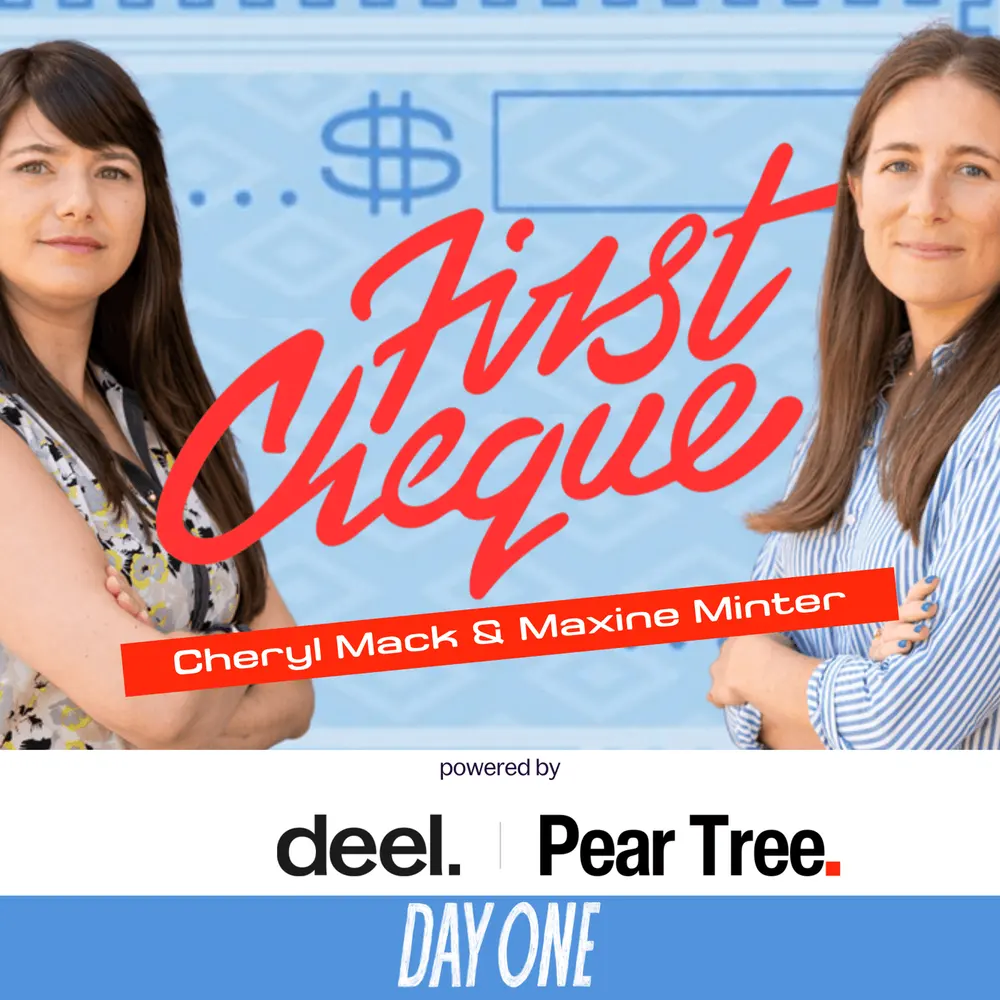 First Cheque with Cheryl Mack & Maxine Minter
Presented by Deel & Pear Tree
First Cheque with Cheryl Mack & Maxine Minter
Presented by Deel & Pear Tree 



 ▶
▶ ▶
▶ ▶
▶