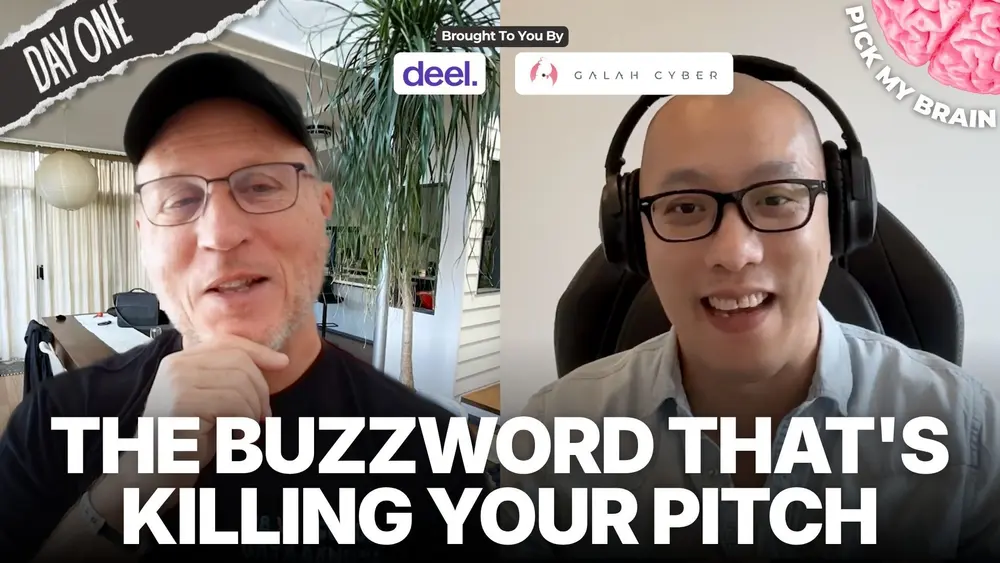
Transcript Synced · select any line to jump ▾ 0:00 Georgie Healy: What security mistake are people still making? Help us prevent, like— 0:04 Blair Hudson: You use a password manager, right? 0:06 Georgie Healy: I actually don't. 0:07 Blair Hudson: Oh my gosh. 0:08 Georgie Healy: Actually don't. That's my answer. 0:10 Blair Hudson: That's my answer. Please start. I have a good litmus test personally for like knowing whether like this is a good use of AI or not. And that is if you put in a single high signal sentence and the output is like 500 lines, you know, you've basically like decompressed your like high signal into a bunch of noise. And that's just bad. Like you shouldn't do that. 0:27 Georgie Healy: Yes. 0:27 Blair Hudson: And what is becoming really important is making sure you're putting in the right context with all the right information. 0:32 Georgie Healy: Where do you see AI really moving the needle in banking? Because for me, I don't know what I need as a customer. I want it to work, I want it to be safe, I don't want friction, I want it to be secure. What matters when it comes to implementing AI? Hello and welcome to In the Blink of AI. I'm Georgie Healey, and today my guest oversees 9 to 10 teams building the AI platform that powers Australia's largest bank, Commonwealth Bank. I've been a customer since I was literally a little dollar mite back in primary school. And Blair Hudson is a chief engineer of generative AI there. He's also a really well-loved thought leader. He's a LinkedIn top voice, but his origin story as a self-described hacker is really an, uh, one that I wouldn't have normally expected. When he was growing up and his mum was a teacher, um, he would have just unfiltered access to all the computers, clicking every system configuration setting, and starting a really incredible journey into loving technology, and now absolutely being passionate about AI. He's been building products before ChatGPT, GPT-2, when there was no ChatGPT that existed. He has a litmus test for bad AI use, and he's got a lot of great hot takes in this episode. One I really loved is that software engineers need more direct accountability for what they're building and who they're building for. And I can't think of a better person to be responsible for building guardrails at a bank with millions of customers, myself included. Let's dive in. 2:20 Speaker: You're listening to a Day One FM show. 2:26 Speaker: Founders scale faster on Deel. Set up payroll for any country in minutes, hire anyone anywhere, get visas handled fast, and get back to building. Visit deel.com/dayone. That's dell.com/dayone. 2:47 Georgie Healy: Long term, since I was 5, been a Commonwealth Bank customer as a Dolemite. Thrilled to be talking about something that was not around when I was a Dolemite, which is AI. But let's start us off with your AI hack of the week. 3:01 Blair Hudson: Yeah, I look, I think this is going to go pretty deep, but I found the plugin for OpenCode which is one of the open-source AI coding agents, you know, like your sort of Codex, Claude Code sort of things. The plugin's called Magic Context. I don't know if you're ever like doing something with AI and you get too deep into the conversation and it starts losing its marbles over like just how much is going on there. 3:23 Georgie Healy: Too much. 3:24 Blair Hudson: You know, it starts repeating things that aren't right. It doesn't know what to focus on. So what this, like Magic Context is this like plugin for OpenCode where it'll automatically get rid of the irrelevant stuff. And that's really important for two reasons. One is with less context, like the whole thing just works faster because it has to process less tokens. It means it also costs less. So you're going to burn your credits and your allowance like so much slower because it's actively like managing that context. 3:52 Speaker: And so, yeah. 3:52 Georgie Healy: Magic context. 3:53 Blair Hudson: Yeah. It's just, it's changed the way that I've like started using coding assistants. You know, I like, I no longer clear the session anymore. I just, I've had my project. I just keep going and it like continuously just manages it. 4:05 Georgie Healy: Do you know what I've been doing? I've been starting new chats every time, but then I've got all these chats and I'm like, which one? And it is hard to find which chat after you've got so many open. But I was like, I don't wanna spend too much. I don't wanna run outta credit. Like, yeah, incredible. I love that. We've never had that hack before. Didn't know it existed. 4:23 Blair Hudson: Yeah, it's pretty new. 4:24 Georgie Healy: You're the chief engineer for GenAI at Australia's largest bank. We do have international listeners, So Commonwealth Bank is our largest one and very signature yellow and black branding. What do you do each day? 4:43 Blair Hudson: It's a good question. It's important to understand what the role of a chief engineer is. And so, you know, there's many chief engineers in the bank. It's sort of one of the higher levels of the individual contributor track for engineers. And I guess my responsibility is broadly across all of the teams that are in our GenAI platform area at the moment. 9 or 10 teams, depending on the quarter and how we mix things around. And so I have sort of pretty broad technical responsibility for all of the kind of core AI platforms that we offer to all of our internal teams that's developing and building AI solutions on top of. So that's everything from how people get access to large language models to build their solutions on, through to the measurement and monitoring platforms that we can get all of the telemetry and insights and then start to run evaluations and things on top of that. the way that we run our guardrails and all of those models there designed to protect and make sure the use cases are working as they're meant to be. Yeah, it's, I mean, it may change as fast. 5:43 Georgie Healy: Yeah, you're busy, you're busy. And with multiple engineering leads or equivalent, do you guys work together? Do you collaborate or do you have quite distinct silos or is it a mixture of the two? 5:57 Blair Hudson: So I think like a chief engineer is assigned to a specific domain, area of expertise and specialty. But like one of the most important aspects of the role is to work out how to integrate that area with the other areas of the bank. So I actually spend loads of my time with different parts of the business who are like the major consumers of our things. Like, you know, like right now I'm actually working with our business banking team on a like 2-week accelerator event where our team, our core like platform team works in partnership with the data scientists and engineers in business banking on their problems. 6:31 Speaker: Yeah. 6:32 Georgie Healy: Right, that's cool. Um, I briefly was at Commonwealth Bank as an employee, and just was— the sheer size of the, the bank, um, and the different units and the different responsibilities and how they show up for customers, I found really incredible and awe-inspiring. Is it a little bit overwhelming, all those different units, or do you do sprints like that and that's how you get across? 6:57 Blair Hudson: I think you could— it could be overwhelming if you let it overwhelm you. 7:00 Speaker: Yeah. 7:00 Blair Hudson: Right? Like, there is— like, it is such an incredible organization. Like, there's just so many people. But like, the thing— you know, I joined ComBank just over 18 months ago, and I think one of the things that surprised me the most was how integrated it actually feels across all of the organizations. You know, I've done a lot of consulting work in the past. I've worked in other organizations. The level of integration across all of those different teams, like, is like— actually, like, was a big surprise. And like, obviously in a super positive way. It wasn't what I was expecting. 7:29 Georgie Healy: I tend to agree too. You would assume that there would be a lot of, well, who's owning that and who's owning that? But actually on the call it's like, well, we can't have this discussion without looping in this team and this team. And I found that also very like, ooh, safe pair of hands. Good to know. When I worked there, it was pre-AI being at scale and of huge importance. I think it was still at the stage where it was an investment thesis. Much like Web3 was an investment thesis and things like that. And now it's clearly changing people's lives and, and is the future of tech. You said in my research that something that I used to strive for, tech qualifications, might not be as critical as, or as important to you as just staying on top of technology. Talk me through that. Why is that? 8:22 Blair Hudson: I think it really depends on how you like to learn. And there's lots of different ways to learn, and a lot of people who are focused on building skills at different points in time. But for me, I find the way that I learn best is just to do a project. And I just pick up a new piece of technology and a suitable problem, and I just get to work. And I think the emergence of all the modern tooling around AI coding assistants and models, it's actually a very good time to just dive in headfirst. And the reason why I find that works really well for me is it helps me to compound around the knowledge that I've got across different areas very quickly. You almost try and like corner what is the one new thing that I need to learn about this where I can use everything that I understood before that to like go and get on top of it. I was working on a small project the other day and there's a, you know, there's a cool new web framework that came out, um, and, you know, I already know a good amount of stuff about others, but I thought I would give it a go. And, you know, the, the knowledge that I've got in the other areas has helped me, you know, reinforce that I knew my learning was going in the right direction. And, you know, now I've done a cool project on a new framework and You know, that's just— can sit in the toolkit. 9:28 Georgie Healy: I love that. A lot of our listeners are like me, keep hearing about these new tools, this AI product you have to use, and the Post-it notes where I'm writing down all these things that I have to learn, have to get to, gets very overwhelming. And which one's actually worth my time and which one will actually move the needle? Any advice? Any tips? 9:50 Blair Hudson: Honestly, I'm fickle. 9:52 Georgie Healy: Yeah. 9:53 Blair Hudson: I chop and change tools all the time. So do I. 9:57 Speaker: Is that bad? 9:57 Blair Hudson: And you are very experimental. 9:58 Georgie Healy: Genuinely, sometimes I think if I just spent this entire time on Claude and not switched from ChatGPT to Perplexity to Claude to Gemini, like I've been all over the place and I'm like, would I be an elite Claude user by now if I wasn't so fickle? Or is it kind of good to keep your brain moving? 10:19 Blair Hudson: I think the like, velocity of new features being developed and the surface area that is covered across these products keeps moving so quickly. And so to me, it makes sense to try out different tools. 10:30 Speaker: Right. 10:31 Blair Hudson: And maybe have a, you know, like your favorite and you maybe come back to that. But I think it's fair to spend the time on exploring other capabilities because you'll find things like Magic Context where all of a sudden you've dropped your token consumption in half and you couldn't have done that before. And I bet you like next week, the other tool will release that feature, right? 10:52 Georgie Healy: You know, 100%. I think it's worth playing around because every now and then you do go, this genuinely is a game changer. But how would you know if you're not constantly trying new things? Whisperflow for me is that like the voice AI feature I'd used before within the LLMs. You can, you know, record. There's something about Whisperflow and being able to be used on any place there's a cursor. I've really appreciated. And I'd heard about it so many times and finally started using it. 11:25 Blair Hudson: I got something new on my to-do list to give a go. I think like the, you know, we have access to a large assortment of technologies, you know, like our engineers and our data scientists, they have freedom to explore a little bit. We have ones that we do support internally as well. Like we have our preferred tools. 11:41 Georgie Healy: Of course. 11:41 Blair Hudson: And I'm sure you remember back to your corporate days, like trying to configure something to work inside the org is always a little bit harder than outside. And so, you know, there's the there's the basic set where we, you know, we really understand how to get them set up and working in there and they're supported. There's always going to be a bit of time for experimentation as well around the outside. 11:57 Georgie Healy: I would love to talk about that. 12:03 Speaker: Founders scale faster on Deel. Set up payroll for any country in minutes, hire anyone anywhere, and get visas handled fast so you stay focused on scaling. Deel takes care of onboarding, HR, IT, EOR, benefits, and compliance, so your team can grow without borders. It's why more than 40,000 fast-growing companies trust Deel to move fast. Visit deel.com/dayone. That's d-e-e-l.com/dayone. 12:36 Georgie Healy: From where I'm sitting, it doesn't make sense to have everyone using different tools and they don't talk to each other and it slows you down and you can't actually show up for customers at speed in a meaningful way. How do you— where do you think it's great to have consistency? And where do you think, like, let's not make people feel too straitjacketed by certain tools? 13:03 Blair Hudson: I don't know that I have a direct answer for that question, but like the— like what came into my mind is, is the standards that start to emerge from this. Like ultimately, if there's a few different competing tools, and, and, and, you know, the, the user demand finds something that is generally useful, like a standard will emerge. And we've seen this happen loads of times with OpenAI and Anthropic's products. The Chat Completions API, the original way you would interact with a large language model from OpenAI became the standard. That's since been replaced with a new format called Responses API. And then Anthropic had their own and they were sort of competing for a little bit. And then OpenAI has gone and released the Responses API as a standard. And you can go and read about that. Probably a more recent one that you would have seen is like the idea of agent skills. 13:50 Georgie Healy: Yes. 13:51 Blair Hudson: And like, so like, that's a, that's another like good example of like a standard that's come out. It doesn't really matter which tool you're using, they're all adopting agent skills, so you can kind of work across them all. And so like the time you spend investing on how to get your skills right over here, it's not gone to waste. Like you can probably move that to, you know, the next tool as it comes up and, and keep building on top of it. 14:11 Georgie Healy: That's beautifully said. I do remember when myself and some some friends in the industry decided to switch LLM platforms, and very quickly there were guides teaching you how to very easily, quickly do that. Like, we were all worried all our context is buried in one platform, never to like be used again. It's not actually that sticky. 14:33 Blair Hudson: Probably because they had to help you move tool. 14:35 Georgie Healy: Yeah. 14:36 Blair Hudson: It's probably a skill to move between tools. 14:38 Georgie Healy: Yeah. Yeah. Okay, amazing. You've consistently shared your work, which I've loved. You've quite considerable thought leadership online, LinkedIn, blogs. I love a personal brand, surprise, but it's public. Why, why is that important to you? Why are you sharing? And what kind of feedback do you get when you share about the technology you're using and the insights you're having? 15:02 Blair Hudson: Yeah, I don't tell a lot of people this, but now I realize we're sitting on a podcast, so like maybe I'll just share it anyway, you know, like it's like I've actually found due to the scale of Combang and how, like, you know, there's thousands of engineers and data scientists you can learn from. And there's so much stuff going on internally. And I found that, you know, sharing the right thing publicly is actually a really good way to reach people inside. 15:27 Georgie Healy: Yeah. 15:28 Blair Hudson: You know, like a lot of people are paying attention to LinkedIn. And so I think as much as it's sort of maybe like, you know, helping my personal brand externally and maybe led to this podcast, I don't know. But, you know, it is a good way of reaching people internally. And there's definitely been a few times I've posted something on LinkedIn, I've had people reach out to me on Teams internally and ask me like, hey, what's this thing you're talking about? You know, how do I get access to that? I share triple the amount internally than I do than what you see. 15:56 Speaker: Interesting. 15:56 Blair Hudson: There's no, you know. 15:57 Georgie Healy: Oh no, I'm sad. You're gatekeeping and we need to unlock that too now. 16:01 Blair Hudson: Maybe some stuff should stay inside. 16:04 Georgie Healy: Some secret source that stays inside. We were talking before recording, um, you know, I bumped into another, uh, colleague of yours, peer of yours, who's also online. And it's really nice to be able to be like, I've— I, I'm meeting this person, they're a leader in their field, do you know them? Um, and you may have never even met in person, and it kind of connects us together. And I get asked all the time how to take my tech literacy to the next level. By you guys being online and showing up, I can point people in the right direction without needing to have all the answers myself, which is awesome. Yeah. 16:44 Blair Hudson: Yeah. I like, you know, I think it's important to like help people stay up to date with, you know, what you like. Every, like, literally every morning I wake up, I check 3 or 4 different news sources. I try to stay on top of it. This has actually come up at work a lot of times, you know, the questions come up like, how do we, how do we like systemize the capability of staying on top of things. And to me, I think that's just part of my job, right? If you want to be a leader in your field, you need to stay on top of things. And so, the most interesting things that I find, that I think would benefit others, I try and share them as much as we have. We actually have a super active internal Teams channel with the sort of 100 or so people in my direct area. And we just, between the memes and all the latest tech news and the actually important sort of administrative updates and project updates and so on. You know, there's always a lot of fun stuff going on in there. 17:33 Georgie Healy: I admit it's the one thing I really miss about working in a corporate is that the ability to learn from other people without having to like by myself be like, "What's happening?" It helps you just cover your blind spots too. Yes. 17:46 Blair Hudson: You know, like this morning we saw, you know, somebody shared the like pull request that Anthropic recently acquired Bun. Which is a— 17:56 Georgie Healy: Did not know this. 17:57 Blair Hudson: A development tool for writing JavaScript. And they've been using AI to rewrite it from one language to another. It's like a pretty epic scale rewrite, like one of the first sort of public level things on this. And that was shared pretty early this morning in our chat, and we were talking about that. It's, you know— 18:15 Georgie Healy: And brilliant for an organization too, to have a team of people that can kind of because these headlines, for a lot of us that are not as technical as you, is this important? Is this scary? Is this worth worrying about? Is this worth adopting? And to have a pool of technical people kind of hash that out amongst yourselves and have access to that, I can imagine a corporate would enjoy that. 18:42 Blair Hudson: It's just nice to be able to discuss all these things with people that are, you know, often, like most often, know more about it than I do. Right. You can't know everything about everything. 18:50 Georgie Healy: You can't know everything about everything. This was one of my favorite things when I did a bit of research about you. In high school, you and your friends were known as hackers. For me, that's an elite, cool term that means that you're on the frontier of tech and you fully understand systems at a next level. But I guess for some people, a terrifying term. Don't like it. Where did the term come from? Any myth you want to dispel in the process? 19:20 Blair Hudson: Oh, yeah, I don't know. I mean, like, I don't want to get in trouble or anything for something that I did a long time ago. So, like, I actually wrote that on my LinkedIn bio, and I wrote it some time ago, and I've just preserved it there. I actually put a little note at the top of my LinkedIn bio saying, like, I wrote this before ChatGPT. I just think it's, like, kind of cool to, like, freeze that, you know. I'd like— that was genuinely me. There was no AI supporting, you know, writing that. That was— It's beautifully written, by the way. My words. Words. And so I'm going to just keep it there, as much as I may live to regret it. But I think the term hack or hackers or whatever, that can be quite polarizing for that reason. But to me, it means getting the most out of technology, right? And I think you're, depending on what you're doing, and the role you're playing, and your perspective in the scenario, like maybe you're the good guys, or maybe you're the bad guys. And you know that, like, you Different people have a different position. When someone wants to use technology to achieve an outcome like that, to me is like, you know, when you're just trying to work out how to plug it together like that is that, that is what it is. 20:25 Georgie Healy: I completely agree with you. And maybe it needs a rebrand, maybe it doesn't. But for me, I feel like the stigma comes from going into places that you shouldn't. But I would love to consider myself a hacker of systems and things and understanding how they work. But going from that to Australia's largest bank, not necessarily the hero journey that I expect. What attracted you to CBA, and do you still feel like you get to exercise those skills? 20:58 Blair Hudson: Yeah, I like— maybe it's important to like rewind my career a little bit to answer this question. When I was in school, I just, I loved doing everything I could with technology, and a lot of that came from, uh, my mum's— was actually a primary school teacher, and, and I went to the same school that she taught at, and So I just had unfettered access to computers after school, like all the time, like for hours, like 2 to 3 hours every afternoon. Maybe not that. I remember it was 2 to 3 hours. It was probably— 21:23 Georgie Healy: As a kid, that feels long. 21:25 Blair Hudson: I don't think we were there till 6 o'clock. But, you know, being able to sit in front of these computers and just like click around everywhere, you know, like every single systems configuration setting was clicked through. And so I always just had this very deep desire to get an intuition-level understanding of what's going on. And I think that sort of just followed me all the way through. And I got to the end of my university studies. I studied a software degree, but it was sort of like a prototype data science degree. There was a bunch of stats and discrete mathematics and data courses mixed in there. Yeah. I think today it would just be labeled like a data science. We did an AI course as well in Prologue. 22:13 Speaker: What? 22:14 Blair Hudson: Which is, you know, not— it's surprisingly getting a resurgence now because of like GenAI. But yeah, very different. 22:19 Georgie Healy: You're like, "This hasn't been proven yet, guys. 22:21 Blair Hudson: Don't take it too seriously." And I got to the end of that degree and some of my friends were going into insurers and banks into low-level roles and they were telling me about their experience, which was then mostly just picking up some weird bug and toiling over it with your senior for weeks at a time. I just didn't find that appealing. 22:40 Georgie Healy: Yeah. 22:41 Blair Hudson: And I wanted to do more. And I sort of stumbled into the world of consulting and using that sort of combined software and data knowledge to go and do early-stage advanced analytics work and what eventually became data science and machine learning. Really just working out how to take data and this technology and algorithms and use that to to help a business with their strategy and to help them achieve their goals and meet their customer needs and all these things. I eventually landed at a startup called Phalam AI, I think. 23:15 Georgie Healy: Yeah, quite famous. 23:16 Blair Hudson: Really innovative in its time. I think the reason I left corporate to go there was because they were building a product around data science. There was an immediate need to have a team of people who could come in and take the models they were building and turn them into products and turn them into APIs and a web app you can click on and use that as a way to get them in front of customers. They were very like locked in before that into like the notebooks and the data science lab. And you know, like that's not a customer experience, right? And so when I joined the company, my goal was less about defining the models and the subject matter and more about just taking those and, you know, building a team and using the skills we had to get those into production and turn them into a SaaS product. And like what I didn't expect was that I would actually fall in love with the subject matter itself. You know, we were like, Fathom was looking at the global job market and we were taking job ads, tens of millions of job ads every month and using like the earliest stage of large language models back when Google released BERT. Yeah. To, you know, back then we were thinking of it as like automated feature engineering, right? Like we would put the text from the job ads, the job titles into these models and we get numbers out as a result, like an embedding vector.. And then we'd use that to work out what the job was, right? And so like more sort of traditional machine learning, but like with this new breed of natural language processing coming in and, you know, we were building products on that from sort of, I joined in 2020, but the team was already on top of it before I was there. And, you know, I was super lucky to be there as OpenAI released GPT-2. And I just remember like downloading it to my laptop. 24:57 Georgie Healy: You had ChatGPT too? 24:59 Blair Hudson: GPT-2 was like just a model that— 25:01 Georgie Healy: It wasn't even Chat, was it? No, no, it wasn't. 25:02 Blair Hudson: Yeah, it was like, Before ChatGPT, there was just completions. Like you would just write something and then the AI would just continue. 25:10 Georgie Healy: Oh my goodness. 25:11 Blair Hudson: And you know, to make it work, you would have to say the pattern of things like 5 times in a row and you would just hope that like the 5th time it would say it in the same way. You're joking. And we were like building products on that when it came out. And then, you know, I think ChatGPT came out and this like sort of chat model where you didn't have to do that anymore. And then it just exploded. And you know, we were right there and like started building on it straight away and it was just I was super lucky to be with a team of innovative people. 25:39 Georgie Healy: It's such a good description too. 25:40 Blair Hudson: Yeah, it was very new. 25:44 Georgie Healy: That is wild. I have interviewed people that used OpenClaw before anyone knew about it or talked about it, but I don't think I've ever spoken to someone that used GPT-2 before. That's so rad. 25:54 Blair Hudson: Yeah, we were a really great team. Most people have gone different ways now, but the core goal of our product was to to, you know, use all of the insights that we could extract from the global job market and use that to help companies work out how to upskill their staff, like knowing how technology is impacting their roles. And the opportunity to join CommBank came up and like work in the heart of like a super important company in Australia with like, you know, like thousands of people who are going to be impacted by this, you know, hopefully positively, but you know, like I wanted a piece of it. I couldn't really say no, to be honest, like it just made so much sense. And so, yeah, that's— 26:30 Georgie Healy: I mean, it's, you know, it speaks to your ambition. I read 200,000 employees. No, no, 50,000 employees. 26:40 Blair Hudson: About right. 26:41 Georgie Healy: 200,000 doesn't make any sense, but 50,000 is still a lot. I'm like, the number has so many zeros and then millions of customers. I'm one of them. So many things to get done, so many things you could do, so many places you could be like, "Afi that, afi this." How do you choose? Is it based on pain points? Is it based on delight? How do you— 27:05 Blair Hudson: So I sit in the core platform team. So for us, our focus is on our users, the data scientists and software engineers in business banking, for example, we mentioned earlier. And But I'm always, like, I always remind the teams in my area, like, our focus needs to be on the customers outside. You know, like, our users are really important. Obviously, we need to give them the best experience possible so they can, but they're like, their goal is to meet like their customers' goals and the like different areas of the business own those experiences. And so, you know, they're responsible for prioritizing what matters the most to them. And then, and then, you know, it's just, it's, it's actually like, like really, wonderful to see how well the organization collaborates. And I think if we go a little bit deeper on what we're doing with business banking at the moment and this accelerator, getting to work alongside the 8 or 9 teams that are participating in that from working on their customer problems, they're looking at very specific parts of some of the big pain points that are important to them and thinking, how do we really understand the process that is going on at the moment? Yeah. And like what are the opportunities to improve it? And, you know, so every day we actually start by playing back a customer call that's been anonymized and, you know, all the details are dropped out, obviously. It's just, you know, we've got a room full of technical people trying to build a new experience and we start with, you know, here's the real problem, right? And this is the thing we're trying to solve for. And, you know, last time we ran this, we did that like for the first half, it's a 2-week sprint. 28:45 Georgie Healy: Mm-hmm. 28:45 Blair Hudson: You know, we did it for the first half and then we didn't do those calls at the start of day in the second half, and it just felt a bit weird. You know, it was so grounding to have all of, like, even people on the deepest core platforms of the bank, like, spending time to listen to some of these challenges and then work out, like, how to optimize their products for the teams that need to go and solve those. And so, yeah. 29:09 Georgie Healy: Yeah, because as a customer, sometimes with other products and solutions, Look, I'm gonna say this, you don't have to, but Amazon, I can't, I just don't feel like when I use the Kindle app that it's getting to someone on the other end. If I have a problem, I'm like, do you care? I want you to care. And it's really heartwarming to hear that, like, at the end of the day, you're like, this is the customer pain point. And we can back engineer the technology behind that. But that's kind of the focus. 29:42 Blair Hudson: It's so important. Like, I— you can— if you can generate like 1,000 lines of code in 10 minutes, like, you have to do this. You don't have a choice. 29:50 Georgie Healy: Yeah. 29:50 Blair Hudson: Like, otherwise you just end up building nothing. 29:52 Georgie Healy: I hear over-engineering can be a problem too. And maybe it's for the right reasons, but working in technology companies, like, you can engineer just for the sake of engineering and like make it more rigorous and go deeper and more personalized, more customized. Do you have a perspective on over-engineering? Is it a risk? How do you prevent it? 30:16 Blair Hudson: I think like the, it is the role of every technologist to use their skills to avoid that. 30:23 Speaker: Okay. 30:23 Blair Hudson: Right? They have like, obviously you need to know how these, you know, how technology works. And, but you know, if you can't use that to steer your stakeholders towards something that is better or more robust or cheaper or faster or whatever the goal is you're trying to optimize for, and you end up just optimizing to build something you thought sounded cool, like that's the wrong goal, right? 30:44 Georgie Healy: It's a good side project for at home, maybe. 30:46 Blair Hudson: Good for learning, but you know, like you need to take those skills and use them to like optimize towards the goal. And I think with how AI is starting to impact the software development lifecycle in particular and speed things up, it's even more important because it actually like more or less doesn't matter now whether you can build it or not. Like, you know, most things are getting a lot easier to build. Like there's so many problems that were intractable before that are now like, we could probably just generate, use agents and our tools to start prototyping solutions to that pretty quickly. The change is that now we need to start focusing on, okay, what's the user think about that? How are we actually going to get adoption? How are we going to use that to meet the underlying goal? What's the change we're trying to create? And I really think over time, the role of a software engineer in particular is going to start changing a lot more. Ooh. And I think now everyone still gets to learn and you learn the tools, but I think the number one thing that software engineers need to learn is how to be more accountable for what they produce and really understand the person they're building for. I think the days of having a long backlog of requirements and just being told what to do by a product manager, I think they're like— 32:02 Georgie Healy: That makes me feel more relieved because every now and then I'm like, just give me a simple JD today. I don't want to figure out what you know, how to, you know, show up today. Just give me like basic requirements. But I think you're right. I think that era might be for many jobs evolving a little bit. 32:20 Blair Hudson: Yeah, I think like otherwise you just end up building all these things that just sit on the shelf. Yeah, that's the point, you know. 32:26 Georgie Healy: Where do you see AI really moving the needle in banking? Because for me, I don't know what I need. As a customer? I don't know. I want it to work. I want it to be safe. I don't want friction. I want it to be secure. What matters when it comes to implementing AI? 32:47 Blair Hudson: This might sound like a completely weird thing to hear from a, like, chief engineer working in AI, but I think, you know, I, like, I can't talk to other organizations, but like the customer experience is almost always the core of the goal. Like, obviously we're a bank and we need to manage risk and that has to be like an important offset in there as well. But when budget is put towards, like when people are put towards a project and the customer experience is the goal, there's sort of a thesis that using AI and agents is the best way to maybe solve it. But what's actually happening is it's buying people time to look at what is going on and rethink it and start to reshape it. And so, I think just trying to build an agent to do a thing for agent's sake is not the right approach, but being able take a challenge and an existing process that might be not working as well as you want it and rethink that from the outside in is where things are actually having a real impact. So I don't know that measuring number of agents to deploy is the relevant measure. And I know there's obviously a lot of people that are very excited about that and a lot of people— 33:55 Georgie Healy: Everyone's obsessed with Agents Blur and has been for probably before they were ready. So I'm glad you're saying that because I think a lot of people were disenfranchised when and it was like, it's the year of the agent last year. And then everyone's like, is anyone actually using agents in a meaningful way? And then everyone was like, no. And now I think they can be used, but everyone's a little bit like, you say that they were here a year ago. 34:18 Blair Hudson: I mean, it's so important, but I think what matters more is like actually understanding the problem that you're trying to solve. 34:24 Speaker: Yes. 34:25 Blair Hudson: And then, and then like reshaping the problem as much as you can. 34:27 Georgie Healy: Yes. 34:28 Blair Hudson: And if an agent is the right way to solve that problem, which it might be some of the time, do that. But also, just go and solve that problem anyway, because I'm sure you can use an agent to help you rewrite the software or the process or whatever as well. It works on both ends of the development cycle. 34:43 Georgie Healy: I heard a quote yesterday, which was, "Culture eats strategy for breakfast." Do you kind of see it play in with adopting AI for the point of adopting AI? 34:55 Blair Hudson: Yeah, I don't know. I've heard this statement before. I don't know what I think about it. I think it depends on how you define strategy, to be honest. And if you think strategy is a document, then I agree. But if you think strategy is actually like a sequence of steps that you're going to take to achieve a goal, culture is important as the guardrails on the outside. But I think being thoughtful about the direction you're going is very important as well. 35:21 Georgie Healy: Speaking of guardrails, how do you build at pace? How do you be And the innovative bank that CBA is, how do you be the number one and top of the game while also being safe and secure and all these things that make people like banks? 35:39 Blair Hudson: Garbraus is a super overloaded term inside the bank actually. 35:43 Speaker: Really? 35:43 Georgie Healy: Like there's just so many— Oh, is that like a swear word? The G word? 35:46 Blair Hudson: No, no, like it's a positive thing of course, but like it just means a lot of things to a lot of people as used inside the context. Like we've got, we have our like, you know, architectural guardrails, you know, like the things you must do from a system design perspective to make sure it's secure and to use the right systems to authenticate your users. And, you know, when you're deploying it, making sure you get all your networking right and you don't get bank-grade security out of nowhere, right? Like, that's what these sort of things achieve. In my world in particular, like in AI systems, guardrails mean something a bit more specific. Yeah. And this is almost like the firewall that your AI system is protected by. And so we actually have a series of models that, you know, more or less, you know, machine learning models. This is so that we can measure statistically, um, and they're designed to make sure that the system behaves in the right way regardless of how the internals might behave. So for example, you know, we have a guardrail that is designed to detect any inbound chats that are coming from customers in a vulnerable scenario, um, and, you know, that's in place so that the channel team working on it can, you know, work out what to do with that. And like right now that is always immediately take that conversation straight to a real person. Like we just don't want the technology to try and like handle that situation. And that's what it's there for. And we've got, you know, another like a dozen of those where we're working with the various risk owners across the team to systemize their controls into things that can like wrap around the systems that are in place. 37:15 Georgie Healy: That is genuinely fascinating. Um, so certain things you're like, do not put that in front of technology, that is too high risk, we need it to be a person. Um, and other things, like, I guess lower risk, tech can handle it. Has that evolved quickly? Like, have you put more tech in front of low-risk things, or is it not that simple? 37:39 Blair Hudson: I mean, it's a bank, right? Like, the, the risk mindset means you always start with low risk, and as you work out like really deeply understand the risks involved and account for those and design the controls and expand out once covered. I think this is the thing that, this might sound boring, but the thing that excites me about working in a bank on AI is the risk management lens. I've worked in a lot of companies before where you can't walk down the hallway or start a Teams chat and people have this innate understanding of statistical you know, quantitative risk. You know, they just don't know, right? Mm-hmm. And so, you know, I think that goes a long way to help people understand how, you know, these models, like, work and how they can change around and the difference between, like, building a cool demo one time or, like, getting an impressive result out of your ChatGPT session one time versus being able to turn that into a structured, repeatable thing that you can rely on to not cause problems. 38:39 Georgie Healy: Um, and you're in a safe space. My undergrad was in chemical and metallurgical engineering, and if things go wrong, they go so badly wrong. Like, it's a big natural gas site, and before we do anything, we'd have— and it's very old school— but the, the risk matrix of like severity and like, uh, likelihood, and, and we'd map it out and we'd do a take five and all of that stuff, and you only need to see like some near misses, like I'm talking about my scenarios, to be like, "Yeah, dude, we're doing this every day. Yeah, dude, this matters." And once everyone's on that same page, I do find it interesting. 39:20 Blair Hudson: I think if you're a graduate coming in for the first time, like that might, you know, it might surprise you, it might even annoy you. 39:26 Speaker: Yeah. 39:26 Blair Hudson: Oh, you know, they're just like, "I can't get my thing to production because I keep getting told by XYZ, whoever, that we haven't done all our things yet. But I think the opportunity to learn how to handle this technology in a responsible way, in a safe way, is huge. And I think in other industries, you just don't get the same level of investment in that. It's not so built into how the company needs to operate. And I think right now it makes a difference between a successful demo and something that can actually have an impact and do real, you know, real things. 39:58 Georgie Healy: Yeah, and we see the headlines when people are worried about risk of things going loose and going badly. Not worth it, for me anyway. A lot of companies are experimenting with AI. The word platform might be a little bit like guardrails. For me, I think I know what an AI platform is. Can you firstly explain what an AI platform is, and then How do you enable teams without slowing them down on the AI platform? 40:26 Blair Hudson: You could imagine if you had 400 development teams, right? I don't have an exact number, but like, you know, imagine you've got 400 development teams and you just told them to go to AWS or Microsoft or Google or whoever with their credit card and to just sign up and make an account and just build their product and send in like the invoice to finance and they'll pay it. You would get 400 very different, maybe more than 400 very different things going on. And there's just no way you could manage that, right? Like if I asked you, hey, what's happening in your technology estate? You'd go, I have no way of knowing. 41:01 Georgie Healy: I have a technology estate would be my first question. 41:05 Blair Hudson: And so like, that's what a platform is in my mind, right? It's like, how do you build the sort of foundational layers so that when you have of some number of teams who all roughly have to do some tech thing. Like they can come to that and they don't have to worry about how the invoice gets paid by finance. That's done. They don't have to worry about getting an account. That's done. They don't have to worry about making sure that access to their account is secure and only they can get in and that people from other IP addresses outside, like, you know, like that's done. And so when we talk about AI platforms, it's, you know, on top of those sort of cloud foundations, I want to get access to a large language model. Like, how do I get access to How do I make sure that all of my interactions with that are logged and monitored in the right way that meet all of the standards that we have in place, that the guardrails that we need to tap into are available and easy to integrate? That's what the platform does. And what it does is you sort of build up all of these layers that allow the teams in the divisions to focus on what their customers need and really understand the business and the processes that they're working on. Do that layer of work without having to worry about like, oh, I had to set up an AWS account, what am I meant to do now? 42:13 Georgie Healy: Yes. And to your point earlier about, you know, software engineers need to take accountability and responsibility, but it's like, but if it's like, like make some things a little bit easier so that they can focus on the things that they should be focusing on. That's fascinating. I'd never really considered what an AI platform is. And you know, when it comes to AI adoption, A lot of enterprise AI tools— I've got a few group chats where they're like, they're making us use this, we hate it, I feel like we're falling behind, shadow AI will happen. What do you guys do at CBA? 42:48 Blair Hudson: I would like— I can talk to like the engineering side like more deeply, but you know, like just, just broadly, you know, we have access to a load of different tools. Like, I just use ChatGPT most days actually. 42:59 Georgie Healy: Really? 42:59 Blair Hudson: Um, and you know, we obviously, we have CBA-specific version of that in partnership with OpenAI. And that's a version that's been, got all the right configurations in place to make it safe to use. It's not like people are going on to public ChatGPT and using that. Yeah. But then on the engineering tooling side, it's like what we were talking about before around having different access to these different tools that are well supported internally. Our teams can largely pick from, you know, 4 or 5, 6 different tools that they want to use, and they can get those set up and working, and, you know, back them with access to the models that they need to be productive and, you know, start using them. 43:45 Georgie Healy: I found it fascinating. It was headline news when the partnership between CBA and OpenAI happened, because I felt like it was early, like it was early for Australian big enterprise to be partnering with one of the the top AI companies. And I think it did like kick up some, kick up the butts of some other enterprise companies of like, you can do this at scale. You can have frontier models being leveraged in a safe way. I think that was quite interesting. 44:13 Blair Hudson: It was an exciting moment internally, you know, like I wasn't part of, like I'm not important enough to be part of it. 44:17 Georgie Healy: You signed the line with Sam Altman, shook his hand. 44:22 Blair Hudson: That would have been a career experience. To look out for, you know, and I'm sure like maybe one day. 44:26 Speaker: Yes. 44:26 Blair Hudson: And we have teams going off to San Francisco and Seattle pretty regularly. Really? And they get to work with, you know, talent from those companies. And that's really exciting all the way down to graduate level as well. But, you know, I didn't sign that deal, but I did actually share it on my LinkedIn. 44:42 Georgie Healy: Yes. 44:43 Blair Hudson: And I seem to remember I just, I like snapshotted the press release and just put it on my LinkedIn with a quote, 'cause I wasn't sure if I was allowed to put a spin on it of my own at that point in time. It seemed pretty important. I think it was like probably one of the most, viewed LinkedIn post I've ever had. Wow. Yeah, I don't think I broke the news, like there was already a press release. 45:00 Georgie Healy: Yeah, yeah, yeah, yeah. That was fun. I, I remember being like, wow, like I, I assumed that these deals would happen, but being there backing employees to be able to use the best tech and leverage it in a safe way, I don't know why, but it was like It's happening faster than I expected. It's great. 45:23 Blair Hudson: I mean, it becomes like an expectation, I think. You know, like if I can use ChatGPT at home ever since it was released, I get used to doing, you know, being super productive in how I meal plan. 45:34 Speaker: Yeah. 45:34 Blair Hudson: Like, you know, why do I have to settle for second-rate internal tooling? 45:39 Georgie Healy: That was the chat messages I was getting. That's for sure from other companies. And I get it. I get why things take time and they can be slow and they can have friction. But I think it was a great example of, but it doesn't have to be that way. Last question before the spicy rapid fire. Are you ready? 45:56 Blair Hudson: Let's go. 45:56 Georgie Healy: Prompting. This is something I remember everyone was talking about prompting and the perfect prompts. And do you want my playbook of prompts? And, and it was a skill in itself, prompt engineering. How do you guys, as a large organization, consider prompting? Like, is this something where you do teach each other how to do it effectively? Is there a playbook? 46:19 Blair Hudson: I have so many answers to this. 46:20 Georgie Healy: Really? 46:20 Blair Hudson: Okay, great. 46:21 Georgie Healy: I'm comfy. 46:23 Blair Hudson: You know, I, like, I really think it depends on who you are, what role you're in, what level of, like, AI adoption maturity you have. You know, like, we have teams— I'm not part of the teams that do this, but, you know, they're, like, you know, close colleagues of mine. And, you know, like, we have teams focused on, like, upskilling and training the organization on how to these tools. And obviously building effective prompting strategies and learning how to use that is core to a lot of people where they're using this for the first time. I think eventually you sort of get to a level where you are an AI intuitive. You don't really consciously think about prompting anymore. Maybe your prompts even, like some of my prompts are very terse. 47:03 Georgie Healy: Terse being you're cranky at the LLM? 47:06 Blair Hudson: No, I just say the minimum number of words to get my point across so it doesn't over-process too much stuff. 47:10 Georgie Healy: Stuff. Are you polite? 47:11 Blair Hudson: I'm not impolite. 47:13 Georgie Healy: I'm neutral. You're neutral. Do you believe that we have to be polite to our LLMs? 47:19 Blair Hudson: I— 47:21 Georgie Healy: It's a bit esoterical. 47:23 Blair Hudson: You know, if you're using technology at work and all your access is being monitored, you should use it responsibly. 47:29 Speaker: Yeah. 47:29 Georgie Healy: Come on, guys. 47:30 Speaker: Just be— 47:31 Georgie Healy: yeah. I'm like, just be good people. Come on. 47:33 Blair Hudson: But I don't think it's because the AI is going to wake up and attack you because you're impolite. 47:37 Georgie Healy: —like, you know, you should just— I feel nice when I'm being nice. I genuinely, like, I have in the past. I know that this is insane. I'm like, if anyone saw me, this would be really embarrassing. But sometimes I'm like, great job. 47:53 Blair Hudson: I— yeah, I like— there was definitely a moment in time where you could pressure a model into, like, performing better. 48:00 Speaker: Really? 48:00 Blair Hudson: You know, like, hey, this is, like, really important to my job. I'm gonna lose my job if you don't do this right. Like, or like, I'll pay you $200. 48:06 Georgie Healy: Yes, yes. 48:08 Blair Hudson: And I think the model sort of reached a point 18 months ago where that, I think, became less important. And what matters so much more now is the level of context that goes into what you're providing. I was having this chat with one of my colleagues yesterday afternoon. I have a good litmus test personally for knowing whether using AI is— this is a good use of AI or not. And that is, If you put in a single high-signal sentence and the output is like 500 lines, you know, you've basically like decompressed your like high signal into a bunch of noise. And now someone has to pick that up and they're probably just going to go and throw it into AI to summarize and then you'll get a single sentence again. 48:49 Georgie Healy: Exactly. 48:49 Blair Hudson: And like really all you've got is a lossy, expensive, slow decompression algorithm. 48:55 Georgie Healy: Yes. 48:56 Blair Hudson: And that's just bad. Like you shouldn't do that. 48:57 Speaker: Yes. 48:58 Blair Hudson: And so I think what is becoming really important is making sure you're putting in the right context with all the right information. And this is what software engineers are doing already, because they've got tools to help do this. If I think about the way I interact with AI most of the time versus people who are only using ChatGPT or Microsoft Copilot, I'd start with my entire project, right? And it can see all the code. And so even though I say, "Hey, I want to do this change," actually all of the project is in the context. And so the output, which is actually the best way to do this change is like these 5 lines is like, you know, we've channeled down like, you know, potentially thousands of lines of input down to like, here's the thing that matters. And like, that's a good signal, right? Like you're finding, you're like creating signal by doing that. I think like— 49:45 Georgie Healy: Speaking of context, and I know this is a different platform, it's just one I'm currently more familiar with. I'm sure it applies to all. Is this why Claude Cowork works better than the chat window? Because it's got more context, it's got more— rigorous data. 50:00 Blair Hudson: Yeah, I've been thinking about this a lot. I think we haven't fully seen all of the tools for creating the right context for people in different roles and positions yet. But I think these co-work style tools are getting there. If I contrast the difference between just a chat window and the AI coding tools, I'm working in my code repository, I've got access to all my files, when I make a change, it's really a proposal that has to go and be reviewed, like, in a separate step after that, like this sort of a version control thing. And I think workspace-oriented tools that can manage documents and so on are, like, getting there a little bit for, like, people in other kinds of roles. And so, yeah, I'd say so. 50:39 Georgie Healy: Okay, I need to play with it more. I do feel like there is a gut check too of, like, oh, it happened again. I must have, like, not given it enough context. It's given me the crappiest answer ever. I just— 50:50 Blair Hudson: Put some more docs in there. Yeah. All your previous show notes, you know, all the— 50:54 Georgie Healy: I have so many projects that I need to add more files to. They're like, you've used like 2% of your potential inputs. 51:03 Blair Hudson: Just don't overfill it or you burn your quotas too quickly. You know, like it's really tough. 51:07 Georgie Healy: I don't want that either. 51:07 Blair Hudson: Especially if you're like, as an engineer, you're like, I'm so close to solving this problem. And you've got like 300,000 tokens of loaded context. You know, each call is like burning so much quota, but like, it's just so close. 51:19 Georgie Healy: This has to be the perfect prompt. 51:19 Blair Hudson: You know, like I'm so close. Close to like getting it and you don't want to do a reset because you lose it. 51:25 Georgie Healy: Yeah, so important. If anyone's listening, put the answer in the show notes of the perfect, the perfect golden ratio. 51:34 Blair Hudson: I'd like to know. 51:35 Georgie Healy: Okay, rapid fire. In your youth, you were able to guess network passwords. Talking about that, that very brief fun hacker period of yours. What security mistake are people still making Help us prevent like a catastrophic personal loss. 51:51 Blair Hudson: You use a password manager, right? 51:52 Georgie Healy: I actually don't. 51:53 Blair Hudson: Oh my God. 51:54 Georgie Healy: Actually don't. 51:55 Blair Hudson: That's my answer. That's my answer. Please start. 51:58 Georgie Healy: But which one? 51:59 Blair Hudson: It doesn't matter. Just like find something reputable. 52:01 Georgie Healy: What if it gets hacked? 52:03 Blair Hudson: Just find something reputable. I'm not going to make any specific recommendations on here. You know, like you can ask me afterwards what I use. I like— it is so important that you have unique per-service passwords, or you turn on the Passkeys feature that is like coming online now, and you store those, like so important. You don't want to be using similar passwords around different places. Like, people will get into your things and they will be traded. I think if I go in like haveibeenpwned.com, put in my email address, I'm on, I probably have the record for the most times my passwords have been breached on there. So like, yeah, this is not like— 52:39 Georgie Healy: So you're not coming as like preaching to other people, like it happens to all of us. 52:43 Blair Hudson: In 2014, my eBay password was like, You know, like, and then I just started using a password manager after that. 52:49 Georgie Healy: Like, yeah, that's just the loop. I signed up on a platform last week and they said that I like something about when I tried to sign up, they said, we've checked you in this database and you've been hacked. 53:05 Speaker: Yeah. 53:06 Georgie Healy: As I was trying to sign it, like create an account, I was like, say what now? 53:11 Blair Hudson: Yeah. Don't get scared. Just use a password manager, change your passwords. 53:14 Georgie Healy: All right, that's a very helpful hack. Thank you for that. What's the first thing someone should be doing to implement AI to make their work easier or personal life easier, or just something that you're like, low-hanging fruit, guys, be using AI for this? 53:29 Blair Hudson: Get access to it, you know, like especially like at work, right? Like find out what tools you can get access to and get access to them. You know, don't just accept what you thought was the limit, right? Find out from your colleagues. I think at home, ChatGPT is my best friend at home. Yeah. You know, just like finding out whatever I need. Like, usually I use it for a lot of shopping, actually, like product research. 53:50 Georgie Healy: Yeah, you've got, um, I bet similar to me, certain things that need to be ordered to your home grocery-wise, or else the whole house is in anarchy. Like, they have to be there. I've got two children that One has a dairy intolerance. One, um, like, no matter how much I feed him, my Italian ancestors would be like, he's too skinny. And like, there's just certain things that if they're not in the house, the house falls apart. 54:16 Blair Hudson: Have you ever taken a photo of the inside of your fridge and just sent it to ChatGPT and said, like, just work out a meal plan for me with minimal extra ingredients? 54:24 Georgie Healy: I have done a similar version of that, of, um, I don't have this apparently critical ingredient. Here's everything in my house. Tell me how I can hack it. And it works really well. 54:37 Blair Hudson: Yeah, yeah. Until you end up with like peas instead of avocado for your guac. 54:42 Georgie Healy: Yeah, it's still green. 54:44 Blair Hudson: It's fine. 54:46 Georgie Healy: What's one thing to be safer in the way we use AI? 54:50 Blair Hudson: Think about the outputs critically. I don't think you should be like, shipping stuff that you haven't deeply understood. Either that's like a LinkedIn post or code or a product or a strategy document, whatever. 55:04 Georgie Healy: Don't press post, don't go live, don't— 55:06 Blair Hudson: Just read it. You know, like have some sensibility. 55:09 Georgie Healy: You can even use AI to help you with that, right? 55:11 Blair Hudson: You can, yeah. I mentor a few people, like some of our more like junior colleagues every now and then. And you know, one of the things I've asked people now to start doing is like, don't just go off and like have a sesh with ChatGPT and like, you know, do this, but like like really deeply think about it for a couple of weeks. And then like, let's catch up again after that. Like really put the thought in. I think it's just so important. You know, you need to have— 55:32 Georgie Healy: I really like that. 55:33 Blair Hudson: —your critical thought, like thinking skills high. 55:35 Georgie Healy: Because the number of times, no matter how smart these models are, no matter how much of a game changer they are for me, Blair, I have a number of times been like, "I disagree, dude." And then the model will be like, "Great point. Yeah, no, that was bad advice." And I'm like, "What if I didn't say something?" It can also make you look really silly you're not careful to. 55:58 Blair Hudson: Like, I've definitely seen scenarios where I have a point of view on something and somebody disagrees with me on the basis of what ChatGPT told them, and they're just wrong. Like, and I'm not saying that happened at work, you know. 56:11 Georgie Healy: Could happen anywhere. 56:12 Blair Hudson: We're amazing and everyone's perfect. 56:14 Georgie Healy: That would never happen in any workplace. 56:16 Blair Hudson: But like, I think you can, you know, the overconfidence of the model, if you just accept that, that, you know, that can impact your, you know, brand and reputation if you're not careful. 56:26 Georgie Healy: And it's fine if you're wrong, if it's your conviction and your work life experience and you genuinely feel that way. But don't go like arguing with someone on something you don't even necessarily understand, or— 56:37 Blair Hudson: Yeah, you have to be careful. 56:39 Georgie Healy: A great, great point. Last question: biggest misconception the broader community has around AI today, do you think? 56:46 Blair Hudson: Probably that it's too late to start working it figure out for yourself. I have spoken to loads of people in different roles about AI and they look at people in these core platform teams as if we're going to be able to tell you the answer for your profession. I don't understand your users and your customers and your role and what's important. There's no way all of the tech people in the center are going to go off and redesign work for all of humanity. It's just not— I don't believe that. at all. And so I think given the rate of evolution, there's still so much capacity for everyone to be able to look at the capabilities and look at what they need to do in their work, in their home, and start learning how to apply it. And there's still so much room for them to become the masters of their own domain and how that's done. And yeah. 57:39 Georgie Healy: You're like, "I don't want to solve all your problems anyway, guys." You're not trying to do that. 57:44 Blair Hudson: Trust me to like, yeah, advise you on your marketing strategy maybe, or your show notes, you know, how to make an interesting podcast. I don't know, I'd love to have an opinion on that, but, uh, I'll tell you later. 57:56 Georgie Healy: You can tell me what to do. Blair, this has been such a pleasure. Thank you for your candor, your honesty, and frankly, it's great to understand, um, how you think in a bank that most of us are using and love already. How do people find your work? How do they follow you? Any shoutouts? 58:17 Blair Hudson: I mean, all my coolest stuff is on my internal website that I wrote with open code and, you know, like magic context and all sorts of stuff. 58:23 Georgie Healy: What's the website? 58:24 Blair Hudson: Oh, I won't share the URL. You can't reach it from outside. 58:29 Georgie Healy: Okay. Oh, it's that internal? 58:30 Blair Hudson: Yeah, yeah, yeah, yeah. Super internal. 58:31 Georgie Healy: Cool. Okay. Well, don't tease us. 58:34 Blair Hudson: So short of actually coming and getting a job at CBA and getting access to that, I think I just try and share interesting stuff as it comes across on LinkedIn as much as I can. And I'm always happy to pick up conversation with people there. And if they want to ask me anything about my experiences or the cool project that they're working on, I'm always happy to see something new too. 58:55 Georgie Healy: Thank you, Flo. Thanks so much for being on the show. 58:58 Speaker: Thanks so much for your time. 58:59 Georgie Healy: And we did it. Thank you so much for listening to In the Blink of AI. If you want to go deeper on anything we've spoken about today, I write a weekly Substack called Attention is All I Need. Yes, it's hilarious. It's a pun. And essentially I go into AI rants, tech news, events I'm going to, and more. It's bite-sized. And I hear it's awesome. The link is in the show notes below. Thank you.

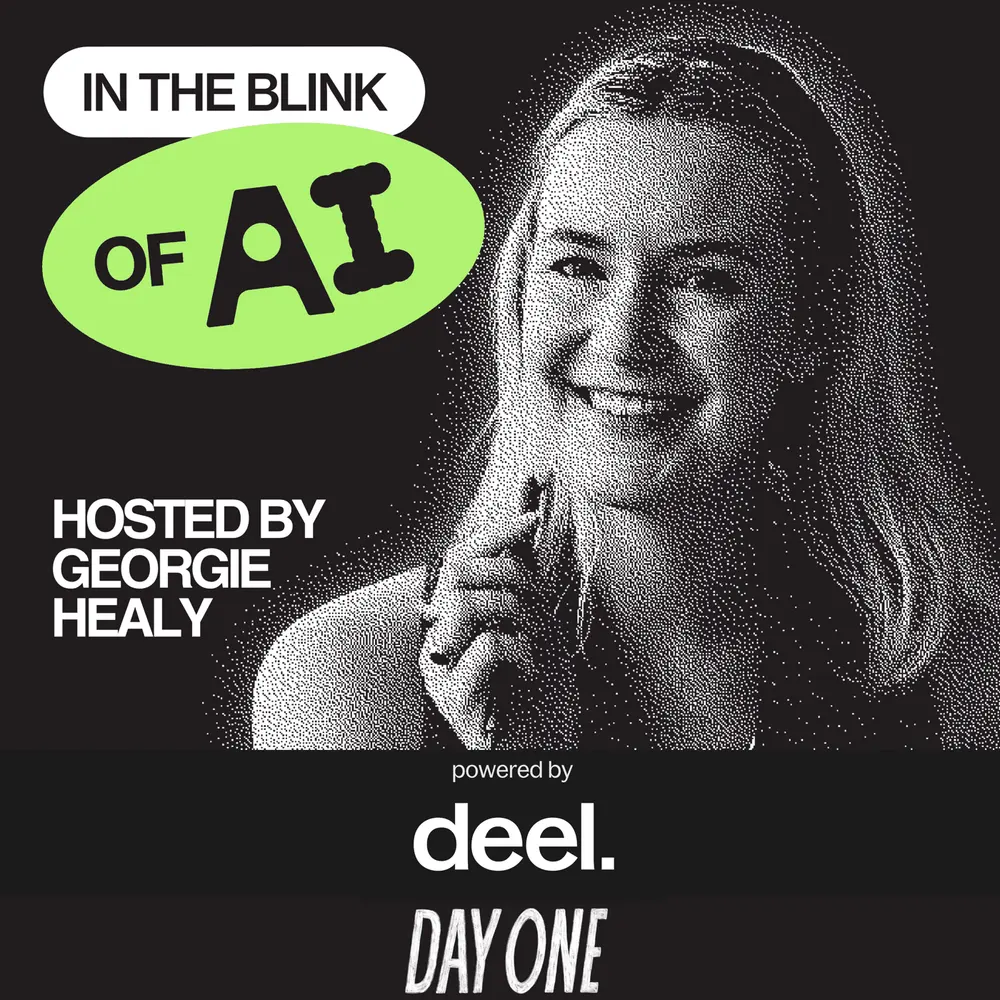 In The Blink Of AI with Georgie Healy
Presented by Deel & Stripe
In The Blink Of AI with Georgie Healy
Presented by Deel & Stripe 


 ▶
▶  ▶
▶  ▶
▶  ▶
▶  ▶
▶ ▶
▶ ▶
▶