Transcript Synced · select any line to jump ▾ 0:00 Brendan Hill: You both have amazing products, both growing super quickly. You're in the 8-figure revenue club. 0:05 Speaker: You can have the best product in the world, but if nobody knows about it, you die. 0:08 Speaker: I remember last year at Webflow Conf, there were actually a couple of people who were like, "If you pay for the tattoo, we'll get it." I think there was like a group of 3 or 4 of them. 0:15 Speaker: Oh, they're that obsessed with the product? 0:16 Speaker: Yeah. 0:17 Brendan Hill: Wow. First-time founders focus on product. Second-time founders focus on distribution. You guys have probably better distribution than Pablo Escobar, in my opinion. 0:26 Speaker: Like— 0:27 Speaker: Shh. 0:28 Brendan Hill: Okay. 0:29 Speaker: I think it's a really interesting time being a venture venture capitalists right now in Silicon Valley, there's a lot of talk. It's no longer triple, triple, double, double. That's old school now. It's now quadruple, quadruple, quadruple, and then triple, triple. 0:41 Speaker: We strangle our competitor's voice in market. We want to be everywhere. We want to be top of mind. If you are top of mind everywhere, you win. 0:50 Speaker: Woo! 0:51 Brendan Hill: What's up, founders and investors? Welcome to another episode of Oversubscribed. Australia's number one startup hang. I'm Brendan Hill, angel investor and venture partner at 1013. We are coming to you live from Instant Studios right here in deep, deep Surry Hills, the capital of founders and investors in Australia. I have 3 amazing guests with us today, joining us for another sold-out episode of Oversubscribed. First, I have Slater, the co-founder of Relume. 1:28 Speaker: Hello. 1:28 Brendan Hill: He's using AI to transform how we create websites, now powering over 1 million websites around the world, including our very own website, oversubscribepodcast.com. Thank you very much, Slater. 1:42 Speaker: It's good to know. I didn't even know that. 1:43 Brendan Hill: Right. Of course. Of course. We like to support Australian startups. Next, we have Liam Millward, co-founder of Instant. They're building the world's first AI marketing manager. Growing at $1 million of revenue each month. He's the youngest founder to raise a pre-seed round of $2 million, the youngest founder to get to a $100 million valuation, and I think most impressively of all, the youngest founder to be a repeat guest on the Oversubscribed podcast. Gotta give the fans what they want. 2:13 Speaker: Thanks for having me back. 2:14 Brendan Hill: We had a bit of controversy in the first episode, but we're here for the ratings. So great to have you back. Some great learnings., and looking forward to diving in today as well. And last but not least, we have our very first investor on the Oversubscribed podcast, and we're starting with a bang. In my opinion, one of Australia's leading AI investors, Sally Yu from King River Capital, fresh off raising $150 million to invest all into the fastest growing AI startups in the world. And she's based between Sydney and San Francisco. So great to have you all here today. 2:52 Speaker: Thanks, Brendan. 2:53 Speaker: Thanks, good to be here. 2:54 Brendan Hill: So Slade, I wanted to start with you. I haven't seen you for maybe 3 or 4 years. I think you were at Canva at the time. I'm hearing all this buzz about Relume. I find out you're in the 8-figure club, which sort of breaks my heart as an angel investor that I didn't invest when I first met. But mate, what's the last 4 years been like? It must feel like a whirlwind, I'm sure. You guys are growing very fast. 3:15 Speaker: Yeah, yeah, it's been pretty crazy the last 4 years. So I guess kind of all started back at Antler actually, just before I reached out to you. So I think Anshul from EverLab also met him at Antler. So there were a few people in that cohort. So yeah, I guess for those who don't know what Antler is, it's basically a startup incubator. They get 80 people who they think would make great founders, and then they effectively just put them all in a room, give them 10 weeks to come up, form teams, come up with business ideas and then pitch them. So Dan and I kind of met there. We kind of wanted to work with each other, but there was no idea either of us were like super sold on. So we kind of just moved on from there and then we kind of went our separate ways. I tried a few more things, to be honest, a few failures in that time. So, um, and then, uh, Dan, uh, met up with one of his past co-founders, um, Adam, and then they kind of started off the Relume agency, which was kind of like V1 of Relume, the early days. So whole idea of that was it's basically just an agency to build websites for customers. Main reason for that is all around the idea of like, there wasn't any idea which they were kind of sold on that they were just willing to commit themselves to just yet. So they kind of wanted to do something where it's like they could learn a lot more about the customer, learn about problems, and then kind of figure out what to do. But at the same time, just gain a bit of revenue. Every time they built a website, there were lots of things that they just found themselves doing again and again. And it kind of got to the point where it's like, well, what if we could scratch our own itch, just build a tool for that? So that's when Dan reached out to me again and then I got brought back in and then, and then yeah, we kind of started the Relume as it is today. Well, let's say phase 2 of Relume, which was Relume the product company. So the Relume Library. This started off super basic with what is the most basic thing we can do as a product that we can ship as soon as possible. And just most importantly, deliver value to the customer. So version 1, super, super basic. It was just a library of components for Webflow. And kind of what separated us from the competition, there were a few other ones at the time, but what was different about ours was we really focused on the unstyled part of it. And we also found that, I guess there were templates, right? And I guess what's bad about templates is templates all end up looking the same, right? Yeah. One of the reasons for that is because it's all of the same sections kind of like put on top of each other. So if you use the template and I use the template, like we would need to do so much work for them to not end up looking the same at the end of the day. So we're like, okay, the rework sucks, but yeah, let's make sure we get to a point where like basically all websites can look different, but we still end up removing the, just the repeat work. 6:02 Speaker: Yeah. 6:02 Speaker: So yes, then we launched the Relume library. Honestly, almost straight away we did get users for that, which was really good. So that went off to a flying start, but that kind of wasn't the big ambition of the company. Like obviously as things went, we're like, how can we really take this to the next level? Around that time we were playing around with AI. This was, we started playing around with it a bit pre-ChatGPT. And then when ChatGPT came out, that was when they relaxed a lot of rate limits and we're like, okay, let's give this a serious go. Let's build our first AI product. Now it's time to like, what can we do to disrupt ourselves? There is this new technology which has come out. This should totally change the process. Let's see what we can do. So we kind of mapped out the entire job to be done, like all the way from like starting to pitch a website right over to like building out the website and then finally handing it over to the customer and then allowing them to update it. And we kind of mapped out that whole thing and we're like, let's just spend a few weeks. We'll just prototype every single idea We'll find out what AI is good at, what AI is bad at. And we just got a crazy amount of learnings. I think we probably built like 20, 30 prototypes in that time. And yeah, we very quickly learned AI is incredible at a lot of things. So for example, it was really good at figuring out what to include in a website and how to lay out a page. We realized it wasn't too good at actually creating the components itself. 7:30 Speaker: Yeah. 7:31 Speaker: I'm always a bit reluctant to say AI is bad at something. We at least couldn't get it to work well. So that was a pretty big key insight. And then there were other things around like styling where it just wouldn't consistently give a good design. So a good example would be it would give you something which is just totally inaccessible. For example, like black text on a black background. Like that's never going to work. That never looks good. So we kind of hit like a lot of issues like that. So we're like, okay, why don't we just lean all the way into what is AI really good at? And that was the seed of the site builder. So the whole idea around the Relume site builder is it is the fastest way to get to a very high-performing, high-quality marketing website. And the idea is we use AI kind of as a copilot, not just like a one-shot prompt to just do the entire thing. The whole idea is we want to create output which when paired with a professional can be sold to as like a high-end marketing website, which is how we've been able to get customers like Nike, Jasper AI. 8:38 Speaker: Yeah. 8:39 Speaker: Lots of companies like that. So yeah, I think probably like the big moment for us really was, was when we released Site Builder. All of a sudden I remember there was this one month in particular we managed to double our revenue in a single month and it's just been Pretty intense since then. So yeah, we've just been focusing on it, improving it since then. And then yeah, we're hoping to, we've got some pretty big announcements coming out soon. So we're excited about those. 9:04 Brendan Hill: Maybe we can get a world exclusive on the Oversubscribed podcast. 9:07 Speaker: Maybe. Maybe. 9:09 Brendan Hill: We'll see where the conversation goes. But yeah, obviously like Relume growing super fast, Instant AI growing super fast. Could we get a refresher on what Instant AI is? I know you gave a, a quick overview on the last episode? 9:24 Speaker: Yeah, thanks for having me on the second episode, Brendan. We do a lot together. 9:29 Brendan Hill: First repeat guest. 9:30 Speaker: Excited. Yeah, I mean, Instant's been around for, you know, I started the company when I was 17. I'm 21 now. And over the past couple of years, we're kind of onto our third bet now that we're, you know, quite successful at. We started Instant Checkout, which is a one-click checkout, which we grew to $1 million of revenue in our first,, 6, 12 months after launching that. Then we launched Instant Audiences, which we grew to $7 million in our first year. Oh, it was like 10 months after we launched Instant Audiences. Um, and I went pretty in detail on that on the first episode. But then more recently, um, we have started to become a lot more of a product-focused company. Initially we were very revenue obsessed. Um, very growth, growth, growth to survive. 10:15 Speaker: Mm-hmm. 10:16 Speaker: And we needed customers in the door. And we grew incredibly quickly with that mindset. And we still definitely have this revenue mindset today. However, now we definitely match that with just as equally having a very product-obsessed mindset as well. And we got to about the middle of this year around, well, maybe the start of Q2, Q, yeah, the end of Q1 maybe of this year. 10:41 Speaker: Yeah. 10:42 Speaker: And we had a really successful product with audiences, but we needed to build something that was incredibly stickier for a brand. Audiences was driving, you know, 4, 5, 6% of a merchant's revenue. And we always, we had the ambition to be accountable for at least 20 or 30% of an online brand's revenue. And we had a lot of ideas and eventually at the start of the year we tripled our product and engineering team. Wow. Made a heavy investment in product engineering. You know, we hired some of our first product managers. We took, you know, we were at significant volumes of revenue with like 5 engineers and we started building Instant AI. And basically Instant AI is building the first AI-powered marketing manager for an e-commerce brand. And we've started with email. So allowing an e-commerce brand to build all of their email retargeting that brings their lost shoppers back to convert. Mm-hmm., in basically a single button. Um, and so rather than a human wasting time on building and designing all of the email flows, setting up coupon codes, does this design work versus this design, running A/B tests, um, setting up all of the retargeting that brings a, a shopper back to convert. And generally this equates to about 20% of a, 20 to 25% of a merchant's revenue. Now we do all of that without a human even needing to be involved. And we launched that product around 8 weeks ago now. We have over 300 brands on that platform, on that product already, over $1 million in ARR easily. And so that's growing very, very fast. But I think the most exciting thing is that we've started to tick some of our ambitions outside of just being, you know, we know that we can grow, we know distribution always wins and speed always wins over that. But I think what's most exciting is seeing that we have ticked the box to being, you know, 25% of a merchant's revenue. We are significantly increasing their revenue as soon as they turn us on. You know, we had one brand switch on Instant AI and what they generated in the last 3 months with another solution doing the email marketing we generated for them in the last 30 days. And to see adding, you know, hundreds of thousands of dollars of revenue to a brand without a human needing to be involved is wild. And I think the speed at which we're able to put these products live where ordinarily it would take a brand, you know, in some cases 3 months to set up all of their email marketing or retention marketing. We had one brand, Fate the Label, a very fast growing brand here in Australia, women's fashion, Brittany Saunders all over TikTok. She's, she's, you know, She's everywhere. And we had a demo call with them on, I think it was like a Wednesday at 10:00 AM, and we were live by 2:00 PM the next afternoon. And since then we've generated them hundreds of thousands of dollars of revenue in their first 30 days. So that's the most exciting thing to me is that we're not only driving, you know, we're growing super quickly, we're also growing these businesses super quickly and such a critical part of their, their, their, they're every day now for these brands. So yeah, really excited about Instant AI. It's our third bet as a company and we are, we're all in on it really. 14:00 Brendan Hill: Yeah, it's super exciting. You both have amazing products, both growing super quickly. You're in the 8-figure revenue club. I mean, we'd love to dig into how you guys think about growth and you touched on distribution and you guys have probably better distribution than Pablo Escobar in my opinion. You really constantly Concentrate on it. Like there's some great, great quotes as well. Like, you know, first-time founders focus on product, second-time founders focus on distribution, which I see you guys both doing in spades, which is awesome. So can you take us through a bit of that? And Sally, you as well, I know you're invested in some of the fastest-growing AI companies in the world. I think Replit was just announced. 14:43 Speaker: Yes, indeed. 14:44 Brendan Hill: Very recently. 14:45 Speaker: Very exciting. 14:46 Brendan Hill: Yeah, that's awesome to be invested in that. And of course, You know, there's companies like Lovable, zero to $100 mil US ARR in 9 months. And I know Liam, one of your investors, Akshay from Hummingbird, big fan of the podcast. Shout out to Akshay, I know he watches every episode. He was the first investor in Lovable as well. So I mean, some awesome knowledge here today on the pod. So I mean, let's dig in. Growth, where do you start? How does distribution play a key part? 15:15 Speaker: Yeah, I think you always win through distribution. You can have the best product in the world, but if nobody knows about it, you die. I think that a lot of people get it wrong where to have good distribution, you do need to have a good product though. And it always starts with product. And I think you can paint, like everything in a business can be broken down, in my opinion anyway, into a funnel. And the top of the funnel is product, the bottom of the funnel is a happy and paying customer. And everything else in between. And I think, you know, you need a good product, you then need to figure out how to distribute it, you need to figure out how to have the best customer success, you need to figure out, everything needs to be amazing to truly win. And I think it all starts with product. I think that was something that we maybe underrated early on, how good your product needs to be to truly scale quickly. And now that we have that mindset, you know, we've seen incredible growth. But even better, significantly lower churn. Once these customers get in the door, they aren't just leaving. So I think, as I said before, like on one hand, having this, this product obsession and having a revenue obsession, I think is step one. Uh, and then once you have the revenue obsession, you need to figure out how to get it out there. And particularly founders that are getting products off the ground, I think it's, you just need to have clear line of sight to your next goal. You see so many founders that launch a product, us included when we first launched, and you can't clearly define how you're gonna get to $1 million of ARR. And you should just be able to clearly define how many customers you need, how many cold calls you need to make, how many emails you need to send, how many, whatever it is, whatever your distribution model is, how are you getting to your next revenue milestone? I think that's the second thing. And then three, you actually need to execute on it. From my perspective, you need to actually now go and do it. And I think that it's very easy to do the things that are in your control. You know, people get very excited about building new product in the next, shiny thing, and it's very easy to run downstairs and work with the team to do that. But it's very, very hard to turn up to every event and speak on stage about what you're doing and get the next customer case study video and turn customers into advocates and, you know, build the best website with the best sales team, with the best marketing team. It's hard to do all those things. Um, but if you pull it off, you win. And I think focusing on distribution early is the biggest mistake that we made and so many companies make. And you see clearly that once companies start focusing on distribution as one of their top 2 things outside of product, they then start, you know, adding millions of dollars of revenue a month to their business. And so I think escaping just having a product mindset pretty early on was a huge unlock for us. 18:01 Speaker: Mm-hmm. 18:01 Brendan Hill: What about you, Slater? Obviously you've got 1 million websites built on Relume around the world. How did it take off? Like, do you remember the moment where, I mean, you briefly mentioned it, doubled revenue in one month, but in terms of distribution, how did that happen? 18:14 Speaker: Yeah, so I feel like there were many different phases and I think a lot of it was just us being extremely honest about what phase we were in at each point. So early on, one of the things we did was we realized the Webflow community is just very important to us. And if we get a lot of very raving fans and jump onto this community, which is growing just like an awesome community as well, kind of crazy just how friendly and just giving everyone in that community is. That would kind of help us get to our first tranche of customers, right? Like our first 100,000 customers. So what we started off doing early on was just getting really involved in the community, being part of the Twitter conversation, going on, literally just going to all the different meetups in the community, going on the various podcasts, all that sort of thing. So that was kind of like phase one. After that, like after we had our foot in the door and we could take a bit of a bigger swing, we really were shooting for the moon. Like, what are some things we could do which are just innovative, like that could go viral? What are some things like we would actually want to see like as web designers? So we kind of came up with a bunch of ideas and one really stood out, which was the Relume Design League. 19:23 Speaker: So— 19:23 Brendan Hill: Oh yeah, I think we got a video of that. D-Lake, can you bring up the Relume Design League? Some of these have millions of views. It's crazy. 19:31 Speaker: Yeah, so this is, we reimagined this as kind of like esports for design, right? So what we've got is we've got 2 people going head-to-head under extreme time pressure. You've got 30 minutes, you have to build a website. So we kind of give them the theme, give them the assets, and then it's a case of build whatever you can in the time. So we turned this into a bit of a competition. There was like prize money, there was like live streaming on YouTube, and then we also created all of these Shorts on TikTok. It's kind of crazy the response this got. Like, we heard a lot of people were genuinely looking forward to this. 20:07 Speaker: What, you just put it on TikTok, Instagram? 20:09 Speaker: So YouTube, we did like the livestream and it was, there was like a whole production behind it. It was pretty good. But on TikTok, it was kind of surprising some of the responses we got. Like, there were all these TikTokers who are supposedly extremely famous who I'd never heard of who were like commenting on it because the whole hook is it's like, which one do you think should have won, left or right? So we got Kai Greene. I don't know if any of you guys Yeah, I know Kai Greene. Yeah. Yeah. So, he commented and it was the first time I'd heard of him. And it's like, this is some guy who I think has got hundreds of thousands of followers and he's famous for bodybuilding and it managed to capture his imagination because he was voting. I think he voted left on this one. So, you can see if you agree or disagree with Kai Greene. 20:49 Speaker: And it's gone international. So, these people are not even in Australia, they're around the world competing. 20:53 Speaker: Exactly. Yeah. Yeah. So, I actually don't think we had anyone in Australia competing. 20:59 Brendan Hill: Cool. 21:00 Speaker: So we've always just been a very international company. There's our product teams in Australia, but outside of that, it's wherever the customers are. So yeah, this was a really, really big moment for us. And then I think probably the last bit of our distribution has been how do we get really raving fans? It's not just about getting everyone who sort of likes us. How do we get to those people who really, really care? And I think a lot of that is just really just understanding what they want, actually building for that specific person, actually talking to them, making sure we understand them, and really happy with what we've managed to get. So there is at least one person out there with a Relume tattoo. 21:41 Brendan Hill: What? 21:43 Speaker: I know. 21:44 Speaker: Yeah. 21:44 Speaker: It's crazy. 21:45 Brendan Hill: Wow. 21:46 Speaker: Yeah. Did you pay them? 21:47 Speaker: We did not pay them. Yeah. Yeah, it's crazy. I remember last year at Webflow Conf, there were actually a couple of people who were like, if you pay for the tattoo, we'll get it. I think there was like a group of 3 or 4 of them. 22:00 Speaker: Oh, they're that obsessed with the product? 22:01 Speaker: Yeah. 22:02 Brendan Hill: Yeah. Wow. 22:03 Speaker: So I think it kind of makes sense though, because I think similar to you, I know you mentioned a lot about like it, what you really get excited about is like you're actually improving their company, you're improving their product and everything. Like, I think that's why we have such raving fans, because at the end of the day, it's like A lot of these companies without Relume, they just wouldn't be able to operate the way that they're operating, right? We allow people to just maybe sign projects which they wouldn't have done before because the budget wasn't high enough. Maybe they just do significantly more things now. They can still end up with these really high-end projects and now they're just more profitable because they have more time that they can spend finagling all of the details or just doing other projects. So yeah, that's kind of been our strategy around it. But yeah, it's just been super important since day one. And yeah, the team is just built for it. 22:54 Brendan Hill: That's awesome. And so what do you do with the raving fans? They come on. I know you've got a big sort of community as well. 22:59 Speaker: Yeah, so that's a great point. Yeah, so we've got a large community as well. So we try to keep them in, it's mostly like within our Slack. So we've got a Slack channel, Slack community with I think it's about 15, it's somewhere between 15,000 and 20,000 people now. 23:15 Brendan Hill: You're on the paid account? 23:17 Speaker: No, we're not on the paid account. Oh, wow. Yeah. So thank you Slack for hosting all of this for us. It's pretty generous. But yeah, it just means that after 3 months they just delete everything. So it's very frustrating because we've got a bunch of very technical questions about how to use the product and that sort of thing. And those just get Flushed all the time. So we now have another solution on top of Stripe, which helps. But yeah, that community's really good. What's really cool about it is it's actually a very engaged community. It's not just a case of people sign up, they say one thing and then they leave and never come back. I think one of the things that's really cool about our customer segment is a lot of the people are freelancers or agencies, and a lot of time it's agencies just starting out. As a freelancer, you don't necessarily have coworkers, right? You are trying to get that human connection, which is why the community's so big on Twitter. That's why there are so many people going on these little community groups, and that's why the community, giving them a place to hang out is just really impactful. So we try and kick off a lot of initiatives around people, like how to make more money about roasting each other's websites, trying to just make sure everyone's getting better together. So we, yeah, something we're keen to lean even more into, but yeah, it's going well. 24:37 Speaker: Exciting. 24:38 Brendan Hill: That's awesome. I saw something crazy in one of the Relume emails. Dylake, can you bring this one up as well? Like speaking of community and finding a home and working with people, you're offering some desk space. Is that right? In the Relume office in Surry Hills, the capital of startups in Southeastern Australia. 24:55 Speaker: Actually, it's very deep in Surry Hills. 24:57 Brendan Hill: Here we go. Deep, deep Surry Hills. 24:59 Speaker: Deep Surrey Hills. 25:00 Speaker: Wow. 25:01 Speaker: So the idea behind this is the founding team was like, we very much understand what it's like to be a web agency. And a lot of the people in the team we have hired from the communities, they understand it as well. But it's like, if you're hiring an engineer from Sydney, for example, it's like they probably just don't necessarily have that experience. And same with the design teams. How can we get the whole team to just have maximum empathy for the customer? And brainstorming what makes sense. We're like, you know what would be really cool? If we actually invited them into the office. Everyone knew what it was like, actually knew like, oh, if I do this feature, it means Aurelian is able to spend a week less on this thing. Or it's like he's able to make more money. 25:42 Speaker: So do people have people registered to come in? 25:46 Speaker: Yeah, we've had a fair few people register. It's been pretty good. 25:49 Brendan Hill: Yeah. 25:49 Speaker: Nice. 25:51 Brendan Hill: Are you worried that a competitor, like a sort of deal situation, you'll get a competitor come in and spy on Relay? 25:57 Speaker: Oh, that's coming next. 25:58 Brendan Hill: Yeah, come and sit in the office for a couple of weeks. 26:01 Speaker: Yeah, well, I guess we're making sure we vet these people because it's— 26:05 Brendan Hill: Police check. 26:06 Speaker: But yeah, I don't know. You know what? If someone comes from Lovable or something, maybe they— if they really wanted to, they probably could get away with it. But yeah, so the whole idea is to build empathy. Property. So we haven't got them in yet, but we've started off the process. 26:22 Brendan Hill: That's awesome community benefits. Surry Hills, expensive commercial real estate for sure. 26:27 Speaker: The best for our customers. 26:29 Brendan Hill: That's it. The real estate community, it's awesome community. Before we get back to the conversation, I want to tell you about the sponsor who made today possible, Vanta. As a startup founder, you're juggling multiple priorities from the expected, like finding product market fit, to the unexpected, like customer requests for SOC 2 ISO 27001 certification. But achieving compliance is time-consuming, and time spent on it is time away from needs of the business. That's where Vanta comes in. Vanta is the all-in-one solution for startups to become compliant quickly and build a security foundation with ease. With a combination of automation and extensive partner network, in the security marketplace, Vanta provides the necessary tools and expertise for startups to achieve compliance seamlessly, no matter how urgent your needs are and at every phase of growth. Over 10,000 leading companies, just like the ones who have been on the Oversubscribed podcast, like EverLab, Relevance AI, Instant, Alloy, and Atlassian, trust Vanta to automate their compliance so they can focus on growing their startup. Startup customers get $1,000 off at vanta.com/oversubscribed. And Instant as well, building a big community. I know you've got the Ecom Club. I know you've done some interesting events lately, the Ecommerce Cruise in Sydney. One of my personal favorites, didn't get an invite to this one unfortunately, but hoping for the sequel. Dylake, can you bring up The Instant Cruise, the e-commerce cruise, it's on their LinkedIn page, I believe. We'll flash it up. 28:16 Speaker: Yeah, we've been doing a lot of events recently. I think that it's particularly here in Australia. We haven't yet really explored too much in terms of events in the US yet. But in Australia, we host at least a dinner a week, generally on a Thursday, with our customers. Whether it's in Melbourne, Sydney, Brisbane, Gold Coast, Adelaide, there's always dinners going on where we invite our top customers. But something we do is prospects that are in our pipeline to close, generally the dinners say are 15 to 30 people and 15 or so of them, say if it's a 30-person dinner, 15 existing customers will come along and we'll invite 10 to 15 prospects. And we've turned it into a way where we just don't want the hard sell. We don't want the hard sell, constant pressure. It's like, hey, come along to one of these dinners and you can just hear what Instant, what it's like to use Instant from one of our existing customers who have been with us for a while. And we found those dinners to be incredibly successful for turning existing customers into advocates, but also closing new customers. And then we also use them a lot for product launches, new feature launches, product launches. And that's when we did the the yacht party cruise thing, we invited Simon Beard, who's the founder of Culture Kings, and Jay Wright, who's the founder of eCommerce Equation, which is one of the biggest, or probably the biggest eCommerce community in the world. I think they have around 4,000 eCommerce founder members now. And we spoke about if AI isn't driving 20% of your revenue, you're already failing. 29:56 Speaker: Yeah. 29:56 Speaker: And we had around 100 founders come along, some of our biggest customers, and we just wanted to highlight this new product that we'd built. So rather than just sending, you know, an email out or a text message or, you know, some random piece of marketing material, we try and make it fun and engaging and also a way to bring our customers together so they can get the best out of the product. But we also do a lot in terms of speaking on stage or industry events as well. 30:25 Speaker: Mm-hmm. 30:25 Speaker: I think that we just try and make as much noise in mar— if you are living under a rock, if you are in e-commerce, an e-commerce founder in Australia, you haven't heard about Instant. We have a lot of work to go in the US and that's our biggest focus now. But because we are everywhere and we obsess about being everywhere, and something I said in the last podcast was we strangle our competitor's voice in market. We want to be everywhere. We want to be the, we want to be top of mind. If you are top of mind everywhere, you win. And I think that is a huge part of distribution, but it's easy to forget about distribution in terms of your existing customers. And we use our existing customers a hell of a lot to advocate for us as a brand. And, you know, these events are huge for that. 31:08 Brendan Hill: Yeah, that's awesome. And Sally, who have you seen around the world? I know you've backed some great AI companies, Relevance AI here in Sydney. We had Jackie on a previous episode of Oversubscribed. You're in Replit, you're sort of in between Australia and San Francisco. Tell us some good stories about growth, distribution. We'd love to hear your takes. 31:29 Speaker: Yeah, I think it's a really interesting time being a venture capitalist right now. In Silicon Valley, there's a lot of talk. It's no longer triple, triple, double, double. That's old school now. It's now quadruple, quadruple, quadruple, and then triple, triple. And it's just the barrier is just growing and growing every day. Because of real-life examples. It's no longer fiction. 11Labs came out this week. They passed $200 mil ARR, and they're targeting $300 mil, I believe, by the end of the year. Curse is at $500 mil ARR plus, allegedly. Our company Replit is, you know, $150 mil ARR plus. Lovable's hit $100 mil ARR. You know, these are real companies that are delivering value to— but for your points, they're just making the speed to delight, the speed to instant ROI so much quicker, and that's when you can grow that quickly. So— Yeah. The bar's moving in Silicon Valley right now, and I think a lot of founders are really trying to think about how they can replicate that story. And I think there's a few things. One thing you talked about is community building. I believe that's more important than ever. In terms of being able to reach your audiences, I think AI founders right now are looking at PLG and SLG at the same time. Previously, you might— so PLG is product-led growth and SLG sales-led growth. And it depends if you're a B2B company or a B2C company, but the most successful strategy right now is still product-led growth, which you two covered. And so much of that is being able to really resonate with your customers and being there for them and guiding them through the process. Like, we're all really AI native here, but for a lot of people working at big corporates or working at SMEs who really need these tools, it's still something really new to them. So it's all about education. So I'm so happy to hear you're doing so much in Australia because that's one thing that I thought was really missing here in SF. There's 10+ events every day. They're people, you know, who are building these companies. They do demo building where they bring in 30 to 40 people where they're a new customer or someone who's just interested and they'll help them build agents or they'll help them build custom AI tools and teach them how to use their product. And it's really working. And one strategy I've seen work really well in the US as well is certification. So a lot of people, you might remember AWS did that really well in terms of people getting cloud certifications. Now they're helping people, Relevance AI is doing this as well. It gets AI Ops certified, or Crew AI is an example of a company offering people certification. So, you know, they can show up at the workplace and show, I'm an AI expert and these are the best tools to use. So I think community building is super, super important right now. And the other thing, as you said, it's all about having the best product. I think, you know, every category of customer support, health tech, there's dozens of companies spinning up every day. So how do you keep winning, uh, how you keep winning customers is having the best product. And, um, so much of that is talking to customers, understanding, um, where they're at, and constantly iterating and doing the A/B testing. So, um, it's a really interesting time right now. 34:25 Brendan Hill: And you're an awesome investor, Sally, in the sense that Relevance AI, like, you're on the board there. You actually run a lot of community events at Relevance AI's office just down the street here in deep, deep Surry Hills. Tell us about some of the events events that you've run there, and how that's helped the guys out at Relevance? 34:44 Speaker: Yeah, I mean, they do all the hard work. And, you know, I think as an investor, that's one thing we can really help out. And I'm sure hopefully all your investors do it for you too. But at Relevance, the most recent event I helped them MC was their internal hackathon. So, you know, to your point about building empathy for your users, the whole Relevance AI team, every single person had to build, get into Teams and build an AI agent that they would launch on Marketplace. So Relevance has just opened up a Marketplace where anyone can find ready-built AI agents and tools that they can use immediately. So there were really fun things. For example, there were ones for making movies. There was one for HR managers. And that was one thing I could do for the team. I've also recently, I was on the panel for event for Women AI Founders and Operators, which was really amazing. It was thunderstorming, but 100+ people signed up, and I think the turnout was around 70 people. And it was just AI women— sorry, women AI founders and operators who really wanted to learn more about building agents. And done a few other meetups, and I think it's really important for all of us to keep pushing Australia forward. 35:51 Brendan Hill: Yeah, 100%. And what differences do you see in terms of community building between the US and Australia, obviously one of our best AI exports, Annie Lau from Build Club, is now in the US. She does a lot of collabs with Lovable, for example. I mean, what can we learn there and bring back to the ground here in Surry Hills? 36:10 Speaker: Yeah, I think Annie does a fantastic job. Shout out to Annie and Build Club. 36:14 Brendan Hill: Big fan of the podcast. 36:15 Speaker: Yeah, and she's done a lot for the Aussie ecosystem. So we miss her dearly, but I know her team is running events here still. I think a few of the learnings is I'd love to see more hackathons. I think that's one thing that's really missing right now. I think we're starting to do well in terms of having panels, but I think people are getting tired of panels. I think we need to have more hands-on sessions where people are getting into the tools and diving into it and trying different problems and also just encouraging people to be entrepreneurs. I think one really exciting thing that will come and hopefully there'll be customers of both of of you are solopreneurs or like really small teams that are building the next e-com brand or building a small business that can scale to 1 mil, 5 mil ARR, you know, be a great source of income. And it'd be great to see those come out of hackathons here. And I think the other thing is also just really curated events. So in SF, I think the best events are the ones that are hosted, maybe 10 to 15 people, sometimes 5 people, and they're very topic focused. Yeah. So for example, you might be talking about context or memory within LLMs, or we're talking about vertical AI in specific space. I think we just need more space for curated events and also hackathons. 37:26 Speaker: Well, you mentioned before around ElevenLabs and the impressive growth that they've seen. Another company I really love is Harvey, the legal tech startup. Outside of community, and this is something I look at so much, like you see these LinkedIn posts where companies are going from, 50 to 100, 100 to 200, 200 to 400 so quickly outside of community and being spending so much time in SF. Like, what else are they doing from your perspective to actually grow that fast? 37:53 Speaker: Yeah, that's a good point. And maybe I'll use— 37:55 Speaker: I just feel like no one can really put their finger on the pulse of it. 37:58 Speaker: Yeah, I think a lot of it comes down to the founders having unwavering vision. And so, you know, like Harvey's an example in the legal tech space, Replit's an example in coding agents. It's just that you need founders who are so obsessed with this problem and vision that they can push the whole team ahead. And it's all about hiring A-players. So I think what's really different is these people have managed to inspire 50, 100 people who do or die. Like, this is it. In SF, there's a new phrase that everyone talks about. It's called 996. I'm sure you've all heard about it. And, you know, I think it's— 38:34 Brendan Hill: What's 996 for the audience that hasn't heard of it? 38:36 Speaker: So 996 is working working 9 AM to 9 PM, 6 days a week. So it's a bit of hustle culture in SF. I'm not saying I'm promoting it right now. But if you can have founders that are inspiring their team, that they love the product so much, they're thinking they're receiving so much value in growing with this company and building this product that they want to do that, that's also what's driving the difference. I think the whole team is hustling that hard, it's not the founders. The marketing analyst in the team, the person who's building the backend for the platform, everyone's just obsessed with this company and is building at the cutting edge, and that's across the whole organization. And the last piece I'd say is just like really keeping on top of, um, the latest tech stack. So I think like what they've done really well, like Replit as an example, you know, they spent several years building the backend in terms of how do you actually host an application or deploy a website. And you just need to make sure the user experience is that good because there's just too much noise and hype, as you Like you said, not everyone, but it's somewhat easier to do distribution now that there's fantastic AI tools and everyone can run an event, right? But how can you build a product that doesn't break and continuously has the best UX is how I think they win. And Harvey's done that, lawyers, there's things that are not great about it, but the user experience is better than all other legal tech AI companies right now. 39:56 Speaker: Yeah, you're so right about, we call them AI tourists. I feel like because something's got AI in it, people are just so willing to try it. But exactly like you mentioned, if the product isn't actually good at the end of the day, it's like very easy to get customers in, very hard to keep them there. Which, yeah, I think is happening with a lot of these AI companies at the moment. 40:15 Brendan Hill: I've been angel investing since 2017, made over 80 investments, many of them through 1013. So 1013 is Australia's largest network of angel investors. And each month we send out a curated list of 1 or 2 deals that you can choose to join in on the journey. These are companies like Everlab and Instant that you've seen on the Oversubscribed podcast and other companies like Go1, Mr. Yum, and Autograb. If you're interested in finding out more about the world of angel investing, I'm happy to jump on a call, share some war stories, and tell you about the exciting companies that we're currently looking at. Simply go to 10:13 www.titan.vc/oversubscribed and you can book a call with me for next week and we can talk about all things startup and angel investing. And I guess coupled with that explosive growth as well, like you two have very fast growing companies in the AI space, but with high growth comes potential high churn. Would love to dig into how you guys view churn, lifetime value of customers and I guess what lessons have you learned in the last year since your explosive growth that have helped you on the churn side? 41:31 Speaker: Yeah, well churn's a bit of an interesting one. I think probably the first thing to do is it's like you see this big number in Stripe and you're like, ooh, okay, that's something, that's not ideal. But I think properly segment it because I guess going back to the AI tourist thing, for example, Relume, because we've gone viral on things like like TikTok and X and that sort of thing, we do get a lot of people who come in and they're just keen to try out the product. And to be honest, if those people churn, that's okay. They're not our core segment. We are targeting the high-end designer. If they're the ones churning, that's probably the thing which is more concerning for us. So first thing is weed them out. I think Relume as well is probably in a bit of an interesting situation. So Our product as of today, we allow you to kind of get to an 80, 90% complete website and then you export out to a CMS platform like Webflow to kind of do that final like 10, 20%, really like do that final bit. And as a result, if you are an individual who is building a website for your company, like you could sign up for Relume, use it for a month, love the product, say it's amazing, like tell your friends about it, but then leave and continue to pay Webflow for the next like 5 years until you kind of get a new website. So yes, that's one of the big things which we're facing with our product. It's not our core segment, so I guess within our core segment it's better. But yeah, we are attracting because of TikTok and I guess just our distribution, we do attract a lot of that sort of thing as well. 43:06 Speaker: Yeah, we've gone through periods of significant churn and in our case we probably haven't faced the AI tourist as yet. Our customer generally pays us around, it's a considerable purchase. Like they'll generally pay us $1,000 to $3,000 a month on the lower side and it just scales up from there. And so it's a considerable purchase rather than a, you know, a quick subscription. When we first had churn, probably at the start of this year was our biggest period of churn. And the core reason for that was basically what I said before around we just weren't, We just weren't an important enough product. And we found success with Instant Audiences, and it's an amazing product, and we drive significant volumes of revenue for online brands. However, customers expect steps of value. They always want something new. If they're paying for something, they want the next feature, the next feature, and the next feature. And we just didn't have this. We had a product team, but I wouldn't say that we were product obsessed. Obsessed. And these customers eventually, it was, you know, November, October, November, December sales rush, you know, we're in e-commerce, everyone's making shitloads of money. And it gets to January, February, and every year every e-commerce founder is depressed. And they, you know, their sales are significantly less than the 2 months prior. And so they start cutting Instant, but also every other technology. And so to win, you need to be critical to their business. And at the start of this year, that was kind of our first year where we had a mass amount of customers and that hit us hard. I think originally we had to band-aid it quickly. And so we went from 2 customer success managers to, I think we, you know, we went to like 7. And so we knew immediately that customers were most likely to churn and most likely to leave the platform if we hadn't spoken to them or engaged with them in the last 30 days. And so we hadn't really invested in things like good dashboards, analytics. We didn't really help the brand understand the success they were getting out of Instant. And so in the interim period of us building those incredible dashboards, we just needed people on the team to tell the brands the results that they were seeing, educate them on the value that the product was bringing, educate them on how to get more value out of the product. So Band-Aid 1 was significantly increasing our customer success team.. But then that was basically the only band-aid that we could find. And so we, as I said, we tripled our product and engineering team and we had to build this new product. And today that's churn, that's stem churn. Churn is always in my mind the downstream of just not cracking product. And particularly for your loyal customers, there's always customers in there that just have business distress or they're the AI tourist or they've gone out of business or they've divorced or their family bit, like there's just so many problems. And that is a, that's a segment that you can never get rid of when it comes to churn and contraction. But losing key customers is always downstream from product. And a lot of people will bandaid that and say, well, oh, we have huge competitive pressure and competitors are charging, you know, less for our product. Or we need to, you know, all of these excuses and all of those excuses are true and it's all downstream from product. 46:29 Speaker: Yeah. 46:29 Speaker: Because you should be outpacing your competitors on product. And so once that really clicked in our mind, we've won since then completely. Churn's been down, trending down. It's taken us a long time to get on top of it. Then once we built this new product, we had, you know, 500 customers here in Australia that we knew we needed to get on it. 500 accounts that were on Instant Audiences and we needed to upsell them to Instant AI. 46:53 Brendan Hill: And— 46:54 Speaker: we started this kind of, we have missions in the company. So most of the company works in initiatives, goals. We always have a monthly master plan. We moved away from working on OKRs. We don't look at quarterly goals. We look at goals every month. And that's worked incredibly well. The pace of the company has moved into, whenever you work in OKRs, the last month of every quarter is always the month where you move the fastest. And I said, well, I want that speed every month. Yeah. So how do we get that end of quarter speed every month of the year? And so now we just moved to monthly OKRs basically. 47:30 Speaker: Did that actually solve the problem? 47:32 Brendan Hill: Huge. 47:33 Speaker: Oh wow. New framework. 47:34 Brendan Hill: That's a good tip. 47:35 Speaker: Monthly goals. And the goals get updated, the metrics get, it's in a Notion page that the whole company has access to. And not every team makes it into the master plan, but the things that are in the master plan are mission critical to the business. For this month to achieve. And the metrics in there get updated by 10:00 AM every morning and by 10:00 PM at night every day. Everyone can go in and see it. And that was a real needle mover. So I think working in the monthly kind of cadence, but the thing I was gonna mention was around, again, once you've built these new products to solve churn, now you actually need to get it into the hands of your existing customers. And I, I, this is again a big mistake we make sometimes where we look at a customer that's churned and it's like, well, they're not using this feature, they're not using this feature, they don't have this enabled, they don't have that enabled, and they just have no idea how to get the most out of the product. And then once you finally speak to them, get them on a call, go, hey, we'll extend your trial and we'll switch off, we'll switch on all these features for you and you'll see way better results. They always stick around. And that really kind of lit a light bulb where We can have these existing customers, we can put band-aids on like the CS team, then we can build a new product that stops these customers from churning. But now we actually need to get these new products and features into these customers' hands. And so more recently we stood up what we called a mission adoption. And whenever we have something that's mission critical to the business, we always come up with like a fun name for it and position kind of a team around it. 49:05 Brendan Hill: What are some of the names? 49:06 Speaker: We had mission defense, we have had mission adoption, we've had mission, I think we're working on mission Ignite at the moment, which is around our marketing plan to get awareness for Instant AI. But the real needle mover this year has been Mission Adoption, which was standing up a team of 3 to get adoption of Instant AI within our existing customer base, basically an inside sales team. So rather than— I just noticed we were moving slow. It was like 3 weeks into this new product launch and we just, it's hard to go and educate, you know, 15 customer success managers and the whole sales team and everyone in marketing and the whole business overnight on this new feature. So particularly when you're not even yet sure how to sell it. And so we stood up kind of this team of 3 and it's like, right, let's just obsess about these, educating these 3 people on how to sell this product best. 50:05 Speaker: Yeah. 50:06 Speaker: And so we incentivized their customer success managers $100 per meeting booked. So for every one of their existing customers that was in their book of business, if they booked a meeting with someone in inside sales, the CSM would get $100. And then we worked with the inside sales team to sell these existing customers our new product. And so that worked incredibly well. We adopted over 300 customers in the last 8 weeks. Wow. Um, majority of our customers— we only have 40 customers left in our entire customer base, almost up to 1,000 customers that are not either live with Instant AI or are in the Instant AI upsell pipeline waiting to go live. 0% churn on that product. Um, if all of those customers were on just on audiences, um, it would be, you know, it would be a very different story. But now we are such a significant part of their business. 50:58 Brendan Hill: Wow. 50:59 Speaker: Um, And these brands are so excited. We've never had— I've just never seen brands this excited about the product that we've built. And I think a big part of that is just distribution at speed. 51:11 Speaker: Congrats. That's impressive. That's awesome. 51:14 Brendan Hill: Thank you. That's really cool. And Sally, any entertaining churn stories? I mean, what do you— like, you see a lot of high-growth AI companies. Obviously, churn is a problem. How does it— what does that look like from your perspective? 51:27 Speaker: Yeah, I think companies are growing faster than ever. You know, there's more people reaching 10 mil ARR, 100 mil ARR. So naturally, I think we know that churn is gonna be challenging, like when you're growing that quickly. And the thing is that most of these companies haven't had the 100 mil ARR plus for more than a year. So we're waiting to see how that's gonna shake out. I think one really interesting thing that I've seen founders do to try solve the churn problem is, really looking at more rephrasing as retention and starting with forward deployed engineers, especially for products that are more technical and more transformational from a workplace perspective rather than, you know, being a point solution. If you're replacing workers with AI tools or if you're asking them to build custom AI agents, for example, then you actually need to forward deploy a bunch of engineers rather than using the traditional CSM customer success model. And they also have implementation managers. I'm seeing them move more and more towards that just to make sure they're set up from success immediately. Because if you wait 1 or 2 months, especially if it's enterprise customers play around, maybe they get lost, that really increases the risk of churn. So it's like you need to help them get to value ASAP because I think the problem is that too many— 52:37 Speaker: People don't have patience anymore. 52:39 Speaker: Yeah, and too many AI startups have overpromised. That's part of it, right? They have no patience because everyone's telling them they can do this. You can't do it, I'm going to move on to this company. Or people are getting a bit jaded now. I think they've been, you know, in some way, I love AI, you all love AI, but people being like, AI is being forced down their throat. So they're getting sick of it. They almost want a reason to say this tool is not good enough. So you just need to be reaching value so much quicker. So seeing a lot more forward deployed engineer into businesses. 53:06 Speaker: On the point around retention, It's funny you mentioned that because I think we've changed our wording around that as well. And so many companies get so negative about churn, contraction, and it's just like this spiral within the business where the whole team feels like they're failing, the culture of the company starts to degrade, everyone's negative rather than just looking at it, well, hey, we've got so much feedback from these brands, why don't we just fix it? I don't know, interested in your thoughts, retention, looking at it as retention and looking at it as a positive and not being that kind of just that negative thing that the whole business wakes up to every day was another big thing that had to change, right? I just remember us being so negative about it and it was this person's fault or that person's fault or why didn't we build this or fuck, why didn't that come up ages ago? Or if we listen to that customer, whereas I think it's just a natural, it's just every successful founder you talk to, mostly has had a period of bad churn and they've used it as their kick up the ass to actually build a good product. Otherwise you would just keep doing what you're doing. It's the worst but the best customer feedback that you can have. 54:16 Speaker: Yeah, I think in terms of it, we probably call it both churn and retention depending on who's in the room. But yeah, I think for us, I think we have a pretty good handle on, I guess, why people are churning. I guess to be transparent, we're still in the point where it's higher than would be ideal. 54:36 Brendan Hill: Yeah. 54:37 Speaker: It's stressful though if you don't know the reason. 54:39 Speaker: Yeah. 54:40 Speaker: Where it's pretty, you can get content with it if you know the reason. 54:44 Speaker: Definitely. I think we're definitely in that point where, well, even when you know the reason, you're 90% sure you know the reason, you're not 100% sure. So we're in that 90% sure bucket at the moment. So I think when we release a new feature, we're relatively sure that it will get at least significantly more under control. Yeah, so I think that's probably been the main thing, just the messaging for the team. It's not like anyone's failed. It's more just a case of it's by the nature of how our product is set up at the moment, and then we just need to evolve the product so that it's not like that in the future. 55:13 Speaker: On the point around AI, I'm interested in your thoughts. So a lot of companies now have been around, a lot of startups now have been around for 3, 4 years, they've built an entire product without AI in mind. They have a lot of revenue, they have a big team, and now they're shifting into being AI-focused. We need an AI product. Holy shit, we've got competitors that are creeping into our world. However, they have all of this backdated drain that pulls the company back. You know, they've got this whole tech stack that isn't AI-first. They've got all these people How do you think that companies should go into building these new products with, you know, with this kind of startup mindset? Because if they were building that product from scratch today with 3 founders and a seed round, maybe 10 people, um, I feel like a lot of companies would be doing things differently. 56:05 Speaker: Yeah, that's a really good point. And, you know, I think a lot of founders are soul searching and trying to go back to their roots of how did it feel like when I was a seed startup? And that's exactly the right approach. And just thinking about about the team. Do they have the right CTO in place right now? Is your CTO— even if they don't have the right skill set, they don't have to be a machine learning expert or researcher, but are they going to be able to empower the whole team to encourage them, you know, start from using more Claude code or using Cursor more in their workflows? And also thinking about each of your leaders. Are they AI curious? Are they AI open and being able to enable your whole team to think that way? And I think a lot of it really, again, comes comes down to the founders. And I've seen it happen in many companies where some of them, in some cases, they've been 10 to 15 years traditional software or traditional companies, and they're looking to, you know, roll out AI or become AI native. And it's really a, um, a cultural exercise that comes from the top down. You need to encourage— um, we talked a bit about this earlier, but like internal hackathons is really important, just making sure people people know that we're carving time out for you for this. It's not we're requiring you, you're doing your 9 to 5 already, and you need to spend 5 PM to whenever you clock off testing AI tools. Like, no, this is something we're encouraging at an organization level. We're going to give you the resources and tools. Everyone might get a budget. Let's celebrate the wins. And I think that's really important. And it's across all functions. It's no longer just engineers. Every company, every function should be able to— Yeah. Get some sort of value from being more AI native. And to your point in terms of just really thinking deeply for these companies, because I think that's, it's no longer the, like how it was in SaaS or cloud businesses. I really think it's something to be proud of and you can pivot into being an AI native business. Like you've built the really good fundamentals, the foundations, and you have the product there. Mm-hmm. In terms of the tech stack though, I'm starting to see a lot of movements in the CTO level. I feel like that's where it's really causing a lot of changes where the CEO usually really wants the company to be more AI native, really wants to roll out AI in the business and seeing if your CTO is on board. So I'm starting to see a lot of change there and I think it's really on the CTOs to really think about, you know, is that something they want to embrace or not? 58:21 Speaker: The companies that are truly winning are the ones that have been around for a while and they have huge volumes of existing customers and they're building these new products and just distributing it through their existing customers so quickly. 58:33 Brendan Hill: Yeah, exactly. I mean, a good example of that is Canva, your previous employer, Slater. I think I saw a stat the other day, the second most used AI app in the world behind OpenAI on a daily. 58:45 Speaker: I wonder how they got those numbers. I wonder if— 58:48 Brendan Hill: Sounds good. 58:48 Speaker: It sounds good. 58:50 Brendan Hill: Yeah. Yeah. But obviously massive distribution. Any lessons from Canva that you learned there about distribution or growth, churn? It seems to be a pretty sticky product. 59:01 Speaker: Yeah, probably not. I guess I didn't learn too much about that stuff from there, but I guess in regards to them doing a really good job on the AI front, I think one of the things which is good for them is they just have a product which is just very visual. So it leans very heavily into a lot of these things. I feel like they have the base for it. So I guess if you look at other companies, I guess potentially, or I guess if ChatGPT was to try and do what Canva does, right? I guess what they've done is they've gone heavily into the image side of it. And images are really great, but you can't edit the images too easily, right? So I feel like there's always going to be a need for a Canva, that really high-quality editing layer. And I feel like that's what Canva has done a really good job of. They have the editing layer. They've absolutely nailed that. Now it's just a case of how can they get to a high-quality first draft using AI tools and then use AI tools to just enhance the product. 59:58 Brendan Hill: So speaking of Canva, you obviously bootstrapped. Have you just been selling your Canva secondaries to fund the company? Or I guess the question here is, I'm sure you see it as well, Sally, a lot of pre-seed stage companies, they only want to raise maybe $1 or $2 million. Is that enough in 2025 to have a proper crack at go-to-market and make something meaningful? So I guess would love to dig in around how you think about fundraising. You've got to 8 figures of revenue bootstrapped, but to get to that next level, obviously players like Framer just raised a $2 billion valuation. Instant AI is going up against publicly listed companies like Klaviyo. 60:40 Speaker: Yeah. 60:40 Brendan Hill: How do you guys think about how much do I need to raise to really take the business to the next level? 60:46 Speaker: Yeah, so I guess the way that we normally think about it is it's like, what is the best default state to be in? And then it's like, what are the reasons why you'd want to move out of that state? So I think there are so many benefits to being bootstrapped, right? It means everything is in our control. We can kind of make sure that we are optimising for kind of the long-term time horizon. I guess we're all kind of betting, I don't know, 99% of our net worth on the company. It's like we are so, so bought in. That's an awesome thing. I've talked to lots of candidates when hiring people where it's like, there are unfortunately, it's like some people have been let go from a company, and it's been because not necessarily the company's been doing poorly, it's just been like macroeconomic trends haven't been that good. Then you've had to downsize. I think there are definitely downsides to it. There are obviously a lot of upsides as well. But then if we look at when would it make sense for us to raise, it would be if we felt like we could be doing something significantly bigger and better by raising. And I guess currently I'd say probably the biggest bottlenecks we've got is one, I guess hiring. We've got, our thoughts are basically we just want to get absolute A players who have an insanely high care factor and really just want to deliver the absolute best product for the customer. I think this kind of comes back to, in my past, I've worked at various places and I've definitely noticed that it's like, I think it's just fair to say the best people, they will have more than 10 times the amount of impact as certain other people. So really it's all about how can you get the highest number of the most impactful people in the company? And that's currently one of our limiting factors. The other thing is— 62:38 Speaker: So you've got open roles that you just can't fill? 62:40 Speaker: Well, yeah, we're always hiring. I think with engineering in particular, I think the best people, they just aren't looking that often. I think in a hypothetical world where it's like there were, I don't know, 20 engineers tomorrow who hit our standards, we just would hire all 20 of them. I guess maybe that's the other thing worth mentioning. We're profitable as a company, which is nice. Probably quite rare for a company of our size. It hasn't been a goal of ours. It just has been a case of, I guess revenues continue to grow and we've struggled to keep up with spending, let's say. So I guess, yeah, so we'd be able to just hire 20 if if they seemed good, maybe more. I don't know. We've just found that it's like we haven't been able to hire necessarily more than that. And then I guess the other big thing is a lot of our marketing to date and our distribution has been things like RDL where it's not necessarily something where you have to spend a large amount of money. It's more just we have people in the team who really care about putting on a really high-quality production that people like, right? So it's like, if we get 10,000 people who see that or 10 million, it's the same cost to us. So historically, we've been focusing more on that sort of stuff because that's what we found we're just good at. So at the moment, we are playing around with various different bits of paid marketing, and we are ramping up spend there. But at the moment, it's still kind of within what makes sense for us. In a hypothetical world where we could scale that up to some absurd number, then we'd probably initially do it with the money we've got in the bank. And then obviously then it would just make sense to raise. So we 100% would do so if we thought that's what was best for the company and everyone who works there. 64:35 Brendan Hill: Yeah, awesome. And Liam, you raised your Series A, for instance, about 12 months ago. I think it was about $18 million at a $100 million valuation. What do you think you need to do to unlock that next sort of round and take Instant to the next level now that you have released Instant AI? 64:53 Speaker: I mean, it all comes down to revenue when you venture back to you having a solid product vision and executing on that vision is key. But at the end of the day, the investor will always measure your progress on if customers are willing to pay for the product or not. And I think again, it's, it's revenue at the end of the day is just always the, the winning metric. We're not building a charity, we've got to build something that actually makes money. And if customers are willing to pay for it, it means you've built the right thing. If customers are paying for it, it means you've cracked distribution. And if you've cracked distribution and you're growing incredibly quickly, investors like that. However, I wouldn't say that we have ever pushed the company into building a company or a product for investors, to be honest. The board meeting is never the meeting that is top of mind for me. I actually really don't care about that meeting at all when it comes to the way I prioritize what I'm working on. And it's because we should be building things that are achieving the vision that we want to achieve. And in this case, the vision for Instant has always remained consistent in the fact that we want to drive significant volumes of additional revenue for e-commerce brands. We've built many products over the last few years to do that. And today we're really focused on building like this AI-powered marketing manager for an e-commerce brand, which I'm really excited about. And I think that is the next phase of growth for us. We've gone up and up and up in terms of how much revenue we're accountable for, for within these businesses. Where we're really focused now is moving from a very sales-led model where majority of our growth every month here in Australia is salespeople closing deals, around $1 million a month in additional revenue, closed one through a sales team. However, our most significant growth now is really focused on the US. And so over the last 6 months or 12 months since raising that round, We started to invest in self-serviceability. We never had self-service before. We needed a customer success manager, a salesperson, an engineer, a million people involved with a go-live. And generally our go-live cycle was 90 days. And so it's just really hard to scale quickly if your go-live cycle is 90 days. Now it's 3 days and a customer goes live by themselves. And we've maintained the same ACV of, you know, $30,000 a year. A year. And so we haven't gone backwards on customer value, and they're getting live quicker, and they're seeing results quicker, and they're turning into advocates quicker, which means that you start to grow quicker because these customers turn into advocates faster. And the faster you move, the quicker you win. Um, and speed always wins. And when there's this urgency in the team and customers are, you know, are just obsessed— people buy things when, um, they can go from seeing it to implementing it to live quickly. People get really bored and a lot of companies lose deals. And we lost a lot of deals because when you talk to a customer on day 1 and they finally try to go live on day 85 and they don't get live until day 90, they've lost enthusiasm and it's a, we're onto the next thing. And so self-serviceability has been a huge needle mover for growth. But then focusing on the US, moving outside of Australia and kind of this insular mindset on just focusing on Australia has been huge. So we set up an office in New York. Every, you know, a lot of e-commerce brands are based in New York. We centralised our entire marketing team in New York. We'd already cracked sales-led growth here in Australia. And so rather than hiring a marketing team here in Australia to compete with sales-led, we thought, well, let's just let sales-led continue to grow. That revenue is funding our expansion into the US. 68:40 Brendan Hill: Yeah. 68:40 Speaker: And we started from day one a marketing-led kind of mindset or product-led mindset in the US. And now the US is keeping up, if not overtaking Australia. Actually, one salesperson in the US last month closed more than the entire Australian sales team combined. And so far this month, we're 11 days into September recording this, and— 11 days. One salesperson in the US has closed more deals than their last 3 months combined that they previously closed. And that is because of this product-led, just, it's very hard, as you mentioned before, Sally, it's so hard to scale this sales-led velocity. You can get it to a point and then it just slowly starts becoming, adding another salesperson to the team just doesn't equal more revenue. Whereas when you finally start to crack this inbound velocity, or posting another video on socials or ramping up the ad spend on paid or speaking at another event or being on another podcast or launching another case study, doing those things faster and faster and faster and all of those things being in your control, you can easily start to grow much quicker. And so self-serviceability, US focus and this product-led, marketing-led mindset I think has been huge. 69:57 Speaker: Yeah. 69:58 Speaker: And most importantly, building a product that is a hell of a lot stickier. It was no longer to scale, it was no longer an option to have a product that was okay, have a product that a competitor could come along and, you know, we were just all of a sudden a feature. And we had to begin building products that were really hard to build, doing things that no other company had done before. Mm-hmm. And when you kind of, when we've started to do those 4 things really well, we're, you know, we're now into September and, you know, for a company that's been around for 3 years now, we've had our best first 10 days in net revenue growth ever. And so that's really exciting. And that's what keeps the team excited. And actually that's probably point 5, I would say, because you kind of mentioned briefly mentioned it before around turning retention into a thing that people get excited about. They don't look at it as churn and look at it as how do we get more, how does this customer get more out of the product? And I would say that the fifth thing is absolutely, and it's cliché to say and everyone says it, but it is about the people. And it's not just about hiring A-players, but it's making sure the A-players are fucking motivated and they're bought in and they are energized and they're— Yeah. They celebrate the wins and they know what the wins are and they feel like they're across the business and they feel like they're being heard and they feel like they're surrounded by other A-players and they feel like the founders are executing just as hard as them. And when the culture of the company is consistently positive, you win and everything else slots into place. Yeah. When you have A-players that are incredibly motivated to achieve what you wanna achieve. And having the weekly all-hands and the team lunch and being together in person and traveling across the world consistently to visit the team in an overseas office. And we had a new motion designer, Jimmy, start with us on Wednesday this week. And I was— Jimmy. Supposed to have a meeting with him at 10 AM that morning, and I was just running behind. We, I was on calls and running behind, and I was actually going to Newcastle that day. Driving from Sydney to Newcastle was a 2-hour drive, and I was visiting Fate/The Label and Jay Wright and a couple of other customers of ours in Newcastle for the day. And I, I didn't have time to jump on a call with this guy on the team. And I just called him on Slack and said, "Hey, I'm leaving the office in 20 minutes. We're going for a drive to Newcastle. We're gonna do that call in the car." And so this guy, it's his second day on the team, and we had a 2-hour-long meeting on the way to Newcastle. 72:49 Speaker: So good. 72:50 Speaker: He then went to a cafe while I did the meetings, and then we, and he visited a couple of customers with me, and then we had a 2-hour-long meeting on the way home. And so day 2, he's super energized, he's bought in, I know his life story, he knows mine. We've started out the first initiative that he needs to work on. And that's something, when people are working on something or doing things in their job that they're going home at the end of the day and telling their partner or telling their parents or telling whoever they live with, whoa, we just did this today, or whoa, this customer got this result from the feature I built, or whoa, I randomly went to Newcastle with Liam today. That's weird. 73:27 Brendan Hill: But it was fun. 73:27 Speaker: It was fun. People wanna turn up the next day. And that's why when you go downstairs at our office here now, the office is full and it's not, it's, we work from, people work from the office on Tuesday, Wednesday, Thursday, but, and are supposed to work from home or can work from home on Mondays and Fridays. It's a Friday today and the office is full downstairs. 73:48 Brendan Hill: Yeah. 73:48 Speaker: And that's when you know you're not only building something that people are bought into, but the team is motivated. And I think a motivated team is, and investing in motivating your team that doesn't come naturally, is the biggest unlock. 74:05 Brendan Hill: So how do you find these A players that we've been talking about? Like I see a big sort of trend in San Francisco, Sally, a lot of people, as you were saying, Slater, getting tattoos of the company. Superpower is one, Max Marconi's company. You see a lot of people getting superpower tattoos. Like how do you find these A players, these people that are bought into the cause, they're going to commit their next, hopefully 5 to 10 years working life with your companies? 74:32 Speaker: Well, I guess there's a couple of bits to it. There's first getting them in the door and then when you figure out they're an A-player, making sure you do actually close them. So I guess in terms of getting them in the door, we've had a lot of success in hiring from our community. And I guess what's really good about that is it just makes sense if someone— well, actually, probably my favorite example is the person who handles support at the moment. Because we've got the community channel, it was such a legend that literally before we were even paying him, he was just in the channel just responding to everyone. Everyone knew him before he even was working at Relume. And I think what's really cool about that is it shows that they actually really care. They actually really want to deliver just the ultimate customer support. and they also love the company and the product. So we found hiring from our community has been really, really awesome. On the engineer side, there aren't as many, that's worked for roughly all roles except engineering and a couple of people in growth. So that's just been a case of talk to a couple of people, ask them who's the best person you've worked with. And once you've done that a few times, that can help a lot. As well as we're pretty lucky that we've got a pretty good, brand in Sydney. So we do end up getting a pretty good number of pretty high quality inbounds as well as we do use recruiters. Yeah. And honestly, all of those work well. Then it's just a case of making sure you've got a funnel so that you can identify when someone is an A-player and then just do whatever you can to close them. 76:07 Brendan Hill: Yeah, nice. And what about you, Liam? You've got some great people downstairs here at Instant. 76:11 Speaker: Yeah, it's, I definitely agree with looking for people that have worked with each other before and asking your existing awesome people who they would recommend. Majority of the engineers have actually worked with each other at previous companies and no one is ever going to recommend someone bad to work on their team 'cause it's just gonna make their life harder. And so that has been a truly big unlock something that we didn't do, uh, early enough. Uh, and, uh, you know, now we have product managers that we've worked— that have worked with engineers. We've had engineers work with each other. Engineers have then, you know, referred someone in operations. Operations has then referred someone in sales. And it's like this flywheel where, again, when people are motivated and bought into the company, they want to bring other great people into that company with them. Um, the other thing we did very early on was we knew that we were growing very quickly and we also knew that we needed to increase the team to keep up with our growth. But, and so very early on we hired Imogen, our first recruiter, onto the team full-time. And we thought, well, instead of, instead of just focusing on upskilling talent and investing in the talent that do join the team, let's invest in upskilling and making sure the recruiter on the team is the right person from the start, so that the people we are bringing on the team are most likely going to be exceptional because they've spent a lot of time with this recruiter from day one, getting them to understand the culture and the, the people that we want within the business. And so she's been incredible. And then when we wanted to tripled the product and engineering team, we actually hired our second recruiter, which he's a technical recruiter, Hammy, and he focuses on just hiring software engineers. And he spent a lot of time with Will, our CTO and my co-founder, just understanding what type of engineer we wanted on the team, running a proper process. Because I think that sometimes when you're the founder and you've just got such a busy calendar and you just wanna go, go, go, go, go, Sometimes the classic mistake is that you just pull the pin on someone who's nice to you or someone who, you know, is really high energy and you think they're amazing, but they haven't yet gone through the technical phase of the interview or vice versa. Some people are just kind of shy in meetings with the CEO or the founder. However, they can come out of their bubble and they might be really amazing technically. And so having someone to guide people through that process was key. So investing in recruiters early when you know that you're on the path to scale. 79:00 Speaker: But beyond recruiters, like how much time does the founder need to spend on hiring given people are so important? And how many direct reports do you have? 79:09 Speaker: Yeah, it's huge. I would, you know, a founder, either Will or myself, I all interview every single person who starts at the company. 79:17 Brendan Hill: On a drive to Newcastle or just? 79:21 Speaker: Well, he'd already started. He'd already started. I, like Hemi, for example, our recruiter, our technical recruiter, we were desperate to triple the product and engineering team. And we made the decision on the Monday, we chucked the job, this was, we actually threw the job ad up on LinkedIn. And I was on a bunch of calls with recruiters. And it's just, it was very, corporate, corporate, corporate. Hemi moved back from the UK, I think, and he was living in Canberra. And I got on a call with him and we were on a call for about half an hour. I said, cool, like, do you want to start tomorrow? And he's like, oh yeah, sounds good, but I'm in Canberra. Like, yeah, no worries, we'll see you in the office tomorrow at 11 AM. And so he moved his wife and himself to Sydney that afternoon, and he started in the office at 11:00 AM the next morning. 80:21 Speaker: Wow. 80:22 Speaker: And so, you know, it is about moving really, really quickly when you find someone that is amazing. In terms of direct reports, we don't have too many managers across the company. Like there's, we have a head of marketing in the US and we have a head of CS in Australia, and a head of sales in Australia. We have a COO, CTO. But outside of kind of that, I work with anyone I want to work with. And I wouldn't say that everyone is my direct report, but just as equally, I work with everyone as well. So they're not just reporting to me, I'm equally working with them. And I think that's enabled me to Brandon, our COO, takes on a lot of the, he's really amazing at taking things from, you know, 10 to 100. Whereas I feel like I really love focusing on things from 0 to 10. And so getting new products off the ground, getting adoption of that new product within our existing customer base. And then Brandon's really amazing at taking that to the next level. So him and I divide and conquer a lot across the business. But again, we have this monthly goals that we set. I don't think we can do that forever. And there's a lot of teams in the business who don't fall within that monthly goals. But this is my monthly master plan. This is what I'm interested in in the month. And sometimes there's 15 kind of areas that I'm focused on. Sometimes there's 2. And I work with whoever's in that list. 81:52 Speaker: That's great. 81:54 Speaker: And they require an update every day if you're in that list. 81:57 Speaker: Yeah, I gotta say, I really like the monthly thing. Like one thing which we've kind of been doing since day one and I'm glad we've never changed it because we've never seen what it's like it not being monthly. But we do, our release day is once a month and it's like we really, we want to make sure we're always delivering to the customers. So everyone kind of knows first day of the month or first Monday of the month, we want to be releasing new features. 82:22 Speaker: That's our release day. But a month before or 6 weeks before, do you define what's going to be in that release? 82:27 Speaker: I'd say yeah. It's a good point. I would say— 82:30 Speaker: Or is it just like whatever gets done gets pushed into that release, or are you very intentional about the plan? 82:35 Speaker: I would say it depends on the project. Some projects, like, I don't know, we've had a few like researchy type projects going on where it's kind of like you try 3 different things, you don't know which one's going to work, kind of. And it's like, but yeah, for the most part we have like a good idea about what's going to go into it. And then there always is that hustle in the week before just to make sure we do do hit it. 82:56 Brendan Hill: And running out the talent conversation, Sally, tell us about talent. What counsel do you give founders about hiring? And I guess when you have your investor hat on as well, you're looking at the first pre-seed deck, how do you identify generational talent? 83:11 Speaker: Yeah, I think that's where my question came from in terms of asking you how much time you spend on hiring. I think founders at the early stage, it's so important, as you said, You said people, people, people's number one. And I think this ties it all back to your question earlier on like what is differentiating the best AI companies is having, you know, top talent at every single stage or every single person firm. So increasingly I see founders spending a lot more of their time on recruiting, even though it's painful. I know you want to focus on your product, you want to be selling instead, but it's so important to be involved at, you know, some level in those interview conversations. Conversations. And on the talent front, I think it's making it attractive for the top people and really understanding, you know, for different roles what they're looking for. Sometimes it's really they're trying to make sure that they align your vision. Like, that's one thing. Part— you can't avoid it, but some of it is how much you can pay them. Or really, it's in the ESOP. I think you need to make them believe in the ESOP story. They think, I joined this company, I work so hard, and I love this company, and I'm also going I'm going to benefit and hopefully 5x, 10x my ESOP. And I think that's a huge thing to, you know, to be building on. And to your point, so much of it is empowering your people on an ongoing basis and just also ripping the band-aid off early if it's not a good fit. I think that's where a lot of companies fall down is like they don't have the right probationary periods or they let things go on, you know, under the hood for too long where people don't feel comfortable reporting to the founders that there's actually something wrong that's happening in this specific division. And it's often, it might be because someone at the C-suite or VP level is actually the problem in that company, but the people below don't feel comfortable bringing that up. So just making sure there's that space where everyone in the company feels comfortable bringing something to you if it's actually really important and vital and being that space for them. And in terms of pre-seed decks, It's really hard right now in terms of, as I said, technology is moving so quickly, people getting to 1 mil ARR, 10 mil, 100 ARR faster than ever. So at the pre-seed level, it's all about the founders. And so I'd be really interested in what's your unique connection to the specific problem. Be really interested in who— I still think generally co-founding teams are stronger than solo founder teams, but that could be changing. That's just my general view. Seeing that story of how did you, the two co-founders, meet within that deck. And if you have your first hire, how high quality was that first hire? Really important to me. And just really the work the founder's done in terms of understanding that problem set. But at the pre-seed stage, there's not that much to go off. So it's really about the person. 85:47 Speaker: What's your thoughts across companies where there's something I debate with a lot is do you want someone, every company wants someone who's hustle, you know, full steam ahead, speedy, you know, get shit done, and they're really good at what they do. However, a lot of people that tick all those boxes are young people who maybe haven't proven themselves yet, have something to prove, and they, uh, you can get them really excited because they haven't been part of something like that before. However, to the flip side to that is that generally a lot of the time they have the training wheels on and maybe they're not the best person in the company. Mm-hmm. And so do you see any like balance between hire, you know, you see all these deals with Meta, OpenAI, et cetera, where they're hiring these people with massive backgrounds for massive salaries, but they've done it all before, versus hiring people, training wheels are on, and their company really needs to invest in them. I think that's a really interesting balance where, you know, getting the balance right of people that are hustling versus people that, know what they're doing and are the A players. 86:52 Speaker: Yeah, that's really interesting. I've talked to a few CTOs on this topic recently actually, and I think sounds like one pattern that's really emerging is like those are the best junior hires. It doesn't really matter as much in terms of their history with big tech or anything like that. You just want someone who's so curious to learn and that they're willing to absorb as much as they can and move as fast as they can. So at the junior level, I think that's amazing. But you just need to make sure you have one senior person or senior managers or VPs of engineering. I'm just talking about engineering here that know how to help these people. So, you know, for Relevance.ai as an example, they encourage everyone to vibe code, not just engineers. So the product managers are shipping themselves via Cursor. But you just need the engineering team or here, the CTO Dom is amazing that he does a lot of— he spends a lot of time probably more time than he, I assume, expected on review, but that's okay. You have that senior leader who has experience. He worked at 10 years at Google and he brings that framework. He brings the ability to nurture these people. You just make sure you need that, those, you know, 1 or 5 people up the top that can train all these people in the training wheels. But I think hungry grads are amazing hires. 88:04 Speaker: 100%, super interesting thing you mentioned there, how it's like, it's not just engineers coding now. It's kind of like everyone with Claude Code, it's like, it's kind of mental. It was a couple of months ago now, we had a designer who started coding for the first time. It's like fully vibe-coded. They had no idea what was going on under the hood. And what was crazy, it was so valuable. A lot of the stuff they were doing, I think the thing that shocked me most was in a lot of ways what he was doing, in a lot of ways it was worse. 88:32 Speaker: I'll be honest. 88:34 Speaker: It's a learning. 88:35 Speaker: It's a learning curve. But I I think the thing that shocked me was in a lot of ways it actually was better than an engineer like myself, I would've done. Yeah. I think what's really cool is it's like when you have someone who comes into things with a different perspective and a designer in particular, it's like they have that extra level of care. They really care about the fine details. It just means that all those things actually get baked into it. A good example was very minor detail, but when you clicked a copy link button, it came up with the copied thing for 2 seconds sort of thing instead of it just being a toast at the bottom. And there's lots of little details around certain states, like how can we make them just look a little bit better? And it's so good. Now we've got our whole design team, they vibe code. It's mainly small UX improvements, but we found it's just been such an unlock. And I think what's been cool as well is it's so good for communication as well and just empathy. Everyone just understands more so what's what's kind of gone on. And it's like, yeah, now designers, for example, they just understand a lot more what engineers do, but now they also kind of understand the whole end-to-end process. Before it was kind of like, here's a design and it's like working quite closely with the engineer on it. Now it's like they know like, okay, once the engineer has finished it, then it goes into a PR review and then it's like, then there's the release process and everything. So yeah, we've just found that crazy. That's been like such an unlock. Like, have you been playing around? with it that much? And like, is it the whole team or just the engineering team? 90:02 Speaker: Absolutely, I think the whole team now. Even people in, you know, outside of engineering, like you've mentioned, designers, people in operations who, even as someone on the team like a finance manager, to quickly get answers to a piece of data or a question or why are these customers churning or what was this metric from 6 months ago? Or how does this metric compare to 6 months ago compared to the metric that we've seen last month? You can put board decks together way quicker. You can put investor updates together way quicker. You can reply to customer, customer success. 90:39 Brendan Hill: Yeah. 90:39 Speaker: Replying to customers in support incredibly quicker. It's even automated to an extent where it's referencing support articles. So there's so much time that is, is no longer wasted doing repetitive tasks. And it's actually that time that was previously invested in responding to all of these support tickets, you're now investing that time creating support articles that thousands of customers will view. 91:05 Speaker: 100%. 91:06 Speaker: And so I think that it's salespeople putting together decks, proposals, you know, pricing calculators, you know, like there's so many things— I would almost say across every team in the business now. And actually, I was talking to one of my friends that works at DoorDash, and they said in their performance reviews now that if, if they are not using AI or they don't have some type of AI subscription and are able to prove some type of usage of an AI product like Cursor in their day-to-day, they would be considered underperforming. And so to see even large companies putting their foot down on it. I think it's the normal now. And if you're a business or you're not just a business or a leader or an executive or an engineer, if you're an individual contributor on a team, you are behind if you're not using AI, even if your boss is not telling you to use it on the day-to-day. And it's so easy to get— it's so mainstream now. Like my mom uses ChatGPT way more than like, No one uses Google now. You just ChatGPT it. And so even in the simplest terms, it's mainstream to use AI now on the day-to-day, not even for the most complex tasks. 92:23 Brendan Hill: Taking that to the next level, Sally, I know Relevance AI, they name all their agents. A lot of the big Relevance AI power users, they actually have individual performance reviews for each agent as well. Do you know much about that? Can you? Can you comment on that? 92:39 Speaker: I don't have performance reviews on my agents, but I'm, uh, but— 92:44 Brendan Hill: And what are your best agent names as well? 92:46 Speaker: Dahlia the deck reviewer, Fiona the outreach agent, Sparky the, uh, signals agent. So, um, I, I love— 92:56 Speaker: And this agent will review a deck for you? 92:57 Speaker: Yeah. 92:58 Speaker: Really? 92:58 Speaker: And not just review the deck, but it scores it for me, enters it in CRM, and like, um, makes a reply, email reply for me too. 93:05 Speaker: Oh wow. 93:06 Speaker: Wow. 93:06 Speaker: So it's handy. It's pretty good. 93:08 Speaker: So do you still manually like check over every deck, or are there some decks which like the agents kind of just— 93:14 Speaker: So I only use DALL-E the Deck Reviewer on cold inbounds. I still manually review them too, but anything that's a warm intro or something I'm going after, don't worry, I read every single page still. It helps me if I need to prepare really quickly, like, oh my God, meetings in 5 minutes and I haven't looked at deck, then he can quickly help me do that. But don't worry, I still manually review all founder decks. 93:35 Speaker: Yeah, awesome. Even something that really unlocked a lot of growth for us randomly was we've had a huge investment into HubSpot, which is our CRM. And we use HubSpot for everything. It's basically Notion and HubSpot runs the entire business. And HubSpot, we, every, I think it's like every 10 minutes, it gets, it's injected with data about every, every customer, all of their performance data, how much they're paying us, subscription changes, um, everything. And you can go into an account and see every piece of metric, um, about that customer. But there's a little box that— there's two little boxes at the top that we've added to, to our CRM. One is, um, in plain English. So rather than a CSM needing to go into the CRM and going, oh, that data is wrong, and then going into dashboard and seeing if they've got some feature added and then, you know, the feature's not added and then having to go back to the CRM to type the email. Now at the top of the CRM, it tells the CSM every feature that the customer doesn't have enabled that's impacting performance. It tells them what their performance, whether they're healthy or unhealthy, when their last call was and if they should be— a call should be made. But then also just email templates to send that customer that has worked previously. To tell them to switch on new features. And so I don't think it's necessarily about, you know, deleting jobs or, you know, that it's no longer someone's job to do this, but it's making them so much more productive so they can actually focus on the most impactful things. They're able to jump on 100 customer calls in a month rather than 50. And it just means that customers are having a way better experience with Instacart. Yeah. Instant from the very start because the person that they're speaking to at Instant knows what they're talking about, um, without having to go away and do all of this really in-depth research that a computer can just tell them what is wrong with this customer. Um, and so I think in even as an early stage startup, um, if you've got 10 employees, um, investing in this stuff like now is so important. 95:42 Brendan Hill: Yeah, 100%. Well guys, it's been an awesome conversation today. About to wrap up unfortunately, but thanks for all the great value you've provided. Maybe before we go, why should people work for Relume, Slater? Why should people work for Instantlyum? And Sally, any advice for those sort of early stage pre-seed founders? They're building their first AI startup. So we'll start with Slater. 96:06 Speaker: Sweet. So I reckon you should come work at Relume if you want to work at one of the most exciting, fastest growing AI startups in Sydney that today is already making a massive impact in people's lives? 96:18 Speaker: Instant, we're building the first AI-powered marketing manager for an e-commerce brand, driving millions in additional revenue for brands all around the globe. We're scaling incredibly quickly and better yet, as we've just, as we spoke about today, you're surrounded by some of the best people in Sydney, in New York that are doing their best work We'd love to have you on the team. 96:41 Speaker: I think a key thing we talked about today is people and products. So if you're a pre-seed founder, there's, I think, two of the number one things you can really index yourself on, making sure your product is amazing and gonna be much better than your competitors consistently all the time. And, you know, having a clear vision on how you might get there. And along the way, it's the people that are gonna help you build that. So I'd encourage you to keep focusing on people, product, people, product. You know, he didn't pay me to say this, but Brendan Hill is an amazing angel investor, and he does a lot of pre-seed investments. So I really encourage you, just even if you're not ready to take your first round of funding, you know, talk to Brendan or listen to his podcast. Um, he has a lot of value to add. 97:20 Speaker: Thank you, Brendan. I did pay you to say that. But guys, yeah, thank you very much. Thank you to our major sponsor, Vanta. You can get $1,000 off Vanta by going to vanta.com/timelytalk. /oversubscribed. And I believe Liam, you may have even used that sneaky code. 97:35 Speaker: Vanta customer. 97:36 Brendan Hill: Great to have you on board, Team Vanta. Slater, no pressure, but— 97:41 Speaker: Maybe sometime soon. 97:43 Brendan Hill: There we go, there we go. Getting a lot of use out of our code, which is great. And before we go, each week we like to look at our countdown, our special countdown timer. So if you look over at the screen over here, you'll see our Cliff countdown timer here. So it's been 27 days with no response. We're trying to get Cliff on the podcast. I don't know if you have his email from your Canva days. 98:05 Speaker: I'll send it through to you. 98:07 Brendan Hill: CC me. But Cliff, we're going to have a great conversation right here. We're right down the street in Surry Hills, Cliff. It's going to be great. And guys, if you want to connect with anyone on the panel here today, anyone on the podcast here today, go to oversubscribepodcast.com. We've got all the show notes, some great discounts from people like Vanta, Notion, Everlab. And if you want to invest in any companies similar to Instant, we've backed Instant 4 times on their great trajectory. Not Relume being bootstrapped, but maybe one day. If you want to invest in the fastest growing companies, go to 1013.vc/oversubscribed and happy to jump on a call and talk about all things startups and angel investing. So once again, Thank you guys for coming on and we'll see you on the next one of Oversubscribed. 98:57 Speaker: Bye.






 ▶
▶  ▶
▶ 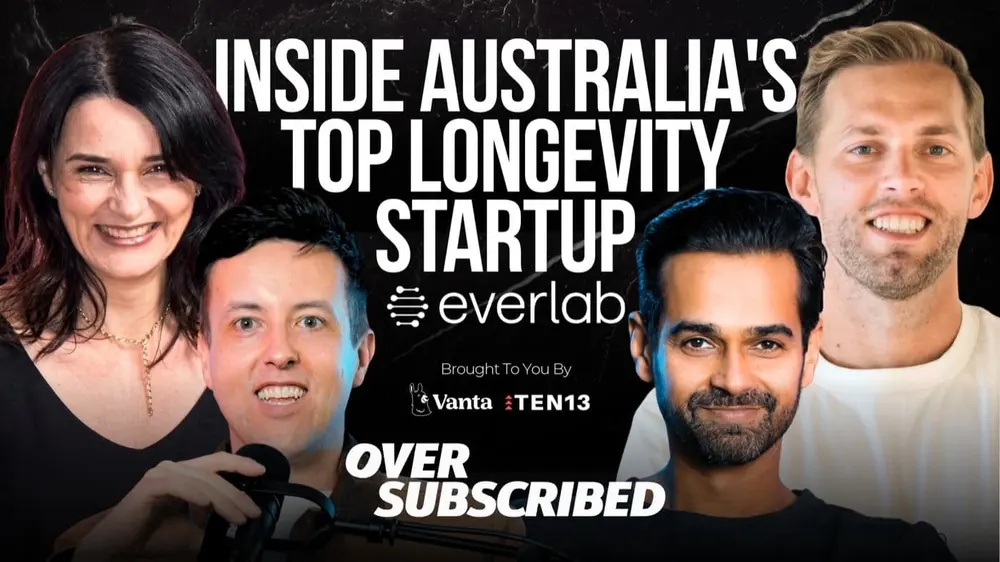 ▶
▶  ▶
▶  ▶
▶  ▶
▶  ▶
▶ ▶
▶ ▶
▶