Transcript Synced · select any line to jump ▾ 0:02 Cheryl Mack: Founders scale faster on Deel. Set up payroll for any country in minutes, hire anyone anywhere, get visas handled fast, and get back to building. Visit deel.com/dayone. That's D-E-E-L.com/dayone. 0:21 Speaker: Are you building a SaaS business and looking to achieve compliance with SOC 2 and ISO 27001 or other security and privacy frameworks? 0:32 Speaker: Compliance can unlock major growth and build essential customer trust, but let's face it, it's usually time-consuming and expensive. 0:37 Cheryl Mack: And like really kind of a pain. 0:39 Speaker: That's where Vanta comes in. Vanta automates up to 90% of customer compliance tasks, making you audit-ready fast and saving you up to 85% of the associated costs. Plus, Vanta scales with your business, offering a market-leading trust management platform to continuously monitor compliance, unify risk management, and streamline security reviews. Join 7,000 global companies, including Atlassian and Dovetail, that trust Vanta to build and prove their security in real time. 1:03 Maxine Minter: And for our listeners, Vanta is offering 10% off. 1:06 Speaker: Just go to vanta.com/first. That's vanta.com/first. 1:14 Maxine Minter: Okay, 3, 2, 1. 1:18 Cheryl Mack: Hey, I'm Sheryl. 1:20 Speaker: I'm Maxine. 1:20 Speaker: This is First Check, part of Day One, the network dedicated to founders, operators, and investors. 1:25 Maxine Minter: If you want to be a better early-stage investor, this is the show for you. 1:28 Cheryl Mack: So TL;DR, if you don't want to suck at investing, listen up. 1:38 Speaker: So I am super excited, super excited to have Elaine Stead on our podcast today on First Check. Elaine is the GP at Mate Ventures and an absolute OG of the Australian investing ecosystem. We were talking actually in the kind of chat before this, she's done almost 100 investments. She's like right up there alongside Rainong as just, you know, investing in the Australian ecosystem and has seen multiple cycles. So really excited to have her on to dive into, you know, how she thinks about bravery, how she thinks about courage in the investing world in Australia, especially as a woman, uh, and especially over that period of time. You know, there's been, uh, it's been an incredible journey and so excited to kind of chat through that and also to talk about investing, uh, and portfolio construction. How do you think about that level of volume, pace, and all things investing? So I'm really excited to dive into today's conversation. 2:33 Elaine Stead: Yes. Thanks for having me, guys. It's so nice to be here. And oh my goodness, rarified air to be compared to rain. So, thank you. 2:43 Maxine Minter: Oh, no, absolutely. It's such a good comparison. 2:46 Cheryl Mack: I mean, like, one of the things I love about Elaine is that she's just like not afraid to speak her mind. And every time I talk to her, she's— I learn something, but I also get this like jolt of electricity that like I could do something cool or like I could be brave like she is. And I just love that about you every time we spend time together. So, today I think I'm going to get a huge jolt of— basically hit by lightning today. 3:10 Elaine Stead: Never been told that before, but that is such a lovely compliment. So, thank you. I'm going to put that in my— can I put that in my LinkedIn profile? 3:19 Maxine Minter: You sure can. 3:20 Cheryl Mack: Cheryl says you're a lightning bolt. 3:22 Elaine Stead: I just might say electrify as opposed to electrocute. I think that might be safer. Yeah, yeah, electrified. Yes, editorialized. 3:29 Speaker: Editorialized. Absolutely. Yeah. And so we always open our conversations, this being a podcast about investing, to learn kind of how did you start? What was the first thing that you ever invested in? 3:41 Elaine Stead: Yeah, good, good question. So the first kind of product that I invested in was my— the first house I bought. But I actually think you kind of alluded to it when you sent me over a couple of the questions you were going to ask today, which was education. So actually, like, if I think about what's the asset that I invested in first, it was my education. I put myself through university, paid for all my textbooks, paid for my tuition, worked part-time in two different jobs the entire time I was at university. So it was one of those things that I kind of knew was just such an important thing for me to invest in to change the trajectory of my— Life. Life. And it's not because I had a bad life. I had really, you know, wonderful childhood and a mother who is an unconditional supporter. And, you know, my sister is amazing. But like, you know, I was a child of migrants who didn't have very much. We didn't have very much growing up. So I knew kind of if I was going to not just do the same thing all my family did, which are all very noble jobs and careers, I would have to invest in university. So that's kind of my very first investment. But the first actual proper like financial investment I made where there was actually some return was my— was the first house I bought. 4:58 Maxine Minter: Yeah. So cool. I actually think investment in education is one of the most consistent and best investments you see kind of across asset classes that the majority of the population makes. Like if you just think about it for a moment and think about the wage change, for example, as the return profile, investing in education, but not just wage change, but lifestyle change, community change, like all of the compounding benefits of university. It's consistently shown to be one of the best investments you can make. 5:30 Elaine Stead: Absolutely. And it wasn't just that it gave me a really great educational foundation for my career, because I, you know, did a science degree and then eventually did honours and then a PhD, and that sort of led to a career in innovation. And of course, that led to a different financial outcome than had I stayed in retail, which is what I was doing when I was at university. 5:51 Cheryl Mack: Working at the local H&M. 5:54 Elaine Stead: Yeah, exactly. I was the Christmas casual at Myer for, I don't know, 7 years running or something, and worked at Burnside Village as well as a— 6:02 Maxine Minter: Incredible. 6:03 Elaine Stead: You know, a retail assistant, which, which I loved and actually was a great foundation for a whole bunch of other reasons. Customer service. I think people who work in this industry who you can tell whether they've had some sort of background in hospitality or retail because of the way that they interact with people. It's just different. Like that, that is an apprenticeship all in of itself, but I'm digressing. The other bit that was really important from my education investment was my networks. So, you know, I went to an all-girls school, all-girls Catholic school. And if you think about who are the people you need to know to have a career in this particular industry, it was probably not a whole bunch of women at a Catholic school. The networks I needed to interact with were the ones that I was given the opportunity to build while I was at university. And so, and tho— those networks have stood me in amazing stead over the rest of my career. So actually where I think the investment is, is yes, it was a learning exercise and a knowledge exercise, but the network side of it was equally important. 7:05 Cheryl Mack: Yeah. 7:06 Elaine Stead: That social capital I think is the bit that is actually really hard for a lot of female founders and— sorry, women founders and women in the investment space. 7:14 Maxine Minter: I think that's a really interesting point, like the importance of network. 7:17 Cheryl Mack: Yeah, when you go to university, like, you build a network that you wouldn't have built anywhere else, and it's people who are chasing their goals, people who are chasing careers, and you just tend to like grow up together, and it kind of creates that like cohort feel where you're like invested in everyone else's success. I would say I had like, I didn't, I don't remember much of what I learned at university, but the people and the networks and like also the ability to work together in like tough groups. 7:43 Maxine Minter: Yeah. 7:43 Cheryl Mack: Sure. I, I took that home with me. But yeah, the, I think the networks, it's very similar. Like you can see a lot of similarities between like when you come and join a startup ecosystem in like, I, you know, I moved from Canada to Australia, but like building your network within an ecosystem, I think has a lot of similarities to like joining a new university and growing your ecosystem and community there. 8:02 Elaine Stead: Absolutely, yeah. And you know, you get to benefit from their networks. And the people that I happen to have the privilege of falling into, you know, their circle were incredibly well connected. I would never have gotten access to those people or their networks had I not gone to university. So— 8:20 Cheryl Mack: Great investment. 8:21 Elaine Stead: You know, there's that old saying like, you're the product of the 5 people you spend the most time with. And so that was a really important intervention at a really critical time in my life. That I'm really grateful for. 8:32 Maxine Minter: That's awesome. 8:33 Cheryl Mack: But you know, Maxine, one of the things that you and I talk about is like the, to be a successful investor, like the pinnacle of, of being successful is to be contrarian and also to be right. And I think that that's something that, you know, Elaine has made a lot of bets in her life. Like you said, she's, she's made 100 investments, you know, and I'd be willing to bet a lot of those were contrarian and right. And I'd love to hear your perspective on that, Elaine. 8:54 Elaine Stead: Yeah, it's so funny. Like I think you know, that, that saying about being contrarian and right is temporal, right? Like you can't be contrarian forever cuz eventually for that investment to be successful, everyone needs to eventually cotton on, right? 9:09 Cheryl Mack: So, It's true. 9:11 Elaine Stead: I think you just have to be, you want a big enough gap though, right? That's it. Yeah, there needs to be a big enough gap. But, so I actually don't think I'm a contrarian investor. 9:21 Speaker: Interesting. 9:22 Elaine Stead: Believe it or not. I think I am, and I don't actually think I'm particularly different as an investor to the kind of the rest of our cohort. I think if I, you know, I've invested with a lot of other investors along the way, and I actually think like practically and operationally, we approach things relatively similarly. I think the reason I have been able to navigate a career in venture is because I think I'm able to see opportunities and not be so scared by the risk because I can see a path through to managing it. Or if it's risk that I think can't be managed, then I won't invest. So I think it's more of a tolerance for risk than anything else. Not necessarily compared to my counterparts in the industry, but I think that's how you become a good investor is you're able to sort of see opportunities early and not be too freaked out by the risks so you are able to make a bet. And so in that way, maybe you can say contrarian because I might have seen some opportunities a bit earlier. And you know, I have invested, been first check-in on a bunch of unicorns in Australia. And so by that metric, I guess you can say yes, I was able to spot some things early, but I don't actually think I'm that contrarian. I think particularly given the last, 10 years has been focused on kind of later stage investments, like things that are, that have a bit more traction in the market. And you know, you're, you're definitely not contrarian once you're sort of seeing something that's already got product market fit and a whole bunch of customers. They've done the work for you. You know, it's, it's then about, well, how do you supercharge that company to help it grow? And that's a different skill set to being contrarian, I think. 11:04 Cheryl Mack: Mm. 11:04 Elaine Stead: But both can get great venture type returns if you can manage the opportunity and the risk profile adequately. 11:11 Maxine Minter: I think that's super interesting. It, uh, it makes me think like that adage contrarian and right. I wonder if it was developed in a time of the venture ecosystem that we have now passed, in that it was developed in the time of the ecosystem when there were less participants and there was less risk appetite, right? Whereas now it feels like quite a mature ecosystem, at least in the US. and it's increasingly mature in the Australian ecosystem. Now, I wonder, I mean, your comments there are reminiscent for me of Alex Rampell from a16. He has a very similar perspective, right? Like, it's not really about being contrarian anymore. It's about seeing stuff super early and just earlier than everyone else. 11:53 Cheryl Mack: Yeah. 11:54 Maxine Minter: And so that then, you know, other people see it and they get really excited and then you see that kind of consensus around a business and then— Yes. You're kind of up and to the right as they grow that organization. And so I wonder in the Australian ecosystem if you can still be contrarian by being comfortable with a high level of risk. 12:14 Elaine Stead: I think it's more that you can definitely be contrarian at any point, but I think it's more important early to be contrarian because it's hard to sort of say a company that's 10 years old and still struggling and say, but I've got a thesis that this is really going to pop at some point. 12:32 Speaker: Mm-hmm. 12:32 Elaine Stead: But I think when companies are really early and are untested, if perhaps you can just see a little farther ahead and you can see where the market is moving, other people have sort of written it off as not being all that interesting yet. But you know, you can say, I can see a thesis and an opportunity here. I think you can be, definitely be contrarian. I think you almost by definition have to be at that really early stage because if you're the first check-in, you're seeing something that other people are not seeing. And as a result of that, at that early stage, you have to have a higher tolerance for risk because, you know, the majority of the attrition rate over a number of years is going to be really high for companies that you invest in when, you know, they're pre-product or pre-product launch. And so I think the risk is a function of it as opposed to needs to be associated with it. And so then, you know, you need a portfolio construction approach that enables you to manage that risk and build out some diversification so that you can tolerate that attrition and have enough bets so that the numbers game makes sense in order to generate the venture-type returns that you've, you know, hopefully promised your investors you'll target. 13:42 Cheryl Mack: And that is something we'll jump in a little bit around your portfolio strategy. 13:47 Maxine Minter: Yeah. 13:48 Cheryl Mack: That's what we, I think that was one of the topics we wanted to dive into. 13:51 Elaine Stead: Yeah, for sure. I'm happy to touch on that. 13:52 Maxine Minter: Right, I'm trying to work out which direction to go, like to which bag. Yeah, I think where I would really like to go first is that thing you mentioned just there, kind of looking out into the future and being like, no, I think that this can get to a certain scale and it might not be abundantly clear today, or I've just done the work relative to other investors to kind of see where this can go and see the world through the founder's eyes. What jumps out to me is the conviction in your abilities. 14:20 Elaine Stead: Yep. 14:21 Maxine Minter: By doing that, and also the bravery, because a lot of it is as I kind of mentioned in the entry, you know, a lot of it is just saying like, "I don't know, but I'm willing to take that risk. I am going to step into that unknown and be brave as I hold that space." And in a whole bunch of different categories, my observation of you is just brave, right? Yeah. You are very excellent at stepping into a space and being like, "I know this to be true," or, "I think this to be true, and I'm going to hold my ground on it because that is the right thing to do. And I would love to know, just maybe from the ground up, like, where did that come from? How did you develop that? Or is it innate? Is it just there for you naturally? 14:57 Elaine Stead: Yeah, good, good question. So I think there's different types of bravery, right? So I think from an investment standpoint, being brave enough to kind of take some risk and make certain investments that perhaps not everyone else is doing is a function of your confidence around the investment thesis that you have, right? And I think you can bolster your confidence and build your conviction that allows you to be brave in that investment decision by doing analysis and doing the work, as you just said, Maxine. I think that that has been my experience of how I've been able to make some investment decisions which at the time seemed risky or challenging, but eventually paid off. I think being brave though in your kind of personal life or outside of just the investment decision paradigm, I think is a different thing that comes not necessarily from confidence that you've done the work. I think that's a function of a whole bunch of other things. And a lot of people are brave. You know, I consider bravery being fearful of something but doing it anyway. 16:07 Cheryl Mack: Yeah, that's a good definition. 16:09 Elaine Stead: It's not about not being fearful. It's about absolutely not being fearful about what the outcomes can be, but feeling like you have to do it anyway, have to do it or will do it anyway for whatever reason that is. And for me in my personal or professional life, so not just about investment decisions, the bravery comes from a principled place, I think. So, you know, when I've stood up to organizations or institutions or stood up for organizations and institutions, it's been because I was really certain about a principle or really valued a principle that I felt was being contravened. And that principle was really important to me. It didn't mean I wasn't fearful. 16:55 Maxine Minter: Right. 16:56 Elaine Stead: Or incredibly concerned about what the outcomes might be. But it was because I couldn't, it wasn't, I couldn't live with myself if I didn't do it, right? So it becomes like a, you can't not do it rather than it's, oh, I'm gonna choose to be brave today. It's more like, I actually won't be able to live with myself if I don't do it. So I've gotta kind of step in or step up. 17:17 Maxine Minter: Wow. I think it makes it 10 times more impressive to me, that bravery, right? To look that fear straight in the eye or that risk straight in the eye and be like, I am consciously and thoughtfully going to do this thing that makes me quake in my boots because there is a change in the world that I want to see. 17:37 Speaker: Yeah. 17:38 Maxine Minter: And I am taking that risk. And I think, I think it is so important because especially in the Australian ecosystem, my observation is that there are, there is behavior by media, also by industry participants, especially in venture, but also across the investing ecosystem. That for women, when things don't go as planned or risk materializes, which we are all taking, there is a personal assassination that occurs, not a professional assessment of their skill or talent. 18:11 Elaine Stead: Yep. 18:11 Maxine Minter: And actually, in the prep for this conversation, Cheryl and I were trying to work out, could we think of a man who'd been professionally assassinated as a result of an investment decision? I asked Maxine. She's like— Both here and in the US. 18:26 Cheryl Mack: She was like, I can think of lots of men who have been canceled because of the MeToo movement. And I was like, but can you think of a single man who's been singled out because of an investment that they've made? And the answer was no. And I was like, but think of how many women we know who have been singled out because of investments that they've made. That is, for lack of a better word, totally fucked up. 18:47 Maxine Minter: Yeah. I think the way you phrased it was, yeah, they got singled out for being a scumbag. 18:52 Cheryl Mack: Yeah. 18:53 Elaine Stead: Not for a decision I like. Yeah. I was like, yeah, they got singled out for being scumbags, not investment decisions. 18:58 Maxine Minter: Like, yeah. 18:59 Elaine Stead: Yeah. And to be fair, like, I was— to maybe put a bit of context around that, to be fair to the media. So I got singled out for two reasons. One, because a company that I was a director of was the target of an activist short attack, and that caused lots of kind of negative allegations to be bandied about, about the company and about us as executives in that. And that's a bit different to being singled out for an investment that you made, but I also was singled out for that. So in the context of all of that, at the time, a company that I'd invested in, Shoes Are Prey, eventually had failed and we put it into voluntary administration. And yeah, like my involvement in leading that investment was definitely, I was targeted. Yeah. For that in the same way as Jack's was targeted for the investment in Milkrun. And, you know, we could name a whole bunch of others, but I won't to save their mental health. But, and you're right, that same thing doesn't happen to men. And even in the case of Blue Sky where I was targeted a lot, you know, most of the directors on the board were not. So it was really kind of me and the CEO, even though I had spent the least amount of time on that board. Managed one of the smallest, in fact immaterial parts of the business from a public company perspective. So I think the point you're trying to make is right though. So I, but I just wanted to be clear, like, you know, there were a couple of reasons they were targeting me. And I do think it is absolutely something that women entrepreneurs and women investors do bring into the decision-making process of whether they make an investment and also whether they get into this industry because To be honest, I think where it, where the rubber hits the road on this is it's not something the men in our industry ever have to worry about, right? They absolutely do not have to worry about being professionally canceled if they make, if they have an investment that fails. And that gives them an advantage because it's just like the mental energy of having to worry about that or deal with it if it does happen is just doesn't exist for them in the same way as The worry of being assaulted at an event, like I was a few weeks ago, is not a worry for the men in our industry because they do not have to worry about being sexually harassed and the impact that that will have on their ability to do their job. And so I think there's just this mental energy that goes into kind of how we operate in this industry that the men that we work with just do not need to even bother themselves with. 21:38 Maxine Minter: Mm-hmm. 21:39 Elaine Stead: And I think that gives them an advantage or it puts us at a disadvantage. And it does come into this concept of how we consider risk because am I going to invest in this company that has a high profile and therefore will be covered by media and therefore if it fails will be uber covered by media where my reputation could be on the chopping block. When others will have a very different way of looking at that or a different lens that they can look at those investments. And I think it takes a lot of mental energy as well for us to look at those things and not make them part of the decision-making process, right? So I honestly don't think I do make— consider that now, even after being kind of the target of a whole bunch of media bullying as a result of investments that I've made. 22:30 Maxine Minter: Mm-hmm. 22:31 Elaine Stead: But I'm sure that it's part of my decision-making process, and I have to be conscious of that as a bias and not let that integrate into my decision-making process and just be really true to the investment thesis. 22:44 Speaker: Are you building a SaaS business and looking to achieve compliance with SOC 2 and ISO 27001 or other security and privacy frameworks? 22:52 Maxine Minter: Compliance can unlock major growth and build essential customer trust, but let's face it, it's usually time-consuming and expensive and like really kind of a pain. 22:59 Speaker: That's where Vanta comes in. Vanta automates up to 90% of customer compliance tasks, making you audit-ready fast and saving you up to 85% of the associated costs. Plus, Vanta scales with your business, offering a market-leading trust management platform to continuously monitor compliance, unify risk management, and streamline security reviews. Join 7,000 global companies, including Atlassian and Dovetail, that trust Vanta to build and improve their security in real time. 23:24 Maxine Minter: And for our listeners, Vanta is offering 10% off. 23:26 Speaker: Just go to vanta.com/freshoff. First. That's banta.com/first. 23:36 Maxine Minter: Wow. I think that's the— 23:38 Cheryl Mack: Yeah. Wow. Like, yeah, just wow. No, but I think when, when Maxine and I— Just wow. 23:42 Maxine Minter: Yeah, just wow. 23:44 Cheryl Mack: No, but when Maxine and I were talking about this, I was kind of like, well, how does this factor in like the investment thesis when women are thinking about, well, if I make this investment and it's inherently risky because in early stage investing is like, what if I get professionally canceled? And, and how does that factor into your investment decision? So I think the way that you frame that is like, look, there's inherent bias there, but at the same time, I'm conscious of that and I work really hard to not let that factor into my investment decision. I think is inspiring. 24:12 Elaine Stead: That's what I try to do. I think of it like the women in this industry or underrepresented minorities, full stop, right? So this isn't just a gender thing. Yeah, I like the Ginger Rogers to the Fred Astaires in our industry in that they have to do all the things that they do, but they have to do it backwards and in heels. And by that I mean, you know, we have to deal with all these other things that they just do not and try and cut out that noise as a result. The challenge with that I think is that people say a lot, the only thing you're measured on as an investor or a venture capitalist is your returns. And that is only partially true because absolutely we're measured on our returns. Certainly you will never get a second fund if your first fund is not successful. So in that way, yes. But the LPs who are allocating capital, when we are talking about financial services and financial products and people who are managing other people's money, people are looking for confidence. They want to be confident in the people that they're allocating capital to. And if you're someone who has had to hustle and fight and kind of, you know, deal with all of these other bits of noise in the background, as an entrepreneur, you get credit for that. As an investor, you absolutely do not get credit for that. 25:32 Cheryl Mack: Hmm. 25:32 Elaine Stead: You need to make it look easy. And it's really hard to make it look easy when you're dealing with all this other bullshit in the background as well. And I think that is part of why there is this disconnect between how much women get funded, whether they're founders or whether they're fund managers, and men. Because it's really hard to show that you've got your shit together and you're super confident when you're dealing with all this other bullshit that men simply don't have to deal with. That's right. You need to make it look easy and it's not. 26:04 Maxine Minter: Right. I think this is why Bravery for You is just so amazing 'cause you, you know, make it look easy no matter how bumpy, how bumpy the road is. I do wonder, I mean, I think this is a moment in time and looking backwards, and I'm a big believer that the world, like, nothing changes if nothing changes. So our generation of folks are the transition team to change the way that our ecosystem is working. And so what do you think the path out of that is? What are the things that we do, we can do as an ecosystem this week, this month, this year that changes this? 26:41 Cheryl Mack: Especially because Maxine and I prior to this were concerned that if we were to bring up this topic of conversation on this podcast with you, that like we might alienate the next generation of female investors wanting to come in or underrepresented investors who wanted to come in because we might tell them how hard it is and they simply might just say, well, screw it, I'm out. Like that's too hard. So We don't wanna do that, right? 27:07 Elaine Stead: Yeah, I definitely don't wanna put people off because I think it is such a brilliant industry and such a brilliant calling to be able to play this role. So I certainly don't want to put people off, but I also don't want to, I'm a big believer in not rah-rahing when it doesn't, like I wanna be realistic about what the challenges are. So I'm actually going to be on a panel at South by Southwest Sydney about talking about exactly what can we do as an ecosystem to fix some of these things. 27:39 Maxine Minter: Wonderful. 27:40 Elaine Stead: And the very great Cindy Gallop is moderating that panel. So it should be awesome and entertaining. So we will talk about that. But I think there's a couple of things. One, everyone knows the data is there that diverse teams, diverse investors, diverse ecosystem generates better returns, better outcomes in the companies. We talked about this on the Tribe podcast a few weeks ago about the data that shows SaaS companies outperform by like 3 times, 300%, when there are at least a third of the management or leadership team female, for example. Like there is so much data that reinforces this concept and yet nothing changes because we are not making these decisions based on data. Yeah. Or what's actually going to generate the best outcome. Decisions are being made based on self-interest, right? Right. Just to be really blunt about it. So we need to change the narrative about why focusing on that will actually be in everyone's self-interest. And so it's that emotional narrative that we have yet to tap into because the data is there. It's not a data-driven issue at all. I think the way it changes is the capital allocators and then it trickles down from there. So I think the LPs who are allocating capital should be allocating capital to fund managers who are investing in diverse teams or have a diversity quota of some description in their investment thesis. Because if they put pressure on, in the same way as there was pressure on ESG and meeting certain, you know, net zero initiatives, if it is not imposed by the capital allocators, it will never be imposed by the fund managers. Or it will be, but it will happen really slowly over time and it's going to take a generation. So I think that needs to happen first and foremost. And there's no reason it shouldn't because the data supports it. Sorry, I just don't understand why this is— it shouldn't really be a controversial comment. And then I think it flows down from there. So if the capital allocators, the LPs, the superannuation funds change their allocation requirements, then the fund managers will. If the fund managers do, then the startups will. And all of a sudden we'll get like a supercharge for change. And that's what I think is, is needed to kind of move the dial in this ecosystem because it absolutely does not represent the community it serves. 30:10 Maxine Minter: I love that. I wonder for any super fund manager that is listening or anyone who can influence those super fund managers, please start thinking about how they, how we do this. Because in a lot of other verticals, you're right. Like if you, the kind of changemaker is the top of the incentive tree. And in our industry, the top of the incentive tree is LPs. I've actually seen in the US it come the other way as well. 30:37 Elaine Stead: Yep. 30:37 Maxine Minter: I've started to see founders start asking fund, the investors that they're working with who are the LPs of your fund? And essentially, who will I be creating wealth for when I'm successful? And even just that question requires that as a fund manager, you front up and be like, well, this is the demographics of my LP base. 30:57 Speaker: Yeah. 30:58 Maxine Minter: This is who are, you know, this is my partnership and this is the demographics of our LP base. And I think just that question can drive transparency and behavior change in that group as well. I also know that Preeti and a kind of wider community of folks are starting to ask fund managers to report on the demographics of their LPs and their, the portfolio that we work for. And I think that's really powerful as well. I just, I think that— 31:23 Elaine Stead: I think that helps. 31:24 Maxine Minter: Transparency is really wonderful here. 31:26 Elaine Stead: Yeah, transparency helps. 31:28 Cheryl Mack: That's really cool. 31:29 Elaine Stead: But we need more than transparency. 31:31 Maxine Minter: 100%. 31:31 Elaine Stead: Because I think a lot of funds think that they're doing enough by simply reporting their numbers. Oh, look how many female-founded companies we saw. 31:38 Maxine Minter: Mm. 31:39 Elaine Stead: Oh, great. But how is just reporting those numbers changing who gets access to capital? 31:45 Cheryl Mack: Yeah. 31:46 Elaine Stead: You know, I do think there needs to be expectations around diversity thresholds, quotas for the companies that are investing. You don't have to have X amount of female-led companies, but if the companies you're investing in don't have diversity at the leadership level, then I think you have a problem. I think a lot of companies and fund managers is I think the reason they don't have diversity, and I think I'm going to write a blog post about this now that, now that we're having this conversation. 32:12 Cheryl Mack: Yay, you heard it here first. 32:15 Elaine Stead: Diversity is not— it doesn't make you immune to failure, and it certainly won't ensure that you get good outcomes and good returns, but it will expose your weaknesses. 32:24 Maxine Minter: Yeah. 32:25 Elaine Stead: And by that, what I mean is if you have a diverse team, what you're actually signaling to the world is that you can work functionally and well with a bunch of people who are not like you, who think differently, who see the world differently. And what happens in those teams, those diverse teams where there's people who have different perspectives, and this is all sorts of diversity, people from different backgrounds, different experience bases, gender, cultural, whatever. If you have a bunch of people who think differently, firstly, I think that's necessary in order to solve problems that haven't been solved before. I think that's what's needed for innovation and creativity. If you have those people and they're working functionally, then what you've actually done is you've signaled to the world that you can manage conflict, the conflict that's associated with building and nurturing teams who think differently. And if you can navigate that conflict, you're actually showing that you're more sophisticated than Joey Bag of Donuts down the road who is not working with a diverse team, right? 33:26 Cheryl Mack: Just a bunch of beige donuts. 33:28 Elaine Stead: And so what you're actually— what you're signaling is a confidence— that like when I look at teams that are not diverse, I see people who are not confident to do their job without people who make them feel comfortable. And that's a bad— that is a risk issue that I think is a massive red flag. So I think if you've got diversity in your team, what you're actually showing is that we don't have any weaknesses here on how we manage people, how we build teams, how we nurture people who think differently. And we're prepared to be challenged about what we do and what we say. So that's why I think diversity is actually a really positive signal, and a lack of diversity is a really bad red flag. 34:13 Maxine Minter: 100%. I couldn't agree more. 34:14 Elaine Stead: 100%. Sorry, I'll get off my high horse now. 34:17 Maxine Minter: No, I love it. I love— I actually, um, there was a thread there I'd love to pull, which is about like wealth creation and who has the power to make these kinds of decisions. And maybe to join you on a soapbox of my very own, I've recently become aware of the difference in equity allocation in Australia versus the US. Actually, in Australia, Australian startups do not share the pie as heavily with employees as we do in the US. And I think this is a real problem because we might start to solve the participation challenge, which then leads to, in the US has led to wealth creation. 35:00 Elaine Stead: Yep. 35:00 Maxine Minter: For a very large number of diverse fund managers. 35:05 Elaine Stead: Yep. 35:06 Maxine Minter: And those diverse fund managers are then deploying capital into communities that they identify with because they are more capable of identifying opportunity in those groups and generating significant alpha in these funds. 35:18 Speaker: Yep. 35:19 Maxine Minter: Like delivering really— starting to deliver really wonderful returns. And we don't have that flywheel that's working in Australia yet. And so I think something to think about is also kind of wealth creation as angel investors, as operator angels in Australia, and also as employees in Australia, and that being available to a wider group of people. I obviously just think Aussie Angels is the best thing since sliced bread. Coming into this ecosystem for that because it means that you can, you know, access is at a much lower place. 35:53 Speaker: Absolutely. 35:53 Maxine Minter: Right? Like syndicates are being run $1,000 to kind of $2,500 first investment, and that is affordable for most people operating in professional jobs, assuming we don't have caring responsibilities and those kind of things that, you know, can disadvantage here. But I do think that there's a— I'm really excited to see that flywheel start working. And I would love to see more founders consider more substantial equity grants for their employees so that that flywheel continues to move. Like, I think that this is a multifactorial solution to an incredibly complex problem. I don't think any single one of these levers is going to move the dial in our lifetime. But I do think if all of us play our part and think about what is the systemic compounding impact of the decisions we're making today, we will move it. I think we will be able to see it in our lifetime, or at least I really hope we will. 36:42 Elaine Stead: I agree. 36:43 Cheryl Mack: Yeah, absolutely. I think it's, it's this thing that I've talked about a little bit, which is like the cycle of funding, right? It's not like the, the men have set out to like exclude us. It's just that when you have a typically male founder base, they go out to their friends and family for their first raise. And who are their friends and family? They tend to be male because I tend to have more female friends. Males tend to have more male friends. And so, when they make it big and they make a return, who gets rich? Their friends and family who happen to be male. And then that cycle of funding continues because those people either start a company or invest in the next generation. And when they look at the pattern of, well, who just made me rich, then they reinvest in that. And I think breaking that cycle in many ways, some of which is the employee allocation, other— I think like founders asking like, who am I going to make rich when I make it big is really important. And so, I love that you say that like, you know, you're seeing funds in the US being asked that question and founders having the bravery to ask that question of the funds that are taking that money. On the flip side, like I think we're just starting to see some founders here asking that, like making room, not asking the question of funds. I'd love to see more of that if anyone If there are founders listening in, you should start asking that question. Otherwise, I think as an investor, like when I talk to founders, I like to highlight that it's important to make room for diverse investors on your cap table. And I've been fortunate enough to be able to get in to some great rounds because of other investors who have said, hey, have you thought of including females on your, on your cap table? Like, I don't see any females here. Would you like to, you know, would you like to be introduced? 38:25 Elaine Stead: Yeah, and I think your platform, Cheryl, has been really instrumental to activating a lot of women investors who otherwise couldn't access the asset class because, you know, thresholds for investment just didn't make it possible. So kind of your ability to fractionalize it for investors is really— is a game changer. 38:46 Maxine Minter: And I think something that we've kind of alluded to here, but something to call out, is that gender is not the only element of diversity as well. There are so many different ways that we are different, so many ways that the different perspectives we can bring can be helpful to each other. And so wonderful, you know, it's a very visible difference that we have, but it is, you know, not the only one. So also thinking about, as we're thinking about what change we're trying to make in the world and push forward, you're thinking about who are those people that you want to tag into deals? Who do you want to kind of bring around the table? How might you be able to— share your opportunity around so that more people can access it, I think is a really— it's a worthwhile question to ask yourself every single time you're in that, you're in that moment. 39:28 Elaine Stead: Absolutely. And it's such a, it's such a show of strength too. Like if you can make room for others, it just shows that you're not being, you know, elbowing people out and being defensive. I think it's such a show of confidence and strength. 39:41 Cheryl Mack: 100%. And I guess on that note, as one of our final questions, speaking about show of strength. Our final question we like to ask all guests is, what is your biggest big kahonas moment? So a time that you were really brave. And I know you've got lots of brave moments, Elaine, but maybe your biggest one. 39:58 Elaine Stead: Yeah, so I think, I think there were kind of two. So I imagine most people expect me to say taking the Financial Review to court. I didn't actually think that was particularly brave. I felt like I had no other choice. So I didn't think that was particularly brave. I think where I was maybe a bit brave was writing and being very public about my mental health struggles over that period of time. And having to be quite open about being quite suicidal because I thought that would probably tarnish me forever as someone who, wasn't able to manage the stress or cope with the industry. But I sort of thought that the benefit of sharing that with people would outweigh the potential downside. I'm sure people still think I'm a slightly crazy person and I'm never gonna change those people's minds, but— 41:02 Cheryl Mack: Only in the best way, Elaine. 41:05 Elaine Stead: But hopefully, Hopefully what it does do is it's allowed me to be, it's allowed a lot of founders in the sector to be more open with me about the challenges from a mental health perspective. And so I think that was probably a bit of bravery from me personally, more so than the other stuff, which was a bit more public, I think. 41:28 Cheryl Mack: Wow. 41:28 Maxine Minter: Yeah. 41:29 Speaker: 100%. 41:29 Maxine Minter: That's very brave. That is very brave. To echo your point, being brave to show that vulnerability, especially in that moment, I think just speaks to the strength and the confidence, you know, even in that very scary moment to share that, to give permission for other people to be able to share that with you in the future. It's pretty amazing. 41:53 Elaine Stead: Yeah, 100%. Thanks. Yeah, I'm— it's better out than in, I think, you know, like I know a lot of people don't wanna look weak in this industry for all the reasons we've talked about, about how people wanna be confident to give you their money and for you to manage it. And there is this temptation to make it look easy. But I think you're doing the industry a disservice if you kind of wear that mask all the time. Like you've gotta be good at what you do, but I think you've also gotta be human or else like it'll come out eventually in some unhealthy way. So you might as well be transparent about it. And I think this industry is, the whole job that we do, the three of us, is about people. And so being able to share where you've struggled or things that you've done that you've made errors on or things that you've done that you've gotten right, that's the value that we bring to the people that we work with. So you kind of have to be open about that stuff, I think. It makes it a bit hard to help people navigate this entrepreneurial, path if you're constantly telling them how great you are and all the wonderful things that you know. I think you've got to share the shit stuff too, or else it's a bit kind of hollow. 43:10 Maxine Minter: Yeah, 100%. 43:11 Cheryl Mack: Yeah, I think it's important for the next generation of who we expect to follow in our footsteps, the next generation of diverse investors who will be deploying capital, that they need to know that it's, it's not easy. But it's doable and it's not too hard either. We don't want to go the other way, but I think you being brave and sharing that type of stuff does help the next generation know that like this is part of taking that next step and showing that strength around being an investor, but also being vulnerable. 43:42 Elaine Stead: Yeah, well said. 43:43 Maxine Minter: I also think it just makes you a better investor. 43:46 Cheryl Mack: It definitely does. 43:48 Elaine Stead: I do too. I mean, the more times that you've dealt with a crisis or some sort of failure or a bad decision, or not a bad decision, but just the outcome was bad. 44:01 Speaker: Yeah. 44:01 Elaine Stead: The more you can be, you can draw on that experience to help the companies that you're working with. So I do think it makes you a better investor, provided that you, you know, channel it constructively. 44:15 Cheryl Mack: You use all of that experience for the next investment. 44:19 Maxine Minter: Yes, exactly. With investing, I actually think it might be one of the only industries where we get better with age, and I think that is material for women, right? The like social norm of like you get worse with age. Yeah, it's prevalent for us in so many different verticals. Yeah, but investing— 44:38 Elaine Stead: Yeah, you don't age out of it. You get better because your experience base should make you a better investor over time. It's not like we're professional athletes where everything starts to, you know, fall over at 30. 44:50 Cheryl Mack: Dwindle after 30. 44:52 Elaine Stead: So you should get better. But the challenge is to stay in the game, right? Because you can only stay in the game if you're continuing to deliver returns for your investors. 45:04 Cheryl Mack: And so— And deploy. 45:05 Elaine Stead: It should be actually a bit of a self-sourcing pudding or self-selecting because you won't get to have that experience if you're not good at what you do. It's all sparkling pudding. But you're right, Maxine, you should get better as you get older. 45:19 Maxine Minter: Yeah. Or edit yourself out of the game if you're like, yeah, this is a very expensive thing to be bad at. 45:25 Elaine Stead: Yeah. And it is, right? It is very expensive to be bad at for you and for your investors. 45:31 Maxine Minter: Right. 45:31 Elaine Stead: And not just expensive from a cost perspective to be bad at it, right? Because it, as you guys know, it costs so much to set up a fund and a fund manager and It's expensive with time. 45:42 Maxine Minter: Yeah. 45:42 Elaine Stead: Because, you know, it's a 10-year journey even if you're bad at it because you kind of have to manage the fund through to the end. And so— 45:49 Maxine Minter: Sure. 45:50 Elaine Stead: Yeah, it's, it's not for the faint-hearted, I don't think. 45:53 Cheryl Mack: Well, I hope that one day I can be in your position to say I've got 100 investments that I've been a part of and I've been able to overcome a lot of challenges like you. So thank you so much for your time today. My pleasure. I've, true to form, learned so much. 46:10 Maxine Minter: Thank you so much. 46:11 Elaine Stead: Thanks for having me, guys. I really appreciate it. 46:13 Cheryl Mack: This was wonderful. And got my lightning bolt shock. 46:18 Elaine Stead: And you're still alive. That's great.
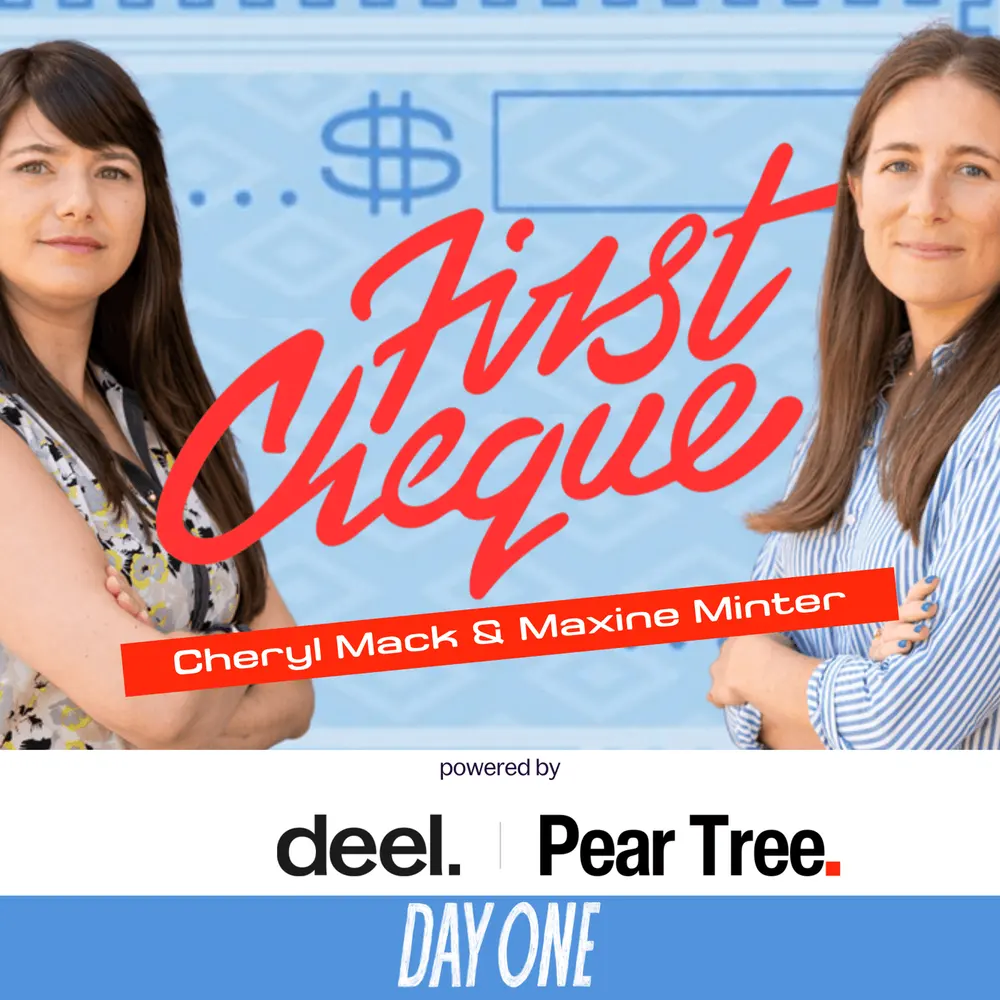 First Cheque with Cheryl Mack & Maxine Minter
Presented by Deel & Pear Tree
First Cheque with Cheryl Mack & Maxine Minter
Presented by Deel & Pear Tree 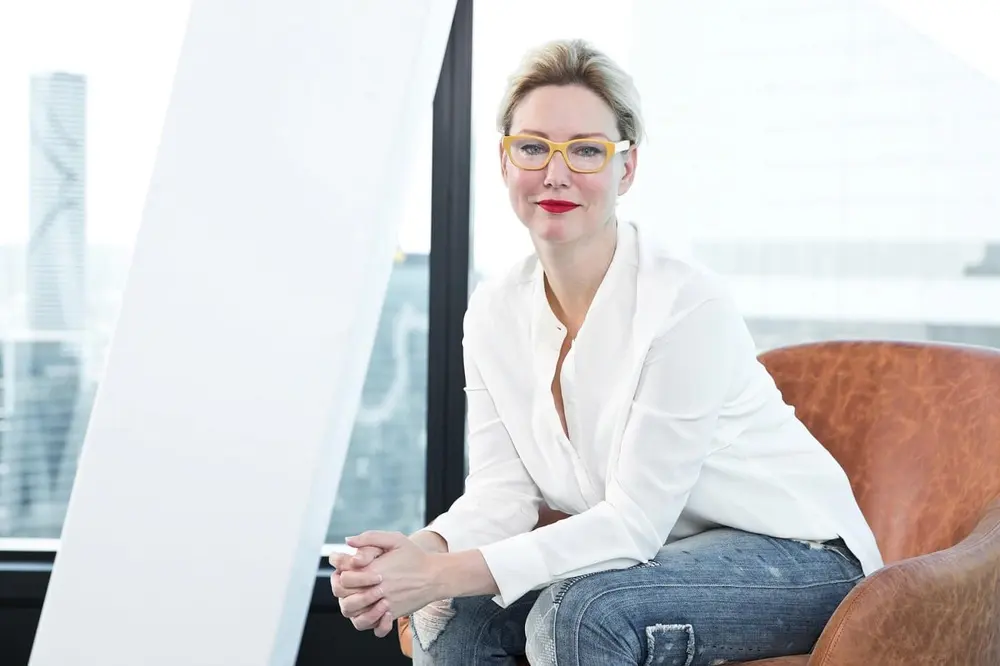



 ▶
▶ ▶
▶ ▶
▶